Tesla EVs offered by Hertz at Calif. airports

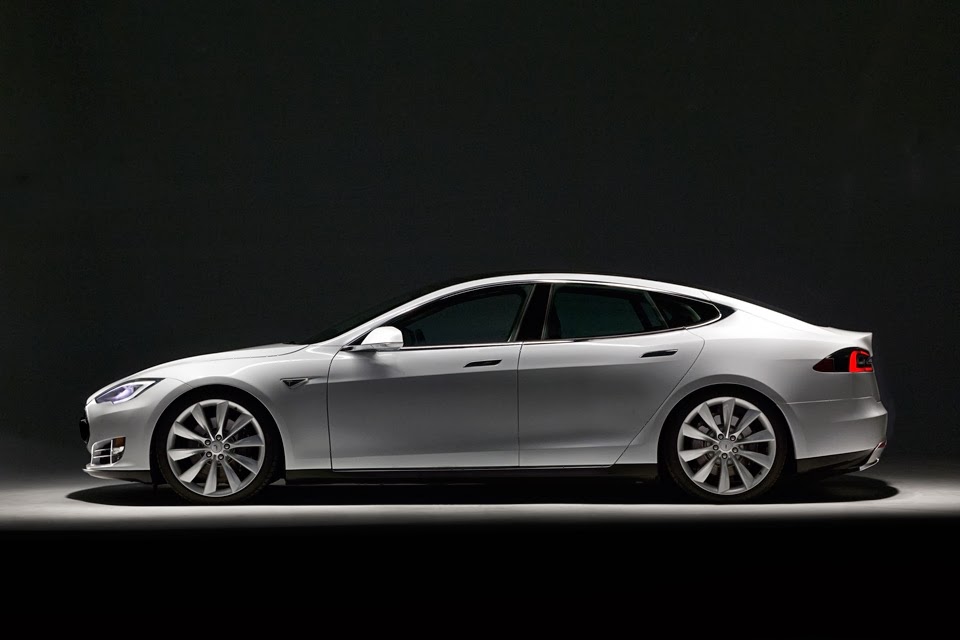
A handful of Tesla Motors Inc. electric cars are now available for rental at two California airports by Hertz Global Holdings Inc., which is adding more upscale autos to its fleet.

Hertz said it is introducing Tesla Model S and Roadster rechargeable cars at Los Angeles and San Francisco airports. Hertz has five Teslas combined at the two airports, with rental prices starting at about $500 a day, Paula Rivera, a Hertz spokeswoman, said in an e-mail.

The Tesla models expand on a lineup of higher-priced vehicles that Hertz has added to its fleet under its Dream Cars program, which includes Ferrari and Lamborghini models.

In July, Hertz won final regulatory approval for its $2.3 billion acquisition of Dollar Thrifty Automotive Group Inc. The merged companies compete with closely held Enterprise Holdings Inc. and Avis Budget Group Inc.

Enterprise has carried three Tesla Model S cars in its Exotic Car Collection fleet since June and plans to add two more by the end of the year, spokesman Greg Phillips said in an e-mail. The cars rent for about $300 to $500 per day, he said.

Hertz separately reduced its full-year forecast for full-year revenue and profit, citing weaker than anticipated car rentals at U.S. airports.

Tesla Model S is Norway’s top-selling car in September

The newly landed Tesla Model S, after a market presence of less than two months, has already topped Norway’s best-sellers' list during the opening two week’s of this month, comfortably outselling all other cars, regardless of fuel type, accounting for 6.2 per cent of all the new cars sold in Norway.

Hot on the heels of recording 184 registrations in its debut month in Norway, registrations of the Model S in Norway hit a chart-topping 322 units to bulldoze Volkswagen’s conventionally powered Golf (256 units) out of first place by a substantial sales margin, according to AID compiled data.

The number eight slot went to Nissan’s LEAF, Norway’s most popular electric car so far this year. Both fully-fledged electric cars have captured a combined market share of 9.1 per cent.

1) Tesla Model S – 322
2) Volkswagen Golf – 256
3) Toyota Auris
4) Mazda CX-5
5) Volvo V40
6) Skoda Octavia
7) Toyota RAV4
8) Nissan LEAF

Solar Cars improve the breed

A famous quote from Soichiro Honda, the legendary founder of Honda Motor Company, says “Racing improves the breed”. There's no doubt many Formula One teams have used the phrase to imply a legitimate link between innovations made in racing that eventually benefit us all as the technology from top-level motorsport filters down into road cars, although it would be hard to convince anyone of a practical use for an off-throttle blown diffuser in a hatch back.

Likewise solar racing cars have made significant contributions that have lead to today's current crop of mass produced Plug-In electric cars. It all started with the winning vehicle of the very first World Solar Challenge in 1987. GM's Sunrayer was designed by Hughes Aerospace, (the company originally founded by Howard Hughes) at the time a division of General Motors, in collaboration with a smaller aerospace company called AeroVironment.

More than a dozen Caltech graduates participated in Sunrayer programs at AeroVironment, the most deeply involved was Alan Cocconi who was responsible for the power electronics systems. This included everything from motor controller through battery management to telemetry.

The Cocconi designed MOSFET based three phase AC motor drive inverter ran a 92% efficient 10 hp (peak) motor that drove the left rear wheel of Sunraycer via a cogged belt.

Sunraycer won Pole with a top speed of 109 km/h and lead the 24 car field from start to finish covering the 3,005 km route at an average speed of 66.9 km/h (41.6 mph), 50% faster than 2nd place.

Following the World Solar Challenge success, in early 1988 GM insiders proposed the idea of making a very efficient EV with the knowledge gained from Sunraycer but to make it an affordable car with decent range and performance equal to a petrol powered car. Work soon begins at AeroVironment on the 'Impact' based around a 15 kWh Lead Acid battery pack, Al Cocconi again responsible for power electronics design.

The Impact EV concept car was launched at the LA Auto Show in Jan 1990 and the car so well received that by April GM announced the car would go into production. The Alan Cocconi designed motor controller for the Impact, a direct descendant of that used in Sunraycer, were refined by Hughes Electronics and went into the GM EV1 when production started in 1996.

Based on his work to date, in 1992 Alan Cocconi founded AC Propusion to produce electric vehicle drive systems featuring high performance, high efficiency induction motors and integrated high power battery charging. The original test bed was a not too glamorous Honda Civic but once the powertrain design was debugged, a Piontek Sportech kit car chassis, originally designed for a Suzuki GSX-R motor, was converted into an EV sports car called t-zero.

Launched in 1997, the 1040 kg t-zero, powered by 28x lead acid batteries, started to make headlines with it's 0 to 100 km/h in 4 seconds levels of performance. By 2003 the car had been upgraded with 6,800x 16850 Li-ion cells with a single charge range of 480 km, a 320 kg reduction in kerb weight and 0-60 times reduced to a supercar beating 3.2 seconds.

If some of these specs sound similar to the Tesla Roadster, that's because the Roadster was developed by Tesla Motors to mass-produce AC propulsions t-zero, the first EV to demonstrate the performance and range potential of lithium ion batteries and the car that can legitimately be credited with inspiring today's mass produced plug-In electrics from GM, Nissan, Mitsubishi etc. In fact Tesla Motors was founded to commercialise Alan Cocconi's work and the Tesla Model S uses technology licensed from AC Propulsion.

Today's solar racers are still blazing a trail years ahead of the automotive industry, witness BMWs i3 Electric car, the first all carbon fibre production car. In the area of powertrains, every WSC winner since 1999 has used direct drive in-wheel motors (road car in-wheel motors are currently being developed) and surely in won't be much longer before the 12.5% of Australian homes that have roof-top PV systems installed realise they already have the infrastructure in place to solar power a plug-in electric vehicle for their daily commute?

This year’s Bridgestone World Solar Challenge is held from 6th – 13th October. If you can’t make it to Darwin or Adelaide, you can follow the race on Twitter via @tsport100 or @WorldSolarChlg.

Disclosure: Post is sponsored by Bridgestone World Solar Challenge. Words and thoughts are entirely my own.

Tesla Model S takes on the Aston Martin Rapide S [VIDEO]

The Tesla Model S is a landmark car, but is it better than the mighty Aston Martin Rapid S? Autocar take to the test track to find out.

Steve Sutcliffe over at Autocar thinks the Tesla Model S is the future...today. It offers most of the usability of the world's best luxury saloons, but with no tailpipe emissions and a fraction of the running costs.

And it handles too. Really handles. But can it really be better than the £150,000 Aston Martin Rapide S?

Dutch Drivers Achieve 625 km Single Charge Range with a Tesla Model S [VIDEO]

A standard Tesla Model S equipped with the 85 kWh battery pack has an official EPA rated range of 265 Miles (424 km) and 310 Miles (500 km) NEDC rating.

On Wednesday August 21st four students from the Technical University Eindhoven Sponsored by Athlon Car Lease achieved 388 miles (624 km) in real world driving conditions.

They're calling it a world record "real long distance driving" for the Tesla Models S because they drove with 2 people on normal roads with normal speeds.

Tesla Motors Launch Supercharger Network in Norway [VIDEO]

First European Superchargers from Tesla Motors on Vimeo.

Tesla Motors today unveiled its European Supercharger network, energizing stations across Norway that enable Model S owners to conveniently travel for free between cities along well-traveled highways throughout the country.

With locations in Lyngdal, Aurland, Dombås, Gol, Cinderella and Lillehammer, Norway’s most vital and commonly used roads and highways are covered by Tesla Superchargers. Model S customers can drive routes such as the E6 from Trondheim to Oslo, the E18 from Oslo to Kristiansand, the E39 from Kristiansand to Stavanger, and Highway7 from Oslo to Gol for free and with minimal stops. Approximately 90 percent of the Norwegian population lives within 320 km of a Supercharger station, and about 60 percent of the country’s total land mass is within the same distance of a station.

Tesla Superchargers represent the most advanced charging technology in the world, capable of charging Model S 20x faster than most common charging stations. Superchargers provide half a charge in about 20 minutes, delivering up to 120 kW DC (Direct Current) power directly to the Model S battery using special cables that bypass the onboard charging equipment. And because Superchargers are located where customers want to stop, near amenities like roadside diners, cafes and shopping centers, road trippers can stop for a quick meal while their Model S charges for free.

The extensive coverage provided by Tesla’s Supercharger network allowed three Model S to depart for Oslo this morning from locations in the north, west and south of Norway and travel the following major routes with ease: Trondheim-Dombås-Lillehammer-Oslo; Bergen-Aurland-Gol-Oslo; and Stavanger-Lyngdal- Cinderella-Oslo. During their 500 km journeys, each car charged at two of the new Tesla Supercharger locations, where they were met by enthusiastic customers and local officials.

Toyota adds discounts for Tesla-powered all-electric RAV4

Toyota Motor Corp. is discounting its all-electric RAV4 through low-cost lease and loan offers to boost demand for the slow-selling compact crossover that’s powered by a Tesla Motors Inc. battery pack and motor.

Toyota, the world’s biggest maker of hybrid autos, this month is promoting the option of a $299-a-month, three-year lease for the $49,800 light truck, or a 60-month, no-interest loan, said Carly Schaffner, a company spokeswoman. The offers run through Sept. 3 and are available only in the Los Angeles and San Francisco regions, the vehicle’s main markets.

Honda Motor Co., Nissan Motor Co. and General Motors Co. similarly have turned to discounted leases to buoy their rechargeable models. Toyota last year said it would sell 2,600 RAV4 EVs by the end of 2014. Through July, just 709 have been sold since sales began last September.

“The use of our incentives is tactical, reinforcing our value and focus on keeping our products competitive in the market,” Schaffner said. “We’re still evaluating the market demand for EVs.”

The battery-powered RAV4 arose in 2010 as a result of Toyota President Akio Toyoda’s desire to work with Palo Alto, Calif.-based Tesla. Along with the vehicle project, Toyota made a $50 million investment in Tesla. Tesla shares have surged about fivefold this year, boosting the value of Toyota’s 2.4 percent stake in the company to about $476 million.

Toyota, with the biggest market share in California, is under pressure to sell the most rechargeable vehicles in the state to meet strict emissions rules. Along with the electric RAV4 that goes about 100 miles per charge, Toyota sells a plug-in version of its Prius hybrid to meet state rules and will add a hydrogen-powered electric sedan in 2015.

Tesla working on an all-wheel drive Model S

The Tesla Model S has quickly become one of the most desirable electric vehicles to ever be produced and a new report is indicating the company is developing an all-wheel variant.

Details are limited, but The Verge is reporting the all-wheel drive model could be launched as early as next year in an "ultra-premium" trim level. The car will apparently be based on the P85 variant and be able to accelerate from 0-60 mph in 4.2 seconds or less. After the initial roll-out, the all-wheel drive system could become optional on less expensive models.

Tesla declined to comment on the report, but the company has already announced plans to offer an optional all-wheel drive system on the Model X crossover. The system uses an electric motor at each axle for improved grip and acceleration.

Why All-wheel-drive? Well quite simply, luxury buyers in the key northeast US and northern European markets expect it. And you can thank Audi for that. But it’s not just Audi, every other luxury brand offers all-wheel-drive on their core sedans.

Tesla Model S P85 vs 2008 Mitsubishi Evo GSR – Standing Start [VIDEO]

More Tesla Model S street racing from the guys at Drag Times. This time they're racing the Model S Performance against a 2008 Mitsubishi Evo is running 25 psi boots with a full turbo back exhaust, tune, intake and upgraded clutch.

This race is from a standing start with the Evo using a 5,500 rpm Launch control to build turbo boost while stationary.

Panasonic to make more lithium-ion batteries to meet robust US automotive demand

Panasonic will increase domestic production of lithium-ion battery used for automobiles to meet robust demand in the United States, company officials said on Thursday.

The electronics maker will resume operation of idled lines at the Suminoe Plant in Osaka Prefecture, which produces batteries for U.S. automaker Tesla Motors Inc., as early as next January, while another factory in Kaizuka City in the prefecture, which the company has suspended its operation since March, will reopen by the end of next fiscal year, Panasonic spokesperson Megumi Kitagawa said to Xinhua.

She also said that the company will add some manufacturing lines at the Kasai plant in Hyogo Prefecture, which produces batteries for domestic automakers, by the end of the current fiscal year through next March.

In June Panasonic announced that shipments of its automotive-grade lithium-ion battery cells for Tesla Motors’ premium, all-electric Model S sedan surpassed 100 million units.

Electric cars enjoyed one of the best months of sales to-date

Sales of electric cars are really starting to gain traction. Just in the month of June of this year, almost 9,000 plug-in electric vehicles have been sold in the U.S. This adds to more than 110,000 plug-in electric vehicles that have been sold in that country in the last two and a half years, the Electrification Coalition reports.

Tesla has been one of the biggest winners of the growing tide of electric cars, and managed to capture 8.4 percent of the luxury market in the first six months of 2013. Sales of Tesla cars have beaten virtually all of their competitors, including the Mercedes-Benz S-class, the Audi A8, and the BMW 7 series. Those are impressive statistics indeed, and not something we could have predicted even just a couple years ago.

The Nissan Leaf has also had a great deal of success, capturing 3.3 percent of the subcompact market. The Electrification Coalition has also pointed out that electric cars have not only the awards from various automotive publications, but have also enjoyed some of the highest customer-satisfaction ratings of any passenger cars. In addition, the Leaf and the Chevrolet Volt continue to receive high marks from major consumer-ratings publications.