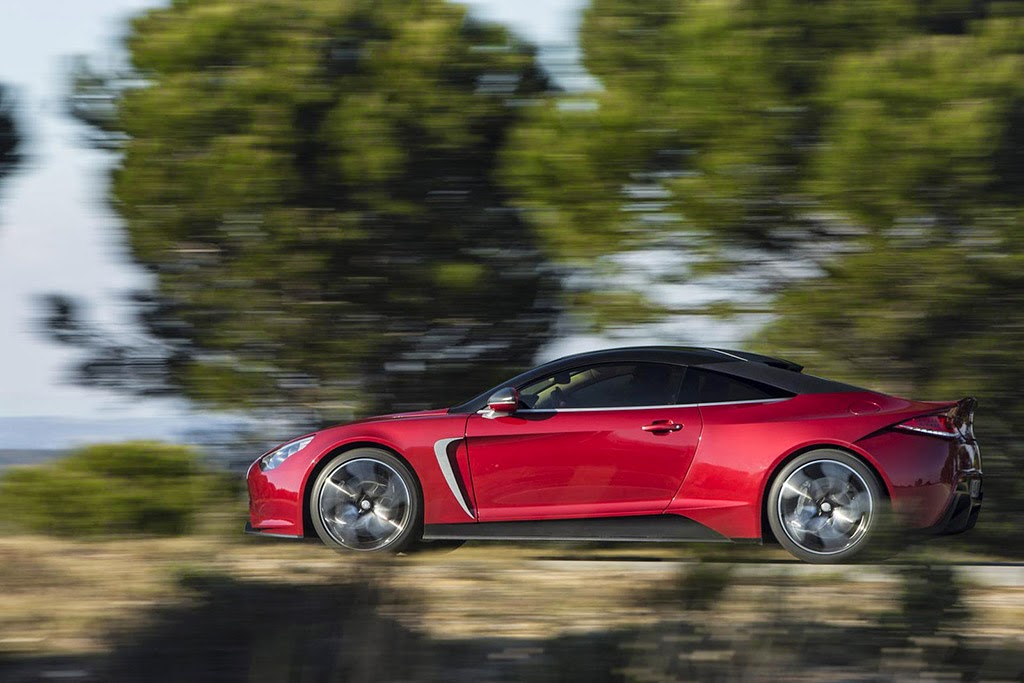
Electric RaceAbout annual Nordschleife testing [VIDEO]

Electric RaceAbout ran the annual tests on the legendary Nordschleife track in Nürburg Germany in the end of October. E-RA went around the 20,6 km long, so called Sport Auto lap, in 8:01,41 beating its own best time.

Last years visit in Nordschleife gave a lot of inspiration and ideas to E-RA team, how to continue improving the performance and reducing the weaknesses of the car. During the past year, the whole vehicle has been developed, but the most remarkable things were the active rear wing control, suspension and ABS brake system. The Torque Vectoring control system of the motors has also been improved since last year.

This time E-RA was driven by Jesse Krohn, a young Finnish VLN- series professional driver and his comments concerning the performance and strengths of E-RA are similar with our teams earlier test drivers. “The drive ability of the vehicle was good regarding its weight and the acceleration from 100 to 200 km/h was very convincing”, says Jesse, who drove the vehicle for the first time.

The testing period in the end of October lead to the second fastest lap around the Nordschleife track in the street legal electric vehicle group. The unpredictable Eifel mountain range climate did not help the testing and E-RA was on the track only three times in four days.

“The low amount of laps did not help me get accustomed to the vehicle”, says Jesse and continues: “Also, we had to start every lap with cold tires and brakes”.

During the fastest lap, the battery of the vehicle heated up more than the team anticipated and the battery output power had to be limited from halfway of the track to the end. Additional laps would have helped to optimize the vehicle setup - there is still potential for a faster lap-time.

The best time of the EV's on Nordschleife still remains with Mercedes-Benz AMG SLS Electric Drive 7:56,2.

Visio.M unveil low cost 450 kg carbon fiber electric car

An attractive electric vehicle at an affordable price that provides safety and comfort combined with a reasonable driving range: that was the goal of the Visio.M project. The participating researchers at the Technische Universitaet Muenchen who put together the car in collaboration with specialists from industry are now unveiling it to the public.

More and more people are considering the purchase of an electric car. Whenever possible, it should run on renewably generated electricity. They want to conserve fossil resources and make a contribution to the environment – while playing the role of pioneers in an unstoppable trend over the next few years.

In the Visio.M collaborative project researchers at TU München, together with experts from industry have been exploring what an all-round, sporty, low-price and safe electric car might look like. The result of the undertaking, which has been funded by the German Federal Ministry of Education and Research for two and a half years to the tune of 7.1 million euro is a very small vehicle that sets new standards regarding efficiency and safety. The researchers will unveil their car to the public at the eCarTec from 21st to 23rd October 2014.

Speedy lightweight

The Visio.M has a driving range of around 160 kilometers and space for two people and luggage. With only 15 kilowatts of engine power, the car can achieve a top speed of 120 km/h (75 mph). Its design is sporty and self-confident. The features fulfill all significant requirements of a normal car, from infotainment and navigation assistance to climatization.

The electric motor draws its energy form a 13.5 kWh lithium-ion battery comprising consumer cells and is mounted behind the seats. The battery weighs almost 85 kg and can be charged from a 230 V socket in only three to four hours. The total cost of ownership, including initial investment and operating costs, will be lower than that of a comparable combustion engine car.

Decisive for the great energy efficiency of the Visio.M is its light weight. The passenger compartment is made of carbon fiber reinforced plastic with aluminum in the front and rear sections, as well as the roof frame. All windows are made of polycarbonate. This material weighs only half as much as glass but, thanks to a special coating, is equally resistant to scratches and weathering. The researchers also saved weight in chassis, steering and transmission by using special light-weight constructions. Without the battery, the Visio.M weighs only 450 kilograms.

"Light weight is essential for an electric vehicle," says Prof. Markus Lienkamp, Chair of the TUM Institute of Automotive Technology, "because more weight requires more battery performance for the same range and thus generates higher costs. More weight also means poorer driving dynamics at the same performance. But we want a car that is affordable and fun to drive."

Safety first

An all-round, mass market car must guarantee effective passenger safety. Especially in collisions with heavier vehicles, small cars must provide a safety zone in spite of their small dimensions. The passenger compartment of the Visio.M consists of an innovative, multi-section monocoque made of carbon fiber reinforced plastic combined with ultra light sandwich materials imparting it with exceptional rigidity.

In addition, the engineers have developed a safety concept that includes a systematic anticipatory analysis of the surrounding traffic. The 360° monitoring of the immediate vehicle vicinity via radar and camera sensors makes it possible to detect critical driving situations early on. This information is not used for driver assistance or warnings. When the car detects an imminent unavoidable collision it activates the integrated passenger protection systems just before the actual crash takes place.

Novel structural airbags are mounted in the bumpers and doors. Fractions of a second before a crash a gas generator fills these pressure tubes, which then act as additional absorption elements.

Adaptive seat-belt tensioners and force limiting systems reduce the forces acting on the passengers. A two-point belt combines with the normal safety belt holds the passengers firmly in their seats. When the system detects an imminent side collision, the passenger on the crash side is pulled toward the inside of the vehicle together with the seat just before the collision, thereby moving away from the immediate danger zone. The pre-acceleration of the passenger reduces the crash forces acting on the passenger and increases the effectivity of the side airbag. A potential collision between the driver and passenger is prevented by an interaction airbag mounted between the seats.

Ergonomic design

In contrast to conventional cars in which the heel of the driver is defined as a fixed point for the adjustment functions, in the Visio.M the driver's eyes serve as a fixed point. This allowed the researchers to position the safety systems and the traffic perspective optimally. The driver's seat must only be adjusted vertically. In exchange the pedals are adjustable.

Control elements for the radio, air conditioning and navigation assistance are accessible via a central touch display, which is also adjustable. The human-machine interaction consists solely of swiping gestures that can be made on the entire display. The driver does not need to hit any buttons and a quick glance is sufficient for visual orientation.

At the core of the system is an open software architecture that can be extended at any time with additional elements. This opens the door to things like accessing home music collections via cloud applications or performing compute-intensive applications like energy-efficient route planning based on current weather and traffic conditions from a central server. All kinds of premium services can be implemented in this way. In the future, for example, a rental car might be delivered to a customer's door via remote control. This concept has already been implemented experimentally.

Large driving range

Many aspects must be brought together before the vehicle can achieve a large driving range in spite of its relatively small battery. These include light weight, low aerodynamic drag, an efficient drive train, minimal rolling friction and energy-saving air conditioning. The researchers have optimized these parameters in the context of the Visio.M project. Thus the 1.55 m wide and 1.31 m high two-seater now has excellent aerodynamics. In addition to low vehicle weight, the combination of low coefficient of drag of only 0.24, small frontal area of 1.69 square meters and tires optimized for low rolling resistance (115/70 R 16) further reduce the energy consumption.

The active "torque vectoring" differential also contributes to overall efficiency: A small electric machine in the gearbox that can be operated as an electric motor or as an electric generator distributes the force optimally between the two back wheels. Because of the improved stability while braking in curves, significantly more energy can be recovered than without torque vectoring. At the same time the car becomes much more agile and safe, because of the optimal distribution of drive ad braking forces.

Energy-saving air conditioning

Special attention was paid in the Visio.M to the design of the air-conditioning and heating systems. Wherever warmth is generated, it is recovered for heating the car when required. So-called Peltier elements are integrated into both the cooling aggregate and seats. These electrothermal converters can heat as well as cool. This allows environmentally friendly operation without the use of coolant fluids. During very cold weather an ethanol-based heater can be switched on for driving range independent heating. The aggregate with a thermal performance of approx. 4.5 kW is especially useful for deicing the windscreen. An intelligent controller finds the optimal solution for energy efficient and comfortable operation of the air-conditioning system.

Electromobility for the masses

During the development of the Visio.M, the various systems were subject to numerous trials to test their functionality, safety and reliability. The result is an electric car that should find great interest, especially in industry. Prof. Markus Lienkamp is optimistic: "With the Visio.M we have demonstrated that it is possible to build a very light and at the same time safe car with overall costs that we expect to be lower than those of comparable combustion-engine cars. But it is still a long way to serial production because almost all components must be adapted to the manufacturing conditions of large series."

Tesla to unveil Model 3 and Model S Dual Drive Oct. 9: report

Tesla Motors will unveil its Model 3, the mass-market car, and new versions of the Model S sedan at the event Oct. 9, analyst Trip Chowdhry with Global Equities Research said in a note Friday.

It is no coincidence the event is to take place in the Los Angeles area rather the San Francisco Bay Area, where the electric-car maker is headquartered: Tesla's top designer "spends almost 90% of this time in the LA Design Center," Chowdhry said.

Tesla earlier Friday said the event was scheduled for 7 p.m. at the Hawthorne airport. By showing a Model 3 prototype Tesla is also hoping to garner more attention from potential "gigafactory" investors, he added.

The new Model S versions would have all-wheel drive and semi-autonomous driver-assistance system.

German scientists invent award winning 2-in-1 motor for electric cars

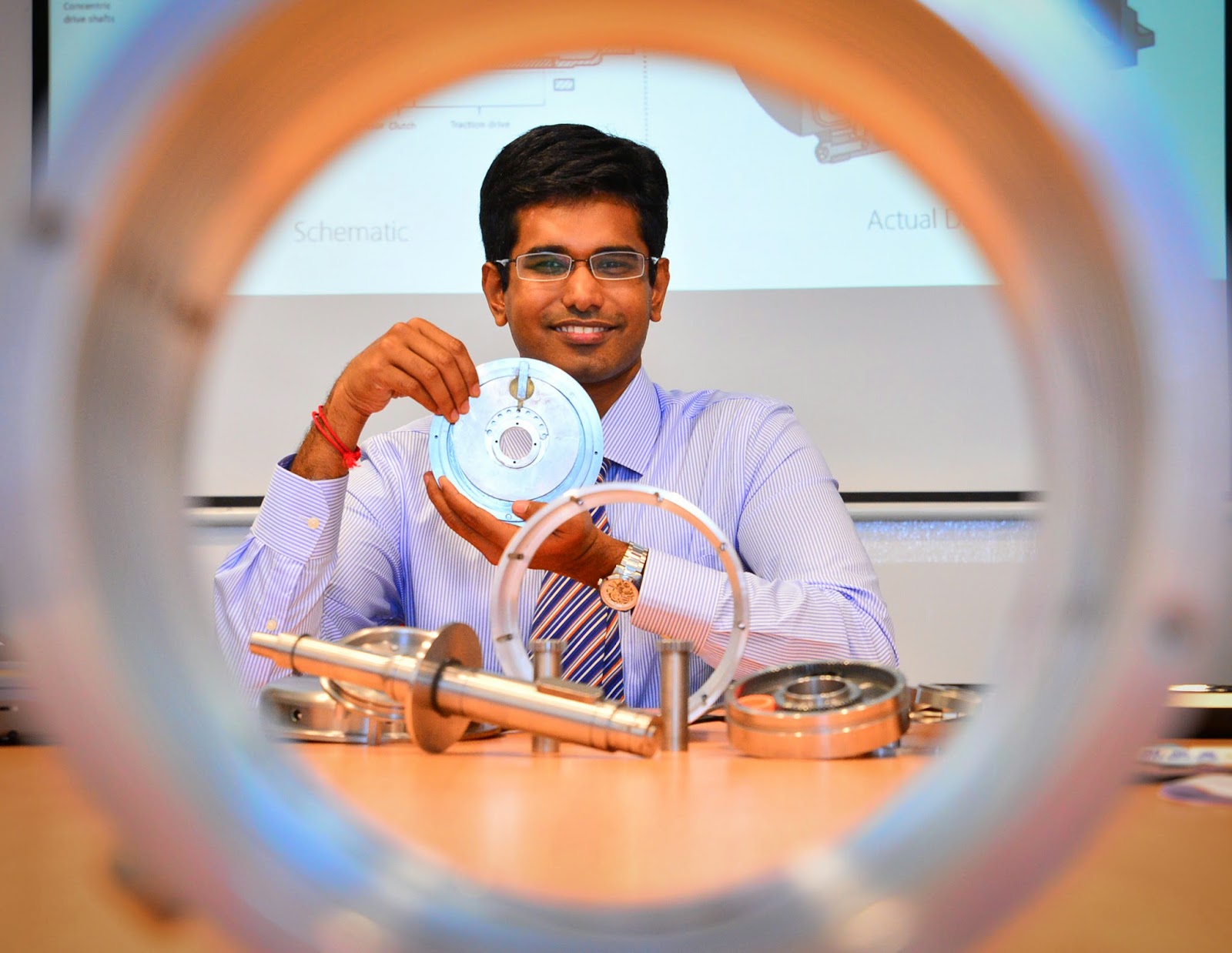
Scientists from Nanyang Technological University (NTU) and German Aerospace Centre (DLR) have invented a 2-in-1 electric motor which increases the range of electric vehicles.

This innovative engine integrates the traditional electric motor with the air-con compressor, typically two separate units. This novel, space-saving design allows the use of bigger batteries, which can increase the range of electric vehicles by an additional 15 to 20 per cent.

Prof Subodh Mhaisalkar, Executive Director of the Energy Research Institute @ NTU (ERI@N), said: “The biggest challenge with electric cars in tropical megacities is the range that they can travel on a full-charge, because their batteries are needed to power both the engine and the air-conditioning. In tropical countries like Singapore, up to half the battery’s capacity is used to power the air-conditioning system.”

The new 2-in-1 design allows the electric motor to be more efficient in powering the car’s wheels, while its integrated air-con compressor uses less power due to synergy between the engine and the compressor, which can also tap on energy regenerated directly from the car’s brakes.

With the potential boost in range through the efficient use of energy, the joint invention recently won the Best Originality Award in the TECO Green Tech International Contest held in Taiwan.

The competition saw 19 entries from top universities including Boston University, University of California (UCLA), Waseda University, and universities from China and Russia.

NTU’s partner, DLR, the German aerospace and space agency will conduct further tests and improvements to the new engine with the aim of eventual commercialisation. The team is applying for a Proof-Of-Concept (POC) grant in Singapore. After the development of the prototype, test bedding and refinements will be done at DLR’s facilities in Germany.

Prof Mhaisalkar, said this innovation will pave the way for extending the range of electric cars, as the integrated design combines the two of the most important parts of an electric car, thus reducing its complexity into one highly efficient solution.

“With the global population of electric vehicles set grow rapidly to 20 million in 2020, a more efficient electric motor cum air-con compressor, will enable cars to travel further on a single charge,” added Prof Mhaisalkar. “This energy efficiency will in turn reduce overall greenhouse emissions and promote sustainable transportation solutions.”

“This integrated design solution for air conditioning will go a long way in reducing the range anxiety of drivers, reduce maintenance costs, and will save time and money for the driver.”

For the automobile manufacturers, the new electric motor will also cost less to produce, as it requires less material than its counterparts. Both the weight and size of the electric motor are reduced, creating more space for other components such as an auxiliary battery source.

Dr Michael Schier, from DLR’s Institute of Vehicle Concepts, said: “For electric vehicles, the air conditioning uses a lot of electrical energy, thereby cutting down the range of electric cars by up to 50 per cent. To increase the energy efficiency and therefore the range of electric cars, the thermal management and the integration of additional functions into existing powertrain components play a major role.”

“By integrating the refrigerant compressor directly into the electric motor, we save components, weight and cost. Simultaneously, the more regenerative braking part of the kinetic energy is passed directly to the refrigerant compressor and thus the efficiency is further increased,” added Dr Schier.

Research scholar Mr Satheesh Kumar from the Energy Research Institute @ NTU said his award-winning, integrated electric motor challenges conventional design that goes way back to the 1960s when air-conditioning first became popular.

“Back then, air-conditioning was something new that was an add-on feature to a car’s combustion engine,” said the 29-year-old Singaporean.

“Since we are now designing electric vehicles from scratch, I see no reason why we should keep both units separate. As we have proven, combining the two gives us synergy – a more efficient use of electricity and it also improves engine braking, which stops the car faster with lesser wear on the brake pads.”​

This research is part of NTU’s focus on sustainability research. Sustainable Earth and Innovation are two of NTU’s Five Peaks of Excellence, which are areas of research that the university hopes to make its global mark in. The other three peaks are Future Healthcare, New Media, and the Best of East and West.

Nissan Engineers create a LEAF Ute [VIDEO]

If necessity is the mother of invention, engineers fuel that fire at Nissan's Technical Center in Stanfield, Arizona. Here engineers are plentiful. They love to build things, test things and tinker with things. This team thinks a lot about "why not?" Recently they created a one-of-a-kind electric vehicle to haul supplies and people around on the tech center property.

"We tried to keep it a secret and be exciting for everybody. But we have visitors and they come and they see that truck and they go straight to 'what is it?' and they start looking at it, and it makes great conversation," said Roland Schellenberg, Nissan Durability & Reliability.

This is Sparky, as he's known around the campus. It is a Nissan LEAF crossed with a Nissan Frontier, brought to life by Nissan's Roland Schellenberg and Arnold Moulinet. Sparky is a one-of-a-kind creation with a specific mission in life. He supports operations at Nissan's proving grounds located on 3,050 acres in Stanfield, Arizona.

"I needed a project for a team building activity so we can bring the team together. We had a need for a truck. Something to drive around, a shop truck," said Schellenberg.

It was months in the making, and there were many considerations, but Arnold Moulinet, Schellenberg's colleague in the Durability & Reliability group, had the right tool-set to fabricate the vehicle into reality.

"After he (Schellenberg) told us it was going to be the LEAF that we would redo, I went home and stayed up till like four in the morning making all kinds of designs for what would work. We basically got the stock LEAF, and after reviewing a bunch of designs of pickup trucks that we have here at Nissan, we decided to go with a Frontier bed. My main job here is working on rough-road vehicles, rough-road testing. I'm pretty good at taking cars completely apart to the bare frame and putting them back together again to resume testing," said Moulinet.

The low-desert terrain at Nissan's technical center provides an ideal environment to test vehicles for hot weather, heat durability, engine cooling and air conditioner performance. There is also a 5.7-mile high-speed oval and four individual road courses designed to test vehicle durability, reliability and ride comfort. Sparky now is part of the support team to help operations run smoothly.

"Being a slick truck, and not so tough, I see it as a boy – but a boy with a heart. It's something that we all put together. We all share. So it has a little bit of everybody in there," said Schellenberg.

Bugatti plan new 1500 hp Hybrid with axial flux motor & electric turbos

Autocar report that a new Bugatti Veyron is currently undergoing initial conceptual engineering tests in a programme aimed at unveiling the car in 2016 prior to a planned start to customer deliveries the following year. According to sources close to Bugatti, early test 
mules for the new car exist 
and have already been 
pressed into action in an 
early round of testing.

“Five developmental prototypes with differing powertrain combinations have been constructed up to now,” said one insider. “They are based on the existing car 
but use various solutions 
that are being considered for the new model.”

Following recent arrivals such as the McLaren P1, Porsche 918 Spyder and LaFerrari, the new Bugatti will feature a battery powered hybrid electric powertrain. The same quad-turbocharged 8.0-litre W16 powerplant as 
its predecessor will be retained but with the possible addition of electric turbochargers, perhaps along the lines of those used by Porsche in LMP1 (Porsche and Bugatti are both part of the VW group) and the 2014 Formula One KERS MGU-H (where the H stands for heat).

The big news centres around plans to provide the new Bugatti with hybrid drive by way of a disc-shaped Axial Flux electric motor mounted within the gearbox housing. Together, the petrol engine and electric motor are said to deliver up to 1500 hp. By comparison, the Veyron Super Sport has 1183 hp.

Autocar sources suggest that torque will be capped at 1500 Nm for the sake of gearbox reliability. A Veyron Super Sport already has 1500 Nm from 3000 to 5000 rpm. With an Axial Flux AC Induction motor able to generate almost as much torque (1250 Nm from the EE in-wheel motor) The Bugatti hybrid electric powertrain design looks like a very conservative step with full potential limited by the fragility of it's mechanical driveline.

The new hybrid Veyron should have some fairly startling performance in electric only mode (if it has one - see LaFerrari), but in parallel mode, other than providing torque fill below 3,000 rpm, (partly explaining why Bugatti expect 0-100 km/h times to drop to 2.3 sec) the full potential of the hybrid powerplant will be restricted by a mechanical transmission layout that may not have moved on much from the current Veyron.

As with the McLaren P1, a hybrid that still idles in traffic, or the LaFerrari which has no pure EV mode, the new Bugatti may succeed in combined the superior low rpm torque characteristics of an electric motor to give the instant throttle response and acceleration of an EV, what McLaren call 'torque fill', with the enormous top end torque of a large displacement forced induction ICE, but in common with the aforementioned hybrid hypercars, it will be very much a first generation mild hybrid.

We will have to wait for future evolutions of hybrid supercar powertrain design before we see anything truly revolutionary.

Audi planning to challenge Tesla with 500-700 km range EVs

Audi this week proudly launched their first plug-in hybrid, the A3 Sportback e-tron, a full 17 years after the Prius.

Auto Bild has revealed Audi plans to catch-up with the competition in automotive electrification with two purely electric Audi SUV, the A2Q and Q6 expected around 2017/18.

A2Q with up to 500 km electric range

If the expected advances in battery technology are true, the compact A2Q, expected in 2016, will have 500 km battery range. Seen as a competitor against BMW's i3, Audi will not develop a completely new electric platform but uses the familiar MQB modular architecture of Golf/A3.

Audi Q6 as Tesla competitor

The Q6, internally designated within Audi as the Tesla Fighter, is expected to be a coupe-like offshoot of the Q5 and come with 700 km battery range with a launch date around 2017. A larger battery powered Q7/8 is also expected around 2017.

BMW i9 Supercar to launch in 2016

Auto Motor und Sport is reporting on a future BMW i9 due to launch in 2016. In the same very year, BMW is celebrating 100 years.

BMW i9 would be based off the i8 hybrid sports car with more power and a beefier appearance. Still featuring a plug-in hybrid, the BMW i9 is said to forgo the 1.5 liter three-cylinder engine in favor for a larger one and with more power.

Furthermore, the i9 would also get a bigger electric battery which will generate more than the 131 hp found in the i8.

Lightweight materials and construction remain top priorities for BMW so if it comes to life, expect the i9 to feature even more carbon fiber and aluminum parts. The i9 will retain the perfect 50:50 weight distribution.

From 0 to 100km/h, the BMW i9 is rumored to run in under 4 seconds and with a top speed above 155 mph.

QUANT e-Sportlimousine with nanoFLOWCELL drive [VIDEO]

nanoFLOWCELL AG introduced their QUANT e-Sportlimousine concept at the Geneva Motor Show earlier this year and the company has just announced the car has been approved for road use in Europe.

The company says this is a critical step because they are "working at top speed" on a production version. nanoFLOWCELL AG chief technical officer Nunzio La Vecchia went on to say "This is a historic moment and a milestone not only for our company but perhaps even for the electro-mobility of the future. For the first time an automobile featuring flow-cell electric drive technology will appear on Germany's roads."

The heart of the QUANT e-Sportlimousine prototype is the nanoFLOWCELL® battery. It gives the car a driving range of 600 kilometres. The newest product moving the world towards attractive electrical mobility was conceived at the nanoFLOWCELL DigiLab simulation lab at nanoFLOWCELL AG in Zurich, Switzerland. It is still under active development and the results so far are extremely promising.

Drivetrain:

All-wheel drive via 4 three-phase induction motors, torque vectoring for optimal drive torque distribution
Peak power: 680 KW (925 PS); 170 KW (231.2 PS) x 4
Operating power: 480 KW (653 PS); 120 KW (163.2 PS) x 4

nanoFLOWCELL:

nominal voltage: 600 V
nominal current: 50 A
tank capacity: 2 x 200 L

Performance:

0 - 100 KM/H: 2.8 S
top speed: 380 + KM/H
range: projected 400 to 600 KM
energy consumption: 20 KWH/100 KM

Dimensions and weight:

kerb weight with full tanks: 2,300 KG
wheelbase: 3,198 MM

Exagon Furtive-eGT electric supercar ready for production

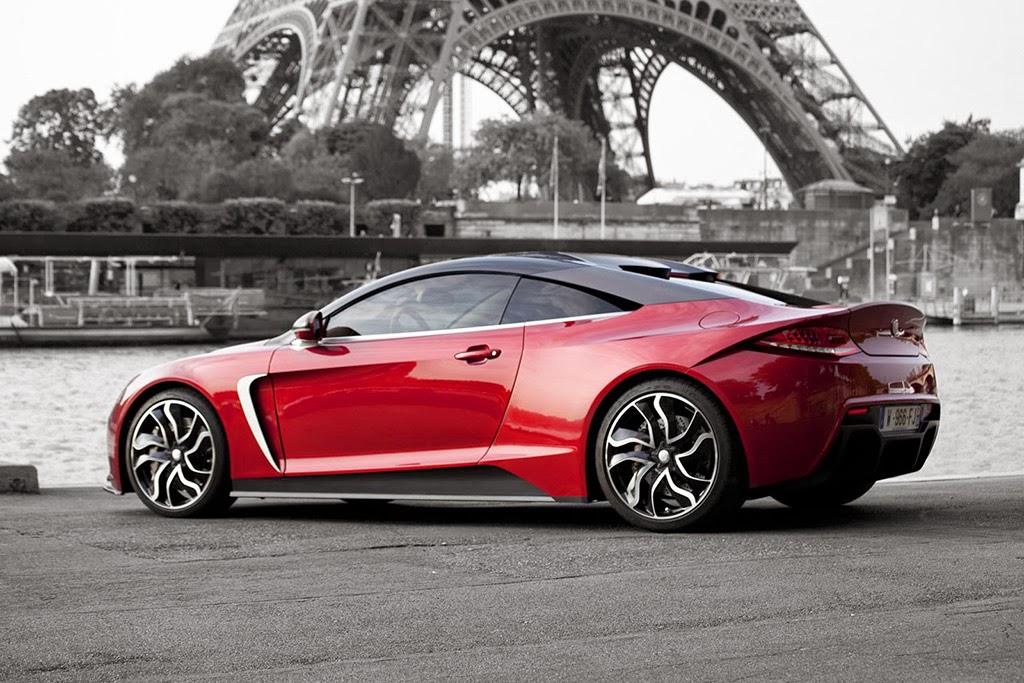
The Furtive-eGT has been around in concept form since 2010 and a few may even have been delivered, but now Exagon appears ready to go into serial production.

The Exagon Furtive eGT electric supercar is powered by a pair of 300 kW Siemens electric motors that combined have the potential to deliver up to 600 kW / 516 Nm, the car is exceptionally rapid. Power is transferred to the rear wheels and Exagon says throttle response is virtually instantaneous, delivering a 0-100km/h sprint of just 3.5 seconds, faster than a Tesla Roadster.

The car has a top speed of 250km/h and the electric motors are energised by a hefty 53kWh lithium-ion battery which provides a range of around 300km but Exagon will option a small range-extender engine to charge the batteries on the run, which gives the car a theoretical 730km range.

The Exagon Furtive eGT has four seats and features a monocoque light carbon fiber body, which weighs an astonishingly low 124 kg. The manufacturer is also offering a wide selection of personalization options, while the price and availability are set to be announced at a later date.

ER-A RaceAbout EV sets new speed record 285,31 km/h [VIDEO]

Metropolia Electric RaceAbout road legal electric vehicle top speed record 285,31 km/h at Lappeenranta airport during Unlimited Racing event on June 28th 2014.

Driver Janne Laitinen the car recorded 0-100 km/h, 6,3s & 0 - 100 mph, 10,6s.

The E-RA has a 33 kWh Altairnano lithium-titanate battery which powers four-electric motors that develop a peak output of 383 PS (282 kW / 378 bhp) and 3,200 Nm (2,360 lb-ft) of torque. This enables the 1,700 kg (3,747 lb) prototype to accelerate from 0-100 km/h in approximately six seconds and travel approximately 200 km (124 miles) on a single charge. At top speed the E-RA consumed around 1250 Wh/km measured as energy required from grid to recharge the battery.

Harley-Davidson Reveals Project LiveWire EV Concept [VIDEO]

Innovation, meet heritage. Today, Harley-Davidson reveals Project LiveWire – the first Harley-Davidson® electric motorcycle.

In keeping with the company's customer-led product development approach, starting next week select consumers across the country will be able to ride and provide feedback on the bike, helping to shape the future of Harley-Davidson's first-ever electric motorcycle.

While not for sale, Project LiveWire is specifically designed for the purpose of getting insight into rider expectations of an electric Harley-Davidson motorcycle.

"America at its best has always been about reinvention," said Matt Levatich, President and Chief Operating Officer, Harley-Davidson Motor Company. "And, like America, Harley-Davidson has reinvented itself many times in our history, with customers leading us every step of the way. Project LiveWire is another exciting, customer-led moment in our history."

Spurred by this heritage, the Project LiveWire Experience invites customers to test ride, provide feedback and learn more about the story of the motorcycle. Even those who don't yet ride will have the opportunity to feel the power of Project LiveWire through Jumpstart – a simulated riding experience.

A 2014 U.S. tour – kicking off with a journey down Route 66 – will visit more than 30 Harley-Davidson dealerships now through the end of the year. In 2015, the Project LiveWire Experience will continue in the U.S. and expand into Canada and Europe.

"This builds on many recent reinvention successes for Harley-Davidson," said Levatich. "In just the last few years, we've broadened our reach to serve an increasingly diverse society, as well as reinvented our approach to product development and manufacturing. This has resulted in cutting-edge products like the recently launched Project Rushmore touring bikes, Harley-Davidson Street 500 and 750 models and this reveal of Project LiveWire."

An Innovative Approach to Advance the Possibilities of Personal Freedom This exciting new ride blends the company's styling heritage with the latest technology to deliver a new expression of the signature Harley-Davidson look, sound and feel.

"Project LiveWire is more like the first electric guitar – not an electric car," said Mark-Hans Richer, Senior Vice President and Chief Marketing Officer, Harley-Davidson Motor Company. "It's an expression of individuality and iconic style that just happens to be electric. Project LiveWire is a bold statement for us as a company and a brand."

The bike offers a visceral riding experience with tire-shredding acceleration and an unmistakable new sound.

"The sound is a distinct part of the thrill," said Richer. "Think fighter jet on an aircraft carrier. Project LiveWire's unique sound was designed to differentiate it from internal combustion and other electric motorcycles on the market."

Longer term plans for retail availability of Project LiveWire will be influenced by feedback from riders along the Project Livewire Experience tour.

"We offer a no excuses riding experience in everything we do and we are led by what our customers tell us matters most," said Richer. "Because electric vehicle technology is evolving rapidly, we are excited to learn more from riders through the Project LiveWire Experience to fully understand the definition of success in this market as the technology continues to evolve."

Helping Preserve and Renew the Freedom to Ride for Generations As riding in the great outdoors is one of the best elements of motorcycling, sustainability remains a core strategic focus at Harley-Davidson.

"Preserving the riding environment is important to all of us," said Levatich. "Project LiveWire is just one element in our efforts to preserve and renew the freedom to ride for generations to come. As a company that has seen success for 111 years, we think in generational terms about our great riding environments for the next 111 years."

Google launches an all-electric self driving ‘pod’ car [VIDEO]

We have seen battery powered 'pod' type driver-less cars before with the ULTRra PRT at Heathrow airport and the recently announced 100 vehicle trial on public streets around Milton Keynes. These vehicles can only navigate on purpose built guideways as opposed to merging with general traffic. Google has demonstrated a driver-less pod type electric vehicle based on their self-driving technology.

The two-seater prototype vehicle is Google’s reimagination of what the modern automobile should look and feel like if you took the human out of the transportation equation and designed something solely to chauffeur passengers from point A to B.

“The project is about changing the world for people who are not well-served by transportation today,” Google co-founder Sergey Brin said at the inaugural Code Conference in Rancho Palos Verdes, California. “There’s not great public transportation in many public places in the United States.”

The car — which was conceived and designed by Google, unlike the ones it previously modified — lacks many of the trappings of a normal car, and that includes the three essentials: A steering wheel, an accelerator and a brake pedal.

Google wants to get these cars on the streets ASAP. The company plans to start testing them in Mountain View, Calif., later this summer. They hopes to build at least 100 prototypes over the next two years, and get them into the hands of volunteer drivers — or nondrivers, as it were — as soon as the system is evaluated to be safe.

Electric BMW Mini Superleggera Roadster Concept

The BMW Group celebrates the meeting of the time-honoured and the contemporary at the Concorso d'Eleganza Villa d'Este 2014 with a very special concept: the MINI Superleggera™ Vision. This exclusive interpretation of an open-top two-seater was created by MINI and Touring Superleggera, the tradition-steeped design and coach building house based in Milan.

The MINI Superleggera™ Vision is on the one hand a classic roadster, a compact and agile two-seater, expressing the most minimalist and emotional style of motoring; and on the other hand its electric drivetrain gives the car distinctly modern driving dynamics. In collaboration with MINI, Touring Superleggera™ has designed and built an elaborately crafted, unique model which blends the tradition of classic coachwork construction with the MINI's authentic British styling to create timeless aesthetic appeal.

Modern Britishness meets Italian flair: the iconic design of MINI meets elegant, athletic beauty - interpreted in contemporary style.

Classic Italian body construction and hand-shaped metal sheeting give the MINI SuperleggeraTM Vision a unique emotional appeal. Both on the inside and outside, the form is reduced to the maximum extent so as to achieve a clear focus on the distinctive driving experience.

The interior reflects traditional coachwork construction in terms of materials and styling, combined with the icons of MINI interior design.

High-end materials such as leather, aluminium and black chrome highlight the clear aesthetics of the interior.

Adrian van Hooydonk, Senior Vice President BMW Group Design on the concept: "Touring Superleggera and MINI have much in common: both companies attach great importance to their history and this is something which defines their outward appearance to this day. What is more, they both emphasise iconic design and distinctive solutions. These elements are merged in the MINI SuperleggeraTM Vision to create an elegant automobile which interprets a British roadster under the influence of Italian style and hand craftsmanship."

British design with an Italian accent - the exterior design.

"The MINI SuperleggeraTM Vision elegantly perpetuates what the Classic Mini started 55 years ago: reduction to the essentials. Its energetic, minimalistic design embodies the dynamic essence of an automobile. At the same time it creates unique emotional beauty in combining the past and future of the automotive industry, i.e. traditional coachwork craftsmanship and modern design styling. It was a pleasure for me to design a concept like this." says Anders Warming, Head of MINI Design.

The perfectly balanced proportions indicate at first glance what the electrically powered MINI Superleggera™ Vision has to offer in terms of a driving experience: the stretched bonnet, long wheelbase and cool, short overhangs convey pure driving fun. As in every MINI, the wheels are set widely on the body, promising a high degree of agility. The passenger cell is slightly set back, further underscoring the car's dynamic impression. The overall effect of the MINI Superleggera™ Vision is sporty, elegant and dynamic.

The front of the MINI Superleggera™ Vision features the traditional MINI design icons: two circular headlights and a hexagonal grille define the unmistakable front section, providing a contemporary interpretation of features which have become firmly established over decades. There are also striking classic sports car elements such as a wide track and distinctively curved wheel arches that give the front a dynamic presence. The classic MINI bonnet stripes are three-dimensionally embossed and run on into high-quality polished aluminum accents. The inlaid bonnet harks back to classic British roadsters of bygone days.

Meanwhile the horizontal rib look of the radiator grille adds a classic sporty touch. The fact that it is closed is a discreet indication of the car's electric motor. The two fog lights echo the circular contours of the headlamps, providing a smaller interpretation of them in the radiator grille. The air inlets are also circular, giving the front section a distinctive touch. A flat front splitter made of carbon fibre closes off the front to the road, thereby underscoring the car's sporty statement down to the last detail.

Classic coachwork construction in a cutting-edge interpretation.

The striking element of the side view is the characteristic "Touring" line. It embodies both the high art of coachwork building and classic aesthetics. Surrounded by tight, seamless surfaces, it traces a precise, vibrant movement from the front wheels through to the rear. This reflects the great craftsmanship and longstanding experience of Touring Superleggera in area of body construction: ever since it was founded the company has stood for fine, light sports car bodies. To this day, Touring Superleggera™ shapes large aluminium sheets by hand using the most performing frame structures. The hand-crafted style of construction gives the MINI Superleggera Vision an aesthetic form which would be virtually impossible to achieve by machine manufacture.

"MINI and Touring both believe that proportions are the key factor of beauty, and share the same values of essentiality and innovation" says Louis de Fabribeckers, Head of design of Touring Superleggera. "In this car all unnecessary equipment or decoration is sacrificed, as performance is gained through lightness and efficiency of the bodywork and interior. The Italian touch is in the proportions and the typical waistline."

There are very few gaps in the body since it is constructed from large sheets of metal. The result is a closed look that conveys high-quality elegance. The specially developed exterior paint finish Como Blue, almost liquid in effect, stands for both classic and modern style. It particularly underlines the refined Italian touch of the MINI Superleggera™ Vision. The elaborate rims and the elegant exterior mirrors in long-hole look complete with a mirror base in polished aluminium add exclusive accentuations at the side. Echoing the front section, the discreet CFRP sills underscore the sporty character of the MINI Superleggera™ Vision.

Meanwhile the striking fin defines the look of the rear, adding a touch of extravagance. It gives the MINI Superleggera™ Vision a particular longitudinal dynamics while at the same time embodying the unconventional air of both MINI and Touring Superleggera. Like the "Touring" line at the side, it is modeled with enormous precision. The highlight of the flat, wide rear is the unusual lights: designed in the form of a Union Jack divided in two, they combine functionality and symbolism in a way never seen before. In this way they express the British roots of the MINI Superleggera™ Vision while at the same time emphasising the modern LED technology as already used in the new MINI. A chrome bar demarcates the rear lights at the centre of the rear, making this area a classic British jewellery icon. The CFRP diffuser rounds off the rear to the road in sporty style.

Echoing the exterior - the interior design.

The exterior and interior design of the MINI Superleggera™ Vision merge seamlessly. Only a surrounding shoulder line in polished aluminium visually separates the exterior and interior from each other. The border creates an encircling, sporty gesture that consistently perpetuates the clear elegance and generous surfaces of the exterior.

In its styling and in the look and feel of its materials, the interior design celebrates the tradition and the essence of classic coachwork construction. It reflects how the automobile was created: the essential features are quoted - the untreated aluminium sheeting and the tube-shaped structural elements - and they are made visible in the interior by means of a high-quality interpretation. This is most striking in the dashboard. The latter is created from a single aluminium sheet and has been left in the state the automobile body would look like without a paint finish. The generously sized unpainted surfaces and the clearly visible hand craftsmanship of the dashboard go together to reflect the skilled artistry of the coachbuilders. The doors and the sporty 3-spoke steering wheel likewise reveal the traditional method of construction. The structural elements in the doors form a Union Jack, discreetly indicating the British origins of the MINI Superleggera™ Vision.

The Center Instrument in the middle of the instrument panel draws on MINI design styling and has been extended for the MINI Superleggera™ Vision to include a touch-sensitive control element and two circular instruments with metal surrounds on the right. In addition to the analog clock on the far right, the second framed instrument activates the camera which is integrated between the driver and front passenger seat. It has the function of capturing those particularly worthwhile moments on the road.

Classic and modern to equal degrees - colour and material design.

The classic materials aluminium and leather in a virtually untreated state define the reduced aesthetics of the MINI Superleggera™ Vision in the interior. Below the shoulder covered in brown leather in the classical color Sabbia, the materials are kept to the essentials. The structural elements in the doors and centre console are finished in high-quality black chrome, exclusively set apart from the aluminium surfaces and the raw, matt textured paint finish in the footwell area. This deliberately contrasting mixture of structured surfaces and high-end materials gives the MINI Superleggera™ Vision an exceptional charm. The sporty bucket seats are reminiscent of bygone MINI motor racing achievements and are covered in high-quality black leather. True to the MINI Motto "Hide & Reveal", accentuations in Misty Magenta provide a touch of Italian flair in tongue-in-cheek MINI style in concealed spots such as the two hot air outlets under the instrument panel and inside the door openings in the structural elements of the doors.

Coachbuilding in 2014.

Since 1926, Touring Superleggera is forerunner of advanced automotive design and custom coachbuilding. The company is one of the rare firms offering the whole in-house productive cycle from the first sketch, all the way through surface engineering and structural analysis, style models and prototypes, to turn-key, low-volume production of special bodywork.

"We are delighted that MINI wanted to stimulate an independent initiative and particularly Italian design for the first time", says Piero Mancardi, CEO of Touring Superleggera. He continues: "This project also shows MINIs attention to preserving and nurturing the skills of craftsmanship incorporated in modern coach building."

The MINI Superleggera™ Vision epitomizes the potential of "Carrozzeria" in today's automobile industry: blending creativity and flexibility with rigor and respect of high standards. The result is a car of classic beauty that is also state of the art.

BMW i5 with 300 km range expected by 2017

Following news late last year of a large battery powered BMW sedan 'already in the works', details are starting to emerge about the 2017 i5.

According to Car & Driver, the model will be heavily influenced by the i3 but feature distinctive styling and front-hinged rear doors. The model could also be equipped with a more conservative interior but nothing is official as of yet.

Like the i3, the i5 is expected to feature an electric motor that develops 170 PS (125 kW) and 250 Nm (184 lb-ft) of torque. However, the model's increased size could enable it to use a larger lithium-ion battery that delivers an electric-only range of up to 200 miles (322 km). There could also be a range-extended variant that uses a 1.5-liter three-cylinder petrol engine.

The BMW i5 will reportedly be launched in 2016, as a 2017 model, and cost approximately $50,000.

Source: Car & Driver

BMW i8 Gran Coupé to rival Tesla Model S

BMW's i3 is already on the market and the BMW i8 plug-in hybrid sports car is poised for its own launch but what of a rival for the Tesla Model S?

We recently reported on BMW considering a large battery powered sedan to compete head on with Tesla's Model S. The guys at Auto Projecoes envisage a "family" i8, with four doors and longer wheelbase as a fitting Model S rival.

Source: Auto Projeções

Audi unveil TT plug-in hybrid SUV concept car

The Audi TT offroad concept breaks the mold, combining the sportiness of a coupe with the lifestyle and utility of a compact SUV. The four-door model, which Audi is presenting at the Beijing International Automobile Exhibition, adds an entirely new expression to the Audi design language. Its plug-in hybrid drive with two electric motors and a system output of 300 kW (408 hp) provides for dynamic performance, yet consumes on average just 1.9 liters of fuel per 100 kilometers (123.8 US mpg).

“The Audi TT offroad concept provides a glimpse of how we might imagine a new model in the future TT family,” says Prof. Dr. Ulrich Hackenberg, Member of the Board of Management for Technical Development. “It combines the sporty genes of the TT with the strengths of a compact Audi SUV. Its plug‑in hybrid drive with the option of inductive charging is a major step toward the mobility of the future. We chose to present the Audi TT offroad concept in China, our second domestic market, because it represents the urban mobility of tomorrow: It is sustainable, dynamic, intelligent and connected.”

The plug-in hybrid drive

The plug‑in hybrid drive in the Audi TT offroad concept delivers 300 kW (408 hp) of system output and 650 Nm (479.2 lb‑ft) of system torque. The show car accelerates from 0 to 100 km/h (62.1 mph) in 5.2 seconds and reaches the electronically governed top speed of 250 km/h (155.3 mph) without any trouble. It consumes just 1.9 liters of fuel per 100 kilometers (123.8 US mpg), a CO2 equivalent of 45 grams per kilometer (72.4 g/mile).

The Audi TT offroad concept can drive over 50 kilometers (31.1 miles) solely on electric power and thus with zero local emissions, and has a total range of up to 880 kilometers (546.8 miles).

The combustion engine is a 2.0 TFSI producing 215 kW (292 hp) and 380 Nm (280.3 lb‑ft) of torque. The two-liter, four‑cylinder unit with the large turbocharger is packed with Audi's potent efficiency technology. At part load, indirect injection supplements gasoline direct injection for lower fuel consumption. The exhaust manifold is integrated into the cylinder head – the foundation for the high-performance thermal management system.

A separating clutch links the transverse 2.0 TFSI to an electric motor producing 40 kW and 220 Nm (162.3 lb‑ft) of torque. The slim, disc-shaped electric motor is integrated into the six-speed e‑S tronic. The dual-clutch transmissions sends the torque to the front wheels. Mounted on the rear axle of the Audi TT offroad concept is a second electric motor independent of this drive unit. This produces a maximum of 85 kW and 270 Nm (199.1 lb‑ft).

In front of the rear axle is a liquid-cooled, lithium-ion battery comprising eight modules. It contributes to the balanced 54:46 weight distribution between the front and rear axles and to the low center of gravity. The battery stores up to 12 kWh of energy, enough for an electric range of 50 kilometers (31.1 miles). An Audi wall box, which manages the energy feed conveniently and intelligently and can deal with a variety of voltages and outlets, is used for stationary charging.

The show car is also designed for use with Audi Wireless Charging technology for contactless inductive charging. The infrastructure side – a plate with a coil and an inverter (AC/AC converter) – is placed on the parking spot of the Audi TT offroad concept and connected to the power grid. The charging process begins automatically when the car drives onto the plate. The alternating magnetic field of the infrastructure side induces a 3.3 kW alternating current across the air gap in the secondary coil, which is integrated into the vehicle. The current is inverted and fed into the electrical system.

Charging stops automatically when the battery is fully charged. It takes about as long as charging via a cable, and the driver can interrupt the process at any time. The Audi Wireless Charging technology is more than 90 percent efficient, and is not affected by weather factors such as rain, snow or ice. The alternating field, which is only generated when a car is on the plate, is not harmful for people or animals.

The intelligent plug‑in hybrid concept of the Audi TT offroad concept really shines when driving, making the show car every bit as efficient as it is sporty. The Audi drive select management system offers three driving modes. EV mode gives priority to electric driving. In this case, the front drive unit is inactive, and the electric motor at the rear axle with its powerful torque can rapidly accelerate the four‑door car to a maximum of 130 km/h (80.8 mph). In Hybrid mode, all three drives work together in various ways as necessary. In many situations the front electric motor assumes the role of a generator.

Powered by the engine, it recharges the battery and thus extends the electric range. Full system output is available in Sport mode. During “boosting,” i.e. strong acceleration, the rear electric motor works together with the 2.0 TFSI. The same thing happens when the hybrid management system decides that all‑wheel drive is appropriate. In such situations, e.g. on a slippery road or in light off-road conditions, this essentially makes the Audi TT offroad concept an e‑tron quattro.

When the driver takes his or her foot off the accelerator, free-wheeling or “coasting” is activated. Recuperation occurs here at low speeds and when braking. The driver can use the “Hold” and “Charge” functions in the MMI system to specifically influence the battery's charge state, e.g. to increase storage of electric energy so that it can be used over the final kilometers to the destination.

Chassis

The Audi TT offroad concept shows its strong character on any road surface and in any terrain. On asphalt the show car is sporty and composed, and it can easily handle light terrain thanks to its high ground clearance, short overhangs and e‑tron quattro all-wheel drive. 255/40-series tires are mounted on 21‑inch wheels, whose delicate five-arm design draws on the look of the Audi e‑tron models. Dark trim provides contrast.

Many of the components of the McPherson front suspension are made of aluminum; the four‑link rear axle handles longitudinal and transverse forces separately. The ratio of the progressive steering changes with the steering input. The Audi drive select system allows the driver to modify the function of various technical modules in multiple steps.

Driver assistance systems

The Audi TT offroad concept show car features two Audi driver assistance systems that are almost ready for production: the intersection assistant and online traffic light information technology. The intersection assistant aims to help to avoid side-impact collisions, or reduce their severity, where lanes merge and at intersections. Radar sensors and a wide-angle video camera scan zones to the front and sides of the car. If the system detects a vehicle approaching from the side and assesses it to be critical, graduated warnings are displayed in the Audi virtual cockpit.

Online traffic light information is a technology that connects the Audi TT offroad concept via the cell phone network to the central traffic computer, which controls the traffic light systems in the city. Based on the information from this system, the Audi virtual cockpit shows the driver what speed to drive in order to reach the next traffic light while it is green. The cockpit displays the time remaining when waiting for the light to turn green.

Bentley unveil plug-in hybrid concept

Bentley is envisioning a powerful and even more efficient Future with the Bentley Hybrid Concept - a technology showcase that previews Bentley's first plug-in hybrid model, set to be a dedicated version of the all-new SUV available in 2017. The Bentley Hybrid Concept will be on display at the Beijing International Automotive Exhibition on Sunday 2Qch April.

As the first luxury brand to present a plug-in hybrid, Bentley leads the way in bringing new powertrain choice to the luxury automotive sector. Dr Wolfgang Schreiber, Chairman and Chief Executive of Bentley Motors, comments:

"There is no doubt that plug-in hybrid technology is true to Bentley's values of outstanding luxury and effortless performance. Combining our renowned engines with electric power reinforces and enhances both principles, and so we will gradually introduce this powertrain across our model range. By the end of the decade, at least 90% of our production will be available as a plug-in hybrid. We are proud to be pioneering these developments in the luxury sector."

The Bentley Plug-in Hybrid System
Through Bentley's hybrid system, customers will have a wider choice of modern, powerful and efficient powertrains. The plug-in hybrid system will offer a power increase of up to 25% together with a 70% reduction in C02 emissions, both without any compromise to the exquisite luxury, timeless design and industry-leading refinement for which Bentley has become renowned. Bentley hybrids will also be capable of driving at least 50 km on electric power alone, allowing for emissions-free city driving with the option of enhanced performance on the open road.

The Bentley Hybrid Concept
The Bentley Hybrid Concept is based on the flagship model in the Bentley family, the Mulsanne, to show that hybrid technology enhances even the pinnacle of luxury and performance. Copper is used as an exterior and interior styling element to highlight the car's electrical veins, including copper details to the headlamps, radiator shell bezel, brake calipers, feature line details and badges. Copper accents continue in the cabin, with inserts to the hand-crafted veneers fascias, switch bezels and instruments. Copper cross-stitching to the Mulliner Driving Specification diamond-quilted interior provides the Finishing flourish.

Close Look: Walmart’s Turbine Powered Hybrid Concept Truck [VIDEO]

The Walmart Advanced Vehicle Experience concept truck is the latest in their fleet efficiency program.

The one-of-a-kind prototype offers a whole package of firsts. The tractor has very advanced aerodynamics and is powered by a prototype advanced turbine-powered, range-extending series hybrid powertrain.

The trailer is made almost exclusively with carbon fiber, saving around 4,000 pounds which can then be used to carry more freight.

Saleen Adds AC Propulsion to Design Team for New Electric Sports Car

Saleen Automotive has announced that the Company has added legendary electric car developers, AC Propulsion, to its design team for the new Saleen Electric vehicle. AC Propulsion will provide the technology and implementation of the powertrain and battery for the project.

AC Propulsion is well-known for providing its proprietary technology to the Tesla Roadster, which was developed by Tesla Motors to mass-produce AC Propulsion's tzero concept car. AC Propulsion also provided drivetrains and support for the BMW all-electric Mini E. The Company specializes in alternating current-based drivetrain systems for electric vehicles. The company produces electric vehicle drive systems featuring high performance, high efficiency induction motors and integrated high power battery charging.

"We are assembling a team and vehicle that combines the finest technology and design available," stated Steve Saleen, CEO, Saleen Automotive. "AC Propulsion is a proven leader and seminal thinker in electric car creation and we believe will greatly assist us in introducing a revolutionary vehicle to the market. I believe we have secured the very best partner possible for our powertrain and battery."

"AC Propulsion is excited to partner with automotive legend Steve Saleen for his new electric vehicle project," stated Paul Carosa, President, AC Propulsion. "Mr. Saleen is on the verge of creating a vehicle unlike any on the market today, a tremendous new entry in the fast growing electric car market that lives up to the Saleen name and reputation. We'll do our part to make it even better."