China's Le Holdings Co Ltd, also known as LeEco and formerly as LeTV, on Wednesday unveiled an all-electric battery concept car whose production version the company hopes will compete head-on with Tesla Model S.
The concept car, called LeSEE, which hints at a production version of the car LeEco is widely expected to launch in the future, is one of an array of similarly positioned premium electric vehicles (EVs) due to hit the market in the next few years from more than half a dozen Chinese-funded EV start-ups.
LeEco said the concept car, which will be displayed at next week's Beijing auto show, is not only fully electrically propelled but has been engineered to be a "smart", "connected" and "automated self-driving" car.
Jia Yueting, co-founder and head of LeEco, said he hopes that when the car hits the market it will help China's auto industry reach the forefront of the global auto sector.
"When everyone is questioning us over our ability to develop a car like this and is laughing at us, we are still able to be here and show you this car ... I am so emotional," Jia said at a LeEco launch event for several products in Beijing on Wednesday.
Jia said LeEco is also developing a car-sharing business in connection with its green car efforts.
He said one day LeEco cars would be offered free of charge to consumers because the company aims to make money on content and other services it sells through those connected cars. Jia did not say when that day might come.
"Our cars' pricing model will be similar to pricing models for cellphones and tv sets we sell today," he said. "One day our cars will be free ... We are getting there some day."
LeEco's electric vehicle unit and other EV startups in China proliferated after the government, looking to fuel a more determined switch to electricity as the ultimate alternative to petrol, liberalized and opened its automotive industry to allow deep-pocketed tech firms to invest as long as they dabble in electric cars.
Aside from LeEco, the likes of Baidu, Alibaba, Xiaomi Inc, Tencent and other tech firms have funded more than half a dozen EV start-ups, which include NextEV and CH-Auto.
Those new players have been emboldened by the government's all-out support for all types of electric cars, which includes generous incentives to buyers.
They also expect industry policymakers to mandate providers of public transportation such as bus companies, taxi operators and even courier services to purchase electric vehicles and invest in charging infrastructure to usher in an electric future.
BMW Motorrad has a long tradition in pointing out new ways and thoughts for the topic „mobility on two wheels“. For that, again and again many studies were presented in the past giving views to the future. The experimental vehicle eRR, created as a project with the Technical University of Munich, embodies an idea of an electric powered supersport motorcycle made by BMW Motorrad.
Already a couple of years ago, BMW i showed the BMW Group’s visionary and sustainable approach with the vehicles BMW i3 and i8 and their revolutionary design principles (aluminum chassis and passenger cabin made from carbon fibre) and BMW Motorrad’s C evolution proved, that zero emission, riding fun and practicability do not exclude themselves.
With presenting the experimental vehicle eRR BMW Motorrad goes one step forward and shows the possibilities of an all-electric drive in a supersport motorcycle. Regarding design and chassis technology the eRR leans on the supersport motorcycle S 1000 RR, however using an all-electric drive.
Stephan Schaller, Head of BMW Motorrad, emphasizes: „Since their market launch, the RR is giving the creeps to motorsport athletes. If acceleration, handling or topspeed – the RR is setting standards. However, if acceleration on the first metres, up to 50, 60 kph, is the point, the RR’s 199 bhp have to admit defeat by another BMW product: the C evolution with its electric drive.
We asked ourselves: What happens when combining a sport motorcycle and an electric drive? The experimental vehicle eRR brings the topic zero emission and electric drive on a new, more fascinating level."
BMW Motorrad will announce technical details of the eRR at a later date.
Today at the Tokyo Motor Show 2015, Nissan Motor Co., Ltd. unveiled a concept vehicle that embodies Nissan's vision of the future of autonomous driving and zero emission EVs: the Nissan IDS Concept.
Presenting at the show, Nissan president and CEO Carlos Ghosn said: "Nissan's forthcoming technologies will revolutionize the relationship between car and driver, and future mobility."
After leading the development and expansion of EV technology, Nissan once again stands at the forefront of automotive technology. By integrating advanced vehicle control and safety technologies with cutting-edge artificial intelligence (AI), Nissan is among the leaders developing practical, real-world applications of autonomous drive technology.
In August 2013, Ghosn said that by 2020 Nissan plans to equip innovative autonomous drive technology on multiple vehicles. Progress is well on track to achieve this goal.
Nissan Intelligent Driving is Nissan's concept of autonomous drive technology and represents what Nissan believes next-generation vehicles should be. "Nissan Intelligent Driving improves a driver's ability to see, think and react. It compensates for human error, which causes more than 90 percent of all car accidents. As a result, time spent behind the wheel is safer, cleaner, more efficient and more fun," continued Ghosn.
By 202X, expect to see Nissan Intelligent Driving technology deployed on cars in cities around the world.
The Nissan IDS experience
Some have compared a future with autonomous drive to living in a world of conveyer belts that simply ferry people from point A to B, but the Nissan IDS Concept promises a very different vision of tomorrow. Even when the driver selects Piloted Drive and turns over driving to the vehicle, the car's performance — from accelerating to braking to cornering — imitates the driver's own style and preferences.
In Manual Drive mode, the driver has control. The linear acceleration and cornering are pure and exhilarating. Yet behind the scenes, the Nissan IDS Concept continues to provide assistance. Sensors continually monitor conditions and assistance is available even while the driver is in control. In the event of imminent danger, Nissan IDS Concept will assist the driver in taking evasive action.
In addition to learning, the Nissan IDS Concept's AI communicates like an attentive partner. From information concerning traffic conditions, the driver's schedule to personal interests, Nissan IDS Concept's AI has what is needed to help create a driving experience that is comfortable, enjoyable and safe.
Design — Together, we ride
"A key point behind the Nissan IDS Concept is communication. For autonomous drive to become reality, as a society we have to consider not only communication between car and driver but also between cars and people. The Nissan IDS Concept's design embodies Nissan's vision of autonomous drive as expressed in the phrase together, we ride," says Mitsunori Morita, Design Director.
Two interiors enable two ways for the driver to enjoy the experience. Together, we ride is clearly demonstrated in the interior design. "The Nissan IDS Concept has different interiors depending on whether the driver opts for Piloted Drive or Manual Drive. This was something that we thought was absolutely necessary to express our idea of autonomous drive," says Morita.
Even though it is a hatchback, the Nissan IDS Concept's long wheelbase enables comfortable seating space for four adults. But the cabin becomes even more spacious when the driver selects Piloted Drive. In this mode, the steering wheel recedes into the center of the instrument panel and a large flat screen comes out. Various driving-related operations are handled by AI, voice and gestures from the driver. The interior, which is comprised of natural materials such as mesh leather, is illuminated by soft light. All four seats rotate slightly inward, facilitating easier conversation. It's like relaxing in a living room.
When the driver selects Manual Drive, the roomy interior transforms to put the driver in control. All seats face forward. The steering wheel, which takes styling cues from reins for horse riding, appears along with driving meters and a heads-up display that shows route and other driving information. Interior lighting switches to blue, stimulating the ability to concentrate. Nissan's use of hollow-structure A-pillars helps ensure excellent visibility by reducing blind spots and also contributes to the feeling of open space.
"In every situation, it is about giving the driver more choices and greater control. And the driver will remain the focus of our technology development efforts," Ghosn said at the show.
The transformation to Manual Drive can be carried out with ease through a switch between the front seats called the PD Commander. This is the only control the driver can physically operate when the car is in Piloted Drive: when the driver is ready to take over driving, a physical action should initiate the change.
Exterior design
For autonomous drive to be widely accepted, people need to fully trust the technology. Through its innovative communication capabilities, the Nissan IDS Concept promotes confidence and a sense of harmony for those outside the car as well. Various exterior lights and displays convey to pedestrians and others the car's awareness of its surroundings and signals its intentions. The car's side body line, for example, is actually an LED that Nissan calls the Intention Indicator. When pedestrians or cyclists are nearby, the strip shines white, signaling that the car is aware of them. Another electronic display, which faces outside from the instrument panel, can flash messages such as "After you" to pedestrians. This natural, harmonious system of communication signals a new future with cars.
Advanced aerodynamic performance for greater driving range
Design Director Mitsunori Morita says: "By the time Nissan Intelligent Driving technology is available on production cars, EVs will be able to go great distances on a single charge. Getting to this point will, of course, require the further evolution of batteries, but aerodynamic performance is also very important. We incorporated our most advanced aerodynamic technology in the design of the Nissan IDS Concept."
The height of the full carbon fiber body was constrained to 1,380 mm, sharply minimizing aerodynamic drag (Cd). Positioning the tires close to the corners of the body maximizes interior space while enabling a wrap-around cabin design. Nissan selected large-diameter wheels for high-performance and sportiness, but used very thin 175-size tires to minimize air and roll resistance. The wheels have a layered design suggestive of thin fins that create tiny vortexes of air flow on the wheel's surface. This design further contributes to smooth air flow.
The icicle pattern on the Nissan IDS Concept's grille symbolizes a pure and clean design — perfect for an EV. Shaped like a stack of ice blocks, the grille pattern appears transparent. The car's bluish satin silver body color heightens the impression of a comfortable and secure cabin space.
Highly evolved EV technology for long-distance driving
At Nissan's annual shareholders meeting in June, Executive Vice President Hideyuki Sakamoto said: "Our zero emission strategy centers on EVs. We are pursuing improved electric powertrain technologies, such as motors, batteries and inverters, which will enable us to mass produce and market EVs that equal or surpass the convenience of gasoline-powered cars."
The Nissan IDS Concept is fitted with a high-capacity 60 kWh battery, and thanks to its outstanding aerodynamics, low stance, flowing form and reduced weight due to its full-carbon-fiber body, the vehicle is designed to also meet the need to drive long distances. Other technologies on the Nissan IDS Concept include Piloted Park that can be operated by smartphone or tablet, and wireless charging technologies. Through these, the driver can leave parking and charging to the car.
Nissan's targets — Zero traffic fatalities and zero emissions
In order for our car-based society to be sustainable, complex issues ranging from sustainable energy supplies to climate change, air pollution and traffic safety must be addressed. At Nissan, we have set zero fatalities and zero emissions as aspirational targets in our mission to help create a sustainable car-based society.
Over 90 percent of traffic accidents are caused by human error. Nissan IDS Concept's extensive system of sensors and AI are designed to provide enhanced safety performance compared to a human driver. This technology brings us a step closer to the goal of zero traffic fatalities.
EVs produce no CO2 emissions and their batteries can store energy from renewable sources and turn it into electricity for homes and buildings. As the number of EVs increases, entire communities will be able to harness their power as part of a sustainable energy plan. Then, as EVs come to play a central role in energy supply, we will come that much closer to becoming a zero emission society.
Nissan believes that the Nissan IDS Concept will evolve into a leading innovation for next generation mobility and our quest for making these "two zeroes" a reality.
Featuring Nissan's most advanced safety, driving-control and EV technology — all taken to a new level by AI — the Nissan IDS Concept is a compelling showcase of a promising future.
The road car project that Adrian Newey is working on with Red Bull and Aston Martin appears to be picking up steam, and there are rumors that it could be an electric car.
Newey seems to have no interest in building a hybrid hypercar four years after the McLaren P1, LaFerrari and Porsche 918 Spyder. As previously discussed, these examples are very much first generation 'mild' hybrids.
What does interest him is a car that Autocar says advances technology and the involvement of the driver. That would be an electric supercar. Newey reportedly wants his car to hold the same sort of place in history as Gordon Murray's McLaren F1.
Sources suggest that Aston Martin shareholder Mercedes-Benz wants to be involved in the project, both to create a connection with Red Bull’s younger audience and to have a technical involvement in what could be a landmark product. As such, it is said to be pushing for its performance arm, AMG, to work with Newey.
As AMG are responsible for designing the only production supercar with true all-wheel-drive torque vectoring (Mercedes SLS AMG Electric), any collaboration between AMG and Adrian Newey could spawn a vehicle to seriously eclipse the current generation of hybrid hypercar.
In presenting the Mission E at the IAA in Frankfurt, Porsche is introducing the first all-electrically powered four-seat sports car in the brand's history. The concept car combines the unmistakable emotional design of a Porsche with excellent performance and the forward-thinking practicality of the first 800-volt drive system. Key specification data of this fascinating sports car: four doors and four single seats, over 600 hp (440 kW) system power and over 500 km driving range. All-wheel drive and all-wheel steering, zero to 100 km/h acceleration in under 3.5 seconds and a charging time of around 15 minutes to reach an 80 per cent charge of electrical energy. Instruments are intuitively operated by eye-tracking and gesture control, some even via holograms – highly oriented toward the driver by automatically adjusting the displays to the driver's position.
Drive system: over 600 hp with technologies from endurance racing
The drive system of the Mission E is entirely new, yet it is typical Porsche, i.e. proven in motor racing. Two permanent magnet synchronous motors (PMSM) – similar to those used in this year's Le Mans victor, the 919 hybrid – accelerate the sports car and recover braking energy. The best proof of a Porsche is 24 hours of top racing performance and a 1-2 finish. Together the two motors produce over 600 hp, and they propel the Mission E to a speed of 100 km/h in less than 3.5 seconds and to 200 km/h in under twelve seconds. In addition to their high efficiency, power density and uniform power development, they offer another advantage: unlike today's electric drive systems, they can develop their full power even after multiple accelerations at short intervals. The need-based all-wheel drive system with Porsche Torque Vectoring – which automatically distributes torque to the individual wheels – transfers the drive system's power to the road, and all-wheel steering gives precise, sporty steering in the desired direction. This makes the Mission E fit for the circuit race track; its lap time on the Nürburgring Nordschleife is under the eight-minute mark.
Everyday practicality: convenient and quick charging, over 500 km driving range
It is not just passionate sportiness that makes up a Porsche but also a high level of everyday practicality. Accordingly, the Mission E can travel over 500 km on one battery charge, and it can be charged with enough energy for around 400 km more driving range in about fifteen minutes. The reason: Porsche is a front-runner in introducing innovative 800-volt technology for the first time. Doubling the voltage – compared to today's electric vehicles that operate at 400 volts – offers multiple advantages: shorter charging times and lower weight, because lighter, smaller gage copper cables are sufficient for energy transport. A moveable body segment on the front left wing in front of the driver's door gives access to the charging port for the innovative "Porsche Turbo Charging" system. Via the 800-volt port, the battery can be charged to approximately 80 per cent of its capacity in around 15 minutes – a record time for electric vehicles. As an alternative, the technology platform can be connected to a conventional 400-volt charging station, or it can be replenished at home in the garage via convenient inductive charging by simply parking over a coil embedded in the floor of the garage from which the energy is transferred without cables to a coil on the car's underbody.
Low centre of gravity for superior driving dynamics
Another feature that is typical of a Porsche sports car is a lightweight concept with optimal weight distribution and a low centre of gravity. The battery mounted in the car's underbody, which is based on the latest lithium-ion technology, runs the whole length between the front and rear axles. This distributes its weight to the two drive axles uniformly, resulting in exceptionally good balance. In addition, it makes the sports car's centre of gravity extremely low. Both of these factors significantly boost performance and a sports car feeling. The body as a whole is made up of a functional mix of aluminium, steel and carbon fibre reinforced polymer. The wheels are made of carbon: the Mission E has wide tyres mounted on 21-inch wheels in front and 22-inch wheels at the rear.
Design: fascinating sports car with Porsche DNA
Every square inch, every angle, every radius of the Mission E reflects one thing above all else: emotional sportiness in the best tradition of Porsche design. The starting point is the sculpture of a sport saloon with a low height of 130 cm with sports car attributes from Zuffenhausen that embodies visible innovations such as its integrated aerodynamics. Distinctive air inlets and outlets – on the front, sides and at the rear – typify the body's full flow-through design that enhances efficiency and performance. Integrated air guides improve airflow around the wheels, for instance, and air outlets on the sides reduce overpressure in the wheel wells, thereby reducing lift.
The much reduced sculpting of the front end shows a classic Porsche sweepback, and it relates the concept car to the 918 Spyder and Porsche race cars. A new type of matrix LED headlights in the brand's typical four-point light design captures the viewer's gaze. Integrated as an element hovering in the airflow of the air inlet, they lend a futuristic character to the front end. The four LED units are grouped around a flat sensor for assistance systems whose border serves as an indicator light. Distinctive front wings and an extremely low-cut bonnet reference 911 design. As in the 911 GT3 RS, a wide characteristic recess extends from the overlapping front luggage compartment lid up and over the roof. The line of the side windows is also similar to that of the 911, however, with one important difference: two counter-opening doors enable convenient entry – without a B-pillar. Another difference: instead of the classic door mirror, inconspicuous cameras are mounted on the sides that contribute to the car's exceptional aerodynamics.
The rear design underscores the typical sports car architecture. The lean cabin with its accelerated rear windscreen, which draws inward at the rear, creates space for the sculpted shape of the rear wings that only a Porsche can have. A three-dimensional "PORSCHE" badge illuminated from inside hovers beneath an arch of light that extends across the entire width in a black glass element.
Interior: light and open with four single seats
The interior of the Mission E transfers all of the traditional Porsche design principles into the future: openness, purist design, clean architecture, driver orientation and everyday practicality. The all-electric drive concept made it possible to fully reinterpret the interior. The lack of a transmission tunnel, for instance, opens up space and gives a lighter and more airy atmosphere to the entire interior. Race bucket seats served as inspiration for the four single seats. Their lightweight design is weight-saving, and it gives occupants secure lateral support during dynamic driving. Between the front seats, the centre console – elegantly curved like a bridge with open space beneath it – extends up to the dashboard.
Display and control concept: intuitive, fast and free of distractions
A new world based on an innovative display and control concept opens up before the driver. It is intuitive, fast and free of distractions – created for the sports car of tomorrow. The filigree driver's display is curved, low-profile and free-standing. The instrument cluster shows five round instruments – they can be recognized as Porsche, but they are displayed virtually in OLED technology, i.e. by organic light-emitting diodes. The round instruments are organized according to the driver-relevant themes of Connected Car, Performance, Drive, Energy and Sport Chrono. The controls are just as innovative. An eye-tracking system detects, via camera, which instrument the driver is viewing. The driver can then activate the menu of the instrument in focus by pushing a button on the steering wheel and navigate in it – which also involves an interplay of eye-tracking and manual activation. But that is not all: the display follows the seat position and body attitude of the driver in what is known as a parallax effect. If the driver sits lower, higher or leans to one side, the 3D display of the round instruments reacts and moves with the driver. This eliminates situations in which the steering wheel blocks the driver's view of certain key information, for instance. All relevant information such as vehicle speed is always within the driver's line of sight.
The Mission E can even portray driving fun: a camera mounted in the rear-view mirror recognizes the driver's good mood and shows it as an emoticon in the round instrument. The fun factor can be saved together with individual information such as the route or speed, and it can be shared with friends via a social media link.
Holographic display with touch-free gesture control
The entire dashboard is chock full of new ideas. Its division into two three-dimensionally structuring layers reinforces the impression of lightness and clarity. The upper layer integrates the driver's display, and between the levels there is a holographic display that extends far into the passenger's side. It shows individually selectable apps, which are stacked in virtual space and arranged by priority with a three-dimensional effect. The driver – or passenger – can use these apps to touch-free control primary functions such as media, navigation, climate control, contacts and vehicle. The desired symbol is activated by gestures that are detected by sensors. A grasping gesture means select, while pulling means control. Moreover, driver or passenger can use a touch display on the centre console to control secondary functions such as detailed information menus.
The concept vehicle can also be configured externally from a tablet via Porsche Car Connect. Using "Over the Air and Remote Services" the driver can essentially change the functional content of the vehicle overnight. A simple update via the integrated high-speed data module is all it takes to implement the travel guide or additional functions for the chassis, engine or infotainment system. The driver can use a smartphone or tablet to start updates conveniently from the Porsche Connect Store. Furthermore, Porsche Connect enables direct contact to a Porsche Centre for remote diagnostics or to schedule appointments. Another function of integrated Remote Services is the digital key, which can be sent via the Porsche Connect Portal. It not only lets the owner open the doors, but also other persons authorized by the owner such as friends or family. After successful authentication, the key can be used within a specific time frame and defined location.
The virtual exterior mirrors are literally eye-catching. The lower corners of the windscreen show the images of the outside cameras that are mounted in the front wings. The benefits: the driver gets a better view of images and the surroundings, and safety information can also be actively displayed there
In presenting the Mission E at the IAA in Frankfurt, Porsche is introducing the first all-electrically powered four-seat sports car in the brand's history. The concept car combines the unmistakable emotional design of a Porsche with excellent performance and the forward-thinking practicality of the first 800-volt drive system. Key specification data of this fascinating sports car: four doors and four single seats, over 600 hp (440 kW) system power and over 500 km driving range. All-wheel drive and all-wheel steering, zero to 100 km/h acceleration in under 3.5 seconds and a charging time of around 15 minutes to reach an 80 per cent charge of electrical energy. Instruments are intuitively operated by eye-tracking and gesture control, some even via holograms – highly oriented toward the driver by automatically adjusting the displays to the driver's position.
Drive system: over 600 hp with technologies from endurance racing
The drive system of the Mission E is entirely new, yet it is typical Porsche, i.e. proven in motor racing. Two permanent magnet synchronous motors (PMSM) – similar to those used in this year's Le Mans victor, the 919 hybrid – accelerate the sports car and recover braking energy. The best proof of a Porsche is 24 hours of top racing performance and a 1-2 finish. Together the two motors produce over 600 hp, and they propel the Mission E to a speed of 100 km/h in less than 3.5 seconds and to 200 km/h in under twelve seconds. In addition to their high efficiency, power density and uniform power development, they offer another advantage: unlike today's electric drive systems, they can develop their full power even after multiple accelerations at short intervals. The need-based all-wheel drive system with Porsche Torque Vectoring – which automatically distributes torque to the individual wheels – transfers the drive system's power to the road, and all-wheel steering gives precise, sporty steering in the desired direction. This makes the Mission E fit for the circuit race track; its lap time on the Nürburgring Nordschleife is under the eight-minute mark.
Everyday practicality: convenient and quick charging, over 500 km driving range
It is not just passionate sportiness that makes up a Porsche but also a high level of everyday practicality. Accordingly, the Mission E can travel over 500 km on one battery charge, and it can be charged with enough energy for around 400 km more driving range in about fifteen minutes. The reason: Porsche is a front-runner in introducing innovative 800-volt technology for the first time. Doubling the voltage – compared to today's electric vehicles that operate at 400 volts – offers multiple advantages: shorter charging times and lower weight, because lighter, smaller gage copper cables are sufficient for energy transport. A moveable body segment on the front left wing in front of the driver's door gives access to the charging port for the innovative "Porsche Turbo Charging" system. Via the 800-volt port, the battery can be charged to approximately 80 per cent of its capacity in around 15 minutes – a record time for electric vehicles. As an alternative, the technology platform can be connected to a conventional 400-volt charging station, or it can be replenished at home in the garage via convenient inductive charging by simply parking over a coil embedded in the floor of the garage from which the energy is transferred without cables to a coil on the car's underbody.
Low centre of gravity for superior driving dynamics
Another feature that is typical of a Porsche sports car is a lightweight concept with optimal weight distribution and a low centre of gravity. The battery mounted in the car's underbody, which is based on the latest lithium-ion technology, runs the whole length between the front and rear axles. This distributes its weight to the two drive axles uniformly, resulting in exceptionally good balance. In addition, it makes the sports car's centre of gravity extremely low. Both of these factors significantly boost performance and a sports car feeling. The body as a whole is made up of a functional mix of aluminium, steel and carbon fibre reinforced polymer. The wheels are made of carbon: the Mission E has wide tyres mounted on 21-inch wheels in front and 22-inch wheels at the rear.
Design: fascinating sports car with Porsche DNA
Every square inch, every angle, every radius of the Mission E reflects one thing above all else: emotional sportiness in the best tradition of Porsche design. The starting point is the sculpture of a sport saloon with a low height of 130 cm with sports car attributes from Zuffenhausen that embodies visible innovations such as its integrated aerodynamics. Distinctive air inlets and outlets – on the front, sides and at the rear – typify the body's full flow-through design that enhances efficiency and performance. Integrated air guides improve airflow around the wheels, for instance, and air outlets on the sides reduce overpressure in the wheel wells, thereby reducing lift.
The much reduced sculpting of the front end shows a classic Porsche sweepback, and it relates the concept car to the 918 Spyder and Porsche race cars. A new type of matrix LED headlights in the brand's typical four-point light design captures the viewer's gaze. Integrated as an element hovering in the airflow of the air inlet, they lend a futuristic character to the front end. The four LED units are grouped around a flat sensor for assistance systems whose border serves as an indicator light. Distinctive front wings and an extremely low-cut bonnet reference 911 design. As in the 911 GT3 RS, a wide characteristic recess extends from the overlapping front luggage compartment lid up and over the roof. The line of the side windows is also similar to that of the 911, however, with one important difference: two counter-opening doors enable convenient entry – without a B-pillar. Another difference: instead of the classic door mirror, inconspicuous cameras are mounted on the sides that contribute to the car's exceptional aerodynamics.
The rear design underscores the typical sports car architecture. The lean cabin with its accelerated rear windscreen, which draws inward at the rear, creates space for the sculpted shape of the rear wings that only a Porsche can have. A three-dimensional "PORSCHE" badge illuminated from inside hovers beneath an arch of light that extends across the entire width in a black glass element.
Interior: light and open with four single seats
The interior of the Mission E transfers all of the traditional Porsche design principles into the future: openness, purist design, clean architecture, driver orientation and everyday practicality. The all-electric drive concept made it possible to fully reinterpret the interior. The lack of a transmission tunnel, for instance, opens up space and gives a lighter and more airy atmosphere to the entire interior. Race bucket seats served as inspiration for the four single seats. Their lightweight design is weight-saving, and it gives occupants secure lateral support during dynamic driving. Between the front seats, the centre console – elegantly curved like a bridge with open space beneath it – extends up to the dashboard.
Display and control concept: intuitive, fast and free of distractions
A new world based on an innovative display and control concept opens up before the driver. It is intuitive, fast and free of distractions – created for the sports car of tomorrow. The filigree driver's display is curved, low-profile and free-standing. The instrument cluster shows five round instruments – they can be recognized as Porsche, but they are displayed virtually in OLED technology, i.e. by organic light-emitting diodes. The round instruments are organized according to the driver-relevant themes of Connected Car, Performance, Drive, Energy and Sport Chrono. The controls are just as innovative. An eye-tracking system detects, via camera, which instrument the driver is viewing. The driver can then activate the menu of the instrument in focus by pushing a button on the steering wheel and navigate in it – which also involves an interplay of eye-tracking and manual activation. But that is not all: the display follows the seat position and body attitude of the driver in what is known as a parallax effect. If the driver sits lower, higher or leans to one side, the 3D display of the round instruments reacts and moves with the driver. This eliminates situations in which the steering wheel blocks the driver's view of certain key information, for instance. All relevant information such as vehicle speed is always within the driver's line of sight.
The Mission E can even portray driving fun: a camera mounted in the rear-view mirror recognizes the driver's good mood and shows it as an emoticon in the round instrument. The fun factor can be saved together with individual information such as the route or speed, and it can be shared with friends via a social media link.
Holographic display with touch-free gesture control
The entire dashboard is chock full of new ideas. Its division into two three-dimensionally structuring layers reinforces the impression of lightness and clarity. The upper layer integrates the driver's display, and between the levels there is a holographic display that extends far into the passenger's side. It shows individually selectable apps, which are stacked in virtual space and arranged by priority with a three-dimensional effect. The driver – or passenger – can use these apps to touch-free control primary functions such as media, navigation, climate control, contacts and vehicle. The desired symbol is activated by gestures that are detected by sensors. A grasping gesture means select, while pulling means control. Moreover, driver or passenger can use a touch display on the centre console to control secondary functions such as detailed information menus.
The concept vehicle can also be configured externally from a tablet via Porsche Car Connect. Using "Over the Air and Remote Services" the driver can essentially change the functional content of the vehicle overnight. A simple update via the integrated high-speed data module is all it takes to implement the travel guide or additional functions for the chassis, engine or infotainment system. The driver can use a smartphone or tablet to start updates conveniently from the Porsche Connect Store. Furthermore, Porsche Connect enables direct contact to a Porsche Centre for remote diagnostics or to schedule appointments. Another function of integrated Remote Services is the digital key, which can be sent via the Porsche Connect Portal. It not only lets the owner open the doors, but also other persons authorized by the owner such as friends or family. After successful authentication, the key can be used within a specific time frame and defined location.
The virtual exterior mirrors are literally eye-catching. The lower corners of the windscreen show the images of the outside cameras that are mounted in the front wings. The benefits: the driver gets a better view of images and the surroundings, and safety information can also be actively displayed there
Audi has taken the wraps off its vision of the perfect electric SUV, the Audi e-tron quattro concept, delivering more than 500 km (310 miles) of range along with autonomous driving. Shown off for the first time at the Frankfurt Motor Show today, the concept previews Audi's production luxury electric SUV currently pencilled in for early 2018, with a slippery but meaty design and a trio of motors.
It's clearly an Audi from the outside, but the 16ft length and 6.3ft width are offset by the 5.1ft height, leaving the e-tron quattro concept looking low and chunky. Electrically-actuated aero elements on the hood, the flanks, and on the rear help control the flow of air, adding up to a mere 0.25 coefficient of drag. That, Audi points out, is a record for the SUV segment, where figures in excess of 0.30 cd are more typical.
The lighting uses Matrix lasers, combined with LED and OLED elements, the latter being shown for the first time at the Frankfurt show, but headed to production according to Audi. Inside, there's seating for four and up to 21.7 cu ft of their luggage. Surrounding them is an updated version of the Virtual Cockpit already in production cars, with various unusually-shaped OLED displays scattered across the dashboard.
Around the digital instruments, for instance, are glass touch displays for controlling the piloted driving, multimedia, and navigation, while more touch panels are wrapped around the spokes of the steering wheel. Two more OLEDs are on the center tunnel, while the doors have curved screens that replace external mirrors. In the rear, passengers get their own OLED screens to control the AC and choose what they want to watch on the LTE-streaming media system.
Of course, the real magic is in the powertrain. Audi has equipped the e-tron quattro concept with three motors in all, one at the front axel and two at the rear; altogether, they're good for 400 HP and 800 Nm of torque in boost mode. 0-100 km/h comes in 4.6 seconds, and the top speed is limited to 130.5 mph. The SUV automatically adjusts which rear wheel gets the torque according to grip and stability, while there are various degrees of driver-selectable power recuperation during braking.
Audi has slung the 95 kWh battery under the passenger compartment, keeping the center of gravity low, and paired it with a Combined Charging System (CCS) that's happy with either DC or AC current. Supply the concept with 150 kW of DC power, for instance, and a full charge can be completed in around 50 minutes, the company claims. However, if plugging in a cable is too much for you, Audi Wireless Charging is also included, using contactless induction charging and a low-speed autonomous driving system that navigates the SUV on top of the inductive plate. Finally there's a solar panel on the roof.
All-wheel steering, air suspension, and a combination of radar, video, ultrasonic sensors, and a laser scanner - which feed into what Audi calls the "central driver assistance controller" (zFAS) in the trunk, and which will eventually be used for piloted driving - round out the key tech. Of course, the e-tron quattro concept won't make it to dealerships in quite this form - expect the interior to be significantly more mainstream, for instance - but as EV drivetrains go this one is shaping up to be very interesting, and could cause some consternation over at Tesla's Model X lab.
Audi has taken the wraps off its vision of the perfect electric SUV, the Audi e-tron quattro concept, delivering more than 500 km (310 miles) of range along with autonomous driving. Shown off for the first time at the Frankfurt Motor Show today, the concept previews Audi's production luxury electric SUV currently pencilled in for early 2018, with a slippery but meaty design and a trio of motors.
It's clearly an Audi from the outside, but the 16ft length and 6.3ft width are offset by the 5.1ft height, leaving the e-tron quattro concept looking low and chunky. Electrically-actuated aero elements on the hood, the flanks, and on the rear help control the flow of air, adding up to a mere 0.25 coefficient of drag. That, Audi points out, is a record for the SUV segment, where figures in excess of 0.30 cd are more typical.
The lighting uses Matrix lasers, combined with LED and OLED elements, the latter being shown for the first time at the Frankfurt show, but headed to production according to Audi. Inside, there's seating for four and up to 21.7 cu ft of their luggage. Surrounding them is an updated version of the Virtual Cockpit already in production cars, with various unusually-shaped OLED displays scattered across the dashboard.
Around the digital instruments, for instance, are glass touch displays for controlling the piloted driving, multimedia, and navigation, while more touch panels are wrapped around the spokes of the steering wheel. Two more OLEDs are on the center tunnel, while the doors have curved screens that replace external mirrors. In the rear, passengers get their own OLED screens to control the AC and choose what they want to watch on the LTE-streaming media system.
Of course, the real magic is in the powertrain. Audi has equipped the e-tron quattro concept with three motors in all, one at the front axel and two at the rear; altogether, they're good for 400 HP and 800 Nm of torque in boost mode. 0-100 km/h comes in 4.6 seconds, and the top speed is limited to 130.5 mph. The SUV automatically adjusts which rear wheel gets the torque according to grip and stability, while there are various degrees of driver-selectable power recuperation during braking.
Audi has slung the 95 kWh battery under the passenger compartment, keeping the center of gravity low, and paired it with a Combined Charging System (CCS) that's happy with either DC or AC current. Supply the concept with 150 kW of DC power, for instance, and a full charge can be completed in around 50 minutes, the company claims. However, if plugging in a cable is too much for you, Audi Wireless Charging is also included, using contactless induction charging and a low-speed autonomous driving system that navigates the SUV on top of the inductive plate. Finally there's a solar panel on the roof.
All-wheel steering, air suspension, and a combination of radar, video, ultrasonic sensors, and a laser scanner - which feed into what Audi calls the "central driver assistance controller" (zFAS) in the trunk, and which will eventually be used for piloted driving - round out the key tech. Of course, the e-tron quattro concept won't make it to dealerships in quite this form - expect the interior to be significantly more mainstream, for instance - but as EV drivetrains go this one is shaping up to be very interesting, and could cause some consternation over at Tesla's Model X lab.
The conceptual basis for a completely new all-electric Audi SUV with a potential range of more than 310 miles will be one of the stars of the IAA in Frankfurt next month. The Audi e-tron quattro concept profits from the expertise gained in the development of the forthcoming R8 e-tron, and the roadgoing model which it will help to spawn will be notable as the brand’s first large-series electric car when it enters production in 2018.
The Audi e-tron quattro concept is designed from the ground up as an electric car and proves to be pioneering in its segment at the very first glance. It follows the Audi “Aerosthetics” concept, combining technical measures for reducing aerodynamic drag with creative design solutions. Movable aerodynamic elements at the front, on the sides and at the rear improve the air flow around the car. The aerodynamically optimised underbody is completely closed. With a cd value of 0.25, the car sets a new record in the SUV segment. This contributes considerably to the long range of more than 500 kilometres (310 miles).
The study is based on the second-generation modular longitudinal platform, which provides considerable scope for the drive system and package. Its length is between that of the Audi Q5 and the Q7. Its typical SUV body and flat, coupé-like cabin give the Audi e-tron quattro concept a very dynamic appearance. The spacious interior offers room for four people.
The large lithium-ion battery is positioned between the axles and below the passenger compartment. This installation position provides for a low centre of gravity and a balanced axle load distribution, giving the car better driving dynamics and driving safety than other vehicles in the segment.
Audi uses its experience with the electrically driven Audi R8 e-tron sports car for the drive system. Three electric motors – one on the front axle and two on the rear – effectively create an ‘electrified quattro’, making the e-tron quattro concept both highly efficient and responsive.
Images of Audi’s all-new Q6 have been leaked online months before its reveal at this September’s Frankfurt motor show.
The renderings, said to be official, first appeared late last night on German website Auto Motor und Sport and are thought to be final drawings of the concept, codenamed C-BEV, that will preview the zero-emission Q6 e-tron.
On sale some time in 2018, it’s already been confirmed by senior Audi board member Dr Ulrich Hackenberg, the Q6 will ride on the Q7’s MLB evo platform and that the objective for engineers was that it must cover 500km between charges.
Back then, Hackenberg said the Q6 must be “a technical light tower” and incorporate state-of-the-art technology.
According to reports from sources close to Audi the C-BEV will lift its motor and the 92kWh batteries from the latest R8 e-tron supercar, but instead of two rear-mounted motors, the Q6 will benefit from an additional third motor encased within its gearbox.
With the third motor the production Q6 e-tron will generate even more power, and the concept is expected to have a combined total of 375kW/700Nm. Factor in widespread use of lightweight composites like carbon-fibre and the new Tesla rival is expected to hit 100km/h in less than four seconds and top out at a limited 250km/h.
As well as a state-of-the-art powertrain the next-generation Q6 e-tron is expected to have a fully autonomous driving feature to allow occupants to enjoy the big Audi’s next-generation infotainment system.
Following the launch of the all-electric version, other more conventional variants powered by internal combustion engines will join the Q6 range. All engines will be borrowed from the Q7 range.
Audi is expected to reveal more of what will star on the 2018 Q6 e-tron production car at the Frankfurt show in September.
Scientists in South Korea have developed a graphene supercapacitor that stores as much energy per kilogram as a lithium-ion battery and can be recharged in under four minutes.
Supercapacitors are not a new idea. But graphene, which is a form of carbon composed of sheets a single atom thick, is especially suitable for making them.
Graphene has an area of 2,675 square metres per gram. All of this surface is available for the storage of static electricity. Graphene could therefore be used to make supercapacitors that hold more energy per kilogram than lithium-ion batteries.
Graphene is to graphite what a single playing card is to a full pack. Strong chemical bonds keep the graphene layers intact, but the individual layers are held to each other only weakly, which is why graphite can be used to make the “lead” in pencils. To make small amounts of graphene, you can peel the layers from the surface of a graphite crystal one at a time, as a dealer might when distributing cards (there are various ways of doing this). To make a lot of it, though, you have to pull the whole crystal apart, as one might scatter a pack across a table.
Dr Lu Wu of Gwangju Institute of Science and Technology, in South Korea, did this in two stages. First, he exposed powdered graphite to oxygen in a controlled manner to produce a substance called graphite oxide. This is not a true oxide, with a fixed chemical formula. Rather, it is a graphite-like substance that has oxygen-rich clusters of atoms between the graphene layers.
This done, he then heated the graphite oxide to 160°C in a vessel which had an internal pressure of a tenth of an atmosphere. The heat caused chemical reactions inside the graphite oxide, and these produced carbon dioxide and steam. The increased internal pressure these gases created, pushing against the reduced external pressure in the vessel, blew the graphite apart into its constituent sheets. Those, after a bit of further treatment to remove surplus oxygen, were then suitable for incorporation into a supercapacitor—which Dr Lu did.
The result, though small, worked well. It stored as much energy per kilogram as a lithium-ion battery and could be recharged in under four minutes. Scaled up to the size needed for a car, the current required to recharge it that quickly would require a pretty robust delivery system.
Japanese researchers have successfully developed the world’s first in-wheel motor system for electric vehicles that transmits power wirelessly to run motors incorporated in each wheel.
Hiroshi Fujimoto, an associate professor at the University of Tokyo specializing in electric vehicle control, and other researchers ran a vehicle equipped with the new system that transmits electricity wirelessly from an onboard power source to a coil attached to the wheel hubs.
“This technology will pave the way for the development of advanced electric vehicles, including those that receive electricity wirelessly from transmitting coils that are embedded under road surfaces,” Fujimoto said. “It can be also applied to fuel-cell vehicles and industrial machinery.”
The in-wheel motor, also known as wheel hub motor, is an electric motor that is incorporated into the hub of a vehicle's wheels to directly drive each wheel.
Compared with conventional electric vehicles, the in-wheel motor model does not require a drive shaft, a component that takes power from a single source and mechanically transfers it to all the wheels to drive them. Thus, a car using the system could be built lighter and require less energy.
Acceleration and braking for each wheel can also be controlled, which would help prevent mishaps such as skids.
Current cars using in-wheel motors need wires to transmit electricity. The complex wiring distribution and its susceptibility to shorting out have remained a hurdle in developing such a vehicle for practical use.
The research team’s wireless system transmits the electricity stored in the vehicle’s batteries through a transmitting coil to a receiving coil in the wheel hub, a distance of 10 centimeters.
The researchers successfully ran a motor using a maximum of 3 kilowatts of electricity and sent control information to each wheel using standardized Bluetooth wireless technology.
The rear-wheel-drive prototype car can, in theory, run at maximum 75 kph, the researchers said.
VW presented the Golf GTE Sport in a world premiere at the legendary GTI event at Lake Wörthersee on 14 May 2015, Volkswagen is catapulting the GT tradition into the future. The high-tech Golf that is largely made of carbon is powered by a total of three motors – combined in a plug-in hybrid drive with system power of 295 kW / 400 PS. The concept car breaks down traditional barriers between road and motorsport vehicles. Its progressive hybrid system in combination with the high-tech all-wheel drive, a lightweight body, optimum aerodynamic downforce, precision running gear based on the design of the current Golf GTE, a new motor racing cockpit (including visualisation of the racing line) and an unusual seating concept (two monocoque-like interior areas) enable breathtaking performance on the racetrack. At the press of a button, however, the concept car is able to cover a distance of up to 50 kilometres on electric power alone and hence with zero emissions.
Drive system from motorsport and research
World Rally Car TSI engine. The 1.6 litre TSI (turbocharged direct-injection engine) adapted from the superb Polo R WRC (World Rally Car) is accommodated in the engine compartment at the front of the car. It delivers 220 kW / 299 PS and maximum torque of 400 Nm. Volkswagen has already won the World Rally Championship twice with this engine. In the Golf GTE Sport the four-cylinder masterpiece is assisted by two electric motors. The engineers positioned the first electric motor at the front (in the housing of the 6-speed dual-clutch gearbox). It develops 85 kW / 115 PS and maximum torque of 330 Nm. The second electric motor is located at the rear with the same power output but torque of 270 Nm. The total torque of the drive system is 670 Nm. Whenever possible, the concept car is powered solely by electricity without producing any emissions. In sporty "GTE mode" all three motors work together, giving the all-wheel-drive Golf GTE Sport a standstill to 100 km/h time of 4.3 seconds and a top speed of 280 km/h. In the NEDC cycle for plug-in hybrid vehicles the sports car consumes just 2.0 l/100 km/h.
Pure-bred sports car.
Balanced for the Nürburgring north loop. The concept of the Golf GTE Sport has been designed so that the car is at home in both normal road traffic and racetrack conditions. Accordingly, the drive, suspension, body and interior all follow the principle of a pure-bred sports car. The drive system offers maximum agility, the suspension displays maximum neutrality in interaction with the all-wheel drive, the carbon body is lightweight and with its balanced aerodynamics it virtually adheres to the road. The driver ergonomics bridge the gap to motor racing, and with optimum weight distribution and a low centre of gravity the overall package ensures that a lap around racetracks such as the north loop of the Nürburgring is a unique driving experience.
Interior rings in a new sports car era
Two-seater race car. The driver and passenger board the two-seater interior of the Golf GTE Sport through doors that swing right up in the style of the XL 1. The doors extend a long way up into the roof and down into the side sills, resulting in convenient boarding when they are opened upwards. The interior in carbon and microfibre consists of two completely separate areas for the driver and passenger. Like in motorsport vehicles, they sit quite a long way to the back on racing bucket seats with five-point belts. Accordingly, the steering column that is entirely clad in carbon projects a long way into the interior where it appears to float – a further characteristic feature of a rally car or touring-car racer. The functional elements are operated via controllers and buttons in the cocoon-like interior trim. The gearbox of the Golf GTE Sport can also be operated manually with shift paddles on the motorsport steering wheel.
Instruments on three levels. The instruments featuring a completely new design have been specially coordinated for the configuration of the driver's workspace. The Volkswagen interface designers opted for three transparent displays arranged behind one another on which all relevant information is displayed. On the smallest display at the front (closest to the driver) information such as the selected gear and the recuperation status is displayed; information that is only sporadically checked from the corner of the eye whilst driving. The centre display has secondary yet more complex information such as the power currently delivered by the drive (power meter) and the boost intensity of the plug-in system (electric boost). Information such as the current speed and the range are constantly in the driver's field of vision on the third and largest display. In addition, in "GTE mode" not only is the current lap displayed (e.g. 9 of 16), but there is also a virtual indicator of the ideal driving line – valuable assistance for safe and fast driving on complex racetracks such as the aforementioned Nürburgring north loop.
Ergonomic perfection. The clearly arranged multifunction switch for starting and stopping the hybrid drive and controlling the 6-speed DSG is ideally positioned to the right of the driver for easy access. Right next to it there is a control panel for further vehicle functions; these include a button for activating a fire extinguishing system similar to that used in motorsport. Furthermore, the passenger is also supplied with data via a display in his interior segment. In "Info Mode" the current speed, the gear currently engaged and the engine speed can be displayed. If the passenger switches to "Data Mode" he can call up the vehicle acceleration and lateral force figures (g- forces). It is not only the use of carbon, but rather a general lightweight design that saves weight in the interior. For example, the loops for opening the doors are made of the same synthetic fibre as the five-point belts. Moreover, extremely elaborate ergonomics prevail in every detail. The operating mode switch for selecting "E- Mode", "GTE-Mode" or "Hybrid-Mode", for example, is situated in the roof, like in a jet plane.
Body design and concept
Extremely lightweight. The body of the Golf GTE Sport is largely made of lightweight carbon. As both a brand and a group, Volkswagen is a trailblazer in the industrial use of this material. For example, like the exterior of the Bugatti Veyron 16.4, the body of the Volkswagen XL1 is also made of carbon. The high-strength carbon body of the Golf GTE Sport therefore weighs much less than a comparable steel body.
Side profile. The design concept of the Golf GTE Sport manifests itself in the car's striking silhouette. Here, Volkswagen is continuing the idea of C-pillars with a two-level design originating from the 2007 Golf GTI W12-650, which has been constantly further perfected in various concept cars. On the Golf GTE Sport that is now being presented, this C-pillar concept, which is unique worldwide, has reached a degree of perfection that allows it to leave the show car stage and – as a design vision – bridge the gap to the Golf GT models of the future. The basic styling of these pillars (like the string of a bow taut with an arrow) follows the unmistakable Golf design, but at the same time feature some completely new C-pillar details: behind the level visible from outside a second one opens up. The airstream flows between these two levels and is contributing to the aerodynamic downforce and to the cooling of the rear brake system. Stylistically, this concept means that the rear section (like the front section) is extremely wide. By contrast, the passenger cell between the A-pillar and the interior part of the C-pillar becomes narrower when viewed from the front to the rear – an avant-garde interplay of extremely powerful shapes.
Doors and sills fold upwards. As described, the concept car painted in pearlescent "White Club" has two gullwing doors that swing forwards. The upper part that extends a long way into the roof is entirely made of dark visible carbon. A large part of the side sill is integrated in the door cutout. The three-dimensional body of the sill is enhanced at the top in the door section with an area in dark visible carbon. Further features on the side profile in visible carbon are the door mirror caps, the door window frames and the lower sill area. This part of the sill is designed as a splitter, i.e. a thin and sharp aerodynamic element, a feature familiar in motorsport. The side sill is framed by the new 20-inch alloy wheels fitted with tyres in format 235 at the front and 275 at the rear.
Front. With the front section of the Golf GTE Sport the Volkswagen design team is impressively illustrating how the Golf GT models could develop in future. On the concept car, the designers removed the striking blue radiator grille line of the Golf GTE production model from the grille and positioned it below the bonnet as a blue crossbar running across the whole width of the front. Below it, three further crossbars in black chrome look extend across the centre air inlet. The high-gloss black air inlet grille itself has the honeycomb structure typical of GT models. A further air inlet below the crossbars is framed at the top and to the sides by a striking aerodynamic element (also made of carbon). A double spoiler, also designed as a splitter, rounds off the front. Here, too, carbon is used.
LED headlights and daytime running lights. All electric and plug- in hybrid models from Volkswagen have C-shaped LED daytime running lights as a distinctive feature, and the Golf GTE Sport is no exception. Here, they frame the whole radiator grille unit at the sides, and in the top area there is an almost seamless transition from the LED daytime running lights to the extremely narrow and sharp LED headlights.
Rear. Never before has Volkswagen realised such a charismatic and sporty rear for a Golf. Here, too, the two levels of the C-pillars are a defining stylistic feature giving the Golf GTE Sport a very wide and powerful appearance from the rear. The extended outer levels of the C-pillars at the rear – like the tail unit of an aeroplane – elongate the car together with the large roof spoiler. Typically Golf: the striking tailgate with a vertical downward angle at the level of the redesigned LED rear lights. At the top, the tailgate is limited by a black carbon roof spoiler – a wing that seems to hover in front of the tailgate at a distance of a few millimetres to the roof. The C-pillars that taper at an angle to the rear and the bumper merge into one another, with the latter projecting far above the line of the tailgate. As an imaginary continuation of the side strip made of visible carbon (above the sill), the top edge of the bumper also features visible carbon. Below this is an area painted in the body colour (with air outlets on the outside). The last level is a large diffuser made of visible carbon with the splitter that is also continued here. The round stainless steel trims of the twin-pipe exhaust system are integrated in the middle of the diffuser.
Drive – plug-in hybrid and electric propshaft
E-Mode – setting off on electric power. No Golf has ever had three motors before. But this one does. As described at the beginning, the combustion engine fitted by Volkswagen is a turbocharged 1.6-litre four-cylinder direct-injection engine (TSI) that produces 220 kW / 299 PS of power and a maximum torque of 400 Nm. The electric components consist of the lithium-ion battery and two electric motors. The front electric motor is integrated in the housing of the 6- speed DSG (DQ400E). Both electric motors have a power output of 85 kW. The total available system power is 295 kW / 400 PS. If necessary, the system drive power can be distributed to all four wheels thanks to the rear electric motor and an "electric propshaft". In normal operation the Golf GTE Sport drives just as quietly as the production Golf GTE that is already marketed. In "E-Mode" it is setting off purely electrically. In this case the concept car uses the battery that can be charged externally (but also whilst driving) to cruise without producing any emissions. It can cover up to 50 kilometres on a battery charge. When a defined minimum battery charge is reached, the 1.6 TSI is automatically switched on and the Golf GTE Sport drives in "Hybrid" mode. As soon as the battery reaches a certain charge level again, "E-Mode" can be reactivated at any time via a switch in the overhead console. In "E-Mode", the rear axle electric motor is first and foremost responsible for propulsion. When high demands are made on performance, the front electric motor is also activated to provide support.
Hybrid mode – silent coasting. As soon as the drive system or the driver deactivates "E-Mode", the Golf GTE Sport becomes a classic full hybrid with regenerative braking charging the battery and automatic utilisation of the right combination of TSI and/or electric motors according to the specific drive situation. When the driver releases the accelerator pedal, and the battery is sufficiently charged, all drive sources are shut off. This is referred to as "coasting". If the driver releases the accelerator pedal or brakes, and the battery is insufficiently charged, the two electric motors operate as generators and charge the lithium-ion battery with the energy recovered from braking. With the dual mode "Battery Hold" or "Battery Charge" the battery's energy content can be deliberately kept constant by the driver ("Hold") or increased ("Charge"). When the 1.6 TSI engine is the sole source of propulsion, the concept car is a pure front-wheel drive car.
GTE-Mode – the power of three hearts. The switch on board the Golf GTE Sport that is most important for dynamic performance is located in the overhead console. It bears the letters "GTE". When the driver operates this switch, the character of the Golf GTE Sport's drivetrain changes drastically in an instant because now the full system power of 400 PS is available. The turbocharged 299 PS petrol engine alone delivers immense propulsive power, and at this high level the electric drive components of the Golf GTE Sport assume an additional boost function. The boost effect is so strong that the drive unit would also perform well if used in professional touring car races: the Golf GTE Sport sprints to 50 km/h in 1.8 seconds, reaches 100 km/h in 4.3 seconds, and the maximum speed permitted in Austria, i.e. 130 km/h, in 6.5 seconds. On German motorways, the concept car reaches 200 km/h in 15.9 seconds. In "GTE-Mode" all four wheels of the Golf are driven.
All-wheel drive – "electric propshaft". In "GTE-Mode" and as soon as the situation necessitates it, the drive power of the Golf GTE Sport is distributed to both axles. In this case (and if battery charge is low), the front electric motor – which is now being supplied with kinetic energy via the TSI – acts solely as a generator and a source of electricity for its counterpart at the rear axle. Since the energy for driving the rear axle flows by wire and not mechanically here, this is referred to as an "electric propshaft". Because the TSI drives the rear electric motor via the front electric motor, the all-wheel drive system also operates when the battery's charge state is low – an invaluable advantage in terms of driving dynamics. The importance of the implementation of the "electric propshaft" for Volkswagen with regard to series production is demonstrated by the fact that the company has had the German equivalent of this designation protected under copyright law.
A team at NASA's Langley Research Center is developing a concept of a battery-powered plane that has 10 motors and can take off like a helicopter and fly efficiently like an aircraft.
The prototype, called Greased Lightning or GL-10, is currently in the design and testing phase. The initial thought was to develop a 20-foot wingspan (6.1 meters) aircraft powered by hybrid diesel/electric engines, but the team started with smaller versions for testing, built by rapid prototyping.
This research has helped lead to NASA Aeronautics Research Mission Directorate efforts to better understand the potential of electric propulsion across all types, sizes and missions for aviation.
Looking virtually identical to the digital model created for Gran Turismo 6, the real world Vision GT concept provides a glimpse at what a "high performance Infiniti could look like in the future.”
While the company didn't have much to say about the car, it has a naturally aspirated 4.5-litre V8 petrol-electric hybrid system powering the rear wheels and features an aggressive front fascia with a prominent grille that is flanked by slender headlights and sporty air intakes. Moving further back, there's sporty side skirts, carbon fiber trim and massive alloy wheels.
According to the game maker’s, the Infiniti Concept Vision Gran Turismo’s electric motor delivers “overwhelming torque” in low-speed situations while at higher speeds, the V8 engine teams “immense power”
Japan’s state-of-the-art Maglev train set a world speed record Tuesday during a test run near Mount Fuji, clocking more than 600 km/h.
The seven-car Maglev — short for magnetic levitation — train, hit a top speed of 603 km/h (377 Mph), and managed nearly 11 seconds over 600 km/h Central Japan Railway (JR Tokai) said.
The new record came less than a week after the train clocked 590 km/h, by breaking its own 2003 record of 581 km/h.
The Maglev hovers 10 cm above the tracks and is propelled by electrically charged magnets.
JR Tokai wants to have a train in service in 2027 plying the route between Tokyo and Nagoya, a distance of 286 km.
The service, which will run at a top speed of 500 km/h, is expected to connect the two cities in only 40 minutes, less than half the time it takes by shinkansen.
By 2045 Maglev trains are expected to link Tokyo and Osaka in just 67 minutes, slashing the journey time in half.
However, construction costs for the dedicated lines are astronomical — estimated at nearly ¥11.9 trillion just for the stretch to Nagoya, with more than 80 percent of the route expected to go through costly tunnels.
Chevrolet has created a vision of what it thinks a full autonomous all-electric vehicle of the future might look like.
Created by GM’s Pan Asia Technical Automotive Center the Chevrolet-FNR is an autonomous electric concept vehicle that boasts a futuristic capsule design. It has crystal laser headlights and taillights, dragonfly dual swing doors.
The Chevrolet-FNR features an extremely aero design focused on low drag powered by AWD magnetic hubless electric wheel motors along with autonomous wireless charging. A laundry list of imaginary specification like range and power output has been provided.
The Chevrolet-FNR is loaded with a range of sensors like roof-mounted radar that can map out the environment to enable driverless operation, Chevy Intelligent Assistant and iris recognition start. The Chevrolet-FNR can also serve as a “personal assistant” to map out the best route to the driver’s preferred destination.
In self-driving mode, the vehicle's front seats can swivel 180 degrees to face the rear seats, creating a more intimate setting. The driver can switch to manual mode through the gesture control feature.
Feast your eyes on the ultimate 308. PEUGEOT has unveiled a stunning new version of the compact family hatchback – with a combined 500 bhp and four-wheel drive.
Badged the PEUGEOT 308 R HYbrid, it has been developed by PEUGEOT Sport, the brand’s famous in-house engineering and racing division, which last year unveiled the critically acclaimed RCZ R. The car’s plug-in petrol hybrid powertrain results in a car capable of hitting 62mph (100km/h) in 4.0 seconds, yet still has astonishingly low CO2 emissions of 70g/km.
At the heart of the PEUGEOT 308 R HYbrid is a plug-in powertrain with four-wheel drive that develops 500hp. The unit combines three sources of power, each capable of moving the vehicle independently of the others. They are a four-cylinder 1.6-litre THP 270 S&S petrol engine, plus two electric motors – each with power of 85kW/115hp – mounted one on each axle. The front one is linked to the six-speed gearbox.
The result is a family hatchback which is capable of supercar performance. The PEUGEOT 308 R HYbrid can hit 62mph (100km/h) from a standing start in only 4.0 seconds, with top speed electronically limited to 155mph. In spite of such astonishing performance, CO2 emissions are just 70g/km.
“If we were able to reach this kind of performance on a C-segment, it is all down to our passion for a challenge and our desire for excellence. PEUGEOT 308 R HYbrid is part of a very select club of cars reaching 0-62mph in four seconds” says Jean-Philippe Delaire, PEUGEOT Sport Head of Development, 308 R HYbrid powertrain.
PEUGEOT Sport has been involved in every stage of development of the 308 R HYbrid, using its technical expertise and successful racing record to define the specifications of each component. For impeccable dynamic handling, the car’s weight has been optimised and placed as low as possible. The lithium-ion 3kWh battery has an excellent ratio between power and size, and is housed under the rear seats in place of the fuel tank. In turn, the 50-litre tank has been placed in the boot above the rear electric motor and two transformers.
The PEUGEOT Sport engineers have equipped the car with four driving modes:
Hot Lap mode is the most powerful, harnessing the full potential from the three power sources to reach a total of 500hp and maximum torque of 730Nm.
Track mode delivers 400hp and 530Nm, mainly from the petrol engine and the rear electric motor. The front electric motor serves as an additional booster when accelerating.
Road mode is specially designed for road use with power of 300hp and torque of 400Nm. The petrol engine delivers its full potential, while the rear electric motor helps during accelerations. The front electric motor is not used in this mode.
ZEV makes priority use of the rear electric motor. The front electric motor comes into play, depending on the pressure applied on the accelerator pedal.
The all-wheel drive system of the 308 R HYbrid makes for formidable handling, especially when coming out of the corners. The braking system is on a par with the car's performance, with 380mm ventilated discs at the front, gripped by four pistons, and 290mm discs to the rear. However, they are not used every time the brakes are applied, because PEUGEOT Sport has designed the powertrain to decelerate using the electric motors throughout the full speed range, starting at 155mph. Not only does this preserve the discs and pads, but uses regenerative braking to recharge the battery.
It is one of three recharging strategies. The second uses the front electric motor as a generator, driven by the petrol engine, while the third solution is a rapid recharging terminal restoring the battery to its maximum power in just 45 minutes.
The Modular Robotic Vehicle, or MRV, was developed at NASA’s Johnson Space Center in order to advance technologies that have applications for future vehicles both in space and on Earth. With seating for two people, MRV is a fully electric vehicle well-suited for busy urban environments.
One of NASA’s key purposes for the project was to have access to a technology development platform. “This work allowed us to develop some technologies we felt were needed for our future rovers,” said Justin Ridley, Johnson Space Flight Center. “These include redundant by-wire systems, liquid cooling, motor technology, advanced vehicle control algorithms. We were able to learn a lot about these and other technologies by building this vehicle.”
Just as NASA helped pioneer fly-by-wire technology in aircraft in the 1970s, MRV is an attempt to bring that technology to the ground in modern automobiles. With no mechanical linkages to the propulsion, steering, or brake actuators, the driver of an MRV relies completely on control inputs being converted to electrical signals and then transmitted by wires to the vehicle’s motors. A turn of the steering wheel, for instance, is recorded by sensors and sent to computers at the rear of the vehicle. These computers interpret that signal and instruct motors at one or all four of the wheels to move at the appropriate rate, causing the vehicle to turn as commanded. Due to a force feedback system in the steering wheel, the driver feels the same resistance and sensations as a typical automobile.
Not having a mechanical linkage between the driver and the steering wheel introduces new risks not seen on conventional automobiles. A failed computer, or cut wire, could cause a loss of steering and the driver to lose control. Because of this, a fully redundant, fail-operational architecture was developed for the MRV. Should the steer-ing motor fail, the computer system responds immediately by sending signals to a second, redundant motor. Should that computer fail, a second computer is ready to take over vehicle control. This redundancy is paramount to safe operations of a by-wire system.
MRV’s redundant drive-by-wire architecture allows for advanced safety and dynamic control schemes. These can be implemented with a driver operating either within the vehicle or by remote interface. In the future this system can be expanded to allow for autonomous driving
MRV is driven by four independent wheel modules called e-corners. Each e-corner consists of a redundant steering actuator, a passive trailing arm suspension, an in-wheel pro-pulsion motor, and a motor-driven friction braking system.
Each e-corner can be controlled independently and rotated ±180 degrees about its axis. This allows for a suite of driving modes allowing MRV to maneuver unlike any traditional vehicle on the road. In addition to conventional front two wheel steering, the back wheels can also articulate allowing for turning radiuses as tight as zero. The driving mode can be switched so that all four wheels point and move in the same direction achieving an omni-directional, crab-like motion. This makes a maneuver such as parallel parking as easy as driving next to an available spot, stopping, and then operating sideways to slip directly in between two cars.
“This two-seater vehicle was designed to meet the growing challenges and demands of urban transportation,” said Mason Markee, also with Johnson. “The MRV would be ideal for daily transportation in an urban environment with a designed top speed of 70 km/hr and range of 100 km of city driving on a single charge of the battery. The size and maneuverability of MRV gives it an advantage in navigating and parking in tight quarters.”
The driver controls MRV with a conventional looking steering wheel and accelerator/brake pedal assembly. Both of these interfaces were specially designed to mimic the feel of the mechanical/hydraulic systems that people are used to feeling when driving their own cars. Each device includes its own redundancy to protect for electrical failures within the systems. A multi-axis joystick is available to allow additional control in some of the more advanced drive modes. A configurable display allows for changing of drive modes and gives the user critical vehicle information and health and status indicators.
Each propulsion motor is located inside the wheel and capable of producing 190 ft-lbs of torque. An active thermal control loop maintains temperatures of these high powered motors. A separate thermal loop cools the avionics, includ-ing custom lithium-ion battery packs.
“While the vehicle as a whole is designed around oper-ating in an urban environment, the core technologies are advancements used in many of our robotic systems and rovers,” explained Mason. “Actuators, motor controllers, sensors, batteries, BMS, component cooling, sealing, and software are all examples of technologies that are being devel oped and tested in MRV that will be used in next generation rover systems.”
The technologies developed in MRV have direct appli-cation in future manned vehicles undertaking missions on the surface of Earth’s moon, on Mars, or even an asteroid. Additionally, MRV provides a platform to learn lessons that could drive the next generation of automobiles.


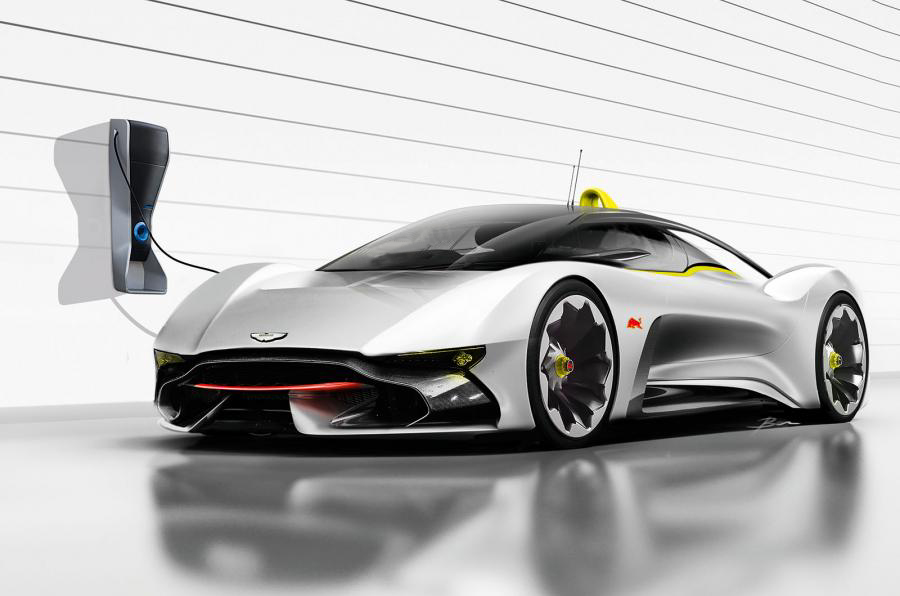


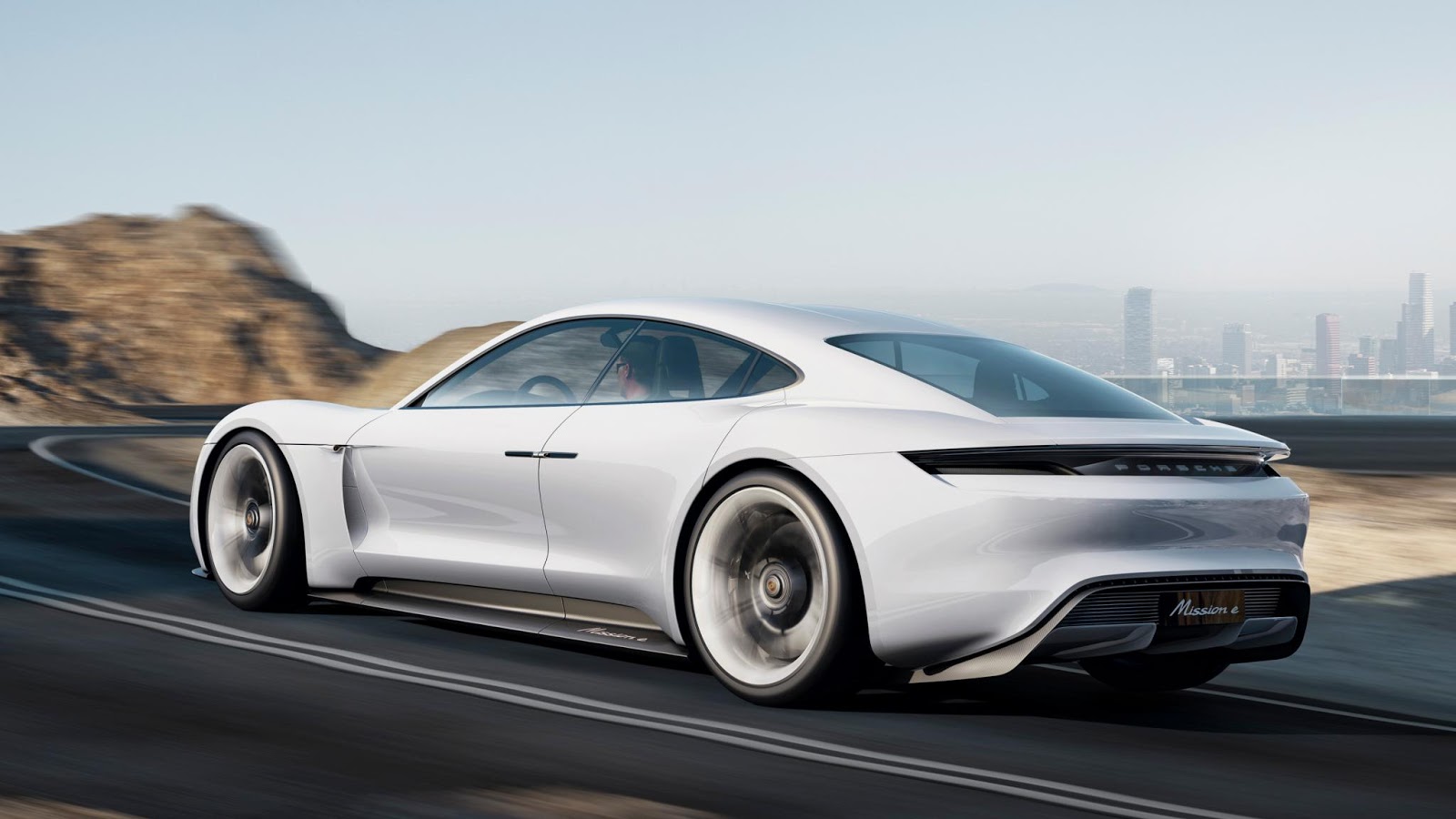


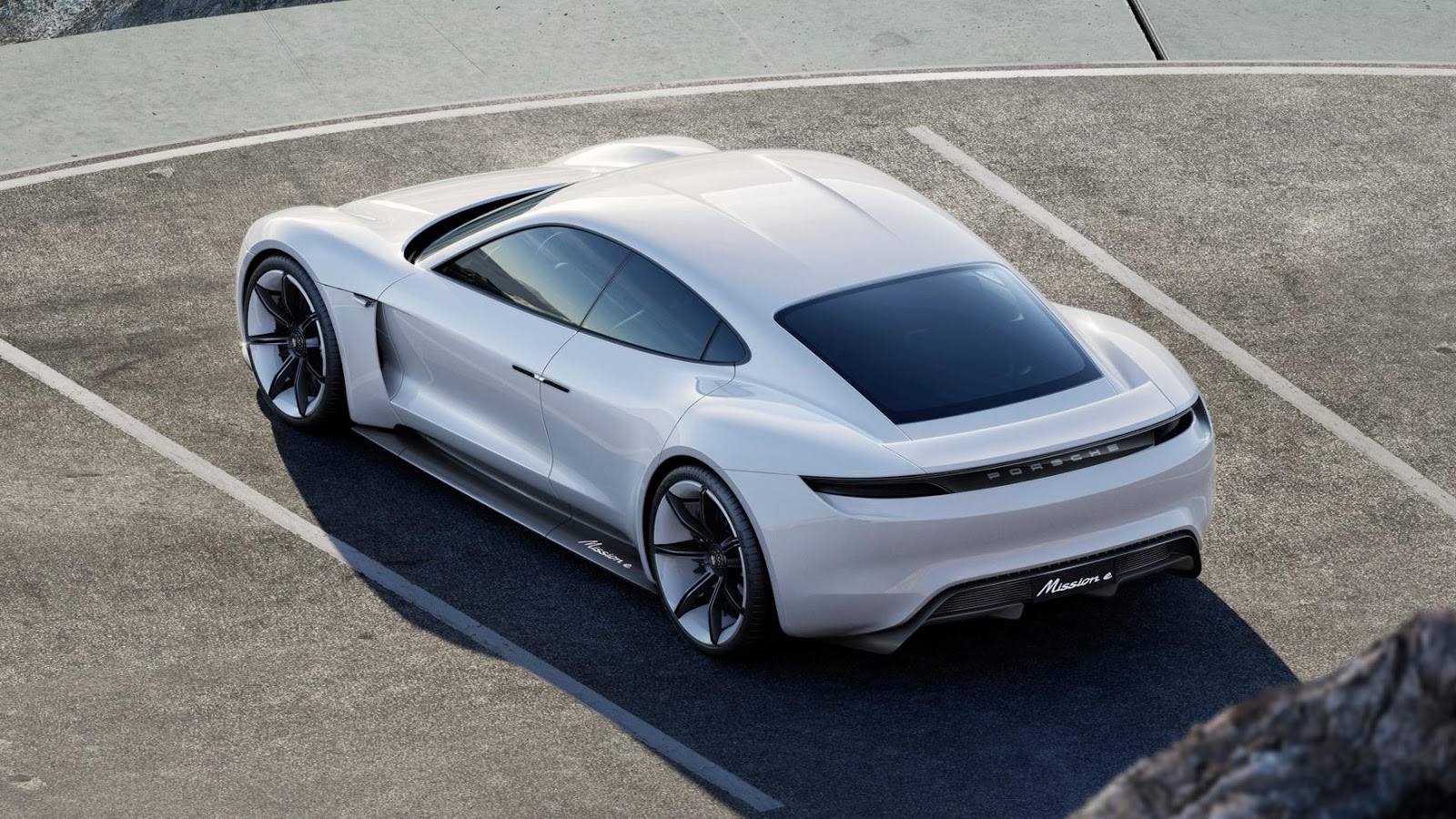

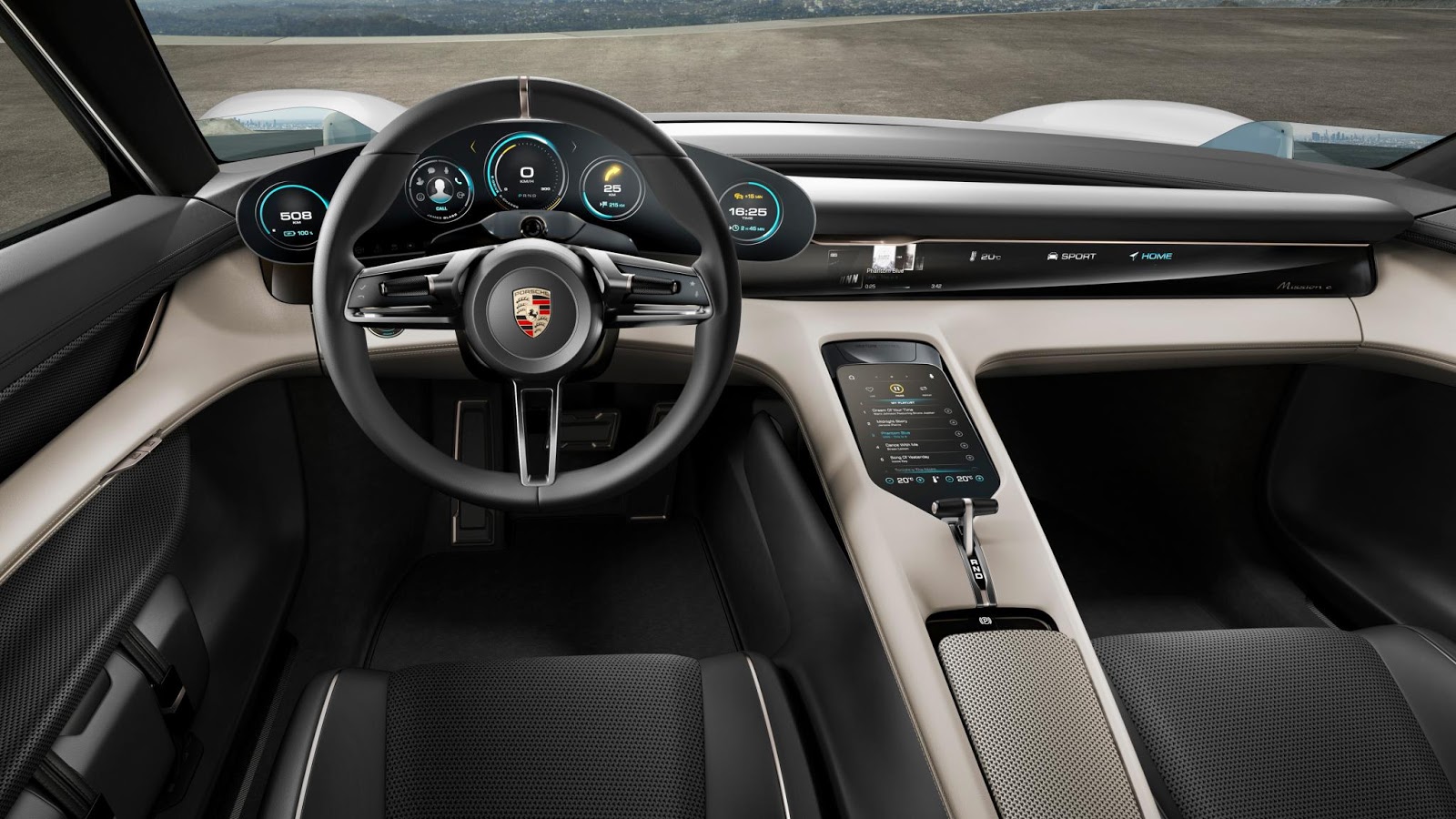


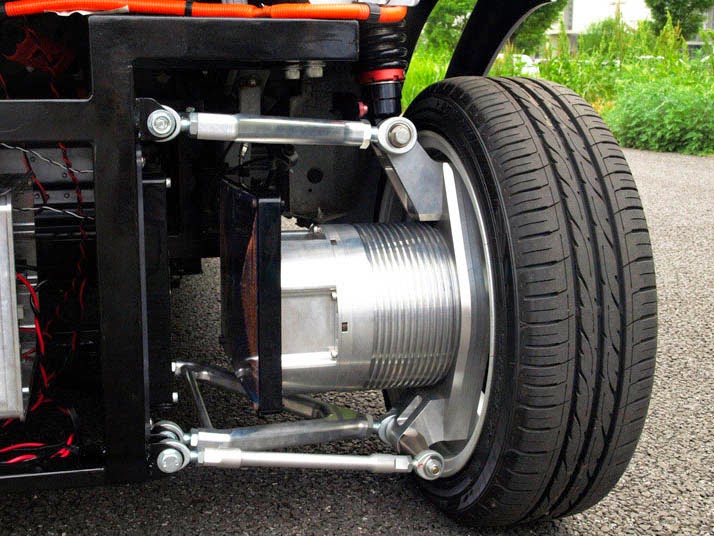
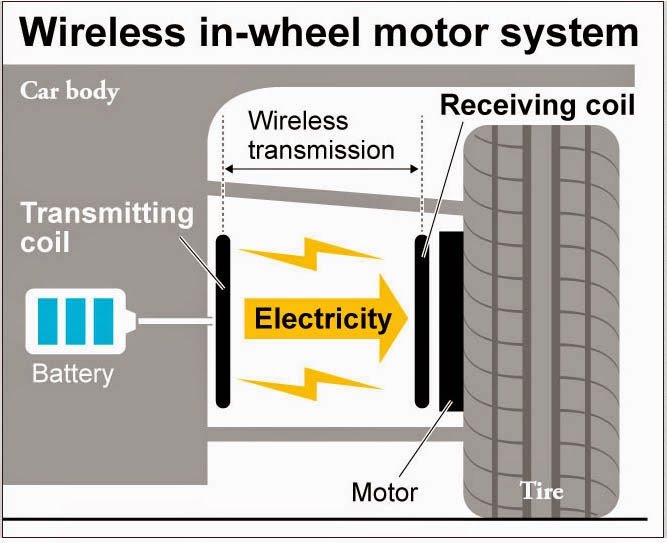


.jpg)


