Heat-gathering tire charges electric cars on the move [VIDEO]

At the Geneva auto show, Goodyear shows off an intriguing concept tire that would feed an electric car's batteries while rolling down the road.

The concept – named "BHO3" – offers the possibility of charging the batteries of electric cars by transforming the heat generated by the rolling tire into electrical energy.

This tire generates electricity through the action of thermo / piezoelectric materials in the tire that capture and transform the energy created by heat when it flexes as it rolls during normal driving conditions. The materials used would optimize the tire's electricity generation capabilities as well as its rolling resistance.

As demand for electric cars grows, this technology has the potential to significantly contribute to the solution of future mobility challenges. This visionary tire technology could eliminate the vehicle-range anxiety motorists may have with electric cars.

Koenigsegg Regera Launch 1,500 hp Plug-In Hybrid

The Regera was created as a luxury Megacar alternative to Koenigsegg's traditional extreme lightweight race-like road cars. Even though the One:1 and the Agera RS have surprising levels of practicality, creature comforts and features, their primary focus is, and has always been, to be the overall fastest cars on the planet – around a racetrack or elsewhere.

Regera is Swedish for "to Reign" - a suitable name for a machine that offers a never seen before combination of power, responsiveness and luxury - creating a true Dr. Jekyll & Mr. Hyde persona.

In spite of all its advanced technology and creature comforts, the Regera is comparatively light. Therefore it can still perform competitively around a race circuit. According to us, the only Hyper/Megacar that could be faster around a circuit, is another Koenigsegg. However, out in the open the Regera will reign as the king of the road, as the fastest accelerating, most powerful production car ever.

The Regera will be handcrafted in only 80 examples. Apart from being a suitable production run for Koenigsegg´s newly upgraded and refurbished production facility, the number 80 also symbolizes the principle of domination, control and achievement in Pythagorean Numerology.

With the introduction of the Regera, Koenigsegg will, for the first time ever, have two parallel models in production.

The interior features; added insulation, 8 way electrically adjustable memory foam seats. A Koenigsegg 9" infotainment system, 3G and Wi-Fi connectivity, front, inner and rear camera system with recording capability, Apple CarPlay, supreme sound system, ambient lighting and many other great new features. The Regera also comes with front and rear parking sensors and remote diagnostic and firmware update capability.

Constellation DRL
A good design and layout of the DRL (Daylight Running Lights) gives character, as the DRL is what's first seen when a car comes driving from a distance.

We wanted the Regera to stand out and clearly be recognized also from a far, so we came up with a novel idea that we call – Constellation DRL.

To get a constellation of stars effect, we scattered the LED´s, which make up the DRL, around the lamp cluster, giving the effect of star constellations on a night sky made up of polished carbon fiber.

A side effect is that the LED´s make the whole lamp cluster glitter and shine, as if there where diamonds thrown into them. That´s what we call - Koenigsegg cool.

The heart of the matter
The heart and soul of every Koenigsegg is its Internal Combustion Engine – the ICE. The ICE of the Regera follows the path of its siblings, based on the proven and extremely reliable Koenigsegg drysumped twin turbo, DOHC, 5.0 liter V8.

As before, the Koenigsegg V8 is the most downsized homologated production ICE in the world, with 220 Hp per liter engine (using regular pump gas). The compactness of the engine makes the Regera nimble, efficient and lightweight.

The difference to the Agera engine is that, given the electric propulsion of the Direct Drive system, we did not have to go as extreme on ICE power, as the combined output is way over 1500 Hp and over 2000 Nm torque, anyway. Given this we could install even smaller, faster spooling turbos on the Regera, further enhancing the ICE drivability and response.

A new level of luxury
The Direct Drive transmission of the Regera is capable of delivering never before experienced blistering response and performance and at the same time able to deliver one of the smoothest and most soothing driving experiences. Given this high level of bi-polar characteristics, the rest of the car had to be up to the task of delivering blistering, lightweight performance at new levels of soothing luxury.

Therefore Koenigsegg developed a completely new rear sub frame and rear structure that allows the engine and transmission to rest on active soft mounts. When driving in normal conditions the mounts stay soft and isolate engine noise and vibrations. When driving spirited, the mounts firm up to solidify the car and give greater response. The shock absorbers are active in height and stiffness – again allowing for the bi-polar behavior.

Furthermore, the Regera can be driven in absolute silence, as it is possible to go into full EV mode for shorter periods of time.

The first fully robotized car
Given the latest advances in compact lightweight hydraulics, Koenigsegg has managed to robotize the entire Regera with almost no weight addition. As the Regera features functions such as; active front and rear wings, chassis control and lifting system - the pumps and accumulators were already in place to connect a few more hydraulic operators. These in turn replaced gas struts of equal weight – resulting in minimal weight impact.

Due to the above, the Regera is the first car in the world that operates all body closures completely automatically. The spectacle to open and close the entire car simultaneously from the remote or smartphone, truly turns the Regera into a transformer.

On top of this, all body closures have soft latching mechanisms, giving the Regera a sophisticated feel. The fully robotized body system, with soft latches adds a mere 5 kg, making full robotization a very desirable option.

Furthermore the wing mirrors are auto-folding while the doors open, giving added practicality and visual drama, as the Dihedral Synchro Helix Doors swing out and rotate 90 degrees to fully clear the door opening, without protruding more than the width of the door – making them highly ergonomic.

Plug-in capability
The Regera utilizes an EV plug in feature. Behind the robotized rear number plate nestles a type 2 mode 3 charging port. This means that the Direct Drive Battery can be charged either by the combustion engine or through the charging port. The plug-in solution enabled us to create a novel feature we call - Battery Drain Mode, or BDM for short. For example, when there is around 50 km range left to the destination or next charging point, a preset geo location or a push on the touchscreen will trigger the BDM. This means the car calculates the driving behavior and makes sure the battery is fully drained upon arrival and is ready for a full charge. This drastically minimize fuel consumption and lower C02 emissions as the fuel consumed has been correctly optimized for the length of the journey.

The world's first fully foldable, active, top-mounted rear wing The Koenigsegg One:1 featured the world's first top mounted active rear wing. This was an innovative solution that maximized down force compared to its size and weight.

The Regera, being more luxury oriented, has taken this solution to the next level, allowing the wing also to fully fold down into the body work enhancing the cars elegance while parking and reducing drag while cruising. The wing´s active foldable mechanism, is a lightweight work of carbon fiber art and the movement is truly mesmerizing.

Sporting a unique exhaust-note, the Regera has a custom designed, sound tuned titanium system jointly developed by Akrapovic.

The novel exhaust system includes a fish tail outlet, envisioned by Christian, which has not been seen on a production car for the last half century, so we are excited to bring back the sound of the past!

Koenigsegg Direct Drive
As many of you have heard, Christian is not a fan of hybrids, as they are generally compromised when it comes to weight, complexity, cost, packaging and efficiency.

Given this the Regera is not what we at Koenigsegg would call a hybrid, as it does not have the traditional shortcomings of a hybrid. Instead the Regera is a new breed of Koenigsegg - and car for that matter.

Traditional, so called parallel, hybrids are compromised and heavy, as they have two independent propulsion systems. Alternatively, series hybrids are less compromised when it comes to weight, complexity and costs, but instead they are compromised when it comes to efficiency, as there is too much energy conversion going on.

This brings us to the Koenigsegg Direct Drive Transmission or KDD for short - invented by Christian von Koenigsegg and developed for the Regera by the Koenigsegg Advanced Engineering team. The patent pending KDD system replaces the combustion engines traditional transmission and gives the added benefit of pure EV mode. What is unique is that the KDD manages to create direct drive to rear axle from the combustion engine without the need of multitude gears or other traditional types of variable transmissions, with inherently high energy losses.

During highway travel, for example, the KDD reduces drivetrain losses, compared to traditional transmission or CVT by over 50%, as there is no step up or step down gear working in series with the final drive - just direct power transmission from the engine to the wheels.

To supplement the energy from the combustion engine and to allow for torque vectoring, regenerative braking, extreme drivers response, reverse and energy conversion, there are three YASA developed electric motors. YASA´s axial flux motors are extremely power dense and allow for direct drive, making them a key-ingredient for the KDD. One YASA for each rear wheel, giving direct drive - this time electric - and one on the crankshaft, giving torque-fill, electrical generation and starter motor functionality.

The three electric motors constitute the most powerful electrical motor set-up in production car history, replacing the gears of a normal transmission while adding; power, torque, torque vectoring and yet still able to remove weight.

The battery pack and PDU for the KDD were developed and manufactured together with Electric Supercar virtuoso Mate Rimac and his engineering team. The 620 V battery pack is of the latest fully flooded type and is the most power-dense battery pack ever created for a road going car with 9,27 kWh of energy, 67 liters of volume, and 115kg of weight. Still, a full 500 kW can momentarily be drawn during acceleration and over 150 kW can be absorbed by the battery-pack during regenerative braking and ICE power generation mode.

Every cell of the pack is carefully monitored for voltage, state of charge, health and temperature. The cells are enclosed in a fully machined aluminum casing for safety and stability. The battery is located in the most protected area of the car - the carbon-aramid chassis tunnel. The whole battery pack is actively cooled by external radiators and the Regera´s all new electrical air-conditioning system, which also can pre-cool the car via the Koenigsegg app on a warm day.

The complete KDD system, including the battery, adds a mere 88kg to the Regera´s weight, compared to what the Regera would have weighed with a traditional ICE, coupled to a 7 speed DCT transmission instead of the KDD. Presently no other hybrid Hypercar even comes close to this type of weight ratio for their electrification. This is interesting, as they all have smaller battery capacity and less electric power than the Regera.

To put it into perspective, the Regera has almost triple as many electric Bhp (700 Bhp) and over 300 Bhp more than its closest hybrid rival. Still the Regera manages to be very competitive weight wise, while including unusual features such as a six way adjustable electrical seat and a fully robotized body work. This is no small feature and it is a testament to the meticulous nature of the Koenigsegg engineering team.

The combination of electrical and combustion power is just mind boggling. When you get up to speed, the system really comes into play - How about 3.2 seconds between 150 to 250 km/h and under 20 seconds from 0 to 400 hm/h?

Powertrain stats
1100 Hp of combustion engine power on 91 octane DIN or 95 octane RON (a bit more on E85)
1250 Nm of combustion engine torque
700 Hp of electric propulsion
900 Nm of electric torque
9 kWh 620 Volt, flooded liquid cooled battery pack

Combined numbers
Over 1500 BHp or 1.11 MW
Over 2000 Nm of torque
Dry weight 1420 kg
1628 kg curb weight (including all liquids and full fuel tank)

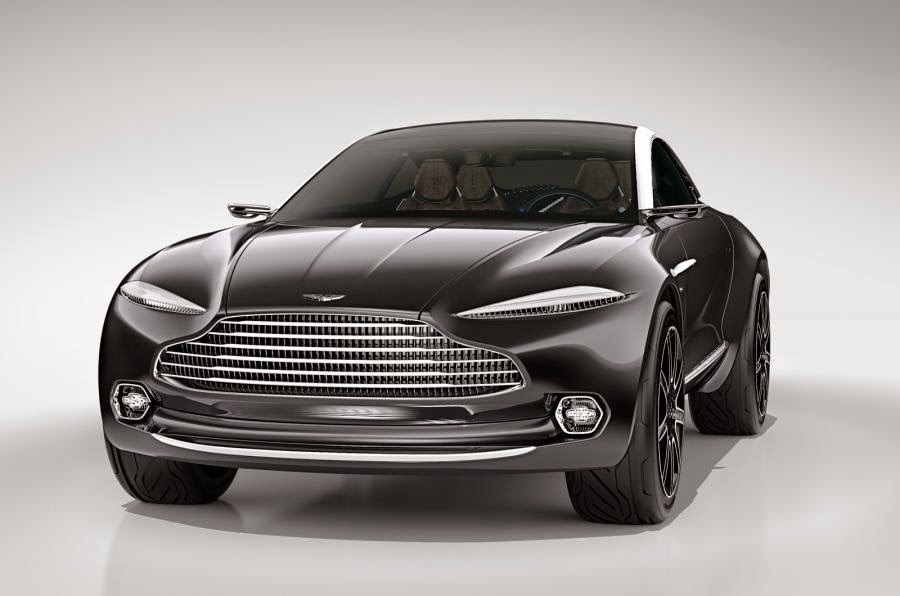
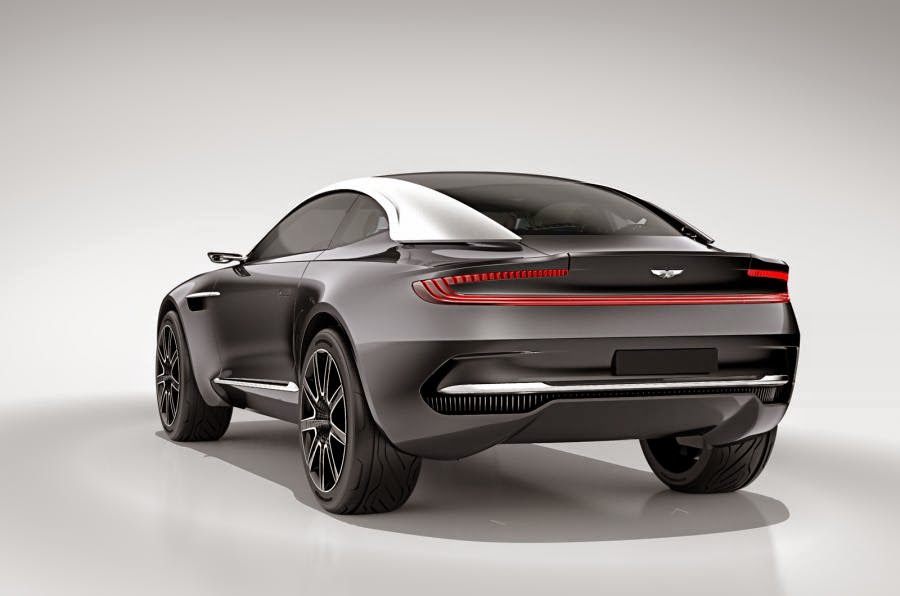
Aston Martin début all-electric all-wheel-drive DBX Concept

Aston Martin has surprise all at the 2015 Geneva Motor Show with the debut of an all electric DBX Concept.

Aston Martin is calling the DBX Concept a high luxury GT that fits the description of a crossover coupe. Far from a production ready vehicle, the concept is just a design study for the time being, but Aston does admit there is a market for such a vehicle.

The DBX Concept is an all-wheel drive crossover high luxury GT that uses in-board electric wheel motors at all four corners powered by lithium sulphur cells. Steering is a drive-by-wire system and both the driver and passenger have head-up displays surrounded by auto-dimming ‘smart glass’.

The DBX Concept can accommodate four adults and all the cargo they could ever want since there is a traditional rear cargo area as well as a front trunk occupying the place usually reserved for a ICE.

Souce: Autocar

Lower cost carbon nanotube supercapacitors promise 10x higher energy density

Ultra- or supercapacitors are emerging as a key enabling energy storage technology for use in fuel-efficient transport as well as in renewable energy systems (for instance as power grid buffer). These devices combine the advantages of conventional capacitors, that can rapidly deliver high power densities on demand, and batteries, that can store a large amount of electrical energy.

"Among the various types of supercapacitors, carbon nanotube (CNT) based devices have shown an order of magnitude higher performance in terms of energy and power densities," says Ramakrishna Podila, an Assistant Professor in the Department of Physics and Astronomy at Clemson University. "The bottleneck for transferring this technology to the marketplace, however, is the lack of efficient and scalable manufacturing methods."

Podila's team at Clemson University have developed a new scalable method to directly spraycoat CNT-based supercapacitor electrodes. "Much like painting a car or a wall in your home, we can spray CNT solutions on flexible electrodes, porous aluminum foils in our case, to achieve high energy density supercapacitor electrodes without the need of any binder," explains Podila.

The resulting supercapacitors have a 10 times higher energy density compared to the state-of-the-art supercapacitors on the market.

Source: Nanowerk

Researchers Develop More Efficient ‘Lithium-Air’ Battery

Massachusetts researchers using a fabricated form of carbon have developed battery technology that they hope will enable electric cars to travel far longer distances.

Chemists Dunwei Wang of Boston College and Wei Fan of the University of Massachusetts used an engineered form of the element — called 3DOm carbon — to enhance reactions between lithium and oxygen in batteries.

Researchers seeking a more efficient battery — one capable of allowing cars to travel hundreds of miles without recharging — have focused on the relationship between lithium and oxygen. They believe such "lithium-air" batteries would resolve size and cost constrains faced by current lithium ion batteries.

But the presence of carbon, an essential component in all batteries, previously proved too unstable to generate longer life cycles for the lithium-oxygen reaction.

3DOm carbon, which has a far more orderly molecular structure, apparently resolved those issues. In the German journal Angewandt Chemie, Wang and Fan reported the engineered carbon, along with the addition of molecular coatings, produced substantial improvements in the lithium-oxygen discharge cycle.

"We demonstrated that a particular form of carbon can be used to support a new type of chemistry that allows for energy storage with the promise of five to 10 times more energy density than state-of-the-art lithium-ion batteries we see today," Wang said.

The chemists hope the developments eventually lead to lithium-air batteries that can meet demand for energy, size and cost in the auto industry and other manufacturing sectors.

Magna to Present Plug-In Hybrid Sports Car Concept at Geneva Motor Show

Magna International Inc. is set to debut MILA Plus, an innovative two-seat hybrid sports car at Geneva Motor Show 2015. The concept vehicle, which will be displayed at Magna's booth #6261 in Hall 6, combines a sophisticated, lightweight construction with an intelligent, alternative-drive solution to produce maximum performance as well as eco-friendliness. With an all-electric range of 75km and a vehicle weight of 1,520kg, MILA Plus achieves reduced CO2 emissions of 32g/km.

"Magna's broad range of services – from engineering to diverse product capabilities to full-vehicle contract manufacturing – helps support our customers as they continue to be challenged with the changing dynamics of the automotive industry. The MILA Plus vehicle concept illustrates our value proposition and advantage within the global supply base," emphasized Günther Apfalter, President Magna Europe and Magna Steyr.

As the latest vehicle concept in the MILA innovation family, MILA Plus features advanced technologies and flexible manufacturing processes with a focus on eco-friendliness.

Lightweight Construction
The structure of MILA Plus is based on an extruded aluminum space frame which has a number of advantages over a steel structure, including: lower weight; modular structural flexibility; and ability to accommodate different driveline configurations. The modular body-in-white (BIW) concept also allows the use of components and systems from large series production, thus enabling improved manufacturing efficiency and flexibility for global automakers.

MILA Plus offers additional benefits aimed at structural rigidity and weight reduction. For example, the concept integrates a high-voltage battery into the space frame, which increases structural rigidity. Lightweight plastic body panels are used due to their corrosion resistance and styling flexibility. A combination of manufacturing methods, sophisticated joining technologies and a multi-material external skin further contribute to a lightweight vehicle architecture that meets global safety standards.

Sophisticated Joining Technologies
Cold mechanical joining, a hybrid process in combination with bonding is used on the BIW. This reliable technology is more cost effective versus traditional welding solutions and is a joining process Magna has used on other vehicles including the Mercedes-Benz SLS AMG and Aston Martin Rapide.

Alternative Drive Solutions
MILA Plus plug-in hybrid system achieves a reduced emission of 32g/km CO2. The performance of the three-cylinder gasoline engine is enhanced by the addition of two electric motors - one between the internal combustion engine and transmission to drive the rear axle, and one on the electric front axle. This arrangement results in an electric all-wheel-drive system which transmits more torque to the road and results in improvement of vehicle maneuverability and dynamics.


Vehicle Dimensions:

Length:              
4403 mm
Width:                
1925 mm
Height:                
1250 mm
Wheelbase:         
2575 mm
Baggage compartment: 
360l (145l front; golf bag possible rear)
Acceleration:                   
0 to 100 km/h in 4.9s
Electric acceleration:       
0 to 80 km/h in 3.6s
Power output (kW/PS):     
200 / 272
Torque (Nm):                      
580 peak

2015 Audi R8 e-tron confirmed with 450 km range

The 2015 Audi R8 e-tron electric supercar will have 340 kW of power and a remarkable 920 Nm of torque, sprint from 0-100 km/h in 3.9 seconds and offer a range in excess of 450 km.

The second-generation of Audi’s halo product will have more than doubles the range over the original small-batch model thanks to an increase in battery capacity from 49 kWh to approximately 92 kWh. Energy density has increased from 84 Wh/kg to 154 Wh/kg apparently without affecting packaging.

The battery powered R8 has a Combined Charging System (CCS) on board, which allows charging with direct and alternating current. Using this system, it is possible to fully charge the battery in significantly less than two hours.

The rear wheels are powered by two electric motors with specs uprated from 381 HP (280 kW) and 820 Nm (605 lb-ft) to 462 HP (340 kW) and 920 Nm (679 lb-ft). It's enough electric power to provide the Audi R8 e-tron 2.0 with a 0-62 mph (0-100 km/h) time of 3.9 seconds before hitting an electronically-capped top speed of 155 mph (250 km/h).

Audi says the new R8 e-tron serves "primarily as a mobile high-tech laboratory" that will eventually feed into technology used in a high-volume sedan — but in the meantime, if you've got the time and the money, the Germans are willing to build you one by hand. Hopefully we'll see the car on display in Geneva next week.

Samsung SDI to Acquire Magna International’s Battery Pack Business

Samsung SDI has agreed to acquire the battery pack business of Magna International, a leading global automotive supplier.

The acquisition is expected to enhance Samsung SDI’s capabilities in batteries for electric vehicles by combining the company’s established leadership in battery cells and modules with Magna's expertise in battery packs.

Magna’s advanced technology and experience in providing global automakers with battery packs will also help Samsung SDI secure customers in the fast-growing automotive battery markets in Europe, North America and China.

"The acquisition is a key strategic step for Samsung SDI to strengthen the competitiveness of our automotive battery business,” said Namseong Cho, President and CEO of Samsung SDI. "It will provide new momentum to expand our business and customer base.”

Under the agreement, Samsung SDI will acquire the entire battery pack business from Magna Steyr, an Austria-based operating unit of Magna International, including all 264 employees, production and development sites and existing contracts of the business.

Financial terms of the deal will not be disclosed. The transaction is expected to be completed during the first half of 2015, pending regulatory approvals.

The global market for electric vehicles, including hybrid and plug-in hybrid models, is forecast to reach 7.7 million vehicles by 2020, compared with 2.1 million in 2014, according to research firms B3 and IHS.

UK Government launch £10m prize for battery innovation

The British Government is launching a £10 million prize for innovation in battery design for the next generation of ultra-low emission vehicles.

The competition will open for bids in April with a winner announced in the summer.

Announcing the prize Chief Secretary to the Treasury Danny Alexander said: "The challenge is to draw on the UK's world-class scientific research and develop a battery which is at the cutting edge of innovation, commercially viable and ready to be put into production.

"The competition will be open to all UK research establishments, working together with vehicle manufacturers based over here in the UK."

Transport campaigner Quentin Willson, who has been involved in designing the prize, said: "The UK should lead the world in cutting-edge ULEV battery technology and this initiative will help create jobs, establish a whole new industry and boost GDP. I totally support this prize for the best in UK battery innovation."

Carbon Fiber to Go Mainstream in Automobile by 2025

Driven by a faster-than-expected pace of technology development, carbon-fiber reinforced plastics (CFRPs) will be poised to gain widespread adoption for automotive lightweighting by 2025, according to Lux Research.

Already advances underway in fiber, resin and composite part production will lead to a $6 billion market for automotive CFRPs in 2020, more than double Lux's earlier projection. Even this figure is dwarfed by the full potential for CFRPs in automotive if they can become affordable enough for use in mainstream vehicles.

“Current trends strongly indicate significant mainstream automotive adoption of CFRPs in the mid-2020s, and companies throughout the value chain must position themselves to take advantage of the coming shifts. However, long-term megatrends towards urbanization, connectivity and automation suggest that there could be a limited time window beyond that for penetrating the automotive space,” said Anthony Vicari, Lux Research Associate and the lead author of the report titled, “Scaling Up Carbon Fiber: Roadmap to Automotive Adoption.”

“CFRP developers will have to continue the pace of innovation to overcome the high cost that has so far limited the material to less price-sensitive markets like aerospace and sporting goods,” he added.

Lux Research analysts reviewed the technology development in CFRPs, and evaluated its economics to consider its impact on the automotive sector. Among their findings:

  • Growing partnerships hasten development. The number of direct partnerships between carmakers or Tier-1 automotive suppliers and carbon fiber players has nearly doubled to 11 since 2012. Toray, with partnerships with Plasan Carbon Composites and Magna, has formed the most new relationships and is a major hub.

  • Patent uptick suggests mid-2020 adoption. Using a predictive tool, Lux Research identified a lag of about 18 years between uptick of patent activity and attainment of mainstream commercial adoption milestones. With another major upturn in CFRP patent activity occurring in 2007, large-scale mainstream automotive use is likely by the mid-2020s.

  • Other manufacturing costs need to be cut. Carbon fiber itself, at $28/kg for standard modulus fiber, represents just 22% of the cost of a final CFRP part. Additional advances are needed to reduce capital, labor, energy, resin and processing costs, which together make up the remaining 78%.

    Source: Lux Research

  • Electric Jaguar F-Pace crossover Due 2018

    Jaguar Land Rover is developing an electric drivetrain that will debut in a future variant of the upcoming Jaguar F-Pace SUV.

    Unnamed sources within the British automotive industry have told Autocar that Jaguar Land Rover is currently working on an electric vehicle with a range of around 480 kilometres.

    A key rival for the electric Jaguar F-Pace will be the upcoming Tesla Model X and one of the key reasons behind the development of the car is increasingly changing legislation. In the United States for example, eight states including California have adopted new Zero Emission Vehicle legislation which stipulate that between 2018 and 2025, sales of zero emission cars will reach 15.4 per cent from 5 per cent. All told, it is hoped that the effort will result in 3.3 million zero emission vehicles being on U.S. streets in the next 10 years

    With this in mind, it is speculated that the all-electric Jaguar could arrive for the 2018 model year. The British marque will apparently draw on its engineering experience from the hybrid Jaguar C-X75 supercar which was developed alongside Williams Advanced Engineering. The C-X75 combined a twin-charged (supercharged and turbocharged) 1.6-litre four-cylinder delivering 502 hp at 10,000 rpm and mated to four electric motors with one at each axle.

    Source: Autocar

    Seaspan Ferries to be lithium polymer battery hybrid vessels

    Two 148.9m dual fuel ferries ordered by British Columbia-based Seaspan Ferries Corporation from Turkey's Sedef Shipyard will be battery hybrid vessels.

    Under a contract just announced by Corvus Energy, Elkon Electric (an Imtech Marine company) and Seaspan Ferries, each VARD Marine Inc. designed ferry will use a 1,050 V DC, 546 kWh Energy Storage System (ESS) consisting of 84 Corvus Energy AT6500 advanced lithium polymer batteries.

    The ESS will be integrated with an Elkon Electrical propulsion and distribution system and will be powered by dual-fuel engines capable of running on diesel and liquefied natural gas (LNG) at speeds of up to 16 knots propelled by azimuthing drives with the Corvus ESS as spinning reserve and power source for responsive harbor manoeuvring.

    The ferries, both expected to be delivered by the shipbuilder and in operation by late 2016, will accommodate up to 59 trailers. Construction is scheduled to start in early 2015. The vessels will operate a drop trailer-only route between Vancouver and Vancouver Island in British Columbia, Canada.

    The innovative hybrid propulsion system will help reduce fossil fuel emissions and greatly improve operational efficiency.

    "We are very pleased that Corvus' energy storage system was selected for these innovative vessels," said Andrew Morden, President and CEO, Corvus Energy. "The two new Seaspan ferries are examples of the significant benefits both operationally and environmentally of battery hybrid LNG propulsion and it is encouraging to see this technology take root in Canada."

    Corvus Energy says that its lithium polymer energy storage technology is an effective solution for hybridization of commercial vessels with dynamic duty cycles, providing consistent reliable power to support greatly improved efficiency when compared to conventional propulsion systems.

    Corvus Energy has over 20 MWh of ESS deployed, including the largest hybrid vessel systems in the world, and says it has the breadth of experience and expert personnel to ensure this battery hybrid propulsion system performs well at start-up, and far into the future.

    Apple Is Forming an Auto Team

    The company has collected about 200 people over the last few years to develop technologies for an electric car, according to two people with knowledge of the company’s plans.

    A123 sue Apple over battery engineer poaching

    Electric-car battery maker A123 Systems has sued Apple Inc for poaching top engineers to build a large-scale battery division, according to a court filing that offered further evidence that the iPhone maker may be developing a car.

    Apple has been poaching engineers with deep expertise in car systems, including from Tesla Inc, and talking with industry experts and automakers with the ultimate aim of learning how to make its own electric car, an auto industry source said last week.

    Around June 2014, Apple began aggressively poaching A123 engineers tasked with leading some of the company's most critical projects, the lawsuit said. The engineers jumped ship to pursue similar programs at Apple, in violation of their employment agreements, A123 said in a filing earlier this month in Massachusetts federal court.

    "Apple is currently developing a large-scale battery division to compete in the very same field as A123," the lawsuit read. The suit was reported earlier by legal website law360.com.

    Neither Apple nor A123 immediately responded to requests for comment and Apple has not responded to the allegations in the complaint. The company also sued five former A123 employees, who could not be reached for comment.

    A123 Systems is a pioneering industrial lithium-ion battery maker, which was backed by a $249 million U.S. government grant. It filed for bankruptcy in 2012 and has been selling off assets.

    Lithium-ion is a battery technology that can be used in applications from computers to airplanes, but A123 specializes in big batteries that can be used in big machines, including cars. A123 did not say what specifically the engineers worked on.

    It said in its lawsuit that the engineers who left were of such caliber that the projects they had been working on had to be abandoned after their departures. It also accused one of the five defendants, Mujeeb Ijaz, of helping Apple recruit among its ranks.

    "It appears that Apple, with the assistance of defendant Ijaz, is systematically hiring away A123’s high-tech PhD and engineering employees, thereby effectively shutting down various projects/programs at A123," according to the lawsuit.

    "They are doing so in an effort to support Apple’s apparent plans to establish a battery division that is similar if not identical to A123’s, in competition with A123.”

    In its complaint, A123 said it believed Apple was looking to hire other battery engineers from companies including LG Chem Ltd, Samsung SDI Co Ltd, Panasonic Corp, Toshiba Corp and Johnson Controls Inc. None of the companies immediately responded to requests for comment.

    A123 added that former executive Ijaz also contacted its battery partner SiNode Systems on behalf of Apple. Ijaz's outreach to SiNode "confirms that his work on behalf of Apple is at least substantially similar (if not identical) to his work at A123," the filing said.

    SiNode did not respond to a request for comment.

    Trying to build an actual car would mark a dramatic shift for the maker of the iPhone and iPad. Apple often researches projects which are then discarded, but has so far mainly stuck to its core expertise in mobile and electronic devices.

    Whether it will build and release an electric car or a more evolved autonomous vehicle remains to be seen, the source told Reuters last week. But evidence is mounting that the maker of smartphones and other mobile gadgets is, like Google Inc, researching and developing next-generation car technologies.

    Silicon Valley is competing to create software to run self-driving vehicles, as well as services associated with autonomous driving, such as mapping, car-sharing and car recharging services.

    Data on LinkedIn, the professional networking site, shows that Apple has been siphoning up automotive engineers and experts, many with expertise in autonomous driving technology, at a significant pace.

    A search of LinkedIn profiles turns up more than 60 former Tesla employees now employed by Apple, including dozens of hardware, software, manufacturing and supply chain engineers. There are also a variety of ex-Tesla recruiters, retail or sales specialists, attorneys and product managers.

    Apart from the five defendants, at least six other ex-A123 engineers had moved over to Apple, according to their LinkedIn profiles, though with titles like "Technical Program Manager," their duties at Apple are unclear.

    Paper-like material could boost electric vehicle batteries

    Researchers at the University of California have developed a novel paper-like material for lithium-ion batteries. It has the potential to boost by several times the specific energy, or amount of energy that can be delivered per unit weight of the battery.

    This paper-like material is composed of sponge-like silicon nanofibers more than 100 times thinner than human hair. It could be used in batteries for electric vehicles and personal electronics.

    The nanofibers were produced using a technique known as electrospinning, whereby 20,000 to 40,000 volts are applied between a rotating drum and a nozzle, which emits a solution composed mainly of tetraethyl orthosilicate (TEOS), a chemical compound frequently used in the semiconductor industry. The nanofibers are then exposed to magnesium vapor to produce the sponge-like silicon fiber structure.

    Conventionally produced lithium-ion battery anodes are made using copper foil coated with a mixture of graphite, a conductive additive, and a polymer binder. But, because the performance of graphite has been nearly tapped out, researchers are experimenting with other materials, such as silicon, which has a specific capacity, or electrical charge per unit weight of the battery, nearly 10 times higher than graphite.

    The problem with silicon is that is suffers from significant volume expansion, which can quickly degrade the battery. The silicon nanofiber structure created in the Ozkan's labs circumvents this issue and allows the battery to be cycled hundreds of times without significant degradation.

    "Eliminating the need for metal current collectors and inactive polymer binders while switching to an energy dense material such as silicon will significantly boost the range capabilities of electric vehicles," Favors said.

    This technology also solves a problem that has plagued free-standing, or binderless, electrodes for years: scalability. Free-standing materials grown using chemical vapor deposition, such as carbon nanotubes or silicon nanowires, can only be produced in very small quantities (micrograms). However, Favors was able to produce several grams of silicon nanofibers at a time even at the lab scale. The researchers' future work involves implementing the silicon nanofibers into a pouch cell format lithium-ion battery, which is a larger scale battery format that can be used in EVs and portable electronics.

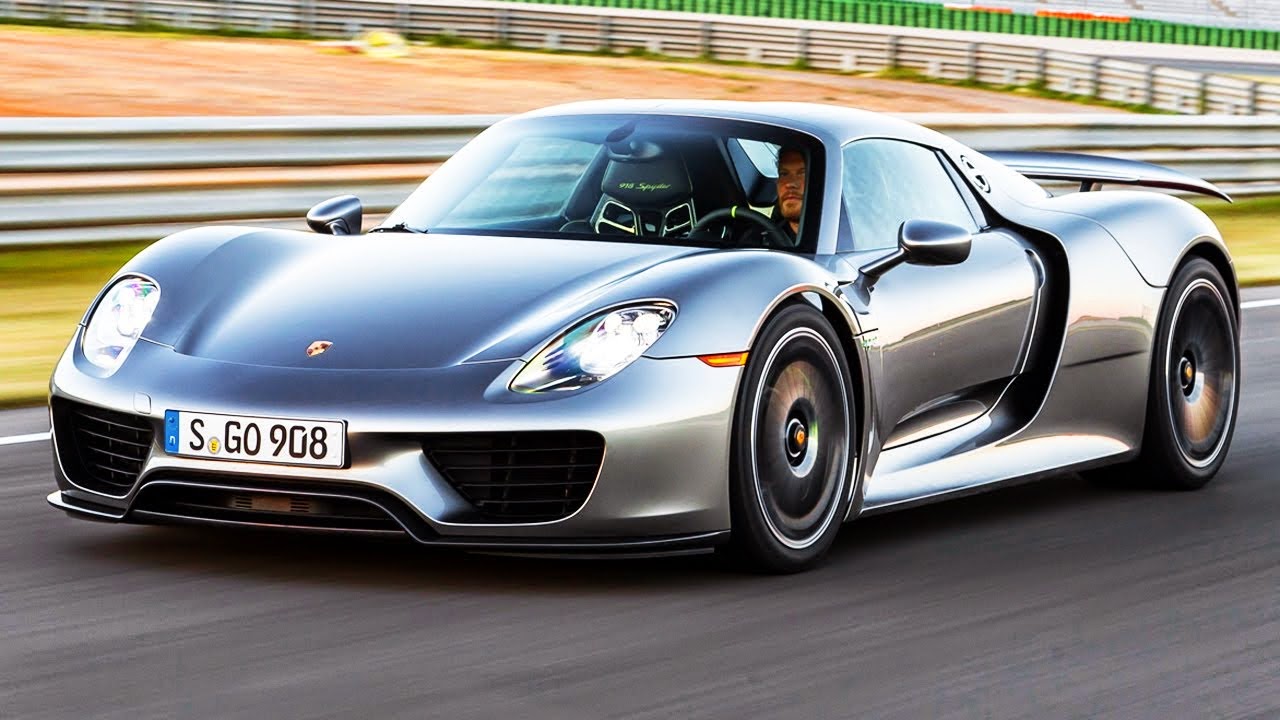
    GKN earns technology partner status for Porsche 918 Spyder

    Porsche has awarded GKN Driveline “technology partner” status for its development of a high-performance eAxle for the 918 Spyder, an advanced plug-in hybrid supercar. GKN Driveline’s eAxle module supports full-electric mode, all-wheel drive and provides a boost function.

    Porsche Powertrain manager Christian Hauck said: “Realising our vision for a super sports car capable of setting a record lap time of the Nurburgring and of achieving fuel efficiency of three litres per 100 km placed huge demands on our engineers and suppliers.

    “GKN Driveline’s role in the development programme and its innovative eAxle module has earned the company Porsche Technology Partner status.”

    GKN Driveline’s president of engineering Peter Moelgg added: “Being selected as Porsche’s Technology Partner on the 918 Spyder programme was the perfect opportunity for our global e-drive team to demonstrate how putting the right technology on board can improve both fuel efficiency and dynamic performance.

    “The award cements GKN Driveline’s position as the industry leader in e-drive systems. Our eAxle technology continues to evolve and we expect many more high-performance vehicles to adopt similar driveline concepts in the coming years.”

    The eAxle that supplements the 918 Spyder’s hybridized 4.6-litre V8 is a development of the company’s eAxle drive. The module has maximum power of 95kW and can deliver up to 1500Nm of torque to the front wheels via a fixed gear ratio.

    A specially developed compact differential engages the torque, giving the 918 Spyder optimum power distribution at all times. The differential also disengages the module to minimise drag losses and maximise efficiency. At speeds above 265km/h (164mph), a clutch isolates the electric motor to prevent it from over-spinning.

    A key target for the 918 Spyder was to have the lowest possible centre of gravity and ground clearance. To achieve this required an original engineering solution: GKN Driveline positioned the output overhead, using an lubrication concept to manage the oil flow.

    The oil reservoir is positioned above, not below, the geartrain. Oil is gravity-fed down onto the bearings and gears until it reaches the high-speed input at the bottom where it is then circulated back to the oil reservoir at the top.

    This design minimises the amount of oil on the input shaft, keeping churning losses to a minimum. To ensure the critical areas remain lubricated even in disconnect mode, the motor is driven for brief, intermittent intervals to maintain a constant flow of oil.

    The Porsche 918 Spyder’s tight packaging also means there is almost no air flow around the transmission and so water cooling was needed to manage the heat generated by the module’s high power density.

    “To meet the 918 Spyder’s challenging targets for weight, power density, NVH and durability, we used state-of-the-art simulation and analysis tools developed in-house to optimise the geartrain,” said Moelgg. “An eAxle that meets both Porsche’s requirements and the demands of the Nurburgring can deliver in any situation.”