Audi Launch 2015 R18 E-Tron Quattro WEC

Audi Motorsport has taken the wraps off the 2015 R18 e-tron quattro scheduled to compete in the FIA World Endurance Championship (WEC).

The new version has some big shoes to fill taking into account last year's model triumphed at Le Mans, but Audi is confident they can repeat the 2014 success thanks to a more aerodynamic body. It features larger air inlets in the redesigned front wheel arches along with reshaped headlights benefiting from matrix LED and Audi Laserlight technologies. Also new are the front wing, hood and engine cover while the monocoque has been carried over.

Audi has prepared two body configurations suitable for various tracks of the 2015 WEC calendar and they have also optimized the chassis in collaboration with Michelin. The engineers were responsible for doubling the amount of energy from 2 to 4 megajoules per race lap at Le Mans and during braking the energy recovered is then sent back to the front axle during acceleration.

The electric motor has been upgraded to 272 HP (200 kW), representing a "significant increase" compared to last year's variant while the encapsulated flywheel energy storage system can now store 700 kilojoules which is 17% more than before.

The LMP1 prototype tips the scales at just 870 kg (1,918 lbs) and now consumes 2.5% percent less diesel per lap than last year in order to meet the more stringent regulations implemented by FIA. Output of the TDI 4.0-liter V6 engine stands at 558 HP (410 kW) and only five engines will be available during the 2015 WEC season.

Axial Flux Induction Motor for Hybrid and Electric Cars [VIDEO]

EV Powertrain start-up Evans Electric is rumoured to have been working on some interesting electric vehicle projects recently.

The team have developed a world-first copper rotor axial flux induction motor for automotive applications. The patent pending design has torque density on par with comparable axial air gap synchronous motors but without the expense of rare-earth permanent magnets.

Disc-shaped Axial flux motors are steadily making inroads into electric vehicle powertrains with Renault, Koenigsegg and Bugatti all looking to incorporate them into future models.

Evans Electric were also rumoured to have been hired by an OEM to help develop the architecture of a series hybrid powertrain based on in-board AFIMs with all-wheel-drive torque vectoring powered by a supercapacitor / li-ion battery energy storage system.

No news on which OEMs head these projects but they are believed to be EU headquartered.

BMW Developing Future Batteries with Samsung SDI

BMW announced that it is developing future batteries with Samsung SDI. Also, it will use a Samsung SDI battery in its PHEV model of the BMW 3 series.

During its annual press conference in Munich, Germany, on March 18, BMW Automotive Group's purchasing division head Klous Draeger said, “We are in a very good relationship with Samsung. Last year, we signed an MOU for long-term cooperation with Samsung. Currently, we are developing future batteries together.”

He continued, “We are not sure if we would cooperate with other companies in the future. The only thing we are certain of is that we are in good cooperating relationship now. In five or 10 years, if we produce too many electric cars and demand exceeds supply, only then might we consider getting batteries from other companies. At the moment, we have no plan to get batteries from other firms.”

This is a very rare case that a high-ranking executive in the BMW Group mentioned particular batteries in an annual press conference. The industry believes that the BMW Group is working hard for cooperation with Samsung SDI.

Draeger said, “We will use Samsung SDI’s batteries in our plug-in hybrid electric vehicles based on its compact sedan 3 series next year.”

In July last year, Samsung SDI signed an MOU with BMW Group at BMW Driving Center on Yeongjong Island, Incheon, to supply electric car batteries worth trillions of won in the medium and long term. At that time, the two companies mentioned only the supply deal of Samsung SDI batteries for BMW's i3 and i8 models.

Samsung Group’s venture capital arm recently led a $17 million round of financing for Solid State Lithium Ion battery maker Seeo Inc. California-based Seeo currently has cells (though not in use commercially) capable of operating with an energy density of 350 Wh/Kg (watt-hour per kilogram), but it’s now targeting 400 Wh/Kg — around double that used in most electric vehicles today.

Samsung SDI is also currently supplying electric vehicle batteries to Chrysler and Mahindra of India.

VW to Decide on New 700 km Range Battery Technology by July

Volkswagen plans to decide in the first half of this year whether new battery technology under development at U.S. startup QuantumScape Corp. is ready for use in its electric cars.

The technology’s potential to boost the range of battery-powered vehicles is compelling and tests are progressing, VW Chief Executive Officer Martin Winterkorn said outside a press conference in Stuttgart, Germany, on Tuesday.

“I was there last year,” Winterkorn said. “Progress has been made,” and the company will be able to determine how to proceed by July.

VW acquired a 5 percent holding in QuantumScape and has options to raise the stake, people familiar with the matter said in December. The German carmaker is considering using the energy-storage technology, which is fireproof, for vehicles from the namesake brand as well as at the luxury Porsche and Audi divisions, the people said.

700 km range

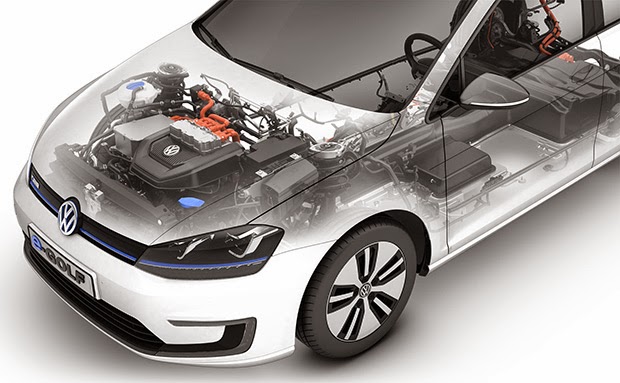
Winterkorn said in November that he sees “great potential” in the new power-storage technology, which may expand an electric vehicle’s driving distance between recharges to as much as 700 kilometers (430 miles). That’s more than three times the range of the battery-powered version of the VW Golf. Tesla’s Model S has a range of 270 miles, according to its website.

Closely held QuantumScape, founded in 2010 by former Stanford University researchers, is working on solid-state batteries as an alternative to liquid electrolytes such as the lithium-ion technology used in many electric cars today. Solid electrolytes are burn resistant and could potentially store more energy and provide more power to extend the range of electric vehicles.

Developing the next generation of nuclear batteries

Atomic batteries that don't require recharging and last between 12 and 30 years are being developed for small scale applications that could potentially be scaled up for EV applications. There are quite a few variations on Nuclear batteries and just as many university labs working on them.

Researchers in the US are using pioneering technology to create long-lasting, more efficient nuclear batteries. Several teams at the University of Missouri are pursuing nuclear battery research . Much of this work is focused on pushing the frontiers of nuclear battery technology by employing power sources using alpha or beta-particle decay based on a radioactive isotope that can be produced, separated and refined at the University of Missouri Research Reactor.

The notion of an electric car that recharges itself is appealing but initially the most likely customers are oil and gas and aerospace industries, and space flight companies, which need reliable power sources in inaccessible locations and physical extremes such as high or low temperature and pressure. For example, a betavoltaic incorporated into a flight data locator could signal to search teams for years instead of months.

"With enough financial support to fund both our irradiation and packaging, we could have a commercial-ready device in three years."

Recently Power-technology.com talked to Patrick J Pinhero, Alan K Wertsching and Jae Wan Kwon of the University of Missouri about pushing the boundaries of betavoltaic electricity generation.

Next BMW i model not due until 2020

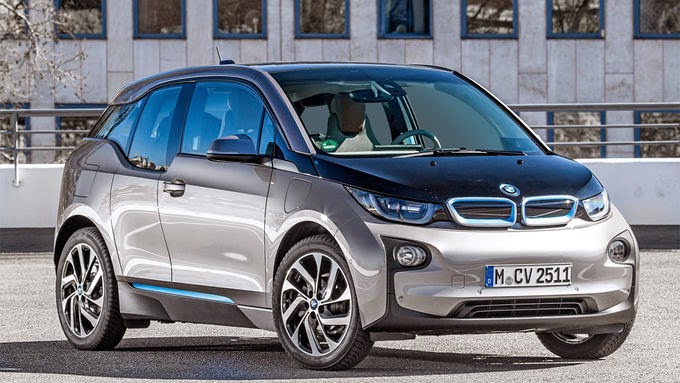
BMW R&D chief Klaus Froehlich says the company will launch a third BMW i car but it won’t arrive until at least 2020.

“We are still in the strategic research phase where we brainstorm,” BMW Group r&d chief Klaus Froehlich told Automotive News Europe. “Teams that start with a white sheet of paper. They talk with customers, hold workshops, then present their ideas and we decide.”

Froehlich disputed media reports that claimed the third model after the i3 and i8 would be a variant of the X5 premium large SUV. He said the mission of the i subbrand is to change the perception of how a low-emissions car should look and perform, therefore there are no plans to re-package an existing BMW Group model and call it an i model.

Also, he said the i subbrand is supposed to be a starting point for cutting-edge innovation that progressively moves down into the rest of the automaker’s lineup. Current examples include carbon fiber, which is a key part of the i3 and i8 and is moving into other BMWs, and the i8’s plug-in hybrid powertrain, which is being added to high-volume models such as X5, 3 series and 4 series.

BMW will focus on steadily improving the i3 and i8 during the six-plus years until the subbrand’s portfolio grows again.

“We have a minimum 20 percent battery density improvement every three years, thus over the i3 and i8’s life cycle, we will offer more performance, more range or a combination of the two,” Frohlich said.

When asked whether current i3 and i8 owners would be able to switch to the more powerful electrical powertrains Froehlich said: “I don’t think a retrofit makes sense. When better batteries are available, we could then offer models with a longer range or with the same range but at a lower price.”

BMW Ceo Norbert Reithofer, who approved the i project skunkworks that developed the lightweight, low-cost carbon-fiber composites and electric drivetrains for the i3 and i8, will step down in May to be be replaced by Harald Krüger, current head of production. Krüger is known to have a more pragmatic view of electric vehicles than Reithofer.

Also BMW's R&D Chief, Herbert Diess, who oversaw the launch of the i3 and i8, and was thought to be a potential successor for BMW's CEO role was recently poached by Volkswagen to become chairman of VW's passenger car brand.

Dyson invests in Solid-State battery firm Sakti3

Vacuum cleaner inventor Sir James Dyson invests $15m into company that could revolutionise battery technology.

Inventor and entrepreneur Sir James Dyson is making his first investment outside the business he founded and which made him a billionaire, giving his financial backing to a company that hopes to revolutionise battery technology.

Sir James who made his fortune inventing and developing the bagless vacuum cleaner is investing $15m into US company Sakti3 which is developing “solid-state” batteries.

The money is part of a larger $20m investment round in Sakti3 that includes a deal to commercialise the company’s research and incorporate it into Dyson products.

Sir James said: “Sakti3 has achieved leaps in performance which current battery technology simply can’t. It’s these fundamental technologies batteries, motors that allow machines to work properly.

“The Sakti3 team has amazing ambitions, and their platform offers the potential for exponential performance gains that will supercharge the Dyson machines we know today.”

Most batteries in commercial use today rely on lithium-ion technology which contains a pressurised flammable electrolyte, which is vulnerable to damage, and also means they are heavy and limits their ability to store power.

Solid-state batteries do away with the liquid electrolyte, and instead replace it with a metal one which coats the battery’s electrodes. As well as being safer and able to withstand higher temperatures, using a metal electrolyte means more exotic materials can be used which store more energy, making the solid-state batteries more powerful, smaller and lighter.

Sakti3 has produced a battery with an energy density rating of 1100 watt hours per litre using the technology, 50pc better than current lithium-ion batteries.

Sakti3 has been investigating how to improve batteries for almost a decade, since the company was spun out of the University of Michigan. Along the way it attracted $50m in equity investments, including from Khosla Ventures, Beringea, Itochu and auto giant General Motors.

Sakti3 named as one of MIT’s most innovative companies began by computer modelling the technology and is now scaling up prototype batteries into production.

Ann Marie Sastry, founder and chief executive, said: “It was an honour to be approached by Dyson because it wanted what we did much, much better batteries.

“There is a great deal of knowledge and passion on both sides, and Dyson’s engineering team has the capability and the track record to scale up new ideas and make them a commercial reality.”

BYD to build battery Gigafactory to rival Tesla

Chinese automaker BYD Co Ltd, backed by Warren Buffett's Berkshire Hathaway Inc, aims to triple its production of batteries as it takes on Tesla Motors in the race to supply electric vehicles and boost energy storage.

Shenzhen-based BYD plans to add 6 gigawatt hours of global production for batteries in each of the next three years, and hopes to keep adding at that pace afterwards if demand is solid, Matthew Jurjevich, a spokesman for the company, said on Friday.

That means BYD could ramp up from 10 GWh capacity at the end of this year to about 34 GWh of batteries by the beginning of 2020. This would put it about even with Tesla's planned $5 billion Nevada gigafactory.

Each of the planned Gigafactory is said to output more lithium-ion batteries than the entire world’s capacity today. When fully operational in 2020, these two plants alone will triple global li-ion battery production capacity, and that's not accounting for the largest electric vehicle battery supplier today, LG Chem, who broke ground on their own Chinese gigafactory in late 2014.

The companies are fast emerging as two of the key players in the nascent electricity storage sector. Storage technology is considered critical to integrating large amounts of renewable energy because it can absorb excess power from wind farms or solar panels and keep that for use when conditions don't allow for power generation.

"We have demonstrated that BYD is capable of adding 6 GWh every year with strong market demand," Jurjevich, who works for BYD's U.S. unit, said in an interview.

The sector has attracted Tesla, BYD and a range of startups as well as stalwart battery manufacturers and is expected to grow to $1.5 billion by 2019 from $128 million in 2014 in the United States alone, according to GTM Research.

BYD, which declined to provide investment budgets, ended last year with 4 GWh of capacity and will be at 10 GWh later this year. The U.S. energy storage market is expected to triple this year to 220 MW, according to GTM.

Most of BYD's production is in China, but the company is opening a major new factory in Brazil this year that will contribute meaningfully to output next year, Jurjevich said.

BYD, which started out making mobile phone batteries, will also scale up manufacturing in the United States as demand for its batteries increases, he added.

According to data published last year by Lux Research, BYD is the sixth-biggest manufacturer of batteries for hybrid and plug-in vehicles. Panasonic Corporation, which makes cells and batteries for Tesla, is the biggest.

Tesla, founded by entrepreneur Elon Musk, has said it will launch its own production of battery cells in Nevada in 2016 and reach 35 GWh of capacity by 2020. Tesla does not currently produce battery cells, according to a company spokeswoman.

BYD opened two manufacturing plants in Southern California in 2013 to produce both electric buses for public transportation and batteries.

The company shocked many in 2003 when it launched its automotive business and has since become one of China's most successful automakers. Outside of China, however, it has focused on selling buses rather than cars.

BYD plans to deploy 70 megawatt hours of projects in that market in the United States this year, and has another 130 MWh of projects in its U.S. pipeline.

It has already deployed 40 MWh of projects in North America with customers including Chevron Corp and Duke Energy Corp.

Porsche To Expand With New Electric Car to Challenge Tesla

Porsche AG may expand its growing lineup with a battery-powered vehicle to cater to demand for cleaner luxury vehicles and counter the rise of Tesla Motors Inc.

“Tesla has built an exceptional car,” Porsche chief Matthias Mueller said Friday at the brand’s annual press conference in Stuttgart, Germany. “They have a very pragmatic approach and set the standard, where we have to follow up now.”

The Volkswagen AG unit plans to roll out its seventh model line by 2020, but has yet to make a final decision on the car’s form. Porsche previously said it might expand the Panamera coupe line with a smaller version or a more spacious shooting brake variant. Porsche has also been considering a sports car between the 911, which costs $151,100 for the Turbo version, and the $845,000 918 Spyder hybrid supercar. The new sports car model would be designed to challenge autos made by Ferrari SpA.

Porsche plans to sell more than 200,000 vehicles for the first time this year, driven by demand for the $49,900 Macan compact sport-utility vehicle it introduced in April 2014. The increase comes amid a rising tide for most luxury-car makers, with Porsche, its sister brands Audi and Bentley, Daimler AG’s Mercedes-Benz and BMW AG all reporting fresh sales records last year.

Porsche’s deliveries rose 17 percent to 189,849 cars in 2014 and surged 34 percent in February to 14,836 cars. Demand for luxury autos is forecast to rise further this year thanks to growth in China and the U.S.

Smartphone on Wheels

The profit margin for the sports-car brand narrowed to 15.8 percent from 18 percent last year due to costs for adding the Macan to its lineup and revamping the best-selling Cayenne SUV. Even so, Porsche’s return on sales remained one of the highest among global automakers. Porsche also sells the Boxster roadster and the hard-top Cayman variant.

Porsche will focus its development efforts on engines and handling rather than push for the latest advances in in-car Internet and automated driving.

The brand’s customers “don’t want a smartphone on four wheels or the biggest touchscreen in the center console,” said Mueller. “At Porsche there’s no room for window dressing.”

For an electric car, which would help the brand comply with tightening environmental regulations, Porsche is targeting a range of more 500 kilometres (310 miles) before needing to recharge, which shouldn’t take longer than a normal stop on a motorway, he said.

Uber in deal with China’s BYD to test electric cars

Uber Inc said on Friday it struck a deal with Chinese automaker BYD Co Ltd to test a fleet of electric cars for its drivers.

The test program, which kicked off a few weeks ago in Chicago and could eventually expand to other cities, is the Silicon Valley startup's first attempt to focus on an electric vehicle, said Uber spokeswoman Lauren Altmin."We've seen interest in the program already from current and potential Chicago partners (drivers)," Altmin said.

Uber, which allows users to summon rides on their smartphones, originally started with a luxury town-car service but in many cities has added UberX, a low frills service with nonprofessional drivers using personal cars. The BYD offering is aimed at those drivers.

The electric car is part of Uber's program to help drivers buy or lease new or used cars. The BYD e6 vehicles are available through Green Wheels USA, a Chicago car dealership that focuses on electric and hybrid cars and also builds EV charging stations.

About 25 BYD vehicles are currently being used by Uber drivers in Chicago, and the hope is to bring that number to a couple of hundred by the end of the year, according to Doug Snower, Green Wheels' president.

Uber began talking to BYD and Green Wheels late last year, Altmin said.

For BYD the deal with Uber could be a step toward the long-held goal of selling its cars to U.S. consumers. The company, whose name stands for "build your dream", is a major automaker in China, but its e6 vehicle has thus far only been used in pilot programs in the United States.

Nissan Motor Co Ltd and Tesla Motors Inc are better known in the United States for their electric cars, the Leaf and the Model S. Uber would not comment on why it had picked a company with a relatively unknown brand.

The e6 is larger than many other electric cars, however, and is being used in London by chauffer service Thriev.

BYD gained Warren Buffett's backing in 2009 and announced plans to sell its e6 electric car in the United States the following year. Since then, BYD's U.S. business has focused mainly on electric buses for public transportation.

BYD publicized the program on its Facebook page but declined to comment on the deal with Uber.

The Facebook post, which has a picture of the vehicle, says the e6 has a 186 mile range on a single charge. It also says financing is available from BYD-approved lenders.

Green Wheels is offering several options to drivers interested in the e6. The most popular program, Snower said, allows an Uber driver to pay $200 a week to use an e6 for his or her driving shift. The vehicle is then returned to a Green Wheels lot, where it is charged until it is used again.

Drivers can also enter into a more traditional lease or a lease-to-own program, Snower said.

Plug-in Electric Car Sales Surge in Europe


Plug-in electric car sales have undergone a huge rise in many key European markets according to figures released by the European Automobile Manufacturers Association (ACEA).
The biggest gains came in the UK, where a 300 per cent rise in electric cars has taken place compared to this time last year.
In total 75,331 new electric cars have been registered according to the ACEA, with Norway leading the way with just under 20,000 new registrations.
In Germany electric car registrations are up by 70 percent, while in France they had climbed by almost 30 per cent compared to the 2013 figures.
Total Electrically Charged Vehicles = Pure Electric Vehicles + Extended-Range Electric Vehicles + Plug-In Hybrid Electric Vehicles
Q4Q4% ChgQ1-Q4Q1-Q4% Chg
’14’1314/13’14’1314/13
AUSTRIA93983113.0%3,6413,22712.8%
BELGIUM59531191.3%2,032819148.1%
BULGARIA20n.a.21100.0%
CZECH REPUBLIC241109121.1%58347522.7%
DENMARK676225200.4%1,612650148.0%
ESTONIA10046117.4%402150168.0%
FINLAND1309241.3%440218101.8%
FRANCE4,2482,77353.2%12,4889,62229.8%
GERMANY3,9692,71546.2%13,1187,70670.2%
GREECE223633.3%6441500.0%
HUNGARY146133.3%4316168.8%
IRELAND197171.4%25650412.0%
ITALY492497-1.0%1,4731,17425.5%
LATVIA22045400.0%391132907.7%
NETHERLANDS3,24116,926-80.9%12,92022,495-42.6%
POLAND1,578571176.4%3,9681,900108.8%
PORTUGAL846040.0%28922130.8%
ROMANIA42100.0%7475.0%
SLOVAKIA453818.4%16913624.3%
SPAIN644261146.7%1,40588359.1%
SWEDEN1,203457163.2%4,6671,547201.7%
UNITED KINGDOM6,086676800.3%15,3613,833300.8%
EUROPEAN UNION24,55226,610-7.7%75,33155,14436.6%
EU1522,34825,834-13.5%69,76652,44933.0%
EU (New Members)2,204776184.0%5,5652,695106.5%
NORWAY4,6953,70926.6%19,7678,210140.8%
SWITZERLAND8187499.2%2,6931,71756.8%
EFTA5,5134,45823.7%22,4609,927126.3%
TOTAL EUROPE (EU+EFTA)30,06531,068-3.2%97,79165,07150.3%
WEST. EUROPE (EU15+EFTA)27,86130,292-8.0%92,22662,37647.9%

Pure Electric Vehicle
Q4Q4% ChgQ1-Q4Q1-Q4% Chg
’14’1314/13’14’1314/13
AUSTRIA34524043.8%1,28165495.9%
BELGIUM32720956.5%1,164500132.8%
BULGARIA20n.a.21100.0%
CZECH REPUBLIC10217500.0%19737432.4%
DENMARK676225200.4%1,612650148.0%
ESTONIA10046117.4%398149167.1%
FINLAND6114335.7%18350266.0%
FRANCE3,6322,46147.6%10,5618,77920.3%
GERMANY2,4752,18013.5%8,5226,05140.8%
GREECE00n.a.00n.a.
HUNGARY8560.0%3210220.0%
IRELAND2156150.0%22149351.0%
ITALY32727518.9%1,09886427.1%
LATVIA137113600.0%17644300.0%
NETHERLANDS1,2461,863-33.1%2,9822,61913.9%
POLAND231921.1%8131161.3%
PORTUGAL544035.0%18916613.9%
ROMANIA42100.0%7475.0%
SLOVAKIA195280.0%586866.7%
SPAIN473234102.1%1,07681132.7%
SWEDEN28118849.5%1,239432186.8%
UNITED KINGDOM2,448388530.9%7,4162,719172.7%
EUROPEAN UNION12,7558,41851.5%38,49524,58656.6%
EU1512,3608,32348.5%37,54424,34454.2%
EU (New Members)39595315.8%951242293.0%
NORWAY4,3433,63219.6%18,0907,882129.5%
SWITZERLAND501505-0.8%1,6591,15643.5%
EFTA4,8444,13717.1%19,7499,038118.5%
TOTAL EUROPE (EU+EFTA)17,59912,55540.2%58,24433,62473.2%
WEST. EUROPE (EU15+EFTA)17,20412,46038.1%57,29333,38271.6%

Electrically Charged Vehicles other than Pure Electric Vehicles = Extended-Range Electric Vehicles + Plug-In Hybrid Electric Vehicles
Q4Q4% ChgQ1-Q4Q1-Q4% Chg
’14’1314/13’14’1314/13
AUSTRIA5945910.5%2,3602,573-8.3%
BELGIUM268102162.7%868319172.1%
BULGARIA00n.a.00n.a.
CZECH REPUBLIC1399251.1%386438-11.9%
DENMARK00n.a.00n.a.
ESTONIA00n.a.41300.0%
FINLAND6978-11.5%25716853.0%
FRANCE61631297.4%1,927843128.6%
GERMANY1,494535179.3%4,5961,655177.7%
GREECE223633.3%6441500.0%
HUNGARY61500.0%11683.3%
IRELAND41300.0%3513400.0%
ITALY165222-25.7%37531021.0%
LATVIA8332666.7%21592288.9%
NETHERLANDS1,99515,063-86.8%9,93819,876-50.0%
POLAND1,555552181.7%3,8871,869108.0%
PORTUGAL302050.0%1005581.8%
ROMANIA00n.a.00n.a.
SLOVAKIA2633-21.2%111130-14.6%
SPAIN17127533.3%32972356.9%
SWEDEN922269242.8%3,4281,115207.4%
UNITED KINGDOM3,6382881163.2%7,9451,114613.2%
EUROPEAN UNION11,79718,192-35.2%36,83630,55820.5%
EU159,98817,511-43.0%32,22228,10514.6%
EU (New Members)1,809681165.6%4,6142,45388.1%
NORWAY35277357.1%1,677328411.3%
SWITZERLAND31724429.9%1,03456184.3%
EFTA669321108.4%2,711889204.9%
TOTAL EUROPE (EU+EFTA)12,46618,513-32.7%39,54731,44725.8%
WEST. EUROPE (EU15+EFTA)10,65717,832-40.2%34,93328,99420.5%

Audi Ask Sudents to Code Self-Driving Cars

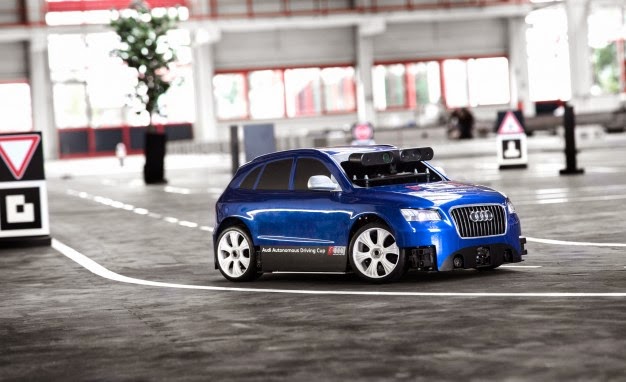
Audi is taking Piloted Driving to a decidedly smaller level, giving 1:8-scale Q5s to 10 student teams who must program their tiny crossovers to compete in the inaugural Autonomous Driving Cup. The whole thing is sort of like DARPA’s off-road competition for (full-size) self-driving cars, only scaled down and conducted indoors.

Audi’s smart play here is asking students, the next generation of automotive engineers, to tackle the most pressing issues facing autonomous-car development—namely, programming the vehicle to not only recognize widely varied road scenarios but also to react accordingly. To ensure that whatever the German students figure out is applicable to Audi’s full-scale Piloted Driving experiments, the tiny Q5s’ software-development environment is said to be identical to that used on real-life Audi prototypes.

The student teams will program their donated micro Q5s to run a large indoor course, on which they’ll encounter traffic (as an awesome aside, this “traffic” consists of small-scale Audi race cars), have to complete parking tasks, avoid accidents, and avoid obstacles. Making things even trickier is speed—the Q5s will accelerate up to 25 mph during the competition—and the sheer volume of complex sensors, which work the same way as the sensors in Audi’s full-size self-driving vehicles.

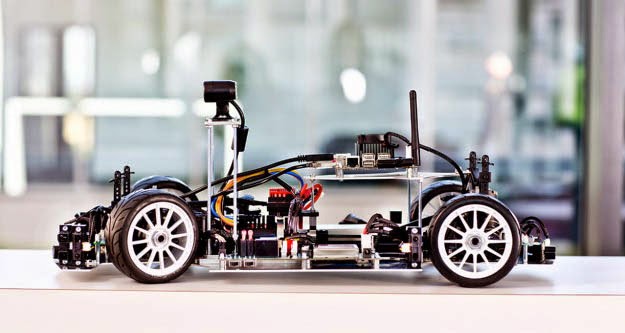
Look closely, and you’ll see a bank of sensors sticking through the little Q5’s windshield; that’s the 2D/3D camera, which is used to help the car discern range, depth of field, and color. Four ultrasonic sensors (similar to parking sensors) located at each corner and six infrared sensors help the vehicle identify its proximity to surroundings and obstacles, while a six-axis gyroscope, wheel-speed sensors, and a steering-angle sensor help the car understand its own movements. Onboard, there’s a 1.7-GHz quad-core processor, 2 GB of RAM, an SD-card slot, and an open-source Arduino control computer.

Bridgestone returning as World Solar Challenge title sponsor

The Bridgestone brand will again act as title sponsor of this year’s World Solar Challenge – which will be known, as you’ve already probably guessed, as the Bridgestone World Solar Challenge 2015.

The event will take place in Australia between 18 and 25 October and is the 13th World Solar Challenge since 1987. Bridgestone intends to use the World Solar Challenge as a platform for promoting its ‘Ecopia with ologic’ technology, and the company says it will also engage in associated environmental initiatives and programmes that support young engineers participating in the event.

The last World Solar Challenge in 2013 attracted 38 teams, including many university students, from 22 countries. The participants competed in a 3,000 kilometre (1,184 mile) cross-country race using only solar energy to power the vehicles. The competition features three separate classes – Adventure Class, Cruiser Class and Challenger Class – which will compete for the title of the world’s most efficient solar car.

End of the road for car giants?

The car industry is currently mulling over the biggest transformation in its history since Henry Ford set up shop in Dearborn, Michigan.

Before Ford, the automobile was an expensive plaything for the rich that had little effect on the prevalent form of transportation - horse-drawn vehicles. Ford’s introduction of the mass production assembly line and product standardisation (“any colour so long as it’s black”) brought his Model T motor car within the range of the masses, fundamentally disrupting the market for transportation vehicles and sending millions of horses to the knacker’s yard.

Today’s disruptive force is already present in most people’s offices and homes and is carried in most people’s pocket or bag: digital technology. It put a man on the moon in the sixties and sacked the CD in the noughties. But just as digital technology has disrupted business models in the newspaper and music sectors, so the car industry is contemplating just where digital technology will send it spinning.

While R&D departments experiment with the latest digital technology, producing driverless and open source cars, the executives and strategists back at the head offices of automobile giants such as Volkswagen and GM are trying to figure out how they will navigate their way through the digital wormhole. Will GM, Ford and Toyota step in to a world full of new possibilities or on to a planet where they no longer exist?

Warwick Business School Professor of Information Systems and Management Ola Henfridsson has spent the last eight years consulting and researching digital innovation at GM, Volvo and Saab and, while he admits that he doesn’t know what they will find either, he is sure the open platform car is coming.

Just as the smartphone has become a platform where users can download any apps they want and connect to the cloud, so the car could become a giant mobile version.

“If you can develop an android community with so many useful apps, think what could happen with cars,” says Henfridsson.

“Cars already contain so much more digital content, much of the value of the car and the cost of developing a car is related to the digital technology in some way or another. When it comes to lowering fuel consumption or new safety features it is very much about the digital infrastructure, which requires a totally new skill set for the people developing the car.

“It used to be that competition within the car industry was very locked into the boundaries of the car manufacturers, but suddenly there are non-automotive companies taking parts of the markets. Microsoft, are heading into it along with Google and others. Why is it that Google has 10 driverless cars on the streets of California? Because they are imagining a future where a car communicates with its environment, where at some point what will be important in a car’s functionality is not something that GM or Ford or Volkswagen can deliver.

“Suddenly, you can see that the car industry needs to engage with the ‘crowd’, where anybody with £300 and a good idea can become an entrepreneur.”

In the world of open platform cars a kid in a bedroom could become the next giant car company. Just as Mark Zuckerberg has taken over the internet with Facebook, so the next major car development could come from a dormitory at a US university rather than the R&D department of BMW. And that is what is worrying the car manufacturers; opening up their cars to third-party developers could see them lose control of their own products.

Car executives are nervous, but they are now dipping their toes in the digital waters. Apps are in cars now, and Ford and GM have started their developer programmes. In January Ford launched its open mobile app developer programmer for iOS and Android. But it is limiting developers to its car’s entertainment systems to enable two-way communication between the apps and the car. Also developers will have to submit an app to Ford for review by its engineers to “ensure it works properly and is suitable for use in the vehicle.” Once it’s been approved, developers get a distribution license so the app can be submitted to the relevant app stores and talk to the car.

More interesting is Google’s tie-up with Audi, GM, Honda and Hyundai in the Open Automotive Alliance (OAA)to develop a common platform for Android apps on their cars. It was something that Helen Falkås was working on at Saab until the company filed for bankruptcy in 2011.

“We were planning a similar system, using Android as a platform,” says Falkås, who is now Senior Project Manager at Nordiska Interaktionsbyrån, a leading interaction design agency in the Scandinavian car industry. “We were talking about a two-sided market where you have to give the developers the possibility to have some business benefits with a large customer base and the customers are looking for good content, rather than the proprietary market that the car industry has used. We were looking to lower the threshold of entry for developers to open up a standard API (Application Programming Interface) so data could be accessed to create the open space.

“There were several research projects we were discussing with Google, as you need somebody with the size of Google to push the industry into this open space, but they said they will go into the car industry once they have done tablets and TV.

“Now they have formed OAA and brought in several car manufacturers as they always said they were looking for more volume. It will be very interesting to see how OAA develops and whether they can standardise an open platform across several car manufacturers, because there is a lot of traditional thinking in the automotive industry. We are seeing semi-open platforms for infotainment in cars, but we were looking at the engine management system and other digital systems in the car. After all, there are 500 vehicle signals which are pretty similar in all cars. They have different protocols and different systems of language, but if it was standardised you would have much a larger volume to create new apps. But this will take time for the car industry. It took 15 years to introduce ABS brakes in large scale, so that gives you an idea of how slowly the car industry moves.”

Falkås reveals a project she worked on with Saab and the Swedish road authority which gives some idea of the potential value of connecting all makes of cars across a digital platform.

“Icy roads are a big issue in Sweden, so we wanted to develop an app where you would know exactly where and when a road was slippery and even in what direction cars were sliding,” says Falkås. “That information is available in cars today. These cars would relay instantly to the authority which road was slippery and how slippery so that they could pinpoint their efforts, because it is very expensive to keep roads safe in the winter and salt is bad for the environment.”

That was with just 50 Saabs, but imagine if all cars were relaying this information to the Highways Agency and to drivers as well in real time, it would surely help make roads safer. Falkås’ only problem was the business model as it produced cost savings for the road authority but little value for the car manufacturer.

But Henfridsson argues that is one of the points of opening up access to cars’ data - third-party developers will work out business models and apps we can’t even dream of, as happened with smartphones. As Falkås says: “You can try to guess what apps would be invented, but you will probably be wrong.”

And these developers will be focused on the drivers and the user experience more so than car manufacturers, who have been tinkering with suspensions for decades.

“In the past if you wanted to be successful in the car industry you needed a huge amount of investment,” says Henfridsson. “The car industry has been so focused on scale, that it is only a few companies who own those resources who have been controlling what has been going into the car. Now, we will see the birth of customer-driven DIY developments in the car. An app store for cars, that is what is coming, everybody can design an app for a car.

“Instead of one navigation system you might have 10, or some navigation aid nobody has thought about before and you might be able to sell advertising through this app. Plus opening up to the crowd addresses some of the customisation issues car manufacturers make for local markets. Traditionally they want to minimise them because it drives up cost, but this turns it around, as a small app developer in each country can do those adaptations and it won’t cost the car manufacturer a penny.

“Also, normally in the car industry you need a four or six-year cycle in car development to get your investment back, but this will change. Software can be reproduced at a minimal cost, at the point when you share with the Android community.

“GM asked a company to develop their navigation system. It took them 18 months to develop something new - it’s an expensive process and would then be expensive for the customers. The Android community contains up to 20 navigation systems at the moment, it can very easily be adapted for a bigger screen for the car. Suddenly you already have these developments, that cost is so much lower and quicker.”

Other industries would love to get their hands on car data, one obvious one being insurance companies.

“Very soon we will have insurance setting up deals with customers to gain information on how they drive,” says Henfridsson. “You would be able to have lower fees for those that drive carefully, but at the point you speed you would lose that deal, it would be personalised to each individual.

“This will cut across industries, because digitalising the car means it becomes another sensor within a huge network. Google might not want to sell cars, but it definitely sees them as another source of information that they can use to become even better in digitising the world. Eh how is the traffic situation in Los Angeles? - Search Google cars and find out?

“Also, in the Android world developments are being pushed out and customers are testing it for you. The car industry is totally different where it has to be perfect for the customer before it is on the market, but releasing a new patch for the software doesn’t cost anything.”

It could be the end of all those costly recalls to adjust the steering system or throttle, just send out a system update and it would be done - though repairs done digitally could have a serious impact on car dealerships, a relationship that car manufacturers would be loathe to hurt. And talk of app developers being allowed into the engine, suspension, and brakes of a car must send many car executives into convulsions. Who is liable if something goes wrong if there is a crash? Is the insurance company going to turn to the app developer or the car manufacturer?

Falkas reveals how at Saab they planned to open the engine management system to developers in stages.

“You could select certain sensors and data to publish as ‘read only’,” says Falkas. “The next step for selected third companies with whom the car manufacturer is in partnership is to give them the ability to write into the system, as you would still have liability. There would then be possibilities to have a bundle for something like additional horsepower, it would be a gradual process.”

Liability is one issue that has to be resolved, but Henfridsson is sure it will be and believes whoever moves first to totally open up their car will have a big advantage. The big worry for the car manufacturers is that if they don’t do it somebody else will, somebody of the scale of Google or Apple. They could make a standard car and then send it out as an open platform vehicle, transforming the industry and potentially killing off some big manufacturers.

“An app that can tune your engine could have been done 10 years ago,” says Henfridsson. “At the point GM or Audi allows third-party developers to design apps to tune their engine there would be hundreds of them. They may not allow access to the braking system, engine, or power train immediately, but it will soon come.

There is a middle ground, where you can have 60 or 70 trusted vendors. Then it is a different business, the car will become a platform. Why not have other people innovate on your platform? That is what you want to be, a platform owner like Facebook. It is very old fashioned to sell a whole product these days.

“This is coming, the car manufacturers know it and they can’t stop it. We will see a totally new car industry when digital takes over. It will change everything, there will be new brands that might be connected to Google rather than a car manufacturer. It is a do-or-die issue for the car industry.”

Audi launch 2nd Generation Audi R8 e-tron @ Geneva

The second generation of the Audi R8 forms the basis for two models. Audi has made major engineering developments in its high-performance electric sports car, the R8 e-tron. The latest evolution of the vehicle takes up the multimaterial Audi Space Frame from the new series-production model.

The supporting structure was enhanced by a CFRP rear-section module comprising the luggage compartment. The walls of the CFRP luggage compartment well are corrugated. This way, in the event of a rear-end collision, more energy can be absorbed despite the reduced material weight.

Thanks to targeted modifications to the outer shell and on the wheels, the Audi R8 e tron achieves an aerodynamic drag coefficient (cd) value of 0.28. In terms of performance and range, the car enters entirely new dimensions.

The large T-shaped battery is structurally integrated into the center tunnel and behind the occupant cell – optimally positioned in the car. It supports the dynamics of the R8 e-tron with its low center of gravity. Audi produces the high-voltage battery itself, for the first time based on a newly developed lithium-ion technology which was specially conceived for a purely electric vehicle drive. In comparison to the first technology platform, the battery capacity has grown from 49 kWh to approximately 92 kWh. This progress was possible without changing the package.

The R8 e-tron achieves an electric range of 450 kilometers (279.6 mi) instead of a previous 215 kilometers (133.6 mi) with an energy density that has been increased from 84 Wh/kg to 154 Wh/kg and some other modifications to the car. The electrically powered high-performance sports car has the Combined Charging System (CCS) on board, which allows charging with direct and alternating current. Using this system, it is possible to fully charge the battery in significantly less than two hours.

The power is now twice 170 kW and the maximum torque twice 460 Nm (339.3 lb-ft). The R8 e-tron accelerates from 0 to 100 km/h (62.1 mph) in 3.9 seconds on its way to an electronically restricted top speed of 210 km/h (130.5 mph) or 250 km/h (155.3 mph). Intelligent energy management and an electromechanical brake system enable high energy recuperation rates. Targeted torque vectoring – needs-based distribution of power transmission between the rear wheels – ensures maximum stability and dynamism.

Audi uses the electrical high-performance sports car primarily as a mobile high-tech laboratory. Accordingly, the findings from the R8 e-tron help in creating a vehicle with a sedan character. Upon customer request, the R8 e-tron will be available for order in 2015 as an electrically powered sports car in supreme hand-built quality.