G.M. to Suspend Making Chevy Volts for 4 Weeks
The move comes in response to slow sales and to deal with a change to an all-new version of the car.

Charged with Electric Vehicle News and Views

Tesla Motors introduces the All-wheel drive Model S 70D. Uniting exceptional performance and drive experience features, the newest Model S offers great value at a compelling price. Starting at $102,400 RRP plus luxury car tax, on-road costs and stamp duty, Model S 70D includes dual motor all-wheel drive technology, a NEDC-rated 440 km of range, and a 0-100 time of 5.4 seconds.
In addition to dual motor, 70D comes standard with Autopilot Hardware, Navigation, and Supercharging. And, as with every Model S, 70D will run on the new software 6.2 and owners will continue to receive free over-the-air updates that will add additional functionality, enhanced performance, and improved user experience over time.
To make room for the 70D, Tesla is eliminating the 60, which had been its cheapest Model S since the sedan’s 2012 launch. Starting at $76,170 before any government incentives, the 70D will cost $5,000 more than a basic 60, though it includes use of Tesla's proprietary Superchargers, which was previously a $2,000 option.
Model S70D will be able to travel 440 km (275 miles) between charges and deliver 380 kw (514 hp) to all four wheels from two electric motors -- up from 375 km (233 miles) of range and 280 kw (380 hp) for today’s basic rear-drive Model S, called the 60.
Model S 70 D standard features include:


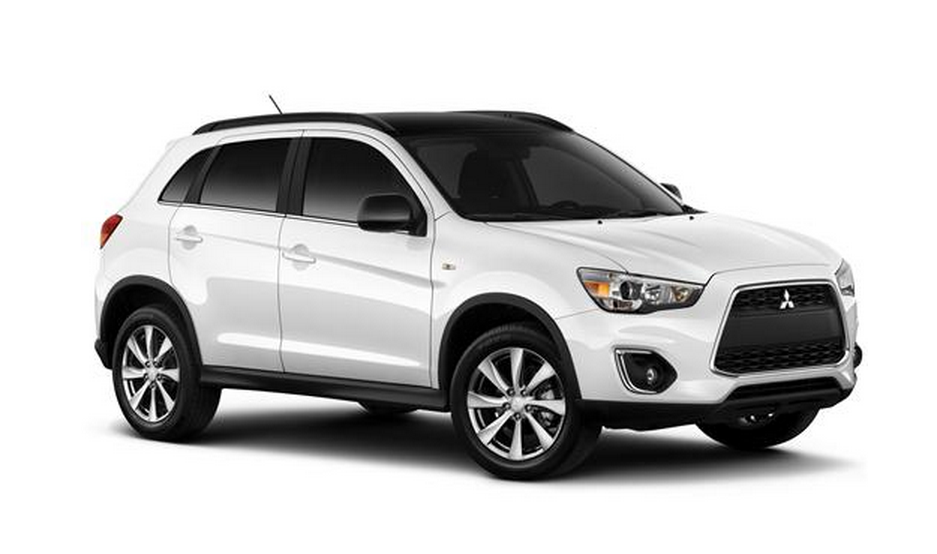
Mitsubishi is planning to bring to the US a plug-in hybrid version of its smaller Outlander Sport model – a segment of the market where previous to this week no automaker offered any hybrid, but to which both Toyota and Nissan have now thrown their hat in the ring.
Mitsubishi says of its baby PHEV: 'The system is estimated to achieve very low CO2 emissions of below 40g/km while also delivering gutsy and smooth performance with its 163bhp electric motor.' It adds that it is developing plug-in electric hybrid systems best suited to each model in its line-up with a view to introducing them in the near future.
"We are committed to huge investments in capital as well as huge investments in R&D," Mitsubishi's Don Swearingen, executive vice president for sales and fixed operations at Mitsubishi Motors North America said.
"With the way our company was structured and the financial conditions that we were in, we had to get ourselves (back) on solid ground" before making this commitment,


Nissan has introduced the X-Trail Hybrid in Japan, equipped with a 2-liter MR20DD four-cylinder engine and an electric motor.
Nissan says the hybrid powertrain “delivers a comfortable driving experience with its powerful acceleration and remarkable quietness, which eclipse those of typical 2.5-liter gasoline engines.”
The 2.0-liter gasoline engine delivers 147PS (145hp) at 6,000 rpm and 207Nm (153lb-ft) of torque from 4,400 rpm, while the RM31 electric motor has a maximum power output of 30 kW (40hp) and a maximum torque of 160Nm (118lb-ft). The hybrid system also includes a high-output lithium-ion battery which is able to charge/discharge quickly.
In combination with an XTronic CVT, the hybrid powertrain achieves a fuel economy of 20.6 km/l (4.8 l/100 km or 48.5 mpg US) in the JC08 mode and meets Japan’s 2020 fuel economy standards, which means all grades are eligible for tax exemptions.
Furthermore, the X-Trail Hybrid achieves a 75 percent reduction of NOx (nitrogen oxide) and NMHC (non-methane hydrocarbons) in exhaust emissions over 2005 standards and SU-LEV certification.
The Nissan X-Trail Hybrid features Intelligent Dual Clutch Control, which is a two-clutch parallel hybrid system that delivers engine and motor energy mechanically to the transmission without having a motor assist or a torque converter, thus favoring responsive starts and acceleration.
In terms of equipment, the Nissan X-Trail Hybrid gets Forward Emergency Braking as a standard feature, as well as the NissanConnect Navigation System, the latest generation in-car navigation, information and entertainment system with smartphone link application. Nissan is planning to also introduce Forward Emergency Braking as standard on major models in Japan, by the end of autumn 2015. The X-Trail Hybrid is priced from 2,804,760 yen ($23,415).


Toyota unveiled the new RAV4 Hybrid at the New York International Auto Show. The eighth hybrid in the Toyota lineup, the RAV4 Hybrid offers more power as well as better fuel economy than the conventional RAV4, according to Toyota Group Vice President and General Manager Bill Fay.
The hybrid system consists of a 4-cylinder, 2.5-liter petrol engine and eCVT transmission along with an All-Wheel-Drive System with Intelligence (AWDi) featuring a rear motor that operates independently from the front motor. This additional electric motor delivers instant torque to the rear wheels only when additional traction is needed, thereby automatically helping prevent wheel spin.
AWDi adapts to the angle or condition of the road, with no driver input needed. The electronic AWD provides increased safety and stability on slippery surfaces and enables a towing capacity of 1,650 kg (3,634 lbs). Easy and safe towing is ensured thanks to Trailer Sway Control system.
RAV4 will also offer a new Bird’s Eye View Monitor. This Toyota-first technology utilizes four cameras that are mounted on the front, side mirrors and rear of the vehicle to give the driver a panoramic view of their surroundings. The system offers drivers assistance when parallel parking, and when pulling in and out of parking spaces.
The Bird’s Eye View Monitor system also has an industry-first feature called Perimeter Scan, that gives drivers a live rotating 360-degree view of what is around the vehicle, helping them see objects that could be in the way.


Stanford University scientists have invented the first high-performance aluminium battery that's fast-charging, long-lasting and inexpensive. Researchers say the new technology offers a safe alternative to many commercial batteries in wide use today.
"We have developed a rechargeable aluminium battery that may replace existing storage devices, such as alkaline batteries, which are bad for the environment, and lithium-ion batteries, which occasionally burst into flames," said Hongjie Dai, a professor of chemistry at Stanford. "Our new battery won't catch fire, even if you drill through it."
Dai and his colleagues describe their novel aluminium-ion battery in "An ultrafast rechargeable aluminium-ion battery," which will be published in the April 6 advance online edition of the journal Nature.
Aluminium has long been an attractive material for batteries, mainly because of its low cost, low flammability and high-charge storage capacity. For decades, researchers have tried unsuccessfully to develop a commercially viable aluminium-ion battery. A key challenge has been finding materials capable of producing sufficient voltage after repeated cycles of charging and discharging.
Graphite cathode
An aluminium-ion battery consists of two electrodes: a negatively charged anode made of aluminium and a positively charged cathode.
"People have tried different kinds of materials for the cathode," Dai said. "We accidentally discovered that a simple solution is to use graphite, which is basically carbon. In our study, we identified a few types of graphite material that give us very good performance."
For the experimental battery, the Stanford team placed the aluminium anode and graphite cathode, along with an ionic liquid electrolyte, inside a flexible polymer- coated pouch.
"The electrolyte is basically a salt that's liquid at room temperature, so it's very safe," said Stanford graduate student Ming Gong, co-lead author of the Nature study.
Aluminium batteries are safer than conventional lithium-ion batteries used in millions of laptops and cell phones today, Dai added.
"Lithium-ion batteries can be a fire hazard," he said.
As an example, he pointed to recent decisions by United and Delta airlines to ban bulk lithium-battery shipments on passenger planes.
"In our study, we have videos showing that you can drill through the aluminium battery pouch, and it will continue working for a while longer without catching fire," Dai said. "But lithium batteries can go off in an unpredictable manner – in the air, the car or in your pocket. Besides safety, we have achieved major breakthroughs in aluminium battery performance."
One example is ultra-fast charging. Smartphone owners know that it can take hours to charge a lithium-ion battery. But the Stanford team reported "unprecedented charging times" of down to one minute with the aluminum prototype.
Durability is another important factor. Aluminium batteries developed at other laboratories usually died after just 100 charge-discharge cycles. But the Stanford battery was able to withstand more than 7,500 cycles without any loss of capacity. "This was the first time an ultra-fast aluminium-ion battery was constructed with stability over thousands of cycles," the authors wrote.
By comparison, a typical lithium-ion battery lasts about 1,000 cycles.
"Another feature of the aluminium battery is flexibility," Gong said. "You can bend it and fold it, so it has the potential for use in flexible electronic devices. Aluminium is also a cheaper metal than lithium."
Applications
In addition to small electronic devices, aluminium batteries could be used to store renewable energy on the electrical grid, Dai said.
"The grid needs a battery with a long cycle life that can rapidly store and release energy," he explained. "Our latest unpublished data suggest that an aluminium battery can be recharged tens of thousands of times. It's hard to imagine building a huge lithium-ion battery for grid storage."
Aluminium-ion technology also offers an environmentally friendly alternative to disposable alkaline batteries, Dai said.
"Millions of consumers use 1.5-volt AA and AAA batteries," he said. "Our rechargeable aluminium battery generates about two volts of electricity. That's higher than anyone has achieved with aluminium."
But more improvements will be needed to match the voltage of lithium-ion batteries, Dai added.
"Our battery produces about half the voltage of a typical lithium battery," he said. "But improving the cathode material could eventually increase the voltage and energy density. Otherwise, our battery has everything else you'd dream that a battery should have: inexpensive electrodes, good safety, high-speed charging, flexibility and long cycle life. I see this as a new battery in its early days. It's quite exciting."


Korean researchers have developed super capacitor battery with twice as large capacity and ten times faster charge speed than conventional batteries controlling two dimensional nanomaterial structure and composition. The technology is widely expected to facilitate the development of ultra super capacitor material utilized in next generation energy industry such as electric vehicles and smart grids.
The electric double layer capacitors (EDLC) boasts high power output, faster recharge and discharge, and semi-permanent battery life. However, low energy density can restrict the application. EDLC is a type of super capacitor that stores or discharges energy within seconds by absorbing ion electrically pulled from the electrode surface.
A series of research has been conducted in advanced countries including the US to enhance the energy density by developing super capacitor electrode material. The research team found secondary nanosheet by chemically exfoliating the bulk layered compound made of transitional metal and sulfur as they would to retrieve graphene shedding off a layer of graphite before they build the two dimensional nanosheet into a three dimensional structure.
The result was published in a science magazine ‘Nano Letters’ on March 3, titled as ‘Unveiling Surface Redox Charge Storage of Interacting Two-Dimensional Heteronanosheets in Hierarchical Architectures.’


Although BMW has doubled the production capacity for the plug-in hybrid i8, the order backlog is, according to Production Director Harald Krüger still at 4.5 months.
"We are really proud to see how this demands develops for a completely new car," Kruger said at the BMW Financial News Conference. Pride partly because of the spectacular E-athletes have been accepted even better than expected in the market, and secondly because the production team at the Leipzig plant has got a handle on the production processes of the vehicle with a high carbon content faster than expected.
Since launch in summer 2014 a total of 1,741 i8 were delivered. Given the high demand BMW have doubled the production number. Currently 20 cars per day will be built. Nevertheless, demand is still rising.
Overall, BMW sold 17,793 i models last year including 16,052 i3. Norbert Reithofer acknowledged that BMW are satisfied with the development because of the valuable experience developed through the i-series with Reithofer emphasizing the goal of electrification power trains through all series.


Two 900 hp plug-in hybrids, the McLaren P1 versus the Porsche 918 Spyder.
Both of these cars have carbon fiber tubs and body panels. Both have small displacement, high revving V-8s packed between their passenger compartments and rear axles. Both use twin-clutch transmissions, carbon ceramic brakes, and active aerodynamics. Both have roughly 900 hp.
With the help of pro racing driver Randy Pobst, Motor Trend find out which one is fastest around Mazda Raceway Laguna Seca!


Tesla Motors delivered a record 10,030 cars in the first quarter of 2015, a 55% increase compared with the number of deliveries in the first quarter of last year.
The company said going forward it will publish the number of new car deliveries within three days of quarter end as inaccurate sources of information have sometimes been used by others in publishing the number of vehicle deliveries.
The company expects to deliver about 55,000 cars globally in 2015, an increase of about 74 percent.
Tesla Motors is also set to offer upgrades including hands-free steering on its Model S sedan in three months, about a year ahead of other automakers.
Up to Thursday's close of $191, the stock had fallen 14.1 percent this year.


Germany's Karlsruhe Institute for Technology along with industry partner Schaeffler are researching improvements in electric vehicle energy efficiency by using brake steer or torque vector control of wheel motors to assist power steering.
The project "Intelligent Assisted Steering System with Optimum Energy Efficiency for Electric Vehicles (e²-Lenk)" subsidized by the Federal Ministry for Education and Research (BMBF) focuses on a new assisted steering concept. In conventional vehicles, the internal combustion engine not only accelerates the car but also supplies on-board assist systems with energy; such as the assisted steering system, which reduces the strain on the driver at the wheel.
In electric vehicles, this energy comes from the battery and also reduces the range as a result. In this research project by the collaborating partners, Karlsruhe Institute for Technology (KIT) and Schaeffler, the steering system is assisted in an energy-efficient manner by intelligent control of the drive torques transmitted to the individual wheels. The project is being sponsored by BMBF with a sum of around 0.6 million euros over 3 years and was started in January 2015.
"The new assisted steering system would require less system components in an electric vehicle, this would mean savings in terms of weight and energy in an electric vehicle", explain project managers Dr. Marcel Mayer, Schaeffler, and Dr. Michael Frey, KIT. "This would mean that an electric car would be cheaper and have a greater range." Materials and production steps can be saved due to the potential optimization of the design and weight.
The basic idea of the e²-Lenk project is simple: The wheels in an electric car will be driven individually by electric motors in contrast to a car with an internal combustion engine where all the wheels are provided with equal force. If the wheels on the left side transmit more drive torque to the road than those on the right side, this will result in acceleration of the vehicle to the right without the need to turn the front wheels or consume additional energy for steering.
Tracked vehicles or quadrocopters steer using the same principle. "Steering assistance can be provided while driving by means of an intelligent control system and suitable wheel suspension", says Schaeffler engineer Mayer, Manager of the Automatic Driving Working Group, which is carrying out research as part of the collaborative research project SHARE (Schaeffler Hub for Automotive Research in E-Mobility) at KIT. "Only steering when stationary remains a challenge with conventional designs."
"The assisted steering system is part of the drive train with our approach", explains Frey who is researching at KIT's Institute of Vehicle Systems Technology. Steering the front wheels is carried out without using additional energy. "We also want to significantly increase the quality of driving. Customer benefit, comfort, safety and reliability go hand in hand here."
As part of the project, functional demonstrators are being built, with which the concepts can be validated and optimized in experiments. It is also planned to implement the system in last year's Formula Student racing car KIT built by the university group KA-RaceIng with the participation of the students.
e²-Lenk is the first publicly subsidized joint project as part of the collaborative re-search project SHARE at KIT between Schaeffler Technologies AG & Co. KG and KIT. This joint project is being managed at KIT's East Campus in a joint project management office run by SHARE at KIT and the Institute of Vehicle Systems Technology (FAST).
Schaeffler and KIT are partners in the Leading Edge Cluster Electric Mobility South-West (ESW), which connects over 80 stakeholders from science and economics in the region Karlsruhe – Mannheim – Stuttgart – Ulm. The cluster strategy of the ESW cluster aims to achieve intensive regional collaboration in the field of electric mobility by means of new approaches and forms of cooperation. As a result, knowledge is developed, consolidated and ultimately advantages are achieved in international competition.


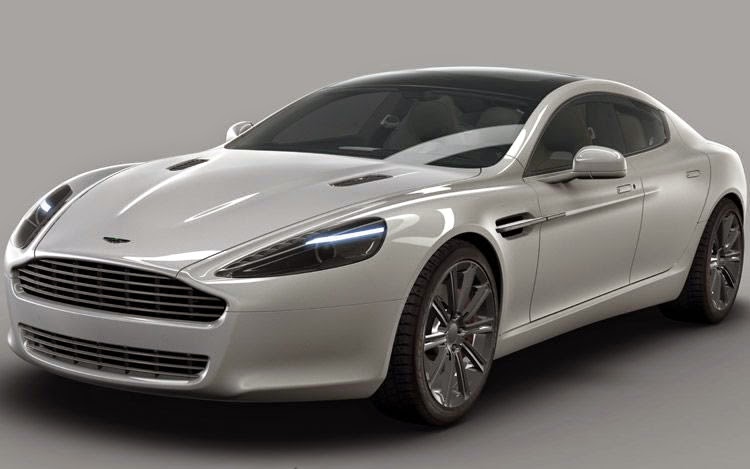
Aston Martin Chief Executive Andy Palmer says the company may build an electric version of its Rapide sports car in two to three years as a part of its plan to overhaul its lineup and add several new models.
Mr. Palmer said the company has launched a research project for the electric car and is speaking with electric-vehicle technology companies to partner with, though he declined to say which companies.
“We are looking at technologies around the world, including some pretty cool technologies coming from Silicon Valley,” he said. Tesla Motors Inc., based in Palo Alto, Calif., isn’t one of them, he said.
Mr. Palmer, who came to Aston Martin from Nissan Motor Co., where he was an executive vice president, said the company would be producing ultraluxury special editions of its current models in the short-term to generate buzz and revenue, ahead of the new models. Aston is planning a crossover vehicle as well as an executive large sedan to compete with Rolls-Royce.
Aston Martin recently revealed an all electric DBX Concept at the 2015 Geneva Motor Show.
Source: WSJ


Chris Harris takes the McLaren P1 hybrid hypercar for a drive around the UK in typical wet British weather.
The car is obviously a gorgeous piece of automotive engineering but watching this video you could be forgiven for forgetting the P1 is a hybrid. Unfortunately no mention is made of the electric powertrain until the last minute of the film when Harris hits E-mode for a short demo.
Better late than never, as the saying goes!


Daimler has picked South Korea's LG Chem to be the sole battery supplier for the automaker's new range of Smart electric vehicles, which will be launched in 2016.
LG Chem did not disclose the value or volume of the deal, but said EVs account for a small portion of about 100,000 Smart mini cars sold a year currently.
LG Chem, which is also an EV battery supplier for General Motors and Renault, said it will provide Smart EV battery cells, which will be made into packs by Daimler's wholly owned subsidiary Deutsche ACCUmotive.
Daimler is LG Chem's 13th automaker client for EV battery packs.


 Patenting everything is so 2005. Companies like Facebook and Tesla Motors have followed the lead of open-source software, and now expose hardware designs possibly worth millions.
Plug-in electric car sales in Norway continue at just above 20% (21.03%) with 2,235 registrations in February 2015. Battery only electric vehicles now account for 18% of national car sales.
The over-all #1 selling car in Norway for the second month running is the VW e-Golf with 839 units. Sales of the Volkswagen e-Golf in Feb were almost double the top selling fossil fuelled car, the Toyota RAV4 with 450 sales.
The e-Golf accounts for almost 40% of all EV sales in Norway YTD (1,718) selling 3x more than second place Nissan Leaf (556) and 4x more cars sold than the third placed Tesla Model S (392).
The e-Golf and GTE Plug-in variants now account for 70% of all Volkswagen sales in Norway.
| Pl | Norway | Feb. | YTD '15 | % | '14Pl |
| 1 | Volkswagen e-Golf | 839 | 1.718 | 39 | 5 |
| 2 | Nissan Leaf | 247 | 556 | 12 | 1 |
| 3 | Tesla Model S | 321 | 392 | 9 | 2 |
| 4 | Mitsu Outlander PHEV e) | 150 | 384 | 9 | 6 |
| 5 | Volkswagen e-Up! e) | 160 | 331 | 7 | 3 |
| 6 | BMW i3 | 126 | 227 | 5 | 4 |
| 7 | Audi A3 e-Tron | 134 | 188 | 4 | 21 |
| 8 | Kia Soul EV | 45 | 137 | 3 | 7 |
| 9 | Renault Zoe | 54 | 133 | 3 | 8 |
| 10 11 | Mitsubishi I-Miev Peugeot iOn | 32 54 | 130 114 | 3 3 | 9 11 |
| 12 | Volvo V60 Plug-In | 27 | 57 | 1 | 14 |
| 13 14 15 16 17 | Nissan e-NV200 / Evalia e) Mercedes B-Class ED e) BMW i8 Toyota Prius Plug-In Opel Ampera | 20 20 4 2 | 53 22 10 5 2 | 1 0 0 0 0 | 15 N/A 20 17 21 |
| TOTAL | 2.235 | 4.459 | 100 |
Source: EV Sales Bestsellingcarblog


Global automakers are readying a new generation of mass-market electric cars with more than double the driving range of today’s Nissan Leaf, betting that technical breakthroughs by big battery suppliers such as LG Chem Ltd will jump-start demand and pull them abreast of Tesla Motors Inc.
At least four major automakers — General Motors, Ford, Nissan and Volkswagen — plan to race Tesla to be first to field affordable electric vehicles that will travel up to 320 km (200 miles) between charges.
That is more than twice as far as current lower-priced models such as the Nissan Leaf, which starts at $29,010. The new generation of electric cars is expected to be on the market within two to three years.
To get a Tesla Model S that delivers 265 miles (427 km) on a charge requires buying a version that starts at $81,000 before tax incentives. Most electric cars offered at more affordable prices can travel only about 75 to 85 miles (121 to 137 km) on a charge – less in cold weather or when drivers have the air conditioning on.
Automakers need to pump up electric vehicle demand significantly by 2018. This is when California and eight other states will begin to require the companies to meet much higher sales targets for so-called zero emission vehicles — in other words, electric cars — and federal rules on reducing fuel consumption and greenhouse gases become much stricter.
BATTERY BREAKTHROUGHS
Tesla Chief Executive Officer Elon Musk said last week that “200 miles is the minimum threshold” to alleviate consumer concerns over EV range. There is “a sweet spot around 250-350 miles that’s really ideal,” he said.
Musk has promised a more affordable Tesla, the Model 3, which will sell for around $35,000 and provide a driving range of 200 miles or more. That car is slated to begin production in mid-to-late 2017.
However, GM says it plans to field a 200-mile electric car, the Chevrolet Bolt, by late 2016.
The Bolt will use an advanced lithium-ion battery pack developed by Korea’s LG Chem, which also supplies batteries for the Chevrolet Volt hybrid. The newer batteries are said to have much higher energy density and provide much longer range between charges, thanks to breakthroughs in battery materials, design and chemistry, according to a source familiar with LG Chem’s technology.
"Several factors are at play that are landing at this 200-mile range" for a vehicle priced between $30,000 and $35,000, LG Chem Chief Executive Prabhakar Patil said in an interview. "We’ve been talking to several OEMs (automakers) regarding where our battery technology is and where it’s going."
LG Chem also supplies standard lithium-ion batteries to the Ford Focus Electric and may supply the longer-range batteries to a new compact EV that Ford is tentatively planning to introduce in late 2018 or early 2019, according to three suppliers familiar with the program.
Compared with the 2015 Focus Electric, which has a range between charges of 76 miles, the new compact electric model would have a range of at least 200 miles, the suppliers said.
Nissan and VW both have battery supply deals with LG Chem, and both are working on longer-range EVs for 2018 and beyond.
Nissan is planning to introduce a successor to the Leaf in early 2018, according to a source familiar with the program, and that model is expected to offer significantly greater range than the current Leaf, the best-selling electric car in the United States, which can go 84 miles (135 km) between charges.
The 2015 Leaf uses batteries made by a joint venture between Nissan and supplier NEC. It is not clear if the future model will shift to LG Chem, although Nissan CEO Carlos Ghosn has identified LG Chem as a potential battery supplier.
VW plans to expand its current range of electrified vehicles, including a successor to the battery-powered e-Golf in 2018 with much longer range, according to two sources familiar with the program. The current e-Golf uses batteries made by Panasonic and has a range between charges of 83 miles.
Volkswagen plans to decide in the first half of this year whether new battery technology under development at U.S. startup QuantumScape Corp, which may expand an electric vehicle’s driving distance between recharges to as much as 700 kilometers (430 miles), is ready for use in its electric cars.


Taiwan's Hon Hai Precision Industry Co Ltd, better known as Foxconn, on Monday said it has partnered Chinese social networker Tencent Holdings Ltd to develop opportunities related to electric vehicles, marking the latest tech foray into "smart" cars.
Foxconn, WeChat operator Tencent and luxury car dealer China Harmony Auto Holding Ltd signed an agreement to work together in the Chinese city of Zhengzhou, Henan province, the contract manufacturer said without detailing specifics.
The partnership would put Tencent on a par with online peers Alibaba Group Holding Ltd and Baidu Inc, which have already moved into the nascent market for Internet-connected cars vie tie-ups with major auto makers.
Foxconn said the coalition would form a working team drawing on its manufacturing capabilities, Tencent's Internet platform and China Harmony Auto's dealership network, to explore commercial possibilities in smart electric vehicles.
Foxconn announced an investment of over $800M to build electric cars in China in 2014.
Foxconn, known more for assembling the bulk of Apple Inc's iPhones, already has experience with electric vehicles having manufactured the touch screens in some cars made by U.S. automaker Tesla Motors Inc.
The absence of a carmaker from its new partnership appears to put the group on a different tack to that of Alibaba or Baidu in targeting electric vehicles.
The Chinese government has recently redoubled efforts to promote electric vehicles, renewing tax breaks and setting aggressive emission standards.
Foxconn has manufacturing operations across China and has been working to diversify from the competitive, low-margin contract business. As part of that drive, it bought around 10 percent of Zhengzhou-based China Harmony Auto last year.


Robert Llewellyn, from Red Dwarf & Fully Charged fame, debunks motoring journalists who when the Nissan Leaf was launched questioned it's battery reliability.
Of the 30,000 sold across Europe just 0.01% of batteries have been replaced since 2010. That makes the Nissan Leaf more reliable than a petrol or diesel engined car, according to industry averages.


The Highways Agency has commissioned the Transport Research Laboratory (TRL) to undertake a feasibility study into the use of dynamic wireless power transfer (WPT) on Britain’s roads.
The Highways Angency wants to understand whether WPT can be used on motorways and major A roads, so it can prepare for and “potentially encourage” greater uptake of electric vehicles (EV).
Scheduled to report in spring this year, TRL will identify two near-market dynamic WPT technologies that could be suitable in future research and trials of the technology in the UK. The feasibility study will also consider “the requirements for integration with road infrastructure and maintenance, connection to the grid and requirements for provision of power and energy”.
In addition, TRL will look into approaches by vehicle manufacturers of integration into different classes of vehicle from cars to HGVs and busses, and investigate the viability of introducing the technology.
TRL said in a statement: “The purpose of the project is not to find an alternative to current plug-in charging infrastructure but rather to develop a comprehensive charging eco-system capable of delivering power to EVs via different methods. This is to facilitate greater and more flexible use of EVs in the UK, overcome range anxiety and allow switching to zero emission for vehicle types that have traditionally been accepted as not suitable for electrification, such as HGVs and coaches.”
Once the study is completed, TRL said it could be followed by a series of off-road “test track trials and accelerated pavement facility testing”.


