VW announce Electric Phaeton sedan

In the wake of the ongoing diesel-emissions scandal, Volkswagen has announced that an all-electric Volkswagen Phaeton sedan is in the product pipeline.

"The Volkswagen Phaeton has embodied the brand's technological competence and brand ambition from the first generation onward," Volkswagen AG said in a statement. "The future generation of the Phaeton will once again be the flagship for the brand's profile over the next decade."

The Phaeton EV will lead a new VW product portfolio that features "plug-in hybrids with an even greater range, high-volume electric vehicles with a radius of up to 300 kilometers (186 miles), a 48-volt power supply system (mild hybrids) as well as ever more efficient diesel, petrol and CNG concepts," VW said.

VW talking up its zero emissions technology is no surprise, with the Porsche Mission E and Audi E-tron Quattro proving the requisite technology is being developed within the group.

Wolfsburg insiders with knowledge of Volkswagen's future model plans suggest it will share its platform architecture, electric drive system and battery technology with the upcoming Audi Q6 etron – as previewed by the etron Quattro concept at the recent Frankfurt auto show.The four-wheel drive etron Quattro uses three motors – one mounted up front sending drive to the front wheels and the remaining two sited at the rear acting on the rear wheels. Nominal power is put at 230kW, although a boosting function made available in the more sportier of two drive modes temporarily increases its maximum output to 370kW. It is accompanied by peak torque of 800Nm.

Energy to run the etron Quattro's electric motors is drawn from a liquid cooled 95kWh battery bolted to the floor below the passenger compartment. Hinting at its modular nature, Audi says the lithium-ion unit is suitable for other future electric models.

On a full charge, the battery is claimed to provide the new Audi with a range of over 500km based on the criteria used in the New European Driving Cycle (NEDC) test procedure.

Bosch working on 50 kWh battery packs weighing only 190 kg

Bosch is researching batteries that will make it possible to drive longer distances without recharging, and will also cost less than current batteries. “Our battery experts are playing a key part in paving the way for electromobility,” says Dr. Michael Bolle, president of the corporate sector for research and advance engineering at Robert Bosch GmbH. As early as 2020, Bosch batteries should be capable of storing twice as much energy while costing significantly less. The market forecasts are correspondingly bullish: ten years from now, Bosch expects some 15 percent of all new vehicles worldwide to have an electrical powertrain. As a result, Bosch is investing 400 million euros a year in electromobility.

Current challenge: heavy weight, low energy density

Dr. Thorsten Ochs, head of battery technology R&D at the new Bosch research campus in Renningen, explains what will be necessary for progress in battery technology: “To achieve widespread acceptance of electromobility, mid-sized vehicles need to have 50 kilowatt hours of usable energy.” With conventional lead batteries, this would mean increasing the weight of the battery to 1.9 metric tons, even without wiring and the holder. That is the same weight as a modern-day mid-sized sedan, including occupants and luggage. At a weight of 19 kilograms, a conventional lead battery – as found today in nearly every car for powering their starters – stores a comparatively low 0.5 kilowatt hours.

The goal: a weight of just 190 kilograms, recharged in 15 minutes

Today’s lithium-ion batteries are superior in this respect. They store more than three times the amount of energy per kilogram. At a weight of 230 kilograms, the battery of a modern-day electric car provides approximately 18 to 30 kilowatt hours. But to achieve the desired 50 kilowatt hours, a battery weighing 380 to 600 kilograms would be necessary. With his colleagues around the world, Ochs is therefore working on energy storage media with even better performance. Their goal: to pack 50 kilowatt hours into 190 kilograms. In addition, the researchers are looking to significantly shorten the time a car needs to recharge. “Our new batteries should be capable of being loaded to 75 percent in less than 15 minutes,” Ochs says.

Ochs and his colleagues firmly believe that improved lithium technology will make it possible to achieve these goals. “There is still a long way to go when it comes to lithium,” Ochs says. To make progress in this area, his team in Renningen is working closely with Bosch experts in Shanghai and Palo Alto. And as a further measure to advance lithium-ion battery research, Bosch has established the Lithium Energy and Power GmbH & Co. KG joint venture with GS Yuasa and the Mitsubishi Corporation.

More space for electrical power – thanks to start-up technology from Silicon Valley

In theory, the solution sounds simple: “The more lithium ions you have in a battery, the more electrons – and thus the more energy – you can store in the same space,” Ochs says. But because researchers need to improve cells at the atomic and molecular level, putting this into practice is a challenge. One of the main keys to achieving this goal is to reduce the proportion of graphite in the anode (the positively charged part of the battery), or do without graphite altogether. Using lithium instead of graphite would make it possible to store up to three times as much energy in the same space. Ochs and his colleagues have already developed many approaches for removing the graphite and replacing it with other materials. The Bosch CEO Volkmar Denner recently presented a prototype solution at the IAA. Thanks to its purchase of Seeo Inc., a start-up based in Silicon Valley, Bosch has now acquired crucial practical expertise when it comes to making innovative solid-state batteries. Such batteries have one other decisive advantage: they can do without any liquid electrolyte. Such an electrolyte is to be found in conventional lithium-ion batteries, where, in certain circumstances, it can pose a safety risk.

Advantages in a number of areas

Improved lithium-ion batteries would benefit not only drivers, but also all other applications that employ this technology, such as smartphones, laptops, tablets, cordless household appliances and tools, and many more products.

Tesla Model S P85D Versus a Bathurst spec Holden V8 Supercar [VIDEO]

Perfectly timed for the world famous Bathurst 1000 endurance race this coming weekend at Mt Panorama, the guys at CarAdvice.com have set up the ultimate drag race.

It's the world's fastest four-door sedan, the Tesla Model S P85D, against Australia's fastest four-door sedans, the Supercheap Auto Racing Holden Commodore V8 Supercar and the Walkinshaw Performance W507 HSV GTS.

The Tesla Model S P85D rockets from 0-100km/h in just 3.3-seconds, while the V8 Supercar does it in 3.4-seconds, but weighs just 1400kg with the driver.

Tesla Model S P85D Versus a Bathurst spec Holden V8 Supercar [VIDEO]

Perfectly timed for the world famous Bathurst 1000 endurance race this coming weekend at Mt Panorama, the guys at CarAdvice.com have set up the ultimate drag race.

It's the world's fastest four-door sedan, the Tesla Model S P85D, against Australia's fastest four-door sedans, the Supercheap Auto Racing Holden Commodore V8 Supercar and the Walkinshaw Performance W507 HSV GTS.

The Tesla Model S P85D rockets from 0-100km/h in just 3.3-seconds, while the V8 Supercar does it in 3.4-seconds, but weighs just 1400kg with the driver.

Volvo Electric Bus Promotion in Gothenburg Sweden [VIDEO]

ElectriCity is a unique collaboration that has resulted in Gothenburg's first modern electric bus route. Volvo is one of the project partners and was also involved in creating the Silent Bus Sessions, a campaign involving some of Sweden's hottest artists performing four songs for unsuspecting passengers on the silent buses on route 55.

The campaign “Silent Bus Sessions” has become a viral success. The videos, where Swedish artists Zara Larsson and Seinabo Sey perform on the new electric bus route in Gothenburg have reached 2.5 million views.

Here's a behind the scenes look at the set of Silent Bus Sessions.

Source: ElectriCity

Mercedes open to battery alliance with BMW and Audi

Daimler is open to the idea of creating an alliance between Germany's premium carmakers to manufacture next-generation batteries.

"There are commonalities between the German carmakers." Daimler CEO Dieter Zetsche said when asked whether Mercedes-Benz would consider extending an alliance formed earlier this year to buy Nokia's maps business, Here, to battery technology.

"Nokia Here led to a common approach... and there might be other areas," he told a news conference at the Frankfurt auto show, adding that any such cooperation would most likely start with the next generation of batteries.

Daimler, Volkswagen's Audi and BMW teamed up to buy Nokia Here last month for around 2.5 billion euros ($2.8 billion) in the most significant cooperation to date between the rival premium carmakers.

Daimler are currently exiting the battery cell manufacturing business by closing subsidiary Li-Tec later this year while planning to spend 100 million euros (US$125 million) in coming years to increase production of lithium-ion battery packs in eastern Germany using cells provided by South Korean based LG Chem.

Mercedes, BMW and Audi/Volkswagen all rely on Korean battery manufactures, LG Chem, Samsung SDI and SK Innovation, who between them hold 41% of global automotive battery patents for current generation battery cells.

Samsung SDI Battery Systems (SDIBS), a subsidiary formed after SDI's acquisition of Magna in May are working to strengthen the competitiveness of their European automotive battery business with a Low Pack battery designed for key customers including BMW and Audi .

Daimler CEO Zetsche suggested an alliance to manufacture next-generation battery cells which is clearly a mission critical technology for the electric vehicle industry. The battle is currently focused on solid state battery development with Volkswagen, Bosch, Samsung and General Motors all having made recent investments.

Perhaps, most noticeably, Daimler are not known to have any IP investments in this key area.

Mercedes open to battery alliance with BMW and Audi

Daimler is open to the idea of creating an alliance between Germany's premium carmakers to manufacture next-generation batteries.

"There are commonalities between the German carmakers." Daimler CEO Dieter Zetsche said when asked whether Mercedes-Benz would consider extending an alliance formed earlier this year to buy Nokia's maps business, Here, to battery technology.

"Nokia Here led to a common approach... and there might be other areas," he told a news conference at the Frankfurt auto show, adding that any such cooperation would most likely start with the next generation of batteries.

Daimler, Volkswagen's Audi and BMW teamed up to buy Nokia Here last month for around 2.5 billion euros ($2.8 billion) in the most significant cooperation to date between the rival premium carmakers.

Daimler are currently exiting the battery cell manufacturing business by closing subsidiary Li-Tec later this year while planning to spend 100 million euros (US$125 million) in coming years to increase production of lithium-ion battery packs in eastern Germany using cells provided by South Korean based LG Chem.

Mercedes, BMW and Audi/Volkswagen all rely on Korean battery manufactures, LG Chem, Samsung SDI and SK Innovation, who between them hold 41% of global automotive battery patents for current generation battery cells.

Samsung SDI Battery Systems (SDIBS), a subsidiary formed after SDI's acquisition of Magna in May are working to strengthen the competitiveness of their European automotive battery business with a Low Pack battery designed for key customers including BMW and Audi .

Daimler CEO Zetsche suggested an alliance to manufacture next-generation battery cells which is clearly a mission critical technology for the electric vehicle industry. The battle is currently focused on solid state battery development with Volkswagen, Bosch, Samsung and General Motors all having made recent investments.

Perhaps, most noticeably, Daimler are not known to have any IP investments in this key area.

Chevrolet Bolt battery cells to cost “industry-leading” $145 per kWh

General Motors told Wall Street on Thursday that when it introduces the 2017 Chevrolet Bolt small electric car next year, it expects the cost of its battery cells to be an "industry-leading" $145 per kWh.

The electric vehicle market has been pressured by low fuel prices in 2015. A lowering of the costs of EV battery cells to $100 per kilowatt-hour by 2022 will allow EVs to compete with vehicles fueled by petroleum.

LG Chem CFO Cho Suk-jeh last year revealed the company will supply an automaker with a battery that will allow one of their models to travel more than 200 miles (320 km) on a single charge but declined to say which automaker. Although all indications point to LG Chem supplying the Bolt battery, GM do have other options.

In competition with firms like Bosch and Volkswagen, General Motors, via their GM Ventures subsidiary, have made several strategic investments in solid-state battery start-ups such as Sakti3 and Envia Systems

GM considered Envia a very strong prospect for providing the Bolt battery up until it flamed out, but aside from a $15M investment from Sir James Dyson earlier this year, less is known about Sakti3.

The automaker has produced 55 prototypes of the all-electric vehicle at plants in Seoul, South Korea, and Orion Township. They have been driven hard throughout GM's Milford Proving Grounds and early results are positive, engineers say.

The Bolt is expected to go on sale in early 2017 and will have a range between charges of more than 320 km (200 miles). General Motors plan to begin building its new Chevrolet Bolt electric car in October 2016.

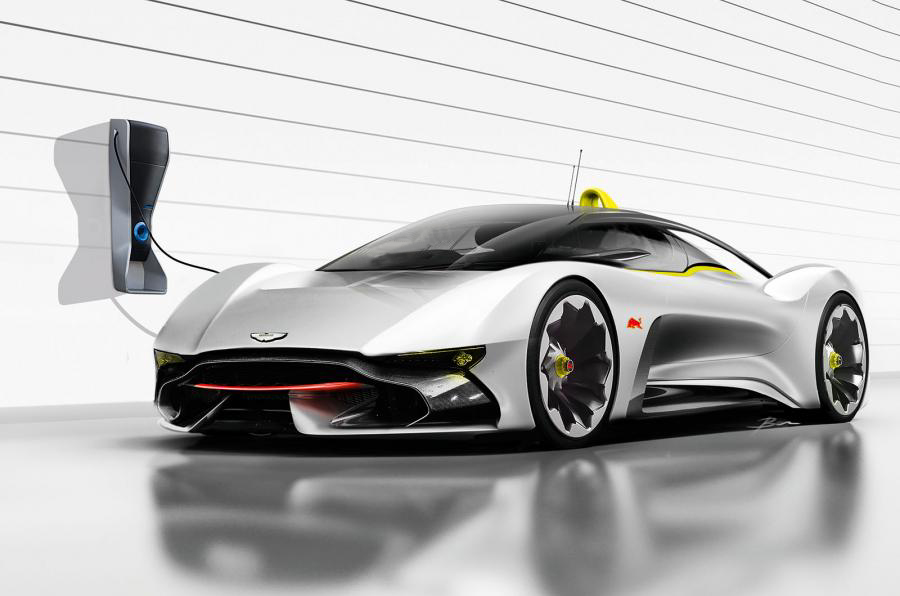
Is Adrian Newey working on the ‘Ultimate’ electric supercar with AMG?

The road car project that Adrian Newey is working on with Red Bull and Aston Martin appears to be picking up steam, and there are rumors that it could be an electric car.

Newey seems to have no interest in building a hybrid hypercar four years after the McLaren P1, LaFerrari and Porsche 918 Spyder. As previously discussed, these examples are very much first generation 'mild' hybrids.

What does interest him is a car that ​Autocar​​ says advances technology and the involvement of the driver. That would be an electric supercar. Newey reportedly wants his car to hold the same sort of place in history as Gordon Murray's McLaren F1.

Sources suggest that Aston Martin shareholder Mercedes-Benz wants to be involved in the project, both to create a connection with Red Bull’s younger audience and to have a technical involvement in what could be a landmark product. As such, it is said to be pushing for its performance arm, AMG, to work with Newey.

As AMG are responsible for designing the only production supercar with true all-wheel-drive torque vectoring (Mercedes SLS AMG Electric), any collaboration between AMG and Adrian Newey could spawn a vehicle to seriously eclipse the current generation of hybrid hypercar.