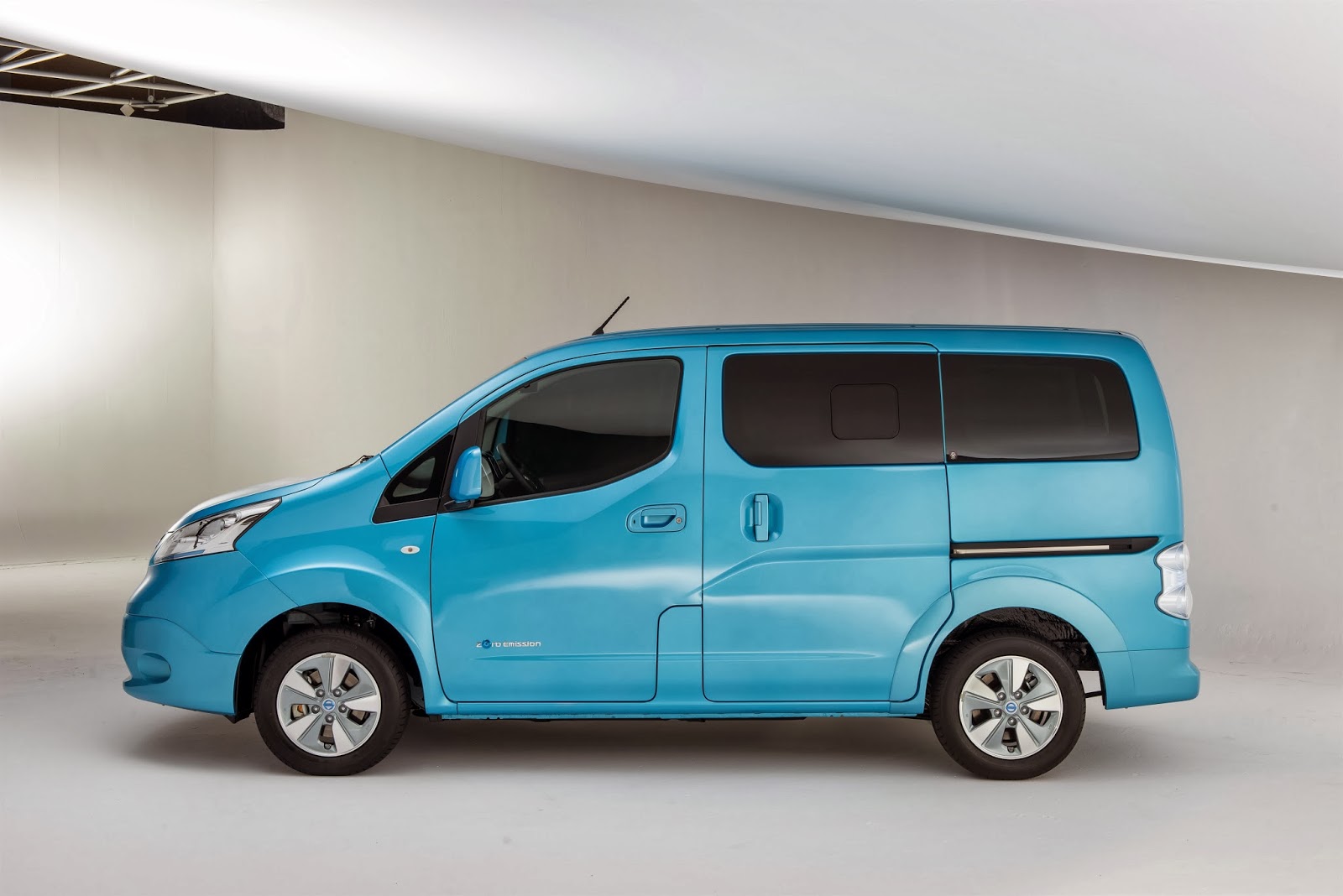
Nissan Launch the e-NV200 Electric Van @ Geneva

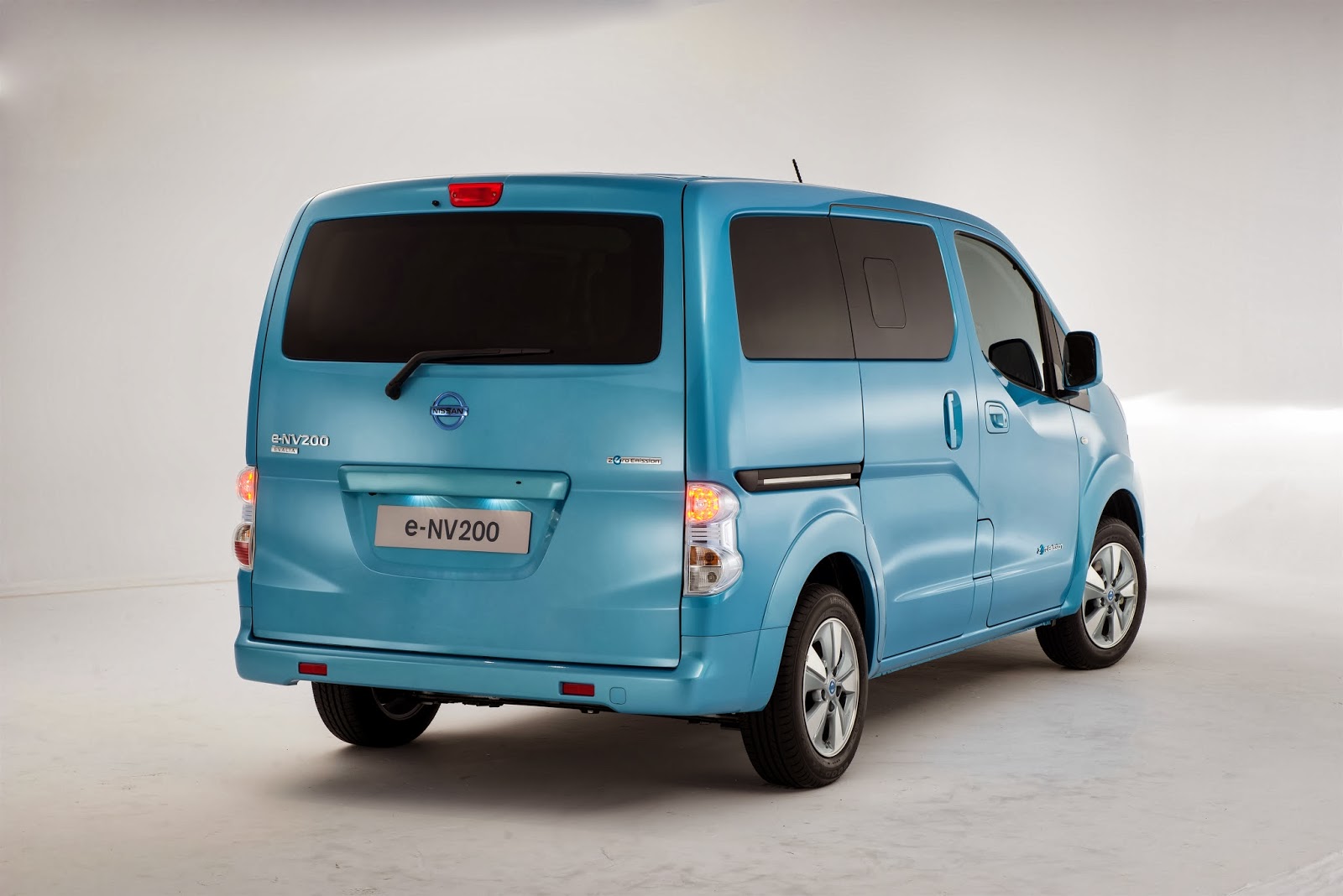
Nissan continues to pioneer the electric vehicle sector with the introduction of the Nissan e-NV200, which brings unprecedented refinement, with zero emissions and ultra-low running costs to the compact van segment With this entry, Nissan will be the first automaker to have two all-electric vehicles in its global line-up, joining the Nissan LEAF, the world's best-selling EV.

Combining the best elements of two multi-award winning vehicles - Nissan LEAF and Nissan NV200, past World Car of the Year and International Van of the Year respectively - e-NV200 is ready to change the face of light commercial vehicles forever.

The e-NV200's high performance pure electric drivetrain, based on that used in the acclaimed Nissan LEAF, is allied to the class-leading cargo volume of the NV200 to create a practical and versatile vehicle capable of carrying people or goods while producing neither exhaust emissions nor noise pollution.

When sales start in June, e-NV200 will be available as a van or as a five-seat people carrier in Combi or more luxurious Evalia guises. Although mainly targeted at businesses, e-NV200 will also appeal to private users with large families. The e-NV200's homologated NEDC range (170kms) is greater than the average 100km daily driving distance of over half the fleets who utilise this class of van and the payload and cargo area is the same as NV200's.

The battery can be recharged overnight using a domestic 16-amp single-phase 3.3 kW supply which reduces to four hours if a 6.6kW/32-amp supply is used. A dedicated CHAdeMO DC 50 kW quick charger can recharge the battery from 0-80 percent in just 30 minutes or less if the battery is already partially charged. More than 1000 public CHAdeMO quick chargers are now installed across Europe, in addition a number of companies have installed their own dedicated quick charging facilities at their home depots or offices.

"The e-NV200 goes into a totally different market segment to the Nissan LEAF and alongside the world's best selling electric vehicle will help us continue to lead the EV revolution. To do that we haven't simply converted the NV200 to electric, we have thoroughly re-engineered to create a product that isn't just a good electric van, it is a fantastic van by any standards said Guillaume Carter, senior vice president of Sales and Marketing for Nissan Europe.

Director of Electric Vehicles for Nissan Europe, Jean-Pierre Diernaz is excited by what the e-NV200 brings to the range, commenting: "The proven and highly effective electric powertrain driving e-NV200 is ideally suited to the typical stop/start daily routine of a working vehicle. With no exhaust or noise pollution, e-NV200 is environmentally and people friendly, while the lack of fatigue-inducing noise and vibration from the drivetrain coupled with the single-speed transmission will provide genuine benefits to every hard working delivery or taxi driver. Fleet operators, meanwhile, will love the low running costs."

Although based on existing hardware, e-NV200 has undergone a full engineering development programme as if it were new from the ground up. The drivetrain has been re-engineered in a number of significant areas to suit its new role, while changes have been made to the vehicle shell to ensure there has been no compromise to NV200's cargo space.

The LCV version still has a cargo volume of 4.2m3 and can carry two standard Euro pallets, while sliding side doors on both sides and wide opening rear doors ensure that loading and unloading is as easy as possible.

A comprehensive ‘real-world' test programme has been undertaken in Japan and Europe with pre-production models handed over to internationally known companies - including FedEx, Coca-Cola, DHL, IKEA, British Gas and the Japan Post Office - to operate as part of their everyday fleets. Feedback from drivers and fleet managers has been used to fine tune e-NV200 before series production began at Nissan's major LCV facility in Barcelona, Spain.

"We believe e-NV200 will genuinely change the make-up of light van and taxi fleets as well as changing the environment in the heart of our cities," added Diernaz.

Nissan e-NV200 in detail

Although based on significant elements of two existing vehicles, e-NV200 is a bespoke vehicle with a unique part count of more than 30 percent.

Differences between e-NV200 and NV200 include striking visual changes, a re-engineered chassis, interior revisions, a new battery pack, a higher capacity regenerative braking system and other modifications to ensure e-NV200 is better suited to its likely role as a city-based delivery vehicle for cargo and people.

The result is a near silent and emission-free future-proof electric vehicle that promises genuine advantages for drivers, fleet operators, passengers, pedestrians and city residents alike.

The most obvious visual difference between e-NV200 and its conventionally powered sibling is the adoption of Nissan's EV "face," familiar from Nissan LEAF. The central charging doors and unique blue tinted LED headlights give a modern look and distinct identity from its ICE sibling.

Blue-tinted arrow-like positioning lamps sit within new, crescent-shaped, headlamps that incorporate a distinctive ice blue light colour. LED bulbs are used in the rear lights of all versions as well as at the front on passenger models. The "electric" blue theme extends to the e-NV200's badging.

Inside there's a new instrument panel with a digital read out, while the gear selector has a simplified look and feel - shifting like a conventional automatic rather than the computer-style joystick of LEAF - to help drivers regularly moving from internal combustion engined vans into the e-NV200 acclimatise more quickly.

Digital information includes clear and easy-to-assimilate displays for vehicle speed, state of charge and vehicle range while a power meter shows the state of motor output/regeneration. The instrument panel is completed by a multi-function display that provides other time, distance and speed information.

Mechanically, e-NV200 owes much to the Nissan LEAF with independent front suspension by MacPherson strut from the world's best selling EV. LEAF also provides the drivetrain, including its recently introduced second generation 80kW AC synchronous motor, which is now fully integrated with the battery charger and inverter in one compact, self-contained unit.

There are some significant changes, however, for e-NV200. Most notable is the Lithium-ion battery which has been changed to allow it to fit under e-NV200's floor without compromising the cargo area. The new pack, which is built at Nissan's plant in Sunderland, UK, and assembled in Barcelona, has the same number of modules - 48 - as in Leaf and the same 24kWh capacity, but is packaged differently.

The battery module is set low in the vehicle under the load floor and is mounted in a reinforced zone for extra safety protection in the event of an impact. The battery mounting assembly also helps boost the torsional and lateral stiffness of the vehicle by 20 percent and 35 percent respectively over NV200.

With a low centre of gravity, the ride and handling levels of e-NV200 are exceptional, even by the standards set by the NV200 while the instant torque delivery typical of an electric vehicle means the battery-powered version accelerates faster: its 0-100km/h time is quicker than the 1.5 dCi-powered NV200, with final figures confirmed later this year.

Another drivetrain change over LEAF determined by e-NV200's likely usage pattern is a new braking system with a higher regenerative capacity. This takes advantage of the vehicle's typical stop/start city driving modes, while Hill Start Assist is fitted as standard, holding the vehicle for two seconds after the footbrake is released to allow smooth starting.
Nissan LEAF Sales Rise 1,000% In January 2014

UK Nissan LEAF sales for January 2014 clocked-in at 1000% higher than the same period in 2013.

The all-electric hatchback accounted for nearly 75% of fully electric vehicle sales for the month. The Nissan LEAF has now reached 3,000 sales in the UK and 100,000 worldwide.

Since its launch in December 2010 Nissan has seen the pace of sales increase consistently and 2013 was a record year. The LEAF is now available to customers in 35 countries on four continents. In Norway, the Nissan LEAF topped sales charts, out-selling conventional gasoline powered vehicles in October 2013.

After leading the era of electrification in passenger vehicles with the LEAF, Nissan will in 2014 bring an all-electric light commercial vehicle to market. The e-NV200 will go on sale in Europe and Japan.

Drayson Racing B12 winter tests continue at Silverstone

Drayson Racing ran its World Electric Land Speed Record-breaking Drayson B12/69 EV for the first time this year at Silverstone, as its winter test programme continues to develop the world’s most advanced electric-powered racing car.

The aim of the latest test was to try a variety of new motor cooling options and traction control settings – and the extremely wet track conditions were ideal for gathering valuable wheelspin data from the B12’s one thousand data channels.

This time running the B12 with reduced aero and power, test driver Jonny Cocker recorded the same lap time around the Silverstone National Circuit as he’d achieved at a test before Christmas, when the prototype ran in full downforce specification and with full power.

Standing water prevented the B12 reaching its top speed of 220mph, but the pioneering Drayson Racing Technologies technical team were delighted with the results of the test – as the duty cycle of the powerful electric motors and cooling challenges faced doing a land speed record attempt are completely different to running circuit laps.

Consumer Reports: Tesla Model S as “Best Overall” Automobile [VIDEO]

Electric luxury car Tesla Model S was named by Consumer Reports magazine on Tuesday as its overall top pick for 2014, while Japanese models took just five of the top 10 spots, their worst showing in the 18-year history of the annual rankings.

The battery-powered Tesla Model S was chosen best overall for its "exceptional performance and its many impressive technological innovations," Consumer Reports said, noting it was "pricey" at $89,650.

Tesla Motors said it expects to deliver about 35,000 of the model this year. By comparison, the best-selling car in the United States last year, the Toyota Camry, sold about 408,000 in 2013.

Consumer Reports hasn't named a best overall since a Lexus model took the top honors in 2010.

Garlits 200 Mph Dragster gets Lawless V-6 Electric Motor Installed

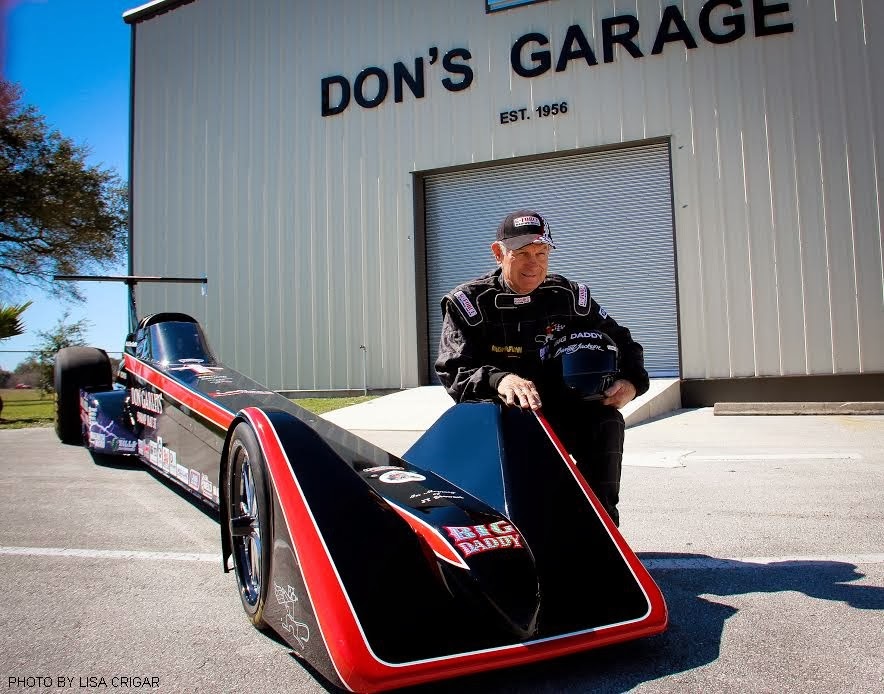
SR-37, the Quest for 200 MPH on Batteries Dragster, is being configured with its own 1.5 megawatt power grid for 2014. At the famed Don Garlits Museum of Drag Racing in Ocala, FL, a technical team from Lawless Industries (Poland, OH) has outfitted SR-37 with a large battery-powered motor system befitting the largest name in drag racing sport.

Lawless Industries, using six (6) 7.5” series-wound DC motors custom-built by General Electric and donated by Crescent Electric Supply (East Dubuque, IL), carefully modified the motor package for drag strip use in SR-37. Motors were tuned with a splined shaft for high torque output, internal motor wiring and insulation improved for high load, brush timing advanced to synchronize the 6-pack, and the package rigorously unison-tested prior to assembly into the dragster. The completed Lawless V-6 electric motor assembly has been final-fitted into the SR-37 digger’s rear engine motor compartment and engaged to the Goethe Enterprises driveline directly behind. Motor control for Big Daddy is provided by Manzanita Micro “Zilla” controllers. The entire motor package is engineered so that each motor can be driven by over 200 horsepower for a 200 MPH+, 6-second run down the 1/4 mile asphalt strip.

The distinctive side pods of SR-37 will conceal the source of the massive power. A custom one-off multi-cell Lithium Polymer battery system engineered by Derek Barger/HighTech Systems LLC of Colorado will produce 1500 kilowatts (1.5 megawatts) of instantaneous launch energy for the digger, a total power source of over 2000 HP! The array is comprised of (4) packs, (2) per side pod, and operates at a peak voltage of 420V. Total battery power weight is 500 pounds, about the same as a fully dressed Top Fuel engine. The entire battery array can be fully recharged and ready for the next run in as little as 5 minutes.

The SR-37 Quest for 200 MPH on Batteries BEV Dragster has it all: Big Daddy Don Garlits, 1500 kilowatts, over 2000 horsepower, starting line launch times nearly as quick as a Top Fuel dragster, energy cost per run-about 25 cents.

The team hopes to commence spring testing soon with a build-up to full sub-200 mph 1/4 mile runs. The summer event schedule for record runs is being developed and will be announced during the test program.

Tesla, Apple Merger Deal ‘Unlikely’ Says Elon Musk [VIDEO]

Tesla CEO Elon Musk has confirmed that his company has met with Apple but added that it is "very unlikely" that Tesla would be bought by the company.

“We had conversations with Apple,” Musk said in an interview with BloombergTelevision. “I can’t comment on whether those revolved around any kind of acquisition.”

When asked if the electric automaker is for sale, Musk answered, “I think that’s very unlikely because we need to stay super focused on achieving a compelling – creating a compelling mass market electric car. And I’d be very concerned in any kind of acquisition scenario, whoever it is, that’d be become distracted from that task which has always been the driving goal of Tesla.”

Last week, the San Francisco Chronicle reported that Tesla met with Apple’s top deal maker Adrian Pernica leading to speculations of a possible Apple acquisition of the electric car company that has been going from strength to strength. The report also caused Tesla shares to soar as much as 11 percent to an all-time high of $215.21 on Thursday. The shares closed at $209.97, up 8.4 percent.

Yamaha Select Zytek Powertrain for MOTIV.e city car

New Zytek high-efficiency electric powertrain selected for Yamaha’s innovative MOTIV.e city car concept.

Yamaha’s new MOTIV.e city car concept, shown at the Tokyo motorshow, will be powered by an advanced electric drive from Zytek that employs a range of new design approaches to minimise the cost, weight and size of the system while maximising the performance and range. By supplying a number of core high voltage components as an optimised system, Zytek is also minimising the time required for vehicle development.

MOTIV.e comes from the partnership between Yamaha and Gordon Murray Design, using Murray’s revolutionary iStream® manufacturing technology to deliver a highly efficient yet fun-to-drive electric vehicle at an affordable price. Zytek’s sales and marketing director, Steve Tremble says that taking a fresh approach to the powertrain is central to achieving these goals.

“Yamaha wanted the vehicle to reflect the company’s reputation for outstanding engines,” he adds. “Interpreting this in an electric vehicle has driven excellence in performance and driveability, but also in weight reduction and efficiency to build on the potential of iStream to deliver an agile drivers’ car as well as maximising the range.”

Zytek supplies the electric motor, paired with a reduction gearbox from Vocis, and the electronic vehicle control module (EVCM) which provides the interface between the powertrain and the rest of the vehicle. The low cost power electronics is manufactured in high volumes by Zytek’s technical partner Continental. In keeping with the light weight and high efficiency targets for the MOTIV.e, the 25kW motor revs to 15,000rpm, much higher than comparable units, and drives through a single-speed reduction gearbox to give the required wheel speed. Increasing motor speed allows the electric engine to be smaller, lighter and more cost-effective than previous-generation units.

“The motor weighs just 13kg, the gearbox just 11kg,” explains Zytek’s engineering program manager, Neil Cheeseman. “These are components that you can pick up with one hand.”

Cheeseman believes the power electronics also set new standards for weight and packaging. The inverter, for example, weighs just 7.5kg “By making everything in house, Continental has eliminated many of the compromises that stem from using bought-in components,” he said. “Their substantial investment in power electronics has delivered a scalable, power-dense and cost-effective product range that is already proven on everything from small city cars to hybrid commercial vehicles.”

The Zytek EVCM is unique, being built on an electronics platform that duals as a development tool and a cost-effective production unit complying with all relevant automotive standards. Zytek says that unlike other dual-purpose systems that are suitable for production, their unit is cost-competitive with bespoke production technologies. It is also thought to be the only EVCM that takes a big further step in powertrain control integration by including thermal management within the decision-making algorithms.

“This is a new generation of EVCM that integrates torque arbitration, temperature control and voltage management to allow better decision making,” Cheeseman explains. “It optimises the driver’s torque request based on a broad range of parameters including battery charge and temperature and the grip available at the tyres to support control. By integrating these decisions, we can provide more with less to improve both the driving experience and the range while reducing the size, weight and cost of the power electronics and battery pack.”

Electric Nissan e-NV200 van on sale in May

The new e-NV200 is based on Nissan's existing NV200 van but, it features the electric drive system from the Leaf.

Nissan will initially offer the e-NV200 in van and five-seat people carrier variants. Using the Leaf's electric motor and battery pack will grant it around 107bhp and 207lb ft, and the range has previously been claimed to be equivalent to the Leaf's - around 80 miles in real-world conditions.

The e-NV200 is targeted primarily at businesses. Official pricing is yet to be confirmed but Nissan had said the initially higher price would be offset by a "reduction in operating costs", compared to a standard diesel van. Currently, the diesel NV200 is priced upwards of £13,585.

Kickstarter: An Unpretentious Guide to Electric Vehicles [VIDEO]

Here's a unique way to promote Electric Vehicles!

Los Angeles based Ayumi Kim works for a certain well-know California based electric vehicle manufacturer and initially got the idea to start this project as a way of sharing some of the left-field questions about electric vehicles she gets asked on a daily basis.

Ayumi, along with illustrator friend Sarah, have written a humorous FAQ that answers such real-world concerns as ""Can you plug a chainsaw into the cigarette lighter?" or "What happens if I hit a wombat with this car?"

Most of the booklet IS kid friendly, it being a coloring book and all, but there may be one or two questions that are PG.

The girls are looking to raise the modest sum of $3,500 to cover printing costs so if you're looking for a way to promote the cause and help them publish "educational materials to promote sustainability and green thinking" a pledge of US$15 will secure a copy.

Source: Kickstarter

DENSO to Test Wireless Charging System

Global automotive supplier DENSO Corporation will begin a ten-month field test of its wireless battery charging system in Toyota City, Aichi Prefecture, Japan. The field test is intended to identify any potential operational issues and also look at ways to enhance the convenience of wireless charging. The field test will begin on Feb. 24 and end in December 2014.

How it works:

When there are two coils apart, electric current can flow through one coil by applying electricity to the other coil. The wireless charging system uses this mechanism to wirelessly transmit power from a power transmission pad on the ground to a power-receiving pad equipped on a vehicle.

For the test, DENSO has equipped a Yamato Transport delivery truck with a power receiver that will wirelessly receive the energy from a power transmission pad located on the pavement of a 7-Eleven convenience store parking lot. The electricity charged in the truck’s battery is then used to power the refrigeration system while the engine is stopped during pickups and deliveries. Not only will the system improve convenience, but it will also help reduce emissions of refrigeration trucks since the battery will continue to power the refrigeration system even when the engine is off.

DENSO has been developing the wireless charging system with the goal to commercialize by 2020. DENSO is working to reduce the size, weight, and cost of the system while also looking to enhance convenience.

In Japan, Toyota City is designated as an experimental city for next-generation energy sources and social systems, a program which has been promoted by Japan's Ministry of Economy, Trade and Industry since April 2010.

Tesla Q4 earnings $46 Million with 6,892 Model S vehicles sold

Tesla today announced that is has earned $46 million in the 2013 4th quarter, and sold 6,892 vehicles. In total, Tesla has sold 22,477 vehicles and has in roughly 2.5 billion in non-GAAP sales. $TSLA stock quickly jumped to a record high of $217 with the announcement that a new assembly line will be arriving. The company plans to have the new assembly line pump out 1,000 vehicles per week by 3rd quarter.

Tesla sales in China have really taken off, and CEO Elon Musk mentioned the company is having trouble meeting demand, with orders being pushed to spring.

Meanwhile, the CEO says demand for Model X reserverations is still high.

Source: Tesla Motors

Saleen Adds AC Propulsion to Design Team for New Electric Sports Car

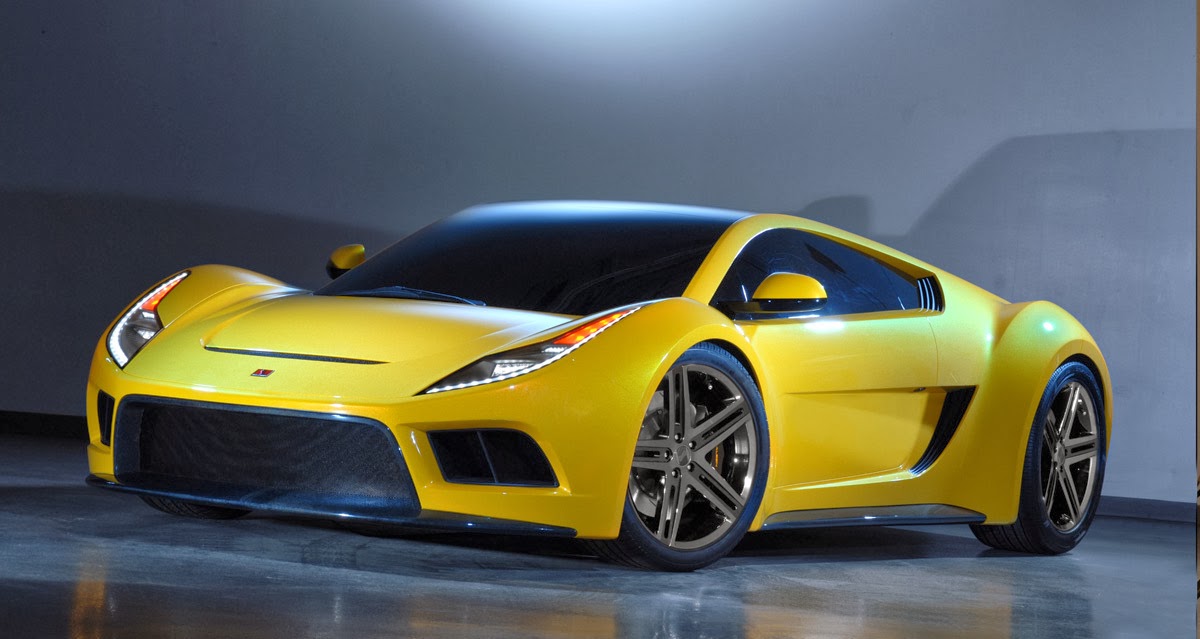
Saleen Automotive has announced that the Company has added legendary electric car developers, AC Propulsion, to its design team for the new Saleen Electric vehicle. AC Propulsion will provide the technology and implementation of the powertrain and battery for the project.

AC Propulsion is well-known for providing its proprietary technology to the Tesla Roadster, which was developed by Tesla Motors to mass-produce AC Propulsion's tzero concept car. AC Propulsion also provided drivetrains and support for the BMW all-electric Mini E. The Company specializes in alternating current-based drivetrain systems for electric vehicles. The company produces electric vehicle drive systems featuring high performance, high efficiency induction motors and integrated high power battery charging.

"We are assembling a team and vehicle that combines the finest technology and design available," stated Steve Saleen, CEO, Saleen Automotive. "AC Propulsion is a proven leader and seminal thinker in electric car creation and we believe will greatly assist us in introducing a revolutionary vehicle to the market. I believe we have secured the very best partner possible for our powertrain and battery."

"AC Propulsion is excited to partner with automotive legend Steve Saleen for his new electric vehicle project," stated Paul Carosa, President, AC Propulsion. "Mr. Saleen is on the verge of creating a vehicle unlike any on the market today, a tremendous new entry in the fast growing electric car market that lives up to the Saleen name and reputation. We'll do our part to make it even better."

Self-propelled electric tank tread All-terrain vehicle [VIDEO]

Meet the MTT-136, a self-contained battery powered electric tank track. Developed by Canadian Inventor Yvon Martel, the tank track has different attachments and can be used for towing, pushing and grading on virtually any terrain.

The specs claimed in the video are battery dependant, with recharging time varying from 15 minutes to eight hours and range is a similarly variable 45 to 210 kms. The device as shown in the video weighs 280 lbs (127 kg)

ABB to supply fast chargers for Daimler/BYD’s DENZA EV

ABB has announced it will enter into a partnership with Shenzhen BYD Daimler New Technology Co to supply direct-current fast chargers over the next six years.

The announcement said the agreement will result in the world's largest fast-charging network for electric vehicles.

According to the two companies, the wall-mounted chargers will have a number of innovations designed for user convenience and safety including a mobile app that allows cloud-based remote monitoring and control of charging sessions.

First deliveries are expected by the middle of the year. The chargers will be sold through BYD-Daimler's Denza dealerships along with the vehicle.

The first Denza dealership will open in Beijing and more dealerships will be built up simultaneously in Shanghai and Shenzhen.

Established in 2010 between BYD Co, a leader in China's electric vehicle industry, and German automotive icon Daimler AG, BYD-Daimler was the first joint venture in China specializing in developing and producing new-energy vehicles.

The joint venture's Denza brand launched last year will have its world premiere at Beijing auto show in April. It is slated to go on sale later this year, according to an earlier announcement.

Ulrich Spiesshofer, CEO of ABB Group, said at a news conference in Stockholm that he is confident about the deal with BYD-Daimler.

"We are honored to be a partner in this venture with BYD-Daimler to move urban transportation forward in a more sustainable way. By combining car and fast charger sales, Denza is taking a bold step to address a key obstacle for potential electric car buyers," said Spiesshofer.

"ABB's electric vehicle charging solutions have been expanding rapidly worldwide as the underlying technology combines our key strengths in power electronics, software, service and power distribution."

The fully electric Denza is designed for journeys of more than 250 km and will be among the first long-range electric vehicles on the Chinese market.

Market research shows that consumers value long drive ranges but at the same time expect short charging times.

Denza will offer its customers the convenience of charging their cars in a short time at home, at the workplace or at compatible public places, according to BYD-Daimler.

"The Denza represents a significant step in sustainable transportation for the Chinese automotive market. It was vital that we have the right partner to support this innovative concept," said Arno Roehringer, COO of BYD-Daimler.

"ABB is the ideal technology partner for us as they have proven themselves with electric vehicle chargers in China as well as globally and - equally important - the service to install it," he added.

The Chinese government adopted a GBT standard for direct-current fast charging to encourage technical innovation and stimulate market acceptance of electric vehicles.

Analysts said that urban charging infrastructure is key to widespread acceptance of electric vehicles by consumers.

The GBT standard will give Chinese consumers the option of charging their vehicles at home or in public, with DC fast charging expected to be rolled out in the near future.

Experts say China's electric vehicle market could quickly gain momentum due to technology, market innovations, the GBT national fast-charging standard and favorable incentives.

ABB has worked on pilot projects with local automakers and utilities in China since 2010. In 2013 it began to build up a local electric vehicle organization to support growth including R&D, manufacturing, logistics and services.

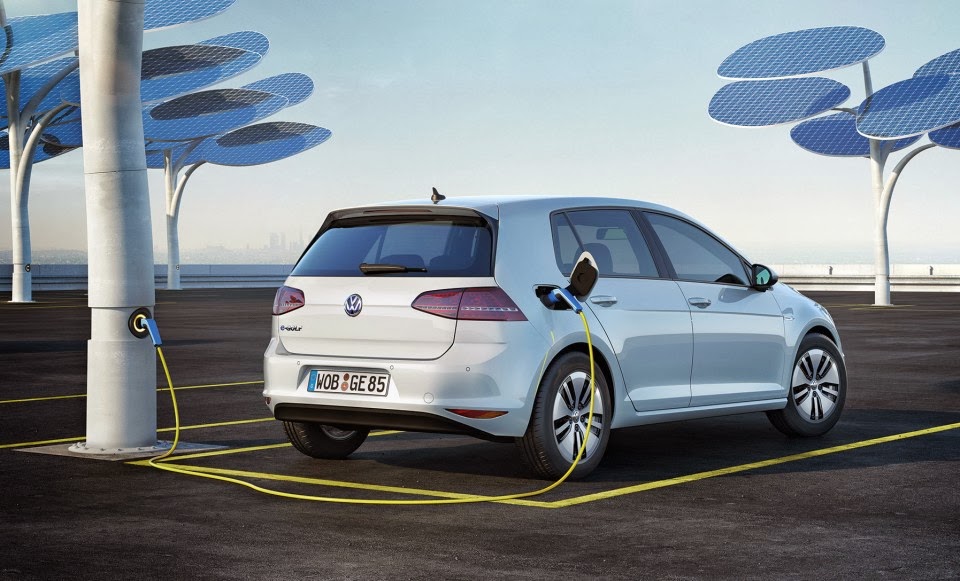
Volkswagen launch e-Golf in Germany with 190 km range

The Golf is the most successful European car of all time. In launching the new e-Golf, Volkswagen is now bringing the bestseller onto the market as a full production electric vehicle as well. The especially agile and efficient compact car supplements the highly economic fleet of 3 Euro vehicles and boasts an extensive range of standard features. The e-Golf can be immediately recognised by its signature LED headlights and is available from €34,900.

In launching the e-Golf, Volkswagen is bringing its second electric vehicle onto the market inside six months. The agile and efficient e-Golf impresses with best-in-class qualities from the off, leading the way with low power consumption of 12.7 kWh/100 km. In addition to the environmental aspect, the practically silent and thus gliding e-Golf is also very inexpensive to run, as power costs are just €3.28 per 100 kilometres. Thanks to a particularly innovative overall technological system, improved aerodynamics (cw=0,281) and perfected rolling resistance, the new, all-electric Volkswagen is over 15 per cent more energy-efficient than the best steel-built direct competitor. Joining the e-up! and eco-up!, the e-Golf thus extends the Volkswagen brand's fleet of highly efficient 3 Euro vehicles.

The e-Golf is 'Das e-Auto' - it has the same handling, comfortable ride and generous amount of space that has seen the Golf so appreciated for decades by over 30 million car buyers. The e-Golf is in addition fitted with a very good range of standard features, including four doors, the high-end 'Discover Pro' radio/navigation system, heated windscreen, automatic climate control, parking heater and ventilation, leather steering wheel, aerodynamically optimised 'Astana' alloy wheels and, being used for the first time by Volkswagen, full LED headlights. Another especially economic and likewise standard feature are the LED daytime running lights, which by virtue of their signature C-shaped format immediately identify the e-Golf as a Volkswagen electric vehicle.

The electric engine delivers 85 kW / 115 PS and from a standing start develops maximum torque of 270 Nm. This deployment of power produces a superb driving performance: the e-Golf reaches a speed of 60 km/h within 4.2 seconds and after just 10.4 seconds the Volkswagen is up to 100 km/h. A fascinating factor here is the pull-away performance, which is extremely comfortable and totally free of any delay. Depending on the nature of the route, driving style and load, the range is between 130 and 190 kilometres. The new e-Golf is available in Germany now. Prices start from €34,900 (including the 8-year / 160,000-kilometre battery guarantee).