More than 400,000 Electric Cars on the Road Worldwide

The number of electrically powered automobiles worldwide climbed to just over 400,000 in early 2014. This figure, which only counts battery electric and plug-in hybrid cars, was determined in an analysis conducted by the Centre for Solar Energy and Hydrogen Research Baden-Württemberg (ZSW).

The vehicle count doubled over the twelve months of last year, increasing by an impressive 200,000 units. The Ulm-based researchers found that demand is greatest in the USA, Japan and China, which are currently the globally leading markets. Germany is just seventh in the ranking, trailing France, the Netherlands and Norway. The most telling statistic is that countries with incentive programs have taken the lead in electric mobility, a market with a bright future. The top-selling cars are made by Japanese and American automotive companies; batteries are sourced mainly from Asia.

Incentive programs have sparked a run on electric cars in the lead markets. This benefits especially the pioneering companies Nissan, General Motors and Toyota. "Efforts in Germany are also quite impressive,"says Prof. Werner Tillmetz, a member of ZSW's board of directors at Ulm. Research into batteries has been stepped up significantly and automobile manufacturers are fast-tracking the development of advanced electric drives. "However, it will take far more effort to establish a lead market in this country with an end-to-end value chain that includes the key component, the battery. Otherwise we will be left behind by the global competition."

According to ZSW's study, the number of registered electric vehicles increased at an annual growth rate of over 100 percent in the last three years. Nearly 100,000 electric cars were on the road worldwide in early 2012. A year later the vehicle count came to 200,000, and already reached 405,000 early this year. If the past three years' growth rates are sustained, then more than one million electric vehicles will be out and about worldwide as early as the beginning of 2016. The researchers tallied the global registration numbers for cars with battery powered electric drives, range extenders and plug-in hybrids. They did not count motorcycles, trucks, buses or full hybrid vehicles, of which there are now more than six million.

The United States are well ahead with 174,000 electric cars, followed by Japan (68,000) and China (45,000). Close to 30,000 electric vehicles are registered in the Netherlands, compared to just 17,500 in Germany. A similar picture emerges in the automotive company rankings. Nissan is in the lead, having sold more than 90,000 of its Leaf models, followed by General Motors with combined sales of its Ampera and Volt models topping the 60,000 mark. Toyota, which has moved over 40,000 Prius Plug-Ins, is in third place

BMW Lifts i3 Electric Car Production to Meet Rising Demand [VIDEO]

BMW has increased production of the i3 electric city car 43% to meet demand that has exceeded the carmaker’s initial expectations.

The premium manufacturer in recent weeks has raised daily output to 100 vehicles from 70 previously at the factory in Leipzig, Germany, where the model is assembled, Harald Krueger, BMW production chief, said in an emailed statement to Bloomberg.

BMW has already built more than 5,000 i3s since the start of the year, Krueger said. The current production rate translates to about 20,000 vehicles for the full year, almost twice as much as BMW’s initial sales forecast.

BMW began rolling out the i3 last November and will begin bringing the i8 hybrid sports car to market in June. Both vehicles have a carbon fiber chassis to cut weight and improve fuel efficiency. The Munich-based automaker said in February that it’s building a second production hall at a jointly run plant with SGL Carbon SE (SGL) to boost assembly of the material.

“Following the market introduction in Europe, we’re now rolling out the i3 in the U.S.,” Krueger said in the statement. “The U.S. will be the largest market for the i3.”

BMW gained as much as 43 cents, or 0.5 percent, to 90.57 euros and was up 0.3 percent as of 1:21 p.m. in Frankfurt trading. The stock has climbed 5.8 percent this year, valuing the German manufacturer at 57.9 billion euros ($79.9 billion).

Chief Financial Officer Friedrich Eichiner said in October the company was considering a production increase for the model after early demand exceeded expectations. BMW said at the time it had 11,000 orders for the compact car, which will cost $41,350 in the U.S., and aimed to sell more than 10,000 in 2014.

“BMW invested a lot of money” on their electric-car push and using carbon fiber, said Stefan Bratzel, director of the Center of Automotive Management at the University of Applied Sciences in Bergisch Gladbach, Germany. “It was a bold move, but it also bears some risk as production is complex. They need to make this work.”

Mercedes-Benz Starts B-class Electric Drive production

Mercedes-Benz has kicked off production of the new B-class Electric Drive at its plant in Rastatt, Germany.

Set for sale in lef-hand-drive guise in selected European markets during the latter half of 2014, the five-seat MPV has been conceived as a rival to the likes of the BMW i3 and Nissan Leaf. Unlike the uniquely styled electric car competition, however, the new zero emission Mercedes-Benz is based on an existing model – the second-generation B-class.

At the heart of the new car is a lithium-ion battery produced by Tesla Motors – a company with which Mercedes-Benz has enjoyed close technical ties ever since its parent company Daimler took a minority ten per cent stake in the California-based electric car maker back in 2009.

Developing 177 hp and 340 Nm (252 lb ft) of torque, the electric motor of the car can propel it from naught to 100 km/h (62 mph) in just 7.9 seconds, while the Tesla-sourced battery can keep it on the road for approximately 200 km according to European NEDC ratings or 115 miles in US city driving.

Source: Autocar

Electric vehicles ‘will beat petrol cars’

Electric cars will be so affordable and have such a long range between re-charges that petrol cars will not be able to compete in the next generation of cars, Mitsubishi Motors Corporation president Osamu Masuko predicts.

He said car and battery manufacturers were working on a seven-fold increase in battery capacity, increasing potential car driving ranges to more than 1000km, and major reductions to battery cost, one 20th of 2009 prices, that would drive the growth in electric cars.

“Once these things are achieved, the petrol engine can't compete,” he said, adding: “In 10 years time, we might see a dramatic change.”

He likened the rise of EVs to that of mobile phones, which had had a major impact on old style land-line telephones.

“The world is changing, and it is definitely advancing, this battery technology,” he said.

Mr Matsuko said the lithium-ion batteries for an electric car in 2009 cost as much as a Toyota Yaris, but had more than halved since.

He said the Japanese government had a target to reduce the cost of batteries for cars to one 20th of the price of the 2009 variety, and with seven fold capacity.

A 2009 electric car could travel 150km, he said, meaning the EV of the future should do more than 1000km.

Mr Masuko said Mitsubishi would not be able to meet future fuel consumption and emissions regulations in the United States, Europe and China if it did not introduce electric and PHEV cars into its mix.

He said car companies who failed to meet the regulations would have to pay penalties.

“Paying penalities is not realistic,” he said.

Mr Masuko said the fact that China – along with Bolivia and Chile – controlled one of the few sources of raw lithium for the making of current batteries was a concern, meaning the product was often used as a political bargaining tool.

However, Kazakstan supplies were now coming on stream, reducing the risk of supply instability, he said.

In the longer term, new battery substances possibly would further reduce the reliance on Chinese lithium, he said.

Victory for Renault ZOE on the 2014 ‘Rallye Monte-Carlo ZENN’ [VIDEO]

The prestigious Rallye Monte-Carlo ZENN saw Renault ZOE overcome horrendous weather conditions to celebrate its international competition debut with an emphatic outright win and victory on all four regularity tests.

  • 1st overall, Rallye Monte-Carlo ZENN,
  • 1st, regularity prize,
  • 1st, energy consumption prize,
  • 1st, autotest,
  • 1st, Teams' challenge.

    The Rallye Monte-Carlo ZENN (Zero Emission, No Noise) is the "greenest" segment of the Monte-Carlo New Energies Rally, the event is open only to electric vehicles. The fifth edition is holding from March 21 to 23, 2014 in Monaco and featured three special stages ranging from 46.51km to 88.08km in length. These stages were divided into a total of four regularity tests.

    The roads visited by the event included the breath-taking, twisty runs from La Turbie to Peille and from Sainte Agnès to La Turbie, high above the Mediterranean coast. Participants had to contend with a combination of torrential rain and fog on the busiest day (Saturday, March 22) which featured two special stages divided into three regularity tests. Action concluded with an autotest on the harbour-side in Monaco. 

    Almost two years after ZOE established a new 24-hour electric vehicle distance world record (1,618km) in June 2012, last weekend saw the all-electric hatchback's first attempt at the Rallye Monte-Carlo ZENN provide further eloquent evidence of its technical and dynamic qualities by securing every one of the five trophies that were up for grabs.

  • Opel to launch city electric car by 2017

    Opel plans to start selling an all-electric compact car no later than by 2017 as the automaker is striving to meet EU emission targets, Automobilwoche reported on Sunday.

    The new model, dubbed internally as battery electric vehicle (BEV), will be much smaller and cheaper than the 38,300-euro ($52,400) Ampera electric car, the magazine said without citing the source of the information.

    The GM division last September announced a price cut for the Ampera of almost 8,000 euros in Europe's biggest car market for the model which can travel between 40-80 kilometers electrically and a further 500 km with a combustion engine range extender.

    Opel did not return calls seeking comment.

    Opel's new electric model would be launched as part of a small-car offensive that in 2015 may also bring to the market the "City" vehicle, due to cost less than 10,000 euros and rival Volkswagen's Up subcompact, Automobilwoche said.

    Formula E full-power track test [VIDEO]

    Former F1 driver Jarno Trulli test drives the new Formula E car in France.

    The Italian drove the fully-electric single-seater featuring the full 200kw (270bhp) race-mode battery in mid-March 2014.

    Tesla Model S sets yet another sales record in Norway

    During the last week in March, 597 Tesla Model S were registered in Norway, giving it a market share of 12.9 percent. Number two on the list was the Volkswagen Golf with 169 vehicles.

    For the entire month of March there were 1493 Model S registered which is an all time high for any car model in Norway in a single month, beating a previous record 1454 Ford Sierra in May 1986.

    So far this year 2056 Tesla Model S were registered, surpassing the 1983 sold all of last year.

    To put this figure into perspective, the Model S has out sold Ford's entire model range (1825) so far this year.

    Tesla has a market share of 5.6 percent in 2014 and 10.8 percent in March. The U.S. electric vehicle manufacturer is the nation's sixth most registered mark in 2014!

    Porsche Considering Electric Sports Car good for 400 km range

    Porsche CEO Matthias Müller has confirmed the company is considering an electric vehicle.

    Speaking to Auto Motor und Sport, Müller said "Yes, of course we think about it." The executive went on to say he isn't a fan of range-extended electric vehicles but he's open to pure electric models.

    He believes the range needs to be at least 300 km (187 miles) to be practical with 400 km (250 miles) being the preferred option.

    Source: Auto Motor und Sport

    2015 Volkswagen e-Golf electric car review [VIDEO]

    Cars.com review the recently launched VW e-Golf.

    The Volkswagen e-Golf, the electric version of the extremely popular VW Golf, has now hit the UK market. After the government’s £5000 Plug-In Car Grant (PICG), the price comes to £25,845. That’s still a bit higher than the Nissan Leaf, which sells for £20,990, but may not be too far off for those who prefer VW and the e-Golf.

    BMW i3 Review by Grant Thomas [VIDEO]

    Grant Thomas provides a 30 minute review of the BEV version of a right hand drive, UK delivered, BMW i3.

    At approx 17:28 there is a demonstration of the i3's autonomous Active Cruise Control feature which doubles as a stop & go traffic jam assist and collision avoidance brake system.

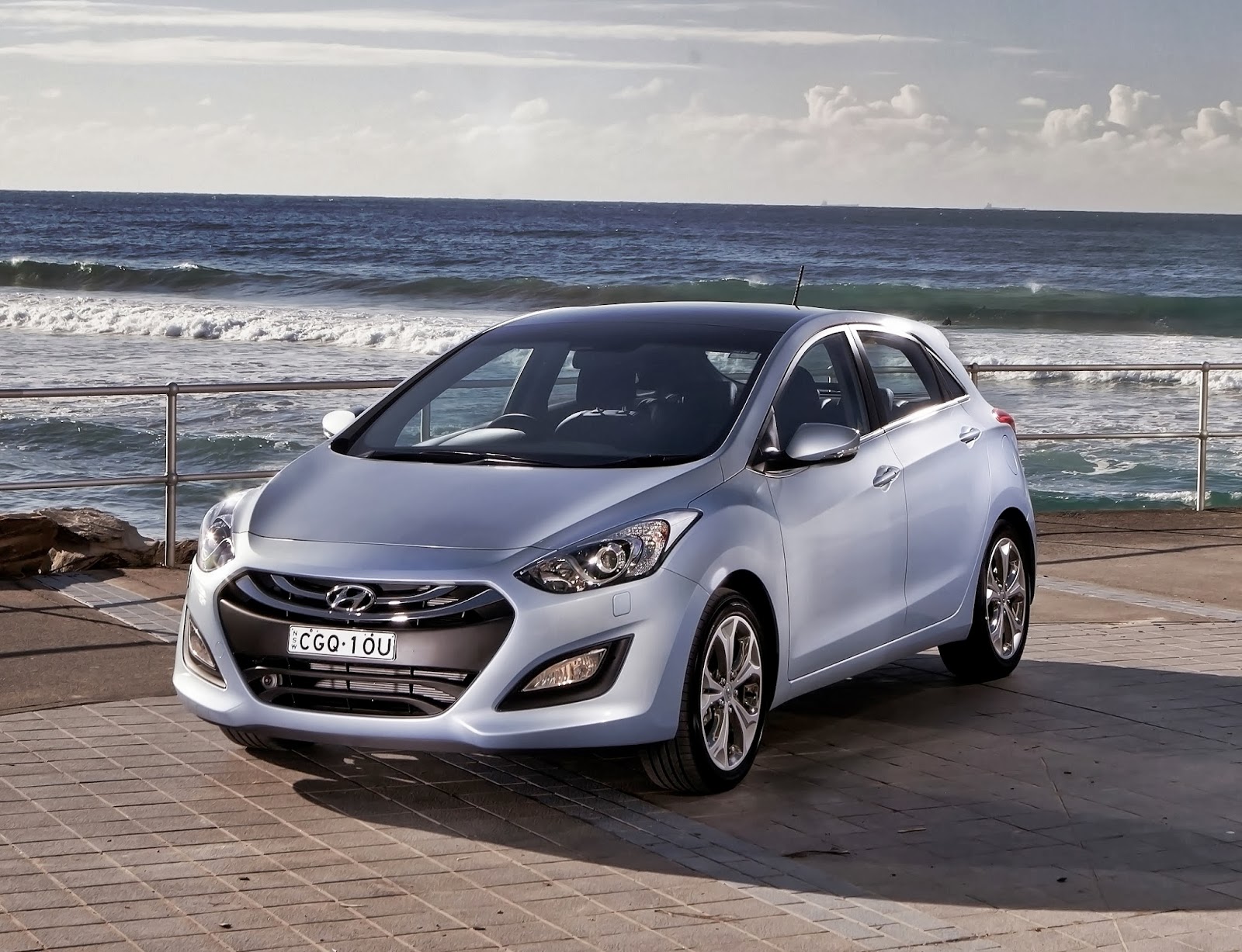
    Hyundai to launch battery-powered electric car in 2016

    Hyundai plans to start selling its first battery-powered electric vehicle in 2016.

    Hyundai has leant toward engines which turn hydrogen into electricity in response to stricter emissions regulations in markets such as the United States. Research and development partner Kia Motors Corp has focused on rechargeable batteries.

    But the division of labor is blurring at a time when the number of battery-powered EVs is on the rise. BMW's i3 and Nissan Motor Co Ltd's Leaf are widely expected to reach Korea this year - as will Kia's Soul EV.

    "There is no clear direction about which eco-friendly cars will win. We are dividing roles of Hyundai and Kia, with Hyundai launching fuel cell cars and Kia focusing on electric cars," Senior Vice President Lee Ki-sang told reporters on Tuesday.

    "But the time will come when Kia will introduce a fuel-cell car. Hyundai is also preparing to launch a (battery-powered) electric car in 2016," Lee said at the Korean launch of the Soul

    Battery Power

    Kia, 34% owned by Hyundai, has favoured battery-powered cars because they can be charged at home as well as at charging stations. Fuel-cell cars must be refilled with hydrogen only at filling stations.

    So far, a lack of charging stations and relatively short driving ranges, as well as high prices resulting from the cost of batteries, has kept the battery-powered EV market niche.

    The number of battery-powered EVs on the rise, as BMW’s i3 and Nissan Motor Co Ltd’s Leaf are widely expected to reach Korea this year - as will Kia’s Soul EV.

    At a news conference on Tuesday, Kia said it will start building a battery-powered version of its Soul compact in Korea next month. The car will be Hyundai-Kia’s first battery-powered EV export, with destinations including the U.S. and Europe.

    For this year, the global sales target is 5,000 Soul EVs, said Cho Yong-won, vice president of Kia’s Domestic Marketing Group.

    In Korea, the Soul EV will cost about half of its 42 million won ($43,650) price tag after government subsidies, similar to the higher-end model of the gasoline version.

    The car can run up to 148 km per 24 to 33 minute fast charge or four hours on slow charge.

    Test Driving the BMW i3 with the Life360 app [VIDEO]

    Mashable reporting from SXSW 2014 on a test drive of the all-electric BMW i3.

    The soon-to-be-released EV comes pre-loaded with Life360 software, an app designed to let families find each other.

    This video also includes the world's lamest attempt at a donut in an EV.

    Amsterdam Taxi Co First to run all-electric Nissan e-NV200

    Taxi Electric will be the first private taxi company to enjoy the new 100 percent electric Nissan e-NV200 taxi to its green-energy-fuelled, zero-emission fleet.

    The combination of Nissan's innovative zero-emission technology, in the form of the 100 percent electric Nissan LEAF and Taxi Electric's ground-breaking city transportation model have been a recipe for success since the start of operation in 2011. Now the two companies have teamed up again to build on this success and take the next step forward- introducing the game-changing all-electric Nissan e-NV200 taxi this summer.

    Taxi Electric, based in Amsterdam operate a fleet of 25 Nissan LEAF vehicles and were the first private taxi service to switch to a fleet of 100% electric taxis in November 2011. The Dutch company's fleet of Nissan LEAF's have now amassed a trouble-free 1.5 million km in taxi operations- clear proof of the electric vehicle's high quality and reliability.

    Andy Palmer, EVP Nissan said: "Taxi Electric was one of the first electric taxi companies in the world, and I've been impressed with their progress since their launch two years ago. They were the first to prove that zero-emission taxis - in the form of Nissan LEAFs - are a viable alternative. They have covered an astonishing distance in their fleet in such a short time and have shown just how reliable our electric technology is in a demanding environment. Their pioneering spirit closely matches ours and we are certain they will continue their success with the ground-breaking Nissan e-NV200."

    Ruud Zandvliet, founder of Taxi Electric added: "Two years ago we started with 10 Nissan LEAF. Each of these travelled well over 100,000 km and proved to be extremely reliable. Since last summer demand for our taxis is growing rapidly which allowed us to double our fleet. We are very excited about the e-NV200 as it is designed to be a taxi. This will improve our offering and open new business opportunities for us."

    Taxi Electric will not be alone in making the Nissan e-NV200 part of their taxi fleet, with the city of Barcelona having signed a memorandum of understanding with Nissan to promote it as a taxi for the Spanish region. Global production of the Nissan e-NV200 begins in May this year, with sales starting in the summer.

    Toyota Launch 3 wheeler i-Road on public roads in Japan [VIDEO]

    Residents of Toyota City, Japan, might be wondering what they just saw on the street. If it had three wheels and was leaning around a corner, it was the "i-Road", Toyota's ultra-compact all-electric, all-fun concept.

    On Sunday, the i-Road, which weighs a mere 300 kg and is less than 90 cm wide, was let loose on public roads at an event to mark its introduction into "Ha:mo", Toyota's optimized urban transport system. Soon, even more i-Roads will be zooming around Toyota city when they are made available to residents at vehicle-sharing stations. And later this year the lucky residents of Grenoble, France, will also be able to have some three-wheeled fun, thanks to a vehicle-sharing project that will last until 2017.

    Besides being an absolute blast to drive, how could the i-Road actually help you out? Well, picture the following:

    You just got off work. You get a phone call. You need to get across town, pronto, because your wife just went into labor. But your car is in the shop, there's no time to call a taxi, and your co-workers with cars are stuck doing overtime. Oh, and it's raining.

    What do you do?

    In comes the i-Road to save the day. Luckily, there's a Toyota EV-sharing station by your office. Cool as a cucumber, you use your smartphone to plan your route: i-Road to the station 5 km away, and train straight to the hospital. You book the i-Road, and within a couple minutes you're weaving smoothly through the rush-hour gridlock. You get to the train station right on time, and, since the i-Road has a closed canopy, you didn't even wet your carefully groomed hair. Day saved, all thanks to the i-Road.