Nissan LEAF Sets Annual U.S. Electric Vehicle Sales Record – Again

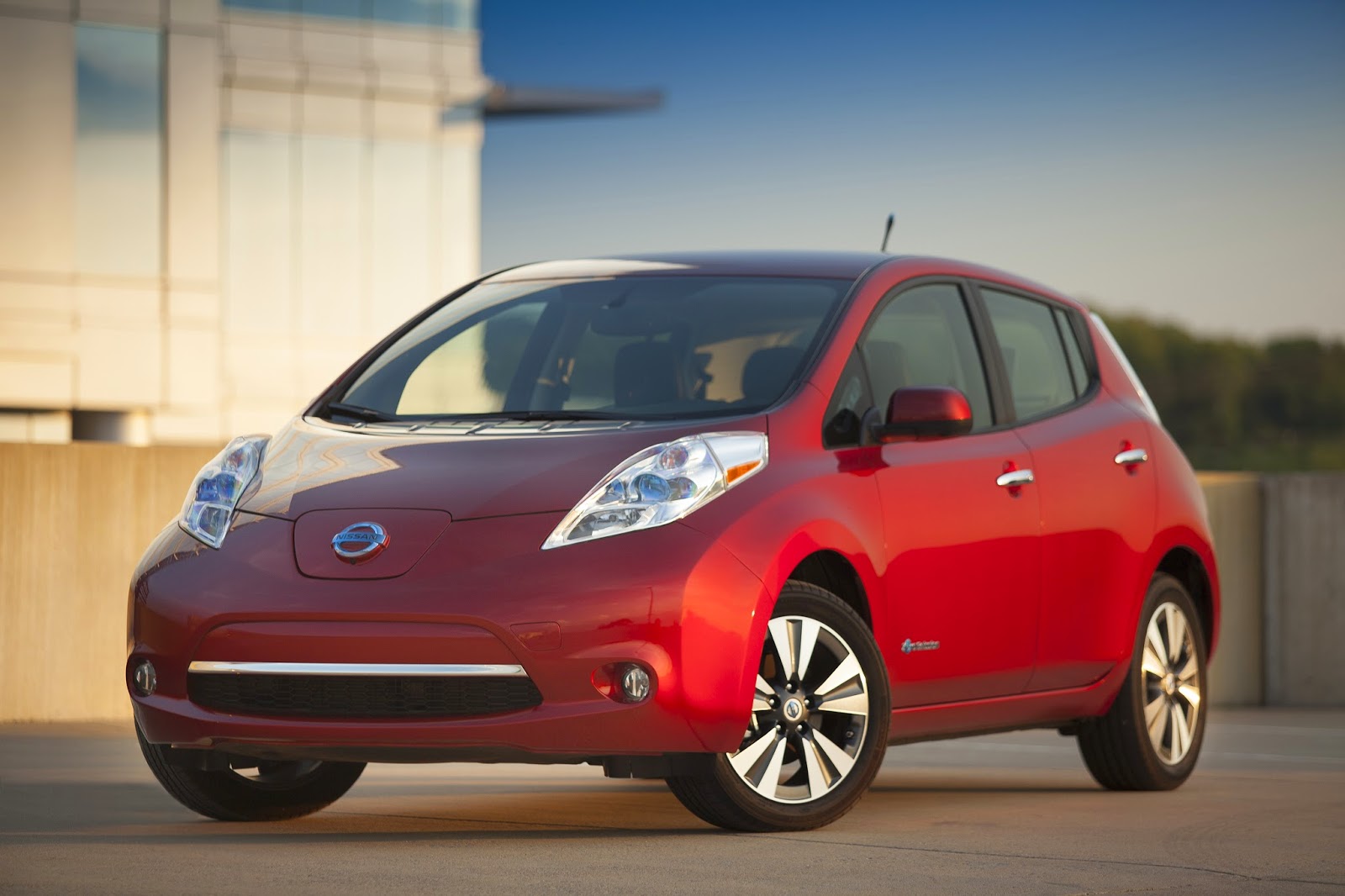
With more than two months remaining, Nissan LEAF has shattered the record for the most U.S. electric vehicle sales in a single calendar year, surpassing the previous record of 22,610 that it set in 2013.

“With nearly 20 electric cars or plug-in hybrid models on the road today, Nissan LEAF remains at the head of the class, outselling the nearest competitor by 50 percent through September,” said Brendan Jones, director, Nissan electric vehicle Sales and Infrastructure. “Since the initial launch in 2010 our primary goal is to bring electric vehicles to the mass market in a practical and fun-to-drive package, and we continue to deliver electric cars to more new buyers than anyone else.”

LEAF sales in 2014 through September are up more than 36 percent compared to the same period last year. With more than 142,000 LEAF sales globally since launch and more than 64,000 of those in the U.S., Nissan is the global leader in electric vehicles. (Nissan will announce October U.S. sales on Monday, Nov. 3.)

“Nissan LEAF owners are eager to share their enthusiasm with neighbours, friends and family, and that passion makes them some of our best salespeople,” said Jones. “We’ve seen a ‘cul-de-sac’ effect where the first LEAF owner in the neighbourhood becomes the community champion for electric cars, educating neighbours on the benefits of going electric, even sometimes handing the keys over for a test drive.”

With seating for up to five passengers, the all-electric Nissan LEAF boasts an EPA-estimated driving range of 84 miles on a fully-charged battery and MPGe ratings of 126 city, 101 highway and 114 combined.

The starting price of a Nissan LEAF is about $22,000 after the available maximum $7,500 federal tax credit, and LEAF offers the benefits of lower running costs and less scheduled maintenance. LEAF offers a wide range of standard equipment plus a variety of available premium features such as leather seats, 17-inch alloy wheels and 7-speaker BOSE® energy efficient audio system.

Volkswagen to launch over 20 electric vehicles in China by 2018

Volkswagen AG said on Tuesday it would launch more than 20 models of battery-driven cars in China over the next few years.

"In the near future, Volkswagen will be offering Chinese drivers over 20 NEVs, from small cars to large-sized SUVs, from plug-in hybrids to pure electric cars," Jochem Heizmann, head of Volkswagen Group China, said.

Heizmann was speaking to reporters in Shanghai, where the German carmaker is launching a week-long campaign to promote e-mobility in China's financial hub.

Volkswagen lags global rivals including BMW, Tesla Motors and Nissan in selling pure electric cars in China.

Volkswagen has previously said it plans to introduce into China more than 15 electric or plug-in hybrid cars for Volkswagen and other brands it owns by 2018, many of which will be locally produced.

China, suffering from worsening pollution, has stepped up efforts to promote use of electric cars, having rolled out incentive policies and tougher fuel-efficiency and emission rules. Beijing has set an aggressive target of putting 5 million green vehicles on Chinese roads by 2020.

Electric-car drivers going solar powered

Owners of electric vehicles have already gone petrol-free. Now, a growing number are powering their cars with sunlight.

Solar panels installed on the roof of a home or garage can easily generate enough electricity to power an electric or plug-in gas-electric hybrid vehicle. The panels aren't cheap, and neither are the cars. A Ford Fusion Energi plug-in sedan, for example, is $7,200 more than an equivalent gas-powered Fusion even after a $4,007 federal tax credit.

But advocates say the investment pays off over time and is worth it for the thrill of fossil fuel-free driving.

"We think it was one of the best things in the world to do," says Kevin Tofel, who bought a Chevrolet Volt in 2012 to soak up the excess power from his home solar-energy system. "We will never go back to an all-gas car."

No one knows exactly how many electric cars are being powered by solar energy, but the number of electric and plug-in hybrid cars in the U.S. is growing. Last year, 97,563 were sold in the U.S., according to Ward's AutoInfoBank, up 83 percent from the year before. Meanwhile, solar installations grew 21 percent in the second quarter of this year, and more than 500,000 homes and businesses now have them, according to the Solar Energy Industries Association.

Tofel, 45, a senior writer for the technology website Gigaom, installed 41 solar panels on the roof of his Telford, Pennsylvania, home in 2011. The solar array — the term for a group of panels — cost $51,865, but after state and federal tax credits, the total cost was $29,205.

In the first year, Tofel found that the panels provided 13.8 megawatt hours of electricity, but his family was using only 7.59 megawatt hours. So in 2012, Tofel traded in an Acura RDX for a Volt plug-in hybrid that could be charged using some of that excess solar energy. In a typical year, with 15,243 miles of driving, the Volt used 5.074 megawatt hours.

Tofel used to spend $250 per month on gas for the Acura; now, he spends just $50, for the times when the Volt isn't near a charging station and he has to fill its backup gas engine. Charging the Volt overnight costs him $1.50, but the family makes that money back during the day when it sends solar power to the electric grid. He estimates that adding the car will cut his break-even point on the solar investment from 11.7 years to six years.

Powering a car with solar energy isn't for everyone. Among things to consider:

SITE

A south- or southeast-facing roof is a necessity, and there can't be shady trees around the house. Sam Avery, who installs solar panels in Kentucky through his company, Avery and Sun, says dormers, chimneys and other design features can hamper an installation.

"If people do have a good site, it's usually by chance," he says. "I have to retrofit a lot."

COST

The cost of installing solar panels has come down, from $8 to $10 per watt eight years ago to $3 a watt or less now. But it's still a huge investment.

Bill Webster, 39, a graphic designer at a nonprofit in Washington, D.C., paid $36,740 for his solar array in Frederick, Maryland, three years ago, or around $3.60 per watt. Tax credits reduced his net cost to around $20,000.

Before the installation, his family was paying $1,500 per year for electricity. Now, he pays $5.36 per month, the administrative fee for connecting to the grid. That fuels his home and his all-electric Nissan Leaf, which uses around a third of the energy that his solar panels generate. Webster thinks he'll break even on his investment in six years.

Some solar companies offer leasing programs, which let customers pay a fixed monthly cost for panels. There are also some incentive programs; Honda Motor Co. offers $400 toward the installation of panels through SolarCity, a company that installs them in 15 states.

Buyers also could consider a smaller system just to power a car. A Leaf needs around 4.5 megawatt hours of electricity per year to go 15,000 miles. Eighteen 250-watt panels — a $13,500 investment at $3 per watt — would produce that much electricity.

THE CAR

For Webster, who has a predictable roundtrip commute of less than 50 miles and lives near a lot of electric charging stations, an all-electric car like the Leaf makes sense. But for Avery, who lives in rural Kentucky, the Volt was the better choice because he needs the security of a backup gas engine.

The U.S. Environmental Protection Agency's fuel-economy website — www.fueleconomy.gov — lists the number of kilowatt hours that a car uses to travel 100 miles, which can help potential buyers calculate their energy needs.

In short, people considering powering a car with solar energy have some math to do. Or maybe they don't. For Avery, the environmental benefit outweighs everything.

"The reason to go solar is not to save money," he says. "The real reason to go solar is that we have to do it."

Electric-car drivers going solar powered

Owners of electric vehicles have already gone petrol-free. Now, a growing number are powering their cars with sunlight.

Solar panels installed on the roof of a home or garage can easily generate enough electricity to power an electric or plug-in gas-electric hybrid vehicle. The panels aren't cheap, and neither are the cars. A Ford Fusion Energi plug-in sedan, for example, is $7,200 more than an equivalent gas-powered Fusion even after a $4,007 federal tax credit.

But advocates say the investment pays off over time and is worth it for the thrill of fossil fuel-free driving.

"We think it was one of the best things in the world to do," says Kevin Tofel, who bought a Chevrolet Volt in 2012 to soak up the excess power from his home solar-energy system. "We will never go back to an all-gas car."

No one knows exactly how many electric cars are being powered by solar energy, but the number of electric and plug-in hybrid cars in the U.S. is growing. Last year, 97,563 were sold in the U.S., according to Ward's AutoInfoBank, up 83 percent from the year before. Meanwhile, solar installations grew 21 percent in the second quarter of this year, and more than 500,000 homes and businesses now have them, according to the Solar Energy Industries Association.

Tofel, 45, a senior writer for the technology website Gigaom, installed 41 solar panels on the roof of his Telford, Pennsylvania, home in 2011. The solar array — the term for a group of panels — cost $51,865, but after state and federal tax credits, the total cost was $29,205.

In the first year, Tofel found that the panels provided 13.8 megawatt hours of electricity, but his family was using only 7.59 megawatt hours. So in 2012, Tofel traded in an Acura RDX for a Volt plug-in hybrid that could be charged using some of that excess solar energy. In a typical year, with 15,243 miles of driving, the Volt used 5.074 megawatt hours.

Tofel used to spend $250 per month on gas for the Acura; now, he spends just $50, for the times when the Volt isn't near a charging station and he has to fill its backup gas engine. Charging the Volt overnight costs him $1.50, but the family makes that money back during the day when it sends solar power to the electric grid. He estimates that adding the car will cut his break-even point on the solar investment from 11.7 years to six years.

Powering a car with solar energy isn't for everyone. Among things to consider:

SITE

A south- or southeast-facing roof is a necessity, and there can't be shady trees around the house. Sam Avery, who installs solar panels in Kentucky through his company, Avery and Sun, says dormers, chimneys and other design features can hamper an installation.

"If people do have a good site, it's usually by chance," he says. "I have to retrofit a lot."

COST

The cost of installing solar panels has come down, from $8 to $10 per watt eight years ago to $3 a watt or less now. But it's still a huge investment.

Bill Webster, 39, a graphic designer at a nonprofit in Washington, D.C., paid $36,740 for his solar array in Frederick, Maryland, three years ago, or around $3.60 per watt. Tax credits reduced his net cost to around $20,000.

Before the installation, his family was paying $1,500 per year for electricity. Now, he pays $5.36 per month, the administrative fee for connecting to the grid. That fuels his home and his all-electric Nissan Leaf, which uses around a third of the energy that his solar panels generate. Webster thinks he'll break even on his investment in six years.

Some solar companies offer leasing programs, which let customers pay a fixed monthly cost for panels. There are also some incentive programs; Honda Motor Co. offers $400 toward the installation of panels through SolarCity, a company that installs them in 15 states.

Buyers also could consider a smaller system just to power a car. A Leaf needs around 4.5 megawatt hours of electricity per year to go 15,000 miles. Eighteen 250-watt panels — a $13,500 investment at $3 per watt — would produce that much electricity.

THE CAR

For Webster, who has a predictable roundtrip commute of less than 50 miles and lives near a lot of electric charging stations, an all-electric car like the Leaf makes sense. But for Avery, who lives in rural Kentucky, the Volt was the better choice because he needs the security of a backup gas engine.

The U.S. Environmental Protection Agency's fuel-economy website — www.fueleconomy.gov — lists the number of kilowatt hours that a car uses to travel 100 miles, which can help potential buyers calculate their energy needs.

In short, people considering powering a car with solar energy have some math to do. Or maybe they don't. For Avery, the environmental benefit outweighs everything.

"The reason to go solar is not to save money," he says. "The real reason to go solar is that we have to do it."

Electric-car drivers going solar powered

Owners of electric vehicles have already gone petrol-free. Now, a growing number are powering their cars with sunlight.

Solar panels installed on the roof of a home or garage can easily generate enough electricity to power an electric or plug-in gas-electric hybrid vehicle. The panels aren't cheap, and neither are the cars. A Ford Fusion Energi plug-in sedan, for example, is $7,200 more than an equivalent gas-powered Fusion even after a $4,007 federal tax credit.

But advocates say the investment pays off over time and is worth it for the thrill of fossil fuel-free driving.

"We think it was one of the best things in the world to do," says Kevin Tofel, who bought a Chevrolet Volt in 2012 to soak up the excess power from his home solar-energy system. "We will never go back to an all-gas car."

No one knows exactly how many electric cars are being powered by solar energy, but the number of electric and plug-in hybrid cars in the U.S. is growing. Last year, 97,563 were sold in the U.S., according to Ward's AutoInfoBank, up 83 percent from the year before. Meanwhile, solar installations grew 21 percent in the second quarter of this year, and more than 500,000 homes and businesses now have them, according to the Solar Energy Industries Association.

Tofel, 45, a senior writer for the technology website Gigaom, installed 41 solar panels on the roof of his Telford, Pennsylvania, home in 2011. The solar array — the term for a group of panels — cost $51,865, but after state and federal tax credits, the total cost was $29,205.

In the first year, Tofel found that the panels provided 13.8 megawatt hours of electricity, but his family was using only 7.59 megawatt hours. So in 2012, Tofel traded in an Acura RDX for a Volt plug-in hybrid that could be charged using some of that excess solar energy. In a typical year, with 15,243 miles of driving, the Volt used 5.074 megawatt hours.

Tofel used to spend $250 per month on gas for the Acura; now, he spends just $50, for the times when the Volt isn't near a charging station and he has to fill its backup gas engine. Charging the Volt overnight costs him $1.50, but the family makes that money back during the day when it sends solar power to the electric grid. He estimates that adding the car will cut his break-even point on the solar investment from 11.7 years to six years.

Powering a car with solar energy isn't for everyone. Among things to consider:

SITE

A south- or southeast-facing roof is a necessity, and there can't be shady trees around the house. Sam Avery, who installs solar panels in Kentucky through his company, Avery and Sun, says dormers, chimneys and other design features can hamper an installation.

"If people do have a good site, it's usually by chance," he says. "I have to retrofit a lot."

COST

The cost of installing solar panels has come down, from $8 to $10 per watt eight years ago to $3 a watt or less now. But it's still a huge investment.

Bill Webster, 39, a graphic designer at a nonprofit in Washington, D.C., paid $36,740 for his solar array in Frederick, Maryland, three years ago, or around $3.60 per watt. Tax credits reduced his net cost to around $20,000.

Before the installation, his family was paying $1,500 per year for electricity. Now, he pays $5.36 per month, the administrative fee for connecting to the grid. That fuels his home and his all-electric Nissan Leaf, which uses around a third of the energy that his solar panels generate. Webster thinks he'll break even on his investment in six years.

Some solar companies offer leasing programs, which let customers pay a fixed monthly cost for panels. There are also some incentive programs; Honda Motor Co. offers $400 toward the installation of panels through SolarCity, a company that installs them in 15 states.

Buyers also could consider a smaller system just to power a car. A Leaf needs around 4.5 megawatt hours of electricity per year to go 15,000 miles. Eighteen 250-watt panels — a $13,500 investment at $3 per watt — would produce that much electricity.

THE CAR

For Webster, who has a predictable roundtrip commute of less than 50 miles and lives near a lot of electric charging stations, an all-electric car like the Leaf makes sense. But for Avery, who lives in rural Kentucky, the Volt was the better choice because he needs the security of a backup gas engine.

The U.S. Environmental Protection Agency's fuel-economy website — www.fueleconomy.gov — lists the number of kilowatt hours that a car uses to travel 100 miles, which can help potential buyers calculate their energy needs.

In short, people considering powering a car with solar energy have some math to do. Or maybe they don't. For Avery, the environmental benefit outweighs everything.

"The reason to go solar is not to save money," he says. "The real reason to go solar is that we have to do it."

Electric-car drivers going solar powered

Owners of electric vehicles have already gone petrol-free. Now, a growing number are powering their cars with sunlight.

Solar panels installed on the roof of a home or garage can easily generate enough electricity to power an electric or plug-in gas-electric hybrid vehicle. The panels aren't cheap, and neither are the cars. A Ford Fusion Energi plug-in sedan, for example, is $7,200 more than an equivalent gas-powered Fusion even after a $4,007 federal tax credit.

But advocates say the investment pays off over time and is worth it for the thrill of fossil fuel-free driving.

"We think it was one of the best things in the world to do," says Kevin Tofel, who bought a Chevrolet Volt in 2012 to soak up the excess power from his home solar-energy system. "We will never go back to an all-gas car."

No one knows exactly how many electric cars are being powered by solar energy, but the number of electric and plug-in hybrid cars in the U.S. is growing. Last year, 97,563 were sold in the U.S., according to Ward's AutoInfoBank, up 83 percent from the year before. Meanwhile, solar installations grew 21 percent in the second quarter of this year, and more than 500,000 homes and businesses now have them, according to the Solar Energy Industries Association.

Tofel, 45, a senior writer for the technology website Gigaom, installed 41 solar panels on the roof of his Telford, Pennsylvania, home in 2011. The solar array — the term for a group of panels — cost $51,865, but after state and federal tax credits, the total cost was $29,205.

In the first year, Tofel found that the panels provided 13.8 megawatt hours of electricity, but his family was using only 7.59 megawatt hours. So in 2012, Tofel traded in an Acura RDX for a Volt plug-in hybrid that could be charged using some of that excess solar energy. In a typical year, with 15,243 miles of driving, the Volt used 5.074 megawatt hours.

Tofel used to spend $250 per month on gas for the Acura; now, he spends just $50, for the times when the Volt isn't near a charging station and he has to fill its backup gas engine. Charging the Volt overnight costs him $1.50, but the family makes that money back during the day when it sends solar power to the electric grid. He estimates that adding the car will cut his break-even point on the solar investment from 11.7 years to six years.

Powering a car with solar energy isn't for everyone. Among things to consider:

SITE

A south- or southeast-facing roof is a necessity, and there can't be shady trees around the house. Sam Avery, who installs solar panels in Kentucky through his company, Avery and Sun, says dormers, chimneys and other design features can hamper an installation.

"If people do have a good site, it's usually by chance," he says. "I have to retrofit a lot."

COST

The cost of installing solar panels has come down, from $8 to $10 per watt eight years ago to $3 a watt or less now. But it's still a huge investment.

Bill Webster, 39, a graphic designer at a nonprofit in Washington, D.C., paid $36,740 for his solar array in Frederick, Maryland, three years ago, or around $3.60 per watt. Tax credits reduced his net cost to around $20,000.

Before the installation, his family was paying $1,500 per year for electricity. Now, he pays $5.36 per month, the administrative fee for connecting to the grid. That fuels his home and his all-electric Nissan Leaf, which uses around a third of the energy that his solar panels generate. Webster thinks he'll break even on his investment in six years.

Some solar companies offer leasing programs, which let customers pay a fixed monthly cost for panels. There are also some incentive programs; Honda Motor Co. offers $400 toward the installation of panels through SolarCity, a company that installs them in 15 states.

Buyers also could consider a smaller system just to power a car. A Leaf needs around 4.5 megawatt hours of electricity per year to go 15,000 miles. Eighteen 250-watt panels — a $13,500 investment at $3 per watt — would produce that much electricity.

THE CAR

For Webster, who has a predictable roundtrip commute of less than 50 miles and lives near a lot of electric charging stations, an all-electric car like the Leaf makes sense. But for Avery, who lives in rural Kentucky, the Volt was the better choice because he needs the security of a backup gas engine.

The U.S. Environmental Protection Agency's fuel-economy website — www.fueleconomy.gov — lists the number of kilowatt hours that a car uses to travel 100 miles, which can help potential buyers calculate their energy needs.

In short, people considering powering a car with solar energy have some math to do. Or maybe they don't. For Avery, the environmental benefit outweighs everything.

"The reason to go solar is not to save money," he says. "The real reason to go solar is that we have to do it."

Electric Cars No Longer a Niche in Norway [VIDEO]

Norway, rich in petroleum, is also a global leader in renewable energy use, at 98%, and that cleaner, more inexpensive electricity is helping to drive the push of electric vehicles into the mainstream market.

Roughly one in six cars sold in Norway is an EV, a whopping 15% share.

Norway has the most EVs per capita of any country, although its love for zero-emission vehicles didn’t develop overnight.

For nearly three decades, nascent support for EVs by owners and local governments has grown into national incentive schemes and a robust charging infrastructure.

Norway’s Head of the Parliamentary Committee for Energy and Environment, Ola Elvestuen, says the incentives had created the nationwide EV market.

“They took away all the taxes on electric cars and we introduced the other incentives: You could park for free, charge for free, you can use the bus lanes and toll roads for free. And slowly in the beginning, but for the last few years, it has really taken off,” said Elvestuen.

Since sales began in 2011, Nissan LEAF has become the nation’s third best-selling car with over 15,000 on Norway’s roads.

Visio.M unveil low cost 450 kg carbon fiber electric car

An attractive electric vehicle at an affordable price that provides safety and comfort combined with a reasonable driving range: that was the goal of the Visio.M project. The participating researchers at the Technische Universitaet Muenchen who put together the car in collaboration with specialists from industry are now unveiling it to the public.

More and more people are considering the purchase of an electric car. Whenever possible, it should run on renewably generated electricity. They want to conserve fossil resources and make a contribution to the environment – while playing the role of pioneers in an unstoppable trend over the next few years.

In the Visio.M collaborative project researchers at TU München, together with experts from industry have been exploring what an all-round, sporty, low-price and safe electric car might look like. The result of the undertaking, which has been funded by the German Federal Ministry of Education and Research for two and a half years to the tune of 7.1 million euro is a very small vehicle that sets new standards regarding efficiency and safety. The researchers will unveil their car to the public at the eCarTec from 21st to 23rd October 2014.

Speedy lightweight

The Visio.M has a driving range of around 160 kilometers and space for two people and luggage. With only 15 kilowatts of engine power, the car can achieve a top speed of 120 km/h (75 mph). Its design is sporty and self-confident. The features fulfill all significant requirements of a normal car, from infotainment and navigation assistance to climatization.

The electric motor draws its energy form a 13.5 kWh lithium-ion battery comprising consumer cells and is mounted behind the seats. The battery weighs almost 85 kg and can be charged from a 230 V socket in only three to four hours. The total cost of ownership, including initial investment and operating costs, will be lower than that of a comparable combustion engine car.

Decisive for the great energy efficiency of the Visio.M is its light weight. The passenger compartment is made of carbon fiber reinforced plastic with aluminum in the front and rear sections, as well as the roof frame. All windows are made of polycarbonate. This material weighs only half as much as glass but, thanks to a special coating, is equally resistant to scratches and weathering. The researchers also saved weight in chassis, steering and transmission by using special light-weight constructions. Without the battery, the Visio.M weighs only 450 kilograms.

"Light weight is essential for an electric vehicle," says Prof. Markus Lienkamp, Chair of the TUM Institute of Automotive Technology, "because more weight requires more battery performance for the same range and thus generates higher costs. More weight also means poorer driving dynamics at the same performance. But we want a car that is affordable and fun to drive."

Safety first

An all-round, mass market car must guarantee effective passenger safety. Especially in collisions with heavier vehicles, small cars must provide a safety zone in spite of their small dimensions. The passenger compartment of the Visio.M consists of an innovative, multi-section monocoque made of carbon fiber reinforced plastic combined with ultra light sandwich materials imparting it with exceptional rigidity.

In addition, the engineers have developed a safety concept that includes a systematic anticipatory analysis of the surrounding traffic. The 360° monitoring of the immediate vehicle vicinity via radar and camera sensors makes it possible to detect critical driving situations early on. This information is not used for driver assistance or warnings. When the car detects an imminent unavoidable collision it activates the integrated passenger protection systems just before the actual crash takes place.

Novel structural airbags are mounted in the bumpers and doors. Fractions of a second before a crash a gas generator fills these pressure tubes, which then act as additional absorption elements.

Adaptive seat-belt tensioners and force limiting systems reduce the forces acting on the passengers. A two-point belt combines with the normal safety belt holds the passengers firmly in their seats. When the system detects an imminent side collision, the passenger on the crash side is pulled toward the inside of the vehicle together with the seat just before the collision, thereby moving away from the immediate danger zone. The pre-acceleration of the passenger reduces the crash forces acting on the passenger and increases the effectivity of the side airbag. A potential collision between the driver and passenger is prevented by an interaction airbag mounted between the seats.

Ergonomic design

In contrast to conventional cars in which the heel of the driver is defined as a fixed point for the adjustment functions, in the Visio.M the driver's eyes serve as a fixed point. This allowed the researchers to position the safety systems and the traffic perspective optimally. The driver's seat must only be adjusted vertically. In exchange the pedals are adjustable.

Control elements for the radio, air conditioning and navigation assistance are accessible via a central touch display, which is also adjustable. The human-machine interaction consists solely of swiping gestures that can be made on the entire display. The driver does not need to hit any buttons and a quick glance is sufficient for visual orientation.

At the core of the system is an open software architecture that can be extended at any time with additional elements. This opens the door to things like accessing home music collections via cloud applications or performing compute-intensive applications like energy-efficient route planning based on current weather and traffic conditions from a central server. All kinds of premium services can be implemented in this way. In the future, for example, a rental car might be delivered to a customer's door via remote control. This concept has already been implemented experimentally.

Large driving range

Many aspects must be brought together before the vehicle can achieve a large driving range in spite of its relatively small battery. These include light weight, low aerodynamic drag, an efficient drive train, minimal rolling friction and energy-saving air conditioning. The researchers have optimized these parameters in the context of the Visio.M project. Thus the 1.55 m wide and 1.31 m high two-seater now has excellent aerodynamics. In addition to low vehicle weight, the combination of low coefficient of drag of only 0.24, small frontal area of 1.69 square meters and tires optimized for low rolling resistance (115/70 R 16) further reduce the energy consumption.

The active "torque vectoring" differential also contributes to overall efficiency: A small electric machine in the gearbox that can be operated as an electric motor or as an electric generator distributes the force optimally between the two back wheels. Because of the improved stability while braking in curves, significantly more energy can be recovered than without torque vectoring. At the same time the car becomes much more agile and safe, because of the optimal distribution of drive ad braking forces.

Energy-saving air conditioning

Special attention was paid in the Visio.M to the design of the air-conditioning and heating systems. Wherever warmth is generated, it is recovered for heating the car when required. So-called Peltier elements are integrated into both the cooling aggregate and seats. These electrothermal converters can heat as well as cool. This allows environmentally friendly operation without the use of coolant fluids. During very cold weather an ethanol-based heater can be switched on for driving range independent heating. The aggregate with a thermal performance of approx. 4.5 kW is especially useful for deicing the windscreen. An intelligent controller finds the optimal solution for energy efficient and comfortable operation of the air-conditioning system.

Electromobility for the masses

During the development of the Visio.M, the various systems were subject to numerous trials to test their functionality, safety and reliability. The result is an electric car that should find great interest, especially in industry. Prof. Markus Lienkamp is optimistic: "With the Visio.M we have demonstrated that it is possible to build a very light and at the same time safe car with overall costs that we expect to be lower than those of comparable combustion-engine cars. But it is still a long way to serial production because almost all components must be adapted to the manufacturing conditions of large series."

TU München develop torque vectoring transmission for electric vehicles

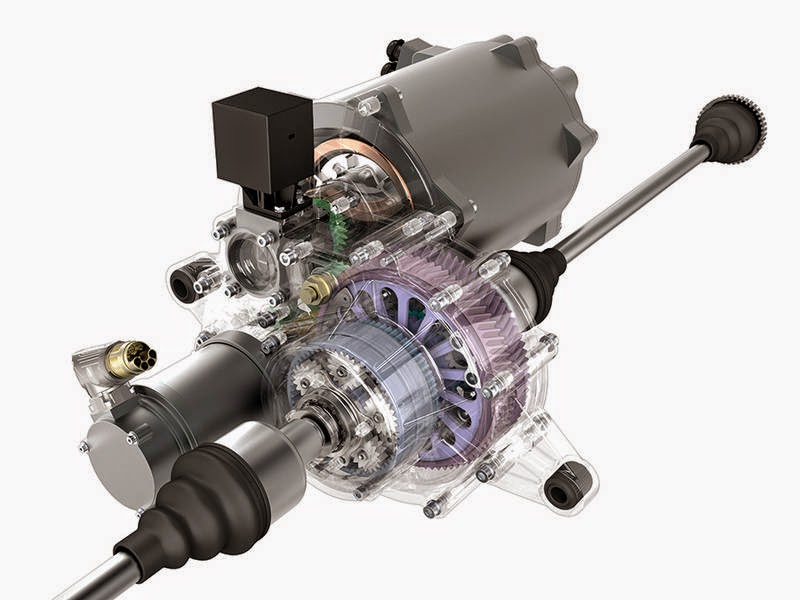
A limiting factor for the driving range of electric vehicles is the amount of energy supplied by the batteries. To recoup as much braking energy as possible, engineers at the Gear Research Center (FZG) at the TU München have developed a light-weight torque vectoring transmission for electric vehicles.

“While drive torque is normally distributed 50/50 to the wheels of the drive axle, our torque vectoring system doses the torque between the wheels as required,” explains engineer Philipp Gwinner from FZG. “This also ensures particularly good drive dynamics.” When a vehicle accelerates in a curve, greater torque is applied to the outside wheel. The car steers itself into the curve. The result: greater agility and, at the same time, safer road handling.

Recovering braking energy in curves

Even more important to the researchers, however, is the efficient recovery of braking energy. Normally, brakes convert kinetic energy into heat. So-called recuperation systems can prevent this. They work along the principle of a bicycle dynamo, which converts energy tapped from the wheel into electrical energy. In the case of electric vehicles this energy can be used to recharge the batteries, thereby extending the driving range.

Unfortunately, in curves the recuperation of braking energy is limited since the inside wheel bears significantly less load than the outside wheel. The torque vectoring function adjusts the recuperation torque for both wheels individually. This increases vehicle stability while at the same time allowing more energy to be recovered.

Less weight, lower cost

Torque vectoring transmissions are used today in select top model cars and sports cars with combustion engines. Due to their high cost and additional weight torque vectoring transmissions have not found application in electric vehicles. The aim of the researchers was, thus, to optimize the transmission for small vehicles with electric drives.

Instead of the standard bevel gears used in differential transmissions, the engineers developed a spur gear differential in which additional torque can be applied from outside via a superimposed planetary gearbox. Using a small (in comparison to the drive motor) electric torque vectoring machine they can generate a large yaw moment at any speed to achieve the desired road handling dynamics.

The housing of the first prototypes are made of aluminum. To save even more weight, the aluminum housing will be replaced by a composite case made of aluminum and a fiber-reinforced synthetic. To reduce the forces acting on the housing without increasing gear noise, which is critical in electrical vehicles, the researchers have developed a special gearing free of axial forces. This and further construction element optimizations led to a reduction in gearbox weight of more than ten percent.

“The elegant thing about the torque vectoring transmission we have developed is that it not only has a higher recuperation level, and, with that, an increased driving range,” says Professor Karsten Stahl, Director of the FZG, “the transmission also improves road handling dynamics, driving pleasure and safety. The continuously improving optimization measures leave us optimistic that in the near future both the weight and cost will be able to compete with today’s standard differential transmissions.”

Participants in the Visio.M consortium are, in addition to the automotive companies BMW AG (lead manager) and Daimler AG, the Technische Universitaet Muenchen as a scientific partner, and Autoliv BV & Co. KG, the Federal Highway Research Institute (BAST), Continental Automotive GmbH, Finepower GmbH, Hyve AG, IAV GmbH, InnoZ GmbH, Intermap Technologies GmbH, LION Smart GmbH, Amtek Tekfor Holding GmbH, Siemens AG, Texas Instruments Germany GmbH and TÜV SÜD AG as industrial partners. The project is funded under the priority program "Key Technologies for Electric Mobility - STROM" of the Federal Ministry for Education and Research (BMBF) for a term of 2.5 years with a total budget of 10.8 million euro.

Tesla Unveil AWD Model S with 700 hp AND improved efficiency [VIDEO]

At a launch event held at Hawthorne Airport in California, Tesla Motors founder and CEO Elon Musk showcased details of improvements to the Model S range. While some early predictions of a Model 3 launch were wide of the mark, the much predicted AWD version of the Model S was correct.

The ‘D’ stands for ‘dual’ motor, which has been achieved by mounting a second electric motor on the front axle. The technology will be available on the entry-level 60 kWh and standard 85 kWh cars as well as the top of the line P85.

This not only transforms the Model S into the fastest four-door production car in the world with a 0-100 km/h time of 3.2 seconds but also improves the vehicles energy efficiency. Maximim power for a P85+ with AWD (now renamed P85D) is 690 hp (508 Kw) with a peak torque of 930 Nm. Weight has increased to 2,238 kg but vehicle range is increased by 10 miles. Total range for the P85D is now 275 miles, with the 85D and 60D boasting 295 miles and 225 miles respectively.

With the addition of a second motor on the front axle the power split between the two motors is 221 hp at the front and and 470 hp at the rear (Tesla has tuned the existing unit, up from 416 hp). Cornering grip is also significantly higher than in the standard car, with a reported 1G of lateral acceleration achievable.

The AWD car’s performance improvements aren’t limited to raw pace. The extra motor allows the Model S to increase levels of regenerative braking, but the main benefit of having the two power units is improving efficiency at any given speed. Electric motors tend to reach maximum energy efficiency at close to full rated load. With the Tesla's rear drive motor being twice as powerful as any other EV on the market, at light loads it is not operating efficiency.

By plugging in a much smaller 163 kw / 300 Nm motor into the front axle, which is closer to the size of motor in the BMW i3, Tesla engineers can calibrate the powertrain to run the front motor closer to full rated load when the vehicle is driven at moderate speeds. As the Model S is limited to 60 Kw maximum brake regeneration, increasing brake bias towards the smaller front motor should also moderately increase brake regen energy efficiency.

Elon Musk mentioned the AWD powertrain will have torque vectoring but we expect this will be a friction brake controlled system much like in the Mitsubishi Outlander PHEV. Both vehicle use only 2 motors that drive the wheels via mechanical differentials so there is no way to control torque at each wheel individually via the motors.

These new digital AWD systems vastly improvement torque split front to rear compared to old inefficient analogue All-Wheel-Drive systems where front and rear axles are connected via a drive shaft, but they aren't quite there yet with side to side torque control.

First deliveries of the $120,170 Model S P85D are scheduled before the end of this year, with 85D and 60D variants arriving in February.

Tesla to unveil Model 3 and Model S Dual Drive Oct. 9: report

Tesla Motors will unveil its Model 3, the mass-market car, and new versions of the Model S sedan at the event Oct. 9, analyst Trip Chowdhry with Global Equities Research said in a note Friday.

It is no coincidence the event is to take place in the Los Angeles area rather the San Francisco Bay Area, where the electric-car maker is headquartered: Tesla's top designer "spends almost 90% of this time in the LA Design Center," Chowdhry said.

Tesla earlier Friday said the event was scheduled for 7 p.m. at the Hawthorne airport. By showing a Model 3 prototype Tesla is also hoping to garner more attention from potential "gigafactory" investors, he added.

The new Model S versions would have all-wheel drive and semi-autonomous driver-assistance system.

Nissan Engineers create a LEAF Ute [VIDEO]

If necessity is the mother of invention, engineers fuel that fire at Nissan's Technical Center in Stanfield, Arizona. Here engineers are plentiful. They love to build things, test things and tinker with things. This team thinks a lot about "why not?" Recently they created a one-of-a-kind electric vehicle to haul supplies and people around on the tech center property.

"We tried to keep it a secret and be exciting for everybody. But we have visitors and they come and they see that truck and they go straight to 'what is it?' and they start looking at it, and it makes great conversation," said Roland Schellenberg, Nissan Durability & Reliability.

This is Sparky, as he's known around the campus. It is a Nissan LEAF crossed with a Nissan Frontier, brought to life by Nissan's Roland Schellenberg and Arnold Moulinet. Sparky is a one-of-a-kind creation with a specific mission in life. He supports operations at Nissan's proving grounds located on 3,050 acres in Stanfield, Arizona.

"I needed a project for a team building activity so we can bring the team together. We had a need for a truck. Something to drive around, a shop truck," said Schellenberg.

It was months in the making, and there were many considerations, but Arnold Moulinet, Schellenberg's colleague in the Durability & Reliability group, had the right tool-set to fabricate the vehicle into reality.

"After he (Schellenberg) told us it was going to be the LEAF that we would redo, I went home and stayed up till like four in the morning making all kinds of designs for what would work. We basically got the stock LEAF, and after reviewing a bunch of designs of pickup trucks that we have here at Nissan, we decided to go with a Frontier bed. My main job here is working on rough-road vehicles, rough-road testing. I'm pretty good at taking cars completely apart to the bare frame and putting them back together again to resume testing," said Moulinet.

The low-desert terrain at Nissan's technical center provides an ideal environment to test vehicles for hot weather, heat durability, engine cooling and air conditioner performance. There is also a 5.7-mile high-speed oval and four individual road courses designed to test vehicle durability, reliability and ride comfort. Sparky now is part of the support team to help operations run smoothly.

"Being a slick truck, and not so tough, I see it as a boy – but a boy with a heart. It's something that we all put together. We all share. So it has a little bit of everybody in there," said Schellenberg.

Nissan BMW Renault and VW unite to form Rapid Charge Network

A partnership of Battery Electric Vehicle (BEV) manufacturers have joined forces through the European Union's TEN-T programme to create a multi-standard and inter-operable charging network through the United Kingdom and Ireland.

As well as helping to finance the scheme, the consortium is providing other members of the project with the benefit of its extensive experience in the BEV field.

This is the first time leading BEV companies Renault, Nissan, BMW and Volkswagen have united to accelerate the growth of EV charging infrastructure, seen as a key enabler towards making zero-emission mobility a market reality. The project, managed by Zero Carbon Futures in North East England also draws on the network expertise of ESB, one of Ireland's foremost energy company and leader of a previous TEN-T project completed this summer, and Newcastle University.

When complete, the UK Rapid Charge Network (RCN) will comprise more than 70 multi standard rapid chargers covering some 1,100km of major trunk routes and providing EV-friendly links to five seaports and five international airports.

Running on two priority road axis on the mainland, the UK RCN will link major ports and cities including Stranraer, Liverpool, Holyhead, Birmingham, Felixstowe, Leeds and Kingston upon Hull while there will also be networks embracing Dublin, Ireland and Belfast, Northern Ireland.

Significantly, the rapid chargers are the latest state-of-the-art multi-standard units and are compatible with cars using 44kW CCS, 44kW CHAdeMO or 43kW AC systems. This will ensure that EV drivers travelling in the UK can undertake long journeys secure in the knowledge that they will never be far from a rapid charger.

Ten rapid chargers have been already installed with a further 28 sites soon to be commissioned.

The UK RCN is part of the European Union-financed Trans European Transport Network (TEN-T) and represents a substantial partnership investment of €7,358,000, half of which is being funded by the EU.

A significant portion of the BEV manufacturers' contribution to the overall costs will be used to fund a research program, led by Newcastle University. This will aim to confirm the benefits of such an advanced inter-operable EV rapid charging network.

Strategic information gathered from users, including customer charging behaviour and changes in mobility patterns, will help plan the roll-out future rapid charging infrastructure in member states across Europe.

Tesla expect another ‘Significant’ Toyota deal by 2017

During a recent trip to Japan, Tesla CEO Elon Musk says his company and Toyota could team on another “significant” joint project in two or three years, and at higher volumes than the soon-to-end RAV4 program.

Musk’s comments came just four months after Tesla Motors Inc. announced that the agreement to supply battery packs for the electric Toyota crossover would finish this year with sales around 2,500.

Musk said there were no concrete plans for a new vehicle with Toyota but dangled the possibility of a bigger project soon.

“I think that if you look out maybe two or three years from now, that I would not be surprised if there is a significant deal with Toyota,” Musk said today at a ceremony to deliver the first Tesla Model S sedans to customers in Japan.

“My best guess is that it would probably be something significant, maybe on a much higher volume level,” he said.

Toyota Motor Corp., which owns 2.4 percent of Tesla, said in May 2012 it envisioned building around 2,500 RAV4 EVs over three years. When the partners announced in May that the program would wrap this year, they were noncommittal about future projects.

The Japanese and American companies have since sparred over alternative visions for tomorrow’s alternative drivetrains.

Toyota has channeled its focus into hydrogen fuel cells, while dismissing EVs as impractical and impossibly short-ranged. Meanwhile, Tesla has beat the drum for batteries, while deriding cars powered by hydrogen stacks as “fool cells.”

Toyota spokesman Dion Corbett said the world’s biggest carmaker had “nothing to say” in response to Musk’s latest overture.

Toyota sold 2,130 RAV4 EVs through August. The company expects to sell the rest of the planned 2,500 by year’s end.

After those are delivered, Toyota will have neither a single EV nameplate in its lineup nor public plans to add one.

Musk was not expected to meet with Toyota officials during his visit to Japan. While in Tokyo, he handed over the keys to nine new Model S sedans on the 52nd-floor observatory of Roppongi Hills Mori Tower, one of the tallest buildings in town.

“We love working with Toyota,” he said. “We have a huge amount of respect for them as a company and certainly much to learn.”

Sales of BMW’s electric car jump in August [VIDEO]

Sales in the United States of BMW electric cars jumped in August, inching closer or, depending on whom you ask, even surpassing sales of Tesla Motors luxury Model S sedan.

The continued success of BMW’s i3 model, which sells for about $41,000 in the U.S., could pressure Tesla and dampen enthusiasm for its Model 3, Tesla’s mass-produced car that is expected to hit the road within the next two or three years. The Model 3 would carry a sticker price of about $35,000.

Tesla last week said it chose Nevada as the site of its battery factory, expected to churn out more and cheaper batteries -- enough to power Tesla’s through its expansion into the mass market.

Tesla shares rose on intraday and closing records of $291.42 and $286.04, respectively, on Thursday. The stock was hit by profit-taking — and comments by CEO Elon Musk, who called Tesla shares “kind of high” — on Friday.

BMW sold 1,025 BMW i3s in August, according to industry and analyst reports, up from less than 400 units in the previous three months. The car was launched in the U.S. in May.

Tesla’s Model S sales in August were estimated at around 1,600 by Autodata Corp, 18% lower year-on-year. Tesla does not release monthly car sales.

Tesla is expected to launch the next vehicle in its line up, the crossover Model X, next year.

Back in May, analysts at Barclays flagged BMW’s electric-car offerings — which include the more expensive, sporty hybrid plug-in i8 — as a threat to Tesla. Tesla’s target audience is likely sandwiched between the i3 and the i8 models, the analysts said.

Tesla Model S Vs Sunswift eVe.. 500 km range on 1/5 the battery capacity

Recently EV News had the opportunity to test drive two electric vehicles with 500 km range within a fortnight of each other. One, a world record breaking electric car, the University of New South Wales Sunswift eVe solar race car and the other a Tesla Model S P85+.

I wrote last year how in many ways the two share a common heritage with technology in the Tesla having a direct evolutionary path from the inaugural World Solar Challenge in 1987. While I was massively impressed by my short drive in the top-of-the-line Model S, it's interesting to analyse the strengths and weaknesses of two EVs that both achieve the holy grail of plug-in vehicles, 500 km range on a single charge.

Following Sunswift eVe's World Record run in July, Wired magazine hailed the student-run university project as being Tesla's new competitor, ahead of the likes of BMW or General Motors. Hyperbole? Perhaps as eVe is not a road registered vehicle let alone production ready. But that doesn't detract from the fact that during the world record run, Sunswift eVe achieved 500 km range at highway speeds of 107 km/h (66 mph), without solar array assistance, using a battery pack made of the exact same Panasonic cells used by Tesla but with 1/5 th the capacity of the Model S.

When you take into consideration that much of the Model S design, from the large wheelbase to the all Aluminium body construction, is dictated by the 500 km range goal and the size and weight of the battery pack required to achieve that, any vehicle that achieves energy efficiency sufficient to reduce the 18650 battery cell count from 7,104 to 1,200 must offer some advantages.

Number one on the list is direct drive in-wheel motors. Sunswift eVe is RWD and powered by 2x 1.8 Kw (10 Kw Peak) Australian developed direct drive CSIRO wheel motors, that give eVe a top speed of 140 km/h. These axial flux BLDC wheel motors are 98.3% energy efficient and because they are inside the wheel with the rotor turning at the same RPM as the tire, there is no mechanical transmission gearing losses which typically range from 20-30%.

Sure, rated power of only 1.8 kw is barely enough to run a 4 slice toaster but the driving experience proved that 20 kw peak (27 horsepower) provides enough performance to accelerate and maintain highway speeds with minimal fuss. Each wheel motor weighs in at only 15 kg with the 99.2% efficient motor inverters adding less than 1 kg each to over-all powertrain weight.

Next up is aero efficiency. Because the car was deigned for a 3,000 km race with a high average speed on extremely limited solar power, aerodynamic efficiency is king. Sunswift eVe has a 1800 x 4500 mm footprint (larger than a Tesla Roadster). Although the car has twice the frontal area of its blade-like solar car predecessor, Sunswift has achieved a similar drag coefficient. It’s managed this partly through a unique high-set “tunnel” underside design, giving the car the look of a catamaran.

Where the Tesla Model S has the lowest drag coefficient of any production vehicle of 0.24, Sunswift eVe, designed exclusively using Computational fluid dynamics (CFD), achieves a Cd of 0.16. During my test drive of eVe, even though the vehicle had both doors removed for easy access, the lack of aero drag was noticeable while coasting. One team member told me it takes eVe several kilometers to coast to a stop from 100 km/h.

While Tesla claimed that every panel on the Roadster was carbon fibre, UNSW has taken that a step further and fabricated the entire chassis from the material. Manufactured through a sponsorship deal with New Zealand firm Core Builders Composites, the company that build much of the America's Cup fleet, the vehicle has a kurb weigh of just 320 kg. A Tesla Model S weighs 2100 kg.

The main benefit of light weight is reduced rolling resistance. Approximately 5–15% of the fuel consumed by a typical car may be used to overcome rolling resistance. Michelin special order low rolling resistance tyres are used which are run at 80 psi. While not exactly the same kind of road car tires as the 285/30 R21 used on the rear of a P85+, they are possibly not too far removed from the bicycle like 155/70 R19 tires fitted to the BMW i3.

The combination of electrical energy efficiency, low aero drag and rolling resistance means a 16 kWh battery made from 1200x Panasonic NCR18650 cylindrical Lithium Ion cells with a weight of only 63 Kg is enough to give eVe a single charge highway speed cruising range of over 500 km. That's the same battery capacity as a Mitsubishi iMiEV which has a maximum range of 155 km.

Although carbon fiber is roughly 20 times more expensive than steel, BMW have invested €400 million to launch the first carbon fibre reinforced plastic (CFRP) production car, the all electric i3. BMW’s goal is to get the expense of a carbon-fiber frame down to the level of aluminium by 2020. While only the passenger cabin of the i3 is made from carbon fiber with the drive train, battery and suspension attached to an aluminium chassis, it seems only a mater of time before 100% CF chassis like eVe become economically viable for mass produced road cars.

The next challenge for the Sunswift team is to make the eVe the first road-legal solar-powered car in Australia. They expect it to meet Australian road registration requirements within as little as one year.

Foxconn invest $800M to build electric cars in China

Foxconn Technology Group, the maker of Apple’s iPhone, is investing at least 5 billion yuan (US$811 million) to develop electric car manufacturing in a Chinese province.

The Taiwanese company is making the investment in China’s Shanxi province, it said on Wednesday. Foxconn already has two factories in the province. One of these assembles smartphones while the other is devoted to producing robots and automation equipment, it added.

Foxconn has largely focused on electronics manufacturing for clients including Microsoft, Sony and Amazon.com. But the company is branching out into new business sectors, as a way to grow its revenue streams. Analysts estimate that it makes as much as half of its revenue from assembling Apple products.

In June, Foxconn’s CEO Terry Gou said that the company is targeting to build electric cars with a price of less than $15,000.

Foxconn has already been developing electric car batteries for some time, and the company has many customers for them, he added. It also manufactures the touchscreen panels found inside the electric cars from Tesla Motors.

Foxconn Technology Group and BAIC Motor Corporation recently agreed to jointly establish a company that provides electric vehicle rental services, set to become operational in September. BAIC launched the E150 EV in China earlier this year.

The BAIC E150 EV is powered by an 60 hp and 144nm electric motor powered by a 25.6kwh lithium-ion battery. Top speed is 125km/h, range is 150km. Price range from $20.300 to 22.000.

China is mandating that electric cars make up at least 30 percent of government vehicle purchases by 2016, the latest measure to fight pollution and cut energy use after previously exempting EVs from a purchase tax.

Kia pushes energy-density frontier with Soul EV battery [VIDEO]

Kia Motors is using a 360-V lithium-ion battery pack of “class-leading” energy density (200 W·h/kg) in the 2015 Soul EV to give it range of about 200 km (125 mi) on the European Driving Cycle, and “real-world” range of 80-100 mi (129-161 km) in the U.S. The cells and the battery are the same in all regions.

The battery in the 2015 Kia Soul EV is the result of a three-year development program with lithium-ion cell maker SK Innovation. The 192 cells are packaged into eight modules and deliver a total battery capacity of 27 kW·h. The cell cathode is of nickel-rich NCM (nickel-cobalt-manganese) chemistry, with the raw materials for that and other components optimized for energy density, durability, and safety.

Kia says high-performance anode and gel electrolyte additive materials were developed. The new electrolyte additive allows for better range by more effectively dealing with low and high temperatures. A “special” ceramic separator with improved thermal resistance properties is used.

The cell casings are of polymer pouch type (as opposed to metal), and the battery pack is air-cooled. Standard equipment on the Soul EV includes receptacles for SAE J1772 Level 1 and Level 2 ac charging, as well as CHAdeMO dc fast charging (480 V).

The car goes on sale in the U.S. in third quarter 2014.

Tesla to Roll Out “Destination Charging” Program At Hotels, Restaurants And Resorts

Tesla has begun installing high-power wall chargers at restaurants, hotels, beach parking and other locations that can send 80 amps of electricity into the Model S and add 58 miles of range in an hour. While that’s not nearly as fast as a Supercharger, which can recharge the 85 kWh pack in around 30 minutes, it’s twice as fast as the standard 240-volt chargers that can be more commonly be found around in parking lots and garages.

Tesla has been rolling these out quickly across the US as a convenience to customers. The company says 106 of them have been installed since the program began this spring, with more coming online daily. Like the Superchargers, they are free to use for Tesla owners.

Unlike Superchargers, which function more like a petrol station, these wall chargers are designed for destinations. Teslas can also use standard charging stations with the use of an adapter that comes with the car but due to the out-sized capacity of the battery in a Model S (up to 85 kWh), a full charge from a standard 240v 10 amp outlet might take as long as 30 hours. To make utilizing the full range of a Model S practical, for example for weekend trips, higher powered 'destination' charging is required to provide up to 500 km worth of charge in approx 4-5 hours.