Nissan working on next-gen amorphous silicon (SiO) Li-ion battery

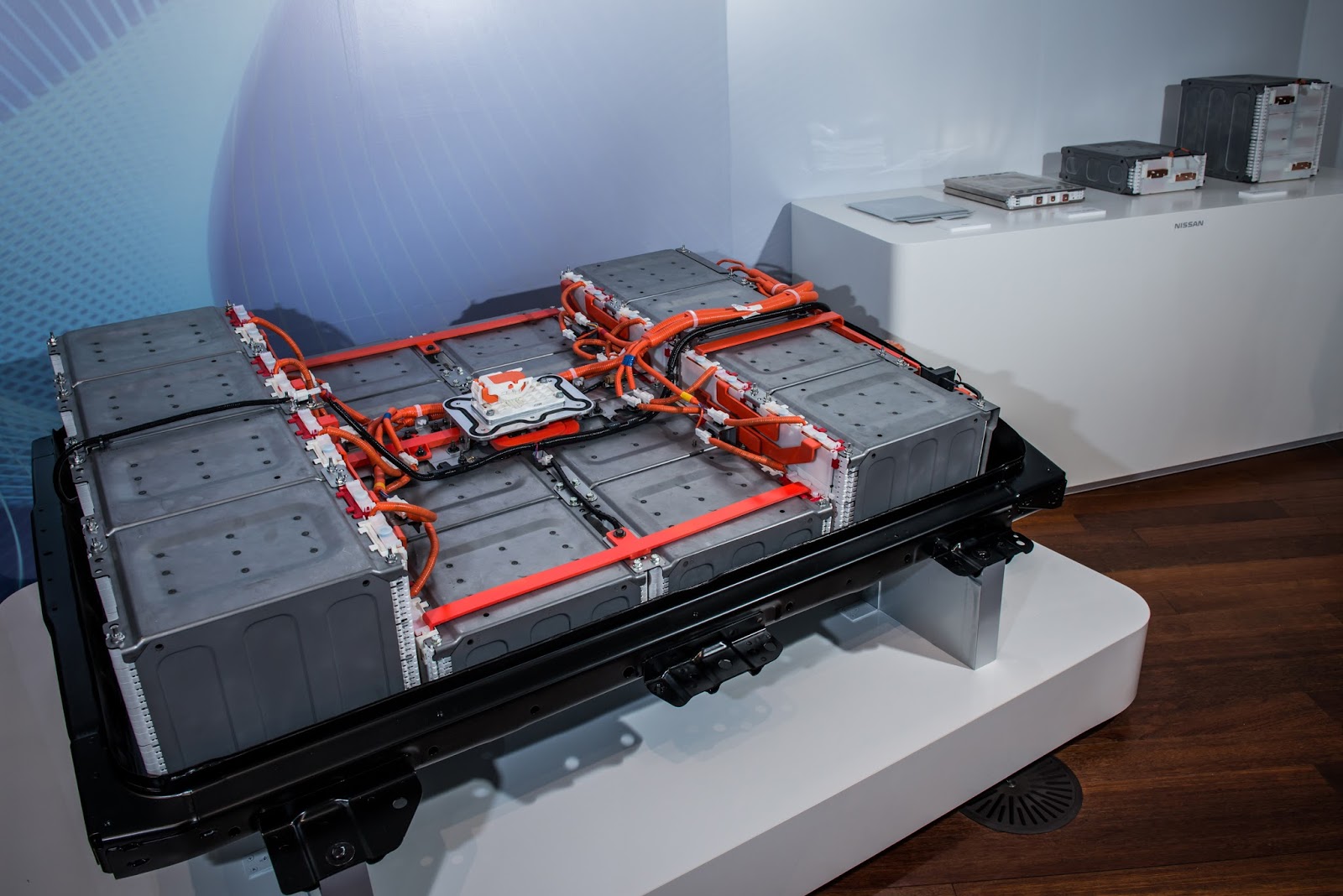
Nissan Motor Co., Ltd. and Nissan Arc Ltd. announced today joint development of an atomic analysis methodology that will aid in boosting the performance of lithium-ion batteries, and ultimately extend the driving range of zero-emission electric vehicles.

The breakthrough was the result of a combined R&D effort between Nissan Arc Ltd., a Nissan subsidiary, Tohoku University, the National Institute for Materials Science (NIMS), the Japan Synchrotron Radiation Research Institute (JASRI), and Japan Science and Technology Agency (JST).

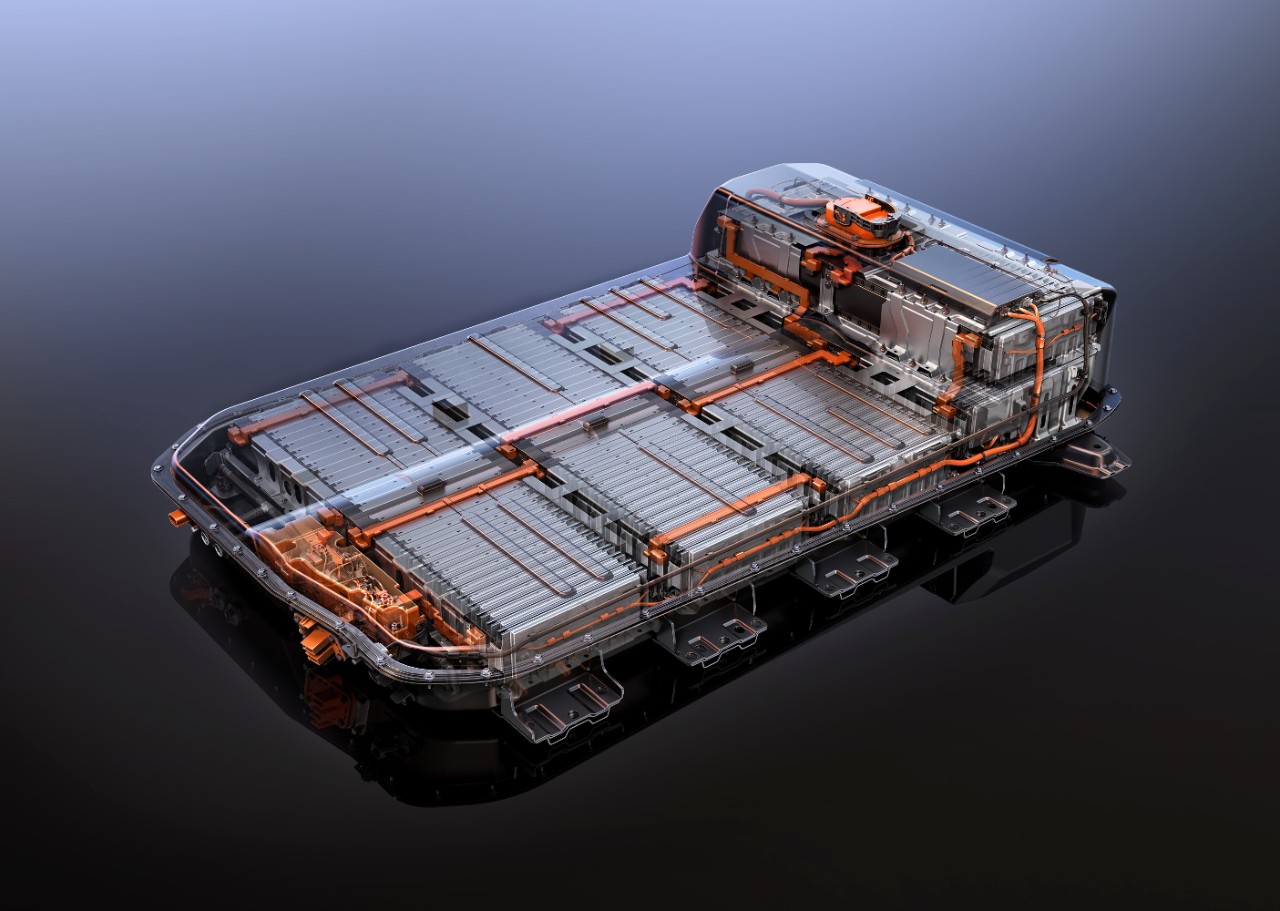
The analysis examines the structure of amorphous silicon monoxide (SiO), widely seen as key to boosting next-generation lithium-ion battery (Li-ion) capacity, allowing researchers to better understand electrode structure during charging cycles.

Silicon (Si) is capable of holding greater amounts of lithium, compared with common carbon-based materials, but in crystalline form possesses a structure that deteriorates during charging cycles, ultimately impacting performance. However, amorphous SiO is resistant to such deterioration.

Its base structure had been unknown, making it difficult for mass production. However, the new methodology provides an accurate understanding of the amorphous structure of SiO, based on a combination of structural analyses and computer simulations.

The atomic structure of SiO was thought to be inhomogeneous, making its precise atomic arrangements the subject of debate. The new findings show that its structure allows the storage of a larger number of Li ions, in turn leading to better battery performance.

“The invention of this new analysis method is essential to further develop the next generation of high-capacity lithium-ion batteries. It will certainly become one of our core technologies. The utilization of this analysis method in our future R&D will surely contribute to extending the cruising range of future zero-emission vehicles,” said Takao Asami, senior vice president of Nissan Motor Co., Ltd. and President of Nissan Arc Ltd.

Daniele Schillaci, executive vice president of Nissan Motor Co., Ltd., Global Sales & Marketing including Zero Emission Vehicle and Battery business, said the development was another proof point of Nissan’s commitment to innovation in advanced technologies.

“Nissan is exploring a wide range of energy sources for tomorrow’s vehicles, and we recognize our role in continuously investing in multiple technologies and intelligent mobility,” said Schillaci.

More: Nature Communications

Evans Electric previews new Axial Flux EV motor

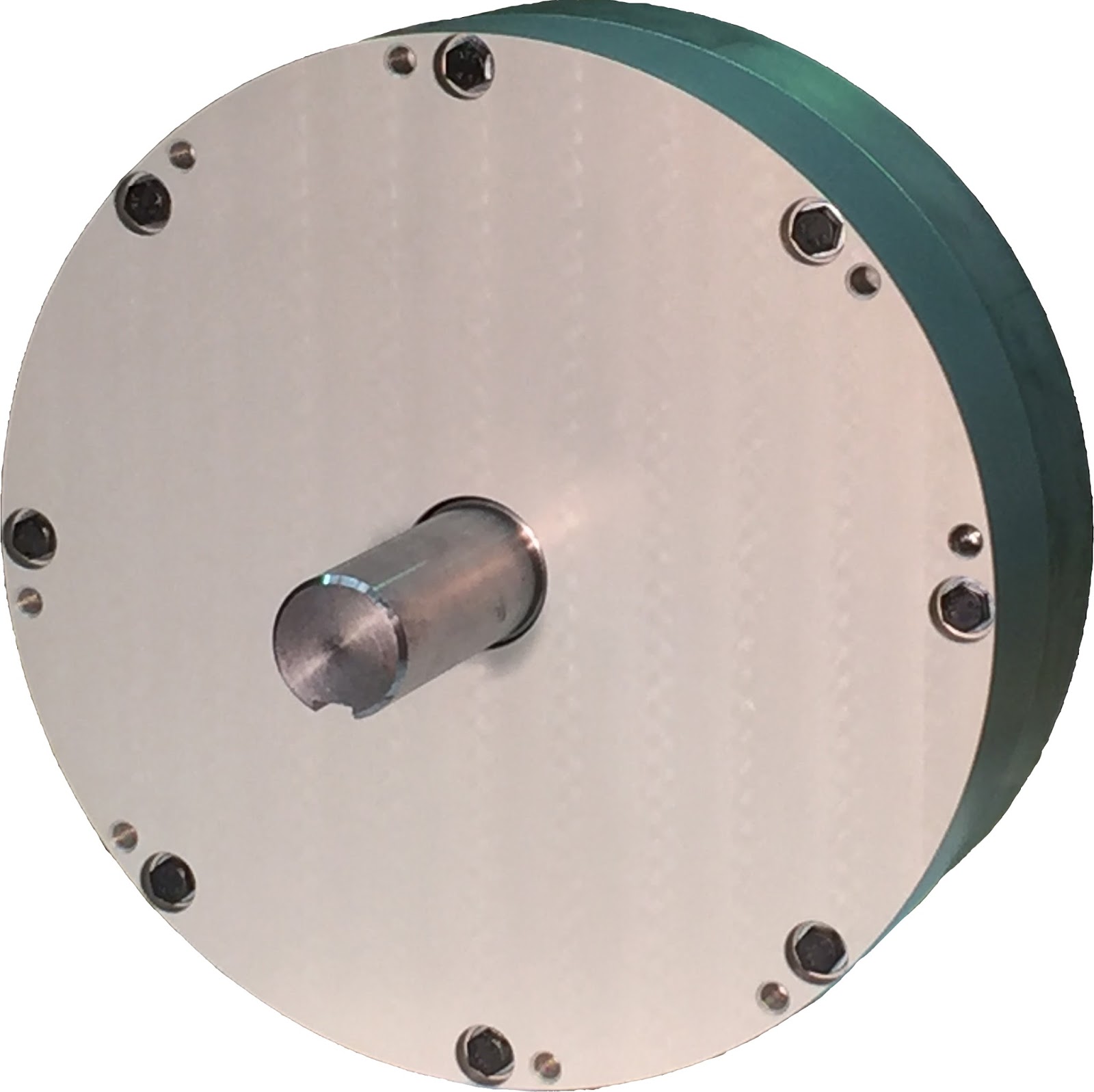
Evans Electric has previewed a next generation EV motor that it says will be licensed for production in 2017. The Axial flux asynchronous induction motor offers 90 kW of power, 300 Nm of peak torque and features very high torque density.

Evans Electric designed the new motor with integration, miniaturization and high energy efficiency in mind. It uses a double stator, single rotor axial air gap architecture with a patent pending solid core, copper disc rotor.

Overall, the size of the motor represents a reduction of 70%, while retaining the same level of performance. The motor has the same peak torque as a standard Tesla Roadster AC induction motor yet is only 1/3rd the volume due to a much shorter axial length. The oil-cooled 3 phase motor is designed to be integrated into the bellhousing of a multi-speed transmission.

The AFIM design is also well suited to wheel hub motor applications such as electric bus and military ground vehicles.

“Not only does the high power density of the axial air gap design give a cost advantage because less active material is required for a given amount of torque, but our copper rotor axial flux induction motor also has the significant cost advantage of eliminating the need for rare-earth permanent magnets.” said founder, Paul Evans.

The 4 person Sydney Australia based startup have been working on the AFIM design for a German OEM and has now opened their series A funding round.

More: Evans Electric

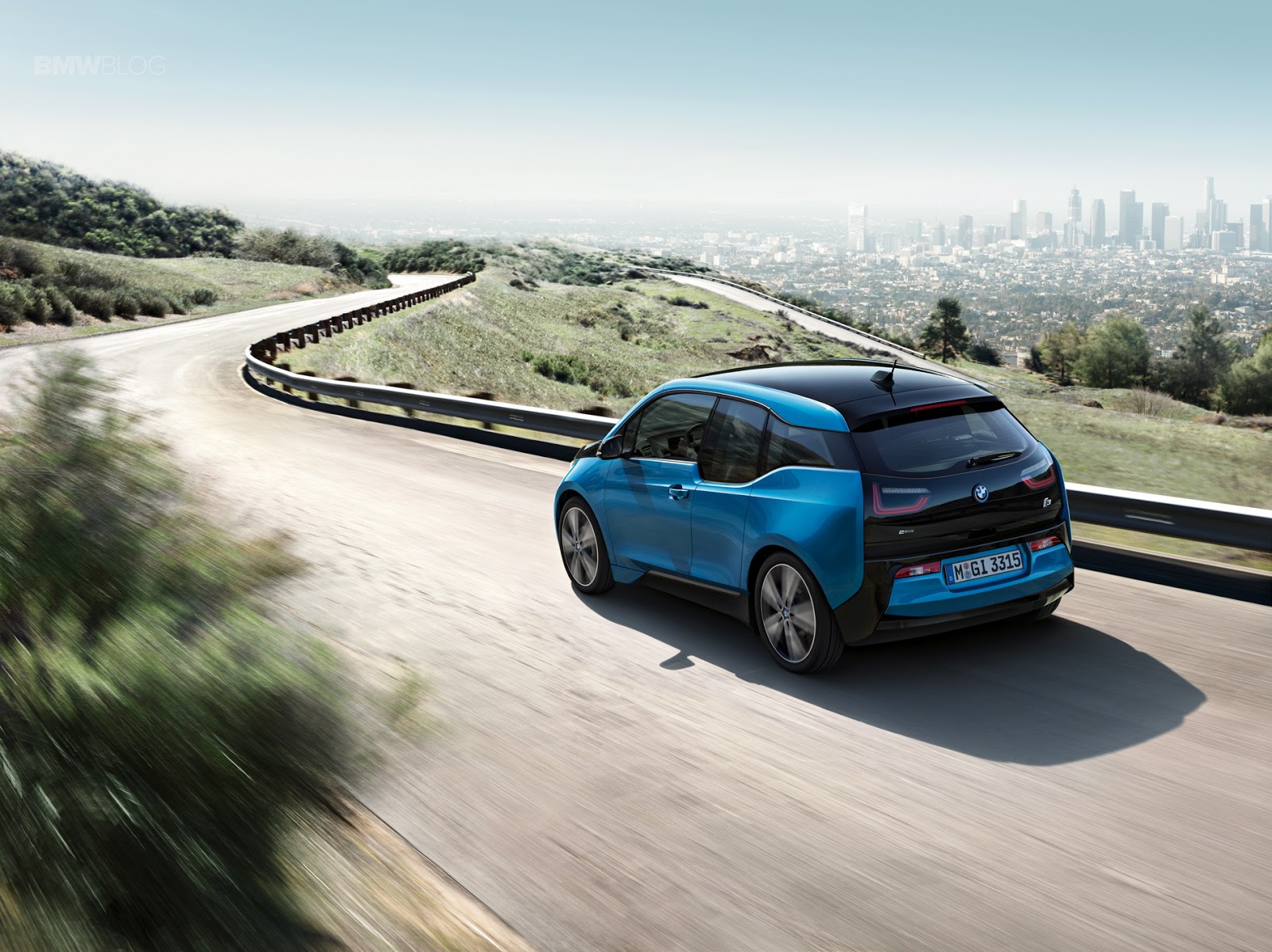
2017 BMW i3 goes 180 km with new 33-kWh battery

Today BMW announced that BMW i will offer a new model range of its compact electric car, the BMW i3 and from the 2017 model year will be offering a new version with more than 50% increased battery capacity. The 2017 BMW i3 (94 Ah) has a capacity of 33 kilowatt hours (kWh) thanks to the higher energy density of the lithium ion cells.

The BMW i team worked to ensure that the battery dimensions remain unchanged while still offering a significant range increase. Even in everyday conditions, the new Battery Electric BMW i3, in varying weather conditions and with the air conditioning or heating turned on, a range of up to 114 miles combined1 (hwy/city) is possible as shown by independent BMW testing cycles. The driving performance figures of the 170 hp AC synchronous electric motor remain virtually unchanged. The motor propels the BMW i3 from 0 to 60 mph in just over 7 seconds.

This makes the BMW i3 both the sportiest and most efficient electric vehicle in its segment with an expected EPA electricity consumption of 27 kWh/100mi. In addition to the Battery Electric BMW i3, the Range Extender model will also feature the 94 Ah battery. When equipped with the Range Extender, if the driver requires additional range, the 2-cylinder gasoline engine is switched on once the battery is depleted to 6.5% state of charge and keeps the charge level of the battery constant while driving and provides an additional range thanks to a 25% larger fuel tank (2.4 gallons). With the introduction of the BMW i3 (94 Ah), BMW i now also offers a new BMW Home Charger Connect, a residential charging station designed for comfortable and fast home charging featuring additional connected functions. Pricing for the 2017 BMW i3 (94 Ah) will be released closer to market launch.

Higher storage density of the battery cells.

The BMW i3 (94 Ah) sets a new benchmark in its segment with 94 ampere hours (Ah) cell capacity, 33 kWh total battery energy, and an electric range of approximately 114 miles combined1 (hwy/city) on one full battery charge. Consuming only 27 kWh/100mi the BMW i3 is the most efficient car in its segment with the lowest electricity consumption costs of approximately 2.81 USD/100mi4.

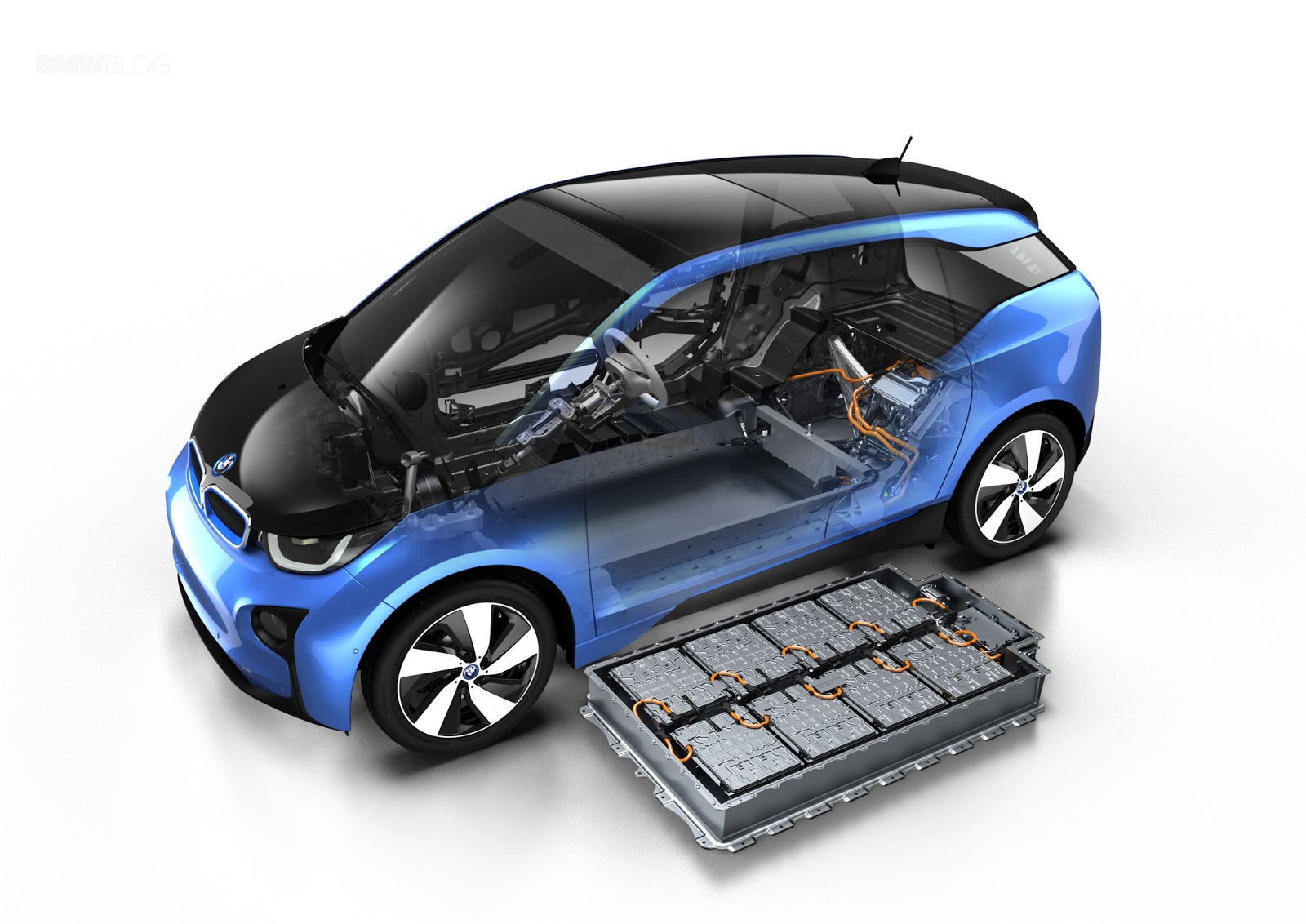
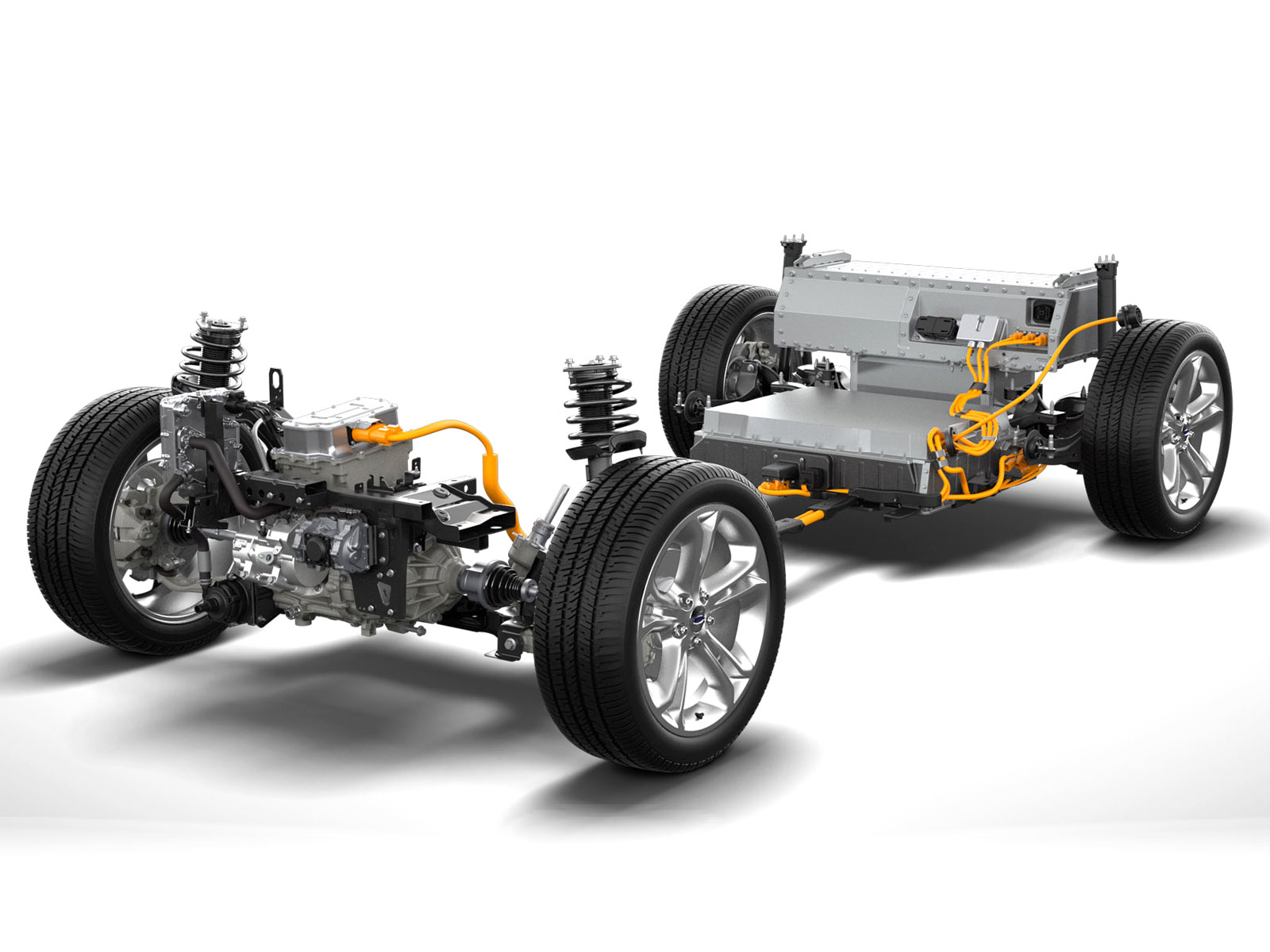
The high-voltage battery of the BMW i3 consists of eight modules with twelve storage cells each and its capacity has increased by more than 50% without any changes in exterior dimensions. By optimizing the cell-internal packages with more electrolyte and adapting the active material, BMW and Samsung SDI have succeeded in increasing cell capacity to 94 Ah and overall battery energy to 33 kWh of which 27.2 kWh can be effectively used. The previous battery of the BMW i3 (60 Ah) produced 22 kWh (gross)/19 kWh (net).

The lithium ion cells used, set themselves apart in the competitive field by achieving a special balance between high energy density, cycle stability and safety in the case of an accident. The high-voltage battery also has an advanced thermal management system that keeps the battery operating in the optimal temperature range, which further enhances performance. For example, the coolant of the air conditioning system is responsible for cooling the high-voltage battery very effectively, while a heating system can also be used to warm the battery to ensure the optimal operating temperature before starting off. Customers receive an 8-year/100,000-mile High-voltage Battery Warranty.

The BMW i3 – a benchmark in terms of sustainability

During the development phase of the BMW i3, the entire architecture of the electric drivetrain was designed with the next technological steps as well as serviceability in mind. For example, if necessary a single battery module can be exchanged which distinguishes the BMW i3 from other competitive offers and represents an integral component of the holistic BMW i concept of sustainability. From the production stand point, sustainability is achieved to a large extent through the CO2 free electricity supply of the BMW i production sites in Leipzig (assembly) and Moses Lake (CFRP production) as well as through the use of 70 percent less water in the production process compared to conventional automobiles.

Optimized performance delivery, more efficient drive.

The BMW i3 is by far the lightest car in its segment. Despite the slight weight increase, at 2,961 lbs (BEV), and 3,234 lbs (REX), the BMW i3 (94 Ah) is characterized by driving performance, which is subjectively as agile as the 60 Ah model variant. The BMW i3 (94 Ah) is also powered by the same 3 phase AC synchronous electric motor developed in-house by the BMW Group. The motor generates an output of 170 hp and delivers 184 lb-ft of torque which is available as soon as the electric motor begins to turn. The BMW i3 (94 Ah) accelerates from 0 to 60 mph in just over 7 seconds. The impressive electric motor, small turning circle of 32.3 feet, – a major benefit to driving in the city – BMW’s near-perfect 50- 50 weight distribution, precise electric power steering and the stable suspension set-up help to make the i3 as satisfying to drive as every other BMW.

The sporty character of the BMW i3’s electric motor is also clearly noticeable by its performance figure of 5.1 seconds accelerating from 50 to 75 mph. This is a decisive factor for enabling fast and safe passing maneuvers, and is normally only achieved by combustion engine powered cars with considerably higher outputs. The BMW i3 (94 Ah) is close to the level of cars such as the (320 hp) BMW 340i. Power is transmitted to the rear wheels via the single-speed transmission, which the BMW i3 uses to accelerate without torque interruption to its electronically limited top speed of 93 mph.

The electric consumption of the BMW i3 (94 Ah) has also been reduced by a large number of detail improvements including revised electric motor management as well as advanced low-resistance tires with optimized compound.

Charging times.

The 7.4 kW charging electronics of the BMW i3 (94 Ah) can charge the 33 kWh battery in approximately 4.5 hours using a Level 2 charger, which is slightly more than the approximately 3.5 hours required to charge the battery on a BMW i3 (60 Ah). Standard equipment of the BMW i3 includes the occasional use cable for connecting it to a domestic power socket. Core elements such as range, hallmark BMW agility thanks to low weight and overnight battery charging remain in place.

The BMW i3 is equipped with the future-proof 50 kW direct current (DC) fast charging technology. When the BMW i3 (94 Ah) is connected to a DC fast charging station, the battery cells are charged up to a minimum of 80 percent of their capacity in less than 40 minutes. In the BMW i3 (60 Ah) this takes around 25 minutes. This means that the BMW i3 (94 Ah) achieves a charging speed of 2.5 mi/min which corresponds to 24 minutes charging time per 62 miles of range.

Range Extender for even greater range.

BMW i also offers a Range Extender for the BMW i3 (94 Ah).The range of the BMW i3 is extended by a 650 cc 2-cylinder gasoline engine which is located adjacent to the electric drive above the rear axle. The Range Extender engine delivers a maximum output of 38 hp and powers a generator in order to produce electricity, working on a required-based and highly efficient principle. For those occasional times where additional range is required, as soon as the charging level of the lithium ion batteries drops to a specified level, the Range Extender kicks in to keep the charging level constant effectively extending the range. Fitting the car with the Range Extender has no influence on the available luggage volume: the luggage compartment volume remains unchanged at 15.1 ft3 and can be extended to 36.9 ft3 with the rear seats folded down. The BMW i3 (94 Ah) now features a 2.4 gallon fuel tank improving the range from the previous model.

The BMW i3 (94 Ah) with Range Extender weighs approximately an extra 270 lb compared to the Battery Electric BMW i3 but is also characterized by a high level of agility and offers impressive performance figures. It accelerates from zero to 60 mph in just 8 seconds.

New equipment on the BMW i3.

The BMW i3 (94 Ah) is now available in the exclusive Protonic Blue metallic exterior color, previously only available in the US on the BMW i8. The BMW i3 (94 Ah) customer can also choose from two non-metallic paint colors (Capparis White and Fluid Black) and, in addition to Protonic Blue, three metallic paintwork colors (Mineral Grey, Platinum Silver and Ionic Silver).

The Deka World is now part of the standard profile of the BMW i3 (94 Ah) and features a lightweight dark cloth fabric interior made from recycled materials. Other changes to the standard profile include the addition of the Universal Garage Door Opener, Advanced Real- Time Traffic Information, and Comfort Access. As part of the Tera World, a Dark Oak Wood trim is also now included, with an alternative Light Eucalyptus Wood trim available as well. These trims are also available for ordering with the Giga World.

The highly anticipated electric moonroof is also available for ordering for the first time in the US. This option features individual shades and adds to the great set of convenience features that the BMW i3 has to offer.

Standard profile and equipment for the BMW i3 (94 Ah) includes: Automatic climate control, Dynamic Cruise Control, LED Headlights, HD Radio, DC Fast Charging, Navigation Business System, BMW Assist and BMW Teleservices. Other standard features include: the iDrive operation system, the BMW i RemoteApp functionalities, the Driving Dynamic Control switch, hands-free telephone operation, leather steering wheel and Park Distance Control (PDC).

BMW i3 – a success story.

The BMW Group took on a pioneering role when it founded the BMW i brand and decided to develop an independent vehicle structure and passenger cells made of carbon fiber reinforced plastic (CFRP) as well as BMW eDrive technology for a purely electric drive. The BMW i3, which was designed for local emissions-free urban mobility, as well as the trail- blazing BMW i8 Plug-in-Hybrid sports car combined with sustainability-oriented premium character. Since the November 2013 launch, the BMW i3 has already established itself at the top of its segment. The most important single market for the purely electric five door BMW i3 is the U.S. More than 80 percent of buyers deciding on a BMW i3 worldwide are new customers for the BMW Group. The BMW i3 and the BMW i8 received a large number of awards for innovations in the areas of lightweight construction, drive, sustainability, driving performance and design. This makes BMW i the brand to win the most awards in the world during its market launch phase.

Comfortable home charging: the new BMW Home Charger Connect. In late 2016, BMW i will be offering the new BMW Home Charger Connect, a residential charging station designed for comfortable and fast home charging. The new BMW Home Charger Connect, with a more compact, sleeker design, charges the battery of the BMW i3 (94 Ah) in approximately four hours and 30 minutes. The charging process starts automatically as soon as the car and charging cable are connected. The BMW Home Charger Connect is operated using an LED interface.

The BMW Home Charger Connect comes standard with WiFi and will feature innovative charging services which can be accessed remotely. This charger helps preserve vehicle range as it can precondition the vehicle battery when connected.

On the go: convenient public charging with ChargeNow.

ChargeNow is designed to optimize the public charging experience for BMW i customers, for easy access to public charging options. Thanks to ChargeNow’s partnerships with leading public EV charging network providers, BMW i drivers enjoy convenient access to public chargers along the way. Learn more at www.chargenowusa.com.

ChargeNow DC Fast5: Eligible BMW i3 drivers can recharge for no charge.

Offered by BMW in cooperation with EVgo, ChargeNow DC Fast allows eligible BMW i3 drivers in participating markets to enjoy 24 months of no cost charging sessions for the BMW i3 at participating EVgo Stations. Enrolled BMW i3 customers can use the ChargeNow card for unlimited 30 minute, DC Fast Combo charging sessions and Unlimited 1 hour, Level 2 charging sessions.

The BMW i3 is equipped with the future-proof 50 kW direct current (DC) Fast charging technology. When the BMW i3 (94 Ah) is connected to a DC Fast charging station, the battery cells are charged up to 80 percent of their capacity in less than 40 minutes. In the BMW i3 (60 Ah) this takes approximately 25 minutes.

ConnectedDrive: Setting standards through Connectivity.

The optional Navigation System Professional provides BMW ConnectedDrive Services especially developed for BMW i. The range assistant follows the planned and currently driven route. If the destination selected in the navigation system is beyond the car’s range, the driver receives the suggestion to shift to the ECO PRO or ECO PRO+ mode. Additionally, the system calculates a more efficient alternative route. Should it be necessary to recharge at a public charging station, the driver is shown all the available stations along the planned route.

A dynamic range map is another central element of the connected navigation unit. Apart from the current charging status of the battery, the driving style, the activated electric comfort functions and the selected driving mode, the topographic features, the current traffic situation and the outside temperature are all taken into consideration. The Advanced Real Time Traffic Information (ARTTI) data is used for this purpose. The data is provided by the BMW ConnectedDrive Server.

The BMW i3 also sets standards when it comes to connecting driver and car. The BMW i Remote App provides useful vehicle-related mobility planning data available on the customer’s smartphone. Apart from pedestrian navigation; navigating your way to your destination from the parking space and back, BMW ConnectedDrive offers a so-called intermodal routing system and for the first time in combination with the Navigation System Professional. This also incorporates public transport connections such as subway stops if this means you can reach your destination quicker. From the actual trip in the BMW i3, looking for a parking space, changing onto a metro and or a walking route, the BMW i ConnectedDrive services take the customer to his destination efficiently.

Daimler invest €500M in Hamburg plant for e-mobility components

Daimler is comprehensively modernizing the Mercedes-Benz Hamburg plant and is expanding its product portfolio to include key components for electric driving. This is part of the transformation plan that the company has agreed on with the works council. With the agreement in Hamburg, Mercedes-Benz Cars has now successfully set out the transformation plans for all plants in Germany.

“The completion of the transformation plans is an important milestone in our growth strategy. We put our vehicle and powertrain plants on a future-oriented and sustainable foundation and strengthen their international competitiveness. Thus, we increase the flexibility and efficiency in our global production network. For that purpose we are investing several billion euros”, said Markus Schäfer, Member of the Divisional Board Mercedes-Benz Cars, Production and Supply Chain Management.

The transformation plan ensures the competitiveness of the site and keeps employment stable. In addition, the agreement provides for a highly flexible production through modern shift models.

“With the investment of 500 million euros, we will develop the Hamburg plant into a high-tech site producing drive components for electric mobility. This is a proof for the high qualification and outstanding performance of our employees. The transformation plan is a future-oriented achievement for the plant that offers employees new opportunities”, says Wolfgang Lenz, Site Manager Mercedes-Benz plant Hamburg. Company and works council have agreed on an increase in training places, resulting in 26 positions each year for the years 2017 and 2018. Furthermore, ten new permanent jobs will be created and filled this year.

“For the employees, the now agreed transformation plan is a clear, positive signal: The plant takes part in the company’s growth strategy and profits from future prospects of the industry. Our central goal in the negotiations was the assurance of future products for the site. The increase in the number of training places and permanent positions indicate that the company continues to count on the plant in Hamburg”, says Jörg Thiemer, Chairman of the Works Council Mercedes-Benz plant Hamburg.

The production of axles and axle components, lightweight structural components and steering columns, along with exhaust technology, will remain an integral part of the plant. The agreement provides the Mercedes-Benz plant Hamburg with extra capacity for axles and axle components. The third generation of steering columns will also be produced in Hamburg. This means that every Mercedes-Benz vehicle will continue to include a part from Hamburg. With the production of the cockpit crossmember for the C- and E-Class, lightweight structural components will continue to be produced here.

The innovative components, manufactured using environmentally responsible production technologies, make a significant contribution to reducing vehicles’ CO2 emissions.

“With the transformation plan for the Hamburg plant we are continuing the successful strategic realignment of our German powertrain plants. We have defined a sustainable product portfolio and measures to increase efficiency and flexibility for all plants, leaving us extremely well prepared to face the future”, says Frank Deiß, Head of Production Powertrain Mercedes-Benz Cars and Site Manager Mercedes-Benz plant Untertürkheim.

Daimler recently announced a 500 million Euros investment in a new battery factory in Germany. The new battery factory will produce lithium-ion battery packs for hybrid and electric vehicles for Mercedes-Benz and smart brands.

Daimler has also said it is open to the idea of creating an alliance between Germany's premium carmakers to manufacture next-generation batteries.

Ford CEO confirms plans for long-range electric car

Ford CEO Mark Fields said the Dearborn automaker will not be left behind in the race to develop long-range electric vehicles like the Tesla Model 3 and Chevrolet Bolt that can go 320 km (200 miles) or more on a single charge.

“We want to make sure that we’re either among the leaders or in a leadership position,” Fields said during a conference call Thursday with analysts. “When you look at some of the competitors and what they’ve announced, clearly, that’s something we’re developing for.”

The Chevrolet Bolt will have a range of at least 320 km and a starting price of about $27,000 when it goes on sale later this year.

Tesla CEO Elon Musk generated global buzz when he unveiled the Tesla Model 3 earlier this month. That car is expected to have 345 km (215 miles) of range and will go on sale in late 2017 at a starting price of $35,000.

Earlier this month, Automotive News reported that the automaker was satisfied with its 2017 Focus Electric that will get 160 km (100 miles) on a full charge, saying that vehicle will satisfy a large chunk of consumers.

Fields didn’t say when Ford plans to launch a vehicle to match Tesla's Model 3 or the Chevrolet Bolt, but made it clear Ford is pressing forward.

He did reiterate Ford's plans to spend $4.5 billion over the next four years to develop 13 new hybrid or electric vehicles.

"Our approach, very simply, is to make sure we are among the leaders or in a leadership position in the product segments that we are in," Fields said.

Ford Motor Company are collaborating with Xerox PARC and Oak Ridge National Laboratory to develop pouch cells with a 20% improvement in gravimetric energy density (Wh/kg), and a 30% reduction in $/kWh costs for electric vehciles.

Ford, Xerox PARC & Oak Ridge Labs Team up to Develop EV Battery

Xerox PARC today announced its ‘Co-Extrusion (CoEx) for Cost Reduction of Advanced High-Energy-and-Power Battery Electrode Manufacturing’ project funded by the U.S. Department of Energy’s (DOE) Office of Energy Efficiency and Renewable Energy (EERE). In collaboration with Oak Ridge National Laboratory (ORNL) and Ford Motor Company, the project will use PARC’s novel CoEx printing technology to fabricate thick higher energy and higher power battery electrodes with the end goal of enabling longer range and low cost electric vehicles.

The project goal is to demonstrate pilot-scale, electric vehicle (EV) pouch cells with a 20% improvement in gravimetric energy density (Wh/kg), and a 30% reduction in $/kWh costs. CoEx allows fine structures to be printed at high speed, and when applied to thick battery electrodes, it adds a new design dimension that can be used to enhance energy and power performance. This innovative approach has the potential to help make high performance and affordable electric vehicles (EVs) a reality.

PARC will develop the inks and CoEx hardware required to fabricate a thick high energy and high power CoEx cathode electrodes. ORNL will assist PARC with the matching anode development, anode and CoEx cathode coating at pilot scale, and electrochemical performance optimization in automotive-relevant lithium-ion pouch cells. The bulk of this research will occur at the DOE Battery Manufacturing R&D Facility (BMF) at ORNL, which was designed in 2011 with these types of projects in mind. PARC will design a custom CoEx apparatus that will be integrated into one of the research coating lines at the BMF.

“The PARC team is excited to start this collaboration with ORNL and Ford. CoEx has the potential to make higher capacity EV batteries possible through the creation of two and three dimensional structures which can enhance lithium-ion pathways in ultra-thick battery electrodes. Our goal is to fabricate EV pouch cells that are higher in energy and power than conventional, with a path towards a reduction in $/kWh costs for EVs”said project principal investigator and PARC CoEx technical lead Dr. Corie Cobb.

“PARC and ORNL have a track record of working successfully together, and their collaboration on this project will transform the way lithium-ion electrode coatings are made and perform under high discharge rates,” said ORNL project lead David Wood.

PARC’s CoEx project is part of a portfolio of research within the PARC Energy Technology Program aimed at developing practical solutions to make clean and abundant energy available across a wide range of applications. This includes a focus on improving energy storage for EVs, consumer electronics, and electric grid support through better ways to make, monitor, and manage batteries.

“By leveraging our deep background in printing, PARC has developed the CoEx printing process to enable higher performance solar cells, fuel cells and batteries.,” said Scott Elrod, Vice President of PARC’s Hardware Systems Lab. “By applying CoEx to printed batteries, we can create optimal structures that boost power performance without compromising energy storage. It’s an efficient and a lower-cost approach that can be applied to the mass manufacturing of batteries.”

DARPA is developing smarter, faster armored ground vehicles

Today’s ground-based armored fighting vehicles are better protected than ever, but face a constantly evolving threat: weapons increasingly effective at piercing armor. While adding more armor has provided incremental increases in protection, it has also hobbled vehicle speed and mobility and ballooned development and deployment costs. To help reverse this trend, DARPA’s Ground X-Vehicle Technology (GXV-T) program recently awarded contracts to eight organizations.

DARPA's Ground X-Vehicle Technology (GXV-T) program seeks to develop groundbreaking technologies that would make future armored fighting vehicles significantly more mobile, effective, safe and affordable.

Radically Enhanced Mobility—Ability to traverse diverse off-road terrain, including slopes and various elevations. Capabilities of interest include revolutionary wheel/track and suspension technologies that would enable greater terrain access and faster travel both on- and off-road compared to existing ground vehicles.

Like previous autonomous off-road military vehicle prototypes, for example Carnegie Mellon University's "Crusher", (pictured below) all-wheel-drive in-wheel motor electric powertrains are a key enabling technology for these next generation vehicles.

“We’re exploring a variety of potentially groundbreaking technologies, all of which are designed to improve vehicle mobility, vehicle survivability and crew safety and performance without piling on armor,” said Maj. Christopher Orlowski, DARPA program manager. “DARPA’s performers for GXV-T are helping defy the ‘more armor equals better protection’ axiom that has constrained armored ground vehicle design for the past 100 years, and are paving the way toward innovative, disruptive vehicles for the 21st Century and beyond.”

Graphene-based ultracapacitors give trucks a boost of acceleration

Adgero, the French transport tech developer, has unveil the world’s first operational energy-saving, hybrid electric system for road transport at Britain’s biggest commercial vehicle conference this week.

Adgero will display the regenerative braking-powered UltraBoost ST, a kinetic energy recovery system (KERS) installed on a curtainsider semi-trailer – that aims to cut fuel and carbon emissions by up to 25 per cent.

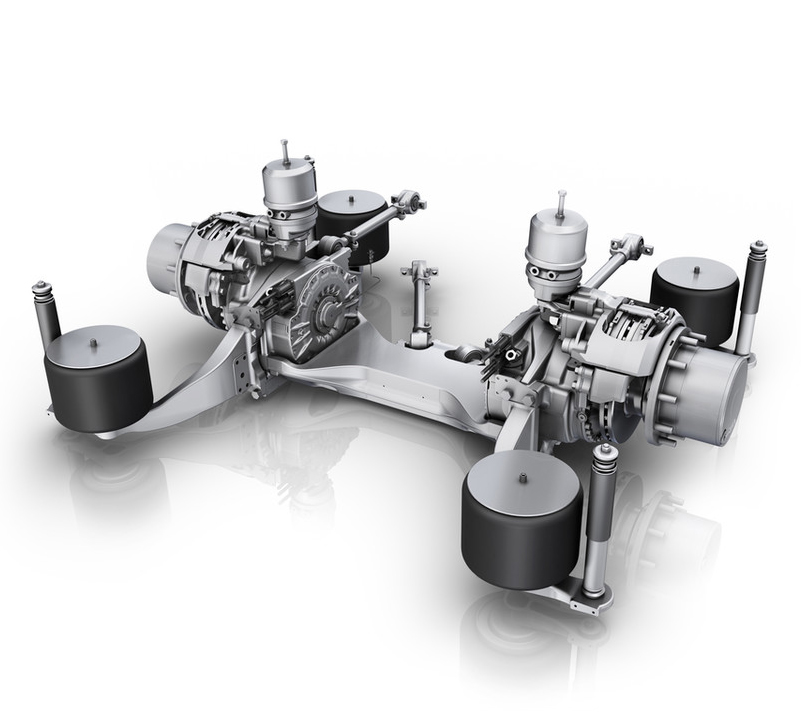
Adgero’s unique hybrid technology consists of an electrically driven axle mounted under the semi-trailer, powered by a bank of ultracapacitors, and controlled by intelligent management software that automatically controls regenerative braking and acceleration boost.

The UltraBoost ST uses a compact and lightweight YASA motor (the same axial flux motor as used in the Koenigsegg Regera) to recover kinetic energy, otherwise lost as heat during braking, and stores it in high-power graphene-based ultracapacitors from European manufacturer Skeleton Technologies – who helped develop the KERS technology for road haulage with Adgero last year.

Leading European manufacturer SDC Trailers installed the system on a 13.6m curtainsider trailer, finished in the livery of major UK-based transport and distribution company, Eddie Stobart. The transport operator will be conducting road testing of Adgero’sUltraBoost ST system in coming weeks.

President of Adgero SAS Mack Murray commented:

“The Adgero UltraBoost ST system has the potential to boost fuel efficiency, reduce overall fuel consumption and reduce associated emissions. And because our hybrid system can be easily and economically retrofitted to existing fleets, voluntary fleet-based implementation could have an immediate and meaningful impact on fleet costs and vehicle emissions within a very short timeframe.

“Road haulage accounts for over a fifth of the EU’s total CO2 emissions, so fuel efficient solutions are crucial. We are beginning to see regenerative braking systems in automotive applications but the market clearly needs a similar solution for articulated lorries.

“Unveiling the world’s first operational hybrid electric system for road transport at Britain’s biggest commercial vehicle show has taken a real collaboration between leading industry players and we’re now looking forward to the next phase of road testing in coming weeks.”

Head of Engineering at SDC, Jimmy Dorrian, said:

“Operator efficiency was the driving force behind the (KERS) trailer innovation. Our customers are always looking for ways to reduce their fuel consumption and overall carbon footprint, especially in demanding applications such as heavy terrain or continuous urban transport.”

Last week Adgero signed a €3.5 million distribution agreement to ensure the UltraBoost ST system for road haulage was powered by modules from Europe’s leading ultracapacitor manufacturer, Skeleton Technologies.

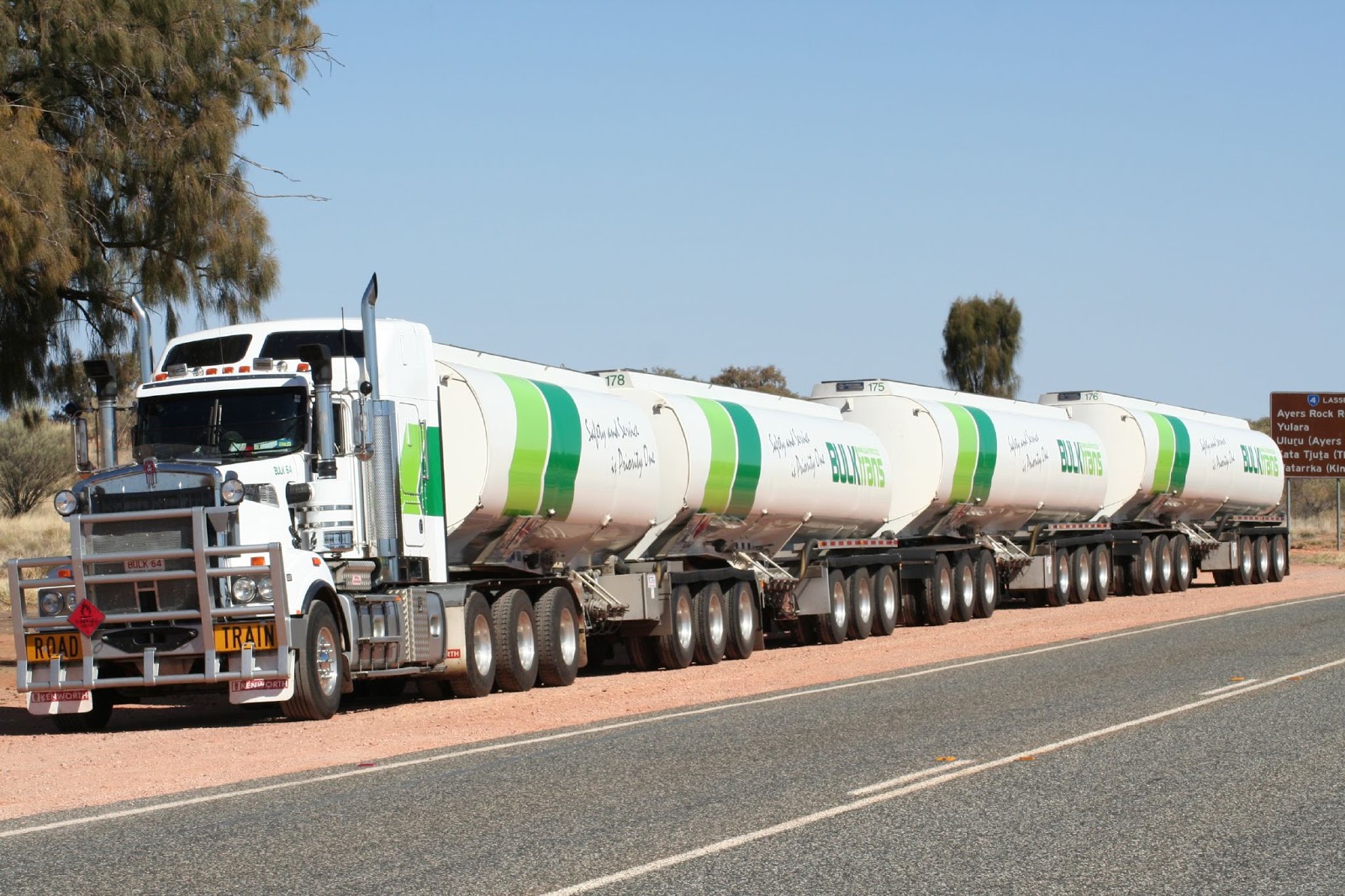
Combining such a distributed electric powertrain with a battery electric prime mover would provide not only range extension capability but also improve drive traction for both single and multi-trailer road trains.

Volvo targets one million electrified cars by 2025

Volvo has set itself a target of producing one million electrified cars by 2025, in a bid to serve the growing demand for battery-powered vehicles.

The Swedish car maker is aiming to produce two hybrid versions of every model in its range, with the first all-electric car expected to appear in 2019.

“It is a deliberately ambitions target,” said Volvo boss Håkan Samuelsson. “It’s going to be a challenge, but Volvo wants to be at the forefront of this shift to electrification”.

Volvo says it has been preparing for the move to electric vehicles for five years by developing two platforms, both of which can incorporate hybrid and electric technology, with one for large cars and one for small cars.

The Scalable Product Architecture (SPA) platform will be used for its 90 and 60 series models, with the soon to be launched 40 series using the Compact Modular Architecture (CMA). All of its models will be available with as electrified versions.

Last year, Volvo announced that it would launch an all-electric rival to Tesla, with a range of 325 miles, by 2019. Volvo says the years between 2020 and 2025 are a “period of critical acceptance” for the electric vehicle, as it aims to make electric cars part of the mainstream market.

LeEco Unveils LeSEE Autonomous Electric Vehicle Concept [VIDEO]

China's Le Holdings Co Ltd, also known as LeEco and formerly as LeTV, on Wednesday unveiled an all-electric battery concept car whose production version the company hopes will compete head-on with Tesla Model S.

The concept car, called LeSEE, which hints at a production version of the car LeEco is widely expected to launch in the future, is one of an array of similarly positioned premium electric vehicles (EVs) due to hit the market in the next few years from more than half a dozen Chinese-funded EV start-ups.

LeEco said the concept car, which will be displayed at next week's Beijing auto show, is not only fully electrically propelled but has been engineered to be a "smart", "connected" and "automated self-driving" car.

Jia Yueting, co-founder and head of LeEco, said he hopes that when the car hits the market it will help China's auto industry reach the forefront of the global auto sector.

"When everyone is questioning us over our ability to develop a car like this and is laughing at us, we are still able to be here and show you this car ... I am so emotional," Jia said at a LeEco launch event for several products in Beijing on Wednesday.

Jia said LeEco is also developing a car-sharing business in connection with its green car efforts.

He said one day LeEco cars would be offered free of charge to consumers because the company aims to make money on content and other services it sells through those connected cars. Jia did not say when that day might come.

"Our cars' pricing model will be similar to pricing models for cellphones and tv sets we sell today," he said. "One day our cars will be free ... We are getting there some day."

LeEco's electric vehicle unit and other EV startups in China proliferated after the government, looking to fuel a more determined switch to electricity as the ultimate alternative to petrol, liberalized and opened its automotive industry to allow deep-pocketed tech firms to invest as long as they dabble in electric cars.

Aside from LeEco, the likes of Baidu, Alibaba, Xiaomi Inc, Tencent and other tech firms have funded more than half a dozen EV start-ups, which include NextEV and CH-Auto.

Those new players have been emboldened by the government's all-out support for all types of electric cars, which includes generous incentives to buyers.

They also expect industry policymakers to mandate providers of public transportation such as bus companies, taxi operators and even courier services to purchase electric vehicles and invest in charging infrastructure to usher in an electric future.

LG Chem plans to build electric car battery factory in Poland – source

South Korea's LG Chem plans to build an electric vehicle battery factory in Poland to meet rising demand from European automakers, a person familiar with the matter said on Thursday.

"The plant will be completed in about one-and-a-half years," said the source, who did not want to be named as he was not authorized to talk to the media. He did not provide any details on the size of the investment.

The facilities, to be located in the southwestern Polish city of Wroclaw, will ultimately have a production capacity of 229,000 EV batteries a year, making it LG Chem's second-biggest EV battery factory after China, the source said.

The company also builds EV batteries in South Korea and the United States.

LG Chem - the battery supplier for General Motors' upcoming electric car Bolt - counts a total of 25 automakers globally, including Renault, Volkswagen, Audi and Volvo in Europe, as its customers.

A spokesman for LG Chem said it was considering adding car battery production facilities, but nothing had been decided.

Automakers around the world are expected to roll out a slew of electric vehicles to meet tougher emissions and fuel economy regulations, although there are concerns that current low oil prices will dent demand for fuel-efficient cars.

LG Chem's rival Samsung SDI, which has BMW as one of its customers, is also considering building an EV battery factory in Europe, a Samsung SDI spokesman said.

Electromagnetic Anti-Lock Braking for Electric Vehicles

In part 2 of this series (Part 1) we'll take a closer look at electromagnetic braking as a replacement for mechanical friction brakes in hybrid and electric passenger cars.

Electromagnetic braking is very well established in industrial applications. From 400 tonne mine haul trucks to 300 km/h Bullet trains, electromagnetic 'friction' is used to slow these high performance vehicles with industrial strength reliability, so why shouldn't it also be used on comparatively light weight private passenger vehicles ?

Lets take a look at a few of the more familiar applications of electromagnetic braking. Japan's Shinkansen high speed rail network has the best safety record on the planet: beating conventional trains, automobiles and flying. Over the Shinkansen's 50-plus year history, carrying over 10 billion passengers, there have been zero fatality / injury since 1964. Clearly many factors contribute to this but obviously the train braking system plays an important role, especially given the maximum operating speed is 320 km/h (200 mph).

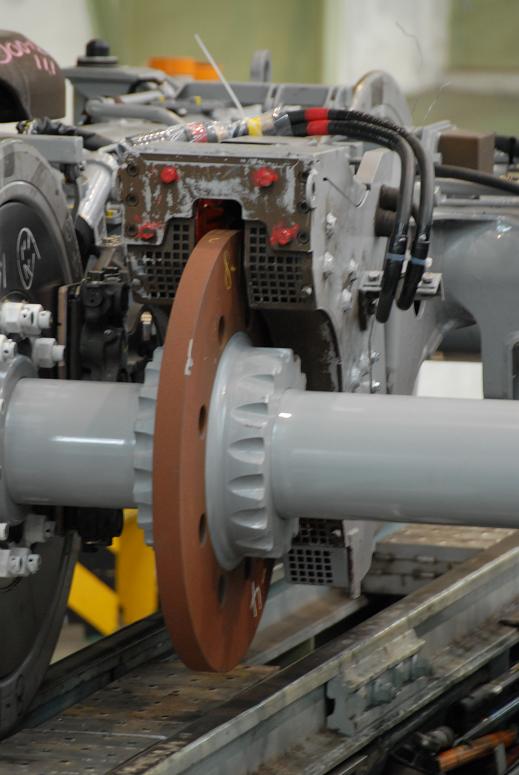
Bullet trains uses electricity to brake up to 640 tonnes down from 300 km/h at a controlled and predictable deceleration rate. Since 1984 all Shinkansen trains have used axial flux eddy current disc brakes (pictured above). These work along the same lines as an eddy current dyno where a steel brake rotor has electromagnets facing it, that when energised, induce eddy currents in the rotor which generates electromagnetic friction that converts the trains kinetic energy into heat.

With the only moving part being the rotor and no wear and tear from mechanical friction, eddy current brakes have proved incredibly reliable and no doubt contribute to the 100% safety record achieved by the Shinkansen rail system. Since 2007 next generation Bullet trains have moved to regenerative braking that uses the main traction motors which helps increase overall system efficiency.

Another very large vehicle that uses electromagnetic brakes is the 400 t class Liebherr T282B Mine haul truck. with a maximum operating weight of almost 600 tonnes, the T282B has no mechanical connection between the monster 90 liter V20 twin turbo diesel engine and the rear wheels.

Instead it takes advantage of high efficiency and maintenance free diesel-electric locomotive technology. Siemens provide two AC induction motors for the rear axle, engine mounted generator and the solid state computer controlled power inverters that are proven over millions of operating hours in trains. The main service brake electric retarders can slow the truck to a stand-still and provide precise speed control on descent using built in cruise control which works in both drive and retard modes.

The electric retarders can apply over 6,000 hp (4,489 Kw) worth of braking effort (the Diesel ICE maximum output is 'only' 3650 hp (2700 Kw). Like the Bullet train there is no battery storage system on-board so the regenerated energy is not stored for later use but is converted to heat via a stainless steel resistor grid in a systems called dynamic braking.

If ultra-reliable electromagnetic braking of 600 tonne vehicles hasn't convinced you then surely this last example will. Strictly speaking this is called magnetic braking as the source is permanent magnets, yet it is just as impressive.

Drop Tower amusement park rides feature up to 400 feet (120 m) towers with a carriage capable of taking up to 40 passenger aloft. Once 30 stories off the ground, the 25 tonne carriage is dropped and free-falls back down the tower reaching speeds of 105 km/h. Built by Swiss firm Intamin, the eddy current magnetic brakes pull the falling riders up at 2.5G from 100 to 0 km/h within 100 feet.

To put that into perspective, a Tesla Model S brakes from 100 to 0 km/h in 113 feet, weighs only 2.5 tonne and moves parallel to the ground, not hurtling head-first towards it.

The common threat between all the above braking applications is that mechanical friction brakes would simply not be capable of reliably doing the job. While these electric braking systems convert kinetic energy into heat, as do hydraulic friction brakes, using electromagnetic friction offers a non-contact method of braking that virtually eliminates maintenance and therefore reliability issues.

In the previous post we've seen evidence that hydro-mechanical friction brakes on hybrids and EVs have become redundant legacy systems primarily still required on vehicles because they provide mandatory safety systems. In order to allow electromagnetic braking to functionally replace systems like ABS & ESC not only do we need each wheel to have an electric motor to drive / brake each wheel independently, but also additional electromagnetic braking strategies other then just regeneration feeding kinetic energy into a battery pack.

Currently in hybrid and electric vehicles only a fraction of the electric motors full power is used for braking. For example, a Chevy Volt has 115 kw of electric motor power available for acceleration but only 60 kw for braking. Even a Tesla Model S with over 500 kw for acceleration is limited to 60 Kw maximum brake regeneration. The primary reason for this is battery cell charge limits. Most lithium ion batteries have asymmetric charge & discharge curves.

In order to allow full electric motor power to be applied in brake mode, alternative energy discharge methods are required. As we have seen in the examples provided above, there are several options from dynamic to eddy current braking and/or the addition of supercapacitors in parallel with the battery pack. With an electric motor for each wheel and full motor power available for braking, modulating the motors independently to perform anti-lock, stability control, emergency brake assist, automatic emergency braking and torque vectoring becomes a software project.

VW Push for All-Electric Rallycross Supercars

Volkswagen is considering the development of an all-electric rallycross supercar.

The German firm's head of technology Frank Welsch says the short, sharp format of rallycross events offers the perfect showcase for advances in electric car technology.

“I can certainly imagine a championship done with all-electric cars,” Welsch told Autocar. “The races are around six minutes long, which allows for short, intense bursts of competition and then charging.”

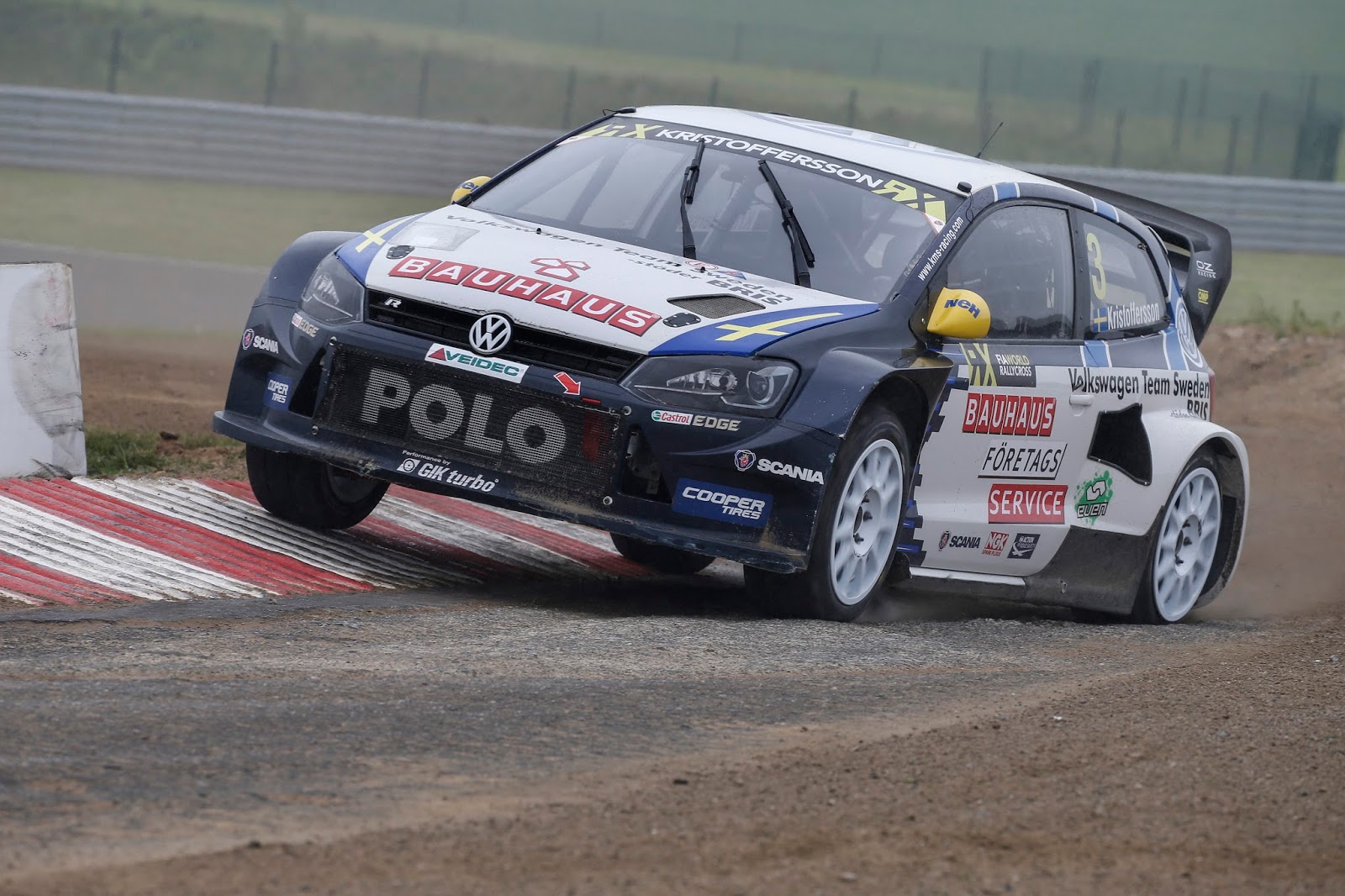
VW already competes in Red Bull Global Rallycross with factory Beetle GRCs and in FIA World Rallycross with Polo RXs. Both cars squeeze around 560 HP out of their tiny engines and reach 100km/h in just 2 seconds.

“Today these cars are super-powerful, have torque from hell and use all-wheel drive,” said Welsch. “Electric drivetrains could deliver that.”

Welsch went on to say that “If the championship moved that way it would be perfect for us.”

Are Friction Brakes Redundant on Electric Vehicles & Hybrids?

The Toyota Prius, the world's first mass-produced hybrid vehicle, went on sale in Japan in 1997. 18 years later with sales surpassing 8 million vehicles, we're starting to get a clear picture of how durable vehicles powered by electric powertrains are.

The humble Prius has proved so durable, with regular news of taxi operators surpassing 1 million km (the record stands at 1.5M km), there is even a thread on the priuschat website designated for Prius owners who have passed 299,999 miles (480,000 km).

Not only are most Prius achieving these distances on the original battery pack (dispelling that urban myth) but in many cases they are also still on the original factory fitted set of brake pads!! With a Prius able to use brake regeneration down to 10 km/h, industry standard hydro-mechanical friction brakes move from being a system made up of consumable parts to being a durable system that last the life of the vehicle.

Typical brake pad life expectancy on an ICE car is between 50-100,000 km with brake rotors needing replacement every 100-200,000 km so the increase in Prius pad life is in the 10x region.

If the relatively low powered 50 kw electric motor / generator in the Prius has made friction brakes 95% redundant, then vehicles like the BMW i3 with a much more powerful electric motor (125 kw) and aggressive speed variable brake regeneration capable of bringing the car to a complete stop, make friction brakes entirely a legacy system whose only function is to provide very low duty cycle safety functions such as Anti-Lock Brakes (ABS) and Electronic Stability Control (ESC).

Taxi operators running fleets of Nissan Leaf are also reporting high mileage on original brake pads and no doubt given enough time will also pass 500,000 km without a pad &/or rotor change. Leaf owners have the added benefit of not having an ICE to service (Prius ICE's reportedly consume excessive oil above 500,000 km) and with typical electric motor life measured in the 20-40,000 hour range, electric only powertrains could last in excess of 2 million kilometres of trouble free motoring, compared to a typical ICE car life expectancy of 320,000 km (200,000 miles).

The more brake regeneration becomes a standard in the automotive world, the more inevitable the elimination of the dead weight and costs associated with legacy friction brake systems seems. In order to allow electromagnetic braking to functionally replace all mandatory safety systems like ESC, each wheel requires an electric motor to drive / brake each wheel independently.

Technologies that we take for granted these days — like stability control and anti-lock brakes — paved the way for computer-controlled cars, and these long-established safety technologies are mandated by NHTSA etc. Automakers today agreed to make automatic emergency braking standard in US by 2022. Automatic braking, like lane keeping and dynamic cruise control, is considered a precursor to fully autonomous vehicles.

The convergence of vehicle electrification and self-driving cars will accelerate the need to consolidate all vehicle dynamic controls for propulsion and braking within a single system, i.e. Software Eats the Automotive Powertrain.

2017 BMW i3 to get 200 km (EPA) range, starts production in July

BMW will boost the range of its i3 electric car by about half for the 2017 model year.

This summer, the lithium ion battery pack of the compact EV will be improved, "which puts it into a much more usable range," Ian Robertson, BMW AG board member for sales and marketing, told Automotive News at the Detroit auto show.

BMW doesn't have the exact figure yet, but a 50 percent increase means about 200 km on a single charge, up from the current 130 km (EPA).

The 2017 i3 will begin production in July of 2016 and will use Samsung 94 Ah battery cells. The 2017 i3 needs the increase in range to compete with the 2016 30 kWh Nissan Leaf with 250 km range and the upcoming Chevy Bolt, which will have a range of 300+ km.

The i3 went on sale in the U.S. in the spring of 2014 and has a base price of $43,350 including shipping. A model with a range extender is also available -- with about double the range -- and starts at $47,200 including shipping. Those prices are before tax credits.

BMW sold 24,057 i3s worldwide last year, an increase of 50 percent from 2014. In the United States, BMW sold 11,024 i3s, up from 6,092 in 2014. Nearly 60 percent of those were with the range extender.

GM Buying 3 yo Self-Driving Tech Startup for $1 Billion

General Motors announced Friday it is buying Cruise Automation, a San Francisco self-driving vehicle startup, the latest move by the auto company as it competes with Silicon Valley to develop self-driving cars that could be used in ride-sharing fleets.

GM and Cruise did not disclose the value of the deal. Technology website Re/Code cited sources as saying GM paid $1 billion. A GM spokesman declined to comment on that figure. If correct GM has just set a new precedent for valuations of automotive tech start-ups.

GM intends to use Cruise’s technology and people to accelerate its effort to develop vehicles that can operate without a human driver, potentially as part of ride-sharing fleets “as soon as possible,” GM President Dan Ammann said in an interview.

“We will be committing considerable resources to recruit and grow the capability of the team,” Ammann said.

Cruise has been working to develop hardware and software that could be installed in a vehicle to enable the car to pilot itself on a highway, without the driver steering or braking.

GM initially planned an investment in the company but moved within five weeks to buy Cruise outright, said venture partner Nabeel Hyatt of Spark Capital, an investor in Cruise.

"They moved faster than most Silicon Valley companies would move," he said.

Cruise, which has 40 employees, was launched in 2013 and has raised $20 million in venture capital, founder Kyle Vogt said in an interview.

Vogt impressed Silicon Valley venture capital fund Signia Venture Partners by demonstrating an Audi A4 that could be controlled by a game console, said Signia principal Sunny Dhillon.

More recently, Cruise was working on a system that could make a car "fully driverless," Vogt said.

A flurry of investments by traditional auto companies reflects a fear among industry executives that the century-old business of building and selling cars that people drive themselves is at risk, even though global vehicle demand is strong.

In January, GM said it would invest $500 million in ride-hailing company Lyft Inc and followed that by forming a new car-sharing operation called Maven. The company has also established a separate unit for self-driving vehicle development.

Other automakers are moving into ride sharing and self-driving vehicles, as are some traditional auto suppliers.

Germany’s Continental and Delphi Automotive among others are seeking technology companies to buy for intellectual property and programming talent.

Panasonic & Bosch bid for Porsche Mission-E battery

Porsche AG has been weighing bids from Panasonic Corp. and Robert Bosch GmbH for a long-range battery as it prepares to challenge Tesla Motors Inc. with an all-electric sports car, according to people familiar with the matter.

Costs for the package offered by crosstown neighbor Bosch would be higher than the competing technology from Japanese peer Panasonic, which supplies Tesla’s batteries, said the people, who asked not to be identified because the talks are confidential. The advantage to Bosch’s offer would be less-complex logistics.

“We’re in the final stage of making a decision,” Porsche Chief Executive Officer Oliver Blume said in an interview last week at the Geneva International Motor Show. He declined to comment on the suppliers being considered.

The unit of Volkswagen AG, Europe’s largest automaker, earmarked 1 billion euros ($1.1 billion) to build its first battery-powered sports car in December. It’s part of the parent company’s broader push for more low-emission electric and hybrid cars. Volkswagen has sped up its electric efforts since admitting six months ago it had cheated on emissions tests for diesel cars.

Audi CEO Rupert Stadler said a week ago the company, a fellow Volkswagen unit, will purchase batteries for its electric vehicles from Korean suppliers LG Chem Ltd. and Samsung Electronics Co., who have plans in place to start producing battery cells in Europe.

Electric Investment

With the Volkswagen scandal throwing the long-term future of diesel into question, other carmakers are also turning anew to electric cars. Daimler AG’s Mercedes-Benz said last week it will invest 500 million euros to build a second battery factory in Germany because it expects demand to pick up.

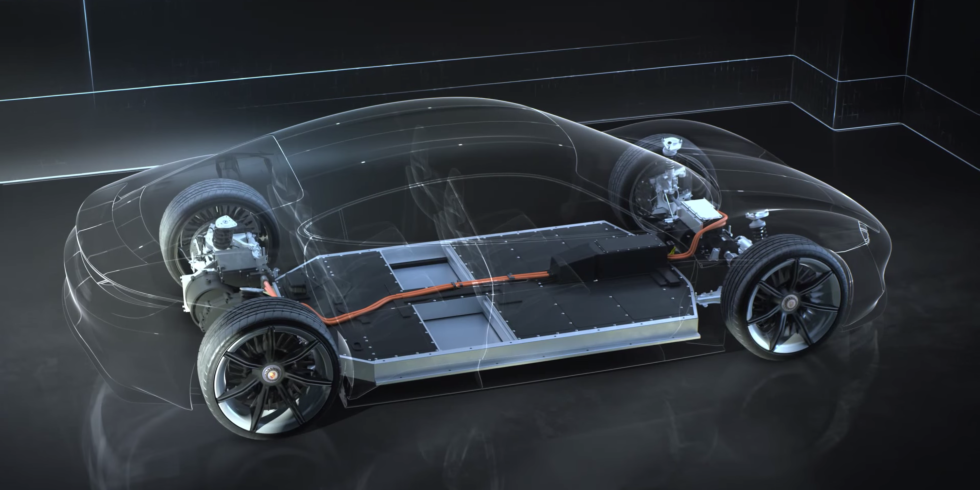
Porsche’s electric sports car will be based on the low-slung Mission E concept shown at the Frankfurt auto show six months ago. Set to be produced near the automaker’s German headquarters in Stuttgart, the new model will create some 1,000 jobs.

A spokesman for Porsche referred to the brand’s annual earnings conference, scheduled Friday morning, and declined to comment beforehand. Bosch declined to comment. Yayoi Watanabe, a spokeswoman for Panasonic, declined to comment.

Drive Unit and Battery at Heart of Chevrolet Bolt EV [VIDEO]

The 2017 Chevrolet Bolt EV does more than set a new benchmark for affordable, long-range EV driving. It also raises the bar when it comes to driving performance.

Engineers developed the Bolt EV’s propulsion system to offer more than an estimated 200 miles (based on GM estimates) and a peppy driving experience that’s more akin to a compact sports sedan than a small utilitarian crossover.

“Being the leader in range and affordability means nothing if the car isn’t going to excite you each time you get behind the wheel,” said Josh Tavel, Chevrolet Bolt EV chief engineer. “That’s why the team was tasked with delivering a propulsion system that would also make the Bolt EV an electric vehicle that owners would love to drive.”

Single Motor Drive Unit
Like most EVs on the road, the Bolt EV’s drive system uses a single high capacity electric motor to propel the car. But it’s the smooth, powerful and quiet motor design, gear configuration and shift-by-wire system that separates it from the pack.

The engineering team designed the Bolt EV’s electric motor with an offset gear and shaft configuration tailored to meet efficiency and performance targets – most notably more than an estimated 200 miles of range. The motor is capable of producing up to 266 lb.-ft. (360 Nm) of torque and 200 hp (150 kW) of motoring power. Combined with a 7.05:1 final drive ratio, it helps propel the Bolt EV from 0-60 mph in less than seven seconds.

Power delivery is controlled by Chevrolet’s first Electronic Precision Shift system. This shift and park-by-wire system sends electronic signals to the Bolt EV’s drive unit to manage precise feel and delivery of power and torque, based on drive mode selection and accelerator inputs. A by-wire shifter requires less packaging space than a traditional mechanical shifter, resulting in more interior space and improved interior layout.

60 kWh Battery System
Having more than 1.3 billion miles of EV experience from the Chevrolet Volt helped Bolt EV battery engineers and strategic partner LG Electronics to develop an all-new cell and battery pack to offer more than an estimated 200 miles of range.

Battery system preliminary specifications include:

  • 60 kWh lithium-ion battery pack.
  • 288 lithium ion cells
  • Five sections
  • 10 modules
  • 96 cell groups – three cells per group
  • 960 lbs. (435 kg) total weight

    “You usually have a battery cell that delivers either the desired levels of energy or power, but not traditionally both. With this cell design and chemistry we were able to deliver a battery system with 160 kilowatts of peak power and 60 kilowatts hours of energy,” said Gregory Smith, Bolt EV battery pack engineering group manager.

    The battery uses active thermal conditioning, similar to the Chevrolet Volt, to keep the battery operating at its optimum temperature, which results in solid battery life performance. The Bolt EV battery will be covered by an 8-year/ 100,000 mile (whichever comes first) limited warranty.

    Inside the battery pack – which spans the entire floor, from the front foot well to back of the rear seat – is a new cell design and chemistry. The nickel-rich lithium-ion chemistry provides improved thermal operating performance over other chemistries, which requires a smaller active cooling system for more efficient packaging. The chemistry allows the Bolt EV to maintain peak performance in varying climates and driver demands.

    The cells are arranged in a “landscape” format and each measures in at only 3.9 ins. (100 mms) high and 13.1 ins. (338 mms) wide providing improved packaging underfloor. The lower profile cell design enabled the vehicle structure team to maximize interior space.

    The battery system is mated to a standard equipment 7.2 kW onboard charger for regular overnight charging from a 240-V wall box. A typical commute of 50 miles can be recharged in less than two hours. Bolt EV also features an optional DC Fast Charging system using the industry standard SAE Combo connector. Using DC Fast Charging, the Bolt EV battery can be charged up to 90 miles of range in 30 minutes. Outside temperatures may affect charging times.

    Regen System Provides One-Pedal Driving
    Regenerative braking has become more than just a tool to boost range, it’s also transformed into a feature that can provide an improved EV driving experience. The Bolt EV features a new regenerative braking system that has the ability to provide one pedal driving.

    “Interviews with EV enthusiasts indicated their desire for one pedal driving capability on the Bolt EV. One pedal operation boosts the thrill and uniqueness of EV driving,” Tavel said.

    Through a combination of increased regenerative deceleration and software controls, one pedal driving enables the vehicle to slow down and come to a complete stop without using the brake pedal in certain driving conditions.

    When operating the Bolt EV in “Low” mode, or by holding the Regen on Demand paddle located on the back of the steering wheel, the driver can bring the vehicle to a complete stop under most circumstances by simply lifting their foot off the accelerator, although the system does not relieve the need to use the brake pedal altogether.

    Operating the Bolt EV in “Drive” mode and not pulling the paddle while decelerating delivers a driving experience where usage of the brake pedal is required to stop.

  • Daimler to invest 500 million Euros in new battery factory in Germany

    Daimler will invest 500 million Euros in a new battery factory in Germany. The new battery factory will produce lithium-ion battery packs for hybrid and electric vehicles for Mercedes-Benz and smart brands.

    Li-Tec, a subsidiary of the Daimler Group, ceased manufacture of battery cells in December 2015. The majority of the 280 employees were transferred to the Deutsche Accumotive—also a wholly owned Daimler subsidiary—which manufactures battery packs based on LG Chem cells.

    Daimler consistently expands its activities in the area of electromobility and invests around 500 million Euros in the construction of a new battery factory. This will lead to a significant expansion of the production capacities for lithium-ion batteries of Deutsche ACCUMOTIVE located in the Saxon city of Kamenz.

    The new factory will produce batteries for electric and hybrid vehicles of the brands Mercedes-Benz and smart. As a first step, the full Daimler subsidiary has purchased about 20 hectares of land adjacent to the existing battery factory.

    "To get closer to fully electric driving, we keep investing big in the key component of emission-free vehicles: powerful batteries. We are now devoting another 500 million Euros to build a second battery factory in Germany. This underlines our commitment to the consistent expansion of electromobility", said Dr. Dieter Zetsche, Chairman of the Board of Management of Daimler AG and Head of Mercedes-Benz Cars.

    Daimler announced a initial 100 million euros investment to expand East German battery pack output in 2014.

    With the growing electrification of the automobile, the demand for highly efficient lithium-ion batteries is also rising steadily. Through its entry into the new business field with stationary battery storage for private and industrial applications, Deutsche ACCUMOTIVE will tap into additional growth opportunities.

    By the end of 2014, the Daimler subsidiary had already announced its plans for a significant increase in its production capacities and an investment of around 100 million Euros in the expansion of the existing battery factory. "With the purchase of the new land, our production area at the site will be tripled.
    The previous 20,000 square meters will be stocked up by an additional 40,000 square meters of production space. We will expand the production capacity consistently in the coming years", said Harald Kröger, Head of Development Electrics/Electronics and e-Drive Mercedes-Benz Cars.

    The groundbreaking ceremony for the new factory is planned for fall 2016. The topping-out ceremony will then follow in spring 2017. The new production plant is to start operations in summer 2017.

    Daimler entered into the business with stationary battery storage with Deutsche ACCUMOTIVE last year. The scalability of the systems enables the use of the lithium-ion batteries in big industry for network stabilization and smoothing of peak shaving for energy producers as well as private households, for example in conjunction with photovoltaic installations.

    Mercedes-Benz energy storage units for private households can already be ordered and will soon be installed at customers in collaboration with selected sales partners. In the area of industrial applications, around 29 megawatt will be connected to the network jointly with different partners.

    Tesla Model X vs Model S P90D 1/4 Mile Drag Race [VIDEO]

    Watch the all new Tesla Model X P90D Ludicrous race the Model S also with Ludicrous in an all out drag racing shootout.

    The Model X P90D with the $10,000 Ludicrous Mode runs 11.61 @ 116 MPH in the 1/4 mile setting a new world record for the quickest production SUV/CUV. 0-60 MPH came up in just 3.1 seconds. The Model S ran 11.3-11.5 @ 116 MPH.

    Source: Dragtimes