Vision Mercedes-Maybach 6 EV concept [VIDEO]

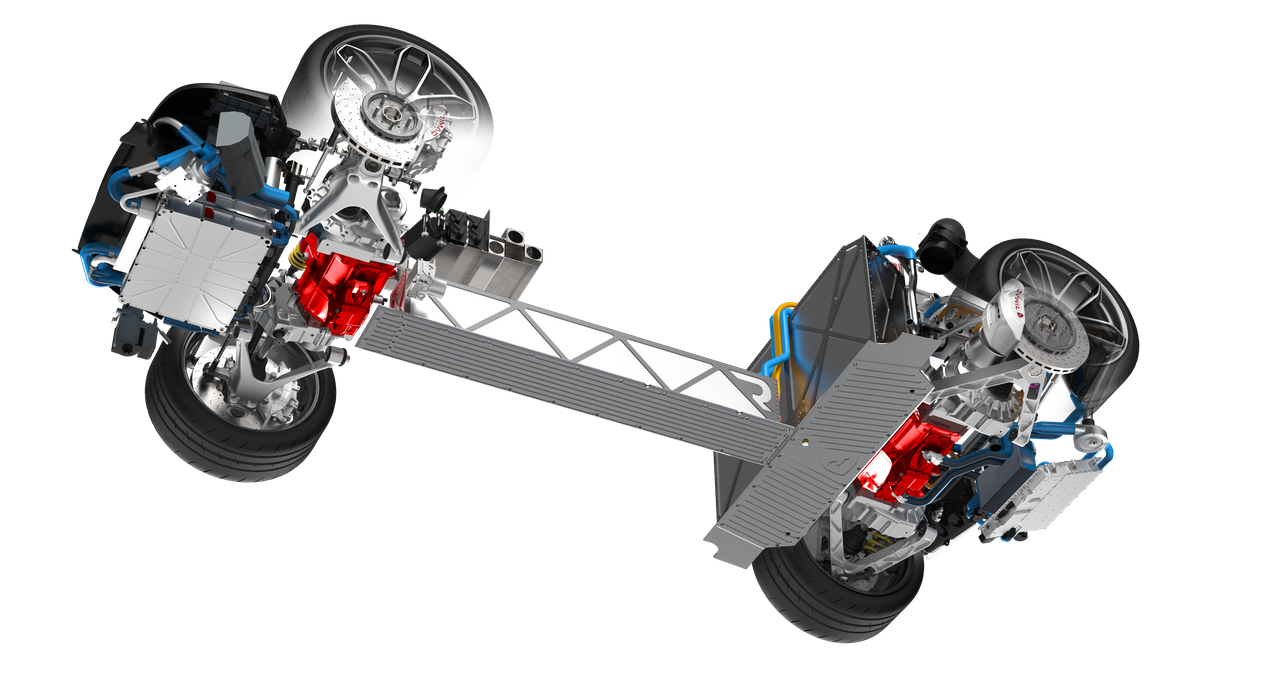
Four compact electric motors, all-wheel drive, 750 hp and an underfloor 80 kWh battery

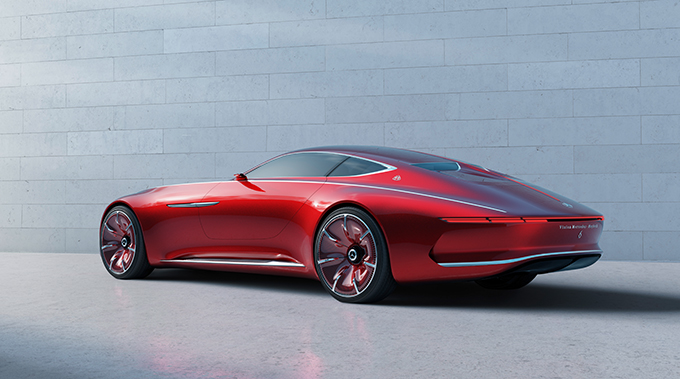
Every August classic car fans from around the world converge on Pebble Beach in California for a very special beauty contest. This gathering of magnificent classic cars is the perfect place to premiere the exclusive Vision Mercedes-Maybach 6, a sensational luxury-class coupé. The 2+2‑s eater is a homage to the glorious age of the aero coupés and consciously carries this tradition forward into the future. The coupé reinterprets classic, emotional design principles in an extreme way, following the Mercedes design philosophy of sensual purity.

The Vision Mercedes-Maybach 6, which measures almost six metres in length, is designed as an electric car. The drive system has an output of 550 kW (750 hp). The shallow underfloor battery allows a range of over 500 kilometres according to the NEDC (over 200 miles according to EPA).

The large coupé is set to make its debut at Monterey Car Week, which will take place on the Monterey Peninsula between 16 and 21 August 2016. The final event on 21 August will be the Pebble Beach Concours D’Elégance.

With its sensual, emotional design (“hot”) and intelligent details (“cool”), the Vision Mercedes-Maybach 6 represents the ultimate in luxury. The classic aesthetic proportions of the show car – the extremely long bonnet, the low roof line and the rearward positioning of the greenhouse – recall the aero coupés of days gone by. But this is not retro design – this is a reinterpretation of classic, aesthetic principles.

At the same time the design is something unexpectedly new – cool, technoid and reduced. This is exemplified by the aerodynamically intelligent basic shape. Even without aids such as spoilers, the airflow hugs the contours of the vehicle body and only breaks away very late at the tail end of the vehicle. Then there is the surprisingly technoid character of the narrow lights, the partially transparent rims and the split rear window.

“Our glamorous coupé, the Vision Mercedes-Maybach 6, represents the ultimate in contemporary luxury. It is hot and cool”, states Gorden Wagener, Head of Design at Daimler AG. “With its intelligent appeal and reduced, technoid look, it perfectly embodies our design philosophy of sensual purity and our pursuit of aerodynamic efficiency”.

Reinterpretation of classic, aesthetic principles: the exterior design

Clearly defined contours and organically formed wings stand in contrast to the sharply drawn, extended feature line on each side which defines the upper vehicle body from the radiator grille across the entire length of the vehicle to the rear. Below this, the main body has a bulging, muscular look, extending across the entire flank. There is also a striking contrast between the Maybach red paintwork and the chrome strips which sit above the wheel arches and in the centre of the bonnet and boot lid.

A reinterpretation of the Mercedes-Maybach radiator grille with its fine, vertical struts accentuates the front end. The grille was inspired by a pinstriped suit. The radiator grille rests on two aerodynamically shaped supports on the outer right and left of the bumper.

The distinctive 24-inch wheels are a development of the aero rim from the Concept IAA (Intelligent Aerodynamic Automobile). A transparent shield in the vehicle colour provides a view of the aluminium spokes behind it.

A further highlight is provided by the gullwing doors, a hallmark Mercedes design element which has been brought up to date. They underline the sporty character of the vehicle’s silhouette and feature innovatively designed aluminium trim. The exterior mirrors designed as cameras are supported on the wings.

The extended, round “boat tail” format of the Vision Mercedes-Maybach 6’s rear recalls a luxury yacht, and narrow tail lights which emphasise the width of the vehicle are integrated in its outer edges. Above this sit the two extremely shallow rear windows (“split window”). Further distinctive features at the rear include the diffuser with aluminium frame and the air outlets behind the wheel arches.

Luxurious 360° lounge featuring new materials: the interior design

The interior of the Vision Mercedes-Maybach 6 is a synthesis of intelligence and emotion and combines traditional Mercedes-Benz values with a new high-tech experience.

The dashboard wing curves across the door trim into the seat landscape, creating a 360° lounge. The new “inside out” spatial design adds a particular touch of finesse. The sitting surface forms a horizontal, which transitions into the vertical of the doors and finally becomes the underside of the dashboard wing.

In addition to the flowing contours, the material composition produces a luxury experience of the highest order. Authentic materials and colours such as rose gold are used to create luxurious accents. The interior, with its high-quality leather trim, has a cool colour scheme which perfectly underlines the digital innovations. The sitting surfaces have a Chesterfield look. In the doors and dashboard the traditional wood trim softens the appearance of the digital control and display interfaces. As a contrast to the digital world of the displays, elm is used in the floor area, creating a refined yachting look. Elm is the palest open-pore wood which Mercedes-Benz is currently working on for series use.

In the front luggage area of the Vision Mercedes-Maybach 6 is a set of two suitcases, exclusively created for the vehicle. Here too the designers have followed the sensual, pure design idiom of Mercedes-Benz. Plenty of space has also been provided for further additions such as picnic accessories or personal items.

Dipping into the future: a fusion of analogue and digital experience

Ever since Mercedes-Benz invented the car 130 years ago, driving has been a source of enjoyment and delight. With the increase in digitisation comes a simultaneous need for sustainable analogue solutions, the design of which has been emphasised and in places exaggerated in the concept car. In the Vision Mercedes-Maybach 6 this can be seen above all in the “hyperanalogue” instruments with needles and circular, crystal-look displays.

The classic circular instruments are combined with deep displays and act as a reference to the unique history of Mercedes-Benz. In contrast, other display elements are digitally integrated into a continuous glass trim part. Information about the seat, for example, can be shown on this digital strip. Map information is also shown in the front area of the strip. Menu content is extended along a digital line which extends to the sides as far as the occupants, who can set their own content ergonomically using touch control.

The front windscreen serves as a transparent display: driving-related data and geographical information is shown across its full width, augmenting the outside world with additional information. This information can be controlled and adjusted by the occupants using gestures.

The luxury padded leather upholstery is a particular highlight. Its traditional look is combined with future technology here – the buttons which would normally be trimmed in leather have been replaced in the upholstered surfaces by miniature “body sensor displays”. These scan the passengers and monitor, for example, their vital functions. As a result, comfort features such as seat climate or the massage function, for example, can be activated or the seat settings adjusted to the passenger. The sensors embedded in the upholstery also record the incidence of light, the colour of the occupant’s clothing and the ambient temperature. This information can be used to trigger new, emotional lighting effects in the interior.

The concept car aims to embody the ultimate in luxury, and this is underlined by the fact that the driver can switch to digital/autonomous mode. Another highlight is offered by the floating, transparent centre tunnel, which visualises the drive system’s electrical energy flow for the occupants.

Emission-free driving: electric drive system generating 550 kW (750 hp)

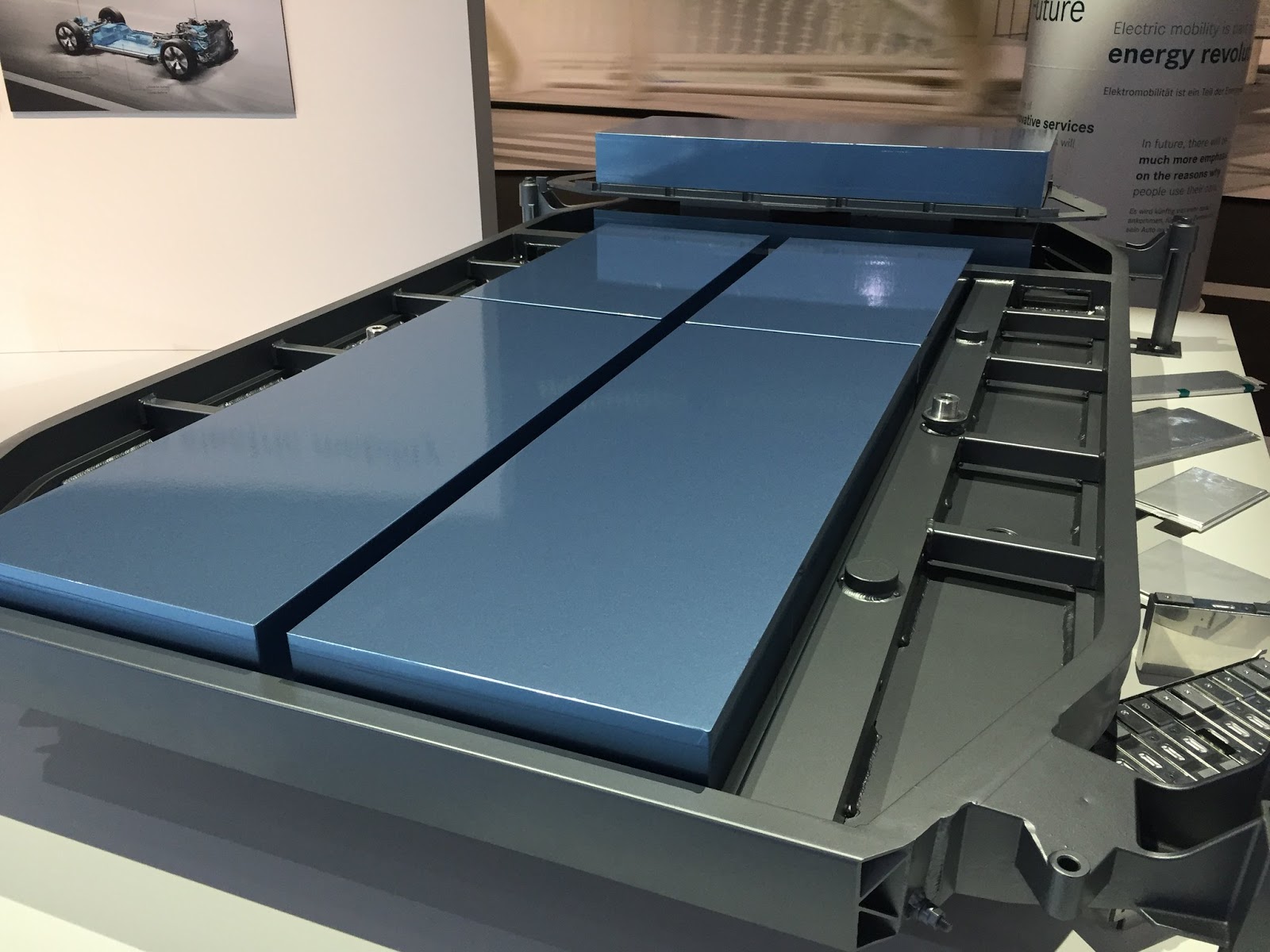
The side sills, illuminated by LED light strips, clearly underline the fact that the Vision Mercedes-Maybach 6 is designed as an electric car. Thanks to its four compact permanent magnet synchronous electric motors, it features all-wheel drive. The output of the drive system is 550 kW (750 hp). The shallow underfloor battery has a usable capacity of approx. 80 kWh. This not only allows performance characteristics typical of a sports car (acceleration from 0‑1 00 km/h in under four seconds, top speed electronically governed at 250 km/h) but also a range of over 500 kilometres according to the NEDC (over 200 miles according to EPA).

Vision: add an extra 100 kilometres to the range in just five minutes

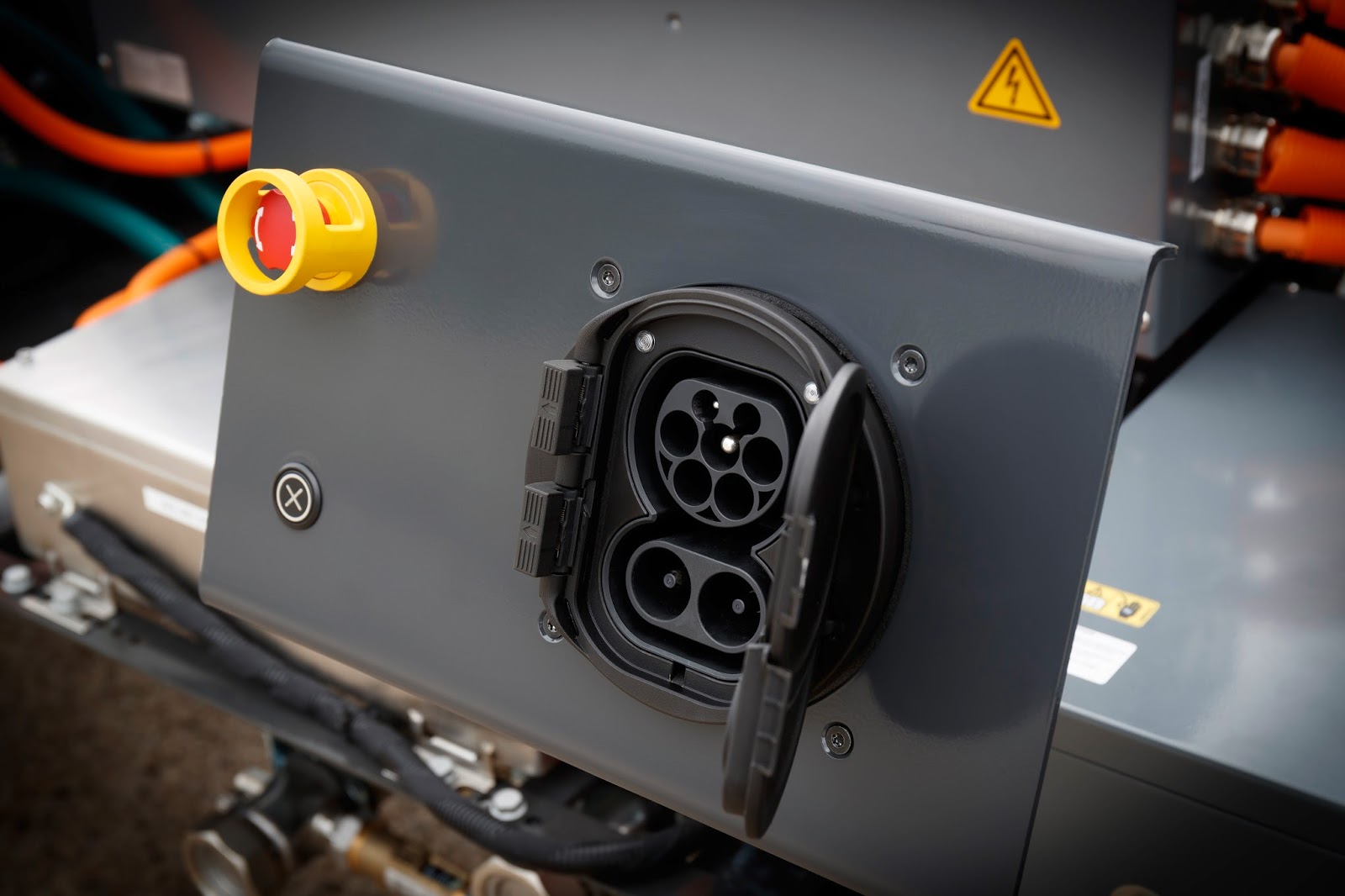
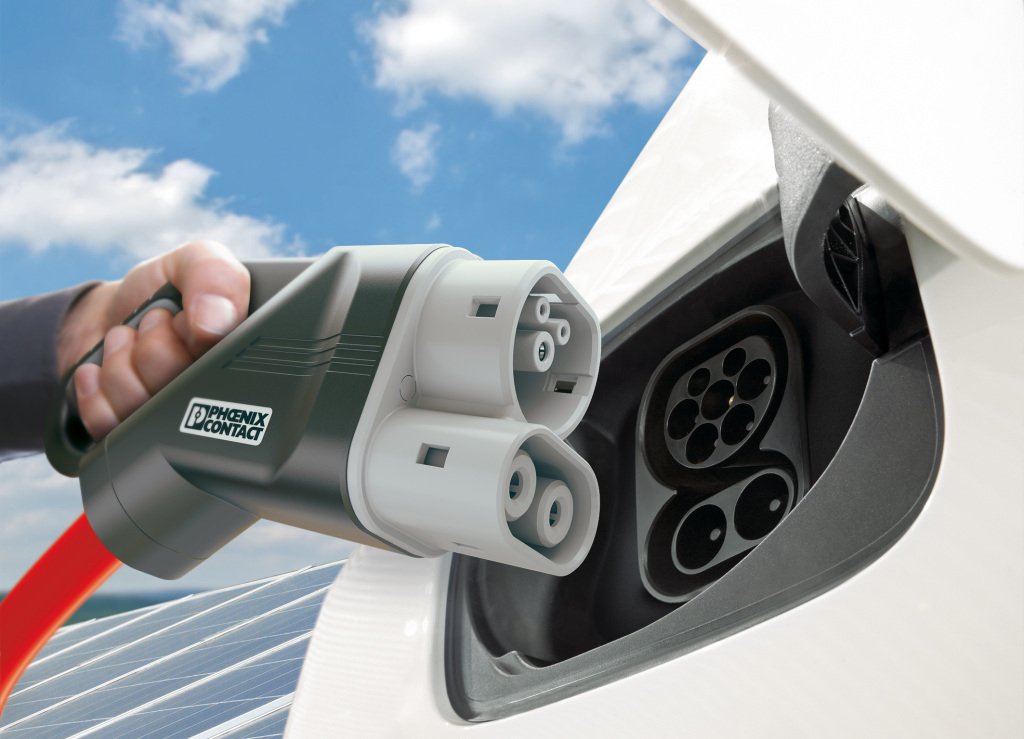
The quick-charge function is also visionary: as a result of DC charging based on the CCS standard, the system allows an impressive charging capacity of up to 350 kW. In just five minutes enough power can be charged to achieve an additional range of around 100 kilometres.

The battery can either be charged via a cable connection at a public charging station or a conventional domestic outlet or, for even more convenience, it can be charged wirelessly, via an electromagnetic field.

The wow effect: visionary show cars with long-term prospects

With its impressive dimensions, the Vision Mercedes-Maybach 6 (length/width/height: 5700/2100/1328 millimetres) is the first luxury coupé in the series of visionary design show cars from Mercedes-Benz. These include the Vision EnerG‑Force (Los Angeles, November 2012), AMG Vision Gran Turismo (Sunnyvale, 2013) and Vision Tokyo (Tokyo, 2015). Thanks to the global nature of the Mercedes-Benz Design function, these concept vehicles take cues from local trends in design, culture and mobility and make these the focal point of the respective mobility concept. At the same time these show cars are looking far into the future.

Mercedes-Maybach: perfection blends with exclusivity

Mercedes-Maybach stands for the ultimate in exclusivity and individuality. The target group is made up of status-oriented customers. The current vehicles include the Mercedes-Maybach S 500 and S 600 models, launched in February 2015, which blend the perfection of the Mercedes-Benz S‑Class with the exclusivity of Maybach. A special protection version, the Mercedes-Maybach S 600 Guard, is the world’s first passenger car to meet the highest ballistic protection level for civilian vehicles, VR10.

The most recent model is the Mercedes-Maybach S 600 Pullman with face-to-face seating. Launched at the beginning of 2016, it adopted the mantle of absolute top-of-the-line model.
Tesla Model S P90D Ludicrous Refresh now a match for Rimac [VIDEO]

Following Rimac's recent video of their Concept One achieving 0-100 km/h in 2.6 seconds, it seems Tesla have that covered.

Drag Times recently tested a refreshed Tesla Model S P90D Ludicrous where the 5 door sedan ran 0-60 MPH just 2.6 second.

Sure, 60 miles per hour is only 96 kilometers per hour but it's close enough to make no difference.

A leading theory is that those vehicles already feature software-limited 100 kWh battery packs capable of higher power outputs.

Others speculate that Tesla developed new battery pack parts, like it did for the Ludicrous upgrade (new contactor and fuse), in order to optimize the upcoming 100 kWh pack and it introduced those parts in the existing packs before the release of the new one.

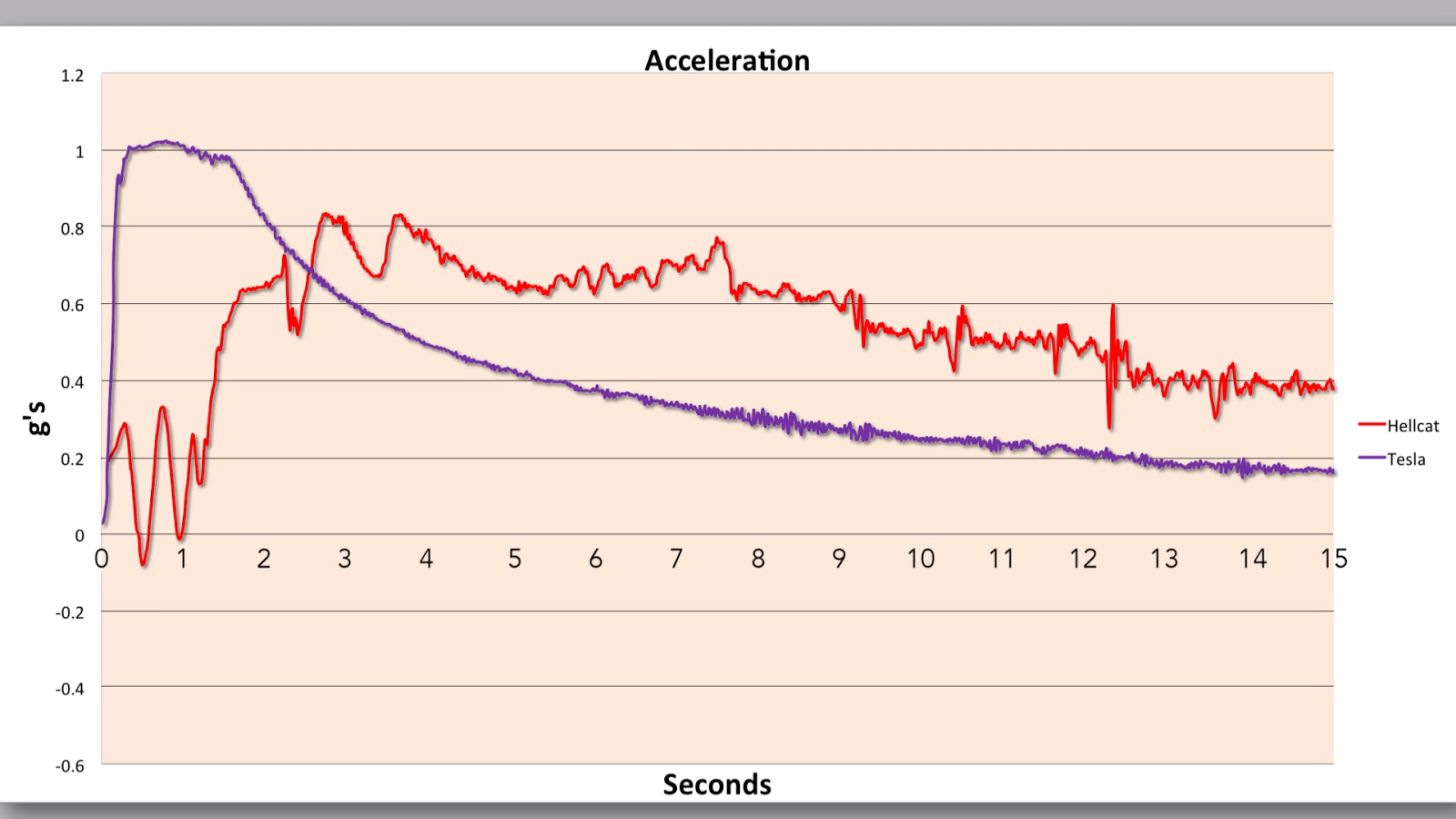
3 phase AC Induction motors, as used by Tesla, can withstand huge 'peak' performance in short bursts. Most of the mind numbing acceleration happens within the first second, as can be seen in the graph below. The P90DL leaps to 1.35g within the first 0.5 sec and maintains 1g+ for 1.5 seconds. The old P85D achieved a peak of 1.05 g for 1.2 second.

Chevrolet Bolt EV Ride Along [VIDEO]

Chevy hopes to achieve huge success with the Bolt. The EV has a $37,500 starting price before the $7,500 federal tax credit. The Bolt has a 200-mile rated range from an onboard 60 kWh battery pack. Those numbers put the Bolt squarely in the sights of people looking for a moderately priced electric car with a reasonable driving range. Much of the Tesla Model 3’s pre-order success has been attributed to those same factors.

The list of Bolt components supplied by LG defines the car’s performance and most of its user experience. LG is producing the electric drive motor, power inverter module, battery pack, battery heater, onboard charger, high-power distribution module, accessory power module, and power line communication module. The South Korean company is also making the electric climate control system compressor, the instrument cluster, and the infotainment system.

That full inventory of parts will be transported to Michigan where they will be used to make Bolts in GM’s Orion Charter Township assembly plant. With the LG parts on hand, full production starts in October. Finished Bolts will be rolling off car carriers onto dealership lots shortly after production starts.

Karma Revero – First Drive [VIDEO]

Karma Automotive, the Chinese-owned carmaker once known as Fisker Automotive, has revealed the Revero, a rebooted version of the Fisker Karma, which will cost more than the $115,000 sticker price on the original when deliveries begin in 2017. The car will be able to go about 50 miles (80 kilometers) in pure electric drive before a gasoline engine kicks in and it also has a 200 watt solar panel on the roof that can charge the battery.

Karma’s plan is to sell an exclusive sports sedan to people who currently buy the Tesla Model S and other expensive sporty cars. Under Wanxiang Group Corp. and its chairman Lu Guanqiu, Karma is one of several Chinese-backed plug-in car companies that are targeting the U.S. market with electric cars that will take on Tesla Motors Inc.

Karma is among the first to use solar panels to charge a production car’s high-voltage battery that powers the motor. The predecessor company’s original car, called the Fisker Karma, used a solar panel to charge the 12-volt battery that powers lights and other accessories and Toyota Motor Corp. has used solar power in the Prius to run the ventilation system. Toyota’s new Prius Prime plug-in, going on sale this year, will have an optional solar panel to charge the battery for buyers in Europe.

Karma has been working to get back to car production since its predecessor company, Fisker, defaulted on a U.S. government loan and went bankrupt in 2013. Wanxiang, an auto parts maker, bought its assets out of bankruptcy the following year. The company has filed documents seeking to open a $375 million factory in Hangzhou, China.

As Karma rolls out its electric-drive technology, it wants to add smaller plug-in hybrids and fully electric cars to its lineup, Taylor said.

Similar to Tesla’s strategy with low-volume sellers like the early Roadster and Model S, Karma wants to use the Revero to start building its capabilities and intellectual property so the company can eventually build cars in higher volume, Taylor said.

The predecessor company sold 2,000 cars, Taylor said. Those owners will get the first chance to reserve and buy the new model this week, he said. Costa Mesa, California-based Karma will make about 900 Reveros in the first year and boost production later, Taylor said.

2023 BMW i8 to double power to 750hp + torque vectoring

As the EV technology arms race gathers pace, the second generation BMW i8 is rumored to boost power output from it's current 350 hp to a more Tesla like 750 hp.

Automobile reports that the next-generation i8 will ditch the current i8’s three-cylinder, range-extending internal combustion engine in favor of going all-electric with three high-revving (25,000rpm) electric motors producing a total of 750 hp and more potent batteries capable of delivering a 500 kilometre range. Also part of the package are four-wheel drive, four-wheel steering, torque vectoring, and an active suspension system that scans the road ahead.

While the front axle mounted electric motor in the current i8 revs to 11,400 rpm and is mated to a 2 speed GKN transmission, using high revving electric motors could potentially allow a single speed reduction gearbox yet still achieve terminal velocity on Autobahnen.

The rumored three electric motor powertrain would have BMW only catching up to the recently launched Acura NSX. The Honda has a three electric motor torque vectoring systems with dual motors up front and combined ICE/eMotor at the rear.

Back in 2012 Mercedes demonstrated the full potential of all-wheel-drive torque vectoring with their Mercedes SLS E-Cell. By the time the next gen i8 launches around 2022-2023, a full decade after the SLS E-Cell, we can only hope BMW's next generation EV sports car at least meets if not exceeds that benchmark.

Audi reveal eROT energy harvesting ‘regen’ shock absorders

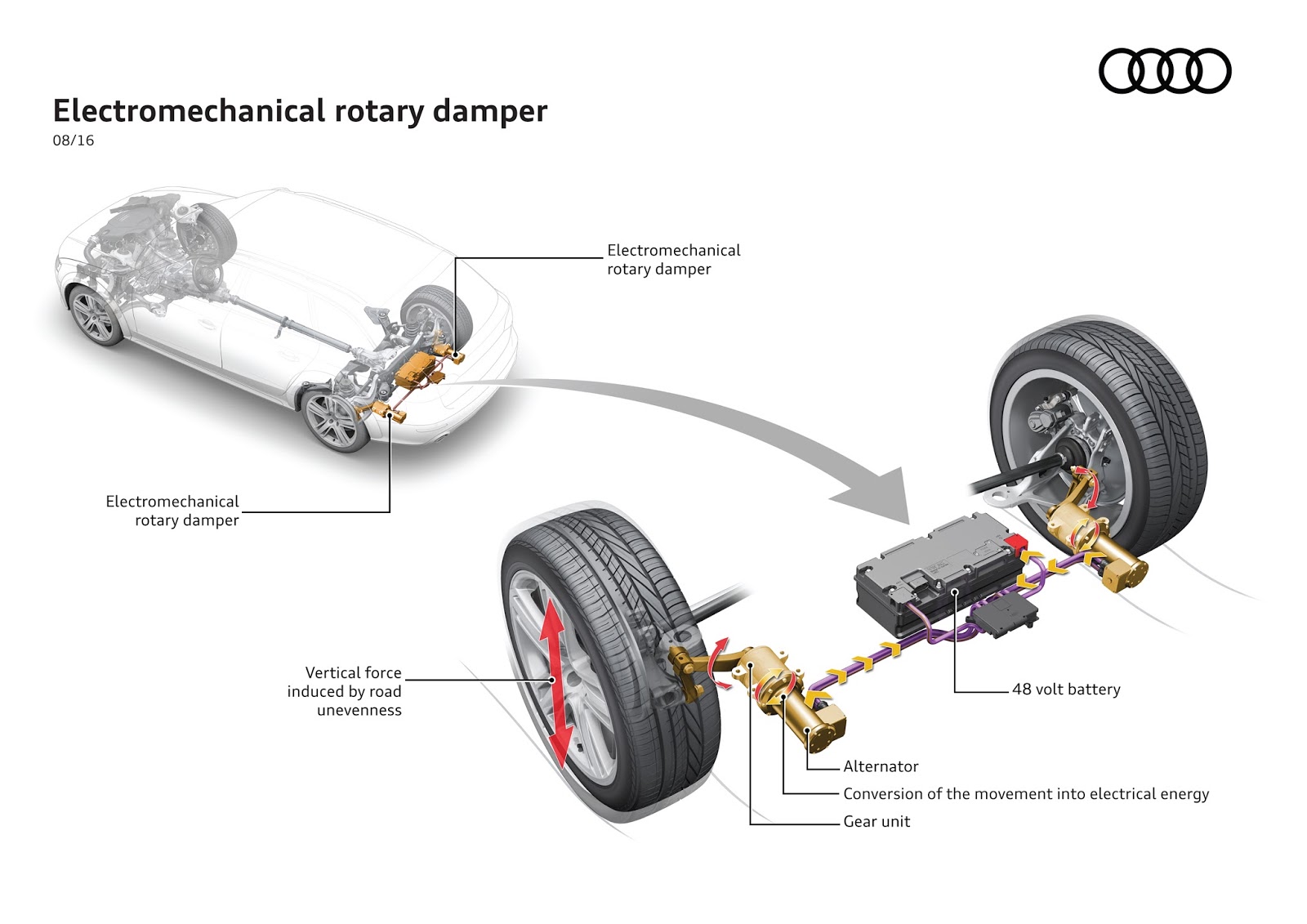
We have reported on a wide range of energy regenerative shock absorbers over the years that most often convert linear motion into electricity. Audi is working on a prototype called “eROT,” in which electric motors replace telescopic shock absorbers in the form of electromechanical rotary dampers.

The principle behind eROT is easily explained: “Every pothole, every bump, every curve induces kinetic energy in the car. Today’s dampers absorb this energy, which is lost in the form of heat,” said Dr.-Ing. Stefan Knirsch, Board Member for Technical Development at AUDI AG. “With the new electromechanical damper system in the 48-volt electrical system, we put this energy to use. It also presents us and our customers with entirely new possibilities for adjusting the suspension.”

The eROT system responds quickly and with minimal inertia. As an actively controlled suspension, it adapts ideally to irregularities in the road surface and the driver’s driving style. A damper characteristic that is virtually freely definable via software increases the functional scope. It eliminates the mutual dependence of the rebound and compression strokes that limits conventional hydraulic dampers. With eROT, Audi configures the compression stroke to be comfortably soft without compromising the taut damping of the rebound stroke. Another advantage of the new damper system is its geometry. The horizontally arranged electric motors in the rear axle area replace the upright telescopic shock absorbers, which allows for additional space in the luggage compartment.

The eROT system enables a second function besides the freely programmable damper characteristic: It can convert the kinetic energy during compression and rebound into electricity. To do this, a lever arm absorbs the motion of the wheel carrier. The lever arm transmits this force via a series of gears to an electric motor, which converts it into electricity. The recuperation output is 100 to 150 watts on average during testing on German roads – from 3 watts on a freshly paved freeway to 613 watts on a rough secondary road. Under customer driving conditions, this corresponds to a CO2 savings of up to three grams per kilometer (4.8 g/mi).

The new eROT technology is based on a high-output 48-volt electrical system. As currently configured, its lithium-ion battery offers an energy capacity of 0.5 kilowatt hours and peak output of 13 kilowatts. A DC converter connects the 48-volt electrical subsystem to the 12-volt primary electrical system, which includes a high-efficiency, enhanced output generator.

Initial test results for the eROT technology are promising, thus its use in future Audi production models is certainly plausible. A prerequisite for this is the 48-volt electrical system, which is a central component of Audi’s electrification strategy. In the next version planned for 2017, the 48-volt system will serve as the primary electrical system in a new Audi model and feed a high-performance mild hybrid drive. It will offer potential fuel savings of up to 0.7 liters per 100 kilometers.

Mercedes-Benz unveil all-electric 26T heavy-duty Urban eTruck

Daimler Trucks presented the Mercedes-Benz Urban eTruck in Stuttgart today, as the first fully electric truck with an admissible total weight of up to 26 tonnes. This means that in the future, heavy trucks will take part in urban distribution operations with zero local emissions and hardly a whisper.

The market launch of this technology is conceivable for Daimler Trucks at the beginning of the next decade. In the light distribution sector, Daimler Trucks has already been impressively demonstrating the day-to-day suitability of the fully electric truck in customer trials with the Fuso Canter E-Cell since 2014. The development of electric trucks and series production maturity are fixed parts of the strategy of Daimler Trucks to build on our technological leadership. For this purpose a considerable part of the future investments by the truck division in the fields of research and development flow in the further development of the full electric drive.

"Electric drive systems previously only saw extremely limited use in trucks. Nowadays costs, performance and charging times develop further so rapidly that now there is a trend reversal in the distribution sector: the time is ripe for the electric truck. In light distribution trucks, our Fuso Canter E-Cell has already been undergoing intensive customer trials since 2014. And with the Mercedes-Benz Urban eTruck, we are now electrifying the heavy distribution segment up to 26 tonnes. We intend to establish electric driving as systematically as autonomous and connected driving," says Dr. Wolfgang Bernhard, responsible for Daimler Trucks & Buses at the Board of Management.

Growing urbanisation requires fully electric trucks

Better air quality, lower noise and restricted-access zones are now important keywords in large metropolises worldwide, because more and more people worldwide are moving to cities. 2008 was the first year in which more people lived in cities than in the countryside. The trend is continuing: The UN predicts a global population of nine billion people by 2050, with approximately 70 percent of them living in cities. In future, it will be necessary to transport goods in urban environments for increasing numbers of people – and with the lowest possible emissions and noise. By now large cities such as London or Paris are considering a ban on internal combustion engines in city centres in the future. That means: there will be fully electric trucks ensuring the supply of humas with food or other goods of daily needs.

Fast enhancement of battery capacity while significantly lower costs

Until quite recently, the use of fully electric drives systems in trucks seemed to be unimaginable – especially because of the high costs of the batteries coupled with a low range. The technology has now become much more mature. In particular battery cells rapidly developing further. Daimler Trucks expects the costs of batteries to lower by the factor 2.5 between 1997 and 2025 – from 500 Euro/kWh down to 200 Euro/kWh. At the same time, performance will improve by the same factor over the same period – from 80 Wh/kg up to 200 Wh/kg.

Stefan Buchner, Head of Mercedes-Benz Trucks: "With the Mercedes-Benz Urban eTruck, we are underlining our intention to systematically developing the electric drive in trucks to series production maturity. This means that we will begin to integrate customers, so as to gain valuable joint experience with respect to the operating ranges and the charging infrastructure in daily transport operations. Because we think the entry of this technology into the series production is already conceivable at the beginning of the next decade."

Innovative battery technology for Urban e Truck

Technically the Mercedes-Benz Urban eTruck is based on a heavy-duty, three-axle short-radius Mercedes-Benz distribution truck. In addition, however, the developers at Daimler Trucks have totally revised the drive concept: The entire conventional drivetrain being replaced by a new electrically driven rear axle with electric motors directly adjacent to the wheel hubs – derived from the electric rear axle which was developed for the Mercedes-Benz Citaro hybrid bus. The power is supplied by a battery pack consisting of three lithium-ion battery modules. This results in a range of up to 200 km – enough for a typical daily delivery tour. Thanks to the integrated concept with motors adjacent to the wheel hubs, the batteries are housed in a crash-proof location inside the frame.

As the EU Commission is in favour of increasing the permissible gross vehicle weight of trucks with alternative drives by up to one tonne, this will more or less level out the weight surplus of the electric drive. This will raise the permissible gross vehicle weight of the Urban e Truck from 25 to 26 tonnes, which will bring the original extra weight down to 700 kg compared with a directly comparable IC-engined truck.

Fuso Canter E-Cell: all-electric drive in customer operation since 2014

Where light-duty trucks are concerned, all-electric drive is already a reality. This is demonstrated by the Fuso Canter E-Cell. Fuso already presented the first generation of the fully electrically powered Canter in 2010. In 2014 this was followed by the second generation, which proved its worth in the first fleet trials in Portugal. With ranges of over 100 kilometres, the vehicles exceeded the average daily distance covered by many trucks in light-duty short-radius distribution. Under widely varying operating conditions, the trucks covered more than 50,000 km within one year. In the process the vehicless were locally emission-free and, taking power generation into account, reduced CO2 emissions by 37 percent compared to diesel engines. The operating costs were 64 percent lower on average.

Marc Llistosella, Head of Daimler Trucks Asia and President & CEO of Mitsubishi Fuso Trucks and Bus Cooperation (MFTBC): "The current generation Canter E-Cell offers our customers transport services which are not only environment-friendly, but also economical. Our test in Lisbon revealed respectable savings of around 1000 euros per 10,000 kilometres in comparison to diesel trucks."

"We at Fuso have now acquired extensive experience in the development of local emission-free commercial vehicles und we will consequently pursue this development also in future. At the Commercial Vehicles show IAA in September, will will take a step further towards series production with our next generation under the new name: Fuso eCanter," continues Llistosella.

Current fleet trials with the Fuso Canter E-Cell in Germany

Since April 2016 the city of Stuttgart and the parcel service provider Hermes are testing five Fuso Cater E-Cell in Germany. Especially the using in the topographically very demanding environment in urban Stuttgart provides important insights for Daimler Trucks from the customer operation with regard to the further development of the fully electric drive. First results from this customer trial are expected at the beginning of 2017.

Dirk Rahn, Managing Director Operations at Hermes Germany underlined during the today's event: "We are very proud of our successful cooperation with Daimler in the development of relevant future technologies for many years. Also regarding the current project, we accepted with pleasure the invention of Daimler to actively support the testing of the Fuso Canter E-Cell out of our logistical everyday life. Thereby, the results of our test run are extremely positive! With regard to the growing requirements in city logistics we are now looking forward to test further vehicle classes and to bring them to market maturity soon. Our common goal: making e-mobility more economical."

Samsung buys $450 million stake in Chinese electric car firm BYD

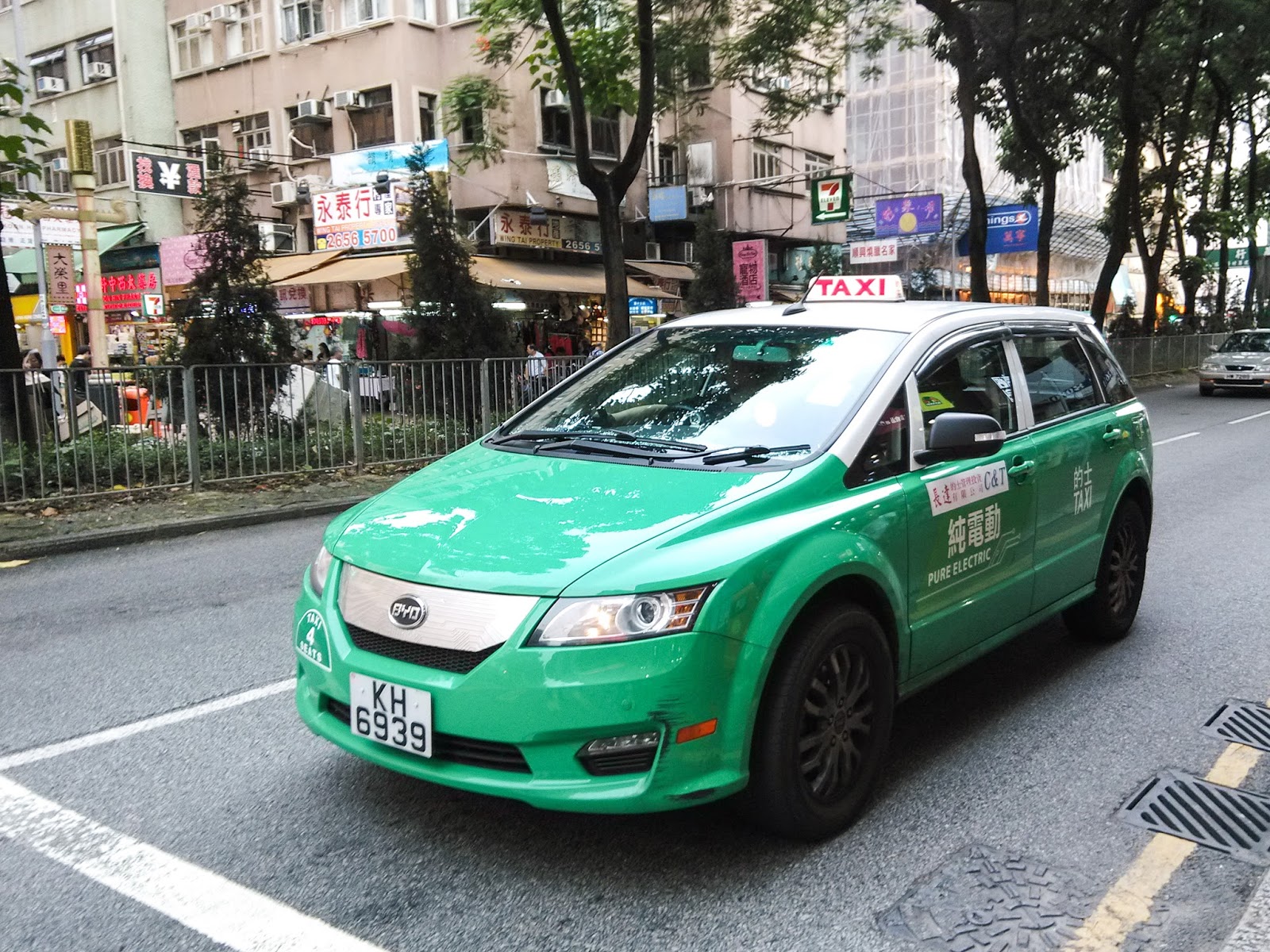
Samsung Electronics will pay $450 million for a stake in Chinese automaker and rechargeable batteries firm BYD Co Ltd, the Chinese company said in a stock exchange filing on Thursday.

Automakers and technology companies have formed a series of partnerships in recent years as the race to develop electric, self-driving, internet-connected vehicles has created demand for more electronics components and software.

The Samsung investment has been made through Chinese subsidiary Shanghai Samsung Semiconductor and gives the Korean firm a 1.92 percent stake in BYD, making it the ninth largest investor in the company.

Samsung Electronics said last week it was in talks to acquire a stake in BYD to boost its automotive chip business, after the Korea Economic Daily first reported that Samsung had agreed to buy a stake.

BYD, which also counts Warren Buffet's Berkshire Hathaway as a backer, began as a battery maker for personal electronics before launching its automotive business that focuses on electric and hybrid vehicles.

Rimac Concept_One 0-100 km/h acceleration [VIDEO]

This is what 0-100 km/h in 2.6 seconds looks like.

The Concept One’s powertrain consists of four electric motors and four gearboxes with a total of 800 kW (1088 hp) and 1,600 Nm (1,180 ft-lb) distributed via torque vectoring.

The 620 volt, 82 kWh, LiNiMnCoO2 battery’s 1 MegaWatt of discharge capability linked to those four wheels moves the two-ton hypercar to 62.5 mph in just 2.6 seconds, to 124 mph in 6.2 seconds and to 186 mph in 14.2 seconds.

Top speed is rated at 221 mph.

Xtrac Launch Dual Motor EV transmission to suit torque vectoring

Xtrac’s P1227 gearbox family has been developed to address the growing market requirement for single speed, lightweight and power dense electric vehicle (EV) transmissions. It offers a range of installation possibilities for fast and powerful electric supercars with front-wheel drive, rear wheel drive or four-wheel drive configuration.

“There is substantial innovation and intellectual property in the design of this new transmission system,” says James Setter, head of Xtrac’s Automotive and Engineering business unit, which focuses on developing transmission systems for hypercars, hybrids and EVs to complement the company’s world-beating motorsport transmissions. “Significant focus went into the integration of the gearbox with numerous proprietary traction motors, and in particular, reducing its mass by almost 20 per cent compared with our previous P1092 electric vehicle transmission to provide the ultimate electric drive transaxle.”

The new transmission system can be integrated with motors supplied by BorgWarner, GKN and YASA, all of whom worked with Xtrac on the integration of their technology into this transmission. The dual electric motors of the transmission system also provide an inherent torque vectoring capabilities. For lower power applications a single electric motor can be specified, reducing the overall vehicle weight further and requiring an even smaller space envelope. The highly configurable nature of the design also enables an open or a limited slip differential to be specified.

In addition, the P1227 family of gearboxes offers a range of single gear ratios, as well as considerable motor-generator configuration and hence vehicle installation possibilities. This enables the transmission, for example, to be installed within a 90-degree angle from the motors positioned vertically above through to horizontally in front of the output.

“The design draws on Xtrac’s precision design, analysis and manufacturing engineering capabilities,” says Setter, “ensuring that the ground helical gear sets, necessary for road vehicle transmission systems, offer exceptional levels of NVH refinement for the most demanding silent driveline electric vehicle applications, as well as the durability required for this marketplace.”

The transmission has been designed as a family to integrate with either YASA P400, GKN AF130 or AF230 or BorgWarner HVH-250-090-SOM or HVH-250-115-DOM motors, but other motors could be suitable as long as the RPM of the motor is less than 10,000rpm, and the peak torque is less than 500Nm per motor like the 90 kW / 300 Nm Evans Electric axial flux induction motor.

More: Xtrac

REMY / BorgWarner

YASA P400

GKN AF130


Atieva testing AWD powertrain in 900-hp Electric Van [VIDEO]

One of the four Chinese backed EV start-ups in Silicon Valley, Atieva was started by former executives from Tesla and Oracle in late 2007.

As Reuters reports, Atieva is headed by Bernard Tse, an ex-Tesla Vice President and board member, as well as Peter Rawlinson, the former chief engineer of the Tesla Model S. They don't have a factory yet, but they do have a van nicknamed Edna.

With its first car still at least two years away from production, Atieva is using a Mercedes-Benz Vito commercial van to test the drivetrain: a pair of high-output electric motors, a 87 kWh lithium-ion battery pack, inverters, gearboxes and dual motor controller.

Rawlinson, who while at Tesla led engineering of the Model S sedan, said Atieva's "secret sauce" is the software tying all that hardware together to deliver a combined 900 horsepower to the 2,200 kg all-wheel-drive van. With a dual motor powertrain the company is clearly not testing full-spec torque vectoring (which requires 4x motors).

The drivetrain propels the van from zero to 60 mph in just 3.1 seconds, a fraction slower than the fastest Tesla Model S. Atieva’s 0-60 acceleration target for its 2018 sedan is 2.7 seconds.

The Atieva sedan, being developed under the code name Project Cosmos, looks like a futuristic descendent of the Audi A7. Its headlamps are ultra-thin, with thousands of insect-inspired micro lenses. Its dashboard has a three-piece reconfigurable digital display that can be controlled by voice or touch.

Atieva has raised several hundred million dollars from investors including Mitsui & Co Ltd, the Japanese trading giant, and Venrock, a Silicon Valley venture capital firm connected with the Rockefeller family that once funded Intel and Apple. Two of Atieva’s biggest shareholders are Chinese: State-owned Beijing Auto and a subsidiary of publicly traded LeEco, an internet company that has also declared it intends to offer an electric car. LeEco is controlled by Chinese tech entrepreneur Jia Yueting.

350 hp Siemens electric aircraft makes first flight [VIDEO]

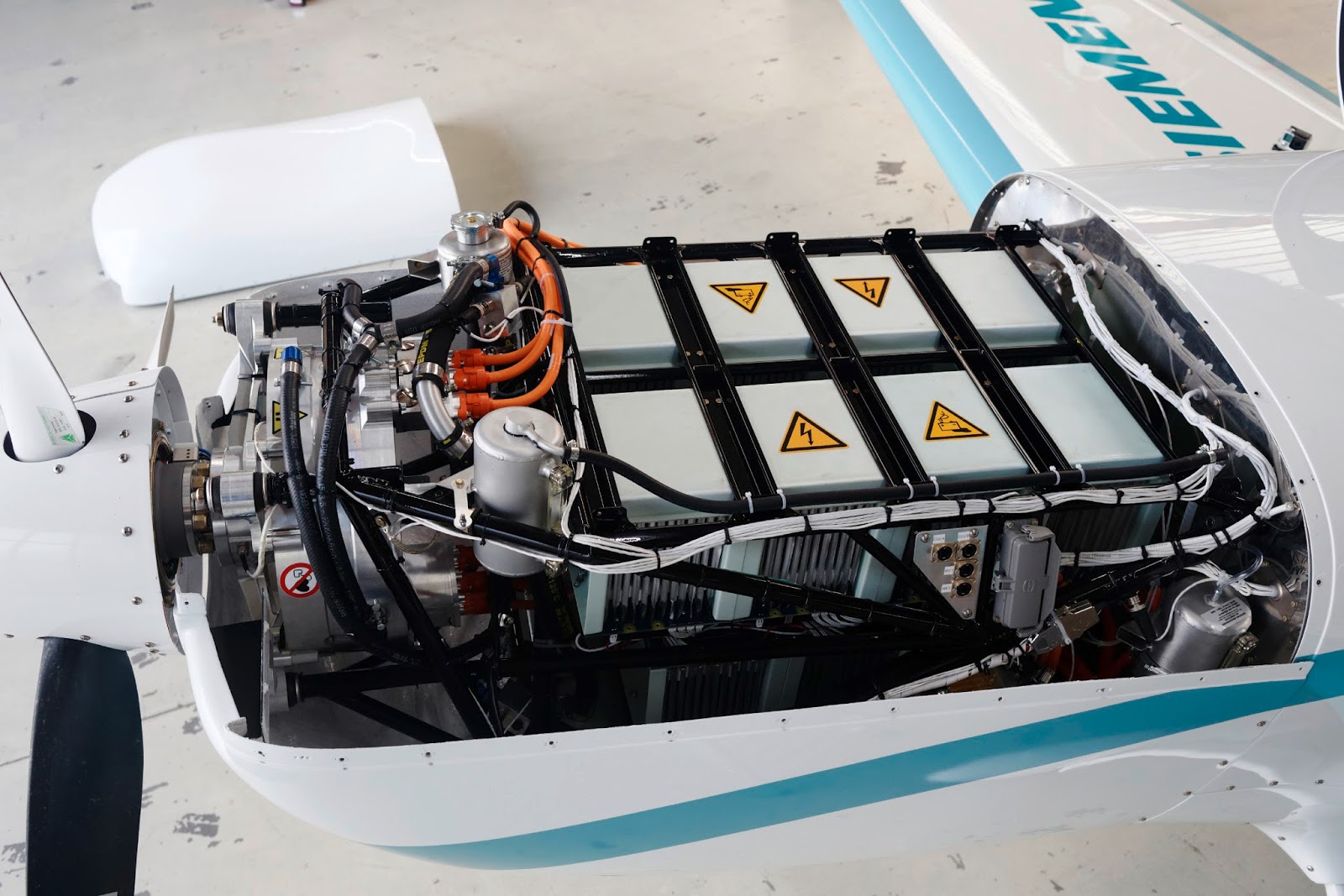
Siemens researchers have developed a new type of electric motor that, with a weight of just 50 kilograms, delivers a continuous output of about 260 kilowatts – five times more than comparable drive systems. This record-setting propulsion system successfully completed its first public flight today at Schwarze Heide Airport near Dinslaken, Germany, where it – almost silently – powered an Extra 330LE aerobatic airplane. The new drive system had already made its maiden flight on June 24th 2016.

This advance means that hybrid-electric aircraft with four or more seats will now be possible. In addition, the company will be contributing this technology to the cooperative project that Siemens and Airbus agreed to in April 2016 for driving the development of electrically powered flight. Electric drives are scalable, and Siemens and Airbus will be using the record-setting motor as a basis for developing regional airliners powered by hybrid-electric propulsion systems. Siemens is determined to establish hybrid-electric propulsion systems for aircraft as a future area of business.

The motor has been specially designed for use in aircraft. Thanks to its record-setting power-to-weight ratio, larger aircraft with takeoff weights of up to two tons will now be able to use electric drives for the first time. To implement the world-record motor, Siemens' experts scrutinized all the components of previous motors and optimized them up to their technical limits.

New simulation techniques and sophisticated lightweight construction enabled the drive system to achieve a unique weight-to-performance ratio of five kilowatts (kW) per kilogram (kg). The electric motors of comparable strength that are used in industrial applications deliver less than one kW per kg. The performance of the drive systems used in electric vehicles is about two kW per kg. Since the new motor delivers its record-setting performance at rotational speeds of just 2,500 revolutions per minute, it can drive propellers directly, without the use of a transmission.

First Tesla Autopilot fatality brings beta-testing into question

As has now been widely reported, a fatal accident involving a Tesla Model S on Autopilot and a tractor-trailer happened last month in Florida killing the Tesla driver at the scene.

The Tesla was on a divided highway with Autopilot engaged when a tractor trailer drove across the highway perpendicular to the Model S. The explanation given by Tesla is that neither the Autopilot nor the driver noticed the white side of the tractor trailer against a brightly lit sky, so the brake was not applied. The high ride height of the trailer combined with its positioning across the road caused the Model S to pass under the trailer, impacting the windshield of the Model S and removing the entire roof section of the vehicle killing the driver instantly.

Facts gathered from video reports at the scene and eye witness accounts of the accident:

  • The posted speed limit was 65 mph
  • Another motorists witnessed the Model S travelling well in excess of 85 mph.
  • The intersection was over a slight crest in the direction the Model S was travelling.

    While it was a long straight section of road, travelling at very high speed on a road with a high number of level intersections increases the risk of a collision significantly (hence the relatively low posted speed limit) The slight crest would also have hindered the visual range for both drivers.

    It seems quite reasonable to expect that the investigation will conclude the primary cause of the accident was excessive speed by the Tesla driver. Records obtained by The Associated Press show the Tesla driver Joshua Brown was cited for speeding seven times in Ohio between 2010 and 2015 and once in Virginia.

    Mobileye, an Israel-based tech company developing some of the technology behind Tesla’s Autopilot, issued a Statement on Fatal Tesla Model S Autopilot Crash:

    "We have read the account of what happened in this case. Today's collision avoidance technology, or Automatic Emergency Braking (AEB) is defined as rear-end collision avoidance, and is designed specifically for that. This incident involved a laterally crossing vehicle, which current-generation AEB systems are not designed to actuate upon. Mobileye systems will include Lateral Turn Across Path (LTAP) detection capabilities beginning in 2018, and the Euro NCAP safety ratings will include this beginning in 2020."

    But now Tesla and Mobileye disagree on lack of emergency braking with Tesla issuing the following statement:

    "Tesla’s autopilot system was designed in-house and uses a fusion of dozens of internally- and externally-developed component technologies to determine the proper course of action in a given scenario. Since January 2016, Autopilot activates automatic emergency braking in response to any interruption of the ground plane in the path of the vehicle that cross-checks against a consistent radar signature."

    This seems to be a rebuke to Mobileye, a supplier of some technology used in the Autopilot and other driver assistance systems in the Model S. The Mobileye system is not designed for Lateral Turn Across Path (LTAP) detection and the Tesla part of the system failed because "the high, white side of the box truck" — that apparently failed to cause an interruption of the ground plane as mentioned above — "combined with a radar signature that would have looked very similar to an overhead sign, caused automatic braking not to fire."

    Either way, it seems clear that Tesla's Autopilot public beta testing needs to be restricted to use on roads without intersections (e.g. expressways) until 2018 when LTAP capability becomes available and the system can deal with lateral traffic!

    This fatal accident is an auto industry nightmare come true and has brought the whole issue of beta testing automotive road safety features with the general public into question. Many in the automotive industry have criticised Tesla from former Google scientist Andrew Ng calling them "irresponsible" to Volvo’s research and development chief, Dr. Peter Mertens, saying "“Anyone who moves too early is risking the entire autonomous industry"and Jaguar XF project manager Stephen Boulter saying "If something happens [with Autopilot], it could set the technology back a decade" while BMW CEO, Harald Krüger said "We can offer automated driving on the motorway up to 120 kilometers per hour,” to which he continued “But our technology must be 100 percent reliable."

    The Silicon Valley business model is built on shipping buggy beta code. "Move Fast and Break Things" is the motto over at Facebook while 100s of millions of Apple iPhone owners have updated iOS only to have to install a bug-fix patch a few days later. This kind of approach clearly does not translate well to the automotive industry where, as we saw with Toyota's unintended acceleration crisis that resulted in the deaths of 89 people, 400 wrongful-death and personal injury cases and cost the company more than $2.5B in criminal penalties and class action settlements, buggy code in cars can kill people, and the automaker is rightfully held liable!

  • Mercedes-Benz to electrify all model series in €7B R&D investment

    Over the next two years, Daimler is slated to invest an unprecedented seven billion euro (approximately $7.8 billion in US) into what they are referring to as green technologies. Usually, such a large sum of money would be invested over a long period of time, but Daimler is leading the industry in doing so over a mere two years. By 2017, the car maker will offer all models with electrified powertrains.

    According to Professor Dr. Thomas Weber, a member of the Board of management of Dimler AG, stated, “…no other manufacturer offers a comparable range of electrified vehicles and solutions in the field of electric mobility. The spectrum ranges from the smart city runabout and attractive Mercedes-Benz passenger cars to buses, coaches, and trucks of the Fuso brand. We will electrify all Mercedes-Benz passenger car model series step by step.“

    The Mercedes-Benz name will not be compromised by lack of power, as stated in a press release, but will instead offer customers a broader range of engine options, keeping in mind the specific needs of each model and the desires of the purchaser. Mercedes-Benz will offer a multitude of plug-in hybrids and expand carbon-free options by implementing emission-free vehicles into every realm of their model options including buses and commercial vehicles. The car maker recognizes a need for more innovative technology within the automotive industry though, and is making great strides toward the future.

    Mercedes-Benz will unveil a high-performance four-door, four-seat, all-wheel drive GT electric only saloon with 500 km range at the Paris motor show in October.

    Source: Daimler

    All-electric 4-motor SH-AWD NSX EV Concept to race @ Pikes Peak

    Acura will field a pair of 2017 Acura NSX supercars in the 100th Anniversary of the running of the Broadmoor Pikes Peak International Hill Climb on June 26, marking the North American racing debut of Acura's next-generation NSX: the pinnacle expression of Acura Precision Crafted Performance and the only supercar made in America.

    The two Acura NSX supercars will compete in the Time Attack 1 and 2 classes and will be piloted by brothers James and Nick Robinson, respectively, both from the company's North American engineering team. In addition, Acura will campaign an NSX-inspired prototype vehicle in the Electric Modified Class, featuring a further evolution of the experimental all-electric, 4-motor Super Handling All-Wheel Drive (SH-AWD) powertrain that won last year's Pikes Peak Challenge Exhibition class.

    "Pikes Peak is like no other race in the world and offers a unique opportunity to showcase the power and performance of our products," said Jon Ikeda, vice president and general manager of the Acura Division. "We are excited for this year's 'Race to the Clouds' to test the endurance and engineering of the Acura NSX and our advanced powertrain technologies – as well as an expression of our racing spirit."

    A team of North American R&D engineers has been working on both NSX entries, which feature the same three-motor Sport Hybrid Super-Handling All-Wheel Drive powertrain (Sport Hybrid SH-AWD) as the production NSX. This powertrain features a twin-turbo V6 engine mated to a 9-speed dual clutch transmission and Rear Direct Drive Motor, and a front Twin Motor Unit with a world's first electrically powered torque vectoring capability in the supercar realm. Modifications to the NSX competing in the Time Attack 1 class included chassis lightening and a custom high-flow racing exhaust.

    The NSX competing in the Time Attack 2 class is a production car with the required safety equipment for competition. The Time Attack 1 NSX will be driven by James Robinson of the company's North American powertrain development group, who drove a first-generation NSX in the Pikes Peak Hill Climb from 2012 to 2015. His brother Nick Robinson, an engineer in charge of the new NSX's dynamic performance during its development, will drive the Time Attack 2 NSX. Nick is also the reigning PP250 winner from the 2015 Pikes Peak Hill Climb.

    The supercar-inspired 4-Motor EV Concept will be driven by Tetsuya Yamano, who campaigned last year's CR-Z-based electric prototype. The EV Concept is the ultimate embodiment of the all-wheel-drive Electric SH-AWD powertrain featuring a world's first technology that enables four-wheel independent torque allocation. The Electric SH-AWD powertrain, an evolution of the CR-Z prototype powertrain, produces three times the total system output of last year's electric prototype and is mated to the NSX body.

    As Official Pace Car sponsor, Acura will feature three pace cars – the NSX, the seven-passenger MDX performance-luxury SUV and the TLX sports sedan. President of Polyphony Digital and Producer of the Gran Turismo series Kazunori Yamauchi and Pikes Peak legends Randy Schranz and Leonard Vahsholtz will lead the field of 100 entrants to the top of the 14,115-foot Colorado peak.

    For Pikes Peak race attendees, the NSX and other pace cars will appear at a number of pre-race activities, including the popular Fan Fest in downtown Colorado Springs, 5 to 10 p.m. MDT Friday, June 24.

    CHAdeMO Announce 150 Kw Supercharging Protocol

    During CHAdeMO’s annual General Assembly in Tokyo, Japan, the Association’s management has announced its plans and ongoing activities towards bringing high power CHAdeMO chargers to the market.

    The Association plans to release an amendment to the current protocol, which will enable charging with up to 150kW (350A), this year. The revision of the protocol, announced to the Regular Members already last year, is still ongoing with technical consultations with members happening both in and outside of Japan.

    CHAdeMO’s Secretary General Dave Yoshida said: “One of the purposes of the Association is to evolve CHAdeMO protocol so that it can better respond to market needs. We see a movement towards mass market EVs with higher capacity batteries and we, as the Association of fast charging protocol, prepare for it by working on the high power protocol. This will enable faster deployment of the high power charging infrastructure, in preparation for EVs that can charge with higher power.”

    Recognising that the upward trend in EV autonomy will lead to a need for charging with higher power at key locations, especially along the motorways, CHAdeMO mandated its Technical Work Group to tackle issues such as the size of the high power cable or managing temperature increase of the charger that may come in contact with users.

    The ‘plug’ itself will remain exactly the same as the current one, meaning the high power CHAdeMO chargers can feed power to both the current EVs as well as the upcoming EVs with higher battery capacity. Current CHAdeMO EVs will also be able to use the 150kW charger, but as today’s EVs are configured to charge at around 50kW, they will charge at the current speed.

    Dave Yoshida added: “We are very pleased that, thanks to the hard work of our technical team, we will soon be able to release the new version of the protocol to our members. We expect first 150kW standardised chargers to be deployed in 2017.”

    CHAdeMO technical representatives are also actively involved in the IEC Committee working on high power charging, where, together with other international experts, they are preparing a revision of the DC high power standards, based on the IEC standards published in 2014.

    In terms of higher power, for example 350kW (1 000V x 350A), technical studies are ongoing and the Association will determine its further development around 2018, should there be market demand.

    Volkswagen planning a multi-billion euro battery factory

    Volkswagen is considering building a multi-billion-euro battery factory as part of a major expansion of its electric-car portfolio, Handelsblatt has learned from company sources.

    The factory would allow VW to operate independently of Asian firms like Panasonic, LG and Samsung that have dominated the battery market to date.

    VW Chief Executive Matthias Müller and his team are currently working on a new strategy to increase electric car sales in the coming 10 years to 1 million. The non-executive supervisory board will consider the plans before the Wolfsburg-based firm’s annual meeting on June 22.

    The aim of the new plans in part is also to put the recent “Dieselgate” scandal over cheating emissions tests behind it. The hope is that focusing on battery technology and electric cars can help the beleaguered company make a fresh start and improve its negative image.

    Building a new battery factory would also allow VW to take a leadership role in the development of the new technology. The company’s executive board looks likely to approve the plan, which is also supported in principle by the works council and the state of Lower Saxony, its major shareholder, sources said.

    VW invested in solid-state battery startup QuantumScape in late 2014 and have publicly stated they expect the technology can deliver 700 km range. VW is also targeting a 66 percent cost reduction by using a single battery module design for all of its electrified vehicles.

    “We want to launch a major initiative, one that will put us at the top of the industry,” said one insider familiar with the plans.

    To date one of the main reasons established automakers have been reluctant to move into high volume EV manufacture is having to outsource battery production. Where the largest cost component in an internal combustion car is the engine itself, which virtually all automakers build in-house, in an EV it is the battery that is the most expensive component. Automakers need to vertically integrate battery production into their manufacturing process in order to make EVs profitable.

    Peugeot / Citroen unveil new electrification platform [VIDEO]

    PSA Group unveiled their electrification strategy plans at the “Innovation Day” event. PSA Group is consolidating the development of its new electrification strategy on two global modular platforms, which will allow it to offer a wide range of internal combustion, electric and plug-in hybrid petrol models as from 2019. Both platforms will be compatible with the manufacturing resources put in place as part of the Plant of the Future programme.

    The Common Modular Platform (CMP), which was developed in partnership with DFM (Dongfeng Motors), is dedicated to compact city cars, core sedans and compact SUVs. The all-electric e-CMP format co-financed by PSA Group and DFM will allow the two parties to offer a new generation of spacious, multi-purpose electric vehicles with a driving range of up to 450 km and ultra-fast charging solutions providing up to 12 km of driving per minute of charging. Four electric models will be introduced by 2021, the first of which will reach the market in 2019.

    The Efficient Modular Platform (EMP2), which is dedicated to compact and premium models, was launched first in 2013 with the new Citroën C4 Picasso and Peugeot 308 and then in 2014 in China. From 2019 onwards, its innovative design will enable the deployment of the first plug-in hybrid petrol models equipped with the best of hybrid technology:

  • SUVs and CUVs with high-performance electric four-wheel drive
  • 60 km driving range in all-electric mode
  • a large interior that does not compromise on passenger comfort or boot space
  • leading-edge fuel efficiency in urban driving conditions (40% efficiency gains versus internal combustion models)

    To facilitate use, the plug-in hybrid models will come with a four-hour charging system as well as an optional feature for recharging the battery more quickly, in less than two hours. Seven plug-in hybrid vehicles will be gradually introduced between 2019 and 2021.

    On Innovation Day, Gilles Le Borgne said: "These next-generation hybrid and electric technologies will complement our range of internal combustion engines, thereby enabling PSA Group to offer its customers a diversified line-up of technologies that meet all of their mobility needs. This innovative strategy clearly demonstrates the Group's commitment to global, sustainable solutions that will allow us to take on the energy transition challenge."

  • Toyota sells 9 Millionth Hybrid car

    Toyota's hybrid vehicles have saved their owners 25 billion litres of petrol - enough fuel, theoretically, for each of their cars to travel around the Earth... and then some.

    The calculation was revealed by the world's leading carmaker when it announced it has sold more than nine million Toyota and Lexus hybrid vehicles around the world, including more than 85,800 delivered in Australia.

    The latest milestone, achieved in April, comes as Toyota Australia prepares to introduce its newest hybrid, Corolla, early in the second half of this year.

    Toyota's parent company in Japan has revealed that the total fuel saving from its nine million hybrids represents an average of more than 2,770 litres per vehicle compared with driving petrol-only cars of similar size.

    The saving would provide enough fuel for each of those vehicles to travel at least 52,400km, or 1.3 times around the equator, based on a nominal average consumption of 5.3 litres per 100km. Three-quarters of the nine million hybrids use less than this amount of fuel.

    Instead of doing that, of course, Toyota's hybrid owners have pocketed billions of dollars in savings.

    Toyota has also estimated its hybrid vehicles have resulted in approximately 67 million fewer tonnes of CO2 emissions than would have been emitted by petrol-powered vehicles of similar size and driving performance^.

    Toyota Australia's executive director sales and marketing Tony Cramb said the extent to which hybrid vehicles had found homes in driveways around the world confirmed them as a mainstream option for motorists.

    "Toyota's hybrid vehicles are renowned for their performance, reliability, durability and exceptionally low running costs as well as their contribution to the environment and to saving precious fossil fuels," Mr Cramb said.

    "In Australia, we are looking forward to bringing Toyota's full hybrid technology to the country's best-selling car, Corolla - a move that will further broaden the market appeal of both," he said.

    Corolla hybrid hatch will be introduced as a well-specified single grade, expanding the local company's Hybrid Synergy Drive offerings to a fifth model.

    It will join Camry, which is the best-selling hybrid vehicle in Australia with 37,879 deliveries - almost double the Prius tally of 19,682 cars - followed by Prius c (7,432) and Prius v (3,430).

    Globally, Toyota's total is led by the world's best-selling hybrid, Prius, with 3.7 million sales since its debut in Japan in December 1997. Prius c has reached 1.25 million sales, Prius v 634,000 and Camry hybrid 574,000.

    While it took 10 years for Toyota to achieve one million global hybrid sales, it has sold eight million in the past nine years and has averaged more than one million hybrid sales a year since 2009.

    The company's hybrid vehicles are sold in more than 90 markets.

    Toyota has positioned hybrid advances as core environmental technologies for the 21st century. Using these technologies, Toyota is also working on improving non-hybrid cars.

    TOYOTA HYBRID MILESTONES

    9 million
    April 2016
    8 million
    July 2015
    7 million
    September 2014
    6 million
    December 2013
    5 million
    March 2013
    4 million
    April 2012
    3 million
    February 2011
    2 million
    August 2009
    1 million
    May 2007

    Tesla consider LG, Samsung & SK for Model 3 battery supply

    Tesla Motors is approaching LG Chem, Samsung SDI and SK Innovation as part of its strategy to diversify its battery-sourcing channels beyond Japan's Panasonic.

    LG Chem is expected to win the Tesla business thanks to its output commitment, good pricing and on-time delivery. A solid partnership with LG Display could also help LG Chem. The company previously supplied batteries for Tesla's Roadster model, though the volume it shipped was "small."

    "Tesla intends to use more Korean technology on its Model 3. It decided to use tires manufactured by Hankook Tire and LG Display will possibly be supplying its OLED panels for the automotive systems. Additionally, Tesla is testing the manufacturing capability and production of LG Chem, Samsung SDI and SK Innovation," said an official, Tuesday.

    Tesla executives recently visited key research centers at LG Chem, Samsung SDI and SK Innovation, holding working-level meetings with all of them.

    An LG Chem spokesman said the largest battery supplier in the world has no official comment about its business with specific clients. Samsung SDI said it has no authority either to confirm or to deny business deals with its major clients. SK Innovation wasn't available for comment.

    The Model 3 electric vehicle is faster, cleaner, more reliable and has better handling; while its entry price will start at around $35,000, cheaper than many competing gas powered cars.

    Because of those factors, market analysts and officials say that the Model 3 "should be a game changer" at an affordable price point.

    They said the Model 3 will drive the "third wave of adoption" in the electric vehicle industry. This third wave will finally attack the majority "mainstream and economically attractive" segment and it's been expected that others will follow including the GM Chevy Bolt, which should help propel EVs to the real tipping point of mass adoption.

    "This is why LG Chem, Samsung SDI and SK Innovation all are keenly interested in boosting their tie-up with Tesla. The three Korean battery manufacturers can't afford to lose the new business given the Model 3's impressive initial responses from customers," said another official.

    Tesla plans to produce up to 500,000 electric vehicles by 2018. The Model 3 will be available in 2017, at the earliest. The company has received 400,000 pre-orders.

    Currently, Japan's Panasonic is the exclusive battery partner with Tesla, supplying 18650 batteries as these are more economical and easier to mass produce.

    Both LG Chem and Samsung SDI are also manufacturing 18650 cells.

    Although LG is pushing the pouch-type battery as its mainstream product with Samsung SDI focusing on the rectangular-type battery, sources who are involved with the issue say Tesla may use LG and Samsung's mainstream technologies to keep adequate inventory levels as it's been widely expected the supply for the Model 3 will remain tight.