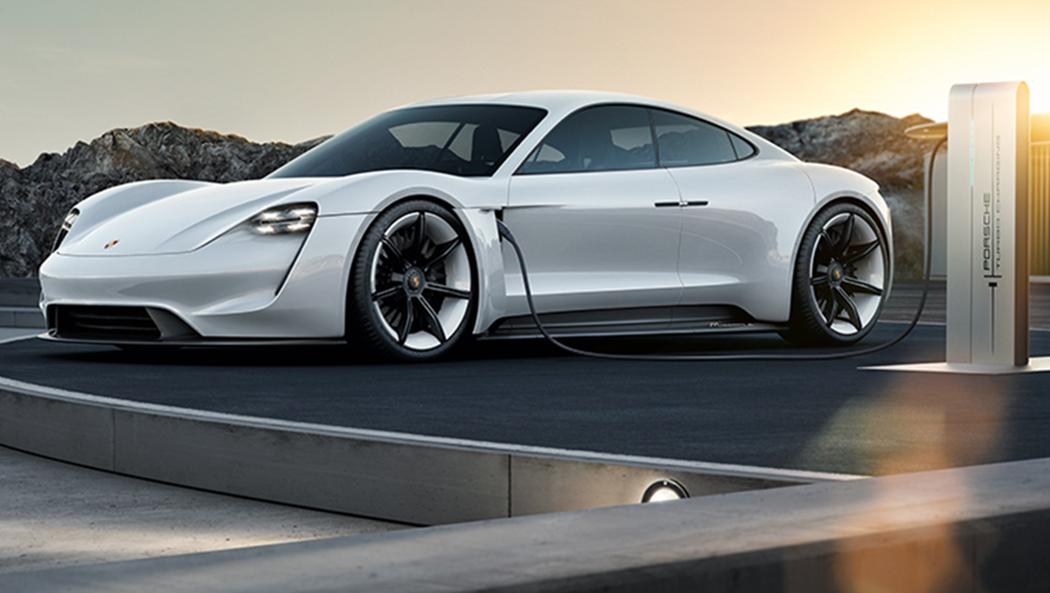
Porsche aims to offer hybrid versions of all its models in the foreseeable future, Porsche Chief Executive Oliver Blume told a German newspaper.
A plug-in hybrid of the 911 model with a range of 50 kilometers (31.1 miles) will hit the market in 2018 already, Westfalen-Blatt quoted Blume as saying in a summary of an interview to be published on Monday.
Porsche said last month it would spend about 1 billion euros ($1.08 billion) on production facilities at its biggest plant to make its first ever all-electric sports car, reflecting parent VW's growing commitment to increase its electric offerings as it struggles to overcome an emissions scandal.
Porsche plans to bring the Mission E model, with more than 600 horsepower and a range of over 500 km, to market by the end of the decade.
At the same time, CEO Blume said he did not believe driverless cars were in Porsche's future, saying "an iPhone belongs in your pocket, not on the road", and that Porsche did not need to team up with any big technology companies.
"Partnerships are generally not a bad idea if one's own competencies are insufficient. But we are on the one hand part of a strong company and on the other hand have no plans to lead the charge in this area. We'll leave that to others," he said.
Audi is preparing its international production network for the mobility of the future. Large series production of the first purely electric driven SUV from Audi will begin at the site in Brussels in 2018. The plant will also produce its own batteries. The company will transfer production of the Audi A1 from Belgium to Martorell in Spain. The Audi Q3, which is currently produced in Spain, will be built in Győr (Hungary) in the future.
The model rotation will benefit all the sites of Audi’s global production network. “The new model distribution will enhance our production efficiency and strengthen all of the sites involved,” stated Rupert Stadler, Chairman of the Board of Management of AUDI AG. “It will allow us to utilize further synergies within the Volkswagen Group and to bundle key competencies.” The model decisions protect jobs and promote the internationalization of the production network.
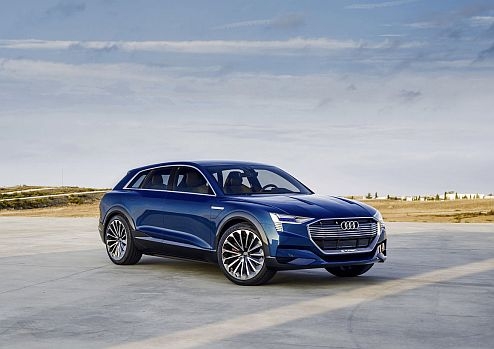
As of 2018, Audi Brussels will exclusively produce the first battery‑electric SUV from the brand with the Four Rings for the world market. The Audi e-tron quattro concept study that was presented at the Frankfurt Motor Show in 2015 provides a clear indication of the final production version. The sporty SUV will fit between the Audi Q7 and the Audi Q5 in the product portfolio. Equipped with three electric motors and a high‑capacity battery, the Audi e-tron model will offer a maximum of sportiness, driving dynamics and efficiency. It will have full everyday practicality with a range of more than 500 kilometers and will feature quick battery charging.
The Brussels plant will also have its own battery production. The site in Belgium will thus become a key plant for electric mobility at the Volkswagen Group.
German Economy Minister Sigmar Gabriel wants to commit two billion euros ($2.17 billion) to encourage more people to buy electric cars, the newspaper Die Zeit reported on Wednesday.
Buyers of electric cars would receive a subsidy from the government, the newspaper said, giving no further details.
Gabriel also wants to expand charging stations and encourage federal offices to use electric cars - an initiative that will be funded under the current German budget without tax increases, he said.
The German government aims to put one million electric cars on the roads by 2020. Among the country's carmakers, BMW, Mercedes and Volkswagen now produce all-electric cars; Audi, Mercedes and Porsche have plans to build one.
Sales of electric cars totaled some 19,000 in 2014, but at the end of 2014 Germany had only 2,400 charging stations and around 100 fast-charging points.
Calls for supporting electric cars grew at the end of last year after the Volkswagen emissions scandal. Both Gabriel and his fellow Social Democrat Environment Minster Barbara Hendricks have called for a quota for electric cars.
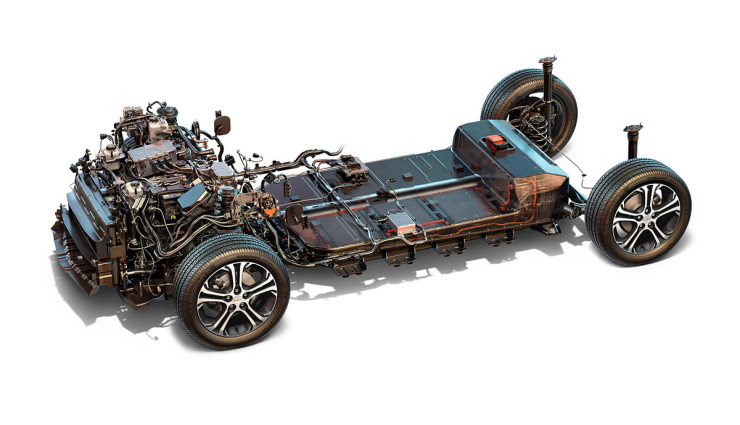
Hard on the heels of the reveal of the production Volt EV at CES 2016 in Las Vegas, Chevrolet used the North American International Auto Show in Detroit to release additional details on the battery and drivetrain of the new BEV. Engineers developed the Bolt EV’s propulsion system to offer more than an estimated 200 miles and a sporty driving experience.
The Bolt EV’s drive system uses a single high capacity electric motor to propel the car. The engineering team designed the Bolt EV’s electric motor with an offset gear and shaft configuration tailored to meet efficiency and performance targets—most notably more than an estimated 200 miles of range. The motor is capable of producing up to 266 lb-ft (360 N·m) of torque and 200 hp (150 kW) of motoring power. Combined with a 7.05:1 final drive ratio, it helps propel the Bolt EV from 0-60 mph in less than seven seconds.
Power delivery is controlled by Chevrolet’s first Electronic Precision Shift system. This shift and park-by-wire system sends electronic signals to the Bolt EV’s drive unit to manage precise feel and delivery of power and torque, based on drive mode selection and accelerator inputs. A by-wire shifter requires less packaging space than a traditional mechanical shifter, resulting in more interior space and improved interior layout.
Having more than 1.3 billion miles of EV experience from the Chevrolet Volt helped Bolt EV battery engineers and strategic partner LG Electronics to develop an all-new cell and battery pack to offer more than an estimated 200 miles of range. Battery system preliminary specifications include:
60 kWh lithium-ion battery pack
160 kW peak power
288 lithium ion cells
Five sections
10 modules
96 cell groups – three cells per group
960 lbs. (435 kg) total weight
285 liters
The battery uses active thermal conditioning, similar to the Chevrolet Volt, to keep the battery operating at its optimum temperature, which results in solid battery life performance. The Bolt EV battery will be covered by an 8-year/ 100,000 mile (whichever comes first) limited warranty.
Inside the battery pack—which spans the entire floor, from the front foot well to back of the rear seat—is a new cell design and chemistry. The nickel-rich lithium-ion chemistry provides improved thermal operating performance over other chemistries, which requires a smaller active cooling system for more efficient packaging. The chemistry allows the Bolt EV to maintain peak performance in varying climates and driver demands.
The cells are arranged in a “landscape” format and each measures in at only 3.9 ins. (100 mms) high and 13.1 ins. (338 mms) wide providing improved packaging underfloor. The lower profile cell design enabled the vehicle structure team to maximize interior space.
The battery system is mated to a standard equipment 7.2 kW onboard charger for regular overnight charging from a 240-V wall box. A typical commute of 50 miles can be recharged in less than two hours. Bolt EV also features an optional DC Fast Charging system using the industry standard SAE Combo connector. Using DC Fast Charging, the Bolt EV battery can be charged up to 90 miles of range in 30 minutes. Outside temperatures may affect charging times.
Regen System Provides One-Pedal Driving. Regenerative braking has become more than just a tool to boost range, it’s also transformed into a feature that can provide an improved EV driving experience. The Bolt EV features a new regenerative braking system that has the ability to provide one-pedal driving.
Through a combination of increased regenerative deceleration and software controls, one pedal driving enables the vehicle to slow down and come to a complete stop without using the brake pedal in certain driving conditions.
When operating the Bolt EV in “Low” mode, or by holding the Regen on Demand paddle located on the back of the steering wheel, the driver can bring the vehicle to a complete stop under most circumstances by simply lifting their foot off the accelerator, although the system does not relieve the need to use the brake pedal altogether.
Operating the Bolt EV in “Drive” mode and not pulling the paddle while decelerating delivers a driving experience where usage of the brake pedal is required to stop.
Small Wagon (EPA does not have a cross-over category)
Key competitors:
Nissan Leaf, BMW i3, Ford Focus Electric, Kia Soul EV, VW eGolf Mercedes-Benz B-Class Electric
Manufacturing location:
Orion Township, Mich.
Battery manufacturing location:
Incheon, South Korea
Motor and drive unit manufacturing location:
Incheon, South Korea
Battery System
Type:
rechargeable energy storage system comprising multiple linked modules
Volume/case:
285L
Mass (lb / kg):
960 lb./435 kg
Battery chemistry:
lithium-ion
Thermal system:
liquid active thermal control
Cells:
288
Electric driving range:
More than 200 miles (GM estimate pending final tests)
Energy:
60 kWh
Warranty:
eight years / 100,000 miles
Electric Drive
Type:
Single motor and gearset
Motor:
permanent magnetic drive motor
Power:
200 hp/150 kW
Torque: (lb-ft / Nm):
266 lb.ft./360 Nm
Final drive ratio (:1):
7.05:1
Charging Times
120 V:
Available with standard cordset
240 V:
50 miles of range in less than 2 hrs.
SAE Combo DC Fast Charge:
90 miles in 30 minutes
Performance
Top speed (mph):
91 mph / 145 kph *
0-30 mph:
2.9s (75% SoC) *
0-60 mph:
Under 7 seconds
Chassis/Suspension
Front:
Independent MacPherson strut-type front suspension with side load compensating and finely tuned springs, direct-acting solid stabilizer bar system and ride & handling oriented LCA bushings.
Rear:
Compound crank (torsion beam) type rear suspension with the closed section V-shaped profile axle; specifically tuned coil springs, performance balanced shock absorber, angled A-bushing supporting understeer tendency on cornering maneuver and kinematically optimized torsion beam providing stable and best ride & handling performance.
Chassis control:
Four-channel ABS; Traction control system; StabiliTrak; Drag control
Steering type:
column-mounted electric power steering
Steering wheel turns, lock-to-lock:
2.91 revolution *
Turning radius, curb-to-curb ( ft. / m):
10.8m *
Steering ratio:
16.8 :1
Brakes
Type:
power four-wheel disc with ABS; electro-hydraulic; partially regenerative; dynamic rear brake proportioning
Brake rotor diameter front (mm / in):
276mm
Brake rotor diameter rear (mm / in):
264mm
Total swept area (cu cm):
Front : 1398.9
Rear : 1131.4
Wheels/Tires
Wheel size and type:
17in x 6.5J offset 44, cast aluminum
Tires:
Michelin Energy Saver A/S 215/50R17 all-season
Dimensions
Exterior
Wheelbase (in / mm):
102.4 / 2600
Overall length (in / mm):
164.0 / 4166
Overall width (in / mm):
69.5 / 1765(W103)
Track width front (in / mm):
1500.92 mm
Track width rear (in / mm):
1501.05 mm
Height (in / mm):
62.8 / 1594(H100)
Front overhang (in / mm):
32.9 / 836
Rear overhang (in / mm):
28.7 / 730
Interior
Seating capacity (front / rear):
2 / 3
Headroom (in. / mm):
39.7 / 1009 1st row 37.9 / 962 2nd row
Shoulder room (in / mm):
54.6 / 1387 1st row 52.8 / 1340 2nd row
Hip room (in / mm):
51.6 / 1310 1st row 50.8 / 290 2nd row
Legroom (in / mm):
41.6 / 1056 1st row 36.5 / 927 2nd row
Cargo volume (cu ft / L):
16.9 cu-ft / 478 L (V10, Wagon CVI – Max behind rear seat)
Passenger volume (cu ft / L):
PV1 52.2 cu-ft / 1478 L 1st row PV2 42.2 cu-ft / 1195 L 2nd row
Capacities
Curb weight (lb / kg);
3580 lb / 1625kg based on target (w/o 2passengers)
Heating cooling (qt / L):
Heating loop 1.8L
Battery pack cooling (qt / L):
6.9L (RESS cooling loop total coolant volume)
Power electronics cooling (qt / L):
3.9L (PE & DU cooling loop total coolant volume)
Drive unit fluid (qt / L):
2.9L
Note: Information shown is current at time of publication.
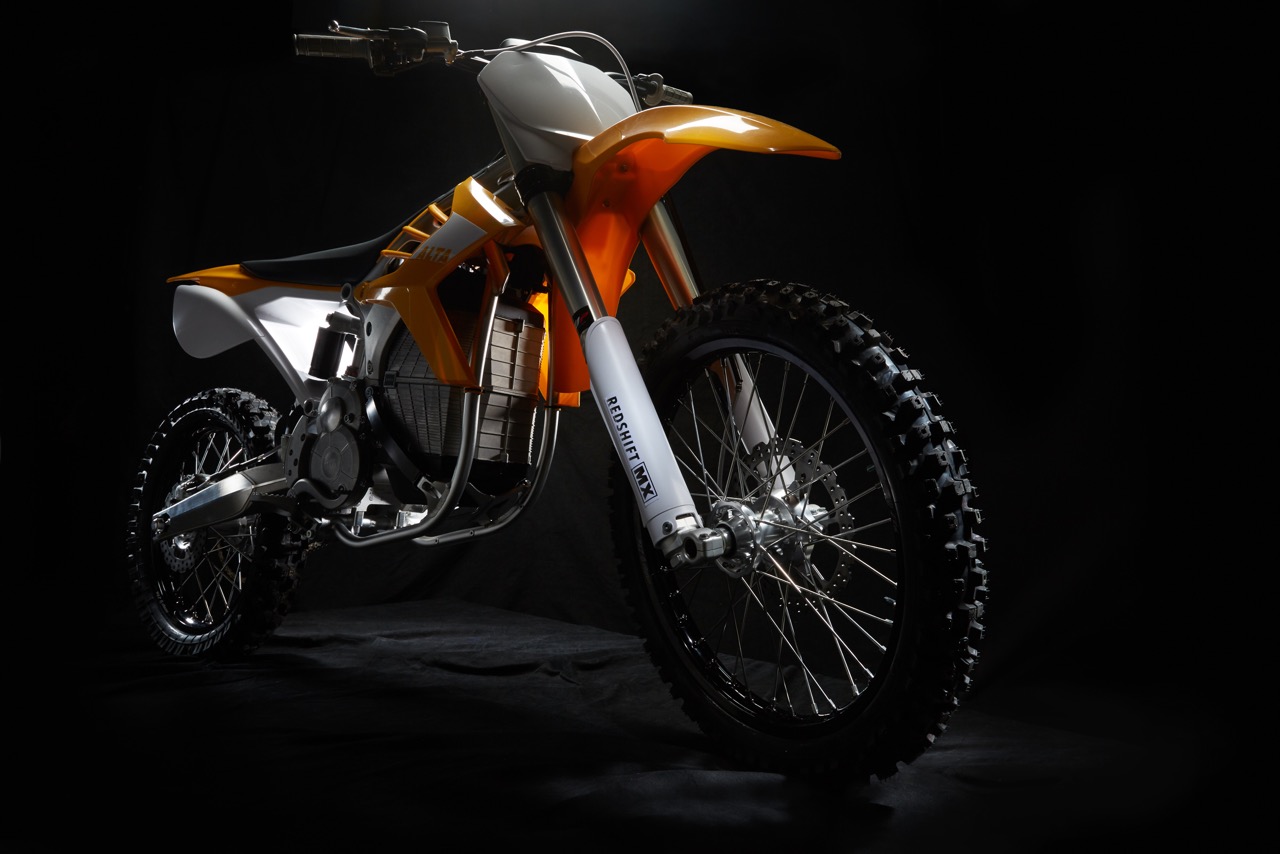
Alta Motors, the San Francisco-based electric vehicle company and creators of the RedShift – a line of electric motocross and supermoto motorcycles – today announced that the company delivered its first motorcycle to customers Eric Gauthier and Jeannine Smith, who own and operate Suspension Performance in Mountain View, CA.
“We’ve been quietly driving towards this moment for over 8 years in pursuit of creating the best motorcycles money can buy,” said Marc Fenigstein, co-founder and CEO of Alta Motors. “The result is a machine with a whole suite of new technologies, and a very different motorcycle than anything that has come before. The RedShift feels immediately comfortable to anyone who has ever thrown a leg over a state of the art performance motorcycle, but offers a leap forward in control, feel, and the connection between the rider’s brain and the tires on the ground. To have successful, speed-minded customers like Eric and Jeannine take delivery of the first RedShift is a tremendous honor for Alta Motors.”
Alta Motors began in 2007 as an idea – what the perfect torque delivery of electric drive could do for motorcycle riders and racers. Officially founding the company in 2010, Marc and his partners, Derek Dorresteyn and Jeff Sand, have been obsessively churning out groundbreaking technology to build the RedShift, a legitimate performance electric motorcycle capable of competing against any bike and power plant on the grid. The Alta team now includes the very best from Tesla, GM, Toyota, Volkswagen and AMA racing.
The RedShift isn’t put together from off-the-shelf motors and electronics from automotive, bicycle, industrial or even aerospace applications. This electric motorcycle is a clean sheet, proprietary design. Every part was created, tuned and tested for pure performance on-road and off.
Recently, the RedShift SM proved its outrageous performance by winning the IMS Sacramento round of the Supermoto USA race series held November 6-8. Alta Motors technician and pro racer Kevin Butler took the RedShift from the last place on the grid to first across the finish line in his first-ever supermoto race. The victory also marks the first time an unmodified, production electric motorcycle triumphed over gas-powered competitors.
Tesla's Autopilot uses hardware from both Mobileye and Nvidia to control the Model S on highways. Apparently Tesla would like to discontinue using Mobileye’s system in favor of bringing it in-house, according to an email exchange between Tesla CEO Elon Musk and George Hotz, a software engineer mainly known for being the first person to jailbreak the iPhone.
A report by Bloomberg's Ashlee Vance would have us believe 26-year old hacker George Hotz has built a self-driving car from scratch in a month. Unfortunately for this urban myth, it's fairly obvious the 2016 Acura ILX he's using isn't a random choice.... Honda have offered Adaptive Cruise Control with Lane Assist since 2013.
AcuraWatch Plus is a basic $1300 option available on this car that provides Adaptive Cruise Control, Lane Keeping Assist, Collision Mitigation Braking & Road Departure Mitigation.. So this Honda can do what he's demonstrating off the showroom floor.
A more accurate description of Hotz's work is "reverse engineering".
Nissan is celebrating 5 years of the LEAF and Tesla Australia is celebrating 1 year in Australia. With the upcoming New year I thought it would be good to look back at the history of electric vehicles in NSW.
Growth
Lets look at growth in NSW Tesla don’t share their data with VFACTS, the industry body for new car sales reporting but RMS/RTA do keep registration statistics on how many cars of a particular brand are sold and what type of fuel they use. Using those statistics we can look at how many “pure electric” vehicles are on the road in NSW. The first production EV was the Mitsubishi i-MiEV launched in 2010 before then the 44 or so vehicles registered as electric with the RTA/RMS where most likely conversions.
What’s included in this count? RMS count petrol/electrics separately so this count doesn’t include plug-in hybrids like the Outlander PHEV, Holden Volt or BMW i3 Rex. What it does include is listed below with their official release dates.
Release Dates :
2010 August Mitsubishi i-MiEV (Limited selective client release)
2014 December BMW i3 (excluding the REX hybrid version)
2014 December Tesla Model S (The amount of registered Tesla’s is shown in red)
Performance
If we look at registrations since 3rd Quarter 2011 when electric vehicles began sales to the general public we see 524 registrations to date at a rate of 33 vehicles per quarter. Breaking it down further we see three district rates of registrations:
2009-2011 – 7.8 Registrations per quarter.
2012-2013 – 28.5 Registrations per quarter.
2014 Q1-Q3 – 5.3 Registrations per quarter.
2014 Q3-2015 Q3 – 66.5 Registrations per quarter.
With the release of Tesla Model S we see Tesla alone contribute 52.5 Registrations per quarter, all other makes and models only managing 14 per quarter since 2014. The best performing quarter is the fourth quarter of 2014 with 87 registrations 65 Tesla 22 others. The worst performing quarter since the release of the i-MiEV first quarter of 2014 with only 4.
Insights
Tesla has landed on our shores and has been welcomed with open arms with the fastest “selling” electric vehicle in NSW. Nissan/Mitsubishi was a steady seller until 2014. However Nissan have not released an updated model since 2012 in Australia, maybe it’s time for a new model LEAF that sell overseas. Mitsubishi also no longer have i-MiEV at dealerships, concentrating their efforts on the Outlander PHEV.
In terms of charging standards we’ve seen Tesla enter with their own version of a type 2 socket which is Mennekes type 2 compatible. Where as everyone else has been type 1 J1772 it’s a bit hard to gauge a direction while 30% of pure electric vehicles are Tesla we don’t have accurate numbers for other type 1 J1772 plug-in vehicles like the Holden volt, Audi a3 e-tron Mitsubishi Outlander PHEV, BMW i3 REX, BMW i8 and the hybrid offerings from Porsche.
Over the last year we’ve seen a significant growth in electric vehicles, installing a type 2 socket universal charging station to suit all vehicles at your office, shop, restaurant, church or sports field will further enhance the growth of electric vehicles.
EV charging complex has 25x chargers at 360kW and 5x chargers at 90kW; maintaining a capacity for Ultra-fast charging 30 urban transit buses at the same time
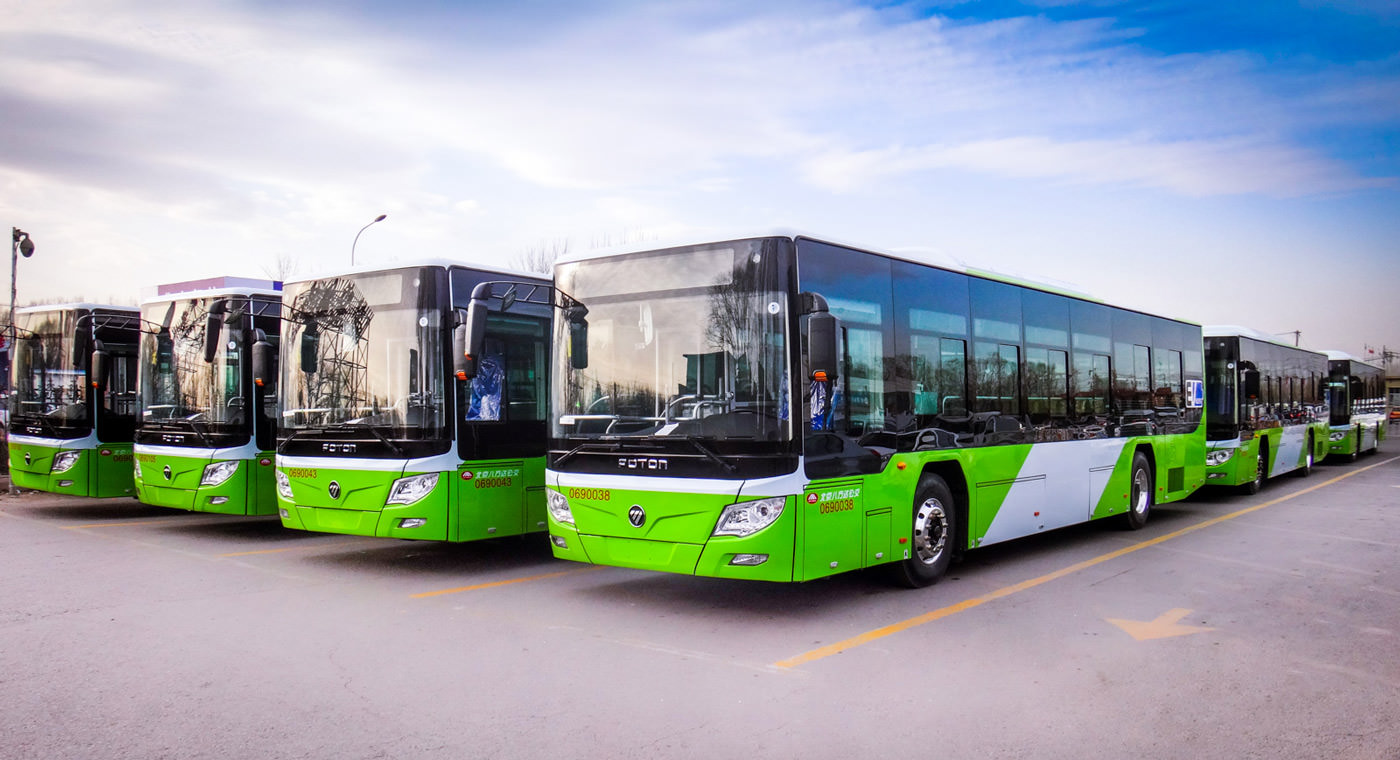
Equipped with Microvast's ultra-fast charging battery, a Foton electric bus stops by a charging point after a few loops of operation. Trained staff plug in the charger and within 10-15 minutes the electric bus's battery is refilled to maximum operating capacity and ready to go again. This now happens everyday in many bus terminals across metropolitan Beijing with the deployment of this cutting edge charging technology. Among all the ultra-fast charging stations, the newly opened charging station in Xiaoying Public Transit Bus Terminal is the largest.
Located in Chaoyang district, Beijing, built by China State Grid, this new charging complex covers an area of 26,500 m2 with its structures covering 1,575m2. Designed to satisfy the growing charging demand especially from the increase of ultra-fast charging electric buses departing from this terminal, this complex provides the infrastructure to charge 30 buses at the same time.
Originally a natural gas hybrid bus fleet, Beijing transit route 13 with Foton buses, like ten plus other major city bus routes departed from Xiaoying Terminal, now completely converted to ultra-fast charging full electric bus fleet. They join hundreds of other E-buses in Beijing already deployed using the same battery technology from Microvast.
After conversion to ultra-fast charging technology, the Route 13 fleet has improved operating efficiency while reducing Beijing's GHG emissions. Each new bus takes only 10-15 minutes to complete recharging the battery. Charging each bus takes place 2-3 times per day, during driver breaks, with several route loops between each charge.
Compared to earlier battery swapping system adopted by Beijing to experiment on improving Slow-charge Battery E-bus's operating efficiency and reduce down-time, the ultra-fast charging "battery + charger" system needs neither the investment and large storage space footprint for extra batteries, nor high cost complex with automated robotic battery pack swapping infrastructure, bringing obvious advantages to customers and utility companies with more rapid ROI.
With future facility and charging point expansions already planned out for 2016-2020, to accommodate more routes converting to fast charge EV, Xiaoying Terminal Charge station will play a greater role in the development of clean energy public transit system for Beijing in the near future.
Following the new Audi R18's world premiere at the Audi Training Center Munich last month, the now battery powered R18 Audi Le Mans Prototype LMP was recently caught testing at Sebring International raceway in Florida USA.
The 2016 R18 retains the 4.0L TDI engine but moves up into the 6MJ class; the 2015 R18 raced in the 4MJ class, up from 2MJ the season before.
Porsche will spend about 1 billion euros ($1.09 billion) on production facilities at its biggest plant to make its first-ever all-electric sports car.
The Volkswagen-owned manufacturer will create more than 1,000 new jobs at its base in Zuffenhausen in Germany where a new paint shop and assembly line will be set up to build the battery-powered "Mission E" model, Porsche said on Friday.
Porsche's investment in emissions-free drive technology reflects parent VW's growing commitment to increase its electric offerings as it struggles to overcome an emissions scandal.
VW has said the next generation of its VW-badged flagship luxury saloon Phaeton will be electric and it plans to expand the so-called MQB modular production platform to focus more strongly on long-range plug-in hybrids and electric vehicles.
Analysts have warned that VW's admission of rigging diesel emissions tests could cast a shadow over the diesel vehicle industry.
Porsche's Mission E model, due to come to market by the end of the decade, will be more than 600 horsepower and have a range of over 500 km (310 mile).
"We are sending a significant sign for the future of the brand," Chairman Wolfgang Porsche said after a meeting of the supervisory board which approved the investment.
Some 700 million euros will be spent at Zuffenhausen where an existing engine plant and body shop will be extended, and the rest will be invested in Porsche's development center in Weissach, the carmaker said.
The new Audi R18 made its world premiere on the occasion of the Audi Sport Finale at the Audi Training Center Munich on Saturday. Audi Sport has fundamentally re-designed the Audi R18 for the 2016 season.
The LMP1 race car that will compete in the Le Mans 24 Hours and in the FIA World Endurance Championship (WEC) in 2016 features innovative aerodynamics; represents the next stage in lightweight design; and has a modified hybrid system with lithium-ion batteries for energy storage, plus an efficiency-optimized TDI engine. The 2015 R18 e-tron quattro racer featured an encapsulated WHP flywheel energy storage system that sat in the cockpit alongside the driver.
The 2016 R18 retains the 4.0L TDI engine. The 2016 R18 will race in the 6MJ class; the 2015 R18 raced in the 4MJ class, up from 2MJ the season before.
Further technical details will come later.
In the 2016 FIA World Endurance Championship (WEC) that will start at Silverstone (Great Britain) on April 17, Audi Sport Team Joest will be fielding two new Audi R18 cars. In the interest of cost efficiency, Audi and its Volkswagen Group sister brand Porsche, have both agreed to each compete in the Le Mans 24 Hours, the WEC season’s pinnacle event, with only two instead of the most recent three cars.
The new Audi R18 made its world premiere on the occasion of the Audi Sport Finale at the Audi Training Center Munich on Saturday. Audi Sport has fundamentally re-designed the Audi R18 for the 2016 season.
The LMP1 race car that will compete in the Le Mans 24 Hours and in the FIA World Endurance Championship (WEC) in 2016 features innovative aerodynamics; represents the next stage in lightweight design; and has a modified hybrid system with lithium-ion batteries for energy storage, plus an efficiency-optimized TDI engine. The 2015 R18 e-tron quattro racer featured an encapsulated WHP flywheel energy storage system that sat in the cockpit alongside the driver.
The 2016 R18 retains the 4.0L TDI engine. The 2016 R18 will race in the 6MJ class; the 2015 R18 raced in the 4MJ class, up from 2MJ the season before.
Further technical details will come later.
In the 2016 FIA World Endurance Championship (WEC) that will start at Silverstone (Great Britain) on April 17, Audi Sport Team Joest will be fielding two new Audi R18 cars. In the interest of cost efficiency, Audi and its Volkswagen Group sister brand Porsche, have both agreed to each compete in the Le Mans 24 Hours, the WEC season’s pinnacle event, with only two instead of the most recent three cars.
No other car currently on the market is able to capture the curiosity of the greater public like the Tesla Model S P85D. It is a means of transport like no other, breaking a few world records in the process.
Bombardier Transportation has successfully completed a 41.6 km catenary-free test run using a Bombardier-built tram, powered entirely by its PRIMOVE battery in combination with BOMBARDIER MITRAC. The test run was conducted in the German city of Mannheim on the Rhein-Neckar-Verkehr GmbH (RNV) network.
RNV began using SuperCaps energy storage systems in 2009, and has integrated this technology into 30 of their trams. This provided sufficient energy for short CFO distances. However, the latest generation of Bombardier’s PRIMOVE battery system has been specifically developed for use with CFO where greater distances need to be covered.
In addition to application in Germany, the PRIMOVE battery and MITRAC propulsion equipment combination has been in successful revenue service on the Hexi line in Nanjing, China since August 2014. Six trams, built by CRRC Puzhen under Bombardier license, operate without overhead cables on 90 per cent of the lines. The batteries are charged seamlessly during passenger service via the pantograph, statically at tram stops, and dynamically during acceleration. On this demanding route, the CFO propulsion system has proven its suitability for almost any tram line worldwide.
The innovative PRIMOVE battery system builds upon Bombardier’s many years of experience with energy storage systems. The system combines high power capacity and exceptional battery life with high reliability and has been designed to maximize performance using the latest developments in nickel manganese cobalt (NMC) Li-Ion cells. The advanced PRIMOVE thermal conditioning unit maintains the battery’s ideal temperature and enables rapid charging and full braking energy recovery while extending their lifetime to up to ten years.
BMW Motorrad has a long tradition in pointing out new ways and thoughts for the topic „mobility on two wheels“. For that, again and again many studies were presented in the past giving views to the future. The experimental vehicle eRR, created as a project with the Technical University of Munich, embodies an idea of an electric powered supersport motorcycle made by BMW Motorrad.
Already a couple of years ago, BMW i showed the BMW Group’s visionary and sustainable approach with the vehicles BMW i3 and i8 and their revolutionary design principles (aluminum chassis and passenger cabin made from carbon fibre) and BMW Motorrad’s C evolution proved, that zero emission, riding fun and practicability do not exclude themselves.
With presenting the experimental vehicle eRR BMW Motorrad goes one step forward and shows the possibilities of an all-electric drive in a supersport motorcycle. Regarding design and chassis technology the eRR leans on the supersport motorcycle S 1000 RR, however using an all-electric drive.
Stephan Schaller, Head of BMW Motorrad, emphasizes: „Since their market launch, the RR is giving the creeps to motorsport athletes. If acceleration, handling or topspeed – the RR is setting standards. However, if acceleration on the first metres, up to 50, 60 kph, is the point, the RR’s 199 bhp have to admit defeat by another BMW product: the C evolution with its electric drive.
We asked ourselves: What happens when combining a sport motorcycle and an electric drive? The experimental vehicle eRR brings the topic zero emission and electric drive on a new, more fascinating level."
BMW Motorrad will announce technical details of the eRR at a later date.
In order to acquire the dominance and leadership in Chinese EV market, Samsung SDI became the first global battery manufacturer to construct an EV battery plant and initiate mass production in China, beating LG Chem who broke ground on a similar plant in China a year ago.
The Xi’an plant has initiated its operation from September. It has finalized battery supply agreements with 10 local personal and commercial vehicle companies and is already delivering the goods. Some of these companies include Yutong, the leader of China’s and also the world’s bus industry and then Foton, the leader of China’s truck industry.
The finalized Samsung SDI Xi’an Plant is a cutting-edge production line that can manufacture high-performance electric vehicle (in standard of pure EVs) batteries for an amount of approximately 40 thousand cars a year. The plant is capable of carrying out the whole production process of EV battery cells and modules. Preparing for increased market demand in the future, Samsung SDI will invest – by adding production line, etc. – 600 million USD into the Xi’an battery plant until 2020 and aim to achieve 1 billion USD in sales.
Samsung SDI CEO Cho Nam Seong said in his welcoming address, “Xi’an is a starting point of Silk Road and is also a focal point of China’s One Belt, One Road initiative.” He added, “To go hand in hand with China’s time-honored tradition and future development strategy, we will bring up Xi’an plant to become the world center of EV battery industry.”
Anqing Ring New Group Chairman Pan Yi Xin said, “By integrating our expertise in the automotive business with Samsung SDI’s advanced technical capability, we will promote Xi’an Plant as the number one production base of EV battery.”
Today at the Tokyo Motor Show 2015, Nissan Motor Co., Ltd. unveiled a concept vehicle that embodies Nissan's vision of the future of autonomous driving and zero emission EVs: the Nissan IDS Concept.
Presenting at the show, Nissan president and CEO Carlos Ghosn said: "Nissan's forthcoming technologies will revolutionize the relationship between car and driver, and future mobility."
After leading the development and expansion of EV technology, Nissan once again stands at the forefront of automotive technology. By integrating advanced vehicle control and safety technologies with cutting-edge artificial intelligence (AI), Nissan is among the leaders developing practical, real-world applications of autonomous drive technology.
In August 2013, Ghosn said that by 2020 Nissan plans to equip innovative autonomous drive technology on multiple vehicles. Progress is well on track to achieve this goal.
Nissan Intelligent Driving is Nissan's concept of autonomous drive technology and represents what Nissan believes next-generation vehicles should be. "Nissan Intelligent Driving improves a driver's ability to see, think and react. It compensates for human error, which causes more than 90 percent of all car accidents. As a result, time spent behind the wheel is safer, cleaner, more efficient and more fun," continued Ghosn.
By 202X, expect to see Nissan Intelligent Driving technology deployed on cars in cities around the world.
The Nissan IDS experience
Some have compared a future with autonomous drive to living in a world of conveyer belts that simply ferry people from point A to B, but the Nissan IDS Concept promises a very different vision of tomorrow. Even when the driver selects Piloted Drive and turns over driving to the vehicle, the car's performance — from accelerating to braking to cornering — imitates the driver's own style and preferences.
In Manual Drive mode, the driver has control. The linear acceleration and cornering are pure and exhilarating. Yet behind the scenes, the Nissan IDS Concept continues to provide assistance. Sensors continually monitor conditions and assistance is available even while the driver is in control. In the event of imminent danger, Nissan IDS Concept will assist the driver in taking evasive action.
In addition to learning, the Nissan IDS Concept's AI communicates like an attentive partner. From information concerning traffic conditions, the driver's schedule to personal interests, Nissan IDS Concept's AI has what is needed to help create a driving experience that is comfortable, enjoyable and safe.
Design — Together, we ride
"A key point behind the Nissan IDS Concept is communication. For autonomous drive to become reality, as a society we have to consider not only communication between car and driver but also between cars and people. The Nissan IDS Concept's design embodies Nissan's vision of autonomous drive as expressed in the phrase together, we ride," says Mitsunori Morita, Design Director.
Two interiors enable two ways for the driver to enjoy the experience. Together, we ride is clearly demonstrated in the interior design. "The Nissan IDS Concept has different interiors depending on whether the driver opts for Piloted Drive or Manual Drive. This was something that we thought was absolutely necessary to express our idea of autonomous drive," says Morita.
Even though it is a hatchback, the Nissan IDS Concept's long wheelbase enables comfortable seating space for four adults. But the cabin becomes even more spacious when the driver selects Piloted Drive. In this mode, the steering wheel recedes into the center of the instrument panel and a large flat screen comes out. Various driving-related operations are handled by AI, voice and gestures from the driver. The interior, which is comprised of natural materials such as mesh leather, is illuminated by soft light. All four seats rotate slightly inward, facilitating easier conversation. It's like relaxing in a living room.
When the driver selects Manual Drive, the roomy interior transforms to put the driver in control. All seats face forward. The steering wheel, which takes styling cues from reins for horse riding, appears along with driving meters and a heads-up display that shows route and other driving information. Interior lighting switches to blue, stimulating the ability to concentrate. Nissan's use of hollow-structure A-pillars helps ensure excellent visibility by reducing blind spots and also contributes to the feeling of open space.
"In every situation, it is about giving the driver more choices and greater control. And the driver will remain the focus of our technology development efforts," Ghosn said at the show.
The transformation to Manual Drive can be carried out with ease through a switch between the front seats called the PD Commander. This is the only control the driver can physically operate when the car is in Piloted Drive: when the driver is ready to take over driving, a physical action should initiate the change.
Exterior design
For autonomous drive to be widely accepted, people need to fully trust the technology. Through its innovative communication capabilities, the Nissan IDS Concept promotes confidence and a sense of harmony for those outside the car as well. Various exterior lights and displays convey to pedestrians and others the car's awareness of its surroundings and signals its intentions. The car's side body line, for example, is actually an LED that Nissan calls the Intention Indicator. When pedestrians or cyclists are nearby, the strip shines white, signaling that the car is aware of them. Another electronic display, which faces outside from the instrument panel, can flash messages such as "After you" to pedestrians. This natural, harmonious system of communication signals a new future with cars.
Advanced aerodynamic performance for greater driving range
Design Director Mitsunori Morita says: "By the time Nissan Intelligent Driving technology is available on production cars, EVs will be able to go great distances on a single charge. Getting to this point will, of course, require the further evolution of batteries, but aerodynamic performance is also very important. We incorporated our most advanced aerodynamic technology in the design of the Nissan IDS Concept."
The height of the full carbon fiber body was constrained to 1,380 mm, sharply minimizing aerodynamic drag (Cd). Positioning the tires close to the corners of the body maximizes interior space while enabling a wrap-around cabin design. Nissan selected large-diameter wheels for high-performance and sportiness, but used very thin 175-size tires to minimize air and roll resistance. The wheels have a layered design suggestive of thin fins that create tiny vortexes of air flow on the wheel's surface. This design further contributes to smooth air flow.
The icicle pattern on the Nissan IDS Concept's grille symbolizes a pure and clean design — perfect for an EV. Shaped like a stack of ice blocks, the grille pattern appears transparent. The car's bluish satin silver body color heightens the impression of a comfortable and secure cabin space.
Highly evolved EV technology for long-distance driving
At Nissan's annual shareholders meeting in June, Executive Vice President Hideyuki Sakamoto said: "Our zero emission strategy centers on EVs. We are pursuing improved electric powertrain technologies, such as motors, batteries and inverters, which will enable us to mass produce and market EVs that equal or surpass the convenience of gasoline-powered cars."
The Nissan IDS Concept is fitted with a high-capacity 60 kWh battery, and thanks to its outstanding aerodynamics, low stance, flowing form and reduced weight due to its full-carbon-fiber body, the vehicle is designed to also meet the need to drive long distances. Other technologies on the Nissan IDS Concept include Piloted Park that can be operated by smartphone or tablet, and wireless charging technologies. Through these, the driver can leave parking and charging to the car.
Nissan's targets — Zero traffic fatalities and zero emissions
In order for our car-based society to be sustainable, complex issues ranging from sustainable energy supplies to climate change, air pollution and traffic safety must be addressed. At Nissan, we have set zero fatalities and zero emissions as aspirational targets in our mission to help create a sustainable car-based society.
Over 90 percent of traffic accidents are caused by human error. Nissan IDS Concept's extensive system of sensors and AI are designed to provide enhanced safety performance compared to a human driver. This technology brings us a step closer to the goal of zero traffic fatalities.
EVs produce no CO2 emissions and their batteries can store energy from renewable sources and turn it into electricity for homes and buildings. As the number of EVs increases, entire communities will be able to harness their power as part of a sustainable energy plan. Then, as EVs come to play a central role in energy supply, we will come that much closer to becoming a zero emission society.
Nissan believes that the Nissan IDS Concept will evolve into a leading innovation for next generation mobility and our quest for making these "two zeroes" a reality.
Featuring Nissan's most advanced safety, driving-control and EV technology — all taken to a new level by AI — the Nissan IDS Concept is a compelling showcase of a promising future.
Dyson, the U.K. company famous for its bagless vacuum cleaners, has acquired Michigan-based solid-state battery startup Sakti3 for $90 million and announced plans to build an important $1 billion battery factory to mass produce the next generation battery technology.
This is the second important solid-state battery technology acquisition in a short period of time – Bosch recently bought Seeo Inc. to bring their battery technology to market. Solid-state batteries are thought to be a lot safer than common li-ion cells and could have more potential for higher energy density, but we have yet to see a company capable of producing it in large-scale and at an attractive price point.
Sakti3 made the headlines last year when it announced that it had produced a solid-state battery cell with 400 Wh/kg energy density, compared to Tesla’s cells believed to be around 230 Wh/kg.
Dyson had already invested $15 million in Sakti3 before now buying the company.
Founder and CEO Ann Marie Sastry will join Dyson as an executive and lead development of her battery technology for the company. When she first unveiled her technology and was trying to attract investors, Sastry said that the company’s solid-state cells aimed at the electric vehicle industry.
Dyson says that they remain open at licensing the technology and the cells could eventually find their way into electric cars, but for now the plan is to integrate the technology into Dyson’s cordless vacuum cleaners. The company expects to start producing its systems with the new batteries within a year or two.
“If we are to continue to create new and disruptive technology we must develop more advanced core technologies,” said Dyson founder James Dyson. “We have invested nearly $310 million into the research and development of the Dyson digital motor, a technology that now powers our most successful machines. We will do the same with batteries. Sakti3 has developed a breakthrough in battery technology, and together we will make this technology a reality.”
In the wake of the ongoing diesel-emissions scandal, Volkswagen has announced that an all-electric Volkswagen Phaeton sedan is in the product pipeline.
"The Volkswagen Phaeton has embodied the brand's technological competence and brand ambition from the first generation onward," Volkswagen AG said in a statement. "The future generation of the Phaeton will once again be the flagship for the brand's profile over the next decade."
The Phaeton EV will lead a new VW product portfolio that features "plug-in hybrids with an even greater range, high-volume electric vehicles with a radius of up to 300 kilometers (186 miles), a 48-volt power supply system (mild hybrids) as well as ever more efficient diesel, petrol and CNG concepts," VW said.
VW talking up its zero emissions technology is no surprise, with the Porsche Mission E and Audi E-tron Quattro proving the requisite technology is being developed within the group.
Wolfsburg insiders with knowledge of Volkswagen's future model plans suggest it will share its platform architecture, electric drive system and battery technology with the upcoming Audi Q6 etron – as previewed by the etron Quattro concept at the recent Frankfurt auto show.The four-wheel drive etron Quattro uses three motors – one mounted up front sending drive to the front wheels and the remaining two sited at the rear acting on the rear wheels. Nominal power is put at 230kW, although a boosting function made available in the more sportier of two drive modes temporarily increases its maximum output to 370kW. It is accompanied by peak torque of 800Nm.
Energy to run the etron Quattro's electric motors is drawn from a liquid cooled 95kWh battery bolted to the floor below the passenger compartment. Hinting at its modular nature, Audi says the lithium-ion unit is suitable for other future electric models.
On a full charge, the battery is claimed to provide the new Audi with a range of over 500km based on the criteria used in the New European Driving Cycle (NEDC) test procedure.
Bosch is researching batteries that will make it possible to drive longer distances without recharging, and will also cost less than current batteries. “Our battery experts are playing a key part in paving the way for electromobility,” says Dr. Michael Bolle, president of the corporate sector for research and advance engineering at Robert Bosch GmbH. As early as 2020, Bosch batteries should be capable of storing twice as much energy while costing significantly less. The market forecasts are correspondingly bullish: ten years from now, Bosch expects some 15 percent of all new vehicles worldwide to have an electrical powertrain. As a result, Bosch is investing 400 million euros a year in electromobility.
Current challenge: heavy weight, low energy density
Dr. Thorsten Ochs, head of battery technology R&D at the new Bosch research campus in Renningen, explains what will be necessary for progress in battery technology: “To achieve widespread acceptance of electromobility, mid-sized vehicles need to have 50 kilowatt hours of usable energy.” With conventional lead batteries, this would mean increasing the weight of the battery to 1.9 metric tons, even without wiring and the holder. That is the same weight as a modern-day mid-sized sedan, including occupants and luggage. At a weight of 19 kilograms, a conventional lead battery – as found today in nearly every car for powering their starters – stores a comparatively low 0.5 kilowatt hours.
The goal: a weight of just 190 kilograms, recharged in 15 minutes
Today’s lithium-ion batteries are superior in this respect. They store more than three times the amount of energy per kilogram. At a weight of 230 kilograms, the battery of a modern-day electric car provides approximately 18 to 30 kilowatt hours. But to achieve the desired 50 kilowatt hours, a battery weighing 380 to 600 kilograms would be necessary. With his colleagues around the world, Ochs is therefore working on energy storage media with even better performance. Their goal: to pack 50 kilowatt hours into 190 kilograms. In addition, the researchers are looking to significantly shorten the time a car needs to recharge. “Our new batteries should be capable of being loaded to 75 percent in less than 15 minutes,” Ochs says.
Ochs and his colleagues firmly believe that improved lithium technology will make it possible to achieve these goals. “There is still a long way to go when it comes to lithium,” Ochs says. To make progress in this area, his team in Renningen is working closely with Bosch experts in Shanghai and Palo Alto. And as a further measure to advance lithium-ion battery research, Bosch has established the Lithium Energy and Power GmbH & Co. KG joint venture with GS Yuasa and the Mitsubishi Corporation.
More space for electrical power – thanks to start-up technology from Silicon Valley
In theory, the solution sounds simple: “The more lithium ions you have in a battery, the more electrons – and thus the more energy – you can store in the same space,” Ochs says. But because researchers need to improve cells at the atomic and molecular level, putting this into practice is a challenge. One of the main keys to achieving this goal is to reduce the proportion of graphite in the anode (the positively charged part of the battery), or do without graphite altogether. Using lithium instead of graphite would make it possible to store up to three times as much energy in the same space. Ochs and his colleagues have already developed many approaches for removing the graphite and replacing it with other materials. The Bosch CEO Volkmar Denner recently presented a prototype solution at the IAA. Thanks to its purchase of Seeo Inc., a start-up based in Silicon Valley, Bosch has now acquired crucial practical expertise when it comes to making innovative solid-state batteries. Such batteries have one other decisive advantage: they can do without any liquid electrolyte. Such an electrolyte is to be found in conventional lithium-ion batteries, where, in certain circumstances, it can pose a safety risk.
Advantages in a number of areas
Improved lithium-ion batteries would benefit not only drivers, but also all other applications that employ this technology, such as smartphones, laptops, tablets, cordless household appliances and tools, and many more products.