Daimler ups-the-ante to €10 billion for electric vehicle R&D

Daimler is planning to invest up to €10 billion ($11 billion) in electric vehicles research and development, up from €7 billion announced only 6 months ago.

"By 2025 we want to develop 10 electric cars based on the same architecture," Thomas Weber told Stuttgarter Zeitung's Saturday edition.

"For this push we want to invest up to 10 billion euros," he said, adding three of the models will be Smart branded cars and that thanks to larger batteries they will be able to increase their cruising range up to 700 kilometers.

In September, a person familiar with Daimler's plans said that the car maker plans to roll out at least six electric car models as part of its push to compete with Tesla and Audi.

Separately, Daimler said on Friday that it will continue to sell diesel-powered vehicles in the United States, in contrast to German rival Volkswagen.

"There is currently no decision nor are there considerations to withdraw diesel from the U.S.", a company spokesman said, denying a report from weekly magazine Der Spiegel, which had said the carmaker was considering stopping its sales of such cars in the U.S. next year.

Diesel-powered cars account for less than one percent of the Mercedes brand's car sales in the U.S. this year, he added.

That compares to a diesel car share of about 5 percent several years ago, Der Spiegel said.

Daimler is conducting an internal investigation of its certification process for diesel exhaust emissions in the United States at the request of the Justice Department, after the U.S. Environmental Protection Agency said it would review all light-duty diesel vehicles.

According to Der Spiegel, the potential pullback of diesel cars from the U.S. market is not related to this probe.

Volkswagen said on Tuesday it would drop diesel vehicles in the United States and refocus on sport utility and electric vehicles, in the wake of a damaging diesel emissions cheating scandal.

Tesla to offer Zero Marginal Cost Mobility

We've all witnessed first-hand how in just two decades the internet has digitised industry after industry to deliver an increasingly zero marginal cost society (Marginal cost is the cost of producing an additional unit of a good or service after fixed costs have been absorbed.)

While I don't subscribe to the entire zero marginal cost society thesis, it is a good explanation for the effects that have transformed information industries like media, music & software. The same now applies increasingly to energy. While the fixed costs of the harvesting technologies to generate green electricity are decreasing exponentially, the marginal cost of producing renewable energy is near zero. The sun and the wind are free and only need to be captured and stored.

At a recent shareholder meeting, Elon Musk said Tesla's new solar shingles will cost less than a "normal roof" and the energy would essentially be free. Does this mark the dawn of mass market zero marginal cost mobility? Popular Mechanics recently ran the experiment, powering three electric vehicles with a conventional rooftop PV system. They concluded that buying a rooftop PV system to power your electric vehicle is comparable to prepaying three years worth of gasoline, based on $4/gallon, and never having to pay for it again.

We think the payback time for a retrofitted rooftop PV system can be even shorter! Based on average annual motoring, 15,000 km/year in Australia, a small 1.5 kW PV array (PM used 7.5 kw) could power a typical EV like a Nissan Leaf (114 Wh/km quoted energy consumption) on it's daily commute for 25+ years at an average cost of < $0.004/km.

Eliminating the $240/month a typical household spends on vehicle fuel, a modest rooftop PV system would pay for itself in just 6 months. Ticking the box to have Tesla tiles fitted to your new house eliminates the payback stage altogether. It is effectively a rooftop perpetual fuel pump where the per kilometre cost is zero from day 1.

Combine Tesla's solar shingles and EV powertrain which, irrespective of their "infinite Mile" 8 year warranty, is expected to last well in-excess of a million miles, (true for all EVs) with the ever growing installed base of rooftop PV systems (25% of households in some Australian states) and we could soon see zero marginal cost mobility becoming reality at internet speed, hammering another couple dozen nails in the coffin of ICE cars.

VW to Invest €3.5B in Battery Cell & Modular Electric Drive Plant

Volkswagen will invest €3.5-billion (US$3.7-billion) in e-mobility and digitalization for its German plants.

To bring Volkswagen up-to-date in the future-oriented areas of e-mobility and digitalization, the company will be making a massive investment in new technologies. The German plants are to enter the field of developing and producing electric vehicles and components. A pilot plant for battery cells and cell modules is to be developed. Volkswagen will be investing €3.5 billion in the transformation of the company.

New competences in future-oriented areas are to be developed at the various locations. About 9,000 additional jobs with a secure future are to be created. Volkswagen will mainly be filling these vacancies with existing employees and will also be recruiting specialists from outside the Group. Over the next few years, Volkswagen will be cutting up to 23,000 jobs via natural fluctuation and partial early retirement, taking the demographic curve into account. It is expressly stated that this reduction in the workforce will be accomplished without compulsory redundancies.

The pact for the future includes agreements on new future-oriented vehicle products. The plants at Wolfsburg and Zwickau are to assume responsibility for the production of electric vehicles based on the Modular Electric Drive Kit (MEB). By investing in e-mobility, Volkswagen will create jobs with a secure future at these locations. In order to ensure efficient capacity deployment, a further model is to be produced at the Emden plant. At Wolfsburg, an additional Volkswagen Group vehicle will also be produced.

Future-oriented work is to be divided between the main German components plants. Brunswick will continue to produce the battery system for the Modular Transverse Toolkit and will also be developing and producing the battery system for the Modular Electric Drive Kit (MEB). Kassel is to develop the MEB drive system and to be responsible for the assembly of the entire system in addition to electric transmission production. Salzgitter will produce and supply MEB drive system components. In addition, the plant will be building a pilot facility for battery cells and cell modules.

By 2020, the Volkswagen brand intends to be completely repositioned.

Axial Flux Induction Motor for Automotive Applications

Hybrid and electric vehicle technology has seen rapid development in recent years. The motor and generator are at the heart of the vehicle drive and energy system and often utilise expensive rare-earth permanent magnet material.

Existing hybrid and electric vehicles, such as Toyota Prius, Chevrolet Bolt, Nissan Leaf, and BMW i3 all use high-energy-density permanent magnet (PM) machines for electric propulsion. The magnetic material is usually sintered neodymium–iron–boron (NdFeB).

Squirrel cage induction motors (IM) have been successfully used in electric vehicles (GM and Tesla) and commercial vehicles (buses and trains). They are much cheaper and more robust although they can struggle to get the same torque density.

Currently, the interior permanent magnet synchronous motor (IPMSM) is the most common machine in use, but manufacturers are keen to develop drive motors with much lower magnet content. High torque density and efficiency are required, as well as a wide constant power range.

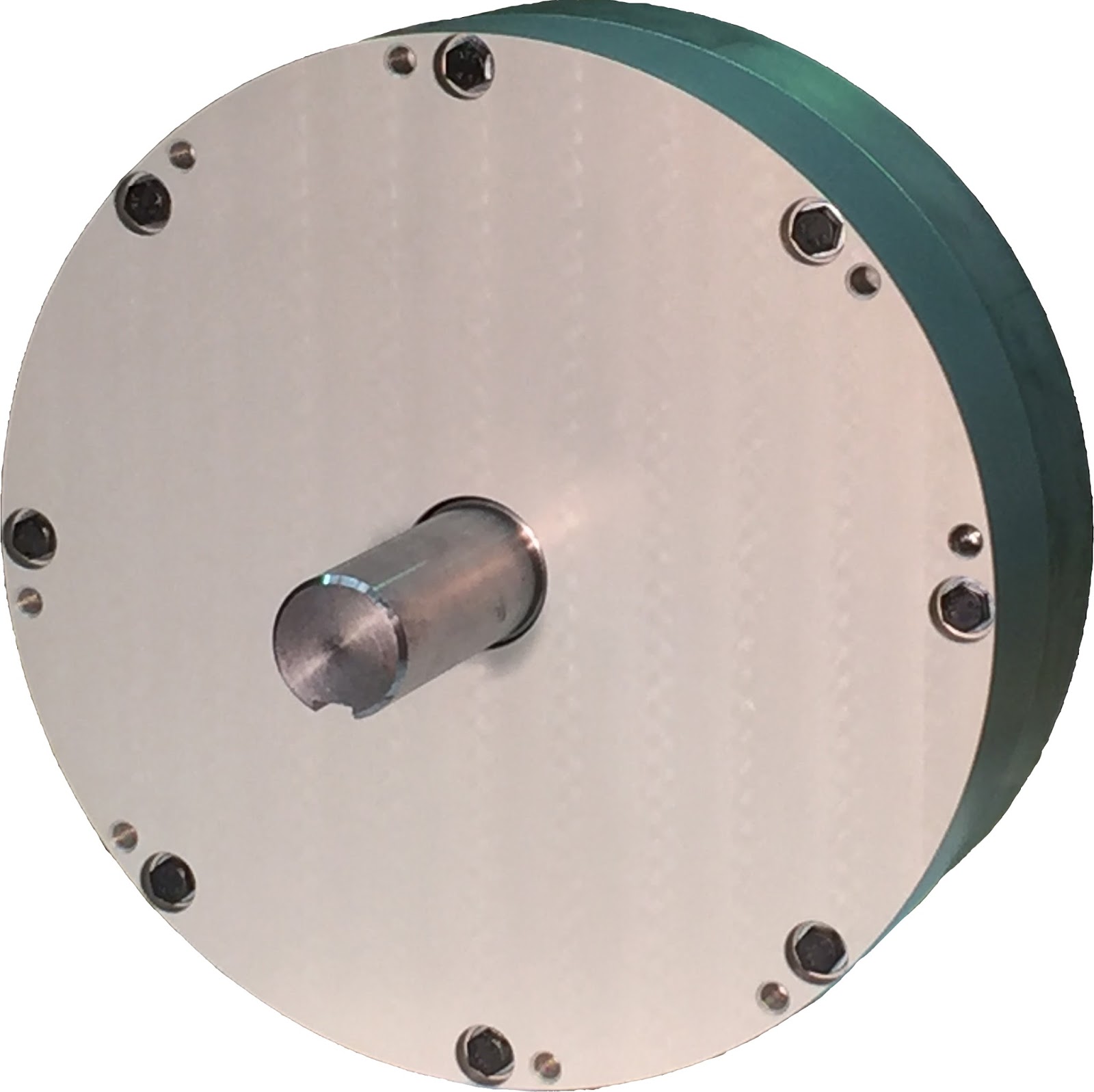
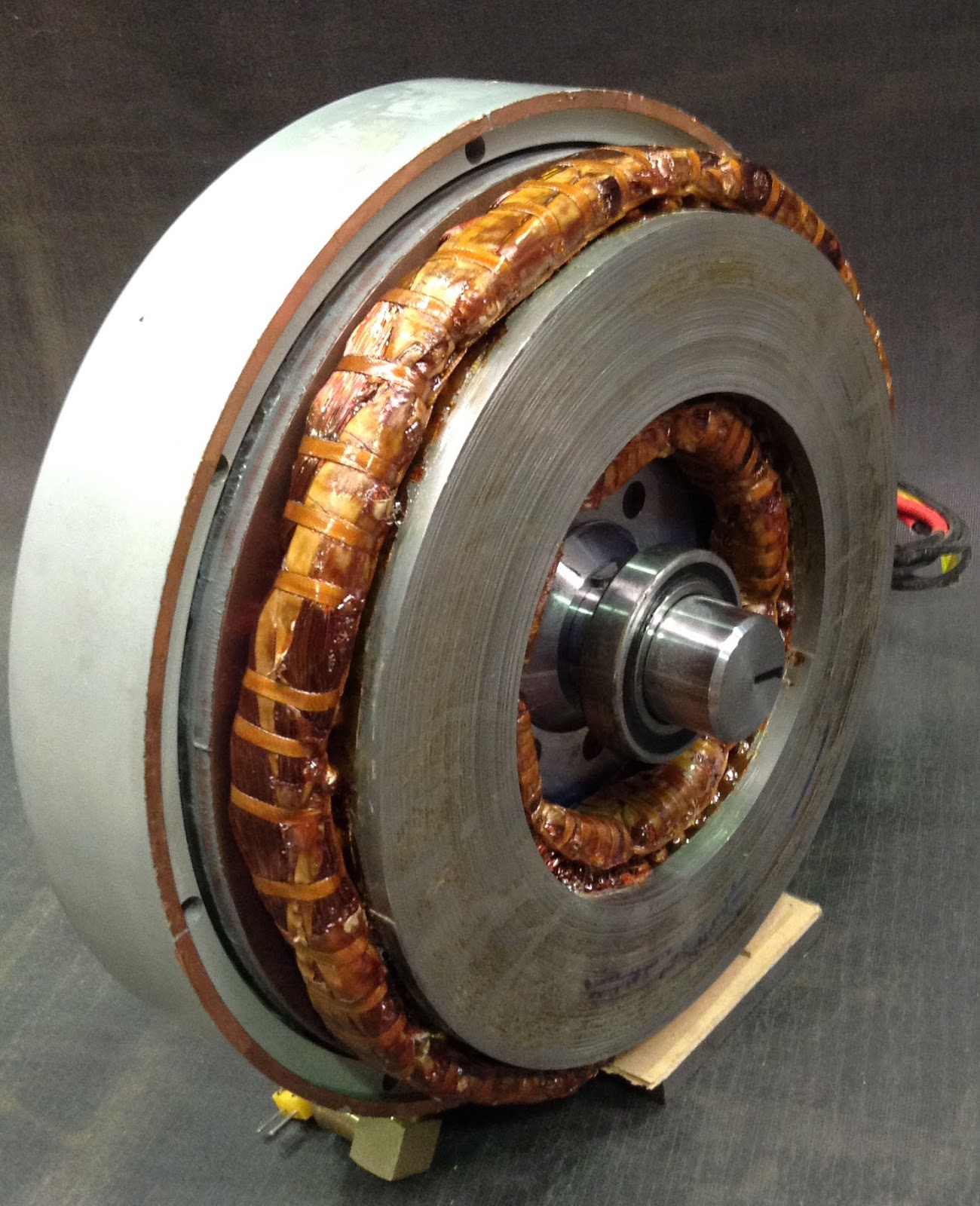
In an effort to improve the torque density of automotive induction motors Evans Electric have developed a double stator, copper rotor, axial flux induction motor. (AFIM) Like a typical squirrel cage induction motor, the AFIM eliminates the need for rare-earth permanent magnets entirely, yet matches the IPMSM for torque density and energy efficiency.

Axial Flux Torque Density (Nm/L)

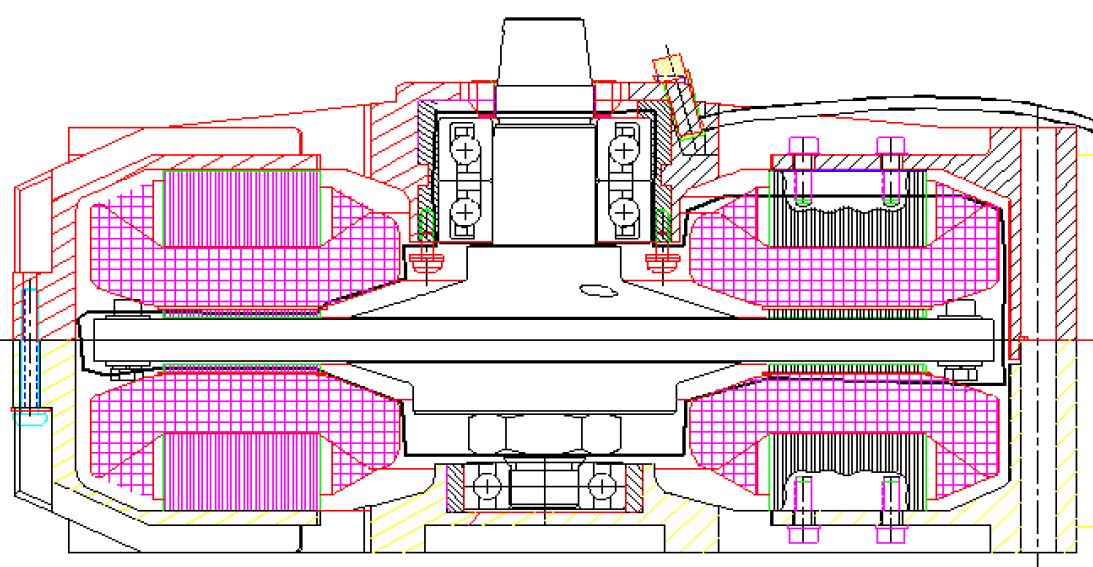
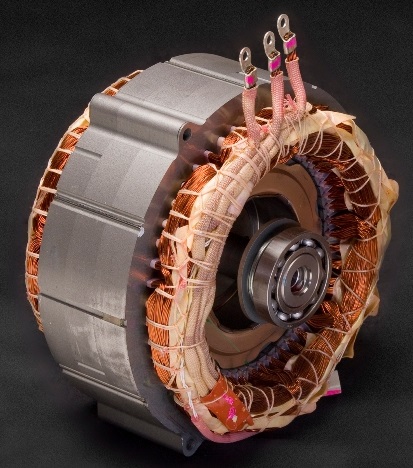
The earliest electrical machines were axial flux motors with the first prototype built by Michael Faraday in 1831. Axial flux machines [Figure 1] (aka. Pancake motors) offer high torque and power density values. A double stator architecture offers the highest torque density coupled with balanced axial forces. Further, the short axial length and solid-core copper rotor construction (patented by Evans Electric) further enhance torque density values when compared to radial flux motors.

Figure 1

Conventional radial flux motor geometry [Figure 2] requires azimuthal travel of magnetic flux through the rotor. Azimuthal flux path volumes result in substantial parasitic eddy current losses unless laminates are used. A double stator, single rotor axial flux geometry [Figure 1] has a shorter flux return path that inherently avoids parasitic eddy current losses and results in a much smaller total rotor volume.

For example, the Telsa Roadster AC induction motor outputs similar torque values but is dimensionally 3x the volume of the Evans Electric AFIM which was designed to achieve output torque density of 100 Nm/L.

AFIM torque density can be further increased by reducing the impedance of the machine and increasing the bar number. Typical pole numbers are 6 to 8 while the use of high rotor bar number increases torque and decreases torque vibration.

The use of copper in the disc rotor lowers rotor resistance which improves efficiency but can restrict starting torque.

To obtain high efficiency the machine should be running at low slip so that higher pole number is usually required along with low rotor resistance. However, this can restrict the starting torque. This means that the input impedance as a whole needs to be low which does lead to high input current. However, to get high power factor the input reactance should be low compared to the input resistance. This leads to the need for compromise.

Figure 2

In industrial motors deep bars or double cages can be used but these options are not available in an axial flux design. However, the solid steel rotor aids the starting torque since this appears as an effective high resistance rotor. The maximum torque can be increased by reducing the impedance of the machine and increasing the bar number.

Efficiency – Comparing IM and PM Machines

Efficiency is important for hybrid electric vehicle drive motors. With energetically ‘free’ excitation, low fundamental reactance and the ability to have a high pole count, permanent magnet machines can be extremely light in weight and highly efficient. This is particularly true for industrial applications that involve a restricted speed range, meaning a fixed terminal voltage.

In such applications the design strategy is to build in a high internal flux (which permanent magnets do admirably), so that torque is produced with minimal input current. Then efficiency is high, and the motor can be made light in weight and physically small.

Traction motors for applications such as automotive, are different in that they must operate over a wide speed range. Automotive traction motors require a certain torque (‘base torque’) at low speeds, up to what is called the ‘base speed’, and then a roughly constant power over a speed range from the base speed to a maximum speed that might be several times the base speed. In traction motor applications using wound field DC machines, this torque-speed characteristic is accomplished using what is called ‘field weakening’, or simply reducing field current at high speed.

Prius THS II

The requirement for performance over a relatively wide speed range can force some compromises in permanent magnet motor design. It is not possible to turn down the permanent magnet flux to control terminal voltage at high speed. It is possible, however, to counter the permanent magnet flux with armature current, and this can be done in permanent magnet fields if the permanent magnet flux is not too strong.

So permanent magnet machines built for wide speed range operation generally have relatively weak permanent magnet excitation. Then it is necessary to build a high degree of saliency into the machine so that torque can be produced by interaction of terminal current with that saliency. Thus the permanent magnet machines built for automotive traction operation do not have all of the attractive features one would expect of permanent magnet machines.

At low speed and high torque they do not really operate as permanent magnet machines: they are more akin to synchronous reluctance machines, using the interaction between saliency and (large) terminal currents to produce torque. At high speeds they employ much of their armature current capability to counter the permanent magnet flux, and this negatively affects efficiency at high speed. Such machines can be made to be quite efficient at relatively low torque level and intermediate speed.

The Evans Electric AFIM achieves maximum efficiency of 96%.

Evans Electric AFIM

Effective Efficiency of Traction Motors

To understand the impact of motor losses, including PM drag loss on actual machine operation, we now attempt to evaluate the effective efficiency of a machine with a realistic operating scenario.

Recognise that losses in machines come from two sources. First, acceleration force requires current in the windings, so resistive losses occur. Second, rotational speed produces loss from friction, windage and, most important, core loss.

In permanent magnet machines there is always flux present so that there will always be rotational losses. Induction motors can be de-excited so that core loss can be ‘turned off’ when the motor is not producing torque.

In actual operation as a traction motor the induction machine is more efficient and has a substantial advantage because it can be de-excited when it is not producing torque, eliminating electrical loss in that condition. Since those losses are present only when, and to the extent, the induction motor is producing torque, hybrid vehicles are expected to be more efficient when induction machines are used for the drive motor.

Cost Analysis

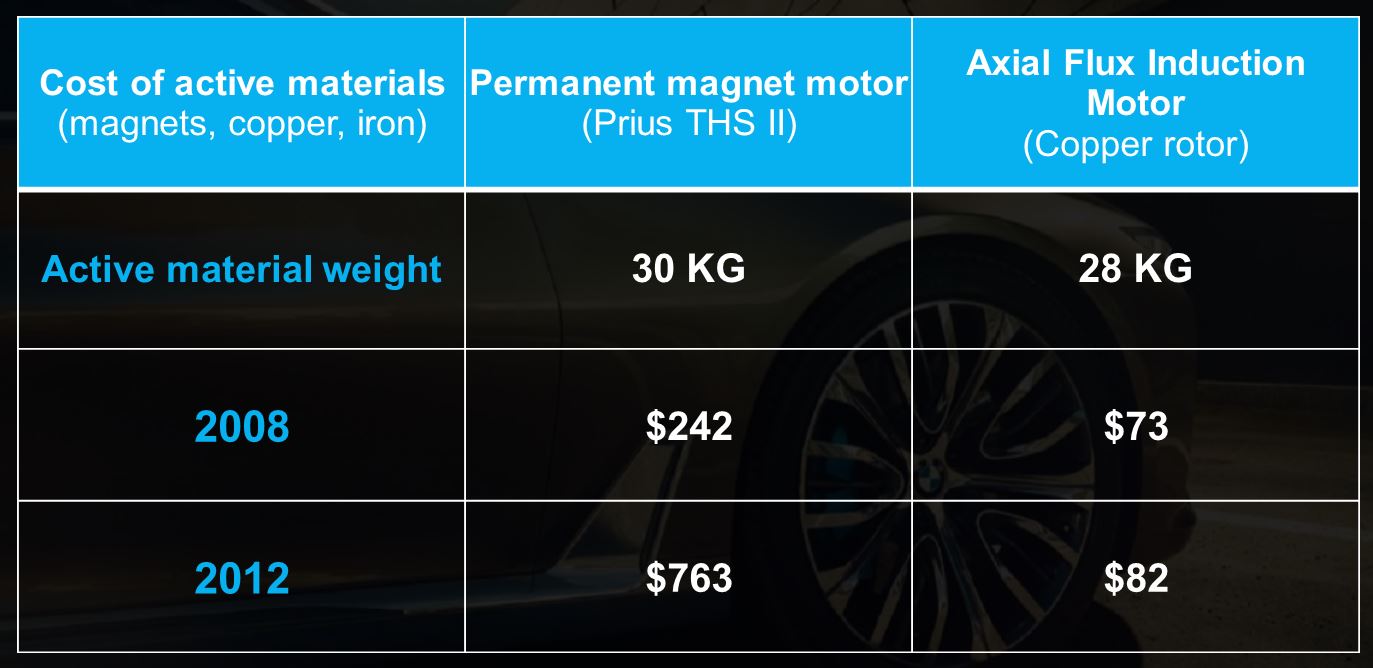
Rare-earth material costs can be up to several orders of magnitude more expensive than common steel and copper typically found in IM. The reduced volume of an AFIM further lowers material costs compared to a conventional radial flux IM. A reduction in motor material costs not only improves Hybrid and electric vehicle profitability but also facilitates the long term trend towards multi-motor EV powertrain architectures ie. twin and quad motor AWD.

Source: Evans Electric

BorgWarner Launch Integrated Electric Drive Module for the EV Market

BorgWarner will launch its electric drive module (eDM) with integrated eGearDrive® transmission in two pure electric vehicles from a major Chinese automaker. Production is expected to begin in summer 2017.

"BorgWarner's new eDM combines our know-how in eGearDrive transmissions, first launched in 2009, with our newly acquired expertise in electric motor technology from the former REMY business," said Dr. Stefan Demmerle, President and General Manager, BorgWarner PowerDrive Systems. "Our first application of this integrated world-class propulsion solution will be produced locally in China."

BorgWarner's eDM provides primary or secondary propulsion for pure electric or P4-type hybrid vehicles. The integrated design of the electric motor and transmission enables weight, cost and space savings. Since both functions are combined into one housing, installation is also easier. Based on the vehicle manufacturer's desired propulsion characteristics, performance is optimized with various available gear ratios to provide a completely tailored solution. Featuring patented high voltage hairpin (HVH) technology and optional power electronics, BorgWarner's HVH 250 electric motor delivers superior performance with over 95 percent efficiency. Through its high-efficiency gear train and compact, low-weight design, the eGearDrive transmission contributes to extended battery-powered driving range, which in turn reduces the battery capacity required. An electronically actuated park lock system is also available.

BorgWarner's comprehensive product portfolio also includes numerous other leading technologies for hybrid and electric vehicles, such as the eBooster® electrically driven compressor, cabin heaters and auxiliary thermal coolant pumps. All of these technologies support automakers around the world in designing the clean and efficient vehicles of tomorrow.

Scientists develop new lithium-sulphur battery that offers up to 5x the energy density of Li-ion

Scientists have developed a new prototype battery inspired by human anatomy. The prototype – which offers up to 5x the energy density of the lithium-ion batteries – uses a lithium-sulphur cell with an intestine-mimicking design that could finally make these energy-dense batteries long-lasting enough for commercial use.

Headed by the University of Cambridge, this research has managed to overcome one of the major drawbacks to lithium-sulphur cells: the fact that they disintegrate very quickly, despite their superior energy density to lithium ions.

When a lithium-sulphur battery discharges, sulphur in the cathode absorbs lithium from the anode. This interaction causes the sulphur molecules to transform into chain-like structures called poly-sulphides.

After the battery goes through numerous charge-discharge cycles, the reaction starts to stress the cathode, leading to bits of the poly-sulphides breaking off and entering the battery's electrolyte, which joins the two electrodes.

When this happens, the battery starts to degrade, as it loses its active material.

Here is where bio-mimicry comes in. Our gut is lined with tiny protrusions called villi, which absorb nutrients during digestion. The villi increase the surface area of the intestines by 30x. Scientists have now developed a nano-structure made of zinc oxides which resembles and act like the villi. These prototype villi will absorb the polysulphides in the electrolyte, slowing down the degradation process of the lithium-sulphur cell.

In testing, after 200 cycles at 1C, the prototype nanostructure saw only 0.05% average capacity loss per cycle, making it almost as stable as lithium-ion – which ranges between 0.025 to 0.048 percent average capacity loss per cycle.

Jaguar I-Pace EV concept with AWD and 500 km range

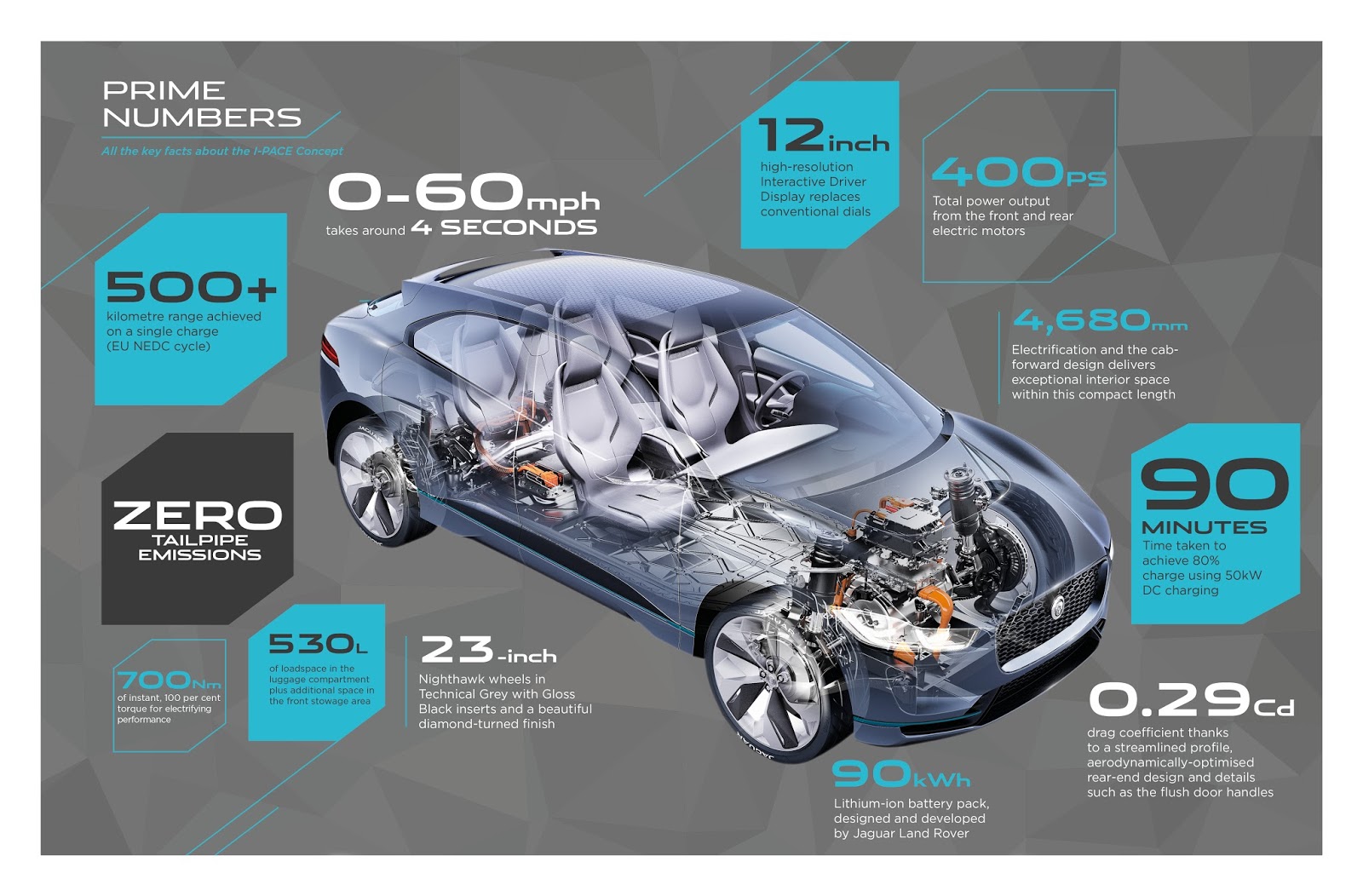
Jaguar Land Rover, a wholly owned subsidiary of Tata Motors, have unveiled their first electric vehicle the I-Pace SUV. On sale in 2018, the all-wheel-drive EV will have 300+ mile range and run 0-60mph in around 4 seconds.

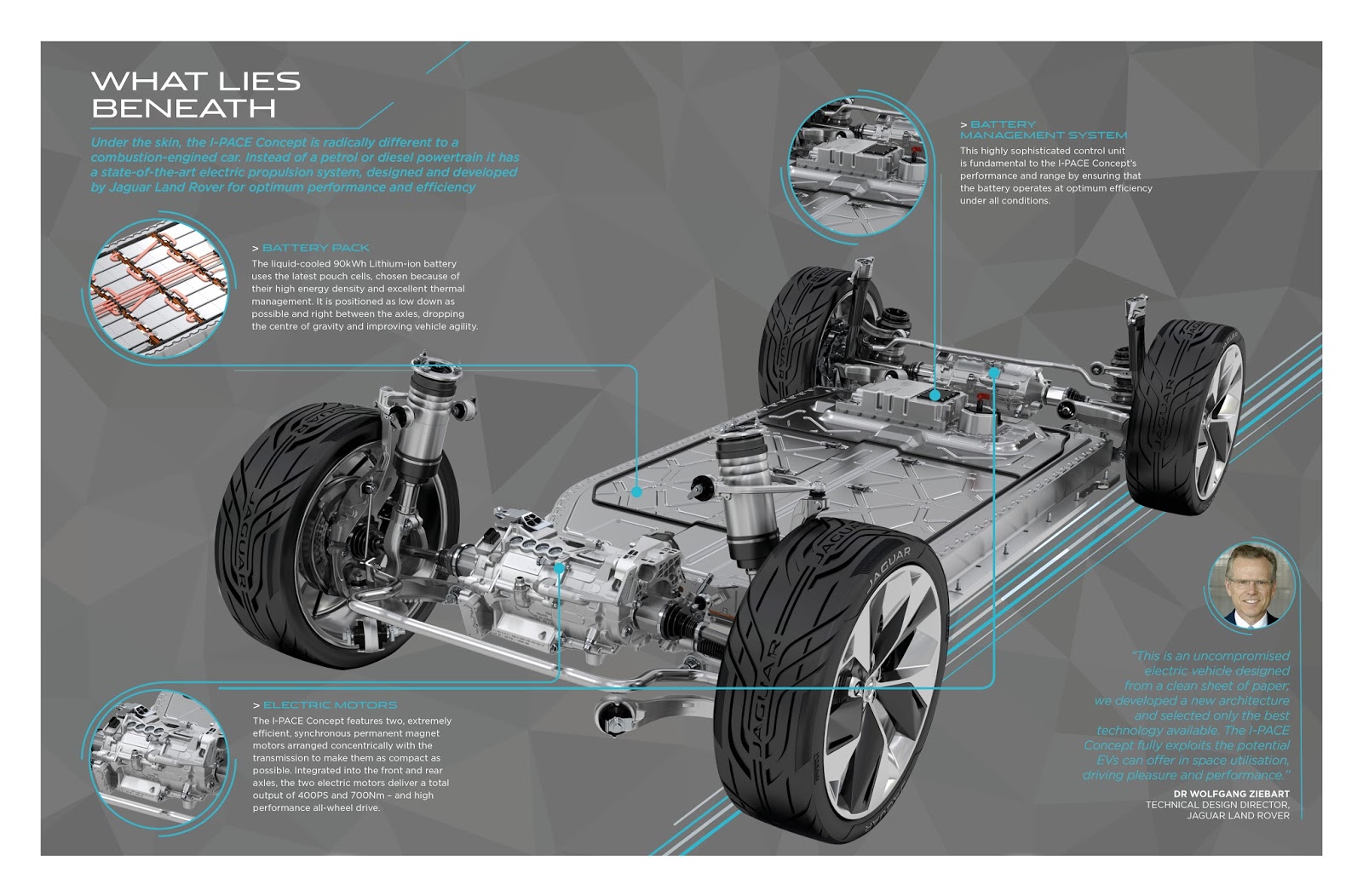
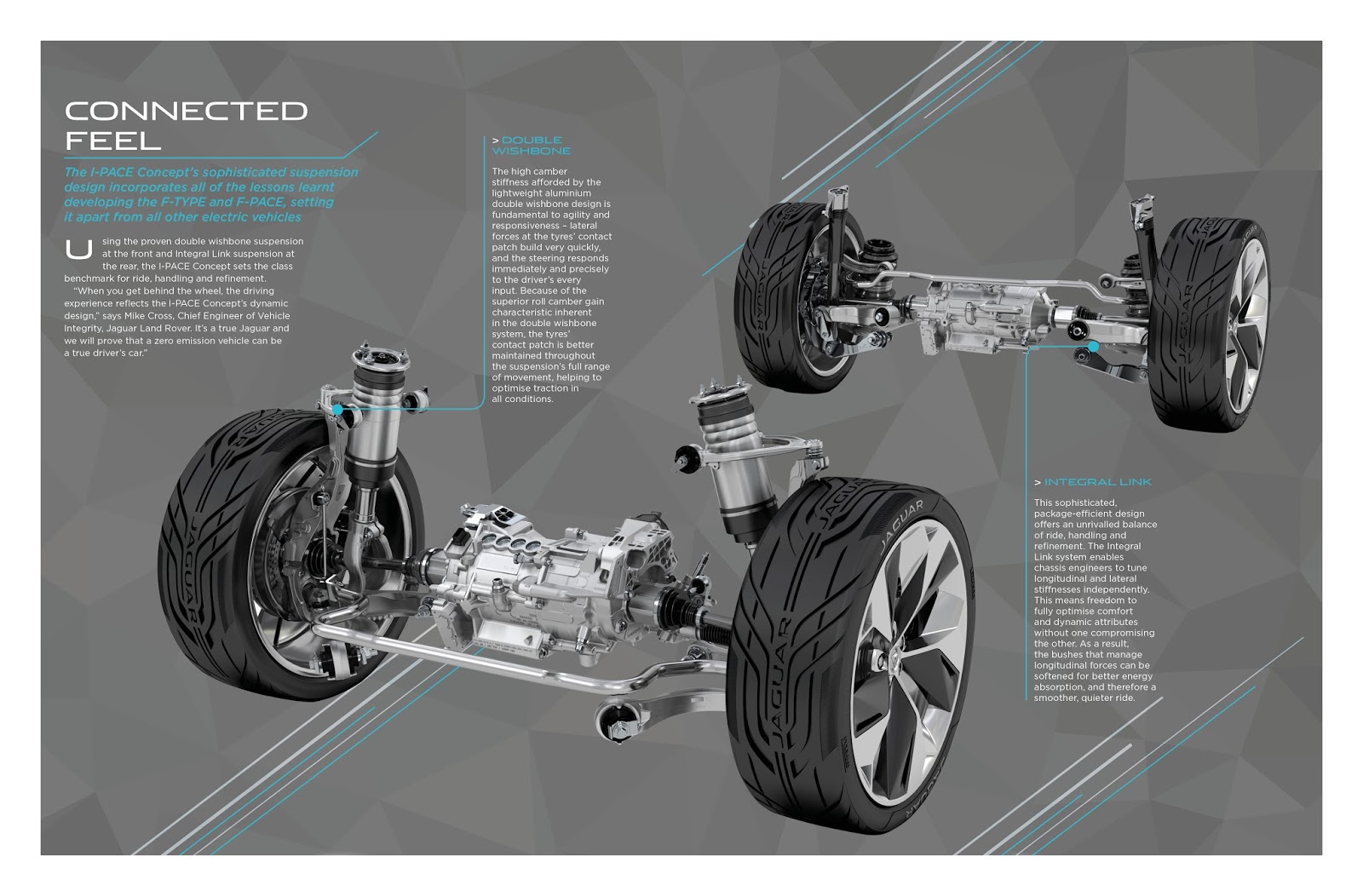
The I-PACE Concept features 2x compact electric motors designed by Jaguar Land Rover. Integrated into the front and rear axles, they offer a combined power output of 400PS and 700Nm of torque, which is exactly the same torque rating as the F-TYPE SVR. Together they also enable all-wheel drive, improving dynamics and traction on all surfaces and in all weathers. “Electric motors provide immediate response with no lag, no gearshifts and no interruptions,” says Ian Hoban, Vehicle Line Director at Jaguar Land Rover.

“Their superior torque delivery compared to internal combustion engines transforms the driving experience. With 700Nm and the traction benefits of all-wheel drive, the I-PACE Concept accelerates from 0-60mph in around four seconds.”

The I-PACE Concept’s electric motors and Lithium-Ion battery are designed to deliver the best possible performance and range. The I-PACE Concept delivers a range of more than 500 kilometres on the NEDC cycle and, using 50kW DC charging, achieves zero-to-full charging capability in just over two hours; 80 per cent charge capacity is reached in just 90 minutes.

With this kind of range and efficiency, there’s no doubt the I-PACE Concept is an electric vehicle that will perform in the real world and compete with vehicles powered by the best internal combustion engines.

BMW Group puts another 40t battery-electric truck into service

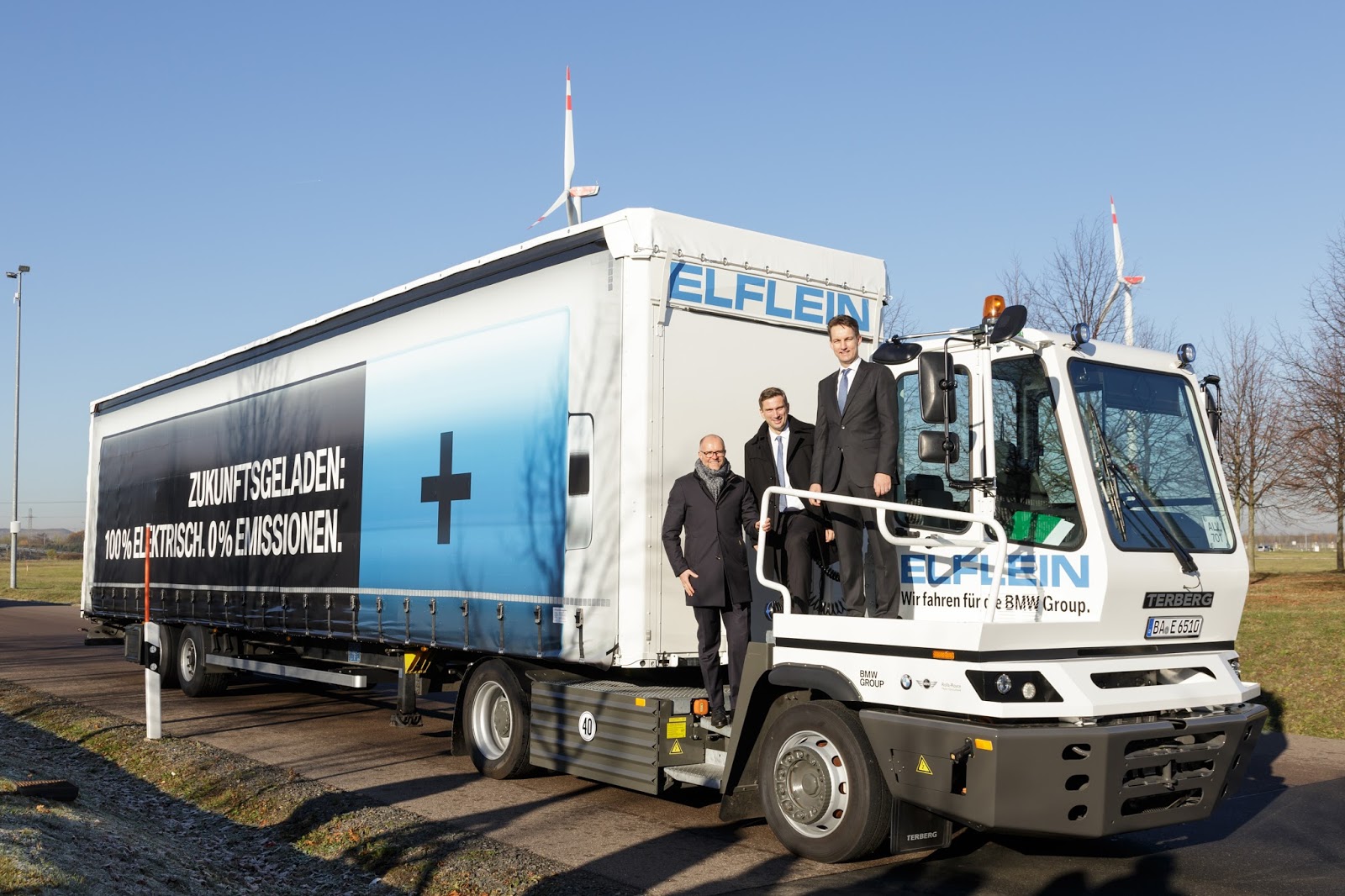
BMW and transport and logistics service provider Elflein today put a battery-powered truck into operation in Leipzig. The BMW Group is the first automotive manufacturer in Europe to use a 40-tonne electric truck for material transports on public roads since 2015 to supply the Munich plant. Following this successful pilot phase, the next phase will be followed by the commissioning of an electric truck for the Leipzig plant.

The vehicle built by Dutch manufacturer Terberg is used by the logistics service provider Elflein and commutes daily in the two-shift operation over a 5 kilometer distant between logistics center and the BMW group factory in Leipzig. Different vehicle components are transported, which are required for the assembly of the BMW i3 and the BMW i8 plug-in hybrid car. The electric truck is charged exclusively with electricity from renewable sources. Compared to a diesel-engined truck, the electric truck will save up to 21 tonnes of CO2 annually. Charging the truck battery takes three hours. Fully charged, the vehicle has a range of up to 80 kilometers. This means that the electric truck can complete a complete production day without additional charging.

"With our electric car BMW i3, we not only pay attention to the product, but have also aligned the entire value chain to environmental protection and sustainability right from the start. For example, we need 70% less water, 50% less energy, and 100% renewable resources to produce a BMW i3 compared to a conventional vehicle. That is why it is only logical that we now also rely on emission-free trucks in logistics and transport, "said Markus Grüneisl, Head of Logistics and Production Control at the BMW Group's Leipzig plant.

Volvo to link up with LG Electronics to develop future electric cars

Sweden-based vehicle manufacturer Volvo Car Group will join hands with South Korea’s LG Electronics Inc. to develop future vehicles such as self-driving and electric cars with an aim to expand its presence in the burgeoning new-generation vehicle market.

Volvo is most likely to establish a strategic partnership with LG Electronics to co-develop key technologies from an early stage rather than simply receive related components from the Korean tech giant.

According to multiple industry sources on Friday, Hakan Samuelsson, president and chief executive of Volvo Car Group, visited LG Electronics’ campus in Cheongna, Incheon, where the company’s vehicle components division is located. Samuelsson, who arrived in Seoul on Wednesday, met with Lee Woo-jong, chief executive and president of vehicle components division at LG Electronics and toured around the campus and research and development facilities.

Industry observers believe there is a great chance of Volvo and LG Electronics working together in the field of future cars. An unnamed industry official said that LG Electronics is not yet much equipped with high technology when it comes to self-driving vehicles, and establishing a strategic partnership with Volvo would allow both companies to be in a win-win situation.

Volvo plans to launch an all-electric vehicle in 2019 with a range of 500 kilometers or more on a full charge. It is pinning on LG to become its electronics pillar. Moreover, LG Chem is a leader in electric vehicle battery technology.

LG Electronics have collaborated with General Motors to develop and supply 11 key components and systems including driving motors and inverter battery packs for GM's fully electric Chevrolet Bolt. With 400 kilometers range on a full charge, the Bolt is gaining industry attention as it is competitively priced at $30,000 and raises the bar on price and range for mass production electric cars.

Key management officials at Volvo’s parent company Zhejiang Geely Holding of China also met with LG Chairman Koo Bon-moo last month and visited the company’s vehicle component division in Incheon.

Red Bull Global Rallycross to create all-electric series for 2018 season

Electrification is starting to have a strong presence in many forms of motorsports, from Formula One through Le Mans proto-types to French national ice racing and now the Formula E series that is exclusively for battery electric vehicles. EVs will now be added to Red Bull GRC race weekends as a distinct, standalone series, joining the Supercar and GRC Lites classes in the series’ race program. The United States Auto Club (USAC) will work in conjunction with Red Bull GRC to serve as the governing body for the new series.

Red Bull GRC has just wrapped up its sixth season, with the Supercar class now featuring four automakers: Ford, Subaru, Honda and Volkswagen.

It’s unclear which automakers will compete in the EV series, but with the European based works backed teams from Volkswagen, Audi and Peugeot publicly declaring their interest in all-electric rallycross, you can bet that automakers will use it as a place to showcase their electric technology.

VW already competes in Red Bull Global Rallycross with factory Beetle GRCs and in FIA World Rallycross with Polo RXs. Both cars squeeze around 560 HP out of their tiny engines and reach 100km/h in just 2 seconds.

“Today these cars are super-powerful, have torque from hell and use all-wheel drive,” said VW head of technology Frank Welsch. “Electric drivetrains could deliver that.”

“Red Bull Global Rallycross is pleased to add to our rallycross platform an electric series,” said Red Bull GRC CEO Colin Dyne. “The 2018 season will be a landmark year for us as we welcome electric vehicles to the grid for the first time. The electric car is one of the hottest topics in the automotive industry, and manufacturers across the globe have recognized its immense potential. We want to embrace this technology by welcoming it into our series as we continue to grow and expand.”

Would be a perfect platform to develop in-wheel motors and torque vectoring.

Volkswagen debut I.D. concept electric car with 600 km range


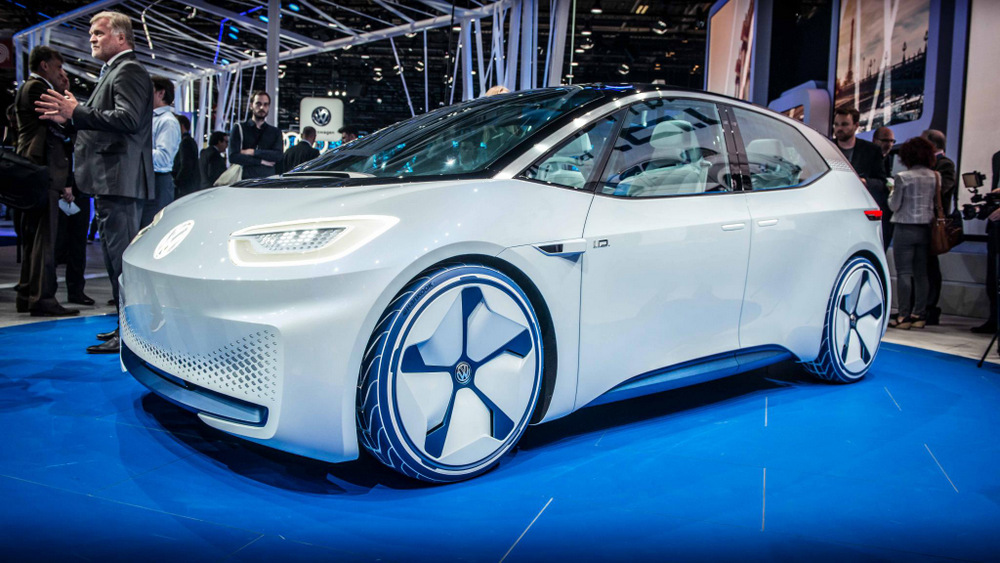
Volkswagen is embarking on its journey to the future at the Paris Motor Show with the world premiere of the visionary I.D., a highly automated electric car that will be able to cover a distance of 249 to 373 miles on a single battery charge. The production version of the I.D. is due to be launched in 2020 at a price on a par with comparably powerful and well-equipped Golf models. Volkswagen is looking even further ahead with this concept car: in “I.D. Pilot” mode, it is capable of fully automated driving, a technology that should be ready for series production in 2025. Volkswagen has also set itself the goal of selling a million electric cars a year by 2025 and the production version of the I.D. will make a decisive contribution towards this ramp-up of e-mobility.
Volkswagen has made electric mobility and fully automated driving conspicuous with its innovative exterior design language and with the interior, too: the conventional driving environment has been transformed into the interactive center of a mobile lounge, or a supremely versatile Open Space. The spaciousness of this area and the intuitive, clear functionality allow you to experience mobility in a completely new way.
The I.D. represents the world  “the day after tomorrow”. But the latest generation of the e-Golf, with a zero-emissions range of up to 186 miles (on the European cycle) and new gesture control, will be on the road “tomorrow”. The world of “today” is also visible in state-of-the-art Volkswagens like the new Tiguan, which launched interior digitalization with its Active Info Display and head-up display. The Tiguan, the e-Golf and the I.D. concept car together point the way from the present to the future on the Volkswagen booth.
The I.D. is the first vehicle to showcase Volkswagen’s iconic new design language for compact electric vehicles. The exterior and interior design preview the year 2020 because while the vehicle is currently a concept, the I.D. is expected to be on our roads within the next four years, and its fully automated driving capability gives us a glimpse of the year 2025. Thus, the I.D. is a standard bearer for the progressive Volkswagen brand strategy called “Think New”. This strategy is based on four central areas of innovation, which are also reflected in the new Volkswagen design approach for electric vehicles:
  • Smart Sustainability: Volkswagen is advancing the development of innovative high-volume electric cars
  • Automated Driving: Volkswagen is going to make cars even safer and more comfortable thanks to automated driving
  • Intuitive Usability: Volkswagen has put its focus on vehicles that are intuitive to operate and feature new display and control concepts;
  • Connected Community: Volkswagen will interconnect humans, cars and the environment with a Volkswagen user identity in future
A vehicle concept for a new era
The I.D. is Volkswagen’s first compact concept car based on the new MEB vehicle architecture. MEB stands for Modularer Elektrifizierungsbaukasten (“Modular Electric Drive kit”) and it was conceived for pure electric vehicles. The ground-breaking MEB thus corresponds with the key mobility requirements of the future. This is why the newly defined vehicle architecture of the I.D. is considered to be a milestone in car development by Volkswagen AG, while at the same time providing the basis for the development of many more all-electric cars. The concept behind the I.D. guarantees the best possible ride comfort, optimum use of space, maximum safety and ground-breaking sustainability, thus redefining the parameters of “drive”, “space” and “comfort”. This is underlined by:
  • The long wheelbase with very short overhangs
  • The front end structure that, in addition to the giving the highest level of safety, allows the front wheels to turn sharply and give a small turning circle of 32.5 feet
  • The flat lithium-ion battery that is  integrated in the floor lowers the center of gravity and results in an ideal axle load/weight distribution
  • The multi-link rear axle with an integrated drive unit and decoupled subframe gives optimum driving dynamics and ideal acoustics
For Volkswagen, the world premiere of the iconic I.D. in Paris marks a watershed. This car is as revolutionary as the Beetle was seven decades ago and the first Golf was 40 years ago, vehicles that went on to become two of the world's most successful cars of all time. The I.D. has the potential to make history, too. It has been designed to be a compact all-rounder that will help to make electric cars the ‘everyday’ choice, with its impressive electric range and an attractive price.
The driver can activate the fully automated “I.D. Pilot” mode just by touching the Volkswagen logo on the steering wheel. With this, the electrically adjustable and retractable steering wheel disappears into the dashpad to form a single entity flush with the dashboard, boosting the lounge feel inside the car.  The Open Space concept is an all-new interior layout because the architecture of the rear-mounted electric motor and the high-voltage battery in the floor of the vehicle liberates more space and allows greater flexibility and more freedom than was ever possible in a car that’s just over 13 feet long. The I.D. is positioned as a compact electric car with which Volkswagen aims to expand its range of high-volume models in parallel to existing global bestsellers such as the Polo, Golf, Tiguan and Passat.
Connected Community – the new Volkswagen ID
Anyone who drives a Volkswagen in the future will be given their own Volkswagen ID. The ID is an individual profile, in which the personal seat and air conditioning settings, your favorite radio stations and songs, the sound system settings, the configuration of the navigation system, and the type of ambient lighting, as well as the contact details of the driver’s friends and business associates, are saved. This profile can be securely accessed via the cloud, enabling the I.D. to recognize the legitimate user by their smartphone—the Digital Key—and know who is about to get behind the wheel.
With the I.D. you’ll be at home on the road because, with Volkswagen Home-Net, it will be possible to interconnect your car and home. For example: using cameras in your house you will be able to check whether everything is OK at home from the car. If a family member has forgotten their key, all you need do is call and look into the camera, and I.D. sends the picture to the Active Info Display, so that the driver can open the front door using an app.
It could even become perfectly normal to receive parcels on the road, since the new Delivery Service in the trunk of your car can act as a mailbox. Studies show that millions of parcels sent in Europe could alternatively be delivered to the trunk of a Volkswagen parked anywhere between Helsinki and Lisbon. If the car owners aren’t at home, I.D. would be able to receive parcels simply and efficiently, or allow them to be collected. The parcel delivery agent is able to locate the car by GPS and is granted temporary permission to open the trunk via an app. The car’s owner is then notified via an app or e-mail as soon as the parcel has been delivered and the trunk is locked again. Volkswagen is currently working with international logistics service providers to implement this innovative concept.
Design
“Before we first put pen to paper for the I.D. project, we debated the topic of 'Mobility in the future' at length,” says Klaus Bischoff, Head of Design, Volkswagen Brand. “It is clear that the car of the future, and thus the mobile space, will be a place of communication more than ever before. The Open Space in the I.D. is just such a place.”
“The electric powertrain gives our designers far greater freedom. We have shrunk the cooling grilles to a minimum, shifted the axles far outwards and created breathtaking proportions, as demonstrated by the I.D. —an icon of the future. We had the unique opportunity to guide Volkswagen into a new era, and with the I.D we have taken this opportunity.”
From every angle, the I.D. adheres to a new design language for compact Volkswagen electric cars. Cars like the I.D. aren’t mere machines, but cars that react interactively. Everything is neatly laid out: ample space, maximum precision, a charismatic front end, iconic C-pillars, flowing, sculpted surfaces and expressive wheels are just a few of the design signatures for Volkswagen electro-mobility.
An electric car doesn’t need large cooling intakes, which changes everything when it comes to front-end design. Interactive LED lights are framed by a C-shaped light signature, and react to other road users. The large, sculpted bumpers and “Anodized Blue” diffusers also give the I.D. a unique appearance. The transparent illuminated Volkswagen logo in the front section emphasizes the I.D.’s quality.
From the side, the design is characterized by precision. The voluptuous, flowing surfaces of the side profile merge elegantly into a single, homogeneous surface below the character line. The new design DNA  corresponds with innovative technical solutions, such as a lack of B pillars. The front and rear doors form a protective unit when closed. The rear doors swivel backwards, showcasing the Open Space. Door mirrors have been replaced by cameras, which are integrated in the front fenders. The powerful silhouette is perfectly rounded off by white and blue 20-inch aluminum-alloy wheels with blue low-rolling resistance tires.
The trunklid, which extends across the full width of the car, is contrasted in black. At the sides, the large rear window is framed by vertical aerodynamic fences and at the base by the strikingly narrow horizontal LED taillights. The I.D.’s bumper is a prime example of the avant-garde design of Volkswagen’s future electric cars, which looks as if it were made out of a single piece of aluminum or a translucent block of ice. Right at the bottom of the car’s rear section is a neat and tidy blue diffuser, mirrored by the narrow strip of LED taillights that wrap around to the flanks and the illuminated Volkswagen logo between them.
The four-door I.D. is 161.4 inches long, 6 inches shorter than a Golf. This concept car is 70.9 inches wide and 60.2 inches high. The I.D. has a 108.3-inch wheelbase, which is 5 inches longer than the Golf, so the proportions are even more attractive.
The I.D. communicates with its environment using light. The LED headlights interactively mimic the human eye (interactive spotlight), with the headlights reacting to their environment: for instance, they look in the direction of the driver as he approaches the I.D.
  • Parked. If all of the I.D.’s systems are shut down it looks from the front as if its “eyes” are closed. On a parked I.D., all you can see is a narrow little strip of LEDs in the headlights.
  • Startup. When the I.D. is “woken up”, it greets its driver and the passengers with an all-new 360-degee light show: the transparent Volkswagen logos at the front and in the trunklid light up in white. This is then followed by blue lighting in the front bumper diffuser, the side sills and the rear diffuser. In the final stage of this light show, the I.D. opens its “eyes” and, last but not least, white light shines in the four door handles.
Over and above that, Volkswagen’s designers and engineers have come up with different light scenarios for each operating mode:
  • Charging. While the batteries are charging, the blue light panels on the diffusers and side sills pulsate or “breathe”, while the headlights remain in sleep mode
  • On the road. In conventional drive mode the Volkswagen logos, the LED Daytime Running Lights and the LED headlights are on. As the car accelerates, the “eyes” adjust to the higher speed by adopting a more dynamic light signature
  • Autonomous Driving. To signal that it is in fully automated mode (from 2025), the laser scanners on the roof—which are now extended—the front and rear diffusers and the side sills are also lit in blue. As the car speeds up, the LED “eyes” look ahead, giving the car a sporty appearance
  • Communicating with surroundings. Over and above this, the “eyes” are interactive in fully automated mode. If, for instance, the I.D. wants to turn left or right, the LED headlights look in the direction that the car is going to turn. What is more, if the I.D. notices people at the side of the road it looks at them. This very human form of interaction draws the attention of pedestrians and cyclists to the I.D.
  • Shut down. This starts with the DRLs being deactivated and the door handle illumination being activated; then the blue lighting of the diffusers and side sills and the white light in the door handles go out. Finally, only the Volkswagen logos are illuminated. They stay on until the driver and passengers walk away from the car. Now the I.D. is in standby mode.
Open Space
As soon as you approach the car, the white light in the surface of the door handles illuminates. If the person’s hand comes up close to the handle, the line of light pulsates and the handle extends from the body and the door can be opened.
Passengers on board the I.D. are in a mobile space that has been completely rethought and redesigned. Volkswagen calls it the Open Space—a pure, airy, space. The sculpted, flowing structures of the surfaces are inspired by nature, using bionic design instead of cold engineering. The design, with its organically shaped surfaces and gentle radii, emphasizes the impression of space. Another defining design trait is that the interior is enclosed by a Möbius strip, a geometric shape that owes its name to the German mathematician and astronomer August Ferdinand Möbius, who first described this twisted shape—where the inner surface becomes the outer surface and vice versa—in the middle of the 19th century. Most people will be familiar with the Möbius strip from the artwork by M. C. Escher. The simplicity of the interior, where switches and control stalks have been replaced by new digital solutions, results in a new, intuitive, operating environment.
There are four separate integral seats, with the headrests and seatbelts harmonically integrated into the backrest. The structural design of the seats appears very light. Flowing, restrained light grey satin fabric (“Jacquard Heather”) and a reduced seam underline the floating impression of the seats. The seats in the back can be folded up like cinema seats to save space, making room for large items such as folding bicycles or picture frames. The “dive down” function also allows the rear seats to be lowered to floor level, turning the trunk and rear seat area into a single large, flat cargo area.
Depending on the seating configuration, the I.D. has up to 33.9 cubic feet of luggage space. Between the left and right seats there is a utility box in the front and a folding center armrest in the back, both of which slide fore-and-aft and can be removed. A box for shopping can also be fitted in the front-seat passenger area. The Open Space is flooded with daylight through large windows and a panoramic sunroof. If the sunshine is too bright, the transparent roof can also be darkened electronically.
The MEB architecture and the digitalization of the display and control elements permit an entirely new interior layout for driver and passengers. The driver’s space blends in with the rest of the interior; the mobile space in the I.D. has been transformed into a multi-variable lounge, yet every driver will get to grips with it straight away as the I.D. is controlled with self-explanatory touch displays in the doors, capacitive keypads, and voice and gesture control.
The center of this car consists of an electrically adjustable and retractable multifunction steering wheel, a new Active Info Display, an electronic interior mirror (e-Mirror), an Augmented Reality (AR) Head-up Display and newly designed door panels. A central infotainment system in the middle of the dashboard is a thing of the past, as those menus are also available to everyone in the car, thanks to the four individual door panels.
The middle of the steering wheel has its usual Volkswagen logo, except that in this case it is an illuminated button with which the driver can switch from manual to fully automated (“I.D. Pilot”) mode. By pressing the Volkswagen logo for three seconds the electrically adjustable steering wheel retracts and interlocks with the dashpad. When the steering wheel reverts from fully automated to manual mode, an illuminated display appears in the rim of the steering wheel for a few seconds to indicate that it is changing mode. Aesthetics and functionality make the I.D.’s electrically adjustable and retractable multifunction steering wheel a highlight, both visually and haptically. The steering wheel has six rounded corners, creating a control island in the lower part of it to reduce the complexity of operation. From here the driver controls the car’s main functions, such as the “P”, “R”, “N” and "D” drive positions and the turn signals, using illuminated capacitive keypads. Four more capacitive keys adapt to functions like taking a phone call, while two capacitive sliders allow the driver to scroll intuitively through functions like the playlist and the sound system.
The I.D. has a new evolution of the head-up display. Information such as the directions given by the satellite navigation system are, for the first time, projected as virtual images that appear to be between 23 and 49 feet ahead of the car. The effect is amazingly realistic: arrows are projected via augmented reality to show where the driver and the I.D. are heading. Thanks to the AR-Head-Up Display, the navigation instructions are part of driver’s three-dimensional surroundings.
A 10-inch Active Info Display shows information to the driver and can also be used to view content like the media library and menus such as the satellite navigation, or to control the multifunction steering wheel. The Active Info Display gives the driver great freedom. For instance, the full 10 inches of the screen can be turned into a 3D navigation screen. The display uses three transparent layers to display the various types of information. At the bottom, on the first layer there is the navigation map; the digital content retrieved using the Volkswagen ID is displayed on the second layer; and the third layer, at the top, is used to display driving data such as the car’s speed and range.
Conventional rear-view mirrors are a thing of the past in the I.D. But habit is difficult to change, so in place of the rear-view mirrors there is now a system that looks exactly the same and performs the same function. The e-Mirror combines data from three external cameras on a monitor. The images are transmitted from the door mirror cameras on the left and right-hand sides of the car as well as a rearward facing camera. Doing away with the mirrors improves the aerodynamics of the vehicle. The only button in the I.D., for the hazard warning lights, is to be found in the base of the mirror.
Information and controls that have previously only been available to the driver and the front-seat passenger are now available to the rear-seat passengers too, thanks to the new door panels. These white and partially transparent control islands are ergonomically mounted in the trim of the four doors, where they appear to be suspended in mid-air. It is evident from the shape of the panels that they also act as the interior door handles and house loudspeakers. The door panels can be used to control the air conditioning, the infotainment and navigation, the interior lighting, the electric windows and the central locking. The door panel can even be used to receive phone calls. These functions are all controlled on a white touchscreen with black icons as well as a capacitive slider on the side, which is used to regulate the temperature and the HVAC fan speed. The information displayed on the door panel changes as soon as the door is opened or the driver switches to the fully automated “I.D. Pilot” mode. The driver can also restrict the range of functions of the other door panels so that children can’t open the doors while moving, for instance.
As soon as there is someone in the driver’s seat the steering wheel, which is retracted into the dashpad in parking mode, comes out and the multifunction displays light up simultaneously. At the same time, the I.D. triggers the Active Info Display and the AR Head-up Display. Ambient lighting and the Active Info Display greet the driver with a welcome routine. Close the doors, belt up, press the brake, select a driving mode and the I.D. is ready for off. The Start/Stop button is a thing of the past. “D” and “R“ are activated by gently pressing the corresponding button on the multifunction steering wheel, and the I.D. is switched off by pressing the “P” on the steering wheel, which causes the steering wheel to retract flush with the dashpad again.
Automated Driving
I.D. is the first Volkswagen that is capable of fully automated driving. Activating the fully automated “I.D. Pilot” mode is easy: the driver just has to press the Volkswagen logo on the steering wheel for three seconds to switch from manual to fully automated mode. The I.D. indicates that it has changed mode with a range of optical signals: the ambient light changes from clear blue light, designed to focus while driving, to a relaxed ambience, with a selection of colors. During the transformation from manual to fully automated mode the light in the Volkswagen logo on the steering wheel pulsates, too. The light distribution of the ambient lighting expands to illuminate the back, and the I.D. signals via the Active Info Display and the AR-Head-up display that it is ready to take control. As soon as the driver takes their hands and feet away from the controls the steering wheel retracts into the dashpad and the fully automated “I.D. Pilot” mode is active.
In fully automated driving mode the four roof-mounted laser scanners are active. They protrude from the roof of the I.D. in “I.D. Pilot” mode, but are also visible thanks to indirect blue lighting, like the diffusers and side sills, indicating that the I.D. is in fully automated mode. The I.D. is capable of detecting other road users not only using its laser sensors, but also with ultrasonic sensors, radar sensors, side area view cameras and a front camera. Traffic data is also constantly collected and compared with the vehicle data via the cloud.
Fully automated mode is deactivated by pressing the brake or accelerator pedals. The I.D. indicates that the driver has to take control again by changing the color and distribution of the ambient lighting, pulsing the light in the Volkswagen steering wheel logo on the steering wheel, and posting alerts on the Active Info Display and the AR-Head-up Display. The steering wheel then comes out of the dashpad again, reactivating manual driving mode. Visual clues include the illumination of the accelerator and brake pedals and a light pattern in the steering wheel.
The color scheme and mood of the ambient lighting change along with the manual and fully automated mode. The door panels, the areas under the seats, the seat surfaces and the lower section of the instrument panel are indirectly lit. The ambient lighting also floods into the cabin through a kind of woven mesh that extends between the A-pillars parallel to the windscreen and around the instrument panel. Form and function blend into one here: if a pedestrian appears beside or in front of the I.D., for example, a warning for the driver is projected on the illuminated mesh.
The I.D. doesn’t only drive itself or be driven. It can find a space in a parking structure, all of its own. All the driver has to do is stop the I.D. in a specially marked zone in the entrance to a structure that has the necessary infrastructure and activate the “Pilot for multi-storey car park” using the Volkswagen app. As with the fully automated “I.D. Pilot” mode it is able to detect other cars as well as pedestrians. To ask the I.D. to leave the parking space again, all the driver has to do is tell the Volkswagen to return to its starting zone again via the app.
Technical Details
The I.D. is the first compact Volkswagen based on the newly developed Modular Electric Drive Kit (MEB) that is designed as a purely electric vehicle architecture. This approach to the design results in a range of advantages, in particular the packaging. The I.D.’s zero-emissions drive system consists primarily of the electric motor, power electronics and transmission integrated in the rear axle, a space-saving high-voltage flat battery in the floor of the car and ancillary equipment integrated in the front of the car.
The electric motor has a power output of 168 horsepower (125 kW), giving the I.D. zero to 62 mph acceleration in less than 8 seconds and a top speed of 99 mph.  Subsequent production versions could also be offered with more or less powerful electric motors. In parallel, the concept also hints that it will be possible to configure the I.D. with different battery capacities. This would allow the drive system to be modified to suit the owner’s individual needs. The I.D. will have a range of between 249 and 373 miles on a single charge, under European test conditions.
The high-voltage battery used in the I.D. is located in the chassis. As a crucial link, the power electronics control the flow of high-voltage power between the motor and the battery, converting the direct current (DC) stored in the battery into alternating current (AC), while a DC/DC converter supplies the on-board electronics with 12-volt power. Power is transferred from the motor to the rear axle via a single-gear transmission. The motor, power electronics and transmission form one compact unit. The position of the battery has a positive effect as it gives the I.D. a very low center of gravity, like a racing car’s, and neutral handling. The I.D. is also characterized by an optimal weight distribution of 48:52 percent, front to rear.
The battery can be charged by cable or using an inductive charging interface in the front of the car. To charge by cable, a separate charging plug is needed to connect the car to an electrical outlet. For inductive charging, all the driver needs to do is park the I.D. over a so-called charging plate, with a little help from the electronics to make sure it is in exactly the right position. Over and above that it will be possible to send the car to an inductive charging station, too. Thanks to the rapid charging system the battery is 80 percent charged after just 30 minutes.










Volkswagen launch pure-electric e-Crafter with up to 400km range

Volkswagen have unveiled a 100%-electric version of its Crafter delivery van at the Hannover commercial vehicle show in Germany.

The electrically powered Crafter Concept vehicle demonstrated is near production-ready with a cargo capacity of up to 1.7 tonnes

Powered by a 100 kW / 290 Nm electric motor fed by a 43 kWh lithium-ion battery pack, the e-Crafter concept can travel up to 200 km between charges.
The batteries can be charged back up to 80% in 45 minutes using a 40 kW DC charger.

Anticipating future battery developments, the e-Crafter's design will allow a reconfigurable range of up to 400 kilometres as new technology become available.

First vehicles on sale in 2017

Apple offers $2.5B for McLaren Technology Group

Less than a fortnight after reports that Apple had laid off a large number of employees from it's Titan Automotive project, the Financial Times reports Apple has been linked with a £1.5bn (AUD$2.5bn) deal to buy McLaren Technology Group, the Formula One team owner and supercar maker, citing three unnamed sources.
Apple has been attempting to develop its own car for a while now with the car team said to boast upwards of 800 members before the recent layoffs took effect, so this would appear to be a huge change of direction.

As far as electric vehicle IP is concerned, McLaren have good form. Not only have they built and raced their own A123 based KERS system in Formula One since 2009, and manufactured the McLaren P1 hybrid hyper car since 2013 but McLaren are also the official powertrain (motor, gearbox & power electronics) supplier for Formula E. On the embedded electronics side they also supply a control ECU to several motorsport championships including Formula One and NASCAR.

So far both companies have denied the story but there are obvious similarities between this potential tie-up between Apple & McLaren and the route Tesla Motors followed to get it's first car into production, working with another Formula One team with a sports car business, Lotus.

1965 VW Beetle Black Current III sets new EV world record [VIDEO]

A 1965 model Volkswagen beetle is now the quickest Electric Car in the world. UK based Current Racing set a 1/4 mile time of 8.282s @ 159 mph at Santa Pod Raceway in Bedfordshire, England.

The new for 2016 powertrain in Black Current III now runs 3x 9" brushed DC motors, a 2 speed gearbox and a Ford 9" diff. Power is supplied by 864x Lithium Cobalt Oxide (LiCo4) Battery cells via 2x 440 volt Zilla controllers.

Source: Current Racing

BYD Electric Bus enters service at Sydney Airport [VIDEO]

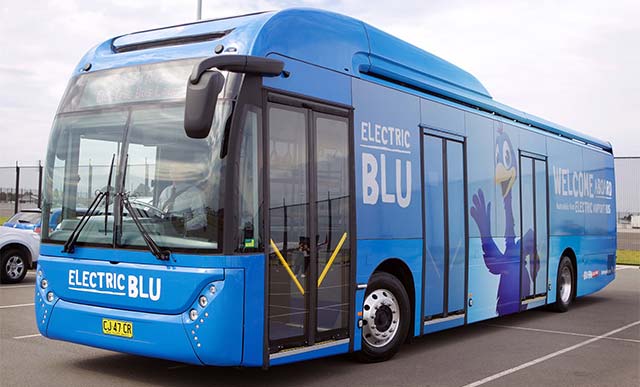
Sydney Airport has unveiled Australia’s first electric airport bus, as part of a $5 million investment in environmentally friendly ground transport technology.

The Electric Blu bus is the first of a fleet of six electric buses to be operational by the end of this year, replacing the airport’s existing diesel bus fleet servicing the shuttle route between the T2/T3 terminal precinct and the Blu Emu Car Park.

“We’re proud to be the first Australian airport to introduce electric buses to our Parking and Ground Transport operations, which will reduce our carbon footprint and enhance the passenger experience,” Managing Director and Chief Executive Officer Kerrie Mather said.

“These state-of-the-art electric buses can make up to 100 transfer journeys on a single charge, providing a clean and sustainable transport option for the two million travellers, visitors and airport workers who use the Blu Emu shuttle service every year.”

The fleet of Blu Emu electric buses will deliver carbon emission reductions of approximately 160 tonnes per year and improve local air quality through zero tailpipe emissions. The fleet will also lower external noise levels, reduce waste fluids to zero and decrease the amount of toxic material generated during servicing.

Electric Blu is a ‘Toro’ model electric bus, created by Carbridge in a joint venture with the world’s leading global electric bus manufacturer BYD.

“Carbridge is delighted to deliver to Sydney Airport this country’s first electric airport bus and in partnership with BYD we are excited to be at the forefront of electric bus manufacturing in Australia,” Carbridge Chief Executive Officer Luke Todd said.

The Electric Blu bus has a carrying capacity of 70 passengers, features purpose-designed luggage storage racks and has a range of 400km on a single charge. Sydney Airport has invested in charging stations and other ancillary equipment to support the deployment of the new electric bus fleet.

The airport is also currently trialling electric cars as part of its ground transport fleet and investigating solar-powered charging stations to further decrease carbon emissions, while research and development is underway for recycling and reuse of batteries and other components.

Inside the Rimac Concept_One [VIDEO]

The Million Dollar Rimac Concept One attended Monterey Car Week & PebbleBeach Concours d'Elegance in California for the first time this year.

While in the USA Rimac Automobili founder and CEO Mate Rimac gave Youtuber "alexsmolik" a full run-down on the technology in his electric hypercar, including a brief demo of torque vectoring and 0-100 km/h in 2.6 seconds.

Samsung SDI to build $358M car battery plant in Hungary by 2018

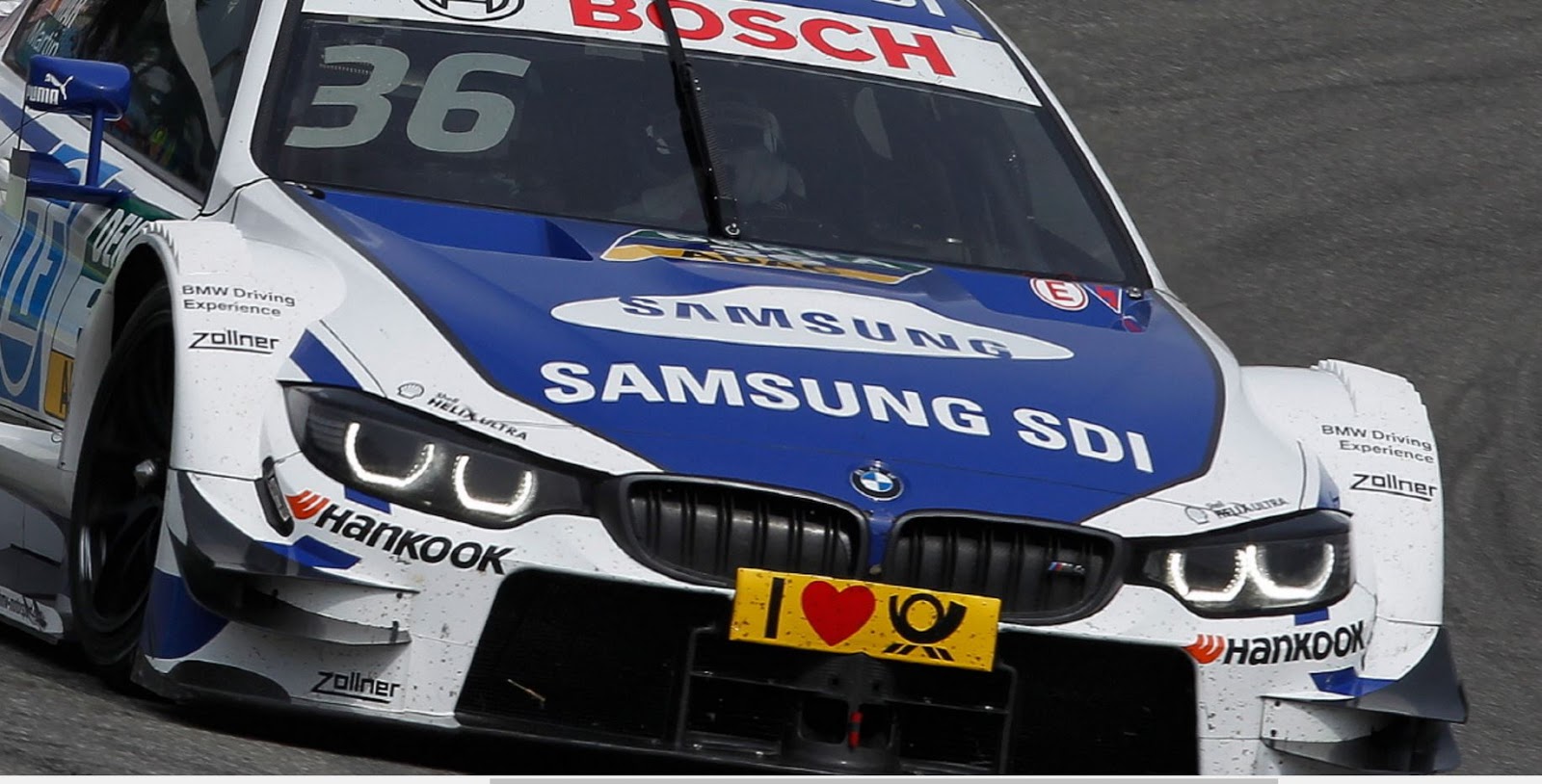
South Korea's Samsung SDI plans to invest about 400 billion won ($358 million) to build a plant to make electric vehicle batteries in Hungary, joining the race to build capacity and tap European demand.

Samsung SDI, whose customers include BMW, said on Tuesday that the proposed factory near Budapest would start production in the second half of 2018 and it would be able to produce batteries used for 50,000 pure electric vehicles (EVs) annually.

The plant will "help us save logistics costs and quickly cope with demand from customers, as European companies have manufacturing bases around Hungary," Samsung SDI, an affiliate of Samsung Electronics, said in a statement.

The company currently produces batteries for BMW's i3 in South Korea. Samsung SDI last year started production at its factory in China, the world's biggest EV market, but subsidy regulations have hampered its sales.

Cross-town rival LG Chem plans to build an EV battery plant in Poland to meet rising demand from European automakers, a person familiar with the matter told Reuters in April.

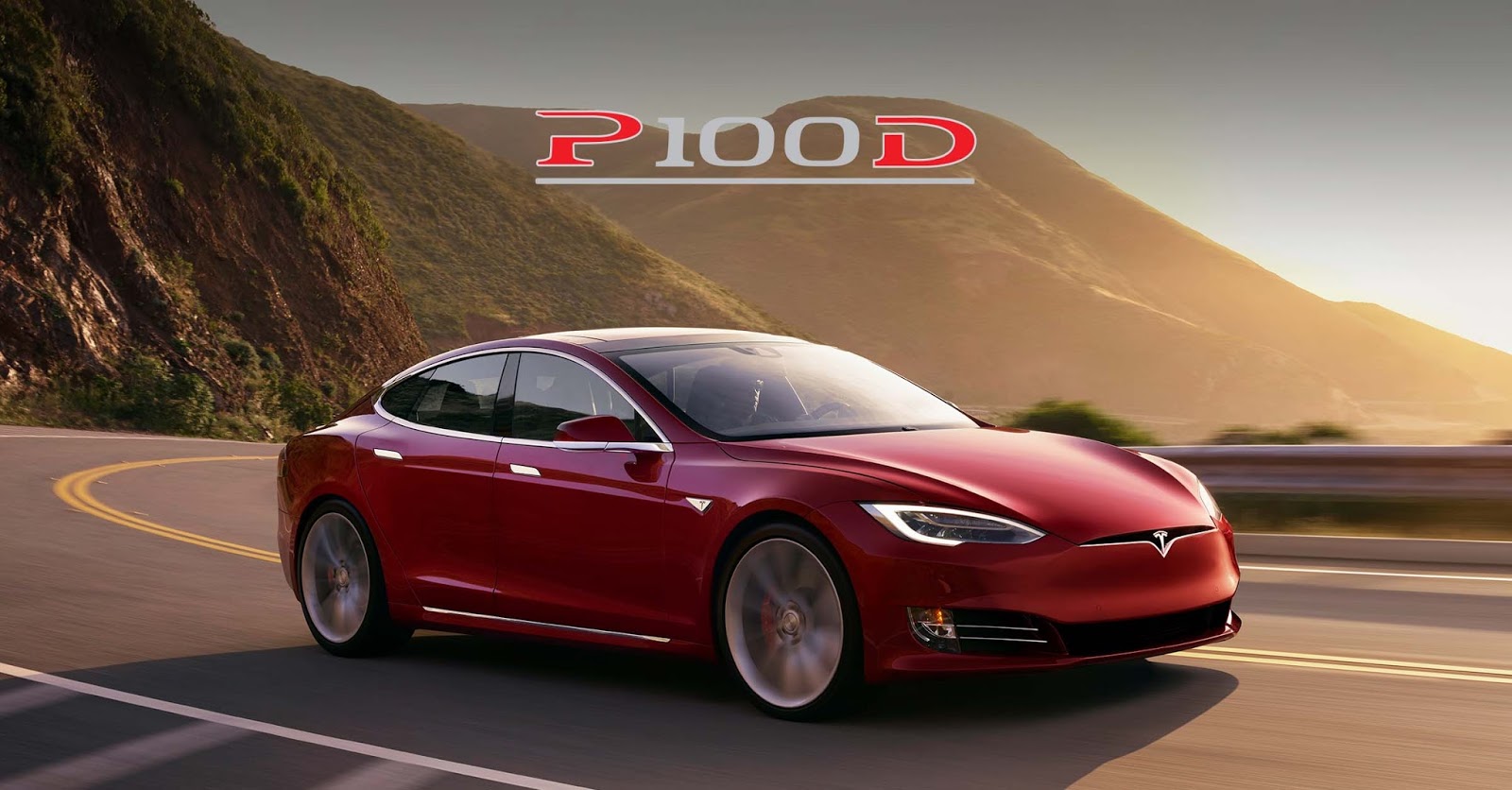
Tesla Announce P100D Model S the World’s Quickest Production Car

Tesla have announced the Model S P100D with Ludicrous mode claiming it as the third fastest accelerating production car ever produced, with a 0-60 mph time of 2.5* seconds. The only remaining production road cars a Tesla Model S can't beat are the LaFerrari and Porsche 918 Spyder.

However, both were limited run, million dollar vehicles and cannot be bought new. While those cars are small two seaters with very little luggage space, the pure electric, all-wheel drive Model S P100D has four doors, seats up to 5 adults plus 2 children and has exceptional cargo capacity.

The 100 kWh battery also increases range substantially to an estimated 315 miles on the EPA cycle and 613 km on the EU cycle, making it the first to go beyond 300 miles and the longest range production electric vehicle by far.

The larger battery pack is also available on the Model X, making the world’s quickest SUV even faster. Model X P100D with Ludicrous mode accelerates to 60 mph in 2.9* seconds and travels up to 289 miles EPA estimated and 542 km EU on a single charge. Model X is also a pure electric SUV and can seat up to seven adults.

Model S and Model X are engineered to be the safest cars on the road and to have the highest ratings from NHTSA. Both have access to the Tesla Supercharger network for the freedom to travel long distance for free. And every Tesla will improve over time with free over the air upgrades.

Tesla customers who have ordered a P90D Ludicrous, but not taken delivery, can upgrade to the 100 kWh pack for $10,000. Existing P90D Ludicrous owners can also upgrade to a 100 kWh pack, but for $20,000, as their used 90 kWh pack will have to be recycled.

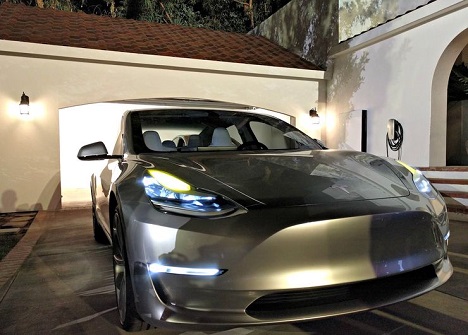
While the P100D Ludicrous is obviously an expensive vehicle, Tesla want to emphasize that every sale helps pay for the smaller and much more affordable Tesla Model 3 that is in development. Without customers willing to buy the expensive Model S and X, Tesla says they would be unable to fund the smaller, more affordable Model 3 development.

Early adapters form an orderly queue here... Tesla

Mercedes-Maybach 6 to run 4x Motor SLS E-Cell powertrain?

Daimler has unveiled the Vision Mercedes-Maybach 6 – an electric-powered behemoth it says represents the ultimate in luxury.

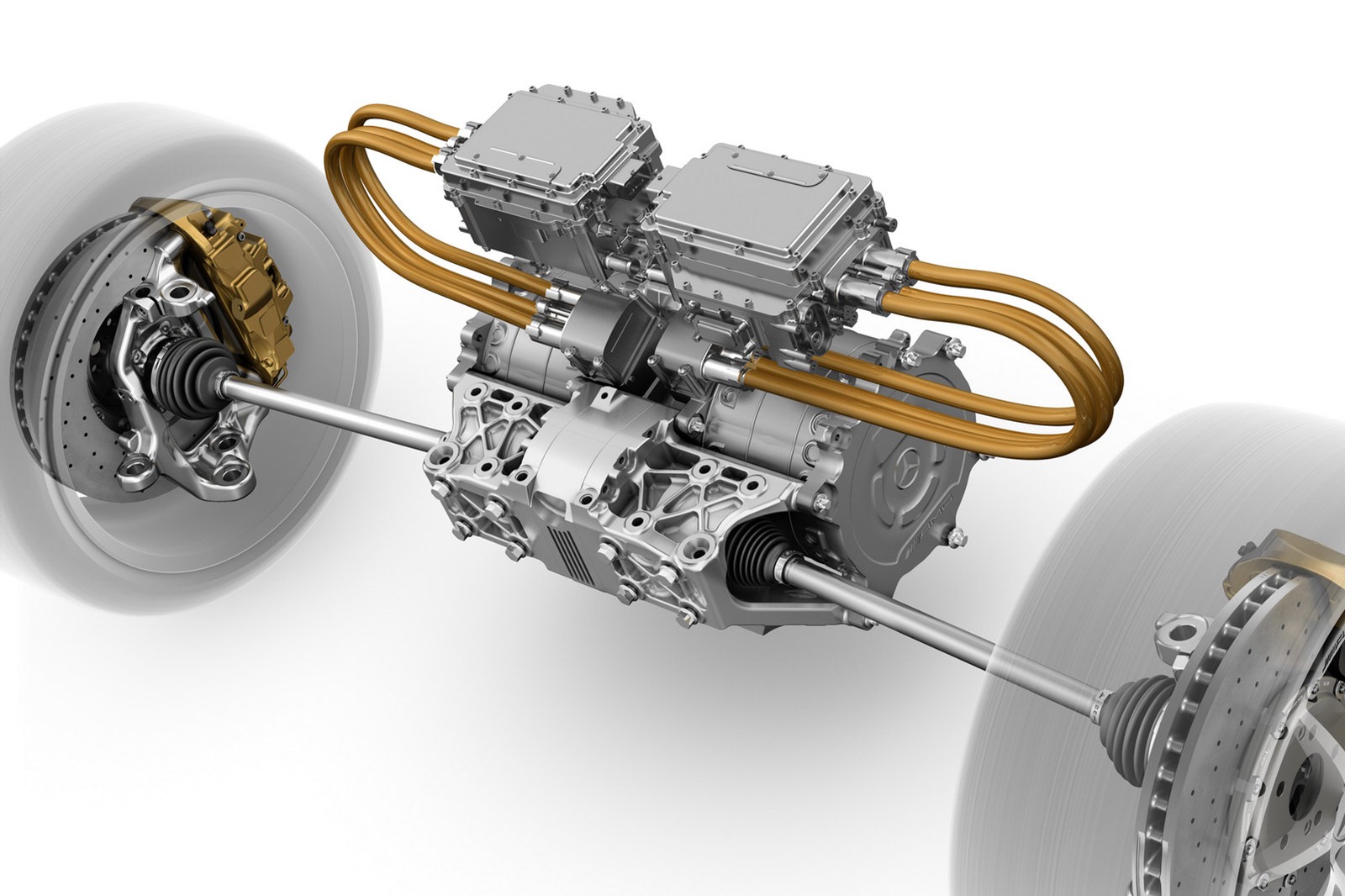
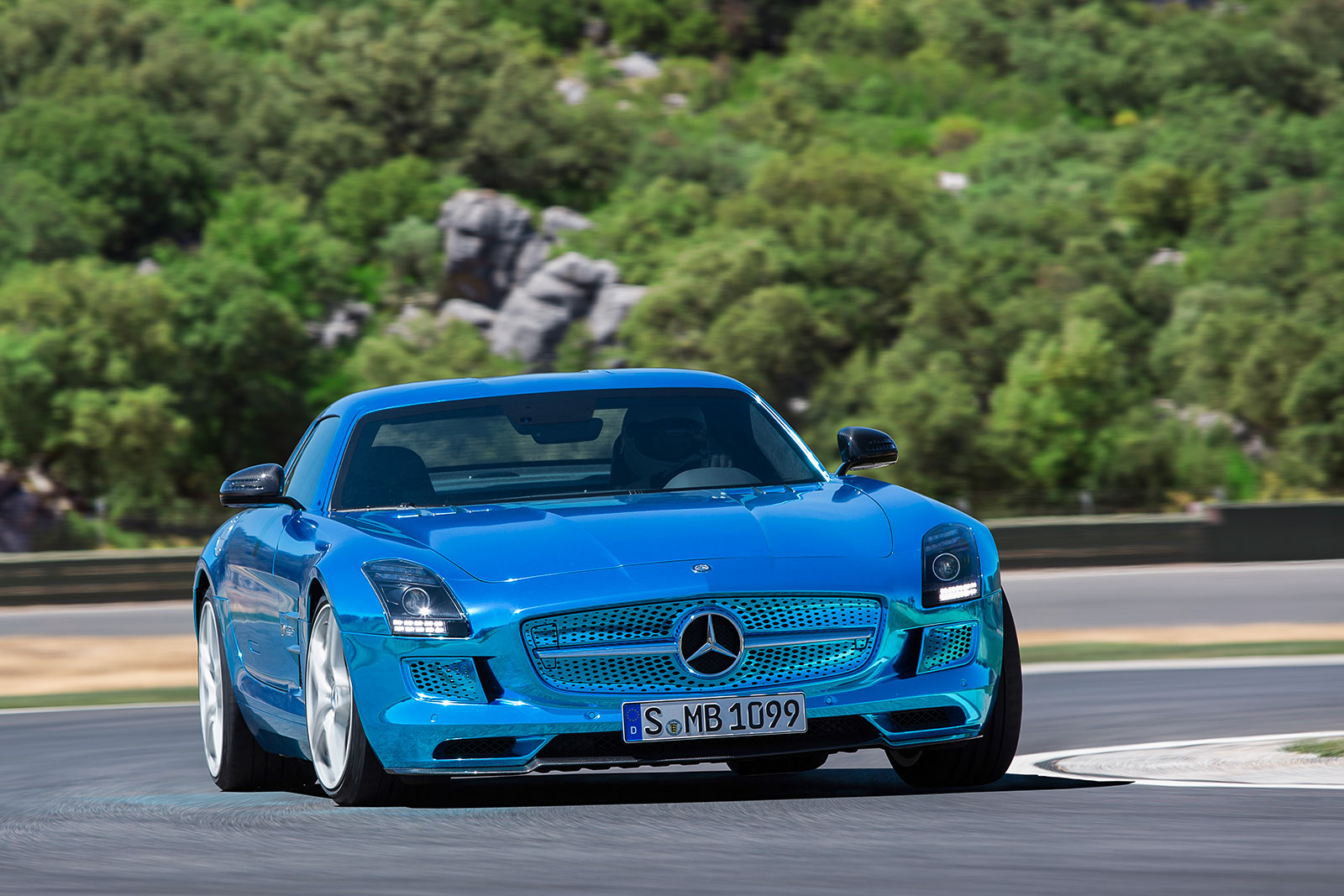
At the Maybach’s heart is its electric powertrain. Power being the operative word here, with a 738hp output from four permanent magnet synchronous electric motors, each powering a separate wheel. This spec sounds exactly the same as the most powerful production AMG model of all time, the Mercedes-Benz SLS AMG Electric Drive.

With a combined maximum torque of 1,000 Nm (737 lb-ft) the permanently active torque vectoring allows for selective distribution of forces for each individual wheel. The intelligent distribution of drive torque greatly benefits driving dynamics, handling, driving safety and ride comfort.

Each individual wheel can be electrically driven and electrically braked, depending on the driving conditions, thus enables optimum use of the adhesion potential between the tyres and the road surface in all driving conditions, thereby extending the critical limits of the vehicle's driving dynamics.

For its size, Maybach 6's 80kWh battery capacity is smaller than the largest pack available in a Tesla Model S (90kWh), but is enough for around 500 kilometres range according to the NEDC (over 200 miles according to EPA)

Quick charging is on the cards, with a DC Combined Charging System plug allowing an impressive charging capacity of up to 350 kW. In just five minutes enough power can be charged to achieve an additional range of around 100 kilometres. Provisions for wireless charging are also included.