Drayson Racing Technologies took their Drayson B12/69 EV to Silverstone in February for winter testing.
Comparative motor cooling testing and new traction control options were successfully tested in 'damp' conditions.


Drayson Racing Technologies took their Drayson B12/69 EV to Silverstone in February for winter testing.
Comparative motor cooling testing and new traction control options were successfully tested in 'damp' conditions.
 Arnold Schwarzenegger uses his M47 Patton battle tank to raise money for charity; companies express interest in buying Cars.com.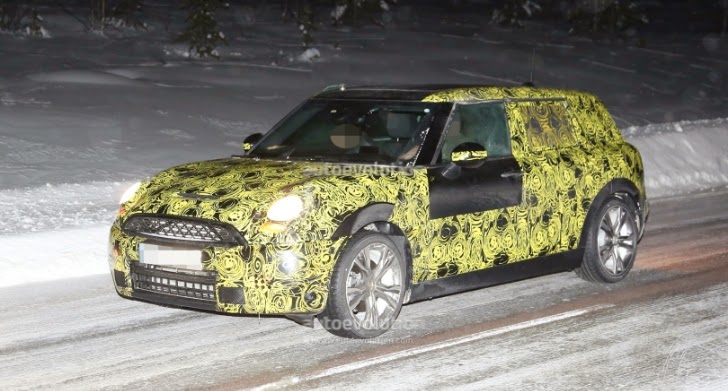
MotoringFile reports that high-level sources have confirmed the Mini Clubman Plug-In Hybrid will be all-wheel drive in at least one configuration.
The 2016 Mini Clubman Hybrid will have a 1.5L three cylinder lifted from the F56 Cooper powering the front wheels. Integrated into that will be a plug-in hybrid system (likely derived from the BMW i8) powering the rear wheels only. Think of it as the powertrain layout from the i8 reversed.
The system that BMW has shown in concept form (and has been testing for years in R55 Clubman mules) has an output of approx 140 kW / 190 hp. With a fully charged battery, the electric only range should be over 30 kilometers giving the Clubman Plug-In Hybrid the ability to be in 100% electric mode for the majority of day-to-day trips.
The Mini Clubman Hybrid will likely debut around the same time as the Clubman itself, in the second half of 2015.


A new clip from Red Bull sees Daniel Ricciardo and Sebastian Vettel explain the 2014 Formula One regulations, arguably the most complex the sport has ever seen.
The CGI based Red-Bull promotional video gives a cut-away look at the new hybrid systems used this year in F1 that we covered in more detail last year.
The first race of the 2014 Formula One season is on this weekend in Melbourne Australia.


Volkswagen is bench testing a new battery chemistry that it says could store up to 80 kWh of energy in a similar volume to that of the current eGolf’s 26.5 kWh battery pack, according to VW board member Dr Heinz-Jakob Neusser.
Speaking at the Geneva Motor Show, Neusser said that the company has tested lithium-ion batteries with its existing cell supplier, Sanyo, with capacities up to 37 kWh, but “an 80 kWh unit is under development using our own technology. It would provide between three and four times the battery power in a given package.”
Neusser refuses to name the battery chemistry, but doesn’t deny it is based on lithium-air technology. IBM, BMW and Toyota are known to also be developing Li-Air battery technology.
As to how far a plug-in hybrid or pure battery car could travel in electric mode with such a battery, Neusser says that depends on what the customer wants. He suggests that as a second car, most customers will settle for about 200km (124 miles) of electric range, but as the family’s main transport a battery would have to provide a much greater range.
With VW owning 100% of Audi, we're now openly wondering if this is the battery technology Audi plan to use for their 600 km range Q8 SUV Tesla Model X killer?
Source: The Telegraph


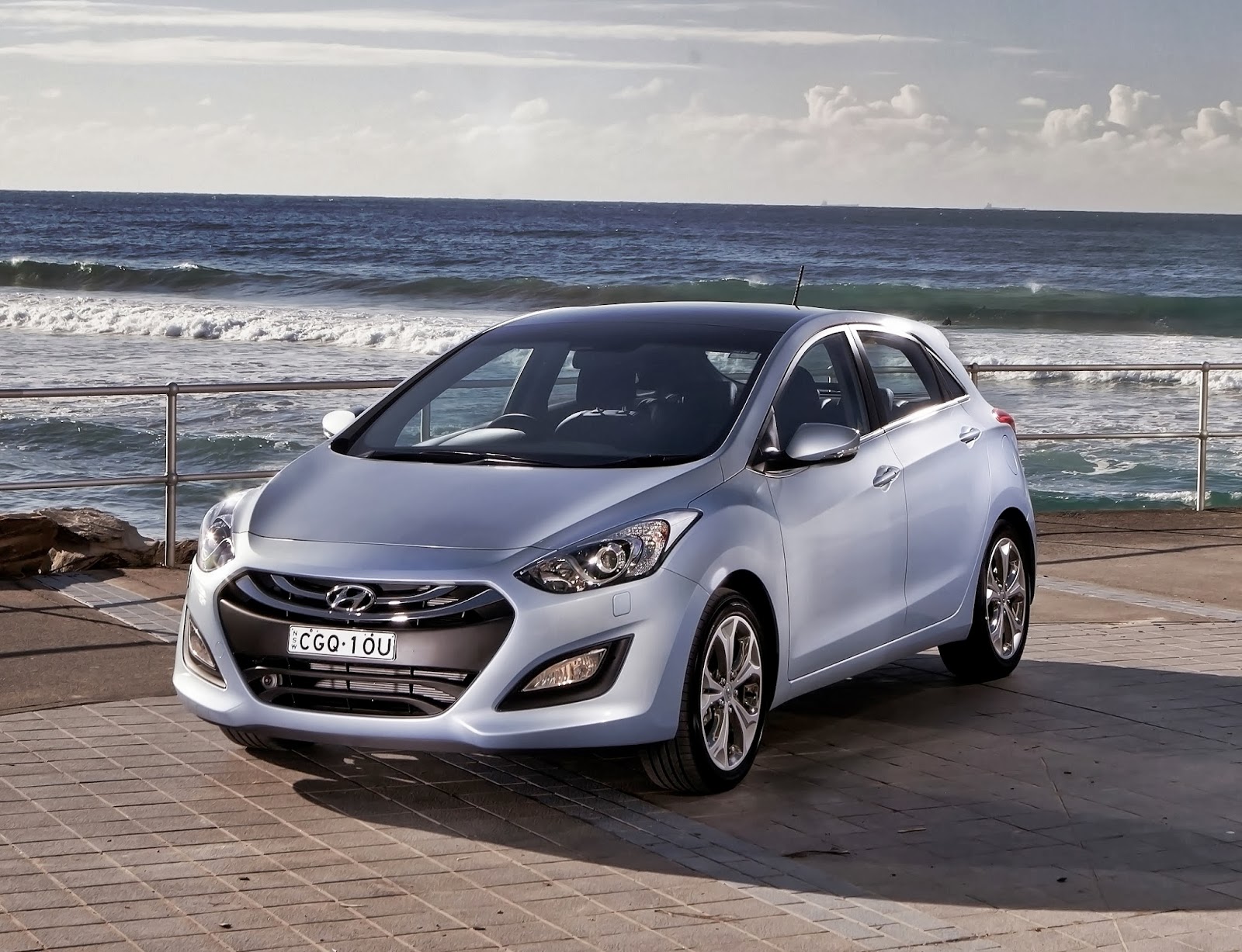
Hyundai plans to start selling its first battery-powered electric vehicle in 2016.
Hyundai has leant toward engines which turn hydrogen into electricity in response to stricter emissions regulations in markets such as the United States. Research and development partner Kia Motors Corp has focused on rechargeable batteries.
But the division of labor is blurring at a time when the number of battery-powered EVs is on the rise. BMW's i3 and Nissan Motor Co Ltd's Leaf are widely expected to reach Korea this year - as will Kia's Soul EV.
"There is no clear direction about which eco-friendly cars will win. We are dividing roles of Hyundai and Kia, with Hyundai launching fuel cell cars and Kia focusing on electric cars," Senior Vice President Lee Ki-sang told reporters on Tuesday.
"But the time will come when Kia will introduce a fuel-cell car. Hyundai is also preparing to launch a (battery-powered) electric car in 2016," Lee said at the Korean launch of the Soul
Battery Power
Kia, 34% owned by Hyundai, has favoured battery-powered cars because they can be charged at home as well as at charging stations. Fuel-cell cars must be refilled with hydrogen only at filling stations.
So far, a lack of charging stations and relatively short driving ranges, as well as high prices resulting from the cost of batteries, has kept the battery-powered EV market niche.
The number of battery-powered EVs on the rise, as BMW’s i3 and Nissan Motor Co Ltd’s Leaf are widely expected to reach Korea this year - as will Kia’s Soul EV.
At a news conference on Tuesday, Kia said it will start building a battery-powered version of its Soul compact in Korea next month. The car will be Hyundai-Kia’s first battery-powered EV export, with destinations including the U.S. and Europe.
For this year, the global sales target is 5,000 Soul EVs, said Cho Yong-won, vice president of Kia’s Domestic Marketing Group.
In Korea, the Soul EV will cost about half of its 42 million won ($43,650) price tag after government subsidies, similar to the higher-end model of the gasoline version.
The car can run up to 148 km per 24 to 33 minute fast charge or four hours on slow charge.


 Toyota says hybrids may account for 20 percent of its global sales soon; Honda announces Acura brand’s realignment into a separate division.
Rolls-Royce now looks likely to adopt plug-in hybrid technology within the next three years. Chief Torsten Müller-Otvos told Auto Express at the Geneva show that “It will be essential in two years, maybe not from customer demand but through legal regulation on emissions”
With parent company BMW already working on plug-in hybrid technology that is soon to be launched on the X5 eDrive – which uses a four-cylinder turbo paired with an electric motor – Rolls-Royce could soon have access to such a powetrain. Müller-Otvos said: “We are now a completely self-sustaining business, but technology like this is so expensive to develop that without BMW, Rolls-Royce would probably not have survived.”


With the completion of the development work and final preparations for production at the BMW Group plant in Leipzig, the launch of the BMW i8 approaches its peak. Delivery of the first customer cars will start in June 2014, beginning with the main European markets.
Beforehand, special public events will be held in various regions all over the world to meet the enormous interest in the BMW i8. For this purpose BMW i agents will be equipped with separate demonstration vehicles. The start of series production of customer vehicles will commence in April. Customers have already been able to place pre-orders for the BMW i8 in all major markets since autumn 2013.
However, demand for the BMW i8 is already exceeding the planned production volume during ramp-up.
Further improvements to the BMW i8 specifications
In parallel to the completion of the statutory type approval the BMW engineers were also able to achieve a further improvement of key driving performance and fuel consumption data. Thanks to its novel powertrain concept BMW eDrive in plug-in hybrid configuration, the i8 combines a 0–100 km/h (62 mph) sprint time of 4.4 seconds with an EU test cycle average fuel consumption of 2.1 litres/100 km (134.5 mpg imp) and CO2 emissions of 49 g/km. The related electricity consumption was measured at 11.9 kWh per 100 km .
Every-day fuel economy substantially better than all conventional sports car concepts
Although the results achieved in the EU test cycle allow for quick comparisons with other vehicles and despite their relevance for a favourable taxation in many countries, the BMW i8 engineers hat a particular focus on low fuel consumption in real life.
As a result the BMW i8 shows extraordinary efficiency not only in standardized testing procedures, but also in the practice of everyday traffic:
In typical everyday commuting, with the battery fully charged at the beginning, the BMW i8 can return a fuel consumption below 5 litres/100 km (more than 56 mpg imp) around town. If the commute includes extra-urban or motorway driving less than 7 litres (more than 40 mpg imp) are achievable.. Even in longer-distance operation at higher speeds, drivers can keep their average fuel consumption below 8 litres/100 km (more than 35 mpg imp). Overall, the fuel consumption of the plug-in hybrid model therefore works out around 50 per cent better than that of conventionally powered sports car models.
World’s first production car with laser light.
Introduction of the optional BMW laser headlights is scheduled for autumn 2014, when the BMW i8 will become the world’s first production car to offer this innovative lighting technology. BMW laser headlights are around 30 per cent more energy-efficient than the BMW i8’s standard LED headlights and provide considerably more powerful road illumination, with a range of up to 600 metres. Highly concentrated beams of light from high-performance laser diodes act on a fluorescent phosphor material inside the headlight, which projects a sharply focused beam of light onto the road. The laser headlights produce a light similar to natural daylight and are therefore always easy on the eye.
BMW eDrive: Sports car powertrain of the future.
The BMW i8’s plug-in hybrid system comprises a 170 kW/231 hp, 320 Nm (236 lb-ft) three-cylinder petrol engine with BMW TwinPower Turbo technology and a 96 kW/131 hp, 250 Nm (184 lb-ft) hybrid synchronous electric motor. The BMW eDrive system also includes a lithium-ion high-voltage battery (with a usable capacity of 5,2 kWh) and intelligent energy management that uses the combined output of 266 kW/362 hp to provide breathtaking performance and maximum efficiency, while always taking into account the driving situation and driver requirements. The excellent balance between driving pleasure and fuel economy is aided by a low vehicle weight of 1,485 kg (DIN kerb weight) and an unusually good drag coefficient (Cd) for a sports car of 0.26.
In zero-emission all-electric mode, the BMW i8 has a top speed of 120 km/h (75 mph) and a range of 37 kilometres (23 miles) within the EU test cycle. Depending on whether the plug-in hybrid sports car’s lithium-ion battery is recharged at a household power socket or BMW i Wallbox, or at a public charging station, charging times range from less than two up to three hours. In Sport mode the BMW i8 offers mid-range acceleration from 80 to 120 km/h (50 to 75 mph) in 2.6 seconds. The electronically governed top speed is 250 km/h (155 mph).


At the Geneva Motor Show, TopGear grabbed a few moments with the chief of Merc's large cars, Dr Uwe Ernstberger, who confirmed to us that while an electric S-Class isn't really a correct fit for now, "a complete electric car will be done in the future."
But, it sounds like Mercedes Benz are a bit behind on battery technology "We have to work on the capacities of the batteries to get a better package in the car," Dr Ernstberger said. "Because you do not want to lose all the comfort features of an S-Class for transporting a battery only.
"First of all we'll have the plug-in hybrid, where you can drive between 25km to 30km on electric power only. We want to use a battery to support electric driving in a closed city like London, and we use the combustion engine for driving outside the city."
So it looks like Mercedes will join BMW, who are considering a 5 series EV, in working on a large battery only luxury sedan to compete with the Tesla Model S while Audi go after Tesla's Model X with their own 600 km range battery only luxury Q8 e-tron SUV.
Source: Top Gear


Mashable reporting from SXSW 2014 on a test drive of the all-electric BMW i3.
The soon-to-be-released EV comes pre-loaded with Life360 software, an app designed to let families find each other.
This video also includes the world's lamest attempt at a donut in an EV.


Taxi Electric will be the first private taxi company to enjoy the new 100 percent electric Nissan e-NV200 taxi to its green-energy-fuelled, zero-emission fleet.
The combination of Nissan's innovative zero-emission technology, in the form of the 100 percent electric Nissan LEAF and Taxi Electric's ground-breaking city transportation model have been a recipe for success since the start of operation in 2011. Now the two companies have teamed up again to build on this success and take the next step forward- introducing the game-changing all-electric Nissan e-NV200 taxi this summer.
Taxi Electric, based in Amsterdam operate a fleet of 25 Nissan LEAF vehicles and were the first private taxi service to switch to a fleet of 100% electric taxis in November 2011. The Dutch company's fleet of Nissan LEAF's have now amassed a trouble-free 1.5 million km in taxi operations- clear proof of the electric vehicle's high quality and reliability.
Andy Palmer, EVP Nissan said: "Taxi Electric was one of the first electric taxi companies in the world, and I've been impressed with their progress since their launch two years ago. They were the first to prove that zero-emission taxis - in the form of Nissan LEAFs - are a viable alternative. They have covered an astonishing distance in their fleet in such a short time and have shown just how reliable our electric technology is in a demanding environment. Their pioneering spirit closely matches ours and we are certain they will continue their success with the ground-breaking Nissan e-NV200."
Ruud Zandvliet, founder of Taxi Electric added: "Two years ago we started with 10 Nissan LEAF. Each of these travelled well over 100,000 km and proved to be extremely reliable. Since last summer demand for our taxis is growing rapidly which allowed us to double our fleet. We are very excited about the e-NV200 as it is designed to be a taxi. This will improve our offering and open new business opportunities for us."
Taxi Electric will not be alone in making the Nissan e-NV200 part of their taxi fleet, with the city of Barcelona having signed a memorandum of understanding with Nissan to promote it as a taxi for the Spanish region. Global production of the Nissan e-NV200 begins in May this year, with sales starting in the summer.


 Although automakers are no longer overtly bullish about electric car sales, new models like the BMW i3 show potential for success in the segment.
1200 zero-emission, electric buses made by BYD Company Ltd will soon hit the streets of China’s “Bright Northern Pearl”, Dalian.
Dalian’s municipal government has signed a cooperative agreement with global electric vehicle and battery leader, BYD. The agreement stipulates the purchase of 600 BYD electric buses in 2014 and another 600 in 2015, totaling 1200 units.
BYD took the opportunity at the signing event to announce the opening of a new electric bus manufacturing facility in the Dalian Huayuankou Economic Zone to service the growing needs of northern China. The agreement also mentions a conversion initiative of more than 50% of new purchased taxis in Dalian to new energy vehicles in support of the “new energy vehicles promotion and local environment improvement” initiative.
At the event with Liaoning Province Governor Zhenggao Chen, BYD Founder and CEO Chuanfu Wang introduced company milestones, R&D capabilities and products including the electric bus and fully electric e6 SUV being used worldwide in fleet applications. He also took the chance to talk about BYD’s latest consumer offering – the break-through, plug-in-hybrid, Qin.
Chairman Wang highlighted operational statistics of the BYD electric fleets now totaling over 175 million Km traveled (~111 million miles in revenue service) and operating in many cities including recent projects in London, England and New York City. A key message from the BYD Chairman was that this technology is not just environmentally friendly, but very efficient and profitable for the operators as witnessed in the Shenzhen fleets.
Zhenggao Chen, Governor of Liaoning province, expressed his view that BYD is a pioneer in the aspect of new energy vehicles, and is confident BYD will seize the opportunity to develop and keep mastering the core technologies for new energy vehicles to keep winning the war combating poor air quality.


Residents of Toyota City, Japan, might be wondering what they just saw on the street. If it had three wheels and was leaning around a corner, it was the "i-Road", Toyota's ultra-compact all-electric, all-fun concept.
On Sunday, the i-Road, which weighs a mere 300 kg and is less than 90 cm wide, was let loose on public roads at an event to mark its introduction into "Ha:mo", Toyota's optimized urban transport system. Soon, even more i-Roads will be zooming around Toyota city when they are made available to residents at vehicle-sharing stations. And later this year the lucky residents of Grenoble, France, will also be able to have some three-wheeled fun, thanks to a vehicle-sharing project that will last until 2017.
Besides being an absolute blast to drive, how could the i-Road actually help you out? Well, picture the following:
You just got off work. You get a phone call. You need to get across town, pronto, because your wife just went into labor. But your car is in the shop, there's no time to call a taxi, and your co-workers with cars are stuck doing overtime. Oh, and it's raining.
What do you do?
In comes the i-Road to save the day. Luckily, there's a Toyota EV-sharing station by your office. Cool as a cucumber, you use your smartphone to plan your route: i-Road to the station 5 km away, and train straight to the hospital. You book the i-Road, and within a couple minutes you're weaving smoothly through the rush-hour gridlock. You get to the train station right on time, and, since the i-Road has a closed canopy, you didn't even wet your carefully groomed hair. Day saved, all thanks to the i-Road.


General Motors is reportedly preparing to introduce its second-generation Chevrolet Volt hybrid sometime in 2015.
The company has developed a new front-wheel-drive hybrid platform for the redesigned model, however it is not expected to feature drastic alterations to the current body style, unnamed industry sources have told Edmunds.
"It is different, but not drastically different," the insider said. "Just really a bit of a styling change to it."
With their main competitor Toyota now offering an entire range of hybrids which account for 28% of all Toyota and Lexus sales and the Prius being the top selling car in California for the past two years, will we finally see GM expand the range to include the Volt MPV which GM revealed way back in 2010?
Former GM CEO Dan Akerson early last year promised that the next Volt will be significantly lighter than the current iteration, with a list price likely around $30,000 to $33,000. The company already dropped the retail price to $34,995 (including $810 destination fee) for the 2014 model year, however a further discount would help the hybrid compete against plug-in offerings from Toyota, Nissan and Ford.
The current Volt provides up to 38 miles of electric-only range before the 1.4-liter four-cylinder generator kicks in. Lower weight will likely bring improvements to electric range and gasoline consumption, though GM has yet to publicly confirm any specifics.
The second-generation model is expected to be launched for the 2016 model year.


Robert Llewellyn takes a drive through Germany in the newly released Ford Focus Electric. Great car, great butterflies, great conversation, but interesting pricing.


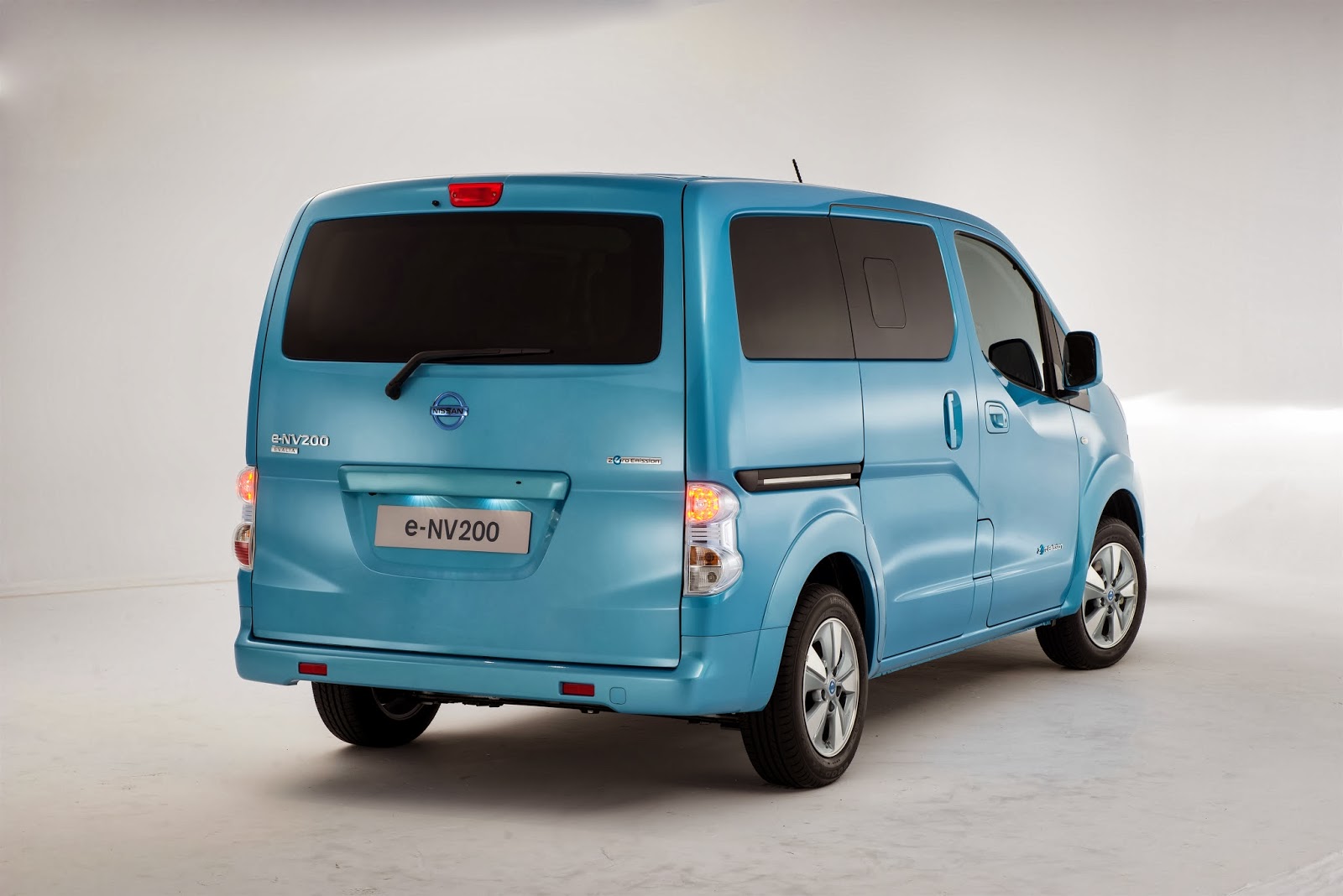
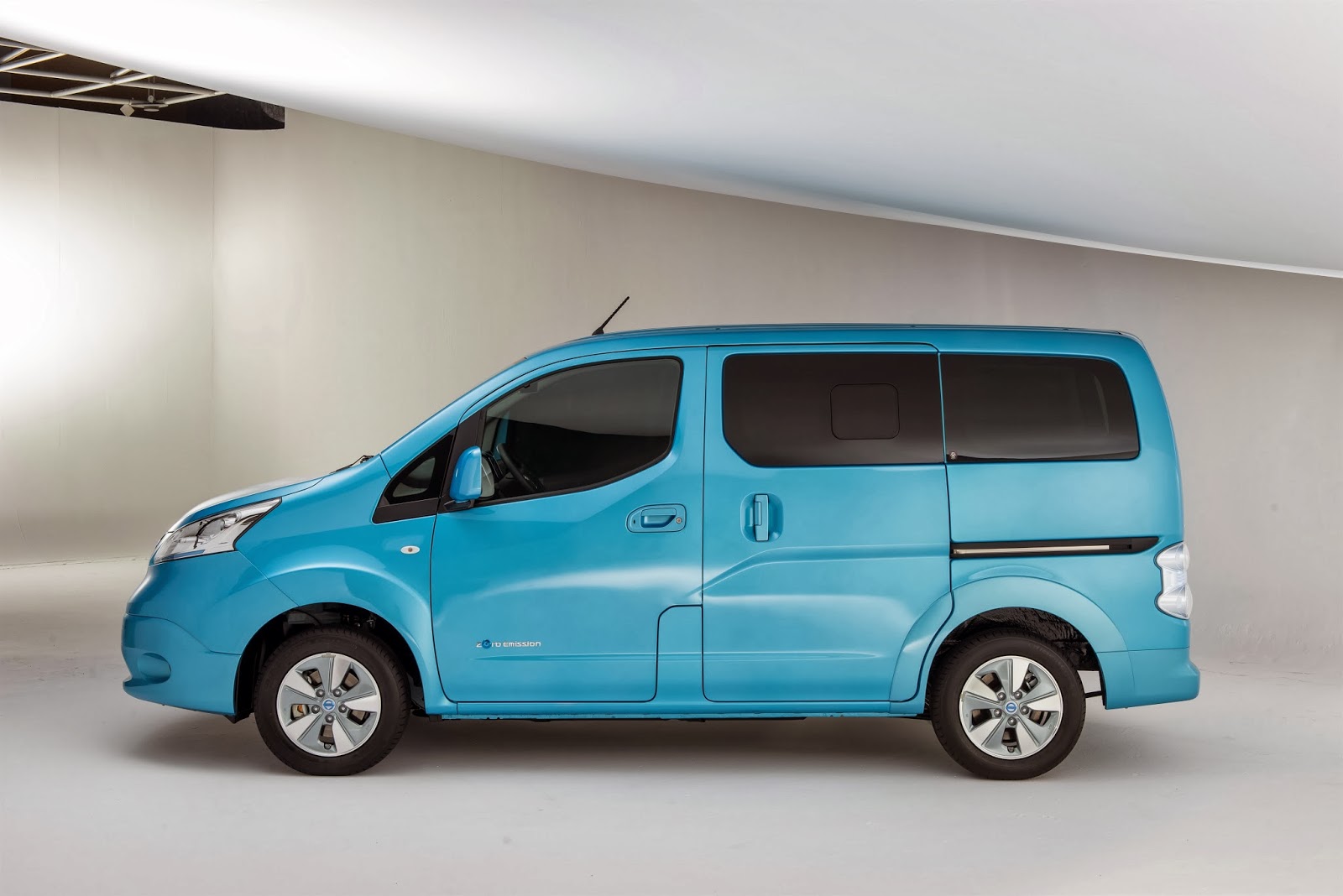
Nissan continues to pioneer the electric vehicle sector with the introduction of the Nissan e-NV200, which brings unprecedented refinement, with zero emissions and ultra-low running costs to the compact van segment With this entry, Nissan will be the first automaker to have two all-electric vehicles in its global line-up, joining the Nissan LEAF, the world's best-selling EV.
Combining the best elements of two multi-award winning vehicles - Nissan LEAF and Nissan NV200, past World Car of the Year and International Van of the Year respectively - e-NV200 is ready to change the face of light commercial vehicles forever.
The e-NV200's high performance pure electric drivetrain, based on that used in the acclaimed Nissan LEAF, is allied to the class-leading cargo volume of the NV200 to create a practical and versatile vehicle capable of carrying people or goods while producing neither exhaust emissions nor noise pollution.
When sales start in June, e-NV200 will be available as a van or as a five-seat people carrier in Combi or more luxurious Evalia guises. Although mainly targeted at businesses, e-NV200 will also appeal to private users with large families. The e-NV200's homologated NEDC range (170kms) is greater than the average 100km daily driving distance of over half the fleets who utilise this class of van and the payload and cargo area is the same as NV200's.
The battery can be recharged overnight using a domestic 16-amp single-phase 3.3 kW supply which reduces to four hours if a 6.6kW/32-amp supply is used. A dedicated CHAdeMO DC 50 kW quick charger can recharge the battery from 0-80 percent in just 30 minutes or less if the battery is already partially charged. More than 1000 public CHAdeMO quick chargers are now installed across Europe, in addition a number of companies have installed their own dedicated quick charging facilities at their home depots or offices.
"The e-NV200 goes into a totally different market segment to the Nissan LEAF and alongside the world's best selling electric vehicle will help us continue to lead the EV revolution. To do that we haven't simply converted the NV200 to electric, we have thoroughly re-engineered to create a product that isn't just a good electric van, it is a fantastic van by any standards said Guillaume Carter, senior vice president of Sales and Marketing for Nissan Europe.
Director of Electric Vehicles for Nissan Europe, Jean-Pierre Diernaz is excited by what the e-NV200 brings to the range, commenting: "The proven and highly effective electric powertrain driving e-NV200 is ideally suited to the typical stop/start daily routine of a working vehicle. With no exhaust or noise pollution, e-NV200 is environmentally and people friendly, while the lack of fatigue-inducing noise and vibration from the drivetrain coupled with the single-speed transmission will provide genuine benefits to every hard working delivery or taxi driver. Fleet operators, meanwhile, will love the low running costs."
Although based on existing hardware, e-NV200 has undergone a full engineering development programme as if it were new from the ground up. The drivetrain has been re-engineered in a number of significant areas to suit its new role, while changes have been made to the vehicle shell to ensure there has been no compromise to NV200's cargo space.
The LCV version still has a cargo volume of 4.2m3 and can carry two standard Euro pallets, while sliding side doors on both sides and wide opening rear doors ensure that loading and unloading is as easy as possible.
A comprehensive ‘real-world' test programme has been undertaken in Japan and Europe with pre-production models handed over to internationally known companies - including FedEx, Coca-Cola, DHL, IKEA, British Gas and the Japan Post Office - to operate as part of their everyday fleets. Feedback from drivers and fleet managers has been used to fine tune e-NV200 before series production began at Nissan's major LCV facility in Barcelona, Spain.
"We believe e-NV200 will genuinely change the make-up of light van and taxi fleets as well as changing the environment in the heart of our cities," added Diernaz.

Nissan e-NV200 in detail
Although based on significant elements of two existing vehicles, e-NV200 is a bespoke vehicle with a unique part count of more than 30 percent.
Differences between e-NV200 and NV200 include striking visual changes, a re-engineered chassis, interior revisions, a new battery pack, a higher capacity regenerative braking system and other modifications to ensure e-NV200 is better suited to its likely role as a city-based delivery vehicle for cargo and people.
The result is a near silent and emission-free future-proof electric vehicle that promises genuine advantages for drivers, fleet operators, passengers, pedestrians and city residents alike.
The most obvious visual difference between e-NV200 and its conventionally powered sibling is the adoption of Nissan's EV "face," familiar from Nissan LEAF. The central charging doors and unique blue tinted LED headlights give a modern look and distinct identity from its ICE sibling.
Blue-tinted arrow-like positioning lamps sit within new, crescent-shaped, headlamps that incorporate a distinctive ice blue light colour. LED bulbs are used in the rear lights of all versions as well as at the front on passenger models. The "electric" blue theme extends to the e-NV200's badging.
Inside there's a new instrument panel with a digital read out, while the gear selector has a simplified look and feel - shifting like a conventional automatic rather than the computer-style joystick of LEAF - to help drivers regularly moving from internal combustion engined vans into the e-NV200 acclimatise more quickly.
Digital information includes clear and easy-to-assimilate displays for vehicle speed, state of charge and vehicle range while a power meter shows the state of motor output/regeneration. The instrument panel is completed by a multi-function display that provides other time, distance and speed information.
Mechanically, e-NV200 owes much to the Nissan LEAF with independent front suspension by MacPherson strut from the world's best selling EV. LEAF also provides the drivetrain, including its recently introduced second generation 80kW AC synchronous motor, which is now fully integrated with the battery charger and inverter in one compact, self-contained unit.
There are some significant changes, however, for e-NV200. Most notable is the Lithium-ion battery which has been changed to allow it to fit under e-NV200's floor without compromising the cargo area. The new pack, which is built at Nissan's plant in Sunderland, UK, and assembled in Barcelona, has the same number of modules - 48 - as in Leaf and the same 24kWh capacity, but is packaged differently.
The battery module is set low in the vehicle under the load floor and is mounted in a reinforced zone for extra safety protection in the event of an impact. The battery mounting assembly also helps boost the torsional and lateral stiffness of the vehicle by 20 percent and 35 percent respectively over NV200.
With a low centre of gravity, the ride and handling levels of e-NV200 are exceptional, even by the standards set by the NV200 while the instant torque delivery typical of an electric vehicle means the battery-powered version accelerates faster: its 0-100km/h time is quicker than the 1.5 dCi-powered NV200, with final figures confirmed later this year.
Another drivetrain change over LEAF determined by e-NV200's likely usage pattern is a new braking system with a higher regenerative capacity. This takes advantage of the vehicle's typical stop/start city driving modes, while Hill Start Assist is fitted as standard, holding the vehicle for two seconds after the footbrake is released to allow smooth starting.