HELLA Developing Wireless Charging Systems For Electric Vehicles

HELLA is working with Paul Vahle GmbH to develop wireless charging systems for electric and hybrid-electric vehicles.

Commonly used to recharge small consumer products such as smartphones and electric toothbrushes, inductive or wireless charging for cars will make it easier for drivers to charge car batteries and extend a vehicle's driving range.

Rather than using plug-in charging stations, car owners in the future will simply need to park over an inductive charging unit to trigger the process, according to Dr. Marc Rosenmayr, CEO for HELLA Electronics in North and South America.

He adds that if inductive charging coils were embedded in streets, electric vehicles also could be recharged when stopped at traffic lights or even while being driven.

For electric car buyers, a contact-free method of transferring energy to the vehicle certainly will be more convenient and less time consuming. Cables no longer will be necessary. Inclement weather and the risk of vandalism also can be avoided if outside charging stations are involved.

"Wireless, inductive charging is a far more convenient way to recharge a vehicle's battery system," Rosenmayr points out. "The driver only needs to stop or drive over a charging unit or network to activate the process. As wireless charging has become more available and easy to use, it also might allow automakers to reduce battery size and weight on electric and hybrid electric vehicles.

Rosenmayr notes that a number of technological and infrastructure challenges still must be overcome before wireless charging for cars and light trucks can be successfully introduced. Energy transfer over high-frequency fields that are at the heart of inductive systems, for example, cause heat to build up in metal objects which could lead to safety issues. The impact that wireless charging might have on other vehicle electronic systems such as navigation, infotainment, driver-assistance and keyless entry systems also will need to be studied.

The cooperation between Vahle and HELLA combines the expertise and experience of both companies in the field inductive charging. Based in Kamen, Germany, Vahle has 15 years of experience in contact-free energy transfer in industrial environments, while HELLA is a recognized leader in the development of electronics, software, processes and production in the auto industry.

BMW i8 test drive in China [VIDEO]

According to Bloomberg's Stephen Engle, the ultra high-end electric and hybrid car space is suddenly getting a bit more crowded in China.

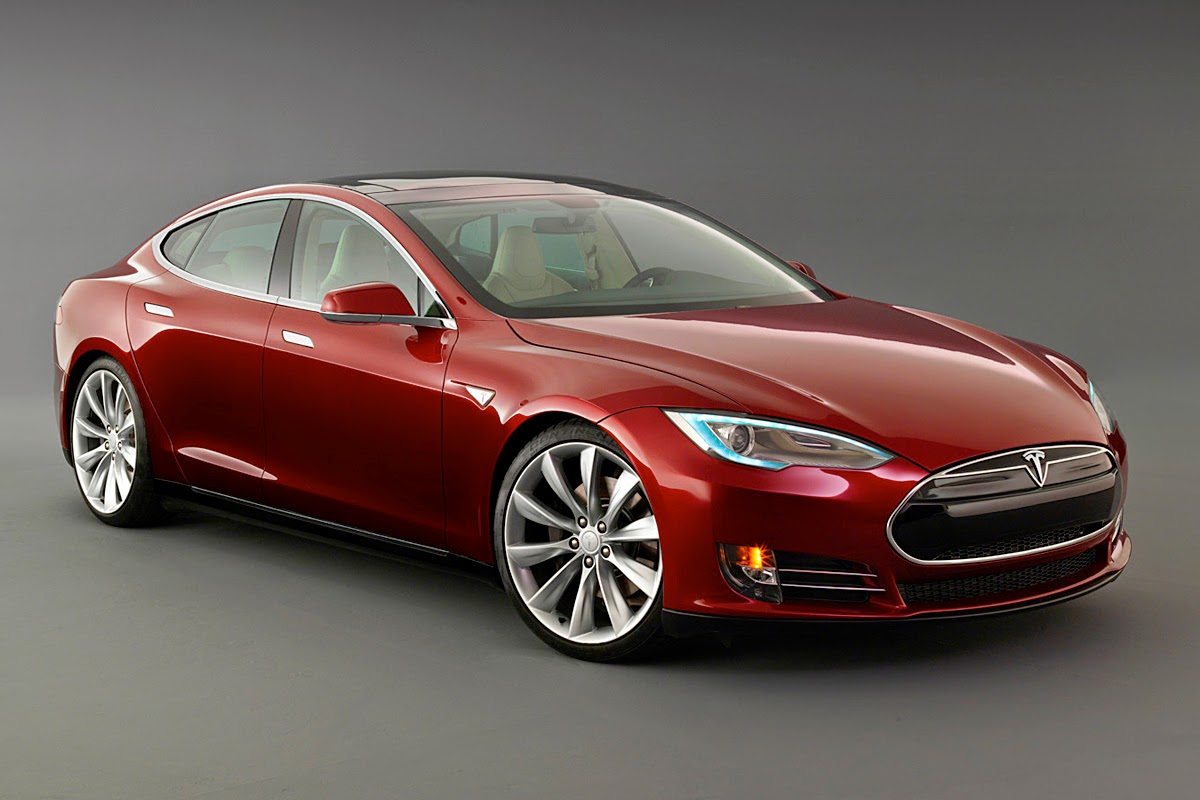
Tesla had the first deliveries of the Model S to Chinese customers this week, while BMW will roll out its hybrid i8 super sports car for the China market by the end of the year.

Engle got behind the wheel of BMW's new offering in Beijing.

Airbus Developing Hybrid Electric Jet Aircraft

Airbus is learning from automakers as it works on developing a small aircraft powered by hybrid electric engines that could represent its first move into the market for regional jets.

The development of a regional plane, seating between 70 and 90 people, that can take off and land using electric power could take between 15 and 20 years, Airbus Group Chief Technology Officer Jean Botti told reporters in Munich.

Airbus, which with Boeing dominates the market for passenger jets, presently makes planes that seat more than 150 people.

Airbus is already working on an all-electric two-seater plane, powered by two electric motors with a combined output of 60 kilowatts, hoping this technology will serve as a step to bringing electric motors on to larger aircraft.

The two-seater, which Airbus says is suited for short missions such as pilot training and aerobatics, can run on its lithium-ion polymer batteries for half an hour, with the aim to get it up to an hour.

The batteries are tricky, Botti said. "They're causing us a lot of headaches."

Daimler-BYD Unveil All-Electric DENZA with 300 km range

BYD Daimler New Technology Co., Ltd. (BDNT) officially unveiled its DENZA all-electric vehicle at Auto China 2014, in Beijing. The world premiere of the serial production model is the culmination of cooperative efforts at the 50:50 R&D technology joint venture established by Daimler and BYD back in 2010 – the first Sino-German joint venture dedicated to an all-electric vehicle in China. Combining Daimler’s renowned tradition and engineering expertise as a worldwide leader in safety technology and quality excellence with BYD’s leading battery technology, DENZA is styled as an honest and modern urban vehicle concept that fits both private and fleet customers.

“Daimler is constantly moving forward with emission-free mobility; and with our DENZA we are also on the right track in China, which is destined to become the world’s most important market for electric vehicles“, said Hubertus Troska, Member of the Board of Management of Daimler AG with responsibility for China, and Chairman and CEO of Daimler Greater China. “With DENZA we deliver the safest, most reliable, and most convenient electric vehicle to our Chinese customers – designed, engineered, and produced in China, for China, once again proving our full commitment to the country.”

DENZA has been designed around its lithium iron phosphate battery which is framed by a lightweight aluminium case with extrusion profiles. Designed to absorb large amounts of energy, it is located at the safest place in the car - underneath the body. The layout also ensures that all powertrain components are separated from the passenger compartment. Additionally, DENZA’s intelligent Power Flow Management System constantly monitors the energy flow between the battery and powertrain to guarantee that, in the event of an accident, the battery is disconnected automatically and, if needed, quickly discharges to levels below critical values.

As a forerunner in electric vehicle safety, BDNT worked closely with China’s official safety certification body, CATARTC, to jointly develop an electric vehicle safety standard for China. By also considering real life accident data, DENZA has gone even further than these legal requirements to ensure that its customers enjoy the highest level of safety.

“DENZA is the first complete vehicle that Daimler has developed together with BYD outside of Germany and it is undoubtedly one key pillar of Daimler’s electric vehicle strategy in China“, noted Prof. Thomas Weber, Member of the Board of Management of Daimler AG responsible for Research and Development. “No compromises have been made to design and develop, in China, an all-electric car that raises the bar in its segment. We assure our Chinese customers the highest standards of safety, paired with maximum convenience, outstanding reliability and unique driving fun as part of a superior overall concept.”

The DENZA has been put through 18 months of intensive testing that saw various cars drive over 1.2 million kilometres across all of China under extreme and various weather and road conditions – be it hot, cold, dusty or icy. This testing program, which looked at overall quality and endurance, was complemented by additional component testing and crash test programs. In total, BDNT crashed more than 20 cars, including high-speed, low-speed and rollover-scenarios. DENZA also became the first electric vehicle to be tested according to C-NCAP consumer ratings at C-NCAP facilities, obtaining the highest possible rating of 5 stars.

It goes without saying that the quality of the production is secured at a modern, independent production line in Shenzhen, following Daimler’s proven production philosophy and quality control methods.

With a driving range of up to 300 kilometres, the DENZA offers the ease and convenience of emission free mobility for day-to-day use – in urban areas, and beyond. Charging the battery is highly flexible, as it can be done at any household power outlet, public charging facilities or special wall boxes. The latter of which can be installed at homes or in offices at the request of DENZA customers, guaranteeing fast charging, ranging from seven hours to less than an hour. With the DENZA app, available for both Android and iOS phones, wall box customers can even remotely check on their charging status and vehicle location using their smartphones and, if needed, get connected right away to a dealership or customer service centre.

DENZA clearly aims to change mobility, but not the mobility behaviours of its customers. That is why, thanks to its luxury class level wheelbase, it can comfortably accommodate up to 5 passengers, with ample legroom and an inviting 460 litre trunk volume. The roominess of the interior is complemented by a clean, functional design and high craftsmanship.

DENZA’s package is convincing, and so is its heart, the electric powertrain and battery technology. The vehicle is powered by an 86 kW (peak) all-electric engine that provides a maximum speed of up to 150 km/h and impressive peak torque, at 290 Nm. Together with its big 47.5 kWh battery capacity, and a convenient suspension, customers can rest assured that they can enjoy both maximum driving fun and comfort with a range of up to 300 km. In light of the fact that the average daily driving distance in China is 50 to 80 kilometres a day, the typical customer will only have to recharge DENZA twice a week. This bi-weekly pit stop will be met with joy as driving 100 km with a DENZA cost less than 20 RMB (2,35 EUR). All this classifies the DENZA as the perfect vehicle for day-to-day use – in urban areas, and beyond.

Wang Chuanfu, Chairman of BYD Company Limited, stated: “With our DENZA, I see my vision come true as we make big steps towards sustainable development in and for China. Backed by a supportive government and the win-win alliance between BYD and Daimler, and its Chinese heart, DENZA offers a convincing package to our Chinese customers, pointing the way and contributing strongly to the development of the electric vehicle market in China.”

Tesla Will Make Cars in China in Next 3-4 Years

Tesla Motors Chief Executive Officer Elon Musk, who’s preparing to begin deliveries of the Model S electric vehicle in China, forecast the company will be making cars in the country in the next three to four years.

The company is also building a “big” network of battery-charging stations in China, including superchargers in Beijing and Shanghai, the billionaire CEO said at a packed Geekpark Conference in the nation’s capital yesterday. Musk is scheduled to host an event tomorrow to mark the beginning of Model S deliveries in the country.

“At some point in the next three or four years we’ll be establishing local manufacturing in China,” Musk said. “China is very important to the future of Tesla. We’re going to make a big investment in China in terms of charging infrastructure.”

Local production in the world’s biggest auto market would allow Tesla to sell cars at cheaper prices by avoiding China’s 25 percent import tariff. While entering the country presents an opportunity for Tesla to sell as many vehicles there as in the U.S. by as soon as next year, Musk, 42, will attempt to accomplish what the Chinese government has struggled to do: get people to buy electric cars.

“I think they can sell quite a few here in the market,” said Finbarr O’Neill, president of J.D. Power & Associates. “There’s a lot of talk about Tesla but, you know, their numbers are not huge. Mr. Musk has been successful in many fields. I wish him luck, but there’s a limit to every market.”

Source: Bloomberg

UK motorway to charge electric cars on the move

The Highways Agency intends to equip an English motorway to test wireless charging of moving electric cars.

The Highways Agency (HA) has yet to give details of the trial site or dates. But it has issued criteria for system adoption, including a lifecycle comparable to that of asphalt (typically around 16 years), cost-effective maintenance, resistance to vibration and weather, and efficient charge collection at high speeds.

Static inductive charging experience to date in the UK involves test cars parking at existing plug-in stations in London and an electric bus service launched in January 2014 in Milton Keynes, where vehicles top up their overnight charge during drivers’ rest breaks. Managing this five-year demonstration is the eFleet Integrated Service joint venture between Mitsui Europe and consulting engineers Arup.

Arup helped create a wireless power transfer system branded HALO in Auckland, New Zealand in 2010. US wireless technology developer Qualcomm, which bought HALO in 2011, is running the London static car trial and planning a dynamic test track in Auckland.

For operational experience, the HA can look to Asia, where the Korea Advanced Institute of Science and Technology (KAIST) is running two online electric vehicle (OLEV) buses on a 12km continuous charging route in the city of Gumi. It claims 85 per cent maximum efficiency in power transfer.

The HA will also be monitoring the semi-dynamic charging trial highlighted by Transport Scotland chief executive David Middleton at a Chartered Institute of Highways & Transportation conference in March 2014. A halfway house between static and dynamic technologies, it will enable a hybrid bus to pick up charge from a series of modules installed under the road surface at strategic points along the route so it can run for long periods in fully electric mode.

A Transport Scotland spokesman explains that the approach “is likely to cause less disruption than, for example, installing dynamic charging along the length of a road”.

A similar technique is being used in Braunschweig, Germany, where a bus fitted with Bombardier Primove fast-charge technology went into passenger service on 27 March.

Source: E & T

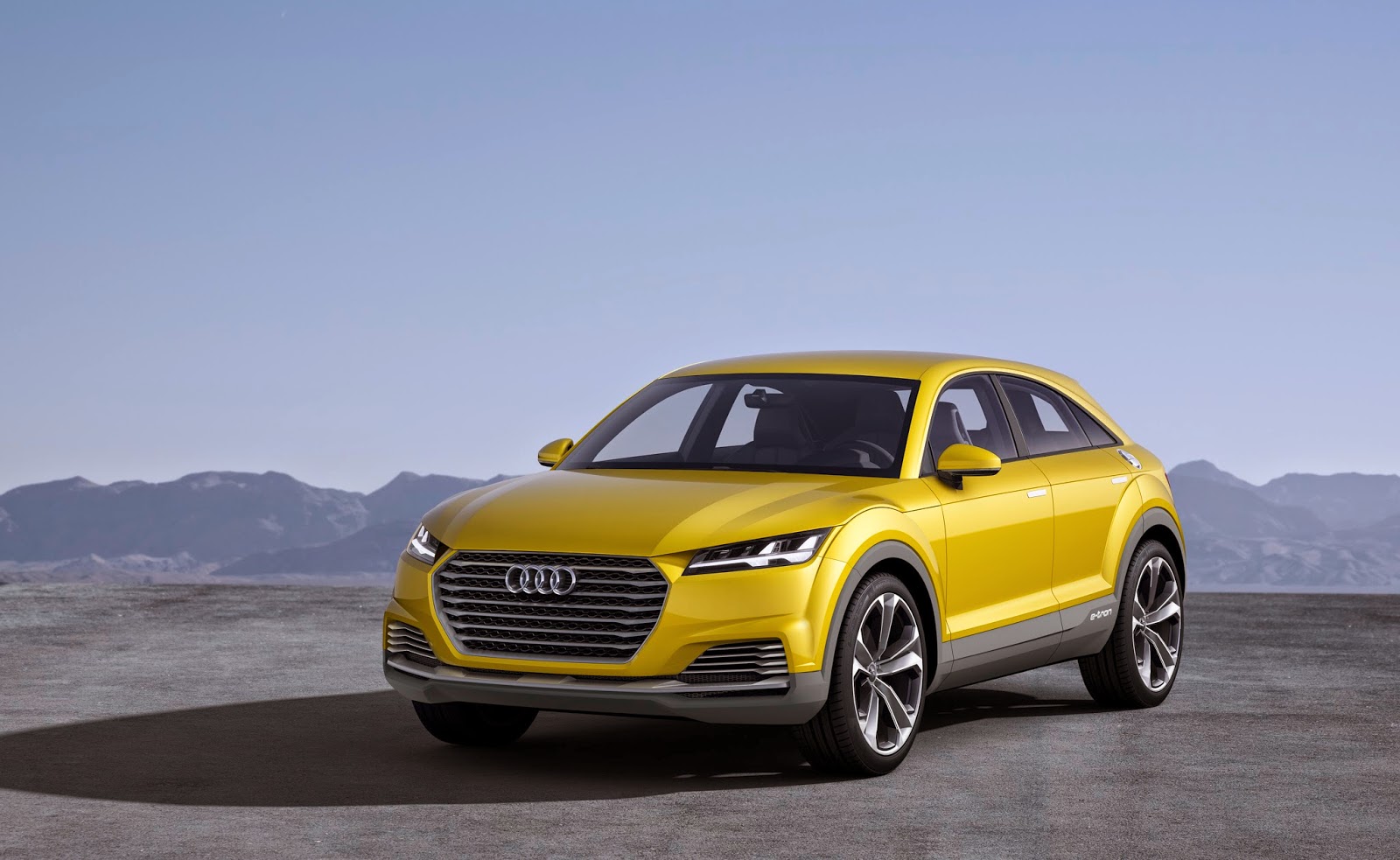
Audi unveil TT plug-in hybrid SUV concept car

The Audi TT offroad concept breaks the mold, combining the sportiness of a coupe with the lifestyle and utility of a compact SUV. The four-door model, which Audi is presenting at the Beijing International Automobile Exhibition, adds an entirely new expression to the Audi design language. Its plug-in hybrid drive with two electric motors and a system output of 300 kW (408 hp) provides for dynamic performance, yet consumes on average just 1.9 liters of fuel per 100 kilometers (123.8 US mpg).

“The Audi TT offroad concept provides a glimpse of how we might imagine a new model in the future TT family,” says Prof. Dr. Ulrich Hackenberg, Member of the Board of Management for Technical Development. “It combines the sporty genes of the TT with the strengths of a compact Audi SUV. Its plug‑in hybrid drive with the option of inductive charging is a major step toward the mobility of the future. We chose to present the Audi TT offroad concept in China, our second domestic market, because it represents the urban mobility of tomorrow: It is sustainable, dynamic, intelligent and connected.”

The plug-in hybrid drive

The plug‑in hybrid drive in the Audi TT offroad concept delivers 300 kW (408 hp) of system output and 650 Nm (479.2 lb‑ft) of system torque. The show car accelerates from 0 to 100 km/h (62.1 mph) in 5.2 seconds and reaches the electronically governed top speed of 250 km/h (155.3 mph) without any trouble. It consumes just 1.9 liters of fuel per 100 kilometers (123.8 US mpg), a CO2 equivalent of 45 grams per kilometer (72.4 g/mile).

The Audi TT offroad concept can drive over 50 kilometers (31.1 miles) solely on electric power and thus with zero local emissions, and has a total range of up to 880 kilometers (546.8 miles).

The combustion engine is a 2.0 TFSI producing 215 kW (292 hp) and 380 Nm (280.3 lb‑ft) of torque. The two-liter, four‑cylinder unit with the large turbocharger is packed with Audi's potent efficiency technology. At part load, indirect injection supplements gasoline direct injection for lower fuel consumption. The exhaust manifold is integrated into the cylinder head – the foundation for the high-performance thermal management system.

A separating clutch links the transverse 2.0 TFSI to an electric motor producing 40 kW and 220 Nm (162.3 lb‑ft) of torque. The slim, disc-shaped electric motor is integrated into the six-speed e‑S tronic. The dual-clutch transmissions sends the torque to the front wheels. Mounted on the rear axle of the Audi TT offroad concept is a second electric motor independent of this drive unit. This produces a maximum of 85 kW and 270 Nm (199.1 lb‑ft).

In front of the rear axle is a liquid-cooled, lithium-ion battery comprising eight modules. It contributes to the balanced 54:46 weight distribution between the front and rear axles and to the low center of gravity. The battery stores up to 12 kWh of energy, enough for an electric range of 50 kilometers (31.1 miles). An Audi wall box, which manages the energy feed conveniently and intelligently and can deal with a variety of voltages and outlets, is used for stationary charging.

The show car is also designed for use with Audi Wireless Charging technology for contactless inductive charging. The infrastructure side – a plate with a coil and an inverter (AC/AC converter) – is placed on the parking spot of the Audi TT offroad concept and connected to the power grid. The charging process begins automatically when the car drives onto the plate. The alternating magnetic field of the infrastructure side induces a 3.3 kW alternating current across the air gap in the secondary coil, which is integrated into the vehicle. The current is inverted and fed into the electrical system.

Charging stops automatically when the battery is fully charged. It takes about as long as charging via a cable, and the driver can interrupt the process at any time. The Audi Wireless Charging technology is more than 90 percent efficient, and is not affected by weather factors such as rain, snow or ice. The alternating field, which is only generated when a car is on the plate, is not harmful for people or animals.

The intelligent plug‑in hybrid concept of the Audi TT offroad concept really shines when driving, making the show car every bit as efficient as it is sporty. The Audi drive select management system offers three driving modes. EV mode gives priority to electric driving. In this case, the front drive unit is inactive, and the electric motor at the rear axle with its powerful torque can rapidly accelerate the four‑door car to a maximum of 130 km/h (80.8 mph). In Hybrid mode, all three drives work together in various ways as necessary. In many situations the front electric motor assumes the role of a generator.

Powered by the engine, it recharges the battery and thus extends the electric range. Full system output is available in Sport mode. During “boosting,” i.e. strong acceleration, the rear electric motor works together with the 2.0 TFSI. The same thing happens when the hybrid management system decides that all‑wheel drive is appropriate. In such situations, e.g. on a slippery road or in light off-road conditions, this essentially makes the Audi TT offroad concept an e‑tron quattro.

When the driver takes his or her foot off the accelerator, free-wheeling or “coasting” is activated. Recuperation occurs here at low speeds and when braking. The driver can use the “Hold” and “Charge” functions in the MMI system to specifically influence the battery's charge state, e.g. to increase storage of electric energy so that it can be used over the final kilometers to the destination.

Chassis

The Audi TT offroad concept shows its strong character on any road surface and in any terrain. On asphalt the show car is sporty and composed, and it can easily handle light terrain thanks to its high ground clearance, short overhangs and e‑tron quattro all-wheel drive. 255/40-series tires are mounted on 21‑inch wheels, whose delicate five-arm design draws on the look of the Audi e‑tron models. Dark trim provides contrast.

Many of the components of the McPherson front suspension are made of aluminum; the four‑link rear axle handles longitudinal and transverse forces separately. The ratio of the progressive steering changes with the steering input. The Audi drive select system allows the driver to modify the function of various technical modules in multiple steps.

Driver assistance systems

The Audi TT offroad concept show car features two Audi driver assistance systems that are almost ready for production: the intersection assistant and online traffic light information technology. The intersection assistant aims to help to avoid side-impact collisions, or reduce their severity, where lanes merge and at intersections. Radar sensors and a wide-angle video camera scan zones to the front and sides of the car. If the system detects a vehicle approaching from the side and assesses it to be critical, graduated warnings are displayed in the Audi virtual cockpit.

Online traffic light information is a technology that connects the Audi TT offroad concept via the cell phone network to the central traffic computer, which controls the traffic light systems in the city. Based on the information from this system, the Audi virtual cockpit shows the driver what speed to drive in order to reach the next traffic light while it is green. The cockpit displays the time remaining when waiting for the light to turn green.

New Record: 431 EVs in the quietest parade in the world

The Québec electric-car group has set a new world record for plug-in electric cars gathered in one place.

431 battery-electric and plug-in hybrid cars gathered in a car park near the Jacques Cartier Bridge along the Saint Laurence River, in Montréal Canada.

The cars included not only the usual Nissan Leaf, Chevrolet Volt, Mitsubishi i-MiEV, and Ford Focus, but also a variety of other plug-in vehicles including a VIA V-Trux Plug-in Hybrid truck, a BlueCar Bolloré (the car in car-sharing AutoLib Paris' ), a Porsche EV conversion and hundreds of Tesla S and Roadster,

They also consider applying for the world's quietest parade!

Source: AVEQ

Electric Car sales set to take off in South Korea

In 2010 the South Korean government unveiled a plan to produce 1.2 million electric vehicles a year by 2015, or 21 percent of the domestic automobile market, and a nationwide goal of one million registered electric vehicles by 2020.

The South Korean government’s Ministry of Environment is providing a 15 million won ($13,900) nationwide subsidy for EV purchases, and 10 major cities or provincial jurisdictions are providing additional subsidies ranging from 3 million to 8 million won ($2,800 to $7,400).

The semitropical island of Jeju, which is located about 60 miles (100 km) south of the Korean peninsula in Korea’s East Sea, Plans for all cars to be electric by 2030.

The Jeju government adds a hefty 8 million won subsidy to the federal incentive for EVs purchased on the island. The combined price abatement of 23 million won ($21,000) nearly halves the EV’s purchase price in some instances, dramatically reduces it in all others and makes the Chevrolet Spark EV less than the cost of a gasoline-powered Spark.

While the federal subsidy is open-ended and applies nationally, there is a limit to the number of subsidies Jeju will grant. For 2014 Jeju has a cap of 500 subsidies, but officials say they are swamped with thousands of applications.

Jeju is a natural fit for EVs because it has been a smart grid test bed for years, which included building public charging infrastructure. Also, Jeju is a relatively small, oval-shaped island (about 70 km by 30 km), so drivers can easily get around the island on a single battery charge.

There are currently only about 360 electric vehicles amongst the population of about 607 000, a figure that the province wants to expand to more than 500 this year. The provincial government expects about 370 000 total cars on the road in Jeju by 2030 compared to about 300,000 today.

This will be achieved in steps, with the initial subsidy phase adding 500 new EVs this year, then more subsidies to boost the number to 29,000 by 2017 and to 94,000 by 2020. The island has 500 easily accessible 240V recharge stations, said to be the highest density anywhere in the world. More stations are being added every month.

South Korean buyers, who buy almost exclusively cars made in the country, have several Korean-made electric cars from which to choose. The current sales champion on Jeju is the Samsung SM3, which is a clone of the Renault Fluence ZE sedan.

Kia's Ray EV, Samsung/Renault's SM3 EV and General Motors Spark EV got off to a modest sales start in 2013. Nissan will begin selling the Leaf in South Korea in the second half of this year along with BMW's i3 and Kia's Soul EV. Hyundai Motor to launch first battery-powered electric car in 2016.

South Korea has installed 1,510 charging stations for electric cars across the country, including 110 quick charge stations. Currently, about 1,100 electric cars are being used mostly by government agencies and public corporations across the country.

Li-Sulfur Batteries with Metal-Organic Frameworks offer 800 km Range

Researchers at the Pacific Northwest National Laboratory (PNNL) added a kind of nanomaterial called a metal-organic framework, to the battery’s cathode to capture problematic polysulfides that usually cause lithium-sulfur batteries to fail after a few charges.

A paper describing the material and its performance was published online April 4 in the American Chemical Society journal Nano Letters.

“Lithium-sulfur batteries have the potential to power tomorrow’s electric vehicles, but they need to last longer after each charge and be able to be repeatedly recharged,” said materials chemist Jie Xiao of the Department of Energy’s Pacific Northwest National Laboratory. “Our metal-organic framework may offer a new way to make that happen.”

Today’s electric vehicles are typically powered by lithium-ion batteries. But the chemistry of lithium-ion batteries limits how much energy they can store. One promising solution is the lithium-sulfur battery, which can hold as much as four times more energy per mass than lithium-ion batteries. This would enable electric vehicles to drive farther on a single charge, as well as help store more renewable energy. The down side of lithium-sulfur batteries, however, is they have a much shorter lifespan because they can’t currently be charged as many times as lithium-ion batteries.

The reason can be found in how batteries work. Most batteries have two electrodes: one is positively charged and called a cathode, while the second is negative and called an anode. Electricity is generated when electrons flow through a wire that connects the two. To control the electrons, positively charged atoms shuffle from one electrode to the other through another path: the electrolyte solution in which the electrodes sit.

The lithium-sulfur battery’s main obstacles are unwanted side reactions that cut the battery’s life short. The undesirable action starts on the battery’s sulfur-containing cathode, which slowly disintegrates and forms molecules called polysulfides that dissolve into the liquid electrolyte. Some of the sulfur—an essential part of the battery’s chemical reactions—never returns to the cathode. As a result, the cathode has less material to keep the reactions going and the battery quickly dies.

Researchers worldwide are trying to improve materials for each battery component to increase the lifespan and mainstream use of lithium-sulfur batteries. For this research, Xiao and her colleagues honed in on the cathode to stop polysulfides from moving through the electrolyte.

Many materials with tiny holes have been examined to physically trap polysulfides inside the cathode. Metal organic frameworks are porous, but the added strength of PNNL’s material is its ability to strongly attract the polysulfide molecules.

The framework’s positively charged nickel center tightly binds the polysulfide molecules to the cathodes. The result is a coordinate covalent bond that, when combined with the framework’s porous structure, causes the polysulfides to stay put.

“The MOF’s highly porous structure is a plus that further holds the polysulfide tight and makes it stay within the cathode,” said PNNL electrochemist Jianming Zheng.

Metal-organic frameworks—also called MOFs—are crystal-like compounds made of metal clusters connected to organic molecules, or linkers. Together, the clusters and linkers assemble into porous 3-D structures. MOFs can contain a number of different elements. PNNL researchers chose the transition metal nickel as the central element for this particular MOF because of its strong ability to interact with sulfur.

During lab tests, a lithium-sulfur battery with PNNL’s MOF cathode maintained 89 percent of its initial power capacity after 100 charge-and discharge cycles. Having shown the effectiveness of their MOF cathode, PNNL researchers now plan to further improve the cathode’s mixture of materials so it can hold more energy. The team also needs to develop a larger prototype and test it for longer periods of time to evaluate the cathode’s performance for real-world, large-scale applications.

PNNL is also using MOFs in energy-efficient adsorption chillers and to develop new catalysts to speed up chemical reactions.

“MOFs are probably best known for capturing gases such as carbon dioxide,” Xiao said. “This study opens up lithium-sulfur batteries as a new and promising field for the nanomaterial.”

This research was funded by the Department of Energy’s Office of Energy Efficiency and Renewable Energy. Researchers analyzed chemical interactions on the MOF cathode with instruments at EMSL, DOE’s Environmental Molecular Sciences Laboratory at PNNL.