
Late, but Fashionably So, to the Electric Ball
The 2015 Soul EV, Kia’s first all-electric model in the United States, shows the advantages of hanging back and learning from other automakers’ plug-in missteps.
Tesla Motors founder and CEO Elon Musk takes Bloomberg's Betty Liu for a test drive of the Tesla Model P85D, including using the car's autopilot feature.


At a launch event held at Hawthorne Airport in California, Tesla Motors founder and CEO Elon Musk showcased details of improvements to the Model S range. While some early predictions of a Model 3 launch were wide of the mark, the much predicted AWD version of the Model S was correct.
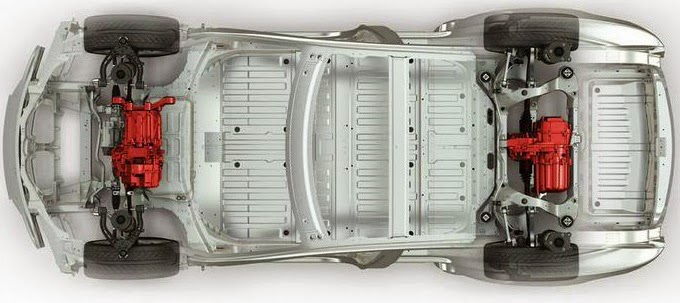
The ‘D’ stands for ‘dual’ motor, which has been achieved by mounting a second electric motor on the front axle. The technology will be available on the entry-level 60 kWh and standard 85 kWh cars as well as the top of the line P85.
This not only transforms the Model S into the fastest four-door production car in the world with a 0-100 km/h time of 3.2 seconds but also improves the vehicles energy efficiency. Maximim power for a P85+ with AWD (now renamed P85D) is 690 hp (508 Kw) with a peak torque of 930 Nm. Weight has increased to 2,238 kg but vehicle range is increased by 10 miles. Total range for the P85D is now 275 miles, with the 85D and 60D boasting 295 miles and 225 miles respectively.
With the addition of a second motor on the front axle the power split between the two motors is 221 hp at the front and and 470 hp at the rear (Tesla has tuned the existing unit, up from 416 hp). Cornering grip is also significantly higher than in the standard car, with a reported 1G of lateral acceleration achievable.
The AWD car’s performance improvements aren’t limited to raw pace. The extra motor allows the Model S to increase levels of regenerative braking, but the main benefit of having the two power units is improving efficiency at any given speed. Electric motors tend to reach maximum energy efficiency at close to full rated load. With the Tesla's rear drive motor being twice as powerful as any other EV on the market, at light loads it is not operating efficiency.
By plugging in a much smaller 163 kw / 300 Nm motor into the front axle, which is closer to the size of motor in the BMW i3, Tesla engineers can calibrate the powertrain to run the front motor closer to full rated load when the vehicle is driven at moderate speeds. As the Model S is limited to 60 Kw maximum brake regeneration, increasing brake bias towards the smaller front motor should also moderately increase brake regen energy efficiency.
Elon Musk mentioned the AWD powertrain will have torque vectoring but we expect this will be a friction brake controlled system much like in the Mitsubishi Outlander PHEV. Both vehicle use only 2 motors that drive the wheels via mechanical differentials so there is no way to control torque at each wheel individually via the motors.
These new digital AWD systems vastly improvement torque split front to rear compared to old inefficient analogue All-Wheel-Drive systems where front and rear axles are connected via a drive shaft, but they aren't quite there yet with side to side torque control.
First deliveries of the $120,170 Model S P85D are scheduled before the end of this year, with 85D and 60D variants arriving in February.


 General Motors says it will add an electric car to its lineup; BMW hires Ferrari’s chief engineer.
 Sergio Marchionne, chief of Fiat Chrysler, says the company may drastically change the Jeep Wrangler; Opel’s chief says the new European-built Buick Regal will resemble the Opel Monza concept.
Mitsubishi has introduced the Outlander PHEV Concept-S this week at the Paris Motor Show.
Likely previewing an upcoming facelift for the mid-size SUV, the concept adopts a fresh front fascia with an "X" layout and chrome accents along with LED headlights & fog lights. There's also a different grille while on the inside it has a black & burgundy color scheme with a black wood grain trim with silver accents. The center console has been designed with influences from the Japanese traditional black lacquered boxes and the cabin also comes with hand-stitched soft leather upholstery.
The Mitsubishi Outlander PHEV Concept-S is 4760mm long, 1840mm wide, 1700mm tall and has a wheelbase that spans at 2670mm. Power is provided by a plug-in hybrid system encompassing a four-cylinder 2.0-liter gasoline engine teamed up with two electric motors and a 12 kWh lithium-ion battery pack.
Just like the production Outlander PHEV, the concept can provide a total range of 547 miles (880 km) and working solely on electric power it will do 34 miles (55 km) before running out of juice. When used as a hybrid, the vehicle is capable of returning an outstanding 143.5 mpg US (172.3 mpg UK or 1.6 liters / 100 km).


Tesla Motors will unveil its Model 3, the mass-market car, and new versions of the Model S sedan at the event Oct. 9, analyst Trip Chowdhry with Global Equities Research said in a note Friday.
It is no coincidence the event is to take place in the Los Angeles area rather the San Francisco Bay Area, where the electric-car maker is headquartered: Tesla's top designer "spends almost 90% of this time in the LA Design Center," Chowdhry said.
Tesla earlier Friday said the event was scheduled for 7 p.m. at the Hawthorne airport. By showing a Model 3 prototype Tesla is also hoping to garner more attention from potential "gigafactory" investors, he added.
The new Model S versions would have all-wheel drive and semi-autonomous driver-assistance system.


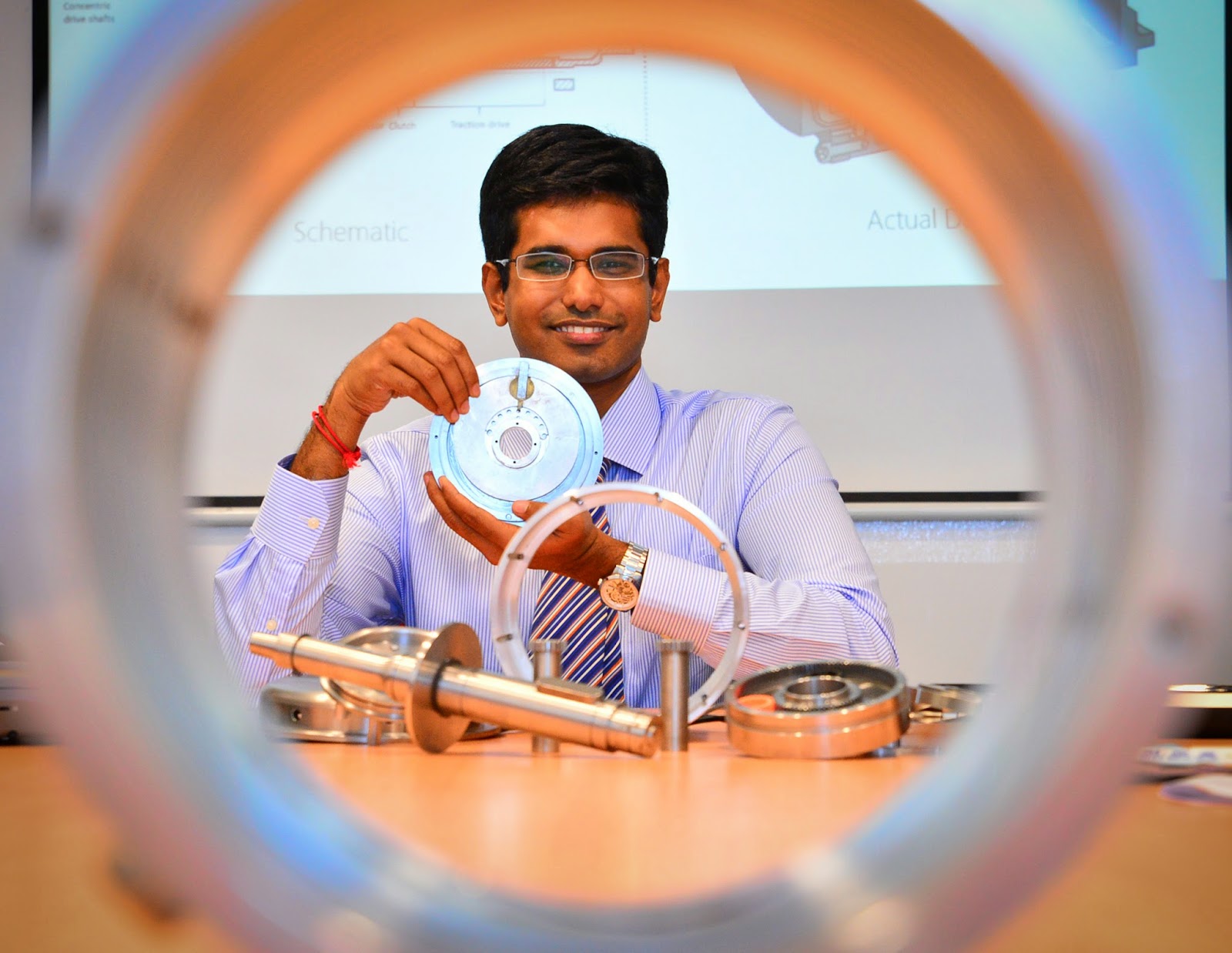
Scientists from Nanyang Technological University (NTU) and German Aerospace Centre (DLR) have invented a 2-in-1 electric motor which increases the range of electric vehicles.
This innovative engine integrates the traditional electric motor with the air-con compressor, typically two separate units. This novel, space-saving design allows the use of bigger batteries, which can increase the range of electric vehicles by an additional 15 to 20 per cent.
Prof Subodh Mhaisalkar, Executive Director of the Energy Research Institute @ NTU (ERI@N), said: “The biggest challenge with electric cars in tropical megacities is the range that they can travel on a full-charge, because their batteries are needed to power both the engine and the air-conditioning. In tropical countries like Singapore, up to half the battery’s capacity is used to power the air-conditioning system.”
The new 2-in-1 design allows the electric motor to be more efficient in powering the car’s wheels, while its integrated air-con compressor uses less power due to synergy between the engine and the compressor, which can also tap on energy regenerated directly from the car’s brakes.
With the potential boost in range through the efficient use of energy, the joint invention recently won the Best Originality Award in the TECO Green Tech International Contest held in Taiwan.
The competition saw 19 entries from top universities including Boston University, University of California (UCLA), Waseda University, and universities from China and Russia.
NTU’s partner, DLR, the German aerospace and space agency will conduct further tests and improvements to the new engine with the aim of eventual commercialisation. The team is applying for a Proof-Of-Concept (POC) grant in Singapore. After the development of the prototype, test bedding and refinements will be done at DLR’s facilities in Germany.
Prof Mhaisalkar, said this innovation will pave the way for extending the range of electric cars, as the integrated design combines the two of the most important parts of an electric car, thus reducing its complexity into one highly efficient solution.
“With the global population of electric vehicles set grow rapidly to 20 million in 2020, a more efficient electric motor cum air-con compressor, will enable cars to travel further on a single charge,” added Prof Mhaisalkar. “This energy efficiency will in turn reduce overall greenhouse emissions and promote sustainable transportation solutions.”
“This integrated design solution for air conditioning will go a long way in reducing the range anxiety of drivers, reduce maintenance costs, and will save time and money for the driver.”
For the automobile manufacturers, the new electric motor will also cost less to produce, as it requires less material than its counterparts. Both the weight and size of the electric motor are reduced, creating more space for other components such as an auxiliary battery source.
Dr Michael Schier, from DLR’s Institute of Vehicle Concepts, said: “For electric vehicles, the air conditioning uses a lot of electrical energy, thereby cutting down the range of electric cars by up to 50 per cent. To increase the energy efficiency and therefore the range of electric cars, the thermal management and the integration of additional functions into existing powertrain components play a major role.”
“By integrating the refrigerant compressor directly into the electric motor, we save components, weight and cost. Simultaneously, the more regenerative braking part of the kinetic energy is passed directly to the refrigerant compressor and thus the efficiency is further increased,” added Dr Schier.
Research scholar Mr Satheesh Kumar from the Energy Research Institute @ NTU said his award-winning, integrated electric motor challenges conventional design that goes way back to the 1960s when air-conditioning first became popular.
“Back then, air-conditioning was something new that was an add-on feature to a car’s combustion engine,” said the 29-year-old Singaporean.
“Since we are now designing electric vehicles from scratch, I see no reason why we should keep both units separate. As we have proven, combining the two gives us synergy – a more efficient use of electricity and it also improves engine braking, which stops the car faster with lesser wear on the brake pads.”
This research is part of NTU’s focus on sustainability research. Sustainable Earth and Innovation are two of NTU’s Five Peaks of Excellence, which are areas of research that the university hopes to make its global mark in. The other three peaks are Future Healthcare, New Media, and the Best of East and West.


 WIth a 5.2-liter V10 gasoline engine and three electric motors, the Asterion LPI 910-4 concept produces 910 horsepower.

The styling of the next-generation Chevrolet Volt is one of the automotive world’s best-kept secrets. Keeping customers and media eager to see the successor to the groundbreaking original at bay until the new Volt debuts at the North American International Auto Show in Detroit in January is tricky business.
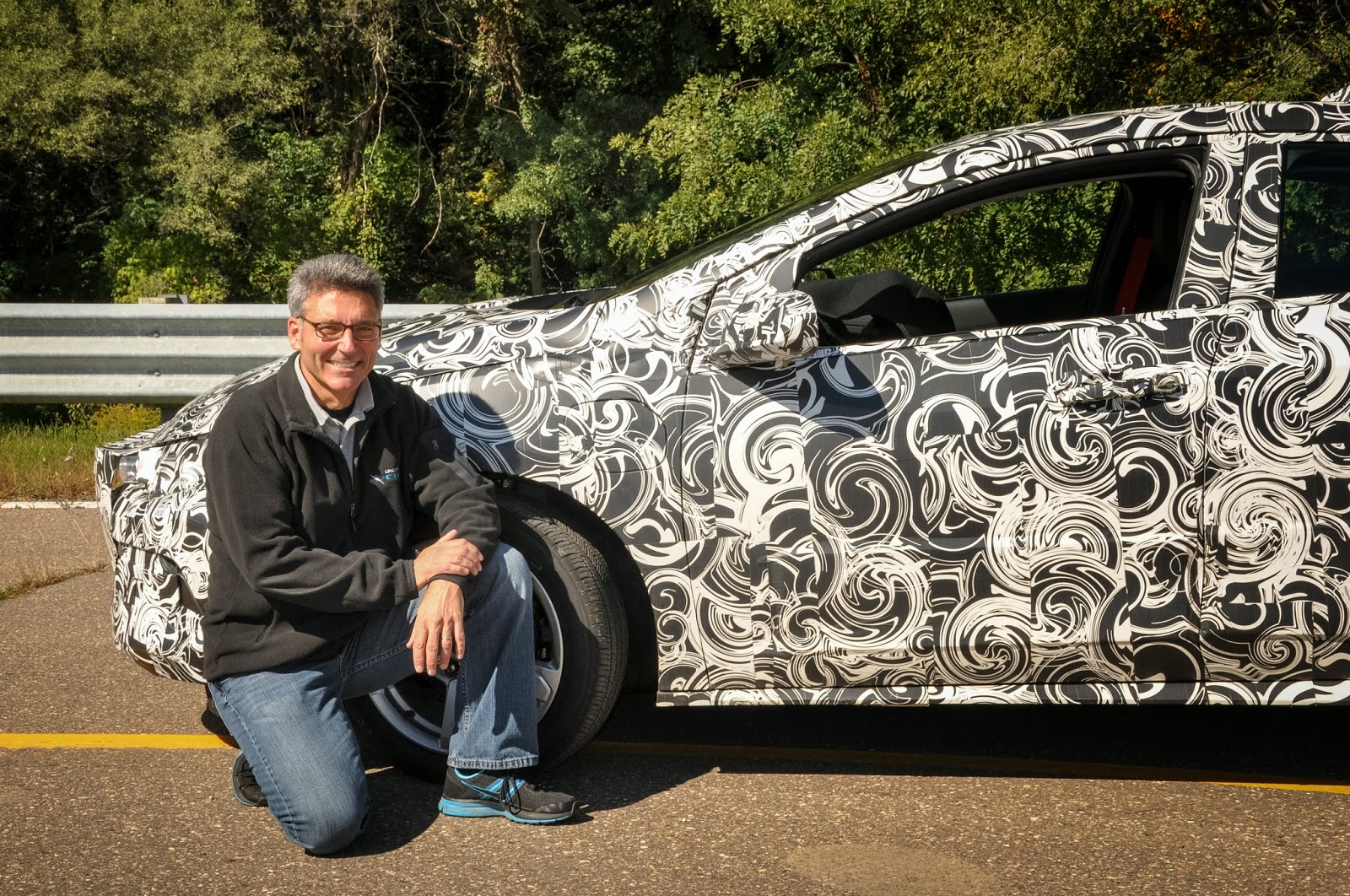
First, it is engineers, not designers, who are charged with creating camouflage that balances styling secrecy with the need to validate the Volt and its systems in public.
“If it were up to me it would be a shoebox driving down the road,” said Lionel Perkins, GM camouflage engineer. “The design team wants us to cover more of the vehicle and the engineering team needs to have enough of the vehicle’s weight and aero exposed so that the tests in the development process are consistent with the product that will come to market.”
The engineers responsible for the “cool” designs covering the car might deserve style points but their efforts are intended strictly to hide the metal beneath.
The camouflage package on the next-generation Volt was started six months in advance of early development. Every vehicle is different and tricks are constantly updated to keep spy photographers and the curious guessing.
“Each car is unique. We are like a dress maker, and the car is our model,” said Perkins. “No two models are the same. We need to make the right dress that fits the body we are dealing with.”


Consumer Reports test drives and reviews BMW i8 and Tesla Model S.


Mitsubishi Motors Corporation (MMC) will present the world debut of the Outlander PHEV Concept-S at the 2014 Paris Motor Show. The Outlander PHEV Concept-S is a concept model based on the Outlander PHEV 4WD SUV plug-in hybrid vehicle.
The Outlander PHEV Concept-S is a concept model presenting a special design package for the production Outlander PHEV. The exterior and interior design are created under "Sporty and Sophisticated" design theme. The design expresses driving pleasure by delivering powerful and agile driving performance as well as quiet, advanced and high quality driving performance provided by its Twin Motor 4WD and Plug-in Hybrid EV System.
(1) Exterior
Meant to symbolize the functionality and reassuring safety inherent to Mitsubishi Motors' SUVs, the front end design shields the Three-Diamond mark with bold chromed accent moldings on either side - a three dimensional effect - in a further suggestion of motion. Wraparound headlamps contribute themselves to a sense of dynamism sweeping gently up and outwards. This "protective theme" continues at the rear where similar symbolic chrome accents – topped by elongated combination lamps - run from tailgate to wings meant to express dynamic and innovative styling as if bracing the vehicle for better safety. The body color uses a brilliant "Platinum White" with glass flake finish.
(2) Interior
Contrary to the sparkling exterior design, the "Black & Burgundy" color scheme interior design offers a refined quality passenger compartment. In particular, Concept-S' interior design makes use of painstakingly executed detailing to express precision, quality, craftsmanship and sophistication such as:
Furthermore, the seat upholstery forms a three-dimensional surface with horizontally-ribbed cushioning providing superior fit, while the use of trimming lines is formed so as to gently follow the body contours holding occupants snugly in place.
Silver accents of the trimming lines, curving around the seat, further enhance the perceived quality of the interior.
Overall length (mm) | 4,760 |
Overall Width (mm) | 1,840 |
Overall height (mm) | 1,700 |
Wheelbase (mm) | 2,670 |
Occupants | 5 |
Powertrain | Plug-in Hybrid EV System (2 permanent magnet synchronous motors, Lithimun-ion battery (12kWh), 2.0-liter 4-cyl. DOHC MIVEC gasoline engine) |
Drivetrain | Twin Motor 4WD |
Model | No. on display | Remarks | |
Press day | Public day | ||
Outlander PHEV Concept-S | 1 | 1 | Concept car. |
MITSUBISHI Concept XR-PHEV | - | 1 | Concept car. |
Outlander PHEV | 2 | Production model. | |
Outlander PHEV | 1 | 1 | Rally car. Successful finisher in FIA Asia Cross Country Rally 2014. |
i-MiEV | 1 | 1 | |
Outlander | - | 1 | |
ASX | - | 1 | RVR or Outlander Sport in some countries. |
Space Star | - | 1 | Mirage in some countries. |
Pajero | - | 1 | Montero or Shogun in some countries. |
L200 | - | 1 | Triton in some countries. |
Total | 5 | 11 | |


A recent report from Navigant Research analyzes the global market for next-generation advanced batteries, with a focus on the current leading battery chemistry, lithium ion, and the energy storage device types that might eventually replace it.
While lithium ion (Li-ion) batteries offer many advantages over traditional battery technologies, research and development of new battery chemistries that, in many ways, surpass Li-ion is advancing rapidly and is expected to have a major impact on the battery industry in the coming years. These new chemistries are anticipated to enable even more applications for batteries, thus increasing the overall size of the battery market. Click to tweet: According to a recent report from Navigant Research, the total worldwide capacity of advanced batteries is expected to grow from 30.4 megawatt-hours (MWh) in 2014 to more than 28,000 MWh in 2023.
“The limitations to Li-ion, including input costs, safety issues, and materials scarcity, could leave it vulnerable to new chemistries that solve some or all of those problems,” says Sam Jaffe, principal research analyst with Navigant Research. “Although most of the chemistries explored in this report are only at laboratory-scale production levels today, they could reshape the market for advanced batteries in the next 10 years.”
Important emerging battery chemistries include ultracapacitors, lithium sulfur, magnesium ion, solid electrolyte, next-generation flow, and metal-air. Their advent is occurring in the context of an enormous increase in the world’s appetite for advanced energy storage devices, according to the report: Navigant Research expects that overall battery demand is expected to increase from approximately 66.2 GWh in 2014 to greater than 225.3 GWh in 2023.


 An analysis by the Union of Concerned Scientists showed that, for the majority of the country, electric vehicles are cleaner than even the most efficient hybrids.