Next-Generation Chevrolet Volt Features All-New Voltec Powertrain

When the next-generation Chevrolet Volt debuts at the North American International Auto Show in January, it will feature an all-new Voltec extended range electric vehicle (EREV) propulsion system substantially developed from Volt owners including data collected on their driving behaviors.

The Voltec system includes the battery, drive unit, range-extending engine and power electronics. The new system will be more efficient and offer greater EV range and fuel economy compared to the current generation.

"Our Volt owners truly love the EV driving experience, with more than 80 percent of all trips being completed without using any gasoline. We've used their real-world experiences to define the next generation Chevrolet Volt," said Alan Batey, head of global Chevrolet. "By putting our Volt owners at the center of what we do and leveraging our electrification engineering leadership, we've been able to raise the bar and will exceed their expectations with the new Volt."

Enhanced Battery System Capability

General Motors' industry-leading battery technology has been improved for the next-generation Volt. Revised cell chemistry, developed in conjunction with LG Chem, increases storage capacity by 20 percent on a volume basis when compared to the original cell, while the number of cells decreases from 288 to 192. The cells are positioned lower in the pack for improved (lower) center of gravity and the overall mass of the pack has decreased by almost 30 pounds (13 kg).

Approximately 20 million battery cells have been produced for the more than 69,000 Chevrolet Volts on the road today with industry-leading quality levels of less than two problems per million cells produced.

The battery system continues to use the Volt's industry-leading active thermal control system that maintains electric range over the Volt's life.

"The current generation Volt's battery has proven to provide our owners exceptional performance when it comes to quality and reliability," said Larry Nitz, executive director of GM Powertrain's electrification engineering team.

Based on a GM study of more than 300 model year 2011 and 2012 Volts in service in California for more than 30 months, many owners are exceeding the EPA-rated label of 35 miles of EV range per full charge, with about 15 percent surpassing 40 miles of range. Current generation Volt owners have accumulated more than 600 million EV miles.

"It would have been simple for us to tweak our existing battery to provide nominally increased range, but that's not what our customers want," said Nitz. "So our team created a new battery system that will exceed the performance expectations of most of our owners."

EV range estimates will be revealed in January at the North American International Auto Show in Detroit.

GM will manufacture the Volt battery pack at its battery assembly plant in Brownstown, Mich.

Drive Unit Focused On Improved Efficiency

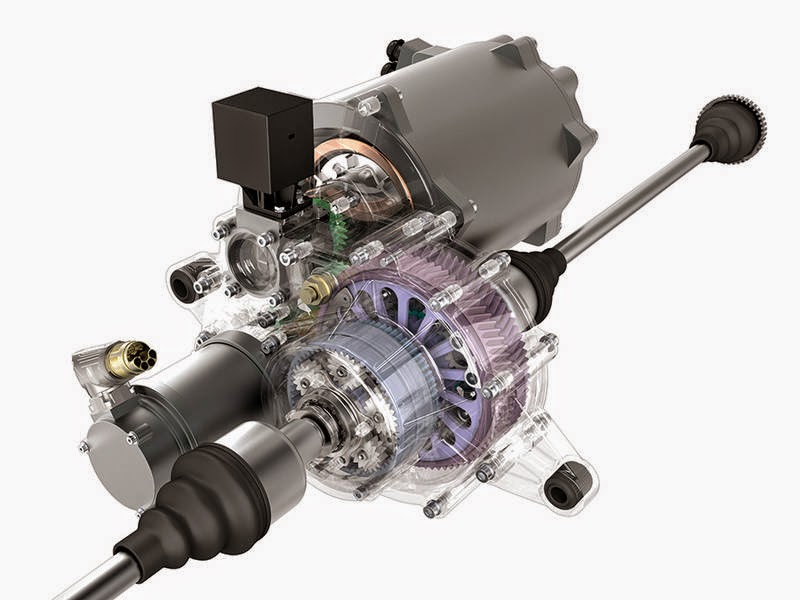
Like the battery system, the next-generation Volt's drive unit was reengineered with a focus on increased efficiency and performance, improved packaging and reduced noise and vibration characteristics. The two-motor drive unit operates approximately 5 to 12 percent more efficiently and weighs 100 pounds (45 kg) less than the current system.

The Traction Power Inverter Module, which manages power flow between the battery and the electric drive motors, has been directly built into the drive unit to reduce mass, size and build complexity while further improving efficiency.

The boost in performance comes from both motors operating together in more driving scenarios, in both EV and extended-range operation. The ability to use both motors helps deliver more than 20 percent improvement in electric acceleration. GM engineers designed the Voltec electric motors to use significantly less rare earth materials. One motor uses no rare earth-type magnets at all.

The new drive unit will be manufactured at GM's Powertrain plant in Warren, Mich.

New 1.5L Range Extender

Energy for extended-range operation comes from an all-new, high-efficiency 1.5L 4-cylinder engine. The engine features a direct injection fuel system, high-compression ratio of 12.5:1, cooled exhaust gas recirculation and a variable displacement oil pump. The Voltec range extender runs on regular unleaded fuel.

"Using the 1.5L engine as the range extender assures owners they can go anywhere, anytime without having to worry about whether they have enough power to go through the Rocky Mountains or on a spontaneous weekend getaway," Nitz said. "It's all about keeping the promise that the Volt is a no-compromise electric vehicle."

The 1.5L engine will be manufactured at GM's Toluca, Mexico engine plant for the first year of production, then shift to the Flint, Mich. engine plant.

Electric Cars No Longer a Niche in Norway [VIDEO]

Norway, rich in petroleum, is also a global leader in renewable energy use, at 98%, and that cleaner, more inexpensive electricity is helping to drive the push of electric vehicles into the mainstream market.

Roughly one in six cars sold in Norway is an EV, a whopping 15% share.

Norway has the most EVs per capita of any country, although its love for zero-emission vehicles didn’t develop overnight.

For nearly three decades, nascent support for EVs by owners and local governments has grown into national incentive schemes and a robust charging infrastructure.

Norway’s Head of the Parliamentary Committee for Energy and Environment, Ola Elvestuen, says the incentives had created the nationwide EV market.

“They took away all the taxes on electric cars and we introduced the other incentives: You could park for free, charge for free, you can use the bus lanes and toll roads for free. And slowly in the beginning, but for the last few years, it has really taken off,” said Elvestuen.

Since sales began in 2011, Nissan LEAF has become the nation’s third best-selling car with over 15,000 on Norway’s roads.

Visio.M unveil low cost 450 kg carbon fiber electric car

An attractive electric vehicle at an affordable price that provides safety and comfort combined with a reasonable driving range: that was the goal of the Visio.M project. The participating researchers at the Technische Universitaet Muenchen who put together the car in collaboration with specialists from industry are now unveiling it to the public.

More and more people are considering the purchase of an electric car. Whenever possible, it should run on renewably generated electricity. They want to conserve fossil resources and make a contribution to the environment – while playing the role of pioneers in an unstoppable trend over the next few years.

In the Visio.M collaborative project researchers at TU München, together with experts from industry have been exploring what an all-round, sporty, low-price and safe electric car might look like. The result of the undertaking, which has been funded by the German Federal Ministry of Education and Research for two and a half years to the tune of 7.1 million euro is a very small vehicle that sets new standards regarding efficiency and safety. The researchers will unveil their car to the public at the eCarTec from 21st to 23rd October 2014.

Speedy lightweight

The Visio.M has a driving range of around 160 kilometers and space for two people and luggage. With only 15 kilowatts of engine power, the car can achieve a top speed of 120 km/h (75 mph). Its design is sporty and self-confident. The features fulfill all significant requirements of a normal car, from infotainment and navigation assistance to climatization.

The electric motor draws its energy form a 13.5 kWh lithium-ion battery comprising consumer cells and is mounted behind the seats. The battery weighs almost 85 kg and can be charged from a 230 V socket in only three to four hours. The total cost of ownership, including initial investment and operating costs, will be lower than that of a comparable combustion engine car.

Decisive for the great energy efficiency of the Visio.M is its light weight. The passenger compartment is made of carbon fiber reinforced plastic with aluminum in the front and rear sections, as well as the roof frame. All windows are made of polycarbonate. This material weighs only half as much as glass but, thanks to a special coating, is equally resistant to scratches and weathering. The researchers also saved weight in chassis, steering and transmission by using special light-weight constructions. Without the battery, the Visio.M weighs only 450 kilograms.

"Light weight is essential for an electric vehicle," says Prof. Markus Lienkamp, Chair of the TUM Institute of Automotive Technology, "because more weight requires more battery performance for the same range and thus generates higher costs. More weight also means poorer driving dynamics at the same performance. But we want a car that is affordable and fun to drive."

Safety first

An all-round, mass market car must guarantee effective passenger safety. Especially in collisions with heavier vehicles, small cars must provide a safety zone in spite of their small dimensions. The passenger compartment of the Visio.M consists of an innovative, multi-section monocoque made of carbon fiber reinforced plastic combined with ultra light sandwich materials imparting it with exceptional rigidity.

In addition, the engineers have developed a safety concept that includes a systematic anticipatory analysis of the surrounding traffic. The 360° monitoring of the immediate vehicle vicinity via radar and camera sensors makes it possible to detect critical driving situations early on. This information is not used for driver assistance or warnings. When the car detects an imminent unavoidable collision it activates the integrated passenger protection systems just before the actual crash takes place.

Novel structural airbags are mounted in the bumpers and doors. Fractions of a second before a crash a gas generator fills these pressure tubes, which then act as additional absorption elements.

Adaptive seat-belt tensioners and force limiting systems reduce the forces acting on the passengers. A two-point belt combines with the normal safety belt holds the passengers firmly in their seats. When the system detects an imminent side collision, the passenger on the crash side is pulled toward the inside of the vehicle together with the seat just before the collision, thereby moving away from the immediate danger zone. The pre-acceleration of the passenger reduces the crash forces acting on the passenger and increases the effectivity of the side airbag. A potential collision between the driver and passenger is prevented by an interaction airbag mounted between the seats.

Ergonomic design

In contrast to conventional cars in which the heel of the driver is defined as a fixed point for the adjustment functions, in the Visio.M the driver's eyes serve as a fixed point. This allowed the researchers to position the safety systems and the traffic perspective optimally. The driver's seat must only be adjusted vertically. In exchange the pedals are adjustable.

Control elements for the radio, air conditioning and navigation assistance are accessible via a central touch display, which is also adjustable. The human-machine interaction consists solely of swiping gestures that can be made on the entire display. The driver does not need to hit any buttons and a quick glance is sufficient for visual orientation.

At the core of the system is an open software architecture that can be extended at any time with additional elements. This opens the door to things like accessing home music collections via cloud applications or performing compute-intensive applications like energy-efficient route planning based on current weather and traffic conditions from a central server. All kinds of premium services can be implemented in this way. In the future, for example, a rental car might be delivered to a customer's door via remote control. This concept has already been implemented experimentally.

Large driving range

Many aspects must be brought together before the vehicle can achieve a large driving range in spite of its relatively small battery. These include light weight, low aerodynamic drag, an efficient drive train, minimal rolling friction and energy-saving air conditioning. The researchers have optimized these parameters in the context of the Visio.M project. Thus the 1.55 m wide and 1.31 m high two-seater now has excellent aerodynamics. In addition to low vehicle weight, the combination of low coefficient of drag of only 0.24, small frontal area of 1.69 square meters and tires optimized for low rolling resistance (115/70 R 16) further reduce the energy consumption.

The active "torque vectoring" differential also contributes to overall efficiency: A small electric machine in the gearbox that can be operated as an electric motor or as an electric generator distributes the force optimally between the two back wheels. Because of the improved stability while braking in curves, significantly more energy can be recovered than without torque vectoring. At the same time the car becomes much more agile and safe, because of the optimal distribution of drive ad braking forces.

Energy-saving air conditioning

Special attention was paid in the Visio.M to the design of the air-conditioning and heating systems. Wherever warmth is generated, it is recovered for heating the car when required. So-called Peltier elements are integrated into both the cooling aggregate and seats. These electrothermal converters can heat as well as cool. This allows environmentally friendly operation without the use of coolant fluids. During very cold weather an ethanol-based heater can be switched on for driving range independent heating. The aggregate with a thermal performance of approx. 4.5 kW is especially useful for deicing the windscreen. An intelligent controller finds the optimal solution for energy efficient and comfortable operation of the air-conditioning system.

Electromobility for the masses

During the development of the Visio.M, the various systems were subject to numerous trials to test their functionality, safety and reliability. The result is an electric car that should find great interest, especially in industry. Prof. Markus Lienkamp is optimistic: "With the Visio.M we have demonstrated that it is possible to build a very light and at the same time safe car with overall costs that we expect to be lower than those of comparable combustion-engine cars. But it is still a long way to serial production because almost all components must be adapted to the manufacturing conditions of large series."

TU München develop torque vectoring transmission for electric vehicles

A limiting factor for the driving range of electric vehicles is the amount of energy supplied by the batteries. To recoup as much braking energy as possible, engineers at the Gear Research Center (FZG) at the TU München have developed a light-weight torque vectoring transmission for electric vehicles.

“While drive torque is normally distributed 50/50 to the wheels of the drive axle, our torque vectoring system doses the torque between the wheels as required,” explains engineer Philipp Gwinner from FZG. “This also ensures particularly good drive dynamics.” When a vehicle accelerates in a curve, greater torque is applied to the outside wheel. The car steers itself into the curve. The result: greater agility and, at the same time, safer road handling.

Recovering braking energy in curves

Even more important to the researchers, however, is the efficient recovery of braking energy. Normally, brakes convert kinetic energy into heat. So-called recuperation systems can prevent this. They work along the principle of a bicycle dynamo, which converts energy tapped from the wheel into electrical energy. In the case of electric vehicles this energy can be used to recharge the batteries, thereby extending the driving range.

Unfortunately, in curves the recuperation of braking energy is limited since the inside wheel bears significantly less load than the outside wheel. The torque vectoring function adjusts the recuperation torque for both wheels individually. This increases vehicle stability while at the same time allowing more energy to be recovered.

Less weight, lower cost

Torque vectoring transmissions are used today in select top model cars and sports cars with combustion engines. Due to their high cost and additional weight torque vectoring transmissions have not found application in electric vehicles. The aim of the researchers was, thus, to optimize the transmission for small vehicles with electric drives.

Instead of the standard bevel gears used in differential transmissions, the engineers developed a spur gear differential in which additional torque can be applied from outside via a superimposed planetary gearbox. Using a small (in comparison to the drive motor) electric torque vectoring machine they can generate a large yaw moment at any speed to achieve the desired road handling dynamics.

The housing of the first prototypes are made of aluminum. To save even more weight, the aluminum housing will be replaced by a composite case made of aluminum and a fiber-reinforced synthetic. To reduce the forces acting on the housing without increasing gear noise, which is critical in electrical vehicles, the researchers have developed a special gearing free of axial forces. This and further construction element optimizations led to a reduction in gearbox weight of more than ten percent.

“The elegant thing about the torque vectoring transmission we have developed is that it not only has a higher recuperation level, and, with that, an increased driving range,” says Professor Karsten Stahl, Director of the FZG, “the transmission also improves road handling dynamics, driving pleasure and safety. The continuously improving optimization measures leave us optimistic that in the near future both the weight and cost will be able to compete with today’s standard differential transmissions.”

Participants in the Visio.M consortium are, in addition to the automotive companies BMW AG (lead manager) and Daimler AG, the Technische Universitaet Muenchen as a scientific partner, and Autoliv BV & Co. KG, the Federal Highway Research Institute (BAST), Continental Automotive GmbH, Finepower GmbH, Hyve AG, IAV GmbH, InnoZ GmbH, Intermap Technologies GmbH, LION Smart GmbH, Amtek Tekfor Holding GmbH, Siemens AG, Texas Instruments Germany GmbH and TÜV SÜD AG as industrial partners. The project is funded under the priority program "Key Technologies for Electric Mobility - STROM" of the Federal Ministry for Education and Research (BMBF) for a term of 2.5 years with a total budget of 10.8 million euro.

Ultra-Fast Charging battery can reach 70% in only 2 minutes

Scientists at Nanyang Technology University (NTU) have developed ultra-fast charging batteries that can be recharged up to 70 per cent in only two minutes.

The new generation batteries also have a long lifespan of over 20 years, more than 10 times compared to existing lithium-ion batteries.

This breakthrough has a wide-ranging impact on all industries, especially for electric vehicles, where consumers are put off by the long recharge times and its limited battery life.

With this new technology by NTU, drivers of electric vehicles could save tens of thousands on battery replacement costs and can recharge their cars in just a matter of minutes.

Commonly used in mobile phones, tablets, and in electric vehicles, rechargeable lithium-ion batteries usually last about 500 recharge cycles. This is equivalent to two to three years of typical use, with each cycle taking about two hours for the battery to be fully charged.

In the new NTU-developed battery, the traditional graphite used for the anode (negative pole) in lithium-ion batteries is replaced with a new gel material made from titanium dioxide.

Titanium dioxide is an abundant, cheap and safe material found in soil. It is commonly used as a food additive or in sunscreen lotions to absorb harmful ultraviolet rays.

Naturally found in spherical shape, the NTU team has found a way to transform the titanium dioxide into tiny nanotubes, which is a thousand times thinner than the diameter of a human hair. This speeds up the chemical reactions taking place in the new battery, allowing for superfast charging.

Invented by Associate Professor Chen Xiaodong from NTU’s School of Materials Science and Engineering, the science behind the formation of the new titanium dioxide gel was published in the latest issue of Advanced Materials, a leading international scientific journal in materials science.

Prof Chen and his team will be applying for a Proof-of-Concept grant to build a large-scale battery prototype. With the help of NTUitive, a wholly-owned subsidiary of NTU set up to support NTU start-ups, the patented technology has already attracted interest from the industry.

The technology is currently being licensed by a company for eventual production. Prof Chen expects that the new generation of fast-charging batteries will hit the market in the next two years. It also has the potential to be a key solution in overcoming longstanding power issues related to electro-mobility.

“Electric cars will be able to increase their range dramatically, with just five minutes of charging, which is on par with the time needed to pump petrol for current cars,” added Prof Chen.

“Equally important, we can now drastically cut down the toxic waste generated by disposed batteries, since our batteries last ten times longer than the current generation of lithium-ion batteries.”

The 10,000-cycle life of the new battery also mean that drivers of electric vehicles would save on the cost of battery replacements, which could cost over US$5,000 each.

Easy to manufacture

According to Frost & Sullivan, a leading growth-consulting firm, the global market of rechargeable lithium-ion batteries is projected to be worth US$23.4 billion in 2016.

Lithium-ion batteries usually use additives to bind the electrodes to the anode, which affects the speed in which electrons and ions can transfer in and out of the batteries.

However, Prof Chen’s new cross-linked titanium dioxide nanotube-based electrodes eliminates the need for these additives and can pack more energy into the same amount of space.

Manufacturing this new nanotube gel is very easy. Titanium dioxide and sodium hydroxide are mixed together and stirred under a certain temperature so battery manufacturers will find it easy to integrate the new gel into their current production processes.

Recognised as the next big thing by co-inventor of today’s lithium-ion batteries

NTU professor Rachid Yazami, the co-inventor of the lithium-graphite anode 30 years ago that is used in today’s lithium-ion batteries, said Prof Chen’s invention is the next big leap in battery technology.

“While the cost of lithium-ion batteries has been significantly reduced and its performance improved since Sony commercialised it in 1991, the market is fast expanding towards new applications in electric mobility and energy storage,” said Prof Yazami, who is not involved in Prof Chen’s research project.

Last year, Prof Yazami was awarded the prestigious Draper Prize by The National Academy of Engineering for his ground-breaking work in developing the lithium-ion battery with three other scientists.

“However, there is still room for improvement and one such key area is the power density – how much power can be stored in a certain amount of space – which directly relates to the fast charge ability. Ideally, the charge time for batteries in electric vehicles should be less than 15 minutes, which Prof Chen’s nanostructured anode has proven to do so.”

Prof Yazami is now developing new types of batteries for electric vehicle applications at the Energy Research Institute at NTU (ERI@N).

This battery research project took the team of four scientists three years to complete. It is funded by the National Research Foundation (NRF), Prime Minister's Office, Singapore, under its Campus for Research Excellence and Technological Enterprise (CREATE) Programme of Nanomaterials for Energy and Water Management.

Toyota Hybrids hit Seven Million Sales

Toyota has posted an impressive global milestone with confirmation it has sold its seven-millionth hybrid vehicle.

Firmly established as the world's largest producer of hybrid vehicles, the tally includes 3.3 million sold in Japan, 2.5 million in the United States, 770,000 in Europe and more than 67,000 in Australia.

The latest one-million sales were achieved in record time - just nine months after Toyota (including Lexus) reached the six-million hybrid threshold in December last year, which doubled the three million total passed in February 2011. Globally, Prius accounts for almost half the overall total with 3.36 million sales - making it easily the world's best-selling hybrid vehicle.

In Australia, the locally built Camry accounts for more than half the 55,442 hybrids sold by Toyota dealers, followed by Prius with almost 19,000 sales. Local Lexus dealers have sold 12,244 hybrids, led by the CT 200h and the RX 450h.

TMC estimates its hybrid vehicles have cut carbon-dioxide emissions by approximately 49 million tonnes* and saved approximately 18 million kilolitres* of fuel compared with vehicles of similar size and driving performance using petrol-only engines.

Toyota began selling the Prius in the Japan in 1997 and in Australia in 2001. Camry Hybrid has been built and sold in Australia since 2010 while the Prius was expanded into a family of three vehicles in 2012 with the addition of the Prius c city car and the Prius v seven-seater.

Over the 17 years since the first Prius was launched, Toyota has endeavoured to encourage the mass-market adoption of hybrid vehicles, which use less fuel and emit fewer tailpipe emissions than equivalent petrol-only models. Toyota has positioned hybrid and its related developments as core technologies for the 21st century. The company therefore plans to continue working to enhance performance, reduce costs and expand its product line-up to create vehicles that are popular with consumers.

Toyota's hybrid sales - Australia 

Camry
28,537
Prius
18,972
Prius c
5,514
Prius v
2,419
TOYOTA
55,442
LEXUS
12,244
TOTAL
67,686

(Source: VFacts as at September 30, 2014)

Toyota's hybrid vehicle chronology

Year
Month
Milestones
1997
Mar
Unveiling of the Toyota Hybrid System (THS)
Dec
Prius launched in Japan
2000
Nov
Cumulative Prius sales top 50,000 vehicles
2002
Mar
Cumulative hybrid vehicle sales top 100,000 mark
Aug
Cumulative Prius sales top 100,000 vehicles
2003
Apr
Unveiling of the Toyota Hybrid System II (THSII)
Sep
Prius completely redesigned
2005
Oct
Cumulative hybrid vehicle sales top 500,000 mark
Dec
Prius production begins in China
2006
Apr
Cumulative Prius sales top 500,000 vehicles
May
Camry Hybrid launched
2007
May
Cumulative global hybrid vehicle sales top one-million mark
2008
May
Cumulative Prius sales top one million vehicles
Jun
Hybrid Camry production announced for Australia and Thailand
2009
May
Third-generation Prius launched (July in Australia )
Aug
Cumulative global hybrid vehicle sales top two-million mark
Dec
Hybrid Camry production commences in Australia
2010
Feb
Locally produced Hybrid Camry goes on sale in Australia
Sep
Cumulative Prius sales top two million vehicles
Dec
Annual Prius sales in Japan of 315,669 - a record for any vehicle
2011
Feb
Cumulative global hybrid vehicle sales top three-million mark
Dec
Production of third-generation Prius commences in China
2012
Feb
Completely redesigned Camry Hybrid launched in Australia
Mar
Prius c launched in Australia
Apr
Cumulative global hybrid vehicle sales top four-million mark
May
Prius v launched in Australia
Oct
Global hybrid sales top one million in a year for the first time
2013
Mar
Cumulative global hybrid vehicle sales top five-million mark

Jun
Cumulative Prius sales top three million vehicles

Dec
Cumulative global hybrid vehicle sales top six-million mark
2014
Sep
Cumulative global hybrid vehicle sales top seven-million mark

Carnegie Mellon To Develop Electrolyte Genome Search Engine for Battery Development [VIDEO]

Venkat Viswanathan, assistant professor of mechanical engineering at Carnegie Mellon University, is developing a search engine that will help researchers and industry experts discover and develop electrolytes for batteries more quickly and efficiently than currently possible.

Viswanathan, who is researching new types of lithium batteries for electric vehicles, realized how slow and inefficient it is to search for specific information on the different components. "You have to go read through multiple charts or go through handbooks to get to that information, and then try to discover something that will actually work," Viswanathan says.

Viswanathan was inspired to find a solution to this problem by President Barack Obama's first announcement of the Materials Genome Initiative. Making the announcement at Carnegie Mellon in 2011, he called upon scientists and engineers to help discover and produce new materials faster and in more cost-effective ways by creating and using a massive database of information on industry materials.

While the Materials Genome Initiative is intended for a broad spectrum of industry applications, Viswanathan is currently focused on developing a data genome for electrolytes. Electrolytes consist of salt and a solvent, and are essential in lithium ion batteries because they serve as the channel that moves the lithium ions, which store the energy. Charged ions must be moved from one side of the battery, and when they are charged, back to the other side, where they can be consumed. Finding electrolytes that work is currently one of the major barriers to developing more energy-dense storage solutions for consumer use.

Using a search engine similar to social networking sites Facebook and Yelp, scientists and researchers can use the electrolyte genome to enter the beginning of queries and receive suggestions about what they might mean, similarly to how when you type "Sara" into your Facebook search, the people named Sara who are your friends are the top suggestions. It also can handle queries with "and," such as if you type in "Sara" AND "Boston" to discover Saras who live in Boston. While this sounds common for everyday users, it is novel for very technical organic chemistry searches.

The search engine is robust enough to help users come up with ideas, such as if a researcher is trying to think of a certain set of desired attributes for a solvent but cannot quite precisely state it — like how you might be trying to think of a word on the tip of your tongue, but can only remember it starts with a certain letter and means something similar to another word.

In the future, users will be able to seamlessly merge data graphically to get more complex information such as correlations between various properties of solvents or between different solvents. This is similar to the search engine Wolfram Alpha, which, should a user type in "GDP of China and India," will provide the users not only with the countries' current GDPs but also with a graph detailing how their GDPs have increased over time, among other relevant facts.

The ability to access this in-depth level of information would result in faster and more successful testing of new materials, ultimately allowing researchers and businesses to get products from concept to marketplace more quickly.

Viswanathan's electrolyte genome project is tailored for expert users who are looking for complex information, such as electrochemical and chemical properties, and highest occupied molecule orbital (HOMO) level of solvents, but he hopes to eventually expand the project to be accessible to the general public and to other kind of solvents beyond organic solvents. The data genome search engine would support a wide range of querying options, from complicated searches by experts to simple searches by general users who are looking for information unavailable outside of print materials or who just want to see the capability of the data genome.

To test Viswanathan's electrolyte genome project, visit: http://www.andrew.cmu.edu/user/venkatv/SEED.html.