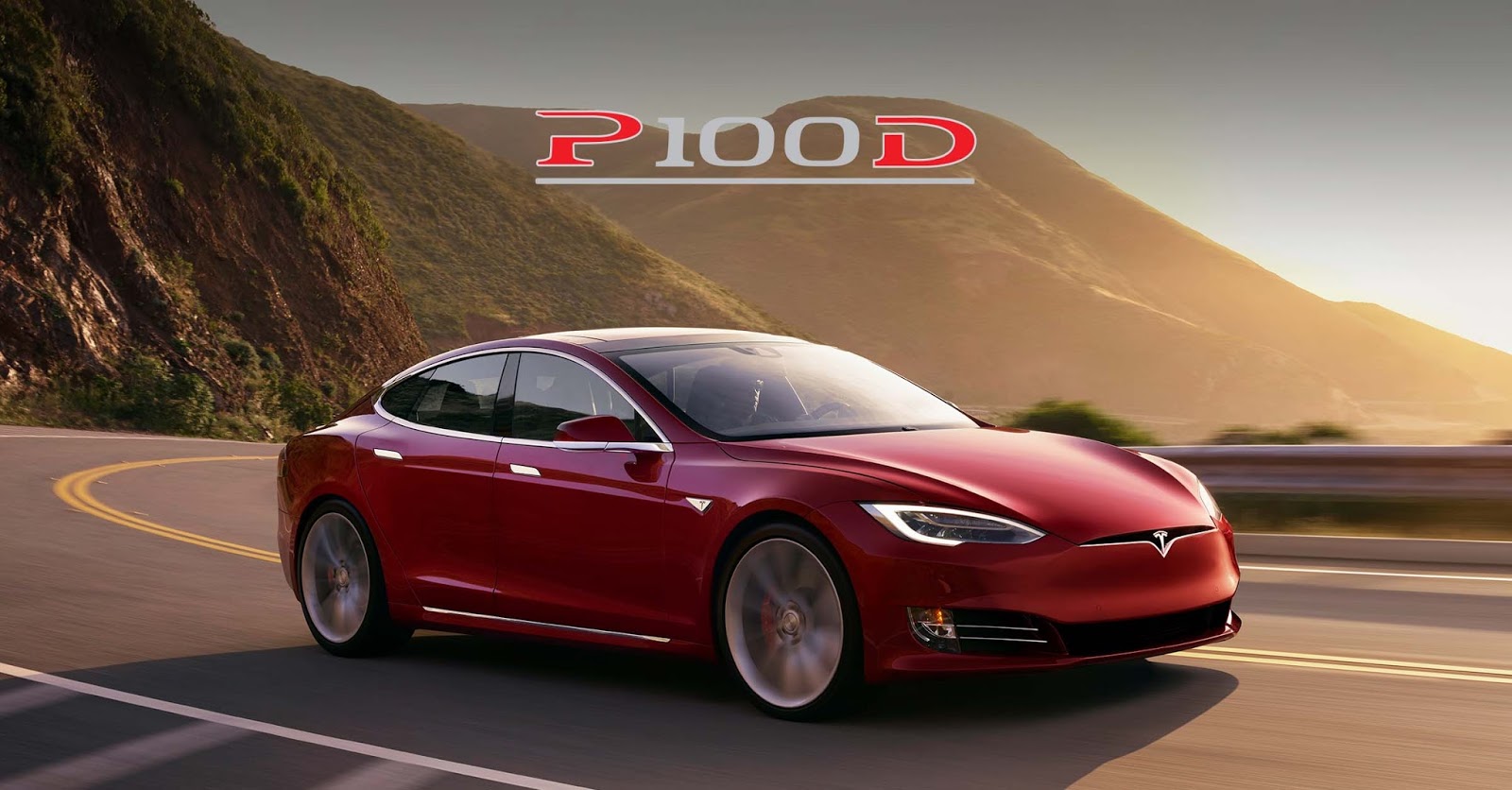
Tesla Model S P90D Ludicrous Refresh now a match for Rimac [VIDEO]

Following Rimac's recent video of their Concept One achieving 0-100 km/h in 2.6 seconds, it seems Tesla have that covered.

Drag Times recently tested a refreshed Tesla Model S P90D Ludicrous where the 5 door sedan ran 0-60 MPH just 2.6 second.

Sure, 60 miles per hour is only 96 kilometers per hour but it's close enough to make no difference.

A leading theory is that those vehicles already feature software-limited 100 kWh battery packs capable of higher power outputs.

Others speculate that Tesla developed new battery pack parts, like it did for the Ludicrous upgrade (new contactor and fuse), in order to optimize the upcoming 100 kWh pack and it introduced those parts in the existing packs before the release of the new one.

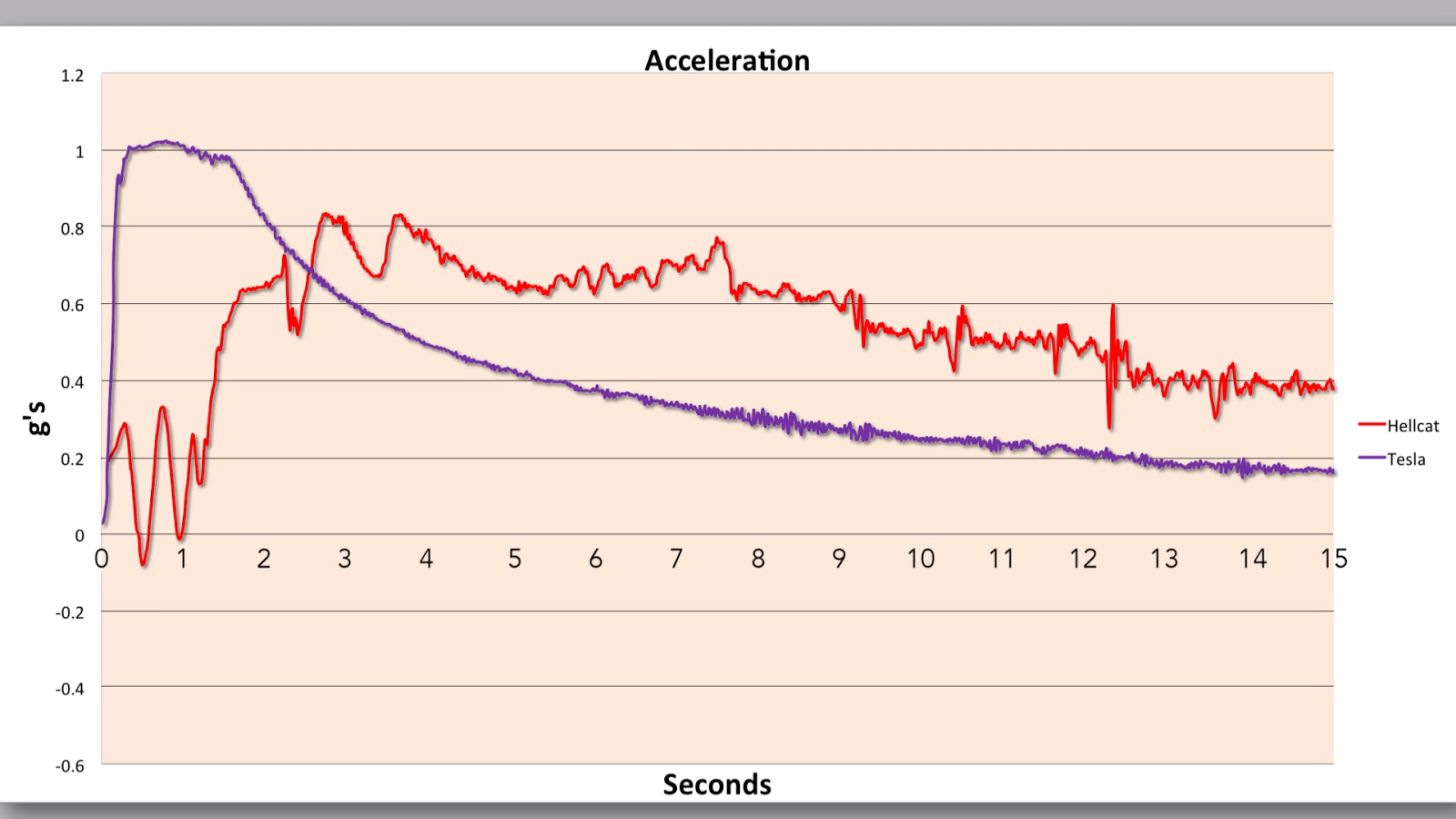
3 phase AC Induction motors, as used by Tesla, can withstand huge 'peak' performance in short bursts. Most of the mind numbing acceleration happens within the first second, as can be seen in the graph below. The P90DL leaps to 1.35g within the first 0.5 sec and maintains 1g+ for 1.5 seconds. The old P85D achieved a peak of 1.05 g for 1.2 second.

Driven | 2016 Toyota Prius

Toyota has been promising better handling with its cars, and it has delivered with the fourth-generation Prius. While it still does not look like a conventional car, the Prius now handles more like one.

First Tesla Autopilot fatality brings beta-testing into question

As has now been widely reported, a fatal accident involving a Tesla Model S on Autopilot and a tractor-trailer happened last month in Florida killing the Tesla driver at the scene.

The Tesla was on a divided highway with Autopilot engaged when a tractor trailer drove across the highway perpendicular to the Model S. The explanation given by Tesla is that neither the Autopilot nor the driver noticed the white side of the tractor trailer against a brightly lit sky, so the brake was not applied. The high ride height of the trailer combined with its positioning across the road caused the Model S to pass under the trailer, impacting the windshield of the Model S and removing the entire roof section of the vehicle killing the driver instantly.

Facts gathered from video reports at the scene and eye witness accounts of the accident:

  • The posted speed limit was 65 mph
  • Another motorists witnessed the Model S travelling well in excess of 85 mph.
  • The intersection was over a slight crest in the direction the Model S was travelling.

    While it was a long straight section of road, travelling at very high speed on a road with a high number of level intersections increases the risk of a collision significantly (hence the relatively low posted speed limit) The slight crest would also have hindered the visual range for both drivers.

    It seems quite reasonable to expect that the investigation will conclude the primary cause of the accident was excessive speed by the Tesla driver. Records obtained by The Associated Press show the Tesla driver Joshua Brown was cited for speeding seven times in Ohio between 2010 and 2015 and once in Virginia.

    Mobileye, an Israel-based tech company developing some of the technology behind Tesla’s Autopilot, issued a Statement on Fatal Tesla Model S Autopilot Crash:

    "We have read the account of what happened in this case. Today's collision avoidance technology, or Automatic Emergency Braking (AEB) is defined as rear-end collision avoidance, and is designed specifically for that. This incident involved a laterally crossing vehicle, which current-generation AEB systems are not designed to actuate upon. Mobileye systems will include Lateral Turn Across Path (LTAP) detection capabilities beginning in 2018, and the Euro NCAP safety ratings will include this beginning in 2020."

    But now Tesla and Mobileye disagree on lack of emergency braking with Tesla issuing the following statement:

    "Tesla’s autopilot system was designed in-house and uses a fusion of dozens of internally- and externally-developed component technologies to determine the proper course of action in a given scenario. Since January 2016, Autopilot activates automatic emergency braking in response to any interruption of the ground plane in the path of the vehicle that cross-checks against a consistent radar signature."

    This seems to be a rebuke to Mobileye, a supplier of some technology used in the Autopilot and other driver assistance systems in the Model S. The Mobileye system is not designed for Lateral Turn Across Path (LTAP) detection and the Tesla part of the system failed because "the high, white side of the box truck" — that apparently failed to cause an interruption of the ground plane as mentioned above — "combined with a radar signature that would have looked very similar to an overhead sign, caused automatic braking not to fire."

    Either way, it seems clear that Tesla's Autopilot public beta testing needs to be restricted to use on roads without intersections (e.g. expressways) until 2018 when LTAP capability becomes available and the system can deal with lateral traffic!

    This fatal accident is an auto industry nightmare come true and has brought the whole issue of beta testing automotive road safety features with the general public into question. Many in the automotive industry have criticised Tesla from former Google scientist Andrew Ng calling them "irresponsible" to Volvo’s research and development chief, Dr. Peter Mertens, saying "“Anyone who moves too early is risking the entire autonomous industry"and Jaguar XF project manager Stephen Boulter saying "If something happens [with Autopilot], it could set the technology back a decade" while BMW CEO, Harald Krüger said "We can offer automated driving on the motorway up to 120 kilometers per hour,” to which he continued “But our technology must be 100 percent reliable."

    The Silicon Valley business model is built on shipping buggy beta code. "Move Fast and Break Things" is the motto over at Facebook while 100s of millions of Apple iPhone owners have updated iOS only to have to install a bug-fix patch a few days later. This kind of approach clearly does not translate well to the automotive industry where, as we saw with Toyota's unintended acceleration crisis that resulted in the deaths of 89 people, 400 wrongful-death and personal injury cases and cost the company more than $2.5B in criminal penalties and class action settlements, buggy code in cars can kill people, and the automaker is rightfully held liable!

  • Tesla consider LG, Samsung & SK for Model 3 battery supply

    Tesla Motors is approaching LG Chem, Samsung SDI and SK Innovation as part of its strategy to diversify its battery-sourcing channels beyond Japan's Panasonic.

    LG Chem is expected to win the Tesla business thanks to its output commitment, good pricing and on-time delivery. A solid partnership with LG Display could also help LG Chem. The company previously supplied batteries for Tesla's Roadster model, though the volume it shipped was "small."

    "Tesla intends to use more Korean technology on its Model 3. It decided to use tires manufactured by Hankook Tire and LG Display will possibly be supplying its OLED panels for the automotive systems. Additionally, Tesla is testing the manufacturing capability and production of LG Chem, Samsung SDI and SK Innovation," said an official, Tuesday.

    Tesla executives recently visited key research centers at LG Chem, Samsung SDI and SK Innovation, holding working-level meetings with all of them.

    An LG Chem spokesman said the largest battery supplier in the world has no official comment about its business with specific clients. Samsung SDI said it has no authority either to confirm or to deny business deals with its major clients. SK Innovation wasn't available for comment.

    The Model 3 electric vehicle is faster, cleaner, more reliable and has better handling; while its entry price will start at around $35,000, cheaper than many competing gas powered cars.

    Because of those factors, market analysts and officials say that the Model 3 "should be a game changer" at an affordable price point.

    They said the Model 3 will drive the "third wave of adoption" in the electric vehicle industry. This third wave will finally attack the majority "mainstream and economically attractive" segment and it's been expected that others will follow including the GM Chevy Bolt, which should help propel EVs to the real tipping point of mass adoption.

    "This is why LG Chem, Samsung SDI and SK Innovation all are keenly interested in boosting their tie-up with Tesla. The three Korean battery manufacturers can't afford to lose the new business given the Model 3's impressive initial responses from customers," said another official.

    Tesla plans to produce up to 500,000 electric vehicles by 2018. The Model 3 will be available in 2017, at the earliest. The company has received 400,000 pre-orders.

    Currently, Japan's Panasonic is the exclusive battery partner with Tesla, supplying 18650 batteries as these are more economical and easier to mass produce.

    Both LG Chem and Samsung SDI are also manufacturing 18650 cells.

    Although LG is pushing the pouch-type battery as its mainstream product with Samsung SDI focusing on the rectangular-type battery, sources who are involved with the issue say Tesla may use LG and Samsung's mainstream technologies to keep adequate inventory levels as it's been widely expected the supply for the Model 3 will remain tight.

    Tesla Model X vs Model S P90D 1/4 Mile Drag Race [VIDEO]

    Watch the all new Tesla Model X P90D Ludicrous race the Model S also with Ludicrous in an all out drag racing shootout.

    The Model X P90D with the $10,000 Ludicrous Mode runs 11.61 @ 116 MPH in the 1/4 mile setting a new world record for the quickest production SUV/CUV. 0-60 MPH came up in just 3.1 seconds. The Model S ran 11.3-11.5 @ 116 MPH.

    Source: Dragtimes

    26-Year-Old Hacker Builts a Self-Driving Car…for Tesla.. in His Garage [VIDEO]

    Tesla's Autopilot uses hardware from both Mobileye and Nvidia to control the Model S on highways. Apparently Tesla would like to discontinue using Mobileye’s system in favor of bringing it in-house, according to an email exchange between Tesla CEO Elon Musk and George Hotz, a software engineer mainly known for being the first person to jailbreak the iPhone.

    A report by Bloomberg's Ashlee Vance would have us believe 26-year old hacker George Hotz has built a self-driving car from scratch in a month. Unfortunately for this urban myth, it's fairly obvious the 2016 Acura ILX he's using isn't a random choice.... Honda have offered Adaptive Cruise Control with Lane Assist since 2013.

    AcuraWatch Plus is a basic $1300 option available on this car that provides Adaptive Cruise Control, Lane Keeping Assist, Collision Mitigation Braking & Road Departure Mitigation.. So this Honda can do what he's demonstrating off the showroom floor.

    A more accurate description of Hotz's work is "reverse engineering".

    Tesla Model S is the Fastest Selling Electric Vehicle in NSW

    Nissan is celebrating 5 years of the LEAF and Tesla Australia is celebrating 1 year in Australia. With the upcoming New year I thought it would be good to look back at the history of electric vehicles in NSW.

    Growth

    Lets look at growth in NSW Tesla don’t share their data with VFACTS, the industry body for new car sales reporting but RMS/RTA do keep registration statistics on how many cars of a particular brand are sold and what type of fuel they use. Using those statistics we can look at how many “pure electric” vehicles are on the road in NSW. The first production EV was the Mitsubishi i-MiEV launched in 2010 before then the 44 or so vehicles registered as electric with the RTA/RMS where most likely conversions.

    What’s included in this count? RMS count petrol/electrics separately so this count doesn’t include plug-in hybrids like the Outlander PHEV, Holden Volt or BMW i3 Rex. What it does include is listed below with their official release dates.

    Release Dates :

  • 2010 August Mitsubishi i-MiEV (Limited selective client release)
  • 2011 August Mitsubishi i-MiEV (source: MMAL Press release )
  • 2012 June Nissan LEAF (source: Nissan Press release )
  • 2014 December BMW i3 (excluding the REX hybrid version)
  • 2014 December Tesla Model S (The amount of registered Tesla’s is shown in red)

    Performance

    If we look at registrations since 3rd Quarter 2011 when electric vehicles began sales to the general public we see 524 registrations to date at a rate of 33 vehicles per quarter. Breaking it down further we see three district rates of registrations:

  • 2009-2011 – 7.8 Registrations per quarter.
  • 2012-2013 – 28.5 Registrations per quarter.
  • 2014 Q1-Q3 – 5.3 Registrations per quarter.
  • 2014 Q3-2015 Q3 – 66.5 Registrations per quarter.

    With the release of Tesla Model S we see Tesla alone contribute 52.5 Registrations per quarter, all other makes and models only managing 14 per quarter since 2014. The best performing quarter is the fourth quarter of 2014 with 87 registrations 65 Tesla 22 others. The worst performing quarter since the release of the i-MiEV first quarter of 2014 with only 4.

    Insights

    Tesla has landed on our shores and has been welcomed with open arms with the fastest “selling” electric vehicle in NSW. Nissan/Mitsubishi was a steady seller until 2014. However Nissan have not released an updated model since 2012 in Australia, maybe it’s time for a new model LEAF that sell overseas. Mitsubishi also no longer have i-MiEV at dealerships, concentrating their efforts on the Outlander PHEV.

    In terms of charging standards we’ve seen Tesla enter with their own version of a type 2 socket which is Mennekes type 2 compatible. Where as everyone else has been type 1 J1772 it’s a bit hard to gauge a direction while 30% of pure electric vehicles are Tesla we don’t have accurate numbers for other type 1 J1772 plug-in vehicles like the Holden volt, Audi a3 e-tron Mitsubishi Outlander PHEV, BMW i3 REX, BMW i8 and the hybrid offerings from Porsche.

    Over the last year we’ve seen a significant growth in electric vehicles, installing a type 2 socket universal charging station to suit all vehicles at your office, shop, restaurant, church or sports field will further enhance the growth of electric vehicles.

    Source: Recharging NSW

    reproduced with permission

  • Tesla Model S P85D 0-100km/h & motor sound [VIDEO]

    No other car currently on the market is able to capture the curiosity of the greater public like the Tesla Model S P85D. It is a means of transport like no other, breaking a few world records in the process.

  • 2015 Tesla Model S P85D
  • Dual electric motors
  • 193kW + 375kW and 967Nm
  • Single-speed, all-wheel drive
  • 0-100km/h in 3.4 seconds (as tested)
  • Tesla Model S P85D Versus a Bathurst spec Holden V8 Supercar [VIDEO]

    Perfectly timed for the world famous Bathurst 1000 endurance race this coming weekend at Mt Panorama, the guys at CarAdvice.com have set up the ultimate drag race.

    It's the world's fastest four-door sedan, the Tesla Model S P85D, against Australia's fastest four-door sedans, the Supercheap Auto Racing Holden Commodore V8 Supercar and the Walkinshaw Performance W507 HSV GTS.

    The Tesla Model S P85D rockets from 0-100km/h in just 3.3-seconds, while the V8 Supercar does it in 3.4-seconds, but weighs just 1400kg with the driver.

    Tesla Model S P85D Versus a Bathurst spec Holden V8 Supercar [VIDEO]

    Perfectly timed for the world famous Bathurst 1000 endurance race this coming weekend at Mt Panorama, the guys at CarAdvice.com have set up the ultimate drag race.

    It's the world's fastest four-door sedan, the Tesla Model S P85D, against Australia's fastest four-door sedans, the Supercheap Auto Racing Holden Commodore V8 Supercar and the Walkinshaw Performance W507 HSV GTS.

    The Tesla Model S P85D rockets from 0-100km/h in just 3.3-seconds, while the V8 Supercar does it in 3.4-seconds, but weighs just 1400kg with the driver.

    Tesla’s Model X ‘Signature’ with 762 hp starts at $132,000

    Some future buyers of Tesla Motors Inc.’s Model X are configuring their vehicles this week, as details about the electric-car maker’s much-awaited SUV emerge.

    Among the highlights: A Model X “Signature” edition will cost $132,000 and as much as $144,000 with upgrades such as the “ludicrous speed” mode. The car will be able to go 385 km (240 miles) between charges, 7 miles more than a Model S P85D, the sedan’s top of the line, which starts at $108,000 but can also go north of $140,000 with upgrades.

    With AWD via a 190 kw (259 hp) front motor and 370 kw (503 hp) rear motor giving an 'insane' total output of 560 kw (762 hp), the Model X Signature can accelerate to 100 km/h (60 mph) in 3.8 seconds, a tad slower than the Model S P85D’s 3.1 seconds. The Model X top speed of 155 mph is the same as the Model S P85D and others.

    Tesla fans have posted several screenshots of their invitation-only Model X configuration Web pages on the Tesla Motors Club blog, a forum for Tesla enthusiasts that is independent of the company.

    These future Model X owners were the first to put down a deposit on the Model X, which is expected to roll out of the Fremont, Calif., factory on 29th September. People reserving their Model X now would get the car in early 2016.

    Here’s what else is known about the Model X:

    The car’s rear-door falcon wings, which differ from the gull wings of yesteryear as they are better at negotiating tight spaces, will have sensors so they won’t bump into ceilings.

    Accessories like a hitch for bikes or skis are standard. Also standard are parking sensors and blind-spot warning.

    The Signature series will offer autopilot with self parking and automatic lane steering, and flat-folding third-row seats. The series’ second-row seats — which Tesla Chief Executive Elon Musk called “a sculptural work of art” — will be “independently operable,” although it is not clear what that meant.

    See also: Tesla lower deliveries forecast irks Wall Street

    The $10,000 “ludicrous” speed upgrade is also available for the Model X, as Musk had said. Other upgrades include a $1,000 subzero package, which comes with a heated steering wheel and a wiper-blade defroster, among other equipment, although Tesla warns that choosing that package could delay the car’s delivery by a month.

    Those upgrades plus a $750 tow package push the price of the Model X Signature to $144,000.

    Consumer Reports Tesla P85D Test Results [VIDEO]

    Consumer Reports put the electric Model S P85D through the same tests other cars undergo at its track as part of its overall assessment of Tesla's performance sedan.

    Watch the above video to see how it fared in three key tests, along with its fuel efficiency figure.