Victory for Renault ZOE on the 2014 ‘Rallye Monte-Carlo ZENN’ [VIDEO]

The prestigious Rallye Monte-Carlo ZENN saw Renault ZOE overcome horrendous weather conditions to celebrate its international competition debut with an emphatic outright win and victory on all four regularity tests.

  • 1st overall, Rallye Monte-Carlo ZENN,
  • 1st, regularity prize,
  • 1st, energy consumption prize,
  • 1st, autotest,
  • 1st, Teams' challenge.

    The Rallye Monte-Carlo ZENN (Zero Emission, No Noise) is the "greenest" segment of the Monte-Carlo New Energies Rally, the event is open only to electric vehicles. The fifth edition is holding from March 21 to 23, 2014 in Monaco and featured three special stages ranging from 46.51km to 88.08km in length. These stages were divided into a total of four regularity tests.

    The roads visited by the event included the breath-taking, twisty runs from La Turbie to Peille and from Sainte Agnès to La Turbie, high above the Mediterranean coast. Participants had to contend with a combination of torrential rain and fog on the busiest day (Saturday, March 22) which featured two special stages divided into three regularity tests. Action concluded with an autotest on the harbour-side in Monaco. 

    Almost two years after ZOE established a new 24-hour electric vehicle distance world record (1,618km) in June 2012, last weekend saw the all-electric hatchback's first attempt at the Rallye Monte-Carlo ZENN provide further eloquent evidence of its technical and dynamic qualities by securing every one of the five trophies that were up for grabs.

  • Formula E full-power track test [VIDEO]

    Former F1 driver Jarno Trulli test drives the new Formula E car in France.

    The Italian drove the fully-electric single-seater featuring the full 200kw (270bhp) race-mode battery in mid-March 2014.

    Toyota begin testing Yaris hybrid WRC car

    Toyota are testing their Yaris WRC car this week. The Toyota Yaris WRC prototype, powered by a 1.6-litre turbocharged engine (as dictated by world rallying’s rules), built at Toyota Motorsport in Cologne, Germany will begin testing in Tuscany.

    It is thought that the test car is based on a Yaris chassis but the final WRC car will be based around a new model which has yet to be launched.

    Toyota wants to use hybrid technology in the World Rally Championship if it returns to the series and although the Japanese car giant has expressed an interest in returning to the WRC – in which it won four drivers’ titles and three constructors’ crowns with the Celica GT-Four and the Corolla WRC during the 1990s – it has so far stopped short of committing to a competitive return.

    Formula One: 2014 Rules Explained [VIDEO]

    )

    A new clip from Red Bull sees Daniel Ricciardo and Sebastian Vettel explain the 2014 Formula One regulations, arguably the most complex the sport has ever seen.

    The CGI based Red-Bull promotional video gives a cut-away look at the new hybrid systems used this year in F1 that we covered in more detail last year.

    The first race of the 2014 Formula One season is on this weekend in Melbourne Australia.

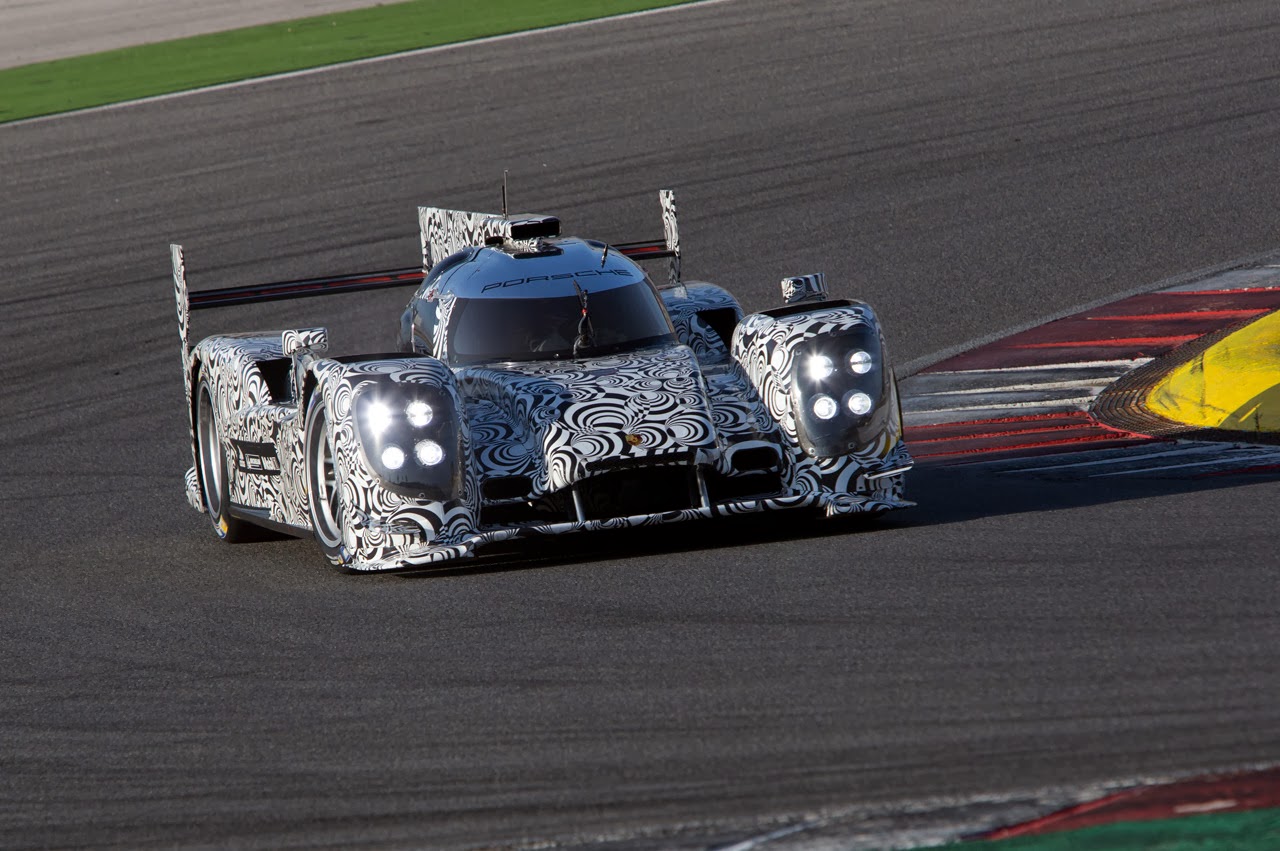
    Porsche Launch 919 Hybrid LeMans Racer @ Geneva

    At the Geneva International Motor Show, the new Porsche 919 Hybrid is celebrating its world premiere for the top class of the 2014 World Endurance Championship (WEC). The hybrid prototype will enter all eight races of the WEC, whose season highlight will be the 24 hours of Le Mans.

    Matthias Muller, Chairman of Porsche AG: "Crucial in the development of the Le Mans prototype were the newly created and revolutionary racing rules for this class as they relate to energy efficiency. In 2014, it will not be the fastest car that wins the World Endurance Championship series and the 24 hours of Le Mans, rather it will be the car that goes the furthest with a defined amount of energy. And it is precisely this challenge that carmakers must overcome. The 919 Hybrid is our fastest mobile research laboratory and the most complex race car that Porsche has ever built."

    The high efficiency of the Porsche 919 Hybrid is the result of a balanced overall concept. From the combustion engine to the energy recovery systems, suspension and chassis, aerodynamics and driver ergonomics, the sum of the components form an incredibly efficient unit for maximum performance. The drive system is based on a 4-cylinder gasoline engine that is compact and lightweight. The 2.0 liter V-engine is a structural component of the chassis, and reaches a maximum engine speed of approximately 9,000 rpm. It features direct injection, a single turbocharger and thermodynamic recovery capabilities. The compact unit outputs around 500 hp.

    Two different energy recovery systems harness energy to replenish the batteries and provide power. The first system is the innovative recovery of thermal energy by an electric generator powered by exhaust gases. The second hybrid system is a motor on the front axle utilizing brake recuperation to convert kinetic energy into electric energy. The electric energy is then stored in water-cooled lithium-ion battery packs and when the driver needs the stored power, the front motor drives the two front wheels through a differential during acceleration. This gives the Porsche 919 Hybrid a temporary all-wheel drive system, because the gasoline engine directs power to the rear wheels, just like the 918 Spyder.

    A new Porsche team of over 200 employees was formed to develop and implement the development center in Weissach. Friedrich Enzinger, Head of LMP1: "Within two and one half years we built the infrastructure, assembled our team and put this highly complex race car on wheels. We have the greatest respect for the lead our competitors have in racing experience. Our objective in the first year is simple: to finish races and be competitive."

    Romain Dumas (France), Neel Jani (Switzerland) and Marc Lieb (Germany) will share driving duties in the Porsche 919 Hybrid with number 14. Car number 20 will be driven by Timo Bernhard (Germany), Brendon Hartley (New Zealand) and Mark Webber (Australia).

    Drayson Racing B12 winter tests continue at Silverstone

    Drayson Racing ran its World Electric Land Speed Record-breaking Drayson B12/69 EV for the first time this year at Silverstone, as its winter test programme continues to develop the world’s most advanced electric-powered racing car.

    The aim of the latest test was to try a variety of new motor cooling options and traction control settings – and the extremely wet track conditions were ideal for gathering valuable wheelspin data from the B12’s one thousand data channels.

    This time running the B12 with reduced aero and power, test driver Jonny Cocker recorded the same lap time around the Silverstone National Circuit as he’d achieved at a test before Christmas, when the prototype ran in full downforce specification and with full power.

    Standing water prevented the B12 reaching its top speed of 220mph, but the pioneering Drayson Racing Technologies technical team were delighted with the results of the test – as the duty cycle of the powerful electric motors and cooling challenges faced doing a land speed record attempt are completely different to running circuit laps.

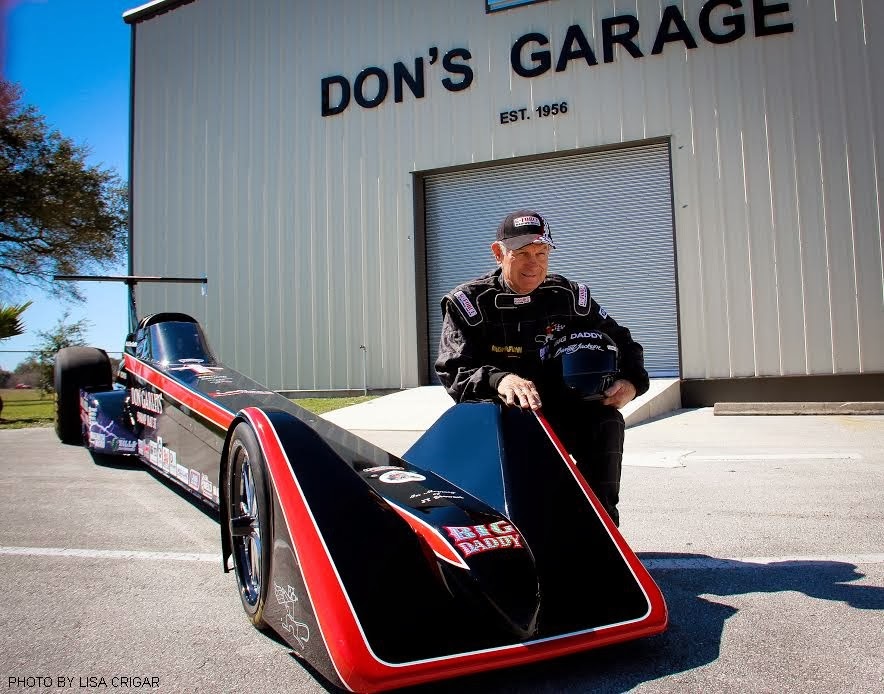
    Garlits 200 Mph Dragster gets Lawless V-6 Electric Motor Installed

    SR-37, the Quest for 200 MPH on Batteries Dragster, is being configured with its own 1.5 megawatt power grid for 2014. At the famed Don Garlits Museum of Drag Racing in Ocala, FL, a technical team from Lawless Industries (Poland, OH) has outfitted SR-37 with a large battery-powered motor system befitting the largest name in drag racing sport.

    Lawless Industries, using six (6) 7.5” series-wound DC motors custom-built by General Electric and donated by Crescent Electric Supply (East Dubuque, IL), carefully modified the motor package for drag strip use in SR-37. Motors were tuned with a splined shaft for high torque output, internal motor wiring and insulation improved for high load, brush timing advanced to synchronize the 6-pack, and the package rigorously unison-tested prior to assembly into the dragster. The completed Lawless V-6 electric motor assembly has been final-fitted into the SR-37 digger’s rear engine motor compartment and engaged to the Goethe Enterprises driveline directly behind. Motor control for Big Daddy is provided by Manzanita Micro “Zilla” controllers. The entire motor package is engineered so that each motor can be driven by over 200 horsepower for a 200 MPH+, 6-second run down the 1/4 mile asphalt strip.

    The distinctive side pods of SR-37 will conceal the source of the massive power. A custom one-off multi-cell Lithium Polymer battery system engineered by Derek Barger/HighTech Systems LLC of Colorado will produce 1500 kilowatts (1.5 megawatts) of instantaneous launch energy for the digger, a total power source of over 2000 HP! The array is comprised of (4) packs, (2) per side pod, and operates at a peak voltage of 420V. Total battery power weight is 500 pounds, about the same as a fully dressed Top Fuel engine. The entire battery array can be fully recharged and ready for the next run in as little as 5 minutes.

    The SR-37 Quest for 200 MPH on Batteries BEV Dragster has it all: Big Daddy Don Garlits, 1500 kilowatts, over 2000 horsepower, starting line launch times nearly as quick as a Top Fuel dragster, energy cost per run-about 25 cents.

    The team hopes to commence spring testing soon with a build-up to full sub-200 mph 1/4 mile runs. The summer event schedule for record runs is being developed and will be announced during the test program.

    Toyota Racing release details about AWD hybrid powertrain

    TOYOTA Racing can reveal the first details of its participation in the 2014 FIA World Endurance Championship (WEC), in which it will push the limits of hybrid powertrain technology in motorsport.

    TOYOTA Racing entered two cars for the WEC season, including the Le Mans 24 Hours, and the Automobile Club de l’Ouest is scheduled to confirm the full grid on 13 February.

    For the third consecutive year, Alex Wurz, Nicolas Lapierre, Kazuki Nakajima, Anthony Davidson, Sébastien Buemi and Stéphane Sarrazin will drive for TOYOTA Racing. They are joined by test and reserve driver Mike Conway.

    The TS040 HYBRID prototype has been designed according to new regulations intended to keep the WEC and Le Mans at the forefront of road-relevant technology development.

    Its first public appearance will come at the WEC official test session on 28-29 March when it will take to the track alongside prototypes from Audi and Porsche for the first time.

    After the TS030 HYBRID established TOYOTA Racing as a pioneer in the field of hybrid powertrains for motorsport, its successor, the TS040 HYBRID, takes the technology to the next level.

    The addition of an Aisin AW motor/generator on the front axle, in combination with the DENSO unit at the rear, means the TOYOTA HYBRID System – Racing now provides power to all four wheels.

    Under deceleration, the motor/generators apply braking force in combination with traditional mechanical brakes to generate energy, which is transferred via a DENSO inverter to the Nisshinbo super-capacitor. During acceleration, the motor/generator reverses its function, acting as a motor to deliver a significant power boost.

    That four-wheel-drive hybrid power is allied to a petrol-powered V8 engine, both having been developed by Motor Sports Unit Development Division at the Higashifuji technical centre, where next generation TOYOTA road car technology is also under development.

    Such a link between motorsport technology and future road cars is fundamental to TOYOTA Racing, with the TS040 HYBRID, like its predecessor, acting as a real-life test bench for TOYOTA’s latest hybrid concepts. TOYOTA has already sold 6million hybrid road cars since the launch of the Prius in 1997.

    The TS040 HYBRID chassis is designed, developed, manufactured, built and operated by TOYOTA Motorsport GmbH (TMG) in Cologne. It represents a major evolution on the TS030 HYBRID thanks to advanced aerodynamics and lightweight design.

    New regulations with revised dimensions have made the 2014-generation LMP1 cars narrower by 10cm while measures such as wheel tethers and a rear crash box have further increased safety.

    Intensive simulation and calculation work at TMG has refined the TS040 HYBRID, utilising hardware-in-the-loop technology to test individual components based on real track data and powerful calculation computers to optimise designs.

    Such cutting-edge techniques are significantly more efficient than track testing, allowing TMG engineers to continue optimising all aspects of the TS040 HYBRID chassis and lay-out for longer than rivals relying on traditional methods.

    Development of the TS040 HYBRID has been completed alongside a range of external motorsport and automotive projects running concurrently at TMG, for third-party clients and Toyota Motor Corporation.

    The car completed a successful roll-out at Paul Ricard earlier this month (21-23 January), with Alex Wurz and Anthony Davidson driving. Further testing is planned prior to the season-opening Six Hours of Silverstone (20 April).

    More details about the TS040 HYBRID, including technical specifications, will be released immediately prior to the 28-29 official WEC test.

    Toyota Racing release details about AWD hybrid powertrain

    TOYOTA Racing can reveal the first details of its participation in the 2014 FIA World Endurance Championship (WEC), in which it will push the limits of hybrid powertrain technology in motorsport.

    TOYOTA Racing entered two cars for the WEC season, including the Le Mans 24 Hours, and the Automobile Club de l’Ouest is scheduled to confirm the full grid on 13 February.

    For the third consecutive year, Alex Wurz, Nicolas Lapierre, Kazuki Nakajima, Anthony Davidson, Sébastien Buemi and Stéphane Sarrazin will drive for TOYOTA Racing. They are joined by test and reserve driver Mike Conway.

    The TS040 HYBRID prototype has been designed according to new regulations intended to keep the WEC and Le Mans at the forefront of road-relevant technology development.

    Its first public appearance will come at the WEC official test session on 28-29 March when it will take to the track alongside prototypes from Audi and Porsche for the first time.

    After the TS030 HYBRID established TOYOTA Racing as a pioneer in the field of hybrid powertrains for motorsport, its successor, the TS040 HYBRID, takes the technology to the next level.

    The addition of an Aisin AW motor/generator on the front axle, in combination with the DENSO unit at the rear, means the TOYOTA HYBRID System – Racing now provides power to all four wheels.

    Under deceleration, the motor/generators apply braking force in combination with traditional mechanical brakes to generate energy, which is transferred via a DENSO inverter to the Nisshinbo super-capacitor. During acceleration, the motor/generator reverses its function, acting as a motor to deliver a significant power boost.

    That four-wheel-drive hybrid power is allied to a petrol-powered V8 engine, both having been developed by Motor Sports Unit Development Division at the Higashifuji technical centre, where next generation TOYOTA road car technology is also under development.

    Such a link between motorsport technology and future road cars is fundamental to TOYOTA Racing, with the TS040 HYBRID, like its predecessor, acting as a real-life test bench for TOYOTA’s latest hybrid concepts. TOYOTA has already sold 6million hybrid road cars since the launch of the Prius in 1997.

    The TS040 HYBRID chassis is designed, developed, manufactured, built and operated by TOYOTA Motorsport GmbH (TMG) in Cologne. It represents a major evolution on the TS030 HYBRID thanks to advanced aerodynamics and lightweight design.

    New regulations with revised dimensions have made the 2014-generation LMP1 cars narrower by 10cm while measures such as wheel tethers and a rear crash box have further increased safety.

    Intensive simulation and calculation work at TMG has refined the TS040 HYBRID, utilising hardware-in-the-loop technology to test individual components based on real track data and powerful calculation computers to optimise designs.

    Such cutting-edge techniques are significantly more efficient than track testing, allowing TMG engineers to continue optimising all aspects of the TS040 HYBRID chassis and lay-out for longer than rivals relying on traditional methods.

    Development of the TS040 HYBRID has been completed alongside a range of external motorsport and automotive projects running concurrently at TMG, for third-party clients and Toyota Motor Corporation.

    The car completed a successful roll-out at Paul Ricard earlier this month (21-23 January), with Alex Wurz and Anthony Davidson driving. Further testing is planned prior to the season-opening Six Hours of Silverstone (20 April).

    More details about the TS040 HYBRID, including technical specifications, will be released immediately prior to the 28-29 official WEC test.

    “Big Daddy” Don Garlits Quest to drive the first Battery powered Dragster to 200 mph

    Drag racing legend “Big Daddy” Don Garlits, on the 50th anniversary of Garlits’ historic first official 200 mph pass in 1964, will attempt to drive the first battery-electric dragster to exceed 200 mph on a ¼ mile drag strip.

    The Quest Dragster will be powered by a 1500 kilowatt array of lithium polymer (LiPo) batteries producing an equivalent horsepower rating of over 2000 HP powering a General Electric DC motor via 3x Zilla controllers.

    These specs are very similar to those used by the first electric vehicle to break 200 mph in the quarter mile! The Rocket bike made history May 4, 2012 with a record run of 6.940 at 201.37 mph.

    The bike was built by Lawless Industries and Orange County Choppers with Lawless also supplying the electric powertrain for the Quest SR-37 Dragster. Where the bike used A123 high-performance Nanophosphate lithium iron phosphate (LiFePO4) batteries the dragster will use a lithium polymer (LiPo) battery pack supplied by HighTech Systems LLC.

    The title of World's fastest Electric Car in the quarter mile is currently held by Dennis Berube's Current Eliminator V dragster with an elapsed time of 7.956 @ 159.85 MPH. This record has stood since December 30th 2007. Power came from Altairnano lithium-titanate batteries via an early version of the same GE 13 inch DC Motor used by the Lawless Rocket and now the Quest SR-37 Dragster.

    Porsche 919 Hybrid to run turbo V4 engine

    Porsche's all-new LeMans contender will feature a turbocharged V4 2.0-liter direct-injection gasoline engine.

    The 919 Hybrid marks Porsche's comeback in the world of LMP1 racing and according to Autocar it has a turbocharged 16-valve 2.0-litre direct-injection V4 configuration already confirmed. It is believed Porsche opted for this configuration for packaging reasons to enable the best possible position for installing the hybrid drive system.

    This petrol engine works with two energy recuperation systems called KERS and ERS which will store the energy in a battery pack until the driver presses a button to deploy it to the front wheels through an electric motor. It should be noted the V4 engine will power the rear wheels while the battery is of the lithium-ion type and has been provided by A123 Systems from United States.

    Behind the wheel of the Porsche 919 Hybrid will be Mark Webber, Neel Jani, Timo Bernhard, Romain Dumas, Marc Lieb and Brendon Hartley. The vehicle will receive its racing debut on April 20 when the 2014 WEC starts at Silverstone Six Hours.

    In 2014 all three works hybrid teams - Audi, Toyota and Porsche - will run All-Wheel-Drive powertrains at the 24 Hours of Le Mans (14-15 June).

    Source: autocar.co.uk

    Porsche LMP1 Hybrid to use 4-Cyl Petrol Engine with dual regen systems

    Porsche has concluded its 2013 test programme with the new LMP1 race car. The Porsche LMP1 completed its final test laps of the year on the Autódromo Internacional do Algarve near Portimão, Portugal. Testing will resume in early 2014. Porsche AG will field two LMP1 race cars in the sports car World Endurance Championship (WEC) which starts in April 2014, with the Le Mans 24 Hours as the highlight of the season.

    The WEC regulations stipulate that manufacturers run hybrid vehicles in the highest class for Le Mans Prototypes (LMP1). In developing the all-new LMP1 race car featuring a very efficient, high-performance hybrid drive, Porsche's engineers are faced with major challenges that can only be solved using innovative solutions. Therefore, the race car features a hybrid system that consists of a four-cylinder petrol engine with direct injection and two energy recuperation systems. The recovered energy is stored in a battery until retrieved by the driver. A powerful electric motor then provides additional drive to the front axle. However, the WEC rules limit the amount of fuel as well as the electrical energy, or so-called boost, available to the driver per lap. The development of such a highly-efficient drive will have positive influences on production development at Porsche.

    On the Autódromo Internacional do Algarve, Mark Webber (37) got his first chance to climb aboard the Porsche LMP1 racer. The Red Bull Racing Formula 1 team gave the Australian the green light to conduct these initial tests, despite Webber still being under contract. From 1 January 2014, Mark Webber officially joins the Porsche factory team as a works driver and reinforces the already-signed driver line-up of Timo Bernhard (32), Romain Dumas (35) and Neel Jani (30). Mark Webber commented in Portimão: "My first day in this fascinating project was an intense experience for me. I would like to thank Red Bull Racing for giving me the chance to join the project so early. This is a major and important step for us all. It allows me to integrate with the team quicker and to contribute to further developing the LMP1 race car. We have a long way to go and it involves a lot of hard work. I have no misconceptions about this." Head of Porsche LMP1 Fritz Enzinger also appreciated the goodwill shown by the Austrian F1 team: "I'm delighted to have Mark in the team so early. Red Bull Racing has helped us considerably in allowing this!"

    On the schedule of the final test for 2013 in Portugal were primarily suspension and tyre tests with partner Michelin. Previously, the Porsche LMP1 squad had pressed ahead with the development of the new race car on the Magny-Cours (France), Monza (Italy) and Paul Ricard (France) circuits, as well as on the Eurospeedway Lausitz (Germany). Enzinger stated: "Between the roll-out of the completely new car in June and now we have made significant progress. Every single kilometre was important, providing us with new data that brought the development forward. The whole team has worked extremely hard and I would like to express my sincere thanks for this. Our efforts will continue unabated in 2014. Until the start of the season at Silverstone mid-April there is still a lot to do."

    Wolfgang Hatz, Member of the Executive Board for Research and Development at Porsche AG, added, "We always knew it wasn't going to be easy to return to top endurance racing after 16 years. Hence, our efforts in developing a competitive Porsche LMP1 race car are immense. Up to this point, our engineers in Weissach, the drivers, and the entire team have performed impressively. We are finding new approaches in the development, implementation and application of leading edge efficiency technologies. This also leads to further improvements of the entire hybrid technology in our production cars. Ultimately, our customers will benefit the most."

    To follow the preparations of the LMP1 team in the lead up to tackling the WEC and the 24 Hours of Le Mans, visit: www.porsche.com/mission2014. Many exciting images, films, background information and a multimedia journey through Porsche's racing history await visitors on the homepage.

    The new technology behind the 2014 Audi R18 e-tron quattro

    The 2014-generation Audi R18 e-tron quattro is the most complex race car ever built by Audi. At first glance, the new hybrid sports car appears like a continuous further development of the World Championship winning car and Le Mans winner of the past two years. However, due to the new LMP1 regulations that will come into effect in 2014, Audi Sport factually redeveloped every single component.

    “The next Audi R18 e-tron quattro represents a completely new generation of Le Mans prototypes,” explains Head of Audi Motorsport Dr. Wolfgang Ullrich. “The principles of the LMP1 regulations have fundamentally changed. The idea behind this is to achieve similarly fast lap times as in the past with considerably less energy. Making more out of less: a forward-thinking approach.”

    Chris Reinke, Head of LMP at Audi Sport, talks about a ‘revolution in thinking.’ “A fundamental approach to motorsport is being abandoned. Instead of power output, energy consumption will be subject to limitations – this is in line with the spirit of our times and opens up great technical freedoms to the engineers. In 2014, we’ll be seeing a wide variety of concepts on the grid at Le Mans.”

    The basic elements of the Audi R18 e-tron quattro’s new configuration were defined back in 2012 and the design of all the single components started at the end of 2012. The new LMP1 sports car was rolled out in the early fall of 2013, followed by track tests of the most recent R18.

    In the new Technical Regulations, a large number of principal definitions, which concern the powertrain, body dimensions, safety and aerodynamics, were re-determined. With the new R18, Audi Sport has opted for a similar concept as in the past – albeit with innovative detailed solutions and an additional hybrid system. The key details:

  • A further developed V6 TDI mid-engine powers the rear wheels
  • e-tron quattro hybrid system at the front axle (ERS-K – Energy Recovery System Kinetic, a system to store kinetic energy)
  • Optimized flywheel energy storage system
  • Hybrid system with an electric turbocharger in the internal combustion engine (ERS-H – Energy Recovery System Heat, a system that stores energy converted from heat)

    New approaches to powertrain technology and energy management

    Never before has a race car been powered by technology as complex as the one used in Audi’s new LMP1 sports car. The TDI engine, which sets the benchmark in terms of efficiency, remains a time-tested and important element of the overall concept. The further developed V6 TDI unit of the Audi R18 e-tron quattro makes a crucial contribution to the car’s compliance with the energy specifications of the regulations. The new R18 has to do with up to 30 percent less fuel than its immediate predecessor.

    In addition to the internal combustion engine, the powertrain concept, for the first time, features the integration of two hybrid systems. As in the past, a Motor-Generator-Unit (MGU), during braking events, recovers kinetic energy at the front axle, which flows into a flywheel energy storage system. For the first time, the turbocharger of the internal combustion engine is linked to an electrical machine, which makes it possible to convert the thermal energy of the exhaust gas flow into electric energy – for instance when the boost pressure limit has been reached. This energy also flows into the flywheel energy storage system. When the car accelerates, the stored energy can either flow back to the MGU at the front axle or to the innovative electric turbocharger, depending on the operating strategy.

    The overall design of these systems and their direct impact on engine and powertrain management require highly complex coordination and tuning work. Audi Sport initially performed theoretical analyses and simulations, followed by rig testing and, since October, by track tests. The options available to the drivers and engineers as a result of the new technology are now more extensive than ever before.

    Significantly changed conditions for the aerodynamicists

    New freedoms, accompanied by greater restrictions – this is how the new framework conditions for aerodynamics can be put in a nutshell. A few examples: The 10 centimeter slimmer body of the new LMP1 sports car means that the front of the R18 becomes mathematically smaller – which is an advantage. The bodywork accommodates slimmer wheels, which, in turn, reduces aerodynamic drag. This is contrasted by other innovations that do not provide any advantages in aerodynamics. At 1,050 millimeters, the race car has to be 20 millimeters higher than before, and larger cockpit dimensions are prescribed as well. This leads to less favorable aerodynamics. The lower overall width of the car results in a slimmer underfloor. In addition, it features a completely different shape in the area of the cutouts for the front wheels. Consequently, the area that can produce downforce becomes smaller. With respect to designing the front end, the engineers enjoy new freedoms. Instead of a diffusor, a genuine front wing with a flap may be used for the first time. This promises aerodynamic advantages and lower costs, as this part of the bodywork will lend itself to easier modification to suit the various race tracks. In the past, it was necessary to produce different bodywork assemblies.

    On the other hand, greater limits have been imposed on the aerodynamic design freedoms at the rear end. Use of the exhaust gas in the area of the rear diffusor, as in the case of the 2013-generation Audi R18 e-tron quattro, is now prohibited.

    Further improvement of safety

    Even in the past, LMP1 sports cars with their closed CFRP cockpit structure were regarded as one of the safest race car categories of all. Two severe accidents of the R18 at Le Mans in 2011 saw the Audi drivers get off lightly. But this is no reason to stop. The rule-makers have continued to improve the safety of the latest race car generation by imposing numerous discrete requirements.

    The new monocoque has to resist higher loads. At the same time, it is reinforced by additional layers of fabric, which are hard to penetrate in the case of a concentrated impact. This reduces the risk of intrusion by pointed objects in accidents.

    For the first time, wheel tethers are prescribed. They connect the outer assemblies of the front wheel suspensions with the monocoque and the ones of the rear suspensions with the chassis structure. Each of the two tethers required per wheel can withstand forces of 90 KN – which equates to a weight force of nine metric tons. Another new feature is a CFRP structure behind the transmission – the so-called ‘crasher’ – which absorbs energy in a collision.

    This is another example of the considerable challenges faced by the Audi engineers, as all these innovations increase weight, in addition to the second hybrid system. Audi’s previous Le Mans prototype weighed 915 kilograms. But in the future the car’s weight may be reduced to 870 kilograms – which means that Audi’s ultra-lightweight design technology reaches a new dimension.

    A large number of further innovations – for instance in the areas of vision and interior ergonomics – characterize the new Audi R18 e-tron quattro that will be making its racing debut in the 6-hour race at Silverstone (Great Britain) on April 20, 2014. The highlight of the FIA World Endurance Championship (WEC) will be the Le Mans 24 Hours on June 14/15, 2014. The aim is clear: Audi is setting its sights on continuing to maintain the leading role it has enjoyed in sports prototype racing since 2000 and on again demonstrating ‘Vorsprung durch Technik’ at Le Mans.

  • Audi start testing new 2014 LMP1 R18 e-tron quattro

    Only a week after the World Championship winning Audi R18 e-tron quattro race car’s last run in a race, its successor is ready to hit the track. Tests of the new LMP1 sports car, which has been kept under wraps up to now, commence today on the U.S. race track at Sebring (Florida).

    Audi Sport in Ingolstadt and Neckarsulm has developed a fundamentally new Le Mans prototype that corresponds to the Technical Regulations for 2014 and is designed for maximum efficiency. The development started in 2012. The roll-out took place in the early fall of 2013. Starting today, the next-generation Audi R18 e-tron quattro is being tested on the race track where all new Le Mans prototypes of the Audi brand have had to prove their worth: at Sebring.

    “We’ve reached a crucial stage in this project,” explains Head of Audi Motorsport Dr. Wolfgang Ullrich. “After building the first prototype, testing on various race tracks is now taking center-stage. The tests are mainly focused on achieving high mileage, coordinating the highly complex hybrid drive systems and working out an efficiency-optimized total package that has never before been as complex as this one.”

    Audi has won the manufacturers’ and drivers’ classifications in the FIA World Endurance Championship (WEC) for the second time in succession and the Le Mans 24 Hours for the twelfth time this year. Before the end of December, Audi will present the next generation of its hybrid sports car and announce further details.

    Leonardo DiCaprio & Venturi Launch Formula E Team

    Venturi Automobiles today announced a joint venture with award-winning actor and environmental activist Leonardo DiCaprio to enter a team in the new FIA Formula E Championship - the world's first fully-electric race series beginning in September 2014.

    Based in Monaco, the new Venturi Grand Prix Formula E Team has been co-founded by DiCaprio and Gildo Pallanca Pastor, founder of pioneering EV manufacturer Venturi Automobiles, together with Bert Hedaya and Francesco Costa.

    Formula E is a new FIA Championship using electric single-seater race cars capable of speeds in excess of 225km/h. The series will compete in the heart of 10 of the world's leading cities including Beijing, Los Angeles and London. Ten teams, each with two drivers, will go head-to-head to create a unique and exciting racing series designed to appeal to a new generation of motorsport fan whilst accelerating the electric vehicle market and promoting sustainability.

    "The future of our planet depends on our ability to embrace fuel-efficient, clean-energy vehicles," DiCaprio said. "Venturi Grand Prix has shown tremendous foresight in their decision to create an environmentally friendly racing team, and I am happy to be a part of this effort."

    Venturi Grand Prix will now be put forward to the FIA for approval as the tenth and final team to enter the new zero emission series. They join international names from around the globe with IndyCar outfits Andretti Autosport and Dragon Racing, Asia's China Racing, Super Aguri and Mahindra Racing, and European squads Drayson Racing, e.dams, Audi Sport ABT and Virgin Racing.

    The team is centred around the award-winning Venturi Automobiles, a leader in high performance electric vehicles developing a range of sports, urban and utilitarian cars, as well as being the current holders of the world land speed record for an electric vehicle with 495kph (307mph). The team also plans to become a constructor from the second season, building its own Formula E car using a powertrain based on the one used in its 3,000hp electric streamliner - Venturi VBB-3 - unveiled earlier this year in Wendover, Utah, by H.S.H. Prince Albert II of Monaco.

    "Venturi has been a pioneer in electric high performance vehicles for more than a decade and Formula E gives us the fantastic opportunity to further improve our advanced technologies through motorsport, as well as compete all over the world," said Gildo. "It also gives us the chance to be part of a new racing programme with a project that really shares Venturi's values for clean mobility, innovation in the field of electric propulsion and energy efficiency optimisation."

    "It's an honour and a pleasure to welcome the Venturi Grand Prix team as the tenth and final team of the FIA Formula E Championship," said Alejandro Agag, CEO of series promoters Formula E Holdings. "Gildo is a true pioneer in electric racing. From the desert of Salt Lake to Antarctica, his passion and vision pushes forward the technology barriers of what can be done with an electric car. But Gildo is not alone in this venture. Global entrepreneurs Francesco Costa and Bert Hedaya bring great experience and energy to the team.

    "And of course, I want to give a very special welcome to our Championship to Leonardo DiCaprio. Very few environmental leaders have helped more than him to spread the message of sustainability around the world. Having people like him and Richard Branson - global ambassadors for the environment - is a privilege for our Championship and will greatly help us to spread the use of electric cars in cities around the planet."

    2014/2015 FIA Formula E Championship – Team line-up:
    1. Drayson Racing Formula E Team (UK)
    2. China Racing Formula E Team (China)
    3. Andretti Autosport Formula E Team (USA)
    4. Dragon Racing Formula E Team (USA)
    5. e.dams Formula E Team (France)
    6. Super Aguri Formula E Team (Japan)
    7. Audi Sport ABT Formula E Team (Germany)
    8. Mahindra Racing Formula E Team (India)
    9. Virgin Racing Formula E Team (UK)
    10. Venturi Formula E Team (Monaco)