Koenigsegg Regera Launch 1,500 hp Plug-In Hybrid

The Regera was created as a luxury Megacar alternative to Koenigsegg's traditional extreme lightweight race-like road cars. Even though the One:1 and the Agera RS have surprising levels of practicality, creature comforts and features, their primary focus is, and has always been, to be the overall fastest cars on the planet – around a racetrack or elsewhere.

Regera is Swedish for "to Reign" - a suitable name for a machine that offers a never seen before combination of power, responsiveness and luxury - creating a true Dr. Jekyll & Mr. Hyde persona.

In spite of all its advanced technology and creature comforts, the Regera is comparatively light. Therefore it can still perform competitively around a race circuit. According to us, the only Hyper/Megacar that could be faster around a circuit, is another Koenigsegg. However, out in the open the Regera will reign as the king of the road, as the fastest accelerating, most powerful production car ever.

The Regera will be handcrafted in only 80 examples. Apart from being a suitable production run for Koenigsegg´s newly upgraded and refurbished production facility, the number 80 also symbolizes the principle of domination, control and achievement in Pythagorean Numerology.

With the introduction of the Regera, Koenigsegg will, for the first time ever, have two parallel models in production.

The interior features; added insulation, 8 way electrically adjustable memory foam seats. A Koenigsegg 9" infotainment system, 3G and Wi-Fi connectivity, front, inner and rear camera system with recording capability, Apple CarPlay, supreme sound system, ambient lighting and many other great new features. The Regera also comes with front and rear parking sensors and remote diagnostic and firmware update capability.

Constellation DRL
A good design and layout of the DRL (Daylight Running Lights) gives character, as the DRL is what's first seen when a car comes driving from a distance.

We wanted the Regera to stand out and clearly be recognized also from a far, so we came up with a novel idea that we call – Constellation DRL.

To get a constellation of stars effect, we scattered the LED´s, which make up the DRL, around the lamp cluster, giving the effect of star constellations on a night sky made up of polished carbon fiber.

A side effect is that the LED´s make the whole lamp cluster glitter and shine, as if there where diamonds thrown into them. That´s what we call - Koenigsegg cool.

The heart of the matter
The heart and soul of every Koenigsegg is its Internal Combustion Engine – the ICE. The ICE of the Regera follows the path of its siblings, based on the proven and extremely reliable Koenigsegg drysumped twin turbo, DOHC, 5.0 liter V8.

As before, the Koenigsegg V8 is the most downsized homologated production ICE in the world, with 220 Hp per liter engine (using regular pump gas). The compactness of the engine makes the Regera nimble, efficient and lightweight.

The difference to the Agera engine is that, given the electric propulsion of the Direct Drive system, we did not have to go as extreme on ICE power, as the combined output is way over 1500 Hp and over 2000 Nm torque, anyway. Given this we could install even smaller, faster spooling turbos on the Regera, further enhancing the ICE drivability and response.

A new level of luxury
The Direct Drive transmission of the Regera is capable of delivering never before experienced blistering response and performance and at the same time able to deliver one of the smoothest and most soothing driving experiences. Given this high level of bi-polar characteristics, the rest of the car had to be up to the task of delivering blistering, lightweight performance at new levels of soothing luxury.

Therefore Koenigsegg developed a completely new rear sub frame and rear structure that allows the engine and transmission to rest on active soft mounts. When driving in normal conditions the mounts stay soft and isolate engine noise and vibrations. When driving spirited, the mounts firm up to solidify the car and give greater response. The shock absorbers are active in height and stiffness – again allowing for the bi-polar behavior.

Furthermore, the Regera can be driven in absolute silence, as it is possible to go into full EV mode for shorter periods of time.

The first fully robotized car
Given the latest advances in compact lightweight hydraulics, Koenigsegg has managed to robotize the entire Regera with almost no weight addition. As the Regera features functions such as; active front and rear wings, chassis control and lifting system - the pumps and accumulators were already in place to connect a few more hydraulic operators. These in turn replaced gas struts of equal weight – resulting in minimal weight impact.

Due to the above, the Regera is the first car in the world that operates all body closures completely automatically. The spectacle to open and close the entire car simultaneously from the remote or smartphone, truly turns the Regera into a transformer.

On top of this, all body closures have soft latching mechanisms, giving the Regera a sophisticated feel. The fully robotized body system, with soft latches adds a mere 5 kg, making full robotization a very desirable option.

Furthermore the wing mirrors are auto-folding while the doors open, giving added practicality and visual drama, as the Dihedral Synchro Helix Doors swing out and rotate 90 degrees to fully clear the door opening, without protruding more than the width of the door – making them highly ergonomic.

Plug-in capability
The Regera utilizes an EV plug in feature. Behind the robotized rear number plate nestles a type 2 mode 3 charging port. This means that the Direct Drive Battery can be charged either by the combustion engine or through the charging port. The plug-in solution enabled us to create a novel feature we call - Battery Drain Mode, or BDM for short. For example, when there is around 50 km range left to the destination or next charging point, a preset geo location or a push on the touchscreen will trigger the BDM. This means the car calculates the driving behavior and makes sure the battery is fully drained upon arrival and is ready for a full charge. This drastically minimize fuel consumption and lower C02 emissions as the fuel consumed has been correctly optimized for the length of the journey.

The world's first fully foldable, active, top-mounted rear wing The Koenigsegg One:1 featured the world's first top mounted active rear wing. This was an innovative solution that maximized down force compared to its size and weight.

The Regera, being more luxury oriented, has taken this solution to the next level, allowing the wing also to fully fold down into the body work enhancing the cars elegance while parking and reducing drag while cruising. The wing´s active foldable mechanism, is a lightweight work of carbon fiber art and the movement is truly mesmerizing.

Sporting a unique exhaust-note, the Regera has a custom designed, sound tuned titanium system jointly developed by Akrapovic.

The novel exhaust system includes a fish tail outlet, envisioned by Christian, which has not been seen on a production car for the last half century, so we are excited to bring back the sound of the past!

Koenigsegg Direct Drive
As many of you have heard, Christian is not a fan of hybrids, as they are generally compromised when it comes to weight, complexity, cost, packaging and efficiency.

Given this the Regera is not what we at Koenigsegg would call a hybrid, as it does not have the traditional shortcomings of a hybrid. Instead the Regera is a new breed of Koenigsegg - and car for that matter.

Traditional, so called parallel, hybrids are compromised and heavy, as they have two independent propulsion systems. Alternatively, series hybrids are less compromised when it comes to weight, complexity and costs, but instead they are compromised when it comes to efficiency, as there is too much energy conversion going on.

This brings us to the Koenigsegg Direct Drive Transmission or KDD for short - invented by Christian von Koenigsegg and developed for the Regera by the Koenigsegg Advanced Engineering team. The patent pending KDD system replaces the combustion engines traditional transmission and gives the added benefit of pure EV mode. What is unique is that the KDD manages to create direct drive to rear axle from the combustion engine without the need of multitude gears or other traditional types of variable transmissions, with inherently high energy losses.

During highway travel, for example, the KDD reduces drivetrain losses, compared to traditional transmission or CVT by over 50%, as there is no step up or step down gear working in series with the final drive - just direct power transmission from the engine to the wheels.

To supplement the energy from the combustion engine and to allow for torque vectoring, regenerative braking, extreme drivers response, reverse and energy conversion, there are three YASA developed electric motors. YASA´s axial flux motors are extremely power dense and allow for direct drive, making them a key-ingredient for the KDD. One YASA for each rear wheel, giving direct drive - this time electric - and one on the crankshaft, giving torque-fill, electrical generation and starter motor functionality.

The three electric motors constitute the most powerful electrical motor set-up in production car history, replacing the gears of a normal transmission while adding; power, torque, torque vectoring and yet still able to remove weight.

The battery pack and PDU for the KDD were developed and manufactured together with Electric Supercar virtuoso Mate Rimac and his engineering team. The 620 V battery pack is of the latest fully flooded type and is the most power-dense battery pack ever created for a road going car with 9,27 kWh of energy, 67 liters of volume, and 115kg of weight. Still, a full 500 kW can momentarily be drawn during acceleration and over 150 kW can be absorbed by the battery-pack during regenerative braking and ICE power generation mode.

Every cell of the pack is carefully monitored for voltage, state of charge, health and temperature. The cells are enclosed in a fully machined aluminum casing for safety and stability. The battery is located in the most protected area of the car - the carbon-aramid chassis tunnel. The whole battery pack is actively cooled by external radiators and the Regera´s all new electrical air-conditioning system, which also can pre-cool the car via the Koenigsegg app on a warm day.

The complete KDD system, including the battery, adds a mere 88kg to the Regera´s weight, compared to what the Regera would have weighed with a traditional ICE, coupled to a 7 speed DCT transmission instead of the KDD. Presently no other hybrid Hypercar even comes close to this type of weight ratio for their electrification. This is interesting, as they all have smaller battery capacity and less electric power than the Regera.

To put it into perspective, the Regera has almost triple as many electric Bhp (700 Bhp) and over 300 Bhp more than its closest hybrid rival. Still the Regera manages to be very competitive weight wise, while including unusual features such as a six way adjustable electrical seat and a fully robotized body work. This is no small feature and it is a testament to the meticulous nature of the Koenigsegg engineering team.

The combination of electrical and combustion power is just mind boggling. When you get up to speed, the system really comes into play - How about 3.2 seconds between 150 to 250 km/h and under 20 seconds from 0 to 400 hm/h?

Powertrain stats
1100 Hp of combustion engine power on 91 octane DIN or 95 octane RON (a bit more on E85)
1250 Nm of combustion engine torque
700 Hp of electric propulsion
900 Nm of electric torque
9 kWh 620 Volt, flooded liquid cooled battery pack

Combined numbers
Over 1500 BHp or 1.11 MW
Over 2000 Nm of torque
Dry weight 1420 kg
1628 kg curb weight (including all liquids and full fuel tank)

Magna to Present Plug-In Hybrid Sports Car Concept at Geneva Motor Show

Magna International Inc. is set to debut MILA Plus, an innovative two-seat hybrid sports car at Geneva Motor Show 2015. The concept vehicle, which will be displayed at Magna's booth #6261 in Hall 6, combines a sophisticated, lightweight construction with an intelligent, alternative-drive solution to produce maximum performance as well as eco-friendliness. With an all-electric range of 75km and a vehicle weight of 1,520kg, MILA Plus achieves reduced CO2 emissions of 32g/km.

"Magna's broad range of services – from engineering to diverse product capabilities to full-vehicle contract manufacturing – helps support our customers as they continue to be challenged with the changing dynamics of the automotive industry. The MILA Plus vehicle concept illustrates our value proposition and advantage within the global supply base," emphasized Günther Apfalter, President Magna Europe and Magna Steyr.

As the latest vehicle concept in the MILA innovation family, MILA Plus features advanced technologies and flexible manufacturing processes with a focus on eco-friendliness.

Lightweight Construction
The structure of MILA Plus is based on an extruded aluminum space frame which has a number of advantages over a steel structure, including: lower weight; modular structural flexibility; and ability to accommodate different driveline configurations. The modular body-in-white (BIW) concept also allows the use of components and systems from large series production, thus enabling improved manufacturing efficiency and flexibility for global automakers.

MILA Plus offers additional benefits aimed at structural rigidity and weight reduction. For example, the concept integrates a high-voltage battery into the space frame, which increases structural rigidity. Lightweight plastic body panels are used due to their corrosion resistance and styling flexibility. A combination of manufacturing methods, sophisticated joining technologies and a multi-material external skin further contribute to a lightweight vehicle architecture that meets global safety standards.

Sophisticated Joining Technologies
Cold mechanical joining, a hybrid process in combination with bonding is used on the BIW. This reliable technology is more cost effective versus traditional welding solutions and is a joining process Magna has used on other vehicles including the Mercedes-Benz SLS AMG and Aston Martin Rapide.

Alternative Drive Solutions
MILA Plus plug-in hybrid system achieves a reduced emission of 32g/km CO2. The performance of the three-cylinder gasoline engine is enhanced by the addition of two electric motors - one between the internal combustion engine and transmission to drive the rear axle, and one on the electric front axle. This arrangement results in an electric all-wheel-drive system which transmits more torque to the road and results in improvement of vehicle maneuverability and dynamics.


Vehicle Dimensions:

Length:              
4403 mm
Width:                
1925 mm
Height:                
1250 mm
Wheelbase:         
2575 mm
Baggage compartment: 
360l (145l front; golf bag possible rear)
Acceleration:                   
0 to 100 km/h in 4.9s
Electric acceleration:       
0 to 80 km/h in 3.6s
Power output (kW/PS):     
200 / 272
Torque (Nm):                      
580 peak

GKN earns technology partner status for Porsche 918 Spyder

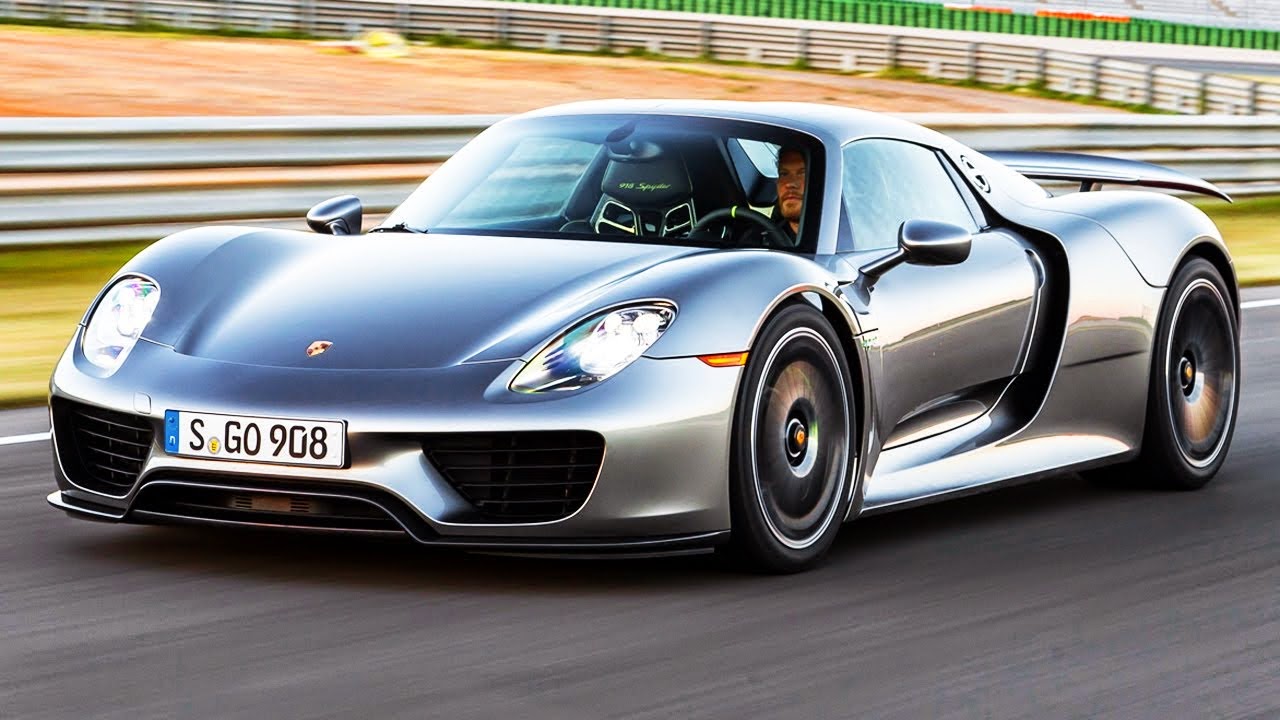
Porsche has awarded GKN Driveline “technology partner” status for its development of a high-performance eAxle for the 918 Spyder, an advanced plug-in hybrid supercar. GKN Driveline’s eAxle module supports full-electric mode, all-wheel drive and provides a boost function.

Porsche Powertrain manager Christian Hauck said: “Realising our vision for a super sports car capable of setting a record lap time of the Nurburgring and of achieving fuel efficiency of three litres per 100 km placed huge demands on our engineers and suppliers.

“GKN Driveline’s role in the development programme and its innovative eAxle module has earned the company Porsche Technology Partner status.”

GKN Driveline’s president of engineering Peter Moelgg added: “Being selected as Porsche’s Technology Partner on the 918 Spyder programme was the perfect opportunity for our global e-drive team to demonstrate how putting the right technology on board can improve both fuel efficiency and dynamic performance.

“The award cements GKN Driveline’s position as the industry leader in e-drive systems. Our eAxle technology continues to evolve and we expect many more high-performance vehicles to adopt similar driveline concepts in the coming years.”

The eAxle that supplements the 918 Spyder’s hybridized 4.6-litre V8 is a development of the company’s eAxle drive. The module has maximum power of 95kW and can deliver up to 1500Nm of torque to the front wheels via a fixed gear ratio.

A specially developed compact differential engages the torque, giving the 918 Spyder optimum power distribution at all times. The differential also disengages the module to minimise drag losses and maximise efficiency. At speeds above 265km/h (164mph), a clutch isolates the electric motor to prevent it from over-spinning.

A key target for the 918 Spyder was to have the lowest possible centre of gravity and ground clearance. To achieve this required an original engineering solution: GKN Driveline positioned the output overhead, using an lubrication concept to manage the oil flow.

The oil reservoir is positioned above, not below, the geartrain. Oil is gravity-fed down onto the bearings and gears until it reaches the high-speed input at the bottom where it is then circulated back to the oil reservoir at the top.

This design minimises the amount of oil on the input shaft, keeping churning losses to a minimum. To ensure the critical areas remain lubricated even in disconnect mode, the motor is driven for brief, intermittent intervals to maintain a constant flow of oil.

The Porsche 918 Spyder’s tight packaging also means there is almost no air flow around the transmission and so water cooling was needed to manage the heat generated by the module’s high power density.

“To meet the 918 Spyder’s challenging targets for weight, power density, NVH and durability, we used state-of-the-art simulation and analysis tools developed in-house to optimise the geartrain,” said Moelgg. “An eAxle that meets both Porsche’s requirements and the demands of the Nurburgring can deliver in any situation.”

Kia unveil Trail’ster e-AWD concept @ Chicago Auto Show

Based on the Kia Soul, the Kia Trail’ster concept was unveiled at the Chicago motor show and combines a FWD turbocharged motor and a RWD electric drive system to provide all-wheel-drive.

"The Trail'ster concept is a near-future look at how the production Kia Soul would logically evolve into an AWD-capable version that's built to escape the city streets and roam into the mountain wilderness," said Tom Kearns, chief designer, Kia Design Centre of America (KDCA). "It takes the go-anywhere capability of an SUV and reimagines it within a compact and sporty package with an expressive design to match."

Based on the production Soul, the Trail'ster's overall shape and size are unmistakable. But with family genes tied closely to the thought-provoking Track'ster and Soul'ster concepts - which pushed Soul far into new directions to realise its performance and lifestyle possibilities - the Trail'ster also takes a dramatic departure from its production-car roots with styling and drivetrain components that turn Kia's popular urban passenger vehicle into a rugged runabout, further demonstrating that Soul is indeed the ideal platform for creativity and experimentation.

The Trail'ster is primarily powered by a 1.6-litre turbocharged 4-cylinder engine outputting 188 ps and 251 Nm of torque through a six-speed automatic transmission, matched to an electric all-wheel drive system on the rear axle intended for low-speed assist, enhanced launch acceleration and improved traction in inclement weather or off-road situations. This approach helps mitigate turbo lag by providing instant torque. The system also improves fuel economy over standard all-wheel drive setups by operating only when needed and serving as an energy recovery mechanism.

Further defining the near future perspective of Soul as a capable and efficient all-wheel drive runner, the Trail'ster arrives as a ‘Through-the-Road' hybrid, which means it has two power sources (a front gasoline engine and a rear electric motor) that make up the hybrid system and meet ‘through the road,' as opposed to inside the transmission with a common driveline connection. It requires all four wheels being driven in careful coordination, but there's no mechanical link between engine and electric motor. The link between the two is the road itself.

"This powertrain strategy of a downsized turbo and ‘Through-the-Road' hybrid power yields a dual benefit of increased performance - torque and traction - and optimised efficiency," said Kearns. "This is AWD being done the advanced, intelligent and responsible way, while sacrificing nothing." Should the Trail'ster find its way to production, fuel economy would be targeted at a 25-30 percent improvement in city driving and 5-10 percent in highway driving over the normally aspirated 2015 2.0-litre gasoline Soul.

The Trail'ster's electric propulsion system draws energy from a 1.2 kWh Lithium Ion Polymer battery powering a 27 kW, 270 volt AC synchronous permanent magnet electric motor outputting 36 ps and 100 pound-feet of torque to the rear wheels and bringing total output to an impressive 220 horses and 136 Nm of torque. To further improve fuel efficiency, the system also utilises a Hybrid Starter Generator (HSG) to start/stop the engine as needed (and to feed energy to the high voltage battery), and an electrically driven A/C compressor, which can run when the engine is shut off. This technology is designed for easy, lightweight packaging, with the compact battery pack stored under the cargo floor.

Operationally, the rear electric drive system engages in one of three scenarios, depending on throttle position and road conditions: Under light throttle, the Trail'ster attains true clean mobility as the electric motor drives the car solely for a range of two to three miles; under normal driving, the rear electric motor assists the 1.6-litre turbo during acceleration events calling for greater power and torque; when treading off-road or on wet pavement, the electric drive system is introduced when front wheel slippage is detected. Finally, the Trail'ster's electric motor acts as a generator to recover kinetic energy and recharge the battery when the vehicle is braking or coasting.

For traversing tough terrain, the Trail'ster has been raised more than two-and-a-half inches over the production Soul. In addition, this mountain rover wears Pirelli Winter Carving 245/45-19 snow tires for enhanced traction and utilises KSport coilover shocks to absorb the impact of rough, uneven ground and rocky surfaces.

Nissan GT-R LMP1 NISMO unveiled [VIDEO]

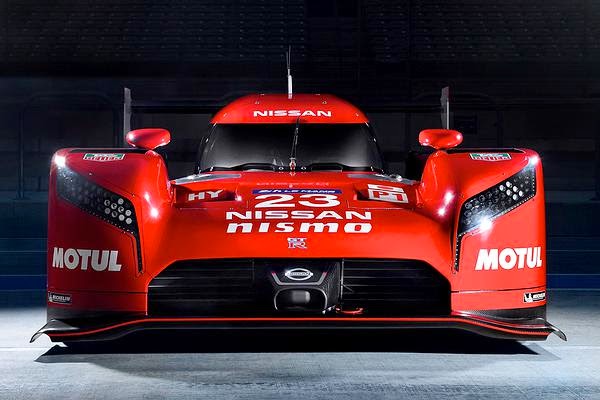
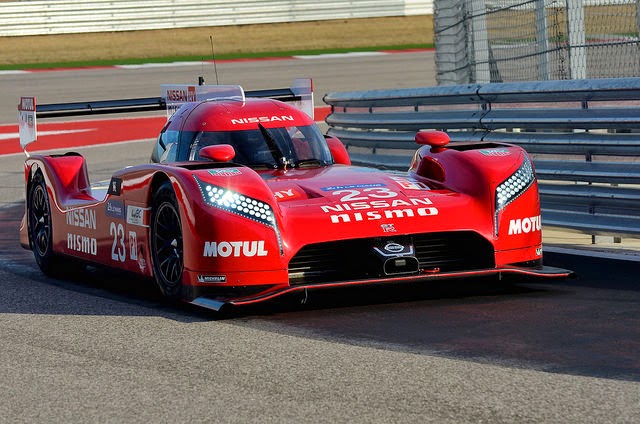
This is the Nissan NISMO entry to the 2015 Le Mans 24 Hour race, the GT-R LM NISMO.

The GT-R LM NISMO is a front-engined, front wheel drive car that is powered by a V6 3-litre twin turbo petrol engine and a kinetic energy recovery system- It is the ultimate GT-R.

Some info on the Nissan LMP1:

  • 3.0ltr Twin Turbo charged V6 based on GTR engine.
  • Front wheel drive which is driven by GTR engine.
  • 8 megajoule energy storage.
  • Narrower rear tires than the front.
  • Front torque vectoring system which controls the front wheel drive system controlling how much power can go to each wheel.

    Nissan has yet to announce how retrieved energy is stored, but it is understood that it is a flywheel system.

  • Toyota to Trial New SiC Power Semiconductor Technology [VIDEO]

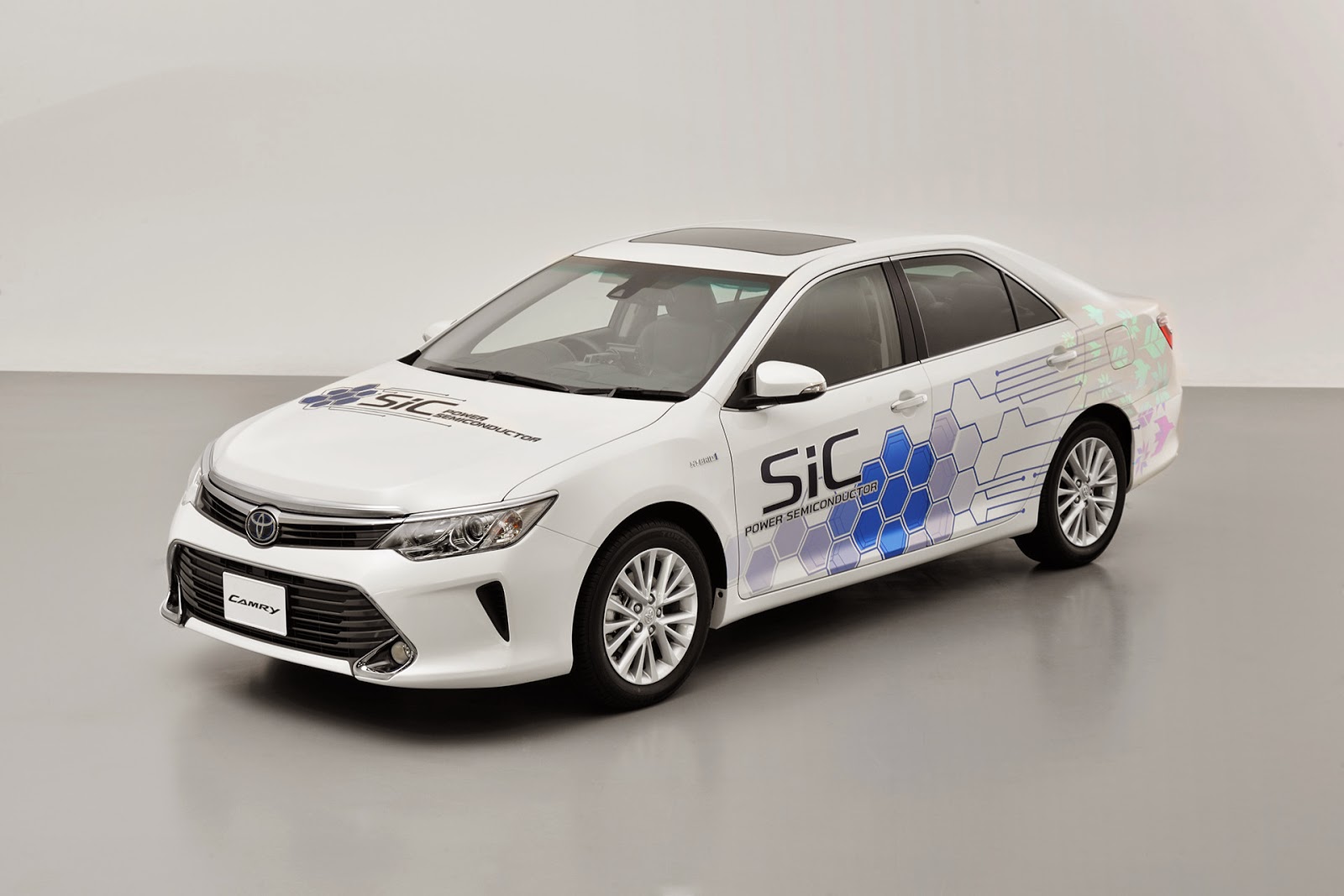
    Using a "Camry" hybrid prototype and a fuel cell bus, Toyota Motor Corporation will bring a brand new technology to the streets of Japan for testing this year. The tests will evaluate the performance of silicon carbide (SiC) power semiconductors, which could lead to significant efficiency improvements in hybrids and other vehicles with electric powertrains.

    Technology

    Power semiconductors are found in power control units (PCUs), which are used to control motor drive power in hybrids and other vehicles with electric powertrains. PCUs play a crucial role in the use of electricity, supplying battery power to the motors during operation and recharging the battery using energy recovered during deceleration.

    At present, power semiconductors account for approximately 20 percent of a vehicle's total electrical losses, meaning that raising the efficiency of the power semiconductors is a promising way to increase powertrain efficiency.

    By comparison with existing silicon power semiconductors, the newly developed high quality silicon carbide (SiC) power semiconductors create less resistance when electricity flows through them. The technologies behind these SiC power semiconductors were developed jointly by Toyota, Denso Corporation, and Toyota Central R&D Labs., Inc. as part of the results of a broader R&D project* in Japan.

    Test vehicles and period

    In the Camry hybrid prototype, Toyota is installing SiC power semiconductors (transistors and diodes) in the PCU's internal voltage step-up converter and the inverter that controls the motor. Data gathered will include PCU voltage and current as well as driving speeds, driving patterns, and conditions such as outside temperature. By comparing this information with data from silicon semiconductors currently in use, Toyota will assess the improvement to efficiency achieved by the new SiC power semiconductors. Road testing of the Camry prototype will begin (primarily in Toyota City) in early February 2015, and will continue for about one year.

    Similarly, on January 9, 2015, Toyota began collecting operating data from a fuel cell bus currently in regular commercial operation in Toyota City. The bus features SiC diodes in the fuel cell voltage step-up converter, which is used to control the voltage of electricity from the fuel cell stack.

    Data from testing will be reflected in development, with the goal of putting the new SiC power semiconductors into practical use as soon as possible.

    GM developing a high-performance electric AWD system for next-gen Cadillacs

    According to Edmunds, General Motors is developing a high performance electric all-wheel drive system for next-gen V-Series Cadillac models and maybe their crossovers. This system could make its way into other GM Alpha-platform-based vehicles such as the Cadillac ATS and Chevrolet Camaro, and possibly a Corvette derivative.

    All-wheel drive has become a must-have for high-performance luxury car buyers, and Audi, BMW, Mercedes-Benz and Porsche are ahead of the game with their AWD-equipped vehicles. Cadillac, however, lags behind this trend, having just introduced the 455-horsepower ATS-V and 640-hp CTS-V, both rear-wheel-drive sedans. Cadillac is also lagging in its offering of electrified fuel-efficient models.

    An electric all-wheel-drive system, known in the industry by the acronym e-AWD, can potentially boost fuel economy in many future vehicles and help expand their plug-in hybrid offerings, however, the system GM desires is many years in the future.

    Joe Slenvak, director of powertrain electrification for North America at Robert Bosch, told Edmunds that adding electric all-wheel drive to the front wheels of a rear-drive car has challenges.

    "When you put the electric axle drive in the front, you have a lot of crossmembers and things that are in the cradle that you have to work around. It would be a little bit hard to do (but) I think you could do it," Slenvak said.

    Sounds like an application perfectly suited to in-wheel motors.

    Slenvak said a vehicle could be retrofitted to add that system. He would not say if Bosch is developing an electric all-wheel-drive system for GM's rear-drive cars.

    Source: Edmunds

    Track debut for 2015 Porsche 919 Hybrid

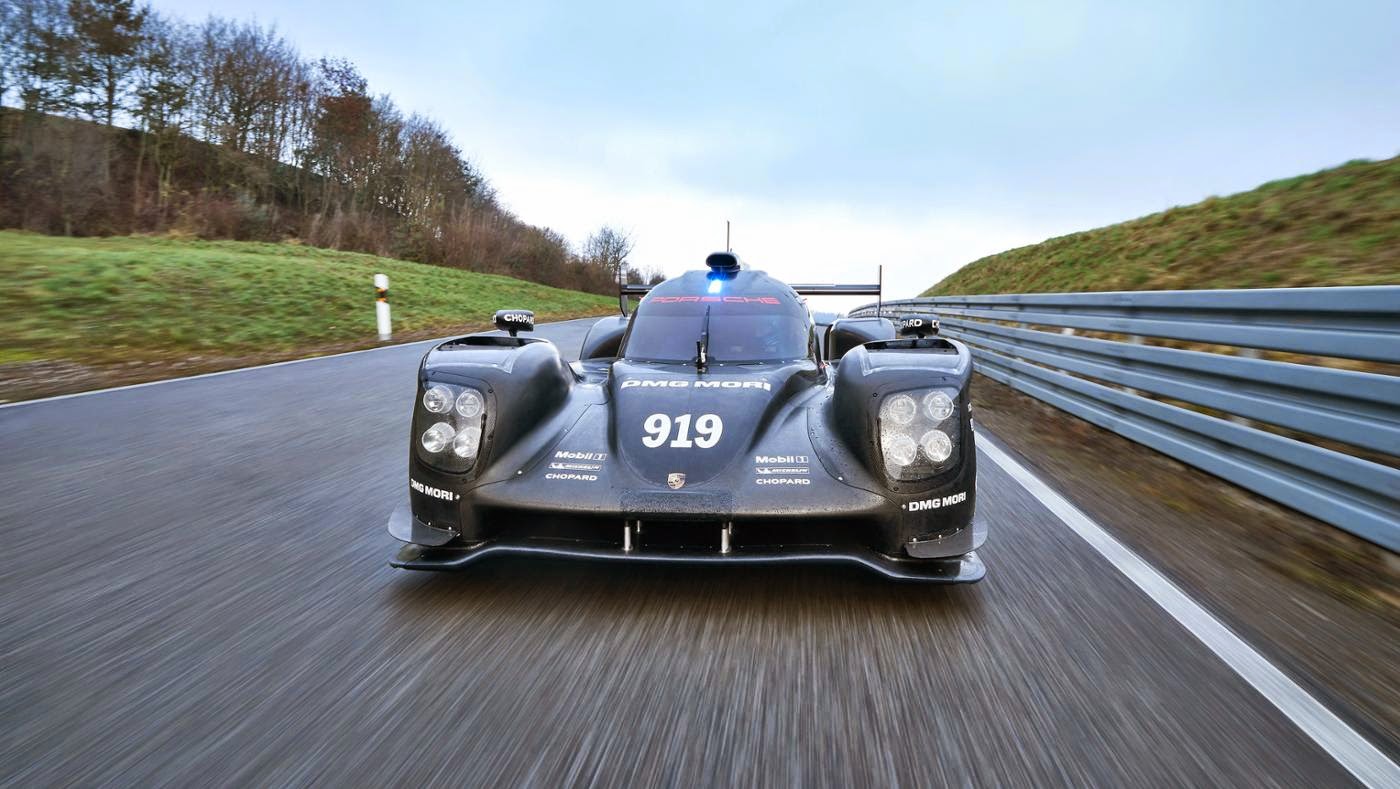
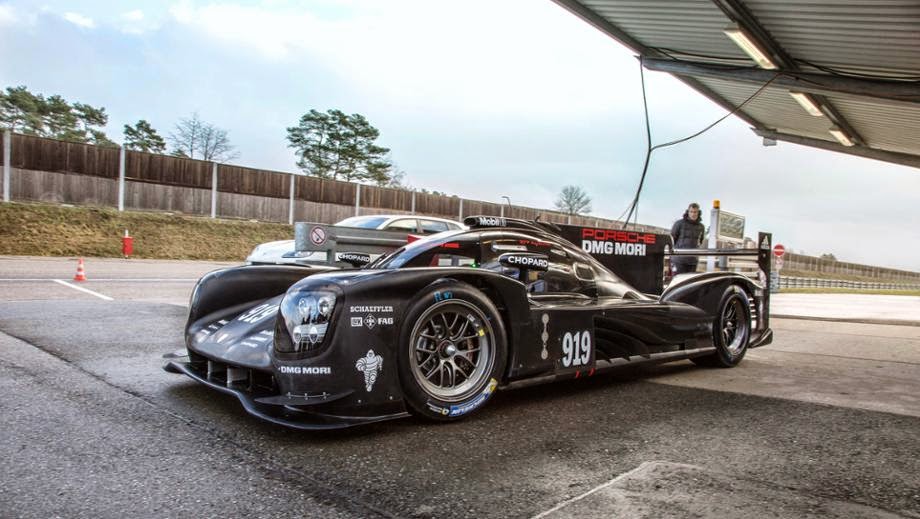
    Extensive testing with the second generation of Porsche’s Le Mans prototype began on January 18, on Abu Dhabi’s Yas Marina Circuit. As scheduled, this marks the start of the 2015 motorsport season for the Porsche Team. The new Porsche 919 Hybrid has already had its roll-out on the Weissach test track. As a next step, there will be several performance and endurance tests before the WEC season opener on April 12 in Silverstone, Great Britain.

    The new Porsche 919 Hybrid is a comprehensive evolution of the successful car that made its debut in 2014. It will feature the same innovative drivetrain concept consisting of a 2-litre V4 turbocharged petrol engine, an electric motor powering the front wheels, and two energy recovery systems. The new generation car had its first roll-out on December 15, 2014.

    Chevrolet Introduces All-New 2016 Volt

    Chevrolet today unveiled the all-new 2016 Volt electric car with extended range, showcasing a sleeker, sportier design that offers 50 miles of EV range, greater efficiency and stronger acceleration.

    The Volt’s new, efficient propulsion system will offer a General Motors’-estimated total driving range of more than 400 miles and with regular charging, owners are expected to travel more than 1,000 miles on average between gas fill-ups.

    “The 2016 Chevrolet Volt provides our owners with a no-compromise electric driving experience,” said Alan Batey, president of GM North America. “We believe our engineering prowess combined with data from thousands of customers allows us to deliver the most capable plug-in vehicle in the industry.”

    The 2016 Chevrolet Volt’s technology and range advancements are complemented by a design that blends sculpted, muscular proportions with aerodynamic efficiency, and an all-new interior with seating for five and improved functionality.

    Everything from charging the battery and checking the charge status, to the intuitiveness of instrument panel controls were designed for easier use.

    “According to independent surveyors, Volt owners are the most satisfied in the industry and they were our compass for developing the next-generation model,” said Batey.

    New Voltec propulsion system

    An all-new, second-generation Voltec extended range electric vehicle (EREV) propulsion system is the power behind the 2016 Volt’s increased all-electric driving range, greater efficiency and stronger acceleration. It was engineered based on the driving behaviors of first-gen Volt owners.

    “Volt owners complete more than 80 percent of their trips without using a drop of gasoline and they tell us they love the electric driving experience. Putting that experience at the center of the new Voltec system’s development helped us improve range, while also making the new Volt more fun to drive,” said Andrew Farah, vehicle chief engineer. “We established a precedent when the original Voltec propulsion system debuted and this newest iteration sets the EV technology bar even higher.”

    The Voltec system includes the battery, drive unit, range-extending engine and power electronics.

    GM’s industry-leading battery technology has been reengineered for the next-generation Volt. The 2016 Volt will use an 18.4 kWh battery system featuring revised cell chemistry developed in conjunction with LG Chem. While overall system storage capacity has increased, the number of cells have decreased from 288 to 192 as the result of a revised chemistry. The cells are positioned lower in the pack for an improved (lower) center of gravity and the overall mass of the pack is 21 pounds (9.8 kg) lighter.

    Like the battery system, the next-generation Volt’s two-motor drive unit delivers increased efficiency and performance along with reduced noise and vibration. The drive unit operates up to 12 percent more efficiently and weighs 100 pounds (45 kg) less than the current system.

    Both motors operate together in more driving scenarios, in both EV and extended-range operation. The ability to use both motors helps deliver a 19 percent improvement in electric acceleration from zero to 30 mph (2.6 seconds) and a 7 percent improvement from zero to 60 mph (8.4 seconds). GM engineers designed the Voltec electric motors to use significantly less rare earth materials. One motor uses no rare earth-type magnets.

    The 2016 Volt goes on sale in the second half of 2015.

    Source: GM

    BMW to Show Wireless EV Charging @ CES

    BMW is trying to make charging cables optional as it plans plug-in hybrid versions of top models from the 3-Series to the X5 sport-utility vehicle.

    BMW will show wireless charging technology in the i8 hybrid sports car at this week’s Consumer Electronics Show in Las Vegas. Using a magnetic field to transmit electricity between a base pad on the garage floor or street and a coil on the underside of the vehicle, drivers would be able to avoid retrieving cables from the trunk and getting their hands dirty re-folding them.

    “Inductive charging offers important convenience benefits for drivers of electric or plug-in hybrid vehicles,” the Munich-based luxury-car maker said.

    BMW and Mercedes-Benz owner Daimler AG agreed last July to work together on wireless charging. Under pressure to meet tough emissions regulations, both carmakers have promised to broaden their range of electric vehicles. Mercedes-Benz already offers the electric B-Class and a plug-in hybrid version of its top-of-the-line S-Class model.

    Today’s prototype takes two hours to replenish the battery of the i8, which can drive in electric-only mode for 23 miles, about the same time as using a normal cable. BMW also sells the i3 battery-powered city car as part of the “i” sub-brand it created to showcase its clean-car technology.

    BMW had already worked on contactless charging in a previous partnership with Siemens AG, testing prototypes in Berlin in 2011. Fulton Innovation, a unit of Alticor Inc., also showed the technology that year on Tesla Motors Inc. (TSLA)’s Roadster electric model.

    BMW i8 versus M4 in drag race [VIDEO]

    Auto Bild magazine has set up an old school versus the latest tech drag race. The BMW M4 has a turbocharged inline-six with rear wheel drive, up against the i8 with its turbocharged three-cylinder with electric all wheel drive. See what happens when they go head to head.

    Even on paper, the race looks quite close. The i8 weighs about 150 kg less but the M-car has a healthy horsepower advantage with 425 hp against the hybrid's 357 hp.

    Electric Car Sales Booming in The Netherlands

    Of all cars sold in the first three quarters of 2014 in the Netherlands, 4.3% were electric or hybrid cars. In the last quarter of 2013, the number was even higher: 15%. The main reason for these very high EV sales in the Netherlands is fiscal measures, says Roland Berger Strategy Consultants, who published the figures.

    The number of electric and hybrid cars sold in the last quarter of 2013 was 14,842. The best-selling car was the Mitsubishi Outlander, with 8,039 sales. Most EV’s and hybrids sold in the Netherlands are made in Japan: the Toyota Prius and Nissan Leaf are also popular.

    The Netherlands wants to have 200,000 EV’s and hybrids on the road by 2020. Currently it has 70,000, almost 1% of the total.

    Source: Energy Post

    BMW i8 vs BMW M1 track battle [VIDEO]

    The new BMW i8 is a futuristic stunner, with a hi-tech duo of an electric motor and petrol engine from the MINI Cooper. Jump back more than three decades and the last mid-engined car to wear a BMW badge was the M1 - which turned just as many heads when it debuted in 1978.

    To find out how thirty years of evolution has changed the BMW supercar, Auto Express took along a classic M1 to meet the new i8 at the test track. The BMW i8 features a 1.5-litre three-cylinder turbocharged petrol from the MINI Cooper driving the rear wheels, while an electric motor drives the front. Under the engine cover of the M1 is something altogether much more traditional: a 3.5-litre six-cylinder unit putting out 277bhp and 330Nm of torque. This compares to 357bhp and 570Nm in the i8.

    On the track, the two cars feel very different. The M1 wasn't pushed too hard due to its age and value - mint examples fetch around £400,000 - but it performed brilliantly around the track. The gearbox has lovely action, the steering is perfectly weighted and the chassis feels perfectly matched to the power on tap.

    Jump into the i8 and it feels very futuristic. There's instant power on tap due to the combination of the electric motor and the engine in Sport mode, with a great soundtrack in the cabin - it's even reminiscent of the sound of the M1. There's plenty of grip, too, and the performance is great. It's rather special and doesn't feel like any other BMW.

    Both the i8 and M1 are true BMWs at heart. It's not often that BMW breaks the mould and builds a mid-engined car, but when they do, they know how to make their mark.

    BMW Plans to Roll Out Plug-in Versions for Its Top Cars

    BMW plans to offer plug-in hybrid versions of all its main models, including the best-selling 3-Series sedan, as the world’s largest maker of luxury vehicles reacts to tighter emissions regulations.

    Carmakers are adding electric motors to improve fuel efficiency and make their vehicles viable in cities like London, which has set up a low-emission zone to improve air quality. Plug-in hybrids have batteries that can be recharged from electrical outlets and can drive emission-free for longer distances than conventional hybrids.

    BMW is presenting a prototype of a plug-in hybrid 3-Series today in Miramas, France, the company said in a statement. The car combines a four-cylinder gasoline engine with an electric motor and can drive about 35 kilometers (22 miles) on battery power.

    The German carmaker also plans to roll out a plug-in hybrid version of its X5 sport-utility vehicle and other “core-brand” models, according to the statement. Electric versions from the Mini and Rolls-Royce brands are also “a possibility,” said Manfred Poschenrieder, a spokesman for the Munich-based company.

    Bayerische Motoren Werke AG (BMW) created the ‘’i’’ sub-brand for showcasing its clean-car technology and safeguarding its image as a maker of sporty vehicles. The first cars from the BMW i unit were the i3 battery-powered city car and the i8 plug-in hybrid super car. The company didn’t specify a timeframe for rolling out plug-in hybrid versions of its models.

    Volvo hybrid bus with Siemens fast-charging system starts service in Hamburg

    Officially launched at the International IAA Commercial Vehicles show, the Volvo 7900 Electric Hybrid buses equipped with a Siemens fast charging systems has taken its maiden tour in Hamburg, where it will be deployed from December on the 109 service.

    “Battery technology is becoming increasingly attractive for use in buses. The electric hybrid bus is an important further step for us on the way to procuring 100% electric buses. Hochbahn sees itself as industry's partner in gathering important experience in everyday service,” said Ulrike Riedel, vice president for operation and human resources at public transport operator Hamburger Hochbahn.

    The Volvo 7900 Electric Hybrid has an electric hybrid powertrain that combines a four-cylinder diesel 240 hp (177 kW) with an electric motor of 150 kW. The latter receives energy from a lithium ion battery of 19 kWh total storage capacity, this allows travel in electric mode a distance of 7 km between charges.

    The lithium-ion battery is charged via two charging rails on the roof. Fast charging stations have been set up next to the route with a contact arm fastened to a mast. If the bus is with range of the contact system, the drive operates the parking brake and charging will start automatically. Charging is performed fully automatically and ends as soon as the charging is fully completed. The process also can be cut short by releasing the parking brake.

    The fast charging stations in Hamburg are the latest development from Siemens for high-performance charging systems for electric buses. On the buses, it is only necessary to mount contact rails and a WiFi communication box. That saves space, weight, and costs on each bus. Communication between the bus and the charging station is established by WiFi. In this way, the bus is identified and the requirements of the battery management system are transmitted to the charging station. To make contact, the contact arm is lowered onto the charging contacts on the bus. The bus is electrically grounded before current starts to flow. The flow of current between the vehicle and the charging station is controlled continuously and matched to the individual charge state and battery type. The charging operation is completed in no more than six minutes.

    BMW reveal 500 kW eDrive plug-in hybrid system

    Following the success of the BMW i3 electric car, and the i8 hybrid supercar, BMW has developed an even more powerful petrol-electric drivetrain that could underpin prestige and performance models in the future.

    The new system is part of an increasing investment into hybrid electric powertrains, starting with the upcoming 3-Series ActiveHybrid. This one in particular will sit at the top of the range. Expect it to appear in the firm's large saloons and M-powered SUVs in the next few years.

    Dubbed Power eDrive, the new system forms part of a extended range of modular hybrid drivetrains being developed in a performance-based EfficientDynamics engineering program at BMW's research and development centre in Munich and envisaged for launch on a limited number of BMW Group production models in what it describes as "up-market segments" before the end of the decade.

    The new hybrid system aims to provide the sort of smooth yet urgent step-off performance qualities delivered by a contemporary battery powered electric drive systems like that offered in the Tesla Model S, albeit with an overall range described as being over 600km thanks to a range extender function, including a 100km range on electric power alone.

    Revealed in a 5-series GT bodied prototype, the most powerful of BMW's new modular hybrid drivetrains uses the company's new 170 kW turbocharged 2.0-litre four-cylinder direct injection petrol engine in combination with two electric motors – a 150 kW version of the i3's synchronous unit mounted up front in the space usually taken up by the torque converter in the car's eight-speed automatic gearbox and an even more powerful 200 kW unit set within the rear axle assembly.

    All up, it is claimed to boast a combined system output of 500 kW along with a torque loading that, BMW engineers suggest, reaches beyond 1000 Nm – figures that easily top the 338 kW and 720 Nm of the existing 6.75-litre V12 petrol engine used by the 11-year-old Rolls-Royce Phantom.

    The principle behind BMW's Power eDrive system is a maximization of electric motor performance.

    "The electric motors provide approximately two-thirds of the combined output, with the combustion engine accounting for the remaining third," says Franz Drescher-Kaden, a BMW concept engineer responsible for the new petrol-electric hybrid set-up.

    Energy for the electric motors is provided by a 20 kWh lithium-ion battery mounted both longitudinally in the rear of the 5-series GT's centre tunnel and horizontally underneath the rear seat in a space ahead of the rear axle. It can be charged both via plug-in means and on the run using the combustion engine in a steady state mode. The fuel tank has been reduced in size from a standard 70-litres to 30-litres.

    As well as acting as a generator to produce electricity, the Power eDrive hybrid system's petrol engine can also provide a performance boost with direct drive to the front wheels during kick down, in which all three power sources are used for propulsion.

    Drive is nominally channeled to the rear wheels via the rear electric motor, whose reserves are sent through a multi-speed gearbox like the front motor in an i8. The introduction of the front electric motor, which operates via the eight-speed automatic in which it is housed, provides all-electric four-wheel drive. This is further enhanced by the combustion engine, which also delivers its power to the front wheels.

    BMW has not revealed a weight figure for its new hybrid system. However, it does concede the addition of two electric motors as well as the lithium ion battery pack and ancillary electronic management system adds handsomely to the kerb weight. Despite this, the German car maker says the straight line performance of its 5-series GT Power eDrive prototype exceeds that of the 330 kW twin-turbocharged 4.4-litre V8 powered 550i GT, which tips the scales at 2070 kg.

    Power eDrive is being developed as a scalable system with power outputs ranging from 190kW to over 500 kW, according to BMW, which says the plug-in hybrid technology will be "a natural choice for use in up-market vehicle segments".

    Electric vehicles account for almost 10% of Californian new-car sales

    Hybrid electric and plug-in electric vehicle now account for almost 10 percent (9.6%) of all new car sales in California.

    Electric vehicles, which registered nearly zero in state-wide new car-sales as recently as three years ago, are now taking a noticeable market share, according to the latest quarterly report released by the California New Car Dealers Association.

    CNCDA said 23,648 registrations of various plug-in hybrid models in California from January through September this year accounted for 1.7 percent of all new-vehicle purchases. Registrations of all-electric vehicles, like Nissan’s Leaf, accounted for 20,516 new vehicle sales, or 1.5 percent, during that time.

    The combined total of 44,164 for the first nine months of 2014 already tops California’s electric vehicle sales for all of last year. In 2013, combined sales of plug-in hybrids and all-electric vehicles in California topped 42,000, up 500 percent from 2011.

    Sales of new, standard hybrid vehicles, another segment where California leads the nation, totalled 89,486 through September this year. That represents 6.4 percent all new cars sold state-wide in the January-September period.

    First Audi A3 Sportback e-tron plug-in hybrid drive off the assembly line in Ingolstadt

    Production of the Audi A3 Sportback e-tron: Assembly – On the engine and component assembly line, the electric motor and transmission are fitted to the engine.

    Approximately 50 cars every day, with the same timing and on the same assembly line as the other models: Audi is now ramping up production of the Audi A3 Sportback e-tron*. The premium manufacturer is producing its first plug-in hybrid model at the brand's main plant in Ingolstadt.

    "We started series production of the Audi A3 Sportback e‑tron in the summer," said Dr. Hubert Waltl, Board of Management Member for Production at AUDI AG. "Most of the assembly work is integrated into the A3 line; no separate manufacturing is necessary. That demonstrates the flexibility and efficiency of our production planners and employees."

    With the Audi A3 Sportback e‑tron, Audi is launching the mobility of the future. The compact five‑door combines a 1.4 TFSI combustion engine with a 75 kW electric motor, resulting in a total system output of 150 kW (204 horsepower). Despite the sporty driving performance, fuel consumption in the NEDC is just 1.5 liters per 100 kilometers (35 grams of CO2 per kilometer). The A3 Sportback e‑tron can travel up to 50 kilometers in purely electric mode and up to 890 kilometers more with the gasoline engine.

    "We first of all ramped up production of the A3 Sportback e‑tron to about 30 cars a day in September," explained Board of Management member for Production Waltl. "Our peak is approximately 50 units each day now. In any case, we are keeping additional capacity available."

    Peter Kössler, head of the Ingolstadt plant, stated: "Working with high‑voltage systems in series production was a new challenge for us, but we mastered it well. At all stages of assembly, we achieve maximum levels of safety for our employees and quality for our customers."

    Safety is given top priority during the entire assembly process. All the employees who come into contact with the A3 Sportback e‑tron have received technical safety instructions for the new technology; some employee who are directly involved are qualified as specialist electricians for automotive technology.

    SUBARU VIZIV GT Vision Wheel-Motor powered series hybrid concept [VIDEO]

    Subaru has revealed the digital-only Viziv GT Vision Gran Turismo, which will find its way into the Gran Turismo 6 on the PlayStation 3 video game system . It takes up the mantle from the Viziv Concept that debuted at the Tokyo motor show last year.

    The virtual Viziv GT is powered (virtually) by a 2-liter boxer four featuring both direct injection and turbocharging to the tune of 591 imaginary horsepower.

    The Viziv GT has all wheel drive with little lights over each fender that light up when the axle is receiving torque vectoring courtesy of three electric motors, one up front and two in the rear. Subaru compares it to their iconic "Symmetrical AWD" in an attempt to link it to their road-going cars, but this is a hybrid system unlike anything the company has previously worked on.

    “By independently controlling each of the motor outputs, turning ability while cornering is drastically improved, while the torque vectoring lamps built into the fenders visualize its movement, Thus, as with any other Subaru, the car is made controllable for anyone driving the car, regardless of its extremely high performance levels.”

    Maybe it's where the company is headed? Mitsubishi is already going down that road. Perhaps this is a sneak peek at a hybridized, CUV-like future for the iconic WRX and STI. Or it could just be a digital flight of fancy, which of course it is.