Mini Superleggera to have BMW i8 plug-in hybrid powertrain – reversed

The Mini Superleggera concept is getting closer to production, as new details on its powertrain have emerged.

Production Mini Superleggera concept could use a plug-in hybrid powertrain similar to that of the i8 sports car according to Autocar sources.

That arrangement will see a petrol engine mounted at the front, with an electric motor mounted at the rear axle, along the same lines as BMW's all-wheel-drive range-extender electric car powertrain. It will be based on the same UKL platform which already underpins the rest of the Mini range as well as the BMW 2-Series Active Tourer.

BMW board member with the responsibility for Mini Peter Schwarzenbauer said that Mini was still exploring the potential of plug-in hybrid and EV technology. "every new Mini model will come with a hybrid option, Plug-in hybrids are economically a little easier," he said "Full electric is extremely challenging. Finding a small space to put all the batteries in is extremely challenging. We are working on both possibilities."

Schwarzenbauer said "There is no decision at the moment, but we have a lot of people here that are fighting hard for it. One of our superheroes will be an open car. I'm not saying the Superleggera will come, but you will have an open car."

By 2020 all BMW’s will be AWD range-extender electric cars

BMW have embarked on a radical engineering overhaul which could see all future models from the 3-series upwards, including the Rolls-Royce range, become all-wheel-drive range-extender electric cars.

The days of spot-welded steel bodies and engines that drive the rear wheels via conventional transmissions are set to be consigned to history. BMW’s plan to make all of its cars from the 3-series upwards plug-in hybrids has forced the company’s engineers to rethink the make-up of its cars from first principles.

The first move is to radically reduce the weight of future bodyshells to help offset the extra weight of battery packs. Work on BMW’s bodyshell of the future is already well advanced, and the first generation of the mixed-materials structure will be seen this coming summer, underpinning the next-generation 7-series.

It is expected to take another generation of the 3-series, expected in 2018, before BMW is ready to switch its mainstream car to this kind of carbonfibre-intensive construction. That’s partly because it will take some years to reduce the cost of this kind of construction.

The next phase in BMW's reengineering is a rethink of the powertrain. The final concept — demonstrated in Nov 2014 with a 500 kw AWD 5-series GT xDrive plug-in hybrid — is similar in basic principle to the series hybrid system that propels the Chevrolet Volt.

Where the Chevy Volt has an ICE powered generator/motor + a traction motor in a single front-wheel-drive transverse gearbox assembly, BMW will retain it's famous rear-wheel-drive bias by splitting that combination and putting the main traction motor on the rear axle while the front axle can still be driven by the ICE powered motor/generator. This also means that on-demand four-wheel drive will be available on all future BMWs.

As seen in the BMW i8, a large battery will occupy the centre tunnel and some of the space usually occupied by the fuel tank. The front-mounted engine acts as a generator in most driving situations, creating electricity to help drive the electric motors.

The front electric motor is key to the new powertrain

In normal use, the front electric motor drives the front wheels via a still-secret new type of transmission. At speeds above 80 km/h or so, the engine ‘assists’ the electric motor by attaching itself to the new transmission via a mechanical planetary system to help drive the front wheels at motorway speeds in parallel mode much like a Chevy Volt or Mitsubishi Outlander PHEV. The combustion engine expected to be driving the front wheels only 10 per cent of the time on a typical journey.

BMW won’t reveal the details of this new combined electric motor and transmission system, but we speculate BMW, like Renault and Bugatti, may be considering a disc-shaped Axial Flux electric motor mounted within the gearbox housing.

The new transmission is unlikely to have more than three ratios and could be a mechanical planetary system. It is likely to be less expensive than today’s eight and nine-speed autos and dual-clutch transmissions.

Because the new-generation engine runs as a lean-burn generator for 90 per cent of the time and the twin electric motors provide significant torque, demands on the engine are much reduced. So it probably doesn’t need a turbocharger, the accompanying intercooler system or the Valvetronic system.

The emissions control system should also be less complex and expensive, all of which greatly reduces the cost of the unit. The engine is likely to be significantly lighter, too.

The battery pack can be larger. It will fit neatly in space freed up by the removal of the propshaft and the use of a smaller fuel tank. Braking assistance from electric motors means the mechanical brakes can be smaller, lighter and cheaper.

The multi-material bodyshell will be at least 100kg lighter than that of today’s 3-series, partly offsetting the battery’s weight.

This new hybrid powertrain offers part-time and permanent all-wheel drive and can be scaled across all models. So although the new, simplified generator motors might come in different sizes and capacities — and the battery pack will come in different sizes — this powertrain can largely be shared between everything from a 3-series to an X5 to a Rolls-Royce Phantom. This will save BMW a huge amount of money in production and research and development costs.

BMW is rumoured to already be testing a four-seater with some of the above technology. Weighing less than 1,200 kg with a drag co-efficient of 0.18, the BMW prototype consumes only 0.4 liters per 100 kilometers or 706 miles per imperial gallon (588 miles per US gallon).

Source: Autocar

Porsche Hybrid Defeats Audi Hybrid at 83rd Le Mans

Porsche won the Le Mans 24-hour endurance sports-car race for the first time since 1998 with the first non-diesel win since 2005.

Porsche’s 2.0-litre V4 turbo Petrol A123 battery powered 919 Hybrid car took first and second places, while Audi’s R18 4.0-liter V6 Turbo Diesel flywheel powered e-tron hybrid came in third. Both carmakers are owned by German-based Volkswagen AG, the world’s second-biggest auto manufacturer.

The return of Porsche to Le Mans in 2014 after a 16-year hiatus and its subsequent victory Sunday underscore how Volkswagen is stoking in-house competition on and off the racetrack, even amid additional costs. Porsche and Audi each entered three vehicles in the fastest vehicle category, Le Mans Prototype 1, or LMP1.

“This is a very special day for us,” Matthias Mueller, Porsche’s chief executive officer, told reporters in Le Mans. “It was a great team effort.”

VW is pouring money into new vehicles, technology and factories as the company plans to surpass global industry leader Toyota Motor Corp. by 2018. Maintaining a technological edge is vital for VW’s upscale brands, which also include Bentley and Lamborghini, as they vie for affluent customers with the likes of BMW AG and Daimler AG’s Mercedes-Benz.

Research Budget

Audi and Porsche accounted for 66 percent of Volkswagen’s operating profit in the first quarter. Volkswagen, which has one of the largest research and development budgets of any publicly traded company, is investing 85.6 billion euros ($96.1 billion) through 2019 to add models and production capacity.

Rising costs to develop electric cars and new digital features such as piloted driving are weighing on Volkswagen’s efforts to improve profitability, including a program announced a year ago to increase earnings at its namesake passenger-car brand by 5 billion euros by 2017. The manufacturer has taken steps to rein in costs companywide by sharing more parts among a wider range of vehicles.

Porsche and Audi have denied reports in recent weeks that they plan to enter Formula One car racing, citing high costs and shrinking visitor numbers. Formula One “needs to solve its problems alone,” Rupert Stadler, Audi’s CEO, said last month.

Audi and Porsche say Le Mans provides a better opportunity to test new technology that can be used later in road cars, such as lightweight construction and high-performance hybrid electric systems.

Ford Motor Co., the second-biggest U.S. carmaker, said Friday it will return to Le Mans in 2016. Competing in the GT racing class, the Dearborn, Michigan-based company will commemorate the 50th anniversary of its 1966 sweep of the top three places at the race.

Jay Leno’s Garage – Nissan GT-R LM NISMO [VIDEO]

Jay Leno has a behind-the-Scenes chat with Chief engineer Zack Eakin about Nissan’s daring new front-engined 1,000 hp Hybrid LM P1 race car.

Watch Jann Mardenborough, Nissan GT Academy’s Season 3 winner, take it around the test track in Kentucky.

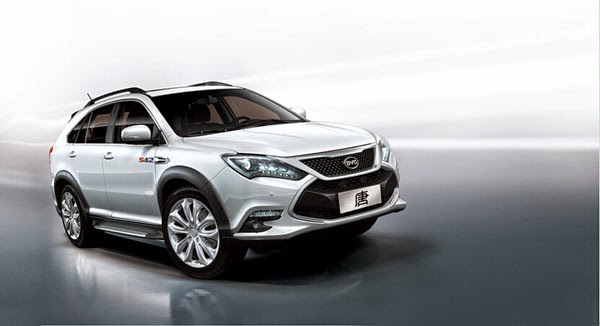
500 hp BYD Tang Plug-In Hybrid SUV now Available for Pre-orders

BYD Company Ltd. has officially announced their much anticipated Dual Mode Electric SUV, the Tang, will become available for pre-order on January 21, 2015 for the anticipated price of 300,000 RMB (before EV incentives) - USD$48,360. The announcement took place at BYD’s Annual International Auto Innovator Conference in Shenzhen. Demand for the BYD Tang is said to be incredibly high after BYD saw record EV sales in 2014 with the BYD Qin now topping the World’s Best Selling EV charts (presently in 5th place in PHEV sales). The BYD Tang is expected to quickly surpass the BYD Qin’s monthly sales figures as China has waited a long time for a PHEV Sport Utility Vehicle.

The BYD Tang, announced at Auto China 2014 (the Beijing Auto Show), is BYD Auto’s second generation DM 2.0 PHEV vehicle, and first of the much touted BYD 5-4-2 platform models:

  • 5: standing for 0-100km/ h (0-60 mph) in less than 5 seconds
  • 4: standing for 4-wheel drive
  • 2: standing for less than 2 liters average consumed over 100 km (best-in-class fuel economy nearly equal to 147 mpg)

    Similar to the BYD Qin, Tang gets its name from the Tang Dynasty, and is known throughout the world as the most prosperous of all the great Chinese Dynasties. Also announced during the innovator’s conference were two more Sport Utility offerings from BYD that will become available for order later in 2015:

    The “BYD Song”, a mid-size SUV along with the “BYD Yuan”, a compact SUV will both cater to China’s insatiable demand for Sport Utility Vehicles, and when powered by BYD’s industry leading 5-4-2 platform are set to redefine limitations of current PHEVs and SUVs alike.

  • Daimler and Qualcomm to develop wireless charging for EVs

    Daimler and telecommunications giant Qualcomm Technologies have announced a partnership to develop new wireless charging technologies for vehicles and phones.

    The alliance will focus on “mobile technologies that enhance in-car experiences and vehicle performance,” as well as Qualcomm's Halo Wireless Electric Vehicle (WEVC) technology, with the overall aim of introducing an induction charging system into future Mercedes models.

    Possible candidates for the technology could include the next-generation Mercedes-Benz S-Class, currently powered by a plug-in hybrid 3.0-litre twin-turbo V6, or even the small-sized B-Class Electric Drive.

    Qualcomm, more widely known for producing a range of high-end smartphone processors, started developing the technology in 2011 and WEVC trials have been underway in the United Kingdom since 2012, with the technology working similarly to wireless phone charging.

    A Vehicle Charging Unit (VCU) is installed in the floor of a garage or car park, which sends power wirelessly to a similar unit installed in the car, which sends power to the electric vehicle batteries.

    Currently the technology only allows for stationary charging, but development is underway on dynamic charging that will work by installing multiple VCUs underneath roads capable of charging cars on the move.

    The implementation of dynamic charging could cut the cost of electric vehicle manufacturing by reducing the need for large, range-extending batteries.

    Additionally, Qualcomm's WiPower technology will be implemented to allow full wireless charging on a smaller scale, for compatible smartphones and tablets inside the vehicle.

    Daimler AG group research and Mercedes development board member Thomas Weber said the new partnership will bear fruit for both companies.

    “It's important that we remain on the cutting edge of technology and continue to deliver unparalleled experiences to our customers,” he said.

    “With this in mind, we are eager to jointly explore possible fields of future cooperation with an internationally leading tech-firm like Qualcomm.”

    Qualcomm Incorporated President Derek Aberle said integration of vehicle and mobile communications is the way of the future.

    “The automobile has become an extension of always-on connectivity, and as such, we're continuously utilising our expertise in wireless mobility to deliver in-car experiences comparable to the ease and convenience of smartphones,” he said.

    Last year, German luxury rival brand BMW announced it would team up with Daimler to research and explore the possibilities of similar technology, and Volvo has also previously revealed it is looking at the cordless tech and Toyota signed a deal with WiTricity in late 2013.

    Californian Electric car specialist Tesla has also tested the potential of such systems, but dismissed them saying too much power was wasted in the transfer process.

    Volkswagen premiere the Golf GTE Sport: Plug-in hybrid sports car

    VW presented the Golf GTE Sport in a world premiere at the legendary GTI event at Lake Wörthersee on 14 May 2015, Volkswagen is catapulting the GT tradition into the future. The high-tech Golf that is largely made of carbon is powered by a total of three motors – combined in a plug-in hybrid drive with system power of 295 kW / 400 PS. The concept car breaks down traditional barriers between road and motorsport vehicles. Its progressive hybrid system in combination with the high-tech all-wheel drive, a lightweight body, optimum aerodynamic downforce, precision running gear based on the design of the current Golf GTE, a new motor racing cockpit (including visualisation of the racing line) and an unusual seating concept (two monocoque-like interior areas) enable breathtaking performance on the racetrack. At the press of a button, however, the concept car is able to cover a distance of up to 50 kilometres on electric power alone and hence with zero emissions.

    Drive system from motorsport and research

    World Rally Car TSI engine. The 1.6 litre TSI (turbocharged direct-injection engine) adapted from the superb Polo R WRC (World Rally Car) is accommodated in the engine compartment at the front of the car. It delivers 220 kW / 299 PS and maximum torque of 400 Nm. Volkswagen has already won the World Rally Championship twice with this engine. In the Golf GTE Sport the four-cylinder masterpiece is assisted by two electric motors. The engineers positioned the first electric motor at the front (in the housing of the 6-speed dual-clutch gearbox). It develops 85 kW / 115 PS and maximum torque of 330 Nm. The second electric motor is located at the rear with the same power output but torque of 270 Nm. The total torque of the drive system is 670 Nm. Whenever possible, the concept car is powered solely by electricity without producing any emissions. In sporty "GTE mode" all three motors work together, giving the all-wheel-drive Golf GTE Sport a standstill to 100 km/h time of 4.3 seconds and a top speed of 280 km/h. In the NEDC cycle for plug-in hybrid vehicles the sports car consumes just 2.0 l/100 km/h.

    Pure-bred sports car.

    Balanced for the Nürburgring north loop. The concept of the Golf GTE Sport has been designed so that the car is at home in both normal road traffic and racetrack conditions. Accordingly, the drive, suspension, body and interior all follow the principle of a pure-bred sports car. The drive system offers maximum agility, the suspension displays maximum neutrality in interaction with the all-wheel drive, the carbon body is lightweight and with its balanced aerodynamics it virtually adheres to the road. The driver ergonomics bridge the gap to motor racing, and with optimum weight distribution and a low centre of gravity the overall package ensures that a lap around racetracks such as the north loop of the Nürburgring is a unique driving experience.

    Interior rings in a new sports car era

    Two-seater race car. The driver and passenger board the two-seater interior of the Golf GTE Sport through doors that swing right up in the style of the XL 1. The doors extend a long way up into the roof and down into the side sills, resulting in convenient boarding when they are opened upwards. The interior in carbon and microfibre consists of two completely separate areas for the driver and passenger. Like in motorsport vehicles, they sit quite a long way to the back on racing bucket seats with five-point belts. Accordingly, the steering column that is entirely clad in carbon projects a long way into the interior where it appears to float – a further characteristic feature of a rally car or touring-car racer. The functional elements are operated via controllers and buttons in the cocoon-like interior trim. The gearbox of the Golf GTE Sport can also be operated manually with shift paddles on the motorsport steering wheel.

    Instruments on three levels. The instruments featuring a completely new design have been specially coordinated for the configuration of the driver's workspace. The Volkswagen interface designers opted for three transparent displays arranged behind one another on which all relevant information is displayed. On the smallest display at the front (closest to the driver) information such as the selected gear and the recuperation status is displayed; information that is only sporadically checked from the corner of the eye whilst driving. The centre display has secondary yet more complex information such as the power currently delivered by the drive (power meter) and the boost intensity of the plug-in system (electric boost). Information such as the current speed and the range are constantly in the driver's field of vision on the third and largest display. In addition, in "GTE mode" not only is the current lap displayed (e.g. 9 of 16), but there is also a virtual indicator of the ideal driving line – valuable assistance for safe and fast driving on complex racetracks such as the aforementioned Nürburgring north loop.

    Ergonomic perfection. The clearly arranged multifunction switch for starting and stopping the hybrid drive and controlling the 6-speed DSG is ideally positioned to the right of the driver for easy access. Right next to it there is a control panel for further vehicle functions; these include a button for activating a fire extinguishing system similar to that used in motorsport. Furthermore, the passenger is also supplied with data via a display in his interior segment. In "Info Mode" the current speed, the gear currently engaged and the engine speed can be displayed. If the passenger switches to "Data Mode" he can call up the vehicle acceleration and lateral force figures (g- forces). It is not only the use of carbon, but rather a general lightweight design that saves weight in the interior. For example, the loops for opening the doors are made of the same synthetic fibre as the five-point belts. Moreover, extremely elaborate ergonomics prevail in every detail. The operating mode switch for selecting "E- Mode", "GTE-Mode" or "Hybrid-Mode", for example, is situated in the roof, like in a jet plane.

    Body design and concept

    Extremely lightweight. The body of the Golf GTE Sport is largely made of lightweight carbon. As both a brand and a group, Volkswagen is a trailblazer in the industrial use of this material. For example, like the exterior of the Bugatti Veyron 16.4, the body of the Volkswagen XL1 is also made of carbon. The high-strength carbon body of the Golf GTE Sport therefore weighs much less than a comparable steel body.

    Side profile. The design concept of the Golf GTE Sport manifests itself in the car's striking silhouette. Here, Volkswagen is continuing the idea of C-pillars with a two-level design originating from the 2007 Golf GTI W12-650, which has been constantly further perfected in various concept cars. On the Golf GTE Sport that is now being presented, this C-pillar concept, which is unique worldwide, has reached a degree of perfection that allows it to leave the show car stage and – as a design vision – bridge the gap to the Golf GT models of the future. The basic styling of these pillars (like the string of a bow taut with an arrow) follows the unmistakable Golf design, but at the same time feature some completely new C-pillar details: behind the level visible from outside a second one opens up. The airstream flows between these two levels and is contributing to the aerodynamic downforce and to the cooling of the rear brake system. Stylistically, this concept means that the rear section (like the front section) is extremely wide. By contrast, the passenger cell between the A-pillar and the interior part of the C-pillar becomes narrower when viewed from the front to the rear – an avant-garde interplay of extremely powerful shapes.

    Doors and sills fold upwards. As described, the concept car painted in pearlescent "White Club" has two gullwing doors that swing forwards. The upper part that extends a long way into the roof is entirely made of dark visible carbon. A large part of the side sill is integrated in the door cutout. The three-dimensional body of the sill is enhanced at the top in the door section with an area in dark visible carbon. Further features on the side profile in visible carbon are the door mirror caps, the door window frames and the lower sill area. This part of the sill is designed as a splitter, i.e. a thin and sharp aerodynamic element, a feature familiar in motorsport. The side sill is framed by the new 20-inch alloy wheels fitted with tyres in format 235 at the front and 275 at the rear.

    Front. With the front section of the Golf GTE Sport the Volkswagen design team is impressively illustrating how the Golf GT models could develop in future. On the concept car, the designers removed the striking blue radiator grille line of the Golf GTE production model from the grille and positioned it below the bonnet as a blue crossbar running across the whole width of the front. Below it, three further crossbars in black chrome look extend across the centre air inlet. The high-gloss black air inlet grille itself has the honeycomb structure typical of GT models. A further air inlet below the crossbars is framed at the top and to the sides by a striking aerodynamic element (also made of carbon). A double spoiler, also designed as a splitter, rounds off the front. Here, too, carbon is used.

    LED headlights and daytime running lights. All electric and plug- in hybrid models from Volkswagen have C-shaped LED daytime running lights as a distinctive feature, and the Golf GTE Sport is no exception. Here, they frame the whole radiator grille unit at the sides, and in the top area there is an almost seamless transition from the LED daytime running lights to the extremely narrow and sharp LED headlights.

    Rear. Never before has Volkswagen realised such a charismatic and sporty rear for a Golf. Here, too, the two levels of the C-pillars are a defining stylistic feature giving the Golf GTE Sport a very wide and powerful appearance from the rear. The extended outer levels of the C-pillars at the rear – like the tail unit of an aeroplane – elongate the car together with the large roof spoiler. Typically Golf: the striking tailgate with a vertical downward angle at the level of the redesigned LED rear lights. At the top, the tailgate is limited by a black carbon roof spoiler – a wing that seems to hover in front of the tailgate at a distance of a few millimetres to the roof. The C-pillars that taper at an angle to the rear and the bumper merge into one another, with the latter projecting far above the line of the tailgate. As an imaginary continuation of the side strip made of visible carbon (above the sill), the top edge of the bumper also features visible carbon. Below this is an area painted in the body colour (with air outlets on the outside). The last level is a large diffuser made of visible carbon with the splitter that is also continued here. The round stainless steel trims of the twin-pipe exhaust system are integrated in the middle of the diffuser.

    Drive – plug-in hybrid and electric propshaft

    E-Mode – setting off on electric power. No Golf has ever had three motors before. But this one does. As described at the beginning, the combustion engine fitted by Volkswagen is a turbocharged 1.6-litre four-cylinder direct-injection engine (TSI) that produces 220 kW / 299 PS of power and a maximum torque of 400 Nm. The electric components consist of the lithium-ion battery and two electric motors. The front electric motor is integrated in the housing of the 6- speed DSG (DQ400E). Both electric motors have a power output of 85 kW. The total available system power is 295 kW / 400 PS. If necessary, the system drive power can be distributed to all four wheels thanks to the rear electric motor and an "electric propshaft". In normal operation the Golf GTE Sport drives just as quietly as the production Golf GTE that is already marketed. In "E-Mode" it is setting off purely electrically. In this case the concept car uses the battery that can be charged externally (but also whilst driving) to cruise without producing any emissions. It can cover up to 50 kilometres on a battery charge. When a defined minimum battery charge is reached, the 1.6 TSI is automatically switched on and the Golf GTE Sport drives in "Hybrid" mode. As soon as the battery reaches a certain charge level again, "E-Mode" can be reactivated at any time via a switch in the overhead console. In "E-Mode", the rear axle electric motor is first and foremost responsible for propulsion. When high demands are made on performance, the front electric motor is also activated to provide support.

    Hybrid mode – silent coasting. As soon as the drive system or the driver deactivates "E-Mode", the Golf GTE Sport becomes a classic full hybrid with regenerative braking charging the battery and automatic utilisation of the right combination of TSI and/or electric motors according to the specific drive situation. When the driver releases the accelerator pedal, and the battery is sufficiently charged, all drive sources are shut off. This is referred to as "coasting". If the driver releases the accelerator pedal or brakes, and the battery is insufficiently charged, the two electric motors operate as generators and charge the lithium-ion battery with the energy recovered from braking. With the dual mode "Battery Hold" or "Battery Charge" the battery's energy content can be deliberately kept constant by the driver ("Hold") or increased ("Charge"). When the 1.6 TSI engine is the sole source of propulsion, the concept car is a pure front-wheel drive car.

    GTE-Mode – the power of three hearts. The switch on board the Golf GTE Sport that is most important for dynamic performance is located in the overhead console. It bears the letters "GTE". When the driver operates this switch, the character of the Golf GTE Sport's drivetrain changes drastically in an instant because now the full system power of 400 PS is available. The turbocharged 299 PS petrol engine alone delivers immense propulsive power, and at this high level the electric drive components of the Golf GTE Sport assume an additional boost function. The boost effect is so strong that the drive unit would also perform well if used in professional touring car races: the Golf GTE Sport sprints to 50 km/h in 1.8 seconds, reaches 100 km/h in 4.3 seconds, and the maximum speed permitted in Austria, i.e. 130 km/h, in 6.5 seconds. On German motorways, the concept car reaches 200 km/h in 15.9 seconds. In "GTE-Mode" all four wheels of the Golf are driven.

    All-wheel drive – "electric propshaft". In "GTE-Mode" and as soon as the situation necessitates it, the drive power of the Golf GTE Sport is distributed to both axles. In this case (and if battery charge is low), the front electric motor – which is now being supplied with kinetic energy via the TSI – acts solely as a generator and a source of electricity for its counterpart at the rear axle. Since the energy for driving the rear axle flows by wire and not mechanically here, this is referred to as an "electric propshaft". Because the TSI drives the rear electric motor via the front electric motor, the all-wheel drive system also operates when the battery's charge state is low – an invaluable advantage in terms of driving dynamics. The importance of the implementation of the "electric propshaft" for Volkswagen with regard to series production is demonstrated by the fact that the company has had the German equivalent of this designation protected under copyright law.

    What You Need to Know About LMP1 Hybrids Leading up to Le Mans [VIDEO]

    The hybridised World Endurance Championship has introduced a new version of cut and thrust racing that is very entertaining to watch but I'm not sure either Jalopnik nor the (with respect) race commentators fully understand how the very different hybrid systems interact on the track.

    The video sequence features a race for position between the Audi R18 E-Tron Quattro and the Porsche 919 Hybrid. While these cars are both in the same LMP1 hybrid class, the rules allow for a large amount of technical freedom (especially when compared to many other 'control formula' International championships).

    The 2015 Audi R18 features a 558 HP (410 kW) 4.0-liter Turbo Diesel V6 combustion engine driving the rear wheels with a 272 HP (200 kW) electric motor driving the front wheels. The R18 is in the 4 Megajule class with a flywheel energy storage system can store 700 kilojoules.

    The Porsche 919 Hybrid features a 500 Hp (370 kW) 2.0-liter Turbo Petrol V4 combustion engine driving the rear wheels with a 400 HP (300 kW) electric motor driving the front wheels. The 919 is in the 8 Megajule class with an A123 Lithium-ion battery energy storage system and also has thermodynamic energy recuperation using the energy from exhaust gases from the turbo charger.

    The energy class regulations refer to the amount of regenerated energy that can be used each lap, for example 8 megajoules equals 2.2 kWh that can be deployed around the race track (3.6 megajoules is equivalent to 1 kilowatt hour (kWh).

    Like in Formula One, the energy recuperation is pre-programmed and not directly controlled by the drivers, what might be confusing is that unlike in F1 where output from the KERS systems is driver controlled via a steering wheel mounted 'boost' button, in the WEC the KERS output is also pre-programmed. In fact KERS 'boost' buttons are banned in the WEC.

    The FIA specify hybrid ‘braking zones’ where teams can program energy recovery. The hybrid output can be used anywhere around the track and is calculated by race engineers pre-race to maximise the use of this energy for fastest laps times with minimal fuel burn. As a result, what we're seeing in the video above where the Porsche 919 is said to be "running out of hybrid power" is in fact the same pre-programmed energy duty cycle used by the 919 on every laps of the race. This becomes very clear watching extended in-car race footage (the FIA WEC on-line package offers full race in-car access to all works LMP1 cars). What we see as the Porsche massively out accelerates the Audi at the top of Eau Rouge is a combination of the 919 having a 60 kW advantage over the Audi and where the Porsche is pre-programmed to apply it's 4Mj of additional hybrid power. Again, the 919 drives this duty cycle every lap.

    There are other very interesting differences at play such as braking performance. Where the Audi (flywheel) and Toyota (super capacitor) systems can recover a 'full charge' during high speed braking, while the Porsche (li-ion battery) has a noticeable extended high speed braking profile, e.g the 919 starts braking a longer distance before the corner, and is belived to take several braking zones to recover a 'full charge'. This is due to the asymmetric charge and discharge curves of lithium ion batteries and is partially compensated for by the thermodynamic turbo generator which makes the Porsche 919 Hybrid the only car in the field that recuperates energy not only when it brakes but also when it accelerates.

    Motorsport is a technical sport and this is exactly what racing is meant to be about, advancing automotive technology.

    Infiniti’s Vision GT Hybrid concept [VIDEO]

    Looking virtually identical to the digital model created for Gran Turismo 6, the real world Vision GT concept provides a glimpse at what a "high performance Infiniti could look like in the future.”

    While the company didn't have much to say about the car, it has a naturally aspirated 4.5-litre V8 petrol-electric hybrid system powering the rear wheels and features an aggressive front fascia with a prominent grille that is flanked by slender headlights and sporty air intakes. Moving further back, there's sporty side skirts, carbon fiber trim and massive alloy wheels.

    According to the game maker’s, the Infiniti Concept Vision Gran Turismo’s electric motor delivers “overwhelming torque” in low-speed situations while at higher speeds, the V8 engine teams “immense power”

    Peugeot 308 R Hybrid 500 hp AWD hot hatch [VIDEO]

    Feast your eyes on the ultimate 308. PEUGEOT has unveiled a stunning new version of the compact family hatchback – with a combined 500 bhp and four-wheel drive.

    Badged the PEUGEOT 308 R HYbrid, it has been developed by PEUGEOT Sport, the brand’s famous in-house engineering and racing division, which last year unveiled the critically acclaimed RCZ R. The car’s plug-in petrol hybrid powertrain results in a car capable of hitting 62mph (100km/h) in 4.0 seconds, yet still has astonishingly low CO2 emissions of 70g/km.

    At the heart of the PEUGEOT 308 R HYbrid is a plug-in powertrain with four-wheel drive that develops 500hp. The unit combines three sources of power, each capable of moving the vehicle independently of the others. They are a four-cylinder 1.6-litre THP 270 S&S petrol engine, plus two electric motors – each with power of 85kW/115hp – mounted one on each axle. The front one is linked to the six-speed gearbox.

    The result is a family hatchback which is capable of supercar performance. The PEUGEOT 308 R HYbrid can hit 62mph (100km/h) from a standing start in only 4.0 seconds, with top speed electronically limited to 155mph. In spite of such astonishing performance, CO2 emissions are just 70g/km.

    “If we were able to reach this kind of performance on a C-segment, it is all down to our passion for a challenge and our desire for excellence. PEUGEOT 308 R HYbrid is part of a very select club of cars reaching 0-62mph in four seconds” says Jean-Philippe Delaire, PEUGEOT Sport Head of Development, 308 R HYbrid powertrain.

    PEUGEOT Sport has been involved in every stage of development of the 308 R HYbrid, using its technical expertise and successful racing record to define the specifications of each component. For impeccable dynamic handling, the car’s weight has been optimised and placed as low as possible. The lithium-ion 3kWh battery has an excellent ratio between power and size, and is housed under the rear seats in place of the fuel tank. In turn, the 50-litre tank has been placed in the boot above the rear electric motor and two transformers.

    The PEUGEOT Sport engineers have equipped the car with four driving modes:

  • Hot Lap mode is the most powerful, harnessing the full potential from the three power sources to reach a total of 500hp and maximum torque of 730Nm.
  • Track mode delivers 400hp and 530Nm, mainly from the petrol engine and the rear electric motor. The front electric motor serves as an additional booster when accelerating.
  • Road mode is specially designed for road use with power of 300hp and torque of 400Nm. The petrol engine delivers its full potential, while the rear electric motor helps during accelerations. The front electric motor is not used in this mode.
  • ZEV makes priority use of the rear electric motor. The front electric motor comes into play, depending on the pressure applied on the accelerator pedal.

    The all-wheel drive system of the 308 R HYbrid makes for formidable handling, especially when coming out of the corners. The braking system is on a par with the car's performance, with 380mm ventilated discs at the front, gripped by four pistons, and 290mm discs to the rear. However, they are not used every time the brakes are applied, because PEUGEOT Sport has designed the powertrain to decelerate using the electric motors throughout the full speed range, starting at 155mph. Not only does this preserve the discs and pads, but uses regenerative braking to recharge the battery.

    It is one of three recharging strategies. The second uses the front electric motor as a generator, driven by the petrol engine, while the third solution is a rapid recharging terminal restoring the battery to its maximum power in just 45 minutes.

  • Mitsubishi to Launch Outlander Sport Plug-In Hybrid in 2016

    Mitsubishi is planning to bring to the US a plug-in hybrid version of its smaller Outlander Sport model – a segment of the market where previous to this week no automaker offered any hybrid, but to which both Toyota and Nissan have now thrown their hat in the ring.

    Mitsubishi says of its baby PHEV: 'The system is estimated to achieve very low CO2 emissions of below 40g/km while also delivering gutsy and smooth performance with its 163bhp electric motor.' It adds that it is developing plug-in electric hybrid systems best suited to each model in its line-up with a view to introducing them in the near future.

    "We are committed to huge investments in capital as well as huge investments in R&D," Mitsubishi's Don Swearingen, executive vice president for sales and fixed operations at Mitsubishi Motors North America said.

    "With the way our company was structured and the financial conditions that we were in, we had to get ourselves (back) on solid ground" before making this commitment,

    Nissan Launch X-Trail Hybrid in Japan

    Nissan has introduced the X-Trail Hybrid in Japan, equipped with a 2-liter MR20DD four-cylinder engine and an electric motor.

    Nissan says the hybrid powertrain “delivers a comfortable driving experience with its powerful acceleration and remarkable quietness, which eclipse those of typical 2.5-liter gasoline engines.”

    The 2.0-liter gasoline engine delivers 147PS (145hp) at 6,000 rpm and 207Nm (153lb-ft) of torque from 4,400 rpm, while the RM31 electric motor has a maximum power output of 30 kW (40hp) and a maximum torque of 160Nm (118lb-ft). The hybrid system also includes a high-output lithium-ion battery which is able to charge/discharge quickly.

    In combination with an XTronic CVT, the hybrid powertrain achieves a fuel economy of 20.6 km/l (4.8 l/100 km or 48.5 mpg US) in the JC08 mode and meets Japan’s 2020 fuel economy standards, which means all grades are eligible for tax exemptions.

    Furthermore, the X-Trail Hybrid achieves a 75 percent reduction of NOx (nitrogen oxide) and NMHC (non-methane hydrocarbons) in exhaust emissions over 2005 standards and SU-LEV certification.

    The Nissan X-Trail Hybrid features Intelligent Dual Clutch Control, which is a two-clutch parallel hybrid system that delivers engine and motor energy mechanically to the transmission without having a motor assist or a torque converter, thus favoring responsive starts and acceleration.

    In terms of equipment, the Nissan X-Trail Hybrid gets Forward Emergency Braking as a standard feature, as well as the NissanConnect Navigation System, the latest generation in-car navigation, information and entertainment system with smartphone link application. Nissan is planning to also introduce Forward Emergency Braking as standard on major models in Japan, by the end of autumn 2015. The X-Trail Hybrid is priced from 2,804,760 yen ($23,415).

    Toyota unveil 2016 RAV4 Hybrid [VIDEO]

    Toyota unveiled the new RAV4 Hybrid at the New York International Auto Show. The eighth hybrid in the Toyota lineup, the RAV4 Hybrid offers more power as well as better fuel economy than the conventional RAV4, according to Toyota Group Vice President and General Manager Bill Fay.

    The hybrid system consists of a 4-cylinder, 2.5-liter petrol engine and eCVT transmission along with an All-Wheel-Drive System with Intelligence (AWDi) featuring a rear motor that operates independently from the front motor. This additional electric motor delivers instant torque to the rear wheels only when additional traction is needed, thereby automatically helping prevent wheel spin.

    AWDi adapts to the angle or condition of the road, with no driver input needed. The electronic AWD provides increased safety and stability on slippery surfaces and enables a towing capacity of 1,650 kg (3,634 lbs). Easy and safe towing is ensured thanks to Trailer Sway Control system.

    RAV4 will also offer a new Bird’s Eye View Monitor. This Toyota-first technology utilizes four cameras that are mounted on the front, side mirrors and rear of the vehicle to give the driver a panoramic view of their surroundings. The system offers drivers assistance when parallel parking, and when pulling in and out of parking spaces.

    The Bird’s Eye View Monitor system also has an industry-first feature called Perimeter Scan, that gives drivers a live rotating 360-degree view of what is around the vehicle, helping them see objects that could be in the way.

    BMW doubles i8 production to meet demand

    Although BMW has doubled the production capacity for the plug-in hybrid i8, the order backlog is, according to Production Director Harald Krüger still at 4.5 months.

    "We are really proud to see how this demands develops for a completely new car," Kruger said at the BMW Financial News Conference. Pride partly because of the spectacular E-athletes have been accepted even better than expected in the market, and secondly because the production team at the Leipzig plant has got a handle on the production processes of the vehicle with a high carbon content faster than expected.

    Since launch in summer 2014 a total of 1,741 i8 were delivered. Given the high demand BMW have doubled the production number. Currently 20 cars per day will be built. Nevertheless, demand is still rising.

    Overall, BMW sold 17,793 i models last year including 16,052 i3. Norbert Reithofer acknowledged that BMW are satisfied with the development because of the valuable experience developed through the i-series with Reithofer emphasizing the goal of electrification power trains through all series.

    Laguna Seca Shoot-Out: McLaren P1 vs. 2015 Porsche 918 Spyder [VIDEO]

    Two 900 hp plug-in hybrids, the McLaren P1 versus the Porsche 918 Spyder.

    Both of these cars have carbon fiber tubs and body panels. Both have small displacement, high revving V-8s packed between their passenger compartments and rear axles. Both use twin-clutch transmissions, carbon ceramic brakes, and active aerodynamics. Both have roughly 900 hp.

    With the help of pro racing driver Randy Pobst, Motor Trend find out which one is fastest around Mazda Raceway Laguna Seca!

    Chris Harris – McLaren P1 Hybrid [VIDEO]

    Chris Harris takes the McLaren P1 hybrid hypercar for a drive around the UK in typical wet British weather.

    The car is obviously a gorgeous piece of automotive engineering but watching this video you could be forgiven for forgetting the P1 is a hybrid. Unfortunately no mention is made of the electric powertrain until the last minute of the film when Harris hits E-mode for a short demo.

    Better late than never, as the saying goes!

    Audi Launch 2015 R18 E-Tron Quattro WEC

    Audi Motorsport has taken the wraps off the 2015 R18 e-tron quattro scheduled to compete in the FIA World Endurance Championship (WEC).

    The new version has some big shoes to fill taking into account last year's model triumphed at Le Mans, but Audi is confident they can repeat the 2014 success thanks to a more aerodynamic body. It features larger air inlets in the redesigned front wheel arches along with reshaped headlights benefiting from matrix LED and Audi Laserlight technologies. Also new are the front wing, hood and engine cover while the monocoque has been carried over.

    Audi has prepared two body configurations suitable for various tracks of the 2015 WEC calendar and they have also optimized the chassis in collaboration with Michelin. The engineers were responsible for doubling the amount of energy from 2 to 4 megajoules per race lap at Le Mans and during braking the energy recovered is then sent back to the front axle during acceleration.

    The electric motor has been upgraded to 272 HP (200 kW), representing a "significant increase" compared to last year's variant while the encapsulated flywheel energy storage system can now store 700 kilojoules which is 17% more than before.

    The LMP1 prototype tips the scales at just 870 kg (1,918 lbs) and now consumes 2.5% percent less diesel per lap than last year in order to meet the more stringent regulations implemented by FIA. Output of the TDI 4.0-liter V6 engine stands at 558 HP (410 kW) and only five engines will be available during the 2015 WEC season.

    Next BMW i model not due until 2020

    BMW R&D chief Klaus Froehlich says the company will launch a third BMW i car but it won’t arrive until at least 2020.

    “We are still in the strategic research phase where we brainstorm,” BMW Group r&d chief Klaus Froehlich told Automotive News Europe. “Teams that start with a white sheet of paper. They talk with customers, hold workshops, then present their ideas and we decide.”

    Froehlich disputed media reports that claimed the third model after the i3 and i8 would be a variant of the X5 premium large SUV. He said the mission of the i subbrand is to change the perception of how a low-emissions car should look and perform, therefore there are no plans to re-package an existing BMW Group model and call it an i model.

    Also, he said the i subbrand is supposed to be a starting point for cutting-edge innovation that progressively moves down into the rest of the automaker’s lineup. Current examples include carbon fiber, which is a key part of the i3 and i8 and is moving into other BMWs, and the i8’s plug-in hybrid powertrain, which is being added to high-volume models such as X5, 3 series and 4 series.

    BMW will focus on steadily improving the i3 and i8 during the six-plus years until the subbrand’s portfolio grows again.

    “We have a minimum 20 percent battery density improvement every three years, thus over the i3 and i8’s life cycle, we will offer more performance, more range or a combination of the two,” Frohlich said.

    When asked whether current i3 and i8 owners would be able to switch to the more powerful electrical powertrains Froehlich said: “I don’t think a retrofit makes sense. When better batteries are available, we could then offer models with a longer range or with the same range but at a lower price.”

    BMW Ceo Norbert Reithofer, who approved the i project skunkworks that developed the lightweight, low-cost carbon-fiber composites and electric drivetrains for the i3 and i8, will step down in May to be be replaced by Harald Krüger, current head of production. Krüger is known to have a more pragmatic view of electric vehicles than Reithofer.

    Also BMW's R&D Chief, Herbert Diess, who oversaw the launch of the i3 and i8, and was thought to be a potential successor for BMW's CEO role was recently poached by Volkswagen to become chairman of VW's passenger car brand.

    Plug-in Electric Car Sales Surge in Europe


    Plug-in electric car sales have undergone a huge rise in many key European markets according to figures released by the European Automobile Manufacturers Association (ACEA).
    The biggest gains came in the UK, where a 300 per cent rise in electric cars has taken place compared to this time last year.
    In total 75,331 new electric cars have been registered according to the ACEA, with Norway leading the way with just under 20,000 new registrations.
    In Germany electric car registrations are up by 70 percent, while in France they had climbed by almost 30 per cent compared to the 2013 figures.
    Total Electrically Charged Vehicles = Pure Electric Vehicles + Extended-Range Electric Vehicles + Plug-In Hybrid Electric Vehicles
    Q4Q4% ChgQ1-Q4Q1-Q4% Chg
    ’14’1314/13’14’1314/13
    AUSTRIA93983113.0%3,6413,22712.8%
    BELGIUM59531191.3%2,032819148.1%
    BULGARIA20n.a.21100.0%
    CZECH REPUBLIC241109121.1%58347522.7%
    DENMARK676225200.4%1,612650148.0%
    ESTONIA10046117.4%402150168.0%
    FINLAND1309241.3%440218101.8%
    FRANCE4,2482,77353.2%12,4889,62229.8%
    GERMANY3,9692,71546.2%13,1187,70670.2%
    GREECE223633.3%6441500.0%
    HUNGARY146133.3%4316168.8%
    IRELAND197171.4%25650412.0%
    ITALY492497-1.0%1,4731,17425.5%
    LATVIA22045400.0%391132907.7%
    NETHERLANDS3,24116,926-80.9%12,92022,495-42.6%
    POLAND1,578571176.4%3,9681,900108.8%
    PORTUGAL846040.0%28922130.8%
    ROMANIA42100.0%7475.0%
    SLOVAKIA453818.4%16913624.3%
    SPAIN644261146.7%1,40588359.1%
    SWEDEN1,203457163.2%4,6671,547201.7%
    UNITED KINGDOM6,086676800.3%15,3613,833300.8%
    EUROPEAN UNION24,55226,610-7.7%75,33155,14436.6%
    EU1522,34825,834-13.5%69,76652,44933.0%
    EU (New Members)2,204776184.0%5,5652,695106.5%
    NORWAY4,6953,70926.6%19,7678,210140.8%
    SWITZERLAND8187499.2%2,6931,71756.8%
    EFTA5,5134,45823.7%22,4609,927126.3%
    TOTAL EUROPE (EU+EFTA)30,06531,068-3.2%97,79165,07150.3%
    WEST. EUROPE (EU15+EFTA)27,86130,292-8.0%92,22662,37647.9%

    Pure Electric Vehicle
    Q4Q4% ChgQ1-Q4Q1-Q4% Chg
    ’14’1314/13’14’1314/13
    AUSTRIA34524043.8%1,28165495.9%
    BELGIUM32720956.5%1,164500132.8%
    BULGARIA20n.a.21100.0%
    CZECH REPUBLIC10217500.0%19737432.4%
    DENMARK676225200.4%1,612650148.0%
    ESTONIA10046117.4%398149167.1%
    FINLAND6114335.7%18350266.0%
    FRANCE3,6322,46147.6%10,5618,77920.3%
    GERMANY2,4752,18013.5%8,5226,05140.8%
    GREECE00n.a.00n.a.
    HUNGARY8560.0%3210220.0%
    IRELAND2156150.0%22149351.0%
    ITALY32727518.9%1,09886427.1%
    LATVIA137113600.0%17644300.0%
    NETHERLANDS1,2461,863-33.1%2,9822,61913.9%
    POLAND231921.1%8131161.3%
    PORTUGAL544035.0%18916613.9%
    ROMANIA42100.0%7475.0%
    SLOVAKIA195280.0%586866.7%
    SPAIN473234102.1%1,07681132.7%
    SWEDEN28118849.5%1,239432186.8%
    UNITED KINGDOM2,448388530.9%7,4162,719172.7%
    EUROPEAN UNION12,7558,41851.5%38,49524,58656.6%
    EU1512,3608,32348.5%37,54424,34454.2%
    EU (New Members)39595315.8%951242293.0%
    NORWAY4,3433,63219.6%18,0907,882129.5%
    SWITZERLAND501505-0.8%1,6591,15643.5%
    EFTA4,8444,13717.1%19,7499,038118.5%
    TOTAL EUROPE (EU+EFTA)17,59912,55540.2%58,24433,62473.2%
    WEST. EUROPE (EU15+EFTA)17,20412,46038.1%57,29333,38271.6%

    Electrically Charged Vehicles other than Pure Electric Vehicles = Extended-Range Electric Vehicles + Plug-In Hybrid Electric Vehicles
    Q4Q4% ChgQ1-Q4Q1-Q4% Chg
    ’14’1314/13’14’1314/13
    AUSTRIA5945910.5%2,3602,573-8.3%
    BELGIUM268102162.7%868319172.1%
    BULGARIA00n.a.00n.a.
    CZECH REPUBLIC1399251.1%386438-11.9%
    DENMARK00n.a.00n.a.
    ESTONIA00n.a.41300.0%
    FINLAND6978-11.5%25716853.0%
    FRANCE61631297.4%1,927843128.6%
    GERMANY1,494535179.3%4,5961,655177.7%
    GREECE223633.3%6441500.0%
    HUNGARY61500.0%11683.3%
    IRELAND41300.0%3513400.0%
    ITALY165222-25.7%37531021.0%
    LATVIA8332666.7%21592288.9%
    NETHERLANDS1,99515,063-86.8%9,93819,876-50.0%
    POLAND1,555552181.7%3,8871,869108.0%
    PORTUGAL302050.0%1005581.8%
    ROMANIA00n.a.00n.a.
    SLOVAKIA2633-21.2%111130-14.6%
    SPAIN17127533.3%32972356.9%
    SWEDEN922269242.8%3,4281,115207.4%
    UNITED KINGDOM3,6382881163.2%7,9451,114613.2%
    EUROPEAN UNION11,79718,192-35.2%36,83630,55820.5%
    EU159,98817,511-43.0%32,22228,10514.6%
    EU (New Members)1,809681165.6%4,6142,45388.1%
    NORWAY35277357.1%1,677328411.3%
    SWITZERLAND31724429.9%1,03456184.3%
    EFTA669321108.4%2,711889204.9%
    TOTAL EUROPE (EU+EFTA)12,46618,513-32.7%39,54731,44725.8%
    WEST. EUROPE (EU15+EFTA)10,65717,832-40.2%34,93328,99420.5%