GM Buying 3 yo Self-Driving Tech Startup for $1 Billion

General Motors announced Friday it is buying Cruise Automation, a San Francisco self-driving vehicle startup, the latest move by the auto company as it competes with Silicon Valley to develop self-driving cars that could be used in ride-sharing fleets.

GM and Cruise did not disclose the value of the deal. Technology website Re/Code cited sources as saying GM paid $1 billion. A GM spokesman declined to comment on that figure. If correct GM has just set a new precedent for valuations of automotive tech start-ups.

GM intends to use Cruise’s technology and people to accelerate its effort to develop vehicles that can operate without a human driver, potentially as part of ride-sharing fleets “as soon as possible,” GM President Dan Ammann said in an interview.

“We will be committing considerable resources to recruit and grow the capability of the team,” Ammann said.

Cruise has been working to develop hardware and software that could be installed in a vehicle to enable the car to pilot itself on a highway, without the driver steering or braking.

GM initially planned an investment in the company but moved within five weeks to buy Cruise outright, said venture partner Nabeel Hyatt of Spark Capital, an investor in Cruise.

"They moved faster than most Silicon Valley companies would move," he said.

Cruise, which has 40 employees, was launched in 2013 and has raised $20 million in venture capital, founder Kyle Vogt said in an interview.

Vogt impressed Silicon Valley venture capital fund Signia Venture Partners by demonstrating an Audi A4 that could be controlled by a game console, said Signia principal Sunny Dhillon.

More recently, Cruise was working on a system that could make a car "fully driverless," Vogt said.

A flurry of investments by traditional auto companies reflects a fear among industry executives that the century-old business of building and selling cars that people drive themselves is at risk, even though global vehicle demand is strong.

In January, GM said it would invest $500 million in ride-hailing company Lyft Inc and followed that by forming a new car-sharing operation called Maven. The company has also established a separate unit for self-driving vehicle development.

Other automakers are moving into ride sharing and self-driving vehicles, as are some traditional auto suppliers.

Germany’s Continental and Delphi Automotive among others are seeking technology companies to buy for intellectual property and programming talent.

World’s First All-Electric Propulsion Satellite Begins Operations

The world’s first all-electric propulsion satellite, built by Boeing for Bermuda-based ABS, is now operational after an on-orbit handover on August 31. The ABS-3A, a 702SP (small platform) satellite, expands ABS’ communications services in the Americas, Europe, the Middle East and Africa.

“The operational ABS-3A satellite and ABS-2A, launching in early 2016, will further strengthen and solidify our global expansion and offer flexible capacity to our growing fleet,” said Tom Choi, CEO of ABS. “We believe Boeing’s innovative portfolio can help us to affordably grow now and in the future.”

The ABS-3A spacecraft was the world’s first all-electric propulsion satellite to be built and launched – part of a stacked pair launched in March with a 702SP satellite built for Eutelsat, based in Paris. The spacecraft’s all-electric xenon-ion propulsion system contains a sufficient quantity of the inert, non-hazardous element xenon to extend the satellite’s operations beyond the expected spacecraft design life of 15 years.

“With a successful launch, testing and execution of orbit operations, we were able to deliver the first 702SP to ABS about one month earlier than planned,” said Mark Spiwak, president, Boeing Satellite Systems International. “The 702SP product line was designed to bring the latest technology into the hands of customers seeking adaptable and affordable solutions. In addition, the 702SP’s patented dual-launch capability helps customers share launch costs, which can significantly lower overall expenses for a satellite owner.”

Boeing is under contract to build a second 702SP satellite for ABS, designated ABS-2A, which will be delivered and launched early next year.

Bosch buys solid state battery start-up Seeo

German industrial conglomerate Bosch is acquiring Silicon Valley battery firm Seeo, including all of its intellectual property and research staff. With the move, Bosch is looking to enhance its offer to the electric car industry, which is witnessing a significant growth.

Founded in 2007, Seeo is known for its advancements in creating high-energy rechargeable lithium-ion batteries based on a nano-structured polymer electrolyte. Seeo uses solid state technology that avoids the use of flammable liquid electrolyte.

Using solid electrolyte, Seeo manufactures DryLyte batteries that deliver high energy density alongside impressive reliability and safety. Seeo has an exclusive license to core patents from Lawrence Berkeley National Laboratory and has more than 30 issued, exclusively licensed and pending patent applications.

News website Quartz reported that Bosch confirmed the acquisition. A Bosch spokeswoman told the website that the financial terms of the deal will not be released.

In December, Seeo made news as its CEO Hal Zarem announced plans to manufacture a battery with an energy density that is about double that of existing commercial lithium-ion batteries. The new battery would have a density of 300 watt hours per kg.

Bosch, which is already supplying a lot of components to the automobile industry, has long been looking to enter the advanced battery market. The acquisition may prove successful, as Seeo and its innovations are said to be of great potential.

Meanwhile, Seeo faces intense competition from start-ups such as Sakti3, QuantumScape, XG Sciences, Envia Systems and SolidEnergy Systems that are working on new types of electric car batteries. Panasonic is currently the leading player in the electric car battery market with a 39% market share, followed by LG Chem and Samsung SDI, according to research firm Lux Research.

UK To Test Dynamic Wireless Charging For Electric Cars

Trials of technology needed to power electric and hybrid vehicles wirelessly on England’s major roads are due to take place later this year.

The trials are the first of their kind and will test how the technology would work safely and effectively on the country’s motorways and major A roads, allowing drivers of ultra-low emission vehicles to travel long distances without needing to stop and charge the car’s battery.

The trials follow the completion of the feasibility study commissioned by Highways England into ‘dynamic wireless power transfer’ technologies.

Transport Minister Andrew Jones said:

The potential to recharge low emission vehicles on the move offers exciting possibilities. The government is already committing £500 million over the next five years to keep Britain at the forefront of this technology, which will help boost jobs and growth in the sector. As this study shows, we continue to explore options on how to improve journeys and make low-emission vehicles accessible to families and businesses.

Highways England Chief Highways Engineer Mike Wilson said:

Vehicle technologies are advancing at an ever increasing pace and we’re committed to supporting the growth of ultra-low emissions vehicles on our England’s motorways and major A roads.

The off road trials of wireless power technology will help to create a more sustainable road network for England and open up new opportunities for businesses that transport goods across the country.

The trials are expected to begin later this year following the completion of an ongoing procurement process. The trials will involve fitting vehicles with wireless technology and testing the equipment, installed underneath the road, to replicate motorway conditions. Full details of the trials will be publicised when a successful contractor has been appointed.

The trials are expected to last for approximately 18 months and, subject to the results, could be followed by on road trials.

As well as investigating the potential to install technology to wirelessly power ultra-low efficient vehicles, Highways England is also committed in the longer-term to installing plug-in charging points every 20 miles on the motorway network as part of the government’s Road Investment Strategy.

World’s Fastest Charging Electric Bus Takes 10 seconds to Charge

The world's fastest charging electric busses, that takes just 10 seconds to be fully charged, were put into operation for the first time in Ningbo on Tuesday.

The bus operates a 11-km route with 24 stops in Ningbo, Zhejiang province, local transport authorities said.

In the next three years, a total of 1,200 such buses will be used for public transport in the city, where the electric bus plant is located.

The bus recharges while stationary or while passengers get on or off, and each charge enables the bus to run for least five kilometers, according to Zhou Qinghe, president of Zhuzhou Electric Locomotive, a subsidiary of high-speed train maker CRRC.

In addition, the bus, which rolled off production line in April, consumes 30 to 50 percent less energy than other electric vehicles.

The capacitor can be charged one million times and has a 10-year life cycle.

BorgWarner to buy electric motor maker Remy for $950M

BorgWarner agreed to buy Remy for $951 million in cash, driving further consolidation of the auto-parts industry.

BorgWarner will pay $29.50 a share, a 44 percent premium from Remy’s closing price on Friday, according to a statement today. The price indicates an enterprise value of about $1.2 billion, BorgWarner said. The maker of turbochargers and transmission parts said the deal is set to close in the fourth quarter and should add to earnings in the first year because of purchasing efficiencies and other savings.

Demand for fuel-saving technology and global scale is pushing auto-parts makers to consolidate. In May, TRW Automotive Holdings Corp. was acquired by German auto supplier ZF Friedrichshafen AG for $12.4 billion.

“Our main focus has been organic growth, and that remains a prime path for us,” James Verrier, CEO of BorgWarner, said on a conference call. “But we’ve also been consistent about the need for M&A to add key technology to sustain that growth.”

The acquisition highlights the increasing importance of the electrification of the powertrain, which has not been a strength of BorgWarner’s, Verrier said.

BorgWarner rose 1 percent to $54.14 at 11:39 a.m. in New York, as Remy soared 42 percent to $29.18. This year through Friday, Remy had fallen 1.9 percent and BorgWarner had declined 2.4 percent.

Electric Powertrains

Buying Remy will add alternators, starters and hybrid motors, giving BorgWarner the ability to benefit as more powertrains blend electric power with traditional gasoline-fueled technology.

Some investors had been concerned that the move to hybrid engines would eventually cause BorgWarner to lose sales to automakers, Joseph Spak, an analyst with RBC Capital Markets, wrote in a research note today.

BorgWarner CFO Ron Hundzinski said he expects savings from the acquisition of at least $15 million annually within two years, in part by eliminating duplicate costs associated with a public company, and from lower purchasing expenses. He said he expects the Remy business to have profit margins in the mid-teens, similar to BorgWarner’s.

Former GM unit

Remy International, formerly known as Delco Remy, traces its roots to brothers Frank and Perry Remy, who developed magnetos, generators that used magnets to help start early automobiles. GM acquired Delco Remy in 1918 and spun it off in 1995. The name was changed to Remy International in 2004 and the Pendleton, Ind.-based company spent less than two months in bankruptcy in 2007.

Remy posted net income from continuing operations of $6.1 million last year on revenue of $1.2 billion. In 2013, it posted net income of $12.4 million on revenue of $1.1 billion.

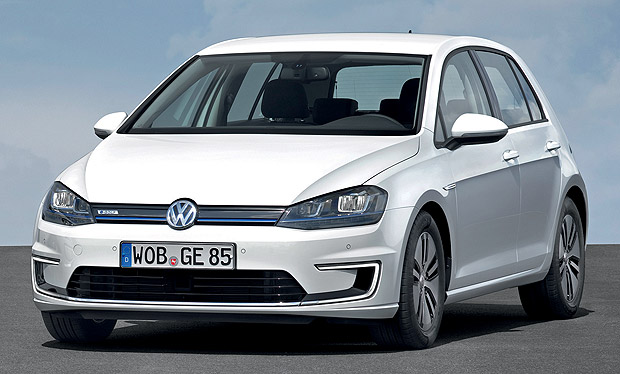
VW ‘close to battery breakthrough’ next-gen e-Golf to get 300km range

Volkswagen is closing in on a new battery technology that will bring “a quantum leap for the electric car”, according to the firm’s boss Martin Winterkorn.

Winterkorn told German tabloid newspaper Bild, "VW is researching a super-battery in Silicon Valley in California, that is cheaper, smaller and more powerful. An electric Volkswagen that can travel 300km (186 miles) on electricity is in sight. It will be a quantum leap for the electric car.”

As we reported back in December, VW acquired a 5% holding in QuantumScape, a San Jose-based early-stage battery startup that has been working on commercializing solid-state battery technology from Stanford University.

Volkswagen was due to decide in the first half of this year whether QuantumScape's battery technology is ready for use in its electric cars.

Torque Vector Steering Improves Electric Vehicle Energy Efficiency

Germany's Karlsruhe Institute for Technology along with industry partner Schaeffler are researching improvements in electric vehicle energy efficiency by using brake steer or torque vector control of wheel motors to assist power steering.

The project "Intelligent Assisted Steering System with Optimum Energy Efficiency for Electric Vehicles (e²-Lenk)" subsidized by the Federal Ministry for Education and Research (BMBF) focuses on a new assisted steering concept. In conventional vehicles, the internal combustion engine not only accelerates the car but also supplies on-board assist systems with energy; such as the assisted steering system, which reduces the strain on the driver at the wheel.

In electric vehicles, this energy comes from the battery and also reduces the range as a result. In this research project by the collaborating partners, Karlsruhe Institute for Technology (KIT) and Schaeffler, the steering system is assisted in an energy-efficient manner by intelligent control of the drive torques transmitted to the individual wheels. The project is being sponsored by BMBF with a sum of around 0.6 million euros over 3 years and was started in January 2015.

"The new assisted steering system would require less system components in an electric vehicle, this would mean savings in terms of weight and energy in an electric vehicle", explain project managers Dr. Marcel Mayer, Schaeffler, and Dr. Michael Frey, KIT. "This would mean that an electric car would be cheaper and have a greater range." Materials and production steps can be saved due to the potential optimization of the design and weight.

The basic idea of the e²-Lenk project is simple: The wheels in an electric car will be driven individually by electric motors in contrast to a car with an internal combustion engine where all the wheels are provided with equal force. If the wheels on the left side transmit more drive torque to the road than those on the right side, this will result in acceleration of the vehicle to the right without the need to turn the front wheels or consume additional energy for steering.

Tracked vehicles or quadrocopters steer using the same principle. "Steering assistance can be provided while driving by means of an intelligent control system and suitable wheel suspension", says Schaeffler engineer Mayer, Manager of the Automatic Driving Working Group, which is carrying out research as part of the collaborative research project SHARE (Schaeffler Hub for Automotive Research in E-Mobility) at KIT. "Only steering when stationary remains a challenge with conventional designs."

"The assisted steering system is part of the drive train with our approach", explains Frey who is researching at KIT's Institute of Vehicle Systems Technology. Steering the front wheels is carried out without using additional energy. "We also want to significantly increase the quality of driving. Customer benefit, comfort, safety and reliability go hand in hand here."

As part of the project, functional demonstrators are being built, with which the concepts can be validated and optimized in experiments. It is also planned to implement the system in last year's Formula Student racing car KIT built by the university group KA-RaceIng with the participation of the students.

e²-Lenk is the first publicly subsidized joint project as part of the collaborative re-search project SHARE at KIT between Schaeffler Technologies AG & Co. KG and KIT. This joint project is being managed at KIT's East Campus in a joint project management office run by SHARE at KIT and the Institute of Vehicle Systems Technology (FAST).

Schaeffler and KIT are partners in the Leading Edge Cluster Electric Mobility South-West (ESW), which connects over 80 stakeholders from science and economics in the region Karlsruhe – Mannheim – Stuttgart – Ulm. The cluster strategy of the ESW cluster aims to achieve intensive regional collaboration in the field of electric mobility by means of new approaches and forms of cooperation. As a result, knowledge is developed, consolidated and ultimately advantages are achieved in international competition.

Axial Flux Induction Motor for Hybrid and Electric Cars [VIDEO]

EV Powertrain start-up Evans Electric is rumoured to have been working on some interesting electric vehicle projects recently.

The team have developed a world-first copper rotor axial flux induction motor for automotive applications. The patent pending design has torque density on par with comparable axial air gap synchronous motors but without the expense of rare-earth permanent magnets.

Disc-shaped Axial flux motors are steadily making inroads into electric vehicle powertrains with Renault, Koenigsegg and Bugatti all looking to incorporate them into future models.

Evans Electric were also rumoured to have been hired by an OEM to help develop the architecture of a series hybrid powertrain based on in-board AFIMs with all-wheel-drive torque vectoring powered by a supercapacitor / li-ion battery energy storage system.

No news on which OEMs head these projects but they are believed to be EU headquartered.

Carbon Fiber to Go Mainstream in Automobile by 2025

Driven by a faster-than-expected pace of technology development, carbon-fiber reinforced plastics (CFRPs) will be poised to gain widespread adoption for automotive lightweighting by 2025, according to Lux Research.

Already advances underway in fiber, resin and composite part production will lead to a $6 billion market for automotive CFRPs in 2020, more than double Lux's earlier projection. Even this figure is dwarfed by the full potential for CFRPs in automotive if they can become affordable enough for use in mainstream vehicles.

“Current trends strongly indicate significant mainstream automotive adoption of CFRPs in the mid-2020s, and companies throughout the value chain must position themselves to take advantage of the coming shifts. However, long-term megatrends towards urbanization, connectivity and automation suggest that there could be a limited time window beyond that for penetrating the automotive space,” said Anthony Vicari, Lux Research Associate and the lead author of the report titled, “Scaling Up Carbon Fiber: Roadmap to Automotive Adoption.”

“CFRP developers will have to continue the pace of innovation to overcome the high cost that has so far limited the material to less price-sensitive markets like aerospace and sporting goods,” he added.

Lux Research analysts reviewed the technology development in CFRPs, and evaluated its economics to consider its impact on the automotive sector. Among their findings:

  • Growing partnerships hasten development. The number of direct partnerships between carmakers or Tier-1 automotive suppliers and carbon fiber players has nearly doubled to 11 since 2012. Toray, with partnerships with Plasan Carbon Composites and Magna, has formed the most new relationships and is a major hub.

  • Patent uptick suggests mid-2020 adoption. Using a predictive tool, Lux Research identified a lag of about 18 years between uptick of patent activity and attainment of mainstream commercial adoption milestones. With another major upturn in CFRP patent activity occurring in 2007, large-scale mainstream automotive use is likely by the mid-2020s.

  • Other manufacturing costs need to be cut. Carbon fiber itself, at $28/kg for standard modulus fiber, represents just 22% of the cost of a final CFRP part. Additional advances are needed to reduce capital, labor, energy, resin and processing costs, which together make up the remaining 78%.

    Source: Lux Research

  • Toyota to Trial New SiC Power Semiconductor Technology [VIDEO]

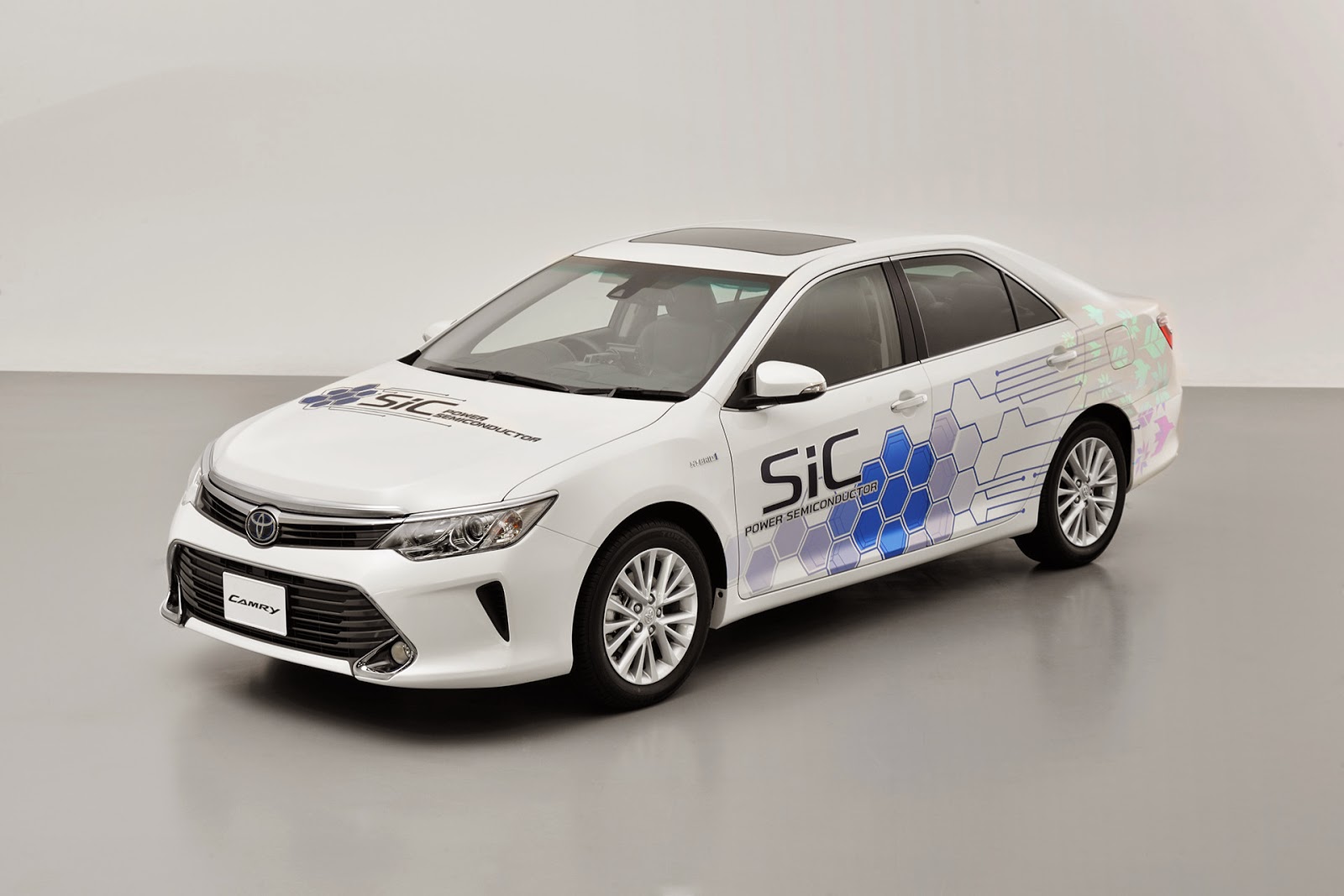
    Using a "Camry" hybrid prototype and a fuel cell bus, Toyota Motor Corporation will bring a brand new technology to the streets of Japan for testing this year. The tests will evaluate the performance of silicon carbide (SiC) power semiconductors, which could lead to significant efficiency improvements in hybrids and other vehicles with electric powertrains.

    Technology

    Power semiconductors are found in power control units (PCUs), which are used to control motor drive power in hybrids and other vehicles with electric powertrains. PCUs play a crucial role in the use of electricity, supplying battery power to the motors during operation and recharging the battery using energy recovered during deceleration.

    At present, power semiconductors account for approximately 20 percent of a vehicle's total electrical losses, meaning that raising the efficiency of the power semiconductors is a promising way to increase powertrain efficiency.

    By comparison with existing silicon power semiconductors, the newly developed high quality silicon carbide (SiC) power semiconductors create less resistance when electricity flows through them. The technologies behind these SiC power semiconductors were developed jointly by Toyota, Denso Corporation, and Toyota Central R&D Labs., Inc. as part of the results of a broader R&D project* in Japan.

    Test vehicles and period

    In the Camry hybrid prototype, Toyota is installing SiC power semiconductors (transistors and diodes) in the PCU's internal voltage step-up converter and the inverter that controls the motor. Data gathered will include PCU voltage and current as well as driving speeds, driving patterns, and conditions such as outside temperature. By comparing this information with data from silicon semiconductors currently in use, Toyota will assess the improvement to efficiency achieved by the new SiC power semiconductors. Road testing of the Camry prototype will begin (primarily in Toyota City) in early February 2015, and will continue for about one year.

    Similarly, on January 9, 2015, Toyota began collecting operating data from a fuel cell bus currently in regular commercial operation in Toyota City. The bus features SiC diodes in the fuel cell voltage step-up converter, which is used to control the voltage of electricity from the fuel cell stack.

    Data from testing will be reflected in development, with the goal of putting the new SiC power semiconductors into practical use as soon as possible.

    Carnegie Mellon Researchers Increase Lithium Air Battery Energy Capacity 5x

    Carnegie Mellon University's Venkat Viswanathan and a team of researchers have reduced the problem of sudden death in lithium air batteries through the addition of water, increasing energy storage capacity by five times.

    "We could not get all the energy out of these batteries because of sudden death," says Viswanathan, an assistant professor of Mechanical Engineering. "That was the ugly aspect of this battery."

    Lithium air batteries are an exciting research frontier because they could store at least twice as much energy as lithium ion batteries, which are currently the most common battery used in many consumer products, ranging from cell phones and laptops to electric vehicles. The potential of lithium air batteries lies in replacing one of the battery materials, the cathode, with air, making lithium air batteries lighter than lithium ion batteries. The lighter the battery, the more energy it can store. In addition, lithium air batteries have the possibility to increase safety.

    Viswanathan, IBM researchers Nagaphani B. Aetukuri, Jeannette M. García, and Leslie E. Krupp, University of California, Berkley Assistant Professor Bryan D. McCloskey and Alan C. Luntz of the SLAC National Accelerator Laboratory discovered that adding water to the battery decreases a phenomenon called sudden death, which reduces the battery's storage capacity. They published their results in Nature Chemistry.

    Sudden death causes lithium air batteries to die prematurely. The batteries require lithium, oxygen and an electron to move inside the battery to reach the active site where the reaction produces energy. As the battery operates, however, the lithium and oxygen form lithium peroxide films that produces a barrier and prevents electron movement to the active site, resulting in sudden death.

    Water selectively dissolves the lithium peroxide, and the dissolved lithium and oxygen move to a toroidal depository in the cathode, removing the barrier to electron movement, before reforming into lithium peroxide.

    "This allows for five times the capacity of the original case," says Aetukuri.

    While water is a temporary solution, it is eventually consumed and results in parasitic products that reduce battery efficiency. Viswanathan and McCloskey are currently searching for an additive other than water, which will result in increased battery capacity and efficiency. However, the addition of water is a large step forward in lithium air battery technology.

    "This additive opens up the opportunity to be able to reach a much higher energy density than a lithium ion battery, and once we perfect the design, we can compete with lithium ion batteries," says Viswanathan.

    To read the full Nature Chemistry paper, visit: http://www.nature.com/nchem/journal/vaop/ncurrent/full/nchem.2132.html

    TU München develop torque vectoring transmission for electric vehicles

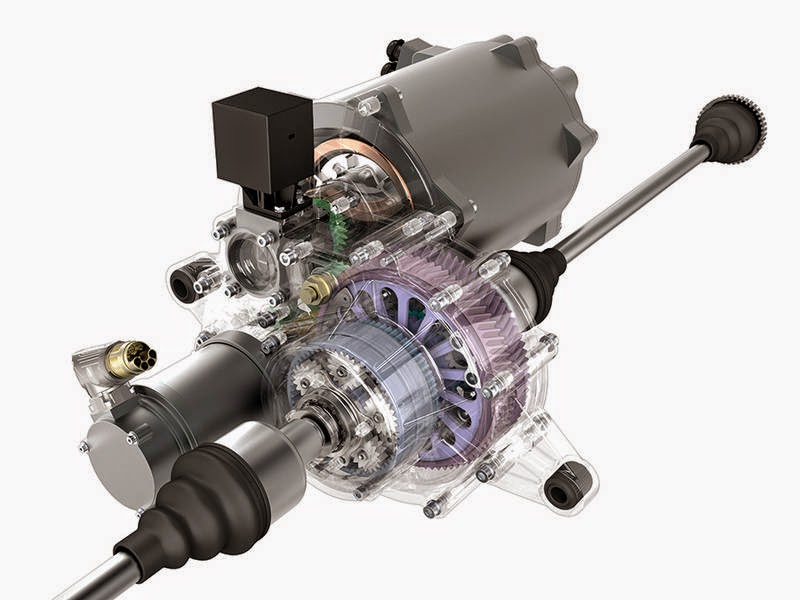
    A limiting factor for the driving range of electric vehicles is the amount of energy supplied by the batteries. To recoup as much braking energy as possible, engineers at the Gear Research Center (FZG) at the TU München have developed a light-weight torque vectoring transmission for electric vehicles.

    “While drive torque is normally distributed 50/50 to the wheels of the drive axle, our torque vectoring system doses the torque between the wheels as required,” explains engineer Philipp Gwinner from FZG. “This also ensures particularly good drive dynamics.” When a vehicle accelerates in a curve, greater torque is applied to the outside wheel. The car steers itself into the curve. The result: greater agility and, at the same time, safer road handling.

    Recovering braking energy in curves

    Even more important to the researchers, however, is the efficient recovery of braking energy. Normally, brakes convert kinetic energy into heat. So-called recuperation systems can prevent this. They work along the principle of a bicycle dynamo, which converts energy tapped from the wheel into electrical energy. In the case of electric vehicles this energy can be used to recharge the batteries, thereby extending the driving range.

    Unfortunately, in curves the recuperation of braking energy is limited since the inside wheel bears significantly less load than the outside wheel. The torque vectoring function adjusts the recuperation torque for both wheels individually. This increases vehicle stability while at the same time allowing more energy to be recovered.

    Less weight, lower cost

    Torque vectoring transmissions are used today in select top model cars and sports cars with combustion engines. Due to their high cost and additional weight torque vectoring transmissions have not found application in electric vehicles. The aim of the researchers was, thus, to optimize the transmission for small vehicles with electric drives.

    Instead of the standard bevel gears used in differential transmissions, the engineers developed a spur gear differential in which additional torque can be applied from outside via a superimposed planetary gearbox. Using a small (in comparison to the drive motor) electric torque vectoring machine they can generate a large yaw moment at any speed to achieve the desired road handling dynamics.

    The housing of the first prototypes are made of aluminum. To save even more weight, the aluminum housing will be replaced by a composite case made of aluminum and a fiber-reinforced synthetic. To reduce the forces acting on the housing without increasing gear noise, which is critical in electrical vehicles, the researchers have developed a special gearing free of axial forces. This and further construction element optimizations led to a reduction in gearbox weight of more than ten percent.

    “The elegant thing about the torque vectoring transmission we have developed is that it not only has a higher recuperation level, and, with that, an increased driving range,” says Professor Karsten Stahl, Director of the FZG, “the transmission also improves road handling dynamics, driving pleasure and safety. The continuously improving optimization measures leave us optimistic that in the near future both the weight and cost will be able to compete with today’s standard differential transmissions.”

    Participants in the Visio.M consortium are, in addition to the automotive companies BMW AG (lead manager) and Daimler AG, the Technische Universitaet Muenchen as a scientific partner, and Autoliv BV & Co. KG, the Federal Highway Research Institute (BAST), Continental Automotive GmbH, Finepower GmbH, Hyve AG, IAV GmbH, InnoZ GmbH, Intermap Technologies GmbH, LION Smart GmbH, Amtek Tekfor Holding GmbH, Siemens AG, Texas Instruments Germany GmbH and TÜV SÜD AG as industrial partners. The project is funded under the priority program "Key Technologies for Electric Mobility - STROM" of the Federal Ministry for Education and Research (BMBF) for a term of 2.5 years with a total budget of 10.8 million euro.

    Ultra-Fast Charging battery can reach 70% in only 2 minutes

    Scientists at Nanyang Technology University (NTU) have developed ultra-fast charging batteries that can be recharged up to 70 per cent in only two minutes.

    The new generation batteries also have a long lifespan of over 20 years, more than 10 times compared to existing lithium-ion batteries.

    This breakthrough has a wide-ranging impact on all industries, especially for electric vehicles, where consumers are put off by the long recharge times and its limited battery life.

    With this new technology by NTU, drivers of electric vehicles could save tens of thousands on battery replacement costs and can recharge their cars in just a matter of minutes.

    Commonly used in mobile phones, tablets, and in electric vehicles, rechargeable lithium-ion batteries usually last about 500 recharge cycles. This is equivalent to two to three years of typical use, with each cycle taking about two hours for the battery to be fully charged.

    In the new NTU-developed battery, the traditional graphite used for the anode (negative pole) in lithium-ion batteries is replaced with a new gel material made from titanium dioxide.

    Titanium dioxide is an abundant, cheap and safe material found in soil. It is commonly used as a food additive or in sunscreen lotions to absorb harmful ultraviolet rays.

    Naturally found in spherical shape, the NTU team has found a way to transform the titanium dioxide into tiny nanotubes, which is a thousand times thinner than the diameter of a human hair. This speeds up the chemical reactions taking place in the new battery, allowing for superfast charging.

    Invented by Associate Professor Chen Xiaodong from NTU’s School of Materials Science and Engineering, the science behind the formation of the new titanium dioxide gel was published in the latest issue of Advanced Materials, a leading international scientific journal in materials science.

    Prof Chen and his team will be applying for a Proof-of-Concept grant to build a large-scale battery prototype. With the help of NTUitive, a wholly-owned subsidiary of NTU set up to support NTU start-ups, the patented technology has already attracted interest from the industry.

    The technology is currently being licensed by a company for eventual production. Prof Chen expects that the new generation of fast-charging batteries will hit the market in the next two years. It also has the potential to be a key solution in overcoming longstanding power issues related to electro-mobility.

    “Electric cars will be able to increase their range dramatically, with just five minutes of charging, which is on par with the time needed to pump petrol for current cars,” added Prof Chen.

    “Equally important, we can now drastically cut down the toxic waste generated by disposed batteries, since our batteries last ten times longer than the current generation of lithium-ion batteries.”

    The 10,000-cycle life of the new battery also mean that drivers of electric vehicles would save on the cost of battery replacements, which could cost over US$5,000 each.

    Easy to manufacture

    According to Frost & Sullivan, a leading growth-consulting firm, the global market of rechargeable lithium-ion batteries is projected to be worth US$23.4 billion in 2016.

    Lithium-ion batteries usually use additives to bind the electrodes to the anode, which affects the speed in which electrons and ions can transfer in and out of the batteries.

    However, Prof Chen’s new cross-linked titanium dioxide nanotube-based electrodes eliminates the need for these additives and can pack more energy into the same amount of space.

    Manufacturing this new nanotube gel is very easy. Titanium dioxide and sodium hydroxide are mixed together and stirred under a certain temperature so battery manufacturers will find it easy to integrate the new gel into their current production processes.

    Recognised as the next big thing by co-inventor of today’s lithium-ion batteries

    NTU professor Rachid Yazami, the co-inventor of the lithium-graphite anode 30 years ago that is used in today’s lithium-ion batteries, said Prof Chen’s invention is the next big leap in battery technology.

    “While the cost of lithium-ion batteries has been significantly reduced and its performance improved since Sony commercialised it in 1991, the market is fast expanding towards new applications in electric mobility and energy storage,” said Prof Yazami, who is not involved in Prof Chen’s research project.

    Last year, Prof Yazami was awarded the prestigious Draper Prize by The National Academy of Engineering for his ground-breaking work in developing the lithium-ion battery with three other scientists.

    “However, there is still room for improvement and one such key area is the power density – how much power can be stored in a certain amount of space – which directly relates to the fast charge ability. Ideally, the charge time for batteries in electric vehicles should be less than 15 minutes, which Prof Chen’s nanostructured anode has proven to do so.”

    Prof Yazami is now developing new types of batteries for electric vehicle applications at the Energy Research Institute at NTU (ERI@N).

    This battery research project took the team of four scientists three years to complete. It is funded by the National Research Foundation (NRF), Prime Minister's Office, Singapore, under its Campus for Research Excellence and Technological Enterprise (CREATE) Programme of Nanomaterials for Energy and Water Management.

    Carnegie Mellon To Develop Electrolyte Genome Search Engine for Battery Development [VIDEO]

    Venkat Viswanathan, assistant professor of mechanical engineering at Carnegie Mellon University, is developing a search engine that will help researchers and industry experts discover and develop electrolytes for batteries more quickly and efficiently than currently possible.

    Viswanathan, who is researching new types of lithium batteries for electric vehicles, realized how slow and inefficient it is to search for specific information on the different components. "You have to go read through multiple charts or go through handbooks to get to that information, and then try to discover something that will actually work," Viswanathan says.

    Viswanathan was inspired to find a solution to this problem by President Barack Obama's first announcement of the Materials Genome Initiative. Making the announcement at Carnegie Mellon in 2011, he called upon scientists and engineers to help discover and produce new materials faster and in more cost-effective ways by creating and using a massive database of information on industry materials.

    While the Materials Genome Initiative is intended for a broad spectrum of industry applications, Viswanathan is currently focused on developing a data genome for electrolytes. Electrolytes consist of salt and a solvent, and are essential in lithium ion batteries because they serve as the channel that moves the lithium ions, which store the energy. Charged ions must be moved from one side of the battery, and when they are charged, back to the other side, where they can be consumed. Finding electrolytes that work is currently one of the major barriers to developing more energy-dense storage solutions for consumer use.

    Using a search engine similar to social networking sites Facebook and Yelp, scientists and researchers can use the electrolyte genome to enter the beginning of queries and receive suggestions about what they might mean, similarly to how when you type "Sara" into your Facebook search, the people named Sara who are your friends are the top suggestions. It also can handle queries with "and," such as if you type in "Sara" AND "Boston" to discover Saras who live in Boston. While this sounds common for everyday users, it is novel for very technical organic chemistry searches.

    The search engine is robust enough to help users come up with ideas, such as if a researcher is trying to think of a certain set of desired attributes for a solvent but cannot quite precisely state it — like how you might be trying to think of a word on the tip of your tongue, but can only remember it starts with a certain letter and means something similar to another word.

    In the future, users will be able to seamlessly merge data graphically to get more complex information such as correlations between various properties of solvents or between different solvents. This is similar to the search engine Wolfram Alpha, which, should a user type in "GDP of China and India," will provide the users not only with the countries' current GDPs but also with a graph detailing how their GDPs have increased over time, among other relevant facts.

    The ability to access this in-depth level of information would result in faster and more successful testing of new materials, ultimately allowing researchers and businesses to get products from concept to marketplace more quickly.

    Viswanathan's electrolyte genome project is tailored for expert users who are looking for complex information, such as electrochemical and chemical properties, and highest occupied molecule orbital (HOMO) level of solvents, but he hopes to eventually expand the project to be accessible to the general public and to other kind of solvents beyond organic solvents. The data genome search engine would support a wide range of querying options, from complicated searches by experts to simple searches by general users who are looking for information unavailable outside of print materials or who just want to see the capability of the data genome.

    To test Viswanathan's electrolyte genome project, visit: http://www.andrew.cmu.edu/user/venkatv/SEED.html.

    Ultra High Power Automatic Charging Station for Trucks Debuts at IAA 2014

    The Opbrid Trůkbaar brings automatic fast charging to the world of heavy duty electric trucks for zero emissions. The Trůkbaar is 100% compatible with the standards-based Opbrid Bůsbaar V3 for buses.

    While plug-in urban buses like the Volvo Electric Hybrid are natural candidates for fast charging en route, there are also very compelling business cases for fast charged electric trucks in diverse areas such as refuse collection, airport vehicles, ports, and delivery trucks. The Opbrid Trůkbaar is designed to be easily mounted on most trucks due to its compact, lightweight, and simple design. Both the Opbrid Trůkbaar and the new Opbrid Bůsbaar V3 share the same design by Furrer+Frey of Switzerland, with a pantograph which lowers from the curbside station, and an inexpensive transverse 4 contact bar on the roof of the vehicle.

    The Opbrid Trůkbaar and Bůsbaar V3 are designed for ultra high power mode 4 DC charging, up to 650kW. This amount of power transfer uses safe and reliable conductive technology transferred from the European electric rail industry by our partner Furrer+Frey, with over 90 years of experience in high power transfer to locomotives. This amount of power transfer enables scenarios such as super short charge stops and 24 hour operation. Since the Opbrid Trůkbaar and Bůsbaar are 100% compatible, cities can leverage their investment in bus chargers by also using them for rubbish collection, delivery vehicles and street cleaners. Vehicles of various heights can charge at the same station due to the large vertical working range of the charging station.

    The new design of the Opbrid Trůkbaar and Bůsbaar V3 also liberates designers to create curbside charging stations that blend into existing streetscapes, or that stand out as elegantly sculptured street furniture. This is because the overhead pantograph is compact and hidden underneath a weatherproof cover. This means that the mounting post as well as the weatherproof cover can be almost any shape imaginable, giving designers unlimited freedom.

    Of course, safety is our utmost concern, so the Opbrid Trůkbaar and Bůsbaar V3 have been designed to conform to IEC and ISO standards for high power DC charging, with 4 contacts, correct contact sequence, and built-in verification of contact surface before charging. The parking tolerance is quite broad and reliable due to our years of experience making bus fast charging stations. An optional insulating cover for the on-vehicle part is available to add an additional layer of safety. The station retracts upward to over 4.5 meters when not charging to fulfill traffic regulations.

    The Opbrid Trůkbaar and Bůsbaar V3 will be on display at the IAA 2014 in Hall 13, Stand F12.

    The global market for EV traction motors will be over $25 billion in 2025

    The electric vehicle business will approach a massive $500 billion in 2025 with the traction motors being over $25 billion.

    Their design, location and integration is changing rapidly. Traction motors propelling land, water and air vehicles along can consist of one inboard motor or - an increasing trend - more than one near the wheels, in the wheels, in the transmission or ganged to get extra power. Integrating is increasing with an increasing number of motor manufacturers making motors with integral controls and sometimes integral gearing. Alternatively they may sell motors to the vehicle manufacturers or to those integrating them into transmission.

    In a new report from IDTechEx called "Electric Motors for Hybrid and Pure Electric Vehicles 2015-2025: Land, Water, Air" these complex trends are explained with pie charts, tables, graphs and text and future winning suppliers are identified alongside market forecasts. There are sections on newly important versions such as in-wheel, quadcopter and outboard motor for boats.

    Today, with the interest in new traction motor design there is a surge in R&D activities in this area, much of it directed at specific needs such as electric aircraft needing superlative reliability and power to weight ratio. Hybrid vehicles may have the electric motor near the conventional engine or its exhaust and this may mean they need to tolerate temperatures never encountered in pure electric vehicles. Motors for highly price-sensitive markets such as electric bikes, scooters, e-rickshaws and micro EVs (car-like vehicles not homologated as cars so made more primitively) should avoid the price hikes of neodymium and other rare earths in the magnets. In-wheel and near-wheel motors in any vehicle need to be very compact. Sometimes they must be disc-shaped to fit in.

    However, fairly common requirements can be high energy efficiency and cost-effectiveness, high torque (3-4 times nominal value) for acceleration and hill climbing and peak power twice the rated value at high speeds. Wide operating torque range is a common and onerous requirement. Overall energy saving over the drive cycle is typically critical. Usually winding and magnet temperature must be kept below 120C and then there are issues of demagnetisation and mechanical strength.

    Silicon Carbide Power Electronics Can Slash $6,000 From Cost of Tesla Model S

    Wide bandgap (WBG) materials such as silicon carbide (SiC) and gallium nitride (GaN) are best positioned to address emerging power electronics performance needs in electric vehicles (EVs), with SiC displacing silicon as early as 2020, according to Lux Research.

    As silicon struggles to meet higher performance standards, WBG materials are benefiting critically from evolving battery economics. On Tesla Model S, for example, a 20% power savings can result in gains of over $6,000 in battery cost, or 8% of the vehicle's cost.

    "Efficient power electronics is key to a smaller battery size, which in turn has a positive cascading impact on wiring, thermal management, packaging, and weight of electric vehicles," said Pallavi Madakasira, Lux Research Analyst and the lead author of the report titled, "Silicon vs. WBG: Demystifying Prospects of GaN and SiC in the Electrified Vehicle Market."

    "In addition to power electronic modules, opportunities from a growing number of consumer applications -- such as infotainment and screens -- will double the number of power electronic components built into a vehicle," she added.

    Lux Research analysts evaluated system-level benefits WBG materials are bringing to the automotive industry, and predicted a timeline for commercial roll-outs of WBG-based power electronics. Among their findings:

  • Power saving threshold lower for EVs. At 2% power savings, if battery costs fall below $250/kWh, SiC diodes will be the only economic solution in EVs requiring a large battery, such as the Tesla Model S. However, for plug-in electric vehicles (PHEVs), the threshold power savings needs to be a higher 5%.

  • SiC ahead in road to commercialization. SiC diodes lead GaN in technology readiness and will attain commercialization sooner, based on the current Technology Readiness Level (TRL). Based on the TRL road map, SiC diodes will be adopted in vehicles by 2020.

  • Government funding is driving WBG adoption. The U.S., Japan and the United Kingdom, among others, are funding research and development in power electronics. The U.S. Department of Energy's Advanced Power Electronics and Electric Motors is spending $69 million this year and defining performance and cost targets; the Japanese government funds a joint industry and university R&D program that includes Toyota, Honda and Nissan.
  • First Siemens e-highway in the USA by 2015 [VIDEO]

    For the first time ever, electric trucks powered by overhead cables will run in the USA and help to reduce carbon dioxide emissions. The South Coast Air Quality Management District (SCAQMD) has given the go-ahead for Siemens to install an e-highway system for test purposes close to the ports of Los Angeles and Long Beach, the biggest in the USA.

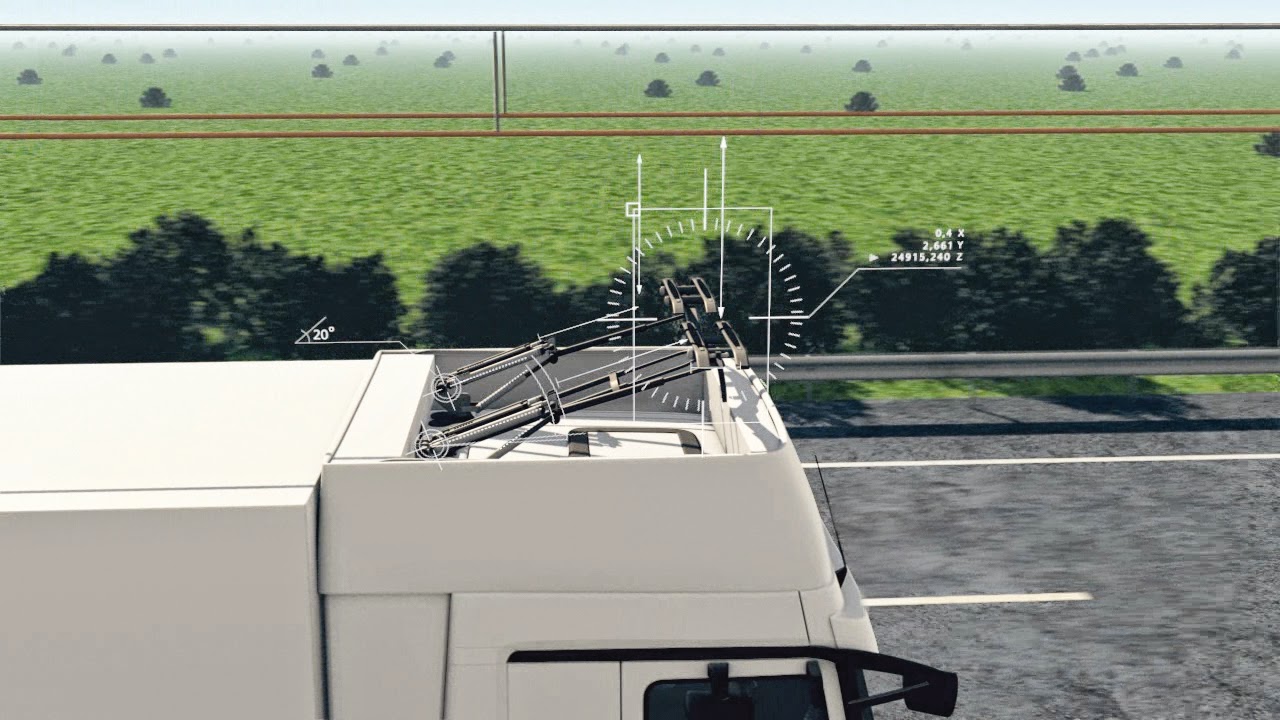
    The Siemens e-highway electrifies selected traffic lanes using an overhead cable system. As a result, trucks can be supplied with electricity in the same way as trams. Working together with the Volvo Group and its Mack brand, Siemens is developing a demonstration vehicle for the project. Siemens is also working with local truck integrators in California whose vehicles will be part of the test as well.

    The overhead cable infrastructure will now be installed in two directions in Carson (California) near Los Angeles. The project is expected to begin in July 2015 and will last a year. During the test phase, up to four trucks will travel up and down the route every day. The "e-trucks" are equipped with a hybrid drive system and intelligent current collectors. Powered by electricity from overhead cables, they produce no emissions when operating in the local area. On roads without overhead cables, the vehicles use an electric drive system which can be powered by diesel, compressed natural gas, a battery or with other energy sources. The current collector allows the vehicles to overtake and automatically dock and undock at speeds of up to 90 kilometers per hour.

    The e-highway concept is particularly effective from an environmental and economic point of view on heavily used and relatively short truck routes, e.g. between ports, industrial estates, freight transport centers and central transshipment terminals. The ports of Los Angeles and Long Beach are looking for a zero-emission solution ("Zero Emission I-710 Project") for a section of the Interstate I-710. Around 35,000 shuttle truck journeys currently take place here every day. The intention is to set up a "zero emission corridor" for shuttle traffic between the two sea ports and the inland rail transshipment centers around 30 kilometers away. This will help to ease the pressure on the environment in a region which is plagued by smog. The aim is to eliminate local emissions completely, reduce the use of fossil fuels, cut operating costs and establish a basis for using the system on a commercial basis in the future

    VW & Bosch working on automated park-and-charge systems for EVs [VIDEO]

    There are only a few minutes before your flight check-in closes, or before your train departs, but you now have to spend precious time hunting for a free space at the airport or station car park. Imagine leaving your vehicle at the main entrance and letting the car do the rest on its own. Researchers from Germany, Italy, the UK and Switzerland are working on this, and successful tests took place at Stuttgart airport earlier this year. €5.6 million of EU funding is invested in the system which will be available in the coming years.

    In the future, more and more people will drive electric cars and will switch from one mode of transport to another – creating the need for more and varied parking options at transport hubs. To prepare for this mobility shift, the V-CHARGE consortium is working on a fully automated parking and charging system for electric cars at public car parks.

    "The idea is that we can actually use technology to give people a better mix of public and private transport", explains Dr Paul Furgale, scientific project manager for V-CHARGE and deputy director of the autonomous systems lab at the Swiss Federal Institute of Technology in Zurich.

    A smartphone app to leave and get back the car

    Drivers will be able to leave their car in front of the car park and use a smartphone app to trigger the parking process. The vehicle will connect with the car park’s server and drive itself to the designated space. While in the garage, the car can also be programmed to go to a charging station. Upon returning, the driver uses the same app to summon the car – fully charged and ready to go.

    Since GPS satellite signals don’t always work inside garages, the scientists have developed a camera-based system based on their expertise in robotics and environment sensing. Safety is at the centre of the project: the car is designed to avoid unexpected obstacles.

    Dr Furgale believes the same technology could be used to develop autonomous parking systems for electric cars on city streets. "That will be more of a challenge", he says. "But once you have the maps in place, the rest of the technology will come together."

    A system to be integrated into production

    In April, the team presented the latest version of the system at Stuttgart airport. This was a success and the researchers are now fine-tuning the technology to tackle more precise manoeuvres and ensure reliability, even in difficult weather conditions.

    The project is set to conclude in 2015, and its results available to be progressively commercialised in the coming years. The functions developed should be cost-effective enough to be integrated into production of electric vehicles. Engineers are working with equipment that is already available today such as ultrasonic sensors and stereo cameras that are used in parking assistance and emergency braking systems.