Why Cars Don’t Get 80 Miles Per Gallon: 4 Reasons
To date, nothing beats a 15-year-old Honda Insight in MPG. Why not?

Charged with Electric Vehicle News and Views
Robert takes a 'very comfy' drive in the hybrid Lexus is300h, and some musings on the scale of electricity use by fossil fuel refining.


Chris Harris takes a trip to Los Angeles to drive the new BMW i8.
Capable of 23 miles all electric before the 3-cylinder turbocharged motor kicks in to recharge the batteries. Harris things the i8 is one of the closest production cars ever seen that looks almost identical to the concept car it's based on.


The LaFerrari is powered by a 950bhp petrol-electric hybrid drivetrain. It can accelerate from 0-62mph in less than 3sec, from 0-124mph in less than 7sec and from 0-186mph in less than 15sec. Top speed is 220 mph and production is limited to just 499 models.
The battery compartment is integrated into the chassis (the batteries and engine are mid-mounted) to improve stiffness, while the electric drive itself consists of two motors, one with 161bhp to power the rear wheels and another for the ancillaries. The batteries weigh 60kg and can be charged either under braking or via any excess torque produced by the engine, which is diverted from the rear wheels.
This is all attached to a 6,262cc V12 with a screaming 9,250rpm rev limit, driving through a seven-speed paddle-shift gearbox. On its own this engine produces 789bhp and 516lb ft of torque. Combined with the electric motor this swells to the 950bhp headline figure, as well as 664lb ft of torque.


The wireless charging space is on fire this week with first Hella and now TDK announcing that it has entered into a licensing agreement for wireless power transfer technology with U.S. based WiTricity Corporation (Watertown, MA). The aim of the alliance is to develop wireless power transfer systems for electric vehicles (EV) and other mobility applications, and to promote business.
Wireless power transfer technology can supply electricity without using cables. The technology TDK intends to implement is known as resonant magnetic coupling for wireless power transfer*. Because power can be transferred efficiently even though the power source device and power capture device are separated by many centimeters and through roadway materials such as concrete and asphalt, this technology is expected to find commercial application in EVs and other mobility areas requiring recharging.
TDK boasts ferrite and other proprietary magnetic materials. Leveraging its strengths in magnetic materials technologies and circuit technologies, in 2009 TDK developed wireless power transfer coil units for smartphones and other compact electronic equipment, which it is now manufacturing and selling.
Furthermore, since 2010, TDK has been developing wireless power transfer systems based on unique technologies that are envisaged mainly for EVs. In 2013, TDK created one of the world’s smallest and lightest prototype wireless power source and capture systems, and verified its ability to transfer the required power levels at high efficiency for charging electric vehicles.
Capitalizing on this licensing agreement with WiTricity, TDK plans to quickly commercialize wireless power transfer systems for charging EVs and other electric mobility applications.


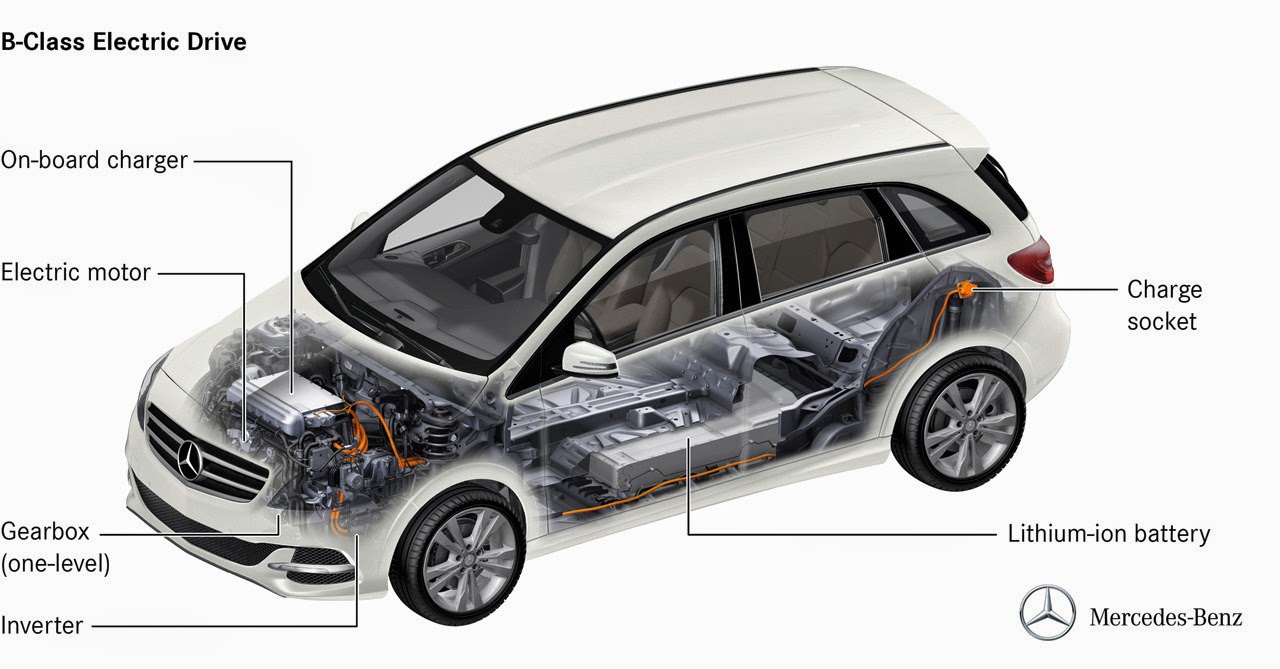
The all-new 2014 B-Class Electric Drive features dynamic design, a premium interior and a powerful electric motor for emission-free mobility. This allows for lively, effortless driving pleasure over a real-world range of 85 miles (EPA)*. In addition, the B-Class Electric Drive is digitally networked. Thanks to its connectivity, it can be conveniently checked and configured via the internet. As the Mercedes-Benz among electric vehicles, the B-Class Electric Drive sets clear standards in terms of comfort, quality and safety for up to five occupants. The B-Class Electric Drive, bearing the unmistakable three-pointed star trademark, will first be launched in the US market in the summer of 2014.
The new B-Class Electric Drive surprises with an especially dynamic driving experience. It provides noticeably powerful acceleration, while gliding along quietly. The new electric Mercedes offers the driver and up to four passengers the familiar high standards of ride comfort in a high-class, spacious and precision-designed interior. The B-Class Electric Drive combines dynamic and driving pleasure with zero local emissions – in short: it delivers electric driving at premium level.
Powerful drive with brisk acceleration
The new Mercedes-Benz B-Class Electric Drive is based on the conventionally powered B-Class, for which the current generation has become a bestseller since being launched in many countries in 2011. Since the launch of the first B-Class version in 2005, Mercedes-Benz has seen customers taking delivery of over one million of these vehicles. As an especially versatile vehicle concept, the B-Class with its innovative electric drive now allows additional environmental friendly capabilities to Mercedes standards.
Mercedes-Benz has collaborated with TESLA Motors to develop the electric B-Class. The two companies share many years of cooperation in the field of electric mobility. The battery for the predecessor model of the smart fortwo electric drive, for instance, came from TESLA. For the B-Class Electric Drive, Mercedes-Benz is once again leveraging the extensive know-how available from the electric car pioneer and is using the TESLA drive system in its own vehicle.
Quiet and local emission-free driving is ensured by an electric motor generating 177 hp (132 kW). Typical for an electric drive system, the motor develops its maximum torque of 251 lb-ft (340 Newton meters) from the very first touch of the accelerator. This is approximately equivalent to the torque from a modern three-liter gasoline engine. The result is noticeably powerful acceleration from a standing start. The electrically driven B-Class drives from zero to 60 mph in 7.9 seconds. Effortless drivability and exhilarating driving pleasure with a high level of comfort are thus guaranteed in every situation.
The power supply to the electric drive is delivered via a highperformance lithium-ion battery, which is compactly and safely housed in the “Energy Space” in the underfloor of the vehicle. Such intelligent packaging allows the five-seater to retain the B-Class’s familiar spaciousness in both its interior and its luggage compartment of 17.69-51.42 ft3.
Zero emissions also on longer journeys
In the interests of optimizing range, the top speed is electronically limited to 100 mph. Depending on driving cycle; the vehicle has a range of 85 miles (EPA)*. This permits emission-free driving not just in city traffic and on short journeys, but also over longer distances – such as a daily commute. The B-Class Electric Drive can be charged from any standard domestic power socket. For a range of 60 miles, the charging time at 240V in the United States is less than 2 hours*. On the road, the electric drive itself makes its own contribution to a favorable energy balance by converting kinetic energy into electric current during coasting and braking, and feeds this energy into the battery.
Dynamic Mercedes-Benz design
Refined sportiness combined with aesthetic appeal – the B-Class Electric Drive features the self-assured and dynamic styling so typical of Mercedes with powerfully defined lines and finely crafted details. The front and rear sections express the width of the vehicle. This is ensured by the wide, prominent grille and the headlamps, which wrap round into the sides, as well as by the wide rear window, two-piece tail lights and large tailgate with deep sill. A dynamic look is created by door-sill panels and striking bumpers with bar-shaped LED daytime running lamps. The charge socket is inconspicuously installed behind the conventional fuel door.
Sporty interior with classy touches
The interior underscores the high standards of comfort typical of Mercedes-Benz. High-grade materials and finely textured surfaces, classy touches and precision workmanship make it clear that Mercedes-style electric drive is defined by high standards.
The three large round center air vents with their uniquely styled cruciform nozzles add a sporty flair that contributes to the overall emotive design idiom of the interior. Positioned above the air vents and seemingly free-floating is the screen for the telematics system – a state-of-the-art eye-catcher in the cockpit.
In terms of information and communication systems, the electric B-Class offers levels of comfort and functionality that is customary of any Mercedes-Benz. The standard equipment package includes a head unit with 5.8 in (14.7 cm) color display, twin tuner and MP3- Page 4 compatible CD player as well as USB port. The Becker® MAP PILOT is the standard navigation system while the COMAND multimedia system with internet access, navigation and LINGUATRONIC voice control is also optionally available.
The instrumentation of the B-Class Electric Drive is rounded off by functions that are specific to electric vehicles. One of the striking features is the power display in the right-hand circular instrument. The instrument pointer moves in a clockwise direction from the green zone towards the red zone, when full power is demanded by the driver. It drops back below the zero line when the vehicle is feeding energy into the battery through the recuperation feature.
Ideally networked: connected services
Thanks to its state-of-the-art technology, the B-Class Electric Drive is not just sustainable and agile, but also connected. For example, the Vehicle Homepage allows convenient remote interaction and remote configuration of the vehicle. The driver can use their PC or smartphone to conveniently access the vehicle via the internet. It is possible, for instance, to determine the current state of charge of the lithium-ion battery or show the vehicle’s current range on a map. In addition, the planned route can be displayed, showing at a glance where the vehicle can be recharged along the way, should this prove necessary. The range of connected services is rounded off by a feature that allows individually timed pre-heating or cooling of the vehicle. This pre-entry climate control system makes the B-Class Electric Drive unique in its segment.
Big on safety
Mercedes-Benz applies its familiar, high safety standards to the BClass Electric Drive. Thanks to the innovative “Energy Space”, the battery is safely accommodated in the underfloor of the vehicle, where it is ensured protection in the event of a crash. In addition, Mercedes-Benz has equipped this innovative electric car with the radar-based collision warning system COLLISION PREVENTION ASSIST with adaptive Brake Assist as standard. This assistance system gives the driver a visual and audible warning of detected obstacles, prepares them for braking action and assists them with the braking process as the situation requires. In this way, it significantly reduces the danger of a rear-end collision. Additional cutting-edge driver assistance systems are also available, including Blind Spot Assist, Lane Keeping Assist and Active Parking Assist.
Electric drive made by Mercedes-Benz
Locally emission-free electric vehicles such as the new B-Class Electric Drive are a key part of Mercedes-Benz’s strategy for sustainable mobility. The Stuttgart-based premium manufacturer is asserting its claim to leadership in this sector with electric vehicles that are fully suitable for everyday use. Mercedes-Benz aims to strengthen its position in future, not least with the new BClass Electric Drive, which will be available initially in the USA as of mid of 2014, before subsequently being launched in European markets.
| Output | 177 hp (132 kW) |
| Torque | 251 lb-ft (340 Nm) |
| Range | 85 miles (EPA) |
| Charging time for a range of 60 miles [US City] | USA: under 2 h at 240V |
| Acceleration 0-60 mph | 7.9 seconds (estimated) |
| Top speed | 100 mph (160 km/h), electronically limited |


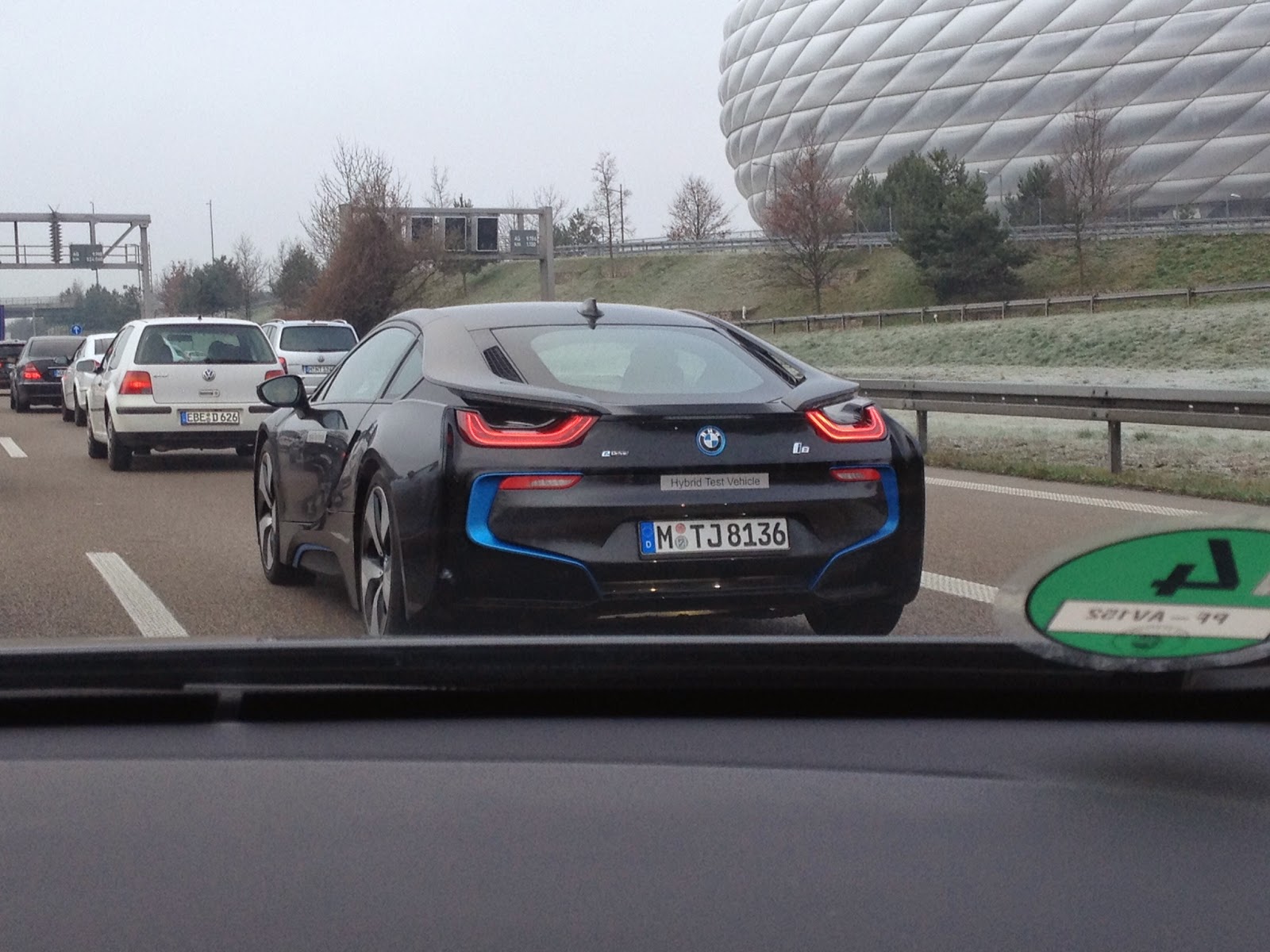
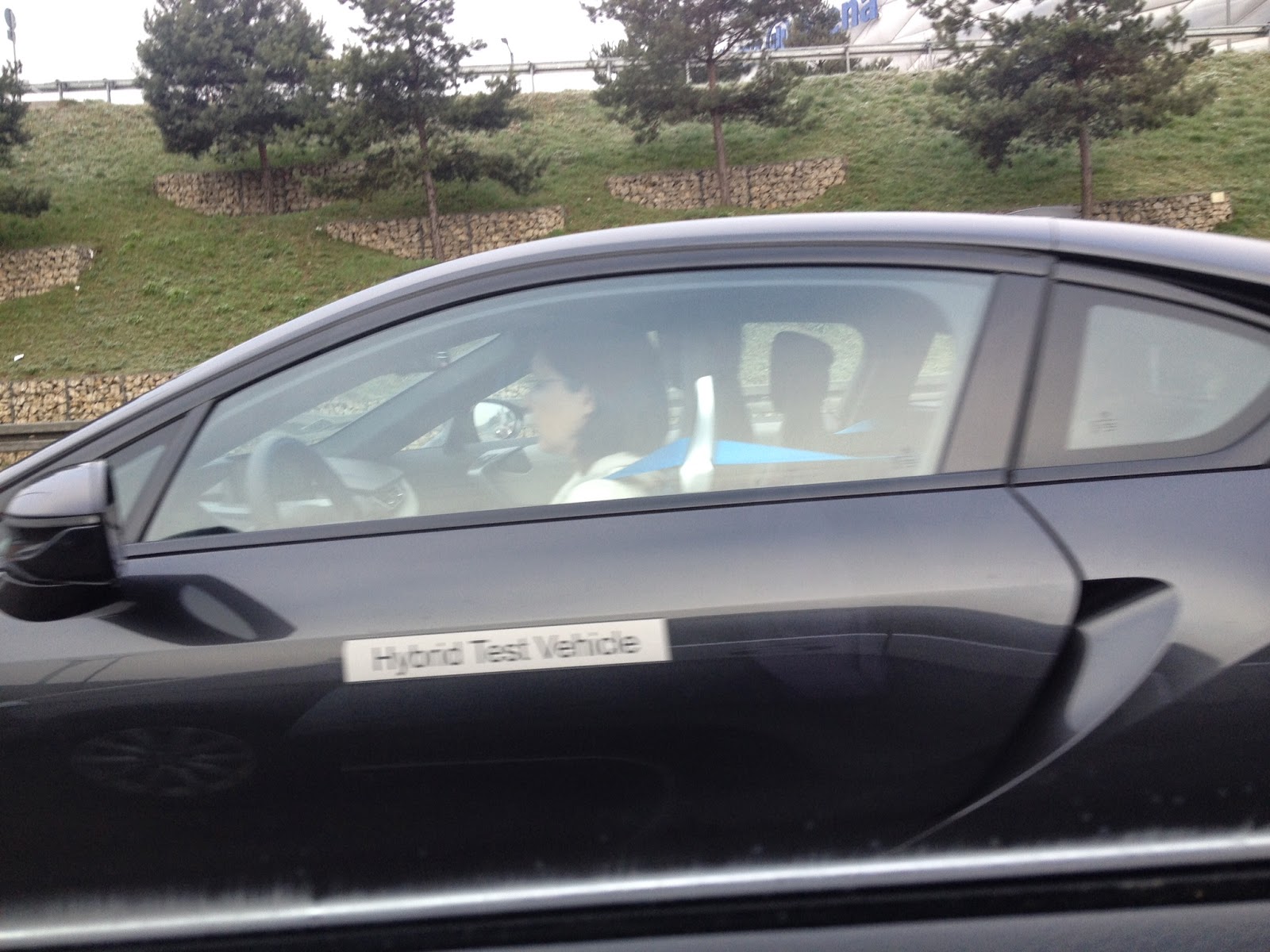
In more news on the soon to be launched BMW i8, we've found a short video of the car testing at the Nürburgring. Also, while in Munich recently on business, I personally spotted an i8 test mule in morning peak hour traffic with a young lady at the wheel (I didn't take the pictures as I was driving the rental)
BMW plans to sell the i8 in about 50 countries, with the U.S. expected to be the largest sales market. In Europe, Germany, France and the UK are expected to be the top markets. Deliveries to retail customers in Europe are scheduled to begin in June 2014, and about one month later in the U.S.
Pricing for the 2015 BMW i8 destined for the U.S. market starts at US$135,925. BMW are currently taking orders for the i8 in Japan. Pricing starts at ¥19,170,000 (US$191,500)


HELLA is working with Paul Vahle GmbH to develop wireless charging systems for electric and hybrid-electric vehicles.
Commonly used to recharge small consumer products such as smartphones and electric toothbrushes, inductive or wireless charging for cars will make it easier for drivers to charge car batteries and extend a vehicle's driving range.
Rather than using plug-in charging stations, car owners in the future will simply need to park over an inductive charging unit to trigger the process, according to Dr. Marc Rosenmayr, CEO for HELLA Electronics in North and South America.
He adds that if inductive charging coils were embedded in streets, electric vehicles also could be recharged when stopped at traffic lights or even while being driven.
For electric car buyers, a contact-free method of transferring energy to the vehicle certainly will be more convenient and less time consuming. Cables no longer will be necessary. Inclement weather and the risk of vandalism also can be avoided if outside charging stations are involved.
"Wireless, inductive charging is a far more convenient way to recharge a vehicle's battery system," Rosenmayr points out. "The driver only needs to stop or drive over a charging unit or network to activate the process. As wireless charging has become more available and easy to use, it also might allow automakers to reduce battery size and weight on electric and hybrid electric vehicles.
Rosenmayr notes that a number of technological and infrastructure challenges still must be overcome before wireless charging for cars and light trucks can be successfully introduced. Energy transfer over high-frequency fields that are at the heart of inductive systems, for example, cause heat to build up in metal objects which could lead to safety issues. The impact that wireless charging might have on other vehicle electronic systems such as navigation, infotainment, driver-assistance and keyless entry systems also will need to be studied.
The cooperation between Vahle and HELLA combines the expertise and experience of both companies in the field inductive charging. Based in Kamen, Germany, Vahle has 15 years of experience in contact-free energy transfer in industrial environments, while HELLA is a recognized leader in the development of electronics, software, processes and production in the auto industry.


According to Bloomberg's Stephen Engle, the ultra high-end electric and hybrid car space is suddenly getting a bit more crowded in China.
Tesla had the first deliveries of the Model S to Chinese customers this week, while BMW will roll out its hybrid i8 super sports car for the China market by the end of the year.
Engle got behind the wheel of BMW's new offering in Beijing.


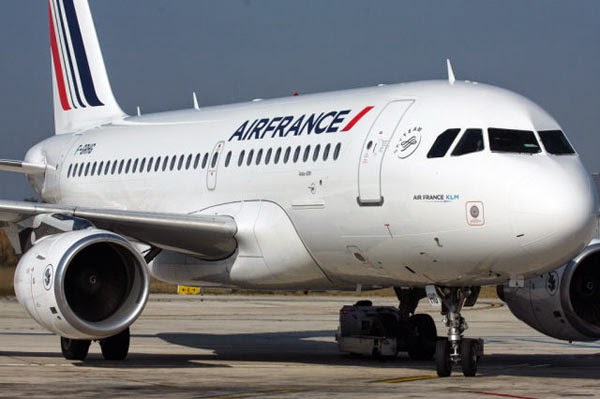
Airbus is learning from automakers as it works on developing a small aircraft powered by hybrid electric engines that could represent its first move into the market for regional jets.
The development of a regional plane, seating between 70 and 90 people, that can take off and land using electric power could take between 15 and 20 years, Airbus Group Chief Technology Officer Jean Botti told reporters in Munich.
Airbus, which with Boeing dominates the market for passenger jets, presently makes planes that seat more than 150 people.
Airbus is already working on an all-electric two-seater plane, powered by two electric motors with a combined output of 60 kilowatts, hoping this technology will serve as a step to bringing electric motors on to larger aircraft.
The two-seater, which Airbus says is suited for short missions such as pilot training and aerobatics, can run on its lithium-ion polymer batteries for half an hour, with the aim to get it up to an hour.
The batteries are tricky, Botti said. "They're causing us a lot of headaches."


With the FIA having put the World Endurance Championship live TV coverage behind a pay-wall for 2014, we are indeed fortunate that enthusiastic Youtubers are willing to upload the entire 6 hours for those of us who prefer free TV.


 Study outlines the economic backgrounds and buying habits of people who buy vehicles powered by alternative energy.
  The Antique Automobile Association of America opens a Far East exhibit; there may be significantly more off-lease vehicles on the market this year.
  Some of the best-paid athletes, who can afford any car, are shunning gas guzzlers and driving hybrids and electric vehicles with minimal or no tailpipe emissions.
BYD Daimler New Technology Co., Ltd. (BDNT) officially unveiled its DENZA all-electric vehicle at Auto China 2014, in Beijing. The world premiere of the serial production model is the culmination of cooperative efforts at the 50:50 R&D technology joint venture established by Daimler and BYD back in 2010 – the first Sino-German joint venture dedicated to an all-electric vehicle in China. Combining Daimler’s renowned tradition and engineering expertise as a worldwide leader in safety technology and quality excellence with BYD’s leading battery technology, DENZA is styled as an honest and modern urban vehicle concept that fits both private and fleet customers.
“Daimler is constantly moving forward with emission-free mobility; and with our DENZA we are also on the right track in China, which is destined to become the world’s most important market for electric vehicles“, said Hubertus Troska, Member of the Board of Management of Daimler AG with responsibility for China, and Chairman and CEO of Daimler Greater China. “With DENZA we deliver the safest, most reliable, and most convenient electric vehicle to our Chinese customers – designed, engineered, and produced in China, for China, once again proving our full commitment to the country.”
DENZA has been designed around its lithium iron phosphate battery which is framed by a lightweight aluminium case with extrusion profiles. Designed to absorb large amounts of energy, it is located at the safest place in the car - underneath the body. The layout also ensures that all powertrain components are separated from the passenger compartment. Additionally, DENZA’s intelligent Power Flow Management System constantly monitors the energy flow between the battery and powertrain to guarantee that, in the event of an accident, the battery is disconnected automatically and, if needed, quickly discharges to levels below critical values.
As a forerunner in electric vehicle safety, BDNT worked closely with China’s official safety certification body, CATARTC, to jointly develop an electric vehicle safety standard for China. By also considering real life accident data, DENZA has gone even further than these legal requirements to ensure that its customers enjoy the highest level of safety.
“DENZA is the first complete vehicle that Daimler has developed together with BYD outside of Germany and it is undoubtedly one key pillar of Daimler’s electric vehicle strategy in China“, noted Prof. Thomas Weber, Member of the Board of Management of Daimler AG responsible for Research and Development. “No compromises have been made to design and develop, in China, an all-electric car that raises the bar in its segment. We assure our Chinese customers the highest standards of safety, paired with maximum convenience, outstanding reliability and unique driving fun as part of a superior overall concept.”
The DENZA has been put through 18 months of intensive testing that saw various cars drive over 1.2 million kilometres across all of China under extreme and various weather and road conditions – be it hot, cold, dusty or icy. This testing program, which looked at overall quality and endurance, was complemented by additional component testing and crash test programs. In total, BDNT crashed more than 20 cars, including high-speed, low-speed and rollover-scenarios. DENZA also became the first electric vehicle to be tested according to C-NCAP consumer ratings at C-NCAP facilities, obtaining the highest possible rating of 5 stars.
It goes without saying that the quality of the production is secured at a modern, independent production line in Shenzhen, following Daimler’s proven production philosophy and quality control methods.
With a driving range of up to 300 kilometres, the DENZA offers the ease and convenience of emission free mobility for day-to-day use – in urban areas, and beyond. Charging the battery is highly flexible, as it can be done at any household power outlet, public charging facilities or special wall boxes. The latter of which can be installed at homes or in offices at the request of DENZA customers, guaranteeing fast charging, ranging from seven hours to less than an hour. With the DENZA app, available for both Android and iOS phones, wall box customers can even remotely check on their charging status and vehicle location using their smartphones and, if needed, get connected right away to a dealership or customer service centre.
DENZA clearly aims to change mobility, but not the mobility behaviours of its customers. That is why, thanks to its luxury class level wheelbase, it can comfortably accommodate up to 5 passengers, with ample legroom and an inviting 460 litre trunk volume. The roominess of the interior is complemented by a clean, functional design and high craftsmanship.
DENZA’s package is convincing, and so is its heart, the electric powertrain and battery technology. The vehicle is powered by an 86 kW (peak) all-electric engine that provides a maximum speed of up to 150 km/h and impressive peak torque, at 290 Nm. Together with its big 47.5 kWh battery capacity, and a convenient suspension, customers can rest assured that they can enjoy both maximum driving fun and comfort with a range of up to 300 km. In light of the fact that the average daily driving distance in China is 50 to 80 kilometres a day, the typical customer will only have to recharge DENZA twice a week. This bi-weekly pit stop will be met with joy as driving 100 km with a DENZA cost less than 20 RMB (2,35 EUR). All this classifies the DENZA as the perfect vehicle for day-to-day use – in urban areas, and beyond.
Wang Chuanfu, Chairman of BYD Company Limited, stated: “With our DENZA, I see my vision come true as we make big steps towards sustainable development in and for China. Backed by a supportive government and the win-win alliance between BYD and Daimler, and its Chinese heart, DENZA offers a convincing package to our Chinese customers, pointing the way and contributing strongly to the development of the electric vehicle market in China.”


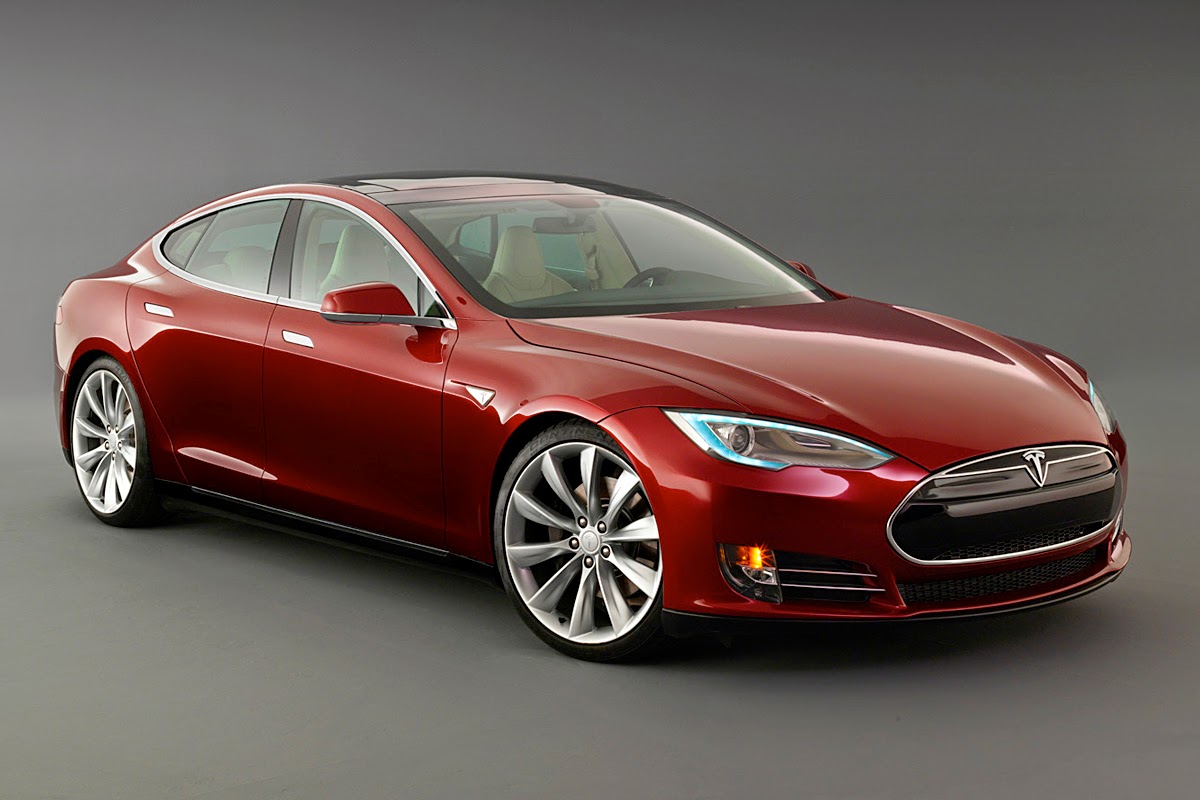
Tesla Motors Chief Executive Officer Elon Musk, who’s preparing to begin deliveries of the Model S electric vehicle in China, forecast the company will be making cars in the country in the next three to four years.
The company is also building a “big” network of battery-charging stations in China, including superchargers in Beijing and Shanghai, the billionaire CEO said at a packed Geekpark Conference in the nation’s capital yesterday. Musk is scheduled to host an event tomorrow to mark the beginning of Model S deliveries in the country.
“At some point in the next three or four years we’ll be establishing local manufacturing in China,” Musk said. “China is very important to the future of Tesla. We’re going to make a big investment in China in terms of charging infrastructure.”
Local production in the world’s biggest auto market would allow Tesla to sell cars at cheaper prices by avoiding China’s 25 percent import tariff. While entering the country presents an opportunity for Tesla to sell as many vehicles there as in the U.S. by as soon as next year, Musk, 42, will attempt to accomplish what the Chinese government has struggled to do: get people to buy electric cars.
“I think they can sell quite a few here in the market,” said Finbarr O’Neill, president of J.D. Power & Associates. “There’s a lot of talk about Tesla but, you know, their numbers are not huge. Mr. Musk has been successful in many fields. I wish him luck, but there’s a limit to every market.”
Source: Bloomberg


 BMW, long a proponent of diesel engines, has come to see the plug-in hybrid as a smart solution to meeting fuel-economy mandates. Coming soon is the X5 eDrive.
  Questions about Wyatt Earp’s wife, and electrical cords and sidewalks.
The Highways Agency intends to equip an English motorway to test wireless charging of moving electric cars.
The Highways Agency (HA) has yet to give details of the trial site or dates. But it has issued criteria for system adoption, including a lifecycle comparable to that of asphalt (typically around 16 years), cost-effective maintenance, resistance to vibration and weather, and efficient charge collection at high speeds.
Static inductive charging experience to date in the UK involves test cars parking at existing plug-in stations in London and an electric bus service launched in January 2014 in Milton Keynes, where vehicles top up their overnight charge during drivers’ rest breaks. Managing this five-year demonstration is the eFleet Integrated Service joint venture between Mitsui Europe and consulting engineers Arup.
Arup helped create a wireless power transfer system branded HALO in Auckland, New Zealand in 2010. US wireless technology developer Qualcomm, which bought HALO in 2011, is running the London static car trial and planning a dynamic test track in Auckland.
For operational experience, the HA can look to Asia, where the Korea Advanced Institute of Science and Technology (KAIST) is running two online electric vehicle (OLEV) buses on a 12km continuous charging route in the city of Gumi. It claims 85 per cent maximum efficiency in power transfer.
The HA will also be monitoring the semi-dynamic charging trial highlighted by Transport Scotland chief executive David Middleton at a Chartered Institute of Highways & Transportation conference in March 2014. A halfway house between static and dynamic technologies, it will enable a hybrid bus to pick up charge from a series of modules installed under the road surface at strategic points along the route so it can run for long periods in fully electric mode.
A Transport Scotland spokesman explains that the approach “is likely to cause less disruption than, for example, installing dynamic charging along the length of a road”.
A similar technique is being used in Braunschweig, Germany, where a bus fitted with Bombardier Primove fast-charge technology went into passenger service on 27 March.
Source: E & T


