Bustech lands $176m deal to build electric buses for Malaysia

Australian bus manufacturer, Bustech has been chosen as the lead design and manufacturing partner for a $170 million electric bus project.

Announcing the project, Bustech CEO Michael McGee said the project would position Bustech as an innovative regional leader in the use of renewable energy for buses.

“The E-Bus project is an international research and development project co-funded by the Malaysian and Australian players and governments, which aims to develop an electric bus for trial operations in Malaysia,” he said.

Bustech, part of Transit Australia Group, has partnered with the Malaysia Automotive Institute (MAI) (a Malaysian government body), Swinburne University of Technology and AutoCRC and a private Malaysian company to develop and test the E-Bus project in Malaysia.

Swinburne University is providing the electric bus technology to the project and will work closely with Bustech throughout the trials of the prototype vehicle.

On the Gold Coast to inspect the Bustech facility, Malaysian Automotive Institute CEO M Madani Sahari said if successful, the electric bus could be exported to other countries.

“This partnership is a win-win for both Australia and Malaysia because it develops opportunities that have benefits for both countries,” he said.

Mr Sahari said that Malaysian industry was spending 500 million ringgit ($AUD170 million) on establishing an electric bus public transport system, including infrastructure such as charging stations.

Transit Australia Group is working closely with a Malaysian manufacturer in exploring opportunities to commercialise the technology.

AutoCRC, whose role it is to identify and develop opportunities for the Australian automotive industry, helped broker the deal by bringing the MAI and Bustech together.

AutoCRC research director Gary White said Bustech was well-suited to the project, with high-end capabilities in the manufacturing process.

“Our long-term vision at AutoCRC is to re-build manufacturing in Australia and this project is a perfect illustration, with Bustech’s manufacturing facility capable of delivering high-quality, innovative products,” Dr White said.

The first bus is planned to roll off the production line in July 2015, with trials to begin in September.

BMW i8 versus M4 in drag race [VIDEO]

Auto Bild magazine has set up an old school versus the latest tech drag race. The BMW M4 has a turbocharged inline-six with rear wheel drive, up against the i8 with its turbocharged three-cylinder with electric all wheel drive. See what happens when they go head to head.

Even on paper, the race looks quite close. The i8 weighs about 150 kg less but the M-car has a healthy horsepower advantage with 425 hp against the hybrid's 357 hp.

Audi aims to launch two electric vehicles by 2018

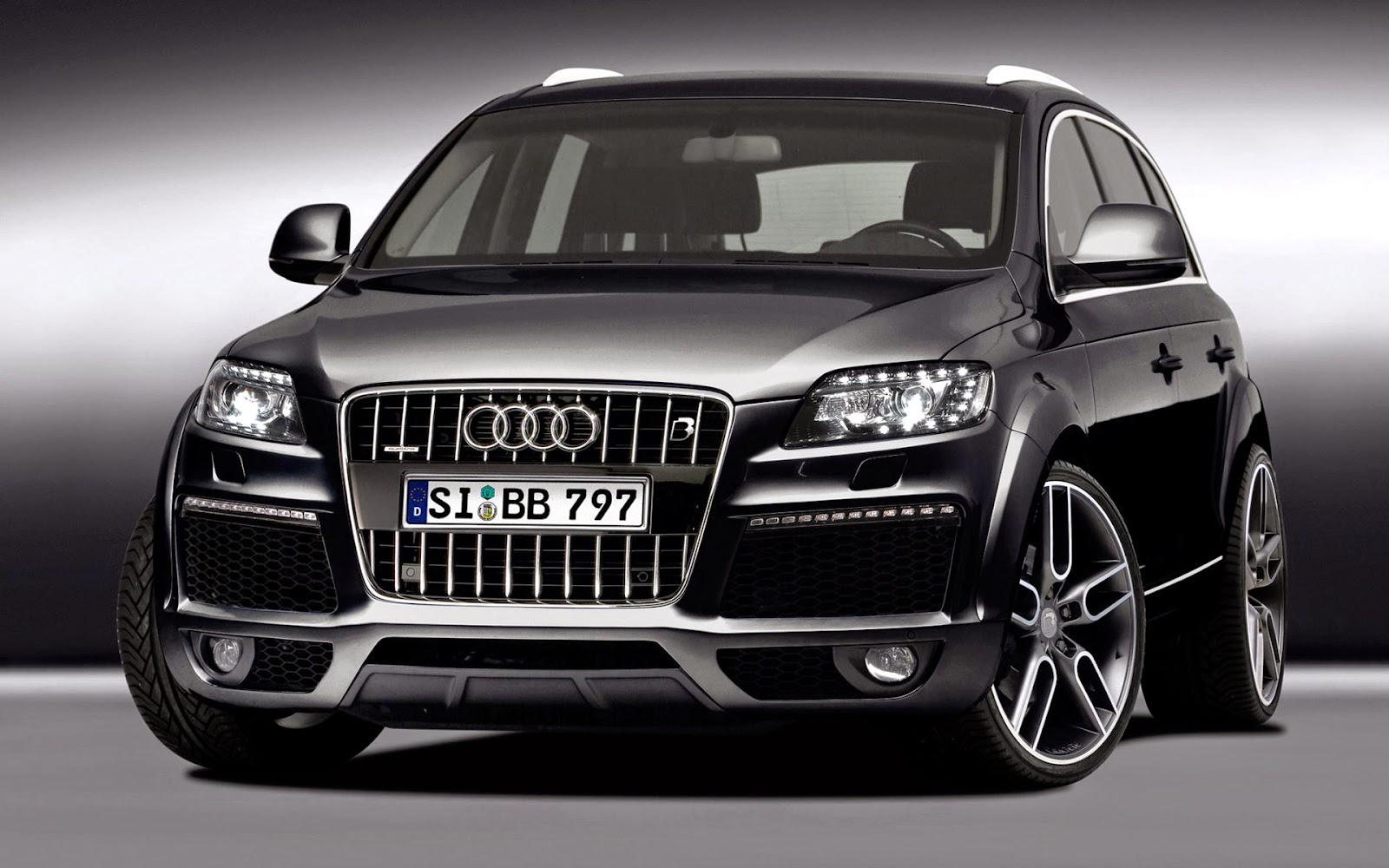
Volkswagen's premium Audi division aims to bring two purely electric vehicles to market by 2018 as it tries to catch up with rivals such as Tesla Motors and BMW.

Audi's Chief Executive Rupert Stadler told German daily Frankfurter Allgemeine Zeitung (FAZ) in an interview to be published on Saturday that the launch of an electric sports car and a sports activity vehicle (SAV) were under way.

The SAV would be a four-wheel drive with a range of more than 500 km (310 miles) per battery load, Stadler said.

He also told FAZ that Audi's push to develop electronic drive and digital technologies would mean the division adding 2 billion euros ($2.4 billion) to its investments by 2019. Audi's investment budget through 2018 amounts to 22 billion.

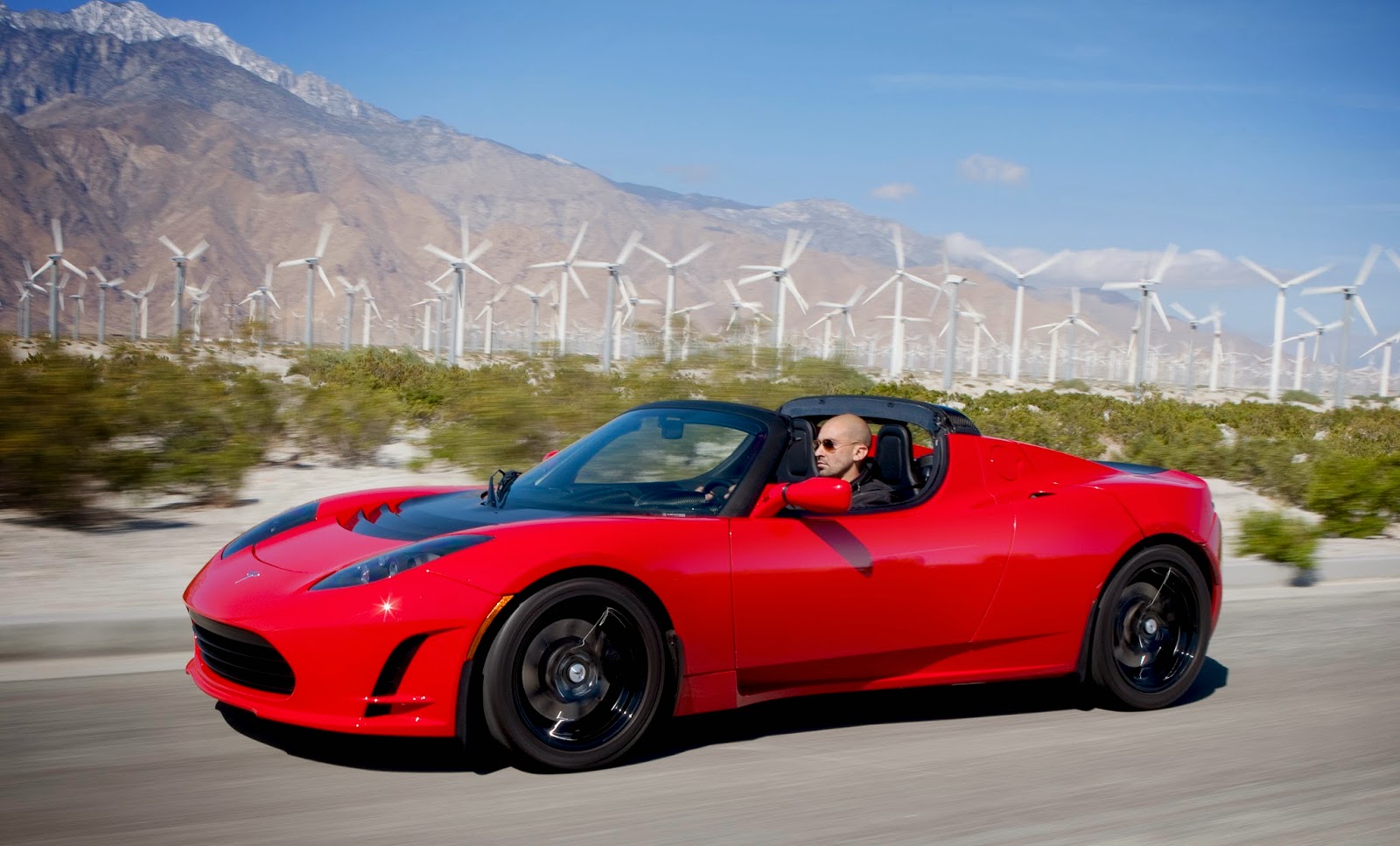
Tesla Roadster 3.0 adds 70 kWh Battery and 640 km Range

Tesla Motors have announced a new extended-range upgrade for the Roadster — the Lotus-based two-door that preceded the Model S sedan.

The upgrade includes a battery swap, a retrofit aerodynamics kit to reduce drag by 15% plus new tires and wheel bearings to decrease rolling resistance by 20%. The upgrades are expected to yield a 40 to 50 percent improvement in range, breaking the 400-mile mark.

Battery technology has continued a steady improvement in recent years, as has Tesla's experience in optimizing total vehicle efficiency through Model S development. Tesla have long been excited to apply this learning back to their first vehicle, and aim to do just that with the prototype Roadster 3.0 package. It consists of three main improvement areas.

1. Batteries
The original Roadster battery was the very first lithium ion battery put into production in any vehicle. It was state of the art in 2008, but cell technology has improved substantially since then. Tesla have identified a new cell that has 31% more energy than the original Roadster cell. Using this new cell they have created a battery pack that delivers roughly 70 kWh in the same package as the original battery.

2. Aerodynamics
The original Roadster had a drag coefficient (Cd) of 0.36. Using modern computational methods Tesla engineers 'expect' to make a 15% improvement, dropping the total Cd down to 0.31 with a retrofit aero kit.

3. Rolling Resistance
The original Roadster tires have a rolling resistance coefficient (Crr) of 11.0 kg/ton. New tires for the Roadster 3.0 have a Crr of roughly 8.9 kg/ton, about a 20% improvement. They are also making improvements in the wheel bearings and residual brake drag that further reduce overall rolling resistance of the car.

Combining all of these improvements Tesla 'expect to achieve a predicted 40-50% improvement on range between the original Roadster and Roadster 3.0. There is a set of speeds and driving conditions where we can confidently drive the Roadster 3.0 over 400 miles (640 km). Tesla will be demonstrating this in the real world during a non-stop drive from San Francisco to Los Angeles in the early weeks of 2015.

Appointments for upgrading Roadsters will be taken this spring once the new battery pack finishes safety validation. Tesla are confident that this will not be the last update the Roadster will receive in the many years to come.

Mercedes Developing Electric Vehicle Platform

Mercedes-Benz is in the early stages of developing a new platform to underpin a range of electric vehicles.

The platform, tentatively called Ecoluxe, is part of an ambitious €2 billion project that Mercedes executives are allegedly about to approve. The guidelines call for a platform that is light in order to offset the bulk of the battery pack and modular so that it can underpin both long and short wheelbase vehicles. Mercedes is currently planning on building four body styles on the Ecoluxe platform, though additional variants could be added later in the production run.

German magazine Auto Bild reports that all cars built on the Ecoluxe platform will feature rear-wheel drive and an innovative four-wheel steering system. The first model, which has not been given a name yet, will pack the equivalent of 544 horsepower in standard S form or 603 hp in GT tune. A high-capacity battery pack located under the passenger compartment will give the car a maximum driving range of at least 450 km.

The first model underpinned by the Ecoluxe platform is scheduled to hit the market in either 2019 or 2020

BMW say Auto Industry Switch to Electric Cars Not Far In Future

BMW gives the signal of change in the auto industry saying that the moment to move to electric cars is not that far in future.

The evolution of electricity storage technologies will ensure the appearance of more efficient batteries and the launch of electric cars with ranges comparable to that of fossil fuel cars. BMW officials think that moment will soon be upon us.

One of the core people in BMW’s organization chart, Ian Robertson, said that electric cars that run on hydrogen fuel cells may be the solution for the future of the automotive industry. But this is very unlikely to happen because the technologies that will enable more efficient energy storage in “normal” batteries will evolve and will radically transform ranges and load times of conventional electric cars.

“We’ve said we’ll continue to invest in hydrogen and that will result in a small number of production test vehicles being made to prove the technology works. The real issues lie not around what we can do, though, but whether the infrastructure can be built up to supply hydrogen in the marketplace cost-effectively.” said Robertson arguing that the current lithium-ion batteries will slowly be replaced by more efficient technology.

“Advances in lithium ion technology are set to be followed by a switch to lithium air and then solid-state batteries. These advances over the next 10 years could see charging time and range worries disappear,” Robertson thinks.

Solid-State Batteries are one of the solutions proposed by technology companies. This battery is based on solid electrolytes instead of liquid electrolyte from today’s batteries. This technique allows using conventional electrodes and they are changed with some Lithium Metal. In this configuration, a battery can store two to three times more energy and provides short charge times, thus improving the level of safety: the battery does not contain the flammable liquid presently found on any battery on the market today.

With regards to the pace of adopting electric cars, BMW official believe that it will be accelerated by the manufacturers which, at one time, will redirect investments from classical combustion engines toward the electrical ones.

“At some point in the future the technologies will switch over. When the crossover comes and the focus becomes electricity, the rate of learning will accelerate even faster. Relatively, that time is not far away” concludes Ian Robertson.

Renault previews new EV motor

Renault has previewed a new EV motor that it says will enter production in 2015. The synchronous electric motor offers 65 kW of power and 220 Nm (162 lb-ft) of peak torque, and features an integrated Chameleon charger.

Renault designed the new motor with integration, miniaturization and simplification in mind. It uses smaller and fully integrated modules, assembled closely together to minimize the need for power supply cables. The junction box, power electronics and Chameleon charger are all contained within a single Power Electronic Controller. Overall, the size of the motor has been reduced by 10%, while retaining the same level of performance. The motor is now air-cooled, although the Power Electronic Controller still has a liquid cooling system.

The designers improved the efficiency of the charging management process, reducing the consumption of energy and improving charging times.

“The future of mobility calls for the same command of electric motor technology as it does of internal combustion engines,” said Rémi Bastien, Renault’s Director of Innovation Engineering. “We are consequently active on every front, from internal combustion engines to electric motors and alternative energies.”

Carnegie Mellon Researchers Increase Lithium Air Battery Energy Capacity 5x

Carnegie Mellon University's Venkat Viswanathan and a team of researchers have reduced the problem of sudden death in lithium air batteries through the addition of water, increasing energy storage capacity by five times.

"We could not get all the energy out of these batteries because of sudden death," says Viswanathan, an assistant professor of Mechanical Engineering. "That was the ugly aspect of this battery."

Lithium air batteries are an exciting research frontier because they could store at least twice as much energy as lithium ion batteries, which are currently the most common battery used in many consumer products, ranging from cell phones and laptops to electric vehicles. The potential of lithium air batteries lies in replacing one of the battery materials, the cathode, with air, making lithium air batteries lighter than lithium ion batteries. The lighter the battery, the more energy it can store. In addition, lithium air batteries have the possibility to increase safety.

Viswanathan, IBM researchers Nagaphani B. Aetukuri, Jeannette M. García, and Leslie E. Krupp, University of California, Berkley Assistant Professor Bryan D. McCloskey and Alan C. Luntz of the SLAC National Accelerator Laboratory discovered that adding water to the battery decreases a phenomenon called sudden death, which reduces the battery's storage capacity. They published their results in Nature Chemistry.

Sudden death causes lithium air batteries to die prematurely. The batteries require lithium, oxygen and an electron to move inside the battery to reach the active site where the reaction produces energy. As the battery operates, however, the lithium and oxygen form lithium peroxide films that produces a barrier and prevents electron movement to the active site, resulting in sudden death.

Water selectively dissolves the lithium peroxide, and the dissolved lithium and oxygen move to a toroidal depository in the cathode, removing the barrier to electron movement, before reforming into lithium peroxide.

"This allows for five times the capacity of the original case," says Aetukuri.

While water is a temporary solution, it is eventually consumed and results in parasitic products that reduce battery efficiency. Viswanathan and McCloskey are currently searching for an additive other than water, which will result in increased battery capacity and efficiency. However, the addition of water is a large step forward in lithium air battery technology.

"This additive opens up the opportunity to be able to reach a much higher energy density than a lithium ion battery, and once we perfect the design, we can compete with lithium ion batteries," says Viswanathan.

To read the full Nature Chemistry paper, visit: http://www.nature.com/nchem/journal/vaop/ncurrent/full/nchem.2132.html

Electric Car Sales Booming in The Netherlands

Of all cars sold in the first three quarters of 2014 in the Netherlands, 4.3% were electric or hybrid cars. In the last quarter of 2013, the number was even higher: 15%. The main reason for these very high EV sales in the Netherlands is fiscal measures, says Roland Berger Strategy Consultants, who published the figures.

The number of electric and hybrid cars sold in the last quarter of 2013 was 14,842. The best-selling car was the Mitsubishi Outlander, with 8,039 sales. Most EV’s and hybrids sold in the Netherlands are made in Japan: the Toyota Prius and Nissan Leaf are also popular.

The Netherlands wants to have 200,000 EV’s and hybrids on the road by 2020. Currently it has 70,000, almost 1% of the total.

Source: Energy Post

Samsung leads $17M investment in Solid State Lithium Ion Battery Start-up

Seeo Inc., a battery maker developing a Solid State Lithium Ion Battery for electric vehicles, got a $17 million round of financing led by Samsung Group’s venture capital arm.

Seeo will use the funding from Samsung Ventures to continue to develop its lightweight lithium-polymer battery technology, the Hayward, California-based company said in an e-mailed statement today. Existing investors Khosla Venture and GSR Ventures also joined in the funding.

According to Seeo, it will use the cash injection to expedite the commercialization of its DryLyte advanced lithium polymer batteries, which sport an electrolyte that enables better energy density, specifically for use in electric vehicles.

Seeo currently has cells (though not in use commercially) capable of operating with an energy density of 350 Wh/Kg (watt-hour per kilogram), but it’s now targeting 400 Wh/Kg — around double that used in most electric vehicles today. But safety is paramount when developing such batteries, and this is the crux of the technology Seeo is working on.

Seeo’s DryLyte “solid” polymer electrolyte is non-volatile and non-flammable, which means it can be used at a much higher temperature. Seeo is striving to replace the standard flammable liquid-based electrolytes, typically found in lithium-ion cells, with its own technology.

Scandinavia’s First Lithium Battery Electric Car Ferry Completes Over 4,000 Trips

The KF Hisarøy electric cable ferry has now been sailing between Mjånes and Hisarøy in Norway daily for over one year, with flawless operation. The Ferry was launched in September, 2013 with a new propulsion power system consisting of a complete rechargeable battery system from Electrovaya in cooperation with Solund Verft, HAFS Elektro & Rør AS and Electrovaya´s subsidiary Miljobil Grenland AS in Norway. The Owner of the vessel is Wergeland Halsvik AS.

The 100 KWh prototype battery system is based on Electrovaya's SuperPolymer®2.0 technology, providing excellent performance and reliability with an exceptionally small on-board footprint. The battery system is an important step forward for the global maritime industry and a major step towards replacing diesel generators with a greener, toxic–free alternative form of energy. The owner of the vessel is Wergeland AS and Gulen Skyssbåtservice operates the ferry.

The battery electric ferry can save up to approximately 180,750 liters of fuel consumption over its expected lifetime. It has a potential to save about 500 tonnes of emissions; 480 tonnes of CO2, 9 tonnes of particulate matter and volatile organic compounds, 2 tonnes of Carbon monoxide and 2 tonnes of other type of emissions. The Electrovaya lithium ion battery also eliminates fuel exhaust including the usual carcinogens from diesel exhaust.

The Cable Ferry is operating approximately 10 round-trips per day between the mainland and the Hisarøy Island, a round trip distance of about 1.6 kilometers. The Cable Ferry is driven by two winches on-board and Electrovaya's on-board Lithium Ion battery system is recharged on the mainland between the round trips and over-night. KF Hisarøy is built to carry 49 passengers and 6 cars.

With the International Maritime Organization (IMO) pressuring the marine industry to reduce GHG emissions and as the price of diesel continues to rise, there has been growing interest in developing clean propulsion systems for vessels in countries including Norway and Canada. The marine electric vehicle market is expected to grow from $2.6 billion to $6.3 billion by 2023. Demand will come from both on-water and underwater electric vehicles for use both on inland waterways and the sea. The key advantages of electric powertrains for marine vehicles are the lower maintenance requirements and minimal noise, air and water pollution.

Wergeland Halsvik AS is very pleased with the ferry and the battery system delivered from the yard and its cooperating partners " said Hans Wergeland, the owner of KF Hisarøy. "As this market grows, and the demand for environmentally friendly, zero carbon foot-print energy solutions increases, this system is well-suited to further opportunities in the marine sector."

"We are delighted to be working with Electrovaya, Miljobil Grenland and HAFS Electro." says Svein-Tore Eide, General Manager of Solund Verft AS, the ship building company responsible for the project. "This first battery electric cable and road ferry in Scandinavia demonstrates that an all-electric propulsion system has value for other marine applications," added Mr Eide.

Electrovaya is pleased to have been part of this historic launching of Scandinavia's first electric cable Ferry. In addition to addressing the Global problems of Climate Change, this project has enabled Electrovaya to gather important technical data about the operation of such a vessel, positioning Electrovaya as a leader in this industry.

VW buys stake in solid-state battery startup aiming to triple EV range

Volkswagen bought a stake in battery startup QuantumScape with the aim of developing technology that can more than triple the range of its electric cars, according to people familiar with the matter.

VW is considering using the energy-storage technology, which is fireproof, for vehicles from the namesake brand as well as Porsche and Audi, said the people, who asked not to be identified because the plans are private. Tests to show the system is viable for cars are due to be completed in mid-2015, they said. The VW of America unit bought a 5 percent holding and has options to raise the stake.

Peter Thul, a spokesman at Wolfsburg, Germany-based VW, declined to comment on any investment. Calls to the main switchboard and an e-mail to San Jose-based QuantumScape seeking comment weren’t answered. Financial details of the company weren’t available.

Solid-State Technology

QuantumScape is an early-stage battery startup that has been working on commercializing technology from Stanford University. It was was founded and is being led by Infinera co-founder and CEO Jagdeep Singh, and is backed by Kleiner Perkins Caufield & Byers and Khosla Ventures.

Licensing technology from Stanford, the company has been looking to create batteries that are energy dense as well as safer than standard lithium ion batteries. The company’s technology uses a new method for stacking trace amounts of materials together, which can lead to high energy and power densities, and also higher cycle life than traditional lithium ion batteries.

“I see great potential in this new technology, possibly boosting the range to as much as 700 kilometers (430 miles),” VW Chief Executive Officer Martin Winterkorn said in a Nov. 6 speech at Stanford University in California. That’s more than three times the range of the battery-powered version of the VW Golf. Tesla’s Model S has a range of 265 miles, according to its website.

Electric Car technology is critical for meeting tightening emissions regulations, especially for luxury-car manufacturers such as VW, BMW and Mercedes-Benz. Volkswagen’s increased focus on electric cars would put pressure on Tesla to maintain its sales lead.

The German automaker employs about 44,000 research and development engineers and spends $13 billion a year on new technology. Tesla’s entire workforce totaled about 5,800 employees at the end of 2013, and research and development expenses were $280 million in the first nine months of 2014.

“Electro-chemistry is a field of the greatest importance internationally and across industries,” and is “a field where we can and must achieve progress,” Winterkorn said in the speech. In July, he said the company had invested in a battery-technology company without providing details.

Fully Charged – KIA Soul EV Test Drive [VIDEO]

Robert Llewellyn takes a 560 km (350 mile) test drive in the all new Kia Soul EV.

Kia Motors is using a 360-V lithium-ion battery pack of “class-leading” energy density (200 W·h/kg) in the 2015 Soul EV to give it range of about 200 km (125 mi) on the European Driving Cycle, and “real-world” range of 80-100 mi (129-161 km) in the U.S. The cells and the battery are the same in all regions.

Kia says high-performance anode and gel electrolyte additive materials were developed. The new electrolyte additive allows for better range by more effectively dealing with low and high temperatures. A “special” ceramic separator with improved thermal resistance properties is used.

The cell casings are of polymer pouch type (as opposed to metal), and the battery pack is air-cooled. Standard equipment on the Soul EV includes receptacles for SAE J1772 Level 1 and Level 2 ac charging, as well as CHAdeMO dc fast charging (480 V).

The battery in the 2015 Kia Soul EV is the result of a three-year development program with lithium-ion cell maker SK Innovation. The 192 cells are packaged into eight modules and deliver a total battery capacity of 27 kW·h. The cell cathode is of nickel-rich NCM (nickel-cobalt-manganese) chemistry, with the raw materials for that and other components optimized for energy density, durability, and safety.