Orders for Tesla’s Model 3 Surge Even Before Its Unveiling
The new electric vehicle is “the final step in the master plan, which is a mass market, affordable car,” said Tesla’s chief executive, Elon Musk.

Charged with Electric Vehicle News and Views
Volkswagen is considering the development of an all-electric rallycross supercar.
The German firm's head of technology Frank Welsch says the short, sharp format of rallycross events offers the perfect showcase for advances in electric car technology.
“I can certainly imagine a championship done with all-electric cars,” Welsch told Autocar. “The races are around six minutes long, which allows for short, intense bursts of competition and then charging.”
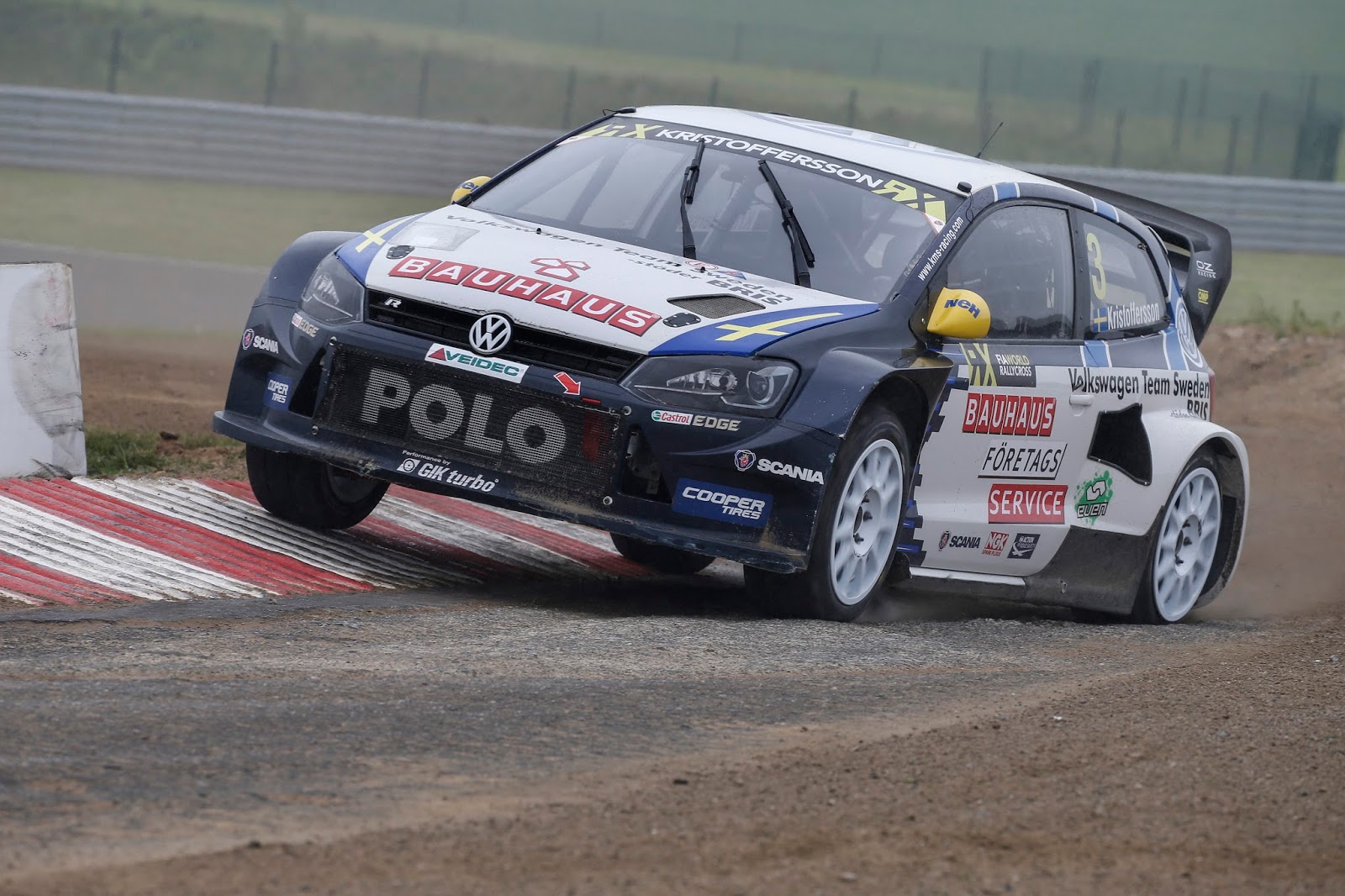
VW already competes in Red Bull Global Rallycross with factory Beetle GRCs and in FIA World Rallycross with Polo RXs. Both cars squeeze around 560 HP out of their tiny engines and reach 100km/h in just 2 seconds.
“Today these cars are super-powerful, have torque from hell and use all-wheel drive,” said Welsch. “Electric drivetrains could deliver that.”
Welsch went on to say that “If the championship moved that way it would be perfect for us.”


The Toyota Prius, the world's first mass-produced hybrid vehicle, went on sale in Japan in 1997. 18 years later with sales surpassing 8 million vehicles, we're starting to get a clear picture of how durable vehicles powered by electric powertrains are.
The humble Prius has proved so durable, with regular news of taxi operators surpassing 1 million km (the record stands at 1.5M km), there is even a thread on the priuschat website designated for Prius owners who have passed 299,999 miles (480,000 km).
Not only are most Prius achieving these distances on the original battery pack (dispelling that urban myth) but in many cases they are also still on the original factory fitted set of brake pads!! With a Prius able to use brake regeneration down to 10 km/h, industry standard hydro-mechanical friction brakes move from being a system made up of consumable parts to being a durable system that last the life of the vehicle.
Typical brake pad life expectancy on an ICE car is between 50-100,000 km with brake rotors needing replacement every 100-200,000 km so the increase in Prius pad life is in the 10x region.
If the relatively low powered 50 kw electric motor / generator in the Prius has made friction brakes 95% redundant, then vehicles like the BMW i3 with a much more powerful electric motor (125 kw) and aggressive speed variable brake regeneration capable of bringing the car to a complete stop, make friction brakes entirely a legacy system whose only function is to provide very low duty cycle safety functions such as Anti-Lock Brakes (ABS) and Electronic Stability Control (ESC).

Taxi operators running fleets of Nissan Leaf are also reporting high mileage on original brake pads and no doubt given enough time will also pass 500,000 km without a pad &/or rotor change. Leaf owners have the added benefit of not having an ICE to service (Prius ICE's reportedly consume excessive oil above 500,000 km) and with typical electric motor life measured in the 20-40,000 hour range, electric only powertrains could last in excess of 2 million kilometres of trouble free motoring, compared to a typical ICE car life expectancy of 320,000 km (200,000 miles).
The more brake regeneration becomes a standard in the automotive world, the more inevitable the elimination of the dead weight and costs associated with legacy friction brake systems seems. In order to allow electromagnetic braking to functionally replace all mandatory safety systems like ESC, each wheel requires an electric motor to drive / brake each wheel independently.
Technologies that we take for granted these days — like stability control and anti-lock brakes — paved the way for computer-controlled cars, and these long-established safety technologies are mandated by NHTSA etc. Automakers today agreed to make automatic emergency braking standard in US by 2022. Automatic braking, like lane keeping and dynamic cruise control, is considered a precursor to fully autonomous vehicles.
The convergence of vehicle electrification and self-driving cars will accelerate the need to consolidate all vehicle dynamic controls for propulsion and braking within a single system, i.e. Software Eats the Automotive Powertrain.


