Auto sector adds spark to Japan’s electronic components industry

Japanese electronic component makers are looking beyond a fickle smartphone market that once lured them with rocketing growth, tying their fortunes more closely to the most resilient of Japan's big industries: automobiles.

Component makers such as Murata Manufacturing Co Ltd and TDK Corp are capitalising on rising demand for electronics like those that make cars safer with automatic braking or less polluting with engine controllers.

In contrast, Murata and others are having an up-and-down ride shipping components for Apple Inc's iPhones, while declining smartphone orders were a factor in January when TDK slashed its full-year operating profit forecast.

The auto industry offers a stable alternative, especially because of the enduring prominence of compatriot automakers such as global leader Toyota Motor Co. The value of electronic components per car will grow 26 percent over the decade to 2022, according to Fuji Chimera Research Institute.

But the payoff may not be as quick and will favour those with a longer history in the business.

"TDK and Murata were early to start working in automobiles and are strong there," said Manabu Akizuki, executive director at Nomura Securities. "Moving into automobiles is not so difficult but it takes 10 years to bear fruit."

Murata is the world's largest maker of ceramic capacitors used to control power supplies in electronic gadgets. It gets 40 percent of its sales from smartphones, including the iPhone for which it has been a major supplier since 2010.

Orders were hit earlier this year when Apple curbed output of the iPhone 5. It now aims to rely less on smartphones and boost autos' share of sales to 20 percent from 15 percent.

"Once we have products in place to expand our sales of power-supply parts, we expect to be able to generate growth that can match (that of our components for) smartphones," President Tsuneo Murata said in an interview last month.

Global smartphone demand is growing 30-40 percent a year, but this is likely to slow to 10-20 percent after about two years, he said.

Others in the industry also bemoan smartphone volatility.

"In December, (orders for the iPhone) were cut in half," said one senior executive who declined to be named. "Then they fell by half again. At that time, I thought: 'We'd be better off not doing this. The inventories just pile up.' It took four or five months to work them off. A smaller company would've gone under."

Murata has acquired several companies to bolster its position in autos, including Finnish microelectro-mechanical sensor maker VTI Technologies, bought in 2012 for 20 billion yen ($200 million). The sensors, which detect a car's movements, are used in stability control systems to prevent skidding that can cause accidents.

HYBRID AND ELECTRIC CARS

Hybrid and electric vehicles such as Tesla Motors Inc's all-electric Model S have multiplied the opportunities for electronics manufacturers, especially battery makers Panasonic Corp and Hitachi Ltd.

Batteries, motors, car navigation systems and other electronics account for 50 percent of the value of an electric-powered vehicle compared with 20 percent for a gasoline-powered car, according to estimates from the Ministry of Economy, Trade and Industry.

"The value of electronic materials and parts per vehicle will increase by factors of 10 with electric-powered vehicles," said Moritaka Kamiya, head of TDK's auto sales division.

TDK, which began supplying magnets for windshield wiper motors in the 1960s, bought German electronic parts maker Epcos for 200 billion yen in 2009. That saddled it with a declining business supplying parts for Nokia Oyj mobile phones, but also gave it sensors for car air conditioners and expertise in component modules, which offer higher margins than parts sold separately.

Other electronic components makers targeting the auto sector include Rohm Co Ltd. It increased its share of revenue from autos by 2 percentage points to 25.6 percent in the fiscal first half, and in September announced a tie-up with Freescale Semiconductor Ltd's Japan unit to boost its overseas business.

Nidec Corp, like TDK, has seen its hard disk drive component business shrink because of declining PC demand. In consequence, it has shifted focus to automotive uses such as windshield wipers and power steering.

The investment necessary to enter the market is substantial, says Nomura's Akizuki, but the stakes promise to be considerable.

The total market for automotive electronics will almost double to 26 trillion yen in 2022 from 14 trillion yen in 2012, according to Fuji Chimera Research Institute.

"There isn't the sharp growth and contraction that smartphones have, but it will steadily increase," said Shoji Sato, executive director at Morgan Stanley MUFG Securities.

VW e-Up priced from £19,250 [VIDEO]

Volkswagen has opened order books in the UK for the new all-electric VW e-Up, pricing the model from £19,250. That figure includes a £5000 government grant.

The e-up! is powered by a 60 kw electric motor with maximum torque of 210 Newton meters is available immediately with the first revolution. It accelerates from 0 to 100 km/h within 14 seconds and reaches a top speed of 135 km/h.

The lithium-ion battery integrated in the underfloor area has a total energy storage capacity of 18.7 Kilowatt-hours (kWh); this means that the car can cover up to 150 km (per NEDC) on a single charge thanks to its low vehicle weight of 1,185 kg.

Deliveries of the first e-Ups are expected from February. A three-year warranty is standard, which can be extended up to five years. The battery warranty is eight years / 100,000 miles.

BMW to Electrify entire model range

BMW product chief Herbert Diess says “Electricification will be a central thread in what we do, be it plug-in hybrid, hybrid or full electrification".

Diess told Autocar "all BMW models will soon need to be sold with some form of electrification - be it in hybrid form or pure electric drive" as it is the only way of meeting stringent emissions regulations in the future.

“We are planning to have a plug-in hybrid in each and every model series,” BMW’s head of production for large vehicles, Peter Wolf, told motoring.com.au. “So far we have the 3, 5 and 7 Series as full hybrids, and at the other end of the bookshelf the i3 and the i8. We are planning to work on that with the X5 eDrive, but at this stage, the plug-in is a completely new concept, and the battery is very specific [to the X5].”

Diess explained that European customers are likely to see most of the new electric-drive technology first, as regulations here are stricter than elsewhere.

“The i8 shows what’s possible even below 50g/km, but we will also offer all standard models with entry-level electrification. We will try to use the modular kit developed for the i3 and i8 on a kit basis.”

Mahindra Racing will join the inaugural FIA Formula E Championship

Mahindra Racing will join the inaugural FIA Formula E Championship beginning in September 2014. The motor sports division of the Mumbai-based USD 16.2 billion multinational Mahindra Group has signed an agreement with series promoters Formula E Holdings to become the eighth and only Indian team to join the new zero emission series.

The innovative all-electric global race series will include 10 races in its first season in city-centre locations around the world, including London, Beijing and Los Angeles, designed to raise awareness about electric vehicles as well as help advance EV technology.

The series has generated significant interest globally, and professional services firm EY recently released a report forecasting that Formula E will help contribute to the additional sale of 77 million electric vehicles worldwide over the next 25 years.

Already a major global force in the development and production of electric vehicles through Mahindra Reva it was a natural step forward for the Mahindra Group to join the Formula E Championship.

“We strongly believe that Formula E can provide an excellent global showcase for our electric vehicle technology,” said Mr Anand Mahindra, Chairman and Managing Director of Mahindra Group. “With advanced operations and expertise in electronics, IT, automotive technologies and manufacturing, we are already seeing the fusion of this technology into our electric vehicle operations. Racing will further accelerate that trend while Formula E is set to raise awareness globally about the benefits of electric vehicles.”

With Mahindra’s participation confirmed, Formula E is guaranteed to start with at least eight teams coming from seven different nations. GP2 team DAMS has confirmed its entry (the delightfully-named e.dams) as well as ex-Formula One team Super Aguri.

The driver line-ups are yet to be confirmed, but former F1 drivers Lucas di Grassi and Karun Chandhok are widely expected to secure a seat. Also, IndyCar’s Takuma Sato is also thought to be set to join Super Aguri, but he will be hoping that this partnership is far more fruitful than their time together in F1.

Nissan Launche New Leaf Ownership Scheme in the UK

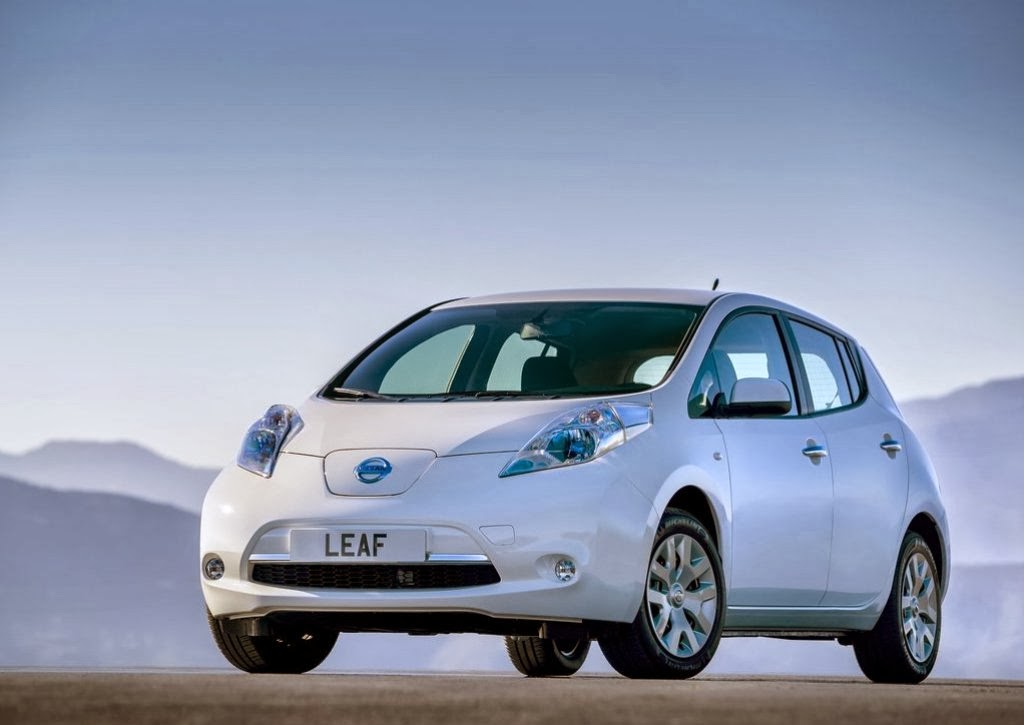
Nissan is introducing a comprehensive customer commitment to dramatically improve the ownership experience of a Nissan LEAF.

Unrivalled in the pure EV market, the innovative Nissan CARE-EV LEAF customer commitment scheme makes five cast iron pledges designed to provide the ultimate in reassurance and peace of mind and answer many of the questions that customers face when considering EV ownership for the first time.

Available at all 205 Nissan retailers in the UK, the scheme makes the following promises:

Rapid charge your LEAF for free at any Nissan dealership and on the Electric Highway
LEAF customers may rapid charge their vehicle for free at 60 Nissan dealerships across the country. LEAF owners can also charge at the 50 and growing locations equipped with rapid charging units installed by Nissan as part of Ecotricity’s Electric Highway. Powered by sustainably sourced electricity from wind and solar power and located at key service stations up and down the UK’s motorway network, these rapid chargers can charge the new Nissan LEAF from empty to 80% in just 30 minutes.

Borrow a petrol or diesel Nissan free for up to 14 days
LEAF owners who need an extra car for a special occasion can borrow a petrol or diesel Nissan model free of charge for up to two weeks. Simply give your dealer seven days’ notice and cover the fuel and insurance.

Get to know the Nissan LEAF
Guaranteed 24-hour test drives will allow potential LEAF customers to experience the vehicle and learn just how well it fits their lifestyle.

Free pan-European EV roadside assistance
In the unlikely event a LEAF customer should run out of power on the road, help will soon be at hand with free towing from Nissan roadside assistance.

Free battery state of health guarantee
The Nissan LEAF battery state of health guarantee covers against lithium-ion battery capacity loss below nine bars (out of 12) within the first five years or 60,000 miles.

Nissan Test Autonomous Leaf on Expressways in Japan [VIDEO]

Nissan has carried out the first public road test of Autonomous Drive on a Japanese highway. A Nissan LEAF electric vehicle equipped with the revolutionary technology took to the Sagami Expressway in Kanagawa prefecture, southwest of Tokyo, with the prefecture's Governor, Yuji Kuroiwa, and Nissan Vice Chairman Toshiyuki Shiga, on board. The vehicle operated fully automatically on the highway. Journalists witnessed the tests and later had the opportunity to experience the car on the highway themselves.

"Nissan seeks a safer, more comfortable and environmentally friendly mobile future," said Shiga, vice chairman of Nissan. "Through these tests on an expressway, we hope to further advance our technological development, with the goal of soon implementing Autonomous Drive vehicles. When starting a new project, serious effort is required to gain an understanding of all the variables involved. We were able to conduct this important testing on the Sagami Expressway thanks to the strong support from Kanagawa Prefecture."

The milestone event in the development of next-generation mobility was carried out with the cooperation of Kanagawa Prefecture. It took place near the "Sagami Robot Industry Special Zone," an area that is being revitalized with the help of the local government. Projects include the development of life-assist robots, which are equipped with sensors, artificial intelligence, and control systems. The public road test conducted in the special zone will help Nissan to develop Autonomous Drive towards its goal of being ready with commercially viable vehicles by 2020.

The Nissan LEAF used on the public road testing was the first vehicle with Autonomous Drive capability to be granted a license plate in Japan last September. Nissan's prototypes are equipped with Autonomous Drive technology that detects road conditions and automatically operates the car's main controls, including steering, braking and acceleration. The vehicles can operate in full automatic mode on the expressway, merge into traffic, change lanes and maintain a safe distance from other vehicles.

BMW says has 10,000 i3 orders – i8 already sold out

BMW has orders for nearly 10,000 of its i3 electric cars, the first of which were delivered in Germany last week, the company's global sales chief, Ian Robertson, said at the Los Angeles Auto Show.

Robertson also said the BMW i8 plug-in hybrid sports car due to be introduced in mid-2014 has sold out for its first year of availability. He did not say how many the company will sell in that first year.

The BMW i3 will go on sale in the U.S. market in the second quarter of 2014.

Formula E electric single seater racing car – Track Debut [VIDEO]

The fully-electric Spark Renault SRT_01E made its successful track debut at a circuit near La Ferté Gaucher, 80km east of Paris, France.

In the hands of Lucas di Grassi, it completed 40 laps during the two-day run, the objective of which was to perform an overall systems check. For the purpose of this initial test, the Spark-Renault was equipped with smaller battery, limiting the maximum power to 50 kW instead of the 200kW (270hp) peak power the car will produce in its final trim.

“It is a great feeling to be driving the Formula E car for the first time,” said Di Grassi. “I can assure all the drivers they will have a lot of fun with this car – even with just a quarter of the power, it has quite a lot of grip and the electric motor produces huge torque."

Nissan BladeGlider Wheel Motor Powered EV Concept [VIDEO]

More than a concept, Nissan BladeGlider is both a proposal for the future direction of Nissan electric vehicle (EV) development and an exploratory prototype of an upcoming production vehicle from the world's leading EV manufacturer. BladeGlider was developed with form following function. Nissan crafted the vehicle's unique architecture to give the driver and passengers "sustainable exhilaration" - a fresh electric vehicle driving experience based on peerless technology and exotic styling.

Targeting the visionary individual seeking visceral driving and sustainability, BladeGlider goes beyond sheer power and acceleration to send the heart soaring into new realms of smooth "gliding" pleasure. It is a physical demonstration of the innovation and excitement of the Nissan brand and Nissan's Zero Emissions Mobility leadership. BladeGlider's pioneering spirit distinguishes it from anything yet envisioned for EVs and destines it to rule the roads of the not-so-distant future.

Re-inventing the Performance Car - A Game Changer Designed from Scratch

A clean slate was the starting point for this project, led by Francois Bancon, division general manager of Product Strategy and Product Planning at Nissan. "The goal was to revolutionise the architecture of the vehicle to provoke new emotions, provide new value and make visible for consumers how Zero Emissions can help redefine our conception of vehicle basics," said Bancon.

BladeGlider's shape alone, with its narrow front track, challenges the orthodoxy that has dominated the roads since the earliest days of the internal combustion engine. The revolutionary nature of the car is more than skin deep. New possibilities for the designers and engineers were opened up by the unique characteristics of electric vehicles.

BladeGlider has its conceptual roots in two aerial images: the soaring, silent, panoramic freedom of a glider and the triangular shape of a high performance "swept wing" aircraft.

It is therefore fitting that, in terms of engineering, BladeGlider's developmental focus was aerodynamics: achieving low drag (cdA) while generating road-hugging downforce.

Disruptive and challenging to the status quo, BladeGlider shares sustainable engineering values with both Nissan LEAF - the best-selling EV in history ─and the Nissan ZEOD RC (Zero Emission On Demand Racing Car), which will make its debut at next year's Le Mans 24 Hour race.

A Provocative Shift in the Engineering Paradigm

With its narrow, 1.0 metre lightweight front track and wide, stable rear track, BladeGlider looks as if it could have sprung from a "skunk works" project. But the radical architecture all boils down to aerodynamics and balance. Having the front wheels close together reduces drag and enhances manoeuvrability for high-G cornering power, assisted by its 30/70 front/rear weight distribution ratio. Aerodynamic downforce is created by the highly rigid yet lightweight carbon-fibre underbody, hence the lack of drag-inducing wings.

When BladeGlider matures into a production car, it could be Nissan's first use of in-wheel motors. The in-wheel motors provide rear-wheel propulsion with independent motor management, while also contributing to freedom of upper body design and space-efficient packaging.

To power the electric motors, BladeGlider employs Nissan's innovative lithium-ion battery technology, proven in Nissan LEAF. Battery modules are mounted low and towards the rear to enhance stability and handling.

Revolutionary Breakthrough in High-Performance Design

BladeGlider embodies a fearless vision of the EV future. Its tightly streamlined deltoid body comprises a tough and structurally optimised chassis wrapped in ultra-lightweight, yet strong and stiff, carbon fibre reinforced plastic (CFRP) finished in a pearlescent white colour that evokes the pristine freedom of a glider. The racing-inspired exterior features a sculpted contour that is both functional and breathtakingly beautiful. Starting from the low, flat and narrow nose, the body line rises gracefully to the cockpit canopy and then curves forcefully back over the large rear wheels, evoking a sense of dynamic movement even when the vehicle is standing still.

"BladeGlider was conceived around delivering a glider-like exhilaration that echoes its lightweight, downsized hyper-efficient aerodynamic form," said Shiro Nakamura, Nissan's senior vice president and chief creative officer. "This design is more than revolutionary; it's transformational, applying our most advanced electric drive-train technology and racetrack-inspired styling in the service of a new dimension of shared driving pleasure."

Inside the canopy, the cockpit seats three in a triangular configuration with the driver centre-forward. Seating appointments feature special light and comfortable coverings with yellow fluorescent lines. Amid simple yet edgy interior styling cues, an aircraft-type steering wheel and state-of-the-art instrumentation technology complete the glider-like image. To support maximum EV cruising efficiency, the IT system can display relief maps and atmospheric conditions.

This efficient, aerodynamic, simple, and lightweight vehicle provides a "gliding" feel that combines the feeling of gravity-defying freedom and near-360 degree view of a glider with the pulse-quickening exhilaration of a race car.

"I think that the excitement of the racing car should be mirrored in the excitement of driving the road car," said Ben Bowlby, director of Nissan Motorsport Innovation, who has supported the BladeGlider's development. "I think there are elements we can bring from the race track to make these future road cars more exciting, more fulfilling and give greater driving pleasure."

As a rear-drive performance car, BladeGlider exhibits a coherent and linear handling that enables it to consistently hug road curves, providing feedback for intuitive and exhilarating steering control when cornering under threshold conditions.

Augmenting BladeGlider's aerodynamically-engineered precise feedback and control, the canopy-like visibility of the driving position engenders a synchronised feeling of oneness with the machine and the road. The result is a free soaring experience which the driver can share with two passengers in the V-shaped seating configuration. Passengers sit at the longitudinal centre of gravity to maintain the car's balance at all times. The centre-driving setting of the cabin space is designed to enhance the driver's sensatory experience. 

As a final touch, the driver's seat automatically slides laterally when you open the door, enabling easy access to passenger seats.

New EV Values for the Next Generation

By thinking outside the box, Nissan has created an EV that truly symbolises the unlimited potential of electric propulsion - balancing zero emissions with innovative excitement like never before.

Nissan to lift U.S. output of Leaf electric car as demand climbs

Nissan Motor Co Ltd said it will lift U.S. production of its all-electric Leaf as demand for the car has surged sharply this year following a cut to its sticker price.

Jose Munoz, Nissan's senior vice president of sales and marketing for the Americas, said the Leaf is now the top reason customers are referred to the Nissan brand, adding that the vehicle is profitable.

"From a purely attraction and branding point of view it's already a very good car," he told reporters at the NADA/J.D. Power Western Automotive Conference in Los Angeles. The event was being held in conjunction with the L.A. Auto Show.

The automaker dropped the U.S. price of the Leaf by more than $6,000 to $29,650 at the beginning of this year after a shift in production of the model to the United States from Japan allowed it to cut manufacturing costs.

Munoz said the company was still weighing exactly how much it will boost output at the Smyrna, Tennessee plant where it produces the Leaf, but added it would be "an important increase."

Nissan is selling more than 2,000 Leafs a month in the United States. It sold 18,078 Leafs to U.S. drivers from January to October, not far behind the 18,782 Chevrolet Volts delivered in the same period and a big jump from the 9,819 sold in all of 2012.

Supplies of the Leaf at U.S. Nissan dealers are currently running at about 20 days. Normally the company likes to keep supplies at around 60 days.

"We are supply constrained... We will start producing more Leafs probably by the end of this year -- so December January time," he said.

70 year old lady loves her solar powered Nissan Leaf

My original motivation for buying an electric car was that I hated going to petrol stations and I resented the amount of money I spent there.

I was worried that an electric car would feel so different to drive from my previous car, that as a 70 year old lady, I would find it too difficult to adapt. Once I had a Test Drive, I realised I had nothing to worry about.

To start with the only difference I noticed was that it was much quieter, which does mean you have to watch out that pedestrians don’t walk out in front of you without looking, but doesn’t affect the feel of the car. My first Test Drive was in a Mitsubishi iMiev, which was the only electric car available in Australia at the time. I was persuaded to wait for the LEAF to arrive and I’m glad I did because it is larger and suits my needs better.

To help with reducing the cost of charging the Leaf I installed a 3kw solar panel system on the roof of my home. On a fine day, I can fully charge my car for no cost, using only the 15 amp power point I had installed for the purpose. The whole LEAF/Solar Panel purchase is an investment, which will pay for itself in savings if I live long enough. It is also true that it is a benefit to the environment, both locally and globally. For me, all that is a bonus, it was not my motivation.

I took delivery of my LEAF 13 November 2012. I had to collect it from Sydney because that was the closest Nissan dealership that stocked the LEAF, at the time. My first concern was to get home to Maitland in the Hunter Valley because that was almost 152 kms away.

Although, officially I could go that far without a charge, there was concern that I might not make the distance. I decided to risk it, knowing I am very good at driving cautiously. As a precaution I had a tow truck lined up to collect me if I didn’t. I reached home with 14 kms to spare. That gave me confidence because I bought my LEAF to do short trips around Maitland, not to drive long distances. Having made it home from Sydney it was obvious that ‘range anxiety’ wasn’t going to be a concern for me.

Once I started driving my LEAF regularly I realised there was something else I particularly enjoyed. On the rare occasions when I drive on a 4 lane highway, other cars see me sitting at traffic lights and think ‘electric car, that won’t go fast’ and put their foot down, expecting to leave me behind, only to find I leave them at the starting post with my instant acceleration. I also enjoy sharing my experiences with family and friends. Within a couple of months I discovered something else special about being a LEAF owner. We like sharing our experiences with other LEAF owners. The Australian LEAF Owners Forum was formed which allows us to share our knowledge and discoveries about our EVs. I have never had a car that is special in that way before and I enjoy it.

NSW members of the Forum decided we wanted to meet to collaborate. This was a bit tricky because all the others live in Sydney. One member found a Caravan Park in Bateau Bay, 90 kms for the Sydneysiders and 90 kms for me, with many 15 amp power points, where we could all recharge our LEAFs while we had a long, lazy lunch talking about our prized possessions. We got on in real life as well as we had in the Forum and that makes owning a LEAF very special indeed.

Guest Post by: Dr Phoebe Thornley @PhoebePhoebet

NHTSA opens ‘preliminary evaluation’ into Tesla fires

U.S. safety regulators have opened a preliminary evaluation into two fires in Tesla Model S electric cars.

The National Highway Traffic Administration says fires broke out in two of the cars' batteries after the undercarriage hit road debris. The debris damaged the batteries and caused a thermal reaction and fires. No one was hurt in the fires.

The probe affects more than 13,000 cars sold in the U.S. The agency says it wants to examine risks from the undercarriage getting hit.

Tesla's batteries are located beneath the passenger compartment and protected by a quarter-inch-thick metal shield.

Tesla says it asked the government to investigate even though its cars catch fire at a far lower rate than gas-powered vehicles.

In 2011 the NHTSA opened a similar preliminary evaluation into the Chevy Volt following a severe-impact lab test on a battery pack that resulted in an electrical fire six days later.

This led to GM adding further enhancements to the vehicle structure and battery coolant system in the Chevrolet Volt that would further protect the battery from the possibility of an electrical fire.

Only 3 months ago the NHTSA awarded the Tesla Model S Five Star ratings in all NHTSA crash tests.

Source: NHTSA

Norway has become the world capital of the electric car

Following the example of their crown prince, thousands of Norwegians have switched to electric cars, taking advantage of strong government incentives.

For the second month in a row, an electric car topped new car registrations in October in the Nordic country, where 716 Nissan Leaf were sold with an unprecedented market share of 5.6 percent.

“Norway is showing the way out of oil dependence, or even addiction,” said Snorre Sletvold, president of the Norwegian Electric Car Association.

From the modest Buddy, a locally produced two-seater urban car, to the more ostentatious US-made Tesla S, some 15,000 electric cars should be rolling on Norwegian roads by the end of 2013, 10 times more than in neighboring Denmark and Sweden.

Electric cars still represent a small fraction of Norway’s car pool, but figures grow steadily every month.

In total, they accounted for 7.2 percent of Norwegian auto sales in October, up from a 3.4 percent market share a year ago. Around 5,200 have been sold in the first 10 months of 2013 and new models by Volkswagen (including an electric version of its famous Golf), BMW and Renault are expected to hit the market in the coming months.

In September, US-made Tesla S, Crown Prince Haakon’s personal choice, topped the sales list due to a backlog that had built up before the first cars were shipped to the country.

Somewhat paradoxical in oil-rich Norway, this success can be partially explained by the numerous incentives intended to foster clean vehicle sales in the country.

Regardless of their price range, electric cars are exempt from VAT and other high Norwegian taxes, public parking fees and urban toll payments, and are allowed to use bus lanes.

Nissan to introduce e-NV200 commercial vehicle in Japan in 2014

Nissan Motor plans to launch e-NV200, a 100% electric commercial vehicle, in Japan in fiscal 2014. Production will begin the same year in Barcelona, Spain.

The e-NV200 model is based on the NV200 taxi vehicle, and is the second fully-electric vehicle from the manufacturer, after Nissan Leaf.

The vehicle has zero CO2 emissions during operation. Its features include an advanced telematics system, and power supply in the luggage area for outdoor activities or emergency power. Its powertrain, similar to that of Leaf, enables good acceleration and quiet operation, claims the company.

Nissan is in the process of creating a market for its new launch. The e-NV200's low operating cost is expected to make the vehicle attractive.

The company is in talks with Yokohama, Nissan's home city, to make the e-NV200 available for public services.

Nissan plans to make the latest electric vehicle part of "Yokohama Mobility Project Zero," a collaboration between the company and the city to achieve low carbon footprint. Nissan Leaf and ultra-compact electric vehicle Nissan New Mobility Concept are already included in the project.

The automaker is likely to introduce e-NV200 in Barcelona as well for public transport. It is preparing to install EV charger network and parking areas to support these vehicles in the city.

Electric car runs record-setting 1,300 km on one charge

A Japanese team set a world record Friday for distance traveled by an electric vehicle on a single battery charge, running 1,300 km on a course in Akita Prefecture.

The four-driver team included Kenjiro Shinozuka, 64, who in 1997 became the first Japanese driver to win the Dakar Rally.

The team said it plans to file a request with Guinness World Records for recognition of the feat, which eclipsed the previous mark of 1,003.2 km.

The drivers used an EV converted Suzuki Every minivehicle, equipped with a lithium-ion battery, to lap the 25-km-long course.

The four took turns at the wheel to drive the vehicle day and night at speeds of around 30 kph.

Audi Sport join Formula E Championship

ABT Sportsline, led by Team Principal Hans-Jürgen Abt, has today (15 November) reached an agreement that will see it become the seventh team and the only German outfit to enter the new FIA Formula E Championship – competing under the banner ‘Audi Sport ABT Formula E Team’.

“We’re proud to have the opportunity to take part in the debut of this new racing series. Participating in the new FIA Formula E Championship marks a completely new chapter in our more than 60-year motorsport history,” said Hans-Jürgen Abt. “As a company that has been active in the field of regenerative powertrains and electric mobility we’re convinced of the series’ concept. It’s innovative, delivers motorsport at the highest level and a great show for fans around the world – all of which are a perfect fit for ABT Sportsline.”

The outfit, from Germany’s Allgäu region, will race under the name of Audi Sport ABT Formula E Team, based on the name used in its successful commitment as an Audi factory team in the popular international touring car series DTM.

Head of Audi Motorsport Dr Wolfgang Ullrich commented: “We’ve been watching this new project of the FIA with great interest and are delighted that ABT Sportsline as one of our close and long-standing partners will be involved right from the beginning. We’re keeping our fingers crossed for the squad on tackling this new challenge and are planning to support its commitment with drivers from our factory line-up if required.”

The agreement was signed by Hans-Jürgen Abt and Alejandro Agag, CEO of Formula E Holdings, in Kempten, Germany. Audi Sport ABT Formula E Team will now be put forward to the FIA for final approval as the seventh outfit to enter the new global electric race series. They join IndyCar outfits Andretti Autosport and Dragon Racing, Asia’s China Racing and Super Aguri and fellow European squads Drayson Racing and e.dams.

With five titles to its credit in the DTM alone ABT Sportsline is one of the most successful German teams, which has achieved victories and titles in GT and endurance racing as well. The commitment in Formula racing now also marks a return to the outfit’s early days. At the beginning of the 1990s, ABT scored its initial successes in Formel ADAC and Formula Three. One of the drivers back then was the subsequent Formula One and DTM star Ralf Schumacher. “We’ve been keen to embrace new challenges on many occasions in the past. Formula E is no doubt one of the most intensive ones, which makes our excitement about it even greater,” added Hans-Jürgen Abt.

Alejandro Agag said: “We’re delighted to welcome the Audi Sport ABT Formula E Team into the championship, our seventh of 10 teams and the third European outfit. Formula E is very much an open championship and a platform for teams to showcase their own fully-electric cars, so to have one of the most successful German motorsport teams with the support of a big manufacturer on board is a fantastic addition to the series. I’m sure German racing fans will also be particularly pleased as they now have a home team to support during the Berlin Formula E race.”

Mitsubishi Motors cuts iMiEV price by up to $9,100 in Japan

Mitsubishi Motors Corp has slashed the price of its first generation electric kei-car the i-MiEV in Japan by up to $9,100.

Japan's sixth-biggest carmaker, which started selling the i-MiEV 4 years ago in 2009, said on Thursday it was dropping the price of its top of the range i-MiEV by around 25 percent, or 900,000 yen ($9,100), to 2.9 million yen

With government subsidies, the model can be bought in Japan for around 2 million yen, it said (AUD$ 21,500).

"The main purpose of cutting the price is to strengthen our ability to sell these cars," a Mitsubishi Motors spokesman said.

Mitsubishi Motors also cut the price of the entry level i-MiEV by 190,000 yen to 2.5 million, which with subsidies can be bought for about 1.7 million yen (AUD$ 18,250).

In just over four years since the vehicle first went on sale, Mitsubishi has manufactured some 30,000 i-MiEVs. The car was rebadged and sold by PSA Peugeot Citroen as the iOn and the C-Zero.

Mitsubishi is still betting on the electric powertrain technology and is aiming for electric vehicles and plug-in hybrids to account for 20 percent of the vehicles it produces by 2020.

Mitsubishi and Nissan Motor Co recently announced plans to expand a joint venture to develop a new small car including an electric version.

Nissan, maker of the Leaf electric car, also said on Thursday it would start selling its second all-electric vehicle, a commercial van called the e-NV200, in Japan in the financial year through March 2015.

Mitsubishi Electric to Exhibit EMIRAI 2 EV concept car @ Tokyo Motor Show [VIDEO]

Mitsubishi Electric will display its EMIRAI 2 concept car at this year’s Tokyo Motor Show. The car is a continuation of the original EMIRAI first exhibited in December 2011 with rear projection customizable dashboard display, biometrics capabilities, and sensor array.

Advanced automotive technologies and products will be displayed in two EMIRAI 2 electric-vehicle concept cars. One vehicle features an EV powertrain and the other a driving-assistance system to offer safer and more comfortable driving experiences in the coming future.

The EV powertrain system incorporates high-accuracy traction control and acceleration control. The driving-assistance system features integrated image sensing and powered on-board display technologies.

The show will be held at the Tokyo Big Sight exhibition complex in Tokyo, Japan from November 23 to December 1.

Kia Soul EV with 200 km range to launch in 2014 [UPDATE]

An all-electric version of the Kia Soul is still on track to launch globally in early 2014. It will be Kia’s first electric car sold outside its home market of South Korea, following up on the domestic Ray EV.

The Soul will be equipped with a 27 kWh lithium-ion polymer battery making it capable of travelling up to a claimed 200 km on a single charge. Paired with that is an 81 kW / 285 Nm electric motor, propelling the Soul EV from 0-100 km/h in less than 12 seconds, and on to a top speed of 144 km/h.

Power is sent through the car’s front wheels via a single-speed constant ratio gear reduction unit. In a test drive Autocar.co.uk says there is and there’s surprisingly aggressive deceleration upon throttle lift off. Kia says the Soul EV’s battery can be fully charged in around five hours when using a standard 240-volt outlet, or in 25 minutes when using a fast-charge unit with a 100 kW output.

The Soul EV is expected to go on sale in the first half of 2014 and pricing is expected to start at 40 million KRW ($35,490 / €27,480).