General Motors announced Friday it is buying Cruise Automation, a San Francisco self-driving vehicle startup, the latest move by the auto company as it competes with Silicon Valley to develop self-driving cars that could be used in ride-sharing fleets.
GM and Cruise did not disclose the value of the deal. Technology website Re/Code cited sources as saying GM paid $1 billion. A GM spokesman declined to comment on that figure. If correct GM has just set a new precedent for valuations of automotive tech start-ups.
GM intends to use Cruise’s technology and people to accelerate its effort to develop vehicles that can operate without a human driver, potentially as part of ride-sharing fleets “as soon as possible,” GM President Dan Ammann said in an interview.
“We will be committing considerable resources to recruit and grow the capability of the team,” Ammann said.
Cruise has been working to develop hardware and software that could be installed in a vehicle to enable the car to pilot itself on a highway, without the driver steering or braking.
GM initially planned an investment in the company but moved within five weeks to buy Cruise outright, said venture partner Nabeel Hyatt of Spark Capital, an investor in Cruise.
"They moved faster than most Silicon Valley companies would move," he said.
Cruise, which has 40 employees, was launched in 2013 and has raised $20 million in venture capital, founder Kyle Vogt said in an interview.
Vogt impressed Silicon Valley venture capital fund Signia Venture Partners by demonstrating an Audi A4 that could be controlled by a game console, said Signia principal Sunny Dhillon.
More recently, Cruise was working on a system that could make a car "fully driverless," Vogt said.
A flurry of investments by traditional auto companies reflects a fear among industry executives that the century-old business of building and selling cars that people drive themselves is at risk, even though global vehicle demand is strong.
In January, GM said it would invest $500 million in ride-hailing company Lyft Inc and followed that by forming a new car-sharing operation called Maven. The company has also established a separate unit for self-driving vehicle development.
Other automakers are moving into ride sharing and self-driving vehicles, as are some traditional auto suppliers.
Germany’s Continental and Delphi Automotive among others are seeking technology companies to buy for intellectual property and programming talent.
Porsche AG has been weighing bids from Panasonic Corp. and Robert Bosch GmbH for a long-range battery as it prepares to challenge Tesla Motors Inc. with an all-electric sports car, according to people familiar with the matter.
Costs for the package offered by crosstown neighbor Bosch would be higher than the competing technology from Japanese peer Panasonic, which supplies Tesla’s batteries, said the people, who asked not to be identified because the talks are confidential. The advantage to Bosch’s offer would be less-complex logistics.
“We’re in the final stage of making a decision,” Porsche Chief Executive Officer Oliver Blume said in an interview last week at the Geneva International Motor Show. He declined to comment on the suppliers being considered.
The unit of Volkswagen AG, Europe’s largest automaker, earmarked 1 billion euros ($1.1 billion) to build its first battery-powered sports car in December. It’s part of the parent company’s broader push for more low-emission electric and hybrid cars. Volkswagen has sped up its electric efforts since admitting six months ago it had cheated on emissions tests for diesel cars.
Audi CEO Rupert Stadler said a week ago the company, a fellow Volkswagen unit, will purchase batteries for its electric vehicles from Korean suppliers LG Chem Ltd. and Samsung Electronics Co., who have plans in place to start producing battery cells in Europe.
Electric Investment
With the Volkswagen scandal throwing the long-term future of diesel into question, other carmakers are also turning anew to electric cars. Daimler AG’s Mercedes-Benz said last week it will invest 500 million euros to build a second battery factory in Germany because it expects demand to pick up.
Porsche’s electric sports car will be based on the low-slung Mission E concept shown at the Frankfurt auto show six months ago. Set to be produced near the automaker’s German headquarters in Stuttgart, the new model will create some 1,000 jobs.
A spokesman for Porsche referred to the brand’s annual earnings conference, scheduled Friday morning, and declined to comment beforehand. Bosch declined to comment. Yayoi Watanabe, a spokeswoman for Panasonic, declined to comment.
The 2017 Chevrolet Bolt EV does more than set a new benchmark for affordable, long-range EV driving. It also raises the bar when it comes to driving performance.
Engineers developed the Bolt EV’s propulsion system to offer more than an estimated 200 miles (based on GM estimates) and a peppy driving experience that’s more akin to a compact sports sedan than a small utilitarian crossover.
“Being the leader in range and affordability means nothing if the car isn’t going to excite you each time you get behind the wheel,” said Josh Tavel, Chevrolet Bolt EV chief engineer. “That’s why the team was tasked with delivering a propulsion system that would also make the Bolt EV an electric vehicle that owners would love to drive.”
Single Motor Drive Unit Like most EVs on the road, the Bolt EV’s drive system uses a single high capacity electric motor to propel the car. But it’s the smooth, powerful and quiet motor design, gear configuration and shift-by-wire system that separates it from the pack.
The engineering team designed the Bolt EV’s electric motor with an offset gear and shaft configuration tailored to meet efficiency and performance targets – most notably more than an estimated 200 miles of range. The motor is capable of producing up to 266 lb.-ft. (360 Nm) of torque and 200 hp (150 kW) of motoring power. Combined with a 7.05:1 final drive ratio, it helps propel the Bolt EV from 0-60 mph in less than seven seconds.
Power delivery is controlled by Chevrolet’s first Electronic Precision Shift system. This shift and park-by-wire system sends electronic signals to the Bolt EV’s drive unit to manage precise feel and delivery of power and torque, based on drive mode selection and accelerator inputs. A by-wire shifter requires less packaging space than a traditional mechanical shifter, resulting in more interior space and improved interior layout.
60 kWh Battery System Having more than 1.3 billion miles of EV experience from the Chevrolet Volt helped Bolt EV battery engineers and strategic partner LG Electronics to develop an all-new cell and battery pack to offer more than an estimated 200 miles of range.
Battery system preliminary specifications include:
60 kWh lithium-ion battery pack.
288 lithium ion cells
Five sections
10 modules
96 cell groups – three cells per group
960 lbs. (435 kg) total weight
“You usually have a battery cell that delivers either the desired levels of energy or power, but not traditionally both. With this cell design and chemistry we were able to deliver a battery system with 160 kilowatts of peak power and 60 kilowatts hours of energy,” said Gregory Smith, Bolt EV battery pack engineering group manager.
The battery uses active thermal conditioning, similar to the Chevrolet Volt, to keep the battery operating at its optimum temperature, which results in solid battery life performance. The Bolt EV battery will be covered by an 8-year/ 100,000 mile (whichever comes first) limited warranty.
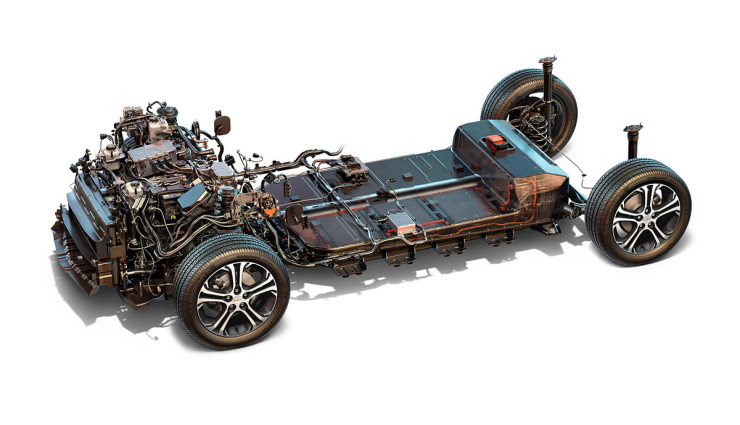
Inside the battery pack – which spans the entire floor, from the front foot well to back of the rear seat – is a new cell design and chemistry. The nickel-rich lithium-ion chemistry provides improved thermal operating performance over other chemistries, which requires a smaller active cooling system for more efficient packaging. The chemistry allows the Bolt EV to maintain peak performance in varying climates and driver demands.
The cells are arranged in a “landscape” format and each measures in at only 3.9 ins. (100 mms) high and 13.1 ins. (338 mms) wide providing improved packaging underfloor. The lower profile cell design enabled the vehicle structure team to maximize interior space.
The battery system is mated to a standard equipment 7.2 kW onboard charger for regular overnight charging from a 240-V wall box. A typical commute of 50 miles can be recharged in less than two hours. Bolt EV also features an optional DC Fast Charging system using the industry standard SAE Combo connector. Using DC Fast Charging, the Bolt EV battery can be charged up to 90 miles of range in 30 minutes. Outside temperatures may affect charging times.
Regen System Provides One-Pedal Driving Regenerative braking has become more than just a tool to boost range, it’s also transformed into a feature that can provide an improved EV driving experience. The Bolt EV features a new regenerative braking system that has the ability to provide one pedal driving.
“Interviews with EV enthusiasts indicated their desire for one pedal driving capability on the Bolt EV. One pedal operation boosts the thrill and uniqueness of EV driving,” Tavel said.
Through a combination of increased regenerative deceleration and software controls, one pedal driving enables the vehicle to slow down and come to a complete stop without using the brake pedal in certain driving conditions.
When operating the Bolt EV in “Low” mode, or by holding the Regen on Demand paddle located on the back of the steering wheel, the driver can bring the vehicle to a complete stop under most circumstances by simply lifting their foot off the accelerator, although the system does not relieve the need to use the brake pedal altogether.
Operating the Bolt EV in “Drive” mode and not pulling the paddle while decelerating delivers a driving experience where usage of the brake pedal is required to stop.
Daimler will invest 500 million Euros in a new battery factory in Germany. The new battery factory will produce lithium-ion battery packs for hybrid and electric vehicles for Mercedes-Benz and smart brands.
Li-Tec, a subsidiary of the Daimler Group, ceased manufacture of battery cells in December 2015. The majority of the 280 employees were transferred to the Deutsche Accumotive—also a wholly owned Daimler subsidiary—which manufactures battery packs based on LG Chem cells.
Daimler consistently expands its activities in the area of electromobility and invests around 500 million Euros in the construction of a new battery factory. This will lead to a significant expansion of the production capacities for lithium-ion batteries of Deutsche ACCUMOTIVE located in the Saxon city of Kamenz.
The new factory will produce batteries for electric and hybrid vehicles of the brands Mercedes-Benz and smart. As a first step, the full Daimler subsidiary has purchased about 20 hectares of land adjacent to the existing battery factory.
"To get closer to fully electric driving, we keep investing big in the key component of emission-free vehicles: powerful batteries. We are now devoting another 500 million Euros to build a second battery factory in Germany. This underlines our commitment to the consistent expansion of electromobility", said Dr. Dieter Zetsche, Chairman of the Board of Management of Daimler AG and Head of Mercedes-Benz Cars.
Daimler announced a initial 100 million euros investment to expand East German battery pack output in 2014.
With the growing electrification of the automobile, the demand for highly efficient lithium-ion batteries is also rising steadily. Through its entry into the new business field with stationary battery storage for private and industrial applications, Deutsche ACCUMOTIVE will tap into additional growth opportunities.
By the end of 2014, the Daimler subsidiary had already announced its plans for a significant increase in its production capacities and an investment of around 100 million Euros in the expansion of the existing battery factory. "With the purchase of the new land, our production area at the site will be tripled.
The previous 20,000 square meters will be stocked up by an additional 40,000 square meters of production space. We will expand the production capacity consistently in the coming years", said Harald Kröger, Head of Development Electrics/Electronics and e-Drive Mercedes-Benz Cars.
The groundbreaking ceremony for the new factory is planned for fall 2016. The topping-out ceremony will then follow in spring 2017. The new production plant is to start operations in summer 2017.
Daimler entered into the business with stationary battery storage with Deutsche ACCUMOTIVE last year. The scalability of the systems enables the use of the lithium-ion batteries in big industry for network stabilization and smoothing of peak shaving for energy producers as well as private households, for example in conjunction with photovoltaic installations.
Mercedes-Benz energy storage units for private households can already be ordered and will soon be installed at customers in collaboration with selected sales partners. In the area of industrial applications, around 29 megawatt will be connected to the network jointly with different partners.
Watch the all new Tesla Model X P90D Ludicrous race the Model S also with Ludicrous in an all out drag racing shootout.
The Model X P90D with the $10,000 Ludicrous Mode runs 11.61 @ 116 MPH in the 1/4 mile setting a new world record for the quickest production SUV/CUV. 0-60 MPH came up in just 3.1 seconds. The Model S ran 11.3-11.5 @ 116 MPH.
Audi is preparing its international production network for the mobility of the future. Large series production of the first purely electric driven SUV from Audi will begin at the site in Brussels in 2018. The plant will also produce its own batteries. The company will transfer production of the Audi A1 from Belgium to Martorell in Spain. The Audi Q3, which is currently produced in Spain, will be built in Győr (Hungary) in the future.
The model rotation will benefit all the sites of Audi’s global production network. “The new model distribution will enhance our production efficiency and strengthen all of the sites involved,” stated Rupert Stadler, Chairman of the Board of Management of AUDI AG. “It will allow us to utilize further synergies within the Volkswagen Group and to bundle key competencies.” The model decisions protect jobs and promote the internationalization of the production network.
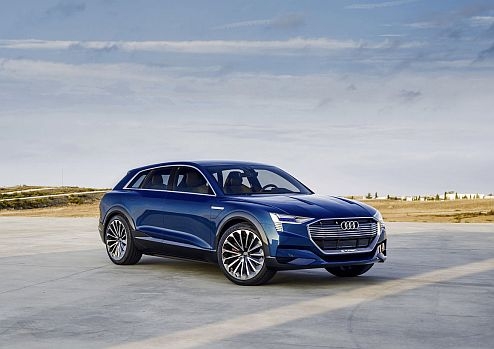
As of 2018, Audi Brussels will exclusively produce the first battery‑electric SUV from the brand with the Four Rings for the world market. The Audi e-tron quattro concept study that was presented at the Frankfurt Motor Show in 2015 provides a clear indication of the final production version. The sporty SUV will fit between the Audi Q7 and the Audi Q5 in the product portfolio. Equipped with three electric motors and a high‑capacity battery, the Audi e-tron model will offer a maximum of sportiness, driving dynamics and efficiency. It will have full everyday practicality with a range of more than 500 kilometers and will feature quick battery charging.
The Brussels plant will also have its own battery production. The site in Belgium will thus become a key plant for electric mobility at the Volkswagen Group.
German Economy Minister Sigmar Gabriel wants to commit two billion euros ($2.17 billion) to encourage more people to buy electric cars, the newspaper Die Zeit reported on Wednesday.
Buyers of electric cars would receive a subsidy from the government, the newspaper said, giving no further details.
Gabriel also wants to expand charging stations and encourage federal offices to use electric cars - an initiative that will be funded under the current German budget without tax increases, he said.
The German government aims to put one million electric cars on the roads by 2020. Among the country's carmakers, BMW, Mercedes and Volkswagen now produce all-electric cars; Audi, Mercedes and Porsche have plans to build one.
Sales of electric cars totaled some 19,000 in 2014, but at the end of 2014 Germany had only 2,400 charging stations and around 100 fast-charging points.
Calls for supporting electric cars grew at the end of last year after the Volkswagen emissions scandal. Both Gabriel and his fellow Social Democrat Environment Minster Barbara Hendricks have called for a quota for electric cars.
Hard on the heels of the reveal of the production Volt EV at CES 2016 in Las Vegas, Chevrolet used the North American International Auto Show in Detroit to release additional details on the battery and drivetrain of the new BEV. Engineers developed the Bolt EV’s propulsion system to offer more than an estimated 200 miles and a sporty driving experience.
The Bolt EV’s drive system uses a single high capacity electric motor to propel the car. The engineering team designed the Bolt EV’s electric motor with an offset gear and shaft configuration tailored to meet efficiency and performance targets—most notably more than an estimated 200 miles of range. The motor is capable of producing up to 266 lb-ft (360 N·m) of torque and 200 hp (150 kW) of motoring power. Combined with a 7.05:1 final drive ratio, it helps propel the Bolt EV from 0-60 mph in less than seven seconds.
Power delivery is controlled by Chevrolet’s first Electronic Precision Shift system. This shift and park-by-wire system sends electronic signals to the Bolt EV’s drive unit to manage precise feel and delivery of power and torque, based on drive mode selection and accelerator inputs. A by-wire shifter requires less packaging space than a traditional mechanical shifter, resulting in more interior space and improved interior layout.
Having more than 1.3 billion miles of EV experience from the Chevrolet Volt helped Bolt EV battery engineers and strategic partner LG Electronics to develop an all-new cell and battery pack to offer more than an estimated 200 miles of range. Battery system preliminary specifications include:
60 kWh lithium-ion battery pack
160 kW peak power
288 lithium ion cells
Five sections
10 modules
96 cell groups – three cells per group
960 lbs. (435 kg) total weight
285 liters
The battery uses active thermal conditioning, similar to the Chevrolet Volt, to keep the battery operating at its optimum temperature, which results in solid battery life performance. The Bolt EV battery will be covered by an 8-year/ 100,000 mile (whichever comes first) limited warranty.
Inside the battery pack—which spans the entire floor, from the front foot well to back of the rear seat—is a new cell design and chemistry. The nickel-rich lithium-ion chemistry provides improved thermal operating performance over other chemistries, which requires a smaller active cooling system for more efficient packaging. The chemistry allows the Bolt EV to maintain peak performance in varying climates and driver demands.
The cells are arranged in a “landscape” format and each measures in at only 3.9 ins. (100 mms) high and 13.1 ins. (338 mms) wide providing improved packaging underfloor. The lower profile cell design enabled the vehicle structure team to maximize interior space.
The battery system is mated to a standard equipment 7.2 kW onboard charger for regular overnight charging from a 240-V wall box. A typical commute of 50 miles can be recharged in less than two hours. Bolt EV also features an optional DC Fast Charging system using the industry standard SAE Combo connector. Using DC Fast Charging, the Bolt EV battery can be charged up to 90 miles of range in 30 minutes. Outside temperatures may affect charging times.
Regen System Provides One-Pedal Driving. Regenerative braking has become more than just a tool to boost range, it’s also transformed into a feature that can provide an improved EV driving experience. The Bolt EV features a new regenerative braking system that has the ability to provide one-pedal driving.
Through a combination of increased regenerative deceleration and software controls, one pedal driving enables the vehicle to slow down and come to a complete stop without using the brake pedal in certain driving conditions.
When operating the Bolt EV in “Low” mode, or by holding the Regen on Demand paddle located on the back of the steering wheel, the driver can bring the vehicle to a complete stop under most circumstances by simply lifting their foot off the accelerator, although the system does not relieve the need to use the brake pedal altogether.
Operating the Bolt EV in “Drive” mode and not pulling the paddle while decelerating delivers a driving experience where usage of the brake pedal is required to stop.
Small Wagon (EPA does not have a cross-over category)
Key competitors:
Nissan Leaf, BMW i3, Ford Focus Electric, Kia Soul EV, VW eGolf Mercedes-Benz B-Class Electric
Manufacturing location:
Orion Township, Mich.
Battery manufacturing location:
Incheon, South Korea
Motor and drive unit manufacturing location:
Incheon, South Korea
Battery System
Type:
rechargeable energy storage system comprising multiple linked modules
Volume/case:
285L
Mass (lb / kg):
960 lb./435 kg
Battery chemistry:
lithium-ion
Thermal system:
liquid active thermal control
Cells:
288
Electric driving range:
More than 200 miles (GM estimate pending final tests)
Energy:
60 kWh
Warranty:
eight years / 100,000 miles
Electric Drive
Type:
Single motor and gearset
Motor:
permanent magnetic drive motor
Power:
200 hp/150 kW
Torque: (lb-ft / Nm):
266 lb.ft./360 Nm
Final drive ratio (:1):
7.05:1
Charging Times
120 V:
Available with standard cordset
240 V:
50 miles of range in less than 2 hrs.
SAE Combo DC Fast Charge:
90 miles in 30 minutes
Performance
Top speed (mph):
91 mph / 145 kph *
0-30 mph:
2.9s (75% SoC) *
0-60 mph:
Under 7 seconds
Chassis/Suspension
Front:
Independent MacPherson strut-type front suspension with side load compensating and finely tuned springs, direct-acting solid stabilizer bar system and ride & handling oriented LCA bushings.
Rear:
Compound crank (torsion beam) type rear suspension with the closed section V-shaped profile axle; specifically tuned coil springs, performance balanced shock absorber, angled A-bushing supporting understeer tendency on cornering maneuver and kinematically optimized torsion beam providing stable and best ride & handling performance.
Chassis control:
Four-channel ABS; Traction control system; StabiliTrak; Drag control
Steering type:
column-mounted electric power steering
Steering wheel turns, lock-to-lock:
2.91 revolution *
Turning radius, curb-to-curb ( ft. / m):
10.8m *
Steering ratio:
16.8 :1
Brakes
Type:
power four-wheel disc with ABS; electro-hydraulic; partially regenerative; dynamic rear brake proportioning
Brake rotor diameter front (mm / in):
276mm
Brake rotor diameter rear (mm / in):
264mm
Total swept area (cu cm):
Front : 1398.9
Rear : 1131.4
Wheels/Tires
Wheel size and type:
17in x 6.5J offset 44, cast aluminum
Tires:
Michelin Energy Saver A/S 215/50R17 all-season
Dimensions
Exterior
Wheelbase (in / mm):
102.4 / 2600
Overall length (in / mm):
164.0 / 4166
Overall width (in / mm):
69.5 / 1765(W103)
Track width front (in / mm):
1500.92 mm
Track width rear (in / mm):
1501.05 mm
Height (in / mm):
62.8 / 1594(H100)
Front overhang (in / mm):
32.9 / 836
Rear overhang (in / mm):
28.7 / 730
Interior
Seating capacity (front / rear):
2 / 3
Headroom (in. / mm):
39.7 / 1009 1st row 37.9 / 962 2nd row
Shoulder room (in / mm):
54.6 / 1387 1st row 52.8 / 1340 2nd row
Hip room (in / mm):
51.6 / 1310 1st row 50.8 / 290 2nd row
Legroom (in / mm):
41.6 / 1056 1st row 36.5 / 927 2nd row
Cargo volume (cu ft / L):
16.9 cu-ft / 478 L (V10, Wagon CVI – Max behind rear seat)
Passenger volume (cu ft / L):
PV1 52.2 cu-ft / 1478 L 1st row PV2 42.2 cu-ft / 1195 L 2nd row
Capacities
Curb weight (lb / kg);
3580 lb / 1625kg based on target (w/o 2passengers)
Heating cooling (qt / L):
Heating loop 1.8L
Battery pack cooling (qt / L):
6.9L (RESS cooling loop total coolant volume)
Power electronics cooling (qt / L):
3.9L (PE & DU cooling loop total coolant volume)
Drive unit fluid (qt / L):
2.9L
Note: Information shown is current at time of publication.
Tesla's Autopilot uses hardware from both Mobileye and Nvidia to control the Model S on highways. Apparently Tesla would like to discontinue using Mobileye’s system in favor of bringing it in-house, according to an email exchange between Tesla CEO Elon Musk and George Hotz, a software engineer mainly known for being the first person to jailbreak the iPhone.
A report by Bloomberg's Ashlee Vance would have us believe 26-year old hacker George Hotz has built a self-driving car from scratch in a month. Unfortunately for this urban myth, it's fairly obvious the 2016 Acura ILX he's using isn't a random choice.... Honda have offered Adaptive Cruise Control with Lane Assist since 2013.
AcuraWatch Plus is a basic $1300 option available on this car that provides Adaptive Cruise Control, Lane Keeping Assist, Collision Mitigation Braking & Road Departure Mitigation.. So this Honda can do what he's demonstrating off the showroom floor.
A more accurate description of Hotz's work is "reverse engineering".
Nissan is celebrating 5 years of the LEAF and Tesla Australia is celebrating 1 year in Australia. With the upcoming New year I thought it would be good to look back at the history of electric vehicles in NSW.
Growth
Lets look at growth in NSW Tesla don’t share their data with VFACTS, the industry body for new car sales reporting but RMS/RTA do keep registration statistics on how many cars of a particular brand are sold and what type of fuel they use. Using those statistics we can look at how many “pure electric” vehicles are on the road in NSW. The first production EV was the Mitsubishi i-MiEV launched in 2010 before then the 44 or so vehicles registered as electric with the RTA/RMS where most likely conversions.
What’s included in this count? RMS count petrol/electrics separately so this count doesn’t include plug-in hybrids like the Outlander PHEV, Holden Volt or BMW i3 Rex. What it does include is listed below with their official release dates.
Release Dates :
2010 August Mitsubishi i-MiEV (Limited selective client release)
2014 December BMW i3 (excluding the REX hybrid version)
2014 December Tesla Model S (The amount of registered Tesla’s is shown in red)
Performance
If we look at registrations since 3rd Quarter 2011 when electric vehicles began sales to the general public we see 524 registrations to date at a rate of 33 vehicles per quarter. Breaking it down further we see three district rates of registrations:
2009-2011 – 7.8 Registrations per quarter.
2012-2013 – 28.5 Registrations per quarter.
2014 Q1-Q3 – 5.3 Registrations per quarter.
2014 Q3-2015 Q3 – 66.5 Registrations per quarter.
With the release of Tesla Model S we see Tesla alone contribute 52.5 Registrations per quarter, all other makes and models only managing 14 per quarter since 2014. The best performing quarter is the fourth quarter of 2014 with 87 registrations 65 Tesla 22 others. The worst performing quarter since the release of the i-MiEV first quarter of 2014 with only 4.
Insights
Tesla has landed on our shores and has been welcomed with open arms with the fastest “selling” electric vehicle in NSW. Nissan/Mitsubishi was a steady seller until 2014. However Nissan have not released an updated model since 2012 in Australia, maybe it’s time for a new model LEAF that sell overseas. Mitsubishi also no longer have i-MiEV at dealerships, concentrating their efforts on the Outlander PHEV.
In terms of charging standards we’ve seen Tesla enter with their own version of a type 2 socket which is Mennekes type 2 compatible. Where as everyone else has been type 1 J1772 it’s a bit hard to gauge a direction while 30% of pure electric vehicles are Tesla we don’t have accurate numbers for other type 1 J1772 plug-in vehicles like the Holden volt, Audi a3 e-tron Mitsubishi Outlander PHEV, BMW i3 REX, BMW i8 and the hybrid offerings from Porsche.
Over the last year we’ve seen a significant growth in electric vehicles, installing a type 2 socket universal charging station to suit all vehicles at your office, shop, restaurant, church or sports field will further enhance the growth of electric vehicles.
Porsche will spend about 1 billion euros ($1.09 billion) on production facilities at its biggest plant to make its first-ever all-electric sports car.
The Volkswagen-owned manufacturer will create more than 1,000 new jobs at its base in Zuffenhausen in Germany where a new paint shop and assembly line will be set up to build the battery-powered "Mission E" model, Porsche said on Friday.
Porsche's investment in emissions-free drive technology reflects parent VW's growing commitment to increase its electric offerings as it struggles to overcome an emissions scandal.
VW has said the next generation of its VW-badged flagship luxury saloon Phaeton will be electric and it plans to expand the so-called MQB modular production platform to focus more strongly on long-range plug-in hybrids and electric vehicles.
Analysts have warned that VW's admission of rigging diesel emissions tests could cast a shadow over the diesel vehicle industry.
Porsche's Mission E model, due to come to market by the end of the decade, will be more than 600 horsepower and have a range of over 500 km (310 mile).
"We are sending a significant sign for the future of the brand," Chairman Wolfgang Porsche said after a meeting of the supervisory board which approved the investment.
Some 700 million euros will be spent at Zuffenhausen where an existing engine plant and body shop will be extended, and the rest will be invested in Porsche's development center in Weissach, the carmaker said.
No other car currently on the market is able to capture the curiosity of the greater public like the Tesla Model S P85D. It is a means of transport like no other, breaking a few world records in the process.
Today at the Tokyo Motor Show 2015, Nissan Motor Co., Ltd. unveiled a concept vehicle that embodies Nissan's vision of the future of autonomous driving and zero emission EVs: the Nissan IDS Concept.
Presenting at the show, Nissan president and CEO Carlos Ghosn said: "Nissan's forthcoming technologies will revolutionize the relationship between car and driver, and future mobility."
After leading the development and expansion of EV technology, Nissan once again stands at the forefront of automotive technology. By integrating advanced vehicle control and safety technologies with cutting-edge artificial intelligence (AI), Nissan is among the leaders developing practical, real-world applications of autonomous drive technology.
In August 2013, Ghosn said that by 2020 Nissan plans to equip innovative autonomous drive technology on multiple vehicles. Progress is well on track to achieve this goal.
Nissan Intelligent Driving is Nissan's concept of autonomous drive technology and represents what Nissan believes next-generation vehicles should be. "Nissan Intelligent Driving improves a driver's ability to see, think and react. It compensates for human error, which causes more than 90 percent of all car accidents. As a result, time spent behind the wheel is safer, cleaner, more efficient and more fun," continued Ghosn.
By 202X, expect to see Nissan Intelligent Driving technology deployed on cars in cities around the world.
The Nissan IDS experience
Some have compared a future with autonomous drive to living in a world of conveyer belts that simply ferry people from point A to B, but the Nissan IDS Concept promises a very different vision of tomorrow. Even when the driver selects Piloted Drive and turns over driving to the vehicle, the car's performance — from accelerating to braking to cornering — imitates the driver's own style and preferences.
In Manual Drive mode, the driver has control. The linear acceleration and cornering are pure and exhilarating. Yet behind the scenes, the Nissan IDS Concept continues to provide assistance. Sensors continually monitor conditions and assistance is available even while the driver is in control. In the event of imminent danger, Nissan IDS Concept will assist the driver in taking evasive action.
In addition to learning, the Nissan IDS Concept's AI communicates like an attentive partner. From information concerning traffic conditions, the driver's schedule to personal interests, Nissan IDS Concept's AI has what is needed to help create a driving experience that is comfortable, enjoyable and safe.
Design — Together, we ride
"A key point behind the Nissan IDS Concept is communication. For autonomous drive to become reality, as a society we have to consider not only communication between car and driver but also between cars and people. The Nissan IDS Concept's design embodies Nissan's vision of autonomous drive as expressed in the phrase together, we ride," says Mitsunori Morita, Design Director.
Two interiors enable two ways for the driver to enjoy the experience. Together, we ride is clearly demonstrated in the interior design. "The Nissan IDS Concept has different interiors depending on whether the driver opts for Piloted Drive or Manual Drive. This was something that we thought was absolutely necessary to express our idea of autonomous drive," says Morita.
Even though it is a hatchback, the Nissan IDS Concept's long wheelbase enables comfortable seating space for four adults. But the cabin becomes even more spacious when the driver selects Piloted Drive. In this mode, the steering wheel recedes into the center of the instrument panel and a large flat screen comes out. Various driving-related operations are handled by AI, voice and gestures from the driver. The interior, which is comprised of natural materials such as mesh leather, is illuminated by soft light. All four seats rotate slightly inward, facilitating easier conversation. It's like relaxing in a living room.
When the driver selects Manual Drive, the roomy interior transforms to put the driver in control. All seats face forward. The steering wheel, which takes styling cues from reins for horse riding, appears along with driving meters and a heads-up display that shows route and other driving information. Interior lighting switches to blue, stimulating the ability to concentrate. Nissan's use of hollow-structure A-pillars helps ensure excellent visibility by reducing blind spots and also contributes to the feeling of open space.
"In every situation, it is about giving the driver more choices and greater control. And the driver will remain the focus of our technology development efforts," Ghosn said at the show.
The transformation to Manual Drive can be carried out with ease through a switch between the front seats called the PD Commander. This is the only control the driver can physically operate when the car is in Piloted Drive: when the driver is ready to take over driving, a physical action should initiate the change.
Exterior design
For autonomous drive to be widely accepted, people need to fully trust the technology. Through its innovative communication capabilities, the Nissan IDS Concept promotes confidence and a sense of harmony for those outside the car as well. Various exterior lights and displays convey to pedestrians and others the car's awareness of its surroundings and signals its intentions. The car's side body line, for example, is actually an LED that Nissan calls the Intention Indicator. When pedestrians or cyclists are nearby, the strip shines white, signaling that the car is aware of them. Another electronic display, which faces outside from the instrument panel, can flash messages such as "After you" to pedestrians. This natural, harmonious system of communication signals a new future with cars.
Advanced aerodynamic performance for greater driving range
Design Director Mitsunori Morita says: "By the time Nissan Intelligent Driving technology is available on production cars, EVs will be able to go great distances on a single charge. Getting to this point will, of course, require the further evolution of batteries, but aerodynamic performance is also very important. We incorporated our most advanced aerodynamic technology in the design of the Nissan IDS Concept."
The height of the full carbon fiber body was constrained to 1,380 mm, sharply minimizing aerodynamic drag (Cd). Positioning the tires close to the corners of the body maximizes interior space while enabling a wrap-around cabin design. Nissan selected large-diameter wheels for high-performance and sportiness, but used very thin 175-size tires to minimize air and roll resistance. The wheels have a layered design suggestive of thin fins that create tiny vortexes of air flow on the wheel's surface. This design further contributes to smooth air flow.
The icicle pattern on the Nissan IDS Concept's grille symbolizes a pure and clean design — perfect for an EV. Shaped like a stack of ice blocks, the grille pattern appears transparent. The car's bluish satin silver body color heightens the impression of a comfortable and secure cabin space.
Highly evolved EV technology for long-distance driving
At Nissan's annual shareholders meeting in June, Executive Vice President Hideyuki Sakamoto said: "Our zero emission strategy centers on EVs. We are pursuing improved electric powertrain technologies, such as motors, batteries and inverters, which will enable us to mass produce and market EVs that equal or surpass the convenience of gasoline-powered cars."
The Nissan IDS Concept is fitted with a high-capacity 60 kWh battery, and thanks to its outstanding aerodynamics, low stance, flowing form and reduced weight due to its full-carbon-fiber body, the vehicle is designed to also meet the need to drive long distances. Other technologies on the Nissan IDS Concept include Piloted Park that can be operated by smartphone or tablet, and wireless charging technologies. Through these, the driver can leave parking and charging to the car.
Nissan's targets — Zero traffic fatalities and zero emissions
In order for our car-based society to be sustainable, complex issues ranging from sustainable energy supplies to climate change, air pollution and traffic safety must be addressed. At Nissan, we have set zero fatalities and zero emissions as aspirational targets in our mission to help create a sustainable car-based society.
Over 90 percent of traffic accidents are caused by human error. Nissan IDS Concept's extensive system of sensors and AI are designed to provide enhanced safety performance compared to a human driver. This technology brings us a step closer to the goal of zero traffic fatalities.
EVs produce no CO2 emissions and their batteries can store energy from renewable sources and turn it into electricity for homes and buildings. As the number of EVs increases, entire communities will be able to harness their power as part of a sustainable energy plan. Then, as EVs come to play a central role in energy supply, we will come that much closer to becoming a zero emission society.
Nissan believes that the Nissan IDS Concept will evolve into a leading innovation for next generation mobility and our quest for making these "two zeroes" a reality.
Featuring Nissan's most advanced safety, driving-control and EV technology — all taken to a new level by AI — the Nissan IDS Concept is a compelling showcase of a promising future.
In the wake of the ongoing diesel-emissions scandal, Volkswagen has announced that an all-electric Volkswagen Phaeton sedan is in the product pipeline.
"The Volkswagen Phaeton has embodied the brand's technological competence and brand ambition from the first generation onward," Volkswagen AG said in a statement. "The future generation of the Phaeton will once again be the flagship for the brand's profile over the next decade."
The Phaeton EV will lead a new VW product portfolio that features "plug-in hybrids with an even greater range, high-volume electric vehicles with a radius of up to 300 kilometers (186 miles), a 48-volt power supply system (mild hybrids) as well as ever more efficient diesel, petrol and CNG concepts," VW said.
VW talking up its zero emissions technology is no surprise, with the Porsche Mission E and Audi E-tron Quattro proving the requisite technology is being developed within the group.
Wolfsburg insiders with knowledge of Volkswagen's future model plans suggest it will share its platform architecture, electric drive system and battery technology with the upcoming Audi Q6 etron – as previewed by the etron Quattro concept at the recent Frankfurt auto show.The four-wheel drive etron Quattro uses three motors – one mounted up front sending drive to the front wheels and the remaining two sited at the rear acting on the rear wheels. Nominal power is put at 230kW, although a boosting function made available in the more sportier of two drive modes temporarily increases its maximum output to 370kW. It is accompanied by peak torque of 800Nm.
Energy to run the etron Quattro's electric motors is drawn from a liquid cooled 95kWh battery bolted to the floor below the passenger compartment. Hinting at its modular nature, Audi says the lithium-ion unit is suitable for other future electric models.
On a full charge, the battery is claimed to provide the new Audi with a range of over 500km based on the criteria used in the New European Driving Cycle (NEDC) test procedure.
Perfectly timed for the world famous Bathurst 1000 endurance race this coming weekend at Mt Panorama, the guys at CarAdvice.com have set up the ultimate drag race.
It's the world's fastest four-door sedan, the Tesla Model S P85D, against Australia's fastest four-door sedans, the Supercheap Auto Racing Holden Commodore V8 Supercar and the Walkinshaw Performance W507 HSV GTS.
The Tesla Model S P85D rockets from 0-100km/h in just 3.3-seconds, while the V8 Supercar does it in 3.4-seconds, but weighs just 1400kg with the driver.
Perfectly timed for the world famous Bathurst 1000 endurance race this coming weekend at Mt Panorama, the guys at CarAdvice.com have set up the ultimate drag race.
It's the world's fastest four-door sedan, the Tesla Model S P85D, against Australia's fastest four-door sedans, the Supercheap Auto Racing Holden Commodore V8 Supercar and the Walkinshaw Performance W507 HSV GTS.
The Tesla Model S P85D rockets from 0-100km/h in just 3.3-seconds, while the V8 Supercar does it in 3.4-seconds, but weighs just 1400kg with the driver.
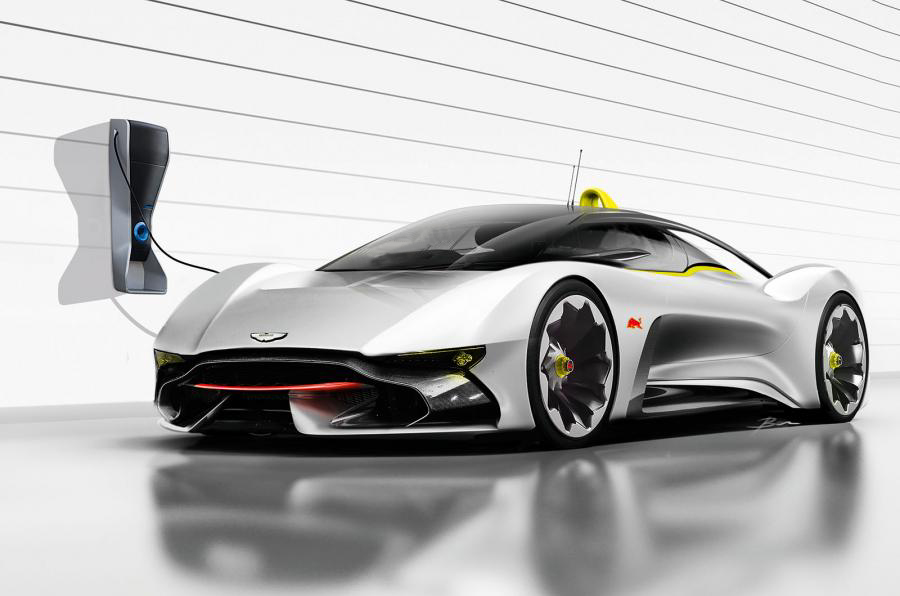
The road car project that Adrian Newey is working on with Red Bull and Aston Martin appears to be picking up steam, and there are rumors that it could be an electric car.
Newey seems to have no interest in building a hybrid hypercar four years after the McLaren P1, LaFerrari and Porsche 918 Spyder. As previously discussed, these examples are very much first generation 'mild' hybrids.
What does interest him is a car that Autocar says advances technology and the involvement of the driver. That would be an electric supercar. Newey reportedly wants his car to hold the same sort of place in history as Gordon Murray's McLaren F1.
Sources suggest that Aston Martin shareholder Mercedes-Benz wants to be involved in the project, both to create a connection with Red Bull’s younger audience and to have a technical involvement in what could be a landmark product. As such, it is said to be pushing for its performance arm, AMG, to work with Newey.
As AMG are responsible for designing the only production supercar with true all-wheel-drive torque vectoring (Mercedes SLS AMG Electric), any collaboration between AMG and Adrian Newey could spawn a vehicle to seriously eclipse the current generation of hybrid hypercar.
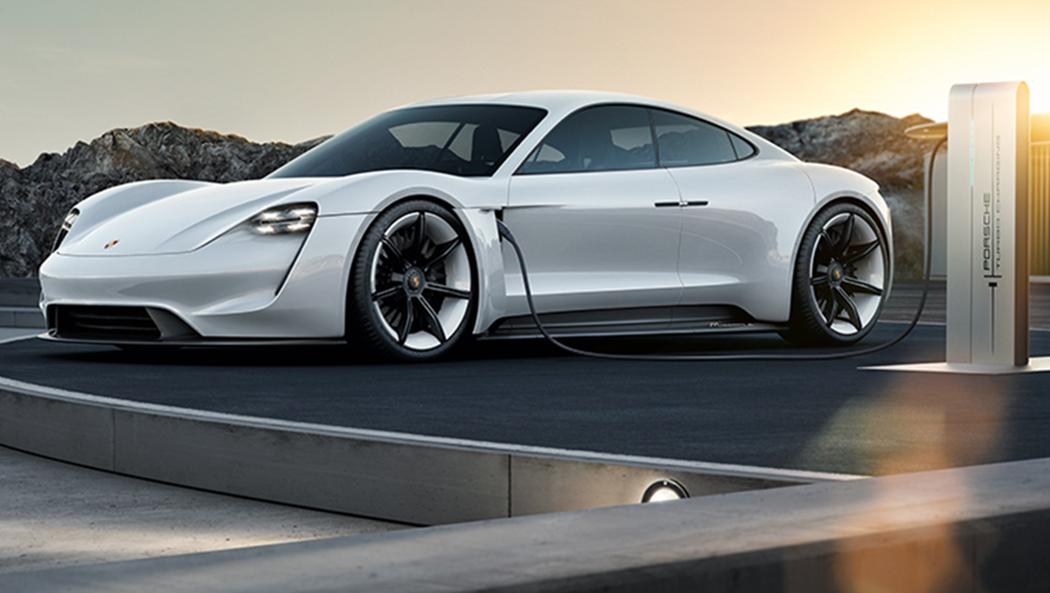
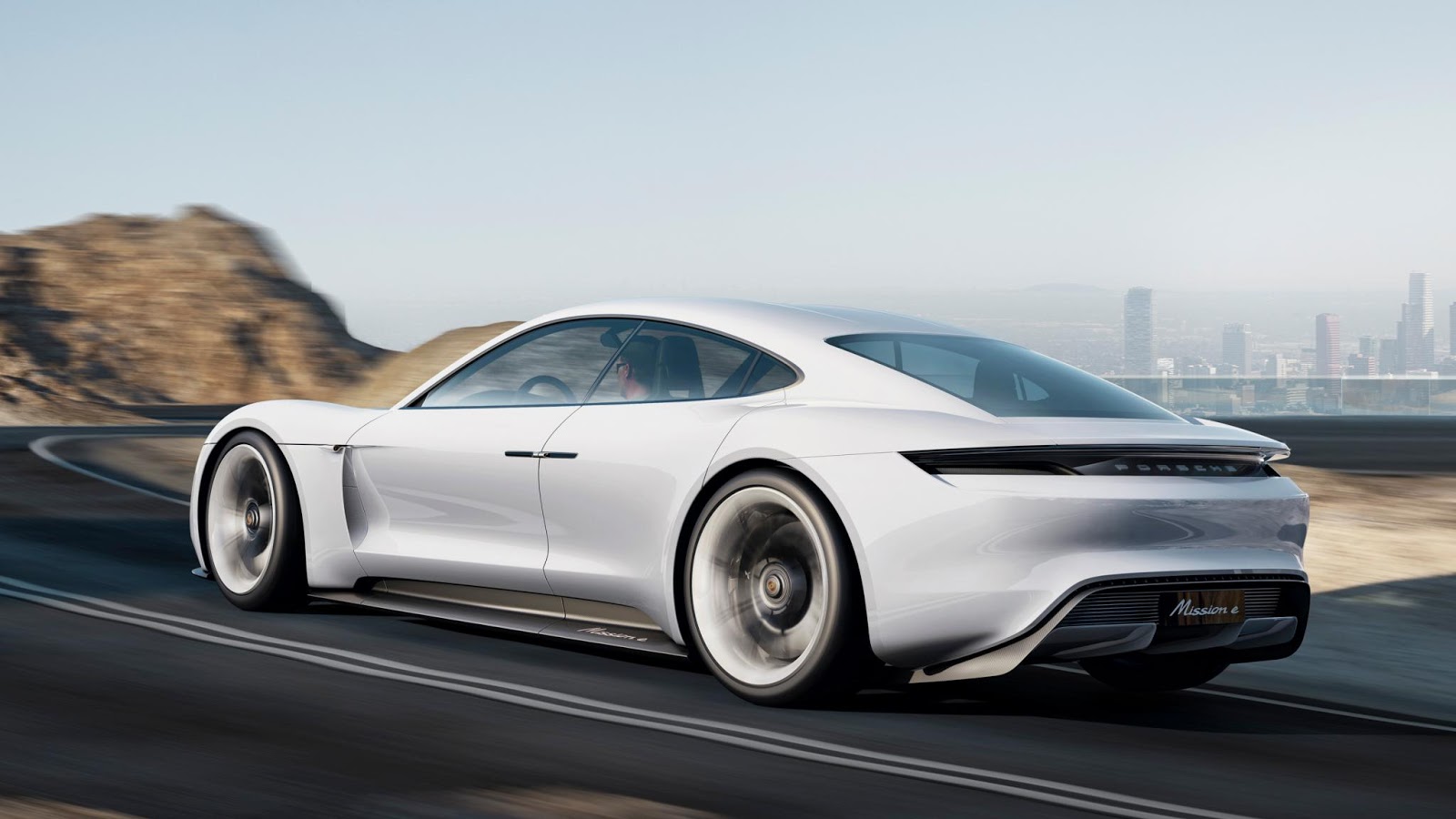
In presenting the Mission E at the IAA in Frankfurt, Porsche is introducing the first all-electrically powered four-seat sports car in the brand's history. The concept car combines the unmistakable emotional design of a Porsche with excellent performance and the forward-thinking practicality of the first 800-volt drive system. Key specification data of this fascinating sports car: four doors and four single seats, over 600 hp (440 kW) system power and over 500 km driving range. All-wheel drive and all-wheel steering, zero to 100 km/h acceleration in under 3.5 seconds and a charging time of around 15 minutes to reach an 80 per cent charge of electrical energy. Instruments are intuitively operated by eye-tracking and gesture control, some even via holograms – highly oriented toward the driver by automatically adjusting the displays to the driver's position.
Drive system: over 600 hp with technologies from endurance racing
The drive system of the Mission E is entirely new, yet it is typical Porsche, i.e. proven in motor racing. Two permanent magnet synchronous motors (PMSM) – similar to those used in this year's Le Mans victor, the 919 hybrid – accelerate the sports car and recover braking energy. The best proof of a Porsche is 24 hours of top racing performance and a 1-2 finish. Together the two motors produce over 600 hp, and they propel the Mission E to a speed of 100 km/h in less than 3.5 seconds and to 200 km/h in under twelve seconds. In addition to their high efficiency, power density and uniform power development, they offer another advantage: unlike today's electric drive systems, they can develop their full power even after multiple accelerations at short intervals. The need-based all-wheel drive system with Porsche Torque Vectoring – which automatically distributes torque to the individual wheels – transfers the drive system's power to the road, and all-wheel steering gives precise, sporty steering in the desired direction. This makes the Mission E fit for the circuit race track; its lap time on the Nürburgring Nordschleife is under the eight-minute mark.
Everyday practicality: convenient and quick charging, over 500 km driving range
It is not just passionate sportiness that makes up a Porsche but also a high level of everyday practicality. Accordingly, the Mission E can travel over 500 km on one battery charge, and it can be charged with enough energy for around 400 km more driving range in about fifteen minutes. The reason: Porsche is a front-runner in introducing innovative 800-volt technology for the first time. Doubling the voltage – compared to today's electric vehicles that operate at 400 volts – offers multiple advantages: shorter charging times and lower weight, because lighter, smaller gage copper cables are sufficient for energy transport. A moveable body segment on the front left wing in front of the driver's door gives access to the charging port for the innovative "Porsche Turbo Charging" system. Via the 800-volt port, the battery can be charged to approximately 80 per cent of its capacity in around 15 minutes – a record time for electric vehicles. As an alternative, the technology platform can be connected to a conventional 400-volt charging station, or it can be replenished at home in the garage via convenient inductive charging by simply parking over a coil embedded in the floor of the garage from which the energy is transferred without cables to a coil on the car's underbody.
Low centre of gravity for superior driving dynamics
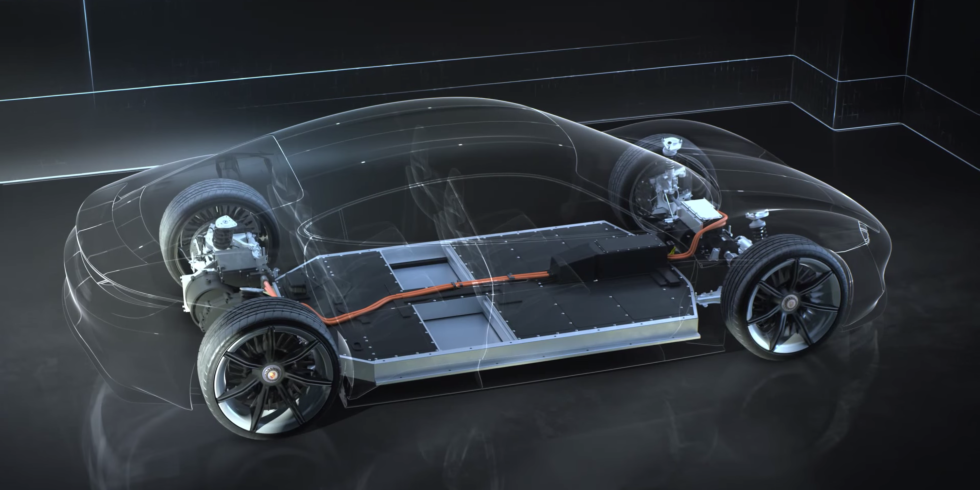
Another feature that is typical of a Porsche sports car is a lightweight concept with optimal weight distribution and a low centre of gravity. The battery mounted in the car's underbody, which is based on the latest lithium-ion technology, runs the whole length between the front and rear axles. This distributes its weight to the two drive axles uniformly, resulting in exceptionally good balance. In addition, it makes the sports car's centre of gravity extremely low. Both of these factors significantly boost performance and a sports car feeling. The body as a whole is made up of a functional mix of aluminium, steel and carbon fibre reinforced polymer. The wheels are made of carbon: the Mission E has wide tyres mounted on 21-inch wheels in front and 22-inch wheels at the rear.
Design: fascinating sports car with Porsche DNA
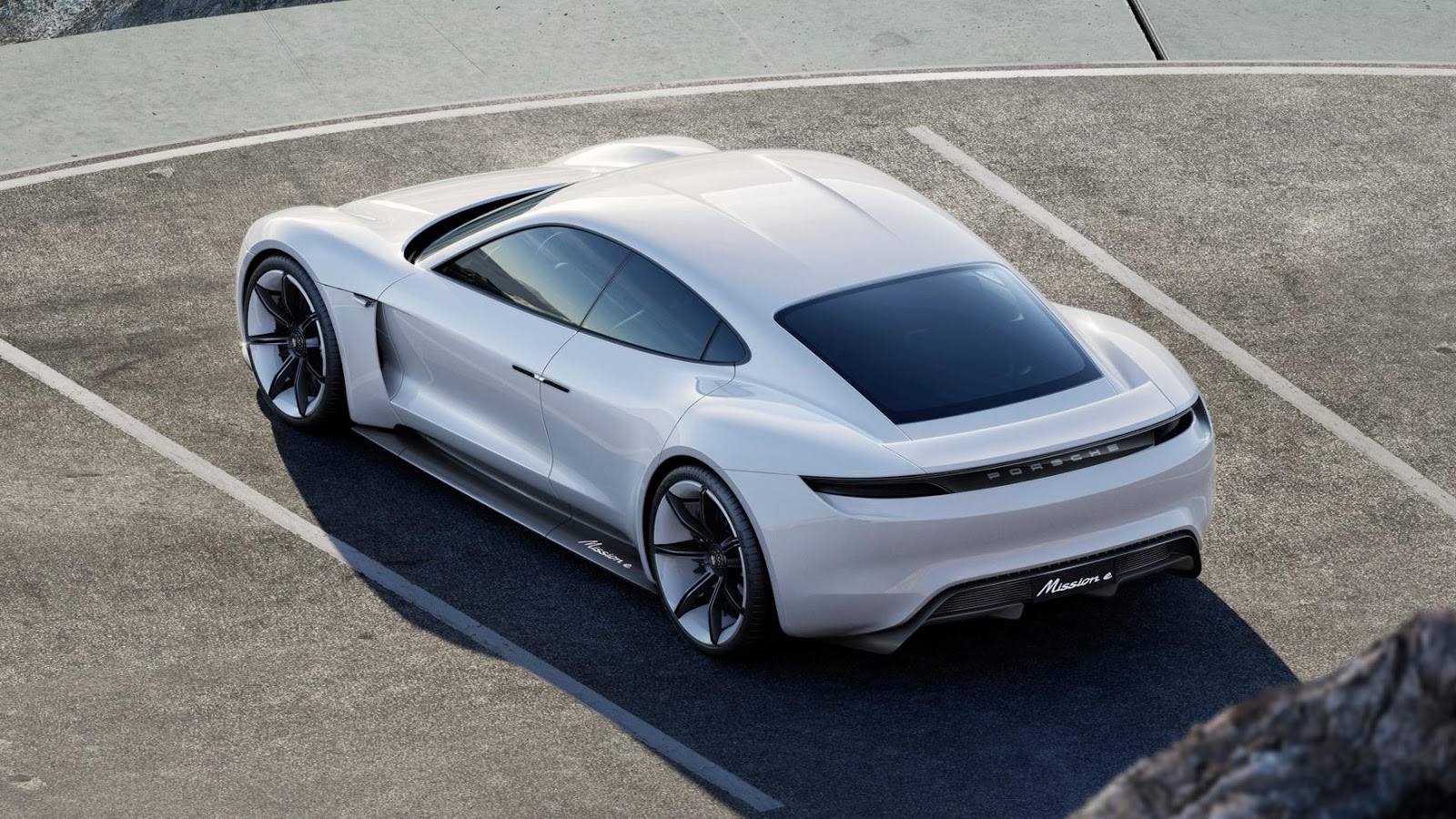
Every square inch, every angle, every radius of the Mission E reflects one thing above all else: emotional sportiness in the best tradition of Porsche design. The starting point is the sculpture of a sport saloon with a low height of 130 cm with sports car attributes from Zuffenhausen that embodies visible innovations such as its integrated aerodynamics. Distinctive air inlets and outlets – on the front, sides and at the rear – typify the body's full flow-through design that enhances efficiency and performance. Integrated air guides improve airflow around the wheels, for instance, and air outlets on the sides reduce overpressure in the wheel wells, thereby reducing lift.
The much reduced sculpting of the front end shows a classic Porsche sweepback, and it relates the concept car to the 918 Spyder and Porsche race cars. A new type of matrix LED headlights in the brand's typical four-point light design captures the viewer's gaze. Integrated as an element hovering in the airflow of the air inlet, they lend a futuristic character to the front end. The four LED units are grouped around a flat sensor for assistance systems whose border serves as an indicator light. Distinctive front wings and an extremely low-cut bonnet reference 911 design. As in the 911 GT3 RS, a wide characteristic recess extends from the overlapping front luggage compartment lid up and over the roof. The line of the side windows is also similar to that of the 911, however, with one important difference: two counter-opening doors enable convenient entry – without a B-pillar. Another difference: instead of the classic door mirror, inconspicuous cameras are mounted on the sides that contribute to the car's exceptional aerodynamics.
The rear design underscores the typical sports car architecture. The lean cabin with its accelerated rear windscreen, which draws inward at the rear, creates space for the sculpted shape of the rear wings that only a Porsche can have. A three-dimensional "PORSCHE" badge illuminated from inside hovers beneath an arch of light that extends across the entire width in a black glass element.
Interior: light and open with four single seats
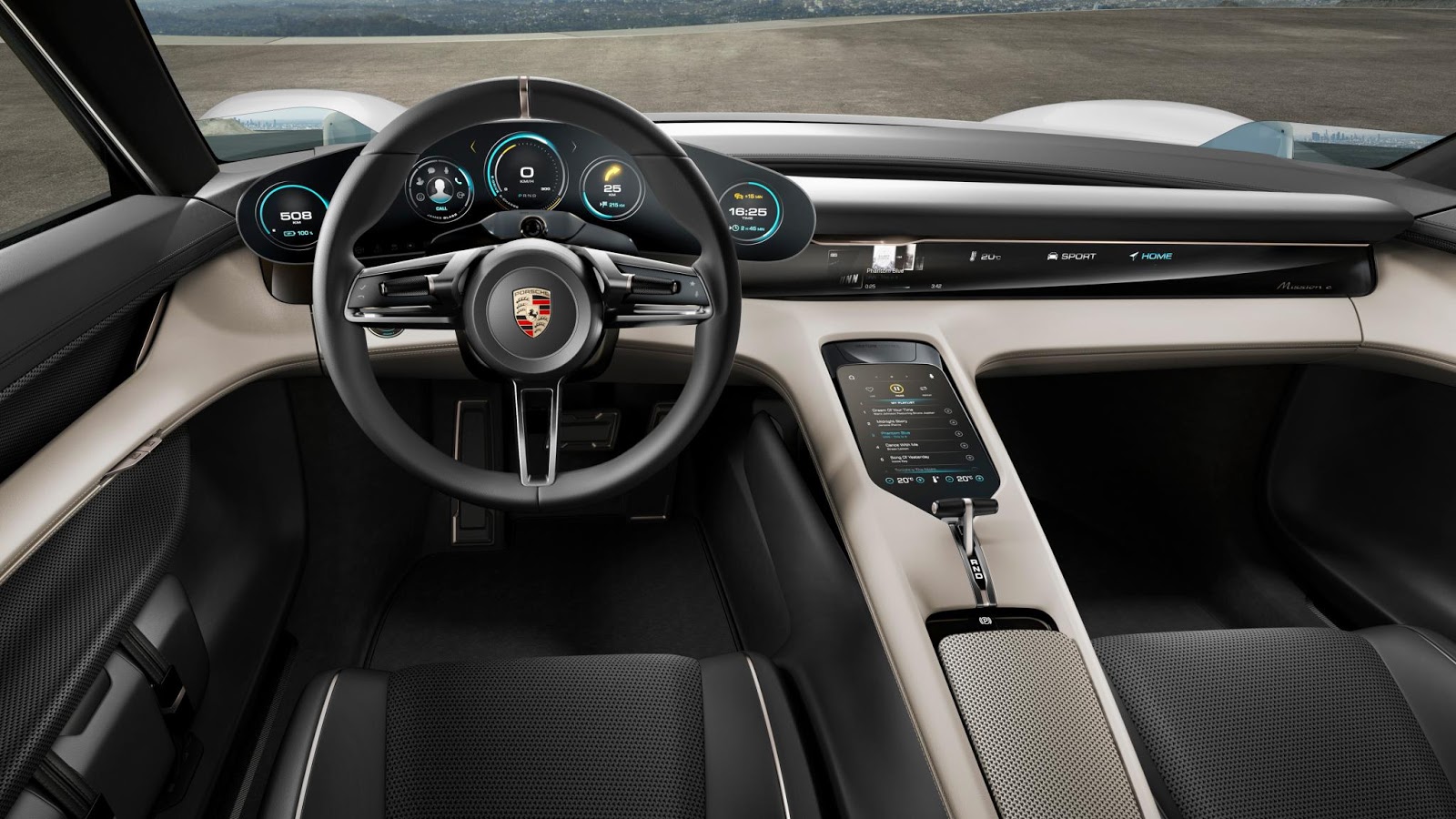
The interior of the Mission E transfers all of the traditional Porsche design principles into the future: openness, purist design, clean architecture, driver orientation and everyday practicality. The all-electric drive concept made it possible to fully reinterpret the interior. The lack of a transmission tunnel, for instance, opens up space and gives a lighter and more airy atmosphere to the entire interior. Race bucket seats served as inspiration for the four single seats. Their lightweight design is weight-saving, and it gives occupants secure lateral support during dynamic driving. Between the front seats, the centre console – elegantly curved like a bridge with open space beneath it – extends up to the dashboard.
Display and control concept: intuitive, fast and free of distractions
A new world based on an innovative display and control concept opens up before the driver. It is intuitive, fast and free of distractions – created for the sports car of tomorrow. The filigree driver's display is curved, low-profile and free-standing. The instrument cluster shows five round instruments – they can be recognized as Porsche, but they are displayed virtually in OLED technology, i.e. by organic light-emitting diodes. The round instruments are organized according to the driver-relevant themes of Connected Car, Performance, Drive, Energy and Sport Chrono. The controls are just as innovative. An eye-tracking system detects, via camera, which instrument the driver is viewing. The driver can then activate the menu of the instrument in focus by pushing a button on the steering wheel and navigate in it – which also involves an interplay of eye-tracking and manual activation. But that is not all: the display follows the seat position and body attitude of the driver in what is known as a parallax effect. If the driver sits lower, higher or leans to one side, the 3D display of the round instruments reacts and moves with the driver. This eliminates situations in which the steering wheel blocks the driver's view of certain key information, for instance. All relevant information such as vehicle speed is always within the driver's line of sight.
The Mission E can even portray driving fun: a camera mounted in the rear-view mirror recognizes the driver's good mood and shows it as an emoticon in the round instrument. The fun factor can be saved together with individual information such as the route or speed, and it can be shared with friends via a social media link.
Holographic display with touch-free gesture control
The entire dashboard is chock full of new ideas. Its division into two three-dimensionally structuring layers reinforces the impression of lightness and clarity. The upper layer integrates the driver's display, and between the levels there is a holographic display that extends far into the passenger's side. It shows individually selectable apps, which are stacked in virtual space and arranged by priority with a three-dimensional effect. The driver – or passenger – can use these apps to touch-free control primary functions such as media, navigation, climate control, contacts and vehicle. The desired symbol is activated by gestures that are detected by sensors. A grasping gesture means select, while pulling means control. Moreover, driver or passenger can use a touch display on the centre console to control secondary functions such as detailed information menus.
The concept vehicle can also be configured externally from a tablet via Porsche Car Connect. Using "Over the Air and Remote Services" the driver can essentially change the functional content of the vehicle overnight. A simple update via the integrated high-speed data module is all it takes to implement the travel guide or additional functions for the chassis, engine or infotainment system. The driver can use a smartphone or tablet to start updates conveniently from the Porsche Connect Store. Furthermore, Porsche Connect enables direct contact to a Porsche Centre for remote diagnostics or to schedule appointments. Another function of integrated Remote Services is the digital key, which can be sent via the Porsche Connect Portal. It not only lets the owner open the doors, but also other persons authorized by the owner such as friends or family. After successful authentication, the key can be used within a specific time frame and defined location.
The virtual exterior mirrors are literally eye-catching. The lower corners of the windscreen show the images of the outside cameras that are mounted in the front wings. The benefits: the driver gets a better view of images and the surroundings, and safety information can also be actively displayed there
In presenting the Mission E at the IAA in Frankfurt, Porsche is introducing the first all-electrically powered four-seat sports car in the brand's history. The concept car combines the unmistakable emotional design of a Porsche with excellent performance and the forward-thinking practicality of the first 800-volt drive system. Key specification data of this fascinating sports car: four doors and four single seats, over 600 hp (440 kW) system power and over 500 km driving range. All-wheel drive and all-wheel steering, zero to 100 km/h acceleration in under 3.5 seconds and a charging time of around 15 minutes to reach an 80 per cent charge of electrical energy. Instruments are intuitively operated by eye-tracking and gesture control, some even via holograms – highly oriented toward the driver by automatically adjusting the displays to the driver's position.
Drive system: over 600 hp with technologies from endurance racing
The drive system of the Mission E is entirely new, yet it is typical Porsche, i.e. proven in motor racing. Two permanent magnet synchronous motors (PMSM) – similar to those used in this year's Le Mans victor, the 919 hybrid – accelerate the sports car and recover braking energy. The best proof of a Porsche is 24 hours of top racing performance and a 1-2 finish. Together the two motors produce over 600 hp, and they propel the Mission E to a speed of 100 km/h in less than 3.5 seconds and to 200 km/h in under twelve seconds. In addition to their high efficiency, power density and uniform power development, they offer another advantage: unlike today's electric drive systems, they can develop their full power even after multiple accelerations at short intervals. The need-based all-wheel drive system with Porsche Torque Vectoring – which automatically distributes torque to the individual wheels – transfers the drive system's power to the road, and all-wheel steering gives precise, sporty steering in the desired direction. This makes the Mission E fit for the circuit race track; its lap time on the Nürburgring Nordschleife is under the eight-minute mark.
Everyday practicality: convenient and quick charging, over 500 km driving range
It is not just passionate sportiness that makes up a Porsche but also a high level of everyday practicality. Accordingly, the Mission E can travel over 500 km on one battery charge, and it can be charged with enough energy for around 400 km more driving range in about fifteen minutes. The reason: Porsche is a front-runner in introducing innovative 800-volt technology for the first time. Doubling the voltage – compared to today's electric vehicles that operate at 400 volts – offers multiple advantages: shorter charging times and lower weight, because lighter, smaller gage copper cables are sufficient for energy transport. A moveable body segment on the front left wing in front of the driver's door gives access to the charging port for the innovative "Porsche Turbo Charging" system. Via the 800-volt port, the battery can be charged to approximately 80 per cent of its capacity in around 15 minutes – a record time for electric vehicles. As an alternative, the technology platform can be connected to a conventional 400-volt charging station, or it can be replenished at home in the garage via convenient inductive charging by simply parking over a coil embedded in the floor of the garage from which the energy is transferred without cables to a coil on the car's underbody.
Low centre of gravity for superior driving dynamics
Another feature that is typical of a Porsche sports car is a lightweight concept with optimal weight distribution and a low centre of gravity. The battery mounted in the car's underbody, which is based on the latest lithium-ion technology, runs the whole length between the front and rear axles. This distributes its weight to the two drive axles uniformly, resulting in exceptionally good balance. In addition, it makes the sports car's centre of gravity extremely low. Both of these factors significantly boost performance and a sports car feeling. The body as a whole is made up of a functional mix of aluminium, steel and carbon fibre reinforced polymer. The wheels are made of carbon: the Mission E has wide tyres mounted on 21-inch wheels in front and 22-inch wheels at the rear.
Design: fascinating sports car with Porsche DNA
Every square inch, every angle, every radius of the Mission E reflects one thing above all else: emotional sportiness in the best tradition of Porsche design. The starting point is the sculpture of a sport saloon with a low height of 130 cm with sports car attributes from Zuffenhausen that embodies visible innovations such as its integrated aerodynamics. Distinctive air inlets and outlets – on the front, sides and at the rear – typify the body's full flow-through design that enhances efficiency and performance. Integrated air guides improve airflow around the wheels, for instance, and air outlets on the sides reduce overpressure in the wheel wells, thereby reducing lift.
The much reduced sculpting of the front end shows a classic Porsche sweepback, and it relates the concept car to the 918 Spyder and Porsche race cars. A new type of matrix LED headlights in the brand's typical four-point light design captures the viewer's gaze. Integrated as an element hovering in the airflow of the air inlet, they lend a futuristic character to the front end. The four LED units are grouped around a flat sensor for assistance systems whose border serves as an indicator light. Distinctive front wings and an extremely low-cut bonnet reference 911 design. As in the 911 GT3 RS, a wide characteristic recess extends from the overlapping front luggage compartment lid up and over the roof. The line of the side windows is also similar to that of the 911, however, with one important difference: two counter-opening doors enable convenient entry – without a B-pillar. Another difference: instead of the classic door mirror, inconspicuous cameras are mounted on the sides that contribute to the car's exceptional aerodynamics.
The rear design underscores the typical sports car architecture. The lean cabin with its accelerated rear windscreen, which draws inward at the rear, creates space for the sculpted shape of the rear wings that only a Porsche can have. A three-dimensional "PORSCHE" badge illuminated from inside hovers beneath an arch of light that extends across the entire width in a black glass element.
Interior: light and open with four single seats
The interior of the Mission E transfers all of the traditional Porsche design principles into the future: openness, purist design, clean architecture, driver orientation and everyday practicality. The all-electric drive concept made it possible to fully reinterpret the interior. The lack of a transmission tunnel, for instance, opens up space and gives a lighter and more airy atmosphere to the entire interior. Race bucket seats served as inspiration for the four single seats. Their lightweight design is weight-saving, and it gives occupants secure lateral support during dynamic driving. Between the front seats, the centre console – elegantly curved like a bridge with open space beneath it – extends up to the dashboard.
Display and control concept: intuitive, fast and free of distractions
A new world based on an innovative display and control concept opens up before the driver. It is intuitive, fast and free of distractions – created for the sports car of tomorrow. The filigree driver's display is curved, low-profile and free-standing. The instrument cluster shows five round instruments – they can be recognized as Porsche, but they are displayed virtually in OLED technology, i.e. by organic light-emitting diodes. The round instruments are organized according to the driver-relevant themes of Connected Car, Performance, Drive, Energy and Sport Chrono. The controls are just as innovative. An eye-tracking system detects, via camera, which instrument the driver is viewing. The driver can then activate the menu of the instrument in focus by pushing a button on the steering wheel and navigate in it – which also involves an interplay of eye-tracking and manual activation. But that is not all: the display follows the seat position and body attitude of the driver in what is known as a parallax effect. If the driver sits lower, higher or leans to one side, the 3D display of the round instruments reacts and moves with the driver. This eliminates situations in which the steering wheel blocks the driver's view of certain key information, for instance. All relevant information such as vehicle speed is always within the driver's line of sight.
The Mission E can even portray driving fun: a camera mounted in the rear-view mirror recognizes the driver's good mood and shows it as an emoticon in the round instrument. The fun factor can be saved together with individual information such as the route or speed, and it can be shared with friends via a social media link.
Holographic display with touch-free gesture control
The entire dashboard is chock full of new ideas. Its division into two three-dimensionally structuring layers reinforces the impression of lightness and clarity. The upper layer integrates the driver's display, and between the levels there is a holographic display that extends far into the passenger's side. It shows individually selectable apps, which are stacked in virtual space and arranged by priority with a three-dimensional effect. The driver – or passenger – can use these apps to touch-free control primary functions such as media, navigation, climate control, contacts and vehicle. The desired symbol is activated by gestures that are detected by sensors. A grasping gesture means select, while pulling means control. Moreover, driver or passenger can use a touch display on the centre console to control secondary functions such as detailed information menus.
The concept vehicle can also be configured externally from a tablet via Porsche Car Connect. Using "Over the Air and Remote Services" the driver can essentially change the functional content of the vehicle overnight. A simple update via the integrated high-speed data module is all it takes to implement the travel guide or additional functions for the chassis, engine or infotainment system. The driver can use a smartphone or tablet to start updates conveniently from the Porsche Connect Store. Furthermore, Porsche Connect enables direct contact to a Porsche Centre for remote diagnostics or to schedule appointments. Another function of integrated Remote Services is the digital key, which can be sent via the Porsche Connect Portal. It not only lets the owner open the doors, but also other persons authorized by the owner such as friends or family. After successful authentication, the key can be used within a specific time frame and defined location.
The virtual exterior mirrors are literally eye-catching. The lower corners of the windscreen show the images of the outside cameras that are mounted in the front wings. The benefits: the driver gets a better view of images and the surroundings, and safety information can also be actively displayed there
Audi has taken the wraps off its vision of the perfect electric SUV, the Audi e-tron quattro concept, delivering more than 500 km (310 miles) of range along with autonomous driving. Shown off for the first time at the Frankfurt Motor Show today, the concept previews Audi's production luxury electric SUV currently pencilled in for early 2018, with a slippery but meaty design and a trio of motors.
It's clearly an Audi from the outside, but the 16ft length and 6.3ft width are offset by the 5.1ft height, leaving the e-tron quattro concept looking low and chunky. Electrically-actuated aero elements on the hood, the flanks, and on the rear help control the flow of air, adding up to a mere 0.25 coefficient of drag. That, Audi points out, is a record for the SUV segment, where figures in excess of 0.30 cd are more typical.
The lighting uses Matrix lasers, combined with LED and OLED elements, the latter being shown for the first time at the Frankfurt show, but headed to production according to Audi. Inside, there's seating for four and up to 21.7 cu ft of their luggage. Surrounding them is an updated version of the Virtual Cockpit already in production cars, with various unusually-shaped OLED displays scattered across the dashboard.
Around the digital instruments, for instance, are glass touch displays for controlling the piloted driving, multimedia, and navigation, while more touch panels are wrapped around the spokes of the steering wheel. Two more OLEDs are on the center tunnel, while the doors have curved screens that replace external mirrors. In the rear, passengers get their own OLED screens to control the AC and choose what they want to watch on the LTE-streaming media system.
Of course, the real magic is in the powertrain. Audi has equipped the e-tron quattro concept with three motors in all, one at the front axel and two at the rear; altogether, they're good for 400 HP and 800 Nm of torque in boost mode. 0-100 km/h comes in 4.6 seconds, and the top speed is limited to 130.5 mph. The SUV automatically adjusts which rear wheel gets the torque according to grip and stability, while there are various degrees of driver-selectable power recuperation during braking.
Audi has slung the 95 kWh battery under the passenger compartment, keeping the center of gravity low, and paired it with a Combined Charging System (CCS) that's happy with either DC or AC current. Supply the concept with 150 kW of DC power, for instance, and a full charge can be completed in around 50 minutes, the company claims. However, if plugging in a cable is too much for you, Audi Wireless Charging is also included, using contactless induction charging and a low-speed autonomous driving system that navigates the SUV on top of the inductive plate. Finally there's a solar panel on the roof.
All-wheel steering, air suspension, and a combination of radar, video, ultrasonic sensors, and a laser scanner - which feed into what Audi calls the "central driver assistance controller" (zFAS) in the trunk, and which will eventually be used for piloted driving - round out the key tech. Of course, the e-tron quattro concept won't make it to dealerships in quite this form - expect the interior to be significantly more mainstream, for instance - but as EV drivetrains go this one is shaping up to be very interesting, and could cause some consternation over at Tesla's Model X lab.