
Robert Llewellyn takes a short and at times very fast first drive in the £100,000 BMW i8 plug in hybrid supercar.
All filming done on closed roads at Millbrook proving ground.


Robert Llewellyn takes a short and at times very fast first drive in the £100,000 BMW i8 plug in hybrid supercar.
All filming done on closed roads at Millbrook proving ground.

Scientists and technology companies are constantly seeking ways to improve battery life and efficiency. Now, for the first time using a water-based solution, researchers at the University of Missouri have created a long-lasting and more efficient nuclear battery that could be used for many applications such as a reliable energy source in automobiles and also in complicated applications such as space flight.
“Betavoltaics, a battery technology that generates power from radiation, has been studied as an energy source since the 1950s,” said Jae W. Kwon, an associate professor of electrical and computer engineering and nuclear engineering in the College of Engineering at MU. “Controlled nuclear technologies are not inherently dangerous. We already have many commercial uses of nuclear technologies in our lives including fire detectors in bedrooms and emergency exit signs in buildings.”
The battery uses a radioactive isotope called strontium-90 that boosts electrochemcial energy in a water-based solution. A nanostructured titanium dioxide electrode (the common element found in sunscreens and UV blockers) with a platinum coating collects and effectively converts energy into electrons.
“Water acts as a buffer and surface plasmons created in the device turned out to be very useful in increasing its efficiency,” Kwon said. “The ionic solution is not easily frozen at very low temperatures and could work in a wide variety of applications including car batteries and, if packaged properly, perhaps spacecraft.”
The research, “Plasmon-assisted radiolytic energy conversion in aqueous solutions,” was conducted by Kwon’s research group at MU, and was published in Nature.


Nissan boss Carlos Ghosn is preparing to cut battery manufacturing, people familiar with the matter said, in a new reversal on electric cars that has reopened deep divisions with alliance partner Renault.
The plan, which faces stiff resistance within the Japanese carmaker, would see U.S. and British production phased out and a reduced output of next-generation batteries concentrated at its domestic plant, two alliance sources told Reuters.
In what may also prove a politically sensitive blow to Japan Inc., Nissan would follow Renault by taking cheaper batteries from South Korea's LG Chem for some future vehicles, including models made in China.
"We set out to be a leader in battery manufacturing but it turned out to be less competitive than we'd wanted," said one executive on condition of anonymity. "We're still between six months and a year behind LG in price-performance terms."
A decision on the Nissan battery plants in Sunderland, England, and Smyrna, Tennessee, is due next month, the sources said, following a tense procurement review with 43.4 percent shareholder Renault, the smaller but senior partner in their 15-year-old alliance.
"Renault would clearly prefer to go further down the LG sourcing route, and the Nissan engineers would obviously prefer to stay in-house," another insider said. "The write-off costs are potentially huge."
Renault-Nissan "remains 100-percent committed to its industry-leading electric vehicle programme" and has no plans to write down battery investments, spokeswoman Rachel Konrad said.
"We have not taken any decision whatsoever to modify battery sourcing allocation," Konrad said, adding that the alliance "does not confirm or deny procurement reviews."
But Nissan is already negotiating with manufacturing partner NEC Corp. on the shift to dual sourcing, with Chief Executive Ghosn's backing, the sources said. Nissan currently makes all its own electric car batteries.
One option being explored would see LG, which supplies some Renault models, invest in its own battery production at one of the overseas Nissan plants as the carmaker halts operations at the sites.
The alliance is also in talks with LG on a deal to supply batteries for future Renault and Nissan electric models in China, one of the sources added.
NEC and LG declined to comment.
Under Ghosn, who heads both companies, Renault-Nissan bet more on electric cars than any mainstream competitor, pledging in 2009 to invest 4 billion euros ($5.2 billion) to build models including the Nissan Leaf compact and as many as 500,000 batteries per year to power them.
Nissan and NEC invested 23 billion yen ($215 million) in their Zama, Japan battery plant and electrode manufacturing, backed by government aid. U.S. and British taxpayers also helped with the $1 billion invested in Tennessee and 210 million pounds ($341 million) in Sunderland.
The alliance has begun a belated push into faster-selling hybrids, combining electric and combustion-engine propulsion. Upscale electric rivals such as Tesla's Model S meanwhile hog the limelight, backed by big investments in newer, cheaper battery technologies.
INTERNAL RIVALRIES
Ghosn dropped extra battery sites planned for both alliance carmakers, leaving Nissan with the entire production capacity of 220,000 power packs through the NEC joint venture, AESC.
But that still far exceeds the 67,000 electric cars Renault-Nissan sold last year, and even the 176,000 registered to date. A pledge to reach 1.5 million by 2016 has been scrapped.
The coming hybrids will fill some of the excess plant capacity, although they use fewer power cells per vehicle. An all-electric Tesla rival is still planned for Nissan's premium Infiniti brand in 2018 with batteries as big as 60 kilowatt-hours (kWh), more than twice the energy capacity of the Leaf, which is due for replacement the previous year.
Nissan is seeking to unwind a ruinous NEC contract that requires it to purchase electrodes for the full capacity of 220,000 Leaf-sized 24 kWh batteries regardless of actual sales, sources said. The joint venture partner's consent is also needed to bring LG production or other activities onto the Tennessee or Sunderland sites, which together employ 500 workers.
The financial hit for Nissan "will depend on what else we can do with the plants", with heavy charges likely if both are closed, one manager added.
The Nissan procurement shift could still be thwarted by capacity-cutting costs including repayment of U.S. and British government support. Next-generation battery manufacturing at Zama would also likely need fresh Japanese aid to compete with LG and its subsidies from Seoul, sources said.
Navigating the battery backtrack is a key test for CEO Ghosn as he demands closer Renault-Nissan integration from executives mandated to pursue savings across the alliance.
For Nissan, the plant cuts would be a partial retreat from the automotive battery market - expected to top $20 billion by 2020 - just as California-based Tesla builds its $5 billion "Gigafactory" with Panasonic in Nevada.
Japanese engineers are still smarting from Renault's 2010 move to drop Nissan batteries and purchase LG for its flagship Zoe model, worsening the overcapacity problem.
"It was a 15-20 percent cost gap," said one of the people involved in the Renault decision. "In purchasing, 3-4 percent is usually enough to choose a partner for."
Today's Nissan batteries come in at $270 per kWh, based on replacement prices thought to be below cost, according to consulting firm AlixPartners. The true manufacturing cost is believed to be over $300, inflated by the amortisation of unused plant capacity and the burdensome electrodes deal.
The next generation will have lithium nickel manganese cobalt oxide (NMC) cathodes, as used by LG, rather than the current lithium manganese oxide (LMO) chemistry. The alliance cost target is $200/kWh, whether made or bought, sources said.
With a clean slate and sufficient volume, Nissan engineers insist, their next generation of batteries could be competitive on price as well as keeping crucial know-how at the company.
"When you're developing cutting-edge technology, the best way to know about that technology is to build it in-house," said one. "That's what Tesla is doing."
Many of the past missteps can be traced to internal rivalries of the kind Ghosn is only now moving to stamp out.
Former Nissan second-in-command Carlos Tavares, racing to beat the Renault Zoe to market, cut Leaf development by a year and skipped a critical battery redesign, according to alliance veterans. Nissan later cut prices, settled a class action and offered retroactive warranties to answer customer concerns about battery deterioration. Tavares now heads PSA Peugeot Citroen.
His Renault archrival at the time, Patrick Pelata, signed a confidentiality deal with LG that meant Nissan battery engineers never even knew what they were up against.
Against that backdrop, the atmosphere may be charged when Nissan engineering boss Hideyuki Sakamoto puts final arguments against the outsourcing plan in a presentation to Ghosn as soon as this week.
But the CEO's mind may be all but made up.
"We're in the process of opening up battery sourcing to a range of suppliers," Ghosn said last week when asked whether Renault could buy batteries from France's Bolloré.
In future some batteries will likely be outsourced "within the framework of alliance procurement", he added. "What's important to us is that electric car performance fully meets customer expectations."


 The world’s first fully electric motor racing series features battery-powered racecars that can accelerate from 0 to 60 miles per hour in three seconds.

A partnership of Battery Electric Vehicle (BEV) manufacturers have joined forces through the European Union's TEN-T programme to create a multi-standard and inter-operable charging network through the United Kingdom and Ireland.
As well as helping to finance the scheme, the consortium is providing other members of the project with the benefit of its extensive experience in the BEV field.
This is the first time leading BEV companies Renault, Nissan, BMW and Volkswagen have united to accelerate the growth of EV charging infrastructure, seen as a key enabler towards making zero-emission mobility a market reality. The project, managed by Zero Carbon Futures in North East England also draws on the network expertise of ESB, one of Ireland's foremost energy company and leader of a previous TEN-T project completed this summer, and Newcastle University.
When complete, the UK Rapid Charge Network (RCN) will comprise more than 70 multi standard rapid chargers covering some 1,100km of major trunk routes and providing EV-friendly links to five seaports and five international airports.
Running on two priority road axis on the mainland, the UK RCN will link major ports and cities including Stranraer, Liverpool, Holyhead, Birmingham, Felixstowe, Leeds and Kingston upon Hull while there will also be networks embracing Dublin, Ireland and Belfast, Northern Ireland.
Significantly, the rapid chargers are the latest state-of-the-art multi-standard units and are compatible with cars using 44kW CCS, 44kW CHAdeMO or 43kW AC systems. This will ensure that EV drivers travelling in the UK can undertake long journeys secure in the knowledge that they will never be far from a rapid charger.
Ten rapid chargers have been already installed with a further 28 sites soon to be commissioned.
The UK RCN is part of the European Union-financed Trans European Transport Network (TEN-T) and represents a substantial partnership investment of €7,358,000, half of which is being funded by the EU.
A significant portion of the BEV manufacturers' contribution to the overall costs will be used to fund a research program, led by Newcastle University. This will aim to confirm the benefits of such an advanced inter-operable EV rapid charging network.
Strategic information gathered from users, including customer charging behaviour and changes in mobility patterns, will help plan the roll-out future rapid charging infrastructure in member states across Europe.


During a recent trip to Japan, Tesla CEO Elon Musk says his company and Toyota could team on another “significant” joint project in two or three years, and at higher volumes than the soon-to-end RAV4 program.
Musk’s comments came just four months after Tesla Motors Inc. announced that the agreement to supply battery packs for the electric Toyota crossover would finish this year with sales around 2,500.
Musk said there were no concrete plans for a new vehicle with Toyota but dangled the possibility of a bigger project soon.
“I think that if you look out maybe two or three years from now, that I would not be surprised if there is a significant deal with Toyota,” Musk said today at a ceremony to deliver the first Tesla Model S sedans to customers in Japan.
“My best guess is that it would probably be something significant, maybe on a much higher volume level,” he said.
Toyota Motor Corp., which owns 2.4 percent of Tesla, said in May 2012 it envisioned building around 2,500 RAV4 EVs over three years. When the partners announced in May that the program would wrap this year, they were noncommittal about future projects.
The Japanese and American companies have since sparred over alternative visions for tomorrow’s alternative drivetrains.
Toyota has channeled its focus into hydrogen fuel cells, while dismissing EVs as impractical and impossibly short-ranged. Meanwhile, Tesla has beat the drum for batteries, while deriding cars powered by hydrogen stacks as “fool cells.”
Toyota spokesman Dion Corbett said the world’s biggest carmaker had “nothing to say” in response to Musk’s latest overture.
Toyota sold 2,130 RAV4 EVs through August. The company expects to sell the rest of the planned 2,500 by year’s end.
After those are delivered, Toyota will have neither a single EV nameplate in its lineup nor public plans to add one.
Musk was not expected to meet with Toyota officials during his visit to Japan. While in Tokyo, he handed over the keys to nine new Model S sedans on the 52nd-floor observatory of Roppongi Hills Mori Tower, one of the tallest buildings in town.
“We love working with Toyota,” he said. “We have a huge amount of respect for them as a company and certainly much to learn.”


Sales in the United States of BMW electric cars jumped in August, inching closer or, depending on whom you ask, even surpassing sales of Tesla Motors luxury Model S sedan.
The continued success of BMW’s i3 model, which sells for about $41,000 in the U.S., could pressure Tesla and dampen enthusiasm for its Model 3, Tesla’s mass-produced car that is expected to hit the road within the next two or three years. The Model 3 would carry a sticker price of about $35,000.
Tesla last week said it chose Nevada as the site of its battery factory, expected to churn out more and cheaper batteries -- enough to power Tesla’s through its expansion into the mass market.
Tesla shares rose on intraday and closing records of $291.42 and $286.04, respectively, on Thursday. The stock was hit by profit-taking — and comments by CEO Elon Musk, who called Tesla shares “kind of high” — on Friday.
BMW sold 1,025 BMW i3s in August, according to industry and analyst reports, up from less than 400 units in the previous three months. The car was launched in the U.S. in May.
Tesla’s Model S sales in August were estimated at around 1,600 by Autodata Corp, 18% lower year-on-year. Tesla does not release monthly car sales.
Tesla is expected to launch the next vehicle in its line up, the crossover Model X, next year.
Back in May, analysts at Barclays flagged BMW’s electric-car offerings — which include the more expensive, sporty hybrid plug-in i8 — as a threat to Tesla. Tesla’s target audience is likely sandwiched between the i3 and the i8 models, the analysts said.


Robert Llewellyn takes a brief test drive of the soon to be launched Volkswagen Golf GTE, the first plug in hybrid Golf.
With a 1.4 litre TSI petrol engine, 100 HP electric motor coupled to a 6 speed DSG gearbox and 8.8 kWh battery pack, the GTE can cover 0 - 100 km/h in 7.6 sec and returns 1.5L/100km.


Recently EV News had the opportunity to test drive two electric vehicles with 500 km range within a fortnight of each other. One, a world record breaking electric car, the University of New South Wales Sunswift eVe solar race car and the other a Tesla Model S P85+.
I wrote last year how in many ways the two share a common heritage with technology in the Tesla having a direct evolutionary path from the inaugural World Solar Challenge in 1987. While I was massively impressed by my short drive in the top-of-the-line Model S, it's interesting to analyse the strengths and weaknesses of two EVs that both achieve the holy grail of plug-in vehicles, 500 km range on a single charge.
Following Sunswift eVe's World Record run in July, Wired magazine hailed the student-run university project as being Tesla's new competitor, ahead of the likes of BMW or General Motors. Hyperbole? Perhaps as eVe is not a road registered vehicle let alone production ready. But that doesn't detract from the fact that during the world record run, Sunswift eVe achieved 500 km range at highway speeds of 107 km/h (66 mph), without solar array assistance, using a battery pack made of the exact same Panasonic cells used by Tesla but with 1/5 th the capacity of the Model S.
When you take into consideration that much of the Model S design, from the large wheelbase to the all Aluminium body construction, is dictated by the 500 km range goal and the size and weight of the battery pack required to achieve that, any vehicle that achieves energy efficiency sufficient to reduce the 18650 battery cell count from 7,104 to 1,200 must offer some advantages.
Number one on the list is direct drive in-wheel motors. Sunswift eVe is RWD and powered by 2x 1.8 Kw (10 Kw Peak) Australian developed direct drive CSIRO wheel motors, that give eVe a top speed of 140 km/h. These axial flux BLDC wheel motors are 98.3% energy efficient and because they are inside the wheel with the rotor turning at the same RPM as the tire, there is no mechanical transmission gearing losses which typically range from 20-30%.
Sure, rated power of only 1.8 kw is barely enough to run a 4 slice toaster but the driving experience proved that 20 kw peak (27 horsepower) provides enough performance to accelerate and maintain highway speeds with minimal fuss. Each wheel motor weighs in at only 15 kg with the 99.2% efficient motor inverters adding less than 1 kg each to over-all powertrain weight.
Next up is aero efficiency. Because the car was deigned for a 3,000 km race with a high average speed on extremely limited solar power, aerodynamic efficiency is king. Sunswift eVe has a 1800 x 4500 mm footprint (larger than a Tesla Roadster). Although the car has twice the frontal area of its blade-like solar car predecessor, Sunswift has achieved a similar drag coefficient. It’s managed this partly through a unique high-set “tunnel” underside design, giving the car the look of a catamaran.
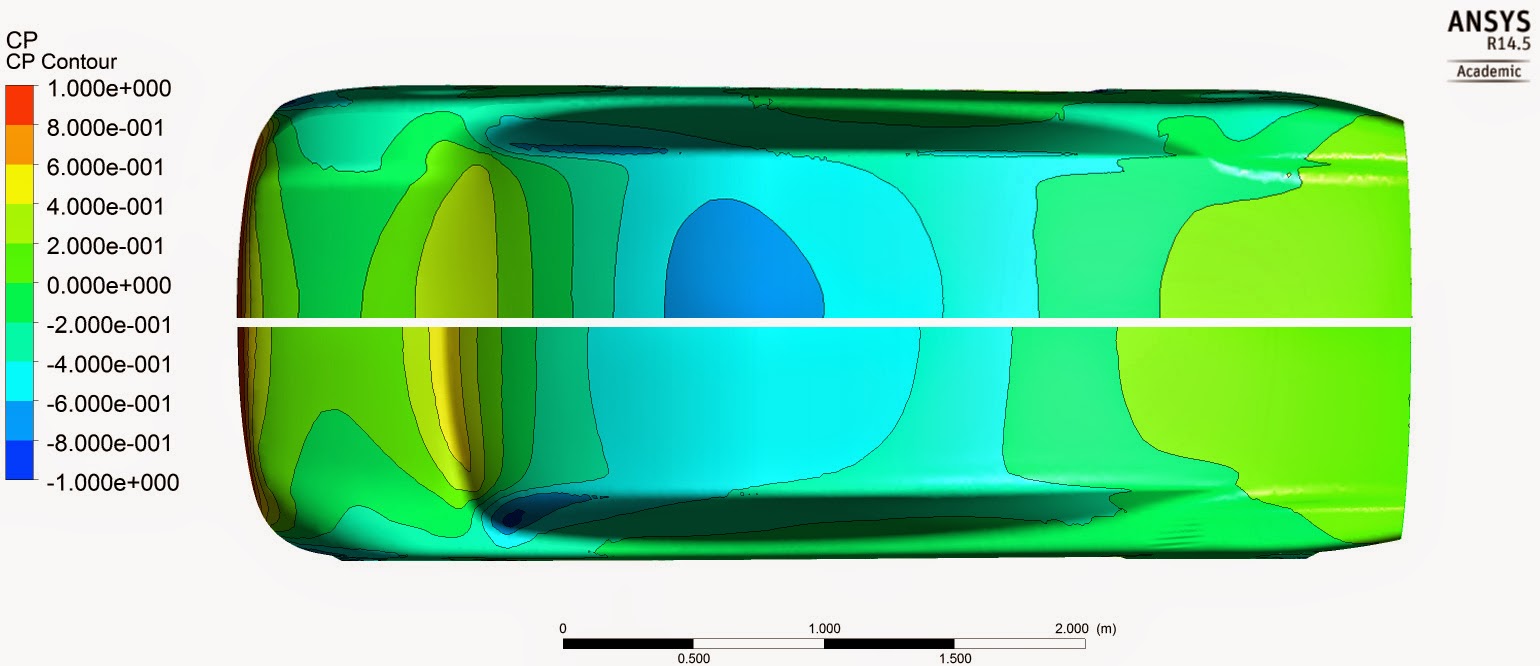
Where the Tesla Model S has the lowest drag coefficient of any production vehicle of 0.24, Sunswift eVe, designed exclusively using Computational fluid dynamics (CFD), achieves a Cd of 0.16. During my test drive of eVe, even though the vehicle had both doors removed for easy access, the lack of aero drag was noticeable while coasting. One team member told me it takes eVe several kilometers to coast to a stop from 100 km/h.
While Tesla claimed that every panel on the Roadster was carbon fibre, UNSW has taken that a step further and fabricated the entire chassis from the material. Manufactured through a sponsorship deal with New Zealand firm Core Builders Composites, the company that build much of the America's Cup fleet, the vehicle has a kurb weigh of just 320 kg. A Tesla Model S weighs 2100 kg.

The combination of electrical energy efficiency, low aero drag and rolling resistance means a 16 kWh battery made from 1200x Panasonic NCR18650 cylindrical Lithium Ion cells with a weight of only 63 Kg is enough to give eVe a single charge highway speed cruising range of over 500 km. That's the same battery capacity as a Mitsubishi iMiEV which has a maximum range of 155 km.
Although carbon fiber is roughly 20 times more expensive than steel, BMW have invested €400 million to launch the first carbon fibre reinforced plastic (CFRP) production car, the all electric i3. BMW’s goal is to get the expense of a carbon-fiber frame down to the level of aluminium by 2020. While only the passenger cabin of the i3 is made from carbon fiber with the drive train, battery and suspension attached to an aluminium chassis, it seems only a mater of time before 100% CF chassis like eVe become economically viable for mass produced road cars.
The next challenge for the Sunswift team is to make the eVe the first road-legal solar-powered car in Australia. They expect it to meet Australian road registration requirements within as little as one year.


 The new Formula E competition poses an environmentally friendly challenge to elite racing.
 The company hopes the center will catalyze the entry of the electric car into the American market and provide as many as 6,500 manufacturing jobs.

Foxconn Technology Group, the maker of Apple’s iPhone, is investing at least 5 billion yuan (US$811 million) to develop electric car manufacturing in a Chinese province.
The Taiwanese company is making the investment in China’s Shanxi province, it said on Wednesday. Foxconn already has two factories in the province. One of these assembles smartphones while the other is devoted to producing robots and automation equipment, it added.
Foxconn has largely focused on electronics manufacturing for clients including Microsoft, Sony and Amazon.com. But the company is branching out into new business sectors, as a way to grow its revenue streams. Analysts estimate that it makes as much as half of its revenue from assembling Apple products.
In June, Foxconn’s CEO Terry Gou said that the company is targeting to build electric cars with a price of less than $15,000.
Foxconn has already been developing electric car batteries for some time, and the company has many customers for them, he added. It also manufactures the touchscreen panels found inside the electric cars from Tesla Motors.
Foxconn Technology Group and BAIC Motor Corporation recently agreed to jointly establish a company that provides electric vehicle rental services, set to become operational in September. BAIC launched the E150 EV in China earlier this year.
The BAIC E150 EV is powered by an 60 hp and 144nm electric motor powered by a 25.6kwh lithium-ion battery. Top speed is 125km/h, range is 150km. Price range from $20.300 to 22.000.
China is mandating that electric cars make up at least 30 percent of government vehicle purchases by 2016, the latest measure to fight pollution and cut energy use after previously exempting EVs from a purchase tax.


Kia Motors is using a 360-V lithium-ion battery pack of “class-leading” energy density (200 W·h/kg) in the 2015 Soul EV to give it range of about 200 km (125 mi) on the European Driving Cycle, and “real-world” range of 80-100 mi (129-161 km) in the U.S. The cells and the battery are the same in all regions.
The battery in the 2015 Kia Soul EV is the result of a three-year development program with lithium-ion cell maker SK Innovation. The 192 cells are packaged into eight modules and deliver a total battery capacity of 27 kW·h. The cell cathode is of nickel-rich NCM (nickel-cobalt-manganese) chemistry, with the raw materials for that and other components optimized for energy density, durability, and safety.
Kia says high-performance anode and gel electrolyte additive materials were developed. The new electrolyte additive allows for better range by more effectively dealing with low and high temperatures. A “special” ceramic separator with improved thermal resistance properties is used.
The cell casings are of polymer pouch type (as opposed to metal), and the battery pack is air-cooled. Standard equipment on the Soul EV includes receptacles for SAE J1772 Level 1 and Level 2 ac charging, as well as CHAdeMO dc fast charging (480 V).
The car goes on sale in the U.S. in third quarter 2014.


Tesla has begun installing high-power wall chargers at restaurants, hotels, beach parking and other locations that can send 80 amps of electricity into the Model S and add 58 miles of range in an hour. While that’s not nearly as fast as a Supercharger, which can recharge the 85 kWh pack in around 30 minutes, it’s twice as fast as the standard 240-volt chargers that can be more commonly be found around in parking lots and garages.
Tesla has been rolling these out quickly across the US as a convenience to customers. The company says 106 of them have been installed since the program began this spring, with more coming online daily. Like the Superchargers, they are free to use for Tesla owners.
Unlike Superchargers, which function more like a petrol station, these wall chargers are designed for destinations. Teslas can also use standard charging stations with the use of an adapter that comes with the car but due to the out-sized capacity of the battery in a Model S (up to 85 kWh), a full charge from a standard 240v 10 amp outlet might take as long as 30 hours. To make utilizing the full range of a Model S practical, for example for weekend trips, higher powered 'destination' charging is required to provide up to 500 km worth of charge in approx 4-5 hours.


