Researchers Develop More Efficient ‘Lithium-Air’ Battery

Massachusetts researchers using a fabricated form of carbon have developed battery technology that they hope will enable electric cars to travel far longer distances.

Chemists Dunwei Wang of Boston College and Wei Fan of the University of Massachusetts used an engineered form of the element — called 3DOm carbon — to enhance reactions between lithium and oxygen in batteries.

Researchers seeking a more efficient battery — one capable of allowing cars to travel hundreds of miles without recharging — have focused on the relationship between lithium and oxygen. They believe such "lithium-air" batteries would resolve size and cost constrains faced by current lithium ion batteries.

But the presence of carbon, an essential component in all batteries, previously proved too unstable to generate longer life cycles for the lithium-oxygen reaction.

3DOm carbon, which has a far more orderly molecular structure, apparently resolved those issues. In the German journal Angewandt Chemie, Wang and Fan reported the engineered carbon, along with the addition of molecular coatings, produced substantial improvements in the lithium-oxygen discharge cycle.

"We demonstrated that a particular form of carbon can be used to support a new type of chemistry that allows for energy storage with the promise of five to 10 times more energy density than state-of-the-art lithium-ion batteries we see today," Wang said.

The chemists hope the developments eventually lead to lithium-air batteries that can meet demand for energy, size and cost in the auto industry and other manufacturing sectors.

Magna to Present Plug-In Hybrid Sports Car Concept at Geneva Motor Show

Magna International Inc. is set to debut MILA Plus, an innovative two-seat hybrid sports car at Geneva Motor Show 2015. The concept vehicle, which will be displayed at Magna's booth #6261 in Hall 6, combines a sophisticated, lightweight construction with an intelligent, alternative-drive solution to produce maximum performance as well as eco-friendliness. With an all-electric range of 75km and a vehicle weight of 1,520kg, MILA Plus achieves reduced CO2 emissions of 32g/km.

"Magna's broad range of services – from engineering to diverse product capabilities to full-vehicle contract manufacturing – helps support our customers as they continue to be challenged with the changing dynamics of the automotive industry. The MILA Plus vehicle concept illustrates our value proposition and advantage within the global supply base," emphasized Günther Apfalter, President Magna Europe and Magna Steyr.

As the latest vehicle concept in the MILA innovation family, MILA Plus features advanced technologies and flexible manufacturing processes with a focus on eco-friendliness.

Lightweight Construction
The structure of MILA Plus is based on an extruded aluminum space frame which has a number of advantages over a steel structure, including: lower weight; modular structural flexibility; and ability to accommodate different driveline configurations. The modular body-in-white (BIW) concept also allows the use of components and systems from large series production, thus enabling improved manufacturing efficiency and flexibility for global automakers.

MILA Plus offers additional benefits aimed at structural rigidity and weight reduction. For example, the concept integrates a high-voltage battery into the space frame, which increases structural rigidity. Lightweight plastic body panels are used due to their corrosion resistance and styling flexibility. A combination of manufacturing methods, sophisticated joining technologies and a multi-material external skin further contribute to a lightweight vehicle architecture that meets global safety standards.

Sophisticated Joining Technologies
Cold mechanical joining, a hybrid process in combination with bonding is used on the BIW. This reliable technology is more cost effective versus traditional welding solutions and is a joining process Magna has used on other vehicles including the Mercedes-Benz SLS AMG and Aston Martin Rapide.

Alternative Drive Solutions
MILA Plus plug-in hybrid system achieves a reduced emission of 32g/km CO2. The performance of the three-cylinder gasoline engine is enhanced by the addition of two electric motors - one between the internal combustion engine and transmission to drive the rear axle, and one on the electric front axle. This arrangement results in an electric all-wheel-drive system which transmits more torque to the road and results in improvement of vehicle maneuverability and dynamics.


Vehicle Dimensions:

Length:              
4403 mm
Width:                
1925 mm
Height:                
1250 mm
Wheelbase:         
2575 mm
Baggage compartment: 
360l (145l front; golf bag possible rear)
Acceleration:                   
0 to 100 km/h in 4.9s
Electric acceleration:       
0 to 80 km/h in 3.6s
Power output (kW/PS):     
200 / 272
Torque (Nm):                      
580 peak

2015 Audi R8 e-tron confirmed with 450 km range

The 2015 Audi R8 e-tron electric supercar will have 340 kW of power and a remarkable 920 Nm of torque, sprint from 0-100 km/h in 3.9 seconds and offer a range in excess of 450 km.

The second-generation of Audi’s halo product will have more than doubles the range over the original small-batch model thanks to an increase in battery capacity from 49 kWh to approximately 92 kWh. Energy density has increased from 84 Wh/kg to 154 Wh/kg apparently without affecting packaging.

The battery powered R8 has a Combined Charging System (CCS) on board, which allows charging with direct and alternating current. Using this system, it is possible to fully charge the battery in significantly less than two hours.

The rear wheels are powered by two electric motors with specs uprated from 381 HP (280 kW) and 820 Nm (605 lb-ft) to 462 HP (340 kW) and 920 Nm (679 lb-ft). It's enough electric power to provide the Audi R8 e-tron 2.0 with a 0-62 mph (0-100 km/h) time of 3.9 seconds before hitting an electronically-capped top speed of 155 mph (250 km/h).

Audi says the new R8 e-tron serves "primarily as a mobile high-tech laboratory" that will eventually feed into technology used in a high-volume sedan — but in the meantime, if you've got the time and the money, the Germans are willing to build you one by hand. Hopefully we'll see the car on display in Geneva next week.

Samsung SDI to Acquire Magna International’s Battery Pack Business

Samsung SDI has agreed to acquire the battery pack business of Magna International, a leading global automotive supplier.

The acquisition is expected to enhance Samsung SDI’s capabilities in batteries for electric vehicles by combining the company’s established leadership in battery cells and modules with Magna's expertise in battery packs.

Magna’s advanced technology and experience in providing global automakers with battery packs will also help Samsung SDI secure customers in the fast-growing automotive battery markets in Europe, North America and China.

"The acquisition is a key strategic step for Samsung SDI to strengthen the competitiveness of our automotive battery business,” said Namseong Cho, President and CEO of Samsung SDI. "It will provide new momentum to expand our business and customer base.”

Under the agreement, Samsung SDI will acquire the entire battery pack business from Magna Steyr, an Austria-based operating unit of Magna International, including all 264 employees, production and development sites and existing contracts of the business.

Financial terms of the deal will not be disclosed. The transaction is expected to be completed during the first half of 2015, pending regulatory approvals.

The global market for electric vehicles, including hybrid and plug-in hybrid models, is forecast to reach 7.7 million vehicles by 2020, compared with 2.1 million in 2014, according to research firms B3 and IHS.

UK Government launch £10m prize for battery innovation

The British Government is launching a £10 million prize for innovation in battery design for the next generation of ultra-low emission vehicles.

The competition will open for bids in April with a winner announced in the summer.

Announcing the prize Chief Secretary to the Treasury Danny Alexander said: "The challenge is to draw on the UK's world-class scientific research and develop a battery which is at the cutting edge of innovation, commercially viable and ready to be put into production.

"The competition will be open to all UK research establishments, working together with vehicle manufacturers based over here in the UK."

Transport campaigner Quentin Willson, who has been involved in designing the prize, said: "The UK should lead the world in cutting-edge ULEV battery technology and this initiative will help create jobs, establish a whole new industry and boost GDP. I totally support this prize for the best in UK battery innovation."

Carbon Fiber to Go Mainstream in Automobile by 2025

Driven by a faster-than-expected pace of technology development, carbon-fiber reinforced plastics (CFRPs) will be poised to gain widespread adoption for automotive lightweighting by 2025, according to Lux Research.

Already advances underway in fiber, resin and composite part production will lead to a $6 billion market for automotive CFRPs in 2020, more than double Lux's earlier projection. Even this figure is dwarfed by the full potential for CFRPs in automotive if they can become affordable enough for use in mainstream vehicles.

“Current trends strongly indicate significant mainstream automotive adoption of CFRPs in the mid-2020s, and companies throughout the value chain must position themselves to take advantage of the coming shifts. However, long-term megatrends towards urbanization, connectivity and automation suggest that there could be a limited time window beyond that for penetrating the automotive space,” said Anthony Vicari, Lux Research Associate and the lead author of the report titled, “Scaling Up Carbon Fiber: Roadmap to Automotive Adoption.”

“CFRP developers will have to continue the pace of innovation to overcome the high cost that has so far limited the material to less price-sensitive markets like aerospace and sporting goods,” he added.

Lux Research analysts reviewed the technology development in CFRPs, and evaluated its economics to consider its impact on the automotive sector. Among their findings:

  • Growing partnerships hasten development. The number of direct partnerships between carmakers or Tier-1 automotive suppliers and carbon fiber players has nearly doubled to 11 since 2012. Toray, with partnerships with Plasan Carbon Composites and Magna, has formed the most new relationships and is a major hub.

  • Patent uptick suggests mid-2020 adoption. Using a predictive tool, Lux Research identified a lag of about 18 years between uptick of patent activity and attainment of mainstream commercial adoption milestones. With another major upturn in CFRP patent activity occurring in 2007, large-scale mainstream automotive use is likely by the mid-2020s.

  • Other manufacturing costs need to be cut. Carbon fiber itself, at $28/kg for standard modulus fiber, represents just 22% of the cost of a final CFRP part. Additional advances are needed to reduce capital, labor, energy, resin and processing costs, which together make up the remaining 78%.

    Source: Lux Research

  • Electric Jaguar F-Pace crossover Due 2018

    Jaguar Land Rover is developing an electric drivetrain that will debut in a future variant of the upcoming Jaguar F-Pace SUV.

    Unnamed sources within the British automotive industry have told Autocar that Jaguar Land Rover is currently working on an electric vehicle with a range of around 480 kilometres.

    A key rival for the electric Jaguar F-Pace will be the upcoming Tesla Model X and one of the key reasons behind the development of the car is increasingly changing legislation. In the United States for example, eight states including California have adopted new Zero Emission Vehicle legislation which stipulate that between 2018 and 2025, sales of zero emission cars will reach 15.4 per cent from 5 per cent. All told, it is hoped that the effort will result in 3.3 million zero emission vehicles being on U.S. streets in the next 10 years

    With this in mind, it is speculated that the all-electric Jaguar could arrive for the 2018 model year. The British marque will apparently draw on its engineering experience from the hybrid Jaguar C-X75 supercar which was developed alongside Williams Advanced Engineering. The C-X75 combined a twin-charged (supercharged and turbocharged) 1.6-litre four-cylinder delivering 502 hp at 10,000 rpm and mated to four electric motors with one at each axle.

    Source: Autocar

    Seaspan Ferries to be lithium polymer battery hybrid vessels

    Two 148.9m dual fuel ferries ordered by British Columbia-based Seaspan Ferries Corporation from Turkey's Sedef Shipyard will be battery hybrid vessels.

    Under a contract just announced by Corvus Energy, Elkon Electric (an Imtech Marine company) and Seaspan Ferries, each VARD Marine Inc. designed ferry will use a 1,050 V DC, 546 kWh Energy Storage System (ESS) consisting of 84 Corvus Energy AT6500 advanced lithium polymer batteries.

    The ESS will be integrated with an Elkon Electrical propulsion and distribution system and will be powered by dual-fuel engines capable of running on diesel and liquefied natural gas (LNG) at speeds of up to 16 knots propelled by azimuthing drives with the Corvus ESS as spinning reserve and power source for responsive harbor manoeuvring.

    The ferries, both expected to be delivered by the shipbuilder and in operation by late 2016, will accommodate up to 59 trailers. Construction is scheduled to start in early 2015. The vessels will operate a drop trailer-only route between Vancouver and Vancouver Island in British Columbia, Canada.

    The innovative hybrid propulsion system will help reduce fossil fuel emissions and greatly improve operational efficiency.

    "We are very pleased that Corvus' energy storage system was selected for these innovative vessels," said Andrew Morden, President and CEO, Corvus Energy. "The two new Seaspan ferries are examples of the significant benefits both operationally and environmentally of battery hybrid LNG propulsion and it is encouraging to see this technology take root in Canada."

    Corvus Energy says that its lithium polymer energy storage technology is an effective solution for hybridization of commercial vessels with dynamic duty cycles, providing consistent reliable power to support greatly improved efficiency when compared to conventional propulsion systems.

    Corvus Energy has over 20 MWh of ESS deployed, including the largest hybrid vessel systems in the world, and says it has the breadth of experience and expert personnel to ensure this battery hybrid propulsion system performs well at start-up, and far into the future.

    Apple Is Forming an Auto Team

    The company has collected about 200 people over the last few years to develop technologies for an electric car, according to two people with knowledge of the company’s plans.

    A123 sue Apple over battery engineer poaching

    Electric-car battery maker A123 Systems has sued Apple Inc for poaching top engineers to build a large-scale battery division, according to a court filing that offered further evidence that the iPhone maker may be developing a car.

    Apple has been poaching engineers with deep expertise in car systems, including from Tesla Inc, and talking with industry experts and automakers with the ultimate aim of learning how to make its own electric car, an auto industry source said last week.

    Around June 2014, Apple began aggressively poaching A123 engineers tasked with leading some of the company's most critical projects, the lawsuit said. The engineers jumped ship to pursue similar programs at Apple, in violation of their employment agreements, A123 said in a filing earlier this month in Massachusetts federal court.

    "Apple is currently developing a large-scale battery division to compete in the very same field as A123," the lawsuit read. The suit was reported earlier by legal website law360.com.

    Neither Apple nor A123 immediately responded to requests for comment and Apple has not responded to the allegations in the complaint. The company also sued five former A123 employees, who could not be reached for comment.

    A123 Systems is a pioneering industrial lithium-ion battery maker, which was backed by a $249 million U.S. government grant. It filed for bankruptcy in 2012 and has been selling off assets.

    Lithium-ion is a battery technology that can be used in applications from computers to airplanes, but A123 specializes in big batteries that can be used in big machines, including cars. A123 did not say what specifically the engineers worked on.

    It said in its lawsuit that the engineers who left were of such caliber that the projects they had been working on had to be abandoned after their departures. It also accused one of the five defendants, Mujeeb Ijaz, of helping Apple recruit among its ranks.

    "It appears that Apple, with the assistance of defendant Ijaz, is systematically hiring away A123’s high-tech PhD and engineering employees, thereby effectively shutting down various projects/programs at A123," according to the lawsuit.

    "They are doing so in an effort to support Apple’s apparent plans to establish a battery division that is similar if not identical to A123’s, in competition with A123.”

    In its complaint, A123 said it believed Apple was looking to hire other battery engineers from companies including LG Chem Ltd, Samsung SDI Co Ltd, Panasonic Corp, Toshiba Corp and Johnson Controls Inc. None of the companies immediately responded to requests for comment.

    A123 added that former executive Ijaz also contacted its battery partner SiNode Systems on behalf of Apple. Ijaz's outreach to SiNode "confirms that his work on behalf of Apple is at least substantially similar (if not identical) to his work at A123," the filing said.

    SiNode did not respond to a request for comment.

    Trying to build an actual car would mark a dramatic shift for the maker of the iPhone and iPad. Apple often researches projects which are then discarded, but has so far mainly stuck to its core expertise in mobile and electronic devices.

    Whether it will build and release an electric car or a more evolved autonomous vehicle remains to be seen, the source told Reuters last week. But evidence is mounting that the maker of smartphones and other mobile gadgets is, like Google Inc, researching and developing next-generation car technologies.

    Silicon Valley is competing to create software to run self-driving vehicles, as well as services associated with autonomous driving, such as mapping, car-sharing and car recharging services.

    Data on LinkedIn, the professional networking site, shows that Apple has been siphoning up automotive engineers and experts, many with expertise in autonomous driving technology, at a significant pace.

    A search of LinkedIn profiles turns up more than 60 former Tesla employees now employed by Apple, including dozens of hardware, software, manufacturing and supply chain engineers. There are also a variety of ex-Tesla recruiters, retail or sales specialists, attorneys and product managers.

    Apart from the five defendants, at least six other ex-A123 engineers had moved over to Apple, according to their LinkedIn profiles, though with titles like "Technical Program Manager," their duties at Apple are unclear.

    Paper-like material could boost electric vehicle batteries

    Researchers at the University of California have developed a novel paper-like material for lithium-ion batteries. It has the potential to boost by several times the specific energy, or amount of energy that can be delivered per unit weight of the battery.

    This paper-like material is composed of sponge-like silicon nanofibers more than 100 times thinner than human hair. It could be used in batteries for electric vehicles and personal electronics.

    The nanofibers were produced using a technique known as electrospinning, whereby 20,000 to 40,000 volts are applied between a rotating drum and a nozzle, which emits a solution composed mainly of tetraethyl orthosilicate (TEOS), a chemical compound frequently used in the semiconductor industry. The nanofibers are then exposed to magnesium vapor to produce the sponge-like silicon fiber structure.

    Conventionally produced lithium-ion battery anodes are made using copper foil coated with a mixture of graphite, a conductive additive, and a polymer binder. But, because the performance of graphite has been nearly tapped out, researchers are experimenting with other materials, such as silicon, which has a specific capacity, or electrical charge per unit weight of the battery, nearly 10 times higher than graphite.

    The problem with silicon is that is suffers from significant volume expansion, which can quickly degrade the battery. The silicon nanofiber structure created in the Ozkan's labs circumvents this issue and allows the battery to be cycled hundreds of times without significant degradation.

    "Eliminating the need for metal current collectors and inactive polymer binders while switching to an energy dense material such as silicon will significantly boost the range capabilities of electric vehicles," Favors said.

    This technology also solves a problem that has plagued free-standing, or binderless, electrodes for years: scalability. Free-standing materials grown using chemical vapor deposition, such as carbon nanotubes or silicon nanowires, can only be produced in very small quantities (micrograms). However, Favors was able to produce several grams of silicon nanofibers at a time even at the lab scale. The researchers' future work involves implementing the silicon nanofibers into a pouch cell format lithium-ion battery, which is a larger scale battery format that can be used in EVs and portable electronics.

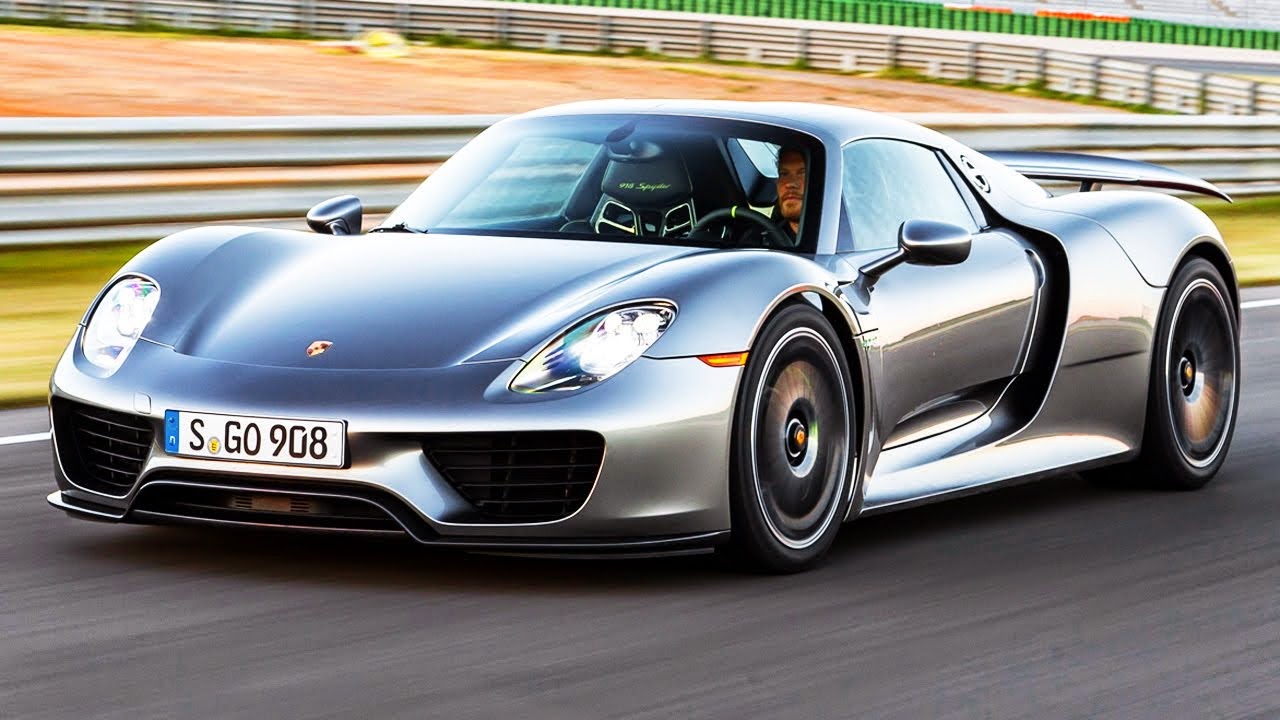
    GKN earns technology partner status for Porsche 918 Spyder

    Porsche has awarded GKN Driveline “technology partner” status for its development of a high-performance eAxle for the 918 Spyder, an advanced plug-in hybrid supercar. GKN Driveline’s eAxle module supports full-electric mode, all-wheel drive and provides a boost function.

    Porsche Powertrain manager Christian Hauck said: “Realising our vision for a super sports car capable of setting a record lap time of the Nurburgring and of achieving fuel efficiency of three litres per 100 km placed huge demands on our engineers and suppliers.

    “GKN Driveline’s role in the development programme and its innovative eAxle module has earned the company Porsche Technology Partner status.”

    GKN Driveline’s president of engineering Peter Moelgg added: “Being selected as Porsche’s Technology Partner on the 918 Spyder programme was the perfect opportunity for our global e-drive team to demonstrate how putting the right technology on board can improve both fuel efficiency and dynamic performance.

    “The award cements GKN Driveline’s position as the industry leader in e-drive systems. Our eAxle technology continues to evolve and we expect many more high-performance vehicles to adopt similar driveline concepts in the coming years.”

    The eAxle that supplements the 918 Spyder’s hybridized 4.6-litre V8 is a development of the company’s eAxle drive. The module has maximum power of 95kW and can deliver up to 1500Nm of torque to the front wheels via a fixed gear ratio.

    A specially developed compact differential engages the torque, giving the 918 Spyder optimum power distribution at all times. The differential also disengages the module to minimise drag losses and maximise efficiency. At speeds above 265km/h (164mph), a clutch isolates the electric motor to prevent it from over-spinning.

    A key target for the 918 Spyder was to have the lowest possible centre of gravity and ground clearance. To achieve this required an original engineering solution: GKN Driveline positioned the output overhead, using an lubrication concept to manage the oil flow.

    The oil reservoir is positioned above, not below, the geartrain. Oil is gravity-fed down onto the bearings and gears until it reaches the high-speed input at the bottom where it is then circulated back to the oil reservoir at the top.

    This design minimises the amount of oil on the input shaft, keeping churning losses to a minimum. To ensure the critical areas remain lubricated even in disconnect mode, the motor is driven for brief, intermittent intervals to maintain a constant flow of oil.

    The Porsche 918 Spyder’s tight packaging also means there is almost no air flow around the transmission and so water cooling was needed to manage the heat generated by the module’s high power density.

    “To meet the 918 Spyder’s challenging targets for weight, power density, NVH and durability, we used state-of-the-art simulation and analysis tools developed in-house to optimise the geartrain,” said Moelgg. “An eAxle that meets both Porsche’s requirements and the demands of the Nurburgring can deliver in any situation.”

    Japan Has More EV Chargers Than Petrol Stations

    There are more electric-car charging points in Japan than there are petrol stations.

    That surprising discovery comes from Nissan Motor Co., which reported that the number of power points in Japan, including fast-chargers and those in homes, has surged to 40,000, surpassing the nation’s 34,000 gas stations.

    The figure shows that in the relatively brief time since electric vehicles were introduced, the infrastructure to support them has become bigger than what the oil industry built over decades in the world’s third-biggest economy -- at least by this one measure.

    Why that matters is obvious. Nissan’s battery-powered Leaf can travel 84 miles (135 kilometers) on a charge, and the anxiety of being stuck away from home without power has restrained consumer demand. As the charging network expands and batteries become more powerful, that concern will wane.

    “An important element of the continued market growth is the development of the charging infrastructure,” Joseph G. Peter, Nissan chief financial officer, told analysts on a conference call.

    As charging stations become more common, electric-car support services are also emerging. Open Charge Map, for example, operates an online listing of public charging points worldwide. A mobile app combines the data with GPS technology to guide drivers to the nearest site.

    Of course, gas stations typically have multiple pumps and can serve more vehicles in a day than an electric-car charging point.

    Private Chargers

    Also, one criticism of Nissan’s number is that many of those charging sites are in private garages. Considering the emerging so-called sharing economy, such as the online home-sharing service operated by Airbnb Inc., homeowners may soon be willing to make their chargers available to other drivers.

    And more charging locations are being built all the time. Automakers have recognized that oil companies are unlikely to install plugs next to gasoline pumps, and are building their own networks.

    Tesla Motors Inc. has its own network of charging stations, and Bayerische Motoren Werke AG and Volkswagen AG announced in January that they are joining the network operated by ChargePoint Inc., and plan to build as many as 100 fast chargers along the busiest corridors of the U.S. coasts, from Portland to San Diego in the west and from Boston to Washington, in the east.

    Free Charging

    Utilities are joining in. Great Plains Energy Inc., the Kansas City, Missouri-based utility holding company, announced in January plans to build a network of more than 1,000 charging stations in the region by mid-2015. Charging will even be free to everyone for the first two years.

    Given that there are only about 9,000 public charging stations in the entire U.S., the initiative gives Kansas City, the nation’s 29th largest metropolitan area, a chance to become the nation’s electric car capital with as much as 10 percent of the nation’s chargers.

    Kansas City may not be able to retain that position. PG&E Corp., owner of California’s biggest utility, asked regulators Feb. 9 for permission to build a network of about 25,000 chargers in public areas over a five-year period.

    Kia unveil Trail’ster e-AWD concept @ Chicago Auto Show

    Based on the Kia Soul, the Kia Trail’ster concept was unveiled at the Chicago motor show and combines a FWD turbocharged motor and a RWD electric drive system to provide all-wheel-drive.

    "The Trail'ster concept is a near-future look at how the production Kia Soul would logically evolve into an AWD-capable version that's built to escape the city streets and roam into the mountain wilderness," said Tom Kearns, chief designer, Kia Design Centre of America (KDCA). "It takes the go-anywhere capability of an SUV and reimagines it within a compact and sporty package with an expressive design to match."

    Based on the production Soul, the Trail'ster's overall shape and size are unmistakable. But with family genes tied closely to the thought-provoking Track'ster and Soul'ster concepts - which pushed Soul far into new directions to realise its performance and lifestyle possibilities - the Trail'ster also takes a dramatic departure from its production-car roots with styling and drivetrain components that turn Kia's popular urban passenger vehicle into a rugged runabout, further demonstrating that Soul is indeed the ideal platform for creativity and experimentation.

    The Trail'ster is primarily powered by a 1.6-litre turbocharged 4-cylinder engine outputting 188 ps and 251 Nm of torque through a six-speed automatic transmission, matched to an electric all-wheel drive system on the rear axle intended for low-speed assist, enhanced launch acceleration and improved traction in inclement weather or off-road situations. This approach helps mitigate turbo lag by providing instant torque. The system also improves fuel economy over standard all-wheel drive setups by operating only when needed and serving as an energy recovery mechanism.

    Further defining the near future perspective of Soul as a capable and efficient all-wheel drive runner, the Trail'ster arrives as a ‘Through-the-Road' hybrid, which means it has two power sources (a front gasoline engine and a rear electric motor) that make up the hybrid system and meet ‘through the road,' as opposed to inside the transmission with a common driveline connection. It requires all four wheels being driven in careful coordination, but there's no mechanical link between engine and electric motor. The link between the two is the road itself.

    "This powertrain strategy of a downsized turbo and ‘Through-the-Road' hybrid power yields a dual benefit of increased performance - torque and traction - and optimised efficiency," said Kearns. "This is AWD being done the advanced, intelligent and responsible way, while sacrificing nothing." Should the Trail'ster find its way to production, fuel economy would be targeted at a 25-30 percent improvement in city driving and 5-10 percent in highway driving over the normally aspirated 2015 2.0-litre gasoline Soul.

    The Trail'ster's electric propulsion system draws energy from a 1.2 kWh Lithium Ion Polymer battery powering a 27 kW, 270 volt AC synchronous permanent magnet electric motor outputting 36 ps and 100 pound-feet of torque to the rear wheels and bringing total output to an impressive 220 horses and 136 Nm of torque. To further improve fuel efficiency, the system also utilises a Hybrid Starter Generator (HSG) to start/stop the engine as needed (and to feed energy to the high voltage battery), and an electrically driven A/C compressor, which can run when the engine is shut off. This technology is designed for easy, lightweight packaging, with the compact battery pack stored under the cargo floor.

    Operationally, the rear electric drive system engages in one of three scenarios, depending on throttle position and road conditions: Under light throttle, the Trail'ster attains true clean mobility as the electric motor drives the car solely for a range of two to three miles; under normal driving, the rear electric motor assists the 1.6-litre turbo during acceleration events calling for greater power and torque; when treading off-road or on wet pavement, the electric drive system is introduced when front wheel slippage is detected. Finally, the Trail'ster's electric motor acts as a generator to recover kinetic energy and recharge the battery when the vehicle is braking or coasting.

    For traversing tough terrain, the Trail'ster has been raised more than two-and-a-half inches over the production Soul. In addition, this mountain rover wears Pirelli Winter Carving 245/45-19 snow tires for enhanced traction and utilises KSport coilover shocks to absorb the impact of rough, uneven ground and rocky surfaces.