
Morning Agenda: Suit Over Hate Mail Embroils Marvel Chief
Visium Hedge Fund Under Investigation | Wells Fargo Charged With Fraud
 Automakers’ plans to use diesel to meet Europe’s tough carbon dioxide limits have been upended by Volkswagen’s admission that it cheated on emissions tests.

Daimler will invest 500 million Euros in a new battery factory in Germany. The new battery factory will produce lithium-ion battery packs for hybrid and electric vehicles for Mercedes-Benz and smart brands.
Li-Tec, a subsidiary of the Daimler Group, ceased manufacture of battery cells in December 2015. The majority of the 280 employees were transferred to the Deutsche Accumotive—also a wholly owned Daimler subsidiary—which manufactures battery packs based on LG Chem cells.
Daimler consistently expands its activities in the area of electromobility and invests around 500 million Euros in the construction of a new battery factory. This will lead to a significant expansion of the production capacities for lithium-ion batteries of Deutsche ACCUMOTIVE located in the Saxon city of Kamenz.
The new factory will produce batteries for electric and hybrid vehicles of the brands Mercedes-Benz and smart. As a first step, the full Daimler subsidiary has purchased about 20 hectares of land adjacent to the existing battery factory.
"To get closer to fully electric driving, we keep investing big in the key component of emission-free vehicles: powerful batteries. We are now devoting another 500 million Euros to build a second battery factory in Germany. This underlines our commitment to the consistent expansion of electromobility", said Dr. Dieter Zetsche, Chairman of the Board of Management of Daimler AG and Head of Mercedes-Benz Cars.
Daimler announced a initial 100 million euros investment to expand East German battery pack output in 2014.
With the growing electrification of the automobile, the demand for highly efficient lithium-ion batteries is also rising steadily. Through its entry into the new business field with stationary battery storage for private and industrial applications, Deutsche ACCUMOTIVE will tap into additional growth opportunities.
By the end of 2014, the Daimler subsidiary had already announced its plans for a significant increase in its production capacities and an investment of around 100 million Euros in the expansion of the existing battery factory. "With the purchase of the new land, our production area at the site will be tripled.
The previous 20,000 square meters will be stocked up by an additional 40,000 square meters of production space. We will expand the production capacity consistently in the coming years", said Harald Kröger, Head of Development Electrics/Electronics and e-Drive Mercedes-Benz Cars.
The groundbreaking ceremony for the new factory is planned for fall 2016. The topping-out ceremony will then follow in spring 2017. The new production plant is to start operations in summer 2017.
Daimler entered into the business with stationary battery storage with Deutsche ACCUMOTIVE last year. The scalability of the systems enables the use of the lithium-ion batteries in big industry for network stabilization and smoothing of peak shaving for energy producers as well as private households, for example in conjunction with photovoltaic installations.
Mercedes-Benz energy storage units for private households can already be ordered and will soon be installed at customers in collaboration with selected sales partners. In the area of industrial applications, around 29 megawatt will be connected to the network jointly with different partners.


Watch the all new Tesla Model X P90D Ludicrous race the Model S also with Ludicrous in an all out drag racing shootout.
The Model X P90D with the $10,000 Ludicrous Mode runs 11.61 @ 116 MPH in the 1/4 mile setting a new world record for the quickest production SUV/CUV. 0-60 MPH came up in just 3.1 seconds. The Model S ran 11.3-11.5 @ 116 MPH.
Source: Dragtimes


 The fuel savings may not offset the cost at today’s prices, but this well-engineered and smooth-driving S.U.V requires no other sacrifices of its owner.

Porsche aims to offer hybrid versions of all its models in the foreseeable future, Porsche Chief Executive Oliver Blume told a German newspaper.
A plug-in hybrid of the 911 model with a range of 50 kilometers (31.1 miles) will hit the market in 2018 already, Westfalen-Blatt quoted Blume as saying in a summary of an interview to be published on Monday.
Porsche said last month it would spend about 1 billion euros ($1.08 billion) on production facilities at its biggest plant to make its first ever all-electric sports car, reflecting parent VW's growing commitment to increase its electric offerings as it struggles to overcome an emissions scandal.
Porsche plans to bring the Mission E model, with more than 600 horsepower and a range of over 500 km, to market by the end of the decade.
At the same time, CEO Blume said he did not believe driverless cars were in Porsche's future, saying "an iPhone belongs in your pocket, not on the road", and that Porsche did not need to team up with any big technology companies.
"Partnerships are generally not a bad idea if one's own competencies are insufficient. But we are on the one hand part of a strong company and on the other hand have no plans to lead the charge in this area. We'll leave that to others," he said.


 In an experimental system, every time the trains pull into certain stations, they channel the energy created by the friction of their brakes to battery banks at one of two substations.
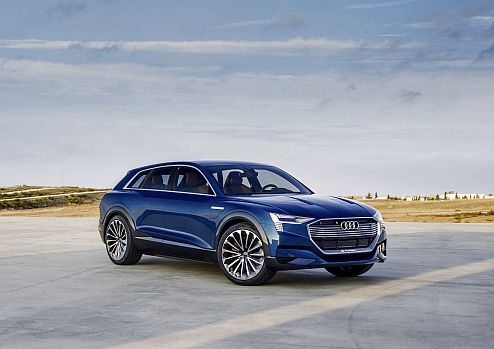
Audi is preparing its international production network for the mobility of the future. Large series production of the first purely electric driven SUV from Audi will begin at the site in Brussels in 2018. The plant will also produce its own batteries. The company will transfer production of the Audi A1 from Belgium to Martorell in Spain. The Audi Q3, which is currently produced in Spain, will be built in Győr (Hungary) in the future.
The model rotation will benefit all the sites of Audi’s global production network. “The new model distribution will enhance our production efficiency and strengthen all of the sites involved,” stated Rupert Stadler, Chairman of the Board of Management of AUDI AG. “It will allow us to utilize further synergies within the Volkswagen Group and to bundle key competencies.” The model decisions protect jobs and promote the internationalization of the production network.
As of 2018, Audi Brussels will exclusively produce the first battery‑electric SUV from the brand with the Four Rings for the world market. The Audi e-tron quattro concept study that was presented at the Frankfurt Motor Show in 2015 provides a clear indication of the final production version. The sporty SUV will fit between the Audi Q7 and the Audi Q5 in the product portfolio. Equipped with three electric motors and a high‑capacity battery, the Audi e-tron model will offer a maximum of sportiness, driving dynamics and efficiency. It will have full everyday practicality with a range of more than 500 kilometers and will feature quick battery charging.
The Brussels plant will also have its own battery production. The site in Belgium will thus become a key plant for electric mobility at the Volkswagen Group.


 Tesla, which has introduced synthetic leather interiors, is the latest automaker to join the industry’s push to project a more environmentally responsible image.

German Economy Minister Sigmar Gabriel wants to commit two billion euros ($2.17 billion) to encourage more people to buy electric cars, the newspaper Die Zeit reported on Wednesday.
Buyers of electric cars would receive a subsidy from the government, the newspaper said, giving no further details.
Gabriel also wants to expand charging stations and encourage federal offices to use electric cars - an initiative that will be funded under the current German budget without tax increases, he said.
The German government aims to put one million electric cars on the roads by 2020. Among the country's carmakers, BMW, Mercedes and Volkswagen now produce all-electric cars; Audi, Mercedes and Porsche have plans to build one.
Sales of electric cars totaled some 19,000 in 2014, but at the end of 2014 Germany had only 2,400 charging stations and around 100 fast-charging points.
Calls for supporting electric cars grew at the end of last year after the Volkswagen emissions scandal. Both Gabriel and his fellow Social Democrat Environment Minster Barbara Hendricks have called for a quota for electric cars.


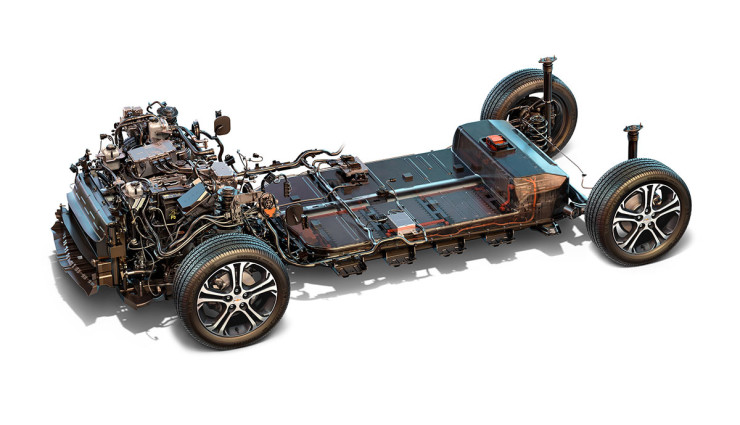
Hard on the heels of the reveal of the production Volt EV at CES 2016 in Las Vegas, Chevrolet used the North American International Auto Show in Detroit to release additional details on the battery and drivetrain of the new BEV. Engineers developed the Bolt EV’s propulsion system to offer more than an estimated 200 miles and a sporty driving experience.
The Bolt EV’s drive system uses a single high capacity electric motor to propel the car. The engineering team designed the Bolt EV’s electric motor with an offset gear and shaft configuration tailored to meet efficiency and performance targets—most notably more than an estimated 200 miles of range. The motor is capable of producing up to 266 lb-ft (360 N·m) of torque and 200 hp (150 kW) of motoring power. Combined with a 7.05:1 final drive ratio, it helps propel the Bolt EV from 0-60 mph in less than seven seconds.

Having more than 1.3 billion miles of EV experience from the Chevrolet Volt helped Bolt EV battery engineers and strategic partner LG Electronics to develop an all-new cell and battery pack to offer more than an estimated 200 miles of range. Battery system preliminary specifications include:

Inside the battery pack—which spans the entire floor, from the front foot well to back of the rear seat—is a new cell design and chemistry. The nickel-rich lithium-ion chemistry provides improved thermal operating performance over other chemistries, which requires a smaller active cooling system for more efficient packaging. The chemistry allows the Bolt EV to maintain peak performance in varying climates and driver demands.
The cells are arranged in a “landscape” format and each measures in at only 3.9 ins. (100 mms) high and 13.1 ins. (338 mms) wide providing improved packaging underfloor. The lower profile cell design enabled the vehicle structure team to maximize interior space.
The battery system is mated to a standard equipment 7.2 kW onboard charger for regular overnight charging from a 240-V wall box. A typical commute of 50 miles can be recharged in less than two hours. Bolt EV also features an optional DC Fast Charging system using the industry standard SAE Combo connector. Using DC Fast Charging, the Bolt EV battery can be charged up to 90 miles of range in 30 minutes. Outside temperatures may affect charging times.
Through a combination of increased regenerative deceleration and software controls, one pedal driving enables the vehicle to slow down and come to a complete stop without using the brake pedal in certain driving conditions.
When operating the Bolt EV in “Low” mode, or by holding the Regen on Demand paddle located on the back of the steering wheel, the driver can bring the vehicle to a complete stop under most circumstances by simply lifting their foot off the accelerator, although the system does not relieve the need to use the brake pedal altogether.
Operating the Bolt EV in “Drive” mode and not pulling the paddle while decelerating delivers a driving experience where usage of the brake pedal is required to stop.


Model: | Chevrolet Bolt EV |
Body style / driveline: | front-wheel-drive, five-passenger, five-door all-electric CUV |
Construction: | Steel and Aluminum |
EPA vehicle class: | Small Wagon (EPA does not have a cross-over category) |
Key competitors: | Nissan Leaf, BMW i3, Ford Focus Electric, Kia Soul EV, VW eGolf Mercedes-Benz B-Class Electric |
Manufacturing location: | Orion Township, Mich. |
Battery manufacturing location: | Incheon, South Korea |
Motor and drive unit manufacturing location: | Incheon, South Korea |
Type: | rechargeable energy storage system comprising multiple linked modules |
Volume/case: | 285L |
Mass (lb / kg): | 960 lb./435 kg |
Battery chemistry: | lithium-ion |
Thermal system: | liquid active thermal control |
Cells: | 288 |
Electric driving range: | More than 200 miles (GM estimate pending final tests) |
Energy: | 60 kWh |
Warranty: | eight years / 100,000 miles |
Type: | Single motor and gearset |
Motor: | permanent magnetic drive motor |
Power: | 200 hp/150 kW |
Torque: (lb-ft / Nm): | 266 lb.ft./360 Nm |
Final drive ratio (:1): | 7.05:1 |
120 V: | Available with standard cordset |
240 V: | 50 miles of range in less than 2 hrs. |
SAE Combo DC Fast Charge: | 90 miles in 30 minutes |
Top speed (mph): | 91 mph / 145 kph * |
0-30 mph: | 2.9s (75% SoC) * |
0-60 mph: | Under 7 seconds |
Front: | Independent MacPherson strut-type front suspension with side load compensating and finely tuned springs, direct-acting solid stabilizer bar system and ride & handling oriented LCA bushings. |
Rear: | Compound crank (torsion beam) type rear suspension with the closed section V-shaped profile axle; specifically tuned coil springs, performance balanced shock absorber, angled A-bushing supporting understeer tendency on cornering maneuver and kinematically optimized torsion beam providing stable and best ride & handling performance. |
Chassis control: | Four-channel ABS; Traction control system; StabiliTrak; Drag control |
Steering type: | column-mounted electric power steering |
Steering wheel turns, lock-to-lock: | 2.91 revolution * |
Turning radius, curb-to-curb ( ft. / m): | 10.8m * |
Steering ratio: | 16.8 :1 |
Type: | power four-wheel disc with ABS; electro-hydraulic; partially regenerative; dynamic rear brake proportioning |
Brake rotor diameter front (mm / in): | 276mm |
Brake rotor diameter rear (mm / in): | 264mm |
Total swept area (cu cm): | Front : 1398.9 Rear : 1131.4 |
Wheel size and type: | 17in x 6.5J offset 44, cast aluminum |
Tires: | Michelin Energy Saver A/S 215/50R17 all-season |
Wheelbase (in / mm): | 102.4 / 2600 |
Overall length (in / mm): | 164.0 / 4166 |
Overall width (in / mm): | 69.5 / 1765(W103) |
Track width front (in / mm): | 1500.92 mm |
Track width rear (in / mm): | 1501.05 mm |
Height (in / mm): | 62.8 / 1594(H100) |
Front overhang (in / mm): | 32.9 / 836 |
Rear overhang (in / mm): | 28.7 / 730 |
Seating capacity (front / rear): | 2 / 3 |
Headroom (in. / mm): | 39.7 / 1009 1st row 37.9 / 962 2nd row |
Shoulder room (in / mm): | 54.6 / 1387 1st row 52.8 / 1340 2nd row |
Hip room (in / mm): | 51.6 / 1310 1st row 50.8 / 290 2nd row |
Legroom (in / mm): | 41.6 / 1056 1st row 36.5 / 927 2nd row |
Cargo volume (cu ft / L): | 16.9 cu-ft / 478 L (V10, Wagon CVI – Max behind rear seat) |
Passenger volume (cu ft / L): | PV1 52.2 cu-ft / 1478 L 1st row PV2 42.2 cu-ft / 1195 L 2nd row |
Curb weight (lb / kg); | 3580 lb / 1625kg based on target (w/o 2passengers) |
Heating cooling (qt / L): | Heating loop 1.8L |
Battery pack cooling (qt / L): | 6.9L (RESS cooling loop total coolant volume) |
Power electronics cooling (qt / L): | 3.9L (PE & DU cooling loop total coolant volume) |
Drive unit fluid (qt / L): | 2.9L |


 Low gas prices have meant healthy sales of trucks and S.U.V.s, but automakers are looking ahead to stricter fuel economy rules by showcasing electric and hybrid models.
 Let’s recap a busy day at the International CES, where many of the most interesting announcements had nothing to do with smartphones or their apps.
 General Motors and several other car companies are focusing on electric vehicles at the International CES consumer trade show in Las Vegas.