Robert Llewellyn takes a short and at times very fast first drive in the £100,000 BMW i8 plug in hybrid supercar.
All filming done on closed roads at Millbrook proving ground.


Charged with Electric Vehicle News and Views
Robert Llewellyn takes a short and at times very fast first drive in the £100,000 BMW i8 plug in hybrid supercar.
All filming done on closed roads at Millbrook proving ground.
Sales in the United States of BMW electric cars jumped in August, inching closer or, depending on whom you ask, even surpassing sales of Tesla Motors luxury Model S sedan.
The continued success of BMW’s i3 model, which sells for about $41,000 in the U.S., could pressure Tesla and dampen enthusiasm for its Model 3, Tesla’s mass-produced car that is expected to hit the road within the next two or three years. The Model 3 would carry a sticker price of about $35,000.
Tesla last week said it chose Nevada as the site of its battery factory, expected to churn out more and cheaper batteries -- enough to power Tesla’s through its expansion into the mass market.
Tesla shares rose on intraday and closing records of $291.42 and $286.04, respectively, on Thursday. The stock was hit by profit-taking — and comments by CEO Elon Musk, who called Tesla shares “kind of high” — on Friday.
BMW sold 1,025 BMW i3s in August, according to industry and analyst reports, up from less than 400 units in the previous three months. The car was launched in the U.S. in May.
Tesla’s Model S sales in August were estimated at around 1,600 by Autodata Corp, 18% lower year-on-year. Tesla does not release monthly car sales.
Tesla is expected to launch the next vehicle in its line up, the crossover Model X, next year.
Back in May, analysts at Barclays flagged BMW’s electric-car offerings — which include the more expensive, sporty hybrid plug-in i8 — as a threat to Tesla. Tesla’s target audience is likely sandwiched between the i3 and the i8 models, the analysts said.


Robert Llewellyn takes a brief test drive of the soon to be launched Volkswagen Golf GTE, the first plug in hybrid Golf.
With a 1.4 litre TSI petrol engine, 100 HP electric motor coupled to a 6 speed DSG gearbox and 8.8 kWh battery pack, the GTE can cover 0 - 100 km/h in 7.6 sec and returns 1.5L/100km.


Kia Motors is using a 360-V lithium-ion battery pack of “class-leading” energy density (200 W·h/kg) in the 2015 Soul EV to give it range of about 200 km (125 mi) on the European Driving Cycle, and “real-world” range of 80-100 mi (129-161 km) in the U.S. The cells and the battery are the same in all regions.
The battery in the 2015 Kia Soul EV is the result of a three-year development program with lithium-ion cell maker SK Innovation. The 192 cells are packaged into eight modules and deliver a total battery capacity of 27 kW·h. The cell cathode is of nickel-rich NCM (nickel-cobalt-manganese) chemistry, with the raw materials for that and other components optimized for energy density, durability, and safety.
Kia says high-performance anode and gel electrolyte additive materials were developed. The new electrolyte additive allows for better range by more effectively dealing with low and high temperatures. A “special” ceramic separator with improved thermal resistance properties is used.
The cell casings are of polymer pouch type (as opposed to metal), and the battery pack is air-cooled. Standard equipment on the Soul EV includes receptacles for SAE J1772 Level 1 and Level 2 ac charging, as well as CHAdeMO dc fast charging (480 V).
The car goes on sale in the U.S. in third quarter 2014.


LG Chem has agreed to supply electric-vehicle batteries to Volkswagen, a company executive said Tuesday.
"Volkswagen has designated LG Chem as one of its key battery-sourcing channels to push its electric car projects," the executive said by telephone on condition of anonymity, citing the sensitivity of the issue. "LG is going to supply battery packs and solutions to the German carmaker."
The deal with Volkswagen is not as big as similar deals between LG and other leading carmakers such as General Motors and Ford, said the executive.
The partnership also involves collaboration on various products the German car manufacturer is working to develop as part of its electric-vehicle projects, part of its efforts to reduce carbon emissions.
For example, Volkswagen is working to attain "ultra-low-carbon mobility" for its new eGolf electric vehicle, said officials.
The vehicle is a fully electric version of Volkswagen's popular Golf.
"LG Chem will join futuristic electric car business projects such as [projects to develop] plug-in hybrid electric vehicles led by the German carmaker thanks to the latest battery deal," said the official.
An LG Chem spokesman declined to confirm.
LG Chem has been in talks with Volkswagen over the past four years regarding a business partnership involving batteries for electric vehicles.
The executive said it was Beijing's approval to proceed with LG's plans to build a battery joint venture in China that helped the LG Group affiliate land the partnership with Volkswagen.
Volkswagen plans to spend more than $2 billion on models and on two new facilities in China, increasing total investments in the world's biggest auto market to nearly $8 billion.
LG Chem Chief Financial Officer Cho Suk-jeh told investors and analysts that the company aimed to generate nearly 2 trillion won in revenue from its large battery business, including energy systems, by 2016.
The petrochemical business is the biggest cash cow for LG Chem, accounting for 77 percent of its 5.87 trillion won in sales in the second quarter. Batteries accounted for 12.3 percent and electronic information materials 12.1 percent.
LG Chem is gradually cutting its reliance on petrochemical products as part of an effort to diversify its revenue sources.
On a related note, in 2016 the company plans to begin providing carmakers with batteries capable of powering electric vehicles for at least 200 miles (322 kilometers).
LG Chem currently supplies lithium-ion batteries to General Motors, Ford, Hyundai-Kia, Renault, Volvo, and other carmakers. The 200-mile-plus range of the new batteries is roughly double that of the company's current, first-generation electric-vehicle batteries.


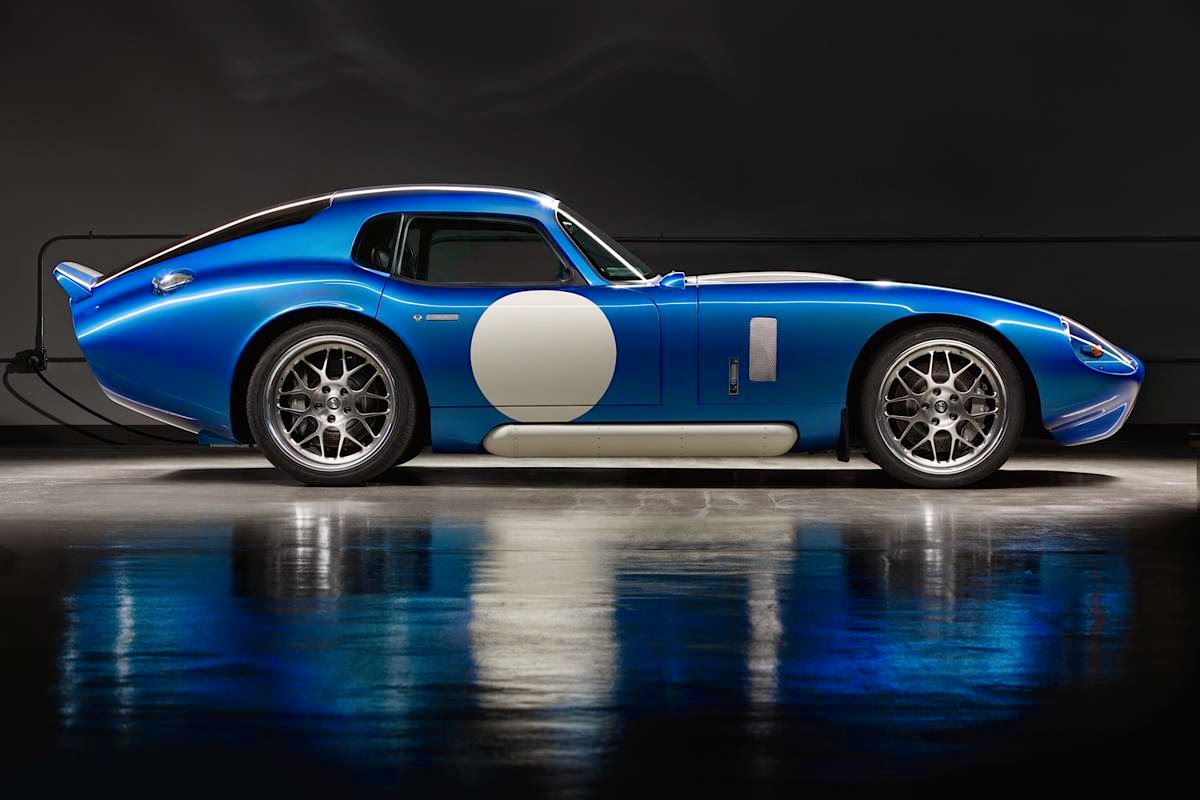
When they started their company in 2010, the founders of Silicon Valley startup Renovo Motors saw a hole in the market for a pure electric supercar.
Today they revealed their first product, the $529,000 Renovo Coupe, scheduled to launch in the United States next year.
Performance specs for the all-electric two-seater, built on the Shelby CSX9000 chassis, include 0 to 60 mph in 3.4 seconds, with a top speed of 120 mph. The company says the car will deliver 370 kw (500 hp) and 1,356 Nm (1,000 ft-lbs) of torque almost instantly from its twin sequential axial flux motors. Power is controlled by dual RMS inverters which are fed high-voltage from a 740 volt lithium ion battery pack, with output power transmitted to the rear wheels via a single speed differential.
After developing the car in secrecy for the past four years, Renovo launched the running prototype last weekend at the Pebble Beach Concours d’Elegance. The company plans to begin taking orders for a production run of less than 100 cars, with the first cars due to be delivered in California next year.
Renovo’s founders, Christopher Heiser and Jason Stinson, previously worked at the computer security company Verisign and chipmaker Intel. Though they are new to the industry, they hope to find space in the supercar market alongside venerable names such Ferrari and Lamborghini, and relative newcomers such as Pagani and Koenigsegg.
Though many luxury brands and exotic car companies are starting to offer plug-in hybrids and pure EVs, including Ferrari and McLaren with their LaFerrari and P1, Heiser said in an interview Thursday that no one offers a product like the Renovo Coupe. That includes their Silicon Valley neighbor and inspiration of sorts, Tesla Motors Inc., which stopped selling its Roadster sports car in 2012.




Source: Renovo Motors


Robert Llewellyn has had the opportunity to do a couple of long road trips in the Tesla Model S this year.
One to Cornwall and the Eden Project with co-driver Simon Hackett and more recently to Edinburgh and the Fringe Festival.


The Tesla Model S electric car earned the highest score ever in Consumer Reports tests, and owners love them.
But after 20 months and over 15,000 miles, CR’s test car has had more than its fair share of problems.


The smart fortwo electric drive is a champion of urban mobility. But is it a champion of the drag strip? Against some of the fastest cars in the city?!
Remember, in urban driving top speed means nothing, it's the first 5 meters that count!


The Outlander PHEV is helping Mitsubishi sales success in the UK.
In July Outlander PHEV outsold all other vehicles which qualify for the governments Plug-in Car Grant, accounting for 43% of successful applications. This car has received huge levels of public interest, driven by the vehicle’s outstanding fuel consumption of 148 MPG and low emission credentials – 44g/km.
Toby Marshall, Director of Sales & Marketing for Mitsubishi Motors in the UK, said: “Now that the sales figures are in for July, it is clear to see we have made significant progress so far this year. The addition of the game-changing Outlander PHEV to our vehicle line-up has helped boost Mitsubishi brand awareness, increasing sales of all models in our range.”


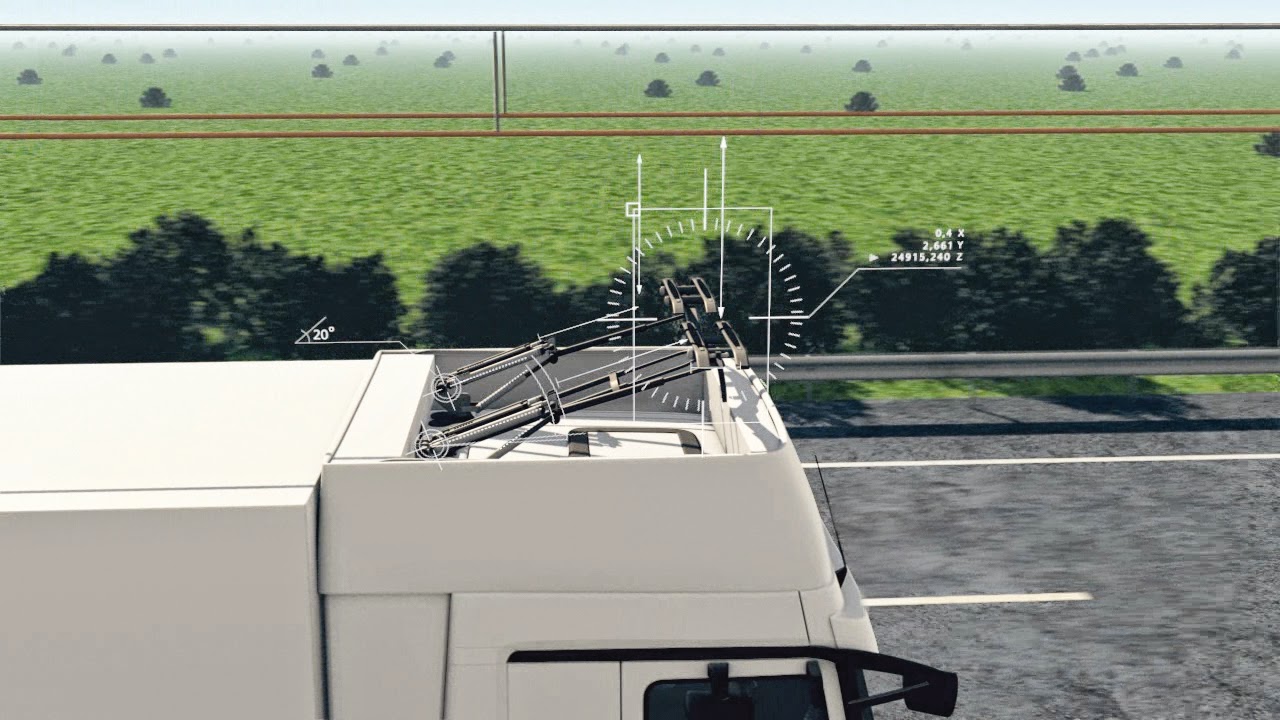
For the first time ever, electric trucks powered by overhead cables will run in the USA and help to reduce carbon dioxide emissions. The South Coast Air Quality Management District (SCAQMD) has given the go-ahead for Siemens to install an e-highway system for test purposes close to the ports of Los Angeles and Long Beach, the biggest in the USA.
The Siemens e-highway electrifies selected traffic lanes using an overhead cable system. As a result, trucks can be supplied with electricity in the same way as trams. Working together with the Volvo Group and its Mack brand, Siemens is developing a demonstration vehicle for the project. Siemens is also working with local truck integrators in California whose vehicles will be part of the test as well.
The overhead cable infrastructure will now be installed in two directions in Carson (California) near Los Angeles. The project is expected to begin in July 2015 and will last a year. During the test phase, up to four trucks will travel up and down the route every day. The "e-trucks" are equipped with a hybrid drive system and intelligent current collectors. Powered by electricity from overhead cables, they produce no emissions when operating in the local area. On roads without overhead cables, the vehicles use an electric drive system which can be powered by diesel, compressed natural gas, a battery or with other energy sources. The current collector allows the vehicles to overtake and automatically dock and undock at speeds of up to 90 kilometers per hour.
The e-highway concept is particularly effective from an environmental and economic point of view on heavily used and relatively short truck routes, e.g. between ports, industrial estates, freight transport centers and central transshipment terminals. The ports of Los Angeles and Long Beach are looking for a zero-emission solution ("Zero Emission I-710 Project") for a section of the Interstate I-710. Around 35,000 shuttle truck journeys currently take place here every day. The intention is to set up a "zero emission corridor" for shuttle traffic between the two sea ports and the inland rail transshipment centers around 30 kilometers away. This will help to ease the pressure on the environment in a region which is plagued by smog. The aim is to eliminate local emissions completely, reduce the use of fossil fuels, cut operating costs and establish a basis for using the system on a commercial basis in the future



Bosch eBike Systems is introducing two new drive systems which will be available next to the existing Classic+ line. The newcomers are called Active Line and Performance Line. Both Lines have a new mid-motor developed by Bosch which is smaller and lighter than the current one. It's also not possible to mount it upside down at 220º as the Classic+ one. Thanks to its design the new drive unit of both Active and Performance lines offer even for the sportive segment enough ground clearance.
While the Classic+ drive system is offered in both up to 25 km/h and up to 45 km/h versions, the new agile Active Line comes only in a 25 km/h version and stands for "carefree enjoyment". The more dynamic and powerful Performance Line offers next to a 25 km/h also a 45 km/h version for derailleur-equipped bicycles. Also new is that the Active Line offers a version for coaster brake bikes.
Also new at the Active and Performance Lines are 'drivetrains'. Bosch means by that a drive concept ensuring optimal coordination by relying on three sensors for force, cadence, and speed. According to Bosch there are now, "1,000 sensor measurements per second and more powerful electronics with a modern 32-bit processor." Also new: gear shift detection for derailleur systems. "During shifting, the torque is reduced at precisely at the right moment and then increased, resulting in a smooth shifting process which reduces stress on the components and cuts down on wear."
Not only the mid drive unit and rear carriers that hold the battery pack are tuned, but also the Intuvia onboard computer that comes with the Bosch e-bike kit. More functions are available as well as more modes: eco, tour, sport, turbo, and off. Both Active and Performance e-bike kits weigh less than four kilograms (Classic+: 4.1 kilos).


BMW presented the new i8 hybrid supercar for the official UK launch at an event held in Mayfair, London. With two models on display auto buff Shmee takes a quick look around the car before jumping in for a test drive.


There are only a few minutes before your flight check-in closes, or before your train departs, but you now have to spend precious time hunting for a free space at the airport or station car park. Imagine leaving your vehicle at the main entrance and letting the car do the rest on its own. Researchers from Germany, Italy, the UK and Switzerland are working on this, and successful tests took place at Stuttgart airport earlier this year. €5.6 million of EU funding is invested in the system which will be available in the coming years.
In the future, more and more people will drive electric cars and will switch from one mode of transport to another – creating the need for more and varied parking options at transport hubs. To prepare for this mobility shift, the V-CHARGE consortium is working on a fully automated parking and charging system for electric cars at public car parks.
"The idea is that we can actually use technology to give people a better mix of public and private transport", explains Dr Paul Furgale, scientific project manager for V-CHARGE and deputy director of the autonomous systems lab at the Swiss Federal Institute of Technology in Zurich.
A smartphone app to leave and get back the car
Drivers will be able to leave their car in front of the car park and use a smartphone app to trigger the parking process. The vehicle will connect with the car park’s server and drive itself to the designated space. While in the garage, the car can also be programmed to go to a charging station. Upon returning, the driver uses the same app to summon the car – fully charged and ready to go.
Since GPS satellite signals don’t always work inside garages, the scientists have developed a camera-based system based on their expertise in robotics and environment sensing. Safety is at the centre of the project: the car is designed to avoid unexpected obstacles.
Dr Furgale believes the same technology could be used to develop autonomous parking systems for electric cars on city streets. "That will be more of a challenge", he says. "But once you have the maps in place, the rest of the technology will come together."
A system to be integrated into production
In April, the team presented the latest version of the system at Stuttgart airport. This was a success and the researchers are now fine-tuning the technology to tackle more precise manoeuvres and ensure reliability, even in difficult weather conditions.
The project is set to conclude in 2015, and its results available to be progressively commercialised in the coming years. The functions developed should be cost-effective enough to be integrated into production of electric vehicles. Engineers are working with equipment that is already available today such as ultrasonic sensors and stereo cameras that are used in parking assistance and emergency braking systems.


GKN plc and The Go-Ahead Group have agreed a deal that will help reduce emissions in cities with the supply of electric flywheel systems to 500 buses over the next two years.
The innovative GKN system is based on Formula One race technology developed in the UK. It will help increase the efficiency of every bus to which it is fitted by using less fuel and therefore reducing carbon emissions. This same technology helped Audi’s R18 e-tron win at Le Mans last month.
Go-Ahead has placed an order for GKN Hybrid Power to supply 500 of its Gyrodrive systems to the transport operator. The Gyrodrive system uses a high speed flywheel made of carbon fibre to store the energy generated by a bus as it slows down to stop. It then uses the stored energy to power an electric motor which helps accelerate the bus back up to speed, generating fuel savings of more than 20% at a significantly lower cost than battery hybrid alternatives.
The agreement covers the supply of the complete Gyrodrive system, including the innovative GKN Hybrid Power flywheel as well as GKN’s advanced EVO electric motor, a GKN designed and manufactured gearbox, and installation. The system is designed to last for the life of the bus eliminating the need for any battery changes.
Following successful trials on buses in London, Go-Ahead intends to utilise the technology in cities it serves across the UK, initially in London and Oxford.
Philip Swash, CEO GKN Land Systems, said: ‘This is an important milestone for GKN Hybrid Power. We’ve worked in close partnership with Go-Ahead throughout the development of this innovative technology and it’s very exciting to move into the production phase.
The fact that we are using the same groundbreaking technology that helped Audi win at Le Mans for the past three years to improve fuel efficiency in the public transport sector also shows what great innovation there is in the UK’s engineering sector.’ CEO of Go-Ahead, David Brown, added: ’Our collaboration with GKN has been a most constructive one. We have a strong record in continually reducing our carbon emissions and flywheel technology will help us make buses an even more environmentally responsible choice and encourage more people to travel by public transport.
The flywheel technology helps us to reduce our fuel consumption and C02 emissions so improving air quality for all those living, working and visiting the city.’
GKN Hybrid Power is based in Oxfordshire, with final assembly taking place in a new facility at GKN’s site in Telford. The Gyrodrive technology is being further developed for other mass transit markets including trams, construction and agricultural equipment. Earlier this year GKN announced the acquisition of Williams Hybrid Power from Williams Grand Prix Engineering Limited to form GKN Hybrid Power, which is focused on delivering complete hybrid solutions across multiple vehicle, power and industrial markets.


The BMW i3 has an interesting function available as a $1,000 optional extra: Parking Assistant.
This system allows your car to park itself without your input. It uses a sonar installed in the right side of the car that detects large enough parking spaces when you want it to. After that, all you have to do is stop and keep the parking assist button pressed and the i3 will do everything for you.
That’s what a crew of journalists from Romania did when BMW invited them over in Austria to try out the new electric car from Munich. However, there’s a twist: this time, no driver was inside the car while the operation was done.
The man hopping out of the moving i3 is Vali Porcisteanu, a Romanian rally driver. He somehow meddled with the control button and made it stick while he left the ‘premises’.
The end result is both quite impressive and funny at the same time, seeing the car do all the work by itself, with no one inside.


CNET On Cars, Episode 46: CNET revisits the Tesla Model S now that it's a bona fide mass production hit.


Kia have uploaded yet another promo video for the Soul EV.
The Soul EV will is propelled by a liquid-cooled AC synchronous permanent magnet electric motor rated for 109 horsepower and 210 lb-ft of torque. Like most electrics, the motor sends power to the front wheels via a single-speed constant-ratio transmission.
A 96-cell, 27-kWh lithium-ion polymer battery feeds the motor. It lives under the Soul’s floor, and takes a small bite out of rear seat legroom, which shrinks from 39.1 to 36.0 inches. The standard 120-volt charger, which stows under the cargo floor, takes a bigger bite out of luggage capacity, down 5.1 cubic feet to 19.1.
The Soul EV can be charged to 80% in as little as 33 minutes using a 50-kW system, and the Soul EV is fitted with three charging ports. Two of the ports are for conventional AC charging, per SAE standard J1772, and the third for CHAdeMo public stations.
Deliveries began in South Korea in May 2014 with EU and US to follow in the second half of the year. With 200 km range and a price in the $30k range it looks like a solid addition to the EV market.


nanoFLOWCELL AG introduced their QUANT e-Sportlimousine concept at the Geneva Motor Show earlier this year and the company has just announced the car has been approved for road use in Europe.
The company says this is a critical step because they are "working at top speed" on a production version. nanoFLOWCELL AG chief technical officer Nunzio La Vecchia went on to say "This is a historic moment and a milestone not only for our company but perhaps even for the electro-mobility of the future. For the first time an automobile featuring flow-cell electric drive technology will appear on Germany's roads."
The heart of the QUANT e-Sportlimousine prototype is the nanoFLOWCELL® battery. It gives the car a driving range of 600 kilometres. The newest product moving the world towards attractive electrical mobility was conceived at the nanoFLOWCELL DigiLab simulation lab at nanoFLOWCELL AG in Zurich, Switzerland. It is still under active development and the results so far are extremely promising.
Drivetrain:
All-wheel drive via 4 three-phase induction motors, torque vectoring for optimal drive torque distribution
Peak power: 680 KW (925 PS); 170 KW (231.2 PS) x 4
Operating power: 480 KW (653 PS); 120 KW (163.2 PS) x 4
nanoFLOWCELL:
nominal voltage: 600 V
nominal current: 50 A
tank capacity: 2 x 200 L
Performance:
0 - 100 KM/H: 2.8 S
top speed: 380 + KM/H
range: projected 400 to 600 KM
energy consumption: 20 KWH/100 KM
Dimensions and weight:
kerb weight with full tanks: 2,300 KG
wheelbase: 3,198 MM


The eSamba project have acquired a Tesla battery pack to reverse engineer &/or use in the VW Samba Bus EV conversion.
Jehu Garcia's eSamba project is part of a 30-odd episode YouTube series where Jehu has recently experimented with building his own 18650 Lithium Ion battery packs. In this weeks episode the guys tear down a battery pack manufactured by Tesla Motors. It's not clear which vehicle the Tesla battery pack was removed from other than to say the car in question had done approx 5,000 miles.
After a bit of disassembly the Tesla 18650 based modules should give the eSamba project a few new ideas.


