CNET On Cars, Episode 46: CNET revisits the Tesla Model S now that it's a bona fide mass production hit.
Panasonic to build gigafactory, produce batteries for Tesla Motors
Japanese electronics giant Panasonic is teaming with Tesla Motors to build batteries for the American electric car manufacturer.
Panasonic is expected to sign a contract this month to help Tesla construct a plant and produce batteries for its vehicles.
Initial operations at the plant are scheduled to commence in 2017 and become fully operational by 2020. The facility will produce batteries for 500,000 vehicles annually.
The American company had been seeking partners for the venture and plans to invest up to $5 billion in the joint project. Panasonic is to be the core participant, likely investing more than 200 million dollars.
Tesla will invest $2 billion in the factory, while the construction will require $4–$5 billion. The rest of the fund will be provided by Tesla’s partners. Tesla is considering other potential investors, such as suppliers of raw materials for the investment.
Panasonic and Tesla signed a deal in Oct 2013, under which Panasonic will increase the supply of battery cells to 2 billion in the 4-year timeframe till 2017. Panasonic has supplied 200 million cells to Tesla in the last 2 years.
In addition, Panasonic doubled its investment for auto batteries to $275 million this year. Panasonic will utilize this additional investment to boost the domestic production of the small lithium-ion batteries for Tesla.
The collaboration ultimately boosted the earnings of Panasonic's lithium-ion battery section into the black for fiscal 2013.
Tesla Motors anticipates selling 35,000 Model S vehicles this year, a 55 percent increase from 2013. The company is also planning to release the Model X, an SUV type electric vehicle, in 2015. The new factory is expected to ultimately boost the number of batteries sold to Tesla Motors.
Panasonic is seeking to increase sales in its EV battery cell sector to 4.5 billion dollars in fiscal 2018. That goal would be a 3.5-fold increase from fiscal 2012.
The company is expanding its battery operations in the hopes of establishing it as a core business. Panasonic's household electronics business previously held that position, but sales have stagnated in recent years.
Tesla’s $35,000 car will be called the Model 3
In an interview with AutoExpress, CEO Elon Musk revealed that the $35,000 vehicle will be called the Model 3 (with three bars to represent it), after Ford put the kibosh on calling it the Model E.
“We were going to call it model E for a while and then Ford sued us saying it wanted to use the Model E".
Musk has repeatedly targeted 2017 as the release window for a smaller vehicle. He's said it will be the third generation after the original Roadster and Model S, and in the interview claims it will have a range of over 200 miles per charge, probably using batteries built in Tesla's planned Gigafactory.
Musk also told the magazine about a range boost upgrade coming for the original Roadster that will give it a modern battery capable of up to 400 miles on a charge, "which will allow you to drive from LA to San Francisco non-stop."
Tesla Model S P85 Dyno Run gets 436 HP @ the wheels [VIDEO]
Tesla owner Emmanuel Chang had his 2013 Black Tesla Model S P85 dyno tested on a mobile CCMR Dynojet recently at some generic car show.
The Model S P85 is officially rated 416 HP at the motor shaft. This particular combination of dyno and P85 recorded 436 HP at the wheels. (there is usually a significant drivetrain loss between motor and wheels)
A few details regarding this test:
Source: TMC
TESLA P85 Vs Electric MIATA – 1/4 mile Drag Race [VIDEO]
A Tesla Model S P85 takes on an Mazda Miata with an Electric Motor Conversion in a 1/4 mile drag race.
The tube frame and tubbed 2002 Mazda Miata runs 2x 2000 amp Zilla 2K-EHV controllers feeding dual brushed DC NetGain 9-inch motors, a Lenco 2 speed and double GV overdrive.
The boot mounted battery pack contains 450x LiPo 100C RC car batteries wired 90S5P that are good for 775 peak battery HP @ 375v. For the record run the controllers were set to 170 volt & 1100 amps per motor.
The Miata runs an incredible 9.27 @ 142 mph to the Tesla's very respectable 12.72 @ 102 mph.
Telsa Model E To Rival BMW 3 Series On Price
New Model E from Tesla will look to take on the BMW 3-series and Audi A4.
The Tesla Model E is expected to go on sale in 2016. The car’s manufacturer said that the price of batteries will play a role in the car’s cost. It claims that the contruction of a Gigafactory will help ease the price of batteries, reports AutoCar.
Tesla also said that the car will be 20% smaller than the Model S. However, it won’t be completely made out of aluminum like the Models S. The Model E is expected to be priced to compete against other electric car rivals, such as the Audi A4 and the BMW 3-series, AutoCar notes.
Tesla is currently building 600 examples of the Model S each week at its factory in Freemont and expects Model X sales to add significantly to that total. The factory has a theoretical capacity of 500,000 vehicles per year.
Driving Tesla Model S P85 on German autobahn [VIDEO]
Norwegian Tesla owner Bjørn Nyland has uploaded a video demonstrating his Model S at Autobahn speeds.
A Tesla Model S P85 driven at it's maximum speed of 210 km/h (130 mph) has an estimated range of 154 kms (96 Miles)
Having recently returned from Munich I can vouch for the fact that driving at 160 km/h (100 mph) in the fast lane is considered slow, they really do drive at 200 km/h routinely on unlimited sections, yet the road toll is actually lower than in many other countries (including Australia).
Nissan & BMW keen to collaborate with Tesla on Supercharger standards
We recently reported that BMW is keen to collaborate with Tesla on creating possible global vehicle-charging standards, and now Nissan is also interested according to sources.
“It is obviously clear that everyone would benefit if there was a far more simple way for everyone to charge their cars,” said one executive, who declined to be named as the plans are not yet official.
Between them, Nissan, the world’s biggest electric-car manufacturer, BMW and Tesla account for about 80 per cent of the world’s battery electric-car sales.
Tesla has risen from an ambitious San Francisco start-up to account for about a quarter of the world’s electric-car market, and defy naysayers at some of the world’s largest carmakers that said that the vehicles were not commercially viable.
BMW, which has invested heavily in its electric i range, said that it and Tesla were “strongly committed to the success of electro-mobility”, and used their meeting to discuss ways to “further strengthen” the global electric-vehicle market.
BMW was informed of Mr Musk’s patent decision at the Wednesday meeting, but both companies stressed that the meeting’s timing was coincidental.
“Nissan welcomes any initiative to expand the volumes of electric vehicles,” the Japanese manufacturer said. “Nissan is the market leader in EVs and has worked with other manufacturers to help proliferate the technology.”
Source: FT
BMW + Tesla superchargers a strategic move?
On Wednesday Tesla and BMW met, but what specifically was discussed was not published.
“Both companies are strongly committed to the success of electromobility and discussed how to further strengthen the development of electromobility on an international level,” a BMW spokesman said today in a statement.
On Thursday, Tesla CEO Elon Musk said his company has been in talks with BMW and other automakers on the topic of promoting EVs and making better use of its German Supercharger charging stations.
Musk said that Tesla’s intent wasn’t to create a walled garden around it's supercharger network and that the company is more than happy to allow other makers to use its fast chargers.
There are number of preconditions, though. Firstly, other makers’ cars would need to be able to accept the 135kW output of the Supercharger. Secondly, rival manufacturers would have to contribute to some of the capital cost of the fast charging network.
The Germany market for long range EVs has some unique requirements. Not only is Tesla offering a special tune-up so that its Model S is capable of 130 MPH to compete against the local Porsches, BMW,s Mercedes and Audis on Germany’s unrestricted, high-speed autobahns. But the extra aerodynamic load resulting from sustained Autobahn speeds means that a huge network of very high powered (read Fast) EV charging stations is essential for the long range EV market to be viable in Germany.
With BMW, Audi, Porsche & Mercedes all having leaked plans for 400-600km BEVs there will definatly be future demand for a fast charger network in German. Establishing the Tesla fast charger standard in Germany now in partnership with BMW, the undisputed leader in EV investment, could be seen as a strategic move.
If Tesla doesn't build it, then someone else will!
Tesla Gives Up Patents to Spur Innovation
BMW and Tesla executives meet to discuss electric cars
Executives from German carmaker BMW and U.S.-based Tesla Motors Inc met this week in a move which could lead to the creation of charging stations usable for different types of electric cars. Both carmakers are seeking ways to raise the popularity of battery-powered vehicles.
"Both companies are strongly committed to the success of electro-mobility and discussed how to further strengthen the development of electro-mobility on an international level," a BMW spokesman said in a statement on Friday.
BMW said the meeting had taken place on Wednesday but declined to comment in detail about the nature of the talks, or about which BMW executives had met with Tesla.
In a conference call on Thursday, Tesla Chief Executive Elon Musk said there had been talks with BMW about how to promote the use of electric vehicles and how to make better use of Tesla's network of charging stations.
Carmakers including General Motors, Ford, Chrysler, BMW, Daimler, Volkswagen, Audi and Porsche have committed to adopting a common SAE combo standard for fast-charging connectors.
Fast-charging stations allow electric vehicle owners to recharge batteries up to 80 percent in less than 20 minutes.
Today, the Chevrolet Spark and the BMW i3 for example can use the same battery recharging stations.
Tesla has, however, developed its own network of high-speed charging stations including along key autobahn routes in Germany in an effort to make electric cars viable for long-distance commuting.
Tesla's charger system can be fitted with an adapter that allows its cars, including the Tesla Model S, to be recharged on both the SAE chargers and its own system.
SHARING PATENTS
Tesla also said on Thursday that it would allow others to make use of its intellectual property in the hope of speeding up development of electric cars by all manufacturers.
Musk said this included all of Tesla's patents, including several hundred current ones and several thousand in the future.
German premium auto makers have been keen to collaborate with Tesla.
In January, Daimler Chief Executive Dieter Zetsche said the German maker of Mercedes-Benz cars was open to deepening its partnership with the U.S. firm.
Daimler holds a 4.3 percent stake in Tesla, which is already supplying it with electric motors and batteries for its Smart Fortwo electric vehicle (EV) and the new Mercedes-Benz B-Class EV.
Aero Comparo! Tesla Model S vs Volt, Prius, Leaf, Mercedes [VIDEO]
Car and Driver gathered five slippery cars to study their drag and lift properties at a wind tunnel to determine which brand did the best job optimizing its car’s aero performance.
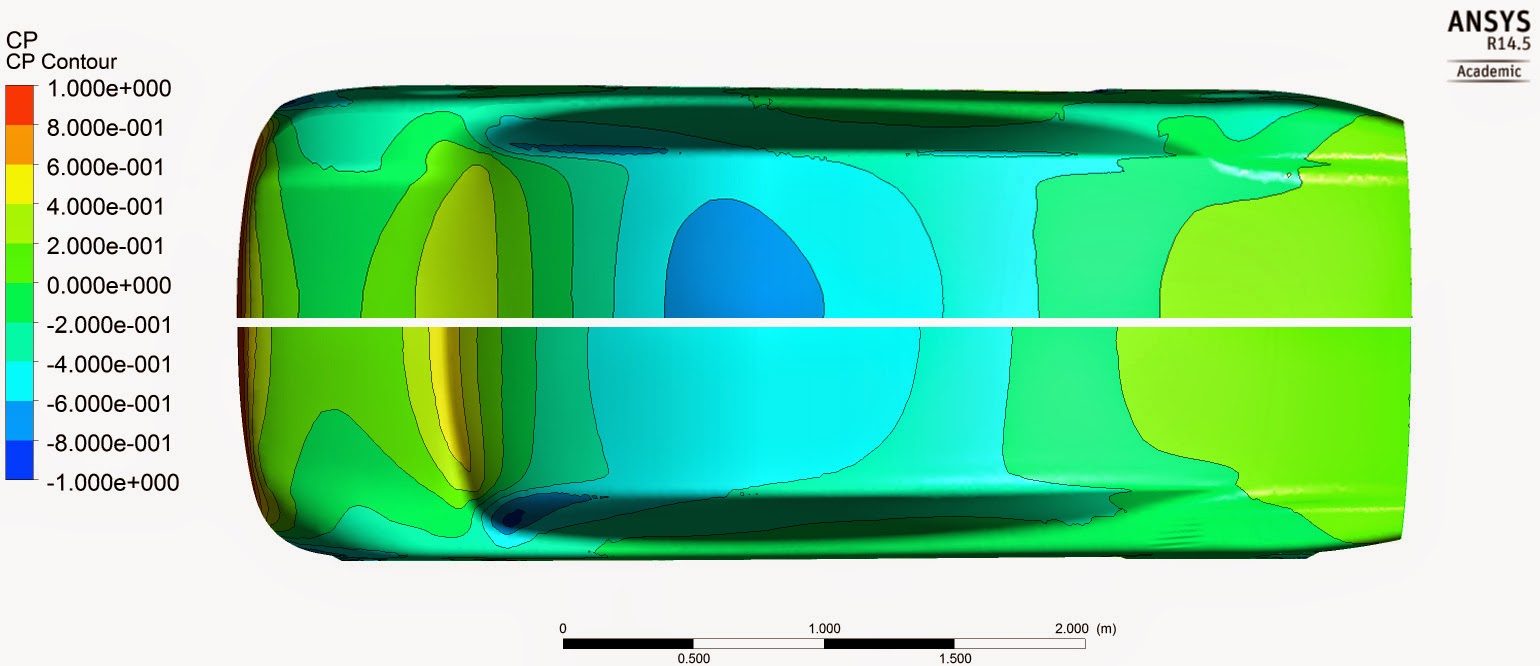
The overall winner was the Tesla Model S by virtue of its larger 25.2-square-foot face and lower 0.24 drag coefficient, which yield the same 6.2-square-foot drag area as the Prius. Low drag is a tougher challenge with a larger frontal area, hence the Tesla’s overall win.
Source: Car & Driver
Close-up look at Tesla’s new Titanium Model S battery shields [VIDEO]
Tesla announce Model S pricing for Australia
Tesla Motors has has rolled out Australian pricing for its Model S which starts at $96,208 plus on-road costs for the Model S 60 and tops out at $133,257 for the high-performance P85.
The base model can be had for about $107,000 driveaway in Melbourne or Sydney, while the range-topper is about $140,000.
This reflects the growing affordability of electric cars, as this pricing is about half that of the Tesla Roadster which pioneered the brand Down Under in 2011 at $222,995 driveaway for the base model and $260,535 for the Sport.
Australian orders for the American-made plug-in Model S are now being taken on Tesla’s website, two years after the model went on sale in the United States.
Tesla, which expects to sell 35,000 of the five-door liftback Model S sedans globally this year, is planning to re-establish a retail showroom in Sydney, along with sales representation in Melbourne and a dedicated service facility.
Expected to land in Australia by August, the three-model range will offer three levels of performance, depending on battery size and electronic tweaks.
The base Model S 60 boasts 225kW of power from its 60kWh lithium-ion battery pack, driving the large sedan from zero to 100km/h in 6.2 seconds – about the same as a V6 Holden Commodore – and to a top speed of 190km/h. Official driving range on a full battery charge is said to be 390km.
Stepping up to the mid-range $111,807 Model S 85 adds more battery oomph (85kWh) for more power (270kW), faster acceleration (5.6 sec to 100km/h) and greater range (502km).
The $119,900 flagship P85 – P stands for performance – has the same 85kWh battery and 502km range as the 85 but adds an enhanced electric drivetrain for faster acceleration.
Tesla says the P85 can cover the 0-100km/h sprint in 4.4 seconds – a split second faster than the 4.4-litre V8 BMW M5. And it is about $100,000 cheaper, too, at least in base format that is well short of the M5’s feature level.
If the Tesla buyer ticks all the boxes for optional extras, including a performance suspension and 21-inch wheels package, ‘tech’ package (a bundle of electricals that includes sat-nav, keyless entry, memory seats and power tailgate, among others), and other extras, the price can top $170,00, plus on-roads.
In standard form, the Model S is available in one exterior colour – flat black – with 19-inch alloy wheels, cloth seats and piano black interior trim.
Metallic paint in a variety of colours costs between $900 and $1800, while leather is also $1800. A glass panoramic roof is a $3100.
The standard on-board charger comes with a 40-amp single-phase wall connector. For an extra $1800, a buyer can have twin chargers fitted to reduce charging time.
As well, Tesla promises to establish a network of “Tesla Superchargers” that it claims can replenish the batteries by more than half in a little as 20 minutes. The facility will be free to Model S 85 and P85 owners, but requires a $2700 tweak for 60 buyers.
Because “green” cars get luxury car tax breaks in Australia, but the flagship P85 still attracts $13,357 in tax.
The Tesla website provides driveaway pricing that varies by state and territory, with the Australian Capital Territory the cheapest and Western Australia the dearest. For example, the driveaway price for the base Model S 60 in the ACT is $103,095, while in WA it is $109,363.
Tesla Model S pricing:*
Model S 60 $96,208
Model S 85 $111,807
Model S P85 $133,257
Panasonic Says Tesla Investment Won’t Be a Risky Gamble
Panasonic executives sought to allay investor concerns about the firm taking part in Tesla Motors $5 billion battery plant, saying any investment decision will be made one step at a time.
Earlier this month, the Japanese tech giant said it signed a letter of intent to participate in the construction of what the Silicon Valley electric-car maker calls "gigafactory" for assembling vehicle batteries in the U.S. But Panasonic hasn't disclosed how much it plans to invest in the plant.
With Panasonic already expanding production of batteries at factories based in Japan, one key concern is whether it will face overcapacity if it invests in the U.S. plant.
Panasonic aims to double its sales from the automotive business to $20 billion by 2019. A third of these sales would come from car batteries and other parts for fuel-efficient vehicles.
In addition to Tesla, the company has also received interest from other auto makers both in and outside of Japan, while its batteries can also be used for power-storage systems, they said.
Source: WSJ
Tesla Motors in under 2 minutes [VIDEO]
Tasty Tech Eye Candy Of The Week (May 18)
Tesla Sees Need for Hundreds of Battery ‘Gigafactories’
Tesla Motors founder Elon Musk said the need for lower-cost batteries for autos and power storage means there will need to be hundreds of “gigafactories” like the one the carmaker is planning to build.
The electric-car company based in Palo Alto, California, anticipates the battery factory will reduce the cost of lithium-ion cells by more than its initial guidance of 30 percent, Musk said. He spoke yesterday at the World Energy Innovation Forum, an annual conference hosted by Tesla board member Ira Ehrenpreis.
“I think we can probably do better than 30 percent,” Musk, 42, said yesterday at the company’s Fremont, California, plant. As carmakers increase demand for batteries “there’s going to need to be lots of gigafactories. Just to supply auto demand you need 200 gigafactories,” he said.
Tesla is getting close to deciding where it will build the first such proposed facility, which Musk has said will cost as much as $5 billion and involve partner companies such as Panasonic. Last week he said groundbreaking at one of at least two potential sites could happen as early as June.
Along with supplying cheaper batteries for Tesla’s electric cars, the plant is to supply stationary power storage devices to SolarCity Corp., another Musk-affiliated company. Those power storage devices will also be needed by other solar power providers and to store wind power, he said, without identifying specific companies.


.jpg)