Foxconn invest $800M to build electric cars in China

Foxconn Technology Group, the maker of Apple’s iPhone, is investing at least 5 billion yuan (US$811 million) to develop electric car manufacturing in a Chinese province.

The Taiwanese company is making the investment in China’s Shanxi province, it said on Wednesday. Foxconn already has two factories in the province. One of these assembles smartphones while the other is devoted to producing robots and automation equipment, it added.

Foxconn has largely focused on electronics manufacturing for clients including Microsoft, Sony and Amazon.com. But the company is branching out into new business sectors, as a way to grow its revenue streams. Analysts estimate that it makes as much as half of its revenue from assembling Apple products.

In June, Foxconn’s CEO Terry Gou said that the company is targeting to build electric cars with a price of less than $15,000.

Foxconn has already been developing electric car batteries for some time, and the company has many customers for them, he added. It also manufactures the touchscreen panels found inside the electric cars from Tesla Motors.

Foxconn Technology Group and BAIC Motor Corporation recently agreed to jointly establish a company that provides electric vehicle rental services, set to become operational in September. BAIC launched the E150 EV in China earlier this year.

The BAIC E150 EV is powered by an 60 hp and 144nm electric motor powered by a 25.6kwh lithium-ion battery. Top speed is 125km/h, range is 150km. Price range from $20.300 to 22.000.

China is mandating that electric cars make up at least 30 percent of government vehicle purchases by 2016, the latest measure to fight pollution and cut energy use after previously exempting EVs from a purchase tax.

Australia Post takes delivery of first Renault electric vans

In an Australian-first, Renault's 100 percent electric-powered delivery vans will shortly join Australia Post's fleet in Melbourne and Sydney.

The Renault Kangoo Maxi Z.E. (Zero Emission) electric van, currently not sold in Australia, is widely used across Europe and the United Kingdom and will be used exclusively by Australia Post from mid-2014 for a 12 month proof-of-concept.

Australia Post Head of Environmental Sustainability, Andrew Sellick said using the Renault Kangoo Maxi Z.E. for day-to-day parcel and letter deliveries is another exciting step in Australia Post's sustainability journey and an important step in assessing the real-world use of electric commercial vehicles.

"The Kangoo Maxi Z.E. assessment is part of a broader strategy to explore alternative fuels at Australia Post, including using biofuel and hybrid vehicles in our current fleet.

"The electric vans will be powered by accredited GreenPower from renewable energy sources to ensure we are maximising the potential to reduce our environmental impact.

"The Kangoo proof-of-concept will give us a clearer picture of the benefits of using electric powered delivery vans. Through this assessment we expect to see at least a 50 percent reduction in energy costs and a 100 percent reduction in carbon emissions to comparable combustible-engine vehicles in our fleet.

"While at this stage we are working with Renault to prove this concept, if the vans perform well across the range of metrics we'll be measuring them on, the future potential is very exciting. We hope this initiative will ultimately help drive the commercialisation and acceptance of electric vehicles in this country."

Renault Australia's Managing Director, Justin Hocevar said "we are excited to broaden our existing relationship with Australia Post in rolling out the Kangoo Z.E. in Australia. Through our partnership with Australia Post, we are able to comprehensively investigate the business case for introducing the fully electric Kangoo Z.E. van in Australia in the future."

Some of the alternative fuel initiatives implemented across Australia Post's network have included the rollout of:

  • 740 electric bikes that have replaced motorbikes at various locations
  • 100 hybrid vehicles introduced to the fleet to replace existing six cylinder vehicles, reducing emissions by over 30 percent
  • 25 hybrid trucks introduced into StarTrack's fleet of vehicles, improving fuel efficiency by 20 percent improvement on average
  • implementing 5 percent of bio-diesel to StarTrack's fuel supply in 2012 - an initiative which has saved approximately 820 tonnes of carbon

    Australia Post's Port Melbourne Business Hub will receive 2 Renault Kangoo Maxi Z.E. vans mid-year, with the remaining 2 vans that are part of the 12 month assessment delivered to StarTrack House in Sydney by year-end. Charging stations at each location will be powered by accredited GreenPower sources.

    The charging station at Australia Post's Port Melbourne Business Hub is funded by the Victorian Government Department of Transport, Planning and Local Infrastructure.

  • Electric car tax credit should be $10,000 says Congressman

    Vermont Rep. Peter Welch wants to make it easier to buy electric cars by increasing the size of the federal tax credit for the vehicles and making those credits available at car dealerships.

    The Democrat said increasing the size of the tax credit to $10,000 and making it easier to take advantage of would make the vehicles more affordable for middle-income people.

    Electric car buyers are now eligible for credits up to $7,500 through their tax return.

    "If we're going to make real progress on climate change and we're going to reduce the cost of transportation, by the way, the cost of gas to our consumers, then we want to make this technology available," Welch said at an electric vehicle charging station near the Statehouse.

    Welch said he planned to introduce the legislation for the Electric Vehicle Act when he returns to Washington.

    More electric vehicles are needed because the transportation sector is the biggest contributor to greenhouse gases in Vermont, he said. Electric vehicles have become more practical because battery technology is improving, making it possible for people to drive longer distances without charging, Welch said.

    Welch was joined at the Montpelier news conference by Montpelier Mayor John Hollar, Karen Glitman, the director of the Transportation Efficiency Program at the Vermont Energy Investment Corporation, and Dan Keene, owner of Lamoille Valley Ford and Twin State Ford.

    Glitman said the number of electric vehicles sold in Vermont last year tripled and there are about 640 plug-in electric vehicles registered in Vermont. The number is still small, but it is increasing and the potential savings to Vermont consumers is huge, she said.

    In 2010, there were $1.1 billion in taxable gasoline and diesel fuel sales in Vermont. If that amount of travel were provided by electric vehicles charged at the current cost of residential electricity, it would save about $800 million a year.

    "We need to keep that money with Vermonters and keep it working in Vermont rather than sending it overseas for the most part," Glitman said.

    Electric Car sales set to take off in South Korea

    In 2010 the South Korean government unveiled a plan to produce 1.2 million electric vehicles a year by 2015, or 21 percent of the domestic automobile market, and a nationwide goal of one million registered electric vehicles by 2020.

    The South Korean government’s Ministry of Environment is providing a 15 million won ($13,900) nationwide subsidy for EV purchases, and 10 major cities or provincial jurisdictions are providing additional subsidies ranging from 3 million to 8 million won ($2,800 to $7,400).

    The semitropical island of Jeju, which is located about 60 miles (100 km) south of the Korean peninsula in Korea’s East Sea, Plans for all cars to be electric by 2030.

    The Jeju government adds a hefty 8 million won subsidy to the federal incentive for EVs purchased on the island. The combined price abatement of 23 million won ($21,000) nearly halves the EV’s purchase price in some instances, dramatically reduces it in all others and makes the Chevrolet Spark EV less than the cost of a gasoline-powered Spark.

    While the federal subsidy is open-ended and applies nationally, there is a limit to the number of subsidies Jeju will grant. For 2014 Jeju has a cap of 500 subsidies, but officials say they are swamped with thousands of applications.

    Jeju is a natural fit for EVs because it has been a smart grid test bed for years, which included building public charging infrastructure. Also, Jeju is a relatively small, oval-shaped island (about 70 km by 30 km), so drivers can easily get around the island on a single battery charge.

    There are currently only about 360 electric vehicles amongst the population of about 607 000, a figure that the province wants to expand to more than 500 this year. The provincial government expects about 370 000 total cars on the road in Jeju by 2030 compared to about 300,000 today.

    This will be achieved in steps, with the initial subsidy phase adding 500 new EVs this year, then more subsidies to boost the number to 29,000 by 2017 and to 94,000 by 2020. The island has 500 easily accessible 240V recharge stations, said to be the highest density anywhere in the world. More stations are being added every month.

    South Korean buyers, who buy almost exclusively cars made in the country, have several Korean-made electric cars from which to choose. The current sales champion on Jeju is the Samsung SM3, which is a clone of the Renault Fluence ZE sedan.

    Kia's Ray EV, Samsung/Renault's SM3 EV and General Motors Spark EV got off to a modest sales start in 2013. Nissan will begin selling the Leaf in South Korea in the second half of this year along with BMW's i3 and Kia's Soul EV. Hyundai Motor to launch first battery-powered electric car in 2016.

    South Korea has installed 1,510 charging stations for electric cars across the country, including 110 quick charge stations. Currently, about 1,100 electric cars are being used mostly by government agencies and public corporations across the country.

    City of Dalian Places Order for 1,200 BYD Electric Buses

    1200 zero-emission, electric buses made by BYD Company Ltd will soon hit the streets of China’s “Bright Northern Pearl”, Dalian.

    Dalian’s municipal government has signed a cooperative agreement with global electric vehicle and battery leader, BYD. The agreement stipulates the purchase of 600 BYD electric buses in 2014 and another 600 in 2015, totaling 1200 units.

    BYD took the opportunity at the signing event to announce the opening of a new electric bus manufacturing facility in the Dalian Huayuankou Economic Zone to service the growing needs of northern China. The agreement also mentions a conversion initiative of more than 50% of new purchased taxis in Dalian to new energy vehicles in support of the “new energy vehicles promotion and local environment improvement” initiative.

    At the event with Liaoning Province Governor Zhenggao Chen, BYD Founder and CEO Chuanfu Wang introduced company milestones, R&D capabilities and products including the electric bus and fully electric e6 SUV being used worldwide in fleet applications. He also took the chance to talk about BYD’s latest consumer offering – the break-through, plug-in-hybrid, Qin.

    Chairman Wang highlighted operational statistics of the BYD electric fleets now totaling over 175 million Km traveled (~111 million miles in revenue service) and operating in many cities including recent projects in London, England and New York City. A key message from the BYD Chairman was that this technology is not just environmentally friendly, but very efficient and profitable for the operators as witnessed in the Shenzhen fleets.

    Zhenggao Chen, Governor of Liaoning province, expressed his view that BYD is a pioneer in the aspect of new energy vehicles, and is confident BYD will seize the opportunity to develop and keep mastering the core technologies for new energy vehicles to keep winning the war combating poor air quality.

    First all-electric BYD E6 taxi fleet launched in London

    Chinese carmaker BYD will launch London’s first ever all-electric taxi fleet on Tuesday, pulling ahead of global rivals such as Nissan in the race to roll out zero emission cabs by 2018.

    Following similar BYD E6 taxi fleets in China, Hong Kong and South America, BYD’s move into London transport comes ahead of a 2018 deadline set by Mayor Boris Johnson for all of the city’s taxis to be zero-emission, which has sparked a battle between manufacturers to develop green vehicles.

    The Chinese manufacturer, 9.9 per cent owned by Mr Buffett, will initially launch a fleet of 20 electric cars operated by Thriev, a taxi company, less than two months after supplying the first-ever fully-electric buses to the capital.

    “Londoners are typically early adopters to new technology . . . and we are very happy to be first and beat the deadline by a few years. This is where the electric vehicle technology will shine,” Isbrand Ho, managing director of BYD Europe told the Financial Times.

    Although the E6 cannot be registered as a ‘Black Cab’ because of the turning circle requirements, Thriev is aiming at the established 50,000-strong mini cab market, which relies heavily on diesel-powered MPVs.

    The BYD E6 is powered by a 40kWh battery and should offer a range of around 180 miles on a single charge, according to Isbrand Ho, managing director of BYD’s export division. The E6 was launched as a taxi in Hong Kong last March and a fleet is already operating in Shenzhen, the Netherlands and Columbia.

    U.S. EIA sees only 1.5% Hybrid sales growth to 2040

    The U.S. Energy Information Agency seems to have totally sold out to the oil lobby.

    The agency predicts, in a report released Tuesday 17th December, that 78 percent of all cars and trucks will still run on gasoline in 2040, down from 82 percent last year. It predicts a big upswing in micro-hybrids and other advanced fuel technologies to 42 percent of all vehicles by 2040.

    EIA predicts full hybrids will account for only 5 percent of vehicles in 2040 — up from 3.32 percent today. That's an increase of just 1.7% in hybrid sales over the next 26 years?

    It predicts just 1 percent of total sales will be plug-in hybrids and 1 percent full electric vehicles in 2040.

    The agency also predicts that when adjusted for inflation, the price of gasoline will rise to $3.90 by 2040, compared to a prior forecast of $4.40.

    Even using figures from 2011, at a local level, hybrid sales already far surpass this decades out prediction. In the San Francisco Bay Area 8.4% of all new cars sold were hybrid, Seattle and L.A. 5.7%, San Diego 5.6% and Portland 5.4%.

    Lets not even mention Norway where full electric vehicles account for 12% market share amongst passenger car sales or The Netherlands where a plug-in hybrid was the top selling car last month, selling almost twice as many as the best selling petrol car.

    Source: Detroit News

    Norway has become the world capital of the electric car

    Following the example of their crown prince, thousands of Norwegians have switched to electric cars, taking advantage of strong government incentives.

    For the second month in a row, an electric car topped new car registrations in October in the Nordic country, where 716 Nissan Leaf were sold with an unprecedented market share of 5.6 percent.

    “Norway is showing the way out of oil dependence, or even addiction,” said Snorre Sletvold, president of the Norwegian Electric Car Association.

    From the modest Buddy, a locally produced two-seater urban car, to the more ostentatious US-made Tesla S, some 15,000 electric cars should be rolling on Norwegian roads by the end of 2013, 10 times more than in neighboring Denmark and Sweden.

    Electric cars still represent a small fraction of Norway’s car pool, but figures grow steadily every month.

    In total, they accounted for 7.2 percent of Norwegian auto sales in October, up from a 3.4 percent market share a year ago. Around 5,200 have been sold in the first 10 months of 2013 and new models by Volkswagen (including an electric version of its famous Golf), BMW and Renault are expected to hit the market in the coming months.

    In September, US-made Tesla S, Crown Prince Haakon’s personal choice, topped the sales list due to a backlog that had built up before the first cars were shipped to the country.

    Somewhat paradoxical in oil-rich Norway, this success can be partially explained by the numerous incentives intended to foster clean vehicle sales in the country.

    Regardless of their price range, electric cars are exempt from VAT and other high Norwegian taxes, public parking fees and urban toll payments, and are allowed to use bus lanes.

    BMW Joins VW in Backing Germany’s 1 Million Electric-Car Goa

    BMW backed the German government’s goal to have 1 million electric cars by 2020 on the country’s roads, a week after Volkswagen said the target is achievable under broader terms for alternative drives.

    Developing the European Union’s electric-vehicle market will need the backing of authorities, though official support in the bloc is lagging behind initiatives in the U.S. and China, BMW Chief Executive Officer Norbert Reithofer said today in a speech at an industry conference in Munich.

    “I hope the ongoing discussions between national governments, the European Parliament and the European Commission lead to a package that’s viable,” Reithofer said at the conference sponsored by Handelsblatt newspaper. “At the moment, the commission’s proposals don’t offer incentives to speed up introduction of alternative drives.”

    Carmakers are promoting electric-powered models to comply with tightening regulations that apply to their fleets’ emissions across the globe. Munich-based BMW, the world’s biggest maker of luxury vehicles, is putting the 34,950-euro ($48,200) all-electric i3 city car into showrooms in Germany next month.

    VW CEO Martin Winterkorn said last week that the Wolfsburg, Germany-based manufacturer, Europe’s largest volume carmaker, will “contribute” to the German goal for electric vehicles to play a larger role in the market by 2020. Authorities’ plans are feasible as long as they include plug-in hybrids, which can switch between rechargeable battery power and conventional combustion engines, as the models offer the biggest market potential, he said.

    Volkswagen outlined plans in September to offer as many as 40 electric or hybrid models in the event that demand for low-emission cars takes off. The manufacturer will produce 14 vehicles with alternative drive through next year after introducing electric versions of the Golf hatchback and Up! city car at the Frankfurt auto show last month. VW also showed new plug-in hybrid versions of the Porsche brand’s Panamera four-door coupe and Audi’s A3 compact.

    Purely or partly battery-powered vehicles accounted for 4,157 new car registrations in Germany in 2012, about twice as many as the year before, according to the VDA auto-industry association. Germany’s new car market amounts to about 3 million vehicles a year.

    Volkswagen’s e-Up! went on sale in Germany this month for 26,900 euros. The model is “deliberately positioned” against BMW’s i3, Rudolf Krebs, head of electric-powertrain technology at VW, said on Sept. 4.

    BMW presented the i3 at the Frankfurt show, as well as a plug-in hybrid version of the X5 sport-utility vehicle. Reithofer reiterated today that the i8 plug-in hybrid sports car will be added to BMW’s lineup in 2014.

    California Goal to Have 1.5M EVs on the Road by 2025 [VIDEO]

    California has a goal of having 1.5 million electric vehicles on its roads by 2025.

    Gov. Jerry Brown on Monday toured an electric car fleet that included Tesla, BMW and Honda as part of a meeting with other car manufacturers and private companies. The meeting was held at San Francisco's Exploratorium and discussed the future of the electric car.

    Brown said he will sign two pieces of legislation continuing incentives for purchasing electric cars.

    Ten Bucks a Litre – Dick Smith Documentary cherry picks the facts [VIDEO]

    A recently aired Australian documentary by local eccentric millionaire Dick Smith about alternatives to fossil fuels has stirred quite a hornets nest of feedback, both positive and negative.

    While on the whole the Doco was fairly interesting and we here at EV News noted Dick's enthusiasm for electric cars, the facts seem to have been seriously cherry picked.

    The EV segment starts @47 mins with Dick enthusing about an EV powered only by renewables and which has Vehicle to Grid Technology (V2G) that can held smooth the intermittency of renewables.

    The cherry picking starts @50 mins when to close the segment Dick holds up a flask containing 1 litre of fuel stating that it weighs 700 grams and will take an average car approx 10km. The bad news for EV's, we are told, is that the equivalent battery would weigh 25x as much! End of argument apparently and the story moves onto bio-fuels.

    What Dick failed to mention was that the equivalent of the 1 litre of fuel stored in an EV battery can propel an electric car 10x as far (100 km)... surely a worthy trade-off in energy efficiency Dick?

    Of course, battery power may not be a solution for his Helicopter any time soon although Dick was so impressed with EVs he is now the proud owner of a solar powered Nissan Leaf

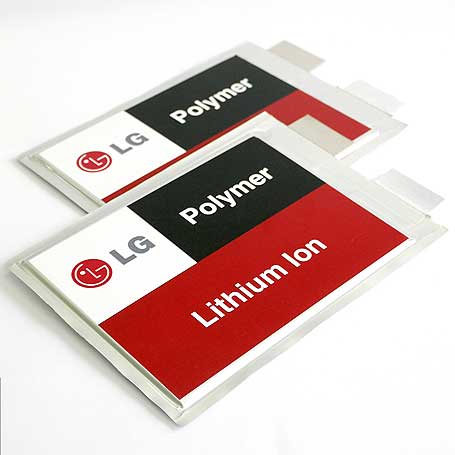
    LG Chem Michigan begin Chevy Volt battery production

    The US subsidiary of South Korean company LG Chem last month began producing batteries for the Chevrolet Volt at its Holland-area facility.

    LG Chem spokesman Randy Boileau says employees completed “pre-production testing” with General Motors Co. and began ramping up production in July. He says LG Chem anticipates the first shipments from the facility will come in September or October.

    LG Chem drew attention during its 2010 groundbreaking, when President Barack Obama traveled to Michigan for the event.

    Melbourne Gets First Free CHAdeMO Fast Charger

    Melbourne is set to become a key testing ground for electric vehicles within Australia with the launch of an electric vehicle hub that includes Victoria’s first fast-charging stations and an electric car for public hire.

    The project brings together the Victorian Government, Moreland City Council, ChargePoint, GoGet, Toyota, the local community and businesses to share information, promote discussion and foster development of the electric vehicle industry.

    Inaugurating the new hub, Minister for Public Transport and Roads Terry Mulder said Friday, “The Coalition Government recognizes the long-term benefits that EVs will provide for our transport system and the environment."

    The EV hub located at Moreland City Council offices includes two standard EV chargers, one dedicated to the car share EV; one EV fast charger; and a Toyota Prius plug-in hybrid electric car, supplied through GoGet car-sharing scheme, for staff use and public hire.

    In addition, Moreland City Council has installed a standard charging station in Fawkner to supplement its public EV charging infrastructure.

    The Victorian government has invested nearly A$50,000 in the creation of Moreland City Council’s new electric vehicle hub as part of its A$5 million Electric Vehicle Trial project.

    To encourage the adoption of electric and hybrid vehicles, all of Moreland City Council’s EV charge stations, including the fast-charger that takes just 30 minutes instead of overnight, will be available for the public free of charge for at least 12 months.

    “Moreland City Council is providing the necessary infrastructure to encourage Victorians to use electric vehicles and make it accessible and convenient, which will encourage more people to choose this sustainable transport option," Mulder said.

    In 2012 Mitsubishi, Nissan, Holden introduced their electric vehicles into Victoria; in the near future Renault, Ford, Toyota, BMW and Porsche all have plans to sell their electric vehicles into the state.

    “This facility is another milestone in Victoria’s evolving EV charging network and an important step towards the State’s sustainable transport future,” Mulder said.

    “This project is a great example of how the Electric Vehicle Trial is providing the foundations of an emerging marketplace for electric vehicles in Victoria and Australia,” the minister said.

    Moreland residents will be provided with discounts and incentives to join GoGet and experience the EV. Moreland City Council will take out a business membership to GoGet so council staff can use the car when it’s available for hire.

    Moreland Mayor Cr Oscar Yildiz said the hub will be actively promoted for public use, to encourage council staff, local residents and businesses to test the benefits of using an electric car. “The pilot project is a perfect opportunity to test the viability and popularity of these facilities in the Coburg area, with a view to this service becoming an ongoing offering,” Yildiz said.

    The Electric Vehicle Trial will run until mid-2014, to gather a better understanding of the timelines, processes and barriers electric vehicle technology faces across Victoria.

    Electric car U.S. sales reach 40,000 in first half of 2013

    U.S. Energy Secretary Ernest Moniz highlighted the continued growth of electric vehicle sales – doubling in the first 6 months of 2013 compared to the same period in 2012

    Plug-in electric vehicle (PEV) sales tripled from about 17,000 in 2011 to about 52,000 in 2012. During the first six months of 2013, Americans bought over 40,000 plug-in electric vehicles (PEV), more than twice as many sold during the same period in 2012.

    The latest numbers also show how the early years of the PEV market have seen much faster growth than the early years of the hybrid vehicle market. Thirty months after the first hybrid was introduced, monthly sales figures were under 3,000.

    By comparison, PEVs – which were first introduced in December 2010 – report nearly 9,000 cars sold in the last month. At the same time, thanks to technology improvements and growing domestic manufacturing capacity, the cost of a battery has come down by nearly 50 percent in the last four years, and is expected to drop to $10,000 by 2015.

    New all-solid sulfur-based battery outperforms lithium-ion technology

    Scientists at the Department of Energy’s Oak Ridge National Laboratory have designed and tested an all-solid lithium-sulfur battery with approximately four times the energy density of conventional lithium-ion technologies that power today’s electronics.

    A new all-solid lithium-sulfur battery developed by an Oak Ridge National Laboratory team led by Chengdu Liang has the potential to reduce cost, increase performance and improve safety compared with existing designs.

    The ORNL battery design, which uses abundant low-cost elemental sulfur, also addresses flammability concerns experienced by other chemistries.

    “Our approach is a complete change from the current battery concept of two electrodes joined by a liquid electrolyte, which has been used over the last 150 to 200 years,” said Chengdu Liang, lead author on the ORNL study published this week in Angewandte Chemie International Edition.

    Scientists have been excited about the potential of lithium-sulfur batteries for decades, but long-lasting, large-scale versions for commercial applications have proven elusive. Researchers were stuck with a catch-22 created by the battery’s use of liquid electrolytes: On one hand, the liquid helped conduct ions through the battery by allowing lithium polysulfide compounds to dissolve. The downside, however, was that the same dissolution process caused the battery to prematurely break down.

    The ORNL team overcame these barriers by first synthesizing a never-before-seen class of sulfur-rich materials that conduct ions as well as the lithium metal oxides conventionally used in the battery’s cathode. Liang’s team then combined the new sulfur-rich cathode and a lithium anode with a solid electrolyte material, also developed at ORNL, to create an energy-dense, all-solid battery.

    “This game-changing shift from liquid to solid electrolytes eliminates the problem of sulfur dissolution and enables us to deliver on the promise of lithium-sulfur batteries,” Liang said. “Our battery design has real potential to reduce cost, increase energy density and improve safety compared with existing lithium-ion technologies.”

    The new ionically-conductive cathode enabled the ORNL battery to maintain a capacity of 1200 milliamp-hours (mAh) per gram after 300 charge-discharge cycles at 60 degrees Celsius. For comparison, a traditional lithium-ion battery cathode has an average capacity between 140-170 mAh/g. Because lithium-sulfur batteries deliver about half the voltage of lithium-ion versions, this eight-fold increase in capacity demonstrated in the ORNL battery cathode translates into four times the gravimetric energy density of lithium-ion technologies, explained Liang.

    The team’s all-solid design also increases battery safety by eliminating flammable liquid electrolytes that can react with lithium metal. Chief among the ORNL battery’s other advantages is its use of elemental sulfur, a plentiful industrial byproduct of petroleum processing.

    “Sulfur is practically free,” Liang said. “Not only does sulfur store much more energy than the transition metal compounds used in lithium-ion battery cathodes, but a lithium-sulfur device could help recycle a waste product into a useful technology.”

    Although the team’s new battery is still in the demonstration stage, Liang and his colleagues hope to see their research move quickly from the laboratory into commercial applications. A patent on the team’s design is pending.

    “This project represents a synergy between basic science and applied research,” Liang said. “We used fundamental research to understand a scientific phenomenon, identified the problem and then created the right material to solve that problem, which led to the success of a device with real-world applications.”

    Bay Area local governments deploying 50x i-MiEVs

    Four San Francisco Bay Area local government fleets—San Jose, Los Gatos, Campbell and Mill Valley—are deploying a total of 50 Mitsubishi i-MiEV EVs, representing the largest municipal fleet deployment of light-duty all-electric vehicles (EVs) in the US to date.

    Supporting the region’s efforts to establish the Bay Area as the “EV Capital of the US” and Governor Brown’s goal of 1.5 million EVs on California roads by 2025, this deployment is one in a series the BACC and partners are facilitating, which collectively could result in 250+ EVs deployed over the next 12 months for valuable potential impacts including fuel cost savings of nearly $2 million and avoidance of nearly 6 million pounds of CO2 over five years.

    The vehicles were secured under highly favorable lease terms, removing the upfront cost barrier and risk of traditional vehicle procurement. These unique lease options are allowing participating municipalities to expand on their already progressive sustainability efforts, while delivering the significant operations, maintenance and fuel cost savings associated with EVs.

    The City of San Jose, which received 38 of the 50 vehicles, is aiming to power 100 percent of its fleet with alternative fuel vehicles by 2022 as a part of its Green Vision, and is currently 40 percent of the way toward achieving this goal. “We appreciate the opportunity to secure these new vehicles without any upfront expenditure,” said San Jose Mayor Chuck Reed. “By replacing older, less efficient vehicles with clean EVs, we reduce emissions but more importantly, save on fuel costs.”

    This deployment also is enabling smaller municipalities to both demonstrate the benefits of EVs in fleets and emerge as sustainability leaders. “The Town of Los Gatos is pleased to participate in this initiative to add electric vehicles to the fleet, which lowers our carbon footprint in keeping with our Sustainability Plan,” said Town of Los Gatos Mayor Barbara Spector. “In addition to being nearly 40 percent less expensive to fuel, these vehicles will significantly reduce the Town’s greenhouse gas emissions – over three years our five vehicles will avoid nearly 20,000 lbs of CO2.”

    “Many of our fleet vehicle routes are predictable and take place within the city itself,” explained City of Campbell Mayor Evan Low. “These i-MiEVs are ideally suited for such applications and, using the network of 11 charging stations we’ve installed, we’ll be able to charge the vehicles throughout

    Don’t electric cars already have a Horn? [VIDEO]

    CNET report on the EV industry non-story of the decade, laws that require electric cars to make artificial noise at low speed to avoid running over pedestrians who don't look before stepping onto a...

    [[ This is a content summary only. Visit my website for full links, other content, and more! ]]

    Energy Department Offers $50M to Advance EV Technologies

    The Energy Department on March 8 announced more than $50 million in funding for new projects that will accelerate the development of advanced plug-in electric vehicle (PEV) technologies to improve...

    [[ This is a content summary only. Visit my website for full links, other content, and more! ]]