Toyota confirms turbo engine for 2016 LeMans

Toyota has confirmed that it will switch to turbocharged power for the 2016 World Endurance Championship season.

Toyota's technical director Pascal Vasselon confirmed the decision, stating: "I don't think we will retain the normally aspirated V8 configuration. It will be a turbo engine. It's a little too early to release any specific information."

The engine is highly likely to be a small-capacity turbo engine and will target the 8MJ category, something which has reaped dividends for Porsche so far in 2015.

The new technical package will also introduce battery storage, which will work with the same twin-axle retrieval system the team currently uses.

The 2016 car will be known as the Toyota TS 050 and is scheduled to test just after Christmas.

2015 development halted

Toyota is set to undergo a painful remainder of the 2015 season as it essentially calls time on significant development of the TS 040.

"Clearly, it wouldn't be very efficient for us to invest in developing this year's car," said Vasselon. "We could tweak a few things on it, but we do not think that these would make a significant difference. So, yes, we are fully focused on next year's car.

"The gap will vary, obviously, depending on the characteristics of the circuits. However, we expect a difficult end to the season, a bit like Audi experienced last year".

Third Toyota at Le Mans still possible

Toyota could run a third car at Le Mans in 2016, but it would only happen if it would not impinge on the initial development of the TS 050 program.

The decision would also depend on budget resources, which are set to be increased for 2016 onwards.

"We couldn't enter a third car previously, but now the question will arise," said Vasselon. "Now, I cannot give you that answer because we do not yet know the full budget we'll have.

"We know it will be increased, but we know that it will never be at the same level as Audi and Porsche, that's a sure thing. However, it will be increased.

"We will need to re-assess whether running a third car is acceptable without threatening our development programme."

Nissan to Address KERS Issues Before Returning to WEC

Nissan today announced that it will delay its return to the LM P1 class of the FIA World Endurance Championship and instead focus on technical issues that challenged its race team during the Le Mans 24 Hours.

Issues with the energy recovery system (ERS) meant that Nissan had to run at the Le Mans 24 Hours on engine power alone. The bespoke Nissan V6 3-litre twin turbo petrol engine and the unique aerodynamics of the GT-R LM NISMO proved to be the main strengths of the car at Le Mans but without a fully working ERS, many of the car's other systems were compromised.

"We know people will be disappointed but be assured that nobody is more disappointed than us," said Shoichi Miyatani, President of NISMO. "We are racers and we want to compete but we also want to be competitive. That is why we have chosen to continue our test programme and prepare the GT-R LM NISMO for the strong competition we face in the World Endurance Championship. When you innovate you don't give up at the first hurdle. We are committed to overcoming this challenge."

This news only affects Nissan's LM P1 programme. The manufacturer's global motorsport programmes continue unabated as Nissan strives to add to its tally of victories in the Blancpain Endurance Series, Super GT and the many other championships it competes in. Nissan's pioneering GT Academy programme is now entering the ‘Race Camp' phase where the first of the 2015 graduates will be chosen before going on to compete as NISMO Athletes all over the world.

"We've said it before but innovation hurts," said Darren Cox, Global Head of Brand, Marketing & Sales, NISMO. "We've built an LM P1 car that is very different to other racing cars as we continue to drive motorsport innovation. The beauty of this programme is that people have got behind us and they are willing us to succeed. This has shown us once again that people want something different in motorsport and that gives us increased motivation to make our LM P1 car competitive."

Nissan will continue the test programme for the GT-R LM NISMO, predominantly but not exclusively in the United States. Media updates will be issued as the car's development continues. A decision on the date for Nissan's return to the World Endurance Championship will be made in due course, depending on the progress of the test programme.

BMW wants electric racing future

German brand BMW believes electric cars are its future - even on the racetrack.

Speculation has been mounting for months that the company would join the World Endurance Championship with an LMP1 car to rival entries from Porsche, Audi, Toyota and Nissan.

However, BMW's motorsport boss, Jens Marquardt, has ruled out building a car to the current hybrid rulebook, saying the brand wants to race a fully-electric car to promote its new range of electric road cars, the i3 and i8.

"The regulations in LMP1 will be new for 2017 and it will be a hybrid class where the key players are competing at a high level," Marquardt told Autosport.

"We see hybrid as a stepping-stone towards EV [electric vehicle] and EV as the future for BMW, which we showcase in the i sub-brand.

"This current set-up does not fulfil our needed criteria."

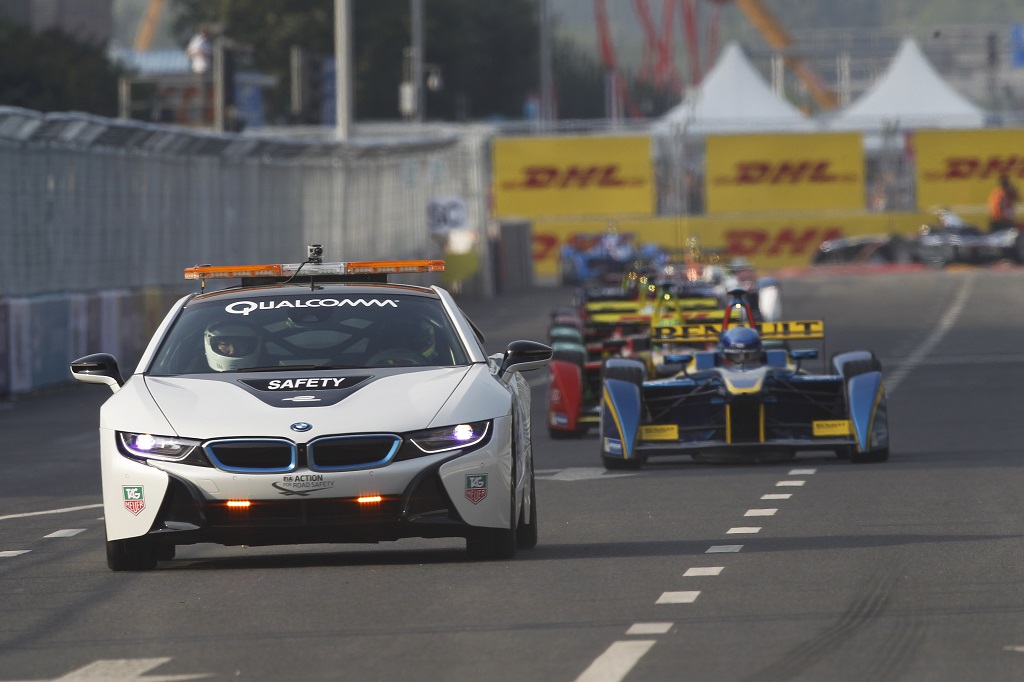
And the BMW bigwig also ruled out joining Citroen's DS brand and Renault in supporting teams in the all-electric Formula E Championship.

He said the series reliance on mid-race car swaps was bad for the public perception of electric cars and the so-called "range anxiety".

"If you look at public discussions of electric mobility, the issue of reach is very important," Marquardt said.

However, Formula E organisers are pushing to eliminate the car swaps ahead of originally planned as part of increased technical freedoms for the teams and manufacturers.

Drive e0 PP03 Becomes First Electric Car to Qualify P1 @ Pikes Peak

The Drive e0 PP03 one megawatt AWD battery electric racer driven by Kiwi Rhys Millen has become the first electric vehicle to qualify P1 overall at the 93rd running of the Pikes Peak International Hill Climb.

The 2015 event could go in history as the first outright win by a battery electric race car.

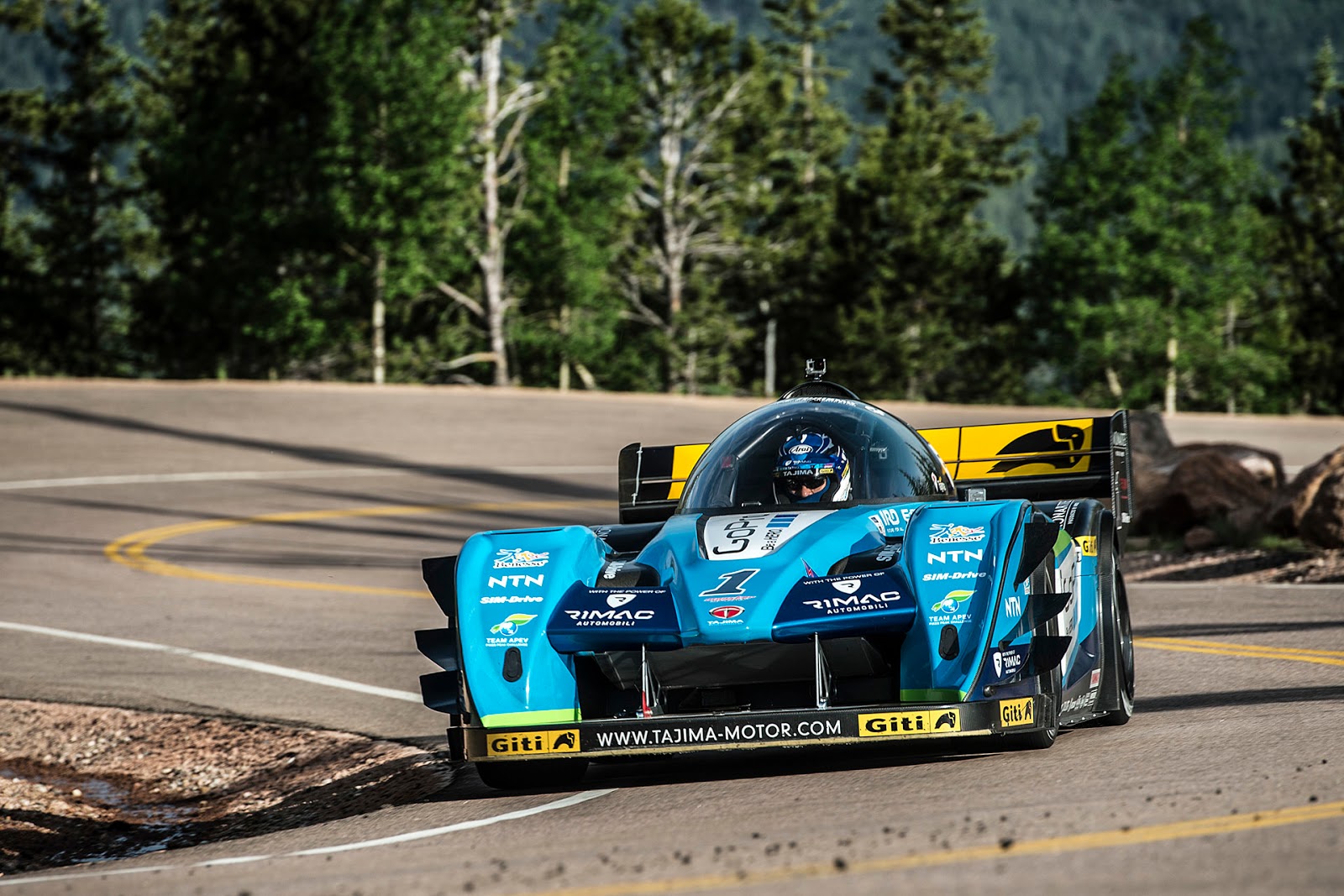
With Mitsubishi's EV works team, who funished 2nd and 3rd outright in 2014, absent for this years race, the competition is between two Megawatt class EV teams. Multiple champion Nobuhiro Tajima has teamed up with Rimac Automobili to build a 1.1 MW AWD racer while Rhys Millen drives for Latvian team Drive e0 with the 1 MW AWD special.

Racing starts @ 8 AM MDT (Mountain Daylight Time - GMT -6 Hrs) Sunday 28th June.

Porsche Hybrid Defeats Audi Hybrid at 83rd Le Mans

Porsche won the Le Mans 24-hour endurance sports-car race for the first time since 1998 with the first non-diesel win since 2005.

Porsche’s 2.0-litre V4 turbo Petrol A123 battery powered 919 Hybrid car took first and second places, while Audi’s R18 4.0-liter V6 Turbo Diesel flywheel powered e-tron hybrid came in third. Both carmakers are owned by German-based Volkswagen AG, the world’s second-biggest auto manufacturer.

The return of Porsche to Le Mans in 2014 after a 16-year hiatus and its subsequent victory Sunday underscore how Volkswagen is stoking in-house competition on and off the racetrack, even amid additional costs. Porsche and Audi each entered three vehicles in the fastest vehicle category, Le Mans Prototype 1, or LMP1.

“This is a very special day for us,” Matthias Mueller, Porsche’s chief executive officer, told reporters in Le Mans. “It was a great team effort.”

VW is pouring money into new vehicles, technology and factories as the company plans to surpass global industry leader Toyota Motor Corp. by 2018. Maintaining a technological edge is vital for VW’s upscale brands, which also include Bentley and Lamborghini, as they vie for affluent customers with the likes of BMW AG and Daimler AG’s Mercedes-Benz.

Research Budget

Audi and Porsche accounted for 66 percent of Volkswagen’s operating profit in the first quarter. Volkswagen, which has one of the largest research and development budgets of any publicly traded company, is investing 85.6 billion euros ($96.1 billion) through 2019 to add models and production capacity.

Rising costs to develop electric cars and new digital features such as piloted driving are weighing on Volkswagen’s efforts to improve profitability, including a program announced a year ago to increase earnings at its namesake passenger-car brand by 5 billion euros by 2017. The manufacturer has taken steps to rein in costs companywide by sharing more parts among a wider range of vehicles.

Porsche and Audi have denied reports in recent weeks that they plan to enter Formula One car racing, citing high costs and shrinking visitor numbers. Formula One “needs to solve its problems alone,” Rupert Stadler, Audi’s CEO, said last month.

Audi and Porsche say Le Mans provides a better opportunity to test new technology that can be used later in road cars, such as lightweight construction and high-performance hybrid electric systems.

Ford Motor Co., the second-biggest U.S. carmaker, said Friday it will return to Le Mans in 2016. Competing in the GT racing class, the Dearborn, Michigan-based company will commemorate the 50th anniversary of its 1966 sweep of the top three places at the race.

It’s official: Tajima teams up with Rimac for Pikes Peak 2015

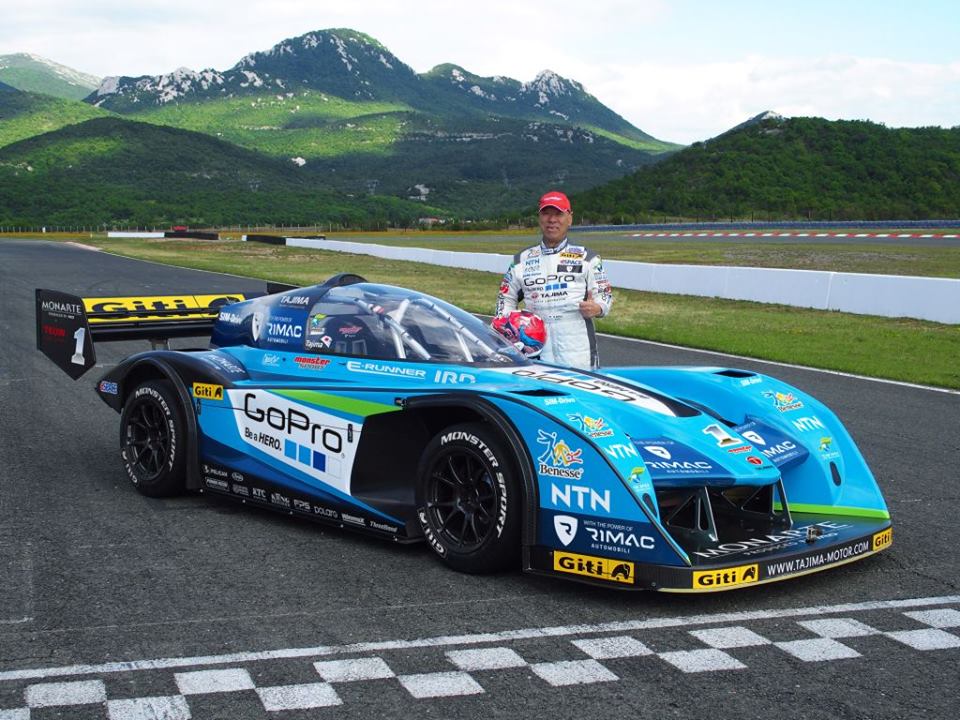
Team APEV with MONSTER SPORT, led by the racing legend Nobuhiro “Monster” Tajima, teamed up with Rimac Automobili. As a result, 2015 Pikes Peak International Hill Climb Race will have a new 1.1 MW beast at the starting line, the Tajima Rimac E-Runner Concept_One.

Rimac Automobili are once again showing their vigorous racing DNA taking the challenge in one of the most prestigious races in the world. Mr. Tajima’s decades long experience in racing and Rimac Automobili’s state of the art technology and know-how brought to life a staggering creation, the Tajima Rimac E-Runner Concept_One. It is powered by four independent electric motors, giving the car a total power of over 1,1 MW (1,475 HP). That is more than twice the power Mr. Tajima had in his 2014 car when he broke his own Pikes Peak record, stopping the clock at 9:43,90.

There are no gearboxes or differentials on this car. The power of each independent motor is transferred to each wheel by an innovative chain drive system developed specifically for this project, which saves a lot of weight and space. Embracing the Rimac Automobili technology, the Tajima Rimac E-Runner Concept_One features an adapted racing version of the Rimac All Wheel Torque Vectoring system, first implemented in the Rimac Concept_One.

The Rimac AWTV controls the torque of each motor 100 times a second. The system can vary the torque on each wheel depending on the steering angle, speed, longitudinal and lateral forces, yaw-rates and number of other variables. The ECU runs the collected sensor-data through complex mathematical algorithms which calculate the optimum torque distribution on a millisecond-level. This enables the vehicle to take full advantage of the tires, squeezing the maximum out of their potential and giving the driver the desired vehicle dynamics at any given moment. Mr Tajima will thus have both the 1,1 MW of power and maximum grip in each of the Pikes Peak’s 156 corners.

“We measured 0-100 km/h in 2,2 seconds. 200 km/h comes in 5,4 seconds from a standstill. Cornering forces and stopping numbers are also impressive, but let’s not spoil the surprise. We are quite confident that Tajima Rimac E-Runner Concept_One will break previous year’s record. He is a great driver with tons of experience. Interesting fact – he raced Pikes Peak his first time a year before I was born. 28 years later, we work alongside to push the limits further. With the support of our best engineers and technicians, our technology, powertrain, battery-system and Torque Vectoring, he will be able to push the boundaries of electric race cars to a whole new level. Working with Mr. Tajima and his team is an amazing experience of which we enjoy every second.” reveals Mr. Rimac.

“The Pikes Peak is one of most difficult hill climbs in the world, because it is held on a public road, not a race track. The conditions are constantly changing. We want to develop technology and gather experience from the Pikes Peak race for development of better, safer, and zero emission road cars. This is my aim. Rimac Automobili is a quite young company but their mind and their spirit are fantastic. The level of technology, professionalism and vertical integration that this company has managed to achieve in such a short time amazed me. I am very happy because Rimac Automobili is simply the best partner for Team APEV.” said Mr. Tajima after the initial testing in Croatia.

The Pikes Peak hill climb is 19,9 km long and ends up at 4,301 m above sea level. Petrol engines have oxygen starvation problem at that altitude - the power of the engine decreases over 40 percent. However, electric motors don’t use oxygen, so Mr. Tajima will have the full power of all four electric motors available from start until the finish line.

Pikes Peak race

The Pikes Peak International Hill Climb race in Colorado has taken place since 1916. On average it features around 130 competitors from all over the world. This year the event is starting with practice sessions on Tuesday, June 23rd, culminating on race day, Sunday June 28th. The track is 19,99 km (12,42 miles) long, has 156 turns climbing 1,440 m (4,720 ft) from the start at Mile7 of the Pikes Peak Highway, to the finish at 4,300 m (14,110 ft).

Tajima Rimac E-Runner Concept_One

Technical data:

  • All-wheel drive
  • Four independent Rimac permanent magnet electric motors
  • Rimac All Wheel Torque Vectoring
  • Maximum power: 1100 kW
  • Maximum torque: 1500 Nm
  • Maximum regenerative braking: 400 kW
  • 57 kWh Rimac Automobili battery pack
  • Four chain driven single reduction Rimac transmission systems
  • Monster Sport aluminum alloy tubular space frame with carbon-fiber body
  • Electrically assisted power steering
  • Adjustable shock absorbers
  • Ventilated brake discs Ø370 mm front and rear + Rimac regenerative braking system
  • 340/710 R18 slick tyres / 13” × 18” wheels
  • Kerb weight: 1500 kg
  • 0-100 km/h 2,2 s
  • Top speed: 270 km/h
  • Jay Leno’s Garage – Nissan GT-R LM NISMO [VIDEO]

    Jay Leno has a behind-the-Scenes chat with Chief engineer Zack Eakin about Nissan’s daring new front-engined 1,000 hp Hybrid LM P1 race car.

    Watch Jann Mardenborough, Nissan GT Academy’s Season 3 winner, take it around the test track in Kentucky.

    What You Need to Know About LMP1 Hybrids Leading up to Le Mans [VIDEO]

    The hybridised World Endurance Championship has introduced a new version of cut and thrust racing that is very entertaining to watch but I'm not sure either Jalopnik nor the (with respect) race commentators fully understand how the very different hybrid systems interact on the track.

    The video sequence features a race for position between the Audi R18 E-Tron Quattro and the Porsche 919 Hybrid. While these cars are both in the same LMP1 hybrid class, the rules allow for a large amount of technical freedom (especially when compared to many other 'control formula' International championships).

    The 2015 Audi R18 features a 558 HP (410 kW) 4.0-liter Turbo Diesel V6 combustion engine driving the rear wheels with a 272 HP (200 kW) electric motor driving the front wheels. The R18 is in the 4 Megajule class with a flywheel energy storage system can store 700 kilojoules.

    The Porsche 919 Hybrid features a 500 Hp (370 kW) 2.0-liter Turbo Petrol V4 combustion engine driving the rear wheels with a 400 HP (300 kW) electric motor driving the front wheels. The 919 is in the 8 Megajule class with an A123 Lithium-ion battery energy storage system and also has thermodynamic energy recuperation using the energy from exhaust gases from the turbo charger.

    The energy class regulations refer to the amount of regenerated energy that can be used each lap, for example 8 megajoules equals 2.2 kWh that can be deployed around the race track (3.6 megajoules is equivalent to 1 kilowatt hour (kWh).

    Like in Formula One, the energy recuperation is pre-programmed and not directly controlled by the drivers, what might be confusing is that unlike in F1 where output from the KERS systems is driver controlled via a steering wheel mounted 'boost' button, in the WEC the KERS output is also pre-programmed. In fact KERS 'boost' buttons are banned in the WEC.

    The FIA specify hybrid ‘braking zones’ where teams can program energy recovery. The hybrid output can be used anywhere around the track and is calculated by race engineers pre-race to maximise the use of this energy for fastest laps times with minimal fuel burn. As a result, what we're seeing in the video above where the Porsche 919 is said to be "running out of hybrid power" is in fact the same pre-programmed energy duty cycle used by the 919 on every laps of the race. This becomes very clear watching extended in-car race footage (the FIA WEC on-line package offers full race in-car access to all works LMP1 cars). What we see as the Porsche massively out accelerates the Audi at the top of Eau Rouge is a combination of the 919 having a 60 kW advantage over the Audi and where the Porsche is pre-programmed to apply it's 4Mj of additional hybrid power. Again, the 919 drives this duty cycle every lap.

    There are other very interesting differences at play such as braking performance. Where the Audi (flywheel) and Toyota (super capacitor) systems can recover a 'full charge' during high speed braking, while the Porsche (li-ion battery) has a noticeable extended high speed braking profile, e.g the 919 starts braking a longer distance before the corner, and is belived to take several braking zones to recover a 'full charge'. This is due to the asymmetric charge and discharge curves of lithium ion batteries and is partially compensated for by the thermodynamic turbo generator which makes the Porsche 919 Hybrid the only car in the field that recuperates energy not only when it brakes but also when it accelerates.

    Motorsport is a technical sport and this is exactly what racing is meant to be about, advancing automotive technology.

    ELMOFO Electric Radical maiden quarter mile pass [VIDEO]

    In a demonstration run during the Mighty Car Mods Nationals at Sydney Dragway the ELMOFO Electric Radical made it's maiden run down the quarter mile achieveing at time of 10.922 seconds @ 131.25 Mph (211.24 km/h).

    The EV Radical SR8 is designed for circuit racing and has the distinction of being the first electric car to win a race against petrol vehicles in a sanctioned event. The ELFOMO Racer has a peak output of 300 Kw / 600 Nm from twin Remy based BLDC permanent magnet motors with energy fed from a 30 kWh KoKam Li-Po battery pack via two RMS inverters.

    This was the cars first run down a quarter mile and the 10s time was achieved with worn rain tires and gearing more suitable to circuit racing (top speed of 270 km/h). With lower gearing and heated slick tires ELMOFO could be knocking on the door of a 9 second pass. Even with the current set-up, ANDRA officials started to warn the team the car is close to requiring a parachute if it runs much faster.

    Toroidion Launch 1MW AWD electric supercar in Monaco [VIDEO]

    Finnish startup Toroidion has launched their all-electric megacar at the Top Marque show in Monaco. The Toroidion has 1341 hp total and a swappable battery.

    With 2x 200 kw at the front and 2x 300 kw direct drive in-board wheel motors at the rear, the Toroidion 1MW Concept, built by designer Pasi Pennanen, was created to be an electric car that can compete in the GT classes at the 24 Hours of Le Mans.

    Source: Toroidion

    Audi Launch 2015 R18 E-Tron Quattro WEC

    Audi Motorsport has taken the wraps off the 2015 R18 e-tron quattro scheduled to compete in the FIA World Endurance Championship (WEC).

    The new version has some big shoes to fill taking into account last year's model triumphed at Le Mans, but Audi is confident they can repeat the 2014 success thanks to a more aerodynamic body. It features larger air inlets in the redesigned front wheel arches along with reshaped headlights benefiting from matrix LED and Audi Laserlight technologies. Also new are the front wing, hood and engine cover while the monocoque has been carried over.

    Audi has prepared two body configurations suitable for various tracks of the 2015 WEC calendar and they have also optimized the chassis in collaboration with Michelin. The engineers were responsible for doubling the amount of energy from 2 to 4 megajoules per race lap at Le Mans and during braking the energy recovered is then sent back to the front axle during acceleration.

    The electric motor has been upgraded to 272 HP (200 kW), representing a "significant increase" compared to last year's variant while the encapsulated flywheel energy storage system can now store 700 kilojoules which is 17% more than before.

    The LMP1 prototype tips the scales at just 870 kg (1,918 lbs) and now consumes 2.5% percent less diesel per lap than last year in order to meet the more stringent regulations implemented by FIA. Output of the TDI 4.0-liter V6 engine stands at 558 HP (410 kW) and only five engines will be available during the 2015 WEC season.

    Bridgestone returning as World Solar Challenge title sponsor

    The Bridgestone brand will again act as title sponsor of this year’s World Solar Challenge – which will be known, as you’ve already probably guessed, as the Bridgestone World Solar Challenge 2015.

    The event will take place in Australia between 18 and 25 October and is the 13th World Solar Challenge since 1987. Bridgestone intends to use the World Solar Challenge as a platform for promoting its ‘Ecopia with ologic’ technology, and the company says it will also engage in associated environmental initiatives and programmes that support young engineers participating in the event.

    The last World Solar Challenge in 2013 attracted 38 teams, including many university students, from 22 countries. The participants competed in a 3,000 kilometre (1,184 mile) cross-country race using only solar energy to power the vehicles. The competition features three separate classes – Adventure Class, Cruiser Class and Challenger Class – which will compete for the title of the world’s most efficient solar car.

    Nissan GT-R LMP1 NISMO unveiled [VIDEO]

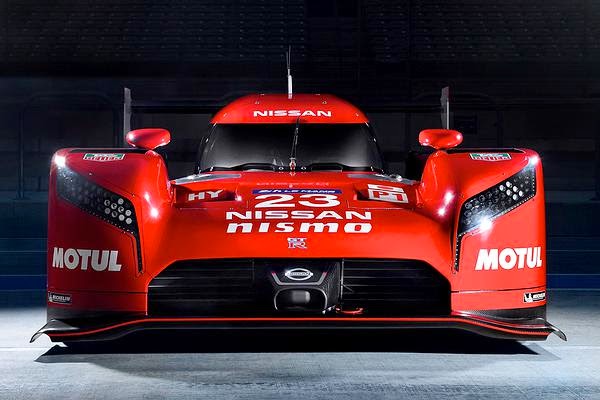
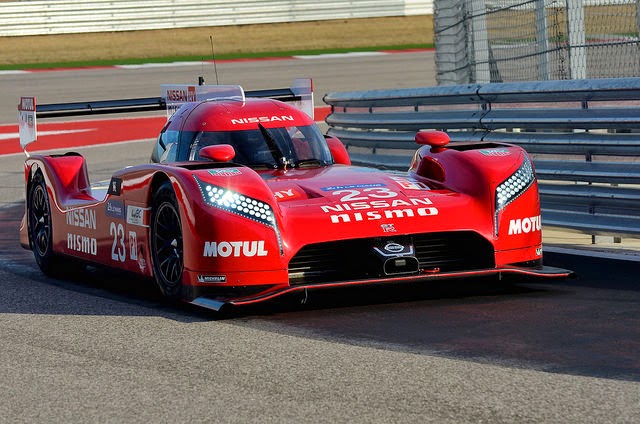
    This is the Nissan NISMO entry to the 2015 Le Mans 24 Hour race, the GT-R LM NISMO.

    The GT-R LM NISMO is a front-engined, front wheel drive car that is powered by a V6 3-litre twin turbo petrol engine and a kinetic energy recovery system- It is the ultimate GT-R.

    Some info on the Nissan LMP1:

  • 3.0ltr Twin Turbo charged V6 based on GTR engine.
  • Front wheel drive which is driven by GTR engine.
  • 8 megajoule energy storage.
  • Narrower rear tires than the front.
  • Front torque vectoring system which controls the front wheel drive system controlling how much power can go to each wheel.

    Nissan has yet to announce how retrieved energy is stored, but it is understood that it is a flywheel system.

  • Track debut for 2015 Porsche 919 Hybrid

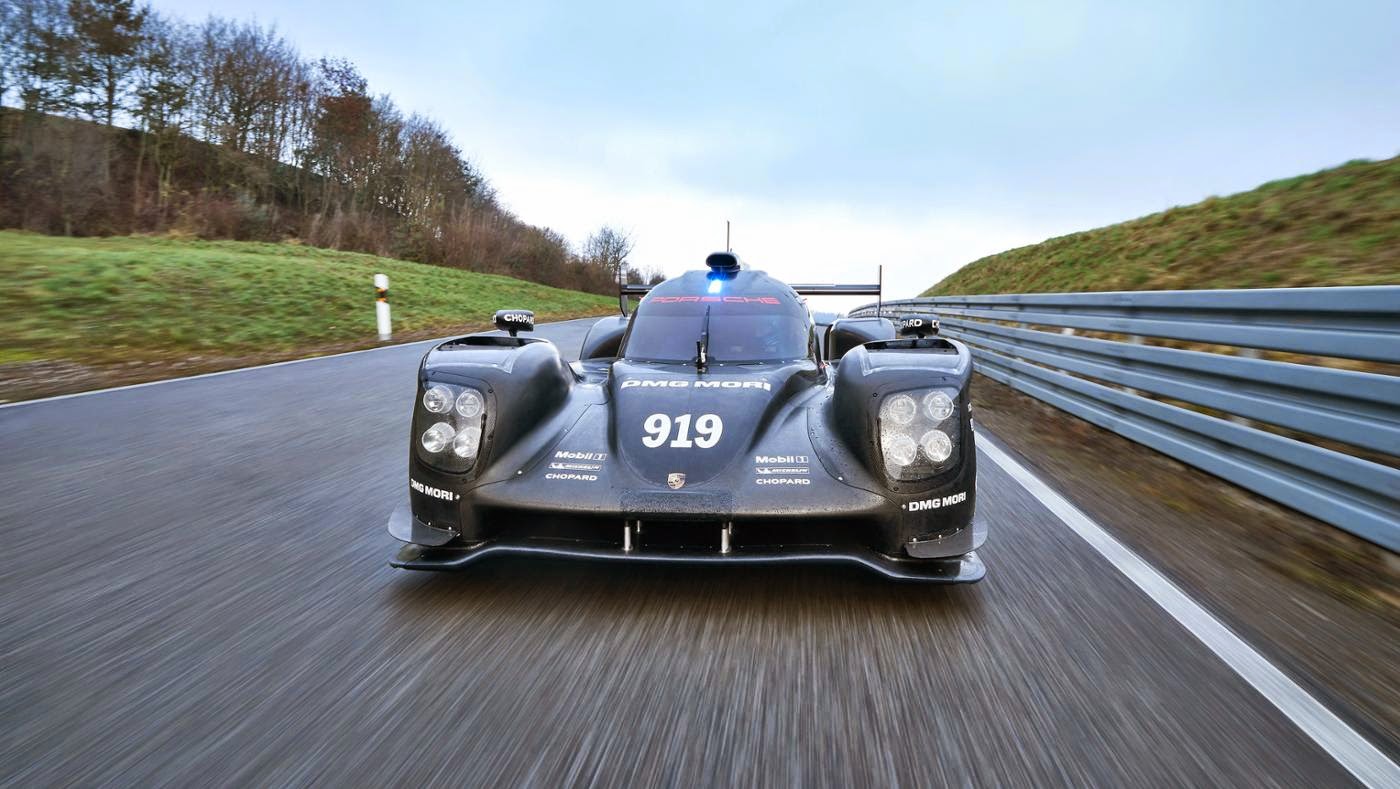
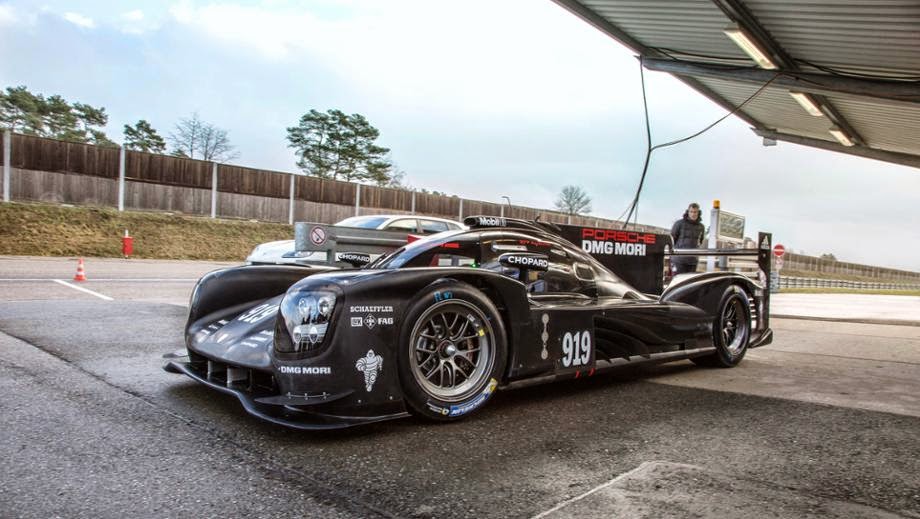
    Extensive testing with the second generation of Porsche’s Le Mans prototype began on January 18, on Abu Dhabi’s Yas Marina Circuit. As scheduled, this marks the start of the 2015 motorsport season for the Porsche Team. The new Porsche 919 Hybrid has already had its roll-out on the Weissach test track. As a next step, there will be several performance and endurance tests before the WEC season opener on April 12 in Silverstone, Great Britain.

    The new Porsche 919 Hybrid is a comprehensive evolution of the successful car that made its debut in 2014. It will feature the same innovative drivetrain concept consisting of a 2-litre V4 turbocharged petrol engine, an electric motor powering the front wheels, and two energy recovery systems. The new generation car had its first roll-out on December 15, 2014.

    Stohl Racing reveal Peugeot 207 S2000 AWD Electric Rally Car

    Stohl Racing surprised at the Motor Show in Essen. The Austrians transplant two electric motors in a Peugeot 207 S2000 and have been approved for use in special stage rallying.

    The Peugeot S2000 built by Manfred Stohl is all-wheel-drive via 2x electric motors with a maximum output of 400 kW (544 hp), more impressive is the torque of a whopping 880 Nm which, typical of electric motors, comes on immediately. Zero to 100 km/h takes only 3.0 seconds despite a weight of 1,500 kg.

    A highlight is the installation of the battery, which is located between the driver and passenger. This is installed in a special cage construction, but can be changed in service in just five minutes. This is made possible through a specially designed trailer mounted lift.

    The range of the electric-S2000 as usual depends on the driving style. Stohl Racing has calculated approx 30 kilometers range with a subsequent return to the Service to change the battery. The rally-e Stohl Mk1 will premiere in the state rally championship soon.

    ELMOFO enter final round of the 2014 Australian eFXC Superbike Race Series

    ELMOFO will have an entry in the last round of the 2014 Australian eFXC Superbike Race Series this weekend in the form of a recently purchased Brammo Empulse TTX.

    This particular bike has enjoyed a lot of success in the US in the hands of Eric Bostrom. Elmofo will have local pro-rider Simon Galloway to race the bike in an effort to promote Brammo production bikes in Australia.

    There should be a good mix of bikes at the final round at Eastern Creek including some modified production along with some super-high-powered privately built bikes.

    Swiss electric car sets acceleration World Record

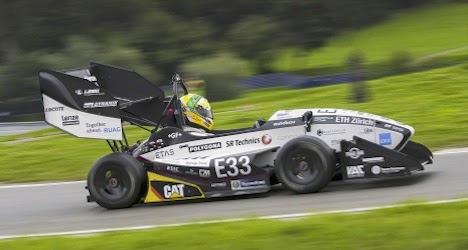
    An electric racing car developed by students at ETH Zurich and the Lucerne University of Applied Sciences and Arts on Monday set a world record for acceleration, the universities announced.

    The “grimsel” car sped from zero to 100 kilometres an hour in just 1.785 seconds, at a military airport in Dübendorf in the canton of Zurich, smashing the the previous record.

    The previous record of 2.13 seconds was set by Delft University of Technology in the Netherlands.

    Operated by a student team from the Academic Motorsports Club Zurich (AMZ), The grimsel car, reached a speed of 100 km/h in less than 30 metres, ETH Zurich, the Swiss Federal Institute of Technology, said in a news release.

    Thirty students from the two swiss universities developed and built the racing car in less than a year.

    Weighing just 168 kilograms, the carbon-fibre vehicle generates 200 horsepower through four-wheel drive, ETH said.

    Four specially designed wheel hub motors create a total torque of 1,630 Newton metres (Nm), with torque distribution controlled individually for each wheel to maximize acceleration, the university said.

    AMZ was founded in 2006 ivy ETH students and produces a prototype racing car to compete in various student formula competitions in Europe every year.

    The grimsel car will be presented to the public at “Student Power Day” on November 9th at the ETH Hönggerberg campus, with test rides planned between noon and 2pm.

    Mitsubishi Outlander PHEV to enter 2014 Australian Safari

    Mitsubishi’s top selling Outlander PHEV plug-in hybrid electric vehicle is set to tackle a new frontier when it takes on one of the toughest off-road events in outback Australia next month.

    With technical support from Mitsubishi Motors Australia (MMAL), Team Mitsubishi Ralliart Australia (TMR Australia) will enter a plug-in hybrid Outlander PHEV in the iconic Australasian Safari, which takes place in Western Australia from 19-27 September.

    It will be the first plug-in hybrid four-wheel drive officially entered in an Australian motorsport event – including the Safari, which is considered one of the most demanding off-road endurance rallies in Australia.

    Experienced local driver and co-driver team of Steve Glenney and Bernie Webb will put the TMR Australia petrol electric Outlander PHEV through its paces during the nine-day outback event.

    The Outlander PHEV will compete in class A1 for production vehicles, in a category specially created for hybrid or dual powered vehicles.

    TMR Australia’s Australasian Safari entry marks the third international off-road rally outing for an Outlander PHEV since its launch in late 2012. Previously, the Outlander PHEV’s all-terrain performance and durability have been tested in the Thailand, Cambodia Asia Cross Country Rally, which the Mitsubishi SUV successfully completed in 2013 and 2014.

    TMR Australia Outlander PHEV Safari Team Principal Alan Heaphy said the Australasian Safari is a challenging event that demands stamina and endurance from competitors and vehicles alike.

    “We’re very excited about building the first plug-in hybrid to compete in the Australasian Safari,” he said.

    “The Outlander PHEV showcases the latest Mitsubishi hybrid and four-wheel drive technology, making it an ideal platform for an entry in the Australasian Safari.

    “From our long-term experience working with Mitsubishi products, the quality of engineering and technology is a good match for motorsport, and we’re looking forward to proving the Outlander PHEV’s durability and technology in genuine off-road conditions.”

    Competing in Australasian Safari production class A1, the Outlander PHEV will be built to meet FIA specification with only minor modifications made for durability and safety.

    To help it withstand the punishing conditions, the Outlander PHEV will have extra underbody and frontal protection, reinforced suspension arms and strut towers along with competition brake pads, rally tyres and springs with adjustable dampers for added strength and durability.

    The Mitsubishi Outlander PHEV is the world’s first plug-in hybrid SUV. It uses Mitsubishi Motors’ advanced electric vehicle technology by combining a 2.0L MIVEC petrol engine with high output 60kW twin front and rear motors, high capacity 12kWh drive battery and regenerative braking system for maximum efficiency and performance.

    Mitsubishi Motor Company will support the TMR Australia Outlander PHEV Safari entry by sending three plug-in hybrid specialist engineers to Western Australia for technical assistance during the gruelling seven day event, which will cover more than 2,500 competitive kilometres through sand, salt plains, dry river beds and rugged desert tracks.

    The 2014 Australasian Safari concludes in Kalbarri – 600 kilometres north of Perth – on Saturday 27 September.

    WORLD FIRST: Electric Racer beats field of petrol powered cars.. twice

    With less than 4 weeks to go until the inaugural FIA Formula E race in Beijing China, an electric race car in Australia has already made history.

    In what is believed to be a world first, a battery powered Radical SR8 entered by ELMOFO in the NSW SuperSports State Championship has become the first electric car to win a race against petrol vehicles in a sanctioned race event. To prove it was no fluke, it won twice!

    Not only did the EV win two of the three races comprising round four of the championship, held 17th August at Wakefield Park Raceway, the ELMOFO Radical, driven by Garth Walden, also set the fastest lap time for the entire meeting (57.6870 sec) beating all other categories which included Formula 3 and Sports Sedans.

    The ELMOFO Radical is similar in concept to the current Nürburgring EV lap record, the TMG EV P001 built by Toyota Motorsport GmbH and the TMG EV P002 modified by TOYOTA Racing Development U.S.A. to tackle Pikes Peak in 2013.

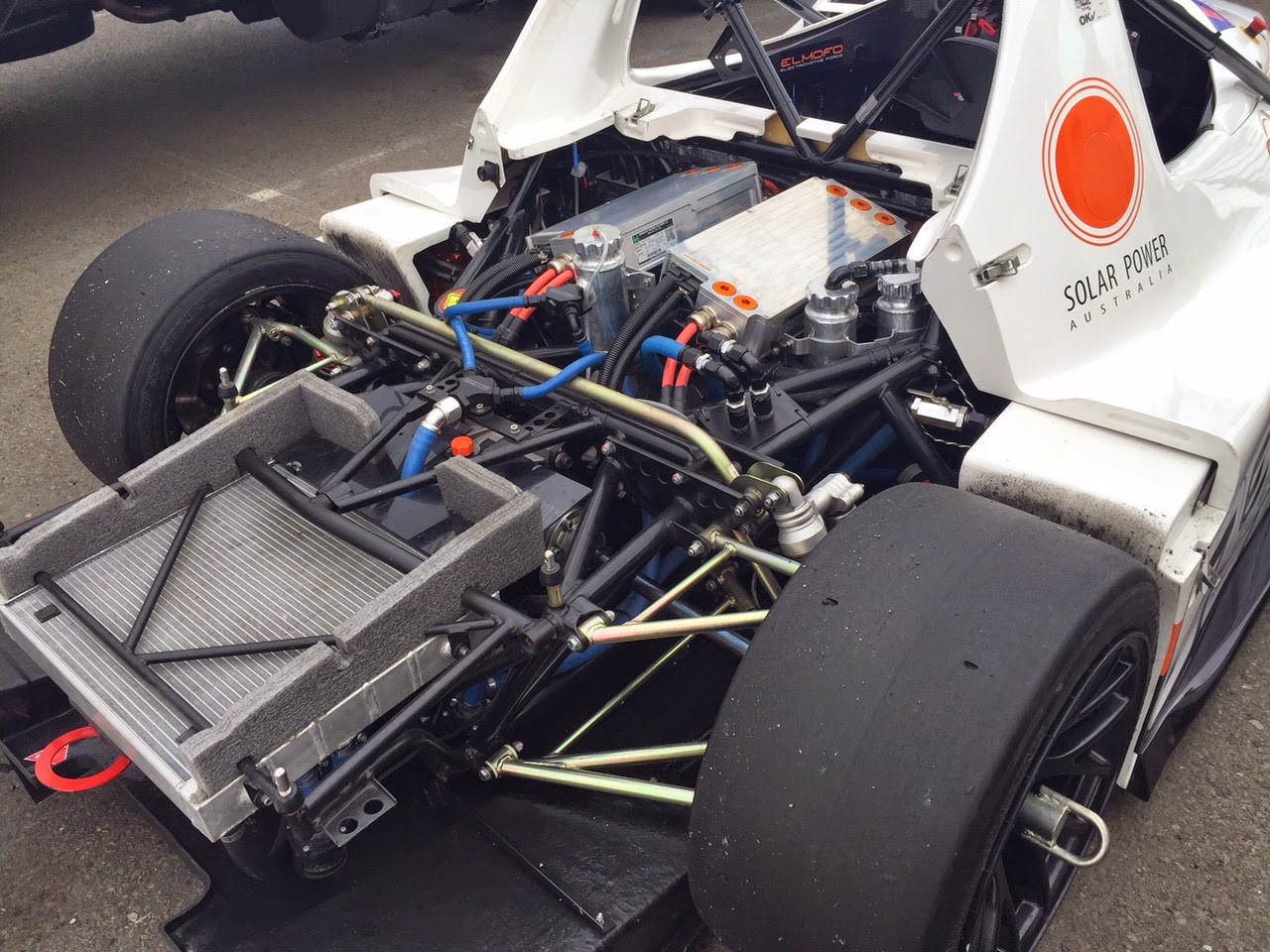
    The race winning electric Radical SREV was built by Newcastle based Solar PV systems firm Solar Power Australia. The car delivers 280 kw (375 hp) and 570 Nm (428 ft-lbs) of torque almost instantly from its twin sequential BLDC motors. Power is controlled by dual Rinehart Motion Systems inverters which are fed voltage from a 37 kWh lithium ion battery pack controlled by a Batrium BMS. Power is transmitted to the rear wheels via a single speed limited slip differential. Performance specs for the all-electric racer, built on a Radical SR8 chassis, include 0 to 100 km/h (62 mph) in 3.5 seconds, 0 to 160 km/h (100 mph) in 6.5 seconds with a top speed of 265 km/h (165 mph).
    The 2014 CAMS NSW SuperSports Championship is mostly a one-make series for Radicals, with a couple of Stohr WF1 single seaters also contesting the series. The ELFOMO team have worked hard over the previous three rounds to debug the car and the wins are a just reward for achieving solid reliability. Since the beginning of the season the car has demonstrated it had raw speed by routinely qualifying on the front row of the grid. In only round 4 of the championship the battery powered racer dominated from the front with Walden blasting well ahead of the pack for the first 4 or 5 laps and then backing off a little to preserve the car.
    The ELMOFO team would like to thank Rinehart Motion Systems, AM Racing, Batrium, Garth Walden Racing, Royal Purple and the Supersports Racecar Club Committee who have been very supportive of the car, scheduling some races of a length that the battery powered vehicle could complete to ensure it’s inclusion in the series.