With the FIA having put the World Endurance Championship live TV coverage behind a pay-wall for 2014, we are indeed fortunate that enthusiastic Youtubers are willing to upload the entire 6 hours for those of us who prefer free TV.
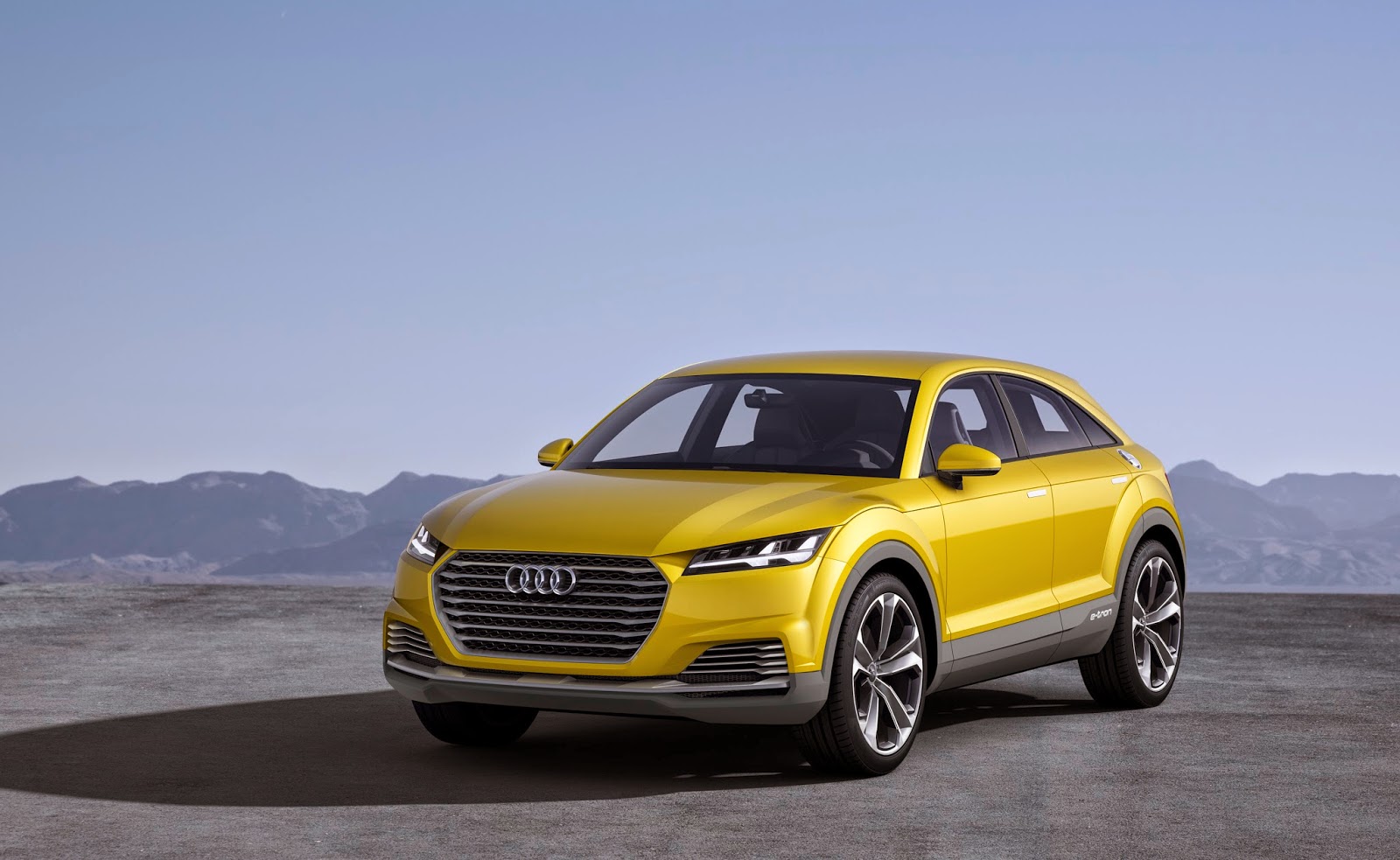
Audi unveil TT plug-in hybrid SUV concept car
The Audi TT offroad concept breaks the mold, combining the sportiness of a coupe with the lifestyle and utility of a compact SUV. The four-door model, which Audi is presenting at the Beijing International Automobile Exhibition, adds an entirely new expression to the Audi design language. Its plug-in hybrid drive with two electric motors and a system output of 300 kW (408 hp) provides for dynamic performance, yet consumes on average just 1.9 liters of fuel per 100 kilometers (123.8 US mpg).
“The Audi TT offroad concept provides a glimpse of how we might imagine a new model in the future TT family,” says Prof. Dr. Ulrich Hackenberg, Member of the Board of Management for Technical Development. “It combines the sporty genes of the TT with the strengths of a compact Audi SUV. Its plug‑in hybrid drive with the option of inductive charging is a major step toward the mobility of the future. We chose to present the Audi TT offroad concept in China, our second domestic market, because it represents the urban mobility of tomorrow: It is sustainable, dynamic, intelligent and connected.”
The plug-in hybrid drive
The plug‑in hybrid drive in the Audi TT offroad concept delivers 300 kW (408 hp) of system output and 650 Nm (479.2 lb‑ft) of system torque. The show car accelerates from 0 to 100 km/h (62.1 mph) in 5.2 seconds and reaches the electronically governed top speed of 250 km/h (155.3 mph) without any trouble. It consumes just 1.9 liters of fuel per 100 kilometers (123.8 US mpg), a CO2 equivalent of 45 grams per kilometer (72.4 g/mile).
The Audi TT offroad concept can drive over 50 kilometers (31.1 miles) solely on electric power and thus with zero local emissions, and has a total range of up to 880 kilometers (546.8 miles).
The combustion engine is a 2.0 TFSI producing 215 kW (292 hp) and 380 Nm (280.3 lb‑ft) of torque. The two-liter, four‑cylinder unit with the large turbocharger is packed with Audi's potent efficiency technology. At part load, indirect injection supplements gasoline direct injection for lower fuel consumption. The exhaust manifold is integrated into the cylinder head – the foundation for the high-performance thermal management system.
A separating clutch links the transverse 2.0 TFSI to an electric motor producing 40 kW and 220 Nm (162.3 lb‑ft) of torque. The slim, disc-shaped electric motor is integrated into the six-speed e‑S tronic. The dual-clutch transmissions sends the torque to the front wheels. Mounted on the rear axle of the Audi TT offroad concept is a second electric motor independent of this drive unit. This produces a maximum of 85 kW and 270 Nm (199.1 lb‑ft).
In front of the rear axle is a liquid-cooled, lithium-ion battery comprising eight modules. It contributes to the balanced 54:46 weight distribution between the front and rear axles and to the low center of gravity. The battery stores up to 12 kWh of energy, enough for an electric range of 50 kilometers (31.1 miles). An Audi wall box, which manages the energy feed conveniently and intelligently and can deal with a variety of voltages and outlets, is used for stationary charging.
The show car is also designed for use with Audi Wireless Charging technology for contactless inductive charging. The infrastructure side – a plate with a coil and an inverter (AC/AC converter) – is placed on the parking spot of the Audi TT offroad concept and connected to the power grid. The charging process begins automatically when the car drives onto the plate. The alternating magnetic field of the infrastructure side induces a 3.3 kW alternating current across the air gap in the secondary coil, which is integrated into the vehicle. The current is inverted and fed into the electrical system.
Charging stops automatically when the battery is fully charged. It takes about as long as charging via a cable, and the driver can interrupt the process at any time. The Audi Wireless Charging technology is more than 90 percent efficient, and is not affected by weather factors such as rain, snow or ice. The alternating field, which is only generated when a car is on the plate, is not harmful for people or animals.
The intelligent plug‑in hybrid concept of the Audi TT offroad concept really shines when driving, making the show car every bit as efficient as it is sporty. The Audi drive select management system offers three driving modes. EV mode gives priority to electric driving. In this case, the front drive unit is inactive, and the electric motor at the rear axle with its powerful torque can rapidly accelerate the four‑door car to a maximum of 130 km/h (80.8 mph). In Hybrid mode, all three drives work together in various ways as necessary. In many situations the front electric motor assumes the role of a generator.
Powered by the engine, it recharges the battery and thus extends the electric range. Full system output is available in Sport mode. During “boosting,” i.e. strong acceleration, the rear electric motor works together with the 2.0 TFSI. The same thing happens when the hybrid management system decides that all‑wheel drive is appropriate. In such situations, e.g. on a slippery road or in light off-road conditions, this essentially makes the Audi TT offroad concept an e‑tron quattro.
When the driver takes his or her foot off the accelerator, free-wheeling or “coasting” is activated. Recuperation occurs here at low speeds and when braking. The driver can use the “Hold” and “Charge” functions in the MMI system to specifically influence the battery's charge state, e.g. to increase storage of electric energy so that it can be used over the final kilometers to the destination.
Chassis
The Audi TT offroad concept shows its strong character on any road surface and in any terrain. On asphalt the show car is sporty and composed, and it can easily handle light terrain thanks to its high ground clearance, short overhangs and e‑tron quattro all-wheel drive. 255/40-series tires are mounted on 21‑inch wheels, whose delicate five-arm design draws on the look of the Audi e‑tron models. Dark trim provides contrast.
Many of the components of the McPherson front suspension are made of aluminum; the four‑link rear axle handles longitudinal and transverse forces separately. The ratio of the progressive steering changes with the steering input. The Audi drive select system allows the driver to modify the function of various technical modules in multiple steps.
Driver assistance systems
The Audi TT offroad concept show car features two Audi driver assistance systems that are almost ready for production: the intersection assistant and online traffic light information technology. The intersection assistant aims to help to avoid side-impact collisions, or reduce their severity, where lanes merge and at intersections. Radar sensors and a wide-angle video camera scan zones to the front and sides of the car. If the system detects a vehicle approaching from the side and assesses it to be critical, graduated warnings are displayed in the Audi virtual cockpit.
Online traffic light information is a technology that connects the Audi TT offroad concept via the cell phone network to the central traffic computer, which controls the traffic light systems in the city. Based on the information from this system, the Audi virtual cockpit shows the driver what speed to drive in order to reach the next traffic light while it is green. The cockpit displays the time remaining when waiting for the light to turn green.
New Record: 431 EVs in the quietest parade in the world
The Québec electric-car group has set a new world record for plug-in electric cars gathered in one place.
431 battery-electric and plug-in hybrid cars gathered in a car park near the Jacques Cartier Bridge along the Saint Laurence River, in Montréal Canada.
The cars included not only the usual Nissan Leaf, Chevrolet Volt, Mitsubishi i-MiEV, and Ford Focus, but also a variety of other plug-in vehicles including a VIA V-Trux Plug-in Hybrid truck, a BlueCar Bolloré (the car in car-sharing AutoLib Paris' ), a Porsche EV conversion and hundreds of Tesla S and Roadster,
They also consider applying for the world's quietest parade!
Source: AVEQ
BMW Powers Up with Concept X5 eDrive Plug-In Hybrid
The new BMW X5 has already raised efficiency to a whole new level in the world of the luxury Sports Activity Vehicle (SAV). BMW is using the New York International Auto Show 2014 to present what it sees as the logical next step towards bringing about a radical reduction in fuel consumption and emissions in the SAV segment.
The BMW Concept X5 eDrive succeeds in fusing the familiar brand of driving pleasure generated by the xDrive intelligent all-wheel-drive system and a luxurious ambience enshrined within an interior offering tremendous versatility of use with a plug-in hybrid drive system. A conventional combustion engine works together in perfect harmony with the cutting-edge BMW eDrive technology to produce the brand's hallmark sporty drive coupled with a significant reduction in fuel consumption, making it an impressive example of the effectiveness of the BMW EfficientDynamics development strategy. As a result, the car is able to drive on electric power alone at speeds of up to 120 km/h (75 mph) and for a distance of up to 30 kilometres (approx. 20 miles), while recording average fuel consumption figures of less than 3.8 l/100 kilometres (more than 74.3 mpg imp) in the EU test cycle.
The concept study underwent a series of detailed refinements in preparation for its appearance at the New York International Auto Show and is equipped with a drive system comprising a 180 kW/245 hp four-cylinder petrol engine with BMW TwinPower Turbo technology and a 70 kW/95 hp electric motor likewise developed by the BMW Group. The motor is supplied with power from a lithium-ion battery that can be charged from any domestic socket and has sufficient capacity to enable all-electric driving with zero local emissions for a range of up to 30 kilometres (approx. 20 miles). To ensure a particularly high level of crash safety, the high-voltage battery developed for the BMW Concept X5 eDrive is housed underneath the luggage compartment, whose everyday usability remains virtually uncompromised thanks to the 40:20:40 split-folding rear backrest and an almost level loading floor.
In addition to the settings that can be activated using the characteristic BMW Driving Experience Control switch, three driving modes can be selected according to requirements and the situation at hand: intelligent hybrid drive with an optimal relationship between sportiness and efficiency (AUTO eDrive), pure electric and thus local emission-free driving (MAX eDrive) and SAVE Battery to maintain the current charge level.
Majestic poise at its most sophisticated: dynamic, flexible, luxurious, plus zero local emissions if required.
Thanks to the BMW eDrive technology that has been specifically honed for this model as part of the BMW EfficientDynamics strategy, the concept car brings a whole new brand of poise and assurance to the SAV segment. The formidable power reserves produced by its duo of drive units, its outstanding levels of motoring comfort and the optimised traction, handling stability and dynamic performance qualities over any terrain courtesy of BMW xDrive technology all endow it with the all-round sporty prowess typically associated with BMW X models, while its landmark efficiency blazes a trail for its rivals to follow. The ability to operate purely on electric power with zero local emissions, especially in city traffic, puts a whole new slant on the SAV driving experience that shows the shape of things to come. At the same time, the plug-in hybrid drive concept does not impinge in any way on the exemplary versatility offered by the Sports Activity Vehicle's interior or its distinctly luxurious ambience. In short, the BMW Concept X5 eDrive shows itself to be supremely talented in every way, deftly bringing major advances in cutting fuel consumption and emissions into harmony with state-of-the-art functionality and everyday practicality that never fails to impress.
A number of understated styling touches have been meticulously incorporated into the exterior design to underline the groundbreaking character of the BMW Concept X5 eDrive. The kidney grille bars, air intake bars and the insert in the rear bumper are all finished in the BMW i Blue colour developed for the BMW i brand, for instance, creating a stunning contrast to the Silverflake metallic exterior paintwork. The BMW Concept X5 eDrive also comes with body-coloured wheel arches, specially styled roof rails, a connector for the charging cable which – as on the BMW i models – lights up during charging, as well as 21-inch light-alloy wheels in an exclusive, streamlined design.
To make sure that the styling of the luxurious passenger compartment echoes the highly sophisticated drive concept, light blue double-felled seams adorn the Ivory White exclusive leather upholstery covering the seats, door trim panels and dashboard. Further highlight features of the specially designed interior include the Piano Finish Black interior trim with blue accent strips, "eDrive" lettering embossed in the front of the headrests, ambient lighting with a blue hue, and an eDrive button that is also illuminated in blue. In the luggage compartment lined in black velour, a transparent cover – again illuminated in blue – affords a clear view of the high-voltage battery for the electric motor.
BMW eDrive in a Sports Activity Vehicle: intelligent hybrid technology promises outstanding efficiency and hallmark driving pleasure.
Electrification of the powertrain is a key component of BMW EfficientDynamics technology and allows BMW to unlock tremendous potential for reducing fuel consumption and emissions. The BMW eDrive technology developed for this purpose comes in various versions, each precisely tailored to the particular vehicle concept. Both the BMW i3, the first all-electric production vehicle from the BMW Group, and the soon-to-be-launched BMW i8 plug-in hybrid sports car are powered by BMW eDrive technology. The BMW Concept X5 eDrive now follows in the tyre tracks of the BMW Concept Active Tourer unveiled in 2012 by demonstrating how model-specific BMW eDrive technology can be employed in plug-in hybrid models from the BMW core brand.
This is the first time that BMW eDrive technology has been hooked up with the BMW xDrive intelligent all-wheel-drive system. The BMW Concept X5 eDrive boasts the superior driving characteristics that stem from the permanent and fully variable distribution of drive power between the front and rear wheels. Regardless of the selected driving mode, the drive power generated by the electric motor, the combustion engine or the two units acting in unison is channelled swiftly and precisely to wherever it can be converted into forward propulsion most effectively. This allows the concept study to deliver all the qualities that SAVs are renowned for – superb traction and optimised handling stability in all weather and road conditions coupled with enhanced agility when taking corners at speed – in remarkably efficient fashion. The highly versatile and sporty driving abilities of the BMW Concept X5 eDrive are accompanied by average fuel consumption in the EU test cycle of less than 3.8 l/100 km (more than 74.3 mpg imp) and CO2 emissions of under 90 grams per kilometre.
Both driving pleasure and efficiency in the BMW Concept X5 eDrive are given an extra boost by an electric motor generating a maximum output of 70 kW/95 hp together with the instantaneous power delivery that has become a hallmark of electric drive units thanks to the high levels of torque available from the word go. The electric motor variant developed for the BMW Concept X5 eDrive as part of the BMW EfficientDynamics strategy also boasts sporty performance credentials, a compact design and optimised weight. The electric motor alone is capable of propelling the BMW Concept X5 eDrive to a top speed of 120 km/h (75 mph). With 250 Newton metres (184 lb-ft) of torque on tap from stationary, it gives the vehicle wonderfully spontaneous response that translates into thrillingly dynamic acceleration. It also works in tandem with the combustion engine to boost its power significantly whenever a quick burst of speed is called for. The BMW Concept X5 eDrive is able to complete the standard sprint from rest to 100 km/h (62 mph) in under 7.0 seconds.
The task of ensuring the engine and electric motor team up together to optimum effect is handled by the power electronics that were developed by the BMW Group and apply the same basic concept used in the BMW i cars. The power electronics combine a liquid-cooled inverter for driving the electric motor, supplying energy to the onboard electrical system from the high-voltage battery and for centralised control of the hybrid-specific drive functions into a single integrated system.
ECO PRO mode and all-electric driving: BMW EfficientDynamics
As in other members of the current BMW production line-up, the Driving Experience Control switch in the BMW Concept X5 eDrive can be used to select not only the COMFORT and SPORT settings but also the ECO PRO mode that fosters a particularly economical driving style. This driving mode is programmed for highly intelligent hybrid functionality, whereby the energy management system orchestrates the interaction between engine and electric drive unit as the driving situation changes in order to maximise efficiency. As a further component of the BMW EfficientDynamics technology, a hybrid-specific Proactive Driving Assistant has also been included, which works together with the navigation system to allow the route profile, any speed restrictions and the traffic situation to be factored in as well for the purpose of drive management.
In addition to this, the driver also has the option of engaging the all-electric driving mode by switching from AUTO eDrive to the MAX eDrive setting at the push of a button. With the battery fully charged, the vehicle is able to cover a distance of up to 30 kilometres (approx. 20 miles) on electric power alone, which means zero local emissions. There is also a SAVE Battery mode, which can be selected to deliberately preserve the battery's energy capacity. This might be the case, for example, if a longer journey is due to end with a final stage through urban traffic that drivers wish to complete in all-electric mode.
Everyday usability: flexible charging scenarios and impressive viability. In order to capitalise as much as possible on the superior efficiency of its electrified powertrain, the BMW Concept X5 eDrive is designed as a plug-in hybrid, allowing its high-voltage battery's energy levels to be renewed from any domestic power socket, a special Wallbox that can handle higher currents, or at a public high-speed charging station. The Wallbox Pro is designed for installation in the customer's garage and offers complete ease of use as well as exceptionally short battery recharging times, thanks to a maximum charging rate of 7.4 kW. It is controlled by means of a high-resolution touchscreen including proximity sensor, while LED light strips provide an additional indication of the charge status. The built-in load management facility governs the charging current in accordance with the current draw on the household electricity supply. The Wallbox Pro even makes it possible to use home-generated electricity, such as that obtained from solar panels. There is also a function for creating different user profiles and displaying the respective charging histories. On request, the corresponding data can be sent online, e.g. for billing purposes.
The high degree of flexibility drivers can enjoy when it comes to choosing an energy source is given an added boost by the charging cable that is carried in the vehicle. The battery unit is located underneath the luggage compartment, so that there is only a small loss of load capacity overall – the luggage compartment is able to hold two large suitcases or four 46-inch golf bags. The SAV's excellent versatility – helped by the 40:20:40 split-folding rear backrest – has been fully retained, along with its ample sense of spaciousness and the impressive level of comfort offered to the occupants of all five seats.
Intelligent connectivity for yet greater efficiency.
Innovative functions from BMW ConnectedDrive assist with planning journeys in such a way as to maximise the amount of time spent driving on electric power alone. In the BMW Concept X5 eDrive, the current electric range thus appears as a numerical value in the instrument cluster. Intelligent connectivity enables the vehicle's dynamic range display to constantly make allowances for any factors affecting the range, such as traffic conditions, route profile and driving style.
When route guidance is activated, the location of local charging stations is added to the selection of points of interest shown on the navigation map. Drivers are able to call up charging stations situated along the planned route or at their destination, while the system additionally notifies them of the charging time needed to fully replenish the battery's energy levels. Furthermore, information graphics indicating the current operating status when engine and motor work together in unison, the impact of the driving style on vehicle efficiency and the fuel consumption history for selected periods of time can be shown in the iDrive operating system's Control Display, along with other information.
Drivers are also able to view all information relating to the battery's charge level and electric driving range on their smartphone. A Remote app from BMW ConnectedDrive that has been specially designed with electric mobility in mind even enables them to control the charging process from their phone. It also allows the vehicle to be pre-programmed whenever it is connected to an electricity supply: the heating and air conditioning systems can be activated remotely in this way to get the passenger compartment to a pleasant temperature ready for the start of the journey.
BMW-Toyota sports car to use all-wheel drive and supercapacitors
BMW's newly minted alliance with Toyota will result in a hybrid all-wheel-drive Z4 / Supra replacement, complete with supercapacitor technology for increased performance, Autocar reports.
The car will have a front-engined direct-injection four cylinder turbo and electric motors driving all four wheels. The supercapacitor system will be derived from technology first seen in Toyota's Hybrid Supra HV-R in 2007 when it won the Tokachi 24 hour race and more recenly Toyota's Le Mans LMP1 race cars.
BMW will supply the 2.0 liter turbocharged engine combined with electric motors produced by BMW at its engine plant in Munich while a Toyota-developed electronics system is expected to provide torque-vectoring capability.
With the car expected to have a front mounted engine and sequential manual gearbox in a conventional longitudinal powertrain layout it will be interesting to see what type of electric motors BMW deploy to drive the front wheels, perhaps in-wheel motors?
1,000-hp AWD hybrids to dominate 2014 Le Mans
There's no more popular saying in the world of motorsport than "racing improves the breed". Although in most cases, most racing series require strict rules on technology to keep races competitive and costs down, that's rarely the case.
The one place where automakers still push the limits of technology? The 24 Hours of Le Mans, which this year will feature three machines from Toyota, Audi and Porsche that offer radically different paths to cars of the future — hybrid, all-wheel-drive ones at that.
The favorite comes from Audi; they've won 12 times at Le Mans since 2000, and in one of the two races it didn't win the Audi machinery still won under the Bentley brand. The R18 e-tron quattro the company drove through the streets of western France earlier this week features the latest changes to the winning strategy, with a 4-liter, turbocharged V-6 diesel engine paired with a flywheel hybrid system for maximum fuel efficiency. That flywheel powers the front wheels, and a second system recaptures energy from the heat of the exhaust.
Toyota has been attempting to challenge Audi in endurance racing for a few years, making some progress and winning a couple of races, but never breaking through the German automaker's dominace. For this year's TS040 model, Toyota revised its entire system, adding a front-wheel-drive to the 3.7-liter V-8 supercapacitor powered hybrid from last year. In total, Toyota says the setup can generate nearly 1,000 hp, while using 25 percent less fuel than last year's vehicles as required by Le Mans rules for 2014.
The most interesting new model comes from Porsche, which hasn't raced in the top class at Le Mans for 16 years. The 919 Hybrid combines a battery pack and Formula 1-style hybrid energy system similar to what Porsche uses in the 918 supercar with a turbocharged V-4 engine — a configuration chosen to save weight and space. Porsche executives call the 919 the most complicated machine the company has ever built, and despite living under the same Volkswagen corporate roof as Audi, there's no apparent sharing between teams or slack in competition.
Audi to build A6 E-Tron Plug-In Hybrid In China
Together with its Chinese joint-venture partner FAW, Audi is to launch a plug-in hybrid car for the Chinese market. The Audi A6 e-tron will be based on the long-wheelbase version of the Audi A6, which is already produced in China, and will be specially developed for the most important market of the German premium manufacturer.
"We are shaping the future of electric mobility in China," stated Prof. Rupert Stadler, Chairman of the Board of Management of AUDI AG. The efficient full-size sedan with a 50-kilometer range when operating solely under battery power is to be produced within the joint venture by FAW-Volkswagen in Changchun in northern China.
Zhang Pijie, President of FAW-Volkswagen: "Audi and FAW have been cooperating closely for more than 25 years. Together, we have built up the premium segment in China. Now we are cooperating on the next generation of automobiles." The two types of drive system of the plug-in hybrid technology offer customers emission-free driving with electric drive and unlimited range with the additional combustion engine.
The Audi A6 e-tron is equipped with the latest battery technology and represents another milestone in Audi's efficiency program in China. The Audi Group is pushing ahead with its activities in the area of electric mobility under the Audi e-tron heading. The focus is on a holistic approach. All systems and components are coordinated to work together optimally. This allows Audi to further reduce its cars' CO2 emissions and creates a basis for CO2-neutral mobility.
The brand with the four rings is the first manufacturer to equip all of its models produced locally in China with efficient start-stop technology and kinetic energy recovery systems. Audi was already a pioneer in 2012 with the integration of lightweight components in local production. Since the beginning of the efficiency program with FAW-Volkswagen in 2011, Audi has reduced the average fuel consumption of the models it produces in China by more than 20 percent.
"We are the market leader in China's premium segment and will continue systematically with the application of efficiency technologies. Audi is thus supporting the Chinese government's targets for the reduction of fuel consumption," stated Dr. Dietmar Voggenreiter, President of Audi China and Head of the China Region at AUDI AG. Starting this year, the company produces engines complying with the efficient Euro 6 standards in Changchun. Audi already offers its Chinese customers a wide range of imported hybrid models (the Audi Q5 hybrid quattro*, Audi A6 hybrid* and Audi A8 L hybrid*). The Audi A3 e-tron* plug-in hybrid will also come to China.
Strict efficiency criteria apply to the construction and operation of Audi's new factory with FAW-Volkswagen in Foshan, southern China. This is where the Audi A3 Sportback* is produced, which had its market launch on March 21. The Audi A3 Sedan* from Foshan will follow before the end of this year. In 2013, the brand with the four rings delivered 491,989 cars in China (including Hong Kong), an increase of 21 percent compared with 2012.
Porsche 919 Hybrid Le Mans Prototype at Paul Ricard [VIDEO]
Bentley unveil plug-in hybrid concept
Bentley is envisioning a powerful and even more efficient Future with the Bentley Hybrid Concept - a technology showcase that previews Bentley's first plug-in hybrid model, set to be a dedicated version of the all-new SUV available in 2017. The Bentley Hybrid Concept will be on display at the Beijing International Automotive Exhibition on Sunday 2Qch April.
As the first luxury brand to present a plug-in hybrid, Bentley leads the way in bringing new powertrain choice to the luxury automotive sector. Dr Wolfgang Schreiber, Chairman and Chief Executive of Bentley Motors, comments:
"There is no doubt that plug-in hybrid technology is true to Bentley's values of outstanding luxury and effortless performance. Combining our renowned engines with electric power reinforces and enhances both principles, and so we will gradually introduce this powertrain across our model range. By the end of the decade, at least 90% of our production will be available as a plug-in hybrid. We are proud to be pioneering these developments in the luxury sector."
The Bentley Plug-in Hybrid System
Through Bentley's hybrid system, customers will have a wider choice of modern, powerful and efficient powertrains. The plug-in hybrid system will offer a power increase of up to 25% together with a 70% reduction in C02 emissions, both without any compromise to the exquisite luxury, timeless design and industry-leading refinement for which Bentley has become renowned. Bentley hybrids will also be capable of driving at least 50 km on electric power alone, allowing for emissions-free city driving with the option of enhanced performance on the open road.
The Bentley Hybrid Concept
The Bentley Hybrid Concept is based on the flagship model in the Bentley family, the Mulsanne, to show that hybrid technology enhances even the pinnacle of luxury and performance. Copper is used as an exterior and interior styling element to highlight the car's electrical veins, including copper details to the headlamps, radiator shell bezel, brake calipers, feature line details and badges. Copper accents continue in the cabin, with inserts to the hand-crafted veneers fascias, switch bezels and instruments. Copper cross-stitching to the Mulliner Driving Specification diamond-quilted interior provides the Finishing flourish.
Close Look: Walmart’s Turbine Powered Hybrid Concept Truck [VIDEO]
The Walmart Advanced Vehicle Experience concept truck is the latest in their fleet efficiency program.
The one-of-a-kind prototype offers a whole package of firsts. The tractor has very advanced aerodynamics and is powered by a prototype advanced turbine-powered, range-extending series hybrid powertrain.
The trailer is made almost exclusively with carbon fiber, saving around 4,000 pounds which can then be used to carry more freight.
Toyota begin testing Yaris hybrid WRC car
Toyota are testing their Yaris WRC car this week. The Toyota Yaris WRC prototype, powered by a 1.6-litre turbocharged engine (as dictated by world rallying’s rules), built at Toyota Motorsport in Cologne, Germany will begin testing in Tuscany.
It is thought that the test car is based on a Yaris chassis but the final WRC car will be based around a new model which has yet to be launched.
Toyota wants to use hybrid technology in the World Rally Championship if it returns to the series and although the Japanese car giant has expressed an interest in returning to the WRC – in which it won four drivers’ titles and three constructors’ crowns with the Celica GT-Four and the Corolla WRC during the 1990s – it has so far stopped short of committing to a competitive return.
Mini Clubman AWD Plug-In Hybrid due late 2015
MotoringFile reports that high-level sources have confirmed the Mini Clubman Plug-In Hybrid will be all-wheel drive in at least one configuration.
The 2016 Mini Clubman Hybrid will have a 1.5L three cylinder lifted from the F56 Cooper powering the front wheels. Integrated into that will be a plug-in hybrid system (likely derived from the BMW i8) powering the rear wheels only. Think of it as the powertrain layout from the i8 reversed.
The system that BMW has shown in concept form (and has been testing for years in R55 Clubman mules) has an output of approx 140 kW / 190 hp. With a fully charged battery, the electric only range should be over 30 kilometers giving the Clubman Plug-In Hybrid the ability to be in 100% electric mode for the majority of day-to-day trips.
The Mini Clubman Hybrid will likely debut around the same time as the Clubman itself, in the second half of 2015.
Formula One: 2014 Rules Explained [VIDEO]
A new clip from Red Bull sees Daniel Ricciardo and Sebastian Vettel explain the 2014 Formula One regulations, arguably the most complex the sport has ever seen.
The CGI based Red-Bull promotional video gives a cut-away look at the new hybrid systems used this year in F1 that we covered in more detail last year.
The first race of the 2014 Formula One season is on this weekend in Melbourne Australia.
Rolls-Royce says Plug-In hybrid ‘essential’ in two years
Rolls-Royce now looks likely to adopt plug-in hybrid technology within the next three years. Chief Torsten Müller-Otvos told Auto Express at the Geneva show that “It will be essential in two years, maybe not from customer demand but through legal regulation on emissions”
With parent company BMW already working on plug-in hybrid technology that is soon to be launched on the X5 eDrive – which uses a four-cylinder turbo paired with an electric motor – Rolls-Royce could soon have access to such a powetrain. Müller-Otvos said: “We are now a completely self-sustaining business, but technology like this is so expensive to develop that without BMW, Rolls-Royce would probably not have survived.”
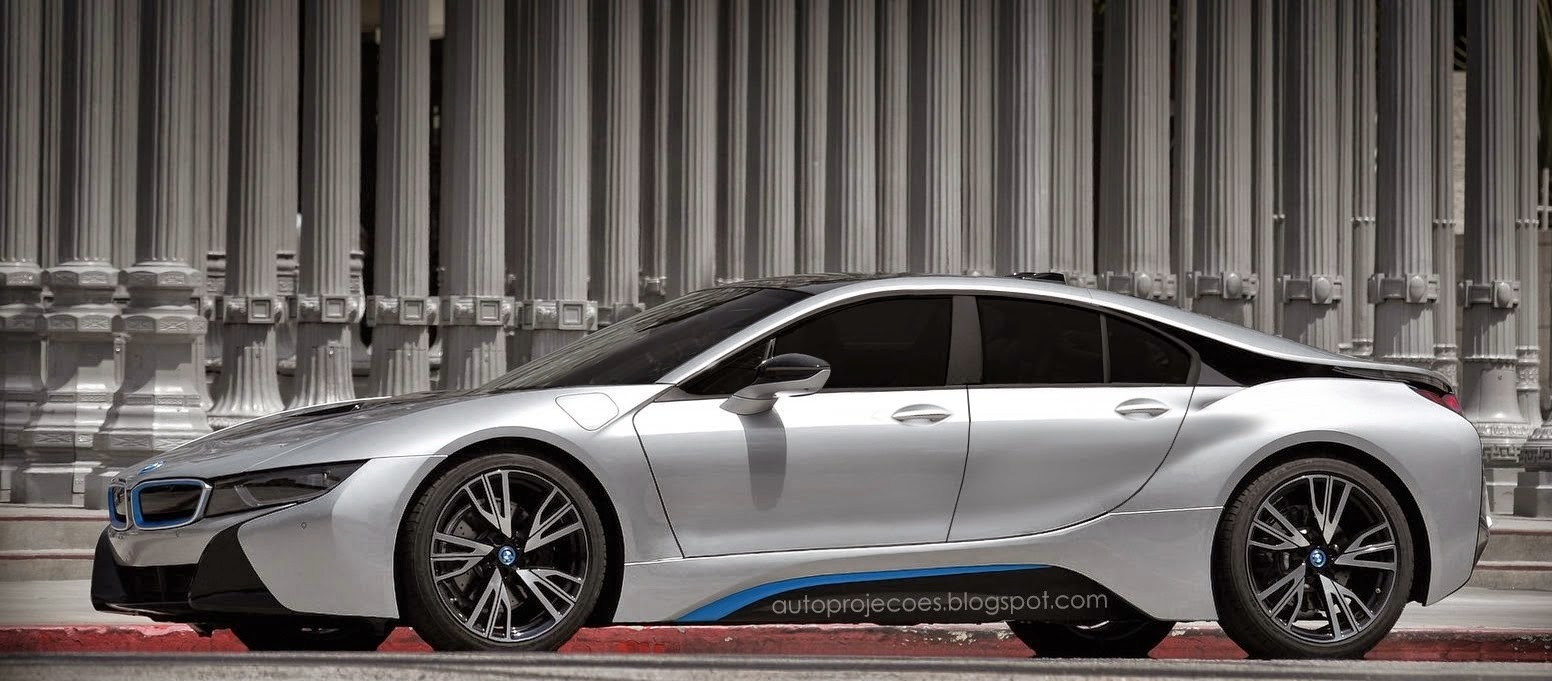
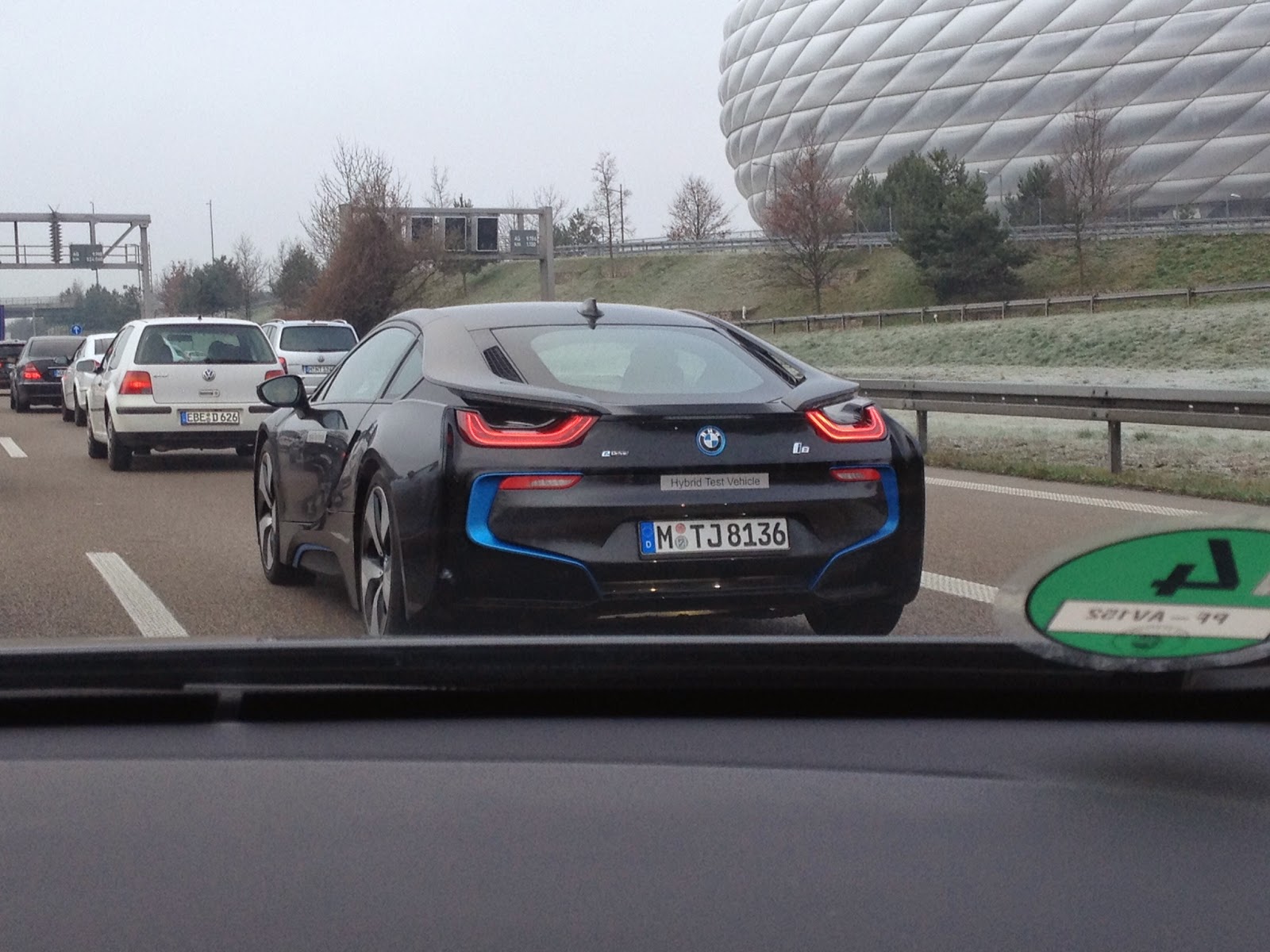
BMW i8 demand already exceeding planned production volume
With the completion of the development work and final preparations for production at the BMW Group plant in Leipzig, the launch of the BMW i8 approaches its peak. Delivery of the first customer cars will start in June 2014, beginning with the main European markets.
Beforehand, special public events will be held in various regions all over the world to meet the enormous interest in the BMW i8. For this purpose BMW i agents will be equipped with separate demonstration vehicles. The start of series production of customer vehicles will commence in April. Customers have already been able to place pre-orders for the BMW i8 in all major markets since autumn 2013.
However, demand for the BMW i8 is already exceeding the planned production volume during ramp-up.
Further improvements to the BMW i8 specifications
In parallel to the completion of the statutory type approval the BMW engineers were also able to achieve a further improvement of key driving performance and fuel consumption data. Thanks to its novel powertrain concept BMW eDrive in plug-in hybrid configuration, the i8 combines a 0–100 km/h (62 mph) sprint time of 4.4 seconds with an EU test cycle average fuel consumption of 2.1 litres/100 km (134.5 mpg imp) and CO2 emissions of 49 g/km. The related electricity consumption was measured at 11.9 kWh per 100 km .
Every-day fuel economy substantially better than all conventional sports car concepts
Although the results achieved in the EU test cycle allow for quick comparisons with other vehicles and despite their relevance for a favourable taxation in many countries, the BMW i8 engineers hat a particular focus on low fuel consumption in real life.
As a result the BMW i8 shows extraordinary efficiency not only in standardized testing procedures, but also in the practice of everyday traffic:
In typical everyday commuting, with the battery fully charged at the beginning, the BMW i8 can return a fuel consumption below 5 litres/100 km (more than 56 mpg imp) around town. If the commute includes extra-urban or motorway driving less than 7 litres (more than 40 mpg imp) are achievable.. Even in longer-distance operation at higher speeds, drivers can keep their average fuel consumption below 8 litres/100 km (more than 35 mpg imp). Overall, the fuel consumption of the plug-in hybrid model therefore works out around 50 per cent better than that of conventionally powered sports car models.
World’s first production car with laser light.
Introduction of the optional BMW laser headlights is scheduled for autumn 2014, when the BMW i8 will become the world’s first production car to offer this innovative lighting technology. BMW laser headlights are around 30 per cent more energy-efficient than the BMW i8’s standard LED headlights and provide considerably more powerful road illumination, with a range of up to 600 metres. Highly concentrated beams of light from high-performance laser diodes act on a fluorescent phosphor material inside the headlight, which projects a sharply focused beam of light onto the road. The laser headlights produce a light similar to natural daylight and are therefore always easy on the eye.
BMW eDrive: Sports car powertrain of the future.
The BMW i8’s plug-in hybrid system comprises a 170 kW/231 hp, 320 Nm (236 lb-ft) three-cylinder petrol engine with BMW TwinPower Turbo technology and a 96 kW/131 hp, 250 Nm (184 lb-ft) hybrid synchronous electric motor. The BMW eDrive system also includes a lithium-ion high-voltage battery (with a usable capacity of 5,2 kWh) and intelligent energy management that uses the combined output of 266 kW/362 hp to provide breathtaking performance and maximum efficiency, while always taking into account the driving situation and driver requirements. The excellent balance between driving pleasure and fuel economy is aided by a low vehicle weight of 1,485 kg (DIN kerb weight) and an unusually good drag coefficient (Cd) for a sports car of 0.26.
In zero-emission all-electric mode, the BMW i8 has a top speed of 120 km/h (75 mph) and a range of 37 kilometres (23 miles) within the EU test cycle. Depending on whether the plug-in hybrid sports car’s lithium-ion battery is recharged at a household power socket or BMW i Wallbox, or at a public charging station, charging times range from less than two up to three hours. In Sport mode the BMW i8 offers mid-range acceleration from 80 to 120 km/h (50 to 75 mph) in 2.6 seconds. The electronically governed top speed is 250 km/h (155 mph).
General Motors to introduce second-generation Chevrolet Volt hybrid in 2015
General Motors is reportedly preparing to introduce its second-generation Chevrolet Volt hybrid sometime in 2015.
The company has developed a new front-wheel-drive hybrid platform for the redesigned model, however it is not expected to feature drastic alterations to the current body style, unnamed industry sources have told Edmunds.
"It is different, but not drastically different," the insider said. "Just really a bit of a styling change to it."
With their main competitor Toyota now offering an entire range of hybrids which account for 28% of all Toyota and Lexus sales and the Prius being the top selling car in California for the past two years, will we finally see GM expand the range to include the Volt MPV which GM revealed way back in 2010?
Former GM CEO Dan Akerson early last year promised that the next Volt will be significantly lighter than the current iteration, with a list price likely around $30,000 to $33,000. The company already dropped the retail price to $34,995 (including $810 destination fee) for the 2014 model year, however a further discount would help the hybrid compete against plug-in offerings from Toyota, Nissan and Ford.
The current Volt provides up to 38 miles of electric-only range before the 1.4-liter four-cylinder generator kicks in. Lower weight will likely bring improvements to electric range and gasoline consumption, though GM has yet to publicly confirm any specifics.
The second-generation model is expected to be launched for the 2016 model year.
Toyota Hybrid Annual Sales up 43% in Europe
In 2013 Toyota Motor Europe sales reached 847,540 vehicles, an increase of 9,569 units from 2012, equalling a 0.2 percentage point share gain to 4.7%. This progress is mainly due to the excellent sales performance of hybrid models.
European Toyota and Lexus sales of hybrid vehicles reached an all-time high in 2013 totalling 156,863 units, up 43% year-on-year. Hybrid models now make up close to a fifth of total TME sales including several countries out of EU. In Western Europe, 28% of all Toyota and Lexus sold are hybrid models.
But today, Toyota is not only by far the clear leader for hybrid sales in Europe, it is also the first European hybrid manufacturer. Hybrid vehicle production for Toyota in Europe has doubled to reach a record 116,383 units produced at the company’s manufacturing facilities in France (Yaris Hybrid) and in the United Kingdom (Auris Hybrid and Auris Hybrid Touring Sports).
In 2013, the Yaris Hybrid ended the year with sales more than doubling year-on-year reaching 49,774 units, an increase of 25,041 units from 2012. But also the Auris Hybrid registered a record year: the Hatchback saw its hybrid sales increase by 66% to 39,438 units, while the newly launched Auris Hybrid Touring Sports achieved a 60% hybrid mix, equalling 15,175 units.
The success of Hybrid is driven by its excellent cost-of-ownership, thanks to lower fuel-bills and better CO2 ratings. But there is more than that: an increasing number of drivers is discovering the comfort and serenity that a petrol-hybrid powertrain delivers, allowing them to escape the stress of today’s traffic. That is why Toyota is firmly committed to continue its development of its hybrid offer, with 15 new products to be launched globally between the beginning of 2014 and the end of 2015.
Porsche Launch 919 Hybrid LeMans Racer @ Geneva
At the Geneva International Motor Show, the new Porsche 919 Hybrid is celebrating its world premiere for the top class of the 2014 World Endurance Championship (WEC). The hybrid prototype will enter all eight races of the WEC, whose season highlight will be the 24 hours of Le Mans.
Matthias Muller, Chairman of Porsche AG: "Crucial in the development of the Le Mans prototype were the newly created and revolutionary racing rules for this class as they relate to energy efficiency. In 2014, it will not be the fastest car that wins the World Endurance Championship series and the 24 hours of Le Mans, rather it will be the car that goes the furthest with a defined amount of energy. And it is precisely this challenge that carmakers must overcome. The 919 Hybrid is our fastest mobile research laboratory and the most complex race car that Porsche has ever built."
The high efficiency of the Porsche 919 Hybrid is the result of a balanced overall concept. From the combustion engine to the energy recovery systems, suspension and chassis, aerodynamics and driver ergonomics, the sum of the components form an incredibly efficient unit for maximum performance. The drive system is based on a 4-cylinder gasoline engine that is compact and lightweight. The 2.0 liter V-engine is a structural component of the chassis, and reaches a maximum engine speed of approximately 9,000 rpm. It features direct injection, a single turbocharger and thermodynamic recovery capabilities. The compact unit outputs around 500 hp.
Two different energy recovery systems harness energy to replenish the batteries and provide power. The first system is the innovative recovery of thermal energy by an electric generator powered by exhaust gases. The second hybrid system is a motor on the front axle utilizing brake recuperation to convert kinetic energy into electric energy. The electric energy is then stored in water-cooled lithium-ion battery packs and when the driver needs the stored power, the front motor drives the two front wheels through a differential during acceleration. This gives the Porsche 919 Hybrid a temporary all-wheel drive system, because the gasoline engine directs power to the rear wheels, just like the 918 Spyder.
A new Porsche team of over 200 employees was formed to develop and implement the development center in Weissach. Friedrich Enzinger, Head of LMP1: "Within two and one half years we built the infrastructure, assembled our team and put this highly complex race car on wheels. We have the greatest respect for the lead our competitors have in racing experience. Our objective in the first year is simple: to finish races and be competitive."
Romain Dumas (France), Neel Jani (Switzerland) and Marc Lieb (Germany) will share driving duties in the Porsche 919 Hybrid with number 14. Car number 20 will be driven by Timo Bernhard (Germany), Brendon Hartley (New Zealand) and Mark Webber (Australia).
CNN Review: Cadillac ELR Plug-in Hybrid [VIDEO]
Toyota to Increase Yaris Hybrid production to 200,000 for 2014
Toyota announced this week that it will start operating a third production shift at its European Yaris factory from June 2014 in order to meet high demand for its two products, the Toyota Yaris and the Toyota Yaris Hybrid.
The Yaris is unique among small cars in having the option of proven Toyota hybrid technology, bringing the easy driving, fuel efficient hybrid drive to a wider audience than ever before.
The three-shift operation will require an increase in manpower by 500 production employees, which will bring total employment at Toyota Motor Manufacturing France (TMMF) in Valenciennes to more than 4,000.
Until the third shift is in place, some Saturday production is planned to meet the demand.
“Sales forecasts have led us to increase production plans by around 15 per cent for 2014, for a total annual production volume of around 220,000 units,” confirmed Koreatsu Aoki, President of TMMF.