GKN to use F1 technology to improve fuel efficiency of London buses

GKN plc and The Go-Ahead Group have agreed a deal that will help reduce emissions in cities with the supply of electric flywheel systems to 500 buses over the next two years.

The innovative GKN system is based on Formula One race technology developed in the UK. It will help increase the efficiency of every bus to which it is fitted by using less fuel and therefore reducing carbon emissions. This same technology helped Audi’s R18 e-tron win at Le Mans last month.

Go-Ahead has placed an order for GKN Hybrid Power to supply 500 of its Gyrodrive systems to the transport operator. The Gyrodrive system uses a high speed flywheel made of carbon fibre to store the energy generated by a bus as it slows down to stop. It then uses the stored energy to power an electric motor which helps accelerate the bus back up to speed, generating fuel savings of more than 20% at a significantly lower cost than battery hybrid alternatives.

The agreement covers the supply of the complete Gyrodrive system, including the innovative GKN Hybrid Power flywheel as well as GKN’s advanced EVO electric motor, a GKN designed and manufactured gearbox, and installation. The system is designed to last for the life of the bus eliminating the need for any battery changes.

Following successful trials on buses in London, Go-Ahead intends to utilise the technology in cities it serves across the UK, initially in London and Oxford.

Philip Swash, CEO GKN Land Systems, said: ‘This is an important milestone for GKN Hybrid Power. We’ve worked in close partnership with Go-Ahead throughout the development of this innovative technology and it’s very exciting to move into the production phase.

The fact that we are using the same groundbreaking technology that helped Audi win at Le Mans for the past three years to improve fuel efficiency in the public transport sector also shows what great innovation there is in the UK’s engineering sector.’ CEO of Go-Ahead, David Brown, added: ’Our collaboration with GKN has been a most constructive one. We have a strong record in continually reducing our carbon emissions and flywheel technology will help us make buses an even more environmentally responsible choice and encourage more people to travel by public transport.

The flywheel technology helps us to reduce our fuel consumption and C02 emissions so improving air quality for all those living, working and visiting the city.’

GKN Hybrid Power is based in Oxfordshire, with final assembly taking place in a new facility at GKN’s site in Telford. The Gyrodrive technology is being further developed for other mass transit markets including trams, construction and agricultural equipment. Earlier this year GKN announced the acquisition of Williams Hybrid Power from Williams Grand Prix Engineering Limited to form GKN Hybrid Power, which is focused on delivering complete hybrid solutions across multiple vehicle, power and industrial markets.

Audi may move to 4MJ Hybrid class for 2015 WEC

Audi looks certain to continue racing its Le Mans 24 Hours-winning R18 e-tron quattro LMP1 with only one hybrid system in next year's World Endurance Championship.

Audi Sport boss Wolfgang Ullrich told AUTOSPORT that no major changes to the concept of the R18 turbodiesel were planned in the development drive to increase the LMP1 car's level of energy retrieval for 2015.

Asked if that meant there would be no second system to supplement the 2014 R18's front-axle braking retrieval system, he said: "We will try to do what is possible in a short period of time.

"We must be more competitive, but we must be reliable. There will not be big concept steps.

"We will try to have a little bit more hybrid power: we have talked ideas of what we can do on the basis of this car."

The R18 runs in the two-megajoule P1 sub-class, whereas rivals Toyota and Porsche, which respectively have second rear-axle and exhaust-driven systems, are entered in the 6MJ division.

Ullrich's comments suggest that Audi is trying to at least move up one class to the 4MJ category.

Audi abandoned a second, Formula 1-style turbo-driven retrieval system ahead of the start of the season.

Ullrich said that the sale of Williams Hybrid Power, which developed its flywheel energy-storage system, to global engineering group GKN in April would not affect its LMP1 programme.

"We will get support at least at the level we had before, so we are not concerned," he explained.

"The existing flywheel technology is not at its limit."

The GKN flywheel used by Audi has a maximum storage capacity of 1.2 MJ of energy while the supercapacitor used by Toyota can store up to 6 MJ.

BMW i9 Supercar to launch in 2016

Auto Motor und Sport is reporting on a future BMW i9 due to launch in 2016. In the same very year, BMW is celebrating 100 years.

BMW i9 would be based off the i8 hybrid sports car with more power and a beefier appearance. Still featuring a plug-in hybrid, the BMW i9 is said to forgo the 1.5 liter three-cylinder engine in favor for a larger one and with more power.
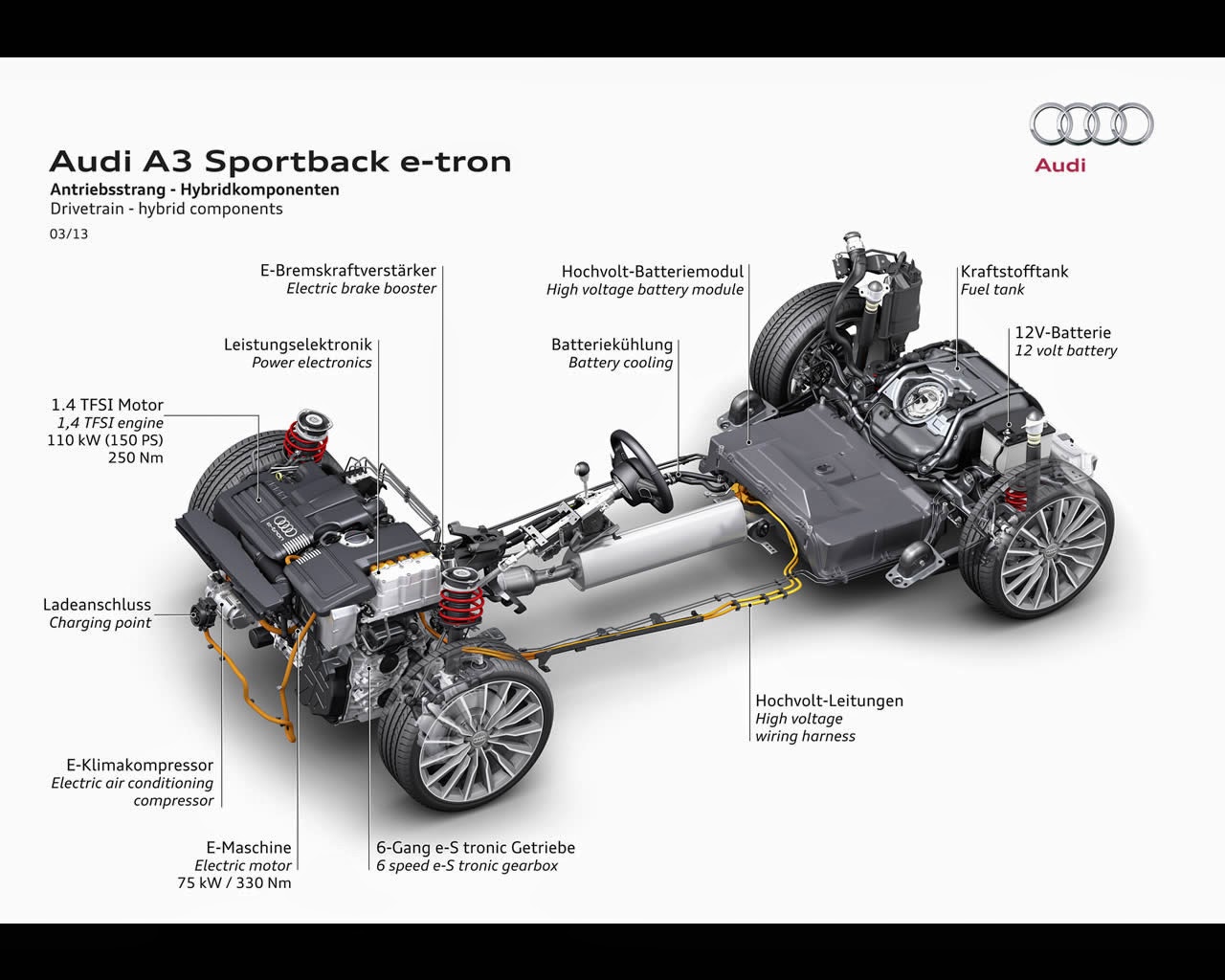
Furthermore, the i9 would also get a bigger electric battery which will generate more than the 131 hp found in the i8.

Lightweight materials and construction remain top priorities for BMW so if it comes to life, expect the i9 to feature even more carbon fiber and aluminum parts. The i9 will retain the perfect 50:50 weight distribution.

From 0 to 100km/h, the BMW i9 is rumored to run in under 4 seconds and with a top speed above 155 mph.

Toyota Supra, BMW Z4 sports cars to share platform

Toyota Motor and BMW will develop a common platform for two sports car models that will become the first products to come out of a comprehensive tie-up the two inked in January 2013.

The automakers will use the same platform as early as 2017 for the BMW Z4 and a planned revival of the Toyota Supra, a model popular in the 1980s and 1990s. The vehicles will have different body designs and be sold under their respective brands.

The car will have a front-engined direct-injection four cylinder turbo and electric motors driving all four wheels. The supercapacitor system will be derived from technology first seen in Toyota's Hybrid Supra HV-R in 2007 when it won the Tokachi 24 hour race and more recenly Toyota's Le Mans LMP1 race cars.

BMW will supply the 2.0 liter turbocharged engine combined with electric motors produced by BMW at its engine plant in Munich while a Toyota-developed electronics system is expected to provide torque-vectoring capability.

The partners also plan to discuss joint manufacturing and parts procurement. BMW is a leader in building cars with lightweight carbon fiber bodies, but the technology is expensive, leading many to focus on whether Toyota will adopt it.

Toyota's tie-up with BMW is aimed at making use of the German carmaker's luxury-vehicle expertise while lowering costs. Toyota and BMW also jointly work on research for lithium-air battery expected to be more powerful than the lithium-ion batteries used in many hybrid and electric vehicles,

Autocar test the BMW i8 hybrid sports car [VIDEO]

Autocar's in-house race driver Steve Sutcliffe tests the BMW i8 in Scotland.

The i8 has a transverse mid-mounted 1.5-litre three-cylinder turbocharged engine that drives the rear wheels through a six-speed automatic gearbox. An electric motor acts as a starter motor but can also fill in any torque gaps in the engine’s delivery. The front axle is driven separately by an electric motor and two-speed gearbox to create a car of incredible flexibility and complexity.

In eDrive mode the i8 is a zero-emission, front-wheel-drive machine with a useful 129bhp and 184lb ft, a top speed of 75mph and a range of 23 miles. In Comfort mode the i8 is a plug-in hybrid that’s quiet, refined, has a range of up to 310 miles and can be charged from zero to 80 per cent inside two hours.

Select Sport mode by simply moving the gear selector from ‘D’ to ‘S’ and the i8 transforms again. Now the internal combustion engine and electric motor combine as effectively as possible to deliver maximum power, noise and excitement. So configured, the i8 generates 357bhp and 420lb ft. It also tightens its damping, reduces the electric power assistance for the steering and manages the car’s balance by manipulating drive to the front axle for ultimate agility and engagement. The numbers say the i8 combines 135mpg and 49g/km on the one hand or 0-62mph in 4.4sec and 155mph (limited) when driven like a sports car should be.

Toyota Prius Plug-in TRD sets Nürburgring lap record [VIDEO]

Three-digit records are nothing new at the Nürburgring, the go-to location when car manufacturers want to prove the pace of their latest models, but until now, these feats have always been about miles per hour, not miles per gallon.

Toyota turned tradition on its head when it took its Prius Plug-in hybrid to the track, setting out to show not how fast the car could go, but just how little fuel it could use on a single lap of the notorious Nordschliefe.

A first-of-a-kind Nürburgring record was in its sights, but with no help from any clever technical tweaks or trick bodywork. Instead, Toyota designed a genuine, real-world test with the car running in traffic during a public session and complying with all the circuit rules, including the 60km/h minimum average speed.

Next Generation Toyota Prius To Get Electric All-Wheel Drive

Automotive News reports the next generation of Prius, set to begin production in December of 2015, may get an all-wheel drive option in addition to its default front-drive layout.

“I think we will possibly do it,” said Koei Saga, senior managing officer in charge of powertrain development, speaking about all-wheel drive. Saga also says that there will be two different battery options available with the 2016 Prius, a low-cost nickel-metal hydride unit or a more expensive lithium ion pack.

The choice of two batteries could possibly deliver a low-cost version using the tried-and-true nickel-metal hydride technology that Toyota has used since it launched the Prius in 1997. And for those wanting longer electric-only driving range, a larger-capacity lithium ion pack could be offered as an upper trim model with a higher price.

The 2016 Prius will ride on a new platform, making the car lighter, smaller and more efficient. ”The batteries will be renewed. Everything will be revised. And I think we will come up with a fuel economy that will surprise everyone,” Saga said.

It looks like the top selling Mitsubishi Outlander PHEV may get some AWD competition.

Next Generation Toyota Prius To Get Electric All-Wheel Drive

Automotive News reports the next generation of Prius, set to begin production in December of 2015, may get an all-wheel drive option in addition to its default front-drive layout.

“I think we will possibly do it,” said Koei Saga, senior managing officer in charge of powertrain development, speaking about all-wheel drive. Saga also says that there will be two different battery options available with the 2016 Prius, a low-cost nickel-metal hydride unit or a more expensive lithium ion pack.

The choice of two batteries could possibly deliver a low-cost version using the tried-and-true nickel-metal hydride technology that Toyota has used since it launched the Prius in 1997. And for those wanting longer electric-only driving range, a larger-capacity lithium ion pack could be offered as an upper trim model with a higher price.

The 2016 Prius will ride on a new platform, making the car lighter, smaller and more efficient. ”The batteries will be renewed. Everything will be revised. And I think we will come up with a fuel economy that will surprise everyone,” Saga said.

It looks like the top selling Mitsubishi Outlander PHEV may get some AWD competition.

Bugatti mulls hybrid follow-up to Veyron supercar

Bugatti, the maker of exotic supercars such as the 1,200-horsepower Veyron Grand Sport Vitesse, is considering a model that some might feel contradicts the ethos of the extravagant brand: a hybrid.

The French manufacturer, owned by Volkswagen, has developed the blueprint for a 2015 follow-up model to the $1.7 million limited-series Veyron that may sell out this year, two sources at VW group with knowledge of the matter said.

The two-door model may rely on a 1,500-horsepower, 16-cylinder engine and will probably be limited to about 450 cars, the same as the expiring Veyron, the sources told Reuters on Wednesday.

Bugatti's new chief executive Wolfgang Duerheimer, a former R&D boss at Audi and Porsche who returned to the French brand on June 1, favours a hybrid version of the brand's next model, the sources said on condition they not be identified because the matter is confidential.

Ultra-luxury nameplates such as Ferrari, McLaren and Porsche are embracing electric powertrains after being on the cutting edge for years in upgrading chassis and engine electronics while striving to trim CO2 emissions.

Hybrid systems used in McLaren's P1 model and Porsche's 918 Spyder work to boost performance and fuel economy.

"Moving to hybrid propulsion seems like a logical next step" for supercar-makers, said Stefan Bratzel, head of the Centre of Automotive Management near Cologne. "By curbing emissions and boosting performance, they can justify building more of these cars."

The new model will beat the 431 kilometres (268 miles) top speed of Bugatti's Veyron Super Sport, which lost the title of the world's fastest production car in February to the Hennessey Venom GT, sources said.

"The new model will not be less exciting than the Veyron," a spokeswoman for Bugatti said, without being more specific. "Our customers have certain expectations."

Wolfsburg-based VW acquired the Bugatti brand in 1998 along with Lamborghini and Bentley Motors to create a stable of high-end carmakers. VW doesn't break out Bugatti's earnings in quarterly or annual reporting, but a company source says the brand has been loss-making for years on high development costs for the Veyron.

Bugatti mulls hybrid follow-up to Veyron supercar

Bugatti, the maker of exotic supercars such as the 1,200-horsepower Veyron Grand Sport Vitesse, is considering a model that some might feel contradicts the ethos of the extravagant brand: a hybrid.

The French manufacturer, owned by Volkswagen, has developed the blueprint for a 2015 follow-up model to the $1.7 million limited-series Veyron that may sell out this year, two sources at VW group with knowledge of the matter said.

The two-door model may rely on a 1,500-horsepower, 16-cylinder engine and will probably be limited to about 450 cars, the same as the expiring Veyron, the sources told Reuters on Wednesday.

Bugatti's new chief executive Wolfgang Duerheimer, a former R&D boss at Audi and Porsche who returned to the French brand on June 1, favours a hybrid version of the brand's next model, the sources said on condition they not be identified because the matter is confidential.

Ultra-luxury nameplates such as Ferrari, McLaren and Porsche are embracing electric powertrains after being on the cutting edge for years in upgrading chassis and engine electronics while striving to trim CO2 emissions.

Hybrid systems used in McLaren's P1 model and Porsche's 918 Spyder work to boost performance and fuel economy.

"Moving to hybrid propulsion seems like a logical next step" for supercar-makers, said Stefan Bratzel, head of the Centre of Automotive Management near Cologne. "By curbing emissions and boosting performance, they can justify building more of these cars."

The new model will beat the 431 kilometres (268 miles) top speed of Bugatti's Veyron Super Sport, which lost the title of the world's fastest production car in February to the Hennessey Venom GT, sources said.

"The new model will not be less exciting than the Veyron," a spokeswoman for Bugatti said, without being more specific. "Our customers have certain expectations."

Wolfsburg-based VW acquired the Bugatti brand in 1998 along with Lamborghini and Bentley Motors to create a stable of high-end carmakers. VW doesn't break out Bugatti's earnings in quarterly or annual reporting, but a company source says the brand has been loss-making for years on high development costs for the Veyron.

400 hp VOLVO XC90 will be worlds’s most powerful SUV

Volvo Cars' all-new XC90 will offer an unrivalled combination of power and clean operation when it is launched later this year. The all-wheel drive seven seater offers drivers up to 400 horsepower but with carbon dioxide (CO2) emissions of around 60 g/km (NEDC driving cycle). There has never been an SUV offering this level of power this cleanly.

"There are no compromises when you drive an all-new XC90," said Peter Mertens, Senior Vice President Research and Development of Volvo Car Group. "In the past you could either have power or low CO2 emissions. But with the all-new XC90 you can have both."

The new XC90 offers a range of Drive-E engine options, all of which provide an outstanding combination of performance and fuel-efficiency. The main distinguishing feature of the Drive-E engine range is that they are all four-cylinder engines.

"With our new Drive-E powertrains, we have created a family of intelligent petrol and diesel engines with power curves that give exciting driveability at the same time as delivering world-beating fuel economy," added Dr. Mertens. "With seven people in the new XC90, carbon dioxide emissions per person and kilometre are outstandingly low."

The CO2 performance of the all-new XC90 will reinforce Volvo Cars' leadership when it comes to bringing more environmentally-sound technologies to market. According to figures monitored by European car industry association ACEA, Volvo Car Group delivered an industry-leading reduction of average fleet emissions by 8.4 per cent from 2012 to 2013.

Twin Engine technology

Volvo has made it possible for a four-cylinder engine to provide all the driving pleasure associated with a much larger engine and do so far more efficiently and cleanly. Drive-E engines will over time be introduced across Volvo's entire range.

For the all-new XC90, the top of the range 'Twin Engine' will carry the badge 'T8' and be a plug-in electric car, hybrid car and high-performance car rolled into one.

Normal driving is conducted in the default hybrid mode. This utilises a two-litre, four-cylinder supercharged and turbocharged Drive-E petrol engine that powers the front wheels and an 80 hp (60 kW) electric motor that drives the rear wheels.

It uses the supercharger to fill in the bottom end of the power range to give the engine a big, naturally-aspirated feel, while the turbocharger kicks in when the airflow builds up. The electric motor on the rear wheels provides immediate torque.

But at the push of a button the driver can switch to quiet and emission-free city driving on pure electric power where the range will be around 25 miles, and then, when needed, immediately revert back to the combined capacity of the petrol engine and electric motor, with its combined output of around 400 hp and 640 Nm of torque.

Full range of other engine options

The Volvo XC90 range also includes the D5 twin turbo diesel engine with 225 hp, 470 Nm and best in class fuel consumption of around 47mpg (combined), plus the D4 turbo diesel engine with 190 hp, 400 Nm and a fuel consumption of around 56mpg (combined cycle).

Not only is there no compromise in terms of performance or efficiency, but Volvo Cars' new Scalable Product Architecture (SPA) chassis technology also allows for far more flexibility inside the car. Other carmakers have struggled to combine the bulk of a battery pack with a luxurious and spacious interior, something that Volvo has managed to overcome.

"Since our new SPA technology is designed from the start to accommodate electrification technologies, the Twin Engine installation does not compromise luggage or passenger space," said Dr. Mertens.

Mitsubishi Outlander PHEV Plugin hybrid Test Drive [VIDEO]

Mitsubishi Australia were kind enough to loan EV News an Outlander PHEV for a week long test drive and we're not surprised it is already the best selling plug-in EV in several markets around the world.

The Mitsubishi Outlander PHEV is the first 4x4 SUV to combine 'series' and 'parallel' hybrid systems. It has all the benefits of a plug-in electric car with a part-time duty cycle 87 kw 2.0 L 4 cylinder MIVEC (Mitsubishi Innovative Valve timing Electronic Control system) petrol engine that can run in either series hybrid mode, where it is used to top up the 12 kWh lithium ion battery mounted under the cabin, and/or can also runs in parallel mode to drive the front wheels.

The electric powertrain is based on 2x 60 kw / 166 Nm BLDC permanent magnet synchronous motors that run on up to 300 volts. It's a bit like having an iMiEV motor on each axle. Given the 1810 kg curb weight, EV mode acceleration is reasonable, but applying anything more than half throttle activates the ICE to assist. In this parallel mode the PHEV has a combined maximum output of 207 kw available for hard acceleration which 'feels' like a V6.

Mitsubishi engineers have done an excellent job on NVH (noise, vibration and hashness) for the part-time duty cycle ICE (internal combustion engine) in the Outlander PHEV. Unlike the Holden Volt we drove last year where the ICE became fairly annoying after a few hours in the car, the ICE powertrain in the PHEV is so quiet that, without the assistance of the LCD 'energy use' dash display graphic, it's hard to tell whether the ICE is actually running or not!

The official ADR fuel economy rating for the PHEV is 1.9L/100km, with a maximum range of 824 kilometers from it's 45 liter fuel tank. I had originally planned to drive the PHEV to Melbourne (1,800 km round trip) to test highway range and the adaptive cruise control system (more on that later) but for business reasons the trip was postponed. Instead, during the 7 days I had the PHEV, I never needed to lift the fuel filler flap even once and returned the vehicle with more than 100 km range still indicated on the dash having covered 700 km of urban driving.

The vehicle was plugged in each night so we started each day with a full battery. The 12 kWh battery gives an EV mode range of approx 50 km. The PHEV provides a couple of options for managing your charge via two centre console mounted buttons. The 'CHRG' button allows the driver to manually turn on the ICE to charge the battery while the 'SAVE' button conserves battery charge and engages the ICE to drive the Outlander PHEV like a regular front wheel drive petrol vehicle. We were still experimenting with the save mode when we had to return the vehicle.

At highway speeds, aerodynamic load is at it's maximum and given the fact that brake regeneration on expressways is minimal combined with the relatively small amount of energy contained in an electric cars battery (12 kWh) compared to a regular fuel tank (405 kWh) , we experimented with using 'Save' mode on any steady-state motorway with a posted speed limit of 100 km or more in an effort to save the battery for lower speed urban roads where brake regeneration can be maximised and losses such as aero resistance are minimal.

Unfortunately it wasn't a very scientific experiment so I can't provide any figures. Even without using save mode at all the PHEV still achieved minimal fuel burn using the same strategy of using the ICE in parallel mode at highway speeds so perhaps it would take longer than a 700 km test drive to get the most out of these manually operated features.

All Mitsubishi Outlander PHEV press cars are the top-of-the-range Aspire model which comes with a feature that seems perfectly suited to an electric powertrain, adaptive cruise control. As an EV powertrain can brake and accelerate with a single input from the throttle pedal, this allows seamless control of a vehicles variable speed relative to other traffic.

Adaptive Cruise Control was my favorite feature on the car and was turned on at every opportunity. In traffic it takes over everything but the steering. In built-up heavy traffic with speeds as low as 1 km/h the system will slow and accelerate in response to the traffic ahead. In stop-start traffic the system can bring the vehicle to a complete hold, only signalling to the driver to push the brake pedal once the vehicle is stationary. The vehicle will not move away from a dead stop, but cruise can be resumed once over 10 km/h.

It was not uncommon to have the cruise control set to 80 km/h while only seeing 50 km/h on the speedo as the car responded to traffic. The driver can adjust the distance to the car ahead in three steps with a a steering wheel adjustable push-button. In addition this distance automatically adjusts according to speed, with the gap to the car ahead increasing at higher speeds.

The system also handles lane changing fairly well. When the driver changes lanes to go around a slower vehicle the vehicle will respond to the clear lane and accelerate to the set speed. The drive can also momentarily over-ride the system with throttle input to accelerate into a gap while lane changing and the cruise control will resume at the set speed once you lift off the throttle pedal.

One thing we were curious about was what the brake lights were doing in adaptive cruise mode. Apparently the low-speed auto brake system on the Ford Focus strobes the brake lights when active, but we were unable to confirm what was happening on the back of the PHEV in this mode?

As with most hybrids which mix regenerative and friction braking, the PHEV runs a brake-by-wire system with a servo operated hydraulic brake master cylinder. This enables the cruise control to apply friction brakes at very low speed to bring the vehicle to a complete stop. With Adaptive cruise control, driving in heavy urban traffic almost becomes relaxing! I honestly think this is the single best feature of the car and given the fact ABS and stability control are now mandatory on new cars, it seems only a matter of time before adaptive cruise control and autonomous braking also become mandatory features.

Speaking of stability control, the Outlander PHEV comes with Mitsubishi's Active Yaw Control (AYC) and Super All Wheel Drive Control (S-AWC) which was first developed for the Mitsubishi Lancer Evo. Given the SUV's high centre of gravity layout this is probably a very handy feature to have although there was no way I intended to push this vehicle to the limit to test it out. Perhaps the PHEV powertrain will soon be seen in something closer to the ground like the XR-PHEV EVO images recently released, then AYC and S-AWC could be actively engaged for entertainment value on winding country roads without the risk of tipping over.

With a list price of $47,490 for the standard Outlander PHEV and $52,490 for the Aspire, it's little surprise the PHEV has shot to #1 plug-in on debut with 99% of all Outlanders sold being PHEV in several markets around the world.

Translogic 153: 2015 BMW I8 [VIDEO]


The 2015 BMW i8 is the second model in the Bavarian automaker's eco-friendly i-brand lineup.

The i8's plug-in hybrid powertrain combines a turbocharged 1.5-liter three-cylinder engine with a 96 kilowatt electric motor to make 357 horsepower and 420 lb-ft of torque. Together, this gas-electric mechanical duo is capable of propelling the futuristic sports coupe from 0 to 60 miles per hour in just 4.2 seconds.

Join Host Jonathon Buckley as he heads to Santa Monica, CA for a chance to drive the all-new BMW i8.

Audi plans plug-in hybrid offensive

Audi plans to launch at least four plug-in hybrid cars as it bets on the technology to counter rival BMW's electric car offensive.

Audi will roll out the A3 Sportback E-tron, its first plug-in hybrid, in Europe this month. U.S. sales are expected to begin in the second or third quarter of 2015, while China deliveries will start in the first or second quarter of next year.

The model will compete with cars such as the battery-powered BMW i3 in a bid to win customers looking for environmentally friendly vehicles.

Audi CEO Rupert Stadler said today the A3 Sportback E-tron will be followed by other plug-in hybrids.

"We strongly believe in plug-in hybrids and we will add a new model each year, beginning with the Q7 next year, followed by the A6 long-wheelbase sedan for China and the A8," Stadler said on the sidelines of the A3 Sportback E-tron's introduction here.

Audi believes plug-in hybrids are the best solution for low-emission vehicles because they don't face the same range constraints as battery-powered vehicles. Plug-in hybrids use a conventional internal combustion engine but can also run on electric power with zero emissions.

“Plug-in hybrids are electric vehicles for everyday driving, exactly what our customers are asking for,” Stadler said.

The A3 Sportback E-tron can be driven under electric power for about 30 miles. Using the gasoline engine, it has a 373-mile range. BMW's i3 has a driving range of up to 100 miles, rising to about 187 miles for the version with a range extender.

Audi’s approach to clean-car technology diverges from the path taken by BMW, which created the “i” subbrand to showcase its environmental technology. The i3 city car and the plug-in hybrid i8 supercar have plastic exterior body panels and distinctive styling to make them stand out from other cars on the road.

“BMW created a product that is totally different,” while Audi as well as Mercedes-Benz “try to integrate e-mobility into their existing vehicles,” said Christian Breitsprecher, a Frankfurt-based analyst with Macquarie Europe. The advantage for Audi and Mercedes is “if there’s lots of demand, they can produce a lot. If not, they can allocate the capacity to their normal cars.”

Stadler said he could not give a figure for how may plug-in hybrids Audi will sell. "Plug-in hybrids could account for 10 percent to 20 percent, even 40 percent of the 2 million units we plan to build annually by 2020. It will be our customers who decide, and we are ready to satisfy their demand,” he said.

“Plug-in hybrids are fully integrated in our platforms and production process, so we are beginning with the A3 E-tron in Germany, but the same technology could be applied to the production lines we have in China and in Mexico,” Stadler added.

Extra cost

Audi's approach may keep spending under control, but the question is whether customers will pay the extra cost for technology that’s not evident from the curbside.

The A3 Sportback E-tron looks identical to its conventional A3 counterpart and starts at 37,900 euros ($51,700) in Germany. That’s 15,100 euros more than the base gasoline-powered version of the A3.

Hiding its green technology under the hood could be a risk for Audi. Inroads by electric-car maker Tesla Motors into the luxury-car segment show that wealthy drivers are ready to buy upscale green cars, if they get noticed. That goes for the BMW i3 as well. Demand for the car prompted BMW to triple production of carbon fiber, which is used for the passenger compartment.

“In an i3 and the Tesla, the attributes of luxury, modern technology and protecting the environment are clearly visible to everyone,” Breitsprecher said. The Audi plug-in “doesn’t show off that the consumer paid extra.”

Still, the threat for Audi is more to its image as a technology leader, with demand for plug-in hybrids and electric vehicles expected to remain restrained. The segment is forecast to account for just 5.7 percent of global auto production in 2019, according to IHS Automotive.

In Germany, Audi is selling the A3 Sportback E-tron via a network of 100 selected dealerships where service employees have been trained to work with high-voltage technology. The E-tron dealerships have an electric charging station that customers can use free of charge during business hours.

The A3 E-tron has a 150 hp 1.4-liter direct injection turbo gasoline engine and a 102 hp electric motor housed within the six-speed dual clutch transmission. As the two power sources never work together at full force, combined system power is 204 hp, Audi said. Top speed is 137 mph in hybrid mode and 80 mph in pure electric mode.

Audi said it takes about 3 hours and 45 minutes to fully recharge the lithium ion 8.8 kWh battery from a 200 volt household outlet. With an industrial 380 volt charging station, recharging time decreases to 2 hours and 15 minutes, the company said.

Continental introduce tire optimized for hybrids [VIDEO]

Continental has taken the Conti.eContact that was originally launched in 2011 with electric vehicles in mind and refined it to meet the needs of hybrid models. Thanks to the introduction of numerous new technologies and processes, this new and extensively hand-crafted summer tire is the first from Continental to obtain the top A rating on the EU Tire Label for both wet grip and rolling resistance, while making no significant compromises in terms of the many other performance parameters.

With immediate effect Continental is offering the Conti.eContact in six sizes for 17 and 18-inch rims, specially designed for models such as the Opel Ampera, BMW 5 ActiveHybrid, Lexus LS 600h and Porsche Cayenne S Hybrid, as well as other cars and SUVs with hybrid drive. Given that this is a new vehicle segment that also involves highly complex production processes, Continental is kicking off with low-volume production at its French tire plant in Sarreguemines.

The rolling resistance of the new Conti.eContact for hybrid vehicles is some 20 percent lower than in a conventional tire, while delivering a wet braking performance similar to that of a normal car tire. This is made possible by a combination of advanced technologies in the development, compounding and production sectors. In terms of handling and braking on dry roads, the tire performs at the same high level as a Continental sedan tire of comparable size. As a member of the Continental tire family for hybrid and electric vehicles, the Conti.eContact bears the “BlueEco” logo on the sidewall. Continental’s in-house studies point to incremental growth in the proportion of hybrid vehicles in the passenger car segment, which could account for as much as eight percent by 2020.

Green Chili compound
Featuring the newly developed Green Chili compound, the silica compound of the new Conti.eContact for hybrid vehicles is made up in such a way that the internal friction of the filler particles and the polymers is lower than in conventional rubber compounds. The use of special additives provides an additional boost in terms of handling properties. With this new compound, the chemists at Continental have achieved a marked reduction in rolling resistance, while maintaining a high level of handling and braking performance on dry roads.

Hydro-sipes

On wet roads the specially configured twin sipes in the tread blocks generate a ‘windshield wiper’ effect that breaks up the film of water under the contact patch. This smart thinking by the tread designers at Continental enables the water between the surface of the tread blocks and the road to be rapidly dispersed, making for very short stopping distances in the wet. The fast dispersion of the water also benefits the tire’s wet handling – even at higher speeds. The tread design makes a valuable contribution to the short stopping distances in the wet that led to the Conti.eContact’s A rating for wet grip on the EU Tire Label.

AeroFlex technologyAlong with the new technologies adopted for the compound and tread design, the sidewalls of the new Conti.eContact have also been redesigned. In this case the tire designers focused on minimizing aerodynamic drag and rolling resistance. This they achieved through the aerodynamically modified sidewall and its flexible, lightweight design. As a result, in the new Conti.eContact less energy is lost when the tire deflects and rebounds than in a conventional tire. In addition, the drop in turbulence has led to a further reduction in the tire’s contribution to fuel consumption.

ContiSilent

When hybrid vehicles run in electric mode they are virtually silent. As tire noise is no longer drowned out by other sources of noise such as a conventional engine, it is all the more noticeable. Consequently, the new Conti.eContact is designed to generate minimum audible noise in the vehicle interior. This is achieved with the aid of ContiSilent technology. A thin layer of polyurethane foam attached to the inside of the tread reduces the vibrations that are generated as the tire rolls along the road. This means that less vibration is communicated to the chassis, leading to a lower level of noise in the cabin.

Outlander PHEV to Tackle Asia Cross Country Rally 2014

Mitsubishi Motors Corporation (MMC) announces that it will dispatch a team of technical support engineers for an Outlander PHEV entered in the T1.3 4x4 Electric class of the grueling 2,200km FIA-certified Asia Cross Country Rally 2014 (AXCR) from August 9 through 15, to be run from Thailand to Cambodia. The Two & Four Motor Sports rally team (Two & Four), headed by Kenji Ishida, will run an Outlander PHEV in the race for the second straight year. MMC engineers will provide Two & Four's team technical support for the plug-in hybrid four-wheel drive SUV for the duration of the rally. MMC will utilize valuable data and knowhow acquired by the technical support team in future vehicle development.

The 19th edition of the AXCR will get under way with the Ceremonial Start in the Thai beach resort of Pattaya on Saturday August 9. The next day, August 10, sees the start of the rally proper as Leg 1 takes entrants from Pattaya to Sakaeo. On August 12, Leg 3 of the rally takes the competitors into Cambodia and past the World Heritage site of Angkor Wat. The event finishes in the Cambodian capital of Phnom Penh on Friday August 15. The AXCR covers a total distance of 2,200 km and offers a grueling test of all-terrain performance and durability as it requires competitors to conquer mountains, forests, swamps and river crossings.

The Outlander PHEV rally car will use competition suspension and reinforced mountings to raise ground clearance and improve all-terrain performance over poor surfaces. The vehicle's S-AWC integrated vehicle dynamics control system will be tuned for competition use to deliver better traction. Other modifications include the fitting of a roll cage and underbody skid plate, the use of lighter engine hood, rear gate and interior parts, and additional sealing and a snorkel for water crossings.

Mitsubishi Outlander PHEV 830 KM Test Drive

The Swiss Mitsubishi importer has demonstrated that a plug-in hybrid Mitsubishi Outlander PHEV can travel 830 km (518 miles) on a single tank of petrol.

Mitsubishi Motors claims the plug-in hybrid Outlander PHEV has a range of 824 kilometers (512 Miles) in the combined hybrid mode. The Swiss Mitsubishi importer wanted to know whether this is feasible in practice so hired Felix Egolf - a pioneer in the field of ultra-efficient driving over long distances.

Egolf departed on 12 May in a hybrid Outlander from the headquarters of the Swiss importer Härkingen and drove through Basel and the Vosges to Metz. From there he went through Luxembourg and Belgium in the Netherlands. End of the journey was the Dutch Mitsubishi importer in Amstelveen, where Egolf arrived on May 14. The route began in hilly area and 38 percent of the journey performed over highways.

Upon arrival in Amstelveen odometer gave 729 kilometers and the remaining range was further than 90 kilometers. Egolf then drove the Outlander PHEV for a photoshoot to Amsterdam and Utrecht. The onboard computer gave a mileage of more than 830km to when the Outlander PHEV was refueled. For the first time since leaving again There was 45.14 liters of petrol in the tank, which means that consumption 5.44 liters per 100 km. The electricity was approximately 1 kWh/100 km.

Mitsubishi Motors gives the official standard has a range of 824 kilometers. So that, in practice, is actually feasible. Of course, the rider must anticipate well in traffic and clever use of the plug-in hybrid techniek. That is, charge the battery while driving (CHARGE) or save energy (SAVE) and continuous regeneration system utilization, which produce electricity, which is stored in the battery during braking.

EV News will be picking up a Mitsubishi Outlander PHEV for a test drive next week so perhaps we can also test the 800+ km range.

Toyota Hybrid Takes Record Breaking Pole at Le Mans

Toyota Racing's Kazuki Nakajima set a new Le Mans qualifying lap record to put the #7 TS040 Hybrid in pole position for the 82nd running of the famous 24-hour endurance race this weekend.

It was the first pole position ever for a Japanese driver and lowered last year's pole position time by more than half a second.

Nakajima, who shares the #7 car with Alex Wurz and Stéphane Sarrazin, scorched around the 13.629km track in 3 mins 21.789 secs to record Toyota's second pole position at Le Mans.

The feat highlighted the performance and efficiency of the 736kW Toyota Hybrid System - Racing which set the fastest qualifying time despite a 25 per cent reduction in fuel consumption compared with last year's car.

The #8 car of Anthony Davidson, Nicolas Lapierre and Sébastien Buemi will start Saturday's race from third on the grid.

As well as starting from first place on the grid, the TS040 Hybrid enters this year's race with two wins from the opening two FIA World Endurance Championship races.

This is the fourth pole position for Sarrazin who achieved the honour in 2007-09 and who has been runner-up three times, including last year. He praised the team for its work in setting up the #7 car and Nakajima for a "brilliant lap".

"It is promising for the race because we feel so confident in the car," he said. "We can push on every corner, every lap. Like that everything is positive. The race will be very long, we know that we have to be very calm and not attack it like a short sprint."

The 24-hour race begins at 11 p.m. tomorrow AEST.

Nissan Zeod RC hits 300 km/h on Mulsanne Straight [VIDEO]

Nissan's ZEOD RC has recorded the highest ever speed by an electric vehicle at Le Mans with Japanese ace Satoshi Motoyama reaching 300km/h on the Mulsanne Straight in qualifying for the Le Mans 24 Hours.

Motoyama reached the speed on his electric run, achieving one the key goals of the unique prototype which features a dual electric/internal combustion engine powertrain featuring a pair of 110kW electric motors along with a remarkable 40 kg, 400 horsepower 1.5 liter three-cylinder turbo engine.

The ZEOD (zero emissions on demand) permits the driver to switch back and forth between the two power sources.

Motoyama achieved the target on his first run in the car after he missed out on driving on Wednesday night to a gearbox issue in the first session and a series of session-stopping red flags during the night.

"I drove ZEOD at Le Mans for the first time and instantly we were able to reach our target to run at more than 300km/h with electric power only," Motoyama said.

"I was so surprised with the speed and power of electricity and it felt great. In yesterday’s session we had some trouble with the gearbox in the first session then we had a heap of red flag periods and I didn’t get the chance to get into the car.

"But the guys on the team did a great job to fix the car and I and I was able to get started tonight right at the green flag tonight.

“Our first target of the top speed of 300 km/h with electric power is done and I think that was a really good first step."

Motoyama along with GT Academy winners Lucas Ordóñez and Wolfgang Reip all drove multiple stints aboard the ZEOD tonight - each recording their mandatory five night laps.

The Nissan ZEOD RC competes at Le Mans this week in "Garage 56" - an additional entry for vehicles showcasing new and innovative technology.