A Tesla Too Pricey? E-Bikes Offer Entry-Level Electric Transportation
E-bikes, already popular elsewhere, are making inroads in the United States. But some models have drawn the scrutiny of lawmakers.

Charged with Electric Vehicle News and Views
![Estimated U.S. energy consumption in 2016 [graphic: Lawrence Livermore National Laboratory]](https://images.hgmsites.net/tmb/estimated-u-s-energy-consumption-in-2016-graphic-lawrence-livermore-national-laboratory_100634001_t.gif) One of the interesting side effects of plug-in electric cars turns out to be a greater awareness of energy sources and uses. A 2012 California study, for instance, showed roughly four out of 10 electric-car drivers either had or were considering solar panels to provide electricity to their home. And because electric cars everywhere in the U.S...
One of the interesting side effects of plug-in electric cars turns out to be a greater awareness of energy sources and uses. A 2012 California study, for instance, showed roughly four out of 10 electric-car drivers either had or were considering solar panels to provide electricity to their home. And because electric cars everywhere in the U.S...  Today, a possible plug conflict for electric cars, a redefinition from the EPA chief, a study suggesting Big Oil will wane, and our latest Twitter poll. All this and more on Green Car Reports. We'll be running a light schedule of stories for the next four days as we celebrate the Thanksgiving holiday weekend in the U.S. Meanwhile, we've still got...
  The latest study on the future of transportation paints an increasingly dim picture for the oil industry, though it suggests that the industry is in no danger of collapse. Instead, Big Oil will lose its dominance in the transportation sector over a 25-year period as electric cars and mobility solutions (ride- and car-sharing services) become more...
  When the first few thousand electric cars went on sale in California in the mid- to late 1990s, they used various different charging methods, each with its own dedicated charging stations. That proved an impediment to adoption, given the high cost of installing different infrastructure for different makes of car. For lower-rate charging, that...
Honda Motor plans to release in 2022 a selection of fully electric cars that can run 240km on a single 15-minute charge. Most electric vehicles now available take at least twice that long to reach an 80% charge even using a high-speed charger.
Key to this plan is developing a new type of high-capacity battery that can handle the ultra-quick charging. The carmaker sources batteries for its electric-gas hybrid vehicles from Panasonic and others, but plans to create the new batteries in collaboration with a partner to be chosen later. A lighter vehicle body and more efficient power control system will ensure the new cars can go farther on a single charge.
Before then, Honda plans to release mass-market electric vehicles in Europe in 2019 and in Japan the following year.
Fast chargers in Japan now provide a maximum output of 150kW, but industry plans call for raising that to 350kW starting in 2020. Europe is expected to have a network of several thousand 350kW charging stations by that year. Honda's next-generation electric vehicles will take advantage of this faster charging infrastructure.
Nissan Motor's new 2018 Leaf will also offer quicker charging times than the current model and range 30% longer -- more than 500km on a single charge. The automaker has a head start on Japanese rivals Honda and Toyota Motor in mass-market electric vehicles.
There were 470,000 electric vehicles on the world's roads in 2016, according to Tokyo-based research firm Fuji Keizai, making up 0.5% of the total. That share is expected to climb to only 4.6% by 2035. By offering faster charging and longer range, Honda hopes to give its electric cars an edge with everyday drivers.


![EPA administrator Scott Pruitt [photo from 2014]](https://images.hgmsites.net/tmb/oklahoma-attorney-general-scott-pruitt-2014_100584650_t.gif) EPA head Scott Pruitt will likely go down as one of the most controversial agency chiefs in that agency's history of almost 50 years. The former Oklahoma attorney general, who sued the EPA 14 times on behalf of fossil-fuel interests during the Obama administration, has a radically different view of how the agency should operate compared to most of...
EPA head Scott Pruitt will likely go down as one of the most controversial agency chiefs in that agency's history of almost 50 years. The former Oklahoma attorney general, who sued the EPA 14 times on behalf of fossil-fuel interests during the Obama administration, has a radically different view of how the agency should operate compared to most of...  China's announcement in early September that it planned to set a date to end sales of new vehicles with combustion engines should have rocked the global auto industry. The world's largest car market, at roughly 30 million vehicles a year, will at some point permit only zero-emission vehicles to be sold. That will accelerate the development...
  Today, we've got news on future electric cars from Nissan, Renault, and Toyota, some thoughts on more time in a Hyundai Ioniq Hybrid, and a sales race between the Chevy Volt and Toyota Prius Prime. All this and more on Green Car Reports. Toyota's reluctant moves into electric cars will include its own battery-powered car in China, and EVs made by...
  Compared to the U.S. sales of, say, full-size pickup trucks, the monthly reports on deliveries of plug-in hybrid and battery-electric cars contain some fairly low numbers. The Ford F-Series routinely sells 80,000 a month or more, while the most any plug-in car has ever sold in the U.S. is about 3,000 a month. (That statistic excludes Tesla, since...
  We've now spent more than 1,200 miles in a variety of Hyundai Ioniqs, but the bulk of them were covered in the conventional hybrid version of the five-door compact hatchback. That's the highest-volume version, while the battery-powered Ioniq Electric sells in lower numbers and the plug-in hybrid version won't hit the market until early next year...
  Carlos Ghosn has been an advocate of electric cars for years, but after initial disappointment, he's ready to take on the segment with even greater focus. The CEO of the Renault Nissan Alliance that now includes Mitsubishi predicted the rise of electric cars nearly a decade ago, and oversaw the first-generation Nissan Leaf and Renault Zoe...
  Toyota made its future battery-electric car project public this past April after an "agonizing" decision to depart from its sole focus on a future powered by hydrogen fuel cells as its sole zero-emission vehicle technology. Mostly, that shift is due to China and India—two major auto markets that call for phasing out the internal-combustion...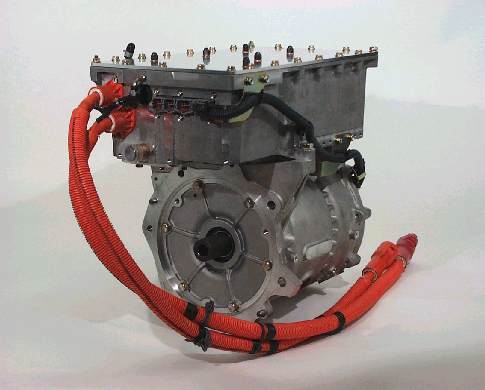
Hitachi will turn out electrified-automobile motors in China as soon as fiscal 2020, aiming to capitalise on a government initiative to boost production of environmentally friendly vehicles.
Hitachi Automotive Electric Motor Systems, a joint venture of Hitachi Automotive Systems and Honda Motor, established a unit in Guangdong Province dedicated to the development and production of motors for electrified vehicles, including hybrids, according to Monday's announcement.
Outlays for the production facilities, which will be built on an 88,000-sq.-meter plot, and capacity have not been disclosed. Mass production may kick off in the fiscal year starting April 2020. Hitachi also operates similar sites in Japan and the U.S.
Under the new initiative, automakers will soon be required to make and sell a minimum number of so-called new-energy vehicles based their overall output. These vehicles must account for 10% of production in 2019 and 12% in 2020, with adjustments made for such factors as models that run for longer distances.
Global auto manufacturers have indicated plans to upgrade their new-energy vehicle businesses in China.
Hitachi Automotive Systems, which also makes lithium-ion battery systems for autos, seeks to increase sales 260% in fiscal 2020 from the fiscal 2016 level.


 Today, we've got a different approach to electric trucks, a complicated combustion engine, more solar power, a plug-in future Ford, and some worries about U.S. competitiveness. All this and more on Green Car Reports. Over the weekend, as we do every seven days, we ran down last week's most important green-car stories. The Toyota Prius V hybrid...
 ![Buick Velite 5, for sale in China, at 2017 Shanghai auto show [photo: Ronan Glon]](https://images.hgmsites.net/tmb/buick-velite-5-for-sale-in-china-at-2017-shanghai-auto-show-photo-ronan-glon_100604550_t.gif) The first automobile was invented in Germany in 1885 by Karl Benz, but it was the U.S. that led the building of the global 20th-century automobile industry. Through the turn of the current century, the U.S. new-vehicle market was the world's largest, and General Motors was for decades the world's largest car company. Neither of those is still the...
The first automobile was invented in Germany in 1885 by Karl Benz, but it was the U.S. that led the building of the global 20th-century automobile industry. Through the turn of the current century, the U.S. new-vehicle market was the world's largest, and General Motors was for decades the world's largest car company. Neither of those is still the...  Sometimes a picture is truly worth a thousand words. In the case of the rapidly rising rate of solar installations for electricity generation, numerous forecasts by internationally respected bodies have proven woefully conservative. The chart in the tweet below, created by Auke Hoekstra at the Technical University of Eindhoven, The Netherlands...
  In recent years, Ford Motor Company's plans for putting more plug-in electric cars on the road have been, shall we say, murky. GM has the Chevrolet Volt plug-in hybrid, sales of its Chevy Bolt EV 238-mile electric car have risen every month, and it plans a pair of all-electric SUVs by 2020—but Ford now offers just two vehicles that plug in...
  Efforts by automakers to increase fuel efficiency and reduce carbon emissions have intensified in recent years as emission rules have tightened and the effects of climate change are better analyzed. While electric cars and hybrids will grow in popularity, the internal-combustion engine remains the default way of power—and likely will for...
  While battery-powered semi trucks remains years away for many prominent makers, the German tech company Siemens is experimenting with a well-known source of electric power delivery to make a different kind of electric semi. Much like electric trams or streetcars used by public transit agencies for more than 100 years, the method employs a catenary...