Tesla Value Hits $100 Billion. Will Elon Musk Get a Big Bonus?

The chief executive could get a stock award worth hundreds of millions if the carmaker’s market capitalization is sustained in the months ahead.

Charged with Electric Vehicle News and Views

 The Cruise Origin jumps ahead to a completely driverless future. Canoo starts taking names for its subscription service. And Tesla is finally good to service its vehicles in Michigan. This and more, today at Green Car Reports. The California startup Canoo has opened up its waitlist, which includes a Tesla-like referral program for bringing the...
 Tesla’s direct sales-and-service model works beautifully in some states, while in others it’s still definitely a work in progress. Don’t blame Tesla for this one; the reason why is rooted in dealership-franchise laws—specifically, in Michigan’s case, a 2014 law that closed remaining loopholes that might have allowed...

 During the launch of the Cruise Origin driverless car, GM’s Cruise declared driving as we know it—and ride-sharing as we know it—obsolete. “This is the end of the human-driven, gasoline-powered single-occupant car, and the beginning of the future—the future beyond the car,” boomed a voice. The Origin seats six...
 The California-based mobility-services company Canoo has officially opened its waitlist. Canoo will be an automaker by some definitions, with a set of unique, futuristic vehicles; but it diverges from conventional automakers in nearly all other respects. Through an all-inclusive monthly subscription fee—wrapping in maintenance, insurance...
 GM’s Cruise dedicated a good part of its presentation, of its fourth-generation driverless car called the Cruise Origin, to declaring driving as we know it—and ride-sharing as we know it—obsolete. “This is the end of the human-driven, gasoline-powered single-occupant car, and the beginning of the future—the future...


 Subaru is planning a big shift toward hybrids and electric cars. VW’s targets seem far off, according to one analysis. And Tesla cries foul about unintended-acceleration claims. This and more, here at Green Car Reports. As Volkswagen’s CEO presses for more urgency in the company’s shift toward electric cars, a new analysis...

 Last week, in a speech to executives in Germany, Volkswagen CEO Herbert Diess was critical about the automaker’s pace so far toward electric vehicles. Diess underscored, according to the Financial Times, that shifting to electric vehicles would require “a radical change of direction”—to more of a tech company. Meanwhile, an...

 Outdoorsy, crunchy, and active are surely among the descriptors that Subaru has carefully cultivated into its brand identity and owner base over the years. And while those sound like an ideal jumping point for going electric, Subaru still needs to assure its loyal owner base that leaving its trusty Boxer engines for an all-electric future is a...

 Tesla said Monday that claims that its cars could suddenly accelerate without warning are without merit and were made by a profit-seeking investor. "This petition is completely false and was brought by a Tesla short-seller," the company wrote on its website. "We investigate every single incident where the driver alleges to us that their vehicle...

 New Jersey is going electric, with a $5,000 vehicle incentive and a comprehensive plan. Audi’s latest plug-in hybrids arrive soon and supplement its EVs in the lineup. And Volvo is planning to make electric SUVs and their battery packs in South Carolina. This and more, today at Green Car Reports. Volvo has confirmed that a plant expansion in...

 Audi is wholly embracing vehicles that plug-in. While that includes fully electric vehicles like the E-tron SUV, or the E-Tron GT performance car and Q4 E-Tron compact SUV that are both due to go on sale by early next year, plug-in hybrids are part of that push, too. Among them, it’s the plug-in hybrid version of the Q5—Auti’s...

 New Jersey made a big move last week to back up its Garden State motto, with one of the greenest state plans for encouraging electric vehicles in the nation. The legislation, passed last Monday and then signed by New Jersey governor Phil Murphy on Friday, Under it, a state program, which takes effect immediately, allocates $300 million over 10...

 Volvo revealed in October, amid the preview of the upcoming XC40 Recharge electric crossover, that an electric version of its next-generation XC90 SUV will be built at Volvo’s plant in Ridgeville, South Carolina, near Charleston. Now Volvo has confirmed a battery plant will be part of a plant expansion to accommodate it and other...
 Volvo revealed in October, amid the preview of the upcoming XC40 Recharge electric crossover, that an electric version of its next-generation XC90 SUV will be built at Volvo’s plant in Ridgeville, South Carolina, near Charleston. Now Volvo has confirmed a battery plant will be part of a plant expansion to accommodate it and other...

 The larger-scale electrification of big, task-oriented municipal vehicles like fire trucks, ambulances, and even dump trucks is bound to happen eventually. Sometimes, the bluntest, heaviest tool for the job really isn’t the best one for the task anyway. And a startup called Tropos Motors aims to prove exactly that point—by making...

 Why did our power grid get cleaner than expected in 2019? How is it that Teslas will talk? This is our look back at the Week In Reverse—right here at Green Car Reports—for the week ending January 17, 2020. Fresh off the U.S. debut of the Nissan Ariya concept, in Las Vegas at CES, Green Car Reports sampled the e-4orce twin-motor and...
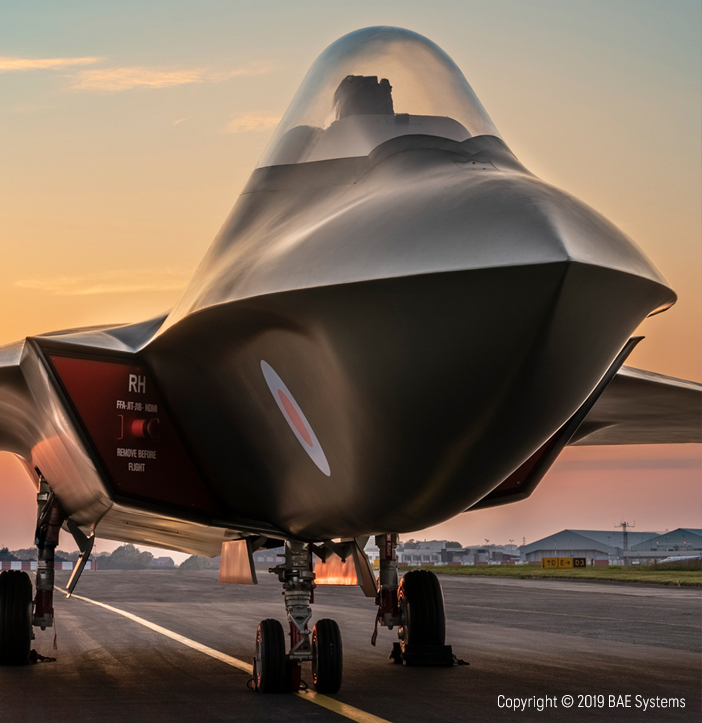
Over the last five years Rolls-Royce has been pioneering world-first technology that will contribute to the UK’s next-generation Tempest programme.
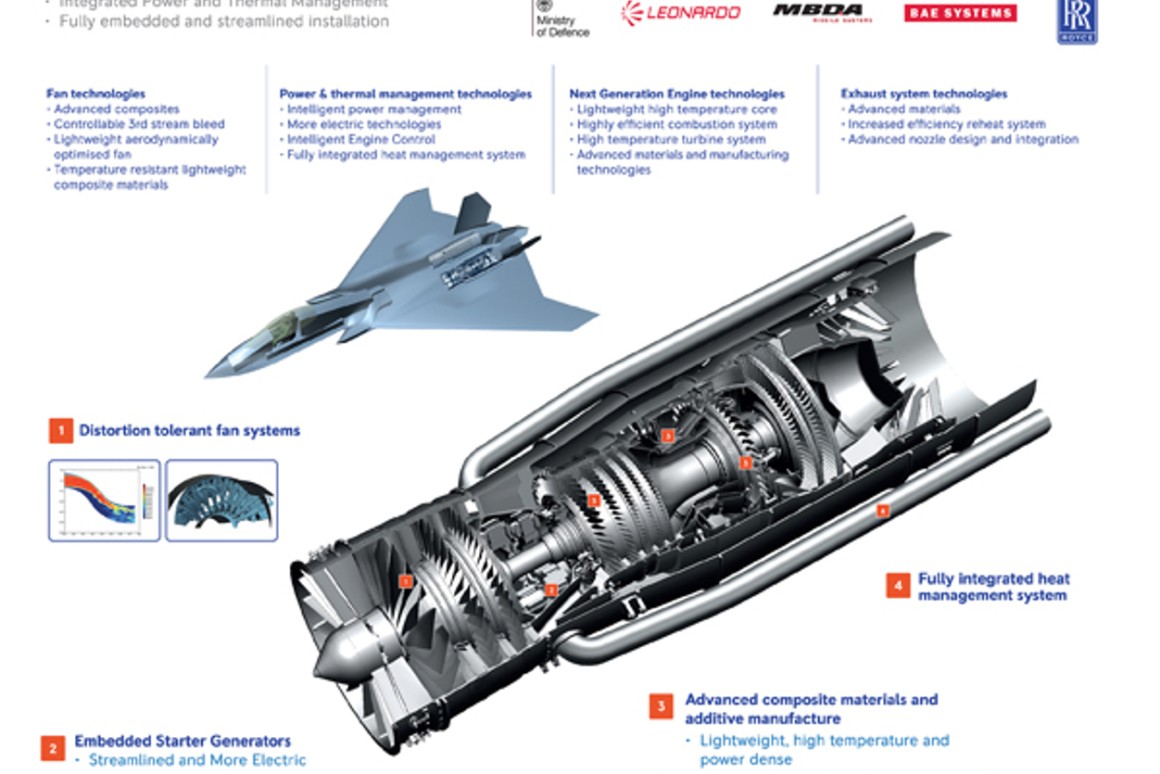
In an aim to be more electric, more intelligent and to harness more power, Rolls-Royce recognised that any future fighter aircraft will have unprecedented levels of electrical power demand and thermal load; all needing to be managed within the context of a stealthy aircraft.
Before the launch of the Tempest programme, Rolls-Royce had already started to address the demands of the future. Back in 2014, the company took on the challenge of designing an electrical starter generator that was fully embedded in the core of a gas turbine engine, now known as the Embedded Electrical Starter Generator or E2SG demonstrator programme.
Conrad Banks, Chief Engineer for Future Programmes at Rolls-Royce said: “The electrical embedded starter-generator will save space and provide the large amount of electrical power required by future fighters. Existing aircraft engines generate power through a gearbox underneath the engine, which drives a generator. In addition to adding moving parts and complexity, the space required outside the engine for the gearbox and generator makes the airframe larger, which is undesirable in a stealthy platform.”
Phase two of this programme has now been adopted as part of Rolls-Royce’s contribution to the Tempest programme.
As part of this journey, the company has been continuously developing its capabilities in the aerospace market, from gas turbine technologies through to integrated power and propulsion systems. The goal being to provide not only the thrust that propels an aircraft through the sky, but also the electrical power required for all the systems on board as well as managing all the resulting thermal loads.
Rolls-Royce is adapting to the reality that all future vehicles, whether on land, in the air or at sea will have significantly increased levels of electrification to power sensors, communications systems weapons, actuation systems and accessories, as well as the usual array of avionics.
The launch of phase one of the E2SG programme saw significant investment in the development of an integrated electrical facility – a unique test house where gas turbine engines can be physically connected to a DC electrical network.
The launch of the second phase of the project in 2017 saw the inclusion of a second electrical generator connected to the other spool of the engine. It also included an energy storage system in the electrical network and the ability to intelligently manage the supply of power between all these systems.
The two-spool mounted electrical machines allows, by combination of operation as either a motor or a generator, the production of a series of functional effects on the engine, including the transfer of power electrically between the two spools.
As part of the E2SG programme, Rolls-Royce is investigating the feasibility of using dual spool generation to influence the operability, responsiveness and efficiency of the engine. Another key technology under development is the Power Manager intelligent control system, which uses algorithms to make real time intelligent decisions about how to supply the current aircraft electrical demand while optimising other factors including engine efficiency to reduce fuel burn or engine temperature to extend component life.
Throughout the Tempest programme, Rolls-Royce will be continuing to mature the electrical technologies demonstrated by the E2SG programme, with a third phase of testing likely to include a novel thermal management system being integrated with the overall system, as well as more electric engine accessories.
The company also intends to showcase a full-scale demonstrator of an advanced power and propulsion system. There will be new technologies in all parts of the gas turbine, including twin spool embedded generation to higher power levels, an advanced thermal management system, an energy storage system tailored to the expected duty cycle of the future fighter and an intelligent power management system which will be able to optimise the performance of both the gas turbine and the power and thermal management system.