Three new Buicks with plugs are coming for China, the Prius hybrid may get a restyle, sedans and small cars continue to depart Detroit, and we've got this month's best green-car deals. All this and more on Green Car Reports. If a report from a Japanese site is correct, the 2019 Toyota Prius hybrid will get a mild facelift to look a bit more like...
Two years ago this month, Fiat Chrysler Automobiles essentially threw in the towel on the "automobiles" part of its name. Canceling the compact Dodge Dart and the mid-size Chrysler 200 sedans, the company doubled down on the pickup trucks and utility vehicles that had long been its profit centers. Now that decision has become a trend, spurred on...
For 15 years now, Buick has been a far more important brand in China than it is in North America: four out of five Buicks sold globally are purchased by Chinese buyers. The brand has a wider range and variety of vehicles in that country, along with numerous models U.S. buyers never lay eyes on. So Buick's announcement that it will take the wraps...
Often, to sell electric cars, supporters and salespeople argue that buyers will save money in the long run from lower fuel (or power) bills. With deals up to $15,700 off and payments as low as $179 a month, several hybrid, electric, and fuel-efficient cars will cost less this month right up front. A few of the cars are older models, but that...
Predictions range all over the map on when electric-car sales are going to take off, depending on whether you're talking to a Wall Street bull or bear, what happens to gas prices, and even who's in office. With that in mind, we thought we'd ask our Twitter followers with an interest in electric cars how soon they think electric cars might become...
Global sales of compact hatchbacks are hardly surging, and fuel economy for all types of vehicles is steadily improving. Even given those factors, though, the fourth-generation Toyota Prius hybrid has had an especially rough road since its launch as a 2016 model. At just 108,661 deliveries across four different models, U.S. Prius sales were almost...
A Tesla founder has a new startup car company, the British utility would be OK with more electric cars sooner, reporters are getting a crucial distinction wrong, and we've got a new Twitter poll on the Honda Clarity. All this and more on Green Car Reports. The national electric utility in the U.K. supports moving up the date sales of new cars with...
Honda has adopted an unusual strategy with its Clarity, creating a whole new model for its green car, separate from its mainstream midsized sedan, the Accord. While the Accord is available as a conventional hybrid, the Clarity sedan will encompass three models: a battery electric with 89-mile range, a 48-mile plug-in hybrid, and a fuel-cell...
Journalism as an industry is under great pressure these days. There are far more people writing "content" than in past decades, and in general they are having to produce more of it for less money than they did 10, 20, or 50 years ago. That's no excuse, however, for getting the basics wrong. DON'T MISS: Hey, media, get it straight: "electrified" is...
In the beginning, there was Tesla, although it wasn't started by current CEO Elon Musk. While Musk has now become synonymous with the electric-car brand, Tesla was actually founded by Martin Eberhard and Marc Tarpenning, who had previously founded and sold a eBook reader company. While both left the company in 2008, they have kept their hands in...
Norway and The Netherlands started the trend a few years ago, though they're relatively tiny car markets. Then France and the U.K. joined in. China, the world's largest new-car market by far, is doing it—though the country hasn't decided when. All of those countries plan to ban, or work the end of, sales of new vehicles with...
A startling announcement from a zero-emission truck maker, some grim news on climate change, sloppiness from the Trump administration's EPA, and a quixotic round-the-world electric-car trip. All this and more on Green Car Reports. Over the weekend, as we do every seven days, we ran down last week's most important green-car stories. It may seem...
Despite the sturm und drang around the announcement by embattled EPA chief Scott Pruitt that he will relax emission limits for 2022 through 2025 vehicles, not much will happen immediately. His determination last week that the Obama administration was "incorrect" and that the limits on those vehicles weren't needed kicks off a lengthy process of...
President Trump has taken a lot of flack for pulling out of the Paris climate accords, claiming they were a bad deal for the country he leads. Perversely, the problem with the global climate treaty may not be that Trump's action made the potential for devastation worse, but rather that the effects of climate change are already on track to be so...
Nikola Motor Company, which is working to produce two Class 8 semi trucks to compete with Tesla's upcoming electric Semi, is showing some signs of success—and apparently rubbing Tesla's nose in it. The Salt Lake City-based company announced last week that it would refund all deposits it has taken on its battery-electric and hydrogen semi...
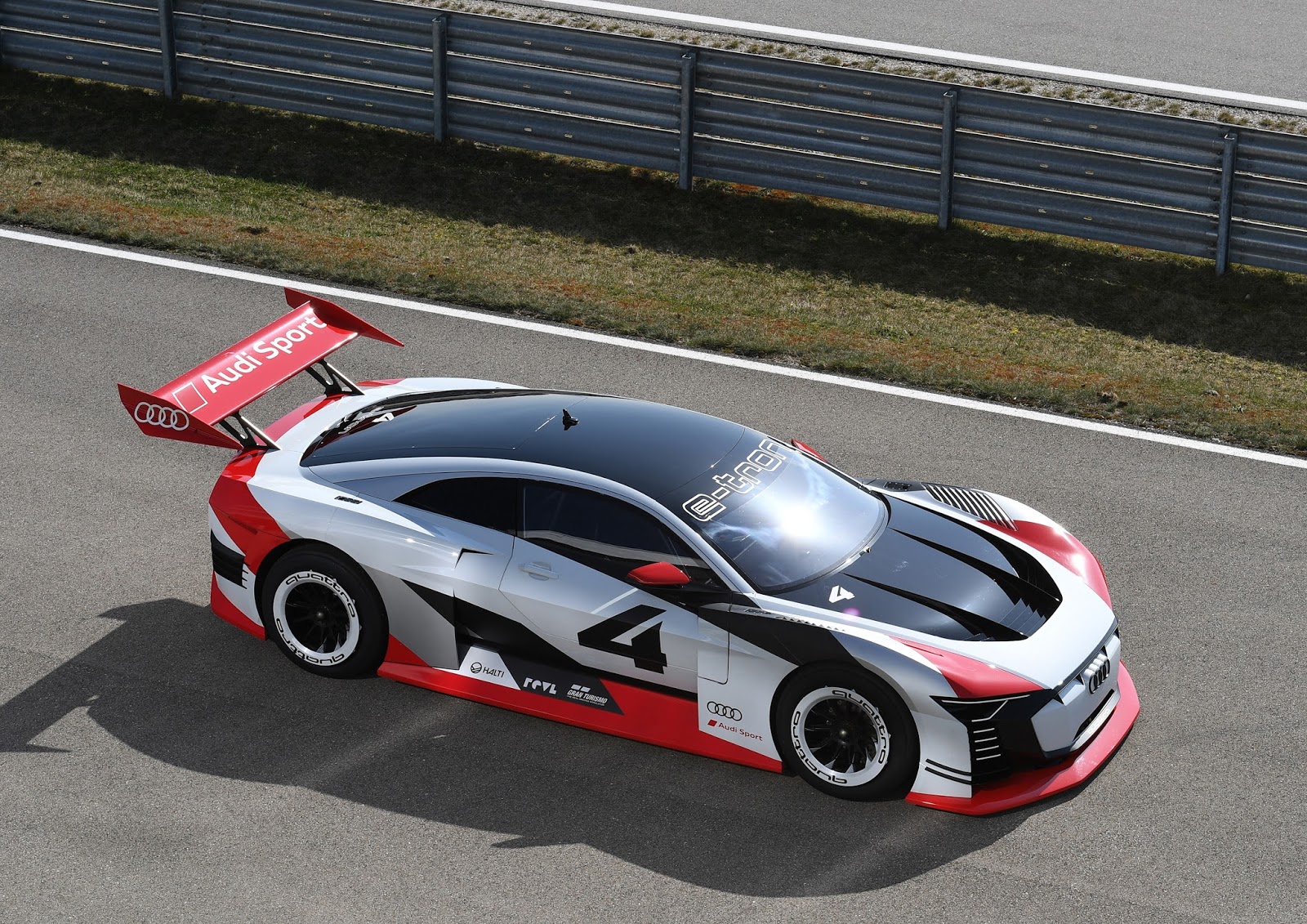
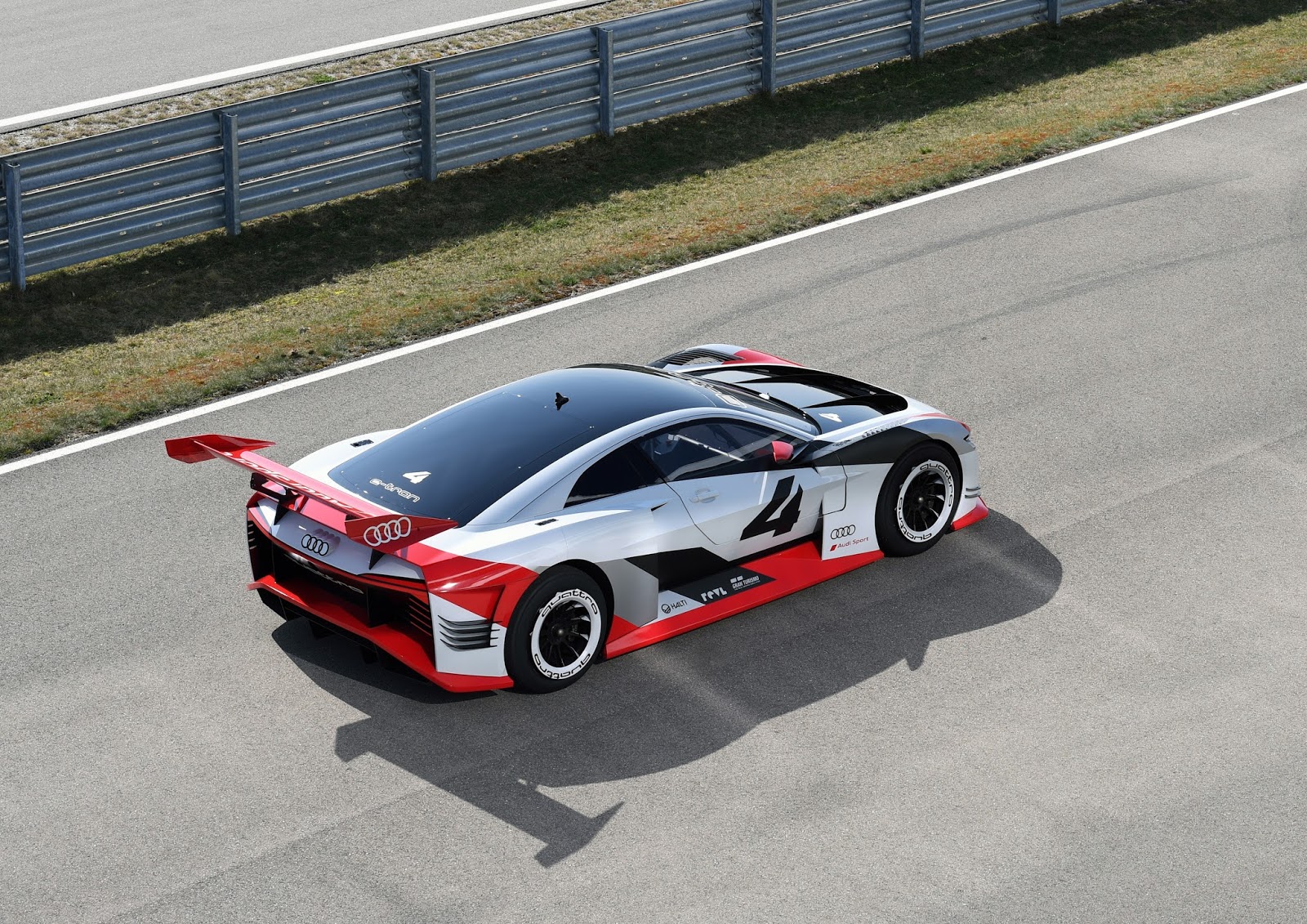
With the fully electric “Audi e-tron Vision Gran Turismo” concept car Audi is now turning electric mobility into a tangible experience in a unique way. Originally developed exclusively for virtual races on PlayStation 4, Audi is making the new race car reality in conjunction with Formula E. Starting with the race in Rome on Saturday, April 14, the Audi e-tron Vision Gran Turismo will be deployed as a race taxi.
“E-Mobility is rapidly gaining importance,” says Peter Mertens, Member of the Board of Management, Technical Development, AUDI AG. “That is why in 2017 Audi was the first German manufacturer to enter Formula E with a factory-backed commitment. In our development laboratory motorsport, we are continuously expanding our expertise in e-mobility and gathering valuable experience also in extremely demanding conditions. With the Audi e-tron Vision Gran Turismo race taxi we are turning electric mobility into a tangible experience for our customers and guests as part of the Formula E races – in the middle of the world’s metropolises.”
The customers and guests of the brand with the four rings will be able to experience Formula E’s city circuits as passengers in the Audi e-tron Vision Gran Turismo starting at the race in Rome (April 14). Employees at Audi’s pre-production center developed and produced this one-of-a-kind car within the space of just eleven months based on the example of the Audi e-tron Vision Gran Turismo from the “Gran Turismo” PlayStation game. The million-selling “Gran Turismo” game has long acquired cult status with gamers around the globe. Audi has been working together with Sony and Polyphony Digital – the creators of “Gran Turismo” – for nearly 20 years. Audi designers created the Audi e-tron Vision Gran Turismo for the “Vision Gran Turismo” competition that was launched on the market on the occasion of the popular game’s 15th anniversary. Numerous automobile manufacturers developed virtual race cars for the contest.
Many of these concept cars were subsequently built as full-scale models as well and presented at trade shows. The Audi e-tron Vision Gran Turismo, however, is the first concept car of this range to be deployed to real-world race tracks as a fully functional vehicle. “This is what we are particularly proud of,” says Audi’s chief designer Marc Lichte. “Although the design of a virtual vehicle allows much greater freedom and the creation of concepts which are only hard to implement in reality, we did not want to put a purely fictitious concept on wheels. Our aim was a fully functional car. The Audi e-tron Vision Gran Turismo shows that electric mobility at Audi is very emotive. This car incorporates numerous elements of our new design language such as the inverted single frame in the vehicle’s color that will be typical for our new e-tron models.”
Audi has deliberately taken up design elements and the color of the legendary Audi 90 quattro IMSA GTO with which the company in 1989 thrilled motorsport fans in the North American IMSA-GTO racing series with drivers like Hans-Joachim Stuck, Walter Röhrl, Hurley Haywood and Scott Goodyear. Featuring a combination of systematic lightweight design and quattro drive paired with a powerful five-cylinder turbo engine, the car was far ahead of its time back then.
The Audi e-tron Vision Gran Turismo has permanent all-wheel drive as well, the fully electric e-tron quattro all-wheel drive with variable power distribution. Three electric motors, each with output of 200 kW, propel the concept car. Two electric motors drive the rear axle and the third one the front axle, using individual components from the future Audi e-tron. System output is 600 kW (815 hp). With a curb weight of 1,450 kilograms the electric race car has a power to weight ratio of 1.78 kilograms per horsepower with ideal 50:50 percent weight distribution between the front and the rear axle. The Audi e-tron Vision Gran Turismo accelerates from 0 to 100 km/h in less than 2.5 seconds.
The futuristic race taxi will be deployed at all European Formula E races and numerous other events in 2018. At the wheel will be former DTM driver Rahel Frey from Switzerland or Le Mans winner Dindo Capello from Italy.
What do you do when the year you planned for your round-the-world trip in an electric car turns into two—and you still haven't reached your destination? If you're taking such an ambitious trip, it helps to have a name as whimsical as Wiebe Wakker. He's the Dutchman undertaking this adventure in a Volkswagen Jetta Sportwagen converted to run...
How many Tesla Model 3 cars did the company make and deliver during the first quarter of this year? Why did one reader trade in his year-old Chevrolet Bolt EV electric car for a used Tesla Model S? This is our look back at the Week In Reverse—right here at Green Car Reports—for the week ending on Friday, April 6, 2018. Friday, we wrote...
Today, the Jaguar I-Pace shows how EV styling can be done; Daimler announced Smart will be all-electric brand by 2020, 2018 Nissan Leaf owners spot fast-charge problems; and the EPA refutes 1,217 pages of its own scientific analysis with 38 pages of lobbying arguments: All this and more on Green Car Reports. With its new electric I-Pace crossover...
As Tesla has shown, not all fast charging is created equal. Now owners of the new 2018 Nissan Leaf are complaining that that the car's "fast" charging is not always as fast as advertised. Owners have found that the car's electronic management software dials back charging speeds with each successive fast charge on any given trip. Nissan says this...

 Three new Buicks with plugs are coming for China, the Prius hybrid may get a restyle, sedans and small cars continue to depart Detroit, and we've got this month's best green-car deals. All this and more on Green Car Reports. If a report from a Japanese site is correct, the 2019 Toyota Prius hybrid will get a mild facelift to look a bit more like...

 Two years ago this month, Fiat Chrysler Automobiles essentially threw in the towel on the "automobiles" part of its name. Canceling the compact Dodge Dart and the mid-size Chrysler 200 sedans, the company doubled down on the pickup trucks and utility vehicles that had long been its profit centers. Now that decision has become a trend, spurred on...
 For 15 years now, Buick has been a far more important brand in China than it is in North America: four out of five Buicks sold globally are purchased by Chinese buyers. The brand has a wider range and variety of vehicles in that country, along with numerous models U.S. buyers never lay eyes on. So Buick's announcement that it will take the wraps...
 Often, to sell electric cars, supporters and salespeople argue that buyers will save money in the long run from lower fuel (or power) bills. With deals up to $15,700 off and payments as low as $179 a month, several hybrid, electric, and fuel-efficient cars will cost less this month right up front. A few of the cars are older models, but that...
![Tesla Supercharger site in Vacaville, California, before expansion [photo: George Parrott]](https://images.hgmsites.net/tmb/tesla-supercharger-site-in-vacaville-california-before-expansion-photo-george-parrott_100614960_t.gif) Predictions range all over the map on when electric-car sales are going to take off, depending on whether you're talking to a Wall Street bull or bear, what happens to gas prices, and even who's in office. With that in mind, we thought we'd ask our Twitter followers with an interest in electric cars how soon they think electric cars might become...
Predictions range all over the map on when electric-car sales are going to take off, depending on whether you're talking to a Wall Street bull or bear, what happens to gas prices, and even who's in office. With that in mind, we thought we'd ask our Twitter followers with an interest in electric cars how soon they think electric cars might become... 
 Global sales of compact hatchbacks are hardly surging, and fuel economy for all types of vehicles is steadily improving. Even given those factors, though, the fourth-generation Toyota Prius hybrid has had an especially rough road since its launch as a 2016 model. At just 108,661 deliveries across four different models, U.S. Prius sales were almost...
 A Tesla founder has a new startup car company, the British utility would be OK with more electric cars sooner, reporters are getting a crucial distinction wrong, and we've got a new Twitter poll on the Honda Clarity. All this and more on Green Car Reports. The national electric utility in the U.K. supports moving up the date sales of new cars with...
 Honda has adopted an unusual strategy with its Clarity, creating a whole new model for its green car, separate from its mainstream midsized sedan, the Accord. While the Accord is available as a conventional hybrid, the Clarity sedan will encompass three models: a battery electric with 89-mile range, a 48-mile plug-in hybrid, and a fuel-cell...
 Journalism as an industry is under great pressure these days. There are far more people writing "content" than in past decades, and in general they are having to produce more of it for less money than they did 10, 20, or 50 years ago. That's no excuse, however, for getting the basics wrong. DON'T MISS: Hey, media, get it straight: "electrified" is...
 In the beginning, there was Tesla, although it wasn't started by current CEO Elon Musk. While Musk has now become synonymous with the electric-car brand, Tesla was actually founded by Martin Eberhard and Marc Tarpenning, who had previously founded and sold a eBook reader company. While both left the company in 2008, they have kept their hands in...
 Norway and The Netherlands started the trend a few years ago, though they're relatively tiny car markets. Then France and the U.K. joined in. China, the world's largest new-car market by far, is doing it—though the country hasn't decided when. All of those countries plan to ban, or work the end of, sales of new vehicles with...
 A startling announcement from a zero-emission truck maker, some grim news on climate change, sloppiness from the Trump administration's EPA, and a quixotic round-the-world electric-car trip. All this and more on Green Car Reports. Over the weekend, as we do every seven days, we ran down last week's most important green-car stories. It may seem...
![EPA administrator Scott Pruitt [photo from 2014]](https://images.hgmsites.net/tmb/oklahoma-attorney-general-scott-pruitt-2014_100584650_t.gif) Despite the sturm und drang around the announcement by embattled EPA chief Scott Pruitt that he will relax emission limits for 2022 through 2025 vehicles, not much will happen immediately. His determination last week that the Obama administration was "incorrect" and that the limits on those vehicles weren't needed kicks off a lengthy process of...
Despite the sturm und drang around the announcement by embattled EPA chief Scott Pruitt that he will relax emission limits for 2022 through 2025 vehicles, not much will happen immediately. His determination last week that the Obama administration was "incorrect" and that the limits on those vehicles weren't needed kicks off a lengthy process of... 
 President Trump has taken a lot of flack for pulling out of the Paris climate accords, claiming they were a bad deal for the country he leads. Perversely, the problem with the global climate treaty may not be that Trump's action made the potential for devastation worse, but rather that the effects of climate change are already on track to be so...
 Nikola Motor Company, which is working to produce two Class 8 semi trucks to compete with Tesla's upcoming electric Semi, is showing some signs of success—and apparently rubbing Tesla's nose in it. The Salt Lake City-based company announced last week that it would refund all deposits it has taken on its battery-electric and hydrogen semi...




 What do you do when the year you planned for your round-the-world trip in an electric car turns into two—and you still haven't reached your destination? If you're taking such an ambitious trip, it helps to have a name as whimsical as Wiebe Wakker. He's the Dutchman undertaking this adventure in a Volkswagen Jetta Sportwagen converted to run...
 How many Tesla Model 3 cars did the company make and deliver during the first quarter of this year? Why did one reader trade in his year-old Chevrolet Bolt EV electric car for a used Tesla Model S? This is our look back at the Week In Reverse—right here at Green Car Reports—for the week ending on Friday, April 6, 2018. Friday, we wrote...
 Today, the Jaguar I-Pace shows how EV styling can be done; Daimler announced Smart will be all-electric brand by 2020, 2018 Nissan Leaf owners spot fast-charge problems; and the EPA refutes 1,217 pages of its own scientific analysis with 38 pages of lobbying arguments: All this and more on Green Car Reports. With its new electric I-Pace crossover...
 As Tesla has shown, not all fast charging is created equal. Now owners of the new 2018 Nissan Leaf are complaining that that the car's "fast" charging is not always as fast as advertised. Owners have found that the car's electronic management software dials back charging speeds with each successive fast charge on any given trip. Nissan says this...