World Premiers of VW e-Golf and e-up! @ IAA 2013 [VIDEO]

In a dual world premiere, Volkswagen will be presenting two new and extremely efficient electric cars at the International Motor Show (IAA) in Frankfurt (10th to 22nd September): the e-up! and e-Golf. This means that Europe's most successful carmaker is transitioning two high-volume production models to the age of electric mobility. Both zero-emissions cars offer unlimited everyday practicality, each has four doors, and they are attractively equipped. Standard features: automatic climate control with parking heater and ventilation, radio-navigation system, windscreen heating, LED daytime running lights and, in the e-Golf, the Volkswagen brand's first use of LED headlights. The two newcomers are also leaders in energy efficiency: the e-up! consumes just 11.7 kWh of electricity per 100 km – this makes it the new world champion in efficiency. The e-Golf, positioned two classes higher, attains an excellent value of 12.7 kWh. Given an electricity price of €0.258 per kWh (Germany, as of 31st July 2013), driving 100 km with the e-up! costs just €3.02, and with the e-Golf it is around €3.30.

Made in Germany. Innovative drive technologies are core competencies at Volkswagen. Therefore, the e-motors, gearboxes and lithium-ion batteries of the e-up! and e-Golf are developed in-house, and they are manufactured in large Volkswagen component plants in Germany.

Typical Volkswagen. All Volkswagen are intuitive to operate, extremely practical in everyday use and sophisticated, and these traits have been fully transferred to the brand's new e-vehicles. The zero-emission cars from Volkswagen are manufactured with the same high-volume production systems as their counterparts with combustion engines.

e-Golf data. The e-Golf, which is being presented in a world premiere in Frankfurt, is driven by a 85 kW / 115 PS electric motor. The motor produces its maximum drive torque of 270 Nm as soon as it starts off. The results: the front-wheel drive e-Golf reaches 100 km/h in 10.4 seconds. On a motorway, the speed of the five-seat front-wheel drive car is electronically limited to 140 km/h.

e-up! data. Also making its debut in a world premiere at the IAA is the four-seat e-up!. Its electric motor produces 60 kW / 82 PS. This motor transmits 210 Nm of torque to the driven front axle from a standstill. It completes the sprint to 100 km/h in 12.4 seconds. Top speed: 130 km/h.

Driving ranges tailored for commuters. The e-up! can drive 160 km on one battery charge (18.7 kWh), while the e-Golf with its larger battery (24.2 kWh) has a range of 190 km. In both models, two very efficient driving modes ("Eco", "Eco+") and four just as easy to activate regenerative braking modes ("D1", "D2", "D3" and "B") help to extend maximum ranges. And they are driving ranges that make sense. In Germany, for example, studies by the Federal Ministry for Transport, Building and Urban Development found that around 80 per cent of all car drivers in Germany drive fewer than 50 km daily.

Quick charging. The fastest CCS charging stations (direct current) shorten the time needed to charge the battery of an e-up! or an e-Golf to 80 per cent capacity to just around half an hour.

Powertrain and fuel strategy. Over the past decade, Volkswagen has already systematically sketched out a schedule for the future in its powertrain and fuel strategy, which included starting points for electric vehicles like the e-up! and e-Golf. This strategy sets up a timeline with realistic time windows for the introduction of alternative drive systems such as the hybrid, electric and hydrogen-based systems. In this scenario, the all-electric drive system – which will be demonstrated by the new e-up! and e-Golf – represents an indispensable and sensible supplemental drive system. That is because electric cars utilise renewable energy sources and enable zero-emissions mobility in metropolitan areas. Nonetheless, well into the future Volkswagen will continue to promote an intelligent mix of the most efficient drive systems.

Driving at the pace of the big city. The fact is that the target group for electric cars is growing, because a paradigm shift has begun. Sustainable mobility is having an increasing impact on people's actions. Yet the products for implementing this environmental awareness must be practical and fun as well - such as the e-up! and e-Golf which accelerate to big city pace in just a few seconds. The new zero-emission Volkswagen cars therefore have the potential for irreversibly charging up the electric car segment with innovative technology, a high level of everyday practicality and a dynamic driving feeling.

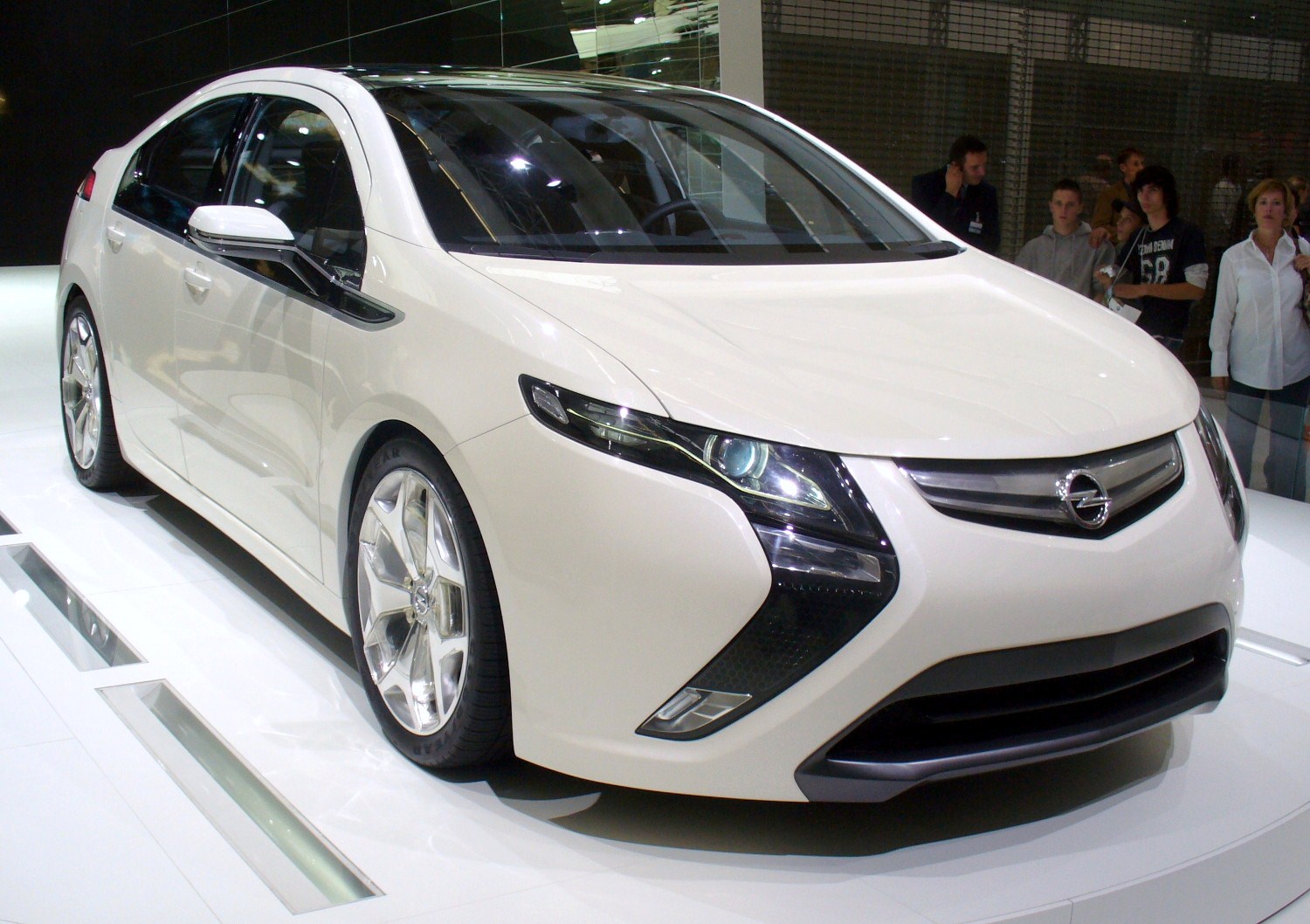
Opel cuts Ampera price by 17 percent in Germany

General Motors' European brand Opel has announced a 17 percent cut in the price of its Ampera electric car in Germany at this week's Frankfurt car show, where rivals will be showing off their electric models for the first time.

"Effective immediately, we are lowering the price of an Ampera to 38,300 euros ($50,400), which is a cut of almost 8,000 euros in Germany," Opel Chief Executive Karl-Thomas Neumann told an industry conference on Monday.

Speaking to reporters, Neumann said it was no coincidence that the price cut coincided with the premiere of key competitor models like the electric version of the Volkswagen Golf hatchback and Up minicar.

"We see a tremendous chance given all the talk about electro-mobility and we want to remind people that we have been in the market already for one and a half years," he said.

Price cuts will also be made in other markets, but due to differing tax laws, the price-tag and the size of the reduction will be different from country to country, a company spokesman said.

Opel's finance chief Michael Lohscheller said the price cut would not have any impact on its target of a slightly narrower loss for Opel this year given the relatively low sales figures.

He also said that a better-than-expected first half would not mean it would upgrade its outlook either. "The second half is traditionally weaker than the first half in the auto industry due to seasonal effects. We're sticking to our full-year guidance," Opel CFO told Reuters on the sidelines of the conference.

Only 828 new Ampera cars were registered in Germany last year out of a market of 3.08 million vehicles, according to official figures from the KBA motor vehicle agency.

Electrification meets performance in new generation of hybrids

Faced with tougher European regulations on pollution, but a constant desire among affluent drivers for speed and panache, many carmakers have reached the same solution: luxury hybrids.

Pricy new models are heading for production from BMW, Daimler AG's Mercedes-Benz and Tata Group's Land Rover, among others, - some with gasoline engines, some with diesels, but all with electric motors and battery packs.

They will slot into Europe's automotive landscape just below top-end hybrids such as LaFerrari, unveiled earlier this year by the Fiat-owned supercar maker, and a new 918 Spyder from Volkswagen's Porsche, on display in its final production trim at the Frankfurt auto show this week

While they may not have as much of an impact on energy consumption and clean air as smaller, more efficient hybrids and pure electric cars such as the BMW i3 and the Renault Zoe, the new high-performance hybrids could represent a clever compromise between the demands of regulators and speed junkies.

The cars offer a "feel-good factor" to wealthy drivers, according to LMC Automotive analyst Jonathon Poskitt, giving them the social kudos of being "green" while also allowing them to still enjoy the buzz and status of a fast, powerful vehicle.

On top of existing rules aimed at cutting carbon dioxide emissions for all new cars in the European Union by 2015, the 28-country bloc is working on stricter targets for 2020.

That makes luxury hybrids of critical importance for premium carmakers.

"Manufacturers need to gently push them into the market, and doing this under the premise that it provides politically correct performance - in other words, green - is a nice way to market that," said Tom De Vleesschauwer, director of long-term planning and sustainability for consulting firm IHS Automotive.

But there are also risks. Carmakers will need to convince drivers that hybrid engines perform at least as well as the traditional gasoline and petrol varieties.

And they will still have to apply electrification to their larger luxury sedans and sports cars in order to meet the stricter emissions rules, De Vleesschauwer said.

But he was optimistic. BMW's new i Series of electrified cars "symbolizes the new acceptable face of performance - keeping performance relevant for the times," he said.

ALL ABOUT PERFORMANCE

In addition to the BMW i8, the latest production-based performance hybrids on display at the Frankfurt auto show include the Mercedes-Benz S 500 Plug-In Hybrid and Land Rover's Range Rover Hybrid and Range Rover Sport Hybrid.

But performance-tuned hybrid propulsion systems won't be exclusive to high-end luxury vehicles. Among the performance hybrid concepts on the Frankfurt show floor are VW's Audi Sport Quattro, Geely Automobile's Volvo Concept Coupe and Toyota Motor Corp's Yaris Hybrid-R.

Toyota, whose Prius remains the world's best-selling gasoline-electric vehicle, describes the Yaris Hybrid-R as a "showcase of ideas for the development of hybrid technology for maximum performance and increased driving pleasure."

While the standard Yaris is a modest hatchback aimed at entry-level buyers, the addition of all-wheel drive and a 420-horsepower powertrain inspired by the Toyota TS030 Hybrid Le Mans racecar injects some serious sizzle into the subcompact.

Volvo's Concept Coupe is the first effort from new design boss Thomas Ingenlath and is the first to use Volvo's new scalable product architecture, which will underpin a whole family of future compact vehicles.

The Concept Coupe's underlying architecture is flexible to accommodate completely autonomous driving - a goal that Volvo hopes to put on the road "before 2020." For now, the Frankfurt show car features a potent 400-horsepower hybrid powertrain.

While it sports a plug-in hybrid driveline, the Audi Sport Quattro concept is all about pure performance. With nearly 700 horsepower on tap, the all-wheel-drive coupe features a twin-turbocharged 4.0-litre V8 gasoline engine with cylinder deactivation and a start-stop system to improve efficiency.

On the production front, the new Mercedes-Benz S 500 Plug-In Hybrid is being prepared for an early 2014 introduction, when it will square off against such competitors as Porsche's recently launched Panamera S E-Hybrid.

The S 500 combines a 329-horsepower turbocharged 3.0-litre V6 gasoline engine with a 107-horsepower electric motor.

Also slated for delivery in early 2014 are the new Range Rover Hybrid and Range Rover Sport Hybrid, which British parent Land Rover, a unit of India's Tata Group, is billing as "the world's first premium diesel SUV hybrids."

Both utility vehicles share a common drivetrain, built around the company's turbocharged 3.0-litre V6 diesel mated with an electric motor, producing a combined output of just under 340 horsepower.

At the opposite end of the hybrid spectrum, in terms of size, shape, styling and sporting character, is BMW's i8, which has been seen previously in concept guise at various motor shows and debuts at Frankfurt in final production trim.

Ian Robertson, BMW's global sales and marketing boss, puts the i8 in "in the super-sports category ... it's all that you'd expect from a performance car."

Built on a lightweight chassis with a carbon-fiber passenger cell, the four-passenger coupe features futuristic styling to match its advanced technology. Under the skin is a hybrid propulsion system that marries a 129-horsepower electric motor at the front with a 228-horsepower turbocharged 1.5-litre three-cylinder gasoline engine in the rear.

BMW plans a global launch of the i8 next May, initially targeting buyers in Europe, North America and China.

Nissan e-NV200 Electric Van in Final Development Phase

Nissan is in the final development phase of its second mass production zero emission vehicle, the e-NV200 compact van. Electric vehicles are ideal for urban delivery applications, and this vehicle is envisaged for use as a delivery van that offers a breakthrough type of mobility for entrepreneurs, featuring efficiency and green consciousness.

The company has been working with several large commercial fleets in global markets since 2011 to understand how the e-NV200 test car performs under real operating conditions. So far the e-NV200 has received positive comments for its quiet, comfortable driving with no emissions and low noise, CO2 reduction, and generous carrying capacity.

Feedback will help Nissan adapt future battery-powered light commercial vehicles to better fulfill exacting customer requirements.

The 100% electric compact van, e-NV200, is scheduled for launch in 2014. As Nissan’s second global electric vehicle, it follows Nissan LEAF, the world’s first affordable 100% EV for the mass market.

In addition to further reinforcing Nissan’s zero-emissions leadership, the launch of the e-NV200 represents significant innovation in the commercial vehicle market. The model offers all the spaciousness, versatility and practicality of its base vehicle, the multipurpose commercial van NV200. It delivers advanced performance that can only be achieved through the powertrain of the Nissan LEAF.

The e-NV200 provides exceptionally smooth acceleration and quietness, driving characteristics that are unique to EVs, while emitting no CO2 emissions at the point of use. e-NV200 displays great potential for businesses, with its advanced telematics system and power-supply function in the cargo compartment. Also, the model's enviable running cost – a priority for most companies – will be highly attractive when competing in the commercial vehicle marketplace.

"The e-NV200 will offer all the spaciousness, versatility and practicality of a traditional diesel or gas-powered compact van, but with zero CO2 or other pollutant emissions at the point of use. What's more, it will provide an outstanding driving experience that is unique to EVs. e-NV200 represents a bold and innovative addition to our commercial vehicle range, which is already one of the broadest of any manufacturer," said Hideto Murakami, corporate vice president, Nissan Motor Co., Ltd.

When e-NV200 production begins it will become Nissan's second zero-emission vehicle, but the company is already investigating further innovative ways of harnessing its world-leading EV technology in the commercial vehicle market with the e-NT400, which is a light truck based on the European NT400Cabstar, known as NT400 Atlas in Japan.

The e-NT400, still in its development phase but with plans for production under study, uses Nissan LEAF running gear to create a zero-emission 100% electric vehicle.

Like e-NV200, e-NT400 would be able to enter city areas denied to conventional vehicles powered by diesel or petrol engines, while its near-silent running means it could operate around the clock as it creates no noise or emission nuisance.

Low running costs would make e-NT400 a breakthrough business proposition, while the high output, high capacity lithium-ion battery powering the 80kW electric motor gives smooth, vibration-free acceleration for a completely unprecedented driving experience.

With a cruising range of 87 miles (140 kilometers) in NEDC mode, and the availability of fully integrated Quick Charging potential - allowing the battery to be charged to 80 per cent capacity in just 60 minutes - the e-NT400 has the potential to make a serious contribution to lowering CO2 emission in cities. At the same time, it will increase productivity and lower running costs for operators.

Hideto Murakami, Nissan corporate vice president responsible for the Global LCV Business Unit, said: "As well as e-NV200, Nissan is developing a number of vehicles that adapt a diverse range of EV technologies. We want to explore the potential of EV technology in the light commercial market to diversify the value that Nissan's commercial vehicles provide to businesses."

Tesla Model S takes on the Aston Martin Rapide S [VIDEO]

The Tesla Model S is a landmark car, but is it better than the mighty Aston Martin Rapid S? Autocar take to the test track to find out.

Steve Sutcliffe over at Autocar thinks the Tesla Model S is the future...today. It offers most of the usability of the world's best luxury saloons, but with no tailpipe emissions and a fraction of the running costs.

And it handles too. Really handles. But can it really be better than the £150,000 Aston Martin Rapide S?

Nissan to Showcase ZEOD RC Electric Race Car at Fuji WEC event

Japanese fans will have the first opportunity to see the Nissan ZEOD RC in action when the car makes its public on-track debut at this year's Fuji Speedway round of the FIA World Endurance Championship.

Running in pure electric mode, the Nissan ZEOD RC will undertake demonstration runs on October 18, 19 and 20 - all three days of the Japanese round of the WEC. The Fuji demonstration was announced today at the Nissan 360 global media event in California.

The ZEOD RC (Zero Emission On Demand Racing Car) will make its race debut at next year's Le Mans 24 Hour. The global leader in electric vehicles for the road, Nissan will trial variants of new electric drive train technologies as part of its intended future return to LM P1 competition to challenge for overall victory at the world's most prestigious endurance race.

Nissan's two-time Japanese SUPER GT champion Michael Krumm will drive the car at Fuji. Krumm was part of the driver line-up for the Nissan DeltaWing program in 2012 and also finished third in the LM P2 class this year at the Le Mans 24 Hours.

Krumm competes for Kondo Racing in the SUPER GT championship in Japan alongside Hironobu Yasuda. In addition to his SUPER GT and Le Mans schedule, Krumm also recently tested a Nissan Altima V8 Supercar in Australia for the factory Nissan team.

"It is certainly going to be a very unique experience to go that fast with electric power - especially since Fuji's main straight is nearly a mile long.

"Fuji Speedway is such an historic venue - it's actually pretty fitting that the ZEOD RC will have its first public runs here because this car certainly has the opportunity to change motorsport history.

"We're only doing a demonstration run but I'm really looking forward to seeing what kind of top speed we'll see on the straight."

"To be able to do that at such a great venue like Fuji Speedway, only 90 minutes away from the home of NISMO [Nissan's motorsport arm and a partner in the development of the ZEOD] in Yokohama, was too good to pass up."

The internal-combustion motor that will form part of the ZEOD's powertrain is not due to run in the car until January.

Japan tests 581 km/h Maglev train [VIDEO]

Japan resumes tests on magnetic levitation train intended to travel at speeds up to 581 kilomeres per hour.

Central Japan Railway Co. (JR Tokai) has began full-scale tests of the world's fastest train, the L0 series Maglev.

After completing test drives at 500 kph on the 42.8-kilometer-long Yama-nashi maglev test line stretching from Uenohara to Fuefuki in Yamanashi Prefecture to check such factors as durability, JR Tokai plans to start commercial operations between Tokyo and Nagoya in 2027.

Following a departure ceremony, Land, Infrastructure, Transport and Tourism Minister Akihiro Ota and JR Tokai chairman Yoshiyuki Kasai went for a 505 kph ride on the train.

“We were able to speak normally inside the maglev train [thanks to reduced noise levels]. I’m convinced this is world-class technology,” Ota said.

Testing will take place until fiscal 2016, during which time JR Tokai plans to switch to testing a 12-car train, which will be used on the commercial run.

The link is to be stretched west to Osaka by 2045.

Land Rover Evoque_e project announced

Jaguar Land Rover has announced its leadership of an advanced powertrain research and development programme for state-of-the-art, next-generation hybrid and battery-electric powertrain technologies based on the Range Rover Evoque platform.

‘Evoque_e’ is a two-year £16.3m UK government Technology Strategy Board project. Jaguar Land Rover will contribute £4m to the project and will lead a consortium of 12 selected partners – eight from industry and three universities.

The partners include Zytek Automotive, GKN Driveline, Motor Design Limited, AVL, Drive System Design, Williams Advanced Engineering, Delta Motorsport, Tata Steel, Bristol University, Cranfield University and Newcastle University.

Starting in October 2013, the unique collaboration will design, develop and build three research vehicles showcasing state-of-the-art, next-generation powertrain concepts for a mild hybrid electric vehicle (MHEV); a Plug-In Hybrid (PHEV) and a full Battery Electric Vehicle (BEV).

Peter Richings, Jaguar Land Rover Director Hybrids and Electrification,said: “The aim of the project is to develop technology platforms which are configurable and compatible within the architecture of an existing production vehicle. The modular technologies include single and multi-speed axle drives; modular battery packs and integrated power electronics, multi-machine, advanced control development and torque vectoring.

“The research teams will look at how the speed of the electric motor can be increased, to reduce its size, weight and cost while enhancing performance and durability. We will also look at the use of alternative materials to both reduce the use of rare earth materials and for systems optimisation.

“The outcome of the Evoque_e project will be new technologies with the potential for high volume production that are capable of delivering benchmark performance in terms of cost, weight and ustainable use of materials.”

As Britain’s biggest investor in automotive research and development, and the biggest investor in manufacturing R&D, Jaguar Land Rover is spending £2.75 billion in the year to March 2014 on product creation. Jaguar Land Rover showcased a number of the other collaborative research projects it is leading at the LCV 2013 event. These projects include the extreme downsizing of internal combustion engines, efficient management and storage of heat energies and weight reduction of engines through innovative new design concepts.

Commenting on these research projects, Dr Wolfgang Epple, Jaguar Land Rover Director Research and Technology said: “Jaguar Land Rover has ambitious plans for growth. We believe that the success of our global business – and the UK economy – lies in engineering and innovation. Our research programmes bring together some of the best engineering minds in the UK. With Evoque_e, we will build on previous Jaguar Land Rover technology demonstrators and show clearly the breadth of our capability and commitment in advanced powertrain technology.”

Jaguar Land Rover already collaborates with a number of leading universities in the UK on a range of technology and skills projects. More than half of Jaguar Land Rover’s research and advanced engineering team are based at Warwick University’s Warwick Manufacturing Group (WMG), to work collaboratively on key new technologies including energy storage, weight reduction and digital verification.

Antony Harper, Jaguar Land Rover Head of Research, illustrated the importance of this work and its benefits to the company and the UK economy, saying: “We are keenly aware that not all the clever people work for us and our collaborative research programmes harness the best of UK engineering innovation, to develop new and exciting technologies.

“The development of our business and our continuing investment in R&D has also encouraged inward investment into the UK, with our suppliers creating and funding their own research projects in UK universities. Technology Strategy Board funding allows us to multiply the effect of our investment and nurture UK-based technology investment, in supporting our work to address future needs, wants and legislation around the world.”

Land Rover Evoque_e project announced

Jaguar Land Rover has announced its leadership of an advanced powertrain research and development programme for state-of-the-art, next-generation hybrid and battery-electric powertrain technologies based on the Range Rover Evoque platform.

‘Evoque_e’ is a two-year £16.3m UK government Technology Strategy Board project. Jaguar Land Rover will contribute £4m to the project and will lead a consortium of 12 selected partners – eight from industry and three universities.

The partners include Zytek Automotive, GKN Driveline, Motor Design Limited, AVL, Drive System Design, Williams Advanced Engineering, Delta Motorsport, Tata Steel, Bristol University, Cranfield University and Newcastle University.

Starting in October 2013, the unique collaboration will design, develop and build three research vehicles showcasing state-of-the-art, next-generation powertrain concepts for a mild hybrid electric vehicle (MHEV); a Plug-In Hybrid (PHEV) and a full Battery Electric Vehicle (BEV).

Peter Richings, Jaguar Land Rover Director Hybrids and Electrification,said: “The aim of the project is to develop technology platforms which are configurable and compatible within the architecture of an existing production vehicle. The modular technologies include single and multi-speed axle drives; modular battery packs and integrated power electronics, multi-machine, advanced control development and torque vectoring.

“The research teams will look at how the speed of the electric motor can be increased, to reduce its size, weight and cost while enhancing performance and durability. We will also look at the use of alternative materials to both reduce the use of rare earth materials and for systems optimisation.

“The outcome of the Evoque_e project will be new technologies with the potential for high volume production that are capable of delivering benchmark performance in terms of cost, weight and ustainable use of materials.”

As Britain’s biggest investor in automotive research and development, and the biggest investor in manufacturing R&D, Jaguar Land Rover is spending £2.75 billion in the year to March 2014 on product creation. Jaguar Land Rover showcased a number of the other collaborative research projects it is leading at the LCV 2013 event. These projects include the extreme downsizing of internal combustion engines, efficient management and storage of heat energies and weight reduction of engines through innovative new design concepts.

Commenting on these research projects, Dr Wolfgang Epple, Jaguar Land Rover Director Research and Technology said: “Jaguar Land Rover has ambitious plans for growth. We believe that the success of our global business – and the UK economy – lies in engineering and innovation. Our research programmes bring together some of the best engineering minds in the UK. With Evoque_e, we will build on previous Jaguar Land Rover technology demonstrators and show clearly the breadth of our capability and commitment in advanced powertrain technology.”

Jaguar Land Rover already collaborates with a number of leading universities in the UK on a range of technology and skills projects. More than half of Jaguar Land Rover’s research and advanced engineering team are based at Warwick University’s Warwick Manufacturing Group (WMG), to work collaboratively on key new technologies including energy storage, weight reduction and digital verification.

Antony Harper, Jaguar Land Rover Head of Research, illustrated the importance of this work and its benefits to the company and the UK economy, saying: “We are keenly aware that not all the clever people work for us and our collaborative research programmes harness the best of UK engineering innovation, to develop new and exciting technologies.

“The development of our business and our continuing investment in R&D has also encouraged inward investment into the UK, with our suppliers creating and funding their own research projects in UK universities. Technology Strategy Board funding allows us to multiply the effect of our investment and nurture UK-based technology investment, in supporting our work to address future needs, wants and legislation around the world.”

Double Victory for Audi Hybrids at WEC round in Brazil [VIDEO]

Audi has remained unbeaten in the 2013 sports car season to date. The Audi R18 e-tron quattro hybrid sports car has won the fourth of eight rounds in the FIA World Endurance Championship (WEC). In addition, it claimed victory in the 12-hour classic at Sebring in March.

The race weekend in Brazil ended in victory for Marcel Fässler/André Lotterer/Benoît Tréluyer (CH/D/F) ahead of Loïc Duval/Tom Kristensen/Allan McNish (F/DK/GB). On clinching their success in the São Paulo 6 Hours, the winners reduced the gap to their team colleagues in the drivers’ standings by eight to 22 points.

After a flawless race, the current World Champions celebrated their second WEC win of the season following their success at Spa in May. 38,000 spectators watched Fässler/Lotterer/Tréluyer in car number ‘1’ cross the finish line at Interlagos with a three-lap advantage over their sister car.

The situation in the standings at the season’s midpoint has thus become more thrilling again after the Le Mans winners Loïc Duval (F), Tom Kristensen (DK) and Allan McNish (GB) had arrived with a 30-point advantage.

The significant gap in the race, though, does not reflect the true performance delivered by car number ‘2.’ In the early phase, Audi factory driver Allan McNish dominated the action. But then the drivers’ trio experienced an unusual streak of misfortune. In a safety car period, Tom Kristensen, after pitting, returned to the track behind a slower GT race car.

The nine-time Le Mans winner, who drove the fastest race lap as well, lost around half a minute because the car in front was not keeping the pace of the pack ahead. Loïc Duval subsequently took over the cockpit and was in the process of starting a recovery when, on lap 142 at the exit of the pit lane, he lost the right rear wheel of his car, which had gotten jammed while being mounted.

Thus, Duval had to complete one lap on three wheels. The resulting two stop-and-go penalties completed the misfortune of the leaders of the standings who thus lost four laps in total.

In the end though, Head of Audi Motorsport Dr. Wolfgang Ullrich had reason to be pleased with a race weekend that left nothing to be desired. Audi Sport Team Joest, on taking grid positions one and two, setting the fastest race lap and scoring a one-two result, achieved the maximum that was possible and celebrated the first victory in South America.

Only the eagerly awaited battle with Toyota did not take place. The challenger’s only race car had become involved in an accident as early as on lap 25 and, as a result, was forced to retire.

In three weeks from now, Audi Sport is aiming to continue its string of success. On September 22, the WEC will be racing on the circuit at Austin in the US state of Texas for the first time.

Toyota Yaris Hybrid-R designed for Road or Track

Toyota has transformed the volume-selling Yaris hatch into a dynamic track or road car by injecting it with high-performance engineering and advanced hybrid technology inspired by the company's Le Mans racing program.

The Yaris Hybrid-R, which will make its world premiere at next week's Frankfurt Motor Show, is a showcase of ideas for the future development of hybrid technology to achieve maximum performance and increased driving pleasure.The concept car's hybrid powertrain combines a highly tuned 1.6-litre four-cylinder turbo engine and two powerful electric motors to provide total output of 313kW (420hp). The direct-injection turbo, which has been adapted to racing conditions, provides 224kW (300hp) of power and 420Nm of torque to drive the front wheels.

It was specifically developed by Toyota Motorsport GmbH according to FIA (International Automobile Federation) rules for a Global Race Engine to be used in different motorsport disciplines, such as the World Rally Championship and the World Touring Car Championship

At the rear of the Yaris Hybrid-R, each wheel is powered by a 45kW (60hp) electric motor, providing an "intelligent" electric four-wheel drive capability. The motors generate electricity during braking and supplement the petrol engine during acceleration.

As with Toyota's TS030 hybrid Le Mans race car, the energy recovered from braking is stored in a super capacitor. Its high power density and fast charge/discharge speed are perfectly suited to the requirements of sporty driving on a track, which requires brief and immediate bursts of power.

Track and road modes

The Yaris Hybrid-R driver can push a button on the steering wheel to select "road" mode for day-to-day driving or "track" mode for competition."Track" mode makes full use of available performance, with the rear electric motors able to reach a combined maximum power peak of 90kW (120 hp) for up to five seconds.A third 45kW electric motor, located between the engine and the six-gear sequential transmission, can operate as an advanced traction-control system.

At low speeds, or in a curve, when the engine power and torque exceed the grip potential of the front wheels, the motor can convert torque from the petrol engine into electric energy and direct it to the rear wheels.The twin rear electric motors can also enhance handling characteristics during cornering by altering the distribution of torque between the left and right rear wheels, achieving the same effect as an intelligent torque vectoring differential. Depending on the radius of the curve, the system can send more torque to the outside rear wheel, apply more braking force to the inside wheel or even brake and accelerate each wheel independently to promote a better driving line and to limit understeer.

Selecting "road" mode reduces engine output and the amount of energy distributed by the super capacitor. The hybrid system works seamlessly with the 1.6-litre turbo, especially during start-up phase at low rpm when the engine's efficiency is not yet optimum. The super capacitor can release the energy recovered under braking for a maximum duration of 10 seconds, while the total power of the two electric motors is limited to 30kW (40hp). Depending on the state of charge of the battery, the Yaris Hybrid-R can be operated in full electric mode for short distances, especially during parking operations.

The Toyota press conference at the Frankfurt Motor Show will take place in Hall 8, Stand D19, at 12:45pm (20:45pm AEST) on Tuesday 10 September.