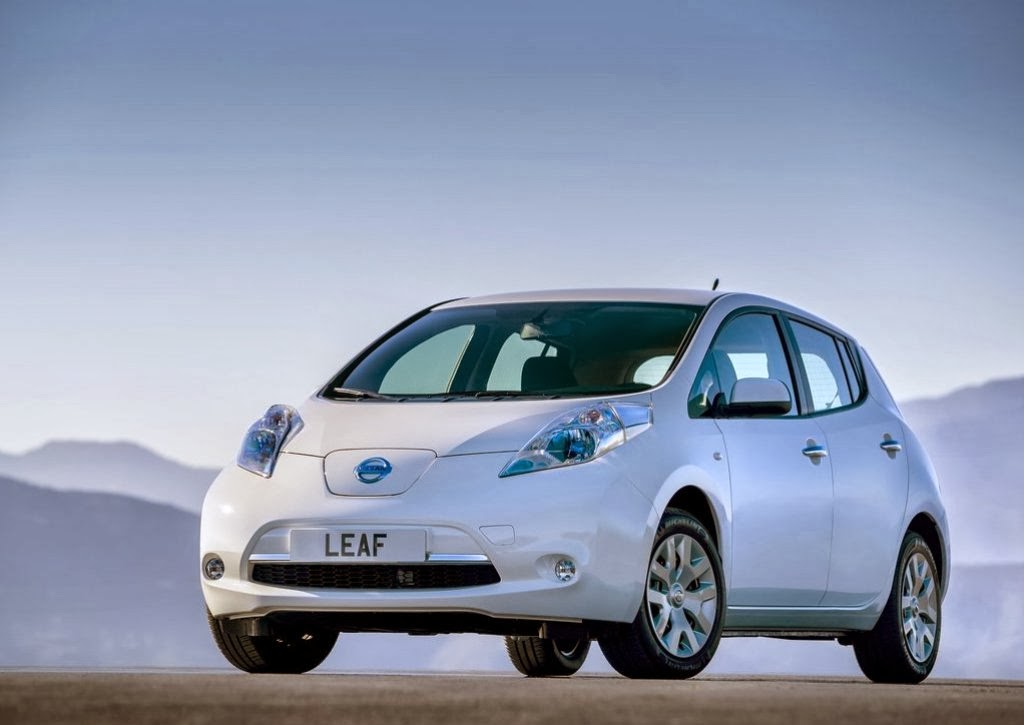
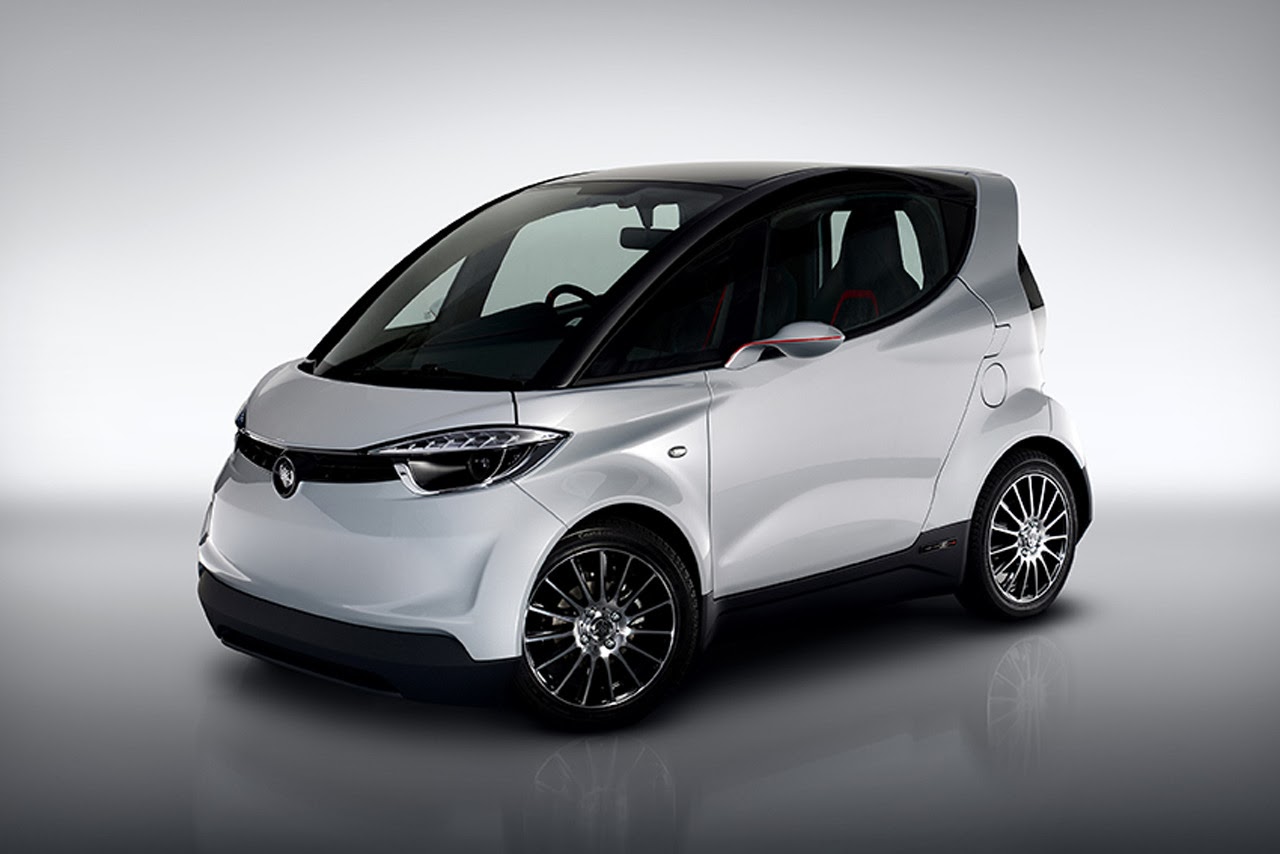
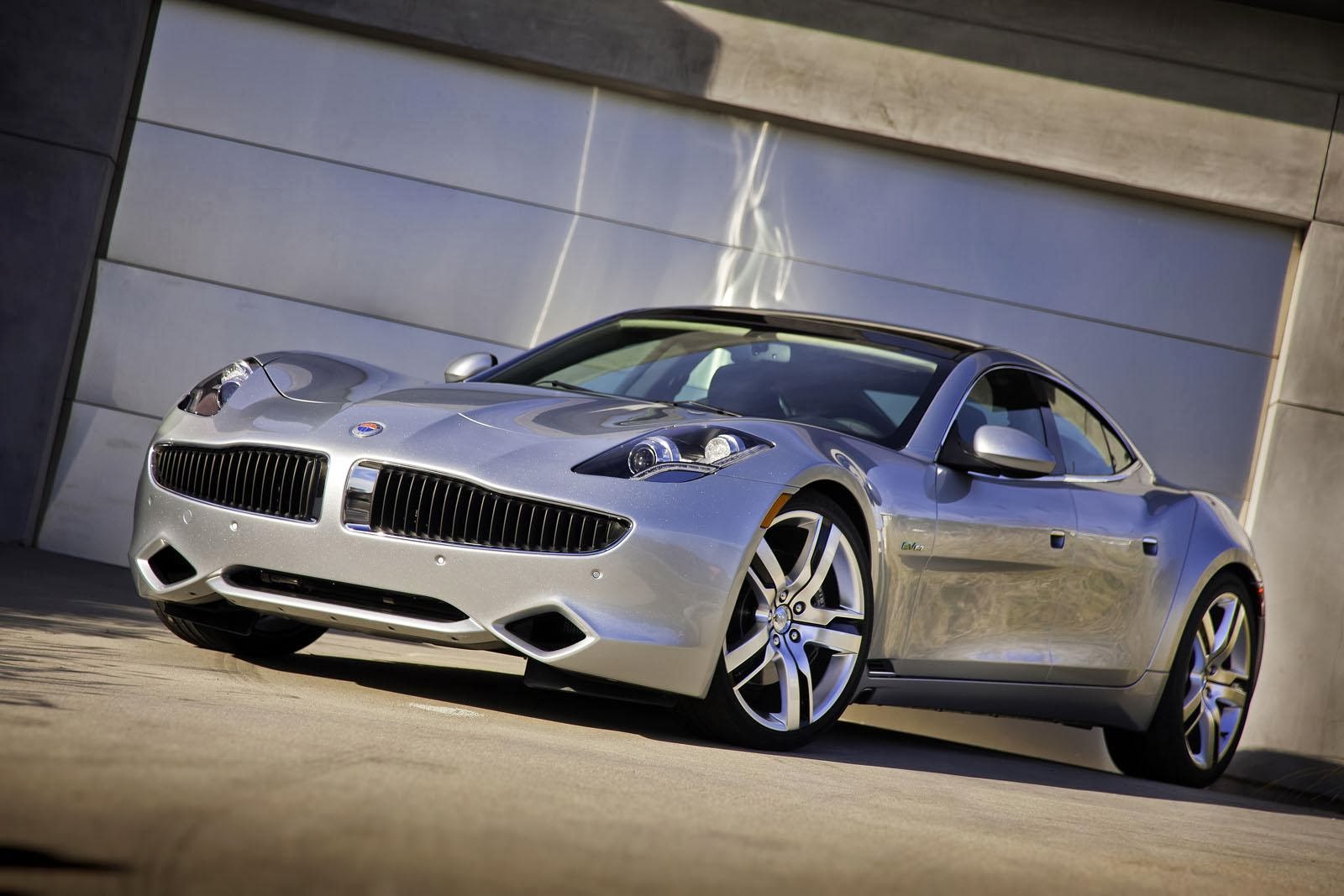
Bhutan Goes Electric

The tiny mountainous country that popularized the concept of gross national happiness is planning to replace conventional cars with electric vehicles.

Mitsubishi GC-PHEV plug-in concept SUV [VIDEO]

The Mitsubishi Concept GC-PHEV blazes new trails with powerful driving performance thanks to its full-time 4WD Plug-in Hybrid EV System; excellent stability and road handling that S-AWC (Super All Wheel Control) provides; and information power that an innovative human interface and Connected Car technology together bring. Offering the latest environmental performance, this vehicle empowers you to drive freely on the Earth while enjoying safety and peace of mind. Experience the reliability and satisfaction of driving the Mitsubishi Concept GC-PHEV.

EXTERIOR
A dynamic front face with SUV personality. A futuristic form that looks sculpted from a single block and wraps the vehicle with the strength to drive on any road.

INTERIOR
When you open the easy-access doors with no center pillar, the spacious cabin and futuristic interface catch your eye. Enter a progressive informational space that stimulates your adventurous heart. The door to a new driving experience is now opening.

CONNECTED "TACTICAL TABLE"
A large interface with a touch screen, sweeping wide through the center, collects information that passengers bring, information from the internet, and data accumulated by the vehicle itself, allowing the creation of original maps and driving plans that occupants can share as they connect with the world. The Connected Car possibilities expand from here.

AR WINDSHIELD
Vital driving information is displayed on the windshield to enhance navigation and warn of car distances and lane departures. A driving assist system that uses communication technology also enhances driving safety by notifying the driver with guidance and a warning when vehicles or pedestrians enter blind spots in intersections. AR:Augmented Reality

NEW PHEV SYSTEM
The FR-type Plug-in Hybrid EV system effectively employs engine and motor power. The 3.0-liter V6 supercharged MIVEC engine is assisted by a 70kW high output motor that provides dynamic performance. This system realizes low energy consumption while achieving CO2 emissions under 100 g/km and supremely quiet operation. SPECIFICATION : CONCEPT GC-PHEV

■Overall length / Overall width / Overall height (mm): 4930 / 1940 / 1980
■Seating capacity: 4
■Targeted hybrid fuel consumption: 15 km/L or more
■Targeted EV cruising distance: 40 km or more
■Engine type: 3.0-liter V6 supercharged MIVEC engine / Max. output: 250 kW
■Motor: Max. output: 70 kW
■Total battery electric power: 12 kWh
■Wheel drive: Full-time 4WD
■Transmission: 8-speed automatic

Nissan BladeGlider Wheel Motor Powered EV Concept [VIDEO]

More than a concept, Nissan BladeGlider is both a proposal for the future direction of Nissan electric vehicle (EV) development and an exploratory prototype of an upcoming production vehicle from the world's leading EV manufacturer. BladeGlider was developed with form following function. Nissan crafted the vehicle's unique architecture to give the driver and passengers "sustainable exhilaration" - a fresh electric vehicle driving experience based on peerless technology and exotic styling.

Targeting the visionary individual seeking visceral driving and sustainability, BladeGlider goes beyond sheer power and acceleration to send the heart soaring into new realms of smooth "gliding" pleasure. It is a physical demonstration of the innovation and excitement of the Nissan brand and Nissan's Zero Emissions Mobility leadership. BladeGlider's pioneering spirit distinguishes it from anything yet envisioned for EVs and destines it to rule the roads of the not-so-distant future.

Re-inventing the Performance Car - A Game Changer Designed from Scratch

A clean slate was the starting point for this project, led by Francois Bancon, division general manager of Product Strategy and Product Planning at Nissan. "The goal was to revolutionise the architecture of the vehicle to provoke new emotions, provide new value and make visible for consumers how Zero Emissions can help redefine our conception of vehicle basics," said Bancon.

BladeGlider's shape alone, with its narrow front track, challenges the orthodoxy that has dominated the roads since the earliest days of the internal combustion engine. The revolutionary nature of the car is more than skin deep. New possibilities for the designers and engineers were opened up by the unique characteristics of electric vehicles.

BladeGlider has its conceptual roots in two aerial images: the soaring, silent, panoramic freedom of a glider and the triangular shape of a high performance "swept wing" aircraft.

It is therefore fitting that, in terms of engineering, BladeGlider's developmental focus was aerodynamics: achieving low drag (cdA) while generating road-hugging downforce.

Disruptive and challenging to the status quo, BladeGlider shares sustainable engineering values with both Nissan LEAF - the best-selling EV in history ─and the Nissan ZEOD RC (Zero Emission On Demand Racing Car), which will make its debut at next year's Le Mans 24 Hour race.

A Provocative Shift in the Engineering Paradigm

With its narrow, 1.0 metre lightweight front track and wide, stable rear track, BladeGlider looks as if it could have sprung from a "skunk works" project. But the radical architecture all boils down to aerodynamics and balance. Having the front wheels close together reduces drag and enhances manoeuvrability for high-G cornering power, assisted by its 30/70 front/rear weight distribution ratio. Aerodynamic downforce is created by the highly rigid yet lightweight carbon-fibre underbody, hence the lack of drag-inducing wings.

When BladeGlider matures into a production car, it could be Nissan's first use of in-wheel motors. The in-wheel motors provide rear-wheel propulsion with independent motor management, while also contributing to freedom of upper body design and space-efficient packaging.

To power the electric motors, BladeGlider employs Nissan's innovative lithium-ion battery technology, proven in Nissan LEAF. Battery modules are mounted low and towards the rear to enhance stability and handling.

Revolutionary Breakthrough in High-Performance Design

BladeGlider embodies a fearless vision of the EV future. Its tightly streamlined deltoid body comprises a tough and structurally optimised chassis wrapped in ultra-lightweight, yet strong and stiff, carbon fibre reinforced plastic (CFRP) finished in a pearlescent white colour that evokes the pristine freedom of a glider. The racing-inspired exterior features a sculpted contour that is both functional and breathtakingly beautiful. Starting from the low, flat and narrow nose, the body line rises gracefully to the cockpit canopy and then curves forcefully back over the large rear wheels, evoking a sense of dynamic movement even when the vehicle is standing still.

"BladeGlider was conceived around delivering a glider-like exhilaration that echoes its lightweight, downsized hyper-efficient aerodynamic form," said Shiro Nakamura, Nissan's senior vice president and chief creative officer. "This design is more than revolutionary; it's transformational, applying our most advanced electric drive-train technology and racetrack-inspired styling in the service of a new dimension of shared driving pleasure."

Inside the canopy, the cockpit seats three in a triangular configuration with the driver centre-forward. Seating appointments feature special light and comfortable coverings with yellow fluorescent lines. Amid simple yet edgy interior styling cues, an aircraft-type steering wheel and state-of-the-art instrumentation technology complete the glider-like image. To support maximum EV cruising efficiency, the IT system can display relief maps and atmospheric conditions.

This efficient, aerodynamic, simple, and lightweight vehicle provides a "gliding" feel that combines the feeling of gravity-defying freedom and near-360 degree view of a glider with the pulse-quickening exhilaration of a race car.

"I think that the excitement of the racing car should be mirrored in the excitement of driving the road car," said Ben Bowlby, director of Nissan Motorsport Innovation, who has supported the BladeGlider's development. "I think there are elements we can bring from the race track to make these future road cars more exciting, more fulfilling and give greater driving pleasure."

As a rear-drive performance car, BladeGlider exhibits a coherent and linear handling that enables it to consistently hug road curves, providing feedback for intuitive and exhilarating steering control when cornering under threshold conditions.

Augmenting BladeGlider's aerodynamically-engineered precise feedback and control, the canopy-like visibility of the driving position engenders a synchronised feeling of oneness with the machine and the road. The result is a free soaring experience which the driver can share with two passengers in the V-shaped seating configuration. Passengers sit at the longitudinal centre of gravity to maintain the car's balance at all times. The centre-driving setting of the cabin space is designed to enhance the driver's sensatory experience. 

As a final touch, the driver's seat automatically slides laterally when you open the door, enabling easy access to passenger seats.

New EV Values for the Next Generation

By thinking outside the box, Nissan has created an EV that truly symbolises the unlimited potential of electric propulsion - balancing zero emissions with innovative excitement like never before.

VW Shows 214 mpg Twin Up! XL1 Based Hybrid Concept @ Tokyo

Volkswagen introduced the XL1, the world's most fuel-efficient production car, to the streets in 2013. This plug-in diesel hybrid for two people is being produced in a limited volume and has a European combined fuel consumption figure of 261 mpg as well as a carbonfiber body and chassis.

Now, Europe's largest carmaker is applying the experience it gained from this technological showpiece and is applying it to a high-volume production vehicle. Volkswagen is presenting this new car at the Tokyo Motor Show: a plug-in hybrid version of the up!, called the twin up! concept car. This four-seater shares certain parts of its drive system with the XL1-including its diesel engine, electric motor, and DSG dual-clutch automatic transmission.

Compact hybrid system

Since all new Volkswagen vehicles are configured to accept alternative drive systems as well as conventional ones, it was easy to install the compact plug-in hybrid system in the twin up!. The only modification made in the production version was to lengthen the extremely short front overhang by 1.2 inches. The twin up!'s 55 kW (75 PS) drive unit-consisting of a 35 kW (48 PS) 0.8-liter TDI Clean Diesel engine, a 35kW electric motor, a seven-speed DQ200 DSG transmission, and the power electronics-is mounted at the front of the car. Installed at the back, behind the rear seats and under the trunk, is the "fuel storage system": an 8.6 kWh lithium-ion battery, the 12-volt battery for the electrical system, and an 8.7-gallon fuel tank.

Maximum efficiency

The car attains impressive efficiency thanks to a combination of good aerodynamics (0.30 Cd), a low unladen weight of 2657 pounds, lightweight plug-in drive components, and low rolling resistance 165/65 R15 tires. In all-electric model, for example, the twin up! has a driving range of 31 miles. In the "New European Driving Cycle"-the standard testing and comparison driving cycle for plug-in hybrid vehicles in Europe-the concept car returns a sensationally low fuel consumption figure of 214 mpg, which equates to CO2 emissions of just 27 g/km.

The twin up! highlights the fact that efficiency and driving fun will not be mutually exclusive in the future. In the city, in electric mode, the twin up! accelerates from 0 to 37 mph in 8.8 seconds on its way to a top speed of 78 mph. In hybrid mode, the car delivers 159 pound-feet of torque, a high number for such a small car. Out of town, the twin up! goes from 0 to 62 mpg in 15.7 seconds and reaches a top speed of 87 mph.

Plug-in hybrid concept in detail

Two-cylinder TDI. The TDI produces its peak power of 35 kW from just 830 cc. The two- cylinder TDI was derived from a common rail four-cylinder, 1.6-liter diesel engine and has a bore spacing of 88 mm, with a bore and stroke of 81.0 by 80.5 mm. The XL1's engine also shares key internal modifications for reducing emissions, which include specially formed piston recesses for multiple injection and individual orientation of the injection jets. The common-rail diesel's smooth running properties were transferred to the two-cylinder engine, aided by a balancer shaft that is driven by and turns at the same speed as the crankshaft.

An exhaust gas recirculation system, an oxidation catalytic converter, and a diesel particulate filter are used to reduce tailpipe emissions.

Hybrid module. The hybrid module is located between the TDI engine and the seven-speed DSG transmission: it consists of an electric motor and a clutch, integrated in the DSG housing in place of the usual flywheel. The electric motor is supplied with energy from the 8.6 kWh lithium-ion battery. The power electronics, which operate at 308 Volts, manage the flow of high-voltage energy between the battery and the electric motor and convert direct current to alternating current.

Order under the hood. The engine compartment of the twin up! is completely covered. All service access points are in maintenance-friendly locations. A matte black engine compartment cover with acoustic insulation organizes all the recognisable components. The power electronics, and the service access located across from it, are integrated in a high-gloss black band, which also functionally partitions the engine compartment. An aluminium- look central capsule unites design themes from the world of combustion engines and electric motors, where the electric elements are coded in the colour blue.

Interplay of drive modes. As previously noted, the electric motor can power the twin up! for distances of up to 31 miles and to a top speed of 78 mph. In electric mode, the TDI engine is decoupled from the drivetrain and is shut off. Meanwhile, the clutch on the gearbox side remains closed, and the seven-speed DSG is fully engaged. Provided that the battery is sufficiently charged, the driver can choose when and where the twin up! should be driven electrically by pressing the e-mode button. Restarting the TDI engine is a very smooth process. While driving, the electric motor's rotor is sped up and is very quickly coupled to the clutch in a process known as "pulse starting". This accelerates the diesel engine to the required speed and starts it, so the driver hardly notices the transition.

Energy and drive management. When the twin up! is braked, the electric motor operates as a generator; its braking energy is used to charge the battery under regeneration. In certain operating conditions, the load of the TDI engine can be shifted so that it operates at its most favorable efficiency level. The gears in the DSG transmission are also always selected with the aim of minimizing energy usage.

The engine controller regulates the entire energy and drive management system based on the specific load demanded by the driver. Parameters flowing into this control system include the accelerator or e-pedal position, engine load, energy supply, and mix of kinetic and electric energy, so that the system always uses the optimal type of propulsive power.

Nissan to lift U.S. output of Leaf electric car as demand climbs

Nissan Motor Co Ltd said it will lift U.S. production of its all-electric Leaf as demand for the car has surged sharply this year following a cut to its sticker price.

Jose Munoz, Nissan's senior vice president of sales and marketing for the Americas, said the Leaf is now the top reason customers are referred to the Nissan brand, adding that the vehicle is profitable.

"From a purely attraction and branding point of view it's already a very good car," he told reporters at the NADA/J.D. Power Western Automotive Conference in Los Angeles. The event was being held in conjunction with the L.A. Auto Show.

The automaker dropped the U.S. price of the Leaf by more than $6,000 to $29,650 at the beginning of this year after a shift in production of the model to the United States from Japan allowed it to cut manufacturing costs.

Munoz said the company was still weighing exactly how much it will boost output at the Smyrna, Tennessee plant where it produces the Leaf, but added it would be "an important increase."

Nissan is selling more than 2,000 Leafs a month in the United States. It sold 18,078 Leafs to U.S. drivers from January to October, not far behind the 18,782 Chevrolet Volts delivered in the same period and a big jump from the 9,819 sold in all of 2012.

Supplies of the Leaf at U.S. Nissan dealers are currently running at about 20 days. Normally the company likes to keep supplies at around 60 days.

"We are supply constrained... We will start producing more Leafs probably by the end of this year -- so December January time," he said.

Berkeley Lab Develop Lithium-Sulfur Battery Good For 300 Mile Range

Researchers at the U.S. Department of Energy’s Lawrence Berkeley National Laboratory (Berkeley Lab) have demonstrated in the laboratory a lithium-sulfur (Li/S) battery that has more than twice the specific energy of lithium-ion batteries, and that lasts for more than 1,500 cycles of charge-discharge with minimal decay of the battery’s capacity. This is the longest cycle life reported so far for any lithium-sulfur battery.

Demand for high-performance batteries for electric and hybrid electric vehicles capable of matching the range and power of the combustion engine encourages scientists to develop new battery chemistries that could deliver more power and energy than lithium-ion batteries, currently the best performing battery chemistry in the marketplace.

For electric vehicles to have a 300-mile range, the battery should provide a cell-level specific energy of 350 to 400 Watt-hours/kilogram (Wh/kg). This would require almost double the specific energy (about 200 Wh/kg) of current lithium-ion batteries. The batteries would also need to have at least 1,000, and preferably 1,500 charge-discharge cycles without showing a noticeable power or energy storage capacity loss.

“Our cells may provide a substantial opportunity for the development of zero-emission vehicles with a driving range similar to that of gasoline vehicles,” says Elton Cairns, of the Environmental Energy Technologies Division (EETD) at Berkeley Lab.

The battery initially showed an estimated cell-specific energy of more than 500 Wh/kg and it maintained it at >300 Wh/kg after 1,000 cycles—much higher than that of currently available lithium-ion cells.

The team is now seeking support for the continuing development of the Li/S cell, including higher sulfur utilization, operation under extreme conditions, and scale-up. Partnerships with industry are being sought. The next steps in the development are to further increase the cell energy density, improve cell performance under extreme conditions, and scale up to larger cells.

The results were reported in the journal Nano Letters, in a paper authored by Min-Kyu Song (Molecular Foundry, Berkeley Lab), Yuegang Zhang (Suzhou Institute of Nano-Tech and Nano-Bionics, Chinese Academy of Sciences) and Cairns (Environmental Energy Technologies Division, Berkeley Lab). The research was funded by the U.S. Department of Energy’s Office of Science and a University of California Proof of Concept Award.

For a more detailed discussion of the technology, see here.

Honda NSX Hybrid to use turbocharged engine [VIDEO]

The Honda NSX will be powered by a twin-turbocharged V6 engine, instead of the naturally aspirated V6 originally planned, according to internet reports.

The U-turn was revealed when the Japanese car manufacturer demonstrated a mock-up twin-turbo V6 unit during a media event on the eve of the Tokyo motor show.

Unlike the original NSX, the new model will have its powerplant mounted longitudinally instead of transversely. Two of the Honda NSX's perceived rivals - the McLaren 12C and Ferrari 458 Italia - both have their engines mounted longitudinally.

The engine, which will be completely unique to the NSX, is planned to be mated to Honda's SH-AWD (super handling all-wheel drive) system that uses a three-motor (one for each front wheel and a third one integrated into the engine as a motor generator) hybrid layout.

Putting the finishing touches to the powertrain will be a new dual-clutch transmission, but Honda officials are yet to finalise the number of ratios.

70 year old lady loves her solar powered Nissan Leaf

My original motivation for buying an electric car was that I hated going to petrol stations and I resented the amount of money I spent there.

I was worried that an electric car would feel so different to drive from my previous car, that as a 70 year old lady, I would find it too difficult to adapt. Once I had a Test Drive, I realised I had nothing to worry about.

To start with the only difference I noticed was that it was much quieter, which does mean you have to watch out that pedestrians don’t walk out in front of you without looking, but doesn’t affect the feel of the car. My first Test Drive was in a Mitsubishi iMiev, which was the only electric car available in Australia at the time. I was persuaded to wait for the LEAF to arrive and I’m glad I did because it is larger and suits my needs better.

To help with reducing the cost of charging the Leaf I installed a 3kw solar panel system on the roof of my home. On a fine day, I can fully charge my car for no cost, using only the 15 amp power point I had installed for the purpose. The whole LEAF/Solar Panel purchase is an investment, which will pay for itself in savings if I live long enough. It is also true that it is a benefit to the environment, both locally and globally. For me, all that is a bonus, it was not my motivation.

I took delivery of my LEAF 13 November 2012. I had to collect it from Sydney because that was the closest Nissan dealership that stocked the LEAF, at the time. My first concern was to get home to Maitland in the Hunter Valley because that was almost 152 kms away.

Although, officially I could go that far without a charge, there was concern that I might not make the distance. I decided to risk it, knowing I am very good at driving cautiously. As a precaution I had a tow truck lined up to collect me if I didn’t. I reached home with 14 kms to spare. That gave me confidence because I bought my LEAF to do short trips around Maitland, not to drive long distances. Having made it home from Sydney it was obvious that ‘range anxiety’ wasn’t going to be a concern for me.

Once I started driving my LEAF regularly I realised there was something else I particularly enjoyed. On the rare occasions when I drive on a 4 lane highway, other cars see me sitting at traffic lights and think ‘electric car, that won’t go fast’ and put their foot down, expecting to leave me behind, only to find I leave them at the starting post with my instant acceleration. I also enjoy sharing my experiences with family and friends. Within a couple of months I discovered something else special about being a LEAF owner. We like sharing our experiences with other LEAF owners. The Australian LEAF Owners Forum was formed which allows us to share our knowledge and discoveries about our EVs. I have never had a car that is special in that way before and I enjoy it.

NSW members of the Forum decided we wanted to meet to collaborate. This was a bit tricky because all the others live in Sydney. One member found a Caravan Park in Bateau Bay, 90 kms for the Sydneysiders and 90 kms for me, with many 15 amp power points, where we could all recharge our LEAFs while we had a long, lazy lunch talking about our prized possessions. We got on in real life as well as we had in the Forum and that makes owning a LEAF very special indeed.

Guest Post by: Dr Phoebe Thornley @PhoebePhoebet

NHTSA opens ‘preliminary evaluation’ into Tesla fires

U.S. safety regulators have opened a preliminary evaluation into two fires in Tesla Model S electric cars.

The National Highway Traffic Administration says fires broke out in two of the cars' batteries after the undercarriage hit road debris. The debris damaged the batteries and caused a thermal reaction and fires. No one was hurt in the fires.

The probe affects more than 13,000 cars sold in the U.S. The agency says it wants to examine risks from the undercarriage getting hit.

Tesla's batteries are located beneath the passenger compartment and protected by a quarter-inch-thick metal shield.

Tesla says it asked the government to investigate even though its cars catch fire at a far lower rate than gas-powered vehicles.

In 2011 the NHTSA opened a similar preliminary evaluation into the Chevy Volt following a severe-impact lab test on a battery pack that resulted in an electrical fire six days later.

This led to GM adding further enhancements to the vehicle structure and battery coolant system in the Chevrolet Volt that would further protect the battery from the possibility of an electrical fire.

Only 3 months ago the NHTSA awarded the Tesla Model S Five Star ratings in all NHTSA crash tests.

Source: NHTSA

Porsche 918 Spyder Plug-In Hybrid Final Tune Drops 0-100km to 2.6 sec

Shortly before delivery of the first customer vehicles, the Porsche 918 Spyder is beating its own benchmark values. Marking the success of the final tuning measures, the super sports car from Stuttgart is now clearly the fastest ever road-going Porsche. With the weight-optimised 'Weissach' package fitted, the 918 Spyder accelerates from zero to 62 mph (100 km/h) in just 2.6 seconds (-0.2 seconds quicker than previously), from zero to 124 mph (200 km/h) in 7.2 seconds (-0.5 seconds), and passes the 186 mph (300 km/h) mark after 19.9 seconds (-2.1 seconds).

Dr. Frank-Steffen Walliser, Senior Vice President 918 Spyder programme, highlights the significance of these results: "We have now used all options available to electrify the 918 Spyder, working right up to the last minute to do so."

The enhancements also bring benefits in terms of the electrical performance delivered by the hybrid super sports car. The two electric motors on the front and rear axle allow the 918 Spyder to accelerate from zero to 62 mph (100 km/h) in 6.2 seconds, without producing any emissions. Such a performance marks a reduction of seven tenths of a second versus the previous time. With the Weissach package fitted, this electric sprinting time is reduced to 6.1 seconds.

The 918 Spyder complete with Weissach package currently holds the lap record for road vehicles on the Nürburgring Nordschleife, with a time of 6:57 minutes. At the same time, as a vehicle delivering particularly low consumption and emission figures, the model is certified to efficiency class A+.

With the Weissach package fitted, the total NEDC fuel consumption of the 918 Spyder amounts to 94 mpg (3.0 l/100 km) – 91 mpg (3.1 l/100 km) without the Weissach package. That equates to CO2 emissions of 70 g/km (72 g/km without the Weissach package). The level of energy consumption was determined to be 12.7 kWh/100 km during the approval cycle.

Self-healing electrodes could make li-ion batteries last 10x longer

Researchers at Stanford University and Department of Energy's SLAC National Accelerator Laboratory have made a pretty big breakthrough in lithium-ion battery technology. The team has developed a self-healing electrode using a stretchy polymer material that repairs cracks made in the electrodes caused by repeated use of the battery. This self-healing property could majorly extend the life of lithium-ion batteries in gadgets and electric cars.

The university reports, "Silicon electrodes swell to three times normal size and shrink back down again each time the battery charges and discharges, and the brittle material soon cracks and falls apart, degrading battery performance. This is a problem for all electrodes in high-capacity batteries...To make the self-healing coating, scientists deliberately weakened some of the chemical bonds within polymers – long, chain-like molecules with many identical units. The resulting material breaks easily, but the broken ends are chemically drawn to each other and quickly link up again, mimicking the process that allows biological molecules such as DNA to assemble, rearrange and break down."

The electrodes coated with the polymer lasted 10 times longer than uncoated electrodes, which could make a huge difference in battery lifetimes.

"Their capacity for storing energy is in the practical range now, but we would certainly like to push that," said Yi Cui, an associate professor at SLAC and Stanford.

The coated electrodes worked for about 100 charge-discharge cycles before starting to significantly lose their energy storage capacity, which is still quite shy of the 500 cycles for cell phones and the 3,000 cycles for electric vehicles, but the researchers say the potential is there for getting those higher cycle numbers.

The team thinks that other electrode materials could work as well, but for now they're focusing on upping the capacity and longevity of the technology.

Norway has become the world capital of the electric car

Following the example of their crown prince, thousands of Norwegians have switched to electric cars, taking advantage of strong government incentives.

For the second month in a row, an electric car topped new car registrations in October in the Nordic country, where 716 Nissan Leaf were sold with an unprecedented market share of 5.6 percent.

“Norway is showing the way out of oil dependence, or even addiction,” said Snorre Sletvold, president of the Norwegian Electric Car Association.

From the modest Buddy, a locally produced two-seater urban car, to the more ostentatious US-made Tesla S, some 15,000 electric cars should be rolling on Norwegian roads by the end of 2013, 10 times more than in neighboring Denmark and Sweden.

Electric cars still represent a small fraction of Norway’s car pool, but figures grow steadily every month.

In total, they accounted for 7.2 percent of Norwegian auto sales in October, up from a 3.4 percent market share a year ago. Around 5,200 have been sold in the first 10 months of 2013 and new models by Volkswagen (including an electric version of its famous Golf), BMW and Renault are expected to hit the market in the coming months.

In September, US-made Tesla S, Crown Prince Haakon’s personal choice, topped the sales list due to a backlog that had built up before the first cars were shipped to the country.

Somewhat paradoxical in oil-rich Norway, this success can be partially explained by the numerous incentives intended to foster clean vehicle sales in the country.

Regardless of their price range, electric cars are exempt from VAT and other high Norwegian taxes, public parking fees and urban toll payments, and are allowed to use bus lanes.

Nissan to introduce e-NV200 commercial vehicle in Japan in 2014

Nissan Motor plans to launch e-NV200, a 100% electric commercial vehicle, in Japan in fiscal 2014. Production will begin the same year in Barcelona, Spain.

The e-NV200 model is based on the NV200 taxi vehicle, and is the second fully-electric vehicle from the manufacturer, after Nissan Leaf.

The vehicle has zero CO2 emissions during operation. Its features include an advanced telematics system, and power supply in the luggage area for outdoor activities or emergency power. Its powertrain, similar to that of Leaf, enables good acceleration and quiet operation, claims the company.

Nissan is in the process of creating a market for its new launch. The e-NV200's low operating cost is expected to make the vehicle attractive.

The company is in talks with Yokohama, Nissan's home city, to make the e-NV200 available for public services.

Nissan plans to make the latest electric vehicle part of "Yokohama Mobility Project Zero," a collaboration between the company and the city to achieve low carbon footprint. Nissan Leaf and ultra-compact electric vehicle Nissan New Mobility Concept are already included in the project.

The automaker is likely to introduce e-NV200 in Barcelona as well for public transport. It is preparing to install EV charger network and parking areas to support these vehicles in the city.

Electric car runs record-setting 1,300 km on one charge

A Japanese team set a world record Friday for distance traveled by an electric vehicle on a single battery charge, running 1,300 km on a course in Akita Prefecture.

The four-driver team included Kenjiro Shinozuka, 64, who in 1997 became the first Japanese driver to win the Dakar Rally.

The team said it plans to file a request with Guinness World Records for recognition of the feat, which eclipsed the previous mark of 1,003.2 km.

The drivers used an EV converted Suzuki Every minivehicle, equipped with a lithium-ion battery, to lap the 25-km-long course.

The four took turns at the wheel to drive the vehicle day and night at speeds of around 30 kph.