General Motors to introduce second-generation Chevrolet Volt hybrid in 2015

General Motors is reportedly preparing to introduce its second-generation Chevrolet Volt hybrid sometime in 2015.

The company has developed a new front-wheel-drive hybrid platform for the redesigned model, however it is not expected to feature drastic alterations to the current body style, unnamed industry sources have told Edmunds.

"It is different, but not drastically different," the insider said. "Just really a bit of a styling change to it."

With their main competitor Toyota now offering an entire range of hybrids which account for 28% of all Toyota and Lexus sales and the Prius being the top selling car in California for the past two years, will we finally see GM expand the range to include the Volt MPV which GM revealed way back in 2010?

Former GM CEO Dan Akerson early last year promised that the next Volt will be significantly lighter than the current iteration, with a list price likely around $30,000 to $33,000. The company already dropped the retail price to $34,995 (including $810 destination fee) for the 2014 model year, however a further discount would help the hybrid compete against plug-in offerings from Toyota, Nissan and Ford.

The current Volt provides up to 38 miles of electric-only range before the 1.4-liter four-cylinder generator kicks in. Lower weight will likely bring improvements to electric range and gasoline consumption, though GM has yet to publicly confirm any specifics.

The second-generation model is expected to be launched for the 2016 model year.

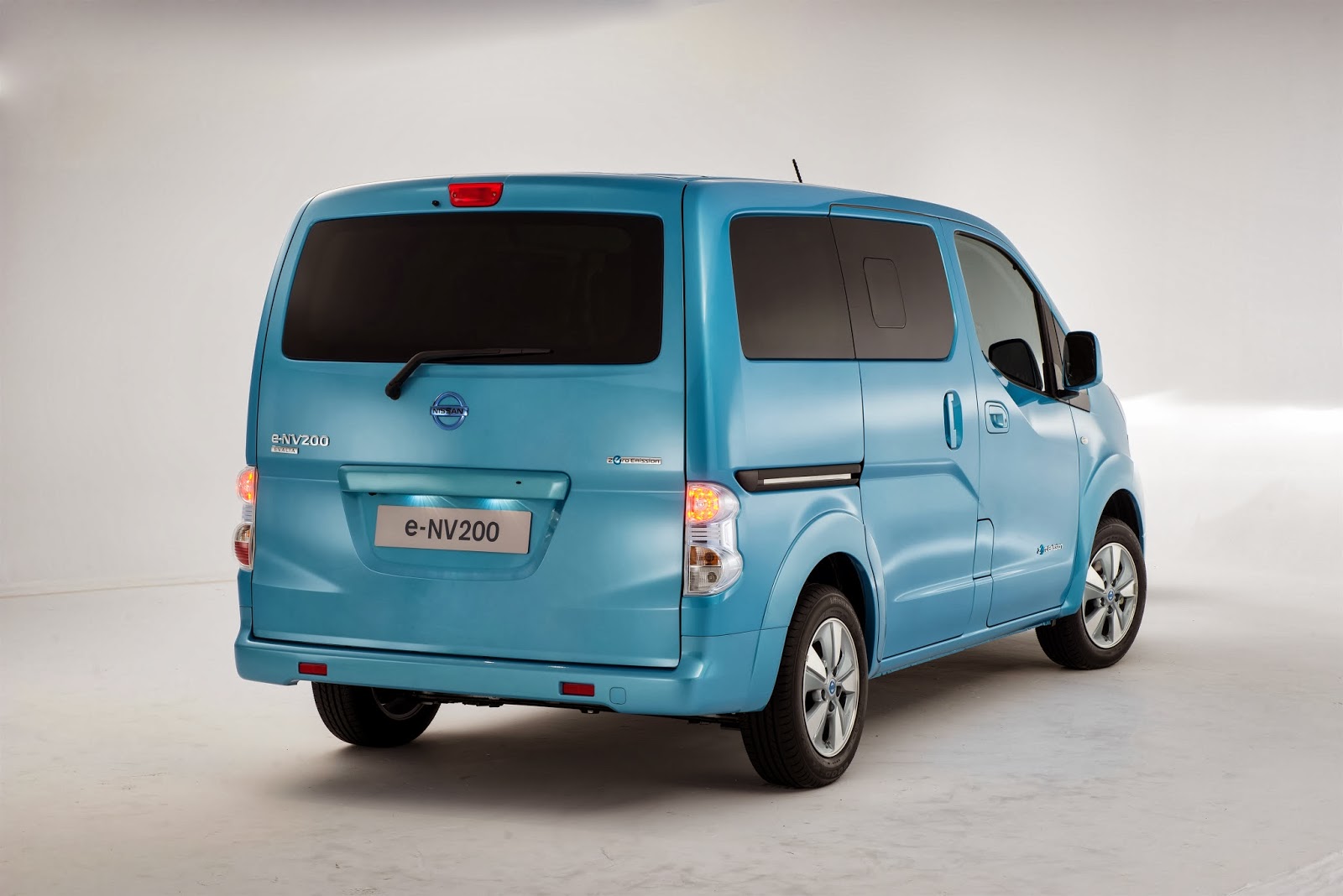
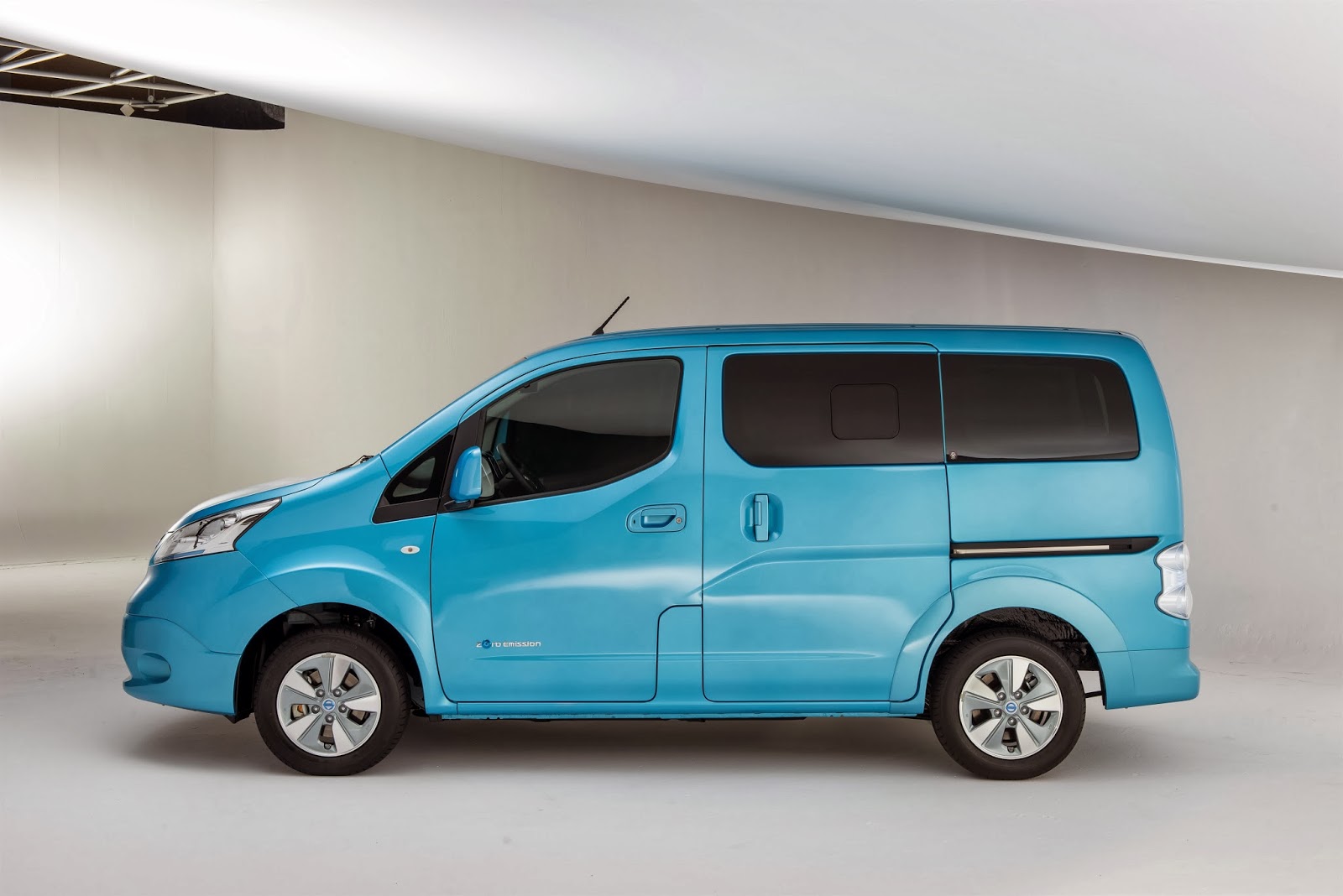
Nissan Launch the e-NV200 Electric Van @ Geneva

Nissan continues to pioneer the electric vehicle sector with the introduction of the Nissan e-NV200, which brings unprecedented refinement, with zero emissions and ultra-low running costs to the compact van segment With this entry, Nissan will be the first automaker to have two all-electric vehicles in its global line-up, joining the Nissan LEAF, the world's best-selling EV.

Combining the best elements of two multi-award winning vehicles - Nissan LEAF and Nissan NV200, past World Car of the Year and International Van of the Year respectively - e-NV200 is ready to change the face of light commercial vehicles forever.

The e-NV200's high performance pure electric drivetrain, based on that used in the acclaimed Nissan LEAF, is allied to the class-leading cargo volume of the NV200 to create a practical and versatile vehicle capable of carrying people or goods while producing neither exhaust emissions nor noise pollution.

When sales start in June, e-NV200 will be available as a van or as a five-seat people carrier in Combi or more luxurious Evalia guises. Although mainly targeted at businesses, e-NV200 will also appeal to private users with large families. The e-NV200's homologated NEDC range (170kms) is greater than the average 100km daily driving distance of over half the fleets who utilise this class of van and the payload and cargo area is the same as NV200's.

The battery can be recharged overnight using a domestic 16-amp single-phase 3.3 kW supply which reduces to four hours if a 6.6kW/32-amp supply is used. A dedicated CHAdeMO DC 50 kW quick charger can recharge the battery from 0-80 percent in just 30 minutes or less if the battery is already partially charged. More than 1000 public CHAdeMO quick chargers are now installed across Europe, in addition a number of companies have installed their own dedicated quick charging facilities at their home depots or offices.

"The e-NV200 goes into a totally different market segment to the Nissan LEAF and alongside the world's best selling electric vehicle will help us continue to lead the EV revolution. To do that we haven't simply converted the NV200 to electric, we have thoroughly re-engineered to create a product that isn't just a good electric van, it is a fantastic van by any standards said Guillaume Carter, senior vice president of Sales and Marketing for Nissan Europe.

Director of Electric Vehicles for Nissan Europe, Jean-Pierre Diernaz is excited by what the e-NV200 brings to the range, commenting: "The proven and highly effective electric powertrain driving e-NV200 is ideally suited to the typical stop/start daily routine of a working vehicle. With no exhaust or noise pollution, e-NV200 is environmentally and people friendly, while the lack of fatigue-inducing noise and vibration from the drivetrain coupled with the single-speed transmission will provide genuine benefits to every hard working delivery or taxi driver. Fleet operators, meanwhile, will love the low running costs."

Although based on existing hardware, e-NV200 has undergone a full engineering development programme as if it were new from the ground up. The drivetrain has been re-engineered in a number of significant areas to suit its new role, while changes have been made to the vehicle shell to ensure there has been no compromise to NV200's cargo space.

The LCV version still has a cargo volume of 4.2m3 and can carry two standard Euro pallets, while sliding side doors on both sides and wide opening rear doors ensure that loading and unloading is as easy as possible.

A comprehensive ‘real-world' test programme has been undertaken in Japan and Europe with pre-production models handed over to internationally known companies - including FedEx, Coca-Cola, DHL, IKEA, British Gas and the Japan Post Office - to operate as part of their everyday fleets. Feedback from drivers and fleet managers has been used to fine tune e-NV200 before series production began at Nissan's major LCV facility in Barcelona, Spain.

"We believe e-NV200 will genuinely change the make-up of light van and taxi fleets as well as changing the environment in the heart of our cities," added Diernaz.

Nissan e-NV200 in detail

Although based on significant elements of two existing vehicles, e-NV200 is a bespoke vehicle with a unique part count of more than 30 percent.

Differences between e-NV200 and NV200 include striking visual changes, a re-engineered chassis, interior revisions, a new battery pack, a higher capacity regenerative braking system and other modifications to ensure e-NV200 is better suited to its likely role as a city-based delivery vehicle for cargo and people.

The result is a near silent and emission-free future-proof electric vehicle that promises genuine advantages for drivers, fleet operators, passengers, pedestrians and city residents alike.

The most obvious visual difference between e-NV200 and its conventionally powered sibling is the adoption of Nissan's EV "face," familiar from Nissan LEAF. The central charging doors and unique blue tinted LED headlights give a modern look and distinct identity from its ICE sibling.

Blue-tinted arrow-like positioning lamps sit within new, crescent-shaped, headlamps that incorporate a distinctive ice blue light colour. LED bulbs are used in the rear lights of all versions as well as at the front on passenger models. The "electric" blue theme extends to the e-NV200's badging.

Inside there's a new instrument panel with a digital read out, while the gear selector has a simplified look and feel - shifting like a conventional automatic rather than the computer-style joystick of LEAF - to help drivers regularly moving from internal combustion engined vans into the e-NV200 acclimatise more quickly.

Digital information includes clear and easy-to-assimilate displays for vehicle speed, state of charge and vehicle range while a power meter shows the state of motor output/regeneration. The instrument panel is completed by a multi-function display that provides other time, distance and speed information.

Mechanically, e-NV200 owes much to the Nissan LEAF with independent front suspension by MacPherson strut from the world's best selling EV. LEAF also provides the drivetrain, including its recently introduced second generation 80kW AC synchronous motor, which is now fully integrated with the battery charger and inverter in one compact, self-contained unit.

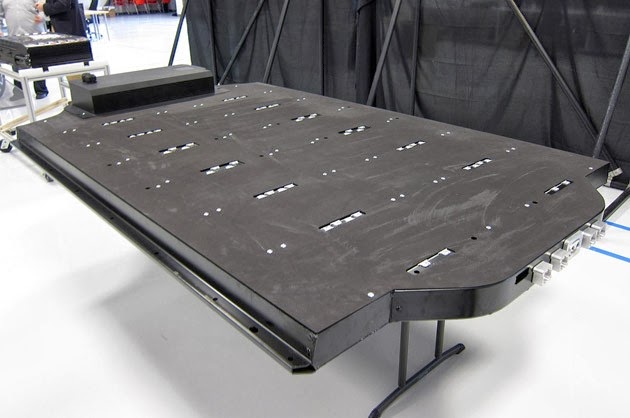
There are some significant changes, however, for e-NV200. Most notable is the Lithium-ion battery which has been changed to allow it to fit under e-NV200's floor without compromising the cargo area. The new pack, which is built at Nissan's plant in Sunderland, UK, and assembled in Barcelona, has the same number of modules - 48 - as in Leaf and the same 24kWh capacity, but is packaged differently.

The battery module is set low in the vehicle under the load floor and is mounted in a reinforced zone for extra safety protection in the event of an impact. The battery mounting assembly also helps boost the torsional and lateral stiffness of the vehicle by 20 percent and 35 percent respectively over NV200.

With a low centre of gravity, the ride and handling levels of e-NV200 are exceptional, even by the standards set by the NV200 while the instant torque delivery typical of an electric vehicle means the battery-powered version accelerates faster: its 0-100km/h time is quicker than the 1.5 dCi-powered NV200, with final figures confirmed later this year.

Another drivetrain change over LEAF determined by e-NV200's likely usage pattern is a new braking system with a higher regenerative capacity. This takes advantage of the vehicle's typical stop/start city driving modes, while Hill Start Assist is fitted as standard, holding the vehicle for two seconds after the footbrake is released to allow smooth starting.

Toyota Hybrid Annual Sales up 43% in Europe

In 2013 Toyota Motor Europe sales reached 847,540 vehicles, an increase of 9,569 units from 2012, equalling a 0.2 percentage point share gain to 4.7%. This progress is mainly due to the excellent sales performance of hybrid models.

European Toyota and Lexus sales of hybrid vehicles reached an all-time high in 2013 totalling 156,863 units, up 43% year-on-year. Hybrid models now make up close to a fifth of total TME sales including several countries out of EU. In Western Europe, 28% of all Toyota and Lexus sold are hybrid models.

But today, Toyota is not only by far the clear leader for hybrid sales in Europe, it is also the first European hybrid manufacturer. Hybrid vehicle production for Toyota in Europe has doubled to reach a record 116,383 units produced at the company’s manufacturing facilities in France (Yaris Hybrid) and in the United Kingdom (Auris Hybrid and Auris Hybrid Touring Sports).

In 2013, the Yaris Hybrid ended the year with sales more than doubling year-on-year reaching 49,774 units, an increase of 25,041 units from 2012. But also the Auris Hybrid registered a record year: the Hatchback saw its hybrid sales increase by 66% to 39,438 units, while the newly launched Auris Hybrid Touring Sports achieved a 60% hybrid mix, equalling 15,175 units.

The success of Hybrid is driven by its excellent cost-of-ownership, thanks to lower fuel-bills and better CO2 ratings. But there is more than that: an increasing number of drivers is discovering the comfort and serenity that a petrol-hybrid powertrain delivers, allowing them to escape the stress of today’s traffic. That is why Toyota is firmly committed to continue its development of its hybrid offer, with 15 new products to be launched globally between the beginning of 2014 and the end of 2015.

Porsche Launch 919 Hybrid LeMans Racer @ Geneva

At the Geneva International Motor Show, the new Porsche 919 Hybrid is celebrating its world premiere for the top class of the 2014 World Endurance Championship (WEC). The hybrid prototype will enter all eight races of the WEC, whose season highlight will be the 24 hours of Le Mans.

Matthias Muller, Chairman of Porsche AG: "Crucial in the development of the Le Mans prototype were the newly created and revolutionary racing rules for this class as they relate to energy efficiency. In 2014, it will not be the fastest car that wins the World Endurance Championship series and the 24 hours of Le Mans, rather it will be the car that goes the furthest with a defined amount of energy. And it is precisely this challenge that carmakers must overcome. The 919 Hybrid is our fastest mobile research laboratory and the most complex race car that Porsche has ever built."

The high efficiency of the Porsche 919 Hybrid is the result of a balanced overall concept. From the combustion engine to the energy recovery systems, suspension and chassis, aerodynamics and driver ergonomics, the sum of the components form an incredibly efficient unit for maximum performance. The drive system is based on a 4-cylinder gasoline engine that is compact and lightweight. The 2.0 liter V-engine is a structural component of the chassis, and reaches a maximum engine speed of approximately 9,000 rpm. It features direct injection, a single turbocharger and thermodynamic recovery capabilities. The compact unit outputs around 500 hp.

Two different energy recovery systems harness energy to replenish the batteries and provide power. The first system is the innovative recovery of thermal energy by an electric generator powered by exhaust gases. The second hybrid system is a motor on the front axle utilizing brake recuperation to convert kinetic energy into electric energy. The electric energy is then stored in water-cooled lithium-ion battery packs and when the driver needs the stored power, the front motor drives the two front wheels through a differential during acceleration. This gives the Porsche 919 Hybrid a temporary all-wheel drive system, because the gasoline engine directs power to the rear wheels, just like the 918 Spyder.

A new Porsche team of over 200 employees was formed to develop and implement the development center in Weissach. Friedrich Enzinger, Head of LMP1: "Within two and one half years we built the infrastructure, assembled our team and put this highly complex race car on wheels. We have the greatest respect for the lead our competitors have in racing experience. Our objective in the first year is simple: to finish races and be competitive."

Romain Dumas (France), Neel Jani (Switzerland) and Marc Lieb (Germany) will share driving duties in the Porsche 919 Hybrid with number 14. Car number 20 will be driven by Timo Bernhard (Germany), Brendon Hartley (New Zealand) and Mark Webber (Australia).

LG Chem CEO mulls electric car battery plant in China

Chief executive of LG Chem said that the South Korean company was considering building an electric vehicle battery plant in China, expecting Beijing's efforts to tackle air pollution to drive demand.

Park Jin-soo also said LG Chem, which currently supplies electric-car batteries for General Motors Co's Volt and Renault cars, will double the number of its customers to 20 in the near future.

"We are considering it (the China car battery plant), which should be in line with market demand," Park said at a press briefing on Friday embargoed until Sunday morning.

LG Chem currently has a factory in Nanjing, China producing small batteries for smartphones and other mobile devices, and Park said the firm is looking at not only Nanjing and other sites for the potential car battery factory.

China's Finance Ministry said last month it will extend a programme of subsidies for buyers of electric-powered vehicles after the current subsidy regime, part of efforts to combat pollution in cities, expires in 2015.

The subsidies were designed to help China meet a goal of putting half a million new-energy vehicles, defined as all-electric battery vehicles and heavily electrified "near all-electric" plug-in hybrids, on the road by 2015 and 5 million by 2020.

LG Chem's crosstown rival, Samsung SDI, said in January that it will form a joint venture in China to spend $600 million on building a car battery plant in Xi'an, Shaanxi province, by next year and on other electric car battery-related businesses over the next five years.

Nissan LEAF Sales Rise 1,000% In January 2014

UK Nissan LEAF sales for January 2014 clocked-in at 1000% higher than the same period in 2013.

The all-electric hatchback accounted for nearly 75% of fully electric vehicle sales for the month. The Nissan LEAF has now reached 3,000 sales in the UK and 100,000 worldwide.

Since its launch in December 2010 Nissan has seen the pace of sales increase consistently and 2013 was a record year. The LEAF is now available to customers in 35 countries on four continents. In Norway, the Nissan LEAF topped sales charts, out-selling conventional gasoline powered vehicles in October 2013.

After leading the era of electrification in passenger vehicles with the LEAF, Nissan will in 2014 bring an all-electric light commercial vehicle to market. The e-NV200 will go on sale in Europe and Japan.

Drayson Racing B12 winter tests continue at Silverstone

Drayson Racing ran its World Electric Land Speed Record-breaking Drayson B12/69 EV for the first time this year at Silverstone, as its winter test programme continues to develop the world’s most advanced electric-powered racing car.

The aim of the latest test was to try a variety of new motor cooling options and traction control settings – and the extremely wet track conditions were ideal for gathering valuable wheelspin data from the B12’s one thousand data channels.

This time running the B12 with reduced aero and power, test driver Jonny Cocker recorded the same lap time around the Silverstone National Circuit as he’d achieved at a test before Christmas, when the prototype ran in full downforce specification and with full power.

Standing water prevented the B12 reaching its top speed of 220mph, but the pioneering Drayson Racing Technologies technical team were delighted with the results of the test – as the duty cycle of the powerful electric motors and cooling challenges faced doing a land speed record attempt are completely different to running circuit laps.

BASF Commits R&D to EV battery market

BASF, the largest chemical company in the world, is betting customers will flock to electric cars, using its chemical products to create a battery that will enable vehicles to run longer. BASF, with an annual 1.7 billion-euro ($2.3 billion) research budget, has made battery materials one of 10 areas it’s targeting for growth.

“We are committed,” Adrian Steinmetz, head of global business management at BASF’s battery materials unit, said in an interview at the company’s headquarters in Ludwigshafen. “Having this long-term strategy is typical of BASF. It’s the reason why this company has existed for 149 years.”

To become a major supplier for electric cars, BASF needs to challenge the dominance of Asian market leaders Mitsubishi Chemical Holdings Corp., Sumitomo Chemical Co. and LG Chem. Those companies have an advantage in lithium-ion technology, crucial in car batteries and helped by their proximity to the region’s booming electronics, computer and phones industries.

Advanced battery pack for Kia Soul EV

The Kia Soul EV is equipped with an advanced power pack featuring lithium-ion polymer battery cells supplied by SK Innovation. The pack, which has a class-leading energy density of 200 Wh/kg, is the result of a three-year joint development program between Kia Motors Corporation and SK Innovation in Korea.

Engineers from Kia have developed the outstanding power pack featuring 192 lithium-ion polimer battery cells in eight modules, delivering a total power output of 27 kWh. The pack incorporates state-of-the-art thermal control technology to maintain individual cells at optimum temperature and structural design to enhance crash worthiness.

Nickel-rich NCM (nickel-cobalt-manganese) cathode material is used in the mass production of the battery cells for Soul EV. Energy density, which is dependent on cathode capabilities, is a core performance factor deciding EV driving range. By exploiting the class-leading energy density of its battery, the Soul EV offers a driving range of 'around' 200 km on a single charge.

Toyota to Increase Yaris Hybrid production to 200,000 for 2014

Toyota announced this week that it will start operating a third production shift at its European Yaris factory from June 2014 in order to meet high demand for its two products, the Toyota Yaris and the Toyota Yaris Hybrid.

The Yaris is unique among small cars in having the option of proven Toyota hybrid technology, bringing the easy driving, fuel efficient hybrid drive to a wider audience than ever before.

The three-shift operation will require an increase in manpower by 500 production employees, which will bring total employment at Toyota Motor Manufacturing France (TMMF) in Valenciennes to more than 4,000.

Until the third shift is in place, some Saturday production is planned to meet the demand.

“Sales forecasts have led us to increase production plans by around 15 per cent for 2014, for a total annual production volume of around 220,000 units,” confirmed Koreatsu Aoki, President of TMMF.

LaFerrari hybrid voted Best Sports Car in Madrid

Ferrari has taken the prize in the Best Sports Car category during the Best Cars 2014 awards celebrated in Madrid. The award ceremony at the Santiago Bernabeu Stadium was organized by the prestigious Spanish motoring magazines, Autopista, Automóvil, Coche Actual and Autovía.

Ferrari’s "LaFerrari", the limited-edition hybrid special of which only 499 units will be produced, was voted Best Sports Car, winning its first award in Spain. Since its launch, "LaFerrari" has earned worldwide critical acclaim from clients and media alike, in part because it is the most powerful Ferrari ever produced and also because it´s the first hybrid vehicle from the brand.

Panasonic may invest $1 billion in Tesla’s U.S. battery plant

Panasonic Corp is inviting a number of Japanese materials suppliers to join it in investing in a U.S. car battery plant that it plans to build with Tesla Motors, with investment expected to reach more than 100 billion yen, the Nikkei reported.

Tesla shares also hit an all-time high on Tuesday after one brokerage firm set a new target price that suggested shares would rise almost 50 percent from Monday's closing price.

The plant, expected to go on-stream in 2017, will bolster Panasonic's supply of lithium-ion batteries to the U.S. electric-car maker.

Last week, Tesla shed some light on its plans for building a lithium-ion battery plant, or "giga factory," that will cut battery costs and allow the company to launch a more affordable electric car in 2017. However, it said at the time that further details would be announced this week.

Tesla declined to comment on Tuesday. Panasonic, the carmaker's primary supplier of lithium-ion batteries, could not immediately be reached for comment.

The U.S. plant, which will handle everything from processing raw materials to assembly, will produce small, lightweight batteries for Tesla and may also supply Toyota Motor Corp and other automakers, the Nikkei said.

In Tesla's earnings conference call last week, Chief Executive Elon Musk said the electric car maker expects to build the factory with more than one partner, but a "default assumption" was that Panasonic, as a current battery cell partner, "would continue to partner with us in the giga factory."

"The factory is really there to support the volume of the third generation car," Musk said on the call. "We want to have the vehicle engineering and tooling come to fruition the same time as the giga factory. It is already part of one strategy, one combined effort."

Tesla posted better-than-expected fourth-quarter results and said deliveries of its luxury Model S electric sedan would surge more than 55 percent this year to more than 35,000 vehicles.

Shares in the Palo Alto, California-based company, which was founded in 2003, surged as much as 19 percent on Tuesday, hitting a new all-time high intraday trading price of $259.20 a share after Morgan Stanley raised its target price for the stock to $320 a share from $153.

Tesla shares were still up $30.50, or 14 percent, at $248.15 in afternoon trading on the Nasdaq.

Morgan Stanley analyst Adam Jonas said in his research note that the potential for lower battery costs through higher sales volume could nearly double Tesla's share of the global car market to 0.9 percent by 2028. Tesla remains the firm's top pick in the U.S. auto sector with an "overweight" rating.

"Tesla is an extremely ambitious company for whom flooding the market with fun-to-drive EVs and giving competitors a headache might not be the endgame," he said.

Stifel analyst James Albertine said the giga factory could be far more than an auto opportunity, as Tesla could have an even more significant opportunity to supply the energy storage market. He expects the factory would take two to three years to build and require a $5 billion to $6 billion capital infusion.

"While we remain negative on Tesla shares above $200 as an automotive OEM (original equipment manufacturer), the energy storage opportunity requires a broader perspective and could very well justify current, if not higher valuation levels," he said in a research note.

Consumer Reports: Tesla Model S as “Best Overall” Automobile [VIDEO]

Electric luxury car Tesla Model S was named by Consumer Reports magazine on Tuesday as its overall top pick for 2014, while Japanese models took just five of the top 10 spots, their worst showing in the 18-year history of the annual rankings.

The battery-powered Tesla Model S was chosen best overall for its "exceptional performance and its many impressive technological innovations," Consumer Reports said, noting it was "pricey" at $89,650.

Tesla Motors said it expects to deliver about 35,000 of the model this year. By comparison, the best-selling car in the United States last year, the Toyota Camry, sold about 408,000 in 2013.

Consumer Reports hasn't named a best overall since a Lexus model took the top honors in 2010.