Toyota Prius now 2nd Best Selling EV in US

Hot on the heals of news earlier this week that Nissan's Leaf has set a new monthly sales record of 3,117 sales in May, comes official sales figures from Toyota showing the Plug-In Toyota Prius is now the 2nd best selling EV in the US.

Toyota sold 1,741 Prius PHV in May, up 180% on the same month last year. That knocks the Chevy Volt back to 3rd place with 1,684 sales for May.

The number of Plug-in Prius sales are all the more remarkable considering it is available in only 15 states.

Battery material could reduce electric car weight

Battery weight has long vexed engineers designing electric cars for the mass market. Bigger batteries are needed to power a car for longer distances, but their weight in turn requires the car to expend more energy. But what if the body of the car itself was a battery?

Researchers at KTH Royal Institute of Technology have found a promising solution with carbon fibre. Eric Jacques, a researcher in vehicle and aerospace engineering at KTH, says carbon fibre can fill two functions in an electric car: as a lightweight composite reinforcement material for the car’s body, and as an active electrode in lithium ion batteries.

“The objective of our research was to develop a structural battery consisting of multifunctional lightweight materials that simultaneously manage mechanical loads, and store electrical energy,” says Eric Jacques, a researcher in Aeronautical and Vehicle Engineering at KTH.

“This can result in a weight reduction for electric vehicles,” Jacques says.

He says carbon fibre offers a viable alternative to graphite. Lithium can be inserted into the carbon fibre microstructure and the carbon fibre acts as a good conductor. The carbon fibre which the KTH researchers have worked with is very light and has a continuous structure and excellent mechanical properties, Jacques says

“The research project has demonstrated very good results, but we have some work to do before we can display finished batteries.”

The project is run as a partnership between three professors at KTH: Göran Lindbergh, Chemical Engineering; Mats Johansson, Fibre and Polymer Technology; and Dan Zenkert, Aeronautical and Vehicle Engineering. The research is done in cooperation with Swerea SICOMP and Luleå Insitute of Technology.

Johansson says the work is about improving the mechanical properties of batteries – so that it not only stores energy but is part of the design.

“For example, the hood of the car could be part of the battery,” Johansson says, adding that similar consolidation of battery and structural material could be used in mobile phones and other battery-operated devices.

Nissan Leaf sets a new record, almost double GM Volt sales in May

May was the best-ever month for Nissan LEAF in the US with 3,117 sales confirming it's position as best selling plug-in car by a significant margin over the second placed Chevy Volt with 1,684 sold in the same month.

While Chevy Volt sales showed a year-on-year increase from May 2013 of about 5%, Nissan Leaf sales increased 45.8% over the same period last year.

In May, LEAF also passed 50,000 total U.S. sales since launch, further establishing it as the leader among electric vehicles.

Mitsubishi enter two MiEV Evolution III racecars for 2014 Pikes Peak

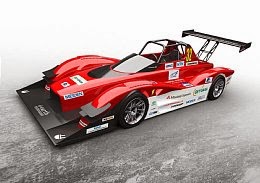
Mitsubishi Motors Corporation (MMC) will enter two MiEV Evolution III all-electric racecars in the 2014 edition of the world-famous Pikes Peak International Hill Climb (Pikes Peak, June 23 to June 29) in Colorado, United States. MMC will use two MiEV Evolution III all-electric racecars, which combine the best of MMC's electric vehicle and four-wheel drive control technologies. MMC has competed twice before in the Electric Division in 2012 and 2013, and now with the MiEV Evolution III, hopes to take its first victory, this time in the new Electric Modified Division.

The MiEV Evolution III racecar is an improved and evolved version of last year's MiEV Evolution II. Main components including high-capacity battery, high-output electric motor and electric powered 4WD consisting of four electric motors have been retained with improvements made to give better motive and cornering performance. To reduce weight in the pipe-frame chassis the design has rationalized and some structural materials have been replaced.

Total motor output of four motors has been boosted from 400 kW to 450 kW and to ensure all the extra power is put down on the road surface the tires have been uprated in size from 260/650-18 to 330/680-18. Accordingly downforce has been increased with a new carbon cowl design and with wind-tunnel optimization of the spoiler and other detail shapes. Evolutionary development of the S-AWC integrated vehicle dynamics control system has improved traction control performance and has reduced wheel slip by controlling vehicle attitude more precisely when near the limit of adhesion. These improvements allow the driver to extract the full potential of the racecar's awesome handling with confidence and reassurance.

The race team will feature the same drivers as last year. One MiEV Evolution III will be driven by two-time Dakar Rally overall champion Hiroshi Masuoka, who piloted the MiEV Evolution II to second place honors in the Electric Division last year and also act as team captain. The second MiEV Evolution III will be piloted by Greg Tracy, six-time Pikes Peak motorcycle champion whom last year drove a MiEV Evolution II to third place in the Electric Division, his first time challenging the race on four wheels.

The team technical director and chief mechanics are mainly all engineers in MMC's Development Engineering Office. Responsible for the maintenance of the racecars during the hill climb event, they will also be gathering data and knowhow which will be fed back into the advance development of MMC EV technologies, its S-AWC (Super All-Wheel Control) integrated vehicle dynamics control system and into the company's "e-EVOLUTION" - a fusion of electric motor drive and the S-AWC system.

  • MiEV Evolution III Specifications
Length x Width x Height (mm)
4,870 x 1,900 x 1,390
Drivetrain
4WD using 4 motors
Motors
(Made by Meidensha)
 
Configuration
4 (2 front, 2 rear)
Maximum output (kW)
450(112.5 kWx4 motors)
Battery (Made by LEJ)
Maximum capacity (kWh)
50
Chassis
Steel pipe frame
Cowl
Carbon
Suspension
Front
Double wishbone
Rear
Double wishbone
Brakes
(Made by ENDLESS)
Front
φ 380 mm disc with 6-pot calipers
Rear
φ 330 mm disc with 4-pot calipers
Tires (Made by Dunlop)
330 / 680-18
Wheels(Made by Enkei)
13J-18
Control system(Made by dSPACE)
Production i-MiEV ECU with MicroAutoBox*1
*1: Programmable general-purpose ECU

Mitsubishi Concept XR-PHEV Evolution Vision Gran Turismo [VIDEO]

Mitsubishi Motors, a company with a spectacular history in races like the Dakar Rally and World Rally Championships (WRC), has developed a special concept model for Vision Gran Turismo: This is the "Mitsubishi Concept XR-PHEV Evolution Vision Gran Turismo".

In the development of this special concept model, Mitsubishi Motors introduced their design team, Advanced Vehicle Research and Development Group, and Aerodynamic Engineering Development Group into this project in the same process they would normally follow to plan and develop real motorsports vehicles.

The styling of the car follows the basic concepts of the "MITSUBISHI Concept XR-PHEV" shown at the 2013 Tokyo Motor Show, while pouring in know-how gained from years of motorsports experience into its every detail. The result was the evolution of the concept into a stoic racing machine.

The "Athlete Form" design concept was advanced further, emphasizing the driving features aggressively. The iconic front grill is a study of next generation Mitsubishi automobiles, and the shape that forms a wedge starting from the triple diamond mark is designed in the image of an athlete at crouching position on a starting line, evoking an intense image of tension and potential.

Utilizing advanced development technology from the Plug-in Hybrid EV System, the spontaneous power of the motor and powerful torque of the engine is transmitted through an 8 speed dual clutch transmission (DCT) to drive the 4 wheels. It's overwhelming drive performance is controlled precisely with the S-AWC vehicle dynamics control system that distributes the drive force optimally to the 4 wheels, producing a handling characteristic that moves the car exactly as the driver desires.

In addition, the carbon fiber reinforced plastic (CFRP) body reduces weight and greatly contributes to its agility, and the downforce produced by the aerodynamic form of the front and rear diffusers produces excellent cornering performance. The large diameter 20 inch aluminum wheels gives an impression of a tough suspension system, and the powerful appearance of the front and rear fenders is in the image of toned muscles of a powerful athlete.

Graphene batteries and supercapacitors could give EV sales some serious thrust.

Graphene – the world’s thinnest material – could make batteries light, durable and suitable for high capacity energy storage from renewable generation.

Graphene promises a revolution in electrical and chemical engineering. It is a potent conductor, extremely lightweight, chemically inert and flexible with a large surface area. It could be the perfect candidate for high capacity energy storage.

Soon after graphene’s isolation, early research already showed that lithium batteries with graphene in their electrodes had a greater capacity and lifespan than standard designs.

A new project ‘Electrochemical Energy Storage with Graphene-Enabled Materials’ is exploring different ways to reduce the size and weight of batteries and extend their lifespan by adding graphene as a component material.

“But before we build the batteries we need to know how graphene will interact with the chemical components – specifically electrolytes,” comments Professor Andrew Forsyth from the School of Electronics and Electrical Engineering.

His colleague Professor Robert Dryfe from the School of Chemistry performs experiments to analyse the chemical interactions between graphene and lithium ions. Professor Dryfe is also exploring how quickly electrons are transferred across graphene and the magnitude of capacitance – the amount of electrical energy that can be stored on graphene surfaces.

The academics are working with a number of commercial partners, including Rolls-Royce, Sharp and Morgan Advanced Materials. Commercial partnership is crucial for developing the future applications of graphene. Graphene@Manchester is currently working with more than 30 companies from around the world on research projects and applications.

Another focus of the project is graphene-based supercapacitors, which tend to have high power capability and longer cycle life than batteries, but lower energy storage capacity. Nevertheless, they hold much promise to complement batteries as part of an integrated storage solution.

According to Professor Forsyth a combination of graphene batteries and supercapacitors could give electric car sales some serious thrust. Today these green vehicles run on batteries that weigh 200kg – as much as three passengers. By reducing the weight of the batteries graphene should boost vehicle efficiency and increase the driving range of electric cars to beyond 100km – a limitation that currently prevents their widespread uptake.

“If we can extend the distances that cars can travel between charge points we will instantly make them more popular,” Professor Forsyth states. “But how will the batteries cope with the real-life strains of driving? Electric cars – like all other vehicles – are not driven smoothly. Dramatic peaks in power demand as drivers accelerate will stress the battery and potentially limit its lifespan.”

To test whether prototype graphene batteries and supercapacitors are up to the job, Professor Forsyth will expose them to real world stresses that mimic different driving profiles. “We can even test the technology for driving in extreme weather conditions,” he added. “Many batteries struggle to perform in cold conditions, but our weather chamber will reveal any weaknesses.”

Of course, graphene-based storage is not limited to transport. It could play a major role in the future of the National Grid as Britain becomes ever more dependent upon renewable energy. “If we rely on solar and wind power to produce energy, what will happen when clouds block the sun and the wind is just a breeze?” asks Professor Forsyth. “If we can develop high capacity electrical storage, operators will be able to store electricity for times of low generation.”

A grid-scale battery and converter system is being installed on Manchester’s campus to test large scale electrical storage. Researchers will use the battery system to develop methods to control the flow of electricity and reconcile differences between power generation and local demand.

Pratt & Whitney say Electric Aircraft Require Innovations Not Yet Invented

Though electric aircraft technology continues to improve, an engineer at Pratt & Whitney says the technology must make revolutionary leaps before being applicable to commercial or military aircraft.

P&W has looked into electric aircraft and determined that three technological “miracles” must occur before electric flight goes mainstream, Alan Epstein, P&W's vice president of technology and environment, tells reporters.

First, battery technology must improve by 50 to 100 times, says Epstein, noting that a commercial aircraft like a Boeing 737 require about 10MW of energy during cruise.

Battery-powered aircraft could be viable with current technology only “If you want to fly one-hundredth of the distance in the same size airplane,” says Epstein, who made his comments during a question and answer session at the company’s Connecticut headquarters earlier this week.

P&W has also spoken with engineers at the Massachusetts Institute of Technology about developing an electric engine capable of powering large aircraft.

Such powerplants could be built, they determined, but would require new, complex superconductivity technology. Also, engineers would need to remove the engine’s magnetic shielding to reduce its weight.

That is a problem, Epstein says, because without magnetic shielding the engine would “kill the people sitting next to the motors.”

“Three miracles are about two-and-a-half too many for an industrial organisation and one-and-a-half too many for most companies,” Epstein says. “I don’t see major commercial electric aircraft without innovations that have yet to be invented.”

Some might beg to differ. In 2012 German aerospace research institution Bauhaus Luftfahrt released details of a concept for a zero-emissions 190-seat aircraft which could potentially enter service in 2035. Designated the Ce-Liner, the electric aircraft would rely on twin super-conducting electric motors supplied by a bank of up to 16 battery containers.

Tesla announce Model S pricing for Australia

Tesla Motors has has rolled out Australian pricing for its Model S which starts at $96,208 plus on-road costs for the Model S 60 and tops out at $133,257 for the high-performance P85.

The base model can be had for about $107,000 driveaway in Melbourne or Sydney, while the range-topper is about $140,000.

This reflects the growing affordability of electric cars, as this pricing is about half that of the Tesla Roadster which pioneered the brand Down Under in 2011 at $222,995 driveaway for the base model and $260,535 for the Sport.

Australian orders for the American-made plug-in Model S are now being taken on Tesla’s website, two years after the model went on sale in the United States.

Tesla, which expects to sell 35,000 of the five-door liftback Model S sedans globally this year, is planning to re-establish a retail showroom in Sydney, along with sales representation in Melbourne and a dedicated service facility.

Expected to land in Australia by August, the three-model range will offer three levels of performance, depending on battery size and electronic tweaks.

The base Model S 60 boasts 225kW of power from its 60kWh lithium-ion battery pack, driving the large sedan from zero to 100km/h in 6.2 seconds – about the same as a V6 Holden Commodore – and to a top speed of 190km/h. Official driving range on a full battery charge is said to be 390km.

Stepping up to the mid-range $111,807 Model S 85 adds more battery oomph (85kWh) for more power (270kW), faster acceleration (5.6 sec to 100km/h) and greater range (502km).

The $119,900 flagship P85 – P stands for performance – has the same 85kWh battery and 502km range as the 85 but adds an enhanced electric drivetrain for faster acceleration.

Tesla says the P85 can cover the 0-100km/h sprint in 4.4 seconds – a split second faster than the 4.4-litre V8 BMW M5. And it is about $100,000 cheaper, too, at least in base format that is well short of the M5’s feature level.

If the Tesla buyer ticks all the boxes for optional extras, including a performance suspension and 21-inch wheels package, ‘tech’ package (a bundle of electricals that includes sat-nav, keyless entry, memory seats and power tailgate, among others), and other extras, the price can top $170,00, plus on-roads.

In standard form, the Model S is available in one exterior colour – flat black – with 19-inch alloy wheels, cloth seats and piano black interior trim.

Metallic paint in a variety of colours costs between $900 and $1800, while leather is also $1800. A glass panoramic roof is a $3100.

The standard on-board charger comes with a 40-amp single-phase wall connector. For an extra $1800, a buyer can have twin chargers fitted to reduce charging time.

As well, Tesla promises to establish a network of “Tesla Superchargers” that it claims can replenish the batteries by more than half in a little as 20 minutes. The facility will be free to Model S 85 and P85 owners, but requires a $2700 tweak for 60 buyers.

Because “green” cars get luxury car tax breaks in Australia, but the flagship P85 still attracts $13,357 in tax.

The Tesla website provides driveaway pricing that varies by state and territory, with the Australian Capital Territory the cheapest and Western Australia the dearest. For example, the driveaway price for the base Model S 60 in the ACT is $103,095, while in WA it is $109,363.

Tesla Model S pricing:*

Model S 60 $96,208
Model S 85 $111,807
Model S P85 $133,257

Google launches an all-electric self driving ‘pod’ car [VIDEO]

We have seen battery powered 'pod' type driver-less cars before with the ULTRra PRT at Heathrow airport and the recently announced 100 vehicle trial on public streets around Milton Keynes. These vehicles can only navigate on purpose built guideways as opposed to merging with general traffic. Google has demonstrated a driver-less pod type electric vehicle based on their self-driving technology.

The two-seater prototype vehicle is Google’s reimagination of what the modern automobile should look and feel like if you took the human out of the transportation equation and designed something solely to chauffeur passengers from point A to B.

“The project is about changing the world for people who are not well-served by transportation today,” Google co-founder Sergey Brin said at the inaugural Code Conference in Rancho Palos Verdes, California. “There’s not great public transportation in many public places in the United States.”

The car — which was conceived and designed by Google, unlike the ones it previously modified — lacks many of the trappings of a normal car, and that includes the three essentials: A steering wheel, an accelerator and a brake pedal.

Google wants to get these cars on the streets ASAP. The company plans to start testing them in Mountain View, Calif., later this summer. They hopes to build at least 100 prototypes over the next two years, and get them into the hands of volunteer drivers — or nondrivers, as it were — as soon as the system is evaluated to be safe.

BMW i9 planned for 2016?

Auto Motor und Sport and other German outlets are reporting on BMW’s plans to build an i9 model. Built atop the already sold out i8, the BMW i9 is rumored to be a four-door sportscar.

Little else is known about the i9 but it would presumably feature carbon fiber construction and i8's plug-in hybrid powertrain that consists of a 1.5-liter Turbo three-cylinder engine, an electric motor and a lithium-ion battery which as a combined maximum output of 362 PS (266 kW) and 420 lb-ft (570 Nm) of torque.

BMW has trademarked an entire range of i vehicle, from i1 to i9, with at least one of them, the BMW i5, planned for production in the near future.

Australia Post takes delivery of first Renault electric vans

In an Australian-first, Renault's 100 percent electric-powered delivery vans will shortly join Australia Post's fleet in Melbourne and Sydney.

The Renault Kangoo Maxi Z.E. (Zero Emission) electric van, currently not sold in Australia, is widely used across Europe and the United Kingdom and will be used exclusively by Australia Post from mid-2014 for a 12 month proof-of-concept.

Australia Post Head of Environmental Sustainability, Andrew Sellick said using the Renault Kangoo Maxi Z.E. for day-to-day parcel and letter deliveries is another exciting step in Australia Post's sustainability journey and an important step in assessing the real-world use of electric commercial vehicles.

"The Kangoo Maxi Z.E. assessment is part of a broader strategy to explore alternative fuels at Australia Post, including using biofuel and hybrid vehicles in our current fleet.

"The electric vans will be powered by accredited GreenPower from renewable energy sources to ensure we are maximising the potential to reduce our environmental impact.

"The Kangoo proof-of-concept will give us a clearer picture of the benefits of using electric powered delivery vans. Through this assessment we expect to see at least a 50 percent reduction in energy costs and a 100 percent reduction in carbon emissions to comparable combustible-engine vehicles in our fleet.

"While at this stage we are working with Renault to prove this concept, if the vans perform well across the range of metrics we'll be measuring them on, the future potential is very exciting. We hope this initiative will ultimately help drive the commercialisation and acceptance of electric vehicles in this country."

Renault Australia's Managing Director, Justin Hocevar said "we are excited to broaden our existing relationship with Australia Post in rolling out the Kangoo Z.E. in Australia. Through our partnership with Australia Post, we are able to comprehensively investigate the business case for introducing the fully electric Kangoo Z.E. van in Australia in the future."

Some of the alternative fuel initiatives implemented across Australia Post's network have included the rollout of:

  • 740 electric bikes that have replaced motorbikes at various locations
  • 100 hybrid vehicles introduced to the fleet to replace existing six cylinder vehicles, reducing emissions by over 30 percent
  • 25 hybrid trucks introduced into StarTrack's fleet of vehicles, improving fuel efficiency by 20 percent improvement on average
  • implementing 5 percent of bio-diesel to StarTrack's fuel supply in 2012 - an initiative which has saved approximately 820 tonnes of carbon

    Australia Post's Port Melbourne Business Hub will receive 2 Renault Kangoo Maxi Z.E. vans mid-year, with the remaining 2 vans that are part of the 12 month assessment delivered to StarTrack House in Sydney by year-end. Charging stations at each location will be powered by accredited GreenPower sources.

    The charging station at Australia Post's Port Melbourne Business Hub is funded by the Victorian Government Department of Transport, Planning and Local Infrastructure.

  • Solar House Uses EV to Realize 75% Energy Self-sufficiency

    Sekisui Chemical have launched the "Grand Two U V to Heim," a wooden smart house that links an electric vehicle (Nissan Leaf) and a solar power generation system with an output capacity of 10kW in the aim of realizing practical energy self-sufficiency.

    By appropriately controlling a solar power generation system and the rechargeable battery of an EV, the system is able to provide up to 75% of the amount of electricity consumed by the entire house throughout the year.

    Conventional "V2H" systems, which provide electricity from an EV to a house, have various limitations. For example, when electricity is supplied from an EV to a house, it is necessary to temporarily cut off electricity from the power grid. To solve this issue, the Grand Two U V to Heim comes with a grid connection system that also controls an EV and a solar power generation system.

    New Battery Tech Could Turn Waste Heat to Electricity

    Vast amounts of excess heat are generated by industrial processes and by electric power plants; researchers around the world have spent decades seeking ways to harness some of this wasted energy. Most such efforts have focused on thermoelectric devices, solid-state materials that can produce electricity from a temperature gradient, but the efficiency of such devices is limited by the availability of materials.

    Now researchers at MIT and Stanford University have found a new alternative for low-temperature waste-heat conversion into electricity — that is, in cases where temperature differences are less than 100 degrees Celsius.

    The new approach, based on a phenomenon called the thermogalvanic effect, is described in a paper published in the journal Nature Communications by postdoc Yuan Yang and professor Gang Chen at MIT, postdoc Seok Woo Lee and professor Yi Cui at Stanford, and three others.

    Since the voltage of rechargeable batteries depends on temperature, the new system combines the charging-discharging cycles of these batteries with heating and cooling, so that the discharge voltage is higher than charge voltage. The system can efficiently harness even relatively small temperature differences, such as a 50 C difference.

    To begin, the uncharged battery is heated by the waste heat. Then, while at the higher temperature, the battery is charged; once fully charged, it is allowed to cool. Because the charging voltage is lower at high temperatures than at low temperatures, once it has cooled the battery can actually deliver more electricity than what was used to charge it. That extra energy, of course, doesn't just appear from nowhere: It comes from the heat that was added to the system.

    The system aims at harvesting heat of less than 100 C, which accounts for a large proportion of potentially harvestable waste heat. In a demonstration with waste heat of 60 C the new system has an estimated efficiency of 5.7 percent.

    The basic concept for this approach was initially proposed in the 1950s, Chen says, but "a key advance is using material that was not around at that time" for the battery electrodes, as well as advances in engineering the system.

    That earlier work was based on temperatures of 500 C or more, Yang adds; most current heat-recovery systems work best with higher temperature differences.

    While the new system has a significant advantage in energy-conversion efficiency, for now it has a much lower power density — the amount of power that can be delivered for a given weight — than thermoelectrics. It also will require further research to assure reliability over a long period of use, and to improve the speed of battery charging and discharging, Chen says. "It will require a lot of work to take the next step," he cautions.

    Chen, the Carl Richard Soderberg Professor of Power Engineering and head of MIT's Department of Mechanical Engineering, says there's currently no good technology that can make effective use of the relatively low-temperature differences this system can harness. "This has an efficiency we think is quite attractive," he says. "There is so much of this low-temperature waste heat, if a technology can be created and deployed to use it."

    Cui says, "Virtually all power plants and manufacturing processes, like steelmaking and refining, release tremendous amounts of low-grade heat to ambient temperatures. Our new battery technology is designed to take advantage of this temperature gradient at the industrial scale."

    Lee adds, "This technology has the additional advantage of using low-cost, abundant materials and manufacturing process that are already widely used in the battery industry."

    Electric BMW Mini Superleggera Roadster Concept

    The BMW Group celebrates the meeting of the time-honoured and the contemporary at the Concorso d'Eleganza Villa d'Este 2014 with a very special concept: the MINI Superleggera™ Vision. This exclusive interpretation of an open-top two-seater was created by MINI and Touring Superleggera, the tradition-steeped design and coach building house based in Milan.

    The MINI Superleggera™ Vision is on the one hand a classic roadster, a compact and agile two-seater, expressing the most minimalist and emotional style of motoring; and on the other hand its electric drivetrain gives the car distinctly modern driving dynamics. In collaboration with MINI, Touring Superleggera™ has designed and built an elaborately crafted, unique model which blends the tradition of classic coachwork construction with the MINI's authentic British styling to create timeless aesthetic appeal.

    Modern Britishness meets Italian flair: the iconic design of MINI meets elegant, athletic beauty - interpreted in contemporary style.

    Classic Italian body construction and hand-shaped metal sheeting give the MINI SuperleggeraTM Vision a unique emotional appeal. Both on the inside and outside, the form is reduced to the maximum extent so as to achieve a clear focus on the distinctive driving experience.

    The interior reflects traditional coachwork construction in terms of materials and styling, combined with the icons of MINI interior design.

    High-end materials such as leather, aluminium and black chrome highlight the clear aesthetics of the interior.

    Adrian van Hooydonk, Senior Vice President BMW Group Design on the concept: "Touring Superleggera and MINI have much in common: both companies attach great importance to their history and this is something which defines their outward appearance to this day. What is more, they both emphasise iconic design and distinctive solutions. These elements are merged in the MINI SuperleggeraTM Vision to create an elegant automobile which interprets a British roadster under the influence of Italian style and hand craftsmanship."

    British design with an Italian accent - the exterior design.

    "The MINI SuperleggeraTM Vision elegantly perpetuates what the Classic Mini started 55 years ago: reduction to the essentials. Its energetic, minimalistic design embodies the dynamic essence of an automobile. At the same time it creates unique emotional beauty in combining the past and future of the automotive industry, i.e. traditional coachwork craftsmanship and modern design styling. It was a pleasure for me to design a concept like this." says Anders Warming, Head of MINI Design.

    The perfectly balanced proportions indicate at first glance what the electrically powered MINI Superleggera™ Vision has to offer in terms of a driving experience: the stretched bonnet, long wheelbase and cool, short overhangs convey pure driving fun. As in every MINI, the wheels are set widely on the body, promising a high degree of agility. The passenger cell is slightly set back, further underscoring the car's dynamic impression. The overall effect of the MINI Superleggera™ Vision is sporty, elegant and dynamic.

    The front of the MINI Superleggera™ Vision features the traditional MINI design icons: two circular headlights and a hexagonal grille define the unmistakable front section, providing a contemporary interpretation of features which have become firmly established over decades. There are also striking classic sports car elements such as a wide track and distinctively curved wheel arches that give the front a dynamic presence. The classic MINI bonnet stripes are three-dimensionally embossed and run on into high-quality polished aluminum accents. The inlaid bonnet harks back to classic British roadsters of bygone days.

    Meanwhile the horizontal rib look of the radiator grille adds a classic sporty touch. The fact that it is closed is a discreet indication of the car's electric motor. The two fog lights echo the circular contours of the headlamps, providing a smaller interpretation of them in the radiator grille. The air inlets are also circular, giving the front section a distinctive touch. A flat front splitter made of carbon fibre closes off the front to the road, thereby underscoring the car's sporty statement down to the last detail.

    Classic coachwork construction in a cutting-edge interpretation.

    The striking element of the side view is the characteristic "Touring" line. It embodies both the high art of coachwork building and classic aesthetics. Surrounded by tight, seamless surfaces, it traces a precise, vibrant movement from the front wheels through to the rear. This reflects the great craftsmanship and longstanding experience of Touring Superleggera in area of body construction: ever since it was founded the company has stood for fine, light sports car bodies. To this day, Touring Superleggera™ shapes large aluminium sheets by hand using the most performing frame structures. The hand-crafted style of construction gives the MINI Superleggera Vision an aesthetic form which would be virtually impossible to achieve by machine manufacture.

    "MINI and Touring both believe that proportions are the key factor of beauty, and share the same values of essentiality and innovation" says Louis de Fabribeckers, Head of design of Touring Superleggera. "In this car all unnecessary equipment or decoration is sacrificed, as performance is gained through lightness and efficiency of the bodywork and interior. The Italian touch is in the proportions and the typical waistline."

    There are very few gaps in the body since it is constructed from large sheets of metal. The result is a closed look that conveys high-quality elegance. The specially developed exterior paint finish Como Blue, almost liquid in effect, stands for both classic and modern style. It particularly underlines the refined Italian touch of the MINI Superleggera™ Vision. The elaborate rims and the elegant exterior mirrors in long-hole look complete with a mirror base in polished aluminium add exclusive accentuations at the side. Echoing the front section, the discreet CFRP sills underscore the sporty character of the MINI Superleggera™ Vision.

    Meanwhile the striking fin defines the look of the rear, adding a touch of extravagance. It gives the MINI Superleggera™ Vision a particular longitudinal dynamics while at the same time embodying the unconventional air of both MINI and Touring Superleggera. Like the "Touring" line at the side, it is modeled with enormous precision. The highlight of the flat, wide rear is the unusual lights: designed in the form of a Union Jack divided in two, they combine functionality and symbolism in a way never seen before. In this way they express the British roots of the MINI Superleggera™ Vision while at the same time emphasising the modern LED technology as already used in the new MINI. A chrome bar demarcates the rear lights at the centre of the rear, making this area a classic British jewellery icon. The CFRP diffuser rounds off the rear to the road in sporty style.

    Echoing the exterior - the interior design.

    The exterior and interior design of the MINI Superleggera™ Vision merge seamlessly. Only a surrounding shoulder line in polished aluminium visually separates the exterior and interior from each other. The border creates an encircling, sporty gesture that consistently perpetuates the clear elegance and generous surfaces of the exterior.

    In its styling and in the look and feel of its materials, the interior design celebrates the tradition and the essence of classic coachwork construction. It reflects how the automobile was created: the essential features are quoted - the untreated aluminium sheeting and the tube-shaped structural elements - and they are made visible in the interior by means of a high-quality interpretation. This is most striking in the dashboard. The latter is created from a single aluminium sheet and has been left in the state the automobile body would look like without a paint finish. The generously sized unpainted surfaces and the clearly visible hand craftsmanship of the dashboard go together to reflect the skilled artistry of the coachbuilders. The doors and the sporty 3-spoke steering wheel likewise reveal the traditional method of construction. The structural elements in the doors form a Union Jack, discreetly indicating the British origins of the MINI Superleggera™ Vision.

    The Center Instrument in the middle of the instrument panel draws on MINI design styling and has been extended for the MINI Superleggera™ Vision to include a touch-sensitive control element and two circular instruments with metal surrounds on the right. In addition to the analog clock on the far right, the second framed instrument activates the camera which is integrated between the driver and front passenger seat. It has the function of capturing those particularly worthwhile moments on the road.

    Classic and modern to equal degrees - colour and material design.

    The classic materials aluminium and leather in a virtually untreated state define the reduced aesthetics of the MINI Superleggera™ Vision in the interior. Below the shoulder covered in brown leather in the classical color Sabbia, the materials are kept to the essentials. The structural elements in the doors and centre console are finished in high-quality black chrome, exclusively set apart from the aluminium surfaces and the raw, matt textured paint finish in the footwell area. This deliberately contrasting mixture of structured surfaces and high-end materials gives the MINI Superleggera™ Vision an exceptional charm. The sporty bucket seats are reminiscent of bygone MINI motor racing achievements and are covered in high-quality black leather. True to the MINI Motto "Hide & Reveal", accentuations in Misty Magenta provide a touch of Italian flair in tongue-in-cheek MINI style in concealed spots such as the two hot air outlets under the instrument panel and inside the door openings in the structural elements of the doors.

    Coachbuilding in 2014.

    Since 1926, Touring Superleggera is forerunner of advanced automotive design and custom coachbuilding. The company is one of the rare firms offering the whole in-house productive cycle from the first sketch, all the way through surface engineering and structural analysis, style models and prototypes, to turn-key, low-volume production of special bodywork.

    "We are delighted that MINI wanted to stimulate an independent initiative and particularly Italian design for the first time", says Piero Mancardi, CEO of Touring Superleggera. He continues: "This project also shows MINIs attention to preserving and nurturing the skills of craftsmanship incorporated in modern coach building."

    The MINI Superleggera™ Vision epitomizes the potential of "Carrozzeria" in today's automobile industry: blending creativity and flexibility with rigor and respect of high standards. The result is a car of classic beauty that is also state of the art.

    Nissan delivers 50,000th all-electric LEAF in U.S. [VIDEO]

    Nissan achieved another milestone this month as Dallas residents Todd and Lisa Bolt made Nissan LEAF the first all-electric model to hit 50,000 sales in the U.S. The Bolt family took delivery of their black LEAF SL earlier this month at AutoNation Nissan of Lewisville.

    Thanks to enthusiastic owner advocates, robust public charging infrastructure and the launch of a successful free charging promotion, Dallas – and the state of Texas – have become hot growth markets for LEAF. So far in 2014, LEAF sales in the Dallas-Fort Worth metroplex have grown by about 50 percent over the previous year, with that growth set to accelerate faster thanks in part to the introduction of a new state tax rebate of up to $2,500 on the purchase or lease of a new Nissan LEAF.

    "Beyond the simple economics of not buying gas, we've been impressed with how well the LEAF drives," said Todd Bolt, a pastor at Gateway Church in Southlake. "When we show the LEAF off to family and friends, they're surprised that the car is so quiet and rides so well. The LEAF does everything we need day-to-day, and given the financial savings, I don't know why we'd buy another gas car."

    Electric vehicle ownership has taken hold at Gateway Church, where both Todd and Lisa work, after an executive pastor did the math and decided to buy a Nissan LEAF. Now, more than 20 employees are in the fold, jokingly referring to themselves as the "Blessed LEAFs Club."

    Dallas-Fort Worth and Houston are among 10 launch markets for "No Charge to Charge," a new promotion that provides two years of no-cost public charging to new LEAF buyers who took delivery of their car after April 1, 2014. The national promotion is modeled after a successful pilot program launched in Dallas and Houston last fall with Houston-based NRG eVgo.

    "With 'No Charge to Charge,' the new EV tax credit and enthusiastic new owners like the Bolt family, Dallas is poised to climb the ranks of leading LEAF sales markets," said Toby Perry, director, EV Marketing for Nissan. "Texas is a great indicator that the right mix of customer awareness and strategically placed charging can lead to rapid EV adoption, and we expect to use that model to grow our sales in markets across the U.S."

    With nearly 115,000 global sales since launch, Nissan LEAF is the world's top-selling electric vehicle. LEAF seats up to five passengers and boasts an estimated driving range on a fully-charged battery of 84 miles and MPGe ratings of 126 city, 101 highway and 114 combined. With a starting price of less than $30,000, LEAF is competitively priced with similar gas-powered cars after applicable tax credits, while providing the benefits of lower running costs and less scheduled maintenance.

    LEAF is powered by an advanced lithium-ion battery and an 80kW motor that provides a highly responsive, fun-to-drive experience. A Nissan LEAF can be charged to 80 percent of its full capacity in about 30 minutes using its available quick charge port and a quick charger. Charging at home through a 220V outlet is estimated to take approximately five hours with the 6.6 kW onboard charger (approximately eight hours with the S grade's standard 3.6 kW charger).

    Renault, LG Chem Join Forces to Develop Long-Range EV Batteries

    Renault Samsung Motors announced on May 21 that the Renault Group and LG Chem signed an MOU to develop next-gen long-range electric vehicle (EV) batteries and thus forged a strategic partnership. Both companies are planning to cooperate in the development of lithium-ion batteries used in long-range EVs.

    Even though they did not elaborate on their target miles per charge, the current value of 93 miles will reportedly double (i.e. 300 km). To attain their target, LG Chem’s high-energy-density batteries will be used in the joint development.

    The deal is significant in that two top-ranked firms in each sector decided to join forces. Renault already released four EV models including the Renault Z.E. The company is also expanding its investment to sell 1.5 million EVs by 2016, together with Nissan, which belongs to the Renault-Nissan Alliance. Renault’s EVs are fitted with LG Chem’s lithium-ion secondary batteries, while Nissan is supplied with batteries from the Automotive Energy Supply Corporation (AESC), a joint venture between Nissan Motors and the NEC Corporation.

    LG Chem also occupies a top-ranked position in the EV market. The auto battery maker is currently supplying batteries to 10 car manufacturers, but the number is going to increase to 20 companies next year. According to Japanese market research firm B3, the Korean firm ranked first in the EV market by producing 1408MW/h in the third and fourth quarters of last year.

    The industry is paying attention to whether or not this deal will serve as an opportunity to facilitate another partnership between car and battery makers. Samsung SDI is already supplying its batteries to the BMW i3 and the i8 plug-in hybrid, and participating in the development of next models. This kind of united front between industries is expected to bring the era of EV commercialization closer.