400 hp VOLVO XC90 will be worlds’s most powerful SUV

Volvo Cars' all-new XC90 will offer an unrivalled combination of power and clean operation when it is launched later this year. The all-wheel drive seven seater offers drivers up to 400 horsepower but with carbon dioxide (CO2) emissions of around 60 g/km (NEDC driving cycle). There has never been an SUV offering this level of power this cleanly.

"There are no compromises when you drive an all-new XC90," said Peter Mertens, Senior Vice President Research and Development of Volvo Car Group. "In the past you could either have power or low CO2 emissions. But with the all-new XC90 you can have both."

The new XC90 offers a range of Drive-E engine options, all of which provide an outstanding combination of performance and fuel-efficiency. The main distinguishing feature of the Drive-E engine range is that they are all four-cylinder engines.

"With our new Drive-E powertrains, we have created a family of intelligent petrol and diesel engines with power curves that give exciting driveability at the same time as delivering world-beating fuel economy," added Dr. Mertens. "With seven people in the new XC90, carbon dioxide emissions per person and kilometre are outstandingly low."

The CO2 performance of the all-new XC90 will reinforce Volvo Cars' leadership when it comes to bringing more environmentally-sound technologies to market. According to figures monitored by European car industry association ACEA, Volvo Car Group delivered an industry-leading reduction of average fleet emissions by 8.4 per cent from 2012 to 2013.

Twin Engine technology

Volvo has made it possible for a four-cylinder engine to provide all the driving pleasure associated with a much larger engine and do so far more efficiently and cleanly. Drive-E engines will over time be introduced across Volvo's entire range.

For the all-new XC90, the top of the range 'Twin Engine' will carry the badge 'T8' and be a plug-in electric car, hybrid car and high-performance car rolled into one.

Normal driving is conducted in the default hybrid mode. This utilises a two-litre, four-cylinder supercharged and turbocharged Drive-E petrol engine that powers the front wheels and an 80 hp (60 kW) electric motor that drives the rear wheels.

It uses the supercharger to fill in the bottom end of the power range to give the engine a big, naturally-aspirated feel, while the turbocharger kicks in when the airflow builds up. The electric motor on the rear wheels provides immediate torque.

But at the push of a button the driver can switch to quiet and emission-free city driving on pure electric power where the range will be around 25 miles, and then, when needed, immediately revert back to the combined capacity of the petrol engine and electric motor, with its combined output of around 400 hp and 640 Nm of torque.

Full range of other engine options

The Volvo XC90 range also includes the D5 twin turbo diesel engine with 225 hp, 470 Nm and best in class fuel consumption of around 47mpg (combined), plus the D4 turbo diesel engine with 190 hp, 400 Nm and a fuel consumption of around 56mpg (combined cycle).

Not only is there no compromise in terms of performance or efficiency, but Volvo Cars' new Scalable Product Architecture (SPA) chassis technology also allows for far more flexibility inside the car. Other carmakers have struggled to combine the bulk of a battery pack with a luxurious and spacious interior, something that Volvo has managed to overcome.

"Since our new SPA technology is designed from the start to accommodate electrification technologies, the Twin Engine installation does not compromise luggage or passenger space," said Dr. Mertens.

TESLA P85 Vs Electric MIATA – 1/4 mile Drag Race [VIDEO]

A Tesla Model S P85 takes on an Mazda Miata with an Electric Motor Conversion in a 1/4 mile drag race.

The tube frame and tubbed 2002 Mazda Miata runs 2x 2000 amp Zilla 2K-EHV controllers feeding dual brushed DC NetGain 9-inch motors, a Lenco 2 speed and double GV overdrive.

The boot mounted battery pack contains 450x LiPo 100C RC car batteries wired 90S5P that are good for 775 peak battery HP @ 375v. For the record run the controllers were set to 170 volt & 1100 amps per motor.

The Miata runs an incredible 9.27 @ 142 mph to the Tesla's very respectable 12.72 @ 102 mph.

Mitsubishi Outlander PHEV Plugin hybrid Test Drive [VIDEO]

Mitsubishi Australia were kind enough to loan EV News an Outlander PHEV for a week long test drive and we're not surprised it is already the best selling plug-in EV in several markets around the world.

The Mitsubishi Outlander PHEV is the first 4x4 SUV to combine 'series' and 'parallel' hybrid systems. It has all the benefits of a plug-in electric car with a part-time duty cycle 87 kw 2.0 L 4 cylinder MIVEC (Mitsubishi Innovative Valve timing Electronic Control system) petrol engine that can run in either series hybrid mode, where it is used to top up the 12 kWh lithium ion battery mounted under the cabin, and/or can also runs in parallel mode to drive the front wheels.

The electric powertrain is based on 2x 60 kw / 166 Nm BLDC permanent magnet synchronous motors that run on up to 300 volts. It's a bit like having an iMiEV motor on each axle. Given the 1810 kg curb weight, EV mode acceleration is reasonable, but applying anything more than half throttle activates the ICE to assist. In this parallel mode the PHEV has a combined maximum output of 207 kw available for hard acceleration which 'feels' like a V6.

Mitsubishi engineers have done an excellent job on NVH (noise, vibration and hashness) for the part-time duty cycle ICE (internal combustion engine) in the Outlander PHEV. Unlike the Holden Volt we drove last year where the ICE became fairly annoying after a few hours in the car, the ICE powertrain in the PHEV is so quiet that, without the assistance of the LCD 'energy use' dash display graphic, it's hard to tell whether the ICE is actually running or not!

The official ADR fuel economy rating for the PHEV is 1.9L/100km, with a maximum range of 824 kilometers from it's 45 liter fuel tank. I had originally planned to drive the PHEV to Melbourne (1,800 km round trip) to test highway range and the adaptive cruise control system (more on that later) but for business reasons the trip was postponed. Instead, during the 7 days I had the PHEV, I never needed to lift the fuel filler flap even once and returned the vehicle with more than 100 km range still indicated on the dash having covered 700 km of urban driving.

The vehicle was plugged in each night so we started each day with a full battery. The 12 kWh battery gives an EV mode range of approx 50 km. The PHEV provides a couple of options for managing your charge via two centre console mounted buttons. The 'CHRG' button allows the driver to manually turn on the ICE to charge the battery while the 'SAVE' button conserves battery charge and engages the ICE to drive the Outlander PHEV like a regular front wheel drive petrol vehicle. We were still experimenting with the save mode when we had to return the vehicle.

At highway speeds, aerodynamic load is at it's maximum and given the fact that brake regeneration on expressways is minimal combined with the relatively small amount of energy contained in an electric cars battery (12 kWh) compared to a regular fuel tank (405 kWh) , we experimented with using 'Save' mode on any steady-state motorway with a posted speed limit of 100 km or more in an effort to save the battery for lower speed urban roads where brake regeneration can be maximised and losses such as aero resistance are minimal.

Unfortunately it wasn't a very scientific experiment so I can't provide any figures. Even without using save mode at all the PHEV still achieved minimal fuel burn using the same strategy of using the ICE in parallel mode at highway speeds so perhaps it would take longer than a 700 km test drive to get the most out of these manually operated features.

All Mitsubishi Outlander PHEV press cars are the top-of-the-range Aspire model which comes with a feature that seems perfectly suited to an electric powertrain, adaptive cruise control. As an EV powertrain can brake and accelerate with a single input from the throttle pedal, this allows seamless control of a vehicles variable speed relative to other traffic.

Adaptive Cruise Control was my favorite feature on the car and was turned on at every opportunity. In traffic it takes over everything but the steering. In built-up heavy traffic with speeds as low as 1 km/h the system will slow and accelerate in response to the traffic ahead. In stop-start traffic the system can bring the vehicle to a complete hold, only signalling to the driver to push the brake pedal once the vehicle is stationary. The vehicle will not move away from a dead stop, but cruise can be resumed once over 10 km/h.

It was not uncommon to have the cruise control set to 80 km/h while only seeing 50 km/h on the speedo as the car responded to traffic. The driver can adjust the distance to the car ahead in three steps with a a steering wheel adjustable push-button. In addition this distance automatically adjusts according to speed, with the gap to the car ahead increasing at higher speeds.

The system also handles lane changing fairly well. When the driver changes lanes to go around a slower vehicle the vehicle will respond to the clear lane and accelerate to the set speed. The drive can also momentarily over-ride the system with throttle input to accelerate into a gap while lane changing and the cruise control will resume at the set speed once you lift off the throttle pedal.

One thing we were curious about was what the brake lights were doing in adaptive cruise mode. Apparently the low-speed auto brake system on the Ford Focus strobes the brake lights when active, but we were unable to confirm what was happening on the back of the PHEV in this mode?

As with most hybrids which mix regenerative and friction braking, the PHEV runs a brake-by-wire system with a servo operated hydraulic brake master cylinder. This enables the cruise control to apply friction brakes at very low speed to bring the vehicle to a complete stop. With Adaptive cruise control, driving in heavy urban traffic almost becomes relaxing! I honestly think this is the single best feature of the car and given the fact ABS and stability control are now mandatory on new cars, it seems only a matter of time before adaptive cruise control and autonomous braking also become mandatory features.

Speaking of stability control, the Outlander PHEV comes with Mitsubishi's Active Yaw Control (AYC) and Super All Wheel Drive Control (S-AWC) which was first developed for the Mitsubishi Lancer Evo. Given the SUV's high centre of gravity layout this is probably a very handy feature to have although there was no way I intended to push this vehicle to the limit to test it out. Perhaps the PHEV powertrain will soon be seen in something closer to the ground like the XR-PHEV EVO images recently released, then AYC and S-AWC could be actively engaged for entertainment value on winding country roads without the risk of tipping over.

With a list price of $47,490 for the standard Outlander PHEV and $52,490 for the Aspire, it's little surprise the PHEV has shot to #1 plug-in on debut with 99% of all Outlanders sold being PHEV in several markets around the world.

Translogic 153: 2015 BMW I8 [VIDEO]


The 2015 BMW i8 is the second model in the Bavarian automaker's eco-friendly i-brand lineup.

The i8's plug-in hybrid powertrain combines a turbocharged 1.5-liter three-cylinder engine with a 96 kilowatt electric motor to make 357 horsepower and 420 lb-ft of torque. Together, this gas-electric mechanical duo is capable of propelling the futuristic sports coupe from 0 to 60 miles per hour in just 4.2 seconds.

Join Host Jonathon Buckley as he heads to Santa Monica, CA for a chance to drive the all-new BMW i8.

Telsa Model E To Rival BMW 3 Series On Price

New Model E from Tesla will look to take on the BMW 3-series and Audi A4.

The Tesla Model E is expected to go on sale in 2016. The car’s manufacturer said that the price of batteries will play a role in the car’s cost. It claims that the contruction of a Gigafactory will help ease the price of batteries, reports AutoCar.

Tesla also said that the car will be 20% smaller than the Model S. However, it won’t be completely made out of aluminum like the Models S. The Model E is expected to be priced to compete against other electric car rivals, such as the Audi A4 and the BMW 3-series, AutoCar notes.

Tesla is currently building 600 examples of the Model S each week at its factory in Freemont and expects Model X sales to add significantly to that total. The factory has a theoretical capacity of 500,000 vehicles per year.

Molten-air battery offers up to 50x higher storage capacity than Li-ion

With support from the National Science Foundation, researchers at George Washington University, led by Stuart Licht, think they have developed a novel solution, and they're calling it the "molten air battery."

These new rechargeable batteries, which use molten electrolytes, oxygen from air, and special "multiple electron" storage electrodes, have the highest intrinsic electric energy storage capacities of any other batteries to date. Their energy density, durability and cost effectiveness give them the potential to replace conventional electric car batteries, said Licht, a professor in GWU's Columbian College of Arts and Sciences' Department of Chemistry.

The researchers started with iron, carbon or vanadium boride for their ability to transfer multiple electrons. Molten air batteries made with iron, carbon or vanadium boride can store three, four and 11 electrons per molecule respectively, giving them 20 to 50 times the storage capacity of a lithium-ion battery, which is only able to store one electron per molecule of lithium. "Molten air introduces an entirely new class of batteries," Licht said.

Other multiple-electron-per-molecule batteries the Licht group has introduced, such as the super-iron or coated vanadium boride air battery, also have high storage capacities. But they had one serious drawback: They were not rechargeable. Rechargeable molten batteries (without air), such as a molten sulfur battery, have been previously investigated, but are limited by a low storage capacity.

The new molten air batteries, by contrast, offer the best of both worlds: a combination of high storage capacity and reversibility. As the name implies, air acts as one of the battery electrodes, while simple nickel or iron electrodes can serve as the other. "Molten" refers to the electrolyte, which is mixed with reactants for iron, carbon or vanadium boride, then heated until the mixture becomes liquid. The liquid electrolyte covers the metal electrode and is also exposed to the air electrode.

The batteries are able to recharge by electrochemically reinserting a large number of electrons. The rechargeable battery uses oxygen directly from the air, not stored, to yield high battery capacity. The high activity of molten electrolytes is what allows this charging to occur, according to Licht.

The electrolytes are all melted to a liquid by temperatures between 700 and 800 degrees Celsius. This high-temperature requirement is challenging to operate inside a vehicle, but such temperatures are also reached in conventional internal combustion engines.

The researchers continue to work on their model to make the batteries viable candidates for extending electric cars' driving range. In the Licht group's latest study, the molten air battery operating temperature has been lowered to 600 degrees Celsius or less. The new class of molten-air batteries could also be used for large-scale energy storage for electric grids. "A high-temperature battery is unusual for a vehicle, but we know it has feasibility," Licht said. "It presents an interesting engineering question."

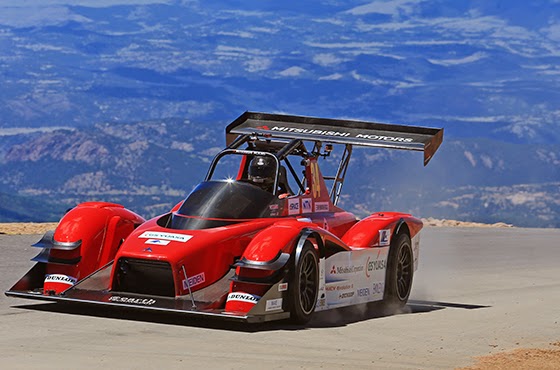
Mitsubishi MiEV Evolution III Wins Pikes Peak Electric Division & 2nd Outright

Mitsubishi Motors Corporation (MMC) entered two MiEV Evolution III all-electric racecars, which combine the best of MMC's electric vehicle (EV) and four-wheel drive control technologies, in the Electric Modified Division of the 2014 edition of the world-famous Pikes Peak International Hill Climb (Pikes Peak, June 23 to June 29) in Colorado, United States.

Race Day was held on Sunday June 29 and after posting the fastest time of 9 minutes 08 seconds 188, Greg Tracy won the Electric Modified Division honors and 2nd overall. Meanwhile, Hiroshi Masuoka set a time of 9 minutes 12 seconds 204, finishing 2nd in the division and 3rd overall, dominating the Electric Modified Division. These Race Day results and the performance of the cars during the event speak volumes about the advanced level of MMC’s EV and four-wheel drive control technologies.

The race starts at an elevation of 2,862 meters and takes competitors through 156 corners on a 20 km course to the finish on the 4,301 meter summit of Pikes Peak. With an elevation difference of 1,439 meters, atmospheric pressure, temperature, weather and other conditions vary significantly between the start and finish. A feature of the race course is that it is split into three major sections: Bottom at the foot of the mountain, Middle and then Upper near the summit.

Lined by coniferous trees, the Bottom section starts with its rhythmical series of mid- to high-speed corners but all of a sudden the drivers hit a series of much tighter and difficult turns which demand the utmost care and concentration.

The Middle section is distinguished by some spectacular scenery with oddly-shaped rocks closely bordering the road. This is a very technical section as shortly after the start a series of tight hairpin bends demand precise handling as the car races along the steeply ascending road.

The Upper section is a very high-speed course taking competitors through many fast corners between craggy rocks and boulders. With little guard railing at the side of the road, this very difficult section brings with it the risk of plunging over the edge should the car slide off the tarmac. This is why the highest levels of vehicle stability are required over the high-speed parts of the section. At 4,301 meters, the mountain summit is higher than Mt. Fuji and the thin air means that cars powered by internal combustion engines lose power the higher up they go. Electrically powered cars, however, are unaffected by the thin air and so this could prove the key section in setting a really fast overall race time.

PositionDriverVehicleTime
1Greg TracyMiEV Evolution III9:08.188
2Hiroshi MasuokaMiEV Evolution III9:12.204
3Tajima NobuhiroE-RUNNER Pikes Peak Special9:43.900
4Ikuo HanawaHER-0212:18.019
5Janis Horeliks2014 Tesla Roadster 36012:57.536

ER-A RaceAbout EV sets new speed record 285,31 km/h [VIDEO]

Metropolia Electric RaceAbout road legal electric vehicle top speed record 285,31 km/h at Lappeenranta airport during Unlimited Racing event on June 28th 2014.

Driver Janne Laitinen the car recorded 0-100 km/h, 6,3s & 0 - 100 mph, 10,6s.

The E-RA has a 33 kWh Altairnano lithium-titanate battery which powers four-electric motors that develop a peak output of 383 PS (282 kW / 378 bhp) and 3,200 Nm (2,360 lb-ft) of torque. This enables the 1,700 kg (3,747 lb) prototype to accelerate from 0-100 km/h in approximately six seconds and travel approximately 200 km (124 miles) on a single charge. At top speed the E-RA consumed around 1250 Wh/km measured as energy required from grid to recharge the battery.

Voltron Evo win Australian eFXC electric Formula Xtreme

Round 1 of the 2014 Australian electric Formula Xtreme Challenge - eFXC - was help today at Queensland Raceway.

Five electric superbikes made the record grid with first time entrant O'Hanlon Electric Motorsport winning all four heats with their new Voltron Evo ridden by Danny Pottage.

Built in Western Australia by Dr Chris Jones, the new bike is based on a custom frame fitted with Turnigy 40c LiPo RC batteries that provide 700 VDC to an Evo Electric AFM-140 Axial Flux BLDC motor good for 400 Nm peak, 250 Nm continuous.

BMW i3 with F1 Technology [VIDEO]

BMW i3 is one of many cars that now come equipped with F1 technology. The carbon fibre reinforced plastic (CFRP) Monocoque is used to reduce weight and ensure road safety.

The extensive use of carbon fibre keeps the curb weight down to 1,195 kg which is much lower then either a Nissan Leaf (1,500 kg) or a plug-in hybrid like the Chevy Volt (1,700 kg).

When combined with the i3's 125 kW BLDC electric motor, which is more powerful than either the Leaf (80 kW) or the Volt (110 kW), the result is a 0-100 km/h time of 7 seconds.

Toyota i-ROAD: Tokyo Trials [VIDEO]

Toyota's i-ROAD compact electric personal mobility vehicle takes to the streets in Japan's capital.

Participants in the limited public trials share their feedback on the ultra-compact, fun to drive i-ROAD, which is available in five colors.

Nissan Leaf Replacement Battery Priced At $5,499

The Nissan Leaf has been on the market since 2010, so there’s a good chance that some of them are getting close to 60,000 miles. This is important because it’s when the 5 years/60,000 miles capacity loss warranty expires. Nissan has announced that pricing for a replacement battery start at $5,499.

As an EV battery pack is defined as 'used' once it's capacity reduces to approx 80% Nissan have developed a new business model to create a market for 'used' Leaf battery packs. The old battery must be exchanged for the new battery as a condition of the sale of the replacement battery, and Nissan’s suggested retail battery pricing reflects a $1,000 core value assigned to the battery. Nissan will ensure that the old battery is recycled and reused as part of their 4R Energy business.

Nissan and Sumitomo Corporation created the joint venture company, “4R Energy Corporation”, in September 2010, to address the secondary use of EV lithium-ion batteries. Earlier this year they launched the world’s first large-scale power storage system which utilizes used batteries collected from electric vehicles.

The used EV batteries that will be recycled into this large-scale storage system have been recovered and have gone through thorough inspection and maintenance at 4R, to confirm safety and performance. The prototype system (600kW/400kWh) consists of sixteen used EV batteries.

The $5,499 price is just for the battery, and that doesn’t include taxes or dealer installation. Owners of the 2011 and 2012 Nissan Leaf will also need to pay $225 for an installation kit that allows the newer battery design to fit into the older models.

Nissan will offer financing options to customers who need to replace their battery. Details about this financing probably won’t be finalized until closer to the end of the year, but Nissan expects to keep monthly payments close to $100 per month.

Like the batteries found in a new Nissan Leaf, the replacement batteries will carry an eight-year/100,000-mile warranty against defects and a five-year/60,000-mile against capacity loss.

Check out the official statement from Nissan spokesman Brian Brockman available below, or head on over to the My Nissan Leaf forum to read more.

Source: AutoblogGreen

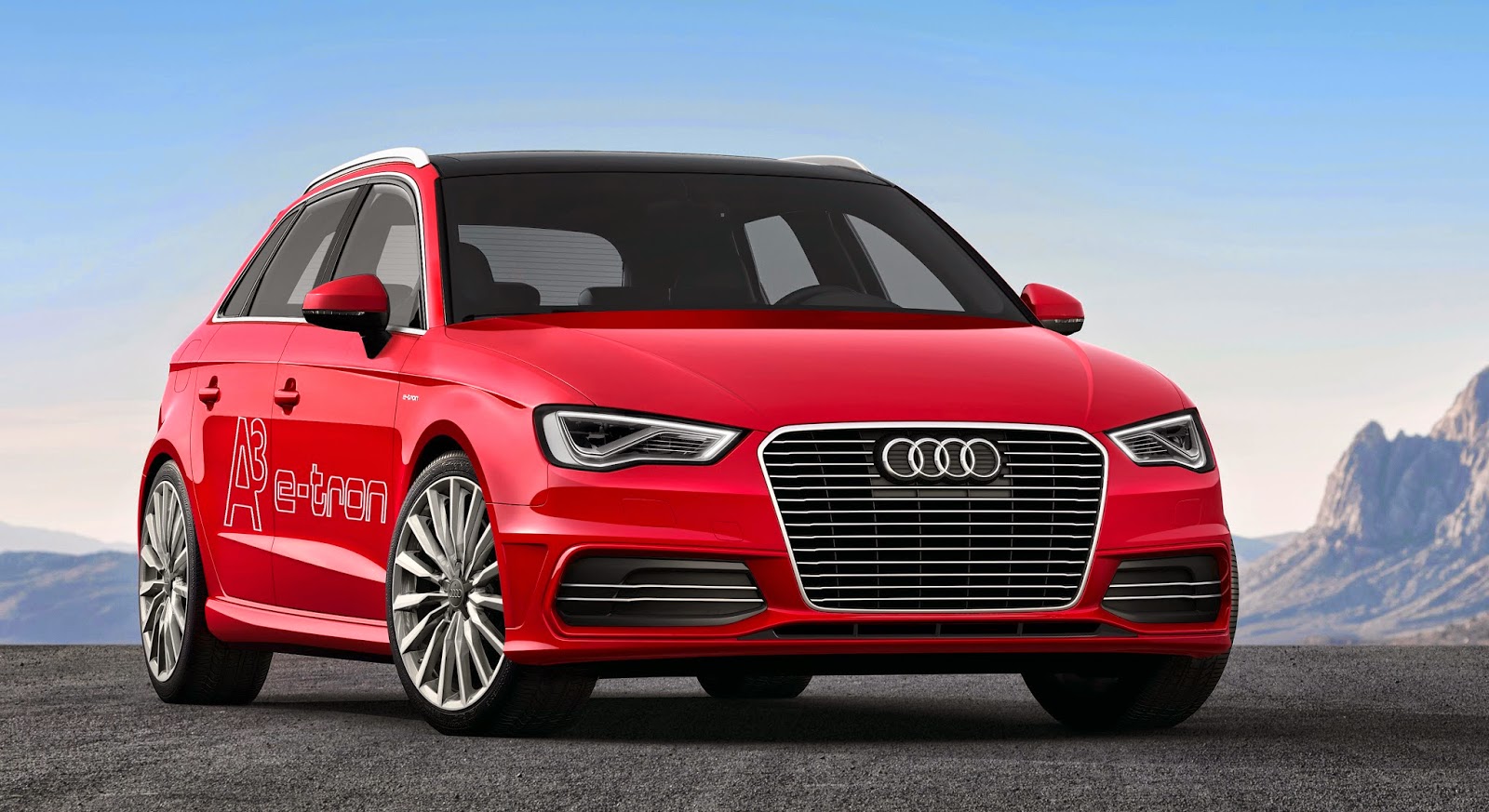
Audi plans plug-in hybrid offensive

Audi plans to launch at least four plug-in hybrid cars as it bets on the technology to counter rival BMW's electric car offensive.

Audi will roll out the A3 Sportback E-tron, its first plug-in hybrid, in Europe this month. U.S. sales are expected to begin in the second or third quarter of 2015, while China deliveries will start in the first or second quarter of next year.

The model will compete with cars such as the battery-powered BMW i3 in a bid to win customers looking for environmentally friendly vehicles.

Audi CEO Rupert Stadler said today the A3 Sportback E-tron will be followed by other plug-in hybrids.

"We strongly believe in plug-in hybrids and we will add a new model each year, beginning with the Q7 next year, followed by the A6 long-wheelbase sedan for China and the A8," Stadler said on the sidelines of the A3 Sportback E-tron's introduction here.

Audi believes plug-in hybrids are the best solution for low-emission vehicles because they don't face the same range constraints as battery-powered vehicles. Plug-in hybrids use a conventional internal combustion engine but can also run on electric power with zero emissions.

“Plug-in hybrids are electric vehicles for everyday driving, exactly what our customers are asking for,” Stadler said.

The A3 Sportback E-tron can be driven under electric power for about 30 miles. Using the gasoline engine, it has a 373-mile range. BMW's i3 has a driving range of up to 100 miles, rising to about 187 miles for the version with a range extender.

Audi’s approach to clean-car technology diverges from the path taken by BMW, which created the “i” subbrand to showcase its environmental technology. The i3 city car and the plug-in hybrid i8 supercar have plastic exterior body panels and distinctive styling to make them stand out from other cars on the road.

“BMW created a product that is totally different,” while Audi as well as Mercedes-Benz “try to integrate e-mobility into their existing vehicles,” said Christian Breitsprecher, a Frankfurt-based analyst with Macquarie Europe. The advantage for Audi and Mercedes is “if there’s lots of demand, they can produce a lot. If not, they can allocate the capacity to their normal cars.”

Stadler said he could not give a figure for how may plug-in hybrids Audi will sell. "Plug-in hybrids could account for 10 percent to 20 percent, even 40 percent of the 2 million units we plan to build annually by 2020. It will be our customers who decide, and we are ready to satisfy their demand,” he said.

“Plug-in hybrids are fully integrated in our platforms and production process, so we are beginning with the A3 E-tron in Germany, but the same technology could be applied to the production lines we have in China and in Mexico,” Stadler added.

Extra cost

Audi's approach may keep spending under control, but the question is whether customers will pay the extra cost for technology that’s not evident from the curbside.

The A3 Sportback E-tron looks identical to its conventional A3 counterpart and starts at 37,900 euros ($51,700) in Germany. That’s 15,100 euros more than the base gasoline-powered version of the A3.

Hiding its green technology under the hood could be a risk for Audi. Inroads by electric-car maker Tesla Motors into the luxury-car segment show that wealthy drivers are ready to buy upscale green cars, if they get noticed. That goes for the BMW i3 as well. Demand for the car prompted BMW to triple production of carbon fiber, which is used for the passenger compartment.

“In an i3 and the Tesla, the attributes of luxury, modern technology and protecting the environment are clearly visible to everyone,” Breitsprecher said. The Audi plug-in “doesn’t show off that the consumer paid extra.”

Still, the threat for Audi is more to its image as a technology leader, with demand for plug-in hybrids and electric vehicles expected to remain restrained. The segment is forecast to account for just 5.7 percent of global auto production in 2019, according to IHS Automotive.

In Germany, Audi is selling the A3 Sportback E-tron via a network of 100 selected dealerships where service employees have been trained to work with high-voltage technology. The E-tron dealerships have an electric charging station that customers can use free of charge during business hours.

The A3 E-tron has a 150 hp 1.4-liter direct injection turbo gasoline engine and a 102 hp electric motor housed within the six-speed dual clutch transmission. As the two power sources never work together at full force, combined system power is 204 hp, Audi said. Top speed is 137 mph in hybrid mode and 80 mph in pure electric mode.

Audi said it takes about 3 hours and 45 minutes to fully recharge the lithium ion 8.8 kWh battery from a 200 volt household outlet. With an industrial 380 volt charging station, recharging time decreases to 2 hours and 15 minutes, the company said.

Driving Tesla Model S P85 on German autobahn [VIDEO]

Norwegian Tesla owner Bjørn Nyland has uploaded a video demonstrating his Model S at Autobahn speeds.

A Tesla Model S P85 driven at it's maximum speed of 210 km/h (130 mph) has an estimated range of 154 kms (96 Miles)

Having recently returned from Munich I can vouch for the fact that driving at 160 km/h (100 mph) in the fast lane is considered slow, they really do drive at 200 km/h routinely on unlimited sections, yet the road toll is actually lower than in many other countries (including Australia).

Continental introduce tire optimized for hybrids [VIDEO]

Continental has taken the Conti.eContact that was originally launched in 2011 with electric vehicles in mind and refined it to meet the needs of hybrid models. Thanks to the introduction of numerous new technologies and processes, this new and extensively hand-crafted summer tire is the first from Continental to obtain the top A rating on the EU Tire Label for both wet grip and rolling resistance, while making no significant compromises in terms of the many other performance parameters.

With immediate effect Continental is offering the Conti.eContact in six sizes for 17 and 18-inch rims, specially designed for models such as the Opel Ampera, BMW 5 ActiveHybrid, Lexus LS 600h and Porsche Cayenne S Hybrid, as well as other cars and SUVs with hybrid drive. Given that this is a new vehicle segment that also involves highly complex production processes, Continental is kicking off with low-volume production at its French tire plant in Sarreguemines.

The rolling resistance of the new Conti.eContact for hybrid vehicles is some 20 percent lower than in a conventional tire, while delivering a wet braking performance similar to that of a normal car tire. This is made possible by a combination of advanced technologies in the development, compounding and production sectors. In terms of handling and braking on dry roads, the tire performs at the same high level as a Continental sedan tire of comparable size. As a member of the Continental tire family for hybrid and electric vehicles, the Conti.eContact bears the “BlueEco” logo on the sidewall. Continental’s in-house studies point to incremental growth in the proportion of hybrid vehicles in the passenger car segment, which could account for as much as eight percent by 2020.

Green Chili compound
Featuring the newly developed Green Chili compound, the silica compound of the new Conti.eContact for hybrid vehicles is made up in such a way that the internal friction of the filler particles and the polymers is lower than in conventional rubber compounds. The use of special additives provides an additional boost in terms of handling properties. With this new compound, the chemists at Continental have achieved a marked reduction in rolling resistance, while maintaining a high level of handling and braking performance on dry roads.

Hydro-sipes

On wet roads the specially configured twin sipes in the tread blocks generate a ‘windshield wiper’ effect that breaks up the film of water under the contact patch. This smart thinking by the tread designers at Continental enables the water between the surface of the tread blocks and the road to be rapidly dispersed, making for very short stopping distances in the wet. The fast dispersion of the water also benefits the tire’s wet handling – even at higher speeds. The tread design makes a valuable contribution to the short stopping distances in the wet that led to the Conti.eContact’s A rating for wet grip on the EU Tire Label.

AeroFlex technologyAlong with the new technologies adopted for the compound and tread design, the sidewalls of the new Conti.eContact have also been redesigned. In this case the tire designers focused on minimizing aerodynamic drag and rolling resistance. This they achieved through the aerodynamically modified sidewall and its flexible, lightweight design. As a result, in the new Conti.eContact less energy is lost when the tire deflects and rebounds than in a conventional tire. In addition, the drop in turbulence has led to a further reduction in the tire’s contribution to fuel consumption.

ContiSilent

When hybrid vehicles run in electric mode they are virtually silent. As tire noise is no longer drowned out by other sources of noise such as a conventional engine, it is all the more noticeable. Consequently, the new Conti.eContact is designed to generate minimum audible noise in the vehicle interior. This is achieved with the aid of ContiSilent technology. A thin layer of polyurethane foam attached to the inside of the tread reduces the vibrations that are generated as the tire rolls along the road. This means that less vibration is communicated to the chassis, leading to a lower level of noise in the cabin.

Outlander PHEV to Tackle Asia Cross Country Rally 2014

Mitsubishi Motors Corporation (MMC) announces that it will dispatch a team of technical support engineers for an Outlander PHEV entered in the T1.3 4x4 Electric class of the grueling 2,200km FIA-certified Asia Cross Country Rally 2014 (AXCR) from August 9 through 15, to be run from Thailand to Cambodia. The Two & Four Motor Sports rally team (Two & Four), headed by Kenji Ishida, will run an Outlander PHEV in the race for the second straight year. MMC engineers will provide Two & Four's team technical support for the plug-in hybrid four-wheel drive SUV for the duration of the rally. MMC will utilize valuable data and knowhow acquired by the technical support team in future vehicle development.

The 19th edition of the AXCR will get under way with the Ceremonial Start in the Thai beach resort of Pattaya on Saturday August 9. The next day, August 10, sees the start of the rally proper as Leg 1 takes entrants from Pattaya to Sakaeo. On August 12, Leg 3 of the rally takes the competitors into Cambodia and past the World Heritage site of Angkor Wat. The event finishes in the Cambodian capital of Phnom Penh on Friday August 15. The AXCR covers a total distance of 2,200 km and offers a grueling test of all-terrain performance and durability as it requires competitors to conquer mountains, forests, swamps and river crossings.

The Outlander PHEV rally car will use competition suspension and reinforced mountings to raise ground clearance and improve all-terrain performance over poor surfaces. The vehicle's S-AWC integrated vehicle dynamics control system will be tuned for competition use to deliver better traction. Other modifications include the fitting of a roll cage and underbody skid plate, the use of lighter engine hood, rear gate and interior parts, and additional sealing and a snorkel for water crossings.