Next Generation GS Yuasa lithium-ion battery triples energy density

GS Yuasa Corp. said Monday it has developed a next-generation lithium-ion battery with three times the capacity of existing products.

The battery uses sulfur as a key material for the positive electrode. The Kyoto-based company now aims to improve the durability of the silicon-based negative electrode, so it can commercialize the next-generation lithium-ion battery by 2020.

Sulfur is harmless to humans, cheap and found in abundance in nature. But it does not conduct electricity, making it difficult to obtain strong electric output from batteries using sulfur-based electrodes.

GS Yuasa succeeded in discharging the high-capacity battery by filling sulfur into small holes on carbon rods in order to make the element conductive, the company said.

“This battery can be manufactured at a lower cost,” said Shuji Hitomi, group manager at GS Yuasa’s research and development center. “If it is used in a car, the range (without recharging) would be greatly increased.”

Germany exits EV Battery Cell Manufacture Business

The only German factory that produces battery cells for electric cars is closed. Little more than one year, the company Li-Tec in Saxon Kamenz will manufacture battery cells. The company is a subsidiary of the Daimler Group.

"Our cells are very good, but at current production figures too expensive", the Daimler-manager Harald Kröger justified the closure in an interview with SPIEGEL. Last week, Daimler had 250 employees internally announced the end of the factory, more than half should be able to remain in the group. Only mass production makes such factories profitable. Therefore, it was part of the Daimler-calculus that other auto companies participate and would leave produce in Kamenz cells for their e-Mobile. But the partners did not materialize.

Now the company changes its strategy. "We have realised that a car manufacturer does not have to produce the cells themselves," says Kroeger.

Li-Tec will be retained as a research location; the majority of the 280 employees will be transferred to the Deutsche Accumotive—also a wholly owned Daimler subsidiary—which manufactures battery packs. Accumotive is currently expanding its production capacity to build systems for the next generation of the electric smart among others. Cells are slated to come from LG Chem.

VW Chairman thinks solid-state batteries can deliver 700 km range

Following persistent news leaks from 'highly placed insiders' about an all-electric version of Audi's upcoming Q8 sports SUV with 700 km battery range, VW Chairman Prof. Dr. Martin Winterkorn, has hinted at the battery technology Audi may use to achieve that range.

In a speech at Stanford University, during the award of the 3rd Science Award for Electrochemistry, Dr Winterkorn said he sees great potential in solid-state batteries.

"Increasing the specific energy of lithium-ion cells to as much as 380 Wh/l will reduce driving range drawbacks.

With a higher nickel content, much more will be feasible.

But we also need to intensify basic research into batteries with an even greater specific energy, such as solid-state batteries.

I see great potential in this new technology, possibly boosting the range to as much as 700 kilometers (1,000 Wh/l)."

In March we reported that VW were bench testing new battery chemistry capable of providing "between three and four times the power" from a given capacity. This would mean up to 80kWh from a similar volume occupied by the current Golf Blue-e-motion's 26.5kWh battery pack.

Dr Heinz-Jakob Neusser, VW board member responsible for development, speaking at the Geneva motor show, refused to name the battery chemistry, but doesn’t deny it is a lithium-air unit, which are capable of delivering huge amounts of power, but are in the very early stages of development.

Given Dr Winterkorn's statement that current energy density with lithium-ion batteries, which allow a range of 190 kilometers, is 260 Wh/l and in the same speech he references solid-state batteries @ 1,000 wh/l, a 4x increase, I think it becomes clear this is the chemistry VW are bench testing.

The Science Award Electrochemistry was initiated by BASF and Volkswagen in 2012. The aim being to foster exceptional scientific and engineering achievements in electrochemistry and to provide an incentive for the development of high-performance energy storage.

Source: VW

LG Chem officially breaks ground for China EV battery plant

LG Chem held a ground breaking ceremony for the construction of electric-car battery plant in Nanjing, China, to meet growing demand in the world’s biggest car market.

The Nanjing battery plant, with an annual production capacity of more than 100,000 electric vehicles when completed by the end of 2015, will supply batteries to Chinese automakers like SAIC Motor Corp, Qoros and many other global carmakers in China. It was 'only' 7 months ago LG Chem's CEO said they were "considering" this EV plant in China!!

Among the key participants who joined the groundbreaking ceremony were Miao Rui Lin, the Mayor of Nanjing; Luo Qun, the vice mayor; and YS Kwon, the President of Energy Solution Company of LG Chem.

LG Chem set up a joint venture in August with two Chinese state-run companies - Nanjing Zijin Technology Incubation Special Park Construction Development Co, Ltd. and Nanjing New Industrial Investment Group Ltd. - to start manufacturing EV batteries in China. LG Chem owns half of the joint venture while the other half is shared by Chinese partners.

The Korean battery giant said it has been investing hundreds of millions of dollars into the factory and expects a total of 1 trillion won (AUD$1 Billion) in revenue by 2020, just by the batteries produced in Nanjing.

BMW likely to phase out internal combustion engines over the next 10 years [VIDEO]

During a recent interview with CNBC.com , mutual fund manager Ron Baron of Baron Capital revealed that two of his analysts recently visited BMW in Germany and the BMW financial team believes that a "revolution in the drive train is underway."

"We believe that BMW will likely phase out internal combustion engines over the next 10 years,"
Baron wrote in his most recent quarterly letter to shareholders of his funds.

Almost exactly 12 months ago, BMW product chief Herbert Diess told Autocar "all BMW models will soon need to be sold with some form of electrification." BMW’s head of production for large vehicles, Peter Wolf, told motoring.com.au. “We are planning to have a plug-in hybrid in each and every model series.”

We have also regularly reported on a steady stream on informal announcements from German automakers (Audi, BMW, Mercedes, Porsche) regarding their plans to build a 'Tesla killer', but Wall Street financial analysts concluding a major automaker may abandon the production of ICE power plants within a decade still comes as a revelation. It was only four years ago (December 2010) the first mass market electric vehicle, the Nissan Leaf, began deliveries to retail customers.

Baron, who holds a $250 Million position in Tesla Motors, believes that of all the major automakers, BMW is the only car company with a 'culture' comparable to that of Tesla. Baron believes the rest of the auto industry is resisting the move to electric vehicles. "As a result, they are developing electric expertise so slowly that the lead Tesla has built up through its fast growing staff ... may soon become insurmountable."

He argues automakers don't want electric vehicles to happen because their engine and transmission plants would become stranded assets. Unions don't want EVs to happen because they are easier to assemble which results in fewer jobs and dealers don't want EVs to happen because of direct sales and lack of vehicle servicing. Electric cars have 18 moving parts compared to 2,000 moving parts in a combustion engined car. EVs simply don't wear out or breakdown leading to lost automaker/dealer revenues.

With global auto sales heading towards 100 Million a year, Baron believes that in 15 years time Tesla could be selling 10 Million vehicles a year.

Supercapacitor panel-powered EVs a ‘reality’ in 5 years say QUT researchers

A car partly powered by its own body panels could be on our roads within five years following the development of breakthrough nanotechnology by Queensland’s University of Technology.

Researchers at QUT have succeeded in developing lightweight ‘supercapacitors’ that they say can be combined with regular batteries to dramatically boost the power of an electric car.

The supercapacitors – described as a ‘sandwich’ of electrolyte between two all-carbon electrodes - were made by the research team into a thin and extremely strong film with a high power density.

The development means that the film could one day be embedded in a car’s body panels, roof, doors, bonnet and floor - storing enough energy to turbocharge an electric car’s battery in just a few minutes.

The findings, published in the Journal of Power Sources and the Nanotechnology journal, are the result of the work of the team comprising Postdoctoral Research Fellow Dr Jinzhang Liu, Professor Nunzio Motta and PhD researcher Marco Notarianni from QUT’s Science and Engineering faculty – Institute for Future Environments, and PhD researcher Francesca Mirri and Professor Matteo Pasquali, from Rice University in Houston in the United States.

According to Marco Notarianni, the car partly powered by its own body panels could be a reality in the next five years.

“Vehicles need an extra energy spurt for acceleration, and this is where supercapacitors come in. They hold a limited amount of charge, but they are able to deliver it very quickly, making them the perfect complement to mass-storage batteries.

“Supercapacitors offer a high power output in a short time, meaning a faster acceleration rate of the car and a charging time of just a few minutes, compared to several hours for a standard electric car battery.”

Dr Liu says one of these cars, after one full charge, should be able to run up to 500km – “similar to a petrol-powered car and more than double the current limit of an electric car."

According to Dr Liu, currently the ‘energy density’ of a supercapacitor is lower than a standard lithium ion (Li-Ion) battery, but its ‘high power density’, or ability to release power in a short time, is far beyond a conventional battery.

“Supercapacitors are presently combined with standard Li-Ion batteries to power electric cars, with a substantial weight reduction and increase in performance.

“In the future, it is hoped the supercapacitor will be developed to store more energy than a Li-Ion battery while retaining the ability to release its energy up to 10 times faster – meaning the car could be entirely powered by the supercapacitors in its body panels.”

Dr Liu says the technology would also potentially be used for rapid charges of other battery-powered devices.

“For example, by putting the film on the back of a smart phone to charge it extremely quickly.”

Another member of the research team, Professor Nunzio Motta, says the technology discovery may be a game-changer for the automotive industry, with significant impacts on financial, as well as environmental factors.

“We are using cheap carbon materials to make supercapacitors and the price of industry scale production will be low.

“The price of Li-Ion batteries cannot decrease a lot because the price of Lithium remains high. This technique does not rely on metals and other toxic materials either, so it is environmentally friendly if it needs to be disposed of.”

The QUT researchers who made this discovery are part of the university’s Battery Interest Group, a cross-faculty group that aims to engage industry with battery-related research.

Tesla delays Model X and stock jumps 5%

Tesla Motors on Wednesday announced that its Model X crossover utility vehicle would not be available until the second half of 2015. The model had previously been slated for a 2013 launch.

The Palo Alto, California-based company also reported a loss of $74.7 million in its third quarter. Tesla said it had a loss of $0.60 per share. Earnings, adjusted for stock option expense and non-recurring costs, were $0.02 per share.

The results topped Wall Street expectations. The average estimate of analysts surveyed by Zacks Investment Research was break even on a per-share basis. As a result, Tesla's stock price was up more than 5% in after-hours trading on Wednesday.

The electric car maker posted revenue of $851.8 million in the period, falling short of Street forecasts. Analysts expected $867.7 million, according to Zacks.

Tesla shares have risen 54% since the beginning of the year. In the final minutes of trading on Wednesday, shares hit $230.97, a rise of 31% in the last 12 months.

Model S Achieves Euro NCAP 5-Star Safety Rating [VIDEO]

The Tesla Model S has received a maximum-possible 5-star safety rating from the European New Car Assessment Programme (Euro NCAP).

Model S is one of just a few cars to have ever achieved a 5-star safety rating from both Euro NCAP and the U.S. National Highway Traffic Safety Administration (NHTSA). Additionally, Model S is the only car this year to have achieved both a 5-star Euro NCAP rating and 5 stars in every NHTSA subcategory, including frontal impact, side impact, and rollover. Only two other cars have earned the same recognition since 2011 (when NHTSA introduced its latest rating scheme).

The reason so few models achieve 5-star ratings in both Europe and the U.S. is that each program places emphasis on different safety aspects in the assessment process. NHTSA emphasizes structural and restraint safety, with a deep focus on how well the vehicle can withstand and absorb the energy of an impact while protecting its occupants. It is also primarily concerned with adult occupants. On the other hand, Euro NCAP assesses a wider range of scenarios, including tests for child and pedestrian safety. Unlike for NHTSA, active safety is also an important part of Euro NCAP’s 5-star requirement. Every year, the European organization raises the standard for a 5-star rating to account for technological advances in the industry.

The dual 5-star ratings for Model S validate our holistic approach to safety. We have been engineering passive and active safety systems in parallel, so the car is structurally sound and is also designed to intelligently anticipate and react to potentially dangerous situations.

Structurally, Model S has advantages not seen in conventional cars. It has a low center of gravity because its battery pack, the largest mass in the car, is positioned underneath the passenger compartment, making rollover extremely unlikely. It also has a large front crumple zone because of the lack of an engine, meaning it can absorb more energy from a frontal impact, the most common type of crash resulting in fatalities. Its body is reinforced with aluminum extrusions at strategic locations around the car, and the roof can withstand at least 4 g’s. It was for these reasons that Model S achieved 5 stars in every subcategory when tested by NHTSA in 2013.

This quarter, we started implementing the Model S active safety system in conjunction with the introduction of new Autopilot hardware, consisting of 12 ultrasonic sensors that sense up to 16 feet around the car, a forward-looking camera, a forward radar, and a digitally controlled, high-precision electric brake boost. We specifically selected this hardware to accommodate the progressive introduction of new safety features via software updates over the course of the next several months.

While the features already pushed to the Model S fleet – Lane Departure Warning and Speed Limit Warning – have proven sufficient to merit a 5-star NCAP rating, we will go much further with active safety systems. Features coming soon include Forward and Side Collision Warning and Avoidance, Blind Spot Warning, and Automatic Emergency Braking.

The video shows the Frontal Impact test which takes place at 64 Km/h, 40% of the width of the car striking a deformable barrier. In the side impact, a mobile deformable barrier impacts the driver's door at 50 km/h. In the pole test, the car tested is propelled sideways at 29km/h into a rigid pole.

Electric RaceAbout annual Nordschleife testing [VIDEO]

Electric RaceAbout ran the annual tests on the legendary Nordschleife track in Nürburg Germany in the end of October. E-RA went around the 20,6 km long, so called Sport Auto lap, in 8:01,41 beating its own best time.

Last years visit in Nordschleife gave a lot of inspiration and ideas to E-RA team, how to continue improving the performance and reducing the weaknesses of the car. During the past year, the whole vehicle has been developed, but the most remarkable things were the active rear wing control, suspension and ABS brake system. The Torque Vectoring control system of the motors has also been improved since last year.

This time E-RA was driven by Jesse Krohn, a young Finnish VLN- series professional driver and his comments concerning the performance and strengths of E-RA are similar with our teams earlier test drivers. “The drive ability of the vehicle was good regarding its weight and the acceleration from 100 to 200 km/h was very convincing”, says Jesse, who drove the vehicle for the first time.

The testing period in the end of October lead to the second fastest lap around the Nordschleife track in the street legal electric vehicle group. The unpredictable Eifel mountain range climate did not help the testing and E-RA was on the track only three times in four days.

“The low amount of laps did not help me get accustomed to the vehicle”, says Jesse and continues: “Also, we had to start every lap with cold tires and brakes”.

During the fastest lap, the battery of the vehicle heated up more than the team anticipated and the battery output power had to be limited from halfway of the track to the end. Additional laps would have helped to optimize the vehicle setup - there is still potential for a faster lap-time.

The best time of the EV's on Nordschleife still remains with Mercedes-Benz AMG SLS Electric Drive 7:56,2.

Swiss electric car sets acceleration World Record

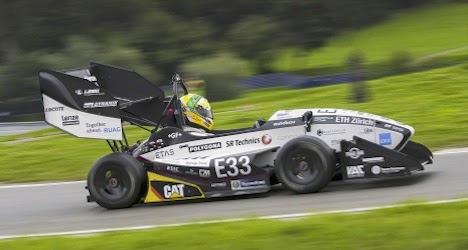
An electric racing car developed by students at ETH Zurich and the Lucerne University of Applied Sciences and Arts on Monday set a world record for acceleration, the universities announced.

The “grimsel” car sped from zero to 100 kilometres an hour in just 1.785 seconds, at a military airport in Dübendorf in the canton of Zurich, smashing the the previous record.

The previous record of 2.13 seconds was set by Delft University of Technology in the Netherlands.

Operated by a student team from the Academic Motorsports Club Zurich (AMZ), The grimsel car, reached a speed of 100 km/h in less than 30 metres, ETH Zurich, the Swiss Federal Institute of Technology, said in a news release.

Thirty students from the two swiss universities developed and built the racing car in less than a year.

Weighing just 168 kilograms, the carbon-fibre vehicle generates 200 horsepower through four-wheel drive, ETH said.

Four specially designed wheel hub motors create a total torque of 1,630 Newton metres (Nm), with torque distribution controlled individually for each wheel to maximize acceleration, the university said.

AMZ was founded in 2006 ivy ETH students and produces a prototype racing car to compete in various student formula competitions in Europe every year.

The grimsel car will be presented to the public at “Student Power Day” on November 9th at the ETH Hönggerberg campus, with test rides planned between noon and 2pm.

New battery could be ‘killer app’ for electric cars [VIDEO]

A new battery that promises to solve two of the biggest grumbles about electric cars - high prices and low driving ranges - is headed for shop floors in just over a year.

The lithium battery, which experts say could be a game-changing “killer app” for the global car market, can triple the driving range of an electric vehicle and significantly lower its costs, say the US scientists who developed it.

It can also double the running life of a smartphone or a laptop, said Dr Qichao Hu, who developed the device with his former professor, Donald Sadoway, a prominent battery expert at the Massachusetts Institute of Technology.

But its impact on the cost and performance of an electric car could prove transformational, said Prof Sadoway, whose work on other batteries has been backed by Microsoft co-founder, Bill Gates.

“We’ve got to get a car on the showroom floor for $30,000, not $130,000 and the big piece is the battery: it’s too expensive and it runs down too fast,” said Prof Sadoway.

Batteries in existing electric cars can account for as much as 30 per cent of the sticker price. They also need temperature control systems to stop them overheating or catching fire.

The new battery does not need the same systems because it operates safely at a wide range of temperatures, which should shave costs, said Dr Hu, and the battery itself will be about 20 per cent cheaper than existing ones.

Cost, safety and “range anxiety” are not the only problems for plug-in electric cars, which make up less than 1 per cent of new passenger car sales in most countries. Recharging times and access to charging stations are also a concern.

Still, analysts say a battery that can sharply improve price and range could be highly significant.

“That’s game-changing,” said Arndt Ellinghorst, head of global automotive research at ISI Group, an investment research group. “There are a lot of experienced battery makers trying to do exactly that because it’s the killer application.”

Independent experts in the US recently confirmed prototype cells in the battery developed by Dr Hu and Prof Sadoway can store more than twice as much energy as conventional cells.

The main difference between their battery and existing ones is that it has an ultra-thin metal anode with higher energy density than the graphite and silicon anodes in current batteries, and uses safer electrolyte material.

Dr Hu founded a company called SolidEnergy in 2012, just outside Boston, to commercialise the technology and hopes the battery will be in production for consumer electronics in the first half of 2016 and in electric cars by the second half of that year.

The project has backing from Vertex, the venture capital arm of Temasek, Singapore’s state investment group, and Dr Hu said he had preliminary discussions with Apple and Tesla, the electric carmaker, as well as most major Asian battery manufacturers.

Apple declined to comment and Tesla did not respond to requests for comment. To speed up the process of getting the device to market, SolidEnergy only plans to make the core battery materials for larger manufacturers.

Tesla is hoping to bring down battery costs at the “gigafactory” battery plant it is building in Nevada. But most of the cost reductions are expected to come from economies of scale rather than the technological advances promised by batteries such as the one Dr Hu and Prof Sadoway are developing.

Nissan LEAF Sets Annual U.S. Electric Vehicle Sales Record – Again

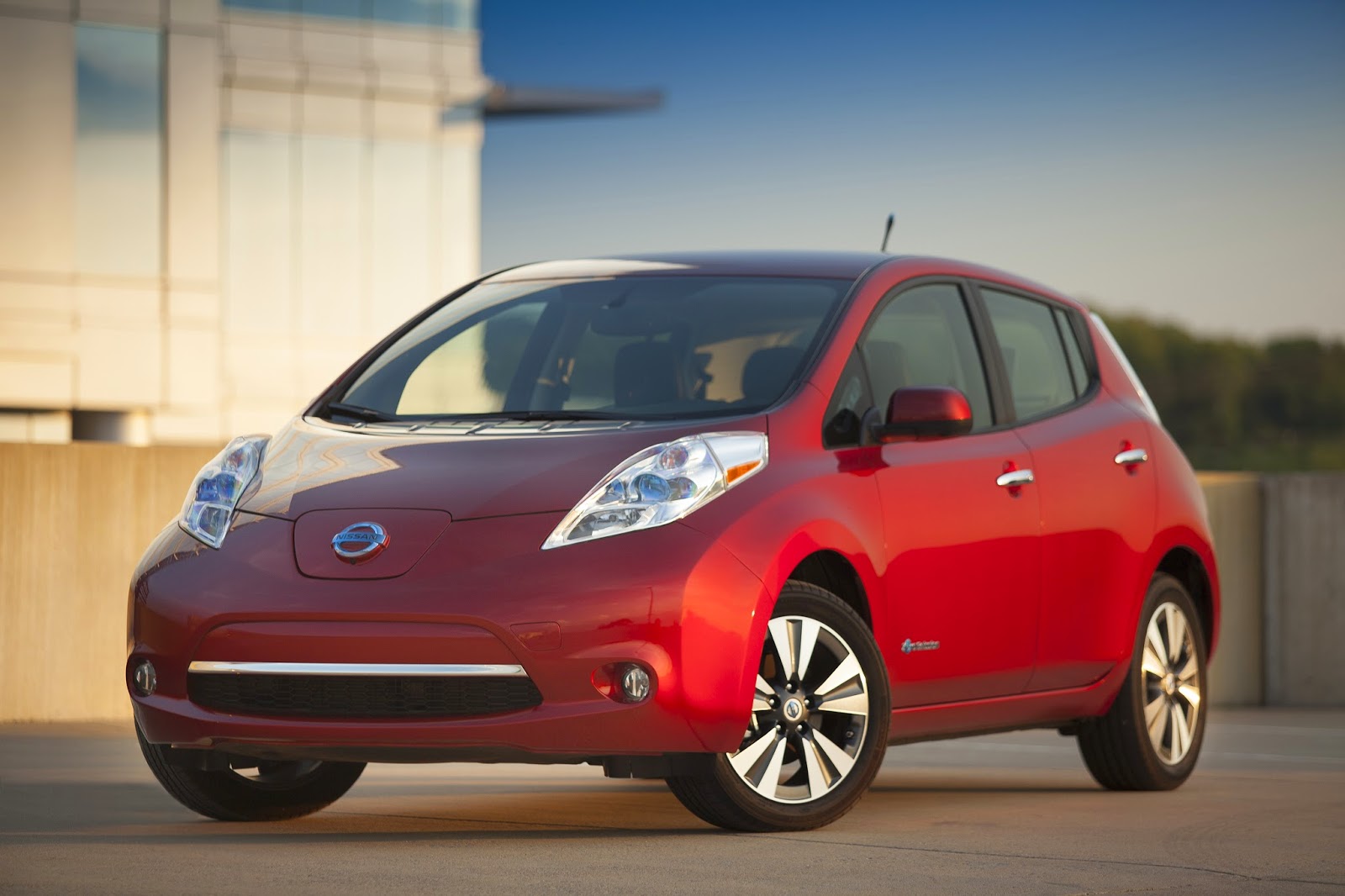
With more than two months remaining, Nissan LEAF has shattered the record for the most U.S. electric vehicle sales in a single calendar year, surpassing the previous record of 22,610 that it set in 2013.

“With nearly 20 electric cars or plug-in hybrid models on the road today, Nissan LEAF remains at the head of the class, outselling the nearest competitor by 50 percent through September,” said Brendan Jones, director, Nissan electric vehicle Sales and Infrastructure. “Since the initial launch in 2010 our primary goal is to bring electric vehicles to the mass market in a practical and fun-to-drive package, and we continue to deliver electric cars to more new buyers than anyone else.”

LEAF sales in 2014 through September are up more than 36 percent compared to the same period last year. With more than 142,000 LEAF sales globally since launch and more than 64,000 of those in the U.S., Nissan is the global leader in electric vehicles. (Nissan will announce October U.S. sales on Monday, Nov. 3.)

“Nissan LEAF owners are eager to share their enthusiasm with neighbours, friends and family, and that passion makes them some of our best salespeople,” said Jones. “We’ve seen a ‘cul-de-sac’ effect where the first LEAF owner in the neighbourhood becomes the community champion for electric cars, educating neighbours on the benefits of going electric, even sometimes handing the keys over for a test drive.”

With seating for up to five passengers, the all-electric Nissan LEAF boasts an EPA-estimated driving range of 84 miles on a fully-charged battery and MPGe ratings of 126 city, 101 highway and 114 combined.

The starting price of a Nissan LEAF is about $22,000 after the available maximum $7,500 federal tax credit, and LEAF offers the benefits of lower running costs and less scheduled maintenance. LEAF offers a wide range of standard equipment plus a variety of available premium features such as leather seats, 17-inch alloy wheels and 7-speaker BOSE® energy efficient audio system.

Volkswagen to launch over 20 electric vehicles in China by 2018

Volkswagen AG said on Tuesday it would launch more than 20 models of battery-driven cars in China over the next few years.

"In the near future, Volkswagen will be offering Chinese drivers over 20 NEVs, from small cars to large-sized SUVs, from plug-in hybrids to pure electric cars," Jochem Heizmann, head of Volkswagen Group China, said.

Heizmann was speaking to reporters in Shanghai, where the German carmaker is launching a week-long campaign to promote e-mobility in China's financial hub.

Volkswagen lags global rivals including BMW, Tesla Motors and Nissan in selling pure electric cars in China.

Volkswagen has previously said it plans to introduce into China more than 15 electric or plug-in hybrid cars for Volkswagen and other brands it owns by 2018, many of which will be locally produced.

China, suffering from worsening pollution, has stepped up efforts to promote use of electric cars, having rolled out incentive policies and tougher fuel-efficiency and emission rules. Beijing has set an aggressive target of putting 5 million green vehicles on Chinese roads by 2020.

Alveo emerge from Stealth mode with LiFePO4 battery that charges in 30 mins over 40,000 cycles

Norwegian entrepreneur Jostein Eikeland is hoping to jolt the world of energy storage.

On Tuesday, Eikeland's latest venture, Alevo, unveiled a battery that he says will last longer and ultimately cost far less than rival technologies.

The technology, which is meant to store excess electricity generated by power plants, has been developed by Eikeland in secret for a decade.

"We've been very stealth," Eikeland said in a telephone interview. "We didn't know if we were going to succeed."

Martigny, Switzerland-based Alevo Group is gearing up to start manufacturing batteries next year at a massive former cigarette plant near Charlotte, North Carolina, that it says will employ 2,500 people within three years.

Eikeland, 46, said Alevo, named for the inventor of the battery, Alessandro Volta, has $1 billion from anonymous Swiss investors and has taken no state funding or incentives.

Alternately brash and self-deprecating, Eikeland did not shy away from discussing his up-and-down past. He founded software company TeleComputing Inc during the dot-com boom, helped take it public on the Oslo stock exchange, then left in 2002 after the tech bubble burst.

He later invested heavily in and took the helm of Sweden-based auto parts manufacturer, TMG International, which went bankrupt in 2008. Broke, he was forced to sell his lavish homes to pay his taxes, according to media reports that were confirmed by representatives for Alevo.

After TMG, Eikeland spent a few years investing in software and battery technologies, many of which he admits failed.

"I know how hard it is to lose eight of your 10 fingers," he said. "I wish I had somebody else to blame."

EASIER SAID THAN DONE

Claims of technological breakthroughs from unfamiliar companies are common in the world of green technology. Many startups fizzle out before they achieve mass production. Among the recent high-profile flameouts: battery maker A123 and solar panel maker Solyndra.

"One billion dollars is a colossal amount of capital raised for any clean-tech company," said Raymond James analyst Pavel Molchanov, who said he is not familiar with Alevo. "It doesn't mean it's going to be a smashing success."

Typically in high-tech manufacturing, companies use pilot projects to prove their technology to investors and potential customers before ramping up. That's not how Eikeland is proceeding.

"Building as big as we did, it might seem a little bit risky," said Eikeland, who described himself as "a controversial guy."

Producing on a mass scale will make Alevo's technology cost- effective from the start, Eikeland said. The high cost of grid storage has prevented it from being deployed more widely.

Eikeland plans to deliver 200 megawatts of batteries - roughly enough to power 100,000 homes - into the U.S. market next year and is in talks with big utilities, which he hopes will become customers.

Alevo's approach stands in stark contrast to the public announcement last month of Tesla Motors Inc's planned $5 billion factory in Nevada, which will make batteries for electric cars. Tesla says its plant will employ 6,500 people by 2020. It will receive more than $1 billion of state incentives.

"Building a $1 billion facility in stealth mode is definitely unusual," said Dan Reicher, executive director of the Steyer-Taylor Center for Energy Policy and Finance at Stanford University. Reicher, a former green technology investor, said he was not familiar with Alevo or its technology.

State and county officials in North Carolina confirmed that Alevo has not sought any business incentives.

PACKING A LOT OF POWER

The company has created what it calls GridBanks, which are shipping containers full of thousands of battery cells. Each container can deliver 2 megawatts of power, enough to power up to 1,300 homes for an hour.

The batteries use lithium iron phosphate and graphite as active materials and an inorganic electrolyte - what Eikeland called the company's "secret sauce" - that extends longevity and reduces the risk of burning. They can be charged in 30 mins and discharged over 40,000 times, the company said.

That is about four times as much as rival batteries, said Sam Wilkinson, who follows energy storage for IHS Technology. Wilkinson, who said he was briefed by Alevo on its plans, said that if the batteries work as promised they will constitute a technological leap.

Grid storage has become critical as more renewables are introduced into the world's power supply. For instance, batteries can store power generated during windy nights to use during the day when the wind may not be blowing, or can extend solar power into the hours after the sun goes down.

The industry is expected to grow to $19 billion by 2017 from just $200 million in 2012, according to research firm IHS CERA.

Eikeland holds several patents in the United States related to battery technology. The company will compete with established manufacturers like Samsung and France's Saft as well as a handful of privately held startups like Enervault and Primus Power.