World’s Fastest Charging Electric Bus Takes 10 seconds to Charge

The world's fastest charging electric busses, that takes just 10 seconds to be fully charged, were put into operation for the first time in Ningbo on Tuesday.

The bus operates a 11-km route with 24 stops in Ningbo, Zhejiang province, local transport authorities said.

In the next three years, a total of 1,200 such buses will be used for public transport in the city, where the electric bus plant is located.

The bus recharges while stationary or while passengers get on or off, and each charge enables the bus to run for least five kilometers, according to Zhou Qinghe, president of Zhuzhou Electric Locomotive, a subsidiary of high-speed train maker CRRC.

In addition, the bus, which rolled off production line in April, consumes 30 to 50 percent less energy than other electric vehicles.

The capacitor can be charged one million times and has a 10-year life cycle.

BMW wants electric racing future

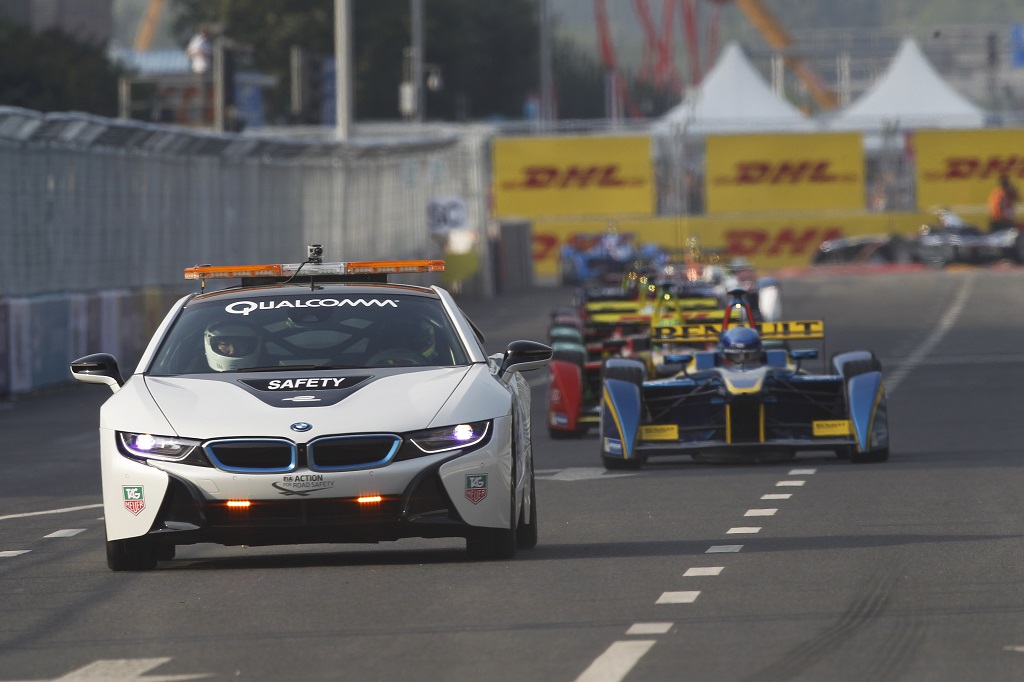
German brand BMW believes electric cars are its future - even on the racetrack.

Speculation has been mounting for months that the company would join the World Endurance Championship with an LMP1 car to rival entries from Porsche, Audi, Toyota and Nissan.

However, BMW's motorsport boss, Jens Marquardt, has ruled out building a car to the current hybrid rulebook, saying the brand wants to race a fully-electric car to promote its new range of electric road cars, the i3 and i8.

"The regulations in LMP1 will be new for 2017 and it will be a hybrid class where the key players are competing at a high level," Marquardt told Autosport.

"We see hybrid as a stepping-stone towards EV [electric vehicle] and EV as the future for BMW, which we showcase in the i sub-brand.

"This current set-up does not fulfil our needed criteria."

And the BMW bigwig also ruled out joining Citroen's DS brand and Renault in supporting teams in the all-electric Formula E Championship.

He said the series reliance on mid-race car swaps was bad for the public perception of electric cars and the so-called "range anxiety".

"If you look at public discussions of electric mobility, the issue of reach is very important," Marquardt said.

However, Formula E organisers are pushing to eliminate the car swaps ahead of originally planned as part of increased technical freedoms for the teams and manufacturers.

Apple, BMW in courtship with an eye on car collaboration

BMW and Apple may rekindle a courtship put on hold after an exploratory visit by executives of the world's top maker of electronic gadgets to the headquarters of the word's biggest seller of premium cars.

Apple Chief Executive Tim Cook went to BMW's headquarters last year and senior Apple executives toured the carmaker's Leipzig factory to learn how it manufactures the i3 electric car.

The dialogue ended without conclusion because Apple appears to want to explore developing a passenger car on its own.

Also, BMW is being cautious about sharing its manufacturing know-how because it wants to avoid becoming a mere supplier to a software or internet giant.

During the visit, Apple executives asked BMW board members detailed questions about tooling and production and BMW executives signaled readiness to license parts, a source said. News of the Leipzig visit first emerged in Germany's Manager-Magazin last week.

"Apple executives were impressed with the fact that we abandoned traditional approaches to car making and started afresh. It chimed with the way they do things too," a senior BMW source said.

The carmaker says there are currently no talks with Apple about jointly developing a passenger car and Apple declined to comment. However, a source said exploratory talks between senior managers may be revived at a later stage.

It is too early to say whether this will be a replay of Silicon Valley's Prometheus moment: The day in 1979 when Apple co-founder Steve Jobs visited Xerox's Palo Alto Research Center where the first mouse-driven graphical user interface and bit-mapped graphics were created, and walked out with crucial ideas to launch the Macintosh computer five years later.

BMW has realized next-generation vehicles cannot be built without more input from telecoms and software experts, and Apple has been studying how to make a self-driving electric car as it seeks new market opportunities beyond phones.

STAFF CHANGES

Since the visit, there has been a reshuffle at the top of BMW, with Harald Krueger, appointed BMW Chief Executive in May, in favor of establishing his own team and his plans for BMW by year end, before engaging in new projects, a person familiar with his thinking told Reuters.

A further complication was the departure of BMW's board member for development Herbert Diess, who played a leading role in initial discussions with Apple. He defected to Volkswagen in December.

Diess, who declined to comment for this piece, oversaw the development of BMW's "i" vehicles which are built using light weight carbon fiber, using a radical approach to design and manufacturing.

Car technology has become a prime area of interest for Silicon Valley companies ranging from Google, which has built a prototype self-driving car, to electric car-maker Tesla Motors.

Diess has said the German auto industry needs to undergo radical change because consumers are demanding more intelligent cars and anti-pollution rules mean the next generation vehicles will increasingly be low emission electric and hybrid variants.

In 2030, only two generations of new cars away in auto manufacturing time scales, only a third of vehicles will be powered by a conventional combustion engine alone, experts predict.

"It means that in two cycles we will shut down two thirds of our engine manufacturing," Diess told a panel discussion in July last year, adding that the value chain for new electric cars is already shifting, with vehicle batteries made mainly in Asia.

"The second part is that the car will become intelligent, part of the Internet," Diess continued. "And the strong players in this area are in the United States, in the software development area. We will surely need to find alliances in this field."

Germany has two years to prove that it can hold its own against new entrants when it comes to shaping the future of luxury vehicles, Diess said.

THEM AND US

Automakers including BMW have already developed next generation self-driving cars, vehicles which need permanent software updates in the form of high-definition maps allowing a car to recalculate a route if it learns about an accident ahead. The technology is moving ahead faster than the legal and regulatory rules which would allow large-scale commercial availability.

Earlier this year, BMW's new R&D chief Klaus Froehlich said his company and Apple had much in common, including a focus on premium branding, an emphasis on evolving products and a sense of aesthetically pleasing design.

Asked, in general terms, whether a deeper collaboration beyond integration of products like the iPhone would make sense, Froehlich initially said BMW would not consider any deal that forces it to open up its core know-how to outsiders.

"We do not collaborate to open our eco systems but we find ways, because we respect each other," Froehlich said.

BMW will keep in mind the needs of the customer, and what the company's core strengths are, when it considers the merits of entering any strategic collaboration, Froehlich added.

Peter Schwarzenbauer, BMW's management board member in charge of the Mini brand as well as digital services declined to comment on possible talks with Apple in an interview earlier this year.

But he said: "Two worlds are colliding here. Our world, focused on hardware and our experience in making complex products, and the world of information technology which is intruding more and more into our life."

The winners will be those companies that understand how to build intelligent hardware, he said, adding it made sense for carmakers and tech firms to cooperate more closely.

"We need to get away from the idea that it will be either us or them ... We cannot offer clients the perfect experience without help from one of these technology companies," Schwarzenbauer said. That dialogue is well underway, he stressed.

With $202.8 billion in cash, Apple has the resources to enter the automotive market on its own, said Eric Noble, president of the Car Lab, a consulting firm in Orange, Calif.

The tech giant would have an edge on the dashboard, its CarPlay infotainment system connecting iPhones to cars, but would be at square one with the rest of the car, Noble said.

If Apple decided to sell a car it could make sense to find a partner to help with industrial scale production, retail and repair, since demand for such a vehicle could be high.

There are no estimates for potential Apple car sales but the brand and its products command a loyal following. So if only 1 percent of Apple's annual iPhone customers decided to order a car, it would need to make 1.69 million vehicles.

That's more than the 434,311 vehicles Jaguar and Land Rover produced last year. Even BMW Group, which made just over 2 million cars last year, would struggle to free up capacity.

SK Innovation doubles automobile battery annual production capacity

SK Innovation, the energy holding unit of SK Group, is accelerating its drive to expand its electric automobile battery business by kicking its lithium-ion battery production into full gear.

The Korean firm’s newly-expanded battery plant in Seosan, South Chungcheong Province, has more than doubled its annual production capacity from 300 to 700 megawatt-hours -- sufficient to power around 30,000 electric vehicles, the company said.

Since the factory first opened its doors in September 2012, it has been enlarging its production lines every year to meet rising client demands, with the latest expansion completed in May.

The Seosan plant added a new production line this year to produce more batteries to be placed inside electric-powered vehicles by major automakers -- the Kia Soul EV and China-based BAIC Group’s EV200 and ES210, according to SK.

From the initial electrode manufacturing process to the cell assembly, cell activation and final packaging stages, the plant is churning out new battery packs nonstop, every day to fulfill its target quotas on time.

The nation’s leading energy firm is pinning high hopes on its expanded production capabilities to significantly drive up annual profits, as it looks to record a threefold increase in sales this year.

The plant is also at the center of company CEO Chung Chul-khil’s ongoing efforts to reform its business structure by strengthening select businesses and finding new sources of income in cooperation with overseas companies.

“Though we understand that the battery development business is a difficult one, we will not give up,” Chung told local reporters in May, reaffirming the company’s commitment to its fledgling rechargeable battery business.

The energy firm is particularly looking to direct its efforts on developing energy cells suited for plug-in hybrid electric vehicles and BEVs, or vehicles powered solely by batteries, according to vice president of SK Innovation’s battery business Kim Yoo-suk.

“We will focus on developing next-generation lithium-ion battery cells with higher energy capacity and concentration, perceived as holding great growth potentials,” Kim said Wednesday.

“Demand for such batteries is expected to rise in line with an increase in global EV usage across the world over the next few years. Though currently supply exceeds demands in the status quo, this situation will turn around by 2018.”

Despite its limited resources and small size compared to rivals -- including the world’s top electric car battery producer Panasonic, as well as Samsung and LG -- SK Innovation is continuing to seal more supply deals with clients at home and abroad.

In January 2014, SK Energy joined hands with BAIC’s Beijing Automobile Works and liquid crystal display manufacturer Beijing Electronic Holding to establish Beijing BESK Technology, which has paved the way for the Korean energy firm to expand its presence in China’s burgeoning electric-powered vehicle market.

The Korean energy firm is also expected to further step up production after reportedly having sealed a deal with a major European automaker to develop car batteries to be placed in its EVs from 2016. The supply volume would be nearly “three times larger” than the combined output for its current clients, according to CEO Chung in May.

“On the back of our standout technology, SK will maximize its operational efficiency and strengthen cooperation with existing partners to better target the domestic and global electric car battery market,” said SK Innovation’s head of Battery and Information Electronic Materials Kim Hong-dae.

Leaked: Audi’s Q6 e-tron Plug-In Hybrid

Images of Audi’s all-new Q6 have been leaked online months before its reveal at this September’s Frankfurt motor show.

The renderings, said to be official, first appeared late last night on German website Auto Motor und Sport and are thought to be final drawings of the concept, codenamed C-BEV, that will preview the zero-emission Q6 e-tron.

On sale some time in 2018, it’s already been confirmed by senior Audi board member Dr Ulrich Hackenberg, the Q6 will ride on the Q7’s MLB evo platform and that the objective for engineers was that it must cover 500km between charges.

Back then, Hackenberg said the Q6 must be “a technical light tower” and incorporate state-of-the-art technology.

According to reports from sources close to Audi the C-BEV will lift its motor and the 92kWh batteries from the latest R8 e-tron supercar, but instead of two rear-mounted motors, the Q6 will benefit from an additional third motor encased within its gearbox.

With the third motor the production Q6 e-tron will generate even more power, and the concept is expected to have a combined total of 375kW/700Nm. Factor in widespread use of lightweight composites like carbon-fibre and the new Tesla rival is expected to hit 100km/h in less than four seconds and top out at a limited 250km/h.

As well as a state-of-the-art powertrain the next-generation Q6 e-tron is expected to have a fully autonomous driving feature to allow occupants to enjoy the big Audi’s next-generation infotainment system.

Following the launch of the all-electric version, other more conventional variants powered by internal combustion engines will join the Q6 range. All engines will be borrowed from the Q7 range.

Audi is expected to reveal more of what will star on the 2018 Q6 e-tron production car at the Frankfurt show in September.

Fully Charged | Airbus E-Fan [VIDEO]

In this weeks episode of Fully Charged Robert Llewellyn gets a VIP invitation to witness the Aibus E-Fan battery powered electric aeroplane cross the English Channel.

First flown in April 2014, the plug-in plane is powered by two electric motors with a combined power of 60 kilowatts each driving a variable pitch fan providing a static thrust of 1.5 kN which is another engineering first on an electrically powered aircraft.

The motors are in turn powered by a 250V lithium polymer battery pack made by South Korean company Kokam. The batteries are housed within the inboard part of the wings parallel to the cockpit providing an endurance of between 45 minutes and 1 hour.

The batteries can be recharged in one hour.

Toyota Prius Taxi has travelled over 1 Million Kms [VIDEO]

In a new video posted by Toyota Austria, a taxi driver claims to have covered 1 million kilometers (more than 600,000 miles) in his 2007 Toyota Prius - all with the original battery pack.

What's more, the driver, Manfred Dvorak, claims the Prius has never broken down. "For me, the Prius is the ultimate sidekick," he says.

VW Develops Self-Parking Self-Charging Electric Vehicle [VIDEO]

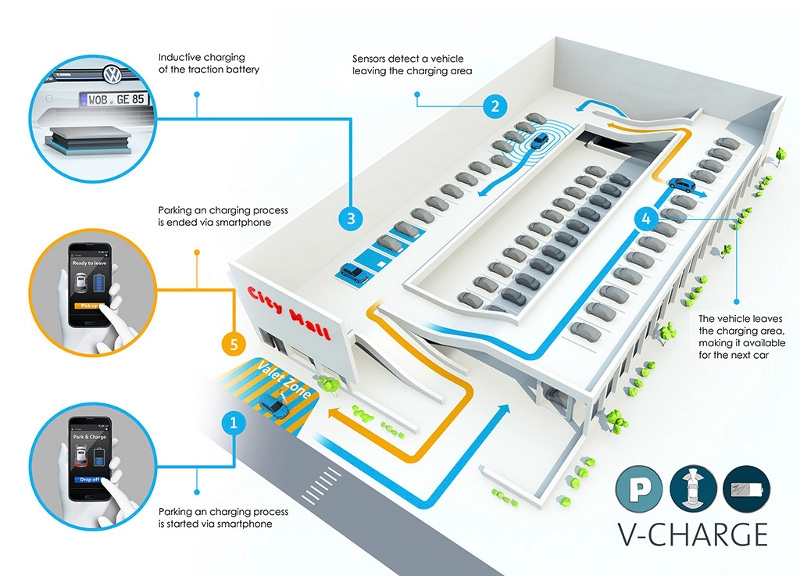
Volkswagen have launched an EU research project called 'V-Charge' to look into the near future of automated parking. Six national and international partners are jointly developing new technologies with a focus on automating the search for a parking space and on the wireless charging of electric vehicles.

The test vehicles not only automatically looks for an empty parking space, but can also finds an empty space with charging infrastructure and inductively charges its battery. Once the charging process is finished, it automatically frees up the charging bay for another electric vehicle and looks for a conventional parking space. 'V-Charge' stands for Valet Charge and is pointing the way to the future of automated parking.

In the USA especially, convenient valet parking is a big hit: you pull up in your car right outside your destination, valet service personnel park it for you and have it brought around again as and when you need it. There is no more time-wasting search for a parking place. The V-Charge project picks up on this idea. Its development goal is fully automated searching for a parking space ('valet parking') within defined zones, such as in multi-storey car parks.

There are many scenarios that illustrate the advantages of the V-Charge concept. Take one practical everyday example: a commuter notices that he is possibly going to be late and is thus running the risk of missing an important meeting at his company. With V-Charge he is able to pull up right in front of the main entrance, get out and establish the link to his vehicle via the associated smartphone application. Operating fully automatically, the vehicle has a digital map relayed to it and within the parking area or multi-storey car park autonomously navigates to a parking space. If it is an electric vehicle, the system additionally prioritises a parking bay with an automatic charging facility. Pedestrians, cyclists and other vehicles are identified by the cameras and ultrasound sensors integrated within the vehicle. Therefore, the vehicle is allowed to travel in so-called 'mixed traffic'. The selected parking area neither has to be an enclosed domain nor is any complex technical equipment required.

As the electric vehicle nears its destination, the system recognises via local sensors whether the allocated parking space is taken. If it is empty, the fully automatic parking manoeuvre begins and positions the vehicle exactly above the inductive charging spot. When the charging process is complete, the vehicle automatically moves to another parking space, leaving the charging station free for another electric car. When the driver returns to the multi-storey car park, he calls the vehicle back to the starting point via the V-Charge app. The vehicle moves to the defined pick-up location, with the driver not needing to set foot in the parking area or multi-storey car park.

Taking the lead in the international research consortium is the Swiss Federal Institute of Technology (ETH) in Zurich. It is responsible for visual localisation, movement planning and vehicle control (Autonomous Systems Lab division), camera calibration, 3D reconstruction from images and obstacle detection (Computer Vision and Geometry Lab division). Braunschweig Technical University works on the issues of car park management and the vehicle's communication with the technical surroundings (vehicle-to-infrastructure 'V2I'), Robert Bosch GmbH contributes its expertise in the field of sensor technology, Parma University looks after object recognition and Oxford University handles the development of detailed navigation maps of the parking area (semantic mapping concepts). As the sixth partner in the consortium, Volkswagen is providing the platform equipment, safety and control modules, as well as systems for static monitoring of surroundings, object recognition and automated parking.

The test vehicle: a network of technical sensory organs
The technical prerequisites largely already exist. During the introductory stage, for instance, it was possible to utilise sensor and camera technologies that are already being used in today's production vehicles. A dense network of sensory devices enables autonomous operation of the V-Charge test vehicle, which is based on a Volkswagen e Golf1. Four wide-angle cameras and two 3D cameras, twelve ultrasound sensors, digital maps and the so-called 'Car2X' technology for the vehicle's communication with the infrastructure ensure that the vehicle's surroundings are reliably detected and recognised. Pedestrians, vehicles and obstacles get identified, parking spaces recognised and measured and then this stream of data is put together in real time to form an overall picture – the task that the technical 'sensory organs' have to fulfil is complex and extremely varied.

As continual tests run as part of the research project show, V-Charge is already functional today. GPS-independent indoor localisation, centimetre-exact parking space measurement and 360-degree recognition of surroundings all function reliably, as do the system's reactions to pedestrians and vehicles and the way in which it takes account of traffic moving in line with or across the vehicle's path.

2005: a Volkswagen Touareg called 'Stanley' makes the first move towards autonomy
At Volkswagen automatic motoring moved from being a vision to a field of research at an early stage. 'Stanley' – a Touareg converted in cooperation with Stanford University in California and the Volkswagen Electronics Research Laboratory (USA) into a laboratory that could drive autonomously – was already winning the Grand Challenge competition for robot vehicles as far back as 2005. The next stage of development, in 2007, was the Passat 'Junior', which even then was finding its way through the big-city jungle without a driver – and doing so with such success that it took second place in the Urban Challenge for autonomous vehicles.

Given the working titles 'PAUL' and 'iCar', two further Passat research vehicles also demonstrated their autonomous capabilities that same year. While, thanks to intelligent parking assistance with no driver involvement, 'PAUL' slips into spaces perpendicular to the carriageway, the 'intelligent car' makes life easier for the driver in stop-and-go situations and on long monotonous journeys by automatically braking and keeping the appropriate distance.

In 2011, the 'eT – follow me!' microvan was launched as the ideal vehicle for delivery services. One real-life scenario: If the driver walks from house to house along a street delivering letters, for example, 'eT' follows him on quiet electric paws like a well-trained dog to ensure his mailbag is constantly replenished ('FollowMe' function) – or stays on his spot like a good boy until receiving the electronic 'come to me' call.

Also taking to the stage of autonomous motoring in 2011 was the 'HAVE-IT' (Highly Automated Vehicles for Intelligent Transport), a Volkswagen AG contribution to the research project of the same name funded by the European Commission. The Wolfsburg engineers had developed for the Passat Variant a 'temporary autopilot', which set the best possible degree of automation for driving on motorways and similar roads based on the driving situation, surroundings, the driver's condition and the system status.

Bosch & GS Yuasa on-target to double battery energy density & half costs by 2020

German supplier Robert Bosch and Japanese battery partner GS Yuasa Corp. are "on a good path" toward their goal of developing a lithium ion battery that costs half as much as today's batteries but has twice the energy density, a top Bosch executive said.

The companies aim to produce such a battery by 2020, Wolz said. "We are on a good path to reach that target," he told reporters.

Achieving such performance in automotive power packs will be a major breakthrough in popularizing electrified drivetrains, Wolz said.

Bosch is positioning vehicle electrification as a pillar of growth as carmakers tap batteries to meet increasingly stringent emissions regulations. The supplier expects hybrid and electric-only drivetrains to account for 15 percent of the global automotive market by 2020, Wolz said.

In 2013, GS Yuasa, Bosch and trading house Mitsubishi Corp. formed a joint venture to develop low-cost, high energy-density lithium ion batteries.

Bosch invests some 400 million euros in electromobility research and development each year.

BorgWarner to buy electric motor maker Remy for $950M

BorgWarner agreed to buy Remy for $951 million in cash, driving further consolidation of the auto-parts industry.

BorgWarner will pay $29.50 a share, a 44 percent premium from Remy’s closing price on Friday, according to a statement today. The price indicates an enterprise value of about $1.2 billion, BorgWarner said. The maker of turbochargers and transmission parts said the deal is set to close in the fourth quarter and should add to earnings in the first year because of purchasing efficiencies and other savings.

Demand for fuel-saving technology and global scale is pushing auto-parts makers to consolidate. In May, TRW Automotive Holdings Corp. was acquired by German auto supplier ZF Friedrichshafen AG for $12.4 billion.

“Our main focus has been organic growth, and that remains a prime path for us,” James Verrier, CEO of BorgWarner, said on a conference call. “But we’ve also been consistent about the need for M&A to add key technology to sustain that growth.”

The acquisition highlights the increasing importance of the electrification of the powertrain, which has not been a strength of BorgWarner’s, Verrier said.

BorgWarner rose 1 percent to $54.14 at 11:39 a.m. in New York, as Remy soared 42 percent to $29.18. This year through Friday, Remy had fallen 1.9 percent and BorgWarner had declined 2.4 percent.

Electric Powertrains

Buying Remy will add alternators, starters and hybrid motors, giving BorgWarner the ability to benefit as more powertrains blend electric power with traditional gasoline-fueled technology.

Some investors had been concerned that the move to hybrid engines would eventually cause BorgWarner to lose sales to automakers, Joseph Spak, an analyst with RBC Capital Markets, wrote in a research note today.

BorgWarner CFO Ron Hundzinski said he expects savings from the acquisition of at least $15 million annually within two years, in part by eliminating duplicate costs associated with a public company, and from lower purchasing expenses. He said he expects the Remy business to have profit margins in the mid-teens, similar to BorgWarner’s.

Former GM unit

Remy International, formerly known as Delco Remy, traces its roots to brothers Frank and Perry Remy, who developed magnetos, generators that used magnets to help start early automobiles. GM acquired Delco Remy in 1918 and spun it off in 1995. The name was changed to Remy International in 2004 and the Pendleton, Ind.-based company spent less than two months in bankruptcy in 2007.

Remy posted net income from continuing operations of $6.1 million last year on revenue of $1.2 billion. In 2013, it posted net income of $12.4 million on revenue of $1.1 billion.

Airbus E-Fan becomes first electric plane to cross Channel [VIDEO]

Airbus Group's E-Fan technology demonstrator today became the world's first twin-engine, battery-powered electric plane to successfully cross the English Channel—more than 100 years after Louis Blériot became the first pilot to make the journey.

Powered by lithium-ion batteries, the E-Fan took off from Lydd, England, and completed the 74-kilometer (46-mile) flight to Calais, France in 37 minutes.

"The E-Fan project and today's historic Channel crossing show that the pioneering spirit and ingenuity demonstrated by Louis Blériot and the other early aviators is still alive today," Airbus CTO Jean Botti said in a statement. "The 10th of July 2015 will now join the list of famous days in aviation history, and I'm sure Blériot would be proud of this achievement."

Since April 2014, the E-Fan has made more than 100 flights, and was put on display during last month's Paris Air Show.

Already, the Airbus team is working on the E-Fan 2.0—an electric two-seater aimed at pilot training—which will be followed by the E-Fan 4.0—a four-seat aircraft for full pilot licensing and the general aviation market.

The all-electric plane aims to reduce noise, emissions, and vibration caused by conventionally powered engines. Plus, its two battery packs provide 60 kilowatts of power, suitable for 45 minutes to one hour of flight.

Electric truck takes up delivery duties for BMW in Munich

100% electric trucks from the BMW Group and the SCHERM group will be in service from today in Munich. This means the BMW Group will be the first automobile manufacturer in Europe to use a 40-ton electric truck for material transport on public roads. It was launched at the BMW Group Plant in Munich by Bavaria’s Minister of Economic Affairs, Ilse Aigner.

The electric 40-ton truck – a model from the Dutch manufacturer Terberg – has successfully completed its first test drives. On 7 July, the car will go into regular operation and travel eight times a day between the SCHERM group logistics centre and the BMW Group plant in Munich. It will transport different vehicle components, such as shock absorbers, springs and steering systems.

The electric truck by the BMW Group and the SCHERM group will be exclusively charged with electricity from renewable sources. The combination of this and the alternative driveline means the 40-ton truck helps the environment while it is on the road – it’s CO2-free, quiet and generates almost no fine particle pollution. Compared to a diesel engine truck, the electric truck will save 11.8 tons of CO2 annually. This is equivalent to the distance a BMW 320d Efficient Dynamics would travel when going around the world almost three times.

The truck battery takes three to four hours to charge. When fully charged, the vehicle has a range of up to 100 kilometres. Thus, the electric truck can theoretically complete a full production day without any additional recharging.

Bavaria’s Minister for Economic Affairs, Ilse Aigner: “Bavaria is a leading industrial and research location. It is crucial that the Bavarian economy is also at the forefront in electric mobility. BMW is making an important contribution to this and is showing that you can succeed on the global market with sustainable products made by innovative companies.”

Hermann Bohrer, Head of the BMW Group Plant in Munich: “With our electric truck, we are sending another strong signal for sustainable urban mobility. We are contributing to reducing emissions in the city and are proud to be the first automotive manufacturer in Europe to use an electric truck of this size to transport materials on public roads.” Thus, the innovative truck is another valuable contribution to sustainable production.

Jürgen Maidl, Head of Logistics at BMW Group, emphasised the potential of the electric truck. “With this project we will gain valuable information on what will be possible with electric trucks in the future for city logistics. The BMW Group, along with our partner the SCHERM Group, is once again bravely embarking on a new journey and delivering pioneering work.”

Kurt J. F. Scherm, CEO of the SCHERM group underlined: “As a supplier of transport solutions, it is especially important to us to offer sustainable transport. The electric truck is the first step towards CO2-reduced transport logistics. In addition, this innovative truck is charged with 100% green energy.“

Urban mobility – and for the BMW Group this also includes urban logistics and transport — is a topic with great future potential. Since the end of 2013, the BMW i brand has been on the market. In addition, the company has launched its successful car-sharing programme DriveNow and established it in international cities. The BMW i3 vehicles are currently being introduced into the DriveNow fleets step by step.

London’s Iconic Double-Decker Buses to go Electric

One of the world's most recognized transportation systems, TFL (Transportation for London), known for their iconic red, double-decker buses, has contracted for the manufacture of a brand new, battery electric replacement. The company selected to build the next generation London Bus double-deckers is global electric vehicle leader, BYD Company Ltd.

The announcement took place at this week's C40: Clean Bus Summit held at London City Hall. Breaking the news was the Mayor of London, Boris Johnson.

"Many believed that a pure electric double-decker bus would not be possible due to the size of the battery packs required to power it," said Mayor Johnson. "However by working with BYD and utilizing the latest cutting edge technology London has been able to secure another world first. The new electric double-decker trial will see the zero emission double-decker buses manufactured by BYD enter service on Route 16 from October."

Also addressing the Clean Bus Summit was BYD's Managing Director of European Operations, Isbrand Ho.

"We are delighted to be chosen by London as its partner for the world debut of our new pure electric double-decker. As the Mayor has said, this is genuinely world beating new technology," said Ho. "Since BYD is by far the world's largest maker of zero emission pure electric buses and as such is keen to promote their take up and use as quickly as possible we are also pleased to have today supported the Declaration and pledged BYD to helping promote zero – not just ultra low – emission vehicles on the streets of the world's major cities."

BYD's Battery Electric bus employs many advanced technologies developed in-house by a staff of more than 15,000 R&D engineers including the BYD Iron-Phosphate Battery which boasts the only 12-year-battery warranty in the industry. Combined with BYD's proprietary hub motors and regenerative braking system, the BYD battery electric bus offers the lowest life cycle cost of ownership.

The BYD electric bus delivers a host of operational and environmental benefits for public transit riders, bus operators and residents of the community – it is very quiet and ensures a comfortable ride without vibrations, jerks or the noise associated with the conventional buses and combustion engines. The bus can also drive for more than 155 miles even in heavy city traffic on a single charge. As of April 1st, 2015, BYD bus fleets have completed greater than 50 million miles "in revenue service" and have been evaluated by more than 150 cities in 36 countries around the world. To date, BYD has built over 5,000 electric buses globally, making it by far the most popular electric transit vehicle on the planet.

Nissan Leaf to get 200 km range by August

Nissan plans a midcycle update as early as August that aims to deliver a big increase in the Leaf's driving range.

The improvements will come from increasing the battery capacity from the current 24-kilowatt-hour power pack to 30 kWh. The increase will boost range to 200 km (125 miles).

CEO Carlos Ghosn outlined future EV steps at the company's annual shareholders meeting Tuesday, June 23. Nissan is developing a lighter, thinner, cheaper battery to enable driving ranges comparable with gasoline vehicles in the "near future," he said.

Next to him on stage, Nissan displayed a Leaf equipped with a prototype next-generation electric drivetrain. That technology, which is under development and being tested, achieves a range of more than 500 kilometers (310 miles).

Ghosn said the goal of the next-generation battery is to eliminate range anxiety by providing enough cushion for people to complete their daily drive and "return home with ample charge."

A video simulation showed the car charging up to a range of more than 310 miles and ending the day with a drivable range of 160 miles still in reserve.

Yet even before that next-generation battery hits the market, Nissan plans an interim upgrade for its flagship green car. "We will not wait for its completion to move forward," Ghosn said.