Water Out of the Tailpipe: A New Class of Electric Car Gains Traction
In California, state subsidies for hydrogen filling stations are encouraging clean-energy advocates to try fuel-cell vehicles.

Charged with Electric Vehicle News and Views
This is what 0-100 km/h in 2.6 seconds looks like.
The Concept One’s powertrain consists of four electric motors and four gearboxes with a total of 800 kW (1088 hp) and 1,600 Nm (1,180 ft-lb) distributed via torque vectoring.
The 620 volt, 82 kWh, LiNiMnCoO2 battery’s 1 MegaWatt of discharge capability linked to those four wheels moves the two-ton hypercar to 62.5 mph in just 2.6 seconds, to 124 mph in 6.2 seconds and to 186 mph in 14.2 seconds.
Top speed is rated at 221 mph.
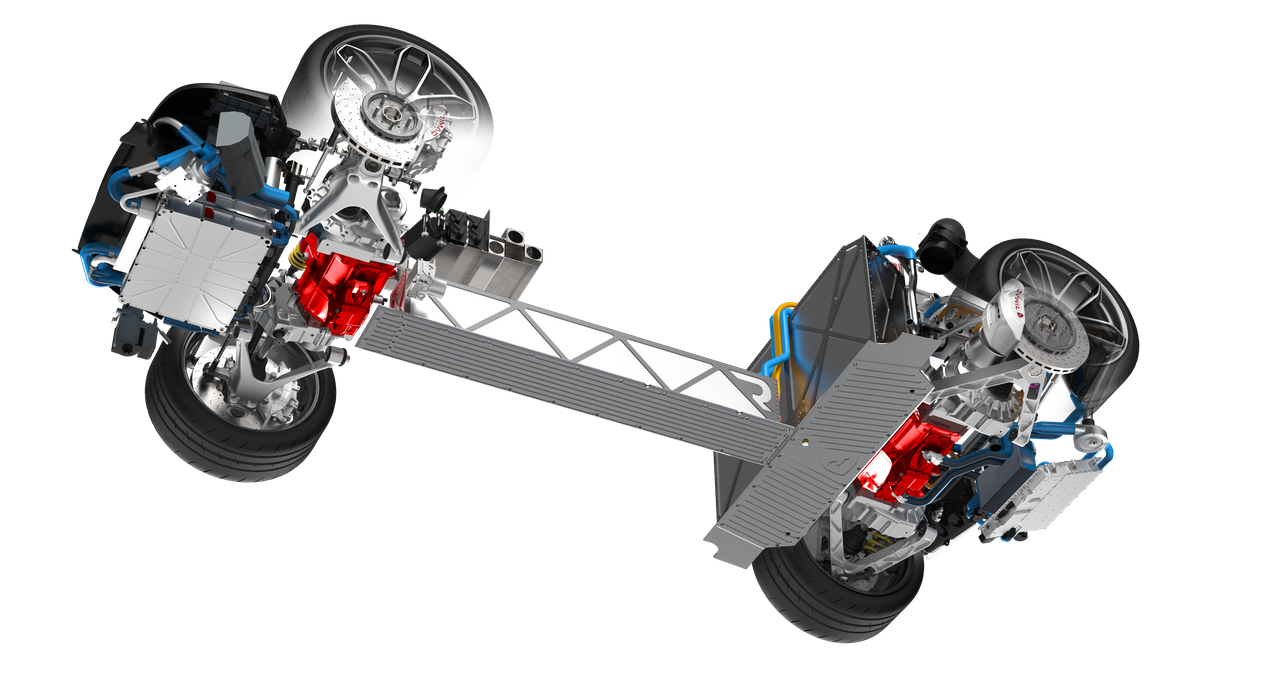


Xtrac’s P1227 gearbox family has been developed to address the growing market requirement for single speed, lightweight and power dense electric vehicle (EV) transmissions. It offers a range of installation possibilities for fast and powerful electric supercars with front-wheel drive, rear wheel drive or four-wheel drive configuration.
“There is substantial innovation and intellectual property in the design of this new transmission system,” says James Setter, head of Xtrac’s Automotive and Engineering business unit, which focuses on developing transmission systems for hypercars, hybrids and EVs to complement the company’s world-beating motorsport transmissions. “Significant focus went into the integration of the gearbox with numerous proprietary traction motors, and in particular, reducing its mass by almost 20 per cent compared with our previous P1092 electric vehicle transmission to provide the ultimate electric drive transaxle.”
The new transmission system can be integrated with motors supplied by BorgWarner, GKN and YASA, all of whom worked with Xtrac on the integration of their technology into this transmission. The dual electric motors of the transmission system also provide an inherent torque vectoring capabilities. For lower power applications a single electric motor can be specified, reducing the overall vehicle weight further and requiring an even smaller space envelope. The highly configurable nature of the design also enables an open or a limited slip differential to be specified.
In addition, the P1227 family of gearboxes offers a range of single gear ratios, as well as considerable motor-generator configuration and hence vehicle installation possibilities. This enables the transmission, for example, to be installed within a 90-degree angle from the motors positioned vertically above through to horizontally in front of the output.
“The design draws on Xtrac’s precision design, analysis and manufacturing engineering capabilities,” says Setter, “ensuring that the ground helical gear sets, necessary for road vehicle transmission systems, offer exceptional levels of NVH refinement for the most demanding silent driveline electric vehicle applications, as well as the durability required for this marketplace.”
The transmission has been designed as a family to integrate with either YASA P400, GKN AF130 or AF230 or BorgWarner HVH-250-090-SOM or HVH-250-115-DOM motors, but other motors could be suitable as long as the RPM of the motor is less than 10,000rpm, and the peak torque is less than 500Nm per motor like the 90 kW / 300 Nm Evans Electric axial flux induction motor.
More: Xtrac


One of the four Chinese backed EV start-ups in Silicon Valley, Atieva was started by former executives from Tesla and Oracle in late 2007.
As Reuters reports, Atieva is headed by Bernard Tse, an ex-Tesla Vice President and board member, as well as Peter Rawlinson, the former chief engineer of the Tesla Model S. They don't have a factory yet, but they do have a van nicknamed Edna.
With its first car still at least two years away from production, Atieva is using a Mercedes-Benz Vito commercial van to test the drivetrain: a pair of high-output electric motors, a 87 kWh lithium-ion battery pack, inverters, gearboxes and dual motor controller.
Rawlinson, who while at Tesla led engineering of the Model S sedan, said Atieva's "secret sauce" is the software tying all that hardware together to deliver a combined 900 horsepower to the 2,200 kg all-wheel-drive van. With a dual motor powertrain the company is clearly not testing full-spec torque vectoring (which requires 4x motors).
The drivetrain propels the van from zero to 60 mph in just 3.1 seconds, a fraction slower than the fastest Tesla Model S. Atieva’s 0-60 acceleration target for its 2018 sedan is 2.7 seconds.
The Atieva sedan, being developed under the code name Project Cosmos, looks like a futuristic descendent of the Audi A7. Its headlamps are ultra-thin, with thousands of insect-inspired micro lenses. Its dashboard has a three-piece reconfigurable digital display that can be controlled by voice or touch.
Atieva has raised several hundred million dollars from investors including Mitsui & Co Ltd, the Japanese trading giant, and Venrock, a Silicon Valley venture capital firm connected with the Rockefeller family that once funded Intel and Apple. Two of Atieva’s biggest shareholders are Chinese: State-owned Beijing Auto and a subsidiary of publicly traded LeEco, an internet company that has also declared it intends to offer an electric car. LeEco is controlled by Chinese tech entrepreneur Jia Yueting.


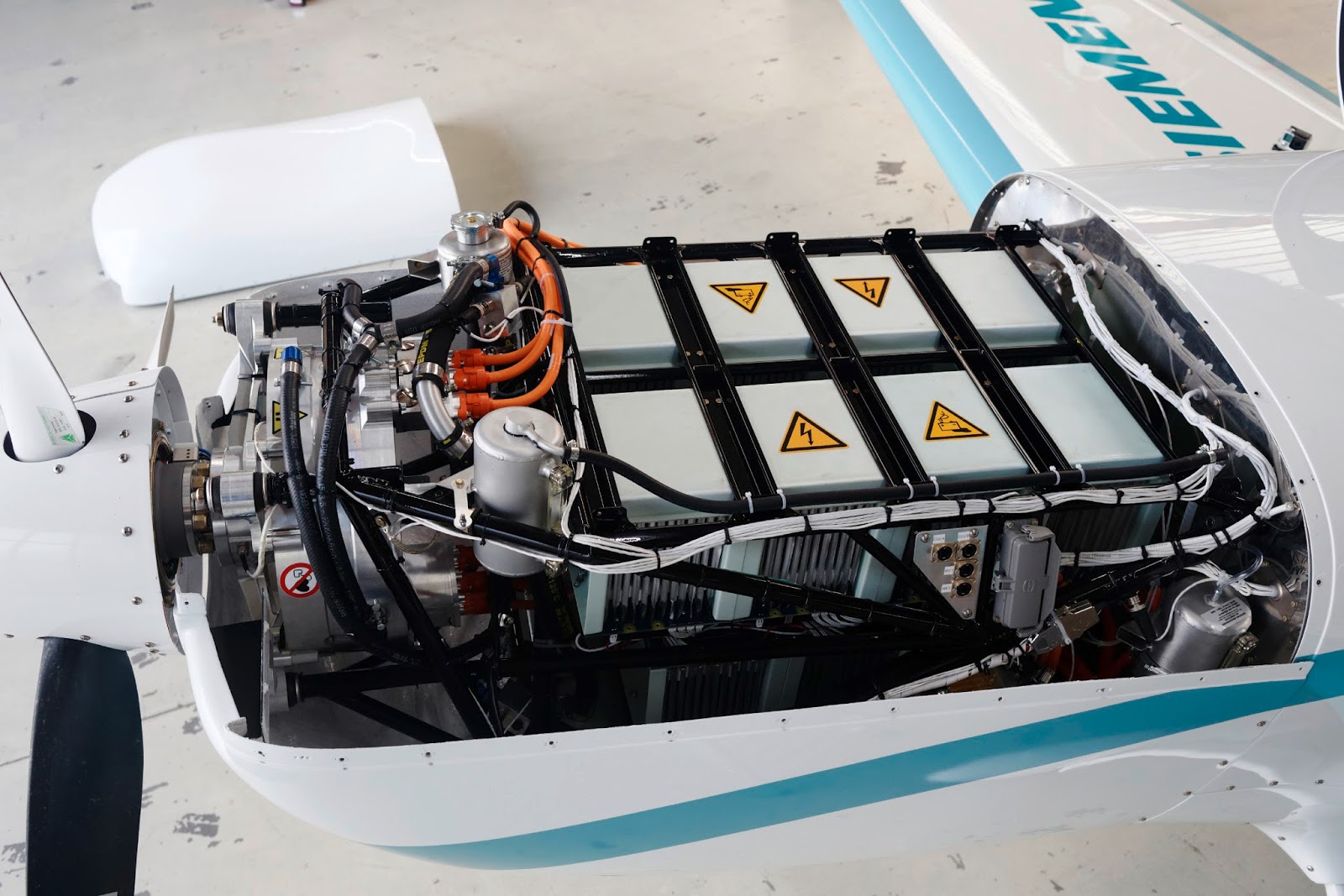
Siemens researchers have developed a new type of electric motor that, with a weight of just 50 kilograms, delivers a continuous output of about 260 kilowatts – five times more than comparable drive systems. This record-setting propulsion system successfully completed its first public flight today at Schwarze Heide Airport near Dinslaken, Germany, where it – almost silently – powered an Extra 330LE aerobatic airplane. The new drive system had already made its maiden flight on June 24th 2016.
This advance means that hybrid-electric aircraft with four or more seats will now be possible. In addition, the company will be contributing this technology to the cooperative project that Siemens and Airbus agreed to in April 2016 for driving the development of electrically powered flight. Electric drives are scalable, and Siemens and Airbus will be using the record-setting motor as a basis for developing regional airliners powered by hybrid-electric propulsion systems. Siemens is determined to establish hybrid-electric propulsion systems for aircraft as a future area of business.
The motor has been specially designed for use in aircraft. Thanks to its record-setting power-to-weight ratio, larger aircraft with takeoff weights of up to two tons will now be able to use electric drives for the first time. To implement the world-record motor, Siemens' experts scrutinized all the components of previous motors and optimized them up to their technical limits.
New simulation techniques and sophisticated lightweight construction enabled the drive system to achieve a unique weight-to-performance ratio of five kilowatts (kW) per kilogram (kg). The electric motors of comparable strength that are used in industrial applications deliver less than one kW per kg. The performance of the drive systems used in electric vehicles is about two kW per kg. Since the new motor delivers its record-setting performance at rotational speeds of just 2,500 revolutions per minute, it can drive propellers directly, without the use of a transmission.



As has now been widely reported, a fatal accident involving a Tesla Model S on Autopilot and a tractor-trailer happened last month in Florida killing the Tesla driver at the scene.
The Tesla was on a divided highway with Autopilot engaged when a tractor trailer drove across the highway perpendicular to the Model S. The explanation given by Tesla is that neither the Autopilot nor the driver noticed the white side of the tractor trailer against a brightly lit sky, so the brake was not applied. The high ride height of the trailer combined with its positioning across the road caused the Model S to pass under the trailer, impacting the windshield of the Model S and removing the entire roof section of the vehicle killing the driver instantly.
Facts gathered from video reports at the scene and eye witness accounts of the accident:
While it was a long straight section of road, travelling at very high speed on a road with a high number of level intersections increases the risk of a collision significantly (hence the relatively low posted speed limit) The slight crest would also have hindered the visual range for both drivers.
It seems quite reasonable to expect that the investigation will conclude the primary cause of the accident was excessive speed by the Tesla driver. Records obtained by The Associated Press show the Tesla driver Joshua Brown was cited for speeding seven times in Ohio between 2010 and 2015 and once in Virginia.
Mobileye, an Israel-based tech company developing some of the technology behind Tesla’s Autopilot, issued a Statement on Fatal Tesla Model S Autopilot Crash:
"We have read the account of what happened in this case. Today's collision avoidance technology, or Automatic Emergency Braking (AEB) is defined as rear-end collision avoidance, and is designed specifically for that. This incident involved a laterally crossing vehicle, which current-generation AEB systems are not designed to actuate upon. Mobileye systems will include Lateral Turn Across Path (LTAP) detection capabilities beginning in 2018, and the Euro NCAP safety ratings will include this beginning in 2020."
But now Tesla and Mobileye disagree on lack of emergency braking with Tesla issuing the following statement:
"Tesla’s autopilot system was designed in-house and uses a fusion of dozens of internally- and externally-developed component technologies to determine the proper course of action in a given scenario. Since January 2016, Autopilot activates automatic emergency braking in response to any interruption of the ground plane in the path of the vehicle that cross-checks against a consistent radar signature."
This seems to be a rebuke to Mobileye, a supplier of some technology used in the Autopilot and other driver assistance systems in the Model S. The Mobileye system is not designed for Lateral Turn Across Path (LTAP) detection and the Tesla part of the system failed because "the high, white side of the box truck" — that apparently failed to cause an interruption of the ground plane as mentioned above — "combined with a radar signature that would have looked very similar to an overhead sign, caused automatic braking not to fire."
Either way, it seems clear that Tesla's Autopilot public beta testing needs to be restricted to use on roads without intersections (e.g. expressways) until 2018 when LTAP capability becomes available and the system can deal with lateral traffic!
This fatal accident is an auto industry nightmare come true and has brought the whole issue of beta testing automotive road safety features with the general public into question. Many in the automotive industry have criticised Tesla from former Google scientist Andrew Ng calling them "irresponsible" to Volvo’s research and development chief, Dr. Peter Mertens, saying "“Anyone who moves too early is risking the entire autonomous industry"and Jaguar XF project manager Stephen Boulter saying "If something happens [with Autopilot], it could set the technology back a decade" while BMW CEO, Harald Krüger said "We can offer automated driving on the motorway up to 120 kilometers per hour,” to which he continued “But our technology must be 100 percent reliable."
The Silicon Valley business model is built on shipping buggy beta code. "Move Fast and Break Things" is the motto over at Facebook while 100s of millions of Apple iPhone owners have updated iOS only to have to install a bug-fix patch a few days later. This kind of approach clearly does not translate well to the automotive industry where, as we saw with Toyota's unintended acceleration crisis that resulted in the deaths of 89 people, 400 wrongful-death and personal injury cases and cost the company more than $2.5B in criminal penalties and class action settlements, buggy code in cars can kill people, and the automaker is rightfully held liable!


Over the next two years, Daimler is slated to invest an unprecedented seven billion euro (approximately $7.8 billion in US) into what they are referring to as green technologies. Usually, such a large sum of money would be invested over a long period of time, but Daimler is leading the industry in doing so over a mere two years. By 2017, the car maker will offer all models with electrified powertrains.
According to Professor Dr. Thomas Weber, a member of the Board of management of Dimler AG, stated, “…no other manufacturer offers a comparable range of electrified vehicles and solutions in the field of electric mobility. The spectrum ranges from the smart city runabout and attractive Mercedes-Benz passenger cars to buses, coaches, and trucks of the Fuso brand. We will electrify all Mercedes-Benz passenger car model series step by step.“
The Mercedes-Benz name will not be compromised by lack of power, as stated in a press release, but will instead offer customers a broader range of engine options, keeping in mind the specific needs of each model and the desires of the purchaser. Mercedes-Benz will offer a multitude of plug-in hybrids and expand carbon-free options by implementing emission-free vehicles into every realm of their model options including buses and commercial vehicles. The car maker recognizes a need for more innovative technology within the automotive industry though, and is making great strides toward the future.
Mercedes-Benz will unveil a high-performance four-door, four-seat, all-wheel drive GT electric only saloon with 500 km range at the Paris motor show in October.
Source: Daimler


Acura will field a pair of 2017 Acura NSX supercars in the 100th Anniversary of the running of the Broadmoor Pikes Peak International Hill Climb on June 26, marking the North American racing debut of Acura's next-generation NSX: the pinnacle expression of Acura Precision Crafted Performance and the only supercar made in America.
The two Acura NSX supercars will compete in the Time Attack 1 and 2 classes and will be piloted by brothers James and Nick Robinson, respectively, both from the company's North American engineering team. In addition, Acura will campaign an NSX-inspired prototype vehicle in the Electric Modified Class, featuring a further evolution of the experimental all-electric, 4-motor Super Handling All-Wheel Drive (SH-AWD) powertrain that won last year's Pikes Peak Challenge Exhibition class.
"Pikes Peak is like no other race in the world and offers a unique opportunity to showcase the power and performance of our products," said Jon Ikeda, vice president and general manager of the Acura Division. "We are excited for this year's 'Race to the Clouds' to test the endurance and engineering of the Acura NSX and our advanced powertrain technologies – as well as an expression of our racing spirit."
A team of North American R&D engineers has been working on both NSX entries, which feature the same three-motor Sport Hybrid Super-Handling All-Wheel Drive powertrain (Sport Hybrid SH-AWD) as the production NSX. This powertrain features a twin-turbo V6 engine mated to a 9-speed dual clutch transmission and Rear Direct Drive Motor, and a front Twin Motor Unit with a world's first electrically powered torque vectoring capability in the supercar realm. Modifications to the NSX competing in the Time Attack 1 class included chassis lightening and a custom high-flow racing exhaust.
The NSX competing in the Time Attack 2 class is a production car with the required safety equipment for competition. The Time Attack 1 NSX will be driven by James Robinson of the company's North American powertrain development group, who drove a first-generation NSX in the Pikes Peak Hill Climb from 2012 to 2015. His brother Nick Robinson, an engineer in charge of the new NSX's dynamic performance during its development, will drive the Time Attack 2 NSX. Nick is also the reigning PP250 winner from the 2015 Pikes Peak Hill Climb.
The supercar-inspired 4-Motor EV Concept will be driven by Tetsuya Yamano, who campaigned last year's CR-Z-based electric prototype. The EV Concept is the ultimate embodiment of the all-wheel-drive Electric SH-AWD powertrain featuring a world's first technology that enables four-wheel independent torque allocation. The Electric SH-AWD powertrain, an evolution of the CR-Z prototype powertrain, produces three times the total system output of last year's electric prototype and is mated to the NSX body.
As Official Pace Car sponsor, Acura will feature three pace cars – the NSX, the seven-passenger MDX performance-luxury SUV and the TLX sports sedan. President of Polyphony Digital and Producer of the Gran Turismo series Kazunori Yamauchi and Pikes Peak legends Randy Schranz and Leonard Vahsholtz will lead the field of 100 entrants to the top of the 14,115-foot Colorado peak.
For Pikes Peak race attendees, the NSX and other pace cars will appear at a number of pre-race activities, including the popular Fan Fest in downtown Colorado Springs, 5 to 10 p.m. MDT Friday, June 24.


During CHAdeMO’s annual General Assembly in Tokyo, Japan, the Association’s management has announced its plans and ongoing activities towards bringing high power CHAdeMO chargers to the market.
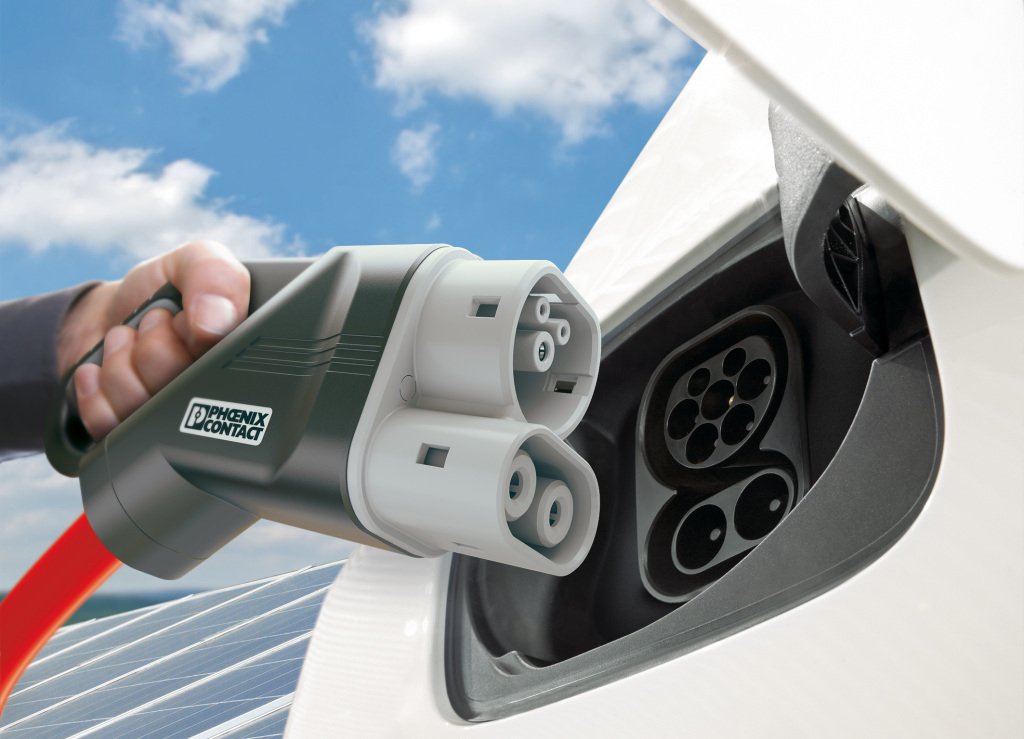
The Association plans to release an amendment to the current protocol, which will enable charging with up to 150kW (350A), this year. The revision of the protocol, announced to the Regular Members already last year, is still ongoing with technical consultations with members happening both in and outside of Japan.
CHAdeMO’s Secretary General Dave Yoshida said: “One of the purposes of the Association is to evolve CHAdeMO protocol so that it can better respond to market needs. We see a movement towards mass market EVs with higher capacity batteries and we, as the Association of fast charging protocol, prepare for it by working on the high power protocol. This will enable faster deployment of the high power charging infrastructure, in preparation for EVs that can charge with higher power.”
Recognising that the upward trend in EV autonomy will lead to a need for charging with higher power at key locations, especially along the motorways, CHAdeMO mandated its Technical Work Group to tackle issues such as the size of the high power cable or managing temperature increase of the charger that may come in contact with users.
The ‘plug’ itself will remain exactly the same as the current one, meaning the high power CHAdeMO chargers can feed power to both the current EVs as well as the upcoming EVs with higher battery capacity. Current CHAdeMO EVs will also be able to use the 150kW charger, but as today’s EVs are configured to charge at around 50kW, they will charge at the current speed.
Dave Yoshida added: “We are very pleased that, thanks to the hard work of our technical team, we will soon be able to release the new version of the protocol to our members. We expect first 150kW standardised chargers to be deployed in 2017.”
CHAdeMO technical representatives are also actively involved in the IEC Committee working on high power charging, where, together with other international experts, they are preparing a revision of the DC high power standards, based on the IEC standards published in 2014.
In terms of higher power, for example 350kW (1 000V x 350A), technical studies are ongoing and the Association will determine its further development around 2018, should there be market demand.


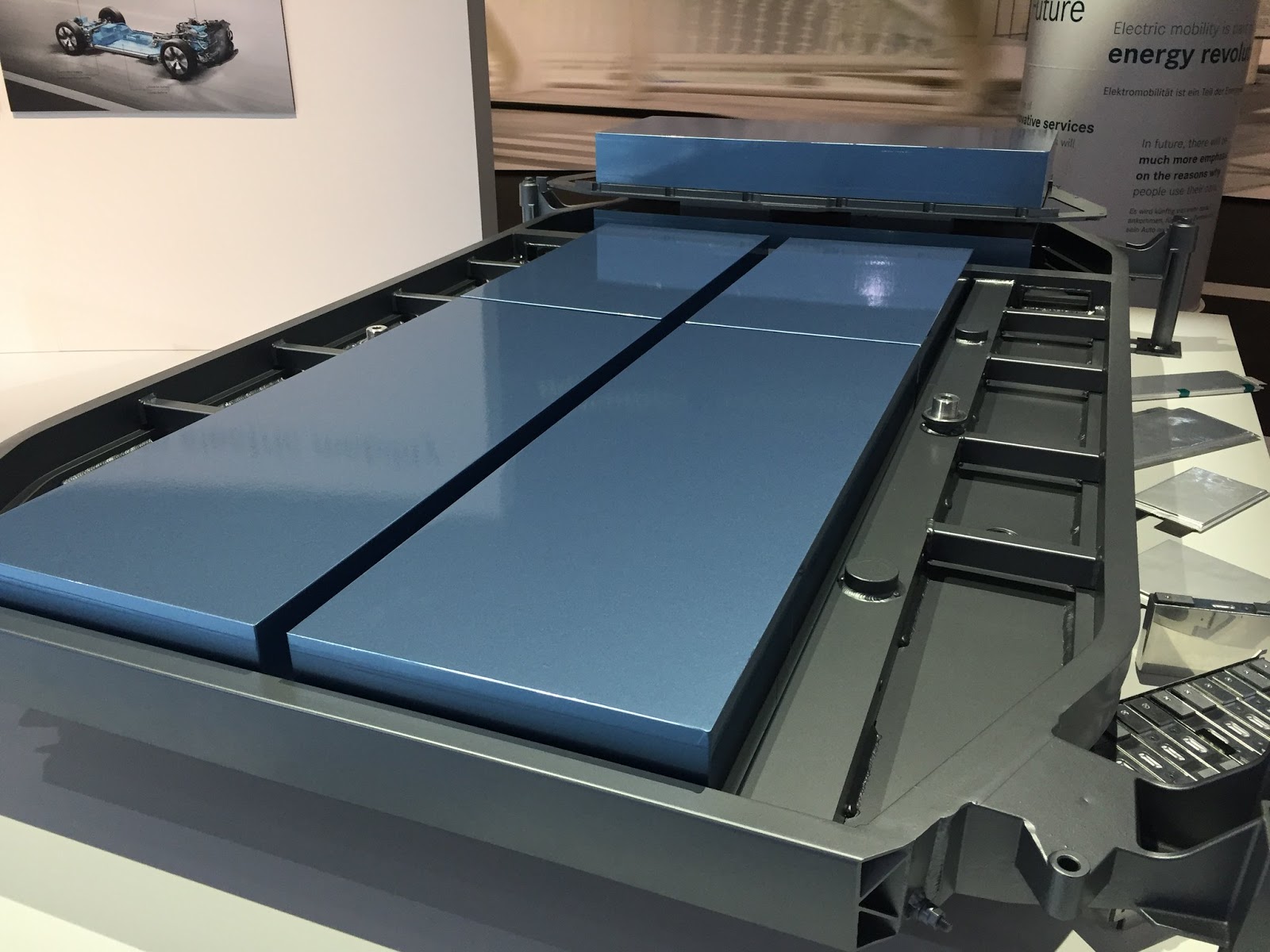
Volkswagen is considering building a multi-billion-euro battery factory as part of a major expansion of its electric-car portfolio, Handelsblatt has learned from company sources.
The factory would allow VW to operate independently of Asian firms like Panasonic, LG and Samsung that have dominated the battery market to date.
VW Chief Executive Matthias Müller and his team are currently working on a new strategy to increase electric car sales in the coming 10 years to 1 million. The non-executive supervisory board will consider the plans before the Wolfsburg-based firm’s annual meeting on June 22.
The aim of the new plans in part is also to put the recent “Dieselgate” scandal over cheating emissions tests behind it. The hope is that focusing on battery technology and electric cars can help the beleaguered company make a fresh start and improve its negative image.
Building a new battery factory would also allow VW to take a leadership role in the development of the new technology. The company’s executive board looks likely to approve the plan, which is also supported in principle by the works council and the state of Lower Saxony, its major shareholder, sources said.
VW invested in solid-state battery startup QuantumScape in late 2014 and have publicly stated they expect the technology can deliver 700 km range. VW is also targeting a 66 percent cost reduction by using a single battery module design for all of its electrified vehicles.
“We want to launch a major initiative, one that will put us at the top of the industry,” said one insider familiar with the plans.
To date one of the main reasons established automakers have been reluctant to move into high volume EV manufacture is having to outsource battery production. Where the largest cost component in an internal combustion car is the engine itself, which virtually all automakers build in-house, in an EV it is the battery that is the most expensive component. Automakers need to vertically integrate battery production into their manufacturing process in order to make EVs profitable.


