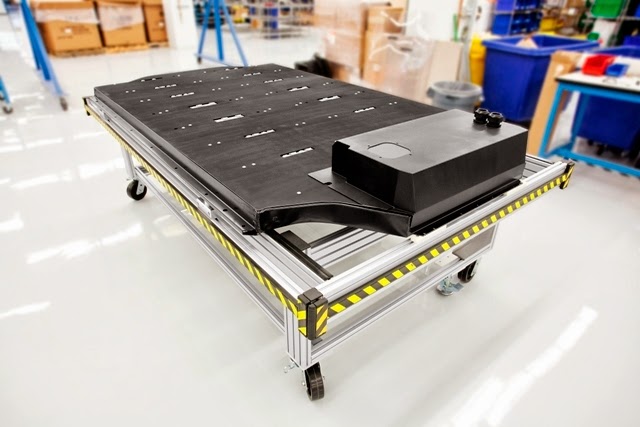
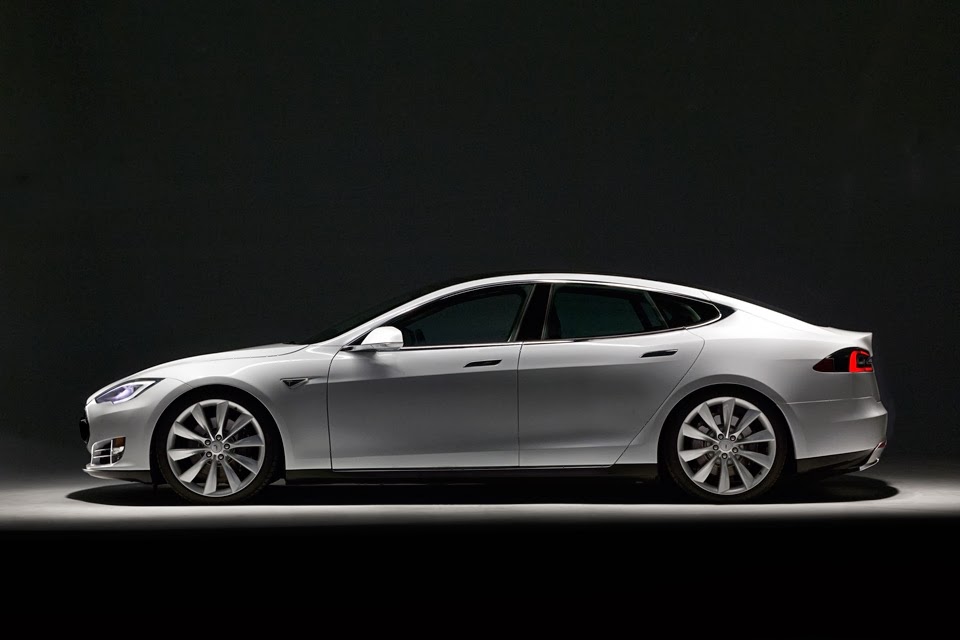
Harvard Team develop Organic battery that costs only $US 27 / kWh

Harvard researchers have developed a battery that harnesses energy by using the electrochemistry of organic molecules rather than metals. The battery, which they say can be applied on a power-grid scale, uses naturally abundant and small organic compounds called quinones rather than electrocatalysts from costly precious metals such as platinum.

Quinones would be inexpensive to obtain and can be found in green plants or synthesized from crude oil. The battery designed by Harvard scientists and engineers used a quinone molecule that's almost identical to one that's found in rhubarb.

Unlike solid-electrode batteries, flow batteries are recharged by two chemical components dissolved in fluids that are kept in separate tanks. Flow batteries are well suited to storing large amounts of energy, but a major drawback to metal-based flow cells has been cost.

According to MIT Technology review, a conventional metal-reliant flow battery costs an estimated $700 per kilowatt-hour of storage capacity, whereas the Harvard team's metal-free technology would bring those costs down to $27 per kilowatt-hour.

"The whole world of electricity storage has been using metal ions in various charge states, but there is a limited number that you can put into solution and use to store energy, and none of them can economically store massive amounts of renewable energy," said Roy G. Gordon, one of the researchers who helped screen more than 10,000 quinone molecules to find the best candidate for the novel battery.

"With organic molecules, we introduce a vast new set of possibilities. Some of them will be terrible and some will be really good. With these quinones we have the first ones that look really good."

Source: Harvard

Maxwell & SK to Develop Integrated Lithium Ion Battery-Ultracapacitor

Maxwell Technologies announced today that it has signed a Memorandum of Understanding with SK Innovation, a subsidiary of SK Holdings and Korea's leading energy provider, to develop next generation energy storage solutions leveraging the complementary characteristics of SK's lithium ion batteries and Maxwell's ultracapacitors.

The two companies will explore and identify global commercial opportunities for products that enable enhanced functionality and improve energy efficiency in industrial, transportation and other markets. Lithium ion batteries are characterized by their high energy density, while ultracapacitors offer rapid charge and discharge capabilities, reliable performance in extreme temperature conditions and long operational life.

"As our name implies, we are seeking to move beyond the limitations of existing technologies to develop and deliver products that better meet the requirements of the most demanding energy storage and power delivery applications," said Stephen J. Kim of SK Innovation's battery division. "Our goal is to develop truly differentiated products that will create large new opportunities for both companies."

"While our respective products currently meet the needs of many applications as stand-alone solutions, Maxwell has always believed that ultracapacitors and batteries can be integrated to provide optimized products that offer the best of both worlds in terms of energy and power," said David Schramm, Maxwell's president and chief executive officer. "We are very pleased to have found a major lithium-ion battery producer in SK Innovation that is willing to invest in joint product and market exploration."

Nissan tests new Leaf battery chemistry

Nissan believes it can create a longer-lasting battery pack for its electric Leaf next year by altering the recipe used to create the component.

The proposed change in chemical composition, which is still under review at the automaker, should make the lithium ion battery more resilient to hot-weather aging, says Billy Hayes, vice president for Nissan's global electric vehicle business.

"We're working on an improved chemistry to improve the longevity of the batteries, especially in these prolonged extreme heat situations," Hayes told journalists during the Tokyo Motor Show last month.

"We're optimistic that we would use that for replacements going forward."

If approved, the new chemistry would go into production at Nissan's Smyrna, Tenn., Leaf and battery module assembly plant in the first half of 2014, he says.

Leaf owners in hot-weather markets such as Arizona and New Mexico have complained that their batteries appear to be aging faster than the manufacturer envisioned.

This year Nissan addressed the complaints by vowing to replace underperforming batteries.

Hayes says the new chemical composition will not extend the Leaf's driving range, which averages 73 miles on a single charge, according to Nissan marketing material. But he said it should delay the degradation of the battery over its lifetime.

EV batteries are produced in a baking process in which 48 modules of cells are sealed, injected with electrolyte and allowed to age.

Altering the chemicals involved can produce differences in performance, weight, cost and other characteristics.

Andy Palmer, Nissan's chief planning officer, says the Leaf battery has already gone through two other product enhancements since it entered production in Smyrna a year ago, to reduce weight and cost. He estimated that, after the expected change in chemical composition next year, it will likely see two more generations over the next two years.

Meanwhile, Nissan is working on other EV batteries, as well as other battery-powered models, Palmer says. In 2014, Nissan will introduce a lithium-powered NV200 compact cargo van. And Nissan is also studying plans to build an EV sports car based on the recently unveiled BladeGlider concept.

Japan’s Sekisui Chemical develop Silicon based 600 km range battery

Sekisui Chemical has developed a material that can triple the capacity of lithium ion batteries, allowing electric vehicles to travel about 600km on a single charge -- roughly as far as gasoline-powered cars can go without refilling.

The new material stores electricity using silicon instead of conventional carbon-based materials. The company's silicon alloy overcomes the durability issue that had kept silicon from being used.

Sekisui Chemical also developed a new material for the electrolyte, which conducts electricity within the batteries. This eliminates the need for equipment to inject liquid electrolyte into batteries, stepping up battery production by 10-fold from the current three or so per hour.

The company believes that the new material can bring battery production costs down to just above 30,000 yen ($290) per kilowatt-hour, a decrease of more than 60 percent from around 100,000 yen ($976) today, according to a report in Nikkei.

Lithium-ion batteries are a type of non-aqueous electrolyte rechargeable battery where the lithium-ion inside the electrolytes supplies the electrical conductivity. Standard models have lithium metal oxides at the positive electrode and a carbon material such as graphite at the negative electrode, and usually use electrolytic solution.

Using electrolytic solution is a barrier to ensuring the safety of the lithium-ion battery, and many research institutes are seeking to solidify the electrolytic solution, but from the perspective of performance and productivity, electrolytic solution remains the standard substance.

Sekisui Chemical, through its determined focus on using gel for electrolytes, has recently utilized new organic polymer electrolyte materials as gel-type electrolytes with high ion conductivity (approx. ten times other Sekisui Chemical products) to gain the prospect of realizing high-speed continuous production for battery cells (approx. ten times compared to other Sekisui Chemical products) and enhanced safety by using a continuous coating process rather than a vacuum infusion process. In addition, it has developed high-capacity silicon negative-electrode materials to make optimum use of this performance, realizing a high-capacity battery cell (900Wh/L).

The development of high-capacity film-type lithium-ion batteries giving practical performance while being flexible, slim, long and covering a large area has massively improved freedom in designing the shape of the final products, leading to anticipation for their use in automobiles, houses, electrical appliances and so on while gaining unprecedented lightness, space-saving (a third the size of previous products) and enhancing design through being able to be installed in any shape of form

Sekisui Chemical plans to begin sample shipments to domestic and overseas battery manufacturers as early as next summer, with mass production to kick off in 2015. It is targeting annual sales of 20 billion yen by fully entering the business of automotive battery materials.

BMW-Toyota making big steps in EV Battery technology

BMW’s head of marketing, Ian Robertson, has said the partnership between BMW and Toyota has already heralded “big steps” in battery technology,

“We’ve been genuinely impressed by the speed and quality of the learnings,” said Robertson. “The teams are working very well together. We are making some big steps, especially in battery performance and efficiency. We are now looking at how we can use the learnings together, because there’s no question they will make electric cars far more attractive.”

The two firms announced they would jointly research a lithium-air battery back in January. A lithium-air battery has its anode filled with lithium, and cathode with air. Theoretically, the battery can store more than 5,000 watt-hours per kilogram. (A123 M1 cells are around 120 wh/kg).

Ian Robertson was quoted as saying during the launch of the BMW i3 he expect the i3 to be powered by a 320 km (200 mile) range Lithium-Air Battery by 2017.

Source: Autocar

Berkeley Lab Develop Lithium-Sulfur Battery Good For 300 Mile Range

Researchers at the U.S. Department of Energy’s Lawrence Berkeley National Laboratory (Berkeley Lab) have demonstrated in the laboratory a lithium-sulfur (Li/S) battery that has more than twice the specific energy of lithium-ion batteries, and that lasts for more than 1,500 cycles of charge-discharge with minimal decay of the battery’s capacity. This is the longest cycle life reported so far for any lithium-sulfur battery.

Demand for high-performance batteries for electric and hybrid electric vehicles capable of matching the range and power of the combustion engine encourages scientists to develop new battery chemistries that could deliver more power and energy than lithium-ion batteries, currently the best performing battery chemistry in the marketplace.

For electric vehicles to have a 300-mile range, the battery should provide a cell-level specific energy of 350 to 400 Watt-hours/kilogram (Wh/kg). This would require almost double the specific energy (about 200 Wh/kg) of current lithium-ion batteries. The batteries would also need to have at least 1,000, and preferably 1,500 charge-discharge cycles without showing a noticeable power or energy storage capacity loss.

“Our cells may provide a substantial opportunity for the development of zero-emission vehicles with a driving range similar to that of gasoline vehicles,” says Elton Cairns, of the Environmental Energy Technologies Division (EETD) at Berkeley Lab.

The battery initially showed an estimated cell-specific energy of more than 500 Wh/kg and it maintained it at >300 Wh/kg after 1,000 cycles—much higher than that of currently available lithium-ion cells.

The team is now seeking support for the continuing development of the Li/S cell, including higher sulfur utilization, operation under extreme conditions, and scale-up. Partnerships with industry are being sought. The next steps in the development are to further increase the cell energy density, improve cell performance under extreme conditions, and scale up to larger cells.

The results were reported in the journal Nano Letters, in a paper authored by Min-Kyu Song (Molecular Foundry, Berkeley Lab), Yuegang Zhang (Suzhou Institute of Nano-Tech and Nano-Bionics, Chinese Academy of Sciences) and Cairns (Environmental Energy Technologies Division, Berkeley Lab). The research was funded by the U.S. Department of Energy’s Office of Science and a University of California Proof of Concept Award.

For a more detailed discussion of the technology, see here.

Self-healing electrodes could make li-ion batteries last 10x longer

Researchers at Stanford University and Department of Energy's SLAC National Accelerator Laboratory have made a pretty big breakthrough in lithium-ion battery technology. The team has developed a self-healing electrode using a stretchy polymer material that repairs cracks made in the electrodes caused by repeated use of the battery. This self-healing property could majorly extend the life of lithium-ion batteries in gadgets and electric cars.

The university reports, "Silicon electrodes swell to three times normal size and shrink back down again each time the battery charges and discharges, and the brittle material soon cracks and falls apart, degrading battery performance. This is a problem for all electrodes in high-capacity batteries...To make the self-healing coating, scientists deliberately weakened some of the chemical bonds within polymers – long, chain-like molecules with many identical units. The resulting material breaks easily, but the broken ends are chemically drawn to each other and quickly link up again, mimicking the process that allows biological molecules such as DNA to assemble, rearrange and break down."

The electrodes coated with the polymer lasted 10 times longer than uncoated electrodes, which could make a huge difference in battery lifetimes.

"Their capacity for storing energy is in the practical range now, but we would certainly like to push that," said Yi Cui, an associate professor at SLAC and Stanford.

The coated electrodes worked for about 100 charge-discharge cycles before starting to significantly lose their energy storage capacity, which is still quite shy of the 500 cycles for cell phones and the 3,000 cycles for electric vehicles, but the researchers say the potential is there for getting those higher cycle numbers.

The team thinks that other electrode materials could work as well, but for now they're focusing on upping the capacity and longevity of the technology.

MIT researchers find a way to boost lithium-air battery performance [VIDEO]

Lithium-air batteries have become a hot research area in recent years: They hold the promise of drastically increasing power per battery weight, which could lead, for example, to electric cars with a much greater driving range. But bringing that promise to reality has faced a number of challenges, including the need to develop better, more durable materials for the batteries’ electrodes and improving the number of charging-discharging cycles the batteries can withstand.

Now, MIT researchers have found that adding genetically modified viruses to the production of nanowires — wires that are about the width of a red blood cell, and which can serve as one of a battery’s electrodes — could help solve some of these problems.

The new work is described in a paper published in the journal Nature Communications, co-authored by graduate student Dahyun Oh, professors Angela Belcher and Yang Shao-Horn, and three others. The key to their work was to increase the surface area of the wire, thus increasing the area where electrochemical activity takes place during charging or discharging of the battery.

The researchers produced an array of nanowires, each about 80 nanometers across, using a genetically modified virus called M13, which can capture molecules of metals from water and bind them into structural shapes. In this case, wires of manganese oxide — a “favorite material” for a lithium-air battery’s cathode, Belcher says — were actually made by the viruses. But unlike wires “grown” through conventional chemical methods, these virus-built nanowires have a rough, spiky surface, which dramatically increases their surface area.

Belcher, the W.M. Keck Professor of Energy and a member of MIT’s Koch Institute for Integrative Cancer Research, explains that this process of biosynthesis is “really similar to how an abalone grows its shell” — in that case, by collecting calcium from seawater and depositing it into a solid, linked structure.

The increase in surface area produced by this method can provide “a big advantage,” Belcher says, in lithium-air batteries’ rate of charging and discharging. But the process also has other potential advantages, she says: Unlike conventional fabrication methods, which involve energy-intensive high temperatures and hazardous chemicals, this process can be carried out at room temperature using a water-based process.

Also, rather than isolated wires, the viruses naturally produce a three-dimensional structure of cross-linked wires, which provides greater stability for an electrode.

A final part of the process is the addition of a small amount of a metal, such as palladium, which greatly increases the electrical conductivity of the nanowires and allows them to catalyze reactions that take place during charging and discharging. Other groups have tried to produce such batteries using pure or highly concentrated metals as the electrodes, but this new process drastically lowers how much of the expensive material is needed.

Altogether, these modifications have the potential to produce a battery that could provide two to three times greater energy density — the amount of energy that can be stored for a given weight — than today’s best lithium-ion batteries, a closely related technology that is today's top contender, the researchers say.

Belcher emphasizes that this is early-stage research, and much more work is needed to produce a lithium-air battery that’s viable for commercial production. This work only looked at the production of one component, the cathode; other essential parts, including the electrolyte — the ion conductor that lithium ions traverse from one of the battery’s electrodes to the other — require further research to find reliable, durable materials. Also, while this material was successfully tested through 50 cycles of charging and discharging, for practical use a battery must be capable of withstanding thousands of these cycles.

While these experiments used viruses for the molecular assembly, Belcher says that once the best materials for such batteries are found and tested, actual manufacturing might be done in a different way. This has happened with past materials developed in her lab, she says: The chemistry was initially developed using biological methods, but then alternative means that were more easily scalable for industrial-scale production were substituted in the actual manufacturing.

Jie Xiao, a research scientist at the Pacific Northwest National Laboratory who was not involved in this work, calls it “a great contribution to guide the research on how to effectively manipulate” catalysis in lithium-air batteries. She says this “novel approach … not only provides new insights for lithium-air batteries,” but also “the template introduced in this work is also readily adaptable for other catalytic systems.”

In addition to Oh, Belcher, and Shao-Horn, the work was carried out by MIT research scientists Jifa Qi and Yong Zhang and postdoc Yi-Chun Lu. The work was supported by the U.S. Army Research Office and the National Science Foundation.

Graphene Supercapacitors Ready For Electric Vehicles

Automakers are always searching for ways to improve the efficiency, and therefore the range, of electric vehicles. One way to do this is to regenerate and reuse the energy that would normally be wasted when the brakes slow a vehicle down.

There is a problem doing this with conventional batteries, however. Braking occurs over timescales measured in seconds but that’s much too fast for batteries which generally take many hours to charge. So car makers have to find other ways to store this energy.

One of the more promising is to use supercapacitors because they can charge quickly and then discharge the energy just as fast.

Researchers at the Gwangju Institute of Science and Technology in Korea say they have developed a high-performance graphene supercapacitors that stores almost as much energy as a lithium-ion battery, can charge and discharge in seconds and maintain all this over many tens of thousands of charging cycles.

The Koreans say they have perfected a highly porous form of graphene that has a huge internal surface area. This is created by reducing graphene oxide particles with hydrazine in water agitated with ultrasound.

The graphene powder is then packed into a coin-shaped cell, and dried at 140 degrees C and at a pressure of 300/kg/cm for five hours.

The resulting graphene electrode is highly porous. A single gram has a surface area bigger than a basketball court. That’s important because it allows the electrode to accomodate much more electrolyte (an ionic liquid called EBIMF 1 M). And this ultimately determines the amount of charge the supercapacitor can hold.

Santhakumar Kannappan at the Gwangju Institute of Science and Technology have measured the performance of their supercapacitor at a specific capacitance of over 150 Farrads per gram that can store energy at a density of more than 64 Watt hours per kilogram at a current density of 5 Amps per gram.

That’s almost comparable with lithium-ion batteries which have an energy density of between 100 and 200 Watt hours per kilogram.

These supercapacitors have other advantages too. Kannappan and co say they can fully charge them in just 16 seconds and have repeated this some ten thousand times without a significant reduction in capacitance. “These values are the highest so far reported in the literature,” they say.

Tesla plans ‘giga factory’ for EV battery pack manufacture

Tesla Motors is considering plans to create a "giga factory" to manufacture electric vehicle battery packs for the automaker's consumption, Tesla CEO Elon Musk said.

Musk said Tesla's long-term ambitions to build 500,000 electric vehicles annually could chew up the vast majority of current lithium ion battery supplies globally for all industries, including computers and cell phones.

Musk said the Tesla plant would be "something comparable to all lithium ion production in the world, in one factory."

Musk declined to give a timeframe for the plant, but with the smaller Gen III cars slated to arrive in 2017 with a $35,000 price point, Tesla production should ramp up rapidly.

"If we were to produce 500,000 cars, we need cell capacity commensurate with that. That might be more, or at least on par with, all lithium ion production in the world today. We're in the process of figuring that out. There might need to be some giga-factory built," Musk said in a conference call with analysts.

Musk foresees such a plant that would take "raw materials to finished packs, with partners, in North America.

"Raw materials are not an issue. I would not worry about lithium supply. The main constituents, by weight, are nickel, cobalt, aluminum, then lithium," Musk said, adding that the plant would be, "a green factory, a lot of solar power. No toxic elements are going to come out of this plant."

Tesla recently inked a deal with Panasonic to update and expand their 2011 arrangement to now supply nearly 2 billion cells over the course of four years.

Tesla Superchargers Enables Free Travel Between San Diego and Vancouver

Tesla Motors today announced the opening of the West Coast Supercharger Corridor, energizing a network of stations that enable Model S owners to travel for free between San Diego, California and Vancouver, British Columbia.

With stations along U.S. Highway 101 and Interstate 5, the West Coast's key routes, cities and destinations are connected by Tesla Superchargers. Model S customers can drive between San Diego, Los Angeles, Santa Barbara, San Francisco, Sacramento, Portland, Seattle, and Vancouver for free with minimal stops. More than 99 percent of Californians and 87 percent of Oregon and Washington owners are now within 200 miles of a Supercharger.

Tesla Superchargers are substantially more powerful than any other charging technology in the world, capable of charging Model S 20x faster than most public charging stations. Superchargers deliver up to 120 kW DC (Direct Current) power directly to the Model S battery, providing half a charge in as little as 20 minutes. Superchargers are strategically placed along major highways connecting city centers. Stations are located where customers want to stop, near amenities like roadside diners, cafes and shopping centers, so owners can stop for a quick meal while their Model S charges for free.

This morning in San Diego, two Model S will embark on a 1,750 mile #DriveFree road trip to Vancouver powered only by Tesla Superchargers. The journey will take them through Santa Barbara, San Francisco, Sacramento, Mt. Shasta, Portland, Seattle, and Vancouver, with stops at popular destinations such as the Santa Monica Pier, Monterey Bay and the world famous Pike Place Fish Market. Throughout the trip, Tesla will be hosting owner and media events and providing real time updates from the road on Twitter, Facebook and Instagram.

Panasonic Agree to Supply Tesla with 2 Billion Battery Cells

Panasonic Corporation and Tesla Motors today announced that the two companies have reached an agreement in which Panasonic will expand its supply of automotive-grade lithium-ion battery cells to Tesla. With this agreement, the two companies update and expand their 2011 arrangement to now supply nearly 2 billion cells over the course of four years. The lithium-ion battery cells purchased from Panasonic will be used to power the award winning Model S as well as Model X, a performance utility vehicle that is scheduled to go into production by the end of 2014.

This agreement builds upon a multi-year collaboration between Panasonic and Tesla to develop next-generation automotive-grade battery cells and accelerate the market expansion of electric vehicles. Panasonic’s cells combined with Tesla’s proven EV battery expertise have already enabled more than 130 million customer miles driven in Tesla Roadsters and Model S.

“This expanded agreement with Panasonic is important to Tesla as we continue to increase the pace of production,” said Tesla Co-Founder and CEO Elon Musk. “We look forward to strengthening our relationship with Panasonic, and I’m confident that this partnership will continue to be an integral part of Tesla’s success for years to come.”

Together, Panasonic and Tesla have developed a next-generation battery cell technology that provides the highest energy density and best performance cells in the market. Panasonic’s cylindrical cell is a customized technology designed specifically for optimizing electric vehicle quality and life. These cells are integrated by Tesla into the battery pack in a way that enables an industry-leading range of approximately 265 miles for the Model S.

“We are extremely proud to be a strategic partner of Tesla,” said Yoshihiko Yamada, president of the Automotive & Industrial Systems Company, an internal company of Panasonic. “Panasonic will increase its production capacity of lithium-ion battery cells to supply Tesla’s growing needs as it expands its production of EVs.”

Graphene-Coated Silicon Supercapacitor could make batteries obsolete

Solar cells that produce electricity 24/7, not just when the sun is shining. Mobile phones with built-in power cells that recharge in seconds and work for weeks between charges.

These are just two of the possibilities raised by a novel supercapacitor design invented by material scientists at Vanderbilt University.

It is the first supercapacitor that is made out of silicon so it can be built into a silicon chip along with the microelectronic circuitry that it powers. In fact, it should be possible to construct these power cells out of the excess silicon that exists in the current generation of solar cells, sensors, mobile phones and a variety of other electromechanical devices, providing a considerable cost savings.

“If you ask experts about making a supercapacitor out of silicon, they will tell you it is a crazy idea,” said Cary Pint, the assistant professor of mechanical engineering who headed the development. “But we’ve found an easy way to do it.”

Instead of storing energy in chemical reactions the way batteries do, “supercaps” store electricity by assembling ions on the surface of a porous material. As a result, they tend to charge and discharge in minutes, instead of hours, and operate for a few million cycles, instead of a few thousand cycles like batteries.

These properties have allowed commercial supercapacitors, which are made out of activated carbon, to capture a few niche markets, such as storing energy captured by regenerative braking systems on buses and electric vehicles and to provide the bursts of power required to adjust of the blades of giant wind turbines to changing wind conditions. Supercapacitors still lag behind the electrical energy storage capability of lithium-ion batteries, so they are too bulky to power most consumer devices. However, they have been catching up rapidly.

Research to improve the energy density of supercapacitors has focused on carbon-based nanomaterials like graphene and nanotubes. Because these devices store electrical charge on the surface of their electrodes, the way to increase their energy density is to increase the electrodes’ surface area, which means making surfaces filled with nanoscale ridges and pores.

“The big challenge for this approach is assembling the materials,” said Pint. “Constructing high-performance, functional devices out of nanoscale building blocks with any level of control has proven to be quite challenging, and when it is achieved it is difficult to repeat.”

So Pint and his research team – graduate students Landon Oakes, Andrew Westover and post-doctoral fellow Shahana Chatterjee – decided to take a radically different approach: using porous silicon, a material with a controllable and well-defined nanostructure made by electrochemically etching the surface of a silicon wafer.

This allowed them to create surfaces with optimal nanostructures for supercapacitor electrodes, but it left them with a major problem. Silicon is generally considered unsuitable for use in supercapacitors because it reacts readily with some of chemicals in the electrolytes that provide the ions that store the electrical charge.

With experience in growing carbon nanostructures, Pint’s group decided to try to coat the porous silicon surface with carbon. “We had no idea what would happen,” said Pint. “Typically, researchers grow graphene from silicon-carbide materials at temperatures in excess of 1400 degrees Celsius. But at lower temperatures – 600 to 700 degrees Celsius – we certainly didn’t expect graphene-like material growth.”

When the researchers pulled the porous silicon out of the furnace, they found that it had turned from orange to purple or black. When they inspected it under a powerful scanning electron microscope they found that it looked nearly identical to the original material but it was coated by a layer of graphene a few nanometers thick.

When the researchers tested the coated material they found that it had chemically stabilized the silicon surface. When they used it to make supercapacitors, they found that the graphene coating improved energy densities by over two orders of magnitude compared to those made from uncoated porous silicon and significantly better than commercial supercapacitors.

The graphene layer acts as an atomically thin protective coating. Pint and his group argue that this approach isn’t limited to graphene. “The ability to engineer surfaces with atomically thin layers of materials combined with the control achieved in designing porous materials opens opportunities for a number of different applications beyond energy storage,” he said.

“Despite the excellent device performance we achieved, our goal wasn’t to create devices with record performance,” said Pint. “It was to develop a road map for integrated energy storage. Silicon is an ideal material to focus on because it is the basis of so much of our modern technology and applications. In addition, most of the silicon in existing devices remains unused since it is very expensive and wasteful to produce thin silicon wafers.”

Pint’s group is currently using this approach to develop energy storage that can be formed in the excess materials or on the unused back sides of solar cells and sensors. The supercapacitors would store excess the electricity that the cells generate at midday and release it when the demand peaks in the afternoon.

“All the things that define us in a modern environment require electricity,” said Pint. “The more that we can integrate power storage into existing materials and devices, the more compact and efficient they will become.”

Source: Nature

Nissan to Lead Rapid Charge Network Project

Nissan is leading a consortium which aims to establish a network of rapid chargers for electric vehicles running the full length and breadth of the United Kingdom and Ireland.

When complete, a total of 74 rapid chargers will have been installed, covering more than 1,100kms of major trunk routes and providing EV-friendly links to five seaports and five international airports.

The project, named Rapid Charge Network (RCN), was presented at the Trans European Transport Network (TEN-T) event in Tallinn, Estonia, which was hosted by European Commission Vice President Siim Kallas. Estonia was the first country in the world to open a nationwide EV fast-charging network.

Funding for the Rapid Charge Network (RCN) project is being led by Nissan and is co‑financed by the European Union through the TEN-T programme, with further contributions from fellow consortium members Renault, BMW and Volkswagen and ESB Ireland's Electricity Supply Board. It also draws on the network expertise of Zero Carbon Futures and Newcastle University

"Nissan is delighted to be leading this important initiative. The UK's Rapid Charge Network will provide a vital sense of security for all EV drivers, not just those using the award-winning Nissan LEAF, as well as helping to promote the advantages of zero emission mobility to others," said Olivier Paturet, General Manager Zero Emission Strategy & Corporate Planning.

Running on two priority road axes on the mainland, the network will link major ports and cities including Stranraer, Liverpool, Holyhead, Birmingham, Felixstowe, Leeds and Kingston upon Hull with connections to existing networks in Dublin and Belfast in Eire and Northern Ireland.

Significantly, the rapid chargers being deployed will be the first state-of-the-art multi-standard units in public operation in Europe. This will ensure that every EV owner in the country can undertake long journeys secure in the knowledge that they will never be far from a rapid charger no matter what brand of car they drive. The units are compatible with cars using 44kW DC CCS, 44 kW DC Chademo or 43 kW AC systems. Installation of the rapid chargers is due to be completed by the end of 2014.

By providing a network of chargers for EV drivers, the RCN project is designed to encourage further take up of electric vehicles in a bid to further decarbonize road transport.

The network will also be used to gather strategic information from users, including customer charging behavior and changes in mobility patterns, to help plan the roll-out future rapid charging infrastructure in member states across Europe.

The RCN project is one of 30 priority transport projects across Europe identified by TEN-T. The Projects were chosen according to the added value they offer to the European community and their contribution to the sustainable development of transport systems. They include rail, mixed rail-road, road and inland waterway projects, as well as a ‘motorways of the sea' scheme.

Source: RCN

Sumitomo to Triple LiNiO2 output to meet Tesla Model S Demand

Sumitomo Metal Mining will invest ¥4.8 billion (US$48 million) to boost its production capacity of lithium nickel oxide (LiNiO2) from the current 300 tons per month to 850 tons to meet anticipated increased Li-ion cell production by Panasonic to meet the growing demand for Tesla Model S EVs.

Sumitomo successfully developed its high-performance lithium nickel oxide for cathode materials in collaboration with Panasonic Corporation and is now supplying this material to that company, which uses it to make the cylindrical lithium-ion batteries which are adopted in the electric powertrains used by Tesla.

Tesla commenced deliveries of its award-winning Model S sedan in the US in June 2012. With Model S deliveries now underway in Europe and slated to begin in Asia, including Japan and Australia, in the spring of 2014, Panasonic is planning to increase production of its lithium-ion batteries.

To respond to this expansion of the market for automotive rechargeable batteries, Sumitomo will expand its production facilities for lithium nickel oxide at its Isoura Plant in Niihama City, Ehime Prefecture. Expansion work is to get under way in October, with completion scheduled for June 2014.

Sumitomo says it is pursuing aggressive development and stable supply capability in cathode materials, leveraging its ability to produce nickel in-house. Going forward, Sumitomo intends to further strengthen its operations in materials for energy and environmentally related applications.

BMW i3 to have 200 Mile Lithium-Air Battery by 2017 [VIDEO]

At the recent launch of the BMW i3 lithium-ion battery-electric car, BMW board member Ian Robertson said that in the next three to four years there will be more progress in battery development than in the previous 100 years. He said electric cars will have batteries with twice the current power within four to five years, which will double the range.

We reported back in January that Toyota Motor Corp and BMW AG agreed to jointly research a lithium-air battery. Lithium-air battery has its anode filled with lithium, and cathode with air.

Lithium metal-air batteries can store more than 5,000 watt-hours per kilogram. (A123 M1 cells are around 120 wh/kg) That's more than forty-times as much as today's high-performance lithium-ion batteries, and more than another class of energy-storage devices: fuel cells.

The reduction in battery mass is achieved by eliminating the need for a second reactant inside the cell. Lithium metal batteries react with oxygen in the air that is pulled in through a 'breathing' casing, making them lightweight and compact.

The technology is being studied by researchers including IBM , which is working to develop a lithium-air battery that will let electric vehicles run 500 miles on one charge.

Given the recent new that General Motors is working on an EV that can go 200 miles (320 km) per charge at a cost of about $30,000 to compete with Tesla's as yet un-named 200 mile $30,000 EV due in approx three to four years, the 2016/17 model year promises to be a very exciting year for affordable, long range electric vehicles.

Molten-air battery offers up to 45x higher storage capacity than Li-ion

Researchers at George Washington University have demonstrated a new class of high-energy battery, called a "molten-air battery," that has one of the highest storage capacities of any battery type to date. Unlike some other high-energy batteries, the molten-air battery has the advantage of being rechargeable.

Although the molten electrolyte currently requires high-temperature operation, the battery is so new that the researchers hope that experimenting with different molten compositions and other characteristics will make molten-air batteries strong competitors in electric vehicles and for storing energy for the electric grid.

This ability to store multiple electrons in a single molecule is one of the biggest advantages of the molten-air battery. By their nature, multiple-electron-per-molecule batteries usually have higher storage capacities compared to single-electron-per-molecule batteries, such as Li-ion batteries. The battery with the highest energy capacity to date, the vanadium boride (VB2)-air battery, can store 11 electrons per molecule. However, the VB2-air battery and many other high-capacity batteries have a serious drawback: they are not rechargeable.

The researchers experimented with using iron, carbon, and VB2 as the molten electrolyte, demonstrating very high capacities of 10,000, 19,000, and 27,000 Wh/l, respectively. The capacities are influenced by the number of electrons that each type of molecule can store: 3 electrons for iron, 4 electrons for carbon, and 11 electrons for VB2. In comparison, the Li-air battery has an energy capacity of 6,200 Wh/l, due to its single-electron-per-molecule transfer and lower density than the other compositions while a typical Li-Ion battery has a capacity of approx 600 Wh/l.

Source: Phys.org

Graphene-Based Supercapacitors Improve Energy Density by 12x

Monash University (Australia) researchers have brought next generation energy storage closer with an engineering first - a graphene-based device that is compact, yet lasts as long as a conventional battery.

Published today in Science, a research team led by Professor Dan Li of the Department of Materials Engineering has developed a completely new strategy to engineer graphene-based supercapacitors (SC), making them viable for widespread use in renewable energy storage, portable electronics and electric vehicles.

SCs are generally made of highly porous carbon impregnated with a liquid electrolyte to transport the electrical charge. Known for their almost indefinite lifespan and the ability to re-charge in seconds, the drawback of existing SCs is their low energy-storage-to-volume ratio - known as energy density. Low energy density of five to eight Watt-hours per litre, means SCs are unfeasibly large or must be re-charged frequently.

Professor Li's team has created an SC with energy density of 60 Watt-hours per litre - comparable to lead-acid batteries and around 12 times higher than commercially available SCs.

"It has long been a challenge to make SCs smaller, lighter and compact to meet the increasingly demanding needs of many commercial uses," Professor Li said.

Graphene, which is formed when graphite is broken down into layers one atom thick, is very strong, chemically stable and an excellent conductor of electricity.

To make their uniquely compact electrode, Professor Li's team exploited an adaptive graphene gel film they had developed previously. They used liquid electrolytes - generally the conductor in traditional SCs - to control the spacing between graphene sheets on the sub-nanometre scale. In this way the liquid electrolyte played a dual role: maintaining the minute space between the graphene sheets and conducting electricity.

Unlike in traditional 'hard' porous carbon, where space is wasted with unnecessarily large 'pores', density is maximised without compromising porosity in Professor Li's electrode.

To create their material, the research team used a method similar to that used in traditional paper making, meaning the process could be easily and cost-effectively scaled up for industrial use.

"We have created a macroscopic graphene material that is a step beyond what has been achieved previously. It is almost at the stage of moving from the lab to commercial development," Professor Li said.

Graphene-Based Supercapacitors Improve Energy Density by 12x

Monash University (Australia) researchers have brought next generation energy storage closer with an engineering first - a graphene-based device that is compact, yet lasts as long as a conventional battery.

Published today in Science, a research team led by Professor Dan Li of the Department of Materials Engineering has developed a completely new strategy to engineer graphene-based supercapacitors (SC), making them viable for widespread use in renewable energy storage, portable electronics and electric vehicles.

SCs are generally made of highly porous carbon impregnated with a liquid electrolyte to transport the electrical charge. Known for their almost indefinite lifespan and the ability to re-charge in seconds, the drawback of existing SCs is their low energy-storage-to-volume ratio - known as energy density. Low energy density of five to eight Watt-hours per litre, means SCs are unfeasibly large or must be re-charged frequently.

Professor Li's team has created an SC with energy density of 60 Watt-hours per litre - comparable to lead-acid batteries and around 12 times higher than commercially available SCs.

"It has long been a challenge to make SCs smaller, lighter and compact to meet the increasingly demanding needs of many commercial uses," Professor Li said.

Graphene, which is formed when graphite is broken down into layers one atom thick, is very strong, chemically stable and an excellent conductor of electricity.

To make their uniquely compact electrode, Professor Li's team exploited an adaptive graphene gel film they had developed previously. They used liquid electrolytes - generally the conductor in traditional SCs - to control the spacing between graphene sheets on the sub-nanometre scale. In this way the liquid electrolyte played a dual role: maintaining the minute space between the graphene sheets and conducting electricity.

Unlike in traditional 'hard' porous carbon, where space is wasted with unnecessarily large 'pores', density is maximised without compromising porosity in Professor Li's electrode.

To create their material, the research team used a method similar to that used in traditional paper making, meaning the process could be easily and cost-effectively scaled up for industrial use.

"We have created a macroscopic graphene material that is a step beyond what has been achieved previously. It is almost at the stage of moving from the lab to commercial development," Professor Li said.

Cadillac ELR Goes Ultrasonic in Pursuit of High Quality

Ultrasonic welding, a high-tech manufacturing process used in the aerospace and medical industries, is helping ensure high quality for the new Cadillac ELR extended-range electric luxury coupe that goes on sale in North America in early 2014.

Ultrasonic welding’s key advantage is exceptional and predictable quality and performance from one battery pack to the next. Every ELR battery, for example, has close to 200 ultrasonic welds. Each is required to meet stringent quality requirements, enabling Cadillac to offer an eight-year/100,000-mile battery system warranty.

Short cycle times, low capital costs and manufacturing flexibility through the use of automation are other advantages of ultrasonic welding.

“Ultrasonic welding is a far superior joining technology in applications where it can be deployed,” said Jay Baron, president and CEO of the Center for Automotive Research in Ann Arbor, Mich. “Cadillac’s innovative process will produce batteries with superior quality compared with traditional methods – and do it more efficiently. This is one example of technology development that is becoming pervasive in today’s world class vehicles.”

General Motors’ Brownstown Battery Assembly plant near Detroit, uses ultrasonic welding to join metal electrode tabs on ELR’s advanced 16.5-kWh lithium-ion battery system, and does it with a proprietary quality monitoring process. Brownstown uses an automated system to execute millions of these welds each year.

Ultrasonic welding uses specialized tools called an anvil and horn to apply rapid mechanical vibrations to the battery’s copper and aluminum electrodes. This creates heat through friction, resulting in a weld that does not require melting-point temperatures or joining material such as adhesives, soldering or fasteners.

An integrated camera vision system is used to shoot a reference image of the weld area prior to the operation to achieve pinpoint accuracy. Quality operators check electrode tabs before and after welding, and the system monitors dozens of signal processing features during each weld.

The battery-specific welding process is a result of collaboration among General Motors’ Manufacturing Systems Research Lab and Advanced Propulsion Center and the Brownstown plant. GM first applied the process on the award-winning Chevrolet Volt – its groundbreaking extended-range electric vehicle – and further refined it for ELR.

“This effort is an outstanding example of teamwork between research and manufacturing engineering,” said Catherine Clegg, GM vice president of Global Manufacturing Engineering. “It has helped integrate the use of highly technical, complex technology into a sustainable manufacturing process, which means we can consistently deliver high-quality batteries to our customers for the Cadillac ELR.”

The ELR’s T-shaped battery pack is located along the centerline of the vehicle, between the front and rear wheels for optimal weight distribution. The 5.5-foot-long (1.6 m), 435-pound (198 kg) pack supplies energy to an advanced electric drive unit capable of 295 lb-ft of instant torque (400 Nm) to propel the vehicle. Using only the energy stored in the battery, the ELR will deliver a GM-estimated range of about 35 miles (56 km) of pure electric driving, depending on terrain, driving techniques and temperature.

Charging the ELR’s battery can be done with a 120V electrical outlet or a dedicated 240V charging station. The vehicle can be completely recharged in about 4.5 hours using a 240V outlet, depending on the outside temperature.

The Cadillac ELR is built at GM’s Detroit-Hamtramck Assembly Plant, one of the few high-volume electric vehicle manufacturing facilities based in the U.S. Its battery pack is built from cell to pack at Brownstown and shipped to Detroit-Hamtramck for assembly into the vehicle.