A startling 238 miles, a few concessions in the Big Easy, and men not wanting to appear feminine. All this and more on Green Car Reports. BREAKING: We've driven the 2017 Chevy Bolt EV, and our first drive report on getting 240 miles is now live. Read it! The big news today was the EPA-rated range for the 2017 Chevrolet Bolt EV electric car: an...
New Orleans has a hot-and-cold relationship with environmentally friendly technology. Last week, however, the two were definitely on good terms as the city council voted unanimously to make life easier for current and future electric car owners. Crescent City crises Given the New Orleans' tenuous location--sandwiched between Lake Pontchartrain and...
If all goes according to plan, more than 450,000 owners of Volkswagen and Audi sedans, wagons, and hatchbacks with 2.0-liter TDI diesel vehicles from the 2009 through 2015 model years will start to receive buyback offers from VW late this year. Many owners have already indicated that they plan to take the buyout, some as soon as possible. But it...
Those tasked with selling electric cars and other products friendly to the environment must confront multiple obstacles as they try to win over often-skeptical consumers. That's something that comes with the territory when marketing new technologies or practices. But could public reticence to adopt green products be influenced by more than just...
There will be a lot riding on the tall, square shoulders of the 2017 Chevrolet Bolt EV when it reaches the first Chevy dealers late this year. It will be the first mass-priced electric car with a range of 200 miles or more, and it will go on sale a year before the much-vaunted Tesla Model 3. Now Chevrolet has released the EPA estimated range...
Electric car prices need to fall (but how much?), Tesla upgrades both its battery architecture and its Autopilot software, and how about that ice driving? All this and more on Green Car Reports. Sure, you know Nissan and Tesla, but which European maker just delivered its 100,00th electric car last Friday? Today, the sticker prices of electric cars...
Last month, when Tesla Motors announced new, even larger battery packs for its Model S sedan and Model X crossover utility vehicle, reaction was less than ecstatic. While even faster, even longer-range electric cars are nice and all, commentators said, shouldn't Tesla be sticking to its knitting? Specifically, shouldn't it be focusing every last...
The 2017 BMW i3 is the most significant update to the groundbreaking electric car since it went on sale in the U.S. back in May 2014. Changes are headlined by a larger, 33-kilowatt-hour lithium-ion battery pack that increases range from 81 miles to 114 miles in the all-electric model. However, until now, BMW had yet to release range estimates for...
Fall is approaching, which means it's time for the auto-show season to get underway once again. Press days for the 2016 Paris Motor Show begin at the end of this month, and we already know several notable green production and concept cars will make their debuts in the French capital. The show's organizers say no fewer than 24 electric cars will...
One of the challenges of making and selling electric cars is that their batteries are still expensive. And despite some makers' absorbing losses on the earliest cars, that means they sell for prices higher than those of similarly sized vehicles with combustion engines. Sure, owners will save money on running costs—but most shoppers will...
French automaker Renault hasn't sold nearly as many electric cars as its alliance partner Nissan. But Renault has steadily increased its electric-car sales volumes, particularly in Europe, with its main focus on the subcompact Zoe hatchback. That allowed the company to pass a notable milestone recently. DON'T MISS: Nissan and Renault together now...
The word "contagious" is often used to describe diseases, but not all contagions are necessarily bad. Studies have found that solar panels can be "contagious," for example. In other words, a homeowner is more likely to install solar panels on their house if their neighbor has done so. CHECK OUT: Electric Cars Vs. Solar Panels: Which One's The...
A 1965 model Volkswagen beetle is now the quickest Electric Car in the world. UK based Current Racing set a 1/4 mile time of 8.282s @ 159 mph at Santa Pod Raceway in Bedfordshire, England.
The new for 2016 powertrain in Black Current III now runs 3x 9" brushed DC motors, a 2 speed gearbox and a Ford 9" diff. Power is supplied by 864x Lithium Cobalt Oxide (LiCo4) Battery cells via 2x 440 volt Zilla controllers.
The Million Dollar Rimac Concept One attended Monterey Car Week & PebbleBeach Concours d'Elegance in California for the first time this year.
While in the USA Rimac Automobili founder and CEO Mate Rimac gave Youtuber "alexsmolik" a full run-down on the technology in his electric hypercar, including a brief demo of torque vectoring and 0-100 km/h in 2.6 seconds.
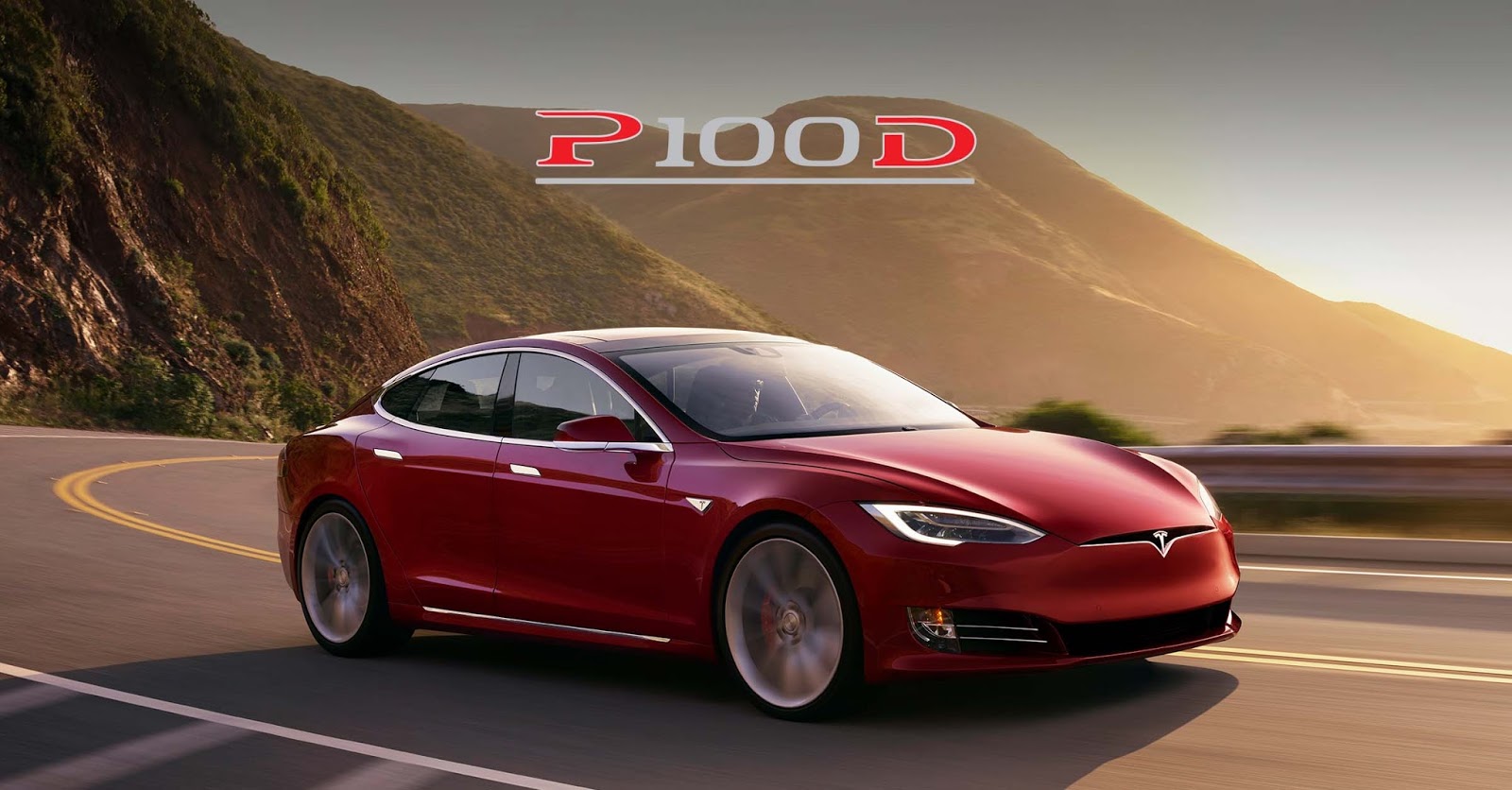
Tesla have announced the Model S P100D with Ludicrous mode claiming it as the third fastest accelerating production car ever produced, with a 0-60 mph time of 2.5* seconds. The only remaining production road cars a Tesla Model S can't beat are the LaFerrari and Porsche 918 Spyder.
However, both were limited run, million dollar vehicles and cannot be bought new. While those cars are small two seaters with very little luggage space, the pure electric, all-wheel drive Model S P100D has four doors, seats up to 5 adults plus 2 children and has exceptional cargo capacity.
The 100 kWh battery also increases range substantially to an estimated 315 miles on the EPA cycle and 613 km on the EU cycle, making it the first to go beyond 300 miles and the longest range production electric vehicle by far.
The larger battery pack is also available on the Model X, making the world’s quickest SUV even faster. Model X P100D with Ludicrous mode accelerates to 60 mph in 2.9* seconds and travels up to 289 miles EPA estimated and 542 km EU on a single charge. Model X is also a pure electric SUV and can seat up to seven adults.
Model S and Model X are engineered to be the safest cars on the road and to have the highest ratings from NHTSA. Both have access to the Tesla Supercharger network for the freedom to travel long distance for free. And every Tesla will improve over time with free over the air upgrades.
Tesla customers who have ordered a P90D Ludicrous, but not taken delivery, can upgrade to the 100 kWh pack for $10,000. Existing P90D Ludicrous owners can also upgrade to a 100 kWh pack, but for $20,000, as their used 90 kWh pack will have to be recycled.
While the P100D Ludicrous is obviously an expensive vehicle, Tesla want to emphasize that every sale helps pay for the smaller and much more affordable Tesla Model 3 that is in development. Without customers willing to buy the expensive Model S and X, Tesla says they would be unable to fund the smaller, more affordable Model 3 development.
Early adapters form an orderly queue here... Tesla
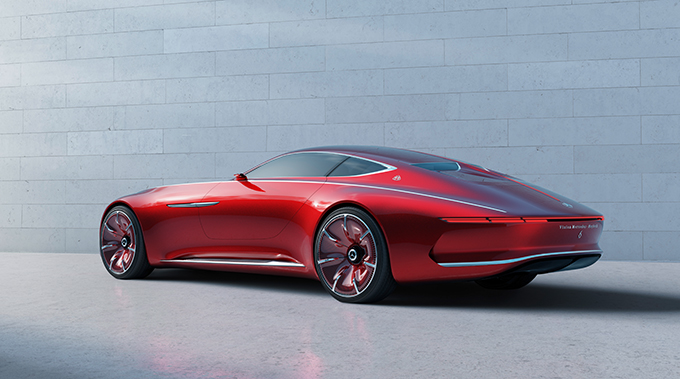
Daimler has unveiled the Vision Mercedes-Maybach 6 – an electric-powered behemoth it says represents the ultimate in luxury.
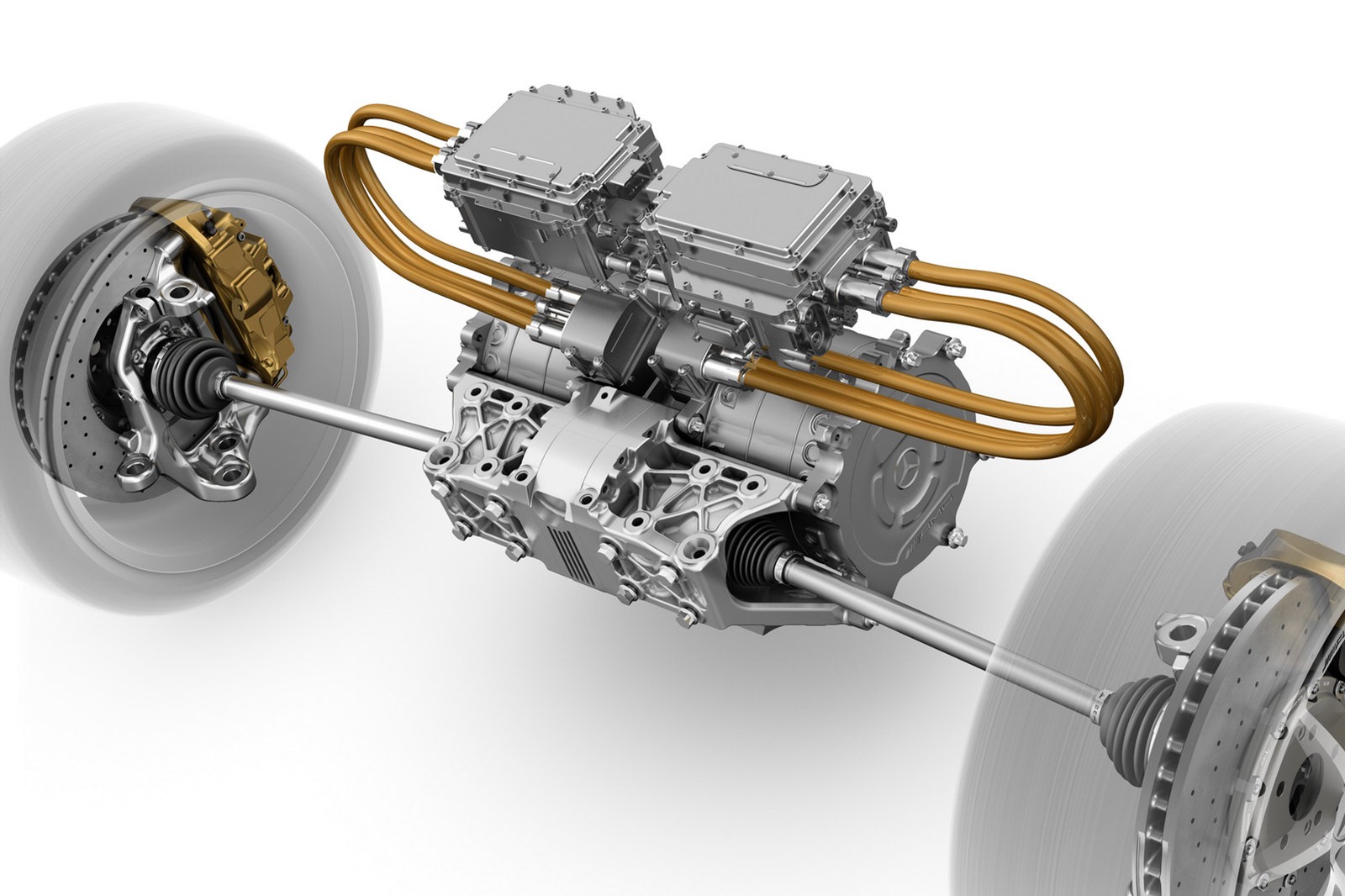
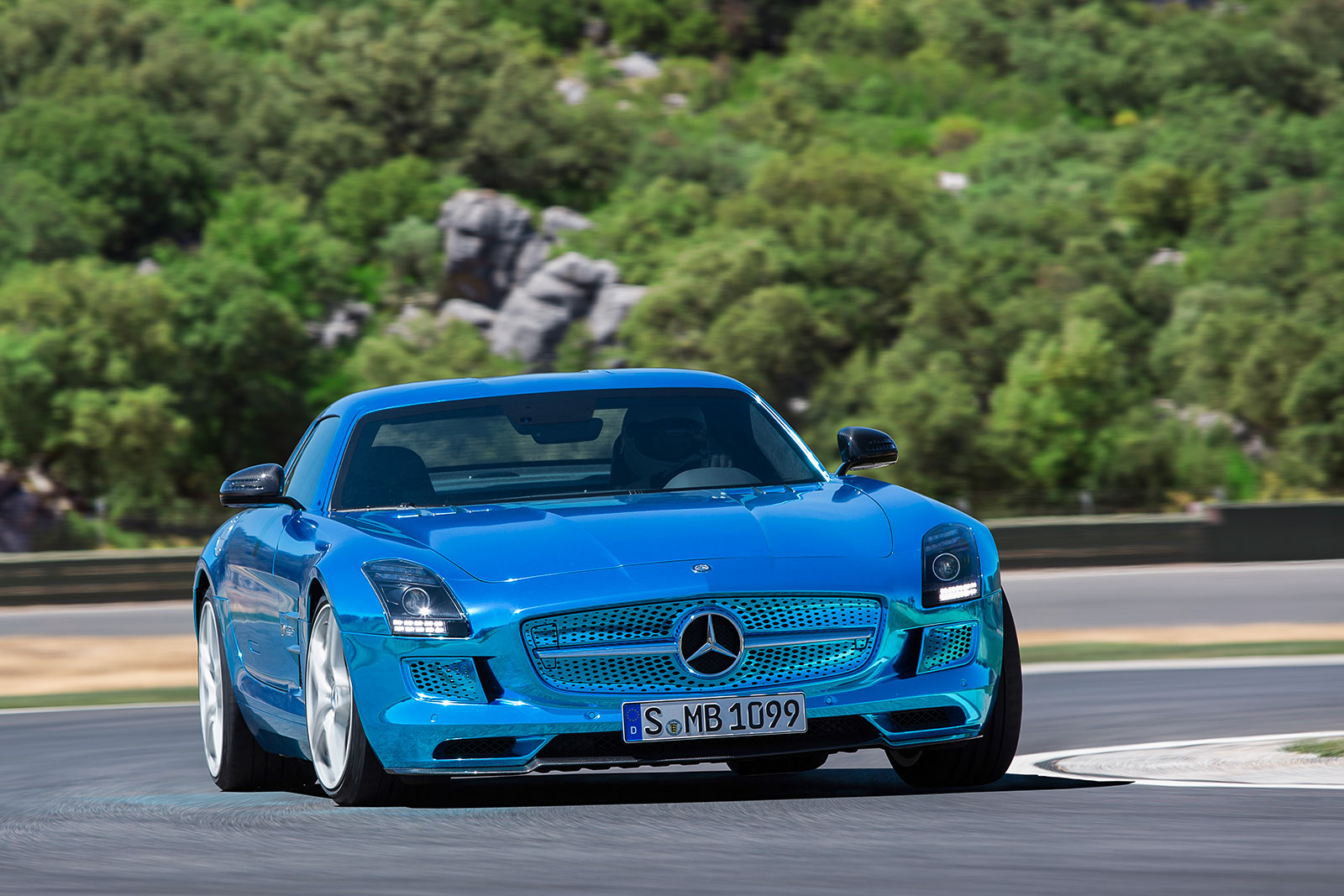
At the Maybach’s heart is its electric powertrain. Power being the operative word here, with a 738hp output from four permanent magnet synchronous electric motors, each powering a separate wheel. This spec sounds exactly the same as the most powerful production AMG model of all time, the Mercedes-Benz SLS AMG Electric Drive.
With a combined maximum torque of 1,000 Nm (737 lb-ft) the permanently active torque vectoring allows for selective distribution of forces for each individual wheel. The intelligent distribution of drive torque greatly benefits driving dynamics, handling, driving safety and ride comfort.
Each individual wheel can be electrically driven and electrically braked, depending on the driving conditions, thus enables optimum use of the adhesion potential between the tyres and the road surface in all driving conditions, thereby extending the critical limits of the vehicle's driving dynamics.
For its size, Maybach 6's 80kWh battery capacity is smaller than the largest pack available in a Tesla Model S (90kWh), but is enough for around 500 kilometres range according to the NEDC (over 200 miles according to EPA)
Quick charging is on the cards, with a DC Combined Charging System plug allowing an impressive charging capacity of up to 350 kW. In just five minutes enough power can be charged to achieve an additional range of around 100 kilometres. Provisions for wireless charging are also included.
Four compact electric motors, all-wheel drive, 750 hp and an underfloor 80 kWh battery
Every August classic car fans from around the world converge on Pebble Beach in California for a very special beauty contest. This gathering of magnificent classic cars is the perfect place to premiere the exclusive Vision Mercedes-Maybach 6, a sensational luxury-class coupé. The 2+2‑s eater is a homage to the glorious age of the aero coupés and consciously carries this tradition forward into the future. The coupé reinterprets classic, emotional design principles in an extreme way, following the Mercedes design philosophy of sensual purity.
The Vision Mercedes-Maybach 6, which measures almost six metres in length, is designed as an electric car. The drive system has an output of 550 kW (750 hp). The shallow underfloor battery allows a range of over 500 kilometres according to the NEDC (over 200 miles according to EPA).
The large coupé is set to make its debut at Monterey Car Week, which will take place on the Monterey Peninsula between 16 and 21 August 2016. The final event on 21 August will be the Pebble Beach Concours D’Elégance.
With its sensual, emotional design (“hot”) and intelligent details (“cool”), the Vision Mercedes-Maybach 6 represents the ultimate in luxury. The classic aesthetic proportions of the show car – the extremely long bonnet, the low roof line and the rearward positioning of the greenhouse – recall the aero coupés of days gone by. But this is not retro design – this is a reinterpretation of classic, aesthetic principles.
At the same time the design is something unexpectedly new – cool, technoid and reduced. This is exemplified by the aerodynamically intelligent basic shape. Even without aids such as spoilers, the airflow hugs the contours of the vehicle body and only breaks away very late at the tail end of the vehicle. Then there is the surprisingly technoid character of the narrow lights, the partially transparent rims and the split rear window.
“Our glamorous coupé, the Vision Mercedes-Maybach 6, represents the ultimate in contemporary luxury. It is hot and cool”, states Gorden Wagener, Head of Design at Daimler AG. “With its intelligent appeal and reduced, technoid look, it perfectly embodies our design philosophy of sensual purity and our pursuit of aerodynamic efficiency”.
Reinterpretation of classic, aesthetic principles: the exterior design
Clearly defined contours and organically formed wings stand in contrast to the sharply drawn, extended feature line on each side which defines the upper vehicle body from the radiator grille across the entire length of the vehicle to the rear. Below this, the main body has a bulging, muscular look, extending across the entire flank. There is also a striking contrast between the Maybach red paintwork and the chrome strips which sit above the wheel arches and in the centre of the bonnet and boot lid.
A reinterpretation of the Mercedes-Maybach radiator grille with its fine, vertical struts accentuates the front end. The grille was inspired by a pinstriped suit. The radiator grille rests on two aerodynamically shaped supports on the outer right and left of the bumper.
The distinctive 24-inch wheels are a development of the aero rim from the Concept IAA (Intelligent Aerodynamic Automobile). A transparent shield in the vehicle colour provides a view of the aluminium spokes behind it.
A further highlight is provided by the gullwing doors, a hallmark Mercedes design element which has been brought up to date. They underline the sporty character of the vehicle’s silhouette and feature innovatively designed aluminium trim. The exterior mirrors designed as cameras are supported on the wings.
The extended, round “boat tail” format of the Vision Mercedes-Maybach 6’s rear recalls a luxury yacht, and narrow tail lights which emphasise the width of the vehicle are integrated in its outer edges. Above this sit the two extremely shallow rear windows (“split window”). Further distinctive features at the rear include the diffuser with aluminium frame and the air outlets behind the wheel arches.
Luxurious 360° lounge featuring new materials: the interior design
The interior of the Vision Mercedes-Maybach 6 is a synthesis of intelligence and emotion and combines traditional Mercedes-Benz values with a new high-tech experience.
The dashboard wing curves across the door trim into the seat landscape, creating a 360° lounge. The new “inside out” spatial design adds a particular touch of finesse. The sitting surface forms a horizontal, which transitions into the vertical of the doors and finally becomes the underside of the dashboard wing.
In addition to the flowing contours, the material composition produces a luxury experience of the highest order. Authentic materials and colours such as rose gold are used to create luxurious accents. The interior, with its high-quality leather trim, has a cool colour scheme which perfectly underlines the digital innovations. The sitting surfaces have a Chesterfield look. In the doors and dashboard the traditional wood trim softens the appearance of the digital control and display interfaces. As a contrast to the digital world of the displays, elm is used in the floor area, creating a refined yachting look. Elm is the palest open-pore wood which Mercedes-Benz is currently working on for series use.
In the front luggage area of the Vision Mercedes-Maybach 6 is a set of two suitcases, exclusively created for the vehicle. Here too the designers have followed the sensual, pure design idiom of Mercedes-Benz. Plenty of space has also been provided for further additions such as picnic accessories or personal items.
Dipping into the future: a fusion of analogue and digital experience
Ever since Mercedes-Benz invented the car 130 years ago, driving has been a source of enjoyment and delight. With the increase in digitisation comes a simultaneous need for sustainable analogue solutions, the design of which has been emphasised and in places exaggerated in the concept car. In the Vision Mercedes-Maybach 6 this can be seen above all in the “hyperanalogue” instruments with needles and circular, crystal-look displays.
The classic circular instruments are combined with deep displays and act as a reference to the unique history of Mercedes-Benz. In contrast, other display elements are digitally integrated into a continuous glass trim part. Information about the seat, for example, can be shown on this digital strip. Map information is also shown in the front area of the strip. Menu content is extended along a digital line which extends to the sides as far as the occupants, who can set their own content ergonomically using touch control.
The front windscreen serves as a transparent display: driving-related data and geographical information is shown across its full width, augmenting the outside world with additional information. This information can be controlled and adjusted by the occupants using gestures.
The luxury padded leather upholstery is a particular highlight. Its traditional look is combined with future technology here – the buttons which would normally be trimmed in leather have been replaced in the upholstered surfaces by miniature “body sensor displays”. These scan the passengers and monitor, for example, their vital functions. As a result, comfort features such as seat climate or the massage function, for example, can be activated or the seat settings adjusted to the passenger. The sensors embedded in the upholstery also record the incidence of light, the colour of the occupant’s clothing and the ambient temperature. This information can be used to trigger new, emotional lighting effects in the interior.
The concept car aims to embody the ultimate in luxury, and this is underlined by the fact that the driver can switch to digital/autonomous mode. Another highlight is offered by the floating, transparent centre tunnel, which visualises the drive system’s electrical energy flow for the occupants.
Emission-free driving: electric drive system generating 550 kW (750 hp)
The side sills, illuminated by LED light strips, clearly underline the fact that the Vision Mercedes-Maybach 6 is designed as an electric car. Thanks to its four compact permanent magnet synchronous electric motors, it features all-wheel drive. The output of the drive system is 550 kW (750 hp). The shallow underfloor battery has a usable capacity of approx. 80 kWh. This not only allows performance characteristics typical of a sports car (acceleration from 0‑1 00 km/h in under four seconds, top speed electronically governed at 250 km/h) but also a range of over 500 kilometres according to the NEDC (over 200 miles according to EPA).
Vision: add an extra 100 kilometres to the range in just five minutes
The quick-charge function is also visionary: as a result of DC charging based on the CCS standard, the system allows an impressive charging capacity of up to 350 kW. In just five minutes enough power can be charged to achieve an additional range of around 100 kilometres.
The battery can either be charged via a cable connection at a public charging station or a conventional domestic outlet or, for even more convenience, it can be charged wirelessly, via an electromagnetic field.
The wow effect: visionary show cars with long-term prospects
With its impressive dimensions, the Vision Mercedes-Maybach 6 (length/width/height: 5700/2100/1328 millimetres) is the first luxury coupé in the series of visionary design show cars from Mercedes-Benz. These include the Vision EnerG‑Force (Los Angeles, November 2012), AMG Vision Gran Turismo (Sunnyvale, 2013) and Vision Tokyo (Tokyo, 2015). Thanks to the global nature of the Mercedes-Benz Design function, these concept vehicles take cues from local trends in design, culture and mobility and make these the focal point of the respective mobility concept. At the same time these show cars are looking far into the future.
Mercedes-Maybach: perfection blends with exclusivity
Mercedes-Maybach stands for the ultimate in exclusivity and individuality. The target group is made up of status-oriented customers. The current vehicles include the Mercedes-Maybach S 500 and S 600 models, launched in February 2015, which blend the perfection of the Mercedes-Benz S‑Class with the exclusivity of Maybach. A special protection version, the Mercedes-Maybach S 600 Guard, is the world’s first passenger car to meet the highest ballistic protection level for civilian vehicles, VR10.
The most recent model is the Mercedes-Maybach S 600 Pullman with face-to-face seating. Launched at the beginning of 2016, it adopted the mantle of absolute top-of-the-line model.
Following Rimac's recent video of their Concept One achieving 0-100 km/h in 2.6 seconds, it seems Tesla have that covered.
Drag Times recently tested a refreshed Tesla Model S P90D Ludicrous where the 5 door sedan ran 0-60 MPH just 2.6 second.
Sure, 60 miles per hour is only 96 kilometers per hour but it's close enough to make no difference.
A leading theory is that those vehicles already feature software-limited 100 kWh battery packs capable of higher power outputs.
Others speculate that Tesla developed new battery pack parts, like it did for the Ludicrous upgrade (new contactor and fuse), in order to optimize the upcoming 100 kWh pack and it introduced those parts in the existing packs before the release of the new one.
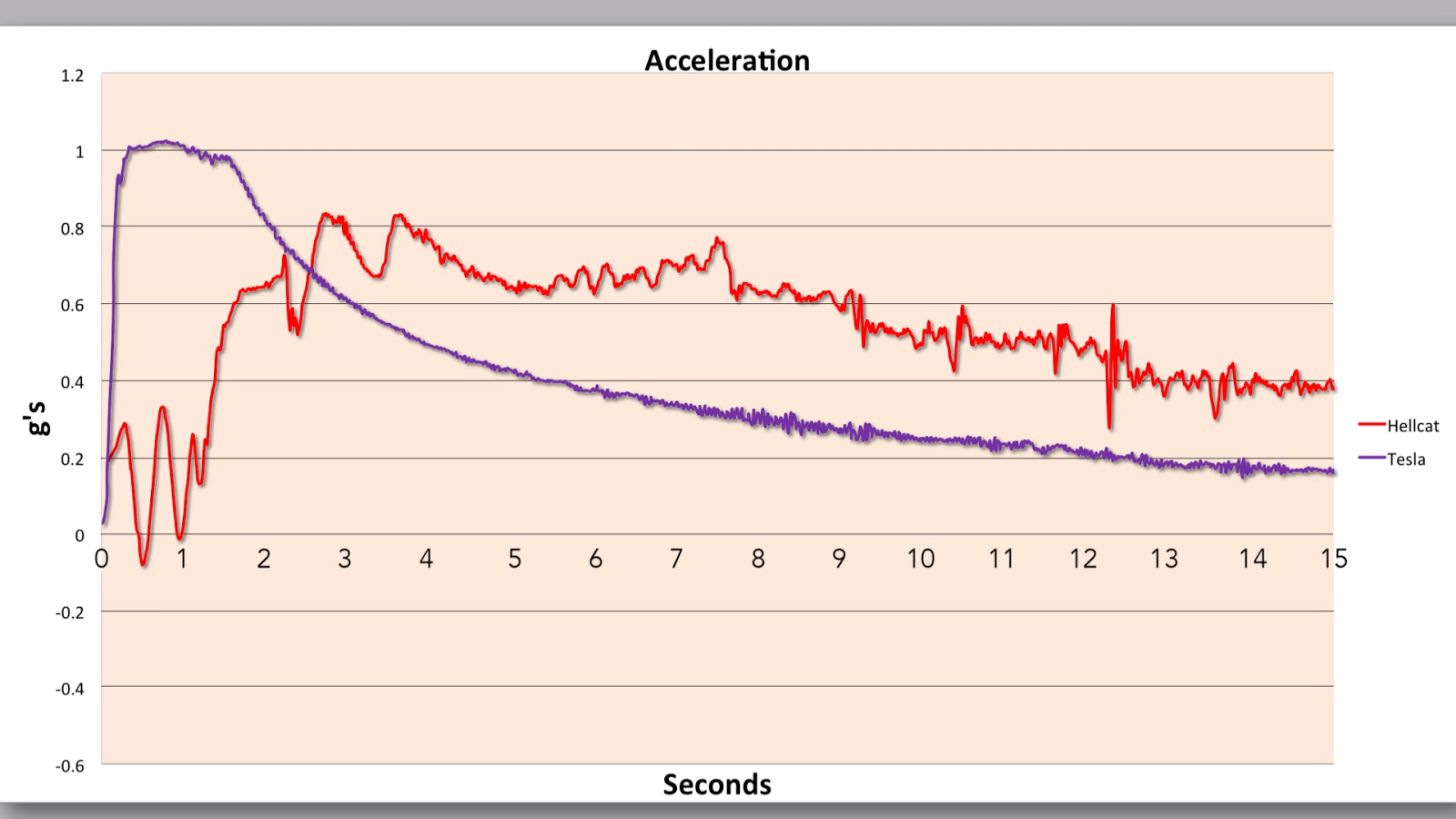
3 phase AC Induction motors, as used by Tesla, can withstand huge 'peak' performance in short bursts. Most of the mind numbing acceleration happens within the first second, as can be seen in the graph below. The P90DL leaps to 1.35g within the first 0.5 sec and maintains 1g+ for 1.5 seconds. The old P85D achieved a peak of 1.05 g for 1.2 second.
Chevy hopes to achieve huge success with the Bolt. The EV has a $37,500 starting price before the $7,500 federal tax credit. The Bolt has a 200-mile rated range from an onboard 60 kWh battery pack. Those numbers put the Bolt squarely in the sights of people looking for a moderately priced electric car with a reasonable driving range. Much of the Tesla Model 3’s pre-order success has been attributed to those same factors.
The list of Bolt components supplied by LG defines the car’s performance and most of its user experience. LG is producing the electric drive motor, power inverter module, battery pack, battery heater, onboard charger, high-power distribution module, accessory power module, and power line communication module. The South Korean company is also making the electric climate control system compressor, the instrument cluster, and the infotainment system.
That full inventory of parts will be transported to Michigan where they will be used to make Bolts in GM’s Orion Charter Township assembly plant. With the LG parts on hand, full production starts in October. Finished Bolts will be rolling off car carriers onto dealership lots shortly after production starts.
As the EV technology arms race gathers pace, the second generation BMW i8 is rumored to boost power output from it's current 350 hp to a more Tesla like 750 hp.
Automobile reports that the next-generation i8 will ditch the current i8’s three-cylinder, range-extending internal combustion engine in favor of going all-electric with three high-revving (25,000rpm) electric motors producing a total of 750 hp and more potent batteries capable of delivering a 500 kilometre range. Also part of the package are four-wheel drive, four-wheel steering, torque vectoring, and an active suspension system that scans the road ahead.
While the front axle mounted electric motor in the current i8 revs to 11,400 rpm and is mated to a 2 speed GKN transmission, using high revving electric motors could potentially allow a single speed reduction gearbox yet still achieve terminal velocity on Autobahnen.
The rumored three electric motor powertrain would have BMW only catching up to the recently launched Acura NSX. The Honda has a three electric motor torque vectoring systems with dual motors up front and combined ICE/eMotor at the rear.
Back in 2012 Mercedes demonstrated the full potential of all-wheel-drive torque vectoring with their Mercedes SLS E-Cell. By the time the next gen i8 launches around 2022-2023, a full decade after the SLS E-Cell, we can only hope BMW's next generation EV sports car at least meets if not exceeds that benchmark.

 A startling 238 miles, a few concessions in the Big Easy, and men not wanting to appear feminine. All this and more on Green Car Reports. BREAKING: We've driven the 2017 Chevy Bolt EV, and our first drive report on getting 240 miles is now live. Read it! The big news today was the EPA-rated range for the 2017 Chevrolet Bolt EV electric car: an...
  New Orleans has a hot-and-cold relationship with environmentally friendly technology. Last week, however, the two were definitely on good terms as the city council voted unanimously to make life easier for current and future electric car owners. Crescent City crises Given the New Orleans' tenuous location--sandwiched between Lake Pontchartrain and...
  If all goes according to plan, more than 450,000 owners of Volkswagen and Audi sedans, wagons, and hatchbacks with 2.0-liter TDI diesel vehicles from the 2009 through 2015 model years will start to receive buyback offers from VW late this year. Many owners have already indicated that they plan to take the buyout, some as soon as possible. But it...
  Those tasked with selling electric cars and other products friendly to the environment must confront multiple obstacles as they try to win over often-skeptical consumers. That's something that comes with the territory when marketing new technologies or practices. But could public reticence to adopt green products be influenced by more than just...
  There will be a lot riding on the tall, square shoulders of the 2017 Chevrolet Bolt EV when it reaches the first Chevy dealers late this year. It will be the first mass-priced electric car with a range of 200 miles or more, and it will go on sale a year before the much-vaunted Tesla Model 3. Now Chevrolet has released the EPA estimated range...
  Electric car prices need to fall (but how much?), Tesla upgrades both its battery architecture and its Autopilot software, and how about that ice driving? All this and more on Green Car Reports. Sure, you know Nissan and Tesla, but which European maker just delivered its 100,00th electric car last Friday? Today, the sticker prices of electric cars...
  Last month, when Tesla Motors announced new, even larger battery packs for its Model S sedan and Model X crossover utility vehicle, reaction was less than ecstatic. While even faster, even longer-range electric cars are nice and all, commentators said, shouldn't Tesla be sticking to its knitting? Specifically, shouldn't it be focusing every last...
  The 2017 BMW i3 is the most significant update to the groundbreaking electric car since it went on sale in the U.S. back in May 2014. Changes are headlined by a larger, 33-kilowatt-hour lithium-ion battery pack that increases range from 81 miles to 114 miles in the all-electric model. However, until now, BMW had yet to release range estimates for...
  Fall is approaching, which means it's time for the auto-show season to get underway once again. Press days for the 2016 Paris Motor Show begin at the end of this month, and we already know several notable green production and concept cars will make their debuts in the French capital. The show's organizers say no fewer than 24 electric cars will...
  One of the challenges of making and selling electric cars is that their batteries are still expensive. And despite some makers' absorbing losses on the earliest cars, that means they sell for prices higher than those of similarly sized vehicles with combustion engines. Sure, owners will save money on running costs—but most shoppers will...
  French automaker Renault hasn't sold nearly as many electric cars as its alliance partner Nissan. But Renault has steadily increased its electric-car sales volumes, particularly in Europe, with its main focus on the subcompact Zoe hatchback. That allowed the company to pass a notable milestone recently. DON'T MISS: Nissan and Renault together now...
  The word "contagious" is often used to describe diseases, but not all contagions are necessarily bad. Studies have found that solar panels can be "contagious," for example. In other words, a homeowner is more likely to install solar panels on their house if their neighbor has done so. CHECK OUT: Electric Cars Vs. Solar Panels: Which One's The...